In 2011, Highland Park in Michigan was compelled to remove over two-thirds of its streetlights because of the city's financial problems and large public debt. In absolute numbers, the city lost more than 1,000 streetlights. In response to this event, city representatives asked the residents to leave their porch lights on during the night. At the end of 2012, dissatisfied residents decided to build public lighting on their own. Several months later, they successfully installed the first residential LED streetlight with a solar panel (Indiegogo.com, 2012). Their project is one of many recent public projects that have been privately funded through a crowdfunding (CF) platform.
CF is the practice of funding a project by raising small amounts of money from a large number of people, typically via the internet. Online CF platforms enable fundraisers to create their own web subpage, where they provide details about their project, promote it, and regularly update news about the campaign. Initially, CF was principally associated with art, and other creative and innovative projects (Bradford, Reference Bradford2012).Footnote 3 However, CF platforms evolved to help finance diverse projects, ranging from organizing payment to a drug gang that offered to release a compromising video of the Governor of Toronto, Rob Ford, smoking crack (Indiegogo.com, 2013), to collecting funds for a young man who knocked out his tooth and did not have enough money for the necessary dental work to replace it (Indiegogo.com, n.d.).
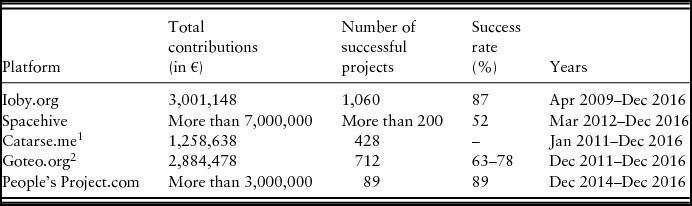
Among the projects that have been financed via CF are also those that aim to provide pure public and mixed goods (i.e. non-excludable and/or non-rival goods).Footnote 4 The Highland Park streetlights project mentioned above is an example of so-called ‘civic crowdfunding’ (CCF). Cases of private provision of public goods via CF are far from exceptional; other examples include the building of bridges, swimming pools, or parks (Davies, Reference Davies2014). Table 1 presents the total contributions and the number of successful CCF projects as reported by five major platforms. Three of them (Ioby.org, Spacehive and People's Project.com) are entirely dedicated to CCF and enable funding for non-excludable and/or non-rival goods only. Two other platforms (Catarse.me and Goteo.org) are general, and we adjusted the data from these sites to present only the civic categories (i.e. non-private goods). Overall, in our sample, the contributions amount to more than €17 million for more than 2,400 projects. These figures are small when compared to figures for the entire CF industry, which has fundraised over €30 billion, 70% of which represents by peer-to-peer (P2P) lending (Massolution, 2015); however, they demonstrate that CCF is becoming an important phenomenon. Moreover, the success rates of CCF projects are relatively high: Davies (Reference Davies2014) analysed data for public goods campaigns from three CF platforms between 2011 and 2013 and found the following success rates: 68% (Goteo), 33% (Catarse), and 80% (Kickstarter). Interestingly, he also found that the success rate of CCF projects is higher than the success rate of non-CCF projects. Other platforms report similar success rates of CCF projects (see Table 1).Footnote 5
Total contributions and number of successful CCF projects. Source: Publicly available data from CF platforms

The fact that CF enables the private funding of various public goods is of great interest to economists. As has been long recognized, the provision of public goods is typically associated with problems that are considered difficult to solve by private means. These problems are the organization problem, the assurance problem and the free-rider problem. The organization problem refers to the fact that it is costly to organize (i.e. design, administer and promote) a contribution scheme for a public good provision. The assurance problem refers to the possibility that each individual will not contribute to funding the public good because he believes that others will not contribute either (and so he does not waste his effort to contribute) (Schmidtz, Reference Schmidtz1987; Sen, Reference Sen1967). The free-rider problem refers to the possibility that each individual will not contribute to funding the public good because he believes that others will contribute (and so he can consume the public good without contributing) (Kim and Walker, Reference Kim and Walker1984; Samuelson, Reference Samuelson1954, Reference Samuelson1955).
In this paper, we demonstrate how CF platforms help to mitigate these three problems. Our paper thus contributes to the empirical literature on the private provision of public goods (for seminal works in this area, see Cowen, Reference Cowen and Cowen1992). In particular, we focus on how a specific technological change, namely the emergence of the internet and Web 2.0 applications, affects the cost–benefit calculation of public goods provision. While the existing empirical literature has principally addressed the possibility of the private provision of specific public goods, for example, lighthouses (Coase, Reference Coase1974), fire protection (Poole, Reference Poole1980), police services (Fixler and Poole, Reference Fixler and Poole1988), turnpikes (Klein, Reference Klein1990), urban infrastructure (Beito and Smith, Reference Beito and Smith1990), and open-source software (Bessen, Reference Bessen, Bitzer and Schröder2006), we demonstrate how a specific technology facilitates the private provision of public goods in general.
The existing literature suggests that the problems with public goods provision are easier to overcome in small, organized communities; organization costs, as well as the costs of monitoring free riding, typically decrease with the size of the group (Olson, Reference Olson1971), and organized communities can make use of the existing formal and informal institutions to punish free riders (Beito et al., Reference Beito, Gordon and Tabarrok2002; Ostrom, Reference Ostrom1990). We argue that CF platforms emerged as new ‘social technologies’ (Nelson and Sampat, Reference Nelson and Sampat2001) that enable private provision of public goods in groups (small or large) that have not been pre-organized (i.e. groups that have a low level of ‘civic capital’; see Guiso et al., Reference Guiso, Sapineza and Zingales2010). CF platforms significantly decrease organization costs and these platforms enable incentives to be employed to mitigate the assurance and the free-rider problems. Moreover, CF platforms enhance public entrepreneurship and the polycentric approach to local governance, which has been advanced by Ostrom (Reference Ostrom2005) as an alternative to the hierarchical organization of the public sector. However, we do not examine the comparative efficiency of different methods of public goods provision; instead, we note that CCF often steps in to compensate for government failure, and we focus on examining the mechanisms that make CCF possible.
Our paper also contributes to the emerging literature on economics of CF (for a recent review of this literature, see Bouncken et al., Reference Bouncken, Komorek and Kraus2015). Existing studies on CF often focus on how this mechanism facilitates P2P loans or helps start-ups and new entrepreneurs raise initial capital (e.g. Agrawal et al., Reference Agrawal, Catalini and Goldfarb2014; Pazowski and Czudec, Reference Pazowski and Czudec2014). Alternatively, this research analyses CF as a means of communication with consumers (Gerber and Hui, Reference Gerber and Hui2013), or examines the behaviour of contributors (Kuppuswamy and Bayus, Reference Kuppuswamy and Bayus2015; Mollick, Reference Mollick2014). Thus far, CCF has not drawn much attention from economists. Initial analyses of CCF have established some stylized facts but have focused on its sociologic and urbanistic rather than economic aspects (Davies, Reference Davies2014; Stiver et al., Reference Stiver, Barroca, Minocha, Richards and Roberts2015). Analyses from the perspective of public economics have focused on particular aspects of CCF. For example, Corazzini et al. (Reference Corazzini, Cotton and Valbonesi2015) examine the problems associated with the multiplicity of substitutable public goods, and Bøg et al. (Reference Bøg, Harmgart, Huck and Jeffers2012) study the effect of instantaneous feedback about the progress of campaigns on donor behaviour. To the best of our knowledge, the present research is the first attempt to provide a more complex economic analysis of CCF, focusing on the three principal problems associated with the private provision of public goods, and demonstrating how CF helps to mitigate these problems.
Our analysis employs the conventional model of public goods provision (Andreoni, Reference Andreoni1998), thus demonstrating that standard economic principles can be used to explain CCF. From this perspective, our paper is related to works that demonstrate that the ‘new economy’, made possible by the development of information technologies, can be considered ‘an old wine in a new bottle’. For example, Kuan (Reference Kuan2001) and Lerner and Tirole (Reference Lerner and Tirole2002) demonstrate that conventional economics can explain many phenomena in the field of open-source software (see also Bitzer and Schröder, Reference Bitzer and Schröder2006); Antonelli and Foray (Reference Antonelli and Foray1992) develop Buchanan's (Reference Buchanan1965) theory of clubs into the theory of technological clubs to explain cooperation among firms in research and development (R&D); and Thierer et al. (Reference Thierer, Koopman, Hobson and Kuiper2016) argue that internet platforms mitigate the problems of asymmetric information using standard mechanisms as reputation systems and rules of entry. Similarly, we argue that the free-rider and assurance problems are addressed by standard mechanisms that are boosted by new technologies.
The remainder of this paper is organized as follows. Section 1 presents the theoretical framework developed by Andreoni (Reference Andreoni1998) to identify the three problems with public goods provision: high organization costs, the assurance problem, and the free-rider problem. Subsequently, we demonstrate how CF mitigates these three problems. Section 2 discusses the reduction of organization costs due to the internet; Section 3 focuses on the assurance problem and the refund and rebate rules; and Section 4 discusses the free-rider problem and selective incentives used by CF platforms. Section 5 then presents two case studies: one is CF of private police services in Rockridge in Oakland, California, and the other is the private provision of the army in the Ukraine.
1. Theoretical framework
To analyse the effects of CF on the private provision of public goods, we first assume purely ‘altruistic’Footnote 6 individuals with the following continuous and strictly quasi-concave utility function:
 $$\begin{equation}
{u_i}_{} = u\left( {{x_i},G} \right),
\end{equation}$$
where xi is an amount of a composite private good consumed by the individual i, and G is an amount of the public good. Each individual i is endowed with money, m, which they can allocate to private and public good. Denoting i’s contribution to a public good, with xi , the budget constraint is as follows:
 $$\begin{equation}
{x_i} + {g_i} = m
\end{equation}$$
For the sake of simplicity, we assume identical individuals with equal endowments. Our conclusions are not affected by this simplification.Footnote
7
We follow Andreoni (Reference Andreoni1998) in assuming that the public good can be consumed only if a minimum threshold
 $\bar{G}$
is met:Footnote
8
 $$\begin{equation}
G = \left\{
\arraycolsep5pt\begin{array}{@{}ll@{}}
0 & {\rm if}\ \mathop \sum \limits_{i = 1}^n {g_i} < \bar{G}\\[8pt]
\mathop \sum \limits_{i = 1}^n {g_i} & {\rm if}\ \mathop \sum \limits_{i = 1}^n {g_i} \ge \bar{G} \end{array} \right.
\end{equation}$$
Private provision of the public good is then modelled as a strategic game with n players. Each player chooses an action gi
ε[0, m] to maximize (1) subject to (2) and (3), while taking the contributions of other players,
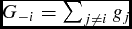 ${G_{ - i}} = \mathop \sum_{j \ne i} {g_j}$
, as given.
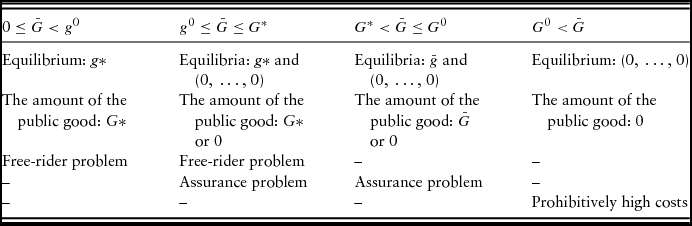
As demonstrated by Andreoni (Reference Andreoni1998), Nash equilibria depend on the value of
 $\bar{G}$
(see Table 2). If the threshold is close to zero (first column of Table 2) and both private and public goods are normal, then there is a unique symmetric Nash equilibrium g* = (g*, . . ., g*) with the total amount of the public good G* ≡ ng* (see Bergstrom et al., Reference Bergstrom, Blume and Varian1986). The profile g* is an equilibrium whenever it is feasible, that is, for
 $0 \le \bar{G} \le {G^*}$
(first and second columns of Table 2); however, if
 $\bar{G}$
is positive, g* need not necessarily be a unique equilibrium. Another equilibrium emerges if
 $\bar{G}$
is sufficiently large. In this equilibrium, all players contribute nothing and the public good is not provided.
Nash equilibria for various levels of the threshold

How large must
 $\bar{G}$
be for the non-provision equilibrium to emerge? The definition of the Nash equilibrium dictates that it must not be possible for any single player to increase their utility by changing their contribution (i.e. no individual must be willing to provide the public good by himself). To account for this condition, g
0 is defined as follows: u(m − g
0, g
0) ≡ u(m, 0). If
 $\bar{G} = {g^0}$
, each individual i is indifferent in choosing between gi
= 0 (doing without the public good) and gi
= g
0 (providing the public good by himself). If
 $\bar{G} > {g^0}$
, an individual maximizes their utility by choosing gi
= 0. We thus obtain the following result: the profile (0, . . ., 0) is a Nash equilibrium if
 ${g^0} \le \bar{G}$
(see the second, third and fourth columns of Table 2).
If
 $\bar{G} > {G^*}$
, g* is no longer feasible; nonetheless, there may be an equilibrium with the level of the public good provision precisely equal to
 $\bar{G}$
. More precisely, if there exists a profile
 $\bar{g} = ( {{{\bar{g}}_1}, \ldots ,{{\bar{g}}_n}} )$
, such that
 ${g^*} < {{\bar{g}_i}} \le {g^0}$
for each i and
 $\mathop \sum_{i = n}^n {{\bar{g}_i}} = \bar{G}$
, then
 $\bar{g}$
is an equilibrium. In general, this equilibrium is not unique; instead, there is typically a continuum of such equilibria (third column of Table 2). Finally, if
 $\bar{G} > {G^0} \equiv n{g^0}$
, the profile (0, . . ., 0) is a unique Nash equilibrium of the game (fourth column of Table 2).Footnote
9
Table 2 illustrates the three main problems of the private provision of public goods. First, the costs of organizing a campaign may be too large. These organization costs increase the overall fixed costs of providing the public good and consequently, the minimum threshold for its provision may be prohibitively high (i.e.
 $\bar{G} > {G^0}$
; fourth column of Table 2), which means that no public good is provided in the equilibrium. Second, even if equilibria in which the public good is provided are feasible (i.e. equilibria
 $\bar{g}$
and g*; second and third columns of Table 1), the assurance problem remains present, that is, individuals contribute nothing if they expect that others will also contribute nothing, and therefore choosing to contribute a positive amount
 ${g_i} < \bar{G}$
, would mean their contribution would be wasted.Footnote
10
Finally, even when the equilibriumg* is played (first and second columns of Table 1), there is inefficiency due to the free-rider problem: the equilibrium amount G* is smaller than the socially optimal amount of the public good (see Section 4 for details). In the following three sections, we demonstrate how these three problems are mitigated by CF.Footnote
11
2. Organization costs and the internet
The provision of a public good involves fixed costs, which means that a contribution mechanism must be established and administered, and the project must be advertised to the public. Perhaps most importantly, potential contributors must be reached. All these fixed costs increase the threshold for the provision of the public good
 $\bar{G}$
. Due to high fixed costs, some goods are not provided. However, there are economies of scope: if there are many projects, contributions to these projects can be collected in a single campaign and all these projects can be jointly advertised. As dominant providers of public goods, governments can and do take advantage of these economies of scope. Once a government with a taxation mechanism is established, the marginal costs of collecting contributions for an additional project are low. In contrast, if the private funding of a public good is organized on an ad hoc basis, the organization costs may be prohibitively high because economies of scope cannot be exploited.
Nevertheless, there have been attempts to provide public goods through private funding. These have occurred particularly when governments have refused to finance public goods in whole or in part. For example, in the nineteenth century, Czech patriots organized a campaign for financing the construction of a national theatre.Footnote 12 The funding campaign lasted 11 years – from 1851 to 1862. According to one historical account, it was necessary to distribute 12,000 public announcements in Czech, 8,000 public announcements in German, 2,000 statutes in Czech, 2,000 bilingual Czech–German statutes, and 6,000 commentaries in German. The distribution itself took six months and involved high costs in time, money and effort (Hof, Reference Hof1868: 11). Partly due to high organization costs (which also included the costs of monitoring collectors of contributions), this campaign did not manage to secure sufficient funds and the theatre was not built as intended.Footnote 13 However, a less ambitious project to build the so-called Provisional Theatre was realized.Footnote 14
Organizers of private campaigns have sometimes managed to reduce organization costs by employing newspapers. For example, in 1885, Joseph Pulitzer used his newspaper, New York World, to raise funds for a pedestal for the Statue of Liberty after the then-governor of New York, Grover Cleveland, refused to finance it from public funds. The campaign involved more than 160,000 people who contributed US$100,000 in five months (which represents approximately US$2.3 million at current prices) (Davies, Reference Davies2014).
Nevertheless, a significant reduction in the organization costs associated with private funding came only with the internet and Web 2.0 applications in particular, which made online CF platforms possible. In general, until the beginning of the third millennium, the internet was used for websites with fixed content and use was limited to passive viewing and receipt of information. Web 2.0 applications changed this by enabling users to generate web content themselves, which made it much easier to develop platforms that enable P2P interaction. This ‘new internet’ allowed users to communicate and collaborate with each other in social networks and form new virtual communities. Many websites became platforms that offered new interactive applications, including CF platforms.
Online CF platforms offer fundraisers the opportunity to create their own web subpage that displays a description, pictures, and video of the project. It also contains information about the time remaining for the fundraising, the amount of raised money, the number of supporters and fans, list of rewards, and news about the campaign. All this information can be updated frequently at a low cost.Footnote 15 In addition, the web subpage offers various opportunities for communication between the fundraisers and the campaign contributors. Perhaps most importantly, given the vast number of internet users, online CF platforms allow many potential contributors to be reached at a low cost.
The decrease in organization costs due to improved technology and exploitation of the economies of scope mitigates only one problem involved in the private provision of public goods. As noted, CF campaigns also face the assurance and free-rider problems. In the following two sections, we demonstrate how these problems are addressed by online CF campaigning.
3. The assurance problem, refunds and rebates
Several theoretical models demonstrate that the assurance problem is mitigated by a credible money-back guarantee that applies if the threshold for the provision of the public good is not met (Bagnoli and Lipman, Reference Bagnoli and Lipman1989; Palfrey and Rosenthal, Reference Palfrey and Rosenthal1984; Tabarrok, Reference Tabarrok1998). Experimental evidence from the laboratory (Cadsby and Maynes, Reference Cadsby and Maynes1999; Isaac et al., Reference Isaac, Schmidtz and Walker1989; Marks and Croson, Reference Marks and Croson1998; Rondeau et al., Reference Rondeau, Schulze and Poe1999; Špalek and Berná, Reference Špalek and Berná2011), as well as from the field (Rondeau et al., Reference Rondeau, Poe and Schulze2005; Rose et al., Reference Rose, Clark, Poe, Rondeau and Schulze2002), confirms that the introduction of refunds increases total contributions to a public good. In the past, the use of refunds for a large group of contributors was costly. If the threshold was not met, collected money was sometimes used to finance inferior projects (such as the example of the Czech Provisional Theatre). Currently, many CF platforms take advantage of the fact that the costs of refunding are significantly lower and the credibility of the guarantee is higher thanks to fully automatic online payment methods (e.g. PayPal, Amazon payments, Authorize.net, and WePay). Nevertheless, some platforms allow for funding even if the threshold is not met (sometimes referred to as the ‘keep-what-you-get’ model). For example, #SciFund Challenge employs this model in its financing of scientific research (Wheat et al., Reference Wheat, Wang, Byrnes and Ranganathan2013).
Some methods other than a refund guarantee are employed to mitigate the assurance problem. For example, some platforms require a minimum level of fan support that projects must reach before they are allowed into the funding phase. This strategy is used by Startnext, which is the biggest CF platform in Germany. In addition, all CF platforms publish the overall amount of funds collected on an ongoing basis so that people can update their beliefs about whether the threshold will be met. These strategies enable potential contributors to move from the non-provision equilibrium to the provision equilibrium, provided it exists (Andreoni, Reference Andreoni1998; Romano and Yildirim, Reference Romano and Yildirim2001).Footnote 16
Besides the assurance problem, there may be another type of coordination problem. Rather than fearing that the campaign may not attract sufficient contributions, individuals may fear that there will be too many contributions (‘overfunding’). This problem particularly affects goods that naturally come in discrete quantities (e.g. bridges). To illustrate this case, assume the following production function with
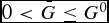 $0 < \bar{G} \le {G^0}$
:
 $$\begin{equation}
G = \left\{ \arraycolsep5pt\begin{array}{@{}ll@{}}
0 & {\rm if}\ \mathop \sum \limits_{i = 1}^n {g_i} < {\bar{G}}\\ [7pt]
{\bar{G}} & {\rm if}\ \mathop \sum \limits_{i = 1}^n {g_i} \ge {\bar{G}} \end{array} \right.
\end{equation}$$
The contribution game now has a continuum of equilibria
 $\hat{g} = ( {{{\hat{g}}_1}, \ldots ,{{\hat{g}}_n}} )$
, such that
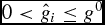 $0 < {\hat{g}_i} \le {g^0}$
for i and
 $\mathop \sum_{i = n}^n {\hat{g}_i} = \bar{G}$
. The coordination problem emerges due to the multiplicity of these equilibria.Footnote
17
Consequently, individuals may end up contributing too little because they are afraid that contributions will exceed the threshold. Indeed, Marks and Croson (Reference Marks and Croson1998) demonstrate that the no-rebate setting – represented by the production function (4) – yields lower levels of contributions than the utilization-rebate setting – represented by the function (3) – where excess contributions are used to finance a larger quantity of the public good. If the public good comes in discrete quantities, the utilization setting is not feasible; however, different rebate rules can be used to decrease the costs of excess contributions.Footnote
18
Some CF platforms (Citizinvestor.com, Ioby.org) forbid exceeding the threshold set by the authors of the project.
Despite the various refund or rebate mechanisms, the profile (0, . . ., 0) may remain an equilibrium of the contribution game; therefore, selective incentives for contributors may be needed to overcome the assurance problem. These incentives also help to attenuate the free-rider problem, as demonstrated in the following section.
4. The free-rider problem and selective incentives
As stated in Section 1, the equilibrium g* is associated with the free-rider problem. In this equilibrium, the following condition holds for each individual: uG /ux = 1. However, the familiar Samuelson (Reference Samuelson1954) condition for optimal provision of a public good is nuG /ux = 1. Because of the free-rider problem, equilibrium contributions are too small and the marginal rate of substitution between xi and G is bigger than the marginal rate of substitution in the social optimum.
Nevertheless, the free-rider problem is mitigated if individuals derive utility not only from the public good, but also from their own contribution. To allow for this to occur, consider the following utility function incorporating the ‘selfish’ motive, zi :Footnote 19
 $$\begin{equation}
{u_i} = u\left( {{x_i},G,{z_i}} \right)
\end{equation}$$
The selfish motive is ‘produced’ by the individual's own contribution to the funding campaign, gi , and possibly some other factors E, which are discussed below:
 $$\begin{equation}
{z_i}\ = {z_i}\left( {{g_i},E} \right),{z_g}\ > {\rm{ }}0,
\end{equation}$$
The new condition for the optimal size of i’s contribution is then:
 $$\begin{equation}
\frac{{{u_{G}}}}{{{u_x}}} + \frac{{{u_z}}}{{{u_x}}}{z_g} = 1
\end{equation}$$
If zguz /uz = (n − 1)uG /ux , then there is no free-rider problem, and private provision generates the socially optimal level of the public good. We surmise that typically zguz /uz < (n − 1)uG /ux , which means the free-rider problem exists. Nevertheless, we argue that modern technologies help alleviate this problem by increasing the marginal productivity of an individual's contributions, zg .
One possible interpretation of the selfish motive zi is social recognition of the contributor (Becker, Reference Becker1974; Harbaugh, Reference Harbaugh1998; Oliver, Reference Oliver1980). Indeed, the data from CF campaigns indicate that rewards that enhance the social image of contributors (e.g. t-shirts with a logo or badges) by communicating to others that the individual participated in a good cause are correlated with a campaign's success (Crosetto and Regner, Reference Crosetto and Regner2015). Andreoni and Petrie (Reference Andreoni and Petrie2004) demonstrated experimentally that publicizing both the identity of the contributor and the size of their contribution significantly increases contributions. Interestingly, the authors also found that giving individuals the option to publicize their contribution (as some platforms, such as Ioby.org or Goteo.org, do) results in more contributions than making such publicizing a requirement.
The production of prestige through non-anonymous contributions is made more efficient by spreading information about an individual's contribution through social networks such as Facebook or Twitter (Mollick, Reference Mollick2014; Davies, Reference Davies2014). These social networks provide a cheap and effective means of reaching the members of a person's reference group. The productivity of a person's contributions can thus be assumed to depend on the visibility of the contribution to other people.Footnote 20 The production function (7) then becomes zi = zi (gi , vi ) with zgv > 0, where vi denotes the visibility of i’s contribution.
Social networks can also exercise social pressure on potential contributors.Footnote 21 This can be modelled as allowing that the productivity of an individual's contributions positively depend on the contributions of others, so that zi = zi (gi , G −i ) with z gG −i > 0 (this case is considered by Romano and Yildirim, Reference Romano and Yildirim2001 and Steinberg, Reference Steinberg1987).Footnote 22 Alternatively, social networks may set a standard for contributions (Bøg et al., Reference Bøg, Harmgart, Huck and Jeffers2012). If gN is such a norm, then the production function for social recognition may look like zi = zi (d(gi , gN )), with zd < 0, where d(gi , gN ) is a distance function.Footnote 23
In addition to the social recognition motive, contributions are incentivized by various private goods (e.g. commemorative t-shirts, hats, towels, bags, certificates, personal meetings, invitations for dinner with the authors of the project, and publicly displayed commemorative plates with a message from the contributor). For these selective incentives to achieve their aim, these private goods must not be easily available elsewhere, otherwise people would not contribute to the public good specifically to obtain them (Cowen, Reference Cowen and Cowen1992: 10). Likewise, those who control these private goods must be able to sell them only as selective incentives or else they would sell them separately at a higher profit in other markets. Further, the production costs of these goods must be low relative to the consumers’ willingness to pay for them. If this were not so, the overall costs of the public good provision would increase more than the total amount of contributions. Although the value of the rewards to contributors may be relatively small, it can still make a big difference. Contributions in CF campaigns are usually also small, which means that these rewards can tip the cost–benefit calculation in favour of the decision to contribute.
We have demonstrated how CF platforms mitigate the assurance and free-rider problems in general. The following section is more specific. In the following section, we present two case studies that illustrate in greater detail how CCF functions. We examine two types of public goods that are generally considered difficult to be provided privately: the police and the army. In both cases, CCF stepped in to provide funding because government was unable to provide the goods in sufficient quality.
5. Two case studies: crowdfunding the police and the army
Private police in Rockridge, Oakland, California
Between 2010 and 2013, the city of Oakland introduced budget cuts that resulted in a decrease of the number of police officers by 162 (20%). During this period, Oakland had the highest per capita crime rate in the country (Lo, Reference Lo2014). The ineffectiveness of the city police department to reduce the crime rate was further illustrated by the fact that in 2013, the department was appointed a federal overseer for misconduct and constitutional violations (East Bay Times, 2014; Lo, Reference Lo2014).
One of the neighbourhoods affected by rising crime was Rockridge. Between 2011 and 2013 in this neighbourhood, robberies increased by more than 50%, auto thefts by more than 30% and burglaries by almost 40% (Kane, Reference Kane2013). Being unable to rely on the city police, Rockridge residents decided to fund their own private police force. Private provision of security is not unusual in gated communities or in neighbourhoods with established homeowners’ associations. Private constitutions and established institutional structures enable public good problems to be overcome (Beito et al., Reference Beito, Gordon and Tabarrok2002). However, Rockridge residents did not have access to these institutional structures. Fortunately for them, at the time when the crime problem peaked in the neighbourhood, CCF platforms had been established. These platforms represent an alternative institutional structure that helps to mitigate the problems with providing public goods for groups that have not been pre-organized.
In September 2013, one resident of Lower Rockridge North/West created a campaign to fund the neighbourhood's own private police services on the Tilt (named CrowdTilt at that time) CF platform.Footnote 24 This CF campaign was almost immediately followed by two similar campaigns in adjacent areas: one created by a person from Lower Rockridge South/West just one day after the first campaign was created, and another one week later by a resident of Lower Rockridge, Miles Claremont. All these three campaigns had similar content and also set similar thresholds.
The campaign for Lower Rockridge North/West had two thresholds: the first was US$8,205, and the second was US$20,513. The first amount would enable the neighbourhood to provide a police service that would patrol 12 hours per day, five days a week for a trial period beginning 4 November 2013, and continuing until 28 February 2014. Setting two thresholds is required by Tilt.Footnote
25
The lower threshold represents the amount of money that enables securing a ‘basic’ quantity of the good or service; the higher threshold represents the amount that allows the provision of the ‘optimum’ quantity. Introducing the basic threshold in addition to the optimal threshold mitigates the assurance problem because the lower (or basic) threshold is more likely to be reached, which means that contributors feel less fear that their efforts will be wasted. More specifically, the optimal threshold,
 ${{\bar{G}_0}} $
, may be larger than the individual's willingness to pay, g
0, which gives rise to the non-provision equilibrium (see Table 2). Setting another threshold
 ${{\bar{G}_B}} < {g_0}$
eliminates this equilibrium.
Just like other CF platforms, Tilt enables authors to communicate with potential contributors on the projects’ websites and to promote campaigns on social networks. The author of the project to create the private police force explained in detail on the platform why private police are needed, why a certain provider was selected, and included details of the draft contract with the provider.
During the campaign, some of the potential contributors raised concerns that the private police would be armed, would use racial profiling, would change the fabric of the neighbourhood and would not be accountable to the community. In response to these concerns, the author of the campaign specified that the police officers would be unarmed and that they would drive around the neighbourhood to deter criminal activity, and added information about their training and competence.
To enhance contributions, both the CF platform and the author of the campaign offered selective incentives for potential contributors. The platform allowed contributors to contribute non-anonymously, which the majority did. The author of the campaigns offered a special contract for contributors, which meant they would receive reports on daily activities, alarm response, vacation watch, and a telephone number for the patrol officer on duty. They could also request an investigation of suspicious activity on their property.
The campaign for Lower Rockridge North/West was successful and so were (at least in part) the other two. The first threshold was reached within several hours in all three campaigns. In the days after the first threshold was reached, two of the campaigns managed to reach the second threshold. In total, the three campaigns raised more than US$60,100 from 641 contributors. As a result, the residents of Rockridge were able to provide themselves with the private police services they desired for the following year.Footnote 26
LiuFootnote 27 and Fabbri (Reference Liu and Fabbri2016) examined the effectiveness of the private police force of Rockridge. Using crime-report data from 2007 to 2014, they estimated that burglaries and robberies in Rockridge decreased by more than 30% of the estimated rate in the absence of the patrols. Moreover, they did not find any statistically significant evidence that crime increased in the areas surrounding Rockridge following the introduction of the private police force in Rockridge. Rockridge residents seem to be satisfied with the private police services: recently, local newspaper Rockridge News reported survey results that reveal that 94% of respondents were happy/satisfied with the patrols; 95% see no negative changes in the community as a result of the patrols; 75% feel safer since the patrols began; and 87% want the patrols to continue for another year (Safer Rockridge, 2016).Footnote 28
Military services in Ukraine
In the second half of 2014, clashes broke out between the Armed Forces of Ukraine and pro-Russian separatists in eastern Ukraine. Given the state of the Ukrainian public finances, Ukrainian soldiers have suffered from insufficient and outdated equipment from the beginning of the conflict. In response to this situation, a new CF platform emerged in the Ukraine: People's Project.com. The principal goal of this platform was to enable Ukrainian civilians to improve the equipment of their army. Its projects are divided into three main categories: military, healthcare and social services. The campaigns that have been successfully completed have helped to buy goods such as bulletproof vests, special glasses, food, an armoured transporter, a field hospital, and the first Ukrainian drone. Contributions vary from US$1 to US$2,000, and since the first four months of clashes, about US$3 million has been raised (Grytsenko and Harding, Reference Grytsenko and Harding2014).
The principal difference between the People's Project.com platform and other CCF platforms is their scope. People's Project.com aims to provide public goods to the whole of Ukraine, with a physical area of 603,628 km2 and 45.49 million inhabitants. In contrast, other CCF platforms generally help to fund local campaigns (Davies, Reference Davies2014). Hence, the People's Project.com platform faces specific challenges that must be addressed.
First, goods and services that are funded from the People's Project.com platform are often divisible. For example, the CF project ‘People's Attack Pilot’, which raised funds for Ukrainian Air Force pilots, provides various kinds of equipment, ranging from inexpensive items (e.g. antennas and armour plates) to more expensive items (e.g. laptops and GPS navigators). Therefore, there is no ‘natural’ minimum threshold, and the assurance problem is typically not present. Another factor particular to the People's Project.com campaigns is that all equipment is needed promptly on the battlefield, and it is important that it arrives at its destination as quickly as possible. These two factors are likely the reasons that led the platform to establish only an indicative threshold without a money-back guarantee. The funds are used on an ongoing basis, with the threshold providing information about what can be done if a certain amount is raised.Footnote 29
Another specific feature of the platform arises from the character of the military defence as a public good. Given the prohibitively high costs of treating contributors and non-contributors differently, it is difficult to provide selective incentives, and indeed, People's Project.com campaigns provide none. Nevertheless, contributions are likely to be enhanced by the sentiments such as patriotism, which means that the selfish motive, zi , (discussed in Section 4) arguably plays a greater role in this instance of CCF than in other instances.
A further specific feature of the People's Project.com is that the goals of campaigns are realized in military conflict that occurs hundreds or even thousands of kilometres away from contributors’ homes. Therefore, unlike contributors to local campaigns who have almost immediate feedback when evaluating how their contributions are used, contributors to People's Project.com campaigns are not easily able to control the distribution of the collected resources. The platform must adjust its institutional structure in response to this feature. This response consists principally in focusing on trust building and ensuring the transparency of the platform. The platform takes several steps to achieve this aim.
First, the platform allows people to see their contributions in action by providing daily news from the battlefields that is connected to either already completed or ongoing campaigns on the platform. Thus, people can learn that their donations ‘give soldiers the ability to walk’ or that ‘One of first biotech patients undergoes corrective surgery’ (People's Project.com, 2016).
Second, the platform provides highly detailed information about every project before, during and after a campaign. It explains why a particular good or service is needed, where the money will go, provides a price list of equipment, and shows how many people contributed and how much. Subsequently, when a sufficient amount of money is raised, the platform informs contributors how resources are used. It administers a list of in-kind contributions and a list of every contribution made with its time and date (data are actualized every 15 minutes). Moreover, it provides information on current project spending (i.e. what was bought, when it was bought, for how much it was bought) and about the status of purchases (i.e. whether they are already paid, delivered, and who [or which military unit] is responsible for each single piece of equipment). Every piece of equipment has its number and the public is able to check signed documents showing the acceptance of the equipment by a commander of a military unit (in the case of healthcare or social causes there is information about interventions, their cost, and the person who has been treated).
Third, the platform uses internal and external audits to increase the transparency of its campaigns. In 2015, a volunteer fighter internally audited campaigns that had occurred on the platform. He collected detailed information about the proper use of the equipment crowdfunded by the platform. A result of the audit was a shift from delivering equipment to individual soldiers to delivering equipment to military units because the soldiers often did not fulfil the requirements for documentation by properly recording the status of equipment. This meant that equipment was not used or was lost. The platform could not take any legal action because it is difficult to prove that delivery processes and public institutions are not working as they should. Therefore, the platform shifted to delivering equipment to military units because they have a strong motivation to fulfil and record documents properly, given that otherwise, they would lose their reputation of being trustworthy and the platform would stop cooperating with them (People's Project.com, 2015).
In 2016, the platform was audited by an external auditor EY (formerly Ernst & Young), who examined its financial records. As a result of this audit, the platform became the leading charitable organization in the annual National Rating of Benefactors and won the competition ‘Expenses to the Army in 2015’ in the largest category ‘Volume of Spending on Charity More Than 10 Million (UAH) a Year’. In fact, total contributions on the platform in 2015 exceeded 50 million UAH (€1.78 million) (Ukrainian Philanthropists Forum, n.d.).
6. Concluding remarks
This paper began by observing that many public goods are privately funded via CF platforms. We have argued that thanks to improved technology, the conditions for private provision of public goods have become more favourable. Nevertheless, to assess the comparative efficiency of private and government funding of public goods (or their combination), further data are needed. In many cases of CCF, private initiatives have stepped in because of a government failure (i.e. governments did not provide a particular public good or provided a poor quality good). This is true for both the case studies presented and the other examples provided throughout the paper. However, CF platforms sometimes also serve as arenas for public–private partnership. For example, Neighborly offers the opportunity to finance the long-term projects of municipal governments by investing in municipal bonds (Neighborly, n.d.). Another platform, Citizinvestor, requires projects to be initiated by a local government or its official partner (Citizinvestor, n.d.). Therefore, the exact relationship between CCF and government provision of public goods merits further research.
A related question is whether CCF is able to provide the entire range of public goods or whether it is biased towards certain types. Davies (Reference Davies2014: 46) notes that a typical CCF project is small scale, located in a large city and produces a public good for an underserved community (e.g. a public park). This could be because for these types of projects, the free-rider problem is easier to overcome, and governments are not sufficiently motivated to provide such goods because they benefit relatively small communities. Moreover, people living in the same neighbourhood tend to have similar preferences and therefore, provision of these goods is less controversial. This implies that nationwide public goods are more difficult (although not impossible as the Ukrainian example illustrates) to provide via CF than are local public goods. This suggests that CCF and government provision may be complements rather than substitutes. Future research could focus on further examining this hypothesis.
Another line of research could explore in greater detail the mechanisms used by various CF platforms. For example, the platform GoFundMe allows running campaigns with no deadlines or goal limits, and the fundraisers can keep all the donations they receive (i.e. the keep-what-you-get model). Another platform, Crowdrise, offers special Crowdrise Impact Points, which are awarded for the votes of contributors’ friends. These points can be used by contributors as a currency with which special rewards can be bought (e.g. t-shirts, sweaters, and notepads). Other platforms (e.g. Ioby and Spacehive) require fundraisers to provide a detailed description of their projects’ budget. Goteo allows for two-round financing (two rounds in 40 days). The first round is based on an ‘all-or-nothing’ principle, and collects funds for basic financing. The second round aims to secure the optimum level of financing. Goteo also allows for matchfunding (i.e. funding where the main investor promises to pay an amount that is a multiple of the amount collected by individual contributors). Further research should examine why this diversity of contribution mechanisms exists and to what extent this diversity is attributable to the diversity of public goods (e.g. divisible versus indivisible), differences in government regulations, or trial-and-error learning of the CF platforms providers.