Introduction
As an indicator of adequate prenatal development, birth weight is often seen as a sign of a newborn's health and viability (survival probability) (Barr et al., Reference Barr, Kirk, Al Howasi, Wanders and Schutgens1993; Bernis, Reference Bernis2005). In this sense, some authors consider that the variability of this indicator, between populations and even within a single population, shows the preponderance of human plasticity over the conditions of the environment (Bernis, Reference Bernis2005). Furthermore, weight at birth is an important indicator of a population's social and health conditions (Alonso et al., Reference Alonso, Fuster and Luna2005). As suggested in previous studies, migration increases health risks and, therefore, increases the risks associated with reproductive and perinatal health (Sundquist, Reference Sundquist2001; Alderliesten et al., Reference Alderliesten, Stronks, van Lith, Smit, van der Wal, Bonsel and Bleker2008). Moreover, immigrant women often live in less favourable socioeconomic conditions and this has consequences for perinatal outcomes (Alderliesten et al., Reference Alderliesten, Stronks, van Lith, Smit, van der Wal, Bonsel and Bleker2008). In that sense, several papers have identified worse indicators of reproductive health in immigrant groups compared with autochthons (Essen et al., Reference Essen, Hanson, Ostergren, Lindquist and Gudmundsson2000; Anthony et al., Reference Anthony, Kateman, Brand, den Ouden, Dorrepaal, van der Pal-de Bruin and Buitendijk2005; Johnson et al., Reference Johnson, Reed, Hitti and Batra2005). In particular, some findings have associated the harsh conditions immigrant women face in the host country with a negative effect on the weight at birth of their children (Margaretts et al., Reference Margaretts, Mohd Yusof, Al Dallal and Jackson2002). However, results do not always show a positive relation between the poorer contextual conditions that immigrant women face and the lower weight at birth of their children. In fact, there is evidence that the children of foreign mothers are born with greater weight than those of Spanish mothers (Bernis, Reference Bernis2005).
The epidemiological literature refers to the so-called ‘epidemiological paradox’ to indicate how unexpected it is that unprivileged groups of mothers display higher birth weight of their newborns compared with mothers from more privileged socioeconomic groups. In that sense, the ‘healthy migrant effect’ refers to immigrant groups that, as representative of lower socioeconomic status, result in better weight birth outcomes than those of non-migrant mothers (Fuentes-Afflick & Lurie, Reference Fuentes-Afflick and Lurie1997; Wingate & Alexander, Reference Wingate and Alexander2006; Auger et al., Reference Auger, Luo, Platt and Daniel2008). In the demographic literature, moreover, the migrant self-selection hypothesis is used to point out that migrants are positively selected (they are young, healthier and more educated) compared with those who do not move. As reported by Lu (Reference Lu2008), the health selectivity of migrants is often confounded with the causal effect of migration on health.
Recent female immigrant flows reveal a very different reproductive behaviour and fertility structure (mother's age and parity, mainly the first maternity) in comparison with Spanish women. Such contrast might be responsible for the differences in birth weight among the two populations. Concerning fertility structure, the demographic determinants of fertility decline in Spanish women, (such as marriage delay, increasing time between union formation and the first birth, and an increasingly maternity postponement within the female life-cycle; Frejka & Calot, Reference Frejka and Calot2001) may be responsible for the differences between immigrant and non-immigrant female fertility. Accordingly, they might play a certain role in explaining the weight-at-birth differences between migrant and non-migrant populations.
Sociology has focused on how difficult it is for Spanish women to harmonize both the family (care and reproductive tasks) and work (occupation and professional career) (Simó, Reference Simó, Blossfeld and Hofmeister2006) in order to explain the astonishing late ages at which Spanish women become mothers. Indeed, as late maternity increases the weight of the newborn drops due to (1) the negative relationship between late age of the mother and the weight of the baby, (2) the greater likelihood of conceiving twins (which reduces the weight of the newborn), and (3) the higher frequency of fertility treatments, which increase the probability of multiple pregnancies, and hence reduce the weight of each newborn.
Studies have related birth weight to social inequalities and socioeconomic status (Moser & Power, Reference Moser, Li and Power2003; Dibben et al., Reference Dibben, Sigala and Macfarlane2006). There is evidence that the nutritional and health conditions of the mother prior to pregnancy (Rogers et al., Reference Rogers, Emmett, Ness and Golding2004), tobacco consumption (Vlajinac et al., Reference Vlajinac, Petrovic, Marinkovic, Sipetic and Adanja1997; Kirchengast & Hartmann, Reference Kirchengast and Hartmann2003), as well as that of other substances, and dietetic behaviour during pregnancy (Abrams & Selvin, Reference Abrams and Selvin1995; Bernis, Reference Bernis2005) can result in different delivery outcomes between migrant and non-migrant populations. Stress and long working hours have also been indicated as determinants of a lower weight at birth (Day et al., Reference Day, Sparks and Swan2006), as well as ambient air pollution (Gouveia et al., Reference Gouveia, Bremner and Novaes2004). Other studies have considered how birth weight is affected by specific socio-demographic and socio-biological factors in singular regions (Ebomoyi et al., Reference Ebomoyi, Adetoro and Wickremasinghe1991; Kuate & Partin, Reference Kuate Defo and Partin1993; Bener et al., Reference Bener, Abdulrazzaq and Dawodu1996). Consequently, most of the factors identified in the literature as being responsible for low weight at birth are culturally modelled. Thus, different ethnic groups of women growing up in different cultural contexts may register significantly dissimilar weights of their newborns.
Between 1998 until 2009, Spain became one of the most attractive countries in Europe for international immigration. Men and women of fertile age were over-represented in this immigration, and these became reproductively active once settled in their host country. One of the most important Spanish destinations was the region of Valencia. This makes an interesting region for a case study for two reasons. First, intensive flows of immigrants at fertile ages arrived in a very short time period; that is, most of the immigrant mothers lacked sufficient time to properly adopt the lifestyles and health patterns that non-immigrant women have during pregnancy. In addition, the variety of immigrant groups in this region is high, making it possible to test differences in mean weight birth not only between both groups (nationals and foreign mothers) but also between the most important ethnic origins, namely Romanian, Moroccan, Ecuadorian, Colombian and Bolivian (57% of foreign mothers' births). Second, prenatal care programmes have a very significant impact on reproductive results, and evidence suggests worse prenatal care in immigrants than in native Spaniards (Manzanares, Reference Manzanares2008; Castelló et al., Reference Castelló, Río, Martinez, Rebagliato, Barona, Llácer and Bolumar2012). Therefore, it is important to control the effect of possible differences in delivery outcomes that might be due to regional differences, as a result of the regionally patterned prenatal care systems in Spain.
In an attempt to outline the differences in weight at birth and the factors behind them and, hence, to evaluate the importance of the healthy migrant effect and the epidemiological paradox, this paper aims to (1) identify and measure the impact of fertility structure (age of mother and first maternity), as well as (2) ascertain to what extent the factors related to fertility structure are responsible for the differences between (a) foreign and non-foreign mothers, and between (b) different groups of foreign mothers. Thus, this paper also looks at the impact of multiple and premature births, which in turn are related to mother's age. Then, it analyses the effect of the age of the mother as well as the differences in weight at birth between groups of foreign mothers. And lastly, (3) after identifying the factors behind such differences in the ethnic groups, the influence of the healthy migrant effect and the epidemiologic paradox is tested by calculating linear regression models in which interactions are included. Thus, three main hypotheses may be formulated. First, it is expected that important differences will be found between Spanish and foreign mothers living in the region of Valencia. Second, significant discrepancies amongst foreign mothers from different countries are also expected. Third, in a causal approach it is expected that the disparities will be due to different fertility structures. Although unobserved factors may certainly play a certain role, if fertility structures explain the disparities in weight at birth, the hypothesis on the effect of the epidemiological paradox will be refuted.
Methods
Public micro-data from birth bulletins included in the Natural Population Movement (MNP – vital statistics) from the Spanish Statistics Institute (INE, www.ine.es) were used. In particular, the birth registry micro-data on mothers living in the region of Valencia were considered. The quality of these micro-data collected in the region of Valencia has been analysed previously in a study which concluded that the information is suitable for calculating perinatal and reproductive health indicators (Rio et al., Reference Río, Castelló, Jané, Prats, Barona, Más, Rebagliato, Zurriaga and Bolúmar2010). Since regional governments are responsible for health administration in Spain, this decision allows the selection of births of mothers who are in the same health system. In addition, the presence of foreign population in this region is important enough for the five major groups of foreign mothers to be sufficiently represented (Romanian, Moroccan, Ecuadorian, Colombian and Bolivian) for statistical modelling.
In the period 1998–2009 a total of 551,701 births were recorded (470,698 births by Spanish mothers and 81,003 by foreign mothers). The variables used from the birth registries were birth weight, weeks of gestation, multiple birth, at-term delivery maturity, age and nationality of the mother. With this information, a descriptive analysis of birth weight was conducted, classifying the results into births by Spanish mothers and those by foreign mothers. The effect of the above-mentioned characteristics (multiplicity, maturity, age of the mother) on weight and their possible variability with mother's nationality was assessed by a descriptive analysis and graphical representation. Variance analysis was applied for the period 2007–2009 in order to study the differences amongst the Spanish group and the five major immigrant groups, namely Romania, Morocco, Bolivia, Colombia and Ecuador. Weight was adopted as the dependent variable while the mother's nationality was used as the independent one. As the results indicated that differences do exist, a Scheffé test between pairs of nationalities was carried out to measure their level of significance. Finally, linear regression models were built for all groups as a whole and for each of the six nationalities, considering, again, weight at birth as the dependent variable and mother's age, marital status, size of municipality of residence (living in a town with 50,000 inhabitants or more), sex of the newborn, multiplicity and maturity (the pregnancy is shorter than 37 weeks) as independent variables, as well as profession, which was built as a dummy that distinguishes between the qualified and the unqualified professionals from a list of thirteen categories of occupations. Also included in the linear regression models were the age of the mother squared, since the relationship between birth weight and mother's age is not linear. Moreover, since the effect of parity must be controlled for (Carr-Hill & Samphier, Reference Carr-Hill and Samphier1983), a dummy variable was also included to identify first maternities. A linear model was chosen in order avoid focusing only on the limits of what may be considered low birth weight, which according to the World Health Organization is 2500 g. In that sense, more information is gathered by means of observing the weight as continuous. Due to the interplay between different structural and, hence, biological factors (age of the mother, multiple births, first maternity and prematurity), both the interactions mother's age/first maternity, and mother's age/nationality, were also introduced in the statistical modelling.
Results
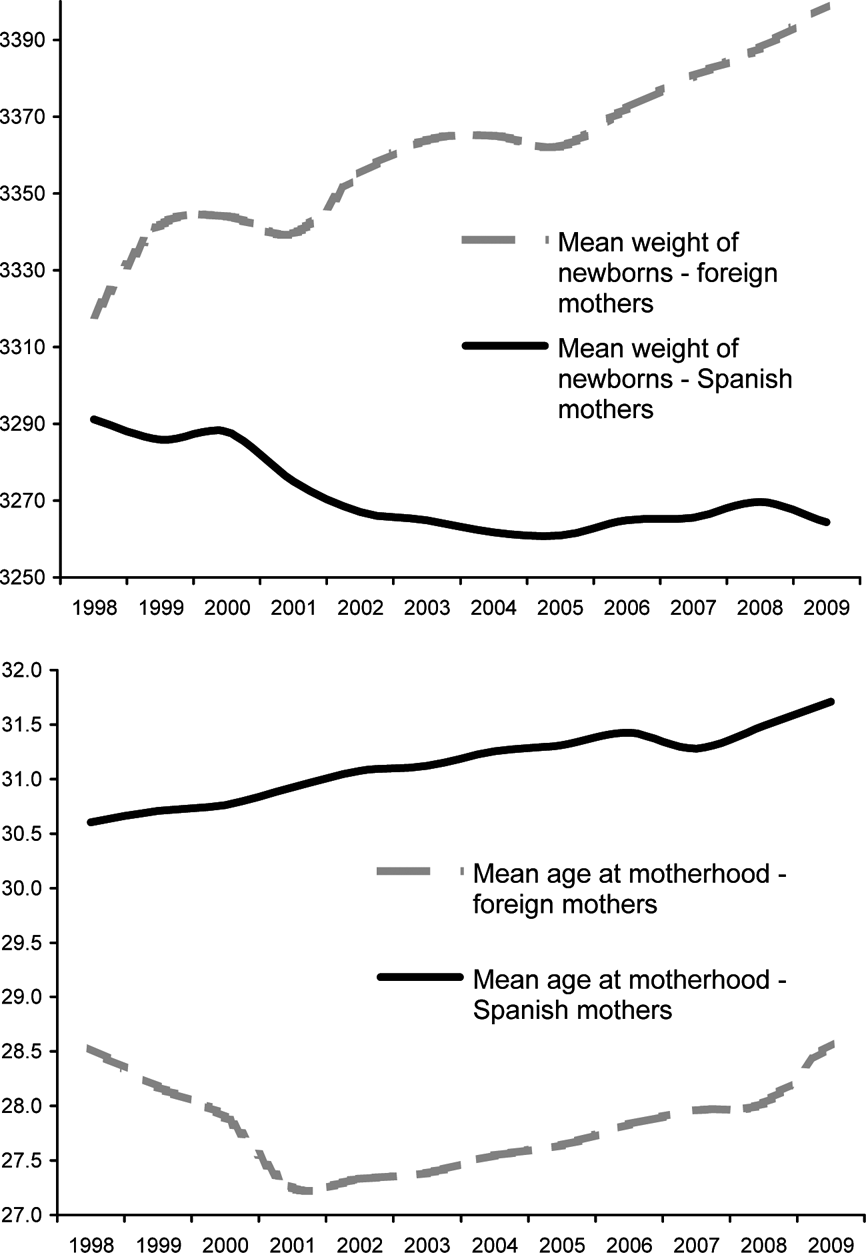
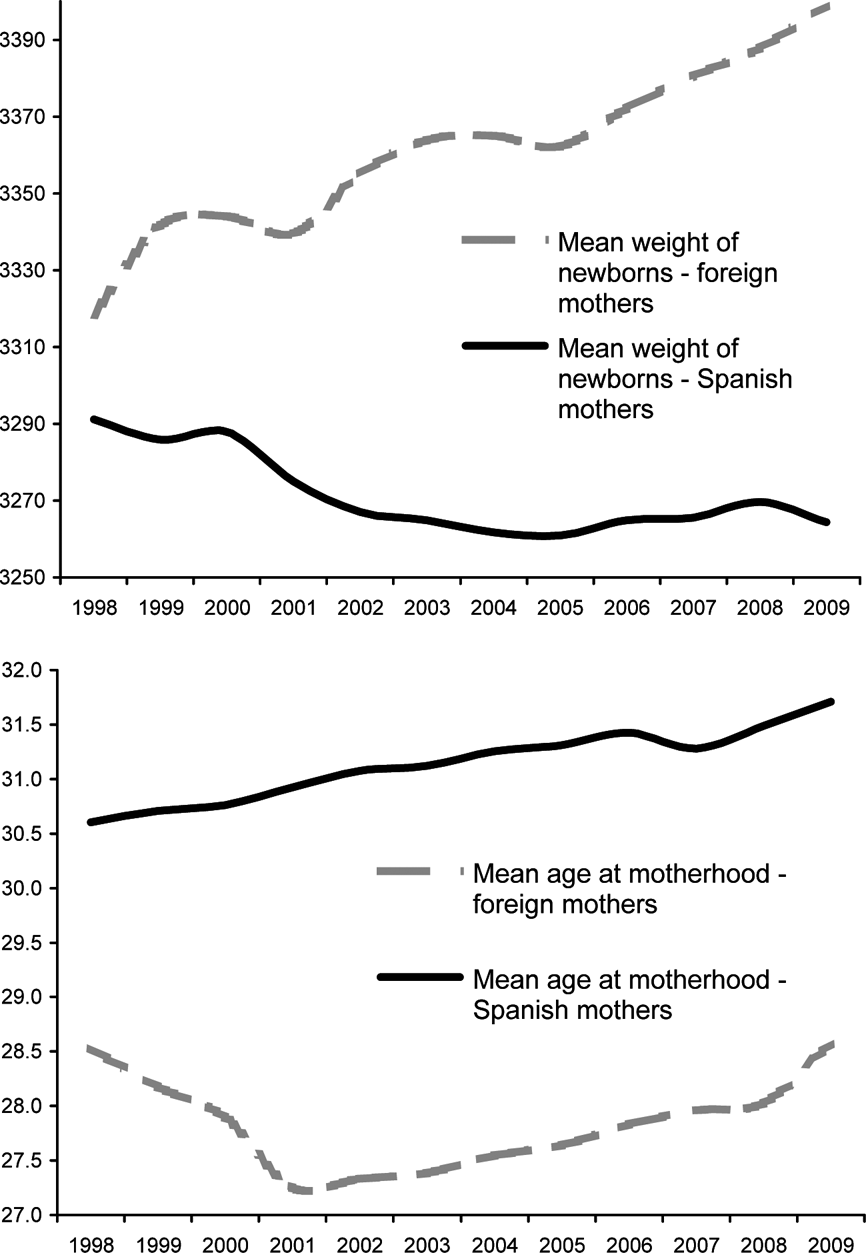
Figure 1 shows the evolution of mean weight of single births occurring at term during the period 1998–2009, and the mean age at motherhood in the same period, comparing native Spanish and foreign mothers. The curves show a gradual increase (except in the years 2001 and 2005) in the weight at birth among foreign mothers, while the mean weight of newborn babies of Spanish mothers decreased between 2000 and 2005, after which it increased smoothly until 2008. The differences between the two groups rise every year. Two processes contribute to this increment during this period. First there is a 0.81% decrease in the weight of single births occurring at term for Spanish mothers (a percentage that reaches 0.93% if all births are taken into account). Second, in the case of foreign mothers, by contrast, there is an increase of 2.48% in the weight of single births occurring at term (this percentage increases to 2.68% if all births of foreign mothers are taken into account).
Mean weights of single births occurring at term by mother's age for foreign and Spanish mothers living in the region of Valencia.
Impact of multiple and premature births
Two of the most important factors influencing newborns' weight are the multiplicity and prematurity of deliveries (Moshin et al., Reference Moshin, Wong, Bauman and Bai2003; Vollset et al., Reference Vollset, Gjessing, Tandberg, Rønning, Irgens and Baste2005). As the specialized literature puts forward, they both have a negative effect on birth weight. Moreover, part of the prematurity is due to multiplicity. In the region of Valencia, multiple births by Spanish mothers rose sharply (from 3.09% in 1998 to 5.03% in 2009), leading to an increase in premature births (6% in 1998 to 8.76 % in 2009). Among foreign mothers, multiple births dropped from 3.25% in 1998 to 2.80% in 2009, while prematurity represented 6.77% in 1998 and 8.28% in 2009.
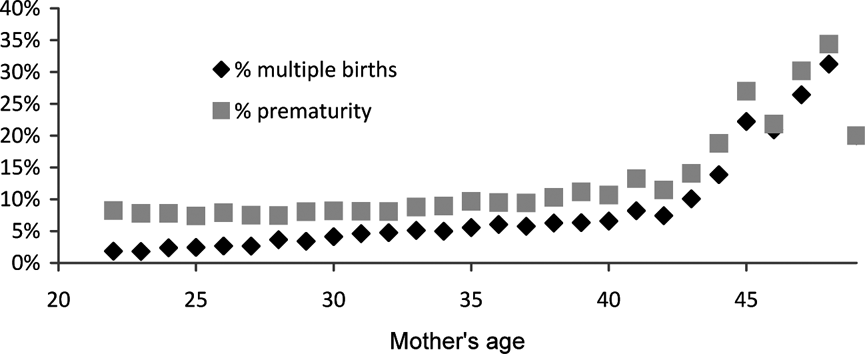
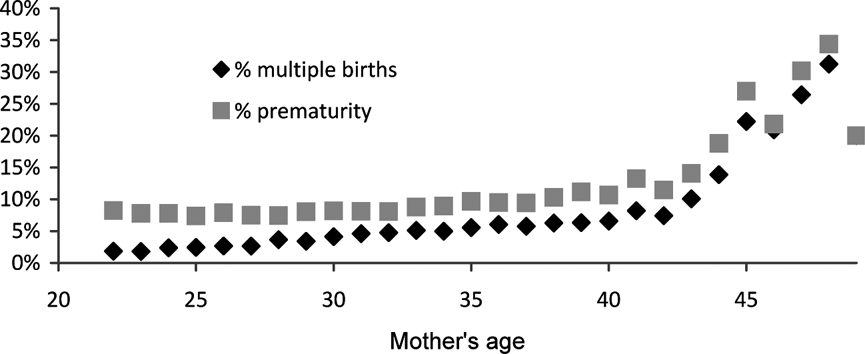
In the region of Valencia, among both Spanish and foreign mothers, the average weight of single deliveries exceeded that of twins by about 40%. Furthermore, full-term babies weighed 40% more than premature deliveries. Additionally, a significant percentage of twin births were premature (51.5% of those born to Spanish mothers and 49.5% of those born to foreign ones). In fact, the marked increase in multiple births in Spain is probably due to both a growing increase in the application of assisted reproductive techniques and a rise in maternity delay. Hence, above the age of 40, the risk of having a multiple pregnancy increases (Fig. 2). However, assisted reproduction is the most important factor and its influence on multiple births seems to depend on the technique used. In in vitro fertilization, the risk of multiple pregnancies increases since more embryos can be transferred as the medicines prescribed to stimulate follicle growth increase the number of ovules. Hence, the probability of more than one fertilized embryo reaching the womb increases (Luke & Martin, Reference Luke and Martin2005).
Percentage of multiple births and share of prematurity as a function of the age, region of Valencia.
The effect of mother's age
The number of multiple births has increased dramatically in recent years, and their influence on the newborn's weight decline among Valencian women is clear. The average age at motherhood of women who had single and term deliveries during the period (Fig. 1) grew linearly in Spanish mothers from the beginning of the period and in foreign mothers after 2001, although it was always much higher for Spanish women. By 2006, the average age of Spanish mothers living in the region of Valencia was 31.42 years, while it was 27.83 for immigrant ones.
As shown in Fig. 1, the increase in Spanish women's age at motherhood has come together with a gradual fall in the average weight of babies. In contrast, the baby's birth weight for foreign women – who also delayed their motherhood – increased year-on-year over this period. Some authors (Alonso et al., Reference Alonso, Fuster and Luna2005) have pointed out the inverse relationship between maternal age and birth weight. However, no distinction was made depending on the subjects' nationality; therefore the large number of births to mothers of Spanish nationality compared with foreign ones overshadowed the effect of the latter. In any case, the existence of this relationship does not obviously imply that the increasing age at motherhood is the cause of the dwindling newborn weight in either Spanish or in foreign mothers. It should be noted that multiplicity and prematurity are strongly dependent. In fact, multiple births were nearly 55% premature births, while within single births only 6.6% were premature. The use of the Pearson chi-squared test confirms that there is a significant association. Finally, both prematurity and multiplicity variables also showed some dependence on the age of the mother. Such a strong effect for multiplicity is related to the significant resorting to assisted reproduction among mothers aged 40 and over (Luke & Martin, Reference Luke and Martin2005). Figure 2 shows the relationship between multiplicity and prematurity, as well as multiplicity and the age of the mother.
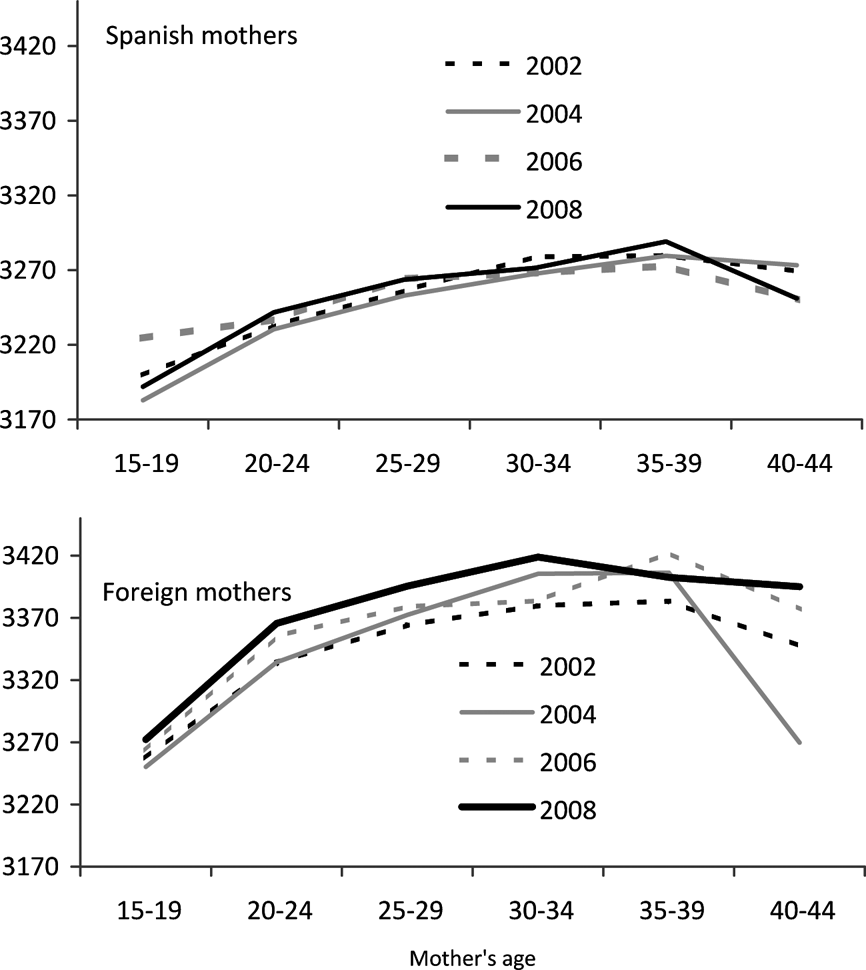
Figure 3 shows average birth weight based on the mother's age (in five-year age groups) for both Spanish and foreign mothers in 2002, 2004, 2006 and 2008. The analysis clearly illustrates that birth weight increased with the age of the mother, except between 40 and 44 years, where the weight was lower, but that birth weight according to the age of the mother did not change over time. Therefore, within the same year, the weight of newborn babies should be higher, the older the mother (except in the 40–44 year age group). Two trends may be outlined: a decrease in birth weight, year-on-year, among Valencian mothers of Spanish citizenship, and an increase in the age at motherhood. The recent increase in multiple births in Spanish mothers, as well as other factors, such as the increase in the amount of women who smoke (Rosenberg & Buescher, Reference Rosenberg and Buescher2002), their incorporation into the labour market and general changes in their lifestyle, explain, to a certain extent, the effect of the delay in the age at motherhood on the baby's birth weight (Alonso et al., Reference Alonso, Fuster and Luna2005).
Mean weights of single births occurring at term by mother's age, 2002–2008, for women living in the region of Valencia, 2007–2009.

Differences in mean birth weights between groups of foreign mothers
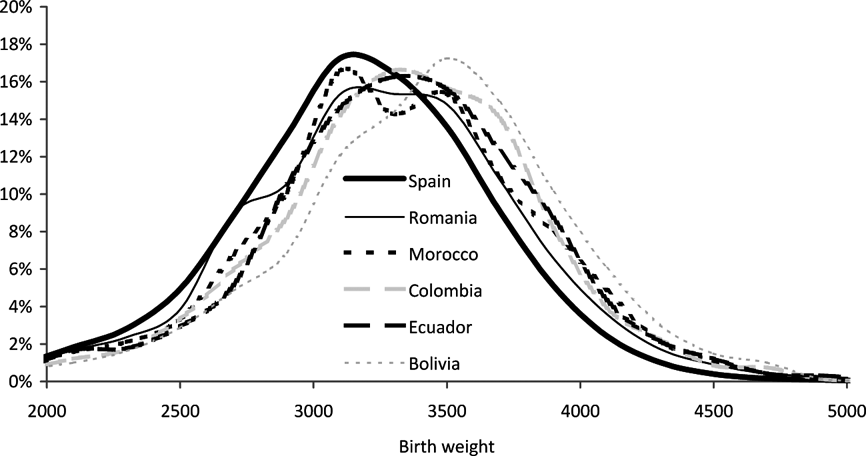
Whether there are significant differences in mean birth weights between the different groups of immigrants by country of origin, namely Bolivia, Ecuador, Morocco, Colombia, Romania and Spain, was also tested. Multiple comparisons of mean birth weight by maternal nationality were carried out and indicated significant differences for most nationalities. Furthermore, the weights of newborns for Spanish, Romanian and Bolivian mothers were considerably different to those of the remaining nationalities; Bolivian mothers presented the highest mean birth weight, while the Spanish mothers registered the lowest. Moroccan, Ecuadorian, and Colombian mothers did not have significant differences between the weights at birth of their newborn babies. Consequently, these results confirm that there were significant differences in birth weight by nationality (Fig. 4). These evidences are consistent with those found in previous studies in Spain (Castro-Martín, Reference Castro-Martín2010; Juárez, Reference Juárez2011) The results also highlight the big contrast between Spanish mothers on the one hand (placed to the left, lowest weights) and the Bolivian mothers on the other hand (placed to the right, highest weights).
Distribution of birth weight of newborns for Spanish mothers and the most relevant groups of foreign mothers for women living in the region of Valencia, 2007–2009.
Differences in factors among ethnic groups: linear regression models
Given the observed differences in the weight at birth between ethnic communities, linear regression models – one for each group (Spanish, Romanian, Moroccan, Ecuadorian, Colombian and Bolivian) – were drawn using 2007–2009 micro-data from birth registries, with birth weight as the dependent variable (not presented here). These models aimed to: (1) establish which variables could be considered as factors (effect and significance); (2) sort the variables by importance and effect (the coefficient sign indicates whether the weight of the newborn baby increases or decreases); (3) analyse differences in the way these factors affect the various communities studied; (4) assess how good the model is globally by estimating the rate of weight variability it explains; and (5) thus find out the importance of unobserved information. The analysis (results not shown here) of the most important factors confirmed the previous results on mean differences and those of former studies on birth weight in Spain, using the same micro-data (Bernis, Reference Bernis2005; Alonso et al., Reference Alonso, Fuster and Luna2005).
Of all the information given in the birth registries, the relevant factors were prematurity (the most important), multiplicity (second most important), child's sex and age of the mother. All these factors showed strong coefficients and were highly significant. The coefficients indicated that, in the case of a multiple delivery, the weight of the child decreases by 551 g on average. Additionally, the sex of the child revealed certain robustness and the weight increased when the newborn was a boy. Finally, first maternity also played an important role, as its coefficient was shown to be positive and significant for all groups. All these factors (highly significant) did not change their importance between the regressions calculated for each mother's nationality. The rest of the variables used (marriage status, profession, size of municipality) were much more heterogeneous, although the robustness was much lower.
In fact, the age of the mother and weight of newborn displayed a positive relationship, which is significant at 1% for all mothers, although the coefficient in the model for Spanish mothers is much smaller than that obtained for the other nationalities. This is consistent with the idea that the different age structures of nationalities are responsible to some extent for the differences in average birth weight. The capacity of the models to explain weight differentials varied. Nonetheless, the information included in the micro-data from both registries failed to explain 30% of the birth weight variability.
The causal approach and the epidemiologic paradox
To better deal with the hypothesis, the regression models finally constructed took into consideration the importance of fertility structure. Accordingly, the variables mother's age (and age squared), prematurity, multiplicity and first maternity were included, together with sex of the birth, as well as the interaction between mother's age and non-Spanish women, and other factors (civil status, profession and size of municipality).
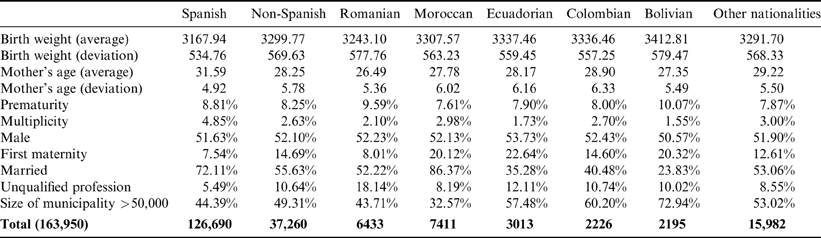
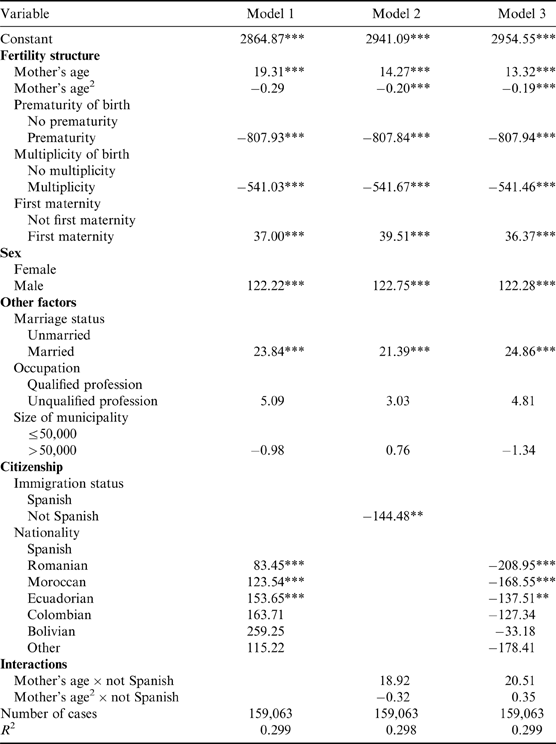
The main statistical descriptives are shown in Table 1 while the results of the causal approach are analysed in Table 2, Models 1 to 3. The adjustment level reached 30%. When sex, together with factors related to fertility structure (mother's age, prematurity, multiplicity, first maternity), are included with the dummies of nationalities and other factors, all coefficients remain very robust, except for qualified profession and size of municipality. Here, the covariates of the ethnic groups illustrate (1) a higher birth weight for all groups of foreign mothers compared with Spanish ones, and (2) the important heterogeneity among ethnic groups: Romanian display the lowest birth weight and Bolivian the highest.
Main statistical descriptives from birth registries over the period 2007–2009 for women living in the region of Valencia by nationality
Linear regression models for weight at birth, all mothers, region of Valencia, 2007–2009
Selected mothers represent 93.3% of all mothers living in Valencia and who have given birth to a child during the study period (the missing values are quite equally distributed among all groups).
*p≥0.9; **p≥0.95; ***p≥0.99.
Considering that mother's age stands as one of the most important difference between Spanish and non-Spanish mothers, Model 2 was built to control for the interaction between the mother's age and her background nationality (all foreign mothers together). In this model the sign of the coefficient corresponding to the citizenship changes, showing that the different age structure of fertility has the highest explanatory power. This result deals with the second objective, and proves that fertility structure, mainly mother's age and its related covariates, is responsible for the differences in weight at birth between newborn children of foreign and native mothers in the region of Valencia. Therefore, the ‘healthy immigrant effect’ is rejected for foreign mothers as a whole.
Finally, the last model deals with the third objective of the study, which tested the heterogeneity between foreign groups and, in particular, the degree to which the differences are related to the epidemiological paradox. Model 3 includes the covariates for each ethnic group along with the interaction between mother's age and nationality. In this regression, the strong and positive coefficients found in Model 1 for each ethnic group become negative and robust, except for Bolivian mothers (no differences appear with the reference group). Romanian mothers have the lowest coefficient level, differing enormously from the other groups.
These results show again that (1) the most important factors explaining the differences between the ethnic groups of mothers fall into the group of characteristics related to fertility structure, mainly the age of the mother. Moreover, the evidence also illustrates that (2) two main clusters appear – Spanish and foreign mothers – which outline the principal variation due to the differences in fertility structure. This supports the third hypothesis, namely that weight differences are mainly due to differences in fertility patterns among the observed groups. In consequence, the epidemiological paradox is partially rejected. The exception is the group of Bolivian mothers, for whom no differences appear after controlling for fertility structure.
Discussion
Previous studies comparing immigrant and non-immigrant weight at birth point to two related explanatory hypotheses: the ‘healthy migrant effect’ and the ‘epidemiological paradox’. These refer to the finding that foreign-born status on the one hand, and low socioeconomic status on the other, can result in better perinatal outcomes (Fuentes-Afflick & Lurie, Reference Fuentes-Afflick and Lurie1997; Wingate & Alexander, Reference Wingate and Alexander2006; Auger et al., Reference Auger, Luo, Platt and Daniel2008). This study concludes that, among the observed characteristics, fertility-structure-related factors are the most relevant in explaining weight-at-birth differentials between immigrant (newborns weigh more) and non-immigrant mothers (newborns weigh less) in the region of Valencia, Spain. The results show that mother's age has an inverse U-shaped relationship with newborn weight, with the much later ages of Spanish mothers being the main factor responsible for the differences in fertility structure. Accordingly, there is no reason to support the epidemiological paradox because the data cannot corroborate the idea that immigrant mothers have better and healthier conditions that would result in better perinatal outcomes.
However, the results also point out that the different groups of foreign mothers behave heterogeneously, suggesting that unobserved factors (socio-cultural or other types of factors) have a diverse impact depending on the nationality and are thus affecting the newborn's weight differently. Romanian and Bolivian mothers represent two outlying groups in this general view. For the former, weight at birth of their newborn babies is the lowest, differing enormously from the rest of mother groups: very close to the Spanish mothers if the interaction with mother's age is not controlled for and much lower (more than 200 g less than the Spanish mothers) when this interaction is included. Bolivian mothers' newborn children weigh much more than those of the other groups when the effect of fertility structure is controlled, but when the interaction mother's age/foreign mother is included the difference with respect to the reference group disappears. This might mean that the epidemiological paradox cannot be fully rejected for Bolivian mothers.
However, the better perinatal outcomes reported for this group may be linked to factors that have been already identified in other studies (Moore et al., Reference Moore, Young, McCullough, Droma and Zamudio2001; Julian et al., Reference Julian, Vargas, Armaza, Wilson, Niermeyer and Moore2007, Reference Julian, Wilson, Lopez, Yamashiro, Tellez and Rodriguez2009). In fact, it is well known that, at high altitude, all fetal biometry measurements show lower figures than at sea level. However, multigenerational high-altitude populations are better adapted to this situation than other mothers living at high attitudes (Julian et al., Reference Julian, Vargas, Armaza, Wilson, Niermeyer and Moore2007). A recent study using data from Bolivian mothers examined the effects of altitude and ancestry on maternal vascular adjustment across pregnancy and their relationship to fetal growth (Julian et al., Reference Julian, Wilson, Lopez, Yamashiro, Tellez and Rodriguez2009). It found that Andean babies weighed more than their European counterparts at high altitude once the influence of other known birth-weight determinants was taken into account. This supports the hypothesis that genetic factors are involved in the protection of fetal growth at high altitude (Julian et al., Reference Julian, Wilson, Lopez, Yamashiro, Tellez and Rodriguez2009). Unfortunately, there are no studies considering the birth weight of children of migrant mothers who live at altitudes close to sea level and who belong to multigenerational high-altitude populations, in comparison to other groups of mothers. Although ad hoc designed studies are needed, at this point it can only be suggested that the higher birth weight detected in Bolivian mothers may be related to a special adaptation of multigenerational high-altitude communities rather than to healthier conditions of immigrant mothers in Spain.
Acknowledgments
This study is part of a research project on fertility and sexual and reproductive health of immigrant women in the Region of Valencia: Directorate General for Science Policy, Ministry of Education, Generalitat Valenciana (the Autonomous Government of Valencian Region), Reference No. GV/2007/170. The authors would like to thank José Manuel Pavía, Jeroen Spijker and the anonymous reviewer for their very interesting criticisms and suggestions.