Introduction
The definition and diagnosis of intellectual disability (ID) have been subjects of considerable attention for over a century (Seguin, Reference Seguin1846). Diagnostic criteria for identifying individuals with ID have undergone significant revisions, changes perhaps best chronicled through the versions of the Diagnostic and Statistical Manual of Mental Disorders (DSM) (Brue and Wilmshurst, Reference Brue and Wilmshurst2016, pp. 3–4). Recent articulations of the diagnosis have emphasized the need to meet standards of mental deficiency as well as show evidence of impairment of developmentally typical functioning within society (Yell et al., Reference Yell, Shriner and Katsiyannis2006). This definition has been formalized in the three-pronged criteria currently used to identify individuals with ID in DSM-5 (Schalock et al., Reference Schalock, Borthwick-Duffy, Bradley, Buntinx, Coulter, Craig, Gomez, Lachapelle, Luckasson, Reeve, Shogren, Snell, Spreat, Tasse, Thompson, Verdugo-Alonso, Wehmeyer and Yeager2010). This definition requires: (a) significantly sub-average general intellectual functioning, determined by standardized intelligence testing; (b) difficulties in adaptive behavior; and (c) the presence of both (a) and (b) before age 18.
While conceptual and nosological issues in the assessment of ID remain important areas of inquiry, there has been limited empirical work on the prevalence, distribution and psychiatric comorbidity of ID in the general population. Most studies of ID employ data from clinical samples. Based on the array of investigations of clinical populations, results indicate that co-occurring mental health and neurodevelopmental conditions are three or four times higher in ID populations than in the population at large (American Psychiatric Association, 2013; Brue and Wilmshurst, Reference Brue and Wilmshurst2016), with co-morbidity particularly high for attention deficit hyperactivity disorder (ADHD), autism spectrum disorder, mood disorders, anxiety disorders, and major neurocognitive disorders. For example, in a Dutch study of 474 random ID students ages 7–20 years, 22% of the ID sample also met criteria for anxiety disorder and 25% for disruptive behavior disorder (Dekker and Koot, Reference Dekker and Koot2003). In a UK sample of 438 children and adolescents ages 5–15, the likelihood of meeting diagnostic criteria for any one co-morbid anxiety, behavior, or conduct disorder was 39% for those with diagnosed ID v. 8% for those without ID (Emerson, Reference Emerson2003).
However, such findings have significant limitations with regard to generalizability. Namely, because clinical populations often come to attention through referral, they are more likely to exhibit psychiatric comorbidity than the general population (Cooper et al., Reference Cooper, Smiley, Morrison, Williamson and Allan2007). Not accounting for the diagnostic overlap between mental disorders and adaptive behavior difficulties may inflate ID prevalence estimates, and overestimate associations between ID and mental disorders (Maulik et al., Reference Maulik, Mascarenhas, Mathers, Dua and Saxena2011). The risk of comorbidity among populations with ID is consistently reported as being higher than in the general population, highlighting the need for valid estimates of associations from population-based samples (Brue and Wilmshurst, Reference Brue and Wilmshurst2016). Additionally, norms for intellectual and adaptive functioning, measures that comprise the definition for ID, should be developed based on data from a demographically and socio-economically representative sample. Those who seek and have access to clinical services likely differ from the general population in ways that may distort measures of ID and its associations with psychiatric disorders. Existing community studies often define ID status using non-standard measures, such as a designation of learning disability in school, or parent report of learning difficulties. These approaches may cause biased estimates as well, through social desirability effects (McDermott et al., Reference McDermott, Durkin, Schupf, Stein, Jacobson, Mulick and Rojahn2007).
Not only might these limitations influence understanding of risk factors and psychiatric comorbidities related to ID, but they have important legal implications for capital punishment cases. Several influential US Supreme Court cases (e.g. Atkins v. Virginia, 536 U.S. 304, 2002; Hall v. Florida, 134 S. Ct. 1986, 2014; Harmelin v. Michigan 501 U.S. 957, 1991) have determined that it is an 8th Amendment violation of cruel and unusual punishment to execute an adult diagnosed with ID, and that the standards for ID designation should be informed by objective factors to the maximum possible extent (Schultz and Vile, Reference Schultz and Vile2015). A scale that is normalized on a population with an inflated prevalence of ID may yield a less sensitive diagnostic tool for use in a non-clinical population. That is, individuals with ID may not meet the diagnostic cutoff if scale norms are artificially too low. The consequences of these false negatives for an individual on death row may be the difference between life and death.
To address these limitations, the current study is the first to assess ID in a nationally representative US sample of adolescents. We estimate the prevalence of ID, and its two constituent elements, low intelligence, and low adaptive behavior. We present ID prevalence estimates as well as associations of ID with socio-demographic characteristics and mental disorder prevalence and severity.
Methods
Sample
Data were from the National Comorbidity Survey Adolescent Supplement (NCS-A), a US population-representative study of psychiatric disorders in adolescence. The sample was selected through a dual-frame design, with adolescents recruited from both schools and households (Kessler et al., Reference Kessler, Avenevoli, Costello, Green, Gruber, Heeringa, Merikangas, Pennell, Sampson and Zaslavsky2009a). The sample includes 10 148 adolescents’ age 13–18 years, who were assessed from 2001 to 2004. Of these, 10 073 (99.3%) completed a supplemental survey that included an individually administered measure of fluid intelligence, described below. Additionally, one parent/caregiver of each adolescent completed a self-administered questionnaire (SAQ) to collect information on adolescent mental and physical health, and other family- and community-level factors. The SAQ was completed by 6491 parents (Merikangas et al., Reference Merikangas, Avenevoli, Costello, Koretz and Kessler2009). Post-stratification weighting adjusted for minor differences in sample and population distributions of 2000 census socio-demographic and school frequencies, as well as systematic differences between complete and incomplete parent–adolescent pairs (Kessler et al., Reference Kessler, Avenevoli, Costello, Green, Gruber, Heeringa, Merikangas, Pennell, Sampson and Zaslavsky2009a). Parents/guardians gave written informed consent and adolescent participants gave written informed assent after receiving a complete description of the study, in accordance to the procedures approved by Human Subjects Committees of Harvard Medical School and the University of Michigan. The Institutional Review Board of Columbia University approved the present analysis (IRB-AAAN1104). Study participants were compensated $50 for participation. Additional study details are available elsewhere (Kessler et al., Reference Kessler, Avenevoli, Green, Gruber, Guyer, He, Jin, Kaufman, Sampson and Zaslavsky2009b). The analytic sample included those with complete data for both adolescent and parent surveys with non-missing survey weights (n = 6256).
Variables
Mental disorders
Mental disorders were ascertained using an adolescent version of the Composite International Diagnostic Interview (CIDI) for DSM-IV (Kessler et al., Reference Kessler, Avenevoli, Green, Gruber, Guyer, He, Jin, Kaufman, Sampson and Zaslavsky2009b; Merikangas et al., Reference Merikangas, Avenevoli, Costello, Koretz and Kessler2009), a valid and reliable measure for use in adolescent populations (Kessler et al., Reference Kessler, Avenevoli, Green, Gruber, Guyer, He, Jin, Kaufman, Sampson and Zaslavsky2009b; Merikangas et al., Reference Merikangas, Avenevoli, Costello, Koretz and Kessler2009). Disorders were grouped into five empirically defined clusters: (1) fear disorders (specific phobia, agoraphobia, social phobia, panic disorder); (2) distress disorders [separation anxiety disorder, post-traumatic stress disorder (PTSD), major depressive episode/dysthymia, generalized anxiety disorder]; (3) behavior disorders ADHD, oppositional defiant disorder (ODD), conduct disorder; (4) substance use disorders (alcohol and drug abuse, with or without dependence); (5) bipolar disorder; and (6) eating disorders (anorexia, bulimia, binge eating) (Kessler et al., Reference Kessler, Avenevoli, McLaughlin, Green, Lakoma, Petukhova, Pine, Sampson, Zaslavsky and Merikangas2012b). ADHD symptoms were based on parent-report only. ODD and depression combined parent- and child-report of symptoms using an ‘or’ rule (Cantwell et al., Reference Cantwell, Lewinsohn, Rohde and Seeley1997). PTSD was assessed only among those with a lifetime experience of a traumatic event. Respondents who met criteria for a diagnosis completed further questions to assess the extent that symptoms of the focal disorder interfered with home, school or work, family, and social life using the Sheehan Disability Scale (Leon et al., Reference Leon, Olfson, Portera, Farber and Sheehan1997). Severe impairment was defined as a score of 7 or higher on any one of the four dimensions, each scored on a 0–10 Likert scale, consistent with prior research (McLaughlin et al., Reference McLaughlin, Green, Hwang, Sampson, Zaslavsky and Kessler2012b).
Intellectual disability
In accordance with DSM-5 criteria, probable ID status was determined based on a combination of low intelligence and low adaptive behavior. Further, the third prong of the definition (onset before adulthood) was met as well. Most of the adolescents in the sample were below age 18; and the parents who filled out the questionnaires for 18- and 19-year-olds were answering questions about their sons and daughters when they were children as well as their functioning as older adolescents. The measure we described below is consistent with clinical, conceptual, and psychometric guidelines for ID, and with contemporary thought on adaptive behavior assessment (Tassé et al., Reference Tassé, Schalock, Balboni, Bersani, Borthwick-Duffy, Spreat, Thissen, Widaman and Zhang2012); while not a formal clinical diagnosis of ID, we will nevertheless heretofore refer to the construct as ‘intellectual disability’.
Intelligence was measured using the 48-item nonverbal portion of the Kaufman Brief Intelligence Test (K-BIT), a standardized measure of fluid intelligence and fluid reasoning (Kaufman and Kaufman, Reference Kaufman and Kaufman1990b; Kaufman and Wang, Reference Kaufman and Wang1992). This task uses abstract matrices similar to those developed by Raven (Raven, Reference Raven1936), which have become widely accepted as prototypical measures of fluid reasoning and general intelligence (g) (Kaufman, Reference Kaufman2009). The K-BIT was administered by non-clinical interviewers who received appropriate training and practice, in accordance to the original administration procedures (Kaufman and Kaufman, Reference Kaufman and Kaufman1990b; Bain and Jaspers, Reference Bain and Jaspers2010). Although a comprehensive measure of IQ is preferred for ID diagnosis (Schalock and American Association on Intellectual and Developmental Disabilities. User's Guide Workgroup, Reference Schalock2012; American Psychiatric Association, 2013), a broad body of literature on fluid reasoning shows this construct has demonstrated good reliability and validity and has been shown empirically to be a proxy for g and is an excellent measure of IQ for a research setting (Canivez et al., Reference Canivez, Neitzel and Martin2005; Bain and Jaspers, Reference Bain and Jaspers2010; Kaufman et al., Reference Kaufman, Reynolds, Liu, Kaufman and McGrew2012; Floyd et al., Reference Floyd, Reynolds, Farmer and Kranzler2013; Reynolds et al., Reference Reynolds, Floyd and Niileksela2013). The K-BIT nonverbal sections have strong internal consistency (range: 0.87–0.92) and test-retest reliability [range: 0.76–0.89 (Kaufman and Kaufman, Reference Kaufman and Kaufman1990a; Salthouse, Reference Salthouse2010)]. The instrument has demonstrated invariance by gender and ethnicity and has established good construct validity with theory-based and other established measures of intelligence throughout adolescence (Kaufman and Kaufman, Reference Kaufman and Kaufman1990a; Kaufman and Wang, Reference Kaufman and Wang1992; Wang and Kaufman, Reference Wang and Kaufman1993; Canivez et al., Reference Canivez, Neitzel and Martin2005; Homack and Reynolds, Reference Homack and Reynolds2007; Kaufman et al., Reference Kaufman, Johnson and Liu2008; Reference Kaufman, Kaufman, Liu and Johnson2009; Bain and Jaspers, Reference Bain and Jaspers2010).
The K-BIT involves a series of progressively more challenging items. Test administration was discontinued when an adolescent responded incorrectly to all items in a set (sets include five items initially and four items for the last two sets). K-BIT norms were created specifically for the NCS-A by the test developer and co-author (Kaufman), as the NCS-A is considerably larger than the original normative sample for the K-BIT; in addition, the K-BIT was published in 1990, so its norms were outdated and did account for known cohort effects on IQ (Flynn, Reference Flynn1984; Weiss, Reference Weiss2010). Raw scores were generated based on the K-BIT manual for 92.62% of tests, which were administered and scored exactly as prescribed. An additional 7.08% of tests could be scored despite deviations in test administration. For example, some respondents were only asked the most difficult item in each set. In these cases, the K-BIT score was imputed based on the number of correct items and the level at which they met discontinuation criteria. A small percentage of cases (0.3%) were excluded due to invalid test administration. Scores were normed within 6-month age groups to mean 100 and standard deviation 15. The K-BIT Matrices test demonstrated good internal consistency (Cronbach's α = 0.90).
In the DSM-5, the cutoff for low intelligence is defined as scores of approximately two standard deviations or more below the standardized population mean (i.e. 70), including a 95% confidence interval (conventionally ± 5 points – i.e. 65–75). In our sample, the empirical upper bound of this confidence interval was 79, which is higher than the 75 typically used to define ID; therefore, we adjusted the cut score for eligibility as meeting the criterion of 76 or lower (range = 40–138), representing a compromise between convention and our empirical cutoff, defined in accordance with clinical training and judgment. The range of IQs for our sample indicates a moderate to mild level of ID.
Adaptive behavior reflects the typical development and functioning in society as perceived by others. It assesses one's ability to function in his/her social environment, distinct from a formal assessment of intelligence through artificial problem-solving tasks (Mercer, Reference Mercer and Miller1974). As mentioned, rigorous methods to assess adaptive behavior have existed for over 30 years (Sparrow et al., Reference Sparrow, Balla, Cicchetti, Harrison and Doll1984), though were not widely accepted until clinical standards were published in DSM-IV and the American Association on Mental Retardation (Luckasson et al., Reference Luckasson, Polloway, Reiss, Schalock, Snell, Spitalnik and Stark1992). These standards were updated in the DSM-5, which defines AB as significantly sub-average functioning in at least one of three skill domains: conceptual, social, and practical skills (Schalock et al., Reference Schalock, Borthwick-Duffy, Bradley, Buntinx, Coulter, Craig, Gomez, Lachapelle, Luckasson, Reeve, Shogren, Snell, Spreat, Tasse, Thompson, Verdugo-Alonso, Wehmeyer and Yeager2010). Conceptual skills refer to those used in language, reading, writing, and numbers. Social skills refer to interpersonal functioning, social responsibility, self-esteem, and adherence to social norms and rules. Practical skills refer to activities for daily routines and self-care, the ability to access and apply instrumental activities of daily living (e.g. school, occupation, health care), as well as the use and management of time and money (Schalock, Reference Schalock2015).
The present study examined these three domains of AB from both self-reported items in the NCS-A and responses provided by parents/caregivers in the SAQ. We constructed our measure of AB through the following steps. Initially, two authors (K.M. and A.K.) selected 66 items that corresponded to formal AB measures, namely the Adaptive Behavior Assessment System-3 (ABAS-3) (Harrison and Oakland, Reference Harrison and Oakland2015) and Vineland-3 (Sparrow et al., Reference Sparrow, Cicchetti and Saulnier2016). Next, items were removed if they overlapped with the diagnostic criteria of mental disorders, in order to avoid creating an artificial dependency between ID classification and psychiatric disorders. Items were further reduced based on the results of exploratory factor analysis with oblique rotation, removing items with factor loadings of less than 0.3 and several that had notable cross-loadings onto two or more factors. We retained 10 items with almost equal loadings on 2 or 3 factors. The factor analysis yielded four interpretable factors, comprising 44 items. The factors corresponded with the DSM-5 AB domains (conceptual, social, practical), although items representing the social factor were split, with one factor representing social problem solving (e.g. patient with others) and one representing social isolation (e.g. tends to do things alone). Overall, the EFA provided good evidence of construct validity for the AB measure as indicated in Supplementary Table S1. The global AB score yielded good internal consistency (α = 0.91). Each of the factors (composed of 7–18 items) had adequate to good internal consistency (α = 0.73–0.91). Item descriptions, scoring details, scale structure, and factor loadings are shown in Supplementary table S1. The total AB scale and each factor score were normed and converted to standard scores (mean = 100; standard deviation = 15), to be able to compare factor distributions and to use the same metric for IQ and AB. Low adaptive behavior was defined as a score of less than or equal to 76 in the total AB score, or on any one of the four individual factor scores (range = 34–133); the range of scores indicates that the sample included severe to mild adaptive functioning. This procedure is consistent with DSM-5 guidelines, which state that deficits in only one domain (conceptual, social, or practical) may support a diagnosis of deficient adaptive behavior (Schalock and American Association on Intellectual and Developmental Disabilities. User's Guide Workgroup, Reference Schalock2012; American Psychiatric Association, 2013). The AB cutoff of 76 or lower was chosen to be consistent with the cutoff for low intelligence, in accordance with the guidelines used by clinical practitioners when interpreting sub-average functioning on formal AB measures (Harrison and Oakland, Reference Harrison and Oakland2015; Sparrow et al., Reference Sparrow, Cicchetti and Saulnier2016). We also repeated our analyses considering additional thresholds ranging from 75 to 79 to verify the robustness of our definition. Although the two social factors were kept separate for identifying adolescents with ID, they were combined into one overall social domain for subsequent analyses, as both social factors are closely associated with the AB social construct (Tassé et al., Reference Tassé, Schalock, Balboni, Bersani, Borthwick-Duffy, Spreat, Thissen, Widaman and Zhang2012; Harrison and Oakland, Reference Harrison and Oakland2015; Sparrow et al., Reference Sparrow, Cicchetti and Saulnier2016).
Models were adjusted for potential confounding by including covariates associated with both the ID and mental disorders, including: gender, age (range: 13–18), race/ethnicity (Hispanic, non-Hispanic Black, non-Hispanic White, other), parental education (less than high school, high school graduate, some college, college degree or more), parental income (<1.5, 1.5–3, 3.1–6, >6 times the poverty level), number of parents living with the child (range: 0–2), any lifetime parent psychiatric disorder, and any lifetime parent substance use disorder.
Analysis
Cross-tabulations were used to estimate the prevalence of low IQ, low AB, and ID as a function of socio-demographics, lifetime mental disorder, and high-severity past-year disorders. Statistical significance was assessed through chi-square tests. Logistic regression models were used to calculate the odds of lifetime disorder among those with ID, compared with those with no ID. Analyses were estimated with survey design weights; standard errors estimated with Taylor series linearization implemented in SAS© version 9.4.
Results
The prevalence of ID in the total study sample was 3.2%. Individuals meeting criteria for ID were significantly closer to the poverty level, reported lower parent education, and had fewer biological parents in the home than those without ID. The frequencies of ID among all socio-demographic groups are presented in Table 1.
Prevalence and demographic correlates of intellectual disability compared with those with no intellectual disability, and its components (intelligence and adaptive behavior) in a population-representation sample of adolescents

ID = Intellectual disability, defined as IQg ⩽76 & ABg or any factor score ⩽76.
IQ = Intelligence Quotient; AB = Adaptive behavior.
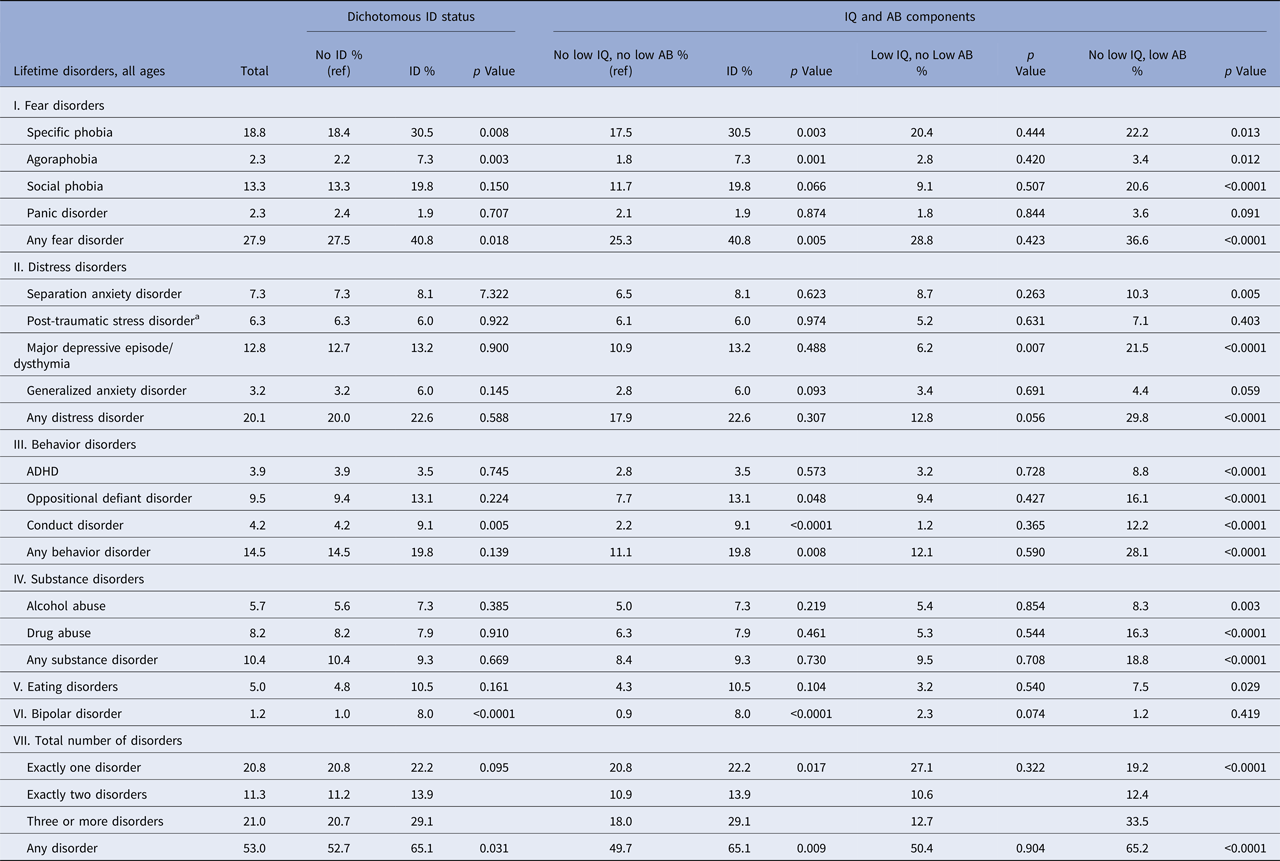
Table 2 compares the prevalence of psychiatric disorders between those with and without ID.
Prevalence of psychiatric disorders among adolescents with and without intellectual disability and its components (intelligence and adaptive behavior) in a population-representation sample of adolescents

ID = Intellectual disability, defined as IQg ⩽76 & ABg or any factor score ⩽76.
a Among those with a lifetime exposure to a potentially traumatic event (N = 3634, 58.1% of the total sample).
Compared to those without ID, individuals with ID had a significantly higher prevalence of any disorder (65.1% v. 52.7%) and any fear disorder (40.8% v. 27.5%). With regard to specific diagnoses, those with ID had higher rates of specific phobia (30.5% v. 18.4%), agoraphobia (7.3% v. 2.2%), conduct disorder (9.1% v. 4.2%), and bipolar disorder (8.0% v. 1.0%).
Adjusted models comparing the odds of the disorder among respondents with and without ID are in Table 3. After adjustment for confounders, only specific phobia (OR 1.66, 95% CI 1.02–2.68), agoraphobia (OR 2.46; 95% CI 1.02–5.93), and bipolar disorder (OR 7.24, 95% CI 2.10–24.99) were more common among those with ID compared with those without ID.
Unadjusted and adjusted odds ratios of the disorder among adolescents with intellectual disability compared with those with no intellectual disability, in a population representation sample

ID = Intellectual disability, defined as IQg ⩽76 & ABg or any factor score ⩽76.
a Adjusted for sex, age, poverty level, parent education, number of parents in the household, any parent psychopathology, and any parent substance use disorder.
b Among those with a lifetime exposure to a potentially traumatic event (N = 3634, 58.1% of the total sample).
The prevalence of severe impairment among those meeting criteria for each psychiatric disorder, separately for those with and without ID, is in Table 4. ID was associated with greater severity of specific phobia, agoraphobia, social phobia, panic disorder, GAD, ADHD, ODD, conduct disorder, drug abuse, and bipolar disorder. The prevalence of severe impairment among those with ID was notably high for many disorders, especially GAD (64.3%) and oppositional defiant disorder (65%). For those meeting criteria for drug abuse, 100% of individuals with ID reported severe impairment from the disorder. Results were robust to the variation in AB thresholds, in a sensitivity analysis.
Prevalence of high severity of psychiatric disorders among adolescents with intellectual disability compared with those with no intellectual disability, in a population-representation sample of adolescents

ID = Intellectual disability, defined as IQg ⩽76 & ABg or any factor score ⩽76.
a Among those with a lifetime exposure to a potentially traumatic event (N = 3634, 58.1% of the total sample).
Discussion
To our knowledge, this is the first study to assess the prevalence of ID in a population-representative sample of US adolescents and examine its associations with socio-demographic factors and psychiatric disorders. The prevalence of ID in this study was similar to previous estimates of 2–3% in US community samples (Harris, Reference Harris2006), though higher than the DSM-5 stated prevalence of 1% (American Psychiatric Association, 2013). The prevalence of any psychiatric disorder among those with ID was approximately 65%. Before adjustment for confounders, ID was associated with a wide range of psychiatric disorders. However, ID was also strongly associated with parental SES and family composition. After adjustment for these confounders, ID was associated only with specific phobia, agoraphobia, and bipolar disorder. These findings stand in contrast to prior work reporting high levels of behavior disorders in individuals with ID (Dekker and Koot, Reference Dekker and Koot2003; Simonoff et al., Reference Simonoff, Pickles, Wood, Gringras and Chadwick2007), and highlight the potential biases in our understanding of ID and its correlates that have emerged from a literature that has relied almost entirely on clinical samples.
The absence of an association between ID and behavior disorders is contrary to numerous prior studies using clinical samples and/or where ID cases are defined solely by IQ (Dekker and Koot, Reference Dekker and Koot2003; Simonoff et al., Reference Simonoff, Pickles, Wood, Gringras and Chadwick2007). Many symptoms of behavioral problems are also considered integral to the adaptive behavior component of ID, and it can be difficult to separate the diagnostic overlap between ID and symptoms of psychiatric disorders. Adolescents with ID who are sampled from schools or clinical populations are often referred for these services in response to behavioral problems in the first place, inflating the prevalence of these symptoms (Harris, Reference Harris2006). Studies of ID and psychiatric comorbidity that do not account for the adaptive behavior component in their ID criteria might mistakenly attribute those symptoms to comorbid externalizing disorders.
The elevated odds of bipolar disorder among those with ID observed here is in line with some, but not all, previous studies. One Australian community study of individuals with low IQ found no elevated prevalence of bipolar disorder (Morgan et al., Reference Morgan, Leonard, Bourke and Jablensky2008), though associations have been reported in some clinical samples (Cain et al., Reference Cain, Davidson, Burhan, Andolsek, Baxter, Sullivan, Florescue, List and Deutsch2003). In contrast, our finding that adolescents with ID had greater odds of lifetime phobias is consistent with prior work (Dekker and Koot, Reference Dekker and Koot2003; Emerson, Reference Emerson2003). Adolescents with ID who met criteria for a psychiatric disorder were more likely to face severe impairment from those disorders than adolescents without ID, a pattern that has not specifically been reported in the literature. However, this finding is consistent with the more general observation that the adaptive behavior limitations of individuals with ID (e.g. difficulties in daily living skills, interpersonal problems) are likely to exaggerate the severity of the symptoms of their comorbid disorder (Woods et al., Reference Woods, Freedman, Derning and Polloway2015). Also, known risk factors for disorder severity, such as stressful life events, may explain this pattern, as individuals with ID may be less likely to cope with stressful life events and may be at greater risk for experiencing them (Hatton and Emerson, Reference Hatton and Emerson2004). These patterns suggest that although individuals with ID are more likely to experience only a limited set of disorders, they bear a disproportionate burden of psychiatric morbidity as they are more likely to experience severe impairment from psychopathology across a wide range of disorders than youth without ID.
ID was associated with several indicators of household SES and family composition, which have been ignored in prior work on psychiatric comorbidity among those with ID. These experiences may represent perinatal or environmental risk factors for ID, similar to those that have been identified in etiologic studies of low IQ populations (Keyes et al., Reference Keyes, Platt, Kaufman and McLaughlin2016). Associations were particularly strong with low parental education; to the extent that parental education may be associated with the parents’ own cognitive ability, these associations may represent shared heritability of ID (McDermott et al., Reference McDermott, Durkin, Schupf, Stein, Jacobson, Mulick and Rojahn2007; Morgan et al., Reference Morgan, Croft, Valuri, Zubrick, Bower, McNeil and Jablensky2012). Because parental SES and household composition are also associated with child psychopathology (Duncan et al., Reference Duncan, Brooks-Gunn and Klebanov1994; Kessler et al., Reference Kessler, Avenevoli, Costello, Georgiades, Green, Gruber, He, Koretz, McLaughlin and Petukhova2012a; McLaughlin et al., Reference McLaughlin, Costello, Leblanc, Sampson and Kessler2012a, Reference McLaughlin, Koenen, Hill, Petukhova, Sampson, Zaslavsky and Kessler2013), these factors appear to have been key – but ignored – confounders in prior work on ID and psychiatric comorbidity.
Several additional findings are noteworthy. Among adolescents with ID, 65.1% met criteria for a lifetime psychiatric disorder, somewhat higher than typically reported ranges of 30–50% (Einfeld et al., Reference Einfeld, Ellis and Emerson2011). There are several possible reasons for this discordance. Most studies of ID and psychopathology are based on non-representative populations, such as from students attending special education schools (Emerson, Reference Emerson2003; Bakken et al., Reference Bakken, Helverschou, Eilertsen, Heggelund, Myrbakk and Martinsen2010). These adolescents represent a subsample of those with ID who are able to attend school regularly. Second, in defining ID, many previous studies give either sole or primary consideration to IQ scores, without also considering low adaptive behavioral functioning. The effect of both of these issues may mean that prior studies are more likely to include milder cases of ID. In our study, ID was defined by IQ and AB criteria and included a sample of adolescents with ID in the general population, representing a mixture of mild and more severe cases. Indeed, population studies that include both mild and severe cases have reported comparable disorder prevalence (Gillberg et al., Reference Gillberg, Persson, Grufman and Themnér1986).
Prior studies of gender differences in ID have yielded inconsistent conclusions, some studies find no differences (Bakken et al., Reference Bakken, Helverschou, Eilertsen, Heggelund, Myrbakk and Martinsen2010), while others have identified a significantly higher prevalence among boys than girls (Halfon and Newacheck, Reference Halfon and Newacheck1999). In the current study, gender differences were absent. Previous investigations have found significant discordance comparing school- v. therapist-referred cases, suggesting that gender bias is a significant factor in the identification of ID (Caseau et al., Reference Caseau, Luckasson and Kroth1994). Indeed, given that the prevalence of behavioral problems is higher than boys than in girls even in the absence of ID (Keiley et al., Reference Keiley, Bates, Dodge and Pettit2000), it could be that more boys with ID are identified and referred for services given the other problems that may present alongside ID. More research is needed to compare absolute rates and other sources of bias in diagnostic practices, as this may suggest that boys are overdiagnosed, or that girls are under-diagnosed for ID.
The results of this study should be interpreted in light of several limitations. First, the study was a cross-sectional design, using lifetime diagnosis of psychiatric disorders. However, this potential problem in design is likely mitigated as the NCS-A focused on adolescents, with a short period of recall. Also, the etiology of ID reflects the consequences of genetic and/or developmental exposures that very likely precede the development of psychiatric conditions (Morgan et al., Reference Morgan, Croft, Valuri, Zubrick, Bower, McNeil and Jablensky2012). Second, ID cases were identified using survey items that were not specifically designed to measure the AB construct; however we believe the new measure is a valid proxy for an established measure, based on clinical, conceptual, and psychometric guidelines, and is consistent with contemporary thought on adaptive behavior assessment (Tassé et al., Reference Tassé, Schalock, Balboni, Bersani, Borthwick-Duffy, Spreat, Thissen, Widaman and Zhang2012). Third, adolescents with ID or psychiatric impairment may have increased difficulty in language and comprehension, may show decreased effort during ID assessment, or may show atypical symptoms of the disorder (Woods et al., Reference Woods, Freedman, Derning and Polloway2015). These effects may inflate the reported associations between ID and disorders, as well as the relationship between ID and disorder severity. However, the impact of these variables is minimized by the use of parent (SAQ) report on five adolescent disorders (ADHD, conduct disorder, ODD, major depressive episode, and dysthymia) and severity items (Kessler et al., Reference Kessler, Avenevoli, Green, Gruber, Guyer, He, Jin, Kaufman, Sampson and Zaslavsky2009b). Thus, for example, even if the adolescents with moderate intellectual impairments had difficulty reading and understanding any study items in the self-report measures used diagnose comorbid psychiatric disorders, their self-report data were cross-validated by parents’ data for most diagnoses. Also, the known limitations of ID individuals would not have compromised their ID classification because the measure of IQ was individually administered, nonverbal, with the simple administration; and the measure of AB was derived solely from interviews given to their parents. Though the use of a single parent report is very common in clinical research and practice, the use of multiple sources of reporting (e.g. teachers, other caretakers) might provide future opportunities to further validate a measure of AB. Finally, we acknowledge that the study data were collected more than a decade ago. In order to reflect current information about ID, studies and norms must be updated regularly to reflect population changes in IQ (Flynn, Reference Flynn1984; Weiss, Reference Weiss2010).
Conclusion
This study represents the first US population-representative assessment of the socio-demographic and psychiatric correlates of ID in adolescents. ID was associated with specific phobia, agoraphobia, and bipolar disorders. Just as notably, our findings call into question previously reported patterns, including increased risk of behavior disorders among those with ID and the greater prevalence of ID among male adolescents. Together, these findings highlight the need to consider how behavioral problems are conceptualized and classified in people with ID (Kwok and Cheung, Reference Kwok and Cheung2007). Study findings not only improve our understanding of the epidemiology and psychiatric consequences of ID but may also prove influential in the legal system, where a valid ID diagnostic assessment may be the difference between a referral for treatment and capital punishment.
Supplementary material
The supplementary material for this article can be found at https://doi.org/10.1017/S0033291718001605