

Introduction
Seabird bycatch occurs at a rate considered unsustainable for many vulnerable seabird populations, and has a particularly substantial impact on pelagic species (Croxall et al. Reference Croxall, Butchart, Lascelles, Stattersfield, Sullivan, Symes and Taylor2012), especially albatrosses and petrels. The cumulative impact of global fisheries on seabird populations became a major conservation concern in the late 1980s (Weimerskirch and Jouventin Reference Weimerskirch and Jouventin1987, Brothers Reference Brothers1991, Murray et al. Reference Murray, Bartle, Kalish and Taylor1993). Although attention focused initially on industrial longlining, bycatch by trawl and artisanal fleets have also been identified as major sources of mortality for many albatrosses and petrels (Sullivan et al. Reference Sullivan, Reid and Bugoni2006b, Favero et al. Reference Favero, Blanco, García, Copello, Seco Pon, Frere, Quintana, Yorio, Rabuffetti, Cañete and Gandini2011, Croxall et al. Reference Croxall, Butchart, Lascelles, Stattersfield, Sullivan, Symes and Taylor2012, Maree et al. Reference Maree, Wanless, Fairweather, Sullivan and Yates2014). Seabird bycatch in trawl fisheries was recorded in the early 1990s (Bartle Reference Bartle1991), but the more cryptic interaction of collisions with trawl cables received less attention than the large numbers of seabirds that were observed hauled aboard, drowned on longline hooks (Weimerskirch et al. Reference Weimerskirch, Capdeville and Duhamel2000).
In trawl fisheries, birds are attracted by fish and offal discards, and once the birds are in close proximity to the vessels, mortality occurs due to collisions with trawl cables (metal cables used to tow fishing nets), the “third wire” or netsonde cable (the cable that connects to the net monitor during fishing) or by entanglement in the nets (Weimerskirch et al. Reference Weimerskirch, Capdeville and Duhamel2000, González-Zevallos and Yorio Reference González-Zevallos and Yorio2006, Sullivan et al. Reference Sullivan, Reid and Bugoni2006b). Birds captured in nets or injured/killed after colliding with trawl cables and subsequently hauled onboard are considered to represent the minimum number of those killed during trawling – a large proportion of these birds fall into the water and are not recovered in fishing operations (Weimerskirch et al. Reference Weimerskirch, Capdeville and Duhamel2000, Sullivan et al. Reference Sullivan, Brickle, Reid, Bone and Middleton2006a).
Several factors affect collision rates, including cable characteristics (diameter, material, wear), aerial extent of cables (from the blocks to the entry point in the water), type of discards (undersized fish, whole heads, guts and offal), quantity and dumping site (i.e. at the stern or side of the vessel) among others (Dietrich and Melvin Reference Dietrich and Melvin2007). Collisions with trawl cables has been shown to cause mortality in a large number of seabird species, though long-winged birds, like albatross and Macronectes petrels, appear to be the most vulnerable (Sullivan et al. Reference Sullivan, Reid and Bugoni2006b). Entanglements of seabirds occur in trawl fisheries at different operational stages including setting, hauling and trawling (Weimerskirch et al. Reference Weimerskirch, Capdeville and Duhamel2000, González-Zevallos and Yorio Reference González-Zevallos and Yorio2006, Sullivan et al. Reference Sullivan, Reid and Bugoni2006b, Watkins et al. Reference Watkins, Petersen and Ryan2008). The susceptibility of different seabird groups to this form of mortality is related to their foraging tactics. Forage-divers (e. g. penguins and cormorants) are more vulnerable to entanglement at depth during trawling and at the start of hauling operations (González-Zevallos et al. Reference González-Zevallos, Yorio and Caille2007, Yorio et al. Reference Yorio, Quintana, Dell’arciprete and Gonzalez-Zevallos2010), while surface feeders and plunge divers (e. g. petrels and shearwaters) are more vulnerable when the net is close to the surface during setting and hauling (Sullivan et al. Reference Sullivan, Reid and Bugoni2006b, Watkins et al. Reference Watkins, Petersen and Ryan2008). The Procellaria petrels, as well as Ardenna shearwaters, are efficient at foraging through pursuit dives and surface-seizing. This feeding method allows them to compete in multi-species feeding assemblages, allowing them to reach fish at depths below those accessible to larger species like albatrosses and Macronectes petrels. However, this advantage exposes deeper-diving species to entanglement in fishing gear (Jiménez et al. Reference Jiménez, Domingo, Abreu and Brazeiro2012, Reference Jiménez, Phillips, Brazeiro, Defeo and Domingo2014, Rollinson et al. Reference Rollinson, Dilley and Ryan2014).
Interactions between seabirds and trawl cables in the Patagonian Shelf are well known in several fisheries targeting predominantly finfish species. This includes factory trawlers that target Southern Blue Whiting Micromesistius australis, Hoki Macruronus magellanicus and Patagonian Toothfish Dissostichus eleginoides (Sullivan et al. Reference Sullivan, Reid and Bugoni2006b, Tamini et al. Reference Tamini, Chavez, Dellacasa, Góngora, Crawford and Frere2019), the Argentine Anchovy Engraulis anchoita fishery (Paz et al. Reference Paz, Seco Pon, Favero, Blanco and Copello2018), the offshore Argentine Hake Merluccius hubbsi trawl fishery in San Jorge Gulf (González-Zevallos and Yorio Reference González-Zevallos and Yorio2006, González-Zevallos et al. Reference González-Zevallos, Yorio and Caille2007) and Northern Patagonia (Seco Pon Reference Seco Pon2014), and industrial vessels along the Patagonian Shelf (Favero et al. Reference Favero, Blanco, García, Copello, Seco Pon, Frere, Quintana, Yorio, Rabuffetti, Cañete and Gandini2011, González-Zevallos et al. Reference González-Zevallos, Yorio and Svagelj2011, Tamini et al. Reference Tamini, Chavez, Góngora, Yates, Rabuffetti and Sullivan2015). The most affected seabirds are albatrosses, petrels, and shearwaters.
Seabird interactions with the net have been observed in the same area by fishing fleets targeting a variety of species. This includes the Argentine Red Shrimp Pleoticus muelleri fishery in San Jorge Gulf (Gandini et al. Reference Gandini, Frere, Pettovello and Cedrola1999), the Silverside Odonthestes incisa fishery (Tamini et al. Reference Tamini, Perez, Chiaramonte and Cappozzo2002), the Argentine Anchovy fishery (Paz et al. Reference Paz, Seco Pon, Favero, Blanco and Copello2018), the Argentine Red Shrimp and Argentine Hake coastal fisheries in Northern and Central Patagonia (Yorio and Caille Reference Yorio and Caille1999, Marinao and Yorio Reference Marinao and Yorio2011, Marinao et al. Reference Marinao, Góngora, González Zevallos and Yorio2014), the high seas Argentine Hake trawl fishery in San Jorge Gulf (González-Zevallos and Yorio Reference González-Zevallos and Yorio2006, González-Zevallos et al. Reference González-Zevallos, Yorio and Caille2007) and by industrial vessels along the Patagonian Shelf (Favero et al. Reference Favero, Blanco, García, Copello, Seco Pon, Frere, Quintana, Yorio, Rabuffetti, Cañete and Gandini2011, González-Zevallos et al. Reference González-Zevallos, Yorio and Svagelj2011, Tamini et al. Reference Tamini, Chavez, Góngora, Yates, Rabuffetti and Sullivan2015). Species observed interacting with these fisheries include penguins, cormorants, albatrosses, petrels, and shearwaters.
This study presents a case study of the Argentinean side-haul trawl fishery with the following objectives: i) outline a detailed description of this poorly-studied haul operation to highlight the key stages that lead to entanglement; ii) describe and analyse the seasonal changes of abundance of highly migratory seabirds that interact with the fishery, to add to existing knowledge of the cumulative impacts these birds face; iii) provide information on the relative importance of seabird mortality through entanglement and collision with trawl cables for this type of fishery; iv) discuss the effectiveness of a short-term strategy for reducing the number of birds bycaught for our study fleet, and potential mitigation measures to be explored.
Methods
Fishery description and observer coverage
The Patagonian Shelf ecosystem extends from Uruguay to the Isla de los Estados and the Burdwood Bank (35° to 55°S and 50° to 70°W). This ecosystem, a composite area with a unique combination of characteristics, provides fertile conditions that sustain substantial populations of seabirds, seals and whales as well as several coastal and offshore trawl fisheries (Croxall and Wood Reference Croxall and Wood2002).
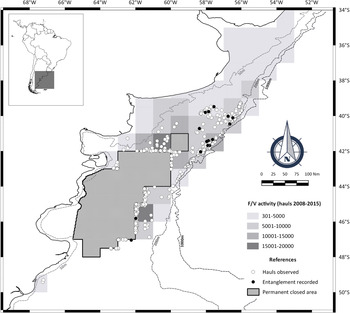
The side-haul trawl fleet of 60 vessels operate year-round between 34°S and 50°S (Figure 1). Vessels lengths range broadly from 20.1 to 59.8 m and can be divided into three potential categories: small (20–30 m; 35 vessels), medium (30–40 m; 15 vessels) and large (40–60 m; 10 vessels), all using demersal trawl nets (120–200 mm stretched mesh size at the cod end; 2–3 m and 20–40 m vertical and horizontal aperture respectively). Vessels trawl at a speed of 3.5–4 knots, with trawl durations of between three and four hours, and trips that last a maximum of 18 days. Retained species of commercial interest (target and non-target) are stored whole on ice and no offal is discarded at sea. Usually, discards are composed of small individuals of commercial species, species without current commercial interest and invertebrates (mainly squid, crabs, and benthic fauna). In this fleet between April 2008 and July 2015 we conducted a total of 18 cruises on five different vessels from medium (n = 3) and large (n = 2) categories. Distribution of the trips for this study is similar to the National Onboard Observer Programme pattern; observation in the small category is made difficult by space and logistic issues (G. Blanco pers. comm.). We monitored 486 trawls, observing 100% of the hauls, and achieved 136.7 hours of direct trawl cable observations.
Map showing distribution of side-haul trawlers fishing effort accumulated for the period 2008–2015, observed hauls (white circles) and hauls with entanglements (black circles).
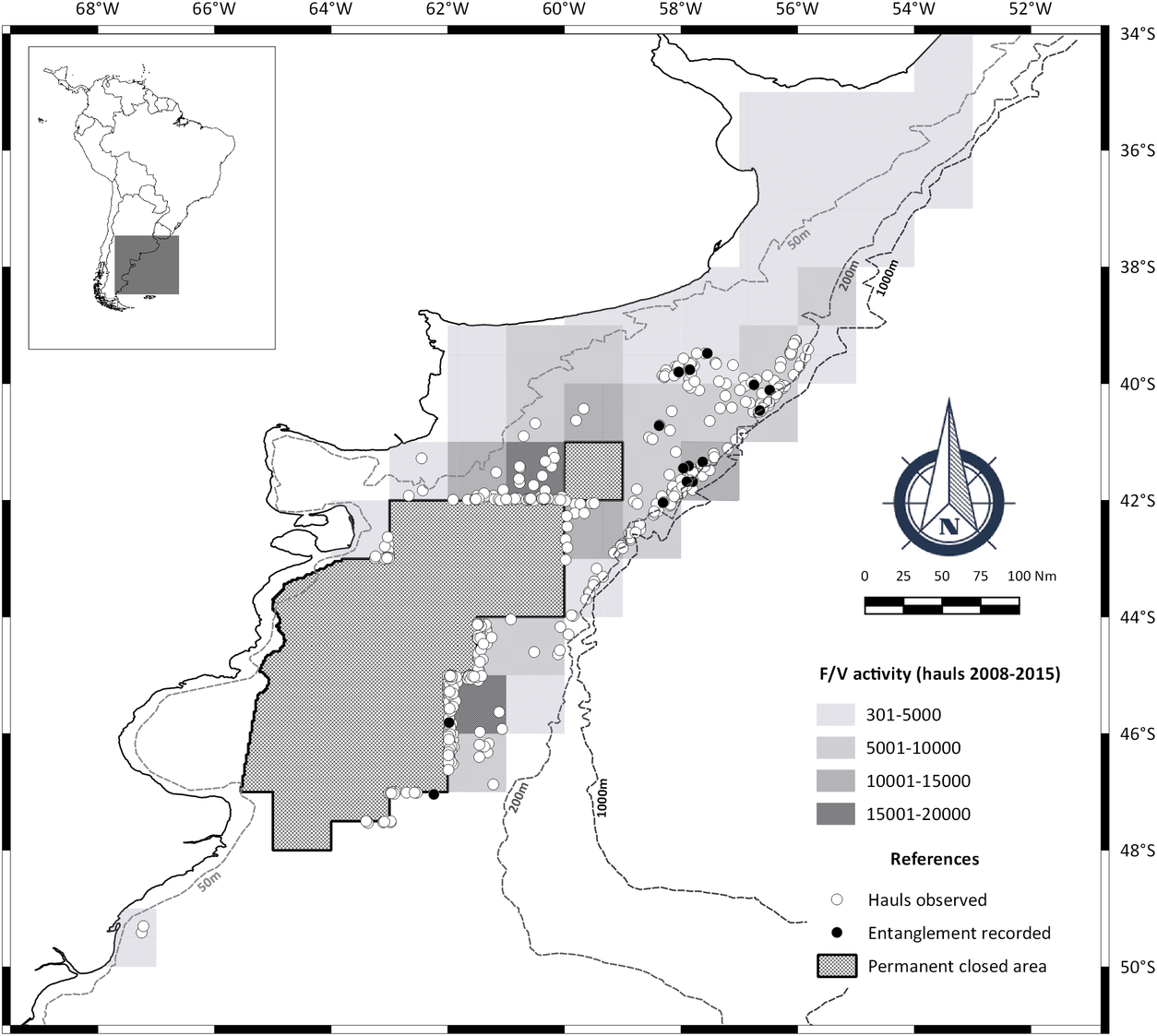
The total annual catch between 2008 and 2015 averaged 112,456 metric tons. This fleet has a dynamic fishing strategy, primarily targeting Argentine Hake with an average annual catch of 67,323 mt, but also skates (Rajidae; 6,579 mt) and Kingklip Genypterus blacodes (4,012 mt). Depending on the season, vessels may change fishing gear and/or fishing zone to target Argentine Anchovy (6,954 mt; see Paz et al. Reference Paz, Seco Pon, Favero, Blanco and Copello2018) and Atlantic Chub Mackerel Scomber colias (6,248 mt). Some vessels also target Argentine Red Shrimp.
Seabird assemblage composition and abundance
Seabird abundance to species level was estimated during the trawling operation by one of three experienced seabird observers (LNC, LLT and RFD). Observers conducted approximately 10-min counts from the stern gantry in a 250 m semi-circular sampling area. The overall abundance (total number of individuals in all counts) and abundance per species was calculated. Frequency of occurrence was defined as the percentage of hauls in which each species was observed. The mean number of individuals per haul for the seabirds were compared among seasons with Kruskal-Wallis analysis and the pairwise subsequent comparisons with Dunn's method.
Differences in the composition of seabird assemblages between seasons were tested using a multivariate analysis (ANOSIM) using PRIMER Version 6.1.5. After ANOSIM, similarity percentages analysis (SIMPER) was done to determinate the species that contributed most to the dissimilarities between seasons. (Clarke and Gorley Reference Clarke and Gorley2001, Paz et al. Reference Paz, Seco Pon, Favero, Blanco and Copello2018).
Seabird interactions
We recorded the entanglement of seabirds in nets during all observed hauls as the net was hauled aboard, noting number of birds caught, species and outcome (dead/unharmed). Owing to the differing likelihoods of recovering bycaught birds between collisions and entanglements, monitoring cable interactions requires a specially designed protocol, which means that estimates of mortality due to collisions are generally poorer than those of mortality due to entanglements (Moore and Zydelis Reference Moore and Zydelis2008, Watkins et al. Reference Watkins, Petersen and Ryan2008). The collision of seabirds with trawl cables was recorded using a specially designed protocol during trawling across 251 tows in a total time of 15–90 min per haul ( Mean = 32.1 min, SD = 12.1 min). Data were collected simultaneously for both the starboard and port cables. For collisions with trawl cables the following data were recorded: species, maturity (adult/immature, when this was possible according to the plumage characteristic of the species), severity (heavy/medium/light) and outcome (dead/likely dead/injured/unharmed). The ‘likely dead’ outcome category was recorded when a bird was seen dragged underwater and not seen again by the observer. The mortality rate associated with trawl cables results from the sum of the dead, likely dead and injured birds. Observations were conducted between daybreak and twilight and throughout the area of fleet operation (Figure 1).
Results
Seabird assemblage and abundance
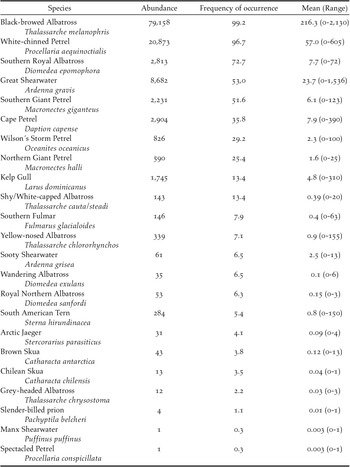
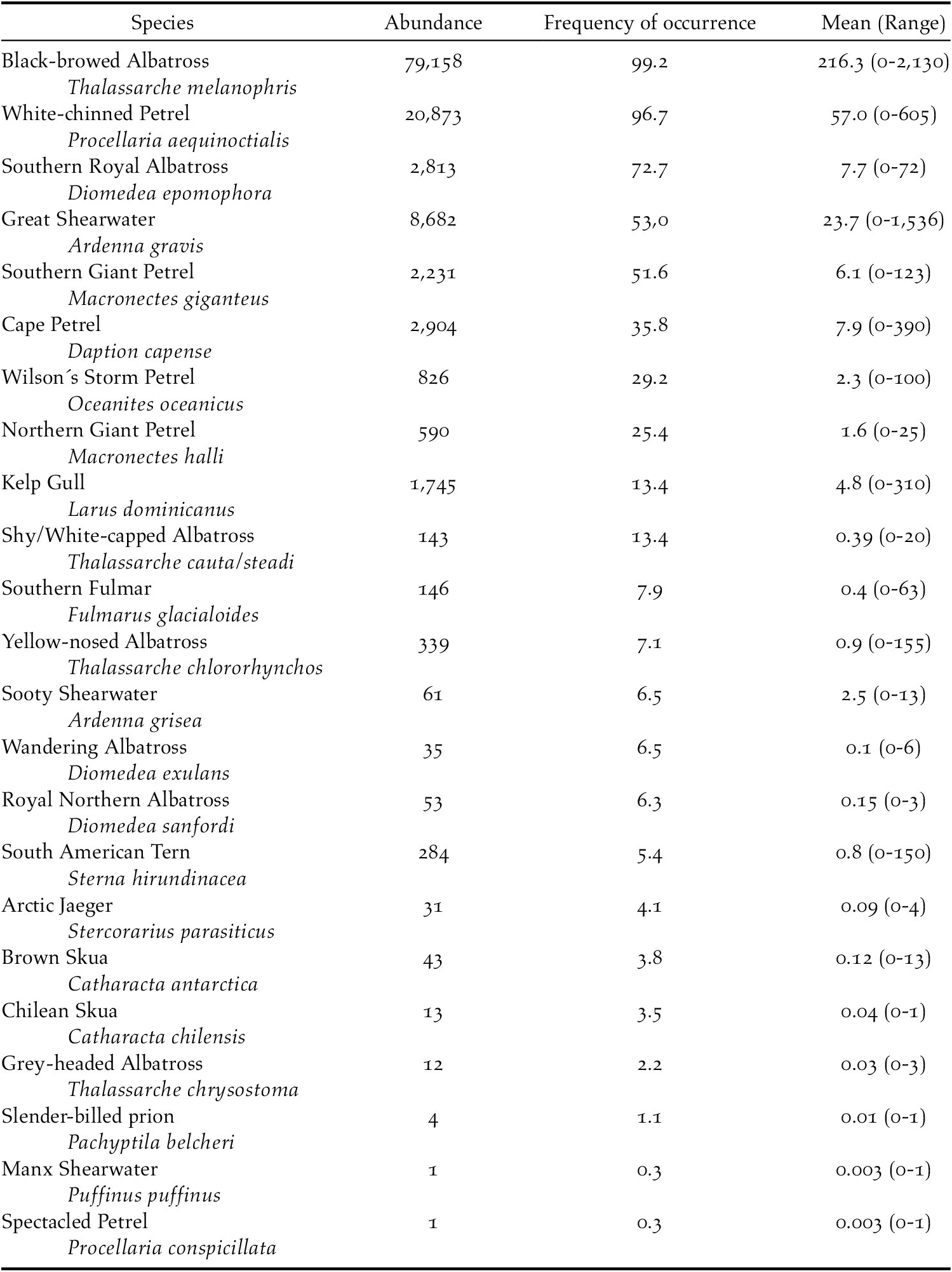
Data were gathered from 367 counts over 486 hauls (covering 225 fishing days) in the austral spring (October–December, 70 censuses), winter (July–September, 26), summer (January–March, 169) and autumn (April–June, 102). In total, 23 species of seabird were recorded foraging on discards aft of side-haul trawlers (Table 1). The most frequently observed species (> 50 % of frequency of occurrence) were the Black-browed Albatross Thalassarche melanophris and White-chinned Petrel Procellaria aequinoctialis, followed by Southern Royal Albatross Diomedea epomophora, Great Shearwater Ardenna gravis and Southern Giant Petrel Macronectes giganteus. The remainder of the species were observed in low numbers and in < 50 % of hauls (Table 1).
Abundance (total number of individuals in all the census), frequency of occurrence (%) and mean (range in parentheses) per census of seabirds attending side-haul vessels on the Patagonian Shelf during 2008–2015.
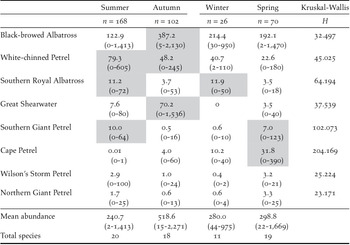
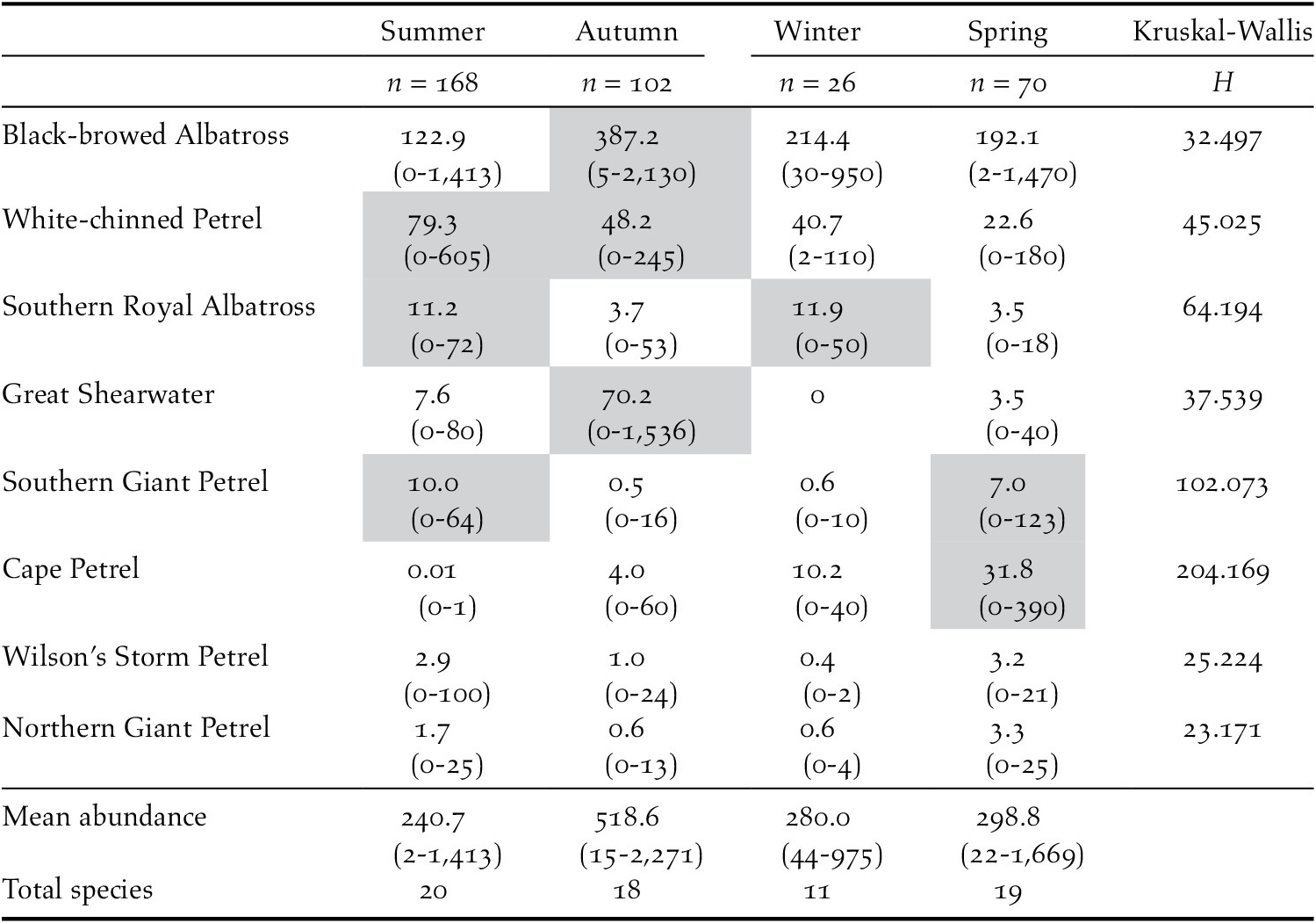
The abundance of the eight seabird species most frequently associated with this fishery, Black-browed Albatross, White-chinned Petrel, Southern Royal Albatross, Great Shearwater, Southern Giant Petrel, Cape Petrel Daption capense, Wilson’s Storm Petrel Oceanites oceanicus, and Northern Giant Petrel Macronectes halli, varied significantly among seasons. Black-browed Albatross and Great Shearwater were more abundant in autumn than in other seasons. Southern Royal Albatross were more abundant in summer and winter, Southern Giant Petrel in summer and spring, White-chinned Petrel in summer and autumn and Cape Petrel in spring (pairwise multiple comparison procedures, Dunn's method, P < 0.05; Table 2).
Average abundance (range in parentheses) of individuals per haul for the eight most frequent seabird species attending side-haul trawlers on the Patagonian Shelf during 2008–2015 plus mean total number of birds per haul and the total number of species attending. The seasons in which the first five species were most abundant (Dunn's method) are highlighted with shaded cells. All Kruskal-Wallis tests shown significant differences (P < 0.001).
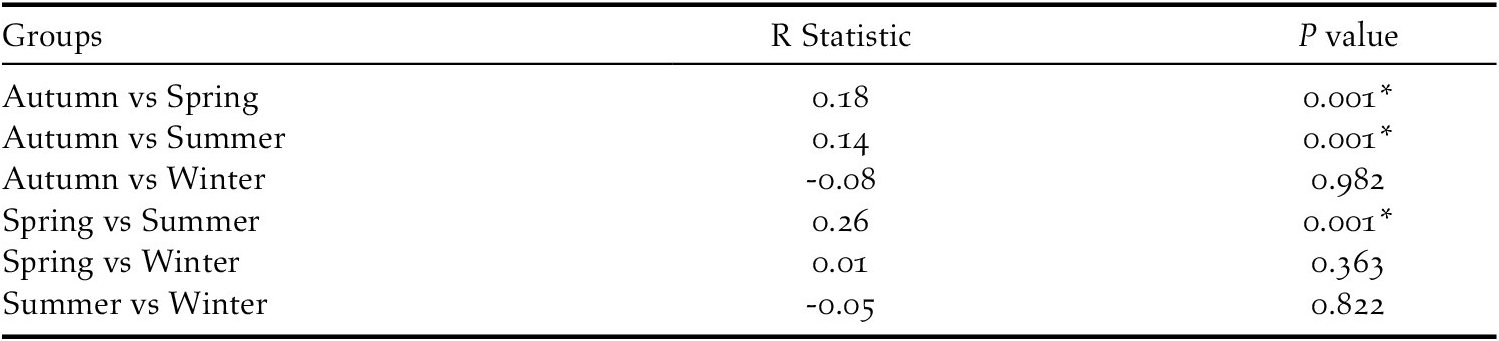
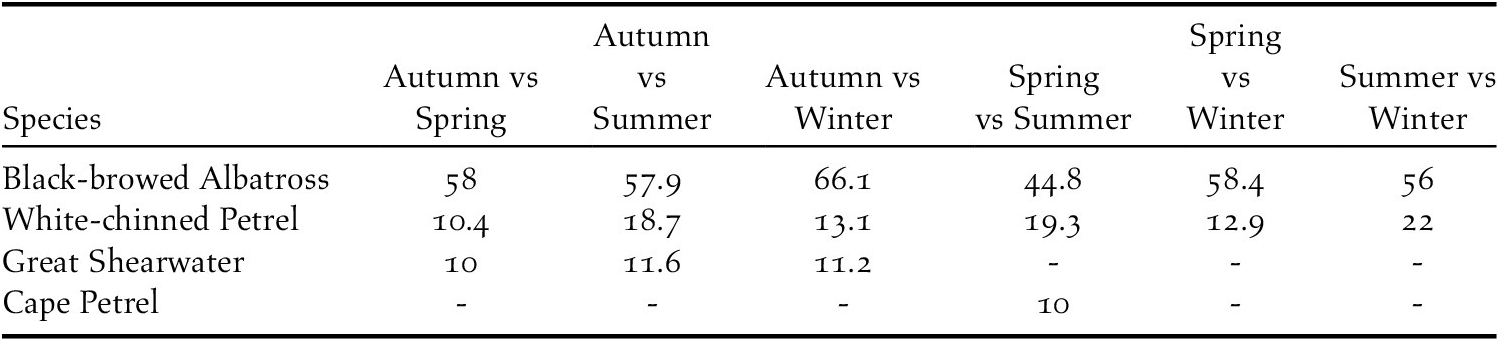
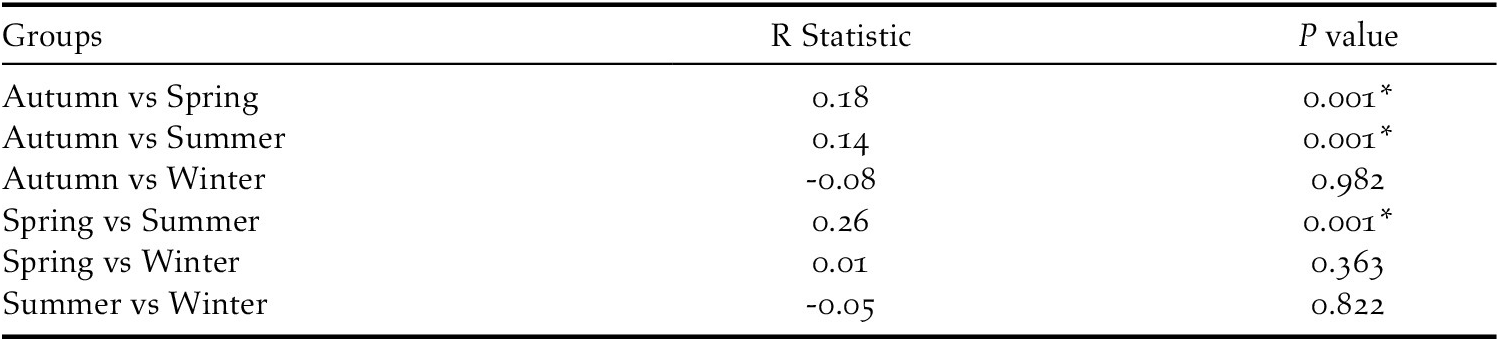
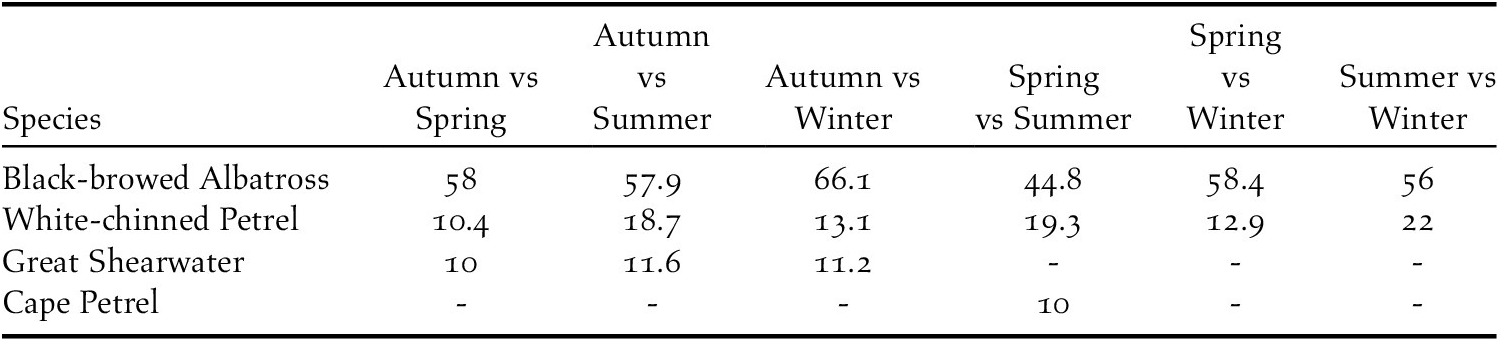
The composition of seabird assemblages was significantly different between seasons (ANOSIM: R Global = 0.147; P ≤ 0.01). Contrasts between seasons showed differences in all comparisons except those in which winter was included (Table 3). The species which contributed most to differences in the assemblage were Black-browed Albatross, White-chinned Petrel, Great Shearwater and Cape Petrel (Table 4).
R values for the contrasts obtained by ANOSIM analysis corresponding to the abundance of seabirds by season. “*” indicates significant differences. Sample statistic (Global R): 0.147. Significance level of sample statistic: 0.1%.
Relative contribution (%) of each species attending side-haul trawlers to the dissimilarity index (SIMPER analysis) between seasons. The absent species on the list or "-" contributed less than 10% in comparative analysis.
Seabird interactions
Net entanglement:
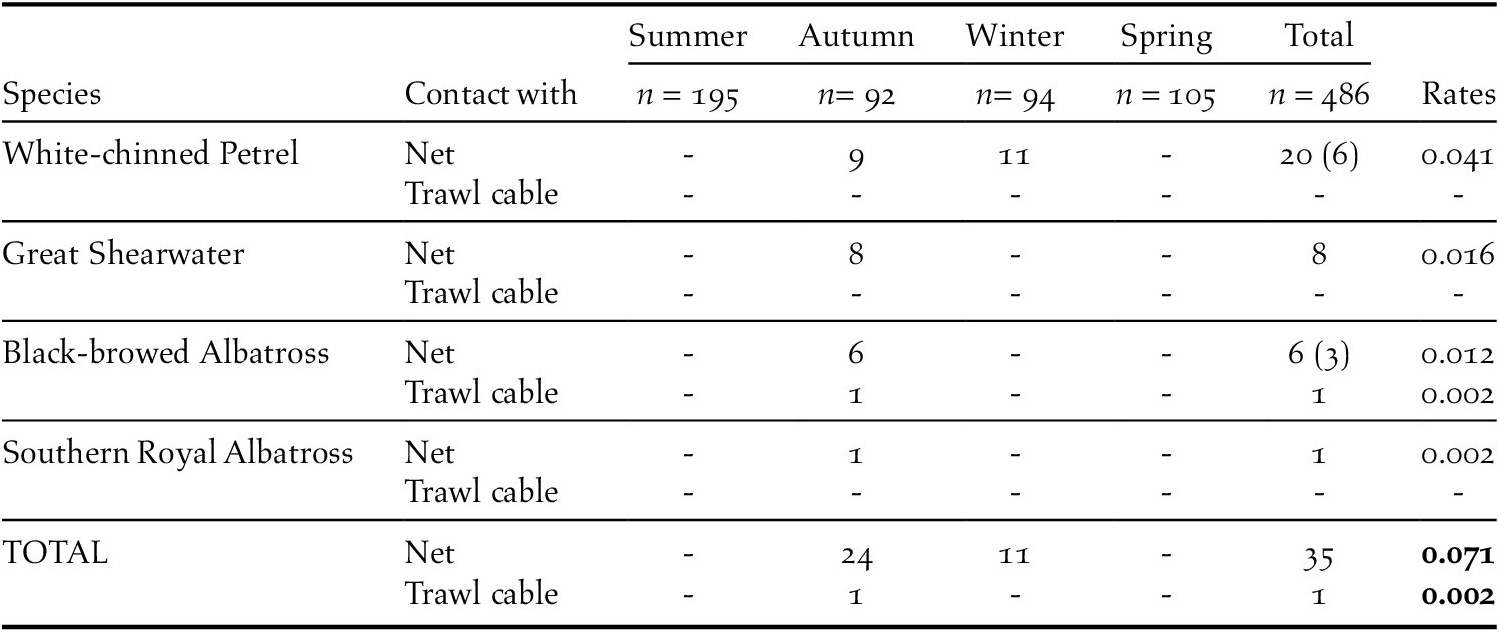
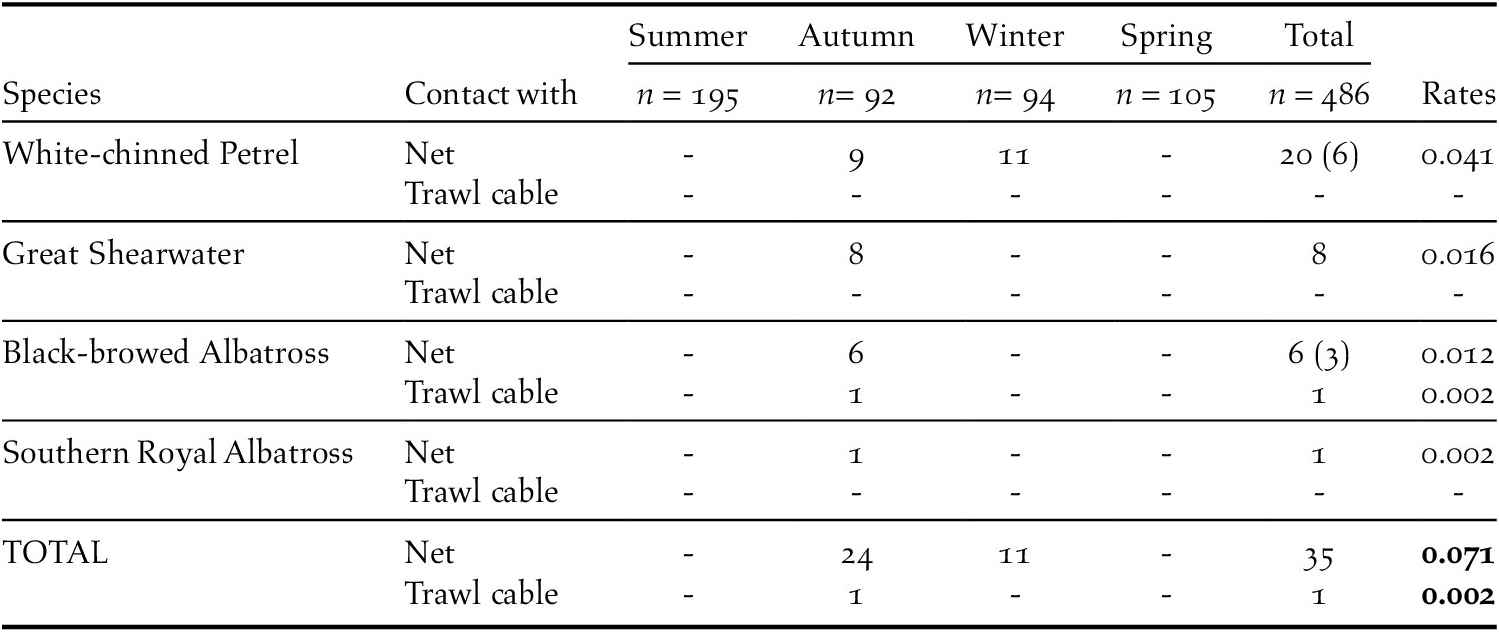
A total of 35 entanglements were recorded, distributed over 15 hauls, including seven hauls with one entanglement, and eight hauls with 2–7 entanglements. The entanglement rate of all birds across the 486 observed hauls was 0.071 birds/haul. Four species were recorded entangled including White-chinned Petrel (n = 20), Great Shearwater (n = 8), Black-browed Albatross (n = 6) and Southern Royal Albatross (n = 1) at entanglement rates of 0.041; 0.016; 0.012 and 0.002 birds/haul respectively (Table 5). The entanglements were observed exclusively in autumn and winter at a rate of 0.261 and 0.117 birds/haul, respectively. Of the birds recorded entangled, 74% were recovered dead (n = 26; 0.053 birds/haul) while 26% were recovered alive (n = 9; 0.019 birds/haul).
Seabirds hauled onboard during 486 hauls (and hauls by season) in side-haul trawler vessels on the Patagonian Shelf during 2008–2015. Birds returned alive in brackets.
Collision with trawl cables:
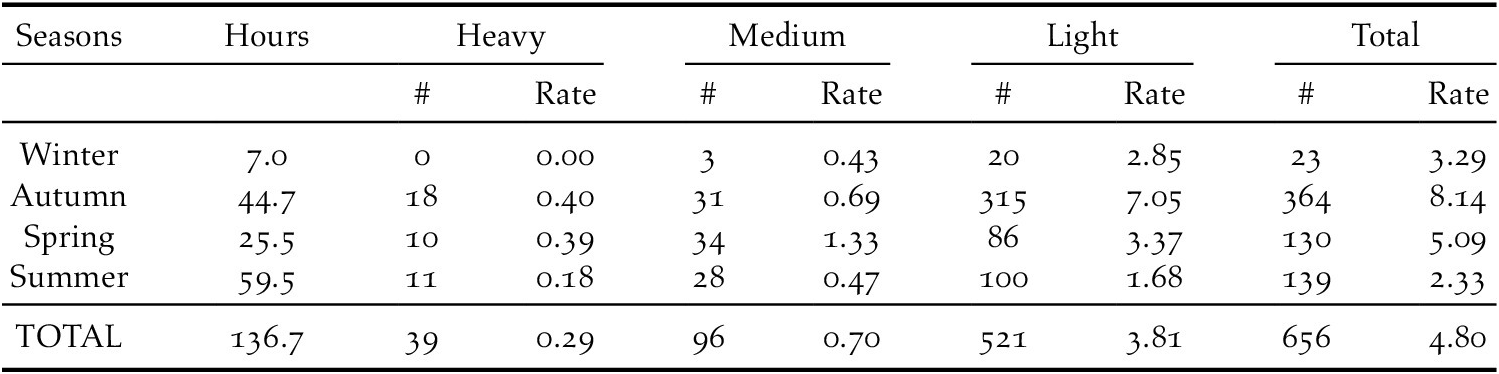
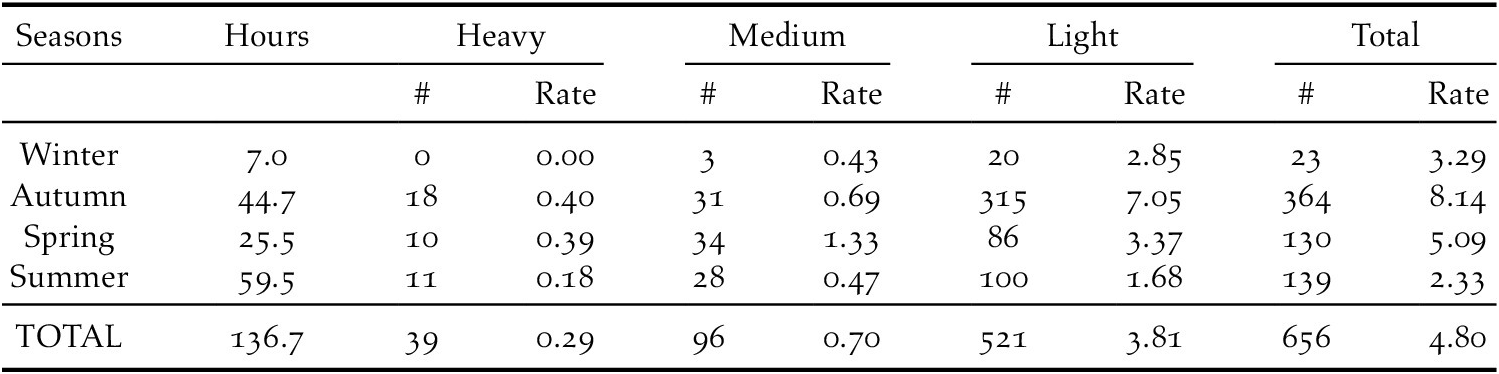
From the observed trawls a total of 656 seabird collisions were recorded including 39 heavy, 96 medium and 521 light collisions (Table 6). The majority of collisions were Black-browed Albatross (418 collisions recorded), Great Shearwater (107), White-chinned Petrel (62), Kelp Gull Larus dominicanus (30) and Cape Petrel (21). There were 10 or fewer collisions involving the Southern Giant Petrel, Sooty Shearwater Ardenna grisea, Southern Royal Albatross, and Southern Fulmar Fulmarus glacialoides. These observations give a total collision rate of 4.8 collisions/hour, calculated as the sum of all interactions (regardless of impact level or outcome) divided by the sum of observation effort. During the observation periods no confirmed mortalities were recorded through collisions; five birds (all Black-browed Albatross) were recorded injured and six birds (four Black-browed Albatross and two Great Shearwater) were recorded as possible fatalities (dragged underwater and not seen again by the observer). A single Black-browed Albatross was recovered dead from trawl cables (Table 5). The mortality rate associated with trawl cables (injured + likely dead) was 0.08 birds/hour (0.002 birds/haul for corpuses recovered aboard, Table 5). Collision with trawl cables occurred throughout the year.
Seasonal observation effort displayed as hours, and seabird collisions represented as the numbers of birds and rates (birds/hour) recorded from 486 trawls on industrial side-haul trawl vessels on the Patagonian Shelf between 2008 and 2015.
Discussion
Seabird attendance
Seabird species in the assemblages attending side-haul trawlers share some features with observations in other studies in the Argentinean EEZ, largely dominated by Procellariiform and Charadriiform species. Fisheries operating close to the coast are attended by a larger numbers of gulls, terns and skuas (Yorio and Caille Reference Yorio and Caille1999, González-Zevallos and Yorio Reference González-Zevallos and Yorio2006, González-Zevallos et al. Reference González-Zevallos, Yorio and Caille2007, Favero et al. Reference Favero, Blanco, García, Copello, Seco Pon, Frere, Quintana, Yorio, Rabuffetti, Cañete and Gandini2011, Seco Pon et al. Reference Seco Pon, Copello, Moretinni, Lértora, Bruno, Bastida, Mauco and Favero2013, Seco Pon Reference Seco Pon2014, Tamini et al. Reference Tamini, Chavez, Góngora, Yates, Rabuffetti and Sullivan2015, Paz et al. Reference Paz, Seco Pon, Favero, Blanco and Copello2018), while those operating in high seas are dominated by albatrosses and petrels. In this study, the Black-browed Albatross was the most frequently observed species, followed by White-chinned Petrel and Great Shearwater. Several studies have identified Black-browed Albatross as the most numerous species associated with Patagonian Shelf fishing vessels, particularly freezer trawlers (Sullivan et al. Reference Sullivan, Reid and Bugoni2006b, González-Zevallos et al. Reference González-Zevallos, Yorio and Svagelj2011, Tamini et al. Reference Tamini, Chavez, Góngora, Yates, Rabuffetti and Sullivan2015). The presence of Great Shearwater in more than 50% of trawls and in high numbers, especially in autumn (see also González-Zevallos and Yorio Reference González-Zevallos and Yorio2006, González-Zevallos et al. Reference González-Zevallos, Yorio and Svagelj2011), reaffirms the likelihood that the north Patagonian Shelf is a stop-over in the trans-equatorial migratory route from Tristan da Cunha to the North Atlantic, and/or potentially the result of natural dispersion of some individuals from that archipelago or the small colonies of the Malvinas/Falkland Islands (Ronconi et al. Reference Ronconi, Schoombie, Westgate, Wong, Koopman and Ryan2018). However, the small sample size in winter may be one of the reasons driving the lack of significant differences in seabird assemblages between seasons. Future studies should attempt to maintain consistency in the number of censuses conducted across seasons to better understand differences in seabird assemblages attending fishing vessels.
Entanglement details
In trawl fisheries, the hauling operation creates prey availability that otherwise would be naturally inaccessible to shallow divers. While some small albatrosses may dive a few meters, Procellaria petrels are proficient (Løkkeborg Reference Løkkeborg2011) and shearwaters are among the best adapted for foot and wing-propelled diving (Burger Reference Burger2001, Ronconi et al. Reference Ronconi, Ryan and Ropert-Coudert2010). During hauling operations, seabirds approach the net and mortality through drowning occurs mainly when the wings, legs and/or heads of seabirds become trapped in the mesh. Net interactions associated with the setting and hauling operations occur when the net is floating at the sea surface for extended periods. These periods are longer in this fleet (average 18 minutes, SD = 14, n = 302) than in ramp trawlers, which haul from the stern (average six minutes, SD = 1, n = 17), significantly prolonging the availability of the catch to birds (Mann-Whitney U = 228,500, P < 0.001).
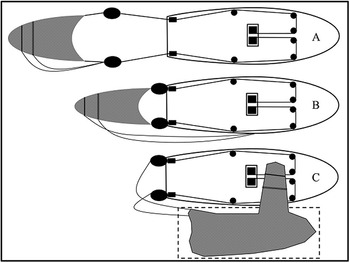
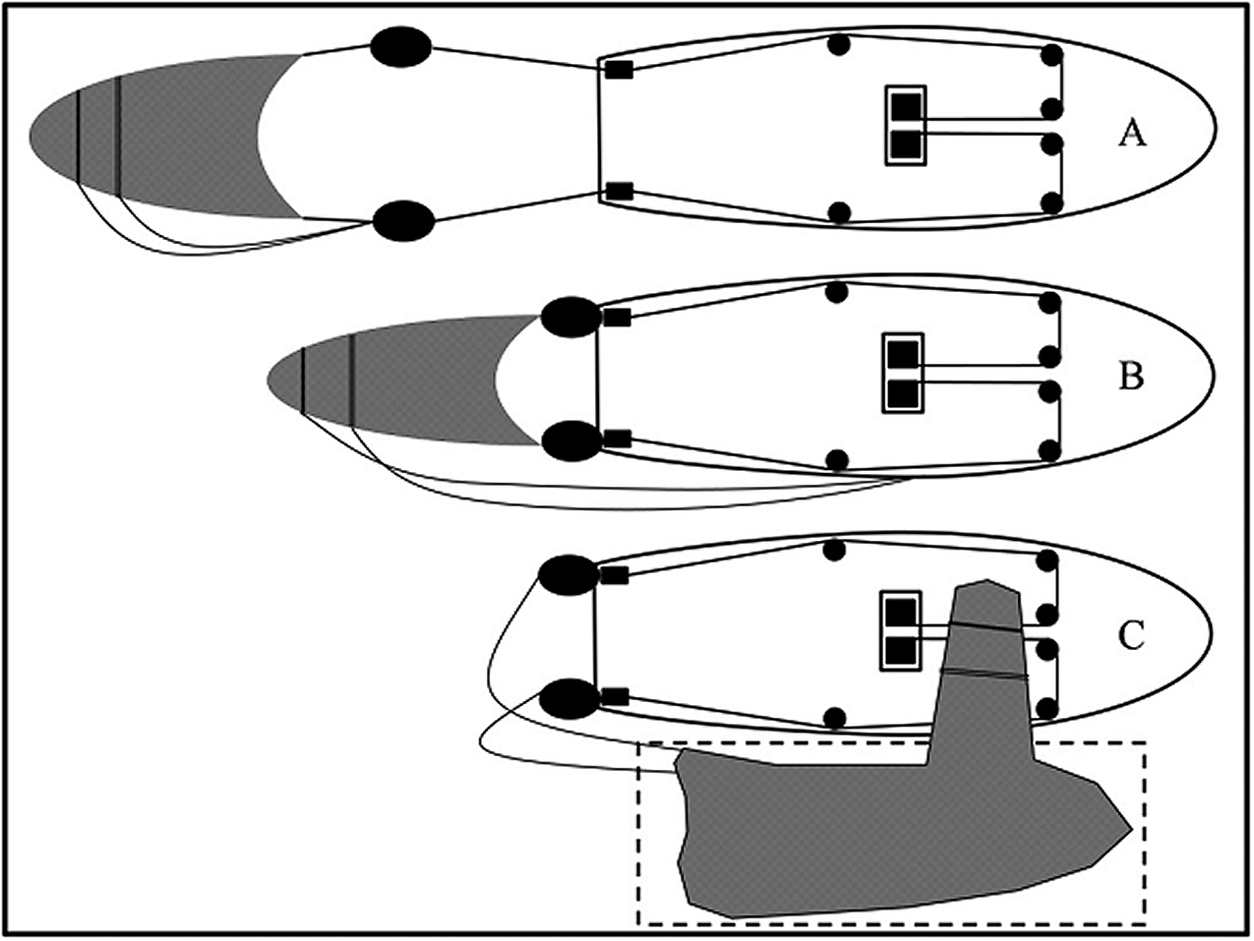
Side-haul trawlers are one of the oldest styles of fishing vessel in Argentina´s demersal trawl fleet and the hauling and setting operation employed on these vessels is the most widespread across the three segments of the national trawl fleet: wet-fish vessels (called fresqueros convencionales), semi-industrial (costeros, ~130 vessels) and artisanal bottom trawlers (rada o ría, ~380 vessels). The side haul operation involves hauling the cod-end of the net over the side of the vessel, while the trawl cables pass through two blocks suspended at the stern as on other trawlers. Once the trawl doors are retrieved, the vessel performs a tight turn to the starboard side to come alongside the floating net. The haul operation is completed via hauling in two ropes that connect the trawl doors to two different sections of the net, the first around the wings and the second close to the cod-end. Each rope gradually brings the cod end closer to the vessel. This system enables manoeuvring and controlling the entire net along the starboard side of the vessel. A boom-rigged mast or crane is then used to hoist the cod-end over the side to empty the catch onto the deck (Figure 2). The final part of the hauling operation (C, Figure 2) is when seabirds are entangled.
Description of the haul operation in the side-haul trawlers: trawling (A); start of hauling operation (B); and end of hauling / start of setting (C). The entanglement zone is represented as a dotted line rectangle, the winches (black square), blocks (black rectangles), trawl doors (black oval) and the net (grey form).
Collisions and entanglements in the Patagonian Shelf
As in other fishing grounds around the world, demersal trawl operations in the Patagonian Shelf fall into two main fleets: ice and freezer trawlers. The seabirds attending vary according to the type of discards produced, i.e. whole fish on ice trawlers vs. offal plus whole fish on freezers (Weimerskirch et al. Reference Weimerskirch, Capdeville and Duhamel2000); observations of seabird trawl cable strike have shown that the presence of offal or whole fish is a key determinant of trawl cable strike rates (Sullivan et al. Reference Sullivan, Reid and Bugoni2006b, Abraham et al. Reference Abraham, Pierre, Middleton, Cleal, Walker and Waugh2009). In this study, the observed rate of collision with trawl cables was five times lower than the rate recorded by the entire Argentine ice trawler fleet, including both stern and side-haul vessels (Favero et al. Reference Favero, Blanco, García, Copello, Seco Pon, Frere, Quintana, Yorio, Rabuffetti, Cañete and Gandini2011), almost seven times lower than recorded in freezer trawlers (Tamini et al. Reference Tamini, Chavez, Góngora, Yates, Rabuffetti and Sullivan2015), and more than ten times lower than recorded for factory freezer trawlers operating in Malvinas/Falkland Islands waters between August and November when albatross density is high and mean contact rate peaks (55.78 per hour, Sullivan et al. Reference Sullivan, Brickle, Reid, Bone and Middleton2006a). Our results indicate a rate of 0.29 heavy collisions/hour that is higher when compared to other ice-trawlers (0.04 collision/hour; Favero et al. Reference Favero, Blanco, García, Copello, Seco Pon, Frere, Quintana, Yorio, Rabuffetti, Cañete and Gandini2011) but insignificant when compared to the 8.36 and 16.8 collisions/hour reported for the freezer trawler fleets in the area (Tamini et al. Reference Tamini, Chavez, Góngora, Yates, Rabuffetti and Sullivan2015 and Sullivan et al. Reference Sullivan, Brickle, Reid, Bone and Middleton2006a respectively). For coastal fisheries operating in neighbouring areas, the collision rates are higher for ice trawlers (including side-haul ones), indicating that the distance to the coast or the target specie may be another factors that affects these rates (González-Zevallos et al. Reference González-Zevallos, Yorio and Caille2007, Paz et al. Reference Paz, Seco Pon, Favero, Blanco and Copello2018).
Net entanglement rates have been calculated for a number of fisheries operating on the Patagonian Shelf. Two seasonal coastal fisheries show significant rates of incidental capture of seabirds in the San Jorge Gulf: double-beam trawlers targeting Argentine Red Shrimp (capture rate of 0.048 birds/haul, primarily Magellanic Penguin Spheniscus magellanicus and Imperial Cormorant Phalacrocorax atriceps (González-Zevallos et al. Reference González-Zevallos, Yorio and Svagelj2011)), and side-haul ice trawlers targeting Argentine Hake (capture rate of 1.2 birds/haul, which also impacts Great Shearwater in addition to the aforementioned penguin and cormorant species, González-Zevallos and Yorio Reference González-Zevallos and Yorio2006). The high rates in the latter fishery could be due to the combination of seasonality, fishing behaviour and proximity to an area with large seabird colonies (the Marine Protected Area Parque Interjurisdiccional Marino Costero Patagonia Austral). High bycatch rates have also been recorded in side-haul vessels targeting Argentine Anchovy (0.55 birds/haul, primarily net mortalities; Paz et al. Reference Paz, Seco Pon, Favero, Blanco and Copello2018). For side-haul trawlers the rate recorded in this study was 0.071 birds/haul while offshore fisheries have comparatively low levels of net entanglement: 0.009 and 0.013 birds/haul for ice and freezer trawlers respectively (Favero et al. Reference Favero, Blanco, García, Copello, Seco Pon, Frere, Quintana, Yorio, Rabuffetti, Cañete and Gandini2011, Tamini et al. Reference Tamini, Chavez, Góngora, Yates, Rabuffetti and Sullivan2015), making it clear that the fishing operation (and the extended time that the net sits on the water’s surface) is a key determinant of net entanglement risk, the major bycatch concern in our study fishery. In addition, the species composition of bycaught birds is different between these fleets, with albatrosses primarily affected by ice and freezer trawlers and pursuit-diving species dominating the seabird bycatch composition in our study, particularly Great Shearwater and White-chinned Petrel in autumn.
Seabird mortality and population impacts
The three species most impacted by this fishery are captured by other fisheries on the Patagonian shelf, creating the potential for cumulative impacts. Great Shearwater bycatch in demersal longliners is estimated at 0.003 birds/1,000 hooks, a total of 108 birds between 2001-2010 (Favero et al. Reference Favero, Blanco, Copello, Seco Pon, Patterlini, Mariano-Jelicich, García and Berón2013), the offshore Argentine Hake ice trawl fishery of San Jorge Gulf, Argentina, was estimated to kill 2,254 birds in a three months study in 2003 (González-Zevallos and Yorio Reference González-Zevallos and Yorio2006) and the Argentine Anchovy fishery was observed killed 101 shearwaters (Great and unidentified) across 172 hauls in 2011–2013 (Paz et al. Reference Paz, Seco Pon, Favero, Blanco and Copello2018).
Between 2001 and 2007, the bycatch rate of White-chinned Petrel in the Brazilian pelagic longline fleet was estimated as 0.059 birds/1,000 hooks (Bugoni et al. Reference Bugoni, Mancini, Monteiro, Nascimento and Neves2008). Also, the Uruguayan fleet caught average of 239 (80–770) birds in the period 2004–2007 and, taking into account the total effort of the pelagic longline fleet, a catch rate of 0.039 birds/1,000 hooks was estimated (Jiménez et al. Reference Jiménez, Abreu, Pons, Ortiz and Domingo2010). Further south, in the Argentine demersal longline fleet, the bycatch rate for the period 2001–2010 was 0.012 birds/1,000 hooks, with cumulative annual mortality for the decade estimated at 2,180 (± 233) of White-chinned Petrels (Favero et al. Reference Favero, Blanco, Copello, Seco Pon, Patterlini, Mariano-Jelicich, García and Berón2013).
Finally, the fisheries impact to Black-browed Albatross on the Patagonian Shelf is extensive. During the 2001–2007 period, the estimated bycatch rate was 0.126 birds/1,000 hooks in Brazilian pelagic longliners (Bugoni et al. Reference Bugoni, Mancini, Monteiro, Nascimento and Neves2008). In Uruguay, also in pelagic longliners, a mortality of 1,683 (667–3,977) birds was estimated for 2004–2007 with a bycatch rate of 0.276 birds/1,000 hooks (Jiménez et al. Reference Jiménez, Abreu, Pons, Ortiz and Domingo2010). In Argentina, 3,122 (±336) birds were estimated killed during 2001–2010 on demersal longliners, with a bycatch rate of 0.010 birds/1,000 hooks (Favero et al. Reference Favero, Blanco, Copello, Seco Pon, Patterlini, Mariano-Jelicich, García and Berón2013). In factory trawlers, an estimated 1,411 birds died annually from cable collisions in the Malvinas/Falkland Islands finfish fishery (Sullivan et al. Reference Sullivan, Reid and Bugoni2006b), while for the Argentinean ice-trawler fleet, the annual bycatch rate was 0.012 birds/hour trawling, taking into account net entanglements and cable collisions (Favero et al. Reference Favero, Blanco, García, Copello, Seco Pon, Frere, Quintana, Yorio, Rabuffetti, Cañete and Gandini2011). A similar bycatch rate (of 0.013 birds/haul) recorded by Tamini et al. (Reference Tamini, Chavez, Góngora, Yates, Rabuffetti and Sullivan2015) for cable collisions alone gave a mortality estimate of 13,548 (8,000–19,673) birds per year (Tamini et al. Reference Tamini, Chavez, Góngora, Yates, Rabuffetti and Sullivan2015).
Our study supplements this information for these species with a different relevant source of mortality. Based on the number of interactions with nets and cables, we recorded 35 birds entangled across 468 hauls (100% observed) including 20 White-chinned Petrels, eight Great Shearwaters, six Black-browed Albatross and one Southern Royal Albatross. In addition, we recorded 11 birds (injured and potentially dead plus one recovered bird), composed of nine Black-browed Albatross and two Great Shearwater in 136.7 hours of trawling (based on less than 5% of the trawl time observed). In fact, based on the observed percentage of the trawl effort, the mortality caused by the trawl cables could have been substantially higher than the number of birds recorded as potentially dead, and even exceeded the deaths caused by nets. From these data, we do not suspect that many more birds were injured or killed in nets, unlike cables. Considered alone, the bycatch levels of these three species in this fishery are not of population-level concern, but should be considered in the context impacts from other fisheries in the Patagonian shelf, some of which are highlighted here. A crucial next step for these three species is improved and harmonized data collection – supported by adequate observer coverage – across fisheries that present a risk, including those outlined at the beginning of this section.
Mitigation measures
Physical deterrent mitigation measures – primarily bird-scaring lines – aimed at reducing the number of seabird collisions with warp cable are being used around the Patagonian Shelf with variable levels of implementation (Sullivan et al. Reference Sullivan, Brickle, Reid, Bone and Middleton2006a, González-Zevallos et al. Reference González-Zevallos, Yorio and Caille2007, Snell et al. Reference Snell, Brickle and Wolfaardt2012, Tamini et al. Reference Tamini, Chavez, Góngora, Yates, Rabuffetti and Sullivan2015). Bird-scaring lines could be tested in this fishery, although from a national perspective, priority ought to be given to the freezer trawl fleet because of the substantially higher rate of interactions (Tamini et al. Reference Tamini, Chavez, Góngora, Yates, Rabuffetti and Sullivan2015).
Solutions that mitigate the impact of trawl fisheries have been identified to varying levels of development (Bull Reference Bull2007), although no ‘best practice’ measures have been developed to prevent seabirds diving into trawl nets (Løkkeborg Reference Løkkeborg2011). The Agreement on the Conservation of Albatrosses and Petrels Seabird Bycatch Working Group (ACAP SBWG) has identified “methods to reduce seabirds becoming entangled in nets during hauling” as a priority area for research (ACAP 2016). Measures specifically designed to reduce the incidental capture of seabirds with nets during haul operations were reviewed by Roe (Reference Roe2005). This author suggests the potential use of streamer lines or the reduction of mesh size to minimize entanglements. Streamer lines are impractical in the case of the Argentinean side-haul trawl fishery because trawl speed during hauling is close to zero and the operation is completed over the starboard side, not the stern. The maximum mesh size used by this fleet is larger (200 mm) than that suggested by Roe (Reference Roe2005), so this alternative could be investigated, but with specific consideration of the potential effects on target and non-target fish species. Some alternative mitigation measures, including water deterrent or arrhythmic acoustic sequences to scare seabirds during hauling, may be worthy of testing (Jannot et al. Reference Jannot, Good, Tuttle, Eich and Fitzgerald2018). As already noted, seabird entanglements during the hauling operation are a major problem as the net lies slack on the surface for extended periods. Minimizing this time through good operational practice is essential and the rapid retrieval of the net is the key to minimizing seabird interactions and the risk of bycatch. Our observations identified that 26% of the birds entangled were alive and could be released safely. While this only represents a portion of the overall entanglements, it is evident that training crew in seabird handling and release could reduce the number of mortalities. Therefore, in the short term, the development of a training and awareness campaigns to improve crew behaviour provides an opportunity to reduce mortalities due to net entanglements. An additional side benefit of this approach is that it may facilitate engagement with the industry on the development of technical and operational bycatch mitigation approaches.
Acknowledgements
We give thanks to Gabriela Navarro and Laura Prosdocimi of the Dirección Nacional de Planificación Pesquera, Subsecretaría de Pesca y Acuicultura de la Nación for providing us with the data on movement and annual catch of the fleet for our study. Special thanks to the captains and crews of the hake trawlers for their help and advice. Two anonymous referees and the editor greatly improved the final version of the manuscript with their suggestions. The Albatross Task Force is supported by the Royal Society for the Protection of Birds, the UK Partner of BirdLife International.