





Given the fact that late-stage dementia is a progressive, hitherto incurable disease, the polypragmatic target of treatment is decelerating its fast progression. Reference Smith and Ismail1 In fact, non-pharmacological therapies are increasingly recognised as being as additive, at least. Reference Murroni, Cavalli, Basso, Borella, Meneghetti and Melendugno2 Because they have been shown to be impactful in managing clinical symptoms, they are likely to play a growing role in primary and secondary prevention of dementia. Reference Shigihara, Hoshi, Shinada, Okada and Kamada3 The advantages of non-pharmacological treatments include their wide acceptance, minimal side-effects and the possibility of combining them with other non-pharmacological treatments, either sequentially or simultaneously. Reference Poulos, Bayer, Beaupre, Clare, Poulos and Wang4,Reference McDermott, Charlesworth, Hogervorst, Stoner, Moniz-Cook and Spector5
Non-pharmacological treatments cover a diverse and broad range of intervention categories, including cognitive training, physical exercise, dietary treatments, art- or music-oriented therapy, reminiscence therapy and, of course, environmental adaptations like therapeutic gardens. Reference Olazarán, Reisberg, Clare, Cruz, Peña-Casanova and Del Ser6 Speaking of non-pharmacological interventions, contact with nature is gaining ever more attention in dementia treatment.
Several recent reviews underscore the beneficial effects of exposure to nature on the behavioural and psychological symptoms of dementia (BPSD), i.e. reductions in depression, anxiety and agitation. Reference Zhang, Wu, Zhao, Zheng and Zuo7,Reference Choe, Lee and Montayre8 In particular, horticultural therapy explores this potential of exposure to nature through therapeutic gardens. Reference Wang, Qian, Yu and Xing9 Generally, therapeutic gardens are plant-focused, multimodal, resource-saving and cost-effective treatments that include physical exercise, stimulation for the five senses and physical and mental restoration. Reference Bourdon and Belmin10,Reference Wichrowski and Moscovici11
In our previous study we found a significant improvement in psychological well-being following participation in a multimodal, dementia-adapted therapeutic garden intervention. Reference Jevtic, Wittlinger, Teimann, Wiltfang, Scherbaum and Benninghoff12 However, the focus then was primarily on psychological well-being as one aspect of the BPSD symptom cluster, whereas other behavioural symptoms received less attention. Reference Jevtic, Wittlinger, Teimann, Wiltfang, Scherbaum and Benninghoff12 Based on the concepts of adaptive gardening Reference Lassell, Wood, Schmid and Cross13 and dementia-friendly environments, Reference Davis, Byers, Nay and Koch14 a stage-adaptive, dementia-friendly therapeutic garden was conceptualised as an outdoor environment designed to accommodate the changing cognitive, physical, sensory and social needs of people living with dementia (PwD). Such gardens incorporate features and activities that can be adapted to different stages of dementia and varying levels of functional ability. The therapeutic garden investigated in this study was originally developed and implemented by landscape architects as part of a practice-based environmental design project in dementia care. The present research represents a subsequent psychological evaluation of this existing intervention, conducted by dementia specialists within the residents’ everyday care environment. Because neither the intervention nor participant allocation was controlled by the research team, all activities took place under routine care conditions and the study may be best characterised as a naturalistic observational study. The present study aimed to explore whether participation in a stage-adaptive, dementia-friendly therapeutic garden is associated with changes in agitation and psychological well-being among PwD. Furthermore, we examined the relationship between agitation and psychological well-being to better understand the potential contribution of such a multimodal intervention and to maintaining intrinsic capacity. Additionally, the perspective of relatives was examined. According to the World Health Organization (WHO), intrinsic capacity comprises an individual’s physical and mental capacities including cognition, locomotion, sensory functions, vitality and psychological well-being. 15,16
Method
Participants
All participants in the present study were recruited in the village of Das Dorf – Wohnen im Alter of the Theodor Fliedner Foundation in Mülheim an der Ruhr, Germany. This village is an inclusive community where people with and without disabilities, as well as older people and those in need of care, live together. At the time of recruitment there were 130 residents with diagnosed dementia. The previous study, on which our data are based, included all residents who, in addition to being diagnosed with dementia, did not have aphasia, had sufficient resilience to take part in the intervention and had obtained written consent from their relatives. Participants were recruited based on a confirmed diagnosis of dementia according to ICD-10 criteria. Dementia severity was assessed using the Mini-Mental State Examination. Scores of 21–24 indicated mild dementia, scores of 10–20 indicated moderate dementia and scores below 10 indicated severe dementia. No additional exclusion criteria were applied. Diagnoses and ratings were made and assessments conducted by trained personnel. Comorbid conditions, medication use and sensory impairments led to exclusion only if these prevented the participant from using the garden independently, or with assistance. All participants were also required to have sufficient cognitive and communicative ability to provide informed consent.
Procedure
The therapy garden was built into the participants’ natural living environment. Based on analyses of existing dementia gardens, the garden was designed to meet the needs and abilities of PwD; it featured multisensory, interdisciplinary elements tailored to different stages of disease. These included circular paths reflecting the general character of the village; various plant modules for occupational and physiotherapy exercises to improve walking safety, muscle strength and fine motor skills; and adaptable raised beds for gardening activities for those PwD with physical limitations. Pavilions were built to provide shade and shelter from the sun. Several Mikado-style robin posts were placed throughout the garden to aid orientation (Fig. 1). To ensure not only a dementia-friendly design but also appropriate use of the garden, training programmes were conducted for 70 participants, including relatives, volunteers and staff such as social workers and nursing professionals. Training covered both theoretical knowledge about dementia and practical instructions on how to use the garden’s features effectively.
Images of various elements of the garden (copyright by Sonja Teimann). (a) Robin posts with Mikado-style signage; (b) Gait training; (c) Exercise on handrail; (d) Entry area; (e) Fontaine; (f) Exercise by the trees.

Fig. 1 Long description
Panel A: A person sitting on a Mikado-style signage structure in a garden. Panel B: Two individuals engaged in gait training, walking side by side on a path. Panel C: A person in a wheelchair exercising on a handrail. Panel D: The entry area of the garden with paved pathways and a pergola structure. Panel E: A fountain surrounded by greenery and decorative elements. Panel F: Two individuals, one in a wheelchair, exercising near trees in the garden.
Garden interventions ran for 6 months, mainly in the spring and summer season from March until September. Participants received 2–3 h of nature-based occupational therapy weekly and, depending on the severity of their dementia, 4 h of mobility exercises or simply 4 h of being outdoors. On average, participants engaged for 1 h per day, either independently or with assistance (Fig. 2).
Flowchart of participant selection and intervention design. In total, of 130 residents with dementia who were screened, 106 were excluded due to either lack of consent, aphasia, motor deficits, insufficient resilience or drop-out, resulting in a final sample of 24 participants. All participants took part in a 7 h therapy garden intervention, consisting of 3 h of occupational therapy combined with either 4 h of mobility exercises or 4 h of outdoor time. T1, prior to the intervention; T2, following 3 months of intervention; T3, following 6 months of intervention.

To assess changes in participants’ psychological well-being and agitation over the course of the intervention, data were collected at three intervals – namely before (T1), after 3 months (T2) and after 6 months (T3). However, participation was voluntary and not always feasible for all participants, meaning that the generation of complete data-sets from the entire sample at each defined time point was both difficult and impractical. For researchers frequently working with PwD, this is a common challenge because their condition and circumstances may affect their ability to participate consistently.
Measurements and ratings
Based on previous research in BPSD and agitation, we used the non-cognitive subscales of the Alzheimer’s Disease Assessment Scale (ADAS-Noncog) for the assessment of agitation. Reference Fernández, Gobartt, Balañá and Group17 ADAS-Noncog items motor restlessness, pacing and tremor were selected because these reflect behavioural manifestations commonly associated with agitation. Although ADAS-Noncog was not originally developed as a dedicated agitation scale, these items capture observable psychomotor symptoms that are frequently used to characterise agitation in PwD. Reference Fernández, Gobartt, Balañá and Group17 Its efficiency and simplicity make it a suitable assessment tool in an out-patient setting like ours. Reference Wichrowski and Moscovici11 We focused on the ADAS-Noncog items motor restlessness, tremor and pacing, and calculated a sum score for the three items as an indicator of the extent of BPSD, especially agitation. The sum score ranged from 0 to 15, with higher values indicating greater agitation. Reference Weyer, Erzigkeit, Kanowski, Ihl and Hadler18
Consequently, improvement in these items (expressed as fewer errors) was interpreted here as an indicator of less agitation. The items were evaluated based on clinical ratings.
ADAS-Noncog demonstrates high internal consistency, with Cronbach’s alpha typically ranging from 0.8 to 0.9. Reference Weyer, Erzigkeit, Kanowski, Ihl and Hadler18
Psychological well-being was assessed with the Montgomery–Åsberg Depression Rating Scale (MADRS), Reference Montgomery and Asberg19 and with the Hamilton Depression Scale (HAM-D). Reference Hamilton20 MADRS is an external assessment questionnaire with ten items that are measured on a seven-point Likert scale ranging from 0 to 6. By summing the ten item values an overall score is obtained, with higher values indicating a higher degree of impairment. Regarding psychometric properties, good internal consistency of MADRS with ɑ = 0.85 Reference Seemüller, Schennach, Musil, Obermeier, Adli and Bauer21 has been reported. HAM-D is an external assessment scale that showed similar internal consistency. Reference Seemüller, Schennach, Musil, Obermeier, Adli and Bauer21 In the version we used, this consisted of a total of 20 items that were measured on Likert scales ranging from either 0 to 2, 0 to 3 or 0 to 4. Higher total values indicated a greater degree of impairment. Because it is recommended to use multiple measurements to determine depression, Reference Seemüller, Schennach, Musil, Obermeier, Adli and Bauer21 we used both HAM-D and MADRS.
To assess the relatives’ perspective, a special questionnaire was developed consisting of six items. These items asked about the frequency of shared use of the garden, the relatives’ perception of the garden’s effectiveness and whether the test participants were able to benefit from the garden. The answers were closed-ended and ranged from 1 (strongly disagree) to 5 (strongly agree). In addition, the questionnaire contained a section in which relatives could give their comments on the therapeutic garden.
Statistical analysis
Statistical analyses were calculated using the statistical program R, version 4.1.1 (R Foundation for Statistical Computing, Vienna, Austria; https://cran.r-project.org/bin/windows/base/old/4.1.1/). To explore changes in agitation we performed t-tests for dependent samples, with agitation following the 6-month intervention as the dependent variable. We also conducted t-tests for dependent samples to examine changes following 3 months of intervention. Correlation analyses were calculated to examine a potential connection between agitation and psychological well-being following 6 months of intervention. For the survey of relatives, totals were calculated and the proportions reported as percentages. Only complete data-sets were included in the calculation; incomplete data-sets were excluded and not taken into account in the statistical analyses.
Results
The final sample for this study consisted of 24 PwD. Participants ranged in age from 61 to 95 years (M = 81.29, s.d. = 9.32). Most participants were female (n = 22; 91.7%). At baseline, 6 participants had mild dementia (25.0%), 11 had moderate dementia (45.8%) and 7 had severe dementia (29.2%). Although 24 participants were included in the study, complete paired data were available for only 11 participants at T2 and for 10 at T3, resulting in smaller sample sizes for the longitudinal analyses.
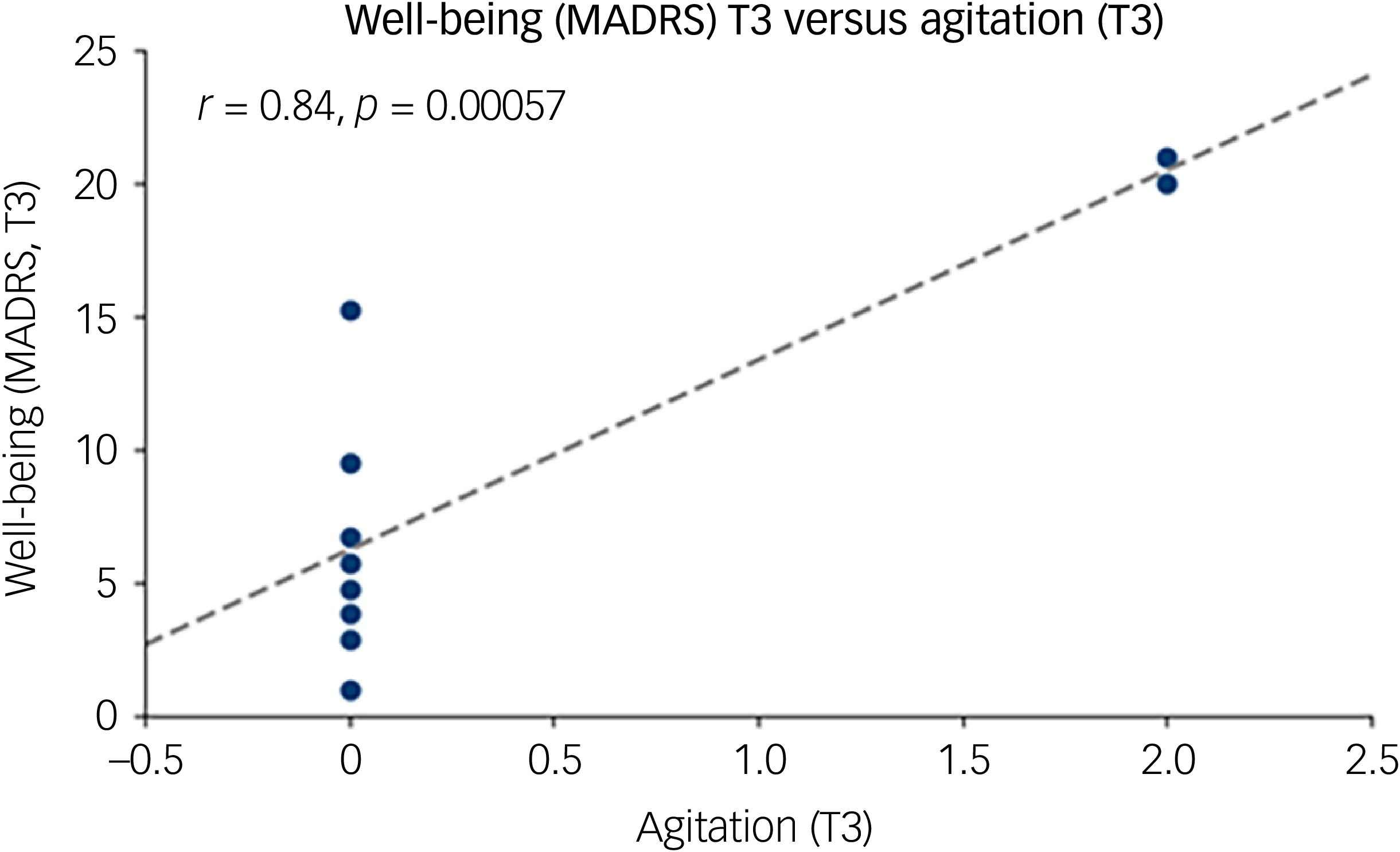
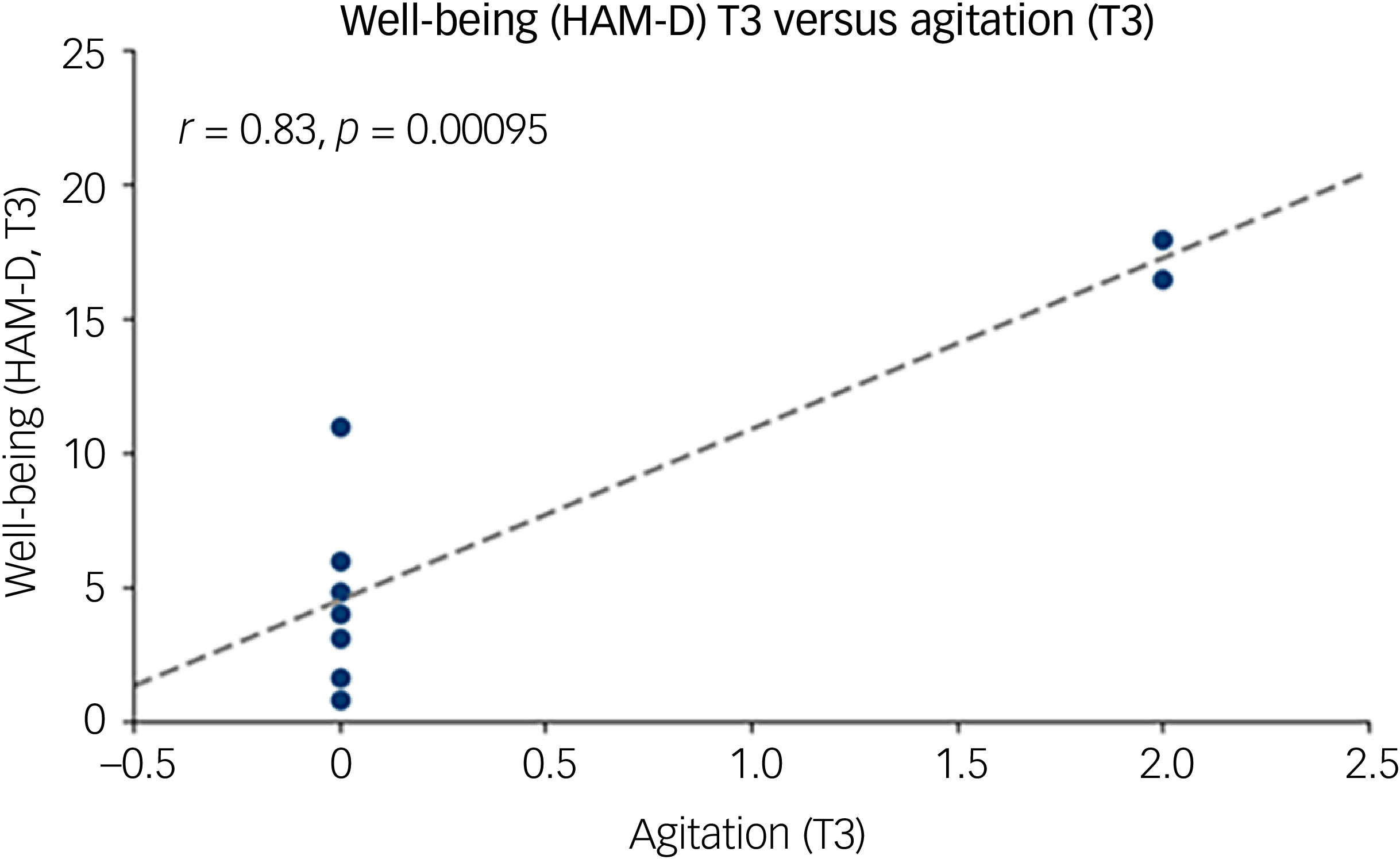
Agitation, as measured using items of ADAS-Noncog, decreased statistically significant following 6 months of intervention (t(9) = 3.87, p < 0.05, Cohen’s d (d Z ) = 1.22), and also following the first 3 months of intervention (t(10) = 4.07, p < 0.05, d Z = 1.23). A total of 35 patients’ relatives took part in the survey. Of these respondents, 28 (80%) strongly agreed with the statement that the dementia garden enriches the village, with 7 (20%) somewhat agreeing with this statement. No negative or neutral responses (‘neither’) were recorded. Another clearly discernible positive trend emerged in the evaluation of the facility as a therapeutic offering. Here, 24 relatives (69%) considered the statement to be completely accurate with 11 (31%) somewhat agreeing. In this area as well, evaluations fell exclusively within the positive range of agreement. Regarding the question of whether the person with dementia had benefited from the ‘Dementia Garden’ programme, 17 respondents (48.6%) agreed completely and 8 (22.9%) tended to agree; 7 relatives (20%) indicated ‘neither’, with 1 person (2.9%) tending to disagree. The remaining results are presented in Fig. 3. Agitation scores following 6 months of intervention correlated significantly with psychological well-being as measured with MADRS at T3 (r = 0.84, p < 0.05), and as measured with HAM-D at T3 (r = 0.83, p < 0.05, r2 = 0.69) (Figs 4 and 5).
Evaluation of the therapeutic facility and its social impact. Responses to six questionnaire items are shown as percentages across agreement levels. (a) The majority strongly agreed that the facility is an enrichment for the village (80%). (b) Most respondents perceived the facility as a therapeutic service (69%). (c) Shared garden use was frequently reported (40% strongly agree, 31.43% rather agree). (d) Responses were evenly distributed regarding an increase in relatives’ intention to visit. (e) Nearly half of respondents strongly agreed that residents with dementia had benefited (48.57%). (f) Family involvement in milieu therapy activities showed mixed responses, with 31.43% rather agreeing.

Relationship between agitation and well-being following 6 months of intervention (time point T3). The scatter plot shows a significant positive correlation between agitation_T3 and well-being (MADRS)_T3 (r = 0.84, p = 0.00057). Higher agitation is associated with higher values on MADRS, which indicates that lower well-being is associated with higher agitation. MADRS, Montgomery–Åsberg Depression Rating Scale.

Relationship between agitation and well-being following 6 months of intervention (time point T3). The scatter plot shows a significant positive correlation between agitation_T3 and well-being (HAM-D)_T3 (r = 0.83, p = 0.00095). Higher agitation is associated with higher values on HAM-D, which indicates that lower well-being is accompanied by higher agitation. HAM-D, Hamilton Depression Scale.

Discussion
This naturalistic observational study investigated the benefits of a multimodal therapy garden designed to reduce BPSD among PwD, enhance well-being and provide social experience. The intervention was tailored to dementia severity with the aim of supporting intrinsic capacity and addressing dementia-related functional decline, finally also taking relatives’ perspective into account. We looked for reduction in BPSD, focusing on the agitation aspect following 6 months of intervention and correlation with participants’ psychological well-being. We found a significant reduction in agitation after 6 months, with a significant positive correlation between agitation and psychological well-being. Although this association should be interpreted with caution, these findings suggest that reductions in agitation may be relevant not only as a therapeutic goal but also in relation to psychological well-being in PwD. The results of the relatives’ survey suggest a general improvement in participation for PwD; most responding relatives stated that PwD had benefited from the therapeutic garden and regarded the intervention as effective. Horticultural therapy provides a wide range of sensory stimulation, including touch, smell and sight, which can reduce agitation, improve mood and enhance social engagement among PwD. Reference Murroni, Cavalli, Basso, Borella, Meneghetti and Melendugno2,Reference Wang, Qian, Yu and Xing9 As suggested further by previous studies, lower levels of agitation may be associated with improvements in overall functioning in PwD, potentially contributing to better psychological well-being and greater autonomy. Reference Kim and Park22
Our multisensory approach in the treatment of dementia provides for a wide range of enhanced social integration. In one recent meta-analysis, exposure to nature was found to reduce agitation whereby social interaction was identified as a significant predictor of lowering agitation among PwD. Reference Choe, Lee and Montayre8 Our findings are consistent with the assumption that therapeutic gardens may contribute to reduced agitation through exposure to nature and opportunities for social interaction. According to Cohen-Manfield’s Unmet Needs Model, agitation is an expression of unmet needs such as boredom/sensory deprivation, loneliness/need for social interaction and meaningful activity. Reference Cohen-Mansfield, Dakheel-Ali, Marx, Thein and Regier23 This could be an explanation for the effectiveness of dementia gardens, because they provide an opportunity to subtly address these needs of PwD. Agitation is often a paradigm of emotional overload and stress and has a correspondingly negative effect on well-being. Reference Cohen-Mansfield, Dakheel-Ali, Marx, Thein and Regier23 Similar factors also play a role in psychological well-being, and this may explain the connection between the two variables. When interpreting the correlation between agitation and depression, however, it should be noted that similar constructs may be measured here. Although this correlation may suggest a possible association, our results should be interpreted with caution given the study’s limitations, but nevertheless these results could make provision for improved patient autonomy.
The multimodal approach of therapy gardens for PwD exercise programmes may impact on antipsychotic medication and depressive symptoms. Reference Fleiner, Leucht, Förstl, Zijlstra and Haussermann24,Reference Fleiner, Dauth, Gersie, Zijlstra and Haussermann25 This is also in line with the WHO’s Integrated Care for Older People (ICOPE) model, which defines the preservation of intrinsic capacity, i.e. physical and mental abilities, as a central goal of person-centred care for older people. The therapy garden combines key ICOPE domains such as mobility, vitality and mental well-being, thereby putting into practice WHO’s recommendation for a holistic, individualised, function-oriented approach. 15
In addition, relatives of PwD were integrated in this study. Most of the relatives perceived a benefit in PwD and they saw the garden as an enrichment in terms of quality of life; this relative approach added a different perspective to the effectiveness of the intervention. Future studies should also include a quantitative survey of staff satisfaction and further standardise the survey of relatives.
As mentioned above, several limitations of this study should be acknowledged. The relatively small sample size reduces statistical power and limits the generalisability of the findings. Furthermore, missing data at different time points restrict the interpretation of the results. Moreover, the lack of a control group precludes causal interpretation, making it difficult to attribute observed changes to specific factors or interventions.
Additionally, relevant confounding variables such as depressive symptoms, which are known to correlate with agitation, were not systematically controlled for. Also, no adjustments were made for social confounding variables. It is possible that the garden led to more visits from relatives, and it is also possible that it resulted in greater contact or more time spent together. It is also important to note that neither the duration of garden use nor the specific manner was controlled for. Relatives’ presence and how they used the garden could be potential confounding variables. As a naturalistic observational study, the findings cannot establish causal relationships between therapeutic garden participation and changes in agitation or psychological well-being.
Despite its limitations, this naturalistic observational study strongly suggests that therapeutic gardens represent a promising multimodal approach for well-being and lowering of agitation among PwD. The improvements underscore the value of a holistic, integrated approach to dementia care. Of course, the findings support further investigation of therapeutic gardens as potentially valuable, and that they may contribute to physical, emotional and social well-being among PwD.
Supplementary material
The supplementary material is available online at https://doi.org/10.1192/bjo.2026.12093
Data availability
The data are available from author J.B. upon reasonable request.
Author contributions
Conceptualisation: M.W., S.J., J.B. and S.T.; methodology: M.W., S.J. and J.B.; validation: M.W. and S.J.; formal analysis: S.J.; investigation (data collection and recruitment): S.T.; data curation (data processing and preparation): S.J., M.W. and S.T.; writing – original draft preparation, review and editing: M.W., S.J., J.B., N.S. and J.W.; visualisation: M.W., S.J. and S.T.; supervision: J.B., N.S. and J.W. All authors contributed to the review and approval of the final manuscript.
Funding
Open access funding was enabled and organised by Project DEAL.
Declaration of interest
None.
Ethical standards
The authors assert that all procedures contributing to this work comply with the ethical standards of the relevant national and institutional committees on human experimentation, and with the Helsinki Declaration of 1975 as revised in 2013. All procedures involving human participants and/or patients were approved by the Institutional Review Board of The Ethics Committee of University Duisburg Essen, Germany (no. 12-5299-BO). Written informed consent was obtained from all participants.
Use of artificial intelligence
During the preparation of this manuscript, the authors used ChatGPT (GPT-5; OpenAI, San Francisco, California, USA; accessed January 2026; https://chatgpt.com/) exclusively for language editing, and to improve grammar and readability. The authors subsequently reviewed and edited the manuscript and take full responsibility for the content of the published article.




 Open access


eLetters
No eLetters have been published for this article.