Mountains have played a central role in the history of meteorology, particularly in the infant discipline's “discovery of the third dimension” in the last third of the nineteenth century. From the 1860s, meteorologists began to recognize that the vertical structure of the atmosphere held vital clues to large-scale weather trends. They began to distinguish between ground-based measurements, which reflected local peculiarities influenced by land forms and water, and measurements taken at high altitudes, which revealed general characteristics of the atmospheric circulation. The meteorological study of the upper atmosphere intensified in the 1880s with the construction of the first permanent year-round high-altitude weather stations.Footnote 1 Yet this trend proved short lived. By the 1890s, most meteorologists studying the upper atmosphere were trading their hiking boots for a new generation of unmanned kites and balloons. By the turn of the twentieth century, most mountain-top weather stations had fallen out of use – not to be revived until the 1930s, when the aviation industry generated a new demand for their data. Yet one observatory survived this crisis against overwhelming odds.
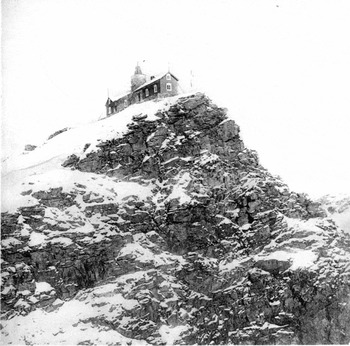
At 3105 meters, the Sonnblick was the highest year-round observatory in Europe at its opening in 1886. It perched like a doll's cabin atop the jagged peaks of the Hohe Tauern, aside massive glaciers, reinforced against winter storms known to drop snow sixty feet deep. Imagine, then, the surprise of visitors to find on this remote summit “the most modern lighting technology of the day” (Anon. 1892, 19). In an age when the streets of Vienna were still lit by oil lamps, the Sonnblick enjoyed electrical lighting, telephone service, and – the pièce de résistance – a mechanical lift to ferry supplies and occasionally people from the valley to the mountain top. It was a startling juxtaposition of modern and primal, and such incongruities were essential to its success.
The “Zittelhaus” atop the Sonnblick, half of which was used as a meteorological observatory and half as lodging for scientists and tourists.

The Sonnblick's story sheds light on the fundamental character of mountains as scientific objects and instruments. As the other essays in this issue demonstrate, from the earliest days of European alpinism, a tension existed between the mountain as a generic site of scientific experimentation and individual mountains as objects of geographic inquiry in their own right. For the Enlightenment natural philosophers who first conceived of the atmosphere as a physico-chemical laboratory, observational results were meant to be independent of any particular locale (Janković Reference Janković2000). In this vein, the philosophe Horace Benedict de Saussure (1740–1799) scaled some of the most daunting peaks in the Alps with the aim of measuring universal meteorological values such as the decrease of pressure with height. Meanwhile, for a second strain of atmospheric science, the challenge was inverted. Physical geographers in the tradition of Alexander von Humboldt (1769–1859) treated atmospheric measurements as emphatically local – as contributions, namely, to an emerging picture of the magnificent variability of the earth's climates and, ultimately, to a physical explanation of that variability (Khrgian Reference Khrgian and Pogosyan1970, 254–256). Modern atmospheric science thus consists of two strains, a “replicative” approach that treats local atmospheres as laboratories for the investigation of universal laws, and a “chorological” approach that studies local atmospheres as unique pieces in the jigsaw puzzle of the global circulation. From the replicative perspective, the mountain is a laboratory, a space for producing generalizable atmospheric effects under extreme conditions. From the chorological view, the mountain is a field, a place where distinctive atmospheric conditions are collected like specimens, as clues to broader patterns of geographic variation. The approaches are interdependent and impossible to isolate fully, but each raised its own dilemma for meteorologists of the late nineteenth century. How, in the first case, might lessons of a laboratory-based or theoretical physics be applied to the free atmosphere? And how, in the second, might observations of the atmosphere at a given point and time inform conclusions about large-scale weather? (Shaw Reference Shaw1924; Edwards Reference Edwards2006).
With the rise of mountain meteorology, I will argue, these questions assumed a new form. In a chorological vein, central European meteorologists judged that the weather forecaster's daily task of mapping isobars across Europe would gain in precision from the input of mountain-top stations in the Alps. These observatories were ideally situated to track the passage of ridges of higher pressure between the main centers of low pressure in western and eastern Europe (Hann Reference Hann1891). The imperative to coordinate observations for the sake of forecasting meant that mountain stations would need to be wired to the observing networks that were quickly spreading their electric tendrils across the European continent in the late nineteenth century.Footnote 2 In a replicative vein, however, these same meteorologists argued that in order for the lessons of thermodynamics and classical mechanics to be applied to the station's measurements, it was necessary for the site of the mountain observatory to approximate as closely as possible to the conditions of the upper atmosphere. In other words, the ideal observatory would tower so far above the disturbing factors of surface topography and vegetation that it would be little more than a point in the free air. This led to the criterion that a mountain station be as isolated as possible, an imperative that would seem to be diametrically opposed to the demand for communication. One might think, for instance, that the solution to the demand for isolation would be to place self-registering instruments on “uninhabitable” peaks. Yet the demand for communication decided against this – as we will see, communications technologies in the high mountains were in constant need of tinkering.
The history of mountain meteorological stations was shaped by the conflict between the ideals of isolation and communication that defined the mountain as a meteorological laboratory and field, respectively.Footnote 3 This is evident, for instance, in the technological history of high-altitude meteorology, which reflected the mountain's natural resistance to being “wired.” But it was equally evident in high-altitude meteorology's social history, marked by friction between mountain natives and urban scientists, the latter often unprepared for the much vaunted isolation of the high peak. The challenge for these scientists was to leave lowland civilization as far behind as possible without snapping their wires – or their minds.
From Gold to Glaciers
The case of the Sonnblick demonstrates the value of bringing the history of science and environmental history to bear on each other, and of situating the history of the field sciences in historically contingent landscapes (Dann and Mitman Reference Dann and Mitman1997; Kohler Reference Kohler2002 and Reference Kohler2006; Anker Reference Anker2002; Kohler and Kuklick Reference Kohler and Kuklick1996; Mitman Reference Mitman2007; Coen Reference Coen2008). The history of the Sonnblick observatory needs to be understood as part of the environmental and social history of the Hohe Tauern, which, since 1971, has been an Austrian national park, an area celebrated as a successful example of “mixed-use” preservation and “gentle tourism.” These terms capture an environmentalist ethos distinct from that of U.S. national parks, which have traditionally aimed to preserve nature as pristine wilderness (Cronon Reference Cronon and Cronon1996). The Hohe Tauern is instead a compromise between preservation and modernization, with zoning laws that allow “wilderness areas” and “semi-natural cultural landscapes” to coexist as ecological neighbors. The Hohe Tauern has been an industrial region and thoroughfare since its heyday as a mining center and trade route in the middle ages. There has therefore been no attempt to return it to a “pre-human” natural state. It remains thickly settled in parts, and its minimal degree of protection places it near the bottom of the international scale that measures the rigor of the management of national parks. Instead, the aim is to preserve traditional ways of life and natural habitats as much as possible. Citizens' initiatives in the region have therefore defeated plans for hydroelectric plants and a cable car. The park thus has twin purposes, conservation and development, and their simultaneous pursuit has not been conflict free (Stadel et al. Reference Stadel, Slupetzky and Kremser1996, 1, 12; Böhm Reference Böhm1986, 43).
Socially, the Hohe Tauern should be viewed through the lens of revisionist histories of the Alps. It is no longer possible to view the societies of the upper Alps as “closed subsistence economies and intellectual backwaters,” nor to assume that their only contribution to industrialization was to provide emigrant labor. In fact, the most remote communities prove to have been the most integrated into the outside world, both economically and culturally – for the simple reason that the land was incapable of providing for its inhabitants year-round (Viazzo Reference Viazzo1989).
In the Hohe Tauern, proto-industrialization arrived early: its gold mines hit a modern high point in the late fifteenth to early seventeenth centuries, generating wealth that produced a bustling village and school near the Rauris gold mine, the future site of the Sonnblick. In the seventeenth century, however, the period of global cooling known as the Little Ice Age began to transform the Rauris. Mining suffered from the expansion of the glaciers, although it did not cease entirely. The subsequent descent of the village into poverty may well have impressed on the inhabitants their vulnerability to climatic forces (Böhm Reference Böhm1986).
The glaciers did not begin their retreat until the end of the Little Ice Age, circa 1850. This coincided with two crucial historical developments: the rise of alpinism as a leisure activity, discussed elsewhere in this issue, and the industrialization of the Austrian Alps. From the eighteenth century the surrounding province of Carinthia slowly emerged as a center for iron production, although it was held back by the absence of coal. The imperial state played a key role in stimulating modernization in Carinthia, as elsewhere in its western lands (Sandgruber Reference Sandgruber1995, 186). In 1872, when a bright but desperately poor young cart pusher at the Rauris caught the attention of the mine's director, the state paid for him to be sent to Bohemia to learn the latest mining techniques. Nonetheless, the crown was looking to unburden itself of the Rauris, which it had owned since the first years of its decline in the early seventeenth century. When the former cart pusher returned from Bohemia, the state mining council offered to place control of the mine in his young hands. Five years later, he had earned the means to purchase the mine (Böhm Reference Böhm1986, 18).
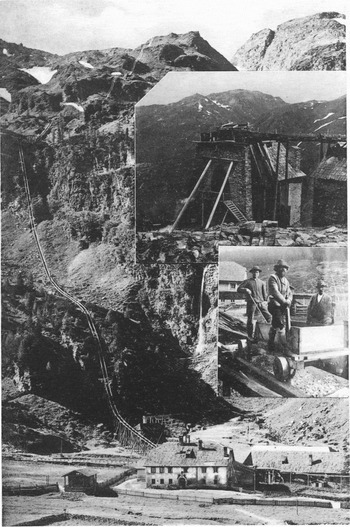
The inclined lift, maintained by Ignaz Rojacher, that hoisted materials and sometimes even people up the mountain to the observatory.

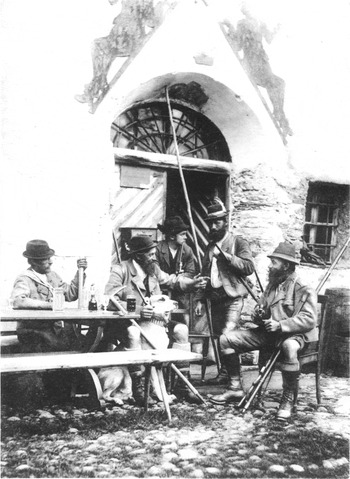
It was this man, Ignaz Rojacher (1844–1891), who worked the feats of modernization that would dazzle visitors to the Sonnblick in the 1880s. He extended the existing mechanical lift all the way up to the mine entrances; he installed water-powered electrical lighting; and he laid a telephone cable from the village of Kolm up to the mechanic's house at the mine. And it was Rojacher who, in 1885, offered the highest point of the Rauris as the site of a meteorological station. He asked an old friend who had become a rural district official to pen a letter in his best script to Julius von Hann (1839–1921), the director of Vienna's Central Institute for Meteorology and Geophysics and an international authority on meteorology and climatology. Rojacher highlighted for Hann the site's principal advantages for mountain meteorology: it was already equipped with a telephone line, a lift for transporting building materials and supplies, and a suitably exposed peak. Rojacher even offered “the most intelligent of my people” to serve as observers, assuring Hann that the remote location would pose “no difficulties for my already acclimatized mountain people” (reproduced in Böhm Reference Böhm1986, 21–22).
The Genesis of High-Altitude Meteorological Observatories
When Hann received Rojacher's offer, the most intensely disputed issue in European and American meteorology was the nature of cyclogenesis, i.e. the production of storms rotating about a low-pressure center (Kutzbach Reference Kutzbach1979; Fleming Reference Fleming1990). The dominant theory had emerged from three decades of efforts to apply the new principles of thermodynamics to atmospheric phenomena. Hann was one of the key contributors to the new thermal theory of cyclones. Hann's contribution can be traced back to his first engagement with mountain meteorology, his study in the 1860s of the famous föhn winds of the Alps. Hann had explained the surprising warmth and dryness of the föhn thermodynamically. As a parcel of cool, moist air rises into regions of lower pressure on its way up the mountain, it does work by expanding; this process lowers the parcel's temperature as well as its specific pressure, causing condensation – and often precipitation. By the reverse process, as the air then makes its way down the other side of the mountain, its temperature and specific pressure rise. This temperature rise will be greater than the temperature decrease on the upwind side, since the decrease was offset by the latent heat of condensation. Thus the warm föhn was not, as often claimed, an import from the tropics or the Sahara, but a consequence of thermal physics.
Ironically, Hann's account of the regional phenomenon of the Alpine föhn inspired a number of other researchers in the 1870s to develop by analogy a universal theory of cyclones, treating the cyclone as a closed vertical circulation around a low-pressure center driven by the latent heat of condensation. The new thermal theory of cyclones failed to distinguish between phenomena in the tropics and at middle latitudes, as well as between slow and fast-moving storms. From the start, then, both Saussurean and Humboldtian problems of generalization and schematization plagued the new thermodynamics of the atmosphere.
By 1876 Hann's excursions in the Alps had produced data that began to call the strictly thermal account of cyclones into question. According to the theory, cyclones should display warmer temperatures than anticyclones (regions of high-pressure), yet Hann found anti-cyclones to be accompanied by unusually warm air on mountain tops, amounting to an inversion of the usual decrease of temperature with height. For Hann, this discovery made clear the need for consistent and reliable observation of the upper atmosphere and likely indicated the potential value of high-altitude observations for weather forecasting. He urged this conclusion on his colleagues at the Second International Meteorology Congress, held in Rome in 1879. Hann prioritized mountain observatories over the alternative, balloon ascents, for three main reasons: only permanent observatories could produce continuous measurements, maintain a constant height for the measurement of air pressure, and operate in foul weather (Hann Reference Hann1879). Six years after Hann's address, Austria would be able to boast three of the thirteen mountain meteorological stations in Europe (only France had more with four) (Breitenlohner Reference Breitenlohner1886a, 458). Hann had foreseen a host of tasks for mountain observatories, but the subsequent achievements of the Sonnblick show how much he failed to foresee: studies of bioclimatology, cosmic rays, radio and telephone operation, aviation forecasting, glaciology, and climate change.
Splendid Isolation
The advantages of the Rauris site for high-altitude meteorological research soon appeared clear to Hann and his colleagues. First, the Sonnblick was said to be “completely isolated and uninfluenced by its surroundings.” Such was the endorsement of Jacob Breitenlohner, a meteorologist at the agricultural institute in Vienna and an early supporter of the Sonnblick. Breitenlohner touted the site's perfect isolation to colleagues at the Austrian Geographical Society. Other observatory sites (in Bolivia and Tibet) may have been higher, he argued, but they lay on plateaus and were thus subject to “unique” local climates. Instead, the Sonnblick corresponded to modern meteorology's demand for “maximally high, isolated, and uninfluenced mountain peaks.”
On this incomparably beautiful, privileged height, with a majestic command of a vast panorama [geöffneten Runde], particularly to the west – with unlimited clear views into the towering Alpine world, and in view of the stunning Glockner range – the planned summit station will have an exquisite site. Truly, the Sonnblick is a regal throne for the meteorology of the high atmosphere. (Ibid.)Footnote 4
This version of the Sonnblick's claim to perfect isolation rested squarely on the nineteenth-century aesthetic ideal of the panorama, an ideal popularized through the fashion for 360-degree paintings from mountain-top vantages (Bigg Reference Bigg and Fiorentini2007). A panoramic view in this sense distinguished the truly “free” peak from one that was merely part of a range. Whether or not the Sonnblick genuinely fit this definition of isolation proved to be a matter of taste. While Breitenlohner merely hinted at imperfections in the eastern view, other observers were less charitable. To the British mountaineer and art historian William Martin Conway, who traversed the Alps in the summer of 1894, the Sonnblick was a wholesale disappointment:
I was wondering where our mountain was hiding itself, when we turned a corner and beheld it at the top of a considerable snow-field. It is a mean-looking little peak, dwarfed by the house on its point. The presence of a meteorological observatory was evident from a distance, for we could see the wind-guage twirling round. . . . The view from the summit is, of course, fine, but utterly different from the Gross Glockner's outlook, though the two mountains are near together. The latter commands a panorama; the former a series of views which only present the panoramic character in certain directions. Northward long lines of blue mountains carry the eye round, but the Ankogl group and the Schareck cut through them on the east. Southward is a fine blue area wherein the hills of Steiermark display their beauty of form through depths of bluest air. In the rest of the circle, only the Glockner was an object of attraction, but an ungainly slope cuts across its base and deprives it of its proper glory. (Conway Reference Conway1895, 340)
In other words, the Sonnblick did not live up to Conway's own painterly definition of a panorama: “the uninterrupted travel of the circumambient eye” which “can only be painted on a hollow surface and continued the whole way round.” Conway's examples of perfect panoramic views – Antwerp Cathedral, the Great Pyramid – indicated that the ideal was more likely to be attained by man-made rather than natural objects. Thus the contrast between Conway's and Breitenlohner's evaluations of the Sonnblick underlines that the perception of the observatory's “isolation” rested in part on an aesthetic judgment, one that was conditioned by the artistic conventions of the day and that did not go uncontested (ibid., 349).
Breitenlohner's insistence on the Sonnblick's perfect isolation is all the more striking when juxtaposed with the other theme of his promotion of the new observatory: its robust links to the outside world. “Through the combination of telephone and telegraph,” he promised, “the irrefutable need for rapid communication, above all in the interest of the international weather service, is fully satisfied; so too the permanent observer or temporary visitor to the Sonnblick is not cut off from the entire world.” In other words, communications technology would solve simultaneously the technical and social dilemmas of the mountain's isolation. First, the telephone and telegraph ensured that the “observations find an immediate practical application” by means of the coded weather telegram sent daily from the peak to the Central Institute in Vienna (Breitenlohner Reference Breitenlohner1886b, 68; Obermayer Reference Obermayer1893, 9; Pernter Reference Pernter1890, 275). By 1904, even the marine observatory in Hamburg received the Sonnblick's daily telegram (Böhm Reference Böhm1986, 45). The communications technologies would also mitigate against the unspecified dangers that the mountain's isolation posed to a scientist or tourist. The Sonnblick's scientific supporters stressed that this technology was unique in the high Alps: “Consider that in Oberpinzgau from Zell am See to Mittersill – that is, for a stretch of 30 kilometers – there is no telegraphic connection; and that a considerable part of this long and beautiful alpine valley, with its hamlets and ruggedly picturesque [wildromantisch] vales, must forego this modern means of communication” (Obermayer Reference Obermayer1893, 15).Footnote 5 The Sonnblick's claim to fame was not merely its technical accoutrements, but this particular juxtaposition of the “modern” and the “wildromantisch.”
Still, Breitenlohner made clear that the social problem of the mountain's isolation would not be solved by machines alone, given the fragility of communications technologies in mountain environments. Indeed, he claimed that what ultimately made the Sonnblick a uniquely appropriate site for a meteorological observatory was its human element: “hardy mountain folk, mostly weather-proof [wetterfest] Carinthians,” ready to come to the rescue even in the thick of winter. For nothing more than shelter and firewood, these “mountain knaves” performed the meticulous measurements for which professional scientists had to be recruited and paid at other mountain observatories (Obermayer Reference Obermayer1894, 20). “These unique and decisive circumstances lend the locale its extraordinary value. Elsewhere there surely exist even more suitable mountain peaks, all things being equal, but for most of the year there is not a human soul for miles around and not a single means of communication to mention” (Breitenlohner Reference Breitenlohner1886b, 73). So the task of integrating the Sonnblick into existing meteorological networks would be a feat – or a failure – not just of engineering but of social relations.
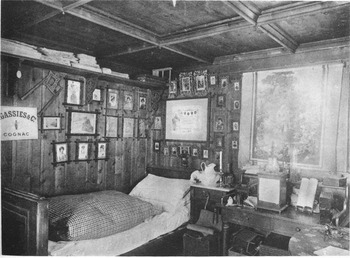
A room in the Zittelhaus for a visiting scientist.

If the Sonnblick's success hinged on its capacity to fulfill simultaneously these dual needs for isolation and for communication, the tension between these demands was evident in the impressions that the observatory made on first-time urban visitors. “It is indeed quite a wonderful effect, when the Edison lightbulbs suddenly twinkle against the night sky” (Ernst von Wolzogen, quoted in Böhm Reference Böhm1986, 26). To find a working telephone on a mountain covered in 66 feet of snow amazed even the scientific elite (Pernter Reference Pernter1890). And the elevator that carried guests to the top struck an idiosyncratic balance between modern comfort and backwoods adventure. The machinist played up this incongruity by swaying the lift or stopping it dead at the most vertiginous moments, all in order to frighten the young women – whom Rojacher made a point of accompanying.
There could be no better symbol of the unlikely reconciliation of the demands for isolation and communication than the Sonnblick's patron himself. Rojacher appeared through and through a mountain peasant, spoke only dialect and wore only traditional peasant garb, complete with lederhosen, clogs, and felt hat. The only exception he made came on his rare visits to Vienna, where he dressed and “moved with caution, to avoid doing anything offensive or unbecoming.” His ability to blend in on these occasions was attributed by his scientific friends to his “acuity of observation and his resourcefulness” (Anon. 1892, 22). Indeed, it proved impossible to classify him as either provincial or cosmopolitan, primitive or modern. He maintained the latest technology in this primeval environment through a combination of elite learning and local knowledge. When avalanches destroyed the telephone line, he laid a new one, relying on his knowledge of the lay of the land. The stones he placed to mark the cable's path then became makeshift tools in his method of diagnosing faults (Pernter Reference Pernter1890). Through it all, he never got over his childlike delight in the telephone, which he used first thing each morning to report the weather to his wife in the valley below (Obermayer Reference Obermayer1893, 10).
Disputing the Mountain
Already a year into its official operations the Sonnblick began to face challenges that went beyond snow storms and avalanches. First, its initial results came under fire from colleagues in the United States, who disputed Hann's claim to have correlated cyclones with cool temperatures. The controversy over this claim would not be settled until the 1920s, when the Bergen School's theory of cyclogenesis suggested that the cyclones observed in the Alps were at a later stage in their evolution than those witnessed in the U.S. Meanwhile, Hann's American interlocuters objected to his measurements on a number of grounds. In part, this was a dispute over the implications of Hann's measurements for the thermal theory of cyclones, attributed to the American William Ferrel. Yet in charging that the Sonnblick had achieved neither isolation nor communication, American scientists were disputing the Sonnblick's very status as a mountain.
Thus, according to Ferrel, it was a shortcoming of communication at the Sonnblick that the observatory had no means of determining the temperature of the air nearby at the same height. A temperature reading at the Sonnblick might be below average for the season, yet still warmer than the surrounding air (Ferrel Reference Ferrel1890). The other main critics, Henry A. Hazen and Henry Helm Clayton, focused their challenges on the Sonnblick's claim, as an isolated peak, to be a good approximation to the free air. Hazen charged on one hand that the Sonnblick was really part of an extended mountain range, “not an isolated peak,” and for that reason its data alternately mimicked the local climatic effects of one or the other of its neighboring valleys. On the other hand, Hazen judged it impossible to observe cyclones or anticyclones on a mountain top, particularly one 2,000 miles out of the average track of storms on the European continent. Rises and falls in pressure in the Alps, he argued, were not “real storms” (Hazen Reference Hazen1890 and Reference Hazen1891). Finally, Clayton proposed a host of possible disturbances to mountain meteorological measurements, from the compression and obstruction of air by the mountainside to the influence of elevations on precipitation (Clayton Reference Clayton1887).
In the United States, from Mt. Washington to Pike's Peak, the response to these challenges, combined with economic constraints, was to abandon regular mountain-top meteorological observations. In Austria, the challenges were met instead by new theories and methods that justified the mountain's role as meteorological laboratory. These developments can only be summarized here, but their payoff is clear. Arthur Wagner's extensive comparisons of data from balloons and from mountain stations both confirmed Hann's observations and showed that the annual pattern of temperature variation on mountain tops followed that of the free air with only a slight delay (a finding that is well confirmed today) (Wagner Reference Wagner1910; Kutzbach Reference Kutzbach1979, 184; Barry Reference Barry1992). Stanislav Hanzlik provided confirmation that the discrepancies between American cyclone observations and the latest data from European mountain stations could be explained according to a distinction between fast-moving American cyclones and slow-moving European ones. He also showed that the vertical structures of European cyclones and anticyclones as observed at the Sonnblick followed simply from hydrostatics (Hanzlik Reference Hanzlik1908; Kutzbach Reference Kutzbach1979, 184). Finally, Max Margules and Heinz von Ficker used data from the Sonnblick and neighboring stations to produce the first evidence of the assymmetrical structure of the discontinuous surface between two masses of warmer and colder air, as predicted theoretically by Margules and by Hermann von Helmholtz. Although the concept of the weather “front” was subsequently developed along different lines by Vilhelm Bjerknes, the work of Margules and Ficker was a crucial precursor to that revolution in the understanding of cyclogenesis. Just as significantly for the fate of the Sonnblick, their research demonstrated at this critical moment the value of mountain-top observations for weather forecasts in the Alps. Low-lying Alpine stations revealed no more than the “temperature anomalies” of the valley, Ficker wrote, while mountain stations made it possible to follow a phenomenon “undisturbed” across the Alps (Margules Reference Margules1898; Ficker Reference Ficker1907, 195; Kutzbach Reference Kutzbach1979, 186–206). By the 1930s, on the basis of the Scandanavian theory of cyclogenesis that emerged after World War One, high-altitude weather observatories had come to be justified as “synoptic thermometers,” as indicators of horizontal temperature distributions in the upper atmosphere – which in turn were seen as the cause of storms, in the form of warm and cold “fronts” (Khrgian Reference Khrgian and Pogosyan1970, 265).
Still, the challenges the Sonnblick faced were not exclusively scientific. Socially, the observatory was plagued by tensions between the local inhabitants it employed and the urban scientists and tourists it housed. At first, scientists doubted that anyone would be willing to live year-round on the remote peak. When a local took the job, rumors of his death circulated throughout his first winter. A Vienna newspaper expressed horror that his only human interaction consisted of the briefest of telephone calls to report his observations (quoted in Pernter Reference Pernter1890, 275). Hann took it upon himself in one of his first reports on the Sonnblick's results to reassure his readers that this observer was “by temperament entirely suited to the solitary abode” (Hann Reference Hann1887a, 126). Yet the man failed to impress Rojacher, who replaced him a year later. From 1888 to 1894, the position was filled by Peter Lechner, otherwise known as “the hermit of the Sonnblick.” Lechner quickly won the trust of scientists (“a most devoted servant of science,” Pernter judged him [Pernter Reference Pernter1890, 275]). Meanwhile, his rescue of a group of stranded tourists brought him a medal and two weeks of publicity in Vienna. Yet his strained relations with mountaineers from Salzburg proved his downfall. After complaints that Lechner had spoken “inappropriately” to members, the association demanded that he be replaced as observer. Lechner was heartbroken to lose a job he loved, and he was described subsequently as “a broken man.” His successor's observations were apparently so riddled with errors that the data rolls, with their many corrections in red ink, became known as the “red sea” (Obermayer Reference Obermayer1900; Böhm Reference Böhm1986, 41–42).
Peter Lechner, the indefatigable observer or “hermit of the Sonnblick,” with tourists from Vienna.

Despite these problems, the Sonnblick overcame its social tensions for two reasons. First, as Rojacher had promised, there was indeed a ready supply of locals to whom a winter alone on the peak, in a heated, well-built house, was actually an attractive job (Böhm Reference Böhm1986, 35). Second, the Austrian scientists were generally well disposed to the prospect of a stay there, thanks largely to the cult of alpinism and the disdain for philistinism characteristic of their fin-de-siècle intellectual culture. Pernter, for instance, reported that his “winter expedition on the Sonnblick suited me infinitely better than a month in the Riviera would have done. . . . These few remarks may serve to show those to whom their café, daily paper, taro, or whist club are not matters of vital importance, that a winter sojourn on the Sonnblick has no great difficulties – when once they get there” (Pernter Reference Pernter1890, 275).
And still, a further crisis loomed. Thanks to the infrastructure provided by Rojacher and the labor provided by locals, the Sonnblick proved far less costly to build and maintain than other mountain observatories. According to one estimate, the Scottish post at Ben Nevis cost approximately five times more (Obermayer Reference Obermayer1894). Nonetheless, after Rojacher's death in 1891, the Austrian meteorologists had to scramble to meet their budget. They responded with a savvy form of marketing. The new Sonnblickverein, founded in 1892, brought together eminent scientists with wealthy donors eager to support a project that linked Austria's international image to both modern science and the Alps. In addition to scientists, the donors included industrialists, publishers, and aristocrats. The most generous was the Count von Berchem-Haimhausen, who claimed to have been inspired by the English aristocracy's support for natural science. He was described in an obituary as “through and through a German-Austrian,” whose priority was the “safeguarding of the existence and future of the German volk in Austria,” and who viewed a conservatively oriented education system as the surest means to this goal. Berchem-Haimhausen was also a nature lover, who turned his family estate, Kuttenplan, in Bohemia, into a nature park (recently reincarnated as a “beer spa”) (Obermayer Reference Obermayer and Bettelheim1897).
Through its journal, the Sonnblickverein played to men like Berchem-Haimhausen – wealthy nature lovers interested in rediscovering Austria's traditional alpine heritage. In 1897 the journal announced its intention of producing “a complete monograph on the Rauris valley and the Goldberg range from the perspectives of natural science, history, and ethnography.” The editors made no attempt to hide the purpose of these publications: “We hope with this conception of the Jahresbericht to be able to win new friends for the Sonnblickverein and to add to the resources which will be necessary for the continuation and development of [the Sonnblick's] observations” (Anon. 1897). The journal reported on archeological studies of the mining villages in their early modern heyday and on the persistence of pagan rituals among the locals; but it also stressed the successful modernization of the region under Rojacher's influence. One of the most interesting articles described how some mountain natives continued to deploy their own local forms of weather knowledge. On the eve of Perchentag (January 6th), for instance, when the Germanic winter goddess Percht was said to fly through the air, locals would fall to their knees to avoid her grasp. They would “feed” flour to the winds to calm them. They would bury an egg beneath every new home to protect against avalanches, as well as on a cliff threatened by avalanches or along a stream threatened by floods. Ultimately, however, the journal's nostalgic tone gave way to respect for the advent of modernity. “Here and there many traditional customs have been preserved by a few individuals; but the collective rituals, which the Church had long agitated against and the gendarmes had prohibited, are now extinct” (Eysn Reference Eysn1898, 11). Where the church had failed, the arrival of modern science and technology in the Rauris valley had succeeded. In this way, the Sonnblickverein promulgated an image of the observatory's setting as a harmonious union of tradition and modernization, nature and technology.
Mountains and Empire
That such a union appeared plausible to potential donors in Austria depended, I will argue, on the long history of industrialization in the Alps and on the resonances of a simultaneously modernized and völkisch mountain landscape for German-Austrians caught up in the nationalist disputes of the late nineteenth-century Habsburg Empire. It is telling that quite a different image emerged of the setting of the most important North American mountain weather station, Mount Washington.
From the start, the purpose of mountain meteorological observatories in the U.S. diverged from the goals of the Sonnblick. The American stations were set up by the weather service to provide telegraphic reports as a means of storm warnings; they were not intended to contribute to basic research, nor to the kind of descriptive climatology that was a hallmark of atmospheric science in Europe's continental empires.Footnote 6 According to a newspaper report from 1887 – the year when Mount Washington and Pike's Peak, on government orders, ceased regular transmission of observations – it was the fault of the former never to have been of “much practical value but merely of scientific interest” (quoted in Putnam Reference Putnam1991, 58; cf. Smith Reference Smith1993, 92). The few American meteorologists who advocated for mountain stations lamented the fact that Europeans had gone so much farther not just in obtaining high-altitude observations but also in ensuring “their publication in a useful form and the discussion of the data” (Rotch Reference Rotch1886, 25). In an 1885 lecture to fellow members of the Appalachian Mountain Club (an association founded by scientists for the study and promotion of the White Mountains), Harvard geographer William Morris Davis urged American scientists to take up mountain meteorology. He acknowledged that much of his information about high-altitude weather was drawn from Hann's publications; further reports, he regretted, would have to wait until Americans took up the topic themselves, producing “data that will give something more of originality, and call for fewer quotation marks than have been necessary in a first essay” (Davis Reference Davis1886, 350).Footnote 7
The example of Mount Washington underlines the unusual status of the Sonnblick. As Gregg Mitman has shown, the White Mountains' popularity as a destination for hay-fever cures rested on the area's perceived distance from what was presumed to be the malady's cause, namely “civilization.” More specifically, the invention of the White Mountains as an allergy sufferers' haven depended on the area's transformation from a space of production (in the form of agriculture and logging) to a space of leisure. Visitors to Mount Washington had begun to mourn a vanishing natural world even before the industrial surge of the post-Civil War era. Already in 1859, the minister Thomas Starr King lamented “the weirdness, freshness, and majesty which ‘carriage-roads’ and hurrying feet and ‘Tip-Top Houses’ are driving or disenchanting from Mount Washington” (quoted in Johnson Reference Johnson2006, 98). By the 1880s, a forest preservation movement had emerged, which condemned the logging industry for having jeopardized the “purity” of the mountains' “atmosphere,” and which took the wilderness ideal of the new Yellowstone park as its model. Scientists like Davis contributed to the marketing of the White Mountains' “pure air,” while what was really being sold was a class-based image of the area as bourgeois and genteel, as “cultivated wilderness” or “refined nature” (Mitman Reference Mitman2007, 24, 45; Purchase Reference Purchase1999, 127–152). Even these efforts were not enough for some critics. In 1885, the forest scientist William Hosea Ballou could argue for the creation of an Adirondack national park by warning of the fate of Mount Washington: “The Adirondack region has resisted all attempts at cultivation. . . . Here is one of nature's great laboratories for the generation of pure air and the maintenance of stable atmospheric conditions” (Ballou Reference Ballou1885, 579). Ballou's language is telling: in American terms, a climatic “laboratory” could only exist on uncultivated land.
In Austria, meanwhile, the counter-imperatives of isolation and communication were resolved in a vision of the technological sublime. In this respect, Alpine observatories were buoyed by two competing, if not incompatible, imperial projects: pan-German and Habsburg. On one hand, thanks to the mythology of the Tyrolean “freedom fighters” in the Napoleonic Wars, the Alps had become a symbol of freedom to German-Austrians at the dawn of modern nationalism (Habitzel et al. Reference Habitzel, Mühlberger and Wiesmüller1995). The example of the donor Berchem-Haimhausen has already suggested the benefit the Sonnblick reaped from the rise of the German nationalist movement in the Habsburg lands, with its effort to establish a German-Austrian identity that was modern yet völkisch, Western, and rooted in the natural charms of the Heimat. The Sonnblick also drew support from the German and Austrian Alpenverein, which, since its founding by Austrian scientists in the 1860s, had promoted both tourism and scientific research. From 1879, the Alpenverein made annual contributions to the budget of Vienna's Central Institute for Meteorology; in 1886, it shared with the Austrian Meteorological Society the costs of the Sonnblick's construction, and it has continued to support the observatory ever since (Gidl Reference Gidl2007, 215). As Tait S. Keller has recently argued, the Alpenverein was only nominally an apolitical organization. After its Austrian and German branches merged in 1874, the Verein became increasingly a forum for a pan-German politics calling for cultural unity between Germany and Austria, though not for political union or racial exclusion (as in the cases of the Pan-German League or the Los von Rom movement). Alpenverein members cited the “love for the eternally beautiful alpine world” as a force binding together Germans throughout central Europe (Keller Reference Keller2006, 53). The Sonnblick was therefore able to draw support from German nationalists across the Bavarian border.
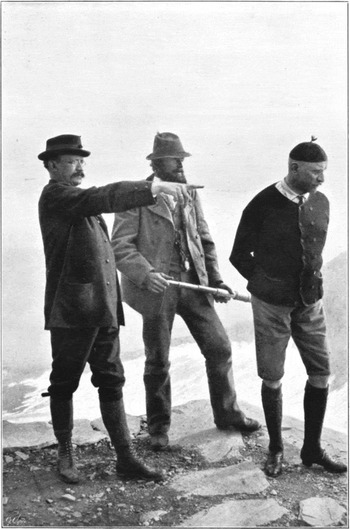
Scientists resting at a cottage in the former mining town of Kolm Saigurn, approximately 1500 meters below the Sonnblick.

Perhaps the most unlikely visitor to the Sonnblick in its early days was Ernst von Wolzogen, who, fifteen years later, would become the founder of Berlin's first cabaret. Directed to the observatory's opening festivities by his hiking guide, Wolzogen's impression of the site was in part horror at the thought of anyone being confined there year-round, “all by one's lonesome,” with “nothing to see but snow.” Wolzogen, the product of a fallen aristocratic family, was well known for his elitism, but his attitude to the Sonnblick was not simple snobbery. In part, he took pride in the crowds who showed up for the celebration. Tellingly, he identified these pilgrims as “southern Germans” and praised them for having “undertaken such a strenuous climb purely for the pleasure of nature's majesty.” Wolzogen, the quintessential philistine, seems to have checked his initial reaction to this forlorn peak precisely in order to avoid appearing the philistine. In this vein, he found in the “hero” of the day, Ignaz Rojacher, qualities of völkisch nobility. “What's more, his friendly, sparkling eyes and his lithe and brisk figure made clear that our Rojacher is not at all the backwoods hermit [der grimmige Waldmensch] that one might at first glance presume him to be.” Wolzogen was captivated not only by Rojacher's physique but also by his technical achievements, “his enthusiasm for science, his love of the sublime nature of his little snow kingdom, his manly courage [Mannesmut], his unflagging energy” (quoted in Böhm Reference Böhm1986, 26). Rojacher and his electrified snow kingdom offered a model of healthy German manhood in the midst of what Wolzogen the cabaret owner perceived as his “nervous, precipate age” (Jelavich Reference Jelavich1993, 24).
But pan-Germanism was not the only vision of the Alps from which the Sonnblick could draw support. The observatory played just as significant a symbolic if not practical role in the Habsburg-loyal vision of the empire promoted by imperial scientists like Hann. Hann's climatology was part of a broader project of a panoramic vision of empire in all its natural and cultural diversity – a project most famously incarnated in publications like The Austro-Hungarian Empire in Word and Picture, to which Hann contributed the climatological overview (Coen forthcoming; Hann Reference Hann1887b). In this framework, the Alps symbolized Austria's proud claim to be the bridge between Europe's east and west, yet with its center of gravity firmly in the west. As the Sonnblickverein stressed in an 1894 report on newly constructed mountain observatories in the Habsburg lands, “The construction of the previously mentioned observatories in the dinaric Alps and in the Carpathians makes the Sonnblick the connecting link between the European mountain stations of the east and west and permits fruitful comparisons” (Anon. 1895). This was an echo of the familiar myth of the Alps as the backbone of the Habsburg Monarchy, the foundation of its claim to be a natural and a geopolitical necessity. As a tourist guide to the Vienna Woods put it in these same years, in the hills overlooking the imperial capital lay “the point of contact of three European mountain systems”; for that reason, the guide urged, “This area is not merely part of local Viennese history, but of world history” (quoted in Rigele Reference Rigele1993, 40).
The significance of the Hohe Tauern for Habsburg imperialism was most clearly manifest in the second decade after the Sonnblick's founding, through a visionary yet desperate project to modernize the faltering empire. In 1897, a stand-off between Czech and German nationalists over language policy in Bohemia had caused parliamentary politics to implode; for three years the emperor ruled by emergency decree, and prime ministers were dismissed as quickly as they could be appointed. In 1900 Franz Josef chose Ernest von Koerber to fill this vacant post. Unlike his predecessors, Koerber was no aristocrat and genuinely sought to restore constitutionalism by defusing nationalist tensions. To do so he promoted a vast and explicitly supra-national program of economic development and integration. As he presented it to parliament, his proposal was a “most urgent prayer to reduce the nationality strife that has been going on for such a long time at least to such an extent that beside it a road may remain free for the spiritual and economic development of the State” (quoted and translated in Gerschenkron Reference Gerschenkron1977, 30). Central to Koerber's program was the construction of new railway lines that would integrate the empire's “periphery,” including the nationalist constituencies of Czechs in Bohemia, Slovenes in Carniola, and Poles in Galicia. From an engineering perspective, by far the most ambitious aspect of the new railroad was the passage through the Hohe Tauern, which would establish a second link to the crucial Adriatic port of Triest. It involved a 8.6-kilometer tunnel through the hard granite of the Tauern, which proved to be of great geological interest, as it struck rock under intense tectonic pressure. What was intriguing to geologists was deadly to workers: the rock fractured in large plates, causing three deaths and numerous injuries (Gerschenkron Reference Gerschenkron1977, 75; Rzehak Reference Rzehak1906, 349). As Gerschenkron observes, Koerber's call for massive state investment in industry (approximately one billion crowns) was not only a decisive break with liberal economic policy, but also had revolutionary social implications in its potential to shift labor from agriculture to industry. In effect, Koerber was betting on the imperial loyalty of the Austrian Social Democratic Party against the forces of nationalism. Here was a project that envisioned the Hohe Tauern as a site for the triumph of cutting-edge engineering over recalcitrant nature, as a site of industrial labor, and, above all, as the pivotal point for the physical, economic, and ideological unity of the Habsburg empire.
For all these reasons, both the imperial state and private donors had good reasons to invest in the Sonnblick's future. The observatory was a monument to the conquest of nature and of human backwardness – a modernist triumph, but one that miraculously recovered the premodern authenticity of Germanic mountain culture. Yet the Sonnblick was not merely a singular, “isolated,” achievement. Its value, both practical and symbolic, rested just as fundamentally on its status as a link in the expanding scientific network by means of which the empire constituted itself as a natural entity.
Conclusion
That the Sonnblick succeeded where other high-altitude meteorological observatories failed has much to tell us about the mountain's significance as a scientific site as the nineteenth century waned. As the Sonnblickverein's public relations campaign suggests, mountain observatories played to both the enthusiasms and anxieties that accompanied the transition to modernity. These tensions were implicit in the meteorological definition of the mountain as the site that optimized communication as well as isolation, and they found different resolutions in the Austrian Alps than they did in the United States. The American preservation movement responded to the upheavals of modernization with the ideal of wilderness. By contrast, the roots of the “mixed use” paradigm of today's Hohe Tauern Park were already visible in the Sonnblick's early years. The Sonnblick's promoters touted the benefits of technological modernization, economic development, and tourism while at the same time promoting the preservation of the area's natural environment and cultural traditions. To them the mountain was both scientific space and living place.
Indeed, the Sonnblick's value for climate change research today derives from the work of turn-of-the-century scientists concerned about changes in the landscape. Alongside news of the observatory's opening festivities appeared the first reports of glacial retreat (Obermayer Reference Obermayer1887, 41). A decade later, the Vienna physical geographer Albrecht Penck made detailed measurements of the Sonnblick glaciers, from which he concluded that the Alps had experienced a warming trend in the past quarter century (Penck Reference Penck1897; Machacek Reference Machacek1899; Böhm Reference Böhm2007, 100). Meanwhile, the forest scientist Breitenlohner, one of the Sonnblick's earliest spokesmen, studied the climatic effects of deforestation and the causes of avalanches. He became an advocate for a “rational forest management” that would prevent the degradation of mountainsides. Concerns like these led regular scientific visitors to the Sonnblick to found a Preservation Society, with modest accomplishments like the provision of benches at scenic points. In addition to Breitenlohner, the Preservation Society's members included the folklorist Marie Eysn, whose contributions to the cultural preservation of the Rauris region appeared in these same years in the journal of the Sonnblickverein (Anon. 1898; Esyn Reference Esyn1910).
Later, well after the Habsburgs had ceased to rule and “Austria” had shrunk to a small alpine nation, the Sonnblick took on new meanings. In 1951, with the observatory's fate again threatened by financial crisis, the novel The Sonnblick Calls secured its place in the new nation's consciousness. This typically sentimental example of the Heimatroman was followed a year later by a feature film notable for its daring cinematography and breathtaking views. The story centers on young Hermann, whose grandfather is the Sonnblick's observer. In the boy's eyes, the observatory represents the possibility of heroism at a time when Austria's defeat in the war seems to have destroyed all such opportunities. His grandfather's example teaches him “self-sacrifice,” “precision,” and humility toward the natural world. In the end, Hermann serves the Sonnblick by earning a doctorate in meteorology, then returning home to marry his childhood sweetheart. Even on his wedding day his commitment to the observatory takes priority. And so the story ends with the assurance that the Sonnblick's observations will continue uninterrupted–the “absolutely necessary, precise, and regular recording of the climate” (Bendl Reference Bendl1964, 84, 173).
Acknowledgments
The author thanks Dr. Reinhard Böhm for generous advice, and David Aubin, Charlotte Bigg, Philipp Felsch, Alexandre Métraux, and two anonymous reviewers for highly constructive criticism on earlier drafts.