Introduction
The physical environments of in-patient facilities have been shown to influence the way in which healthcare is delivered. Healthcare delivery is also influenced by other factors, such as cultural attitudes and assumptions of the wider society within which the facility is located and staff attitudes to the management of psychiatric patients. The term ‘therapeutic milieu’ has been used to describe the physical, social, and cultural context of providing psychiatric care in a holistic manner that supports positive health outcomes (Thomas, Shattell, & Martin, Reference Thomas, Shattell and Martin2002). Existing evidence suggests that the physical environment of in-patient facilities can increase the staff efficiency and reduce the patients’ hospital stay (Ulrich et al., Reference Ulrich, Zimring, Zhu, DuBose, Seo, Choi and Joseph2008), facilitate positive interactions between patients and staff (Curtis, Gesler, Priebe, & Francis, Reference Curtis, Gesler, Priebe and Francis2009; Jovanović, Campbell, & Priebe, Reference Jovanović, Campbell and Priebe2019), and contribute to patients’ feelings of control and safety (Bowers et al., Reference Bowers, Whittington, Parkin, Curtis, Bhui, Hackney and Flood2006; Evans, Reference Evans2003). Little is known if and how these effects translate into patient treatment satisfaction.
Patients’ treatment satisfaction is a key indicator of the quality of psychiatric care. Previous studies showed that more satisfied patients have better health outcomes (Chue, Reference Chue2006) and reduced likelihood of rehospitalisation (Priebe et al., Reference Priebe, Katsakou, Amos, Leese, Morriss, Rose and Yeeles2009). Along with the quality of the received care, the hospital built environment has been identified as a factor influencing patient treatment satisfaction (Harris, McBride, Ross, & Curtis, Reference Harris, McBride, Ross and Curtis2002). Research in this field has been limited to the ambient and sensory components of the built environment (e.g. it has been repeatedly shown that patients are more satisfied if rooms and wards are clean and quiet) and has been conducted mainly in non-psychiatric settings (MacAllister, Zimring, & Ryherd, Reference MacAllister, Zimring and Ryherd2016; Ulrich et al., Reference Ulrich, Zimring, Zhu, DuBose, Seo, Choi and Joseph2008). We have identified three studies conducted in psychiatric hospitals. Remnik and colleagues surveyed 100 patients and found no association between patient satisfaction and the built environment (Remnik, Melamed, Swartz, Elizur, & Barak, Reference Remnik, Melamed, Swartz, Elizur and Barak2004). Long and colleagues moved nine patients from an adapted Victorian unit to a purpose-built facility, which was associated with increased patient satisfaction with the physical environment (decorative features, social areas with windows, better access to outdoors, and interior green spaces) (Long, Langford, Clay, Craig, & Hollin, Reference Long, Langford, Clay, Craig and Hollin2011). A study in a Finnish psychiatric hospital found that patients were most satisfied with staff–patient relationships, and reported most dissatisfaction in the areas of information, restrictions, compulsory care, and the built environment. Interestingly, out of seven elements of the built environment explored in the study, spatial opportunities to interact with other patients and meet relatives and friends were most appreciated by patients (Kuosmanen, Hätönen, Jyrkinen, Katajisto, & Välimäki, Reference Kuosmanen, Hätönen, Jyrkinen, Katajisto and Välimäki2006).
The robust research evidence required to inform guidance on how psychiatric in-patient settings should be designed to maximise patients treatment satisfaction is lacking. The present study aims to fill this knowledge gap. The theoretical framework for this study is based on the multi-place theory and the model of a prosocial hospital environment. According to the multi-place theory, each hospital can be considered as a system of sub-places that are associated with patients’ goals and activities (Bonnes & Secchiaroli, Reference Bonnes and Secchiaroli1995). This concept allows for better investigating of the multifaceted nature of hospitals (Fornara, Reference Fornara, Martens and Keul2005). In particular, the sub-places investigated in this study are the hospital's external spaces, the overall hospital care unit/ward, the patients' bedrooms and the ward's external spaces. Based on our previous work, prosocial hospital environment includes characteristics of the hospital built environment that can facilitate social interactions among patients, staff and visitors, such as the central location of the hospital, availability of single bedrooms, range of social spaces and access to external areas (Jovanović et al., Reference Jovanović, Campbell and Priebe2019). This study also explored several aspects specific to psychiatric in-patient settings, such as patient safety, mixed/single-sex wards and smoking on/off wards. Lastly, we included experts' quality appraisal of the built environment. This is how aspects of the hospital built environment were selected to be studied and tested for their association with patients' treatment satisfaction in this study. We assessed these aspects in 18 hospitals across Italy and England and explored which aspects were associated with higher treatment satisfaction of patients.
Methods
This quasi-experimental study is part of a project funded by the European Commission that assessed psychiatric patients during hospital admission (Giacco et al., Reference Giacco, Bird, McCrone, Lorant, Nicaise, Pfennig and Priebe2015). In total, 18 hospitals were included in the present study; 11 in England and 7 in Italy. Wards included in the study were acute psychiatric wards. The data were collected between October 2015 and December 2016 through on-site hospital visits and patient interviews.
In England, three hospitals were located in London (Newham, Tower Hamlets, Redbridge), three in the East of England (Chelmsford, Colchester, Harlow), three in the South-East (Aylesbury, Littlemore, Warneford), and two in the North (North Manchester, Tameside). In Italy, participating hospitals were all located in the Veneto region (North-East of the country): two hospitals were in the city of Verona and one in each of the following cities: Bussolengo, Treviso, Cittadella, Vicenza and Adria.
Healthcare systems in England and Italy share several key characteristics (Giacco et al., Reference Giacco, Bird, McCrone, Lorant, Nicaise, Pfennig and Priebe2015). Both run a national health service with healthcare services provided by public organisations and funded by taxes. Moreover, care is organised on a geographical basis: a patient's place of residence determines their allocation to a given hospital, it is not influenced by personal or clinical characteristics or by choice of the patient. There are some differences in policy regulation and governance. For example, in Italy, most powers are governed by regions, while in the UK, the healthcare system is guided by national guidelines and targets; however, there is large autonomy for implementation.
Hospital built environment
All participating hospitals were assessed during hospital visits by an interdisciplinary team, including a psychiatrist-architect (NJ), an architect (MAM) and a psychologist (EM). In each hospital, a staff member led a tour of the hospital and provided with floor plans. During the visits, data were collected through observation and discussion with one or more staff members.
Data collection included: (a) general information about the site and hospital building (hospital location, building typology, ward typology) and type and number of distinctive sub-places covering ward communal and therapy areas, patient bedrooms, and outdoor areas; (b) three aspects specific to psychiatry (patient safety, mixed/single-sex wards, smoking on/off wards) and (c) experts' quality appraisal of the environment (an adapted version of Expert Observation Grid). The Expert Observation Grid was developed to measure a degree of architectural humanisation in orthopaedics hospitals (Fornara, Bonaiuto, & Bonnes, Reference Fornara, Bonaiuto and Bonnes2006) and was shown to have good validity and good test–retest reliability (Andrade, Lima, Fornara, & Bonaiuto, Reference Andrade, Lima, Fornara and Bonaiuto2012). Prior to this study, the instrument was adapted for psychiatric hospital setting in collaboration with the authors of the original instrument. The instrument was piloted in London with five architects, three psychiatrists, two mental health patients and one psychologist, and finalised based on received feedback. The Expert Observation Grid is composed of 94 items covering spatial–physical indicators of humanisation of three subplaces: (a) external space, including all areas before patients, come to the ward (23 items); (b) ward, including communal areas, therapy spaces, and outside areas (51 items); and (c) patients rooms (20 items). Experts provide scores on 5-point Likert-type scales for different items such as quality of design solutions, quality of construction materials, clarity of signs etc. In order to define the degree of ‘objective’ spatial–physical humanisation of hospitals, a mean score was computed between the evaluators for each of the three areas. More humanised in-patient units receive higher scores.
Patient interviews
The included patients were above 18, hospitalised in a psychiatric in-patient unit, with a primary diagnosis of ICD-10 psychotic/affective/anxiety disorder, and with a capacity to provide informed consent. Patients with organic brain disorders and severe cognitive impairment were excluded. Patients were interviewed within the first week after admission. There is good evidence that patient satisfaction predicts outcomes right from the initial stages of treatment, e.g. when assessed within the first two days of hospital care (Priebe et al., Reference Priebe, Barnicot, McCabe, Kiejna, Nawka, Raboch and Kallert2011). The UK hospitals and some Italian hospitals included in this study offer ward tours to patients on the day of admission, which allows them to familiarise themselves with the ward environment early. Data on socio-demographic characteristics, psychiatric diagnosis and formal status at admission were collected. Patients were asked to express their appraisal of care, as measured by the Client Assessment of Treatment (CAT) (Priebe, Gruyters, Heinze, Hoffmann, & Jäkel, Reference Priebe, Gruyters, Heinze, Hoffmann and Jäkel1995). The CAT was developed to assess patient's satisfaction with different aspects of in-patient care. The CAT is a global measure of treatment satisfaction in a hospital environment and, as such, is found to be the most established scale that exists in the literature for in-patient treatment (Miglietta, Belessiotis-Richards, Ruggeri, & Priebe, Reference Miglietta, Belessiotis-Richards, Ruggeri and Priebe2018). The instrument consists of seven items, patients are asked to respond on a 10-points Likert-type scale, and the overall mean score is taken as a measure of treatment satisfaction. Higher CAT values indicate higher treatment satisfaction. The CAT has shown to display good psychometric properties (Richardson et al., Reference Richardson, Katsakou, Torres-Gonzalez, Onchev, Kallert and Priebe2011). A detailed description of the study procedure can be found elsewhere (Bird et al., Reference Bird, Giacco, Nicaise, Pfennig, Lasalvia, Welbel and Priebe2018).
Statistical analysis
Descriptive statistics were used to report patient characteristics, CAT scores, and elements of the built environment for each hospital; mean and standard deviation or frequencies were used as appropriate. The mean for the CAT was calculated for each patient. If more than two items were missing for the CAT, these cases were excluded from the analysis. The frequency distribution of individual CAT scores was not normal (notable negative asymmetry was present). No adequate link function could be found to use raw data in generalised linear mixed models. Linear mixed models that can also be used with nested data assume normality of residuals; we computed the normalised (Rankit) scores and modelled such transformed scores. Mixed effect linear regression was performed by SPSS 23.0 software. It was used to explore the predictive value of elements of the hospital built environment (Level-2 predictors) in predicting the normalised CAT scores as an outcome variable. To enable the comparison of different models' fit, a full maximum likelihood method was used for parameter estimation. In Model 1.1, Level-1 predictors that were considered as confounders, e.g. patient age, gender, education (standardised within-group; see Enders & Tofighi, Reference Enders and Tofighi2007 on the advantages of the group-mean centring), diagnosis of psychosis and voluntary admission – were entered simultaneously in the model. Model 1.2 was built with significant Level-1 predictors only (all from above but the diagnosis of psychosis which was not statistically significant at the 5%). Next, several models were built (Models 2.1–2.12) with a single Level-2 predictor (elements of the hospital built environment) added to the Model 1.2 predictors to examine the possible role of specific environment variables. The elements of the hospital built environment (Level-2 predictors) included in the final model were divided into categorical variables (hospital location: suburbs v. city centre; wards: mixed v. single-sex; patient bedrooms: single/multi-bed/mixed; patient bathrooms: shared v. private; patient safety: patient rooms locking v. no locking available; the patient can meet with families: on v. off ward; smoking: indoors/outdoors/banned); and continuous variables (the number of individual therapy rooms per ward; the number of group therapy rooms per ward; the number of communal areas per ward; the number of outdoor areas; Expert Observation Grid total score). Other variables (as listed in Tables 1 and 2) were not included in the final model because they either lacked sufficient variation within the sample or were significantly correlated with other variables. Each Level-2 predictor was fitted in a separate model and its added value was assessed by comparing the second-order bias-corrected AIC (AICC) of Model 1.2 to AICC of the tested model. To assess the moderating role of gender, additional models were tested that included an interaction between a particular Level-2 predictor and gender. Level-1 and Level-2 predictors were included as fixed effects and a random intercept for a hospital was included. Variances of intercepts, error variance and covariances were estimated. Statistical hypotheses were tested at the 5% alpha error rate.
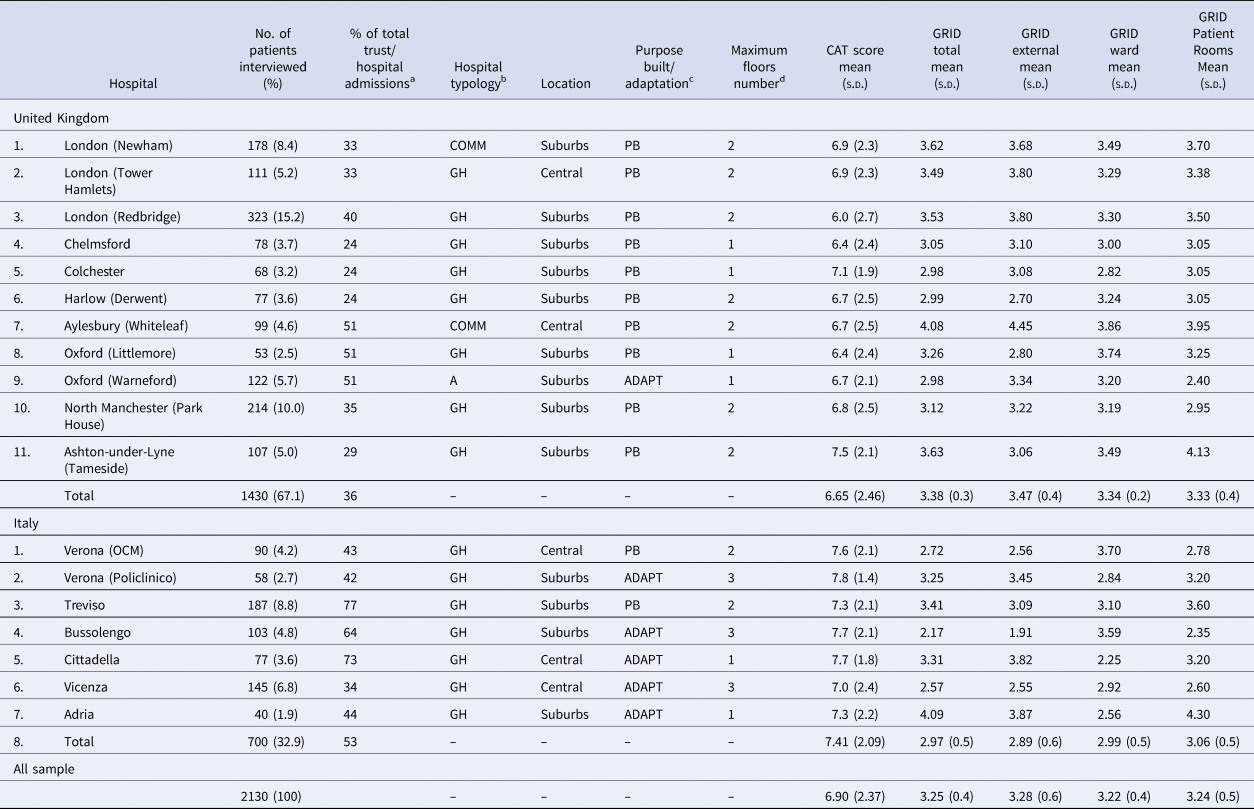
General characteristics of hospitals included in the study, CAT and GRID scores

a Data from the UK includes all admissions within the participating trust and data from Italy includes all admissions within the participating hospital.
b ‘A’ (19th century asylum, renovated), ‘COMM’ (newly built community building), ‘GH’ (building within general hospital site).
c ‘PB’ (purpose built), ‘ADAPT’ (Adaptation).
d ‘1’ (ground floor), ‘2’ (ground floor + first floor), ‘3’ (ground floor + two floors).
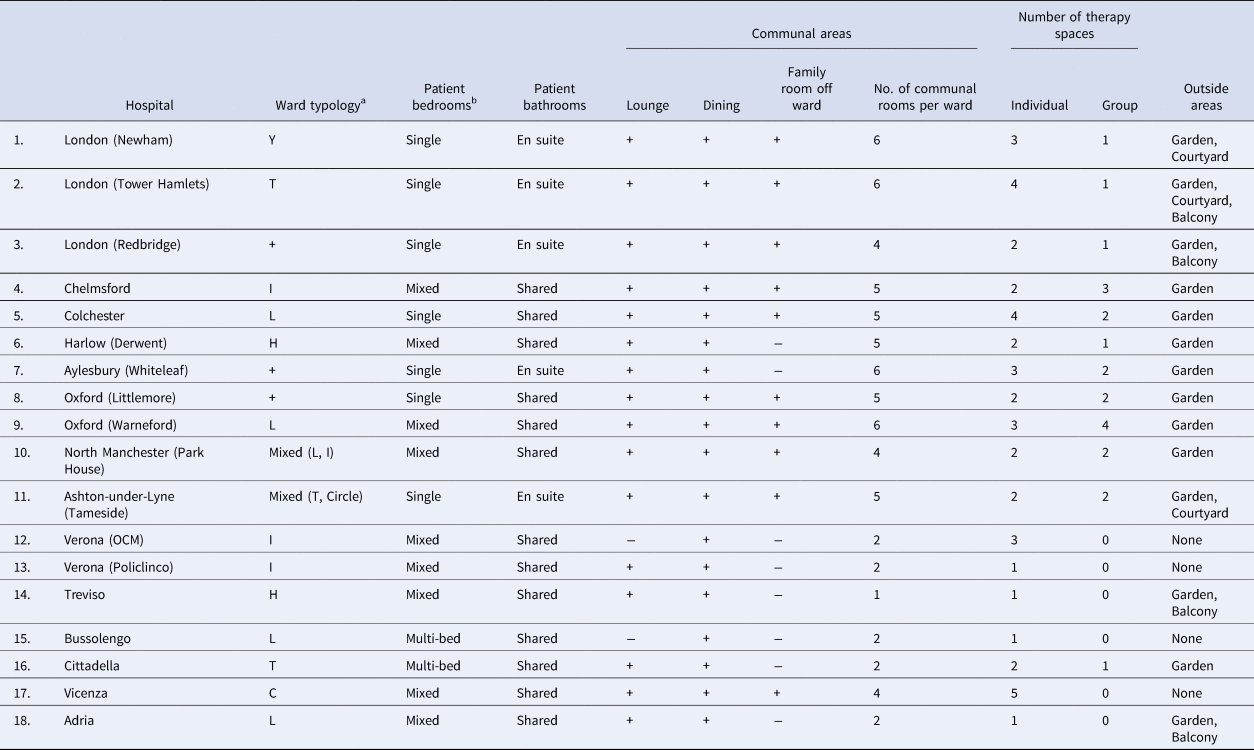
General characteristics of wards included in the study
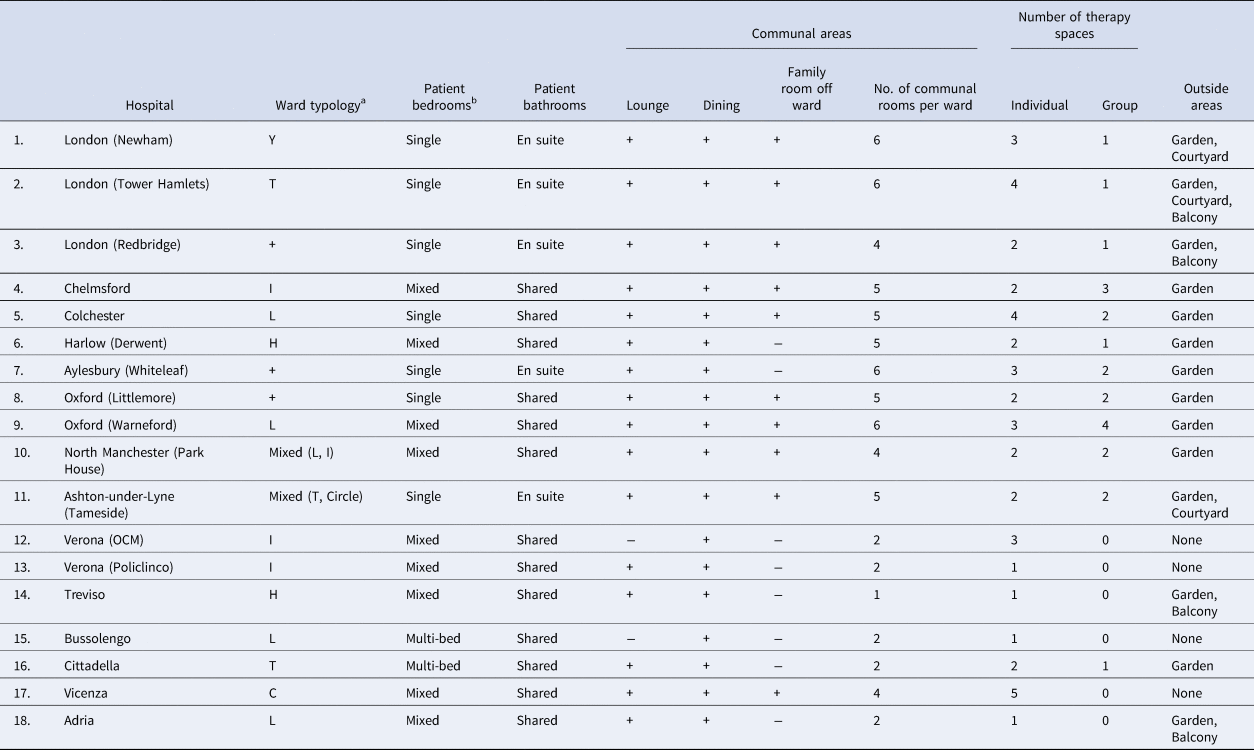
a Letters and symbols denote the shape of ward floorplans, e.g. ‘+’ denotes cruciform shape.
b Patient bedrooms were catagorised into single, multi-bed or mixed (wards offer both single and multi-bed room).
Ethics approval
The authors assert that all procedures contributing to this work comply with the ethical standards of the relevant national and institutional committees on human experimentation and with the Helsinki Declaration of 1975, as revised in 2008. All procedures involving human subjects/patients were approved by ethics committees in Italy (Comitati Etici per la sperimentazione clinica delle provincie di Verona, Rovigo, Vicenza, Treviso, Padova) and the UK (National Research Ethics Committee North East – Newcastle & North Tyneside, ref: 14/NE/1017).
Results
Study participants
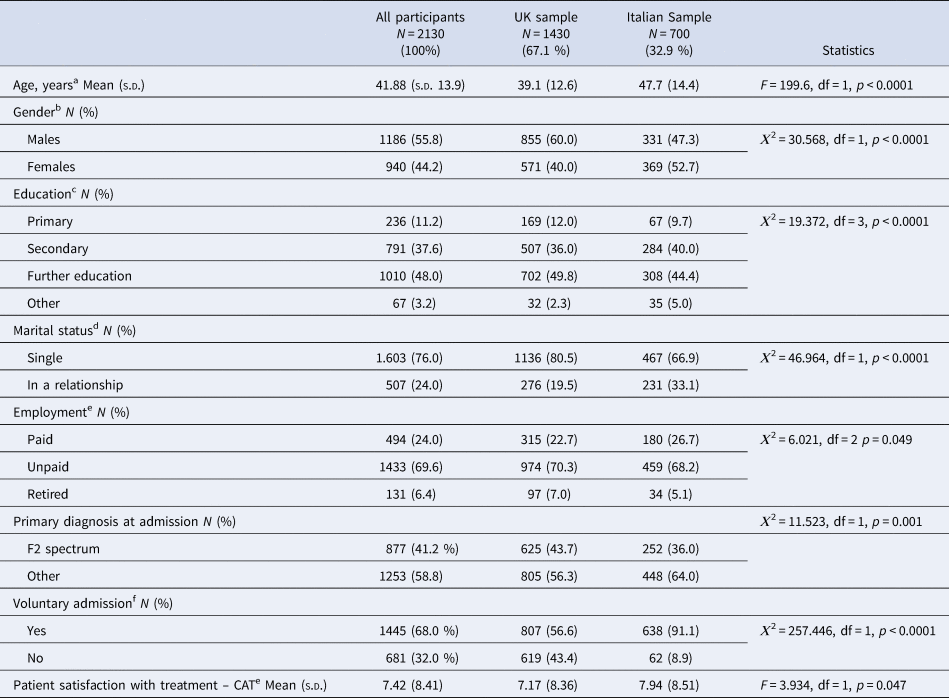
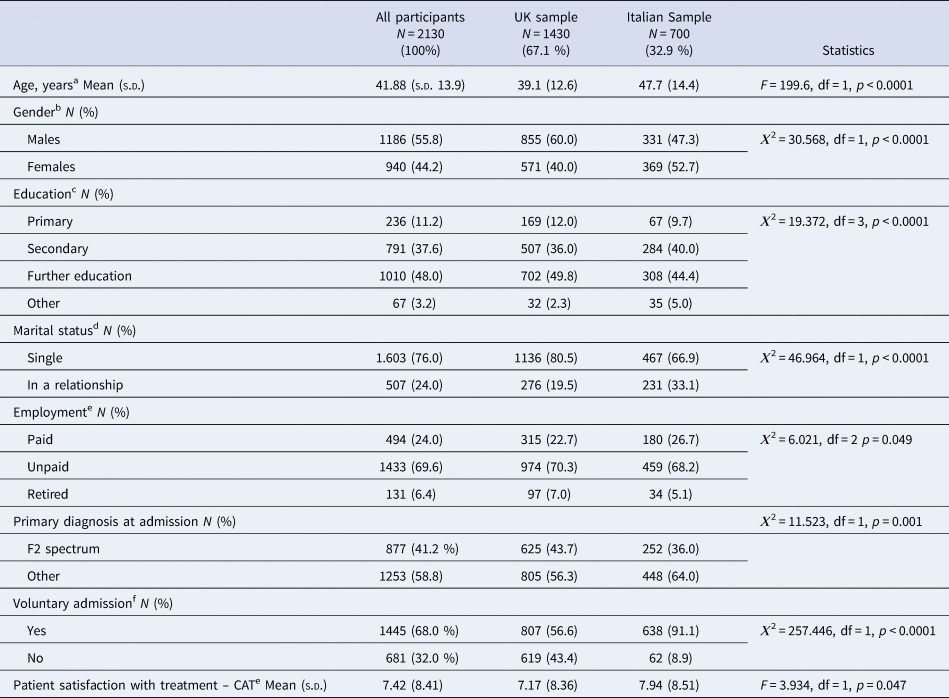
The study included 2130 participants, 1430 (67.1%) in England and 700 (32.9%) in Italy. The sample was balanced in terms of gender and included 1186 (55.8%) men and 940 (44.2%) women. Their mean age was 41.8 years (s.d. 13.9). The majority of patients were diagnosed with psychosis (n = 877, 41.2%) and were admitted voluntarily (n = 1445, 68%), as shown in Table 3. In Italy, the study included 53% (range 34–77%) of all admitted patients and this was 75.6% (range 64–90%) of all eligible patients. For the UK, we have trust-level data which can be used as an approximation and the study included 36% (range 29–51%) of all admitted patients within participating trusts and this was 51% (range 45–62%) of all eligible patients at a trust level, as shown in Table 1.
Study participants characteristics
a Data missing for 5 participants in the United Kingdom sample (N = 1425).
b Data missing for 4 participants in the United Kingdom sample (N = 1426).
c Data missing for 20 participants in the UK sample (N = 1410) and 6 participants in the Italian sample (N = 694).
d Data missing for 18 participants in the UK sample (N = 1412) and 2 participants in the Italian sample (N = 698).
e Data missing for 44 participants in the UK sample (N = 1331) and 27 participants in the Italian sample (N = 673).
f Data missing for 4 participants in the UK sample (N = 1426).
Hospital built environment
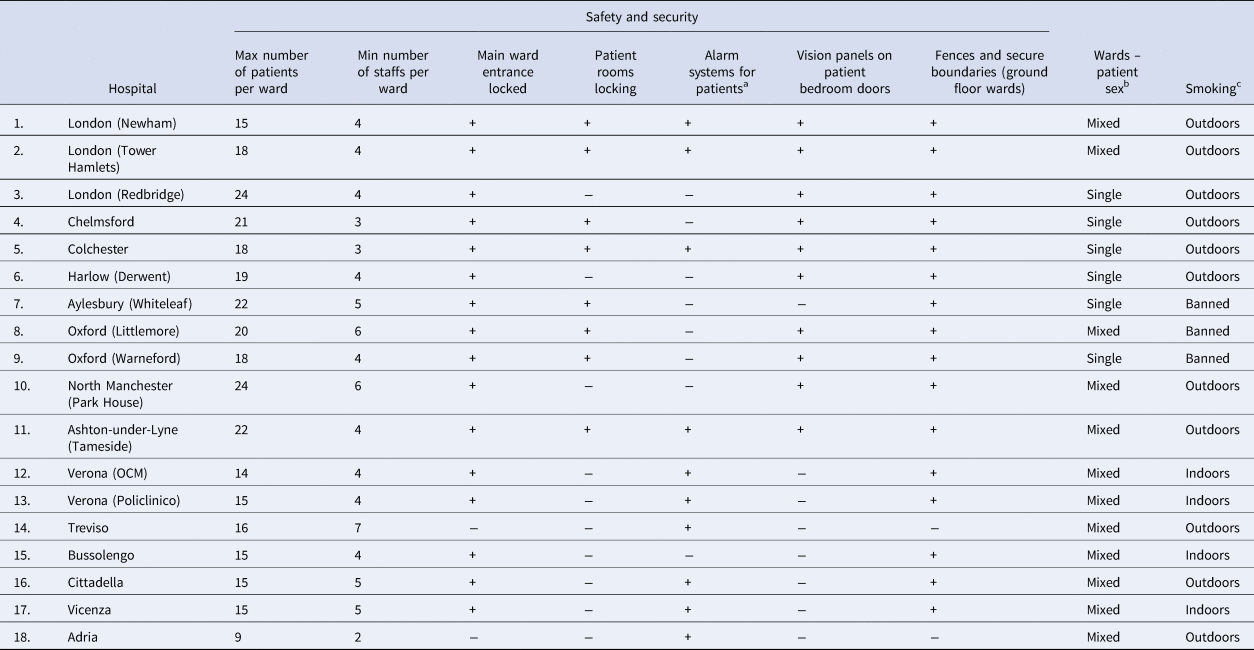
Characteristics of the hospitals are summarised in Tables 1, 2 and 4.
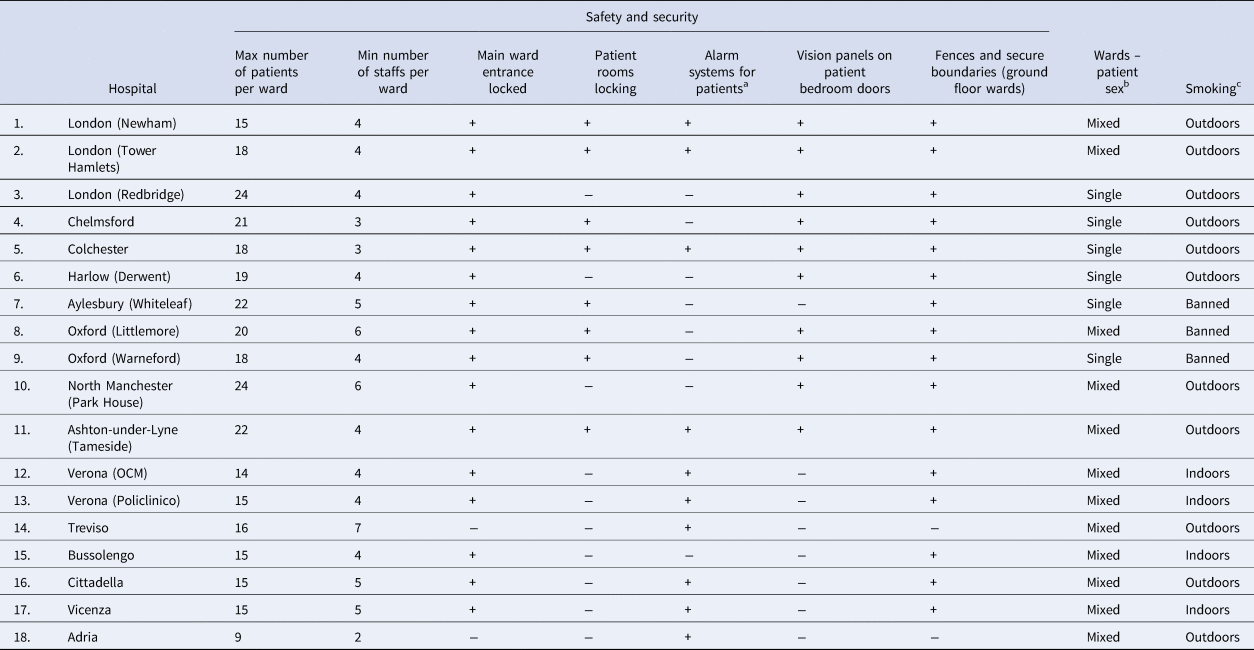
Hospital characteristics specific for mental health care
a All hospitals have alarm systems available to staff.
b On mixed-sex wards patients of the opposite sex share the same space, this can include sharing sleeping accommodation, toilets or washing facilities.
c Smoking is banned or allowed outdoors (e.g. courtyards, smoking balconies) or indoors (e.g. smoking rooms).
General information about the hospital buildings
The majority of facilities were placed within general hospitals (n = 15), most of which were located in the suburbs (n = 13), and were purpose-built (n = 12). The facilities varied substantially in the types of floor plans, e.g. ‘L’-shaped floor plan was found in five settings, while other types included ‘I’ plan (n = 4), ‘T’ plan (n = 3) and ‘+’ plan (n = 3). Hospital spaces were arranged on the ground floor (six facilities) and on the ground and first floors (eight facilities) of the buildings, as shown in Tables 1 and 2.
Type and number of distinctive sub-places
We identified several distinctive sub-places such as communal and therapy areas, patient bedrooms and outdoor areas. Most facilities (n = 16) provided at least two separate communal areas, namely a lounge and a dining room. The mean number of communal areas was 4.02 (s.d. 1.6; range 1–6). In ten hospitals, patients were able to meet with family members and visitors off wards, while in the other eight hospitals, visiting rooms were only onwards as part of the lounge/dining room, available to all patients at all times. The number of individual therapy rooms varied from 1 to 5 (mean 2.4, s.d. 1.1), while the number of group therapy rooms varied from 0 (six hospitals, all in Italy) to 4 (mean 1.2, s.d. 1.1). The majority of wards offered a combination of single and multi-bed rooms (n = 9). Four Italian hospitals did not provide any outside areas, while in other hospitals, patients could access gardens/courtyards/balconies. In these four hospitals, patients were provided with indoors smoking rooms, as shown in Table 2.
Specific aspects of the hospital buildings
Study hospitals were characterised with small to medium size wards (mean number of patients per ward was 18.9, s.d. 3.7; range 9–26; min. number of staff per ward ranged from 2 to 7). In a majority of hospitals, entrance doors were locked (n = 16), alarm systems were available to patients (n = 11) and staff (N = 18) and ground-floor wards were provided with security fences (n = 18). In eight hospitals, all in the UK, patients were able to lock their bedrooms. The majority of hospitals (n = 12) offered mixed-sex wards, others offered single-sex wards (male or female wards). All hospitals accommodated patients in single-sex rooms. In three hospitals, all in the UK, smoking was not allowed on hospital premises. In other hospitals, smoking was allowed outdoors (n = 11) or in smoking rooms onwards (n = 4), as shown in Table 4.
Expert Observation Grid
The total scores of the Expert Observation Grid for each hospital as well as the three subscales, are shown in Table 1. The results varied across hospitals and there was a tendency for patient rooms to receive higher scores than other spaces on and off wards.
Patient satisfaction with treatment
The mean CAT score in the total sample was 7.90 (s.d. 2.37). The intra-class correlation coefficient was 0.03; there was some variance of hospital average CAT score Rankits present, but it was relatively low compared to the within-hospital variance. Nevertheless, we were interested to see if selected variables could predict some of this variance.
Association of the hospital built environment with patients' treatment satisfaction
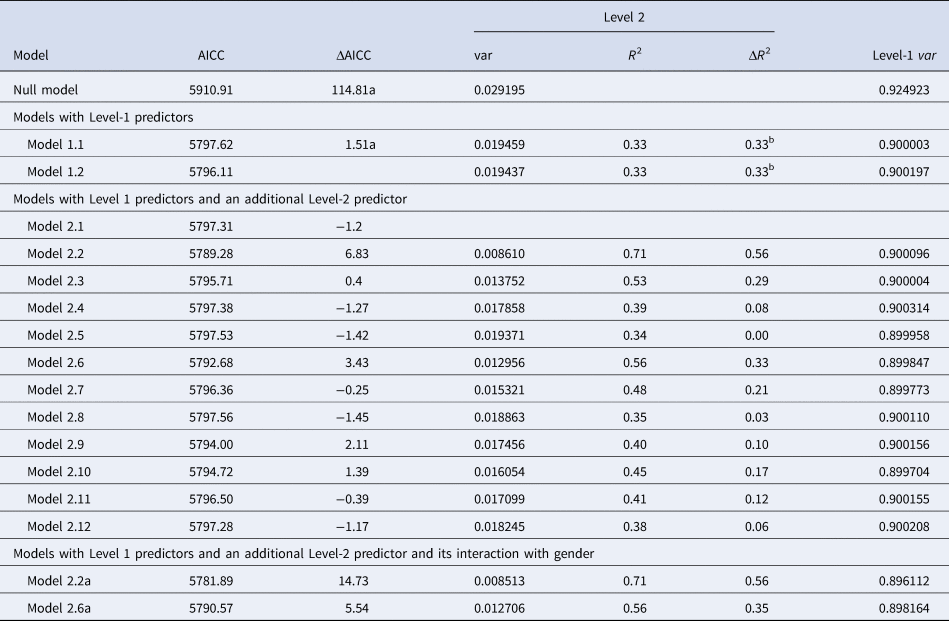
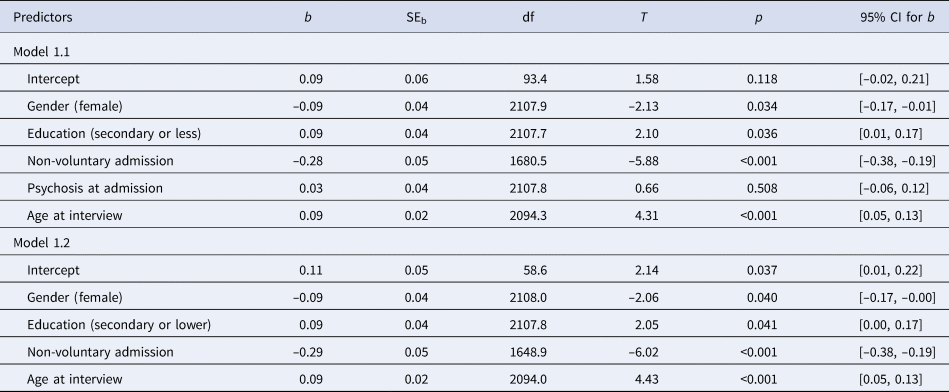
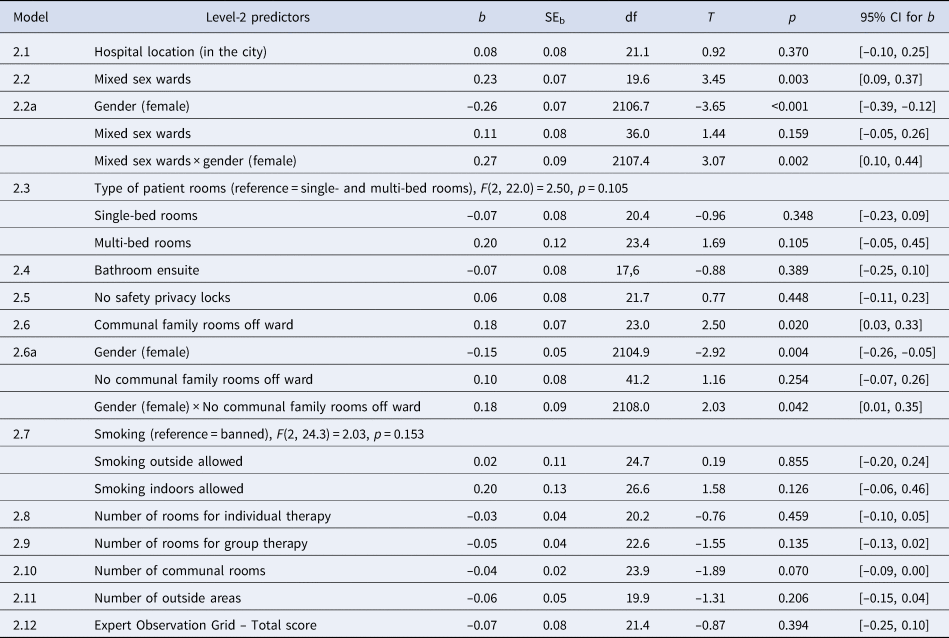
Table 5 shows that Model 1.2 fitted the data much better than the null model. There was a large decrease in the information criterion when Level-1 predictors were entered into the model. Level-1 predictors together explained 3% of Level-1 variance of CAT score Rankits. Females, patients with higher education, those who were admitted to the hospital non-voluntarily and younger patients were found to be less satisfied with the treatment (see Table 6). In univariate mixed-effect linear regression analysis (Models 2.1–2.12), a notable ΔAICC, i.e. reduction in the information criterion value, was observed with Models 2.2 and 2.6 (Table 5), and AICC was further reduced when Gender × Level-2 predictor interaction term was added to these models (see Models 2.2a and 2.6a). According to Burnham and colleagues, such ΔAICC can be considered to show that Model 1.2 was less plausible compared to these models (Burnham, Anderson, & Huyvaert, Reference Burnham, Anderson and Huyvaert2011).
The fit of mixed effect linear regression models for predicting the Rankit of CAT score and the estimates of Level-1 and Level-2 variances
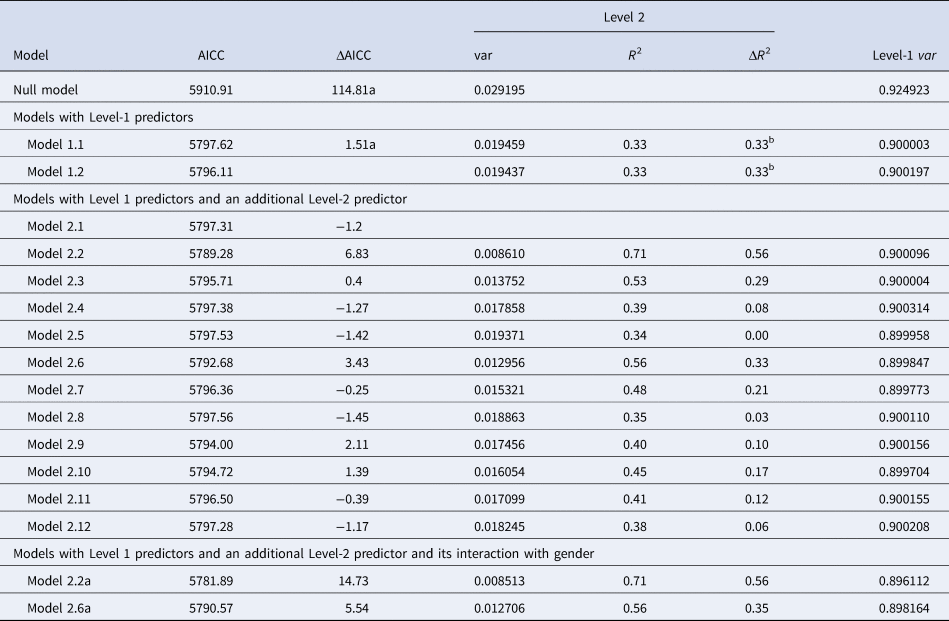
Note. Models 2.1–2.12 included Model 1.2 predictors and the following Level-2 predictor: Model 2.1 Hospital location (city, suburbs), Model 2.2 Type of wards (mixed sex, single sex), Model 2.3 Type of patient rooms (multi-bed, mixed, single-bed), Model 2.4 Type of bathroom (ensuite, shared), Model 2.5 Presence of safety privacy locks (no v. yes), Model 2.6 Presence of communal family rooms off ward (yes, no), Model 2.7 Smoking (outside, indoors, banned), Model 2.8 Number of rooms for individual therapy, Model 2.9 Number of rooms for group therapy, Model 2.10 Number of communal rooms, Model 2.11 Number of outside areas, Model 2.12 Expert Observation Grid – Total score. Models 2.2a and 2.6a also included an interaction between gender and the Level-2 predictor. AICC = Bias-corrected Akaike's information criterion (the Hurvich and Tsai's criterion). ΔAICC in Models 2.1–2.12 was calculated as the difference between AICC for Model 1.2 and AICC for the tested model. ΔR 2 in Models 2.1–2.12(a) have been calculated as proportion of reduction in error variance compared to the Model 1.2 error variance.
a ΔAICC was calculated as the difference between AICC for the tested model and AICC for Model 1.2.
b ΔR2 was calculated as a proportion reduction in the level variance compared to the null model.
Parameter estimates in different models with Level-1 predictors only
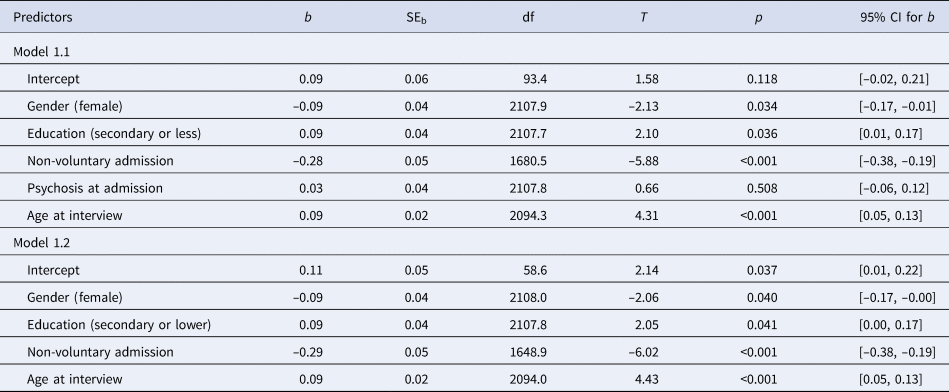
Note. Age at interview was standardised within groups (hospitals).
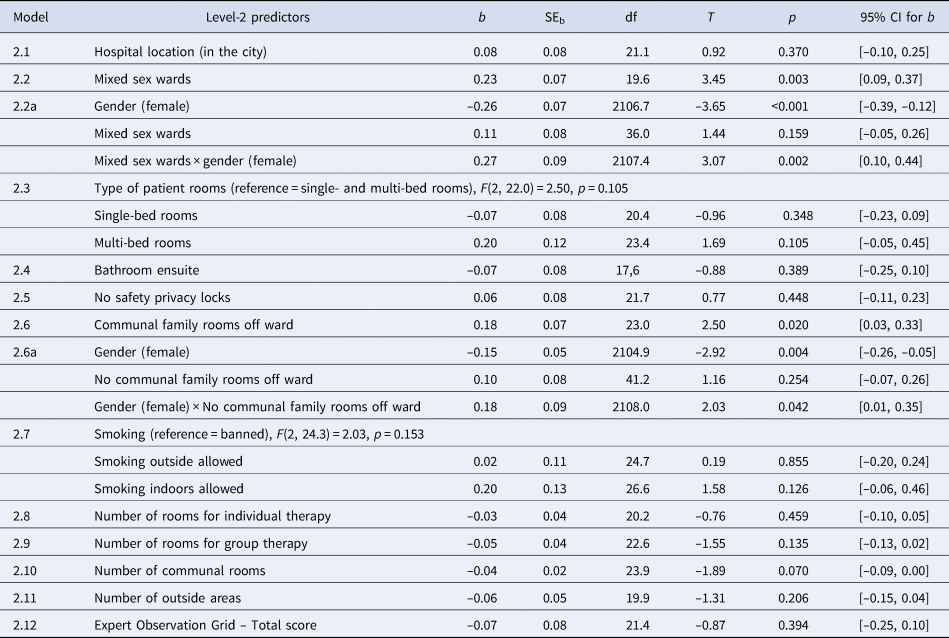
In Model 2.2 and Model 2.6, mixed-sex wards and availability of family rooms off-ward were added to the model as a Level-2 predictor. Table 7 shows that these two elements of the hospital environment (availability of family rooms off-ward and mixed-sex wards) were statistically significantly associated with higher hospital average CAT score Rankit. Type of wards (mixed v. single-sex) explained 56% of the variance of random intercepts that was left unexplained after Level-1 predictors were entered into the model, and the presence of communal family rooms off ward explained 33% of random intercepts' variance. Other Level-2 predictors were not found to be statistically significantly related to hospital average CAT score Rankit when the models only contained main factor effects (Table 7), even though they explained a relatively large proportion (up to 30%) of the variance of these scores (Table 5). When an interaction between gender and the Level-2 predictor was also added to Models 2.2 and 2.6, some additional Level-2 variance was explained. Overall, females reported less satisfaction than males. Compared to males, where the effect of the type of wards and the existence of communal family rooms off ward was smaller, females reported higher satisfaction in the case of mixed wards than in case of the single ward and when there were no communal family rooms off wards in the hospital compared to hospitals having such rooms (Table 7).
Parameter estimates in different models with Level-1 predictors from Model 1.2 and a single Level-2 predictor added
Discussion
Main findings
The study identified two main aspects of the hospital built environment that were associated with a higher treatment satisfaction with psychiatric in-patient care: the availability of rooms to meet family members off wards and being hospitalised on a mixed-sex ward. Compared to male patients, females' treatment satisfaction seems to be affected more by these hospital characteristics.
Findings in the context of the literature
Communal areas such as lounges, dining rooms, and lobby areas are key social spaces in psychiatric facilities. They make it easier for patients to have casual interactions with others and to participate in therapeutic activities (Curtis et al., Reference Curtis, Gesler, Priebe and Francis2009; Johansson, Skärsäter, & Danielson, Reference Johansson, Skärsäter and Danielson2007; Wood et al., Reference Wood, Curtis, Gesler, Spencer, Close, Mason and Reilly2013). Our findings indicate that the availability of spaces to meet family members off wards leads to higher treatment satisfaction. Adult mental health services tend to focus on the individual patient with less consideration of family members, especially dependents of the patients. Yet, approximately 25–50% of all psychiatric in-patients have dependent children (Radcliffe & Smith, Reference Radcliffe and Smith2007). The international guidelines for mental health recommend that allocated space for families is provided off the wards to allow families, including minor age children, to visit patients whilst they are in hospital (Owen, Reference Owen2008; Royal College of Psychiatrists, 2002). Family rooms have been described by patients as ‘little home away from home, where I can spend time with my child and feel normal again’ (Mbeah-Bankas, Reference Mbeah-Bankas2013). In this study, 10 out of 18 hospitals provided such space and could therefore be considered as a family-friendly facility. Isobel and colleagues have argued that establishing family rooms in in-patient settings are one of the first steps towards family-focused care in mental health services (Isobel, Foster, & Edwards, Reference Isobel, Foster and Edwards2015). Somewhat unexpectedly, we found that female patients, compared to male patients, reported lower treatment satisfaction in hospitals with communal family rooms off wards. This finding might reflect reports in the literature that family rooms are often poorly managed in practice due to lack of policy and guidelines (Isobel et al., Reference Isobel, Foster and Edwards2015; O'Brien, Anand, Brady, & Gillies, Reference O'Brien, Anand, Brady and Gillies2011a) and lack of staff trained to deliver family-focused care (O'Brien, Brady, Anand, & Gillies, Reference O'Brien, Brady, Anand and Gillies2011b). If this was true for the hospitals in this study, it might be possible that female patients were more sensitive to these issues compared to male patients.
Being hospitalised on a mixed-sex ward also appears to be associated with higher patient treatment satisfaction. Over the past two decades, most psychiatric wards in the UK have created separate wards or ward areas for male and female patients. Due to reports of sexual harassment and assault on mixed-sex wards, single-sex wards were put in place to preserve the dignity, safety, and privacy of patients (especially females). In Italy, all wards remain to be mixed-sex. This is due to the fact that according to the Italian Mental Health Law (Law n.180/1978), psychiatric in-patient care should be provided within small units located within general hospitals that cannot exceed the number of 15 beds (de Girolamo et al., Reference de Girolamo, Barbato, Bracco, Gaddini, Miglio, Morosini and Dell'Aqua2007). Therefore, given the limited number of beds in each in-patient unit set by law, it is not feasible to define a priori gender-specific sections. All mixed-sex wards included in this study (N = 11) offered single-sex accommodation. Only exceptionally (e.g. in a clinical emergency), patients can be temporarily admitted to mixed-sex bedrooms. Our findings indicate that having other areas of the ward (e.g. lounge or dining room) with both men and women is associated with higher patient treatment satisfaction. It follows that patients value more natural environments that allow them to replicate contexts and social encounters from community life. There is limited evidence on which (single-sex or mixed-sex wards) is the better option for staff and patients; previous studies concluded that both options have their pros and cons (Leavey, Papageorgiou, & Papadopoulos, Reference Leavey, Papageorgiou and Papadopoulos2006; Mezey, Hassell, & Bartlett, Reference Mezey, Hassell and Bartlett2005). Our findings contribute to this debate by suggesting that mixed-sex in-patient wards with single-sex accommodation are associated with higher patient treatment satisfaction, especially in female patients. We need to emphasise that both patient safety and treatment satisfaction need to be taken into consideration when making decisions about hospital design. The relationship between patient safety and satisfaction seems to be very complex. Leavey et al. (Reference Leavey, Papageorgiou and Papadopoulos2006) showed that women in acute psychiatric wards favoured single-sex accommodation, however, patients suggested that diagnosis, the severity of illness and age are equally important in determining hospital accommodation and a safe, therapeutic environment. The same study explored staff perspectives and found that male staff was concerned with potential allegations of sexual harassment, while women staff view single-sex accommodation as a threat to creating a more natural environment for patients (Leavey et al., Reference Leavey, Papageorgiou and Papadopoulos2006). To conclude, patient safety on psychiatric wards may not be wholly resolved by the introduction of single-sex wards/accommodation and other measures should be considered such as full assessment of patient safety within the psychiatric setting, clear policy guidelines, staff training etc. (Leavey et al., Reference Leavey, Papageorgiou and Papadopoulos2006; Mezey et al., Reference Mezey, Hassell and Bartlett2005).
Strengths and limitations
As the largest study to date that explores the role of the built environment in the satisfactory treatment of psychiatric in-patients, our findings can impact understanding and improving clinically important outcomes of in-patient care. Through a quasi-experimental design, the present study acknowledges that the built hospital environment can be assumed to have influenced patients' treatment satisfaction since patient allocation to hospitals was strictly determined by geography and not influenced by patients' characteristics or preferences. Since patient characteristics can be strongly associated with treatment satisfaction, our model to predict the treatment satisfaction scores were adjusted for patient characteristics. A further strength is that the study assessed actual satisfaction with treatment rather than satisfaction with the architecture of the building, which is an important consideration for building hospitals, but is not necessarily clinically relevant. The study also had several limitations. It used a convenient sample of hospitals, and it is possible that the managers of particularly poorly designed facilities did not participate in the study. The sample of patients may have been selective and included individuals with better education (e.g. 48% of the patient population started/completed education beyond secondary school). Also, very dissatisfied patients may have more often declined to be interviewed, thus reducing the variance of treatment satisfaction in the analysis. However, whilst these potential selection biases of hospitals and patients may have influenced the absolute distribution of hospital aspects and scores of treatment satisfaction (e.g. how satisfied patients were), our associations – and the association between aspects of the built environment and patients' treatment satisfaction was the research question in our study – are commonly assumed to be less influenced by such selection biases. Lastly, there is limited availability of instruments with sound psychometric properties in this field (Elf, Nordin, Wijk, & Mckee, Reference Elf, Nordin, Wijk and Mckee2017) and although the Expert Observation Grid is a comprehensive and theoretically well-grounded tool with good validity and good test–retest reliability, its adaptation to psychiatric settings requires further psychometric evaluation. Despite these limitations, the study adds to the literature on the hospital built environment by identifying spaces that need to be considered when planning psychiatric facilities.
Implications for practice and research
Hospitals are among the most expensive facilities to build and their design should be guided by evidence-based research. This study provides evidence that family rooms off wards and mixed-sex communal areas can potentially increase treatment satisfaction. These aspects of the design are likely to have an actual impact on patients' treatment satisfaction, possibly mediated through more supportive interactions with other patients, staff and families. We believe these findings have clear and strong implications on policies and practice. As all interventions in medicine should be evidence-based, psychiatric hospitals should also be designed using evidence-based interventions. Clinicians, patient groups, architects, funders, policymakers and other relevant stakeholders should consider the evidence of this study when designing new psychiatric in-patient facilities or renovating the existing ones to ensure high levels of patients' satisfaction with treatment. Future research should be used to assess the mediating processes in more depth and explore the impact of design and implementation on communal spaces and rooms for meeting family members. Future research should also focus on further exploration of the complex relationship between patient safety, treatment satisfaction and hospital design.
Data availability
The data sets analysed during this study are available upon reasonable request from the study team.
Acknowledgements
The authors thank Professor Fernando Fornara and Dr Claudia Andrade for assistance with adapting the Experts Grid for mental healthcare facilities. They would also like to show our gratitude to the Directors of the in-patient psychiatric units in Italy for their availability that made this study possible: Dr Andrea Danieli (Vicenza), Dr Gerardo Favaretto (Treviso), Dr Dario Filippo (Adria), Dr Giuseppe Imperadore (OCM-Verona), Dr Leonardo Meneghetti (Cittadella) and Dr Stylianos Nicolau (Bussolengo). We are also immensely grateful to colleagues in England and in Italy who supported the study and helped with organising study visits and data collection: Dr Victoria Bird, Dr Domenico Giacco, Paul Mclaughlin, Agnes Chevalier, Jacki Mundy, Helen Blake, Katalin Vikuk, Anjum Piracha, Dr Andrew Molodynski, Alexandra Forrest, Rachel Davies, Leah Marriner, Hayley Sapsford, Rachel Ward, Heena Mistry, Dr Sara Petterlini, Dr Silvia Zoppei and Dr Gioia Zanatta.
Author contributions
NJ and SP designed the study. NJ and SP coordinated hospital visits in the UK. EM and AL coordinated hospital visits in Italy. AP designed data analysis strategy and analysed data. NJ, MAM, JC and EM were involved in adapting study instruments and in assessing hospital built environment. NJ drafted the manuscript. All authors contributed to writing of the report and approved the final version before submission.
Financial support
This study was funded by the 7th Framework Programme of the European Commission (Full title: Comparing policy, framework, structure, effectiveness and cost-effectiveness of functional and integrated systems of mental health care – COFI; 602645). The funder had no role in the design and conduct of the study; collection, management, analysis, and interpretation of the data; preparation, review, or approval of the manuscript; and decision to submit the manuscript for publication.
Conflict of interest
None.
Ethical standards
The authors assert that all procedures contributing to this work comply with the ethical standards of the relevant national and institutional committees on human experimentation and with the Helsinki Declaration of 1975, as revised in 2008.