INTRODUCTION
Surgical-site infections (SSIs) account for 14% to 20% of all healthcare-associated infectionsReference Smyth, McIlvenny and Enstone1, 2 and result in significant morbidity and mortality. SSIs were associated with a 2- to 11-fold increase in the risk of death.Reference Engemann, Carmeli and Cosgrove3, Reference Kirkland, Briggs, Trivette, Wilkinson and Sexton4 Among patients with SSIs, the risk of death directly attributable to the infection varied from 33% to 77%.Reference Astagneau, Rioux, Golliot and Brücker5, Reference Mangram, Horan, Pearson, Silver and Jarvis6 In recent studies, the increase in hospital-stay length associated with SSIs ranged from 3.3 days after abdominal hysterectomy to 21 days after limb amputation, and the increase in mean cost per admission varied from 1000 € to 8000 €.Reference Defez, Fabbro-Peray, Cazaban, Boudemaghe, Sotto and Daurès7, Reference Plowman, Graves and Griffin8
Risk factors for SSIs fall into 3 main categories: patient-related characteristics such as age, diabetes mellitus, obesity, and other comorbidities; characteristics of the surgical procedure including contamination class, operative time, surgeon skill, prophylactic antibiotic therapy, and hypothermia control; and operating room (OR) environment. Surgical-site contamination is believed to occur chiefly during the perioperative phase, with the main sources of microorganisms being the patient’s gastrointestinal and respiratory tracts and skin. Microorganisms may also originate from the OR staff or OR environment, although the transmission mechanisms remain unclear.Reference Ayliffe9–Reference Whyte, Hambraeus, Laurell and Hoborn11
Each individual naturally produces airborne particles, which can carry microorganisms. The number of airborne particles produced per person has been estimated at 100,000 per minute at rest and up to 30,000,000 during exertion.Reference Hambraeus12 A correlation between air contamination with microorganisms and wound contamination after total hip or knee surgery was reported in 1982.Reference Lidwell, Lowbury, Whyte, Blowers, Stanley and Lowe13 More recently, proof was obtained that surgical wound contamination by Staphylococcus aureus could originate from the OR staff during cardiothoracic surgery.Reference Tammelin, Hambraeus and Ståhle14, Reference Tammelin, Hambraeus and Ståhle15
Preventive measures have been widely studied, and several guidelines are available.Reference Mangram, Horan, Pearson, Silver and Jarvis6, 16, 17 These guidelines do not include specific recommendations about OR staff behaviors except for wearing a cap and scrub suit and for hand hygiene practices to decrease the risk of SSI due to exogenous microorganisms. Restricting OR traffic has been advocated as a means of decreasing air contamination and wound colonization.Reference Mangram, Horan, Pearson, Silver and Jarvis6, 17, 18 However, these recommendations are based on expert advice because no robust scientific evidence is available to substantiate them.
The aim of this study was to assess the current literature regarding the impact of surgical-staff behaviors on the risk of SSI.
METHODS
We followed Preferred Reporting Items for Systematic Reviews and Meta-analyses guidelines.Reference Liberati, Altman and Tetzlaff19
Search Strategy
We conducted a systematic search for original articles in the Medline, EMBASE, Ovid, Web of Science, and Cochrane databases. The last search was run on September 16, 2013. We devised search terms tailored to each database (Appendix 1) that covered the areas of infection control and prevention, behavior, quality of care, SSI, and environmental contamination. We manually searched the issues published within the past 15 years in the following journals: American Journal of Infection Control, Journal of Hospital Infection, and Infection Control and Hospital Epidemiology; together with the abstracts published in these journals in 1999–2001. The references for all selected full-text articles and related reviews were scanned. Only English-language articles were selected. The literature search was performed by 2 authors working independently of each other (G.B. and P.S.).
Study Selection
All surgical procedures on patients of any age were considered. We included all studies that evaluated intraoperative physical OR-staff behaviors—that is, foot traffic, noise, door openings, and number of people in the OR; and intraoperative intangible OR-staff behaviors—that is, safety climate and lapses in discipline such as conversations. We considered both descriptive studies and studies that used an outcome such as the SSI rate or the count of airborne bacteria or particles. We did not include studies that obtained no original data; evaluated only preoperative or postoperative factors; or evaluated only surgical attire, drapes, or aseptic surgical technique.
Quality Criteria
The Integrated Quality Criteria for Systematic Review of Multiple Study Designs (ICROMS) unifies, integrates, and refines quality criteria for quantitative and qualitative studies.Reference Edwards, Charani and Sevdalis20 We selected 10 ICROMS criteria to assess the quality of the included studies: clear aims and justification, protection against detection bias, reliable primary outcome measure, incomplete outcome data addressed with adequate follow-up, rigorous analysis, absence of selective outcome, limitation addressed, clear and substantiated conclusions, absence of other bias, and ethical issues addressed.
Data Collection Process
Each eligible article was assessed on the basis of the title and abstract then on the basis of the full text evaluated using the quality criteria. Two authors (G.B. and P.S.) independently reviewed the titles and abstracts, and disagreements were resolved by a third person (J.-C.L.). We developed a data extraction form that we tested on 10 randomly selected articles. Data from the included studies were recorded on the form by 2 reviewers (G.B. and P.S.) then subjected to further critical appraisal during a narrative synthesis. Statistical analyses were performed using EpiData, version 3.1 (EpiData Association), and Stata, version 10.0 (StataCorp).
RESULTS
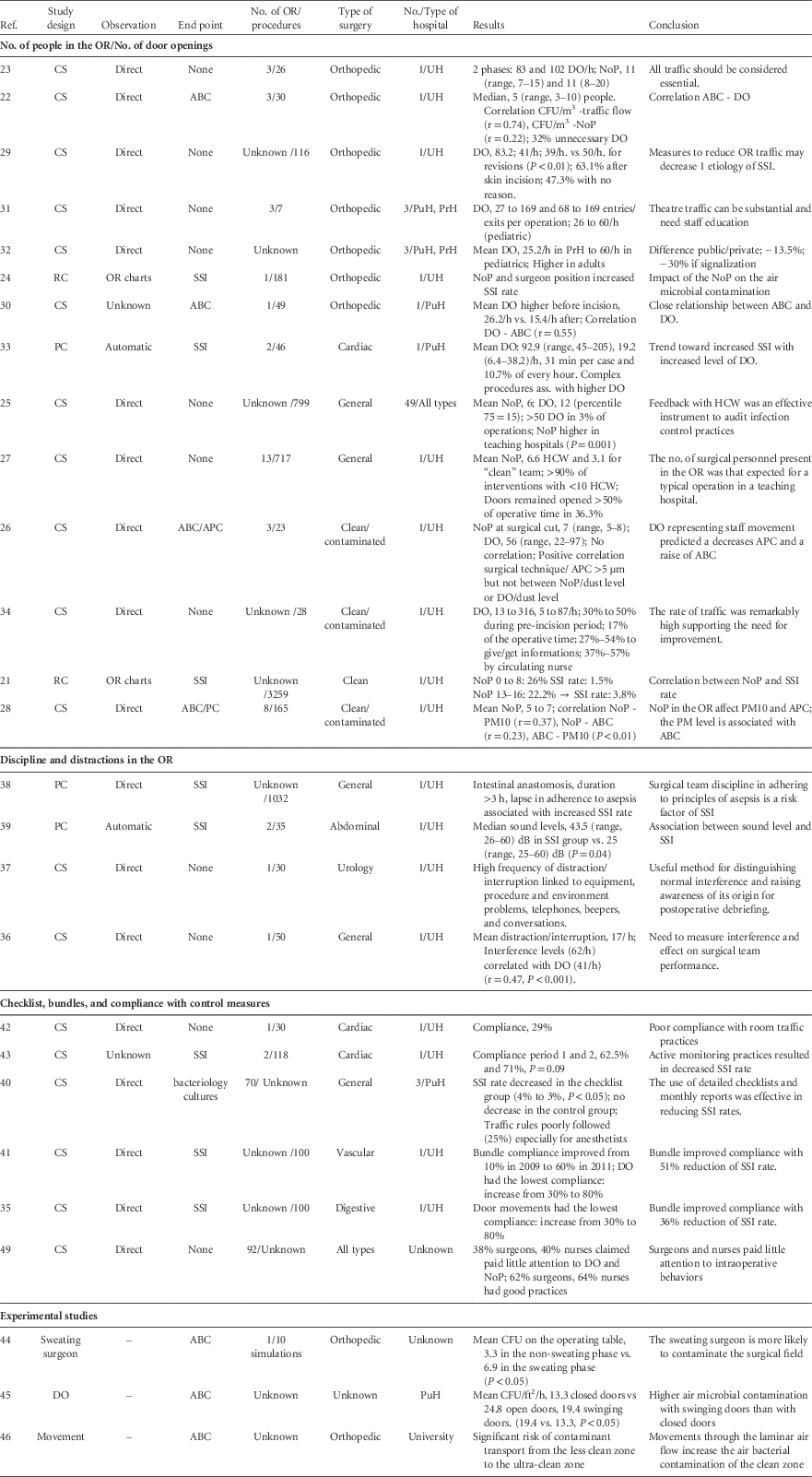
Study Selection (Table 1 and Figure 1)
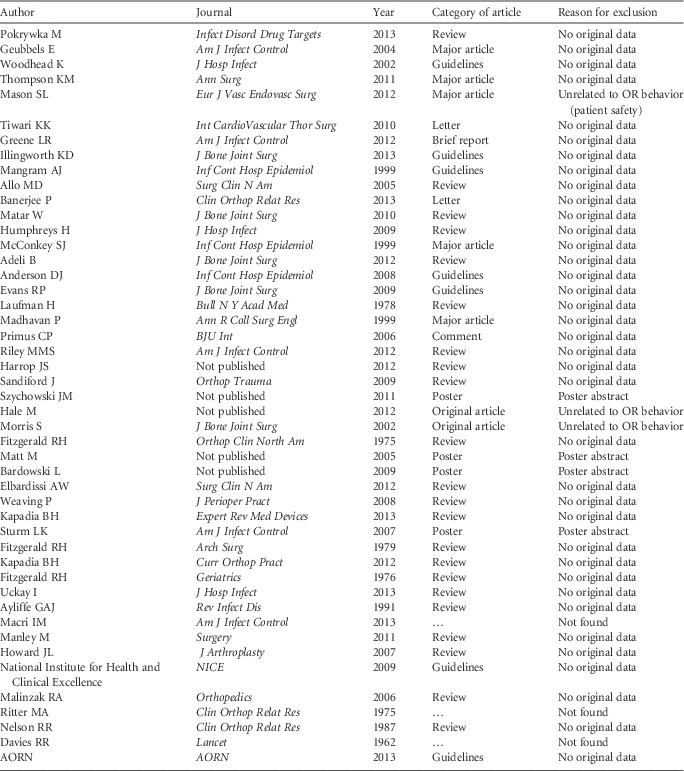
Our electronic and manual searches identified 2086 articles, of which 202 were preselected on the basis of the title; among them, 137 were excluded on the basis of the abstract, leaving 65 articles, of which 3 were irretrievable. We added 9 articles identified by manually searching the reference lists. Of these 71 articles, 3 were unrelated to OR behavior and 41 did not provide original data, leaving 27 studies for our analysis. The marked heterogeneity in the study objectives and designs precluded a meta-analysis.
Flowchart of the search strategy.

Summary of Included Studies Evaluating Intraoperative Staff Behavior and Its Impact on the Risk of Infection
Note. ABC, air bacterial count; APC, air particle count; CFU, colony-forming unit; CS, cross-sectional; DO, door openings; DO/h, door openings per hour; HCW, healthcare worker; NoP, no. of persons; OR, operating room; PC, prospective cohort; PM10, particulate matter 10 µm; PrH, private hospital; PuH, public hospital; RC, retrospective cohort; SSI, surgical-site infection; UH, university hospital.
Study Characteristics
Of the 27 studies, 9 were published in infection-control journals, 12 in surgery journals, and 6 in quality-of-care or general journals (Table 2). Study dates ranged from 1978 to 2012 and most studies (16/27, 59%) were published during the past 5 years. The studies were performed in Europe (n=19), North America (n=5), Asia (n=1), Australia (n=1), and both France and Australia (n=1). The outcomes fell into 5 categories: number of people in the OR (n=14), door openings (n=14: number [n=6], frequency [n=7], reasons [n=4], or duration [n=3]), OR discipline (interruptions/distraction of the surgical team; n=4), compliance with traffic measures (n=6), and experimental scenario-based studies (n=3).
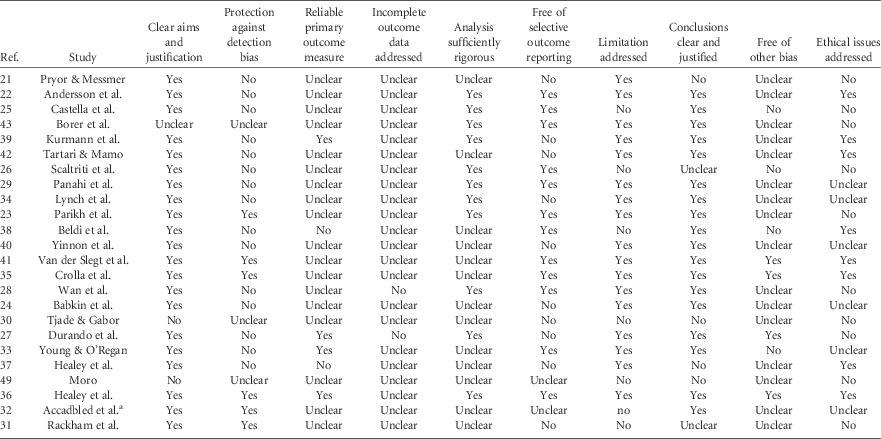
Criteria from Integrated Quality Criteria for Systematic Review of Multiple Study Designs Used to Assess Quality of the Studies Included in the Review
a Oral presentation in congress.
In 16 studies, the end points were the SSI rate (n=8), air particle count (n=2), or air bacteria count (n=7); 11 studies were descriptive with no end point. The studies lasted 2 to 48 months, and most were done at a single center (22/27, 81%). The number of ORs surveyed varied from 1 to 70, with 23 to 3259 surgical procedures. Among the 24 observational studies, 17 collected behaviors by direct observation and 2 used an automatic device to count door openings. Two retrospective studies were based on OR chart review and 3 others on an undescribed data collection process. Study designs were cross-sectional (n=19), prospective cohort (n=3), experimental (n=3), and retrospective cohort (n=2).
Assessment of Study Methods
We assessed the quality criteria for the 24 observational studies (Table 2). The study aim and justification were clearly stated in most reports (21/24, 88%). However, most of the direct observations were performed by an observer in the OR (18/24, 75%). Some studies attempted to minimize bias by keeping secret the reason of the presence of an observer (n=4) and others by using an automatic device (n=2). The primary outcome measure was considered reliable in 4 (17%) of the 24 studies. The conclusions were clearly stated in 18 (75%) of the 24 articles.
Number of People in the OR
The number of people in the OR was assessed in 8 studies, of which 2 assessed the impact on SSI rates, 2 on airborne particle or microbiological air counts; the remaining 4 studies were purely descriptive.Reference Pryor and Messmer21–Reference Wan, Chung and Tang28 Results are displayed in figures 2 and 3.
In orthopedic surgery,Reference Parikh, Grice, Schnell and Salisbury23 the number of staff members present during 26 surgical procedures varied from 3 to 20. Spinal surgery had the highest number (median [interquartile range], 14 [11–20] vs. 11 [7–15] in other specialties). In another study that assessed 181 procedures, having 3 surgeons present was associated with an increased risk of SSI (8/108, 7.4%) compared with 2 surgeons (2/72, 2.8%).Reference Babkin, Raveh and Lifschitz24 A small but significant correlation was found between the median number of people in the OR during orthopedic surgery (5; interquartile range, 3–10) and airborne contamination (total colony-forming units [CFU]/m3 per operation, 60.4±55.9, r=0.22, P=0.04).Reference Andersson, Bergh, Karlsson, Eriksson and Nilsson22 In a retrospective study of 3259 clean surgical procedures, the number of people in the OR was fewer than 9 in 26% of procedures, 9 to10 in 26%, 11 to 12 in 23%, 13 to 16 in 22%, and more than 16 in 2%. As the number increased, the infection rate rose steadily, from 1.5% for fewer than 9 people to 6.9% for more than 16 people.Reference Pryor and Messmer21 In 23 surgical procedures of all types, the median (range) number of OR staff at incision was 7 (5–8) and did not correlate with the particle count.Reference Scaltriti, Cencetti, Rovesti, Marchesi, Bargellini and Borella26 The number of OR staff attending 165 surgical procedures of various types showed a positive correlation with airborne particle and bacteria counts.Reference Wan, Chung and Tang28
Distribution of the number of door openings and people in the operating room according to studies.
Studies assessing the impact of behaviors on environmental contamination and SSI rates. The significance of the impact is displayed with bubble sizes indicating the number of procedures included. Note. ABC, air bacterial count; APC, air particle count; DO, door openings; NoP, no. of persons; NS, non significant; OR, odds ratio; Ref, reference; RR, relative risk; SSI, surgical site infection.
Four studies were purely descriptive.Reference Parikh, Grice, Schnell and Salisbury23, Reference Castella, Charrier and Di Legami25, Reference Durando, Bassetti and Orengo27, Reference Panahi, Stroh, Casper, Parvizi and Austin29 In a multicenter study in general surgery, the mean number of people was 6 or 7; for 5% of procedures, there were 5 to 7 surgical staff and for 6% there were 4 to 10 other personnel, with higher numbers in teaching hospitals (P<0.01).Reference Castella, Charrier and Di Legami25 In another study, 645 (90%) of 717 surgical procedures were performed with fewer than 10 personnel in the OR; the mean±SD was 6.6±1.9 overall and 3.1±0.8 for clean surgery.Reference Durando, Bassetti and Orengo27
Door Openings
Eleven studies assessed the impact of door openings on infections. During total arthroplasties, mean door-opening frequency was 39/h for primary operations and 50/h for revisions, and 63% of the traffic occurred after the incision.Reference Panahi, Stroh, Casper, Parvizi and Austin29 In 2 other studies, door-opening frequency was 83–102/h and 15–26/h, respectively.Reference Parikh, Grice, Schnell and Salisbury23, Reference Castella, Charrier and Di Legami25 Results are displayed in figures 2 and 3.
In a study of 49 clean orthopedic procedures, mean door-opening frequency was 26.2/h before the incision and 15.4/h after the incision.Reference Tjade and Gabor30 Two multicenter studies of orthopedic procedures in various types of hospitals and patient populations showed door-opening frequencies of 26–60/h in pediatric scoliosis surgery and 46–55/h in adults undergoing total knee replacement, with a 52% decrease after staff education and door labeling.Reference Rackham, Sutherland, Mintz, Cain and Cundy31 In another study, mean door-opening frequency ranged from 25/h in a private hospital to 60/h in pediatric surgery and was higher for adults and public hospitals.Reference Accadbled, Louis, Rackham, Cundy and Sales de32
In cardiovascular surgery, mean door-opening frequency was 19.2/h overall, with higher values in patients at greater risk for complications, and total time spent with the door open was 10.7% of the total operative time.Reference Young and O’Regan33 In other types of surgery, door-opening frequency varied from 5 to 87/h.Reference Scaltriti, Cencetti, Rovesti, Marchesi, Bargellini and Borella26, Reference Lynch, Englesbe and Sturm34 During 28 surgical procedures in 6 different specialties, mean door-opening frequency varied from 19/h in general surgery to 50/h in spinal fusion.Reference Lynch, Englesbe and Sturm34 In Italy, the door was open during 223 (26%) of 856 surgical procedures in 49 hospitalsReference Castella, Charrier and Di Legami25 and for more than 50% of operative time in 260 (36.3%) of 717 surgical procedures at a university hospital.Reference Durando, Bassetti and Orengo27
The main reasons for door opening in orthopedic surgery were a need for supplies (23.3%) or information (11.5%) and scrubbing (7.3%); the reason was unknown for 47.3% of openings. The largest contributors to door openings were the circulating nurse (26.0%) and equipment representatives (20.3%).Reference Panahi, Stroh, Casper, Parvizi and Austin29 Of 529 door openings during 30 orthopedic surgical procedures, 169 were deemed unnecessary.Reference Andersson, Bergh, Karlsson, Eriksson and Nilsson22 In another study, social talk, coffee breaks, and a need for equipment were potential reasons.Reference Crolla, van der Laan, Veen, Hendriks, van Schendel and Kluytmans35
In 2 studies, door opening correlated with surrogates of the infectious risk. High door-opening frequency and high traffic flow were associated with high air bacteria counts.Reference Andersson, Bergh, Karlsson, Eriksson and Nilsson22 This study adjusted for confounders, including operative time and number of people.
In another study, door openings were negatively associated with air particle counts but positively associated with air bacteria counts.Reference Scaltriti, Cencetti, Rovesti, Marchesi, Bargellini and Borella26 Finally, 2 studies in general surgery linked the number of door openings to distraction and interruptions in the OR.Reference Healey, Sevdalis and Vincent36, Reference Healey, Primus and Koutantji37
Discipline and Distraction in the OR
Four studies evaluated intangible aspects of OR-staff behavior during general surgical procedures. Lapses in discipline such as switching staff members, hectic movements, loud noise, and presence of visitors were significantly associated with the SSI rate after 1032 surgical procedures.Reference Beldi, Bisch-Knaden, Banz, Mühlemann and Candinas38 In another study, in 36 patients, the median sound level during surgery was significantly higher for the 6 patients who developed SSIs and the sound level increased in both groups 60 min after the first incision.Reference Kurmann, Peter, Tschan, Mühlemann, Candinas and Beldi39 Healey et al.Reference Healey, Sevdalis and Vincent36, Reference Healey, Primus and Koutantji37 evaluated surgical-team interferences and distractions during operations. The mean number of interference events per operation varied from 13.6 to 20.5 in general surgery, with a mean of 17 to 27/h,Reference Healey, Sevdalis and Vincent36, Reference Healey, Primus and Koutantji37 and the most frequent events were conversations and movements behind the video monitor during laparoscopic surgery; whereas the events with the highest recurrence rate were those related to the equipment. Distraction was most common among surgeons, followed by nurses and anesthetists. Mean cumulative work-interruption duration was 13% (range, 0.41%–50.17%) of the operative time.
Checklist, Bundles, and Compliance With Control Measures
Six studies evaluated the overall compliance of OR teams with traffic-control measures. A checklist including intraoperative behavioral criteria was used to improve practices and prevent SSIs. Monthly reports of practices were associated with a significant decrease in SSI rates in the checklist group, from 4% during the first month to 3% during the 11th month. Compliance with entry/exit rules during the surgery was only 25% and was lowest among anesthetists.Reference Yinnon, Wiener-Well and Jerassy40
Two studies by the same team assessed the impact on the SSI rate of a bundle of preventive measures including restricted door openings. In a study of vascular surgery, compliance with door-opening rules improved from 30% to 80% and the SSI rate decreased concomitantly by 51%.Reference Van der Slegt, van der Laan, Veen, Hendriks, Romme and Kluytmans41 Among the 4 preventive measures in the bundle, door-opening restriction raised the greatest challenges in achieving compliance. The other study evaluated digestive procedures and yielded similar results with a 36% decrease in the SSI rate.Reference Crolla, van der Laan, Veen, Hendriks, van Schendel and Kluytmans35
In a study of 30 procedures, compliance with traffic rules was only 29%.Reference Tartari and Mamo42 Compliance improved from 62.5% to 71% in another study concomitantly with the implementation of other infection control practices during 118 heart surgery procedures.Reference Borer, Gilad and Meydan43
Experimental Studies
Three studies simulated the impact of various behaviors. The number of bacteria deposited on 8 plates placed on the operating table during a simulated 30-min orthopedic surgical procedure by a nonsweating and sweating surgeon was 3.3 and 6.9, respectively.Reference Mills, Holland and Hardy44 Swinging doors were associated with higher airborne bacteria counts compared with constantly closed doors (mean, 19.4 vs. 13.3 CFU/ft2; P<0.05).Reference Ritter45 In the remaining study, intraoperative movements through the laminar air flow were associated with bacterial transport from nonclean to clean zones in orthopedic surgery.Reference Brohus, Balling and Jeppesen46
DISCUSSION
Several guidelines refer to specific behaviors as potential risk factors for SSI.Reference Mangram, Horan, Pearson, Silver and Jarvis6, 17, 18 National recommendations emphasize the importance of discipline in the OR. For example, the National Institute for Health and Clinical Excellence guideline states, “Staff wearing non-sterile theatre wear should keep their movements in and out of the operating area to a minimum.”17 The Centers for Disease Control and Prevention guideline recommends keeping OR doors closed (grade IA) and allowing only necessary personnel into the OR (grade II).Reference Mangram, Horan, Pearson, Silver and Jarvis6 The grade II rating of this last recommendation highlights the paucity of the available literature, although most experts consider OR discipline to be a major SSI prevention measure.Reference Woodhead, Taylor, Bannister, Chesworth, Hoffman and Humphreys47 Thus, none of the guidelines provides detailed pragmatic recommendations about preventing environmental contamination and SSIs.
We identified only 27 original studies evaluating the impact of OR behaviors on the infectious risk. These studies were heterogeneous, failed to cover all relevant areas, and provided a low level of evidence. Their results suggest, however, an impact of surgical team behavior on the SSI risk and, therefore, opportunities for improvement.
Humans shed large amounts of particles and skin fragmentsReference Hambraeus12 and constitute the main reservoir of air contaminants in the OR. Therefore, limiting the number of people and their movements may be a key factor in minimizing environmental contamination.
Door openings adversely affect air exchange, air quality, and positive pressure in the OR compared with adjacent rooms.Reference Tang, Eames and Li48 One study with a complex statistical analysis concluded that a greater door-opening frequency reduced air particles but also increased the presence of bacteria in the OR.Reference Scaltriti, Cencetti, Rovesti, Marchesi, Bargellini and Borella26 These results conflict with the hypothesis that microorganisms are vectored by air particles. By contrast, an observational studyReference Andersson, Bergh, Karlsson, Eriksson and Nilsson22 and an experimental studyReference Ritter45 concluded that traffic flow and door opening increased the air concentration of microorganisms close to the surgical wound. Door opening is a cause of distraction and interruptions for the surgical teamReference Healey, Sevdalis and Vincent36 and therefore contributes to the risk of adverse events during the operation. One of the main ways of improvement in the complex OR system is anticipation. The unnecessary entries/exits, estimated to be approximately 60% of the total, were mainly due to a lack of preparation and organization. Several easy elements could lead to improvement: the storage of components and frequently used instruments in the OR, a clear and advanced communication, a shift change of the surgical team prepared in advance, a sign on the door advising caution, proper education of OR team and visitors, and a robust audit process. The leadership of the surgeon and the head nurse is probably the cornerstone of the discipline and the organization in the OR.
More surprisingly, louder noise has been associated with a higher SSI rate.Reference Kurmann, Peter, Tschan, Mühlemann, Candinas and Beldi39 Lapses in discipline were associated with an increased SSI rate in a careful study involving a multivariate analysis.Reference Beldi, Bisch-Knaden, Banz, Mühlemann and Candinas38 Such lapses might indicate either greater complexity of the surgical procedure or less attention to the procedure on the part of the surgical team. In complex procedures, more personnel are often needed, with as a result, a risk of lapse in discipline and an increase of environmental contamination. Thus, those cases may be at higher risk for SSI and constitute a potential confounder in the analysis.
In analyzing the 4 studies of preventive bundles, it is difficult to separate the possible role for traffic control from that of the other preventive measures.Reference Crolla, van der Laan, Veen, Hendriks, van Schendel and Kluytmans35, Reference Yinnon, Wiener-Well and Jerassy40–Reference Borer, Gilad and Meydan43, Reference Moro49 However, the bundles, which included audits and feedback about compliance, were associated with a decrease in the SSI rate, and improvement of traffic control raised the greatest challenges.
Most studies using the SSI rate as the end point evaluated the impact of the number of people and their movements in the OR. The results suggest that increases in either or both are associated with higher SSI rates. A large retrospective study suggested an association between the number of people in the OR and the occurrence of SSIs, but this number was closely related to the operative time, which was the only significant variable in the multivariate analysis.Reference Pryor and Messmer21 SSI is a multifactorial event associated with patient-related factors, type of surgery, compliance with preventive measures, and pathophysiologic events. A causal relationship with environmental contamination is therefore difficult to prove unless the analysis adjusts for the many confounding factors. In addition, improved OR discipline is most likely to affect the rate of SSIs due to exogenous microorganisms—that is, complicating clean surgery. SSIs are rare after clean surgery, and detecting an effect of improved OR discipline therefore requires long observation periods.
Four studies used air contamination (particle count, n=2; or bacteria count, n=4) as a surrogate for the SSI risk. However, the link between airborne contamination and SSI is unclear. For example, surgical wounds are often contaminated at skin closure, presumably by airborne microorganisms.Reference Tammelin, Hambraeus and Ståhle14 It is hoped that only a minor part of contaminated wounds lead to postoperative infection in patients.
Published studies about the impact of intraoperative behaviors on the risk of infection have several limitations. There were no control groups, and the end points were heterogeneous and of unclear validity, inducing a high risk of publication bias. In addition, 11 studies were purely descriptive. Of the 23 studies for which the data collection method was described, 19 relied on an observer in the OR during repeated cross-sectional surveys. This method is prone to the Hawthorne effect and to inconsistency. Thus, in 1 study, traffic declined by 13.5% to 35% after the staff was informed that an observer was present in the OR.Reference Rackham, Sutherland, Mintz, Cain and Cundy31 Automatic recording during long periods can overcome this limitation.Reference Young and O’Regan33 Associations linking OR behaviors to the SSI risk can be assessed using either the SSI rate or surrogates such as air contamination. We found only 9 studies that used the SSI rate and 4 clinical studies that used air contamination.
Bundles of preventive measures have been developed to minimize the SSI risk.Reference Coello, Charlett, Wilson, Ward, Pearson and Borriello50 Most of these measures target endogenous contamination; examples include skin preparation, surgical technique, prophylactic antibiotics, decontamination, and maintaining homeostasis. These measures have contributed to the dramatic decrease in SSI rates documented during the past 30 years. Little is known about preventing exogenous infections due to environmental contamination and OR behaviors. Recent studies suggesting that laminar airflow may not be superior over standard ventilation indicate an urgent need for studies evaluating the complex interplay between ventilation, number of people in the OR, movements, and door openings.Reference Gastmeier, Breier and Brandt51 New tools for automatic data collection may help by providing objective long-term data on OR conditions. Automatic devices have been used to count door openings Reference Young and O’Regan33, Reference Kurmann, Peter, Tschan, Mühlemann, Candinas and Beldi39 but not the number and movements of people in the OR. Video systems may help to describe and understand movements during operations.Reference Birgand, Azevedo and Toupet52
In conclusion, published data about the impact of OR behaviors on the infectious risk are limited, heterogeneous, and weakened by several methodological flaws. More studies should be performed with accurate tools to address the influence of OR behaviors on the infectious risk.
Acknowledgments
Financial support. None reported.
Potential conflicts of interest. All authors report no conflicts of interest relevant to this article.
APPENDIX 1
Medline search algorithm
The following search algorithm was developed to search the database using Boolean operators and the asterisk symbol (*) as truncation:
("Operating Rooms/standards"[Mesh] OR "Operating room*" OR "Operating theatre*") AND (("Health Knowledge, Attitudes, Practice" [Mesh] OR "Foot traffic*" OR "Door opening*" OR "Theatre traffic*" OR "Behavior*" OR "Behaviour*" OR "discipline*" OR "attitude*" OR "traffic*" OR "Operating room traffic*")) OR ("Patient Safety" [Mesh] OR "Operating room traffic*" OR "safety climate*" OR "safety culture*" OR "safety attitude*" OR "safety intervention*")) AND (("Surgical Wound Infection/prevention & control" [Mesh] OR "Surgical Wound infection/etiology" [Mesh] OR "Air Microbiology" [Mesh] OR "Infection Control/methods" [Mesh] OR "Equipment Contamination/prevention & control" [Mesh] OR "Surgical Site Infections*” OR "Air sampling")) OR ("Operating room traffic" OR "Door opening*" OR "Theatre traffic*" OR "Foot traffic*") OR (("Surgical Wound Infection/prevention & control" [Mesh] OR "Surgical Wound infection/etiology" [Mesh] OR "Air Microbiology" [Mesh] OR "Infection Control/methods" [Mesh] OR "Equipment Contamination/prevention & control" [Mesh] OR "Surgical Site Infections*” OR "Air sampling") AND ("Patient Safety" [Mesh] OR "Operating room traffic*" OR "safety climate*" OR "safety culture*" OR "safety attitude*" OR "safety intervention*")).
EMBASE search algorithm
'Operating room' OR 'Operating theatre' AND 'Health Knowledge' OR 'Attitude' OR 'Foot traffic' OR 'Door opening' OR 'Theatre traffic' OR 'Behavior' OR 'Behaviour' OR 'discipline' OR 'traffic' OR 'Operating room traffic' OR 'Patient Safety' OR 'Operating room traffic' OR 'safety climate' OR 'safety culture' OR 'safety attitude' OR 'safety intervention' AND ‘Surgical Wound Infection’ OR ‘Air Microbiology’ OR ‘Equipment Contamination’ OR ‘Surgical Site Infection’ OR ‘Air sampling’ OR ‘Operating room traffic’ OR ‘Door opening’ OR ‘Theatre traffic’ OR ‘Foot traffic’
Ovid search algorithm
'Operating room' OR 'Operating theatre' AND 'Health Knowledge' OR 'Attitude' OR 'Foot traffic' OR 'Door opening' OR 'Theatre traffic' OR 'Behavior' OR 'Behaviour' OR 'discipline' OR 'traffic' OR 'Operating room traffic' OR 'Patient Safety' OR 'Operating room traffic' OR 'safety climate' OR 'safety culture' OR 'safety attitude' OR 'safety intervention' AND ‘Surgical Wound Infection’ OR ‘Air Microbiology’ OR ‘Equipment Contamination’ OR ‘Surgical Site Infection’ OR ‘Air sampling’ OR ‘Operating room traffic’ OR ‘Door opening’ OR ‘Theatre traffic’ OR ‘Foot traffic’
Web of science search algorithm
TS=(Operating room) OR TS=(Operating theatre) AND TS=(Health Knowledge) OR TS=(Attitude) OR TS=(Foot traffic) OR TS=(Door opening) OR TS=(Theatre traffic) OR TS=(Behavior) OR TS=(Behaviour) OR TS=(discipline) OR TS=(traffic) OR TS=(Operating room traffic) OR TS=(Patient Safety) OR TS=(Operating room traffic) OR TS=(safety climate) OR TS=(safety culture) OR TS=(safety attitude) OR TS=(safety intervention) AND TS=(Surgical Wound Infection) OR TS=(Air Microbiology) OR TS=(Equipment contamination) OR TS=(Surgical Site Infection) OR TS=(Air sampling) OR TS=(Operating room traffic) OR TS=(Door opening) OR TS=(Theatre traffic) OR TS=(Foot traffic) AND TS=(Operating room) OR TS=(Operating theatre)
Cochrane search algorithm
(Operating room OR Operating theatre) AND (Health Knowledge OR Attitude OR Foot traffic OR Door opening OR Theatre traffic OR Behavior OR Behaviour OR discipline OR traffic OR Operating room traffic OR Patient Safety OR Operating room traffic OR safety climate OR safety culture OR safety attitude OR safety intervention) AND (Surgical Wound Infection OR Air Microbiology OR Equipment Contamination OR Surgical Site Infection OR Air sampling)
OR (Operating room traffic OR Door opening OR Theatre traffic OR Foot traffic)
JHI+American Journal of Surgery+Lancet+Injury+Safety Science
(“Operating room” OR “Operating theatre”) AND (“Health Knowledge” OR “Attitude” OR “Foot traffic” OR “Door opening” OR “Theatre traffic” OR “Behavior” OR “Behaviour” OR “discipline” OR “traffic” OR “Operating room traffic” OR “Patient Safety” OR “Operating room traffic” OR “safety climate” OR “safety culture” OR “safety attitude” OR “safety intervention”) AND (“Surgical Wound Infection” OR “Air Microbiology” OR “Equipment Contamination” OR “Surgical Site Infection” OR “Air sampling”) OR (“Operating room traffic” OR “Door opening” OR “Theatre traffic” OR “Foot traffic”)
List of Excluded Studies and Reasons for Exclusion
Note. OR, operating room.