1. Introduction
Germans enjoy a high degree of free access to health care and of choice of both providers and health care insurance. Compared to other industrialised countries, the health care infrastructure is well developed and within easy reach; numbers of physicians and nurses per population lie above OECD (Organisation for Economic Co-operation and Development) average. Rather than underuse, the German system is characterised by over- and misuse of health care services (Advisory Council on the Assessment of Developments in the Health Care System, 2001). Therefore, policy makers have recently introduced measures to induce more rational utilisation of services and to limit free choice of providers for patients, which stands in contrast to developments in the USA, the UK and some other countries, where patient choice has been increased.
The Statutory Health Insurance Modernization Act of 2004 (2004 reform) and the Statutory Health Insurance Competition Strengthening Act of 2007 (SHI-CSA) constitute turning points in this regard (Federal Ministry of Health, 2003, 2007a). The 2004 reform introduced a quarterly co-payment for first visits to an outpatient provider and for visits to any other physician during the same quarter without referral.Footnote 1 Both acts promote care coordination by introducing voluntary restrictions on patients’ choice of provider and elements of managed care.
At the same time, the 2004 and 2007 reforms aim to increase competition among health care providers and health insurers by giving patients more choice between health insurers and benefit packages. The objective of these measures is to improve efficiency, quality and patient responsiveness.
While the focus of this paper is on the aforementioned reform measures, we also look into other measures of the 2004 and 2007 reforms that have an impact on access and choice, for example, measures that aim to mitigate negative effects of the looming shortage of health care providers in some German regions, and the extension of the benefit basket to include additional preventive, rehabilitative and palliative care services.
The paper is organised as follows. In Section 2, we outline the method and our analytical framework. In Section 3, we describe the measures relevant to access and choice introduced with the 2004 and 2007 reforms, and we assess their impact on the different dimensions of access and choice. In the final section, we discuss the implications of our findings for policy makers and researchers.
2. Method and analytical framework
2.1 Method
We review the content and objectives of two major health care reforms in Germany: the Statutory Health Insurance Modernization Act of 2004 and the Statutory Health Insurance Competition Strengthening Act of 2007. Within the analytical framework outlined below, we assess the impact of these reforms on different dimensions of access (affordability, availability, reachability) and choice (patients’ choice of health insurance system, health insurers, benefit packages, providers). To do so, we use a variety of literature sources, including academic literature, policy documents and results from population surveys, such as the German Socio-Economic Panel Study (see Grabka et al., Reference Grabka, Schreyögg and Busse2006; Schreyögg and Grabka, Reference Schreyögg and Grabka2008) and representative surveys of statutory health insurance (SHI) and private health insurance (PHI) insurees carried out by the research institutes of local sickness funds, Wissenschaftliches Institut der Ortskrankenkassen, WIdO (see Zok, Reference Zok2004, Reference Zok2005), the Central Research Institute for Ambulatory Health Care in Germany (see Koch and Brenner, 2005) and the Healthcare Monitor of the Bertelsmann Stiftung, a German non-profit foundation (see Gebhardt, Reference Gebhardt2005).
2.2 Analytical framework
Definitions of access in the health economic literature emphasise different aspects of access. A common definition sees access as a minimum set of benefits that ensures that no citizen falls beneath a particular level of care. Another common definition sees access guaranteed when the same level or quality of health care is equally accessible to all, regardless of social status, residence and income (Wörz et al., Reference Wörz, Foubister and Busse2006). Roberts et al. (Reference Roberts, Hsiao, Berman and Reich2004) distinguish between physical availability measured by inputs (such as capital investments, human resources, knowledge) in relation to the population and the effective availability of care (what services are offered at what locations and at what prices?). Cost, travel time, poor services and so forth are possible barriers to access. Wagstaff and van Doorslaer (Reference Wagstaff and van Doorslaer2000) circumscribe the term by saying that access is what is usually meant by ‘receipt of treatment’. An early definition by Le Grand (Reference Le Grand1982) thinks of access in terms of the money and time cost that people incur in obtaining health care, thus neglecting the role of income. Olson and Rodgers (Reference Olson and Rodgers1991) define access as the maximum attainable level of consumption of medical care, given the individual’s income, and the time and money prices associated with consumption.
For the purpose of this paper, we combine some of the above and refer to three different dimensions of access. First, availability of care (including capacity of the system such as number of providers), second, reachability (geographical distribution of providers) and third, affordability (including financing and insurance arrangements and the reimbursability of services). In general, there are few infrastructural or geographic barriers to access health care in Germany and most of the debate on access in Germany focuses on affordability as the paramount dimension of access. This focus on affordability can partly be derived from the outstanding role that the notion of solidarity plays in German social policy at large: solidarity, that is, support among individuals of a group and collective action in order to achieve a specified aim (for example, good health) is explicitly stipulated as one of the leading principles in the Social Code Book V, the legal framework for the German SHI system.
Choices in health care arise in many situations and are usually held to be desirable. Their benefits can be seen in their intrinsic worth and individual liberty (Dowding, Reference Dowding1992), which increases sovereignty on the consumer’s side (Rice, Reference Rice2001). In microeconomic theory, choice is a prerequisite for decentralised decision-making, resulting in efficient allocation of resources. Applied to health care, choice would then lead to lower prices and better quality, provider responsiveness, innovation and so on (Thomson and Dixon, Reference Thomson and Dixon2006). However, choices in health care bear costs as well. An overload of choices increases information costs and might even lead to confusion in consumers. Especially in health care, issues such as rationality and bounded-rationality, merit goods and the way choices are presented are relevant. In addition to that, (change in) health status significantly influences what choices are made: for example, insurance is bought by healthy people but used by sick people (Aaron, Reference Aaron2008).
When analysing dimensions of choice in health care, it is helpful to distinguish between choice on the demand side (e.g. what insurance, which physician, which hospital and so on) and choice on the supply side (e.g. medical career choices, treatment choices, investment choices by pharmaceutical manufacturers) (Sloan and Kasper, Reference Sloan and Kasper2008). Throughout this paper we focus on choice on the demand side. According to Thomson and Dixon (Reference Thomson and Dixon2006), consumer choice in health care can refer to at least four different decisions: choice between public and private insurance, choice of public insurance fund, choice of first contact care provider and choice of hospital.
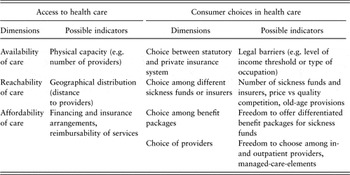
In the German health care system, choice is a longstanding feature tied to its social health insurance system tradition. The dimensions of choice analysed in this paper are based on Thomson and Dixon’s taxonomy but take into account the particularities of the German health care system. First, we look at choice between the SHI and the PHI system. Second, German patients can choose among different insurers within either the statutory or the private insurance system. We consider choice among different benefit packages within one sickness fund or insurance company to be our third dimension of choice. And finally we analyse choice of (in- and outpatient) providers. Table 1 summarises the different dimensions of access and choice serving as a framework for our analysis.
Dimensions and indicators of access and choice

3. Elements of 2004 and 2007 reforms and their impact on access and consumer choice
3.1 Availability and reachability of care
3.1.1 Financial incentives for physicians to settle in underserved areas
As mentioned earlier, there are (so far) few infrastructural or geographical barriers to health care in Germany. Looking at the ratio of health professionals to the population, Germany lies above the OECD average: in 2005, there were 3.4 practicing physicians per 1000 inhabitants in Germany, whereas the OECD average is 3.1 per 1000 (Organisation for Economic Co-operation and Development, 2007).
However, demographic change is expected to lead to a reduction of this rather comfortable ratio. Due to uneven distribution of physicians across and within regions, and with many doctors approaching retirement, some regions in the Eastern part of Germany may in fact be facing a shortage of physicians within the next five years. Whereas, on average, 17.4% of all general practitioners (GPs) in the West are 60 years or older, this percentage amounts to about 30% in the five Eastern German states (Klose et al., Reference Klose, Rehbein and Uhlemann2007). In just one year, between December 2005 and December 2006, the number of GPs in the East decreased by 3.1% (Federal Association of SHI Physicians and Federal Physicians Chamber, 2003; Federal Association of SHI Physicians, 2007). These developments may reduce access to primary health care, particularly for elderly people with reduced mobility.
To mitigate this development, from 2010 on the SHI-CSA envisages additional financial incentives, that is, even higher reimbursement rates, for physicians who settle in underserved areas. To offset the looming shortfall of physicians, another strategy is the employment of community nurses, the equivalent of nurse practitioners in other countries, who visit patients in their homes and assume tasks previously performed in physician practices (Blum, Reference Blum2006).
3.2 Affordability of care
3.2.1 New co-payment for outpatient physician visits
Reforms during the last 20 years have steadily increased both the level of co-payments and the number of drugs, inpatient health care services and medical aids on which co-payments were imposed with the aim to contain overall public health care expenditures. The share of private expenditure in total health care expenditure has consequently gone up over years: from 18.4% in 1995 to 23.1% in 2004 (OECD, 2007).Footnote 2 In order to ensure equal access to care based on need, financial hardship regulations and exemptions based on age, income and health status were introduced. Children up to 18 years of age are exempt from co-payments. For low-income individuals and the chronically ill, yearly limits for co-payments exist (2% and 1% of gross annual household income, respectively, since 2004).
As a novelty in the German health care system, the 2004 reform introduced a flat fee for visits to outpatient physician offices. Patients have to pay €10 per calendar quarter for the first appointment at a doctor’s office (or hospital outpatient wing) and for each physician visit without a referral from the physician seen first. The aim of this measure is to reduce unnecessary physician visits, increase cost awareness and encourage self-medication of petty diseases (Gebhardt, Reference Gebhardt2005). Physicians transfer the payments to sickness funds, so the €10 fee is no incentive for providers to attract patients to generate a higher income.
Empirical studies show mixed results regarding the impact of the €10 fee on access to and utilisation of ambulatory health care services. Data from the Bertelsmann Stiftung’s Healthcare MonitorFootnote 3 indicate that the number of physician visits initially declined (by about 8% between spring 2003 and spring 2005) but remained relatively stable subsequently (Gebhardt, Reference Gebhardt2005). Grabka et al. (Reference Grabka, Schreyögg and Busse2006) showed decreased unnecessary consultations for 2004, the year of the introduction of the €10 fee, but the user fee appears to have no major impact on demand for physician visits overall (Schreyögg and Grabka, Reference Schreyögg and Grabka2008).
Zok initially showed that low-income earners tended to avoid physician visits shortly after the introduction of the €10 practice fee, but could not replicate these results in a later study (Zok, Reference Zok2004, Reference Zok2005). Another study showed that patients in bad health were more likely to reduce visits than patients in good health. Physicians argued that the number of medically needed physician visits went down as well, and that patients made less use of preventive health check-ups and that utilisation of outpatient services among children and adolescents decreased (Gebhardt, Reference Gebhardt2005). Both prevention check-ups and physician visits for children remain exempt from the user fee though. It should be noted that these are very early observations, just one year into practice fee experiences, and that patients may be more familiar with the regulations now. In a more recent study, Schreyögg and Grabka (Reference Schreyögg and Grabka2008), for example, could not find evidence that the €10 fee acted as a deterrent for low-income people or the chronically ill.
3.2.2 Introduction of universal mandatory health insurance
The number of uninsured individuals in Germany is very small compared to other countries; however, it has been rising over the last years. Prior to 2007, it amounted to about 200,000 individuals (0.2% of the population) (Laschet, Reference Laschet2005). The SHI-CSA, in force since April 2007, made universal health insurance mandatory. Today every resident is required to take out health insurance, either through social health insurance or privately. Whilst public insurers have always been obliged to enrol applicants, private insurers had freedom to contract or not. Under the new law, individuals have the right to get covered at least under a basic benefit package where they had last been insured, public or private (the dual German health insurance system is described in more detail in Section 3.3).
Prior to the reform, a basic benefit package in the private insurance system was only open to existing customers or to people older than 65 years and for people over 65 years. Since January 2009, private health insurers are required to extend access to their basic benefit package. Existing customers could opt for this new plan within six months of its introduction, i.e. prior to July 1st, 2009. Furthermore, clients older than 55 years, former clients who can no longer afford the risk-related premiums, and new clients can always access the basic package.Footnote 4 New insurees can choose this benefit package without medical underwriting. The basic benefit package includes benefits similar to those offered in the SHI; insurance plans cannot exclude any services. The premium is not to exceed the maximum SHI contribution rate and can be lowered if the premium surpasses a certain percentage of the insured’s income. To the extent that the additional risk cannot be actuarially reflected because of the premium cap at the maximum SHI contribution rate, PHI companies expect a marked increase for regular risk-rated premiums, claiming that the obligation to offer the basic benefit package without medical underwriting might increase moral hazard behaviour of the insured, resulting in inefficiencies.
3.2.3 Extension of the benefit basket
Under the SHI-CSA, the statutory benefit basket has been extended to include new or additional services, especially in the area of prevention and rehabilitation. Since April 2007, sickness funds are required to pay for rehabilitative care services for the elderly. This is designed to improve health status of elderly persons after accidents or illnesses and to assist them to lead an active and autonomous life in their own home. Moreover, sickness funds now have to reimburse vaccinations recommended by disease control and prevention experts from the Robert Koch Institute. Financial support for families with children at rehabilitative facilities was also added to the SHI catalogue. Additionally, the SHI-CSA will improve access to care for the terminally ill by including palliative care into the benefit basket of sickness funds.
It should be noted that prior to the 2007 reform, there was a trend to exclude medically unnecessary services from the SHI benefit basket due to rapidly increasing health expenditures. Consecutive governments felt pressure to apply stricter cost containment measures. Among others things, they excluded from the benefit basket non-prescription drugs for petty diseases and introduced tighter rules for health technology assessment (Busse and Riesberg, Reference Busse and Riesberg2005). However, given that still the Social Code Book V stipulates that the SHI has to provide “medically necessary services according to the principles of solidarity and appropriateness in a sufficient and efficient way”, the benefit basket of the German SHI remains quite comprehensive; exclusions from the benefit catalogue have so far not caused access shortages. Insurees always had rather good access to a wide range of high-quality services. Benefit packages of the different sickness funds are framed by the Social Code.Footnote 5 In general, approximately 95% of the SHI benefits are identical in all statutory funds (von Maydell et al., Reference Von Maydell2006).
3.3 Choice between the statutory and the private system
Germany is unique in the sense that it is the only country in the Northern hemisphere that has two separate health insurance systems – the public SHI system and a private system, both providing full-coverage health insurance.
The SHI system today insures 85.5% of the German population (Federal Statistical Office, 2007; Federal Ministry of Health, 2007b; Statutory Health Insurances, 2008). Members are enrolled in one of 196 sickness funds. The number of sickness funds has gone down rapidly since 1993 (1221 sickness funds) due to the merging of sickness funds that resulted from the opening of funds that used to ensure members from a specific company, guild or profession only (Federal Ministry of Health, 2005; Statutory Health Insurances, 2008). The SHI system is a pay-as-you-go system and it is compulsory for those earning less than €4,050 (in 2009) a month, for pensioners, students, the unemployed and disabled individuals, and it is a family insurance, that is, non-income earning family members comprising offspring up to age of 25 years are co-insured for free. Individuals with an income above the threshold or the self-employed can voluntarily remain in the social system in which, up to the contribution ceiling, contributions are related to ability to pay, or they can opt out and purchase PHI. Sickness funds have to contract with all applicants. Generally, contributions are equally shared among employers and employees in the SHI system. The 2004 reform, however, introduced an extra contribution for employees of 0.9% to cover dentures and sick pay moved away from the traditionally equal sharing of contributions between employees and employers.
In contrast to the SHI system, the 47 private health insurers charge individually risk-rated premiums according to the state of health, age, sex, coverage and so on (benefit principle). Premiums are partly paid for by the employer (the highest average employer’s contribution in the SHI serves as a maximum). The nature of benefit packages varies considerably from plan to plan, depending on individual contracts, and private plans do not have to contract with all applicants. Currently, about 10.2% of the population takes out private health insurance (Federal Statistical Office, 2007; Association of Private Health Insurers, 2008).
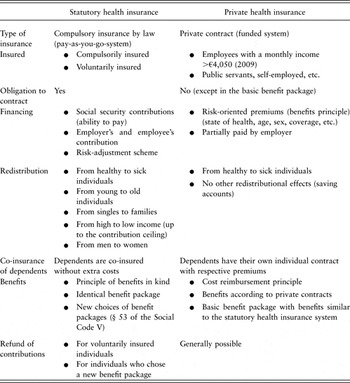
In order to guarantee moderate premium increases at a higher age, private plans use part of their revenue from premiums to build old-age provisions. In 2007, these provisions added up to €123.6 billion invested in capital or stock markets (Association of Private Health Insurers, 2008). Until the 2007 reform, old-age provisions were tied to a specific private insurance company (the new regulations are described in Section 3.4); thus, the longer an individual stayed in a particular insurance company, the less attractive it became to switch to another insurance company because leaving your former insurance meant losing your old-age provisions. It also meant undergoing a new health exam for risk rating under a new plan, making choice for a PHI company a once-in-a-lifetime choice. Table 2 summarises the main differences between the SHI and the PHI system.
Comparison of statutory health insurances (sickness funds) and private health insurances in Germany

3.3.1 SHI-CSA introduces restrictions for taking out PHI
The SHI-CSA raises restrictions for taking out PHI, thereby decreasing choice for some, that is, high-income earners. Whilst prior to the 2007 reform insurees could opt out of SHI if their income exceeded the threshold in one year, it now has to exceed this level for three consecutive years. This provision is meant to increase financial fairness in health insurance: high-income earners can no longer leave social health insurance as easily, and their contributions will remain within the SHI system.
Generally, the introduction of the basic benefit package (see Section 3.1) is expected to move private insurances closer to the SHI system. Hence, the SHI-CSA would constitute a first step towards a uniform health insurance market.
3.4 Choice of insurer within public and private system
3.4.1 Choice within SHI system moves from price to quality and differentiated benefit packages
Since 1996, the vast majority of SHI insurees can freely choose their sickness fund (Wörz and Busse, Reference Wörz and Busse2005). Insurees are entitled to switch funds every 18 months or whenever contribution rates are increased. Since 1996, about one in four individuals have changed their sickness fund at least once (Braun et al., Reference Braun, Greß, Höppner, Marstedt, Rothgang, Tamm and Wasem2006). Studies show that the main reason for changing was the contribution rate.Footnote 6 Individuals that changed funds were in better health than those who did not change (Wörz and Busse, Reference Wörz and Busse2005), and younger persons were more willing to change than the elderly (Braun et al., Reference Braun, Greß, Höppner, Marstedt, Rothgang, Tamm and Wasem2006).
Choice of insurer within the SHI system will change substantially with the introduction of the so-called Health Fund, enacted in 2007.Footnote 7 In force since 1 January 2009, the Health Fund constitutes the major structural change in the SHI financing system since its inception. It collects money from three different sources: contributions from employers, employees and from general tax revenue. While salary-related SHI contributions make up for the biggest part of Health Fund resources, funding from the federal government was introduced only recently: in 2006, €4.2 billion were transferred into the SHI system from tobacco tax revenue increases. In 2007 and 2008, this amount was again reduced to €1.5 billion per year. With the SHI-CSA, the tax pillar of the Health Fund will be again increased to €3 billion in 2009 and rise over time.Footnote 8
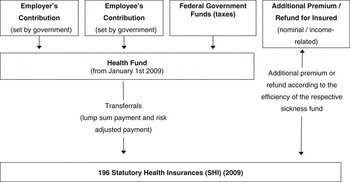
Figure 1 summarises the basic functioning of the Health Fund. Sickness funds will receive Health Fund transfers made up of a lump sum payment and a risk-adjusted payment. This latter payment reflects age, sex and a list of 80 cost-intensive diseases. Thus, the new system attempts to take into consideration the clinical characteristics and progression of disease in addition to demographic factors used in the previous risk-adjustment scheme.Footnote 9
Functioning of the ‘Health Fund Model’ in the Statutory Health Insurance from 1 January 2009 Source: Based on Henke (Reference Henke2007) and Lisac (2007)

If a particular sickness fund cannot cover its expenditures with the Health Fund transfers received, it can charge an additional premium from its insured. Conversely, sickness funds that are run efficiently can pay out surpluses to their insured.
What are the Health Fund’s implications for choice in the SHI system? On the financing side, the fact that contribution rates will be set by the government will move choice away from choice among different contribution rates towards choice among different additional premiums or refunds, alongside with increasingly differentiated benefit packages, quality and service aspects. Competition over extra premiums (or refunds, respectively) is likely to intensify as these will have to be paid for (or gained) by the insured alone (whereas increases or decreases in contribution rates were shared evenly among insurees/employees and their employers). However, two restrictions do limit the competitive role of the additional premium: first, it cannot exceed 1% of a household’s income;Footnote 10 and second, the Health Fund has to cover at least 95% of all expenses of the SHI system (at the beginning, the Fund’s revenues cover all of the SHI expenditures).
3.4.2 New portability clause in PHI system
The 2007 reform introduced a portability clause in the PHI system, which allows insurees to take along old-age provisions, limited in magnitude, to the basic benefit package in case they want to change their private insurance company.Footnote 11 In the past, the fact that old-age provisions were tied to a specific insurer and were thus lost when switching to another PHI company had constituted a major obstacle to the choice of private insurers (see Section 3.3). Competition among private health insurers and choice for the privately insured could have been improved even more had the portability clause not been limited to the amount determined by the basic benefit package (German Council of Economic Experts, 2006). However, critics feared that full portability of old-age provisions might have led to risk selection on the insurer’s side in order to win healthier customers and that it could cause difficulties because of differences in coverage between sending and receiving companies. Such an approach would have required actuarial models that allow for old-age provisions differentiated according to morbidity risks. The new portability regulation therefore represents an intermediate step. Moreover, the privately insured can now change insurers without renewed underwriting if they choose the basic benefit package. For all these reasons we come to the conclusion that the SHI-CSA has increased choice for PHI customers.
3.5 Choice among different benefit packages
Choice for insurees and patients has been widened, in that sickness funds in the SHI can now offer different benefit packages and insurance products, such as GP-centred care, deductible health plans, disease management programmes (DMPs) and so on. Individuals voluntarily accept minor restrictions in choice of, and access to, providers in return for better services under some of these new benefit packages. Thus, it can be argued that the 2007 reform increases choice and responsiveness to individuals, as patients can now choose benefit packages that might be better suited to their individual preferences.
According to the revised § 53 of the Social Security Code V, sickness funds have new options in four areas:
1. Deductibles
The option of signing up for a deductible, that is, a maximum amount that the insured has to pay out-of-pocket per year in exchange for a refund will be opened to the compulsorily insured. Previously this option was available only for those voluntarily insured in the SHI system.
2. Refund of contributions
The option of contribution refunds, limited to a monthly contribution, will also be extended to the compulsorily SHI insured.
3. New forms of medical provision
Refunds can be tied to the condition that the insured joins one of the new forms of care, such as GP-centred schemes (gatekeeper model), DMPs or integrated care.
4. Cost-reimbursement principle
Insurees can now choose between the classic SHI benefits-in-kind scheme and the newly offered cost-reimbursement option. Also, fee-for-service for paying ambulatory care providers can be traded in exchange for a higher additional premium [e.g. the insured can choose the (higher) rate of the PHI system].
Currently, a large number of sickness funds are developing new benefit packages in these areas. However, the new benefit packages require the insured to sign up for at least three years,Footnote 12 have to be self-supporting and are not allowed to be cross-subsidised by other packages.
From an economic point of view, the new benefit packages will enable sickness funds to focus more on the preferences of the insured; thus, in theory, raising choice among sickness funds and efficiency. On the other hand, redistribution effects will be reduced, for example, if young, higher-income earners choose contracts with higher deductibles, there will be less cross-subsidisation for the elderly or low-income individuals than today. Also, more benefit options carry a risk of reducing transparency, thus raising the transaction costs of choice. It will be more difficult to compare the various insurance benefit packages. Moreover, sickness funds will have to start building actuarial departments in order to calculate refunds or additional premiums, which will increase their administrative (overhead) costs.
3.6 Choice of provider
The Advisory Council on the Assessment of Developments in the Health Care SystemFootnote 13 has repeatedly shown that the German system suffers at the same time from over-, under- and misuse of health care services. Amongst other things, inefficiencies have been attributed to the lack of coordination across and between health care providers (Advisory Council, 2001, 2003). Also, there has always been a strict divide between ambulatory and hospital care in Germany.Footnote 14 The separation largely results from different payment schemes within the two sectors and from the way the negotiating process between health care providers and SHI plans is currently organised.Footnote 15
Providers of ambulatory care (GPs and specialists) belong to one of 17 Regional Associations of Statutory Health Insurance Physicians, which contract with the regional head associations of SHI sickness funds. The traditional bargaining process within the self-administration systemFootnote 16 is based on corporatist contracting: SHI physicians in the ambulatory sector are reimbursed according to a fee-for-service schedule with a fixed budget and floating (point) values. In return for being reimbursed by the sickness funds, the regional physician associations have to secure the provision of ambulatory care.Footnote 17 Besides payments from the SHI system, ambulatory providers usually generate a second flow of income that varies in volume by specialty when treating privately insured patients. Here, reimbursements are based on a different fee-for-service schedule, that is, not tied to a fixed budget and generally allows for higher payment rates.
The hospital sector has two funding sources: operating costs are reimbursed by sickness funds based on the G-DRG system introduced in 2004,Footnote 18 and capital investments (buildings and large medical devices) are covered by state funds. State governments also engage in the planning and securing of hospital infrastructure.
Prior to 2004, departures from standard care were very rare and existed only on a regional level in experimental settings. New forms of care with a focus on gatekeeping and better coordination remained unpopular even after integrated care contracts had been eased with the 2000 reform. This can be partly attributed to lack of appropriate financial incentives and experience. Moreover, legal, tax and organisational obstacles had to be overcome. For instance, until 2004, SHI physician associations (Kassenärztliche Vereinigungen, KVs) were compulsory partners in integrated care contracts. But with more selective contracting opportunities after 2004, KVs could be by-passed and would therefore lose influence. This caused conflicts of interest and impeded the advancement of integrated care at the time (Hesse, Reference Hesse2005). Aside from early integrated care experiences some sickness funds started voluntary GP-centred care schemes. Bonus payments and lower co-payments worked as incentives for the insured to enrol in those plans.
The idea of managed care has gained further momentum since the SHI-CSA of 2007 in Germany. Managed care elements (e.g. gatekeeping, utilisation reviews, quality measurements and so on) are expected to improve quality of care and to control costs via better coordination and a more efficient use of health care resources. Since the 2004 reform, the number of GP-centred schemes, DMPs, medical care centres and integrated care projects has steadily increased.
3.6.1 GP-centred care
Since 2004, sickness funds are required to offer GP-centred approaches to their members. Enrolment is voluntary. The purpose is to increase quality and efficiency of care by assigning the GP a stronger coordinating and guiding role. As of December 2007, of those eligible to enrol in a GP programme, roughly 19% participated – half of the sickness funds had not yet begun to offer GP programmes (Federal Ministry of Health, 2008).
Data from the Bertelsmann Stiftung’s Healthcare Monitor show that GP programme enrolees are usually older, have more severe diseases, and suffer more often from chronic diseases than non-participants. The number of specialist visits without referral is lower in the group of GP scheme participants than among non-participants, indicating that GPs have assumed a stronger guiding and coordinating role. Most GP programme participants are satisfied with the coordinating role of their family doctor: 92% think that referrals were made at the right time and that the GP explained the referral in an understandable way. Regarding the willingness to enrol in GP models, for most (potential) participants it is important that they can keep their previous GP. Moreover, participants want to freely choose a specialist if access to specialists is tied to a referral from their GP. If the choice of specialists (or of hospitals and pharmacies) is left to the GP, willingness to enrol decreases drastically. Financial advantages are a major incentive for insurees to enrol in GP models (Böcken, Reference Böcken2006).
3.6.2 Disease Management Programmes
Disease management programmes were first introduced in 2003. Physicians and patients can enrol in these programmes, which provide coordinated care along centrally defined, evidence-based standards, on a voluntary basis. Sickness funds currently offer DMPs for six chronic conditions: diabetes types 1 and 2, coronary heart disease, breast cancer, asthma and chronic obstructive pulmonary disease. In December 2008, more than 5 million individuals participated in DMPs (AOK Kompakt, 2008; Federal Social Insurance Office, personal communication). In addition to their potential in improving care for the chronically ill, there is a strong economic incentive for sickness funds to increase participation in DMPs: the number of chronically ill registered in DMPs is taken into consideration within the risk-adjustment scheme. In accordance with evaluation requirements set out in the law, many DMPs have been self-evaluated by the sickness funds that run them; results from patient and physician surveys carried out by the funds indicate that satisfaction with quality and coordination of care has considerably increased. Individuals participating in DMPs showed better health outcomes, for example improved blood sugar levels and blood pressure values (Van Lente and Willenborg, Reference Van Lente and Willenborg2006; Elkeles et al., Reference Elkeles, Kirschner, Graf and Kellermann-Mühlhoff2008; Graf et al., Reference Graf, Ullrich and Marschall2008).
3.6.3 Integrated care and medical care centres
The 2004 reform introduced the possibility to establish medical care centres (polyclinics), and the right for sickness funds and providers to enter into integrated care contracts. To incentivise integrated care, especially intersectoral cooperation between medical and non-medical providers (such as speech therapists, occupational therapists and so on) and long-term care providers, 1% of the total SHI budget is redirected to these new cooperative arrangements. However, start-up financing ended in late 2008.
The number of integrated care contracts rose continuously: from 613 contracts at the end of the first year (2005) with a financial volume of €237.4 million and 2.07 million insured, to almost 6000 with a financial volume of €820 million and 4 million insured at the end of September 2008 (Federal Office for Quality Assurance, 2008). Contrary to policy intentions, most integrated care contracts still cover specific diseases or indications (e.g. artificial hips, knee prosthesis), rather than offering population-oriented integrated care as encouraged by legislation.
Medical care centres or polyclinics have been the predominant form of ambulatory care in the former German Democratic Republic (Henke, Reference Henke1991). After reunification, most of the polyclinics had been dismantled and outpatient care in the Eastern states was modelled after West Germany’s ambulatory system, with solo practitioners and few group practices. Today, only about 30 former polyclinics still exist and operate as medical care centres. With the 2004 reform, medical care centres resurfaced throughout the country. Since 2005, their number increased from 270 to more than 1000 at the end of June 2008 (Federal Association of SHI Physicians, 2008). They integrate different specialties as well as health and non-health professionals. On average, four physicians work together and most of these centres are managed out of hospitals, by physicians (Preusker, Reference Preusker2007).
All in all, the 2004 reform and the SHI-CSA of 2007 set out the legal and organisational framework for better coordination and cooperation in Germany’s health care. Increasing numbers of DMPs, integrated care arrangements and medical care centres show that providers and payers slowly but surely are engaging in new forms of care. The majority of patients enrolled are satisfied with the quality of care these programmes provide. However, one key challenge for the successful implementation of new forms of care will be to convince patients that more patient navigation and somewhat less choice will work to their advantage. Moreover, it remains to be seen whether integrated care arrangements will continue to flourish now that start-up financing has come to an end.
4. Discussion and conclusions
4.1 Financial incentives for providers to mitigate problems in availability and reachability
There are relatively few infrastructural or geographic barriers to access in health care in Germany. Moreover, problems in reachability of services due to demographic developments and shortage of providers in some regions are addressed one by one through the promotion of new forms of care and additional financial incentives for providers to start practice in underserved areas, as stipulated in the SHI-CSA. However, the take-up rate of financial incentives, like guaranteed incomes for providers in underserved areas, remained low in the past. Thus, it remains to be seen if these measures achieve their intended objectives.
4.2 Do new co-payments decrease affordability of care?
The increase and implementation of new co-payments deliberately established barriers to access in Germany in order to reduce unnecessary provider visits. Research results showed that these measures seem to have achieved their objectives, at least temporarily. However, some studies also indicated unintended negative social and health effects. More research is needed to probe these developments, and policy makers should carefully watch the impact of co-payments on affordability of care. While it is true that increases in patient cost-sharing are cushioned by exemption rules and cost-sharing ceilings to ensure affordability of health services, especially for low-income earners and individuals with severe and/or chronic conditions, it needs to be ensured that people are aware of certain rules and limitations. As Eller et al. (Reference Eller, Baumann and Mielck2002) showed in their study, this was, for example, not the case with hardship regulations that were in place prior to the now existing co-payment ceilings. Ignoring newer regulations, people seemed to forgo necessary or recommended care (e.g. preventive services).
4.3 Mandatory health insurance increases affordability of care
Making universal health insurance mandatory in 2007, insurance coverage was expanded to the whole population and hence the solidarity principle was strengthened. Every citizen now is obliged, but also entitled to be covered under a comprehensive basic benefit package. Also, the SHI benefit basket was expanded, taking into account the demographic developments and new needs by making more preventive, rehabilitative and palliative services available to the insured population.
4.4 More choice and competition to increase quality and efficiency
While ensuring a high level of access and solidarity, Germany is experimenting with more choice and competition, primarily in the health insurance market. With the development of new benefit packages by sickness funds, choice within health insurance has been further expanded since 2007. The introduction of portability of old-age provisions increases choice for privately insured individuals to some degree, but it will not substantially increase competition, as it will be limited to the basic benefit package.
The new risk-adjustment scheme will ensure a level playing field for all sickness funds. Further, the introduction of the Health Fund is likely to move the existing choice among different contribution rates towards choice among additional premiums or refunds. However, given premium ceilings, competition on the financing side remains limited. A greater variety of benefit packages may well develop into an additional parameter for competition. Furthermore, PHI plans converge towards the SHI system. Comparing the German reforms internationally, the new elements influencing choice of health insurance (refinement of the risk-adjustment scheme, the Health Fund, and the beginning convergence of statutory and private health insurers) show similarities to recent developments in the Dutch health care system.
Overall, it remains to be seen if increased choice among different benefit packages will have negative effects. For example, when many young and healthy individuals choose the new low-premium tariffs (e.g. tariffs with refunds or deductibles), this might threaten solidarity due to lower redistribution effects between young and old, healthy and sick, and so forth.
4.5 Trying to find the balance between free choice of provider and stronger patient guidance
Finally, we identified the introduction of managed care elements as a further strand in current health policy reforms in Germany that also aim at higher quality and increased efficiency. Gatekeeping, DMPs and integrated care have been promoted by the government since 2004, and slowly but surely find their way into the system. The impact of these new models of care on access and choice is two-fold. When enrolling in these programmes, insurees accept certain restrictions in choice and direct access to providers, but they gain benefits in the form of better quality care. Therefore, reduction of choice of providers should not be overemphasised – GP schemes, DMPs, etc., remain for patients. Rather, new insurance products should be seen as increasing choice for insurees to opt for customised products. Still, patients have not yet fully embraced these new forms of care. Barriers to better uptake – including values and individual preferences of insurees – as well as conditions under which insurees are willing to participate in such programmes need to be researched more in-depth.
Besides the benefits that these new forms of care bring to insurees, they also open a window of opportunity for sickness funds enabling payers to contract selectively with providers and to become players responsible for quality and efficiency of services.
Acknowledgements
We thank the members of the European Health Policy Group for their helpful feedback on an earlier version of this paper and two anonymous referees.