Introduction
The U.S. green industry comprises several sectors, including container and field nursery crop production, Christmas tree production, greenhouse crop production, turfgrass, and landscape maintenance. Collectively, the production sectors of greenhouse, nursery, and Christmas tree crops produced an estimated $16.5 billion in sales in 2017, up 12.5% over 2012 (USDA-NASS 2017). The economic value of landscape maintenance services is not well documented but are assumed to be equal to or greater than the wholesale value of nursery crops. The golf course sector is the largest economic component of the turfgrass industry, accounting for a 44% share. According to a 2008 report, the nearly 16,000 golf courses in the United States generated $33.2 billion in output impacts, contributed $20.6 billion value added or net income, and generated 483,649 jobs nationwide (Haydu et al. Reference Haydu, Hodges and Hall2008). Total economic contributions for the U.S. green industries in 2007–2008 were estimated to be $117.40 billion in direct output (revenue), 1.2 million jobs (full- and part-time), and $107.16 billion in value-added contributions to gross domestic product (Hodges et al. Reference Hodges, Hall and Palma2011).
Weed management is a crucial component in the production and maintenance of these crops. The predominant weeds and weed management practices vary across these sectors. However, there are common weed species to the nursery, landscape ornamental, and turfgrass industries. For example, in Virginia, crabgrass species (Digitaria spp.) and henbit (Lamium amplexicaule L.) were listed among the top 10 most common weeds in turfgrass and ornamentals, and bermudagrass [Cynodon dactylon (L.) Pers.] and Cyperus species were listed as two of the top 10 most troublesome weed species in both areas (Webster Reference Webster2011, Reference Webster2012).
The primary ways weeds are controlled in container-nursery crop production is through the use of PRE herbicides, supplemented with hand weeding (Neal et al. Reference Neal, Derr, Marble and Senesac2017b). Granular herbicide formulations are commonly used in container production, although there is expanding interest in sprayable formulations. Container producers can make two to six applications of PRE herbicides per growing season. The substrate used for container production is soilless, composed primarily of pine or hardwood bark. PRE and POST herbicides are commonly used in field production of nursery and Christmas tree crops, with sprayable formulations primarily used (Neal and Derr Reference Neal, Derr, Fulcher and White2012). Herbicides are generally applied as a directed spray to trees and shrubs grown in field production. PRE herbicides are often applied in spring and fall to these field-grown crops, with either banded or spot applications of nonselective POST herbicides applied as needed. Weeds in landscape plantings are primarily controlled with PRE and POST herbicides, mulching, and hand weeding. In this article, we summarize the current extent and potential for the development of herbicide-resistant weeds in these sites.
Weed management is a knowledge-based program that continues to grow with modern technical innovations. To maintain quality of turfgrass and nursery crops, management programs use information on weed identification and biology, environment, and available technology. Certain weed populations exhibit resistance to herbicides globally in agronomic cropping systems, as well as in turfgrass and ornamental environments. Weed resistance to triazine herbicides was first discovered in 1974–1975 in the United States (Bandeen and McLaren Reference Bandeen and McLaren1976). Reports of herbicide-resistant weeds increased from fewer than 100 cases in 1985 to nearly 500 cases in 2019 (Heap Reference Heap2019). Herbicide resistance has been reported with 250 weed species, including more reports in Poaceae than any other family (Heap Reference Heap2019; Heap and Duke Reference Heap and Duke2017).
Herbicide-resistant weeds in turfgrass, ornamental, and nursery crop commodities have been an increasing issue over the past 10 years. There has been less emphasis on the importance of herbicide-resistant weeds under turfgrass, landscape ornamental, or nursery production systems as compared with agronomic cropping systems. Under these green-industry systems, managers integrate herbicides of various modes of action with nonchemical control options. For the past two decades, we have received many reports of herbicide-resistant weeds under these systems.
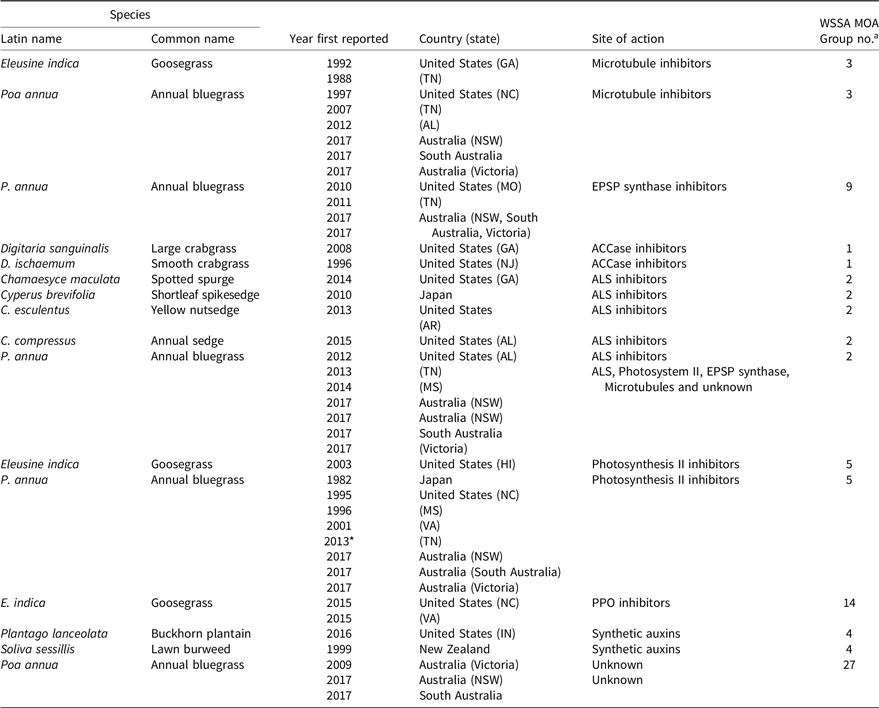
There have been more than 20 cases of resistance evolved in turfgrass systems, including annual bluegrass, goosegrass [Eleusine indica (L.) Gaertn.], several Cyperus species, and some broadleaf species (Heap Reference Heap2019). Table 1 contains a global compiled list of turfgrass weeds reported as herbicide resistant as of May 17, 2019. These weeds represent resistance to several herbicide modes of action. For example, in 2002, a smooth crabgrass [Digitaria ischaemum (Schreb.) Schreb. ex Muhl.] biotype was reported resistant to fenoxaprop-ethyl (Derr Reference Derr2002).
Herbicide-resistant weeds in turf, including golf courses, globally (Heap Reference Heap2019).

a Abbreviations: ACCase, acetyl-coenzyme A carboxylase; ALS, acetolactate synthase; EPSP, 5-enolpyruvylshikimate-3-phosphate; MOA, mechanism of action; NSW, New South Wales; PPO, protoporphyrinogen oxidase; WSSA, Weed Science Society of America.
Annual bluegrass is the most troublesome weed in turfgrass systems throughout the United States, as identified recently by a nationwide weed survey conducted by the Weed Science Society of America, and it was one of the top four important weeds (Van Wychen Reference Van Wychen2017). In 2018, annual bluegrass was identified as an epidemic weed species, indicating the importance of resistant annual bluegrass (Ledbetter Reference Ledbetter2018). In 2019, Heap reported that annual bluegrass ranks third among all herbicide-resistant weed species globally, with resistance to nine different herbicide sites of action.
Triazine-resistant annual bluegrass has been detected in turfgrass (Derr Reference Derr2003; Kelly et al. Reference Kelly, Coats and Luthe1999; Perry et al. Reference Perry, McElroy, Dane, Van Santen and Walker2012). Annual bluegrass and goosegrass have been identified as resistant to dinitroaniline herbicides (Brosnan et al. Reference Brosnan, Nishimoto and DeFrank2008; Isgrigg Reference Isgrigg, Yelverton, Cavell and Warren2002; McCullough Reference McCullough, Jialin and de Barreda2013). Annual bluegrass resistant to glyphosate (Binkholder et al. Reference Binkholder, Fresenburg, Teuton, Xiong and Smeda2011; Breeden et al. Reference Breeden, Brosnan, Mueller, Breeden, Horvath and Senseman2017; Brosnan et al. Reference Brosnan, Breeden and Mueller2012) and to acetolactate synthase (ALS) inhibitors (Brosnan et al. Reference Brosnan, Breeden, Vargas and Grier2015; McElroy et al. Reference McElroy, Flessner, Wang, Fenny and Walker2013) have been reported thus far. Recently, annual bluegrass biotypes have been identified that exhibit differential susceptibility to protoporphyrinogen oxidase (PPO) inhibitors (Yu et al. Reference Yu, McCullough and Czarnota2018). Bi et al. (Reference Bi, Wang, Coleman, Porri, Peppers, Patel, Betz, Lerchl and McElroy2020) reported the mechanism of resistance in a goosegrass biotype to the PPO inhibitor oxadiazon. Kelly et al. (Reference Kelly, Coats and Luthe1999) reported the mode of resistance of an annual bluegrass biotype to triazine herbicides. Perry et al. (Reference Perry, McElroy, Dane, Van Santen and Walker2012) reported on a mutation that confers resistance in a triazine-resistant annual bluegrass biotype that also makes it resistant to amicarbazone. Cross et al. (Reference Cross, McCarty, Tharayil, McElroy, Chen, McCullough, Powell and Bridges2015) reported the mechanism of resistance to glyphosate in an annual bluegrass biotype.
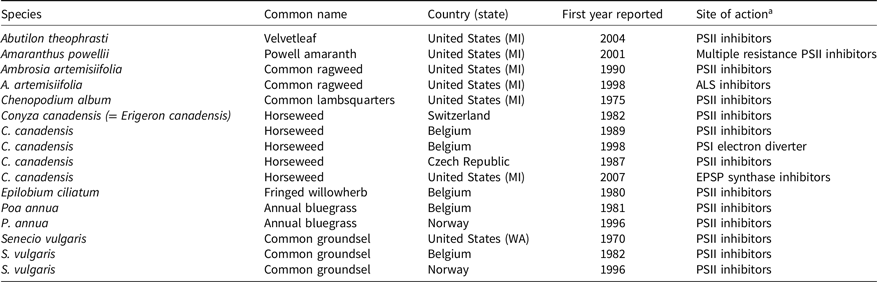
Despite substantial reliance on herbicides for weed management, herbicide-resistant weeds have generally been perceived to be less of an issue in the nursery crop and landscape maintenance industries compared with larger-acreage agronomic cropping systems. Annual bluegrass, common groundsel (Senecio vulgaris L.), horseweed (Conyza canadensis L. Cronquist), and fringed (northern) willowherb (Epilobium ciliatum Raf.) have been reported to be herbicide resistant in nursery production in at least one country (Table 2). These four species can infest both field and container-nursery production. In addition, herbicide-resistant weed species common to agronomic crops, such as common lambsquarters (Chenopodium album L.), common ragweed (Ambrosia artemisiifolia L.), Powell amaranth (Amaranthus powellii S. Watson), palmer amaranth (A. palmeri S. Watson), and velvetleaf (Abutilon theophrasti Medik.), may also be problematic in field nursery crops.
Herbicide-resistant weeds reported for the nursery industry internationally as reported by Heap (Reference Heap2019).

a Abbreviations: ALS, acetolactate synthase; EPSP, 5-enolpyruvylshikimate-3-phosphate; PSI, photosystem I; PSII, photosystem II.
In nurseries, reported resistance has been mostly to photosystem II inhibitors, primarily the triazines. Simazine has been used for many years in field nursery production because of its relatively low cost and its effectiveness on annual broadleaf weeds. In addition, horseweed has shown resistance to glyphosate and paraquat, and common ragweed has developed resistance to ALS-inhibiting herbicides at nurseries in certain countries. When herbicide-resistant weeds are present in nursery production, these biotypes could be spread to landscape beds through the planting of nursery stock. However, the distribution of herbicide-resistant weed populations in these commodities has not been adequately documented.
The goal of a symposium held at the 2019 Weed Science Society of America meeting was to examine the current status of herbicide-resistant weeds in the green industry and identify potential management programs. The objectives were to (1) create awareness of potential herbicide-resistant weeds, (2) provide a forum for exchange of ideas between researchers in different disciplines involved in weed management in these commodities, and (3) stimulate discussion associated with herbicide-resistant weeds in relation to current and future management options. Speakers from universities and industry presented to and discussed their research information with the audience. The symposium provided insights on the role of weed scientists in developing long-term weed management alternatives based on a holistic approach. Here, we focus on the issue of herbicide-resistant weeds in the nursery, Christmas tree, and landscape industries.
Materials and Methods
A survey was conducted to assess the distribution and perceived importance of herbicide- resistant weeds in the ornamental industry. Growers also were asked if they had been affected by herbicide spray drift from nearby farm fields as a result of herbicide-resistant weed management practices in those fields. The survey was reviewed and approved by North Carolina State University’s institutional review board. All responses were anonymous and participants provided informed consent. The online survey was constructed and distributed through e-mail lists of Cooperative Extension staff who work with these green industries, the US Department of Agriculture Inter-Regional Project Number 4 Environmental Horticulture program, and regional and national green industry organizations. Targeted participants were nursery crop producers, Christmas tree growers, landscape maintenance professionals, Cooperative Extension agents, and university educators engaged with these industries. Participants were asked about the following:
Their opinions regarding the importance of herbicide resistance in their operations
Specific personal observations of herbicide-resistant weeds in their properties
Species and herbicides for which resistance was observed (or suspected)
Estimated costs for managing herbicide-resistant weeds
Tactics used to manage herbicide-resistant weeds
Proximity of agricultural operations with known populations of herbicide-resistant weeds
Incidents of herbicide drift injury from those near agricultural sites
Relative severity of crop damage associated with those herbicide-drift incidents.
Results and Discussion
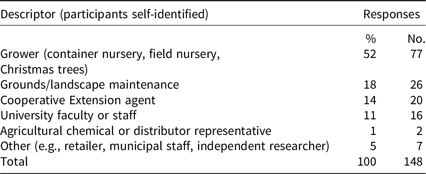
Only 148 surveys were completed; 52% of respondents were growers, 18% were landscape maintenance professionals, and 14% were Cooperative Extension staff (Table 3). Although we had survey responses from 25 states, responses were not regionally balanced. Higher response rates were from participants in the southeastern United States, representing greater than 55% of responses. The greatest numbers of responses were from North Carolina (31%), Alabama (12%), New York (12%), Oregon (9%), Florida (8%), Washington (4%), Michigan (4%), and South Carolina (3%). Other states individually accounted for less than 3% of the responses. Most notably, there was only one response from California and no responses from Texas, states ranked first and fourth in nursery and greenhouse crop production in the United States, respectively (USDA-NASS 2017).
Demographics of herbicide-resistant weed survey participants.

Responses from different types of operations were more balanced: Christmas tree growers (33%), outdoor container producers (27%), landscape maintenance (not turf; 21%), and field nursery production (19%) (Table 3). As with most surveys, responses are subject to user recall or misinterpretation errors. For instance, in scientific circles, we have clear definitions regarding the term “herbicide resistance,” but growers and land managers do not necessarily differentiate between true herbicide resistance and species shifts to weeds not controlled by a particular herbicide. Thus, some species (e.g., Asiatic dayflower [Commelina communis L.], doveweed [Murdannia nudiflora (L.) Brenan], bindweeds [Calystegia spp. and Convolvulus spp.], thistles [Cirsium spp. and Carduus spp.], ground cherry [Physalis spp.], and poison ivy [Toxicodendron radicans (L.) Kuntze]) listed by survey participants as herbicide resistant (data not shown) are likely not truly resistant populations but should rather be considered as difficult to control. In addition, only 14% of the reported resistant weed populations had been confirmed by independent testing. Despite these limitations, the outcomes of the survey provide insights into grower experiences and perceptions of herbicide resistance and identify important trends needing research or educational efforts.
Herbicide Resistance in Ornamental Landscape Plantings: Current Situation
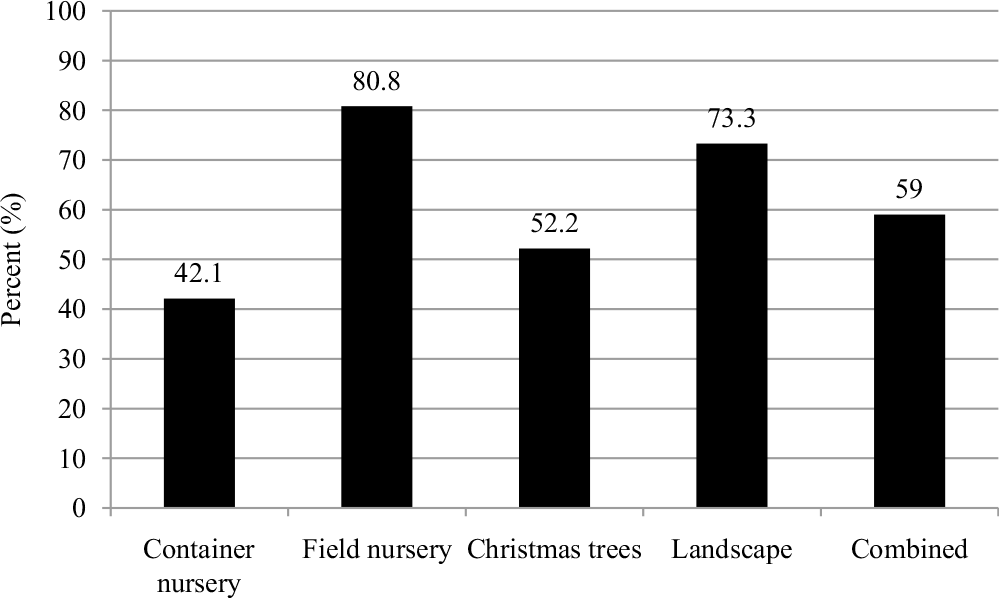
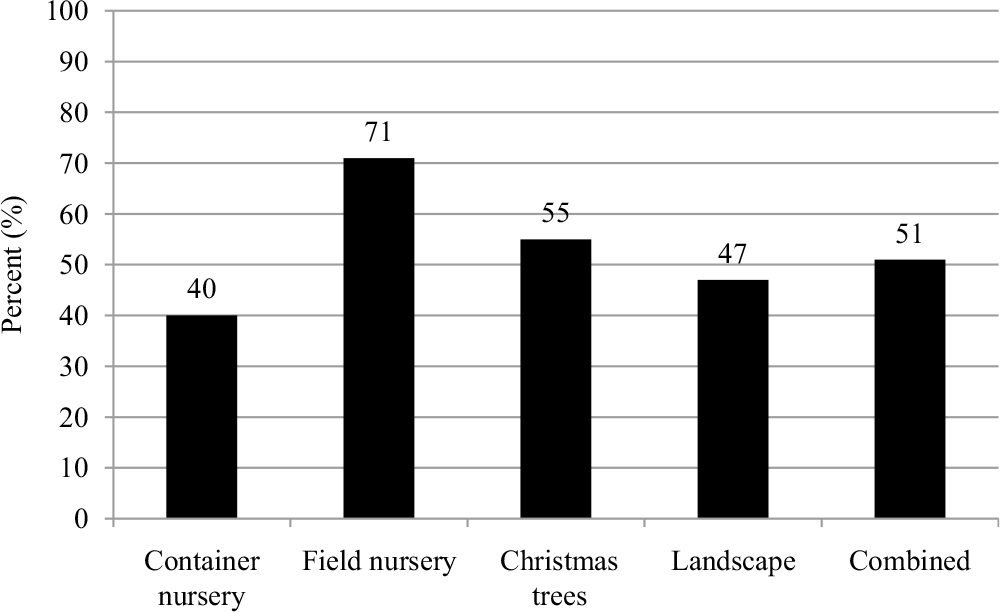
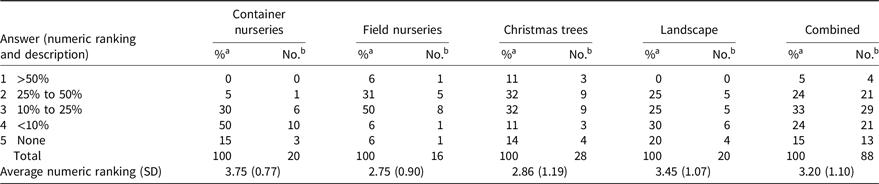
A total of 47% of landscape respondents reported that herbicide-resistant weeds were a serious or somewhat serious concern, whereas 53% felt it was either not a serious concern or not currently present in sites they maintained (Table 4). Seventy-three percent of survey respondents reported having herbicide-resistant weeds in landscapes (turf excluded) (Figure 1), and 47% of those respondents indicated their weed control costs have increased as a result (Figure 2). Half of respondents reported their weed control costs due to herbicide-resistant weeds increased less than 10% or not at all, whereas the other 50% reported their costs increased between 10% and 50% (Table 5). However, we do not currently consider herbicide resistance to be a major issue in landscape beds. This is due, in part, to the use of nonchemical means of weed control, including mulches and hand weeding, and the use of multiple herbicide modes of action. Newer weed species, such as doveweed, that are difficult to control but not documented to have herbicide resistance have spread in the ornamental industry. These species, as well as weeds like bindweed that have long been troublesome species, may be incorrectly perceived by landscapers to be herbicide resistant.
Survey participant responses to the question: “In your opinion, how serious is the problem of herbicide resistance in your crops, landscape plantings, or the ones you advise?”

Percentage of survey participants who responded they had personally observed herbicide-resistant weeds on the properties they managed (n = 145 responses).

Percentage of survey participants who responded that herbicide resistance had increased their weed control costs (n = 158 responses)

Comparison of and combined responses for different cropping systems to the question “About how much have your weed control costs increased?” if survey participants reported they had herbicide-resistant weeds.

a Percentage of responses within the column category.
b Number of responses within the category.
The backbone of most PRE herbicide programs for landscape plantings is a dinitroaniline herbicide (e.g., oryzalin, pendimethalin, prodiamine, trifluralin). This class of chemicals controls annual grasses and small-seeded broadleaf weeds preemergently. However, herbicides with other modes of action are used, depending on the situation. Dithiopyr, metolachlor, and dimethenamid-P are used in herbaceous and woody ornamentals; and isoxaben, oxadiazon, flumioxazin, and indaziflam are used primarily in tree and shrub plantings.
Combinations of PRE herbicides with different modes of action are often used to broaden the spectrum of weed control and doing so also reduces the potential for resistance development. For example, common granular herbicides used in landscape plantings include isoxaben plus a dinitroaniline, or pendimethalin plus dimethenamid-P, among other combinations. These combinations use herbicides with two different modes of action and can be used in a wide range of herbaceous and woody nursery crops. Granular combinations such as oxyfluorfen plus oryzalin can be used for weed control in tree and shrub plantings. Sprayable combinations, such as isoxaben plus a dinitroaniline, can also be used.
POST herbicides, such as glyphosate, are often combined with a PRE herbicide. Use of a POST plus PRE combination probably reduces the potential for resistance development. In addition, in well-maintained landscapes, escaped weeds are removed mechanically or by hand before seed dispersal.
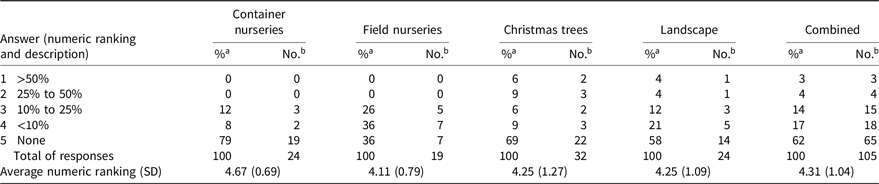
More than one-quarter of respondents (27.6%) witnessed herbicide spray or vapor drift from a nearby farm to landscape beds, with glyphosate being the primary herbicide that moved offsite (Table 6). More than three-quarters of respondents (79%) reported damage proportions either less than 10% or not at all (Table 7). No landscaper reported drift of an auxin herbicide. However, we are personally aware of multiple incidents of synthetic auxin herbicide drift from agronomic fields to residential landscapes. With the increased use of crop cultivars developed to be resistant to this group of herbicides, it is expected this issue will increase in importance.
Survey participants’ responses to the question, “If you have observed herbicide resistance: to what herbicide(s)?”

a Abbreviations: ALS, acetolactate synthase.
b Number of responses within the category.
Survey participants’ responses to the question, “If you have had spray drift damage your plants: what percentage of the crop was affected on that farm?”

a Percentage of responses within the column category.
b Number of responses within the category.
Herbicide Resistance in Landscape Plantings: Potential for Development
Herbicide-resistant weeds can move into and infest landscape plantings through nursery stock contaminated with weeds or weed seeds or through seed being spread by wind, water, or equipment from crop production areas. For example, seed of glyphosate-resistant horseweed can blow in from roadsides or no-till crop production areas, contaminating nursery production areas as well as landscape beds. Resistant weeds can also be spread by contaminated sod, mulch, or soil brought into landscapes.
In addition, resistance could develop in turfgrass or other areas and then move into landscape beds. Italian ryegrass [Lolium perenne L. ssp. multiflorum (Lam.) Husnot] is sometimes used for overseeding bermudagrass turf. This species has developed resistance to multiple herbicide modes of action. Resistant Italian ryegrass could reach landscape plant beds because centrifugal spreaders often disperse seeds into plant beds when overseeding adjacent turf. Oxadiazon-resistant goosegrass (McElroy et al. Reference McElroy, Head, Wehtje and Spak2017) and glyphosate-resistant annual bluegrass (Binkholder et al. Reference Binkholder, Fresenburg, Teuton, Xiong and Smeda2011) have also been documented in turfgrass.
There have been 39 reports worldwide of resistance to dinitroaniline herbicides across all cropping systems (Heap Reference Heap2019). There has been resistance to the dinitroaniline class in goosegrass (McCullough et al. Reference McCullough, Jialin and de Barreda2013) and annual bluegrass (Isgrigg et al. Reference Isgrigg, Yelverton, Cavell and Warren2002), among others. Yet there have been no confirmed reports of dinitroaniline-resistant weeds in landscape plantings, although they are the most commonly used class of PRE herbicides in those sites. Oryzalin, prodiamine, pendimethalin, and trifluralin are used to control annual grasses and small-seeded broadleaf weeds in herbaceous and woody nursery crops. Prodiamine and pendimethalin are also extensively used in turfgrass, increasing the potential for resistance development.
In terms of POST weed control, broadleaf and non-grass monocots used in landscape beds generally have very good tolerance to the POST grass herbicides clethodim, fenoxaprop, fluazifop, and sethoxydim. Thus, herbicide-resistance development in annual grassy weeds is less likely to directly develop in landscape beds, due to the availability of both PRE and POST herbicide options for control as well as nonchemical control options. One problematic weed, annual bluegrass, has greater tolerance to the POST grass herbicides, is genetically diverse, and has been reported to have developed herbicide resistance in turfgrass systems. Consequently, resistance development is of particular concern with this species. There is potential, therefore, for the issue of herbicide resistance to increase in importance for the landscape industry.
The acetyl-coenzyme A carboxylase (ACCase) herbicides (namely, sethoxydim, fluazifop, fenoxaprop, and clethodim) are used for control of annual and perennial grasses such as crabgrass species, bermudagrass [Cynodon dactylon (L.) Pers.], and quackgrass [Elymus repens (L.) Gould] in landscape beds as well as in certain turfgrass situations. Resistance has developed to this class of herbicides in large [Digitaria sanguinalis (L.) Scop.], smooth, and southern crabgrass [Digitaria ciliaris (Retz.) Koeler], Italian ryegrass, and johnsongrass [Sorghum halepense (L.) Pers.] in either row crops or turf situations (Derr Reference Derr2003; Heap Reference Heap2019). There is potential for resistance to develop in landscape use due to repeated use. ALS-resistant annual bluegrass has been documented in turf (McElroy et al. Reference McElroy, Flessner, Wang, Fenny and Walker2013). ALS inhibitors, though, have limited use in landscape beds. Imazaquin and imazapic, both imidazolinone herbicides, are registered for use in landscape beds and wildflowers, respectively, but are not commonly applied in commercial landscapes. Prepackaged combinations of glyphosate and imazapic are available commercially for use around established landscape trees and shrubs, as well as in driveways and along fences. Halosulfuron and sulfosulfuron are used as a directed spray in woody landscape plants and widely used in turfgrass for control of yellow nutsedge (Cyperus esculentus L.) and certain other weeds. Potential exists for resistance development because resistant yellow nutsedge has been reported in rice in Arkansas (Heap Reference Heap2019), and compressed sedge has developed resistance in Georgia (McCullough et al. Reference McCullough, Yu, McElroy, Chen and Zhang2016).
There has been research on developing herbicide-resistant turfgrass, including creeping bentgrass (Agrostis stolonifera L.), St. Augustine [Stenotaphrum secundatum (Walter) Kuntze], and Kentucky bluegrass (Poa pratensis L.). For example, Scotts® ProVista™ is St. Augustine grass that is resistant to glyphosate (Anonymous 2019). Glyphosate is the most commonly used herbicide for control of perennial weeds in landscapes, so movement of resistant turfgrasses into landscape plantings would create a management concern. One would not be able to tell by looking at a turfgrass shoot if it was glyphosate resistant.
Herbicide Resistance in Container-Nursery Production: Current Situation
We do not consider herbicide resistance to be a major concern in container nurseries at this time because most container nurseries use multiple weed control tactics (Neal et al. Reference Neal, Derr, Marble and Senesac2017a, Reference Neal, Derr, Marble and Senesac2017b). There is extensive use of hand weeding because existing weeds detract from the marketability of nursery plants. Mulches such as rice hulls are sometimes used for weed control, especially in plants considered to be herbicide sensitive. Granular combinations of PRE herbicides that differ in their modes of action are commonly used. Examples include oxyfluorfen, a PPO inhibitor, combined with a dinitroaniline herbicide (i.e., oryzalin, pendimethalin, or prodiamine), a combination of isoxaben plus trifluralin, or pendimethalin combined with dimethenamid-P. Nurseries using spray applications will typically combine isoxaben with a dinitroaniline and rotate applications with dimethenamid-P. Escaped weeds are hand removed.
There is relatively rapid turnover of container-grown nursery stock, with plants often leaving the nursery 6 to 12 months after potting. Thus, weeds developing resistance may leave the nursery before producing seed that could infest other areas of the nursery. Nursery producers use a soilless substrate, such as pine bark, often mixed with peat or sand. Soilless substrates are generally weed free at the time the pots are filled, ensuring no persistent seedbank and reducing the weed population available to develop resistance.
However, in the grower survey, 55% of the respondents considered herbicide resistance to be a “somewhat serious to very serious” problem in container nurseries (Table 4), and 42% of the participants reported herbicide-resistant weeds in container nurseries (Figure 1). As for landscape beds, most of these weed species might best be labeled more difficult to control, because they possess a degree of tolerance to the commonly used container herbicides. Growers also reported that alternative control measures were generally effective (data not shown), but 40% of the respondents indicated that herbicide-resistant weeds had increased their weed-control costs for container production (Figure 2). That means 60% of respondents have not been economically affected by herbicide-resistant weeds, yet.
Herbicide Resistance in Container-Nursery Production: Potential for Development
There is reliance in container-nursery production on a limited number of PRE herbicides, including the dinitroaniline herbicides, plus oxyfluorfen and isoxaben. Flexuous bittercress (Cardamine flexuosa With.), one of the most common weeds in container nurseries in the United States (Post et al. Reference Post, Ali, Krings, Xiang, Sosinski and Neal2011), has been reported to have populations in European nurseries that are resistant to isoxaben (Eelen and Bulcke Reference Eelen and Bulcke1997). Continuous reliance on the PPO inhibitor herbicides oxyfluorfen, flumioxazin, and oxadiazon for bittercress control also establishes the potential for resistance development. Recently, nursery-crop producers in Australia and New Zealand have reported declining efficacy on bittercress species after years of reliance on the PPO-inhibitor herbicides oxyfluorfen and oxadiazon (J.C. Neal, personal communication with growers). Spotted spurge (Euphorbia maculata L.) may have developed some tolerance to granular herbicides containing oxyfluorfen plus a dinitroaniline herbicide, because control appears to have declined compared with previous years in nurseries and replicated experiments (Derr and Neal, personal observations).
Although there is no persistent seedbank in the pots, there can be a persistent seedbank in the production area. Most nursery weeds are well adapted for self-dispersal (Neal and Derr Reference Neal and Derr2005). Weed seeds dispersed to roadways, in gravel production beds, or ground-cover fabrics have the potential to infest crop plants by splashing or self-dispersal (Williams and Sanders Reference Williams and Sanders1984). Broadcast applications of residual herbicides to the crop intentionally include treatment of these noncrop areas. Repeated uses of PPO-inhibitor and dinitroaniline herbicides to these areas could lead to selection of resistant populations and a persistent seedbank.
Movement of herbicide-resistant weeds from nearby agronomic crops is a concern. Almost half survey respondents (47%) reported the presence of glyphosate-resistant weeds in nearby agronomic crops (data not shown). In particular, wind-dispersed seeds of glyphosate-resistant horseweed can blow into container production areas. In the survey, herbicide-resistant horseweed accounted for 32% of the resistant-weed reports in container nurseries (data not shown). But 44% of respondents also reported glyphosate-resistant pigweeds in container nurseries, confirming that resistant weeds can be introduced by means other than wind. Introduction of these species will result in management challenges in the gravel and roadways surrounding container-production areas where glyphosate is commonly used for weed control, but not in the containers themselves, because glyphosate cannot be applied directly in pots. Of greater concern is the potential spread of weeds with cross-resistance to PPO inhibitors, which has been reported in agronomic cropping systems. Container-nursery crop production is highly dependent on PPO-inhibitor herbicides for dicot weed control.
Herbicide Resistance in Field Nursery Production: Current Situation
Greater than 80% of survey respondents reported observing herbicide-resistant weeds in field nursery crops (Figure 1). Greater than 50% of the survey respondents considered herbicide-resistant weeds to be somewhat to very important in field nursery crops (Table 3). Yet, based on our experiences, herbicide resistance, thus far, has not been a major issue in field nursery production. This is due to the use PRE herbicides with differing modes of action (Groups 3, 5, 14, 15, and 29), often in combination with POST herbicides (Neal and Derr Reference Neal, Derr, Fulcher and White2012). In addition, various POST herbicides are used, including glyphosate, glufosinate, paraquat, diquat, clopyralid, bentazon, and sulfentrazone, along with the ACCase herbicides (sethoxydim, fluazifop, fenoxaprop, and clethodim).
Common groundsel was the first weed of field nursery crops confirmed to have developed resistance to the triazine herbicides, especially simazine (Table 2). Simazine is a commonly used PRE herbicide for inexpensive annual broadleaf weed control in tree production. Since then, glyphosate-resistant populations of horseweed, common ragweed, pigweed species, and Italian ryegrass have been reported from nursery sites (Table 2). There potentially are other resistant weeds present in nurseries that have not yet been reported. There is low use of ALS herbicides in the nursery industry, thus there are no reports of ALS-resistant weeds from nurseries, to our knowledge. Of particular concern would be the spread of herbicide-resistant weeds such as Palmer amaranth from nearby agronomic crops where resistance to multiple modes of action has become common. Specifically, weeds with resistance to glyphosate, PPO-inhibitors, and glufosinate would be particularly difficult to control in field nurseries.
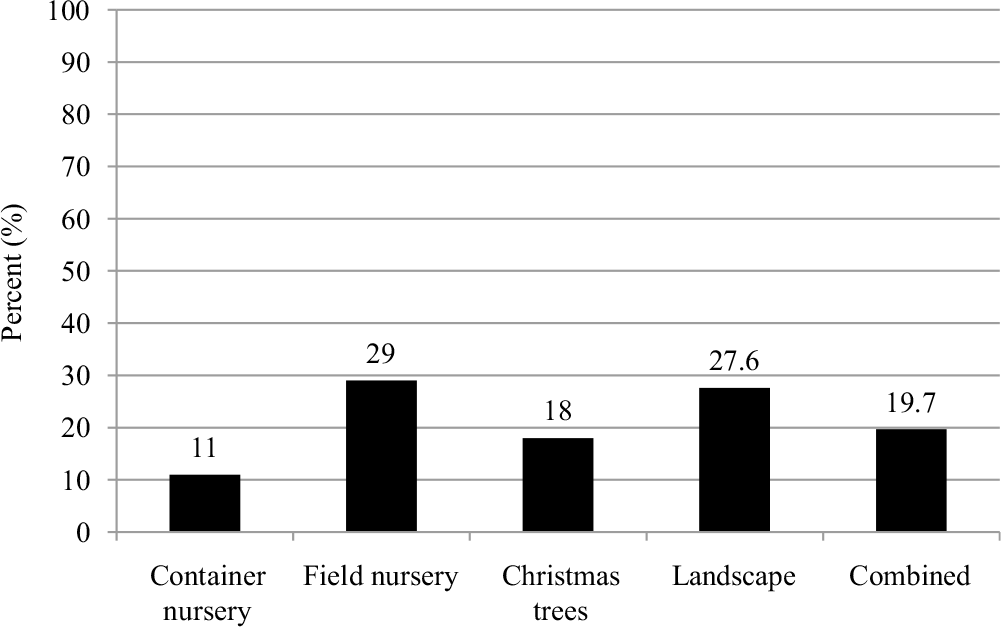
One current concern in the nursery industry is the planting of agronomic crops resistant to 2,4-D and dicamba. Approximately 20% of the survey respondents had experienced some crop injury from such spray drift (Figure 3). Of those responses, 55% of the events were from synthetic auxin drift, 35% were from glyphosate drift, and approximately 5% were from pigment-inhibitor drift. Of the 19 drift events reported, only five resulted in injury to greater than 10% of the crop acreage (Table 6). Although the frequency of these drift events was low, the resulting crop injury can be severe. Drift of small quantities of auxin herbicides can severely damage trees and shrubs. Even if the damaged plants eventually outgrow the injury, they are likely unsaleable during the time the injury or corrective pruning cuts are still apparent. Most trees are grown to meet industry-recognized crop quality standards (American Hort 2014). These standards specify crop stem diameter, root ball size, and crown dimensions. If the ratios of these measures do not meet standards, then the value of the crop will be reduced or the crop may even be deemed unmarketable. For example, it takes approximately 6 years to produce a 2.4-m tall Nellie R. Stevens holly (Ilex × ‘Nellie R. Stevens’). It must meet American Standards for Nursery Stock guidelines for proportionality of basal stem, top, and root ball. If this crop is damaged by herbicide spray drift, it can take several years to recover. However, because of the crop standards for proportionality of basal stem to canopy, it is often impossible to return these plants to marketable condition. Net returns on this crop are more than $133,000 per ha (Safley Reference Safley2012). If you are a soybean producer adjacent to a nursery, ask yourself: How many hectares of soybeans are required to pay for damaging a holly crop? In addition, once word gets out to the public that a crop has been injured, knowledge of herbicide damage may keep buyers away from a nursery for multiple years.
Percentage of survey participants who responded they had “personally experienced (or observed) a spray or vapor drift event from a nearby farm that resulted in observable damage” to their crops.

An additional issue with herbicide-resistant weeds is the movement of plants within a state, between states, or even from other countries to the United States. For example, consider the root ball of a field-dug tree or shrub. Where the root ball goes, so do the weed seeds. A case study would be common groundsel. Resistance to triazine herbicides was reported in 1970 at a field nursery in the Pacific Northwest. Nursery crop producers throughout the United States purchase field-grown transplants from that region. It is generally assumed that the spread of triazine-resistant common groundsel throughout U.S. field nursery crop production regions can be attributed to the interstate movement of these plants. The impact has been increased production costs due to more cultivation, more herbicide applications, and the need for more expensive herbicides.
Controlling Resistant Weeds in Field-Grown Nursery Crops: Plant Architecture Alters POST Options
Directed applications can be used in most crops to apply nonselective herbicides or selective herbicides that must be kept off the crop foliage. Glyphosate is the most widely used POST herbicide for these situations, but other options include glufosinate, paraquat, diquat, sulfentrazone, bentazon, flumioxazin, and clopyralid. When glyphosate-resistant weeds are present, these directed applications must be tailored to the site and crops. Clopyralid is labeled for use around many woody ornamental plants but applicators must avoid directed applications around leguminous crops such as redbuds (Cercis spp.). In addition, several of these options can cause more damage to evergreen crop species than glyphosate. When the tree branches reach close to the ground, POST control of herbicide-resistant weeds requires more careful application and/or selection of treatments.
Case Study: Glyphosate-Resistant Common Ragweed and Palmer Amaranth in Field-Grown Holly
PRE herbicide applications often provide marginal control of common ragweed and Palmer amaranth in field-grown holly because these weeds will germinate over an extended time. Options for PRE control include flumioxazin and simazine. However, flumioxazin must be applied before bud break to avoid injury. In addition, PPO resistance could also be of concern. Simazine can be applied PRE before budbreak and again after holly shoots have matured. However, simazine has a relatively short residual and leaching is a concern in sandy soil. Oryzalin may be used but would provide only partial control of common ragweed. For POST control, glufosinate, paraquat, or clopyralid cannot be used, because they cause plant injury. Bentazon would be an option for seedling common ragweed, but it is less effective on Palmer amaranth. Additional options would include hand removal and mowing. Cultivation is an option, but there are concerns, including erosion from the resulting bare ground and damage to crop roots. Water-quality regulations may limit this is some regions. Each of these alternative options would increase cost of production.
Herbicide Resistance in Christmas Tree Production: Current Situation
Greater than 50% of Christmas tree growers responding to the survey indicated herbicide resistance was a “somewhat serious to very serious” problem in their crops (Table 4). Unlike the other cropping systems discussed herein, Christmas tree producers do use some ALS-inhibitor herbicides. Of those reporting resistance, 11% reported resistance to ALS-inhibitor herbicides, 51% to glyphosate, and 27% to triazines, and there were two confirmed reports of auxin-resistant weeds (Table 6). Fraser fir [Abies fraseri (Pursh) Poir.] growers in the southern Appalachian region rely heavily on a single mode of action and have encountered challenges managing horseweed, common lambsquarters, and common ragweed suspected to be glyphosate tolerant (resistance has not been confirmed) (Neal et al. Reference Neal, Harlow and Owen2019). For those Christmas tree producers who reported observing resistance in their fields, 32% reported costs had increased between 25% and 50%, and 11% reported costs had increased more than 50% (Table 4).
Although most Christmas tree production is not done near agronomic cropping systems, 18% of the survey respondents had observed herbicide drift in their fields (Figure 3). Fortunately, only a small percentage of those drift events resulted in significant crop damage (Table 7). Christmas trees can be quite tolerant of herbicide spray drift, particularly when drift events occur before bud break. But exposure to spray drift from auxin herbicides during the growing season has caused significant injury and, in a few cases, greater than 50% of the crop was affected.
Herbicide Resistance in Christmas Tree Production: Potential for Development
Despite significant impacts on current crops, 45% of the Christmas tree growers responding to the survey reported they were either not concerned or only slightly concerned that their weed-control practices might lead to herbicide resistance, compared with only 15% who reported being very or extremely concerned (data not shown). Continued reliance on few modes of action will undoubtedly lead to more reports of herbicide resistance.
Case Study: Horseweed in Fraser Fir Production
A special situation is horseweed management in Fraser fir production using a dicot ground-cover suppression system dependent on glyphosate. Glyphosate-tolerant horseweed populations have increased in North Carolina Fraser fir production fields. Alternative control options in other Christmas tree production systems could include clopyralid, simazine, flumioxazin, or glufosinate. However, these treatments cannot be used in this production system, because they would remove clover (Trifolium spp.) and other desired broadleaf plants. One labeled control option exists: 2,4-D amine applied as a directed spray before Fraser fir bud break. However, spring-germinating horseweed may not emerge until after bud break. Recent research has identified an ALS-inhibitor herbicide that can be used to selectively control horseweed in this system (Neal et al. Reference Neal, Harlow and Owen2019). But the herbicide is not currently labeled for this use and there is concern that reliance on this mode of action will lead to cross-resistance to ALS-inhibitors.
Summary
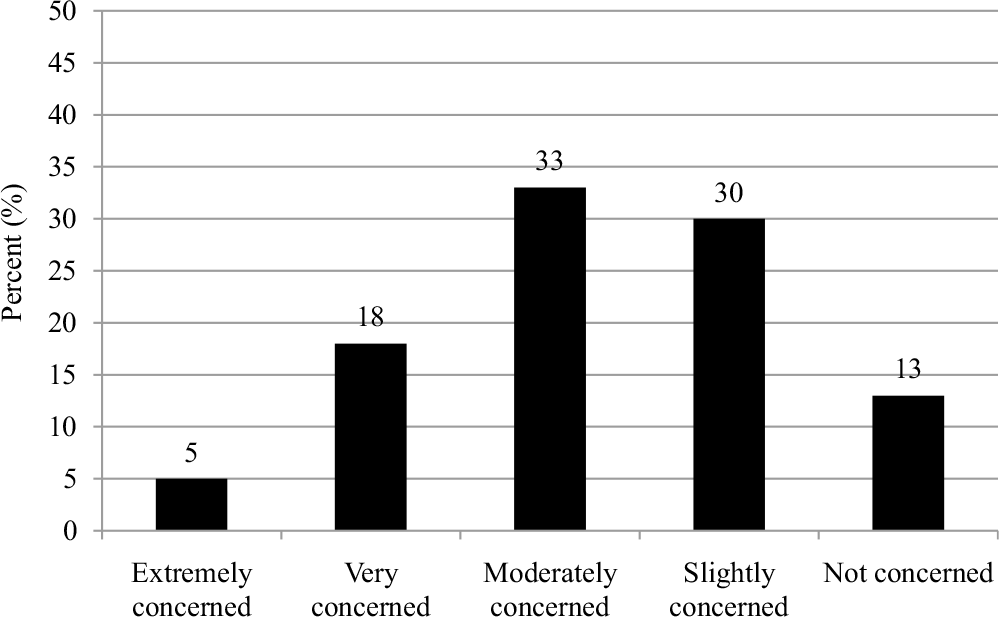
Growers of nursery crops and Christmas trees, landscape professionals, and educators engaged with these industries generally recognize the importance and impact herbicide-resistant weeds are having and will have on their management practices and costs. Of the survey respondents, 47% reported that herbicide-resistant weeds are not currently serious issues in their crops, but 22% reported that herbicide resistance was a serious or very serious issue (Table 4). When asked how concerned they were that their weed control practices will lead to herbicide resistance in their fields, a majority (56%) of the respondents were moderately, very, or extremely concerned; 30% respondents were slightly concerned; and 13% were not concerned (Figure 4).
Survey participant responses to the question, “How concerned are you that your weed control practices will lead to herbicide resistance in your fields?” Data are presented as a percentage of all responses.

Herbicide-resistant weeds have increased management costs. Of the survey respondents, 5% indicated their weed-control costs had increased greater than 50% and another 24% indicated costs had increased more than 25% as a result of herbicide-resistant weeds (Table 5). Factors in this increase include the need to use more expensive alternatives, tank mixes where previously a single active ingredient had been adequate, and increased numbers of applications. A simple example of how this can increase costs is the substitution or addition of glufosinate to glyphosate applications. One of the simplest substitutions for control of glyphosate-resistant weeds is to switch to glufosinate. Glufosinate may be used in most sites where glyphosate was used, provides nonselective control of weeds, and leaves little or no soil residual. Costs for branded formulations of glufosinate and glyphosate were obtained from four commercial distributors in North Carolina. The average price per liter for glufosinate was 2.4 time higher than glyphosate. At typical use rates (9.4 L ha−1 for glufosinate and 4.7 L ha−1 for glyphosate) for these industries, the actual cost per use for glufosinate was approximately five times as much as that for glyphosate. In addition, glufosinate is generally less effective on perennial and grassy weeds compared with glyphosate and may require two applications compared with one application of glyphosate. More commonly, glufosinate would be tank mixed with glyphosate to control glyphosate-resistant weeds, substantially increasing the cost of the application.
Resistance to multiple modes of action has become common in many agronomic cropping systems. The movement of these weeds into nursery crops and landscape plantings has the potential to significantly affect nursery and landscape weed management practices and increase costs as much as, or more than, the current on-site practices. Once resistant weeds are in nurseries, interstate movement of these species is a concern because these biotypes could be readily spread throughout the country in contaminated nursery stock. Furthermore, herbicide-resistant weeds will add complexity for the grower/manager when developing weed management programs. Approximately 43% of respondents to our survey were not concerned or only slightly concerned that their weed management practices would lead to herbicide-resistant weed populations. History and experiences in other cropping systems suggest otherwise. Though the impacts of herbicide-resistant weeds have not been as great as in many agronomic crops, nursery and Christmas tree growers, landscape managers, and educators need to avoid complacency regarding herbicide resistance and resistance management in these crops.
Acknowledgments
No conflicts of interest have been declared. This research received no specific grant from any funding agency, commercial, or not-for-profit sectors.