Introduction
During the recent coronavirus disease 2019 (Covid-19) pandemic, which has seen more than 170 million confirmed cases worldwide over the past few months,1 the use of N95 respirators has rapidly surged, with demand far exceeding the supply.Reference Nogee and Tomassoni2
The N95 respirator is an essential piece of personal protective equipment (PPE) donned by frontline medical professionals to protect the user from airborne pathogens. It is appropriately worn when medical staff anticipate or make actual contact with confirmed or suspected cases of airborne diseases, or when performing aerosol-generating procedures in high-risk situations. With the short supply of N95 respirators and high number of critically ill cases, and with more than 91 000 patients in serious or critical condition worldwide,3 medical professionals who manage confirmed or suspected cases of Covid-19 are advised to practise extended use of N95 respirators.4
The N95 respirator mask is fitted tightly on the face, exerting forces on facial structures averaging approximately 10 Newtons (N).Reference Niezgoda, Benson, Eimer and Roberge5 The upper edge of the N95 respirator sits on the nose and is held in place by elastic straps. Some models have a metal strip that can be moulded to the shape of the nose. There have been reports of pressure sores on the faces of medical professionals after wearing N95 respirators for several consecutive hours.Reference Yin6,Reference Jiang, Cao and Liu7
The medical staff in our ENT centre in Hong Kong usually wear this mask for a 4-hour out-patient session and for longer periods during major or ultra-major operations. One problematic symptom we have encountered during extended use of the N95 respirator is nasal obstruction due to the pressure of the mask on the nose externally, which can cause discomfort and even shortness of breath. This can be relieved by mouth-breathing, which is impractical and may affect the air seal of the N95 respirator, creating a potentially dangerous situation when in close contact with high-risk patients or those with confirmed disease.
We postulate that this nasal obstruction, besides being caused by the N95 respirator filter, is aggravated by the pressure of the respirator on the cartilaginous middle vault of the nose externally. This area corresponds to the region of the internal nasal valve, which, when thus compressed, causes nasal valve collapse.
The internal nasal valve is the site of the smallest cross-sectional area in the nasal airway.Reference Haight and Cole8 This area is bounded by the lower edge of the upper lateral cartilage, the anterior tip of the inferior turbinate and the nasal septum. This is the area of greatest resistance and the site generating airflow turbulence. The internal nasal valve can be narrowed in various situations, including hypertrophy of the inferior turbinates, deviation of the caudal end of the nasal septum, and weakening of the upper lateral cartilages with age. It can also be collapsed by extrinsic pressure on the cartilaginous part of the nose externally. A recent literature search revealed no published study on the relationship between the N95 respirator and nasal valve patency.
Working with an N95 respirator on one's face is uncomfortable but necessary; however, recognition of the nasal obstruction caused by compression of the internal nasal valve and a means to relieve this drawback could alleviate some of the discomfort. The occupational health of medical personnel who are required to wear N95 respirators deserves attention and optimisation, especially during an era in which extended use of the mask is practised.
Materials and methods
Fifty subjects were recruited from the Department of Otorhinolaryngology and N95 Fit Test Center in Tseung Kwan O Hospital, Hong Kong. Consecutive subjects aged 18–65 years who had passed the N95 respirator fit test were included in the study. Written informed consent was obtained from all subjects. The study was approved by the Kowloon East Cluster Research Ethics Committee of the Hospital Authority.
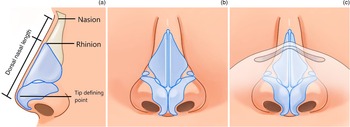
Clinical measurements were obtained of dorsal length (distance from the nasion to the defining point of the nasal tip) and nasal bone length (distance from the nasion to the rhinion) (Figure 1a). Clinical photographs were taken, and the nasofrontal angle and nasal tip projection ratio (Goode's method) were measured. Cottle's manoeuvre was performed to test for the presence of nasal valve collapse.
Diagrams demonstrating measurement of nasal length and the anatomical changes of the upper lateral nasal cartilage caused by the N95 respirator. (a) Nasal dorsal length from nasion to nasal tip defining point, and length of nasal bone from nasion to rhinion. (b) Nasal cartilaginous vault before donning the N95 respirator. (c) Compression of the upper lateral cartilages by the metal strips of the N95 respirator, causing narrowing of the internal nasal valve and collapse of the middle cartilaginous vault of the nose.

The A1 acoustic rhinometer (GM Instruments, Irvine, Scotland, UK) was calibrated before each subject was tested. The first set of measurements of the minimal cross-sectional area of the nasal cavity taken without the N95 respirator, which corresponds to the internal nasal valve, were obtained with the acoustic rhinometer probe held by the subject along the axis of the nasal dorsum, with no distortion of the nasal structure. Four consecutive readings were averaged.
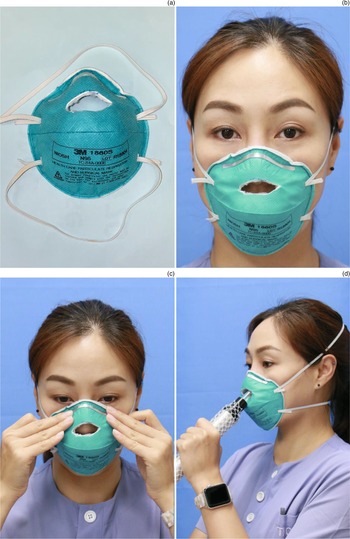
The subjects were then instructed to wear the same model N95 respirator with its position suitably modified to allow passage of the rhinometer probe (Figure 1b and c). In order to ensure that the fitting of the N95 respirator on the face was minimally affected, a small oval area was cut out of the central panel, leaving the upper and lower panels and the metal strip, if present, intact (Figure 2a).
A subject undergoing acoustic rhinometry after wearing modified N95 respirator. (a) N95 respirator with a window opened at nostrils. (b) Subject wearing N95 respirator before acoustic rhinometry measurement. (c) Adjustment of N95 respirator onto bony nasal vault. (d) Acoustic rhinometry measurement with N95 respirator in adjusted position.

The second set of acoustic rhinometry readings was taken using various respirators: 1860, 1860S and 1870+ respirator models (3M, Saint Paul, Minnesota, USA); Critical Cover Positive Facial Lock (‘PFL’) facemask (Alpha ProTech, Markham, Ontario, Canada); and Nask Smart Mask (Profit Royal Pharmaceutical, Hong Kong Special Administrative Region, China).
The position of the N95 respirator was then adjusted to sit on the nasal bone (Figure 2c), and a third set of acoustic rhinometry readings was taken (Figure 2d). The subjects confirmed that the tightness of the N95 respirators on the face remained unchanged following the adjustment of its position on the nose externally.
For each scenario – before wearing the N95 mask, after donning it, and after adjustment of its position in relation to the bony upper vault – subjects were given 5 minutes to adapt. They were then asked to complete the Nasal Obstruction Symptom Evaluation (‘NOSE’)Reference Stewart, Witsell, Smith, Weaver, Yueh and Hannley9 survey to measure the severity of nasal obstruction symptoms. The Nasal Obstruction Symptom Evaluation survey is a brief questionnaire consisting of five self-rated items concerning the presence of nasal obstruction, each scored from 0 to 4 in increasing severity. The total Nasal Obstruction Symptom Evaluation score represents the sum of responses to the five items, multiplied by 5, and it ranges from 0 to 100.
In order to ensure there was no air leakage from the face after the position of the N95 respirator had been adjusted to rest on the nasal bones, the first 10 consecutive subjects had the N95 respirator fit test repeated with the respirator in the adjusted position. The seal test, with positive pressure and negative pressure checking, was also performed in 50 per cent of the subjects with the respirator in the adjusted position to see if air leakage occurred.
Statistical analysis
We evaluated the differences in minimal cross-sectional area and Nasal Obstruction Symptom Evaluation scores between the following time points: before and after donning the N95 respirator; and after donning and after adjustment of the N95 respirator's position on the face. The Friedman test was used to assess whether at least one variable differed from the others. If the p-value was less than 0.05, the Wilcoxon signed-rank test or paired t-test was used to test each pair of variables. The Pearson co-efficient was used to assess for correlations between parameters of the nose externally and the change in minimal cross-sectional area, as follows: before and after wearing the N95 respirator, before wearing the N95 respirator and after adjustment, and after wearing the N95 respirator and after adjustment. Independent sample t-tests were used to test whether the change in minimal cross-sectional area differed according to positive or negative Cottle's manoeuvre results. All statistical analyses were conducted using SPSS software (version 23; IBM, Armonk, New York, USA).
Results
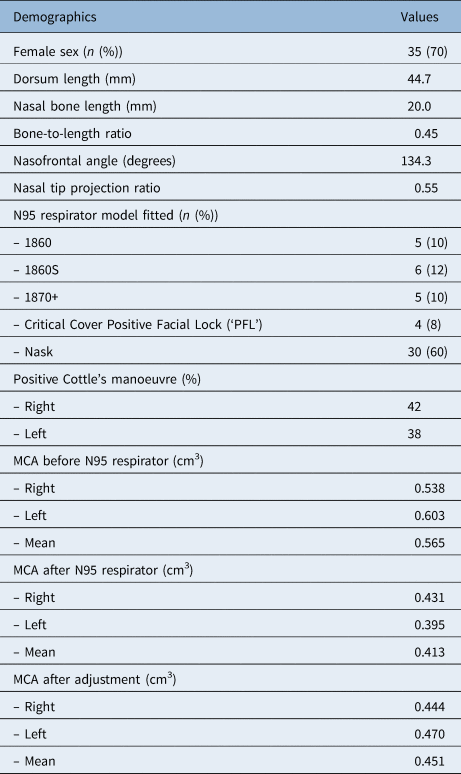
Fifty-two hospital staff members were invited to participate in the study, two of whom refused. The 50 subjects recruited were all adults of Asian ethnicity, aged 18–65 years, and 35 (70 per cent) were women (Table 1).

All subjects completed and passed the N95 respirator fit test to ensure an adequate air seal: 5 subjects fitted to the 1860 model (3M), 6 fitted to the 1860S model (3M), 5 fitted to the 1870+ model (3M), 4 fitted to the Critical Cover Positive Facial Lock facemask (Alpha ProTech) and 30 fitted to Nask Smart Mask (Profit Royal Pharmaceutical).
The mean nasal dorsum length was 44.7 mm (range, 35–53 mm), the mean nasal bone length was 20.0 mm (range, 13–26 mm) and the mean nasal bone-to-length ratio was 0.45 mm (range, 0.29–0.60 mm).
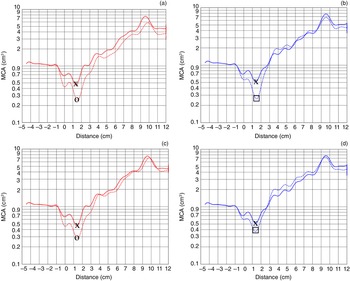
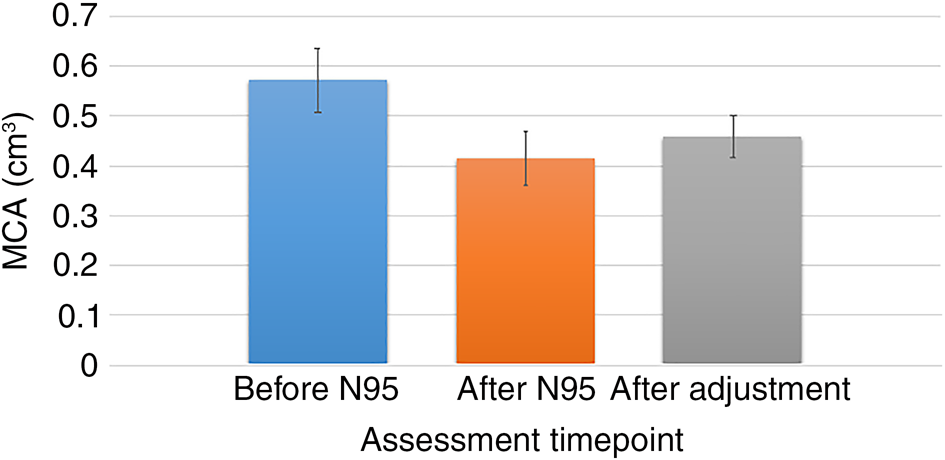
The acoustic rhinometry measurements were compared using the built-in analysis program (Figure 3). The mean minimal cross-sectional areas for the left and right sides were 0.603 cm2 (range, 0.08–1.59 cm2) and 0.538 cm2 (range, 0.10–2.12 cm2), respectively, with corresponding standard deviations of 0.310 and 0.217 cm2. When the N95 respirator was donned, the mean left and right minimal cross-sectional areas were reduced by 35 per cent and 20 per cent, to 0.395 and 0.431 cm2, respectively (left p < 0.001, right p = 0.041). When the left and right results were combined, the mean minimal cross-sectional area was reduced by 27 per cent, from 0.565 cm2 to 0.413 cm2 (p < 0.001) (Figure 4).
Acoustic rhinometry tracings of one subject. (a) Before and after wearing N95 respirator on right side. (b) Before and after wearing N95 respirator on left side. (c) Before wearing N95 respirator and after adjustment of its position on nasal bone on right side. (d) Before wearing N95 respirator and after adjustment of its position on nasal bone on left side. x = mean cross-sectional area before wearing N95 respirator; o = mean cross-sectional area after wearing N95; □ = mean cross-sectional area after adjustment of N95 respirator; MCA = minimal cross-sectional area

The mean minimal cross-sectional area (MCA) before and after wearing N95 respirator and after its adjustment, with error bars representing 95 per cent confidence intervals. The mean minimal cross-sectional area after wearing N95 respirator is significantly lower than that before wearing N95 respirator, and the mean minimal cross-sectional area post-adjustment is significantly higher than that after wearing N95 respirator (p < 0.05 in both cases).

When the N95 respirator was adjusted to sit on the bony upper vault, the mean minimal cross-sectional area improved by 13 per cent and 2.3 per cent, increasing to 0.470 and 0.444 cm2, respectively (left p < 0.001, right p = 0.04), compared to after donning the N95 respirator. When left and right results were combined, the average improvement was 9.2 per cent, with the mean minimal cross-sectional area increasing from 0.413 to 0.451 cm2 (p = 0.003), after adjusting the N95 respirator position.
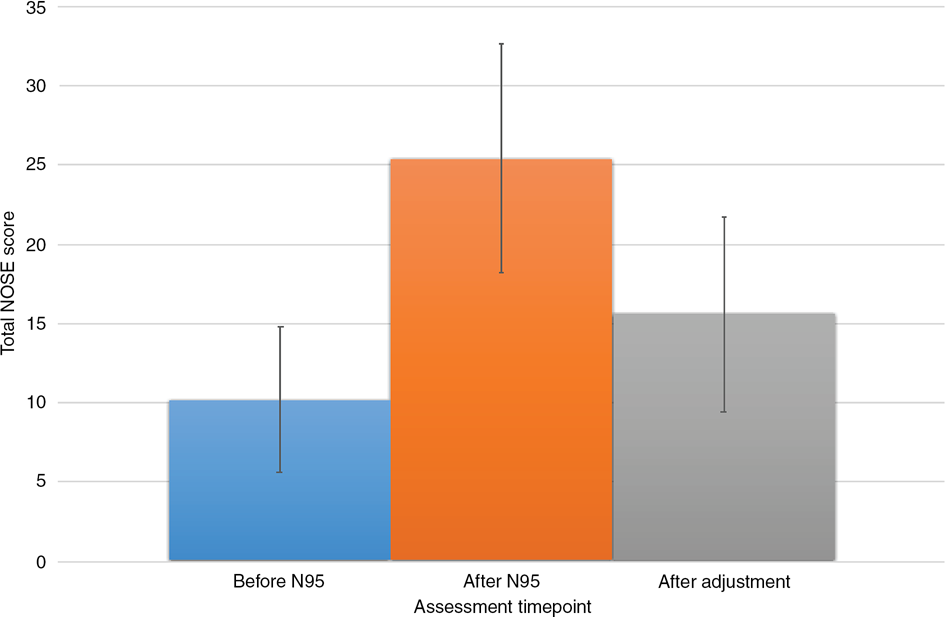
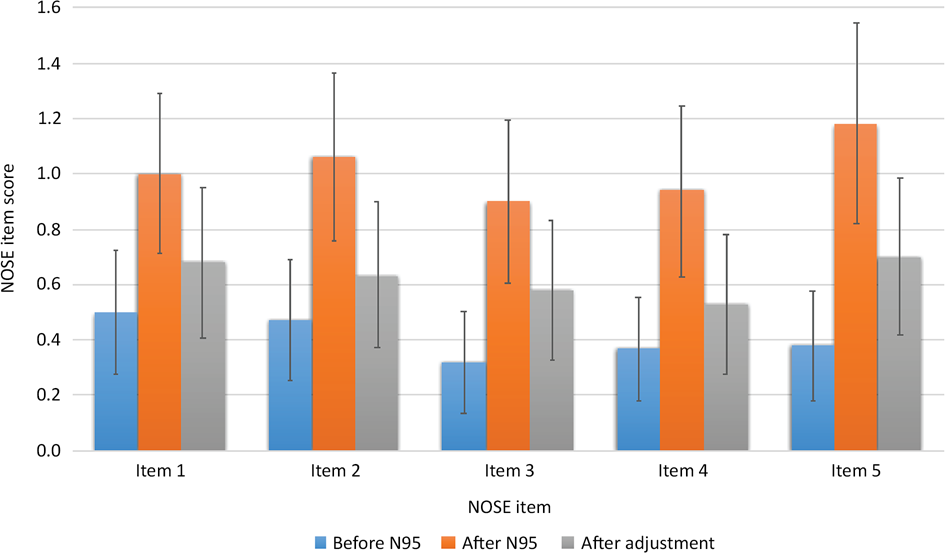
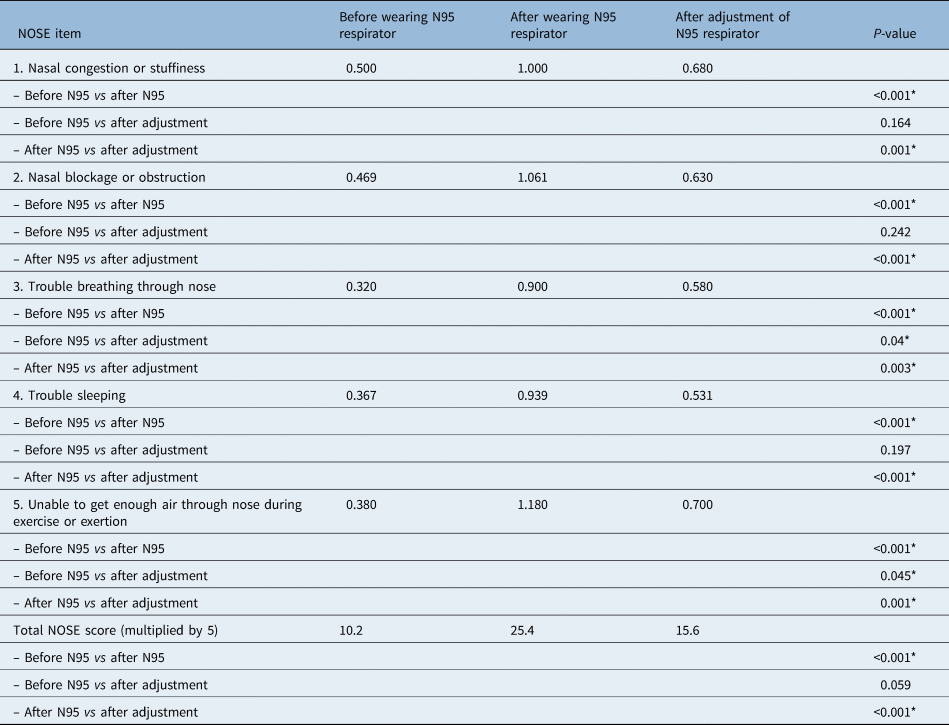
The mean total Nasal Obstruction Symptom Evaluation score of 10.2 obtained before donning the N95 respirator worsened significantly to 25.4 (p < 0.001) after mask donning (Figure 5). After positioning the mask on the bony vault, the mean total score improved to 15.6 (p < 0.001). For each item of the Nasal Obstruction Symptom Evaluation survey, the score difference before and after donning the N95 respirator was significant (p < 0.05) (Figure 6), and the score difference after donning and after adjustment of the N95 respirator was also significant (p < 0.05) (Table 2). The subgroup analysis results of the minimal cross-sectional area and Nasal Obstruction Symptom Evaluation scores by each N95 respirator model were insignificant.
The mean Nasal Obstruction Symptom Evaluation (NOSE) total score before and after wearing N95 respirator, and after its adjustment, with error bars representing 95 per cent confidence intervals. The mean total Nasal Obstruction Symptom Evaluation score after wearing N95 respirator is significantly higher than that before wearing N95 respirator (p < 0.05). The mean total Nasal Obstruction Symptom Evaluation score after N95 respirator adjustment is significantly lower than that after wearing N95 respirator (p < 0.05).

The Nasal Obstruction Symptom Evaluation (NOSE) survey item scores for before and after wearing N95 respirator and after its adjustment, with error bars representing 95 per cent confidence intervals (see Table 2 for descriptions of each numbered item). Each item score after wearing N95 respirator is significantly higher than that before wearing N95 respirator (p < 0.05). Each item score after adjustment of N95 respirator is significantly lower than that after wearing N95 respirator (p < 0.05).

NOSE item and total scores before and after wearing N95 respirator and after its adjustment

Values represent mean scores. *Denotes statistical significance (p < 0.05). NOSE = Nasal Obstruction Symptom Evaluation
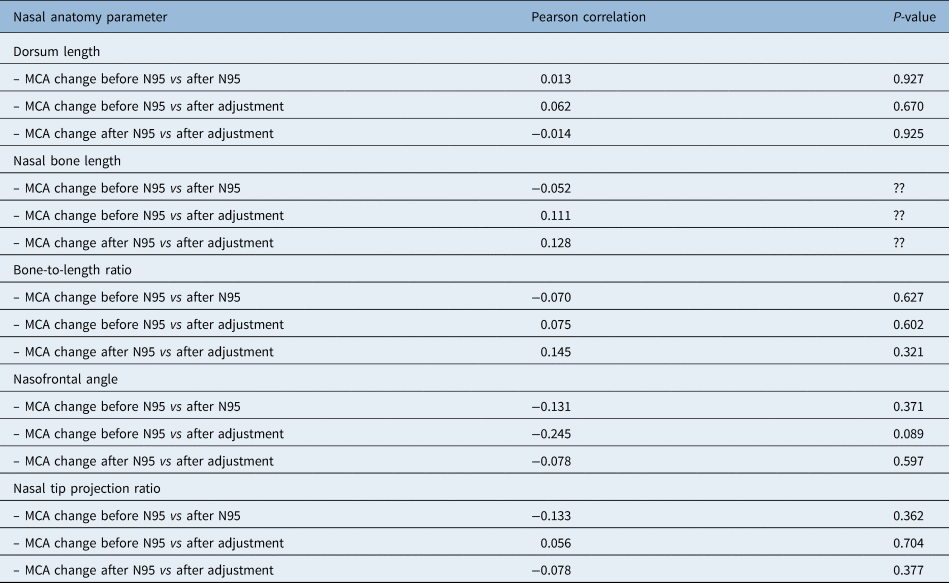
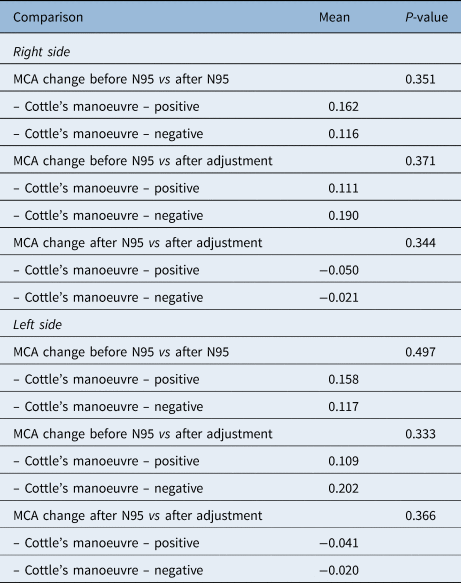
Correlation analysis showed no significant associations between the external nasal anatomy parameters and the change in minimal cross-sectional area for: before and after wearing the N95 respirator, before wearing the N95 respirator and after adjustment, and after wearing the N95 respirator and after adjustment (Table 3). The Cottle manoeuvre results were also not associated with change in minimal cross-sectional area (Table 4).
Correlations between nasal anatomy and changes in minimal cross-sectional area before and after wearing N95 respirator and after its adjustment

MCA = minimal cross-sectional area
Comparison of nasal valve collapse presence with MCA changes before and after wearing N95 respirator and after its adjustment

MCA = minimal cross-sectional area
The first 10 consecutive subjects had the N95 respirator fit test repeated with the respirator in the new adjusted position, and all subjects passed. The seal test was repeated with positive and negative pressures in the new adjusted position, in 50 per cent of the subjects, and no leakage was detected.
Discussion
Asian noses are generally characterised by a low dorsum, bulbous tip, short columella, wide-based alars, a flared nostril shape and thicker skin.Reference Han, Lee, Kim and Kim10 Nasal valve obstruction is not common in Asians given the wide nasal base and low nasal dorsal projection, resulting in wider angles of the internal nasal valves when compared to white Europeans. However, the cartilaginous framework is also structurally weaker and less developed.Reference Jang and Yu11 These characteristics may cause the Asian nose to be more susceptible to extrinsic compression by external force, with distortion of its anatomy resulting in functional obstruction. In white European noses, while the cartilaginous framework is relatively stronger, nasal valve collapse is one of the major causes of nasal airway obstruction.Reference Clark, Del Signore, Raithatha and Senior12 Therefore, it is plausible that the white European nose is also susceptible to nasal valve obstruction by external force, perhaps even to a greater extent.
The N95 respirator has long been an essential piece of PPE for medical staff when dealing with patients with suspected or confirmed airborne diseases, or when performing aerosol-generating procedures in high-risk situations. With the Covid-19 pandemic having spread rapidly around the world, the global demand for PPE has markedly increased, and shortages have been reported in many countries.13 As a result, many facilities are now practising extended use of the N95 respirator, often for several hours at a time. The tight air seal that protects the wearer is not only uncomfortable but can cause pressure sores.
We have also observed frequent complaints of nasal obstruction that add to the discomfort when wearing the N95 respirator. It is logical to hypothesise that the external forces of approximately 10 N exerted on the facial structures by the N95 respirator would also compress the cartilaginous middle vault of the nose, thus distorting nasal anatomy and narrowing the internal nasal valve. Furthermore, positioning the N95 respirator on the upper bony vault may alleviate some of this pressure and reduce such external nasal distortion. Our study aimed to test this hypothesis and make recommendations to improve nasal valve patency.
Our study results suggest that routine donning of the N95 respirator caused a significant 27 per cent narrowing of the internal nasal valve. Adjustment of the N95 respirator to sit on the bony upper vault led to a 9.2 per cent increase in the cross-sectional area of the nasal valve. The improvement of nasal obstruction was reflected subjectively in the Nasal Obstruction Symptom Evaluation scores. The compressive effect of the N95 respirator was not affected by parameters of external nasal anatomy. The results suggest that placement of the N95 respirator on the bony upper vault of the nose would be more comfortable for the user and reduce its distressing effect on nasal breathing during extended use.
A possible explanation for our study findings is short nasal bone syndrome, which is defined as nasal bones that span less than one-third to one-half of the total length of the nose, predisposing to middle nasal vault collapse.Reference Sykes, Tapias and Kim14,Reference Setabutr, Sohrabi, Kalaria, Gordon and Fedok15 In our cohort, the nasal bone-to-length ratio was 0.45, which can be regarded as short. Further studies on this aspect should be conducted in other ethnic groups to investigate the effect of nasal bone-to-length ratio on nasal valve obstruction after N95 respirator fitting.
This study has assumed that the forces applied when wearing the N95 respirator cause structural deformation that explains associated symptoms of nasal obstruction, leaving scope for further studies into other factors such as allergic symptoms of nasal congestion and discharge associated with prolonged wearing of the respirator. Furthermore, just as gravity is a potential factor that can cause nasal valve collapse,Reference Janeke and Wright16 it also remains to be investigated whether repeated prolonged periods of N95 respirator use can cause more permanent nasal valve collapse over time.
• Wearing an N95 respirator causes significant narrowing of the internal nasal valve
• Nasal obstruction can be lessened by positioning the N95 respirator onto the bony nasal vault
• Narrowing of the nasal valve caused by wearing the N95 respirator was not shown to be affected by external nasal anatomy
Conclusion
This study is the first to evaluate the relationship between wearing an N95 respirator and nasal valve obstruction. Nasal obstruction caused by extended use of an N95 respirator is an occupational health concern for medical personnel. Positioning the N95 respirator on the bony upper vault can alleviate some of the compression on the internal nasal valve causing nasal obstruction, and the effect was not dependent on the external nasal anatomy. Proper positioning of the N95 respirator can contribute to improving the occupational health of medical personnel. Further research in different ethnic groups would show whether the same problem exists in other populations.
Acknowledgements
The authors would like to thank Monica Lee, Miu Chan, Bonnie Cheng, Modissa Ng, ENT out-patient department staff and N95 Fit Test Centre staff at the Tseung Kwan O Hospital, for their efforts in the logistical arrangement of the study.
Competing interests
None declared