


Introduction
Borderline Personality Disorder (BPD) is a pervasive and complex personality disorder that is characterized by significant instability of interpersonal relationships, self-image, mood, and impulsive behaviour (American Psychiatric Association, 1994). Affected individuals can engage in a pattern of sometimes rapid fluctuation “from periods of confidence to despair, with fear of abandonment and rejection, and a strong tendency towards suicidal thinking and self-harm. Transient psychotic symptoms, including brief delusions and hallucinations, may also be present” (National Collaborating Centre for Mental Health [NCMH], 2009: p. 15). Diagnosis is associated with substantial impairment of social, psychological and occupational functioning and reduced quality of life. Many people with BPD persistently self-harm and there is an increased risk of suicide (Paris and Zweig-Frank, Reference Paris and Zweig-Frank2001). Coid, Yang, Tyrer, Roberts and Ullrich (Reference Coid, Yang, Tyrer, Roberts and Ullrich2006) report that 4.4% (95% C.I. 2.9–6.7) of the British population meet the diagnostic criteria for any personality disorder; prevalence of BPD was calculated as 0.7% (95% C.I. 0.3–1.7). Annual societal cost of BPD has been estimated at around €17,000 per individual with 22% of this being related to direct healthcare costs (van Asselt, Dirksen, Arntz and Severens, Reference van Asselt, Dirksen, Arntz and Severens2007).
Snowden and Kane (Reference van Asselt, Dirksen, Arntz and Severens2003: p. 41) have described treatment provision for this group as “patchy”. However, there have been some significant developments in England and Wales in the treatments available to people with BPD and in the attitudes of care providers in recent years. The National Institute for Mental Health in England (2003a, b) have produced policy guidance on developing services for people with personality disorder: Personality Disorder: no longer a diagnosis of exclusion; and the implementation of the policy as cited in the Personality Disorder Capabilities Framework (Department of Health, 2003). These documents were significant in addressing the issues of meeting the needs of people with BPD and sent a clear message that services for those with personality disorders needed to be developed and expanded. National guidelines (the NICE Guideline) on the treatment and management of BPD were published in 2009 (NCMH, 2009).
Psychological approaches to the treatment of BPD have been developing for the past three decades. From the 1980s clinicians began to adapt standard cognitive therapy to meet the needs of patients presenting with personality disorders (Linehan, Armstrong, Suarez, Allmon and Heard, Reference Linehan, Armstrong, Suarez, Allmon and Heard1991; Ryle, Reference Ryle1997; Davidson, Reference Davidson2000). Further, evaluations of Mentalization-Based Treatment (Bateman and Fonagy, Reference Bateman and Fonagy1999) and transference-focused psychotherapy (Doering et al., Reference Doering, Horz, Rentrop, Fischer-Kern, Schuster and Benecke2010) have demonstrated that psychological treatments are effective compared with treatment as usual.
Dialectical Behaviour Therapy (DBT) is a psychological approach designed to treat chronically suicidal individuals with BPD (Linehan et al., Reference Linehan, Armstrong, Suarez, Allmon and Heard1991). Linehan's development of the approach (Reference Linehan1993a, Reference Linehanb) recognized the need to balance Eastern practices of mindfulness and acceptance with Western psychological procedures of change. A comprehensive DBT programme includes five modes: enhancing capabilities; enhancing motivation; ensuring generalization of skills; structuring the environment; and enhancing therapists capabilities and motivation to deliver the treatment effectively (Linehan, Reference Linehan1993a). The NICE Guideline for BPD (2009) recommends a comprehensive DBT programme for women with BPD “for whom reducing recurrent self-harm is a priority” (NCMH, 2009: p. 384).
A number of randomized controlled trials (Linehan et al., Reference Linehan, Armstrong, Suarez, Allmon and Heard1991; Linehan, Heard and Armstrong, Reference Linehan, Heard and Armstrong1993; Koons et al., Reference Koons, Robins, Tweed, Lynch, Gonzalez and Morse2001; Verheul et al., Reference Verheul, Van Den Bosch, Koeter, De Ridder, Stijnen and Van Den Brink2003; Linehan et al., Reference Linehan, Comtois, Murray, Brown, Gallop and Heard2006) of DBT delivered in outpatient settings have demonstrated a reduction in parasuicidal behaviours; patients were more likely to complete treatment and spent fewer days in inpatient services when compared to treatment as usual controls. Koons et al. (Reference Koons, Robins, Tweed, Lynch, Gonzalez and Morse2001) also reported statistically greater reductions in depression, hopelessness and anger among BPD patients receiving DBT compared with a treatment as usual group, despite reducing the length of treatment from 12 to 6 months.
DBT has also been applied in inpatient programmes (Swenson, Sanderson, Dulit and Linehan, Reference Swenson, Sanderson, Dulit and Linehan2001; Bohus et al., Reference Bohus, Haaf, Simms, Limberger, Schmahl and Unckel2004). The only randomized-controlled trial (Bohus et al., Reference Bohus, Haaf, Simms, Limberger, Schmahl and Unckel2004) that delivered a comprehensive inpatient DBT programme compared patients completing a 3-month programme within an inpatient setting and those placed on a waiting list and receiving treatment as usual in the community. Whilst there was no significant change on any outcome measure at 4-month assessment for waiting list individuals, analysis of the DBT treatment group revealed significant positive changes in the psychological variables and a significant reduction in self-harm. Further, the DBT treatment group improved significantly more on seven of the nine variables analyzed including ratings of depression, anxiety and interpersonal functioning.
A further uncontrolled study, completed by Low, Jones, Duggan, Power and MacLeod (Reference Low, Jones, Duggan, Power and MacLeod2001), assessed the effectiveness of a 1-year DBT programme for patients detained in a UK high secure hospital. During the 12 months of treatment the self-harm rates, measured at 3-month blocks during therapy and 6 months after therapy, reduced significantly and this reduction was sustained at the 6-month follow-up. These behavioural changes paralleled significant reductions in dissociative experiences and increased coping beliefs. Self-reported symptoms of depression, impulsivity and suicidal intent also reduced in severity.
In summary, evaluation of DBT programmes has been reported across a range of community and inpatient settings. Both community and inpatient programmes have achieved significant reductions in parasuicidal behaviours when compared with waiting list or treatment as usual. Further, groups receiving DBT have significantly improved on measures of depression, anxiety and interpersonal relationship functioning. While DBT delivery has been researched in a high secure setting (Low et al., Reference Low, Jones, Duggan, Power and MacLeod2001) the current study considers DBT treatment in a low secure setting, which is an under researched area. Moreover, in the current study setting patients can recommit to the DBT programme and stay in treatment, after one year. Further evidence is required to evidence the effectiveness of DBT when delivered in a low secure service for female patients with BPD.
Method
Design
This naturalistic evaluation of treatment in a low secure women's service used a within-groups design to compare data collected on admission, at 6 months and after 1 year's treatment. Data were collated from archived and active files. All patients are informed at admission (in the unit's information pack) and when the routine measures are collected that clinical data may be used for audit and evaluation of the service.
Setting and participants
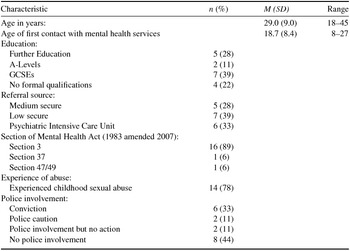
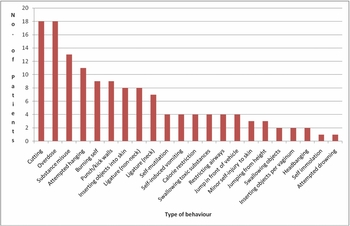
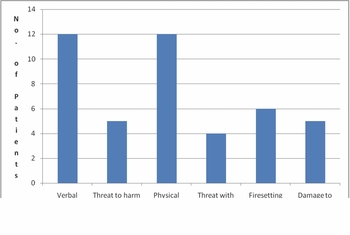
The participants were N = 18 women who were admitted consecutively to the low secure women's DBT unit within a large charitable psychiatric hospital between December 2007 and March 2011 (see Table 1 for characteristics). Low secure units are intended for individuals who are detained under the Mental Health Act and who pose a definable clinical risk to others and/or present with challenging behaviours that may include self-harm. Patients do not pose the level of grave and immediate danger or serious danger to the public that requires high or medium secure care. A range of physical, procedural and relational security measures are used to ensure that risk can be managed and rehabilitation measures implemented within a safe and secure environment (Royal College of Psychiatrists Centre for Quality Improvement, 2010). The mean length of stay for patients in the current service is 2.1 years (range 10 months to 4.1 years). To be admitted to the Unit all women had to meet the diagnostic criteria for BPD, be free from any additional mental illness (World Health Organization, 1992; American Psychiatric Association, 1994), and willing to commit to the DBT programme. All the women were detained under Part II of the Mental Health Act (1983 amended 2007), most (n = 16, 89%) under a civil commitment, with the remaining two women detained under forensic commitment. The women admitted were referred to a specialist low secure unit because their presenting risk behaviours required enhanced physical security for their safe management. Information gathered from pre-admission assessment forms and case notes indicated that all patients had a history of suicidal or self-injurious behaviour (see Figure 1). All patients had a history that included at least one act of physical or verbal aggression either in the community or a psychiatric hospital setting (see Figure 2); incidents prior to admission included assault, fire-setting and possession and use of weapons. The previous convictions and cautions included: breach of the peace; common assault; criminal damage; resisting arrest; and shoplifting.
Patient characteristics (N = 18)

Pre-admission of self-injurious behaviour

Pre-admission aggressive behaviour

Dialectical-Behavioural Therapy (DBT) intervention
The psychological component of the programme in this study is a comprehensive DBT programme as described by Linehan (Reference Linehan1993b). A comprehensive DBT programme provides five functions: structuring the environment; enhancing the patient's capabilities; improving patient's motivation; generalizing the DBT skills to the environment; enhancing capabilities and improving motivation for staff. The modes that are typically used to deliver the five functions include: skills training groups comprising four modules run over 6 months (Core Mindfulness, Emotion Regulation, Interpersonal Effectiveness, Distress Tolerance; Linehan, Reference Linehan1993b); individual therapy sessions; unscheduled/telephone skills coaching; structuring the patient's environment (e.g. psychoeducation or family/couple therapy); and weekly consultation for the therapists delivering the treatment (Linehan, Reference Linehan1993a). All five functions of a comprehensive DBT treatment programme are delivered in the current study setting; the treatment modes adapted in the current study are described below. All therapists were trained at Intensive Level (10 days) or Foundational Level (5 days) in DBT with Behavioural Tech, LLC, the certified trainers of DBT. Further, two therapists have had a minimum of 20 hours supervised practice; both were rated as adherent.
A number of adaptations have been made to the programme, originally developed for community use, to increase its suitability for the secure environment. Rather than weekly skills training groups, patients receive hour long twice-weekly DBT skills training groups (enhancing capabilities). However, as in the standard outpatient DBT programme, all patients included in the study had completed the four DBT Skills Training modules twice over the 12-month treatment period. There is a further adaptation to meet the function of ensuring generalization of skills to the current environment. In an outpatient setting clients tend to telephone their therapist in order to receive skills coaching. In the current setting patients have contact telephone numbers of their primary DBT therapist but can also request skills coaching if they see their therapist on the unit. During their therapist's working hours patients are able to contact them directly for skills coaching. If the primary therapist is out of the hospital patients are then able to contact any of the other DBT therapists for skills coaching. The modalities of the DBT programme that are unchanged from a community setting are the weekly individual DBT sessions (improving/enhancing motivation) and the weekly DBT consultation for therapists (enhancing therapists’ capabilities and motivation to treat effectively).
The final function of structuring the environment is articulated in the unit's Operational Policy and includes a risk management structure, an incentive programme, staff training in behavioural principles, physical exercise sessions, and nurse-led recreational activities (see Long, Fulton and Hollin, Reference Long, Fulton and Hollin2008 for further exposition) and an occupational therapy programme (see Lee and Harris, Reference Lee and Harris2010 for details).
As with standard DBT both the patient and the therapist make explicit commitments. Patients commit to remain in therapy for an agreed length of time, to attend scheduled sessions and to work on problems including reducing suicidal and violent behaviours (Stage I DBT treatment). Therapists commit to make themselves available for weekly sessions, to offer skills coaching, to keep the contents of the session confidential and to make every effort to conduct effective therapy (Palmer, Reference Palmer2002).
Measures
The instruments used were validated measures used as part of routine outcome evaluation. They were selected by the clinical team on the basis of their proven validity, acceptability to the patients and ease of administration.
Overt Aggression Scale (OAS; Yudofsky, Silver, Jackson, Endicott and Williams, Reference Yudofsky, Silver, Jackson, Endicott and Williams1986). Throughout the patients’ stay on the unit all episodes of risk behaviour are collated through observation and self-disclosure and scored using the OAS. The OAS measures four categories of aggression (verbal aggression, physical aggression against objects, physical aggression against self and physical aggression against others) on a severity scale from 1 (least severe) to 4 (most severe). We adopted the process described by Kay, Wolkenfield and Murrill (Reference Kay, Wolkenfield and Murrill1988) where scores for acts of verbal aggression, physical aggression against objects, physical aggression against self and physical aggression against others are multiplied by one, two, three and four respectively. This adds weight to the most severe aggressive behaviour. For purposes of analysis we then collapsed OAS data put into two categories: 1) physical aggression against self (summed and weighted total of the aggression against self subscale) and 2) externally directed aggression (summed weighted total of verbal aggression, aggression against objects and aggression against people categories).
OAS scores were collated for all instances of aggression to self and others during the first 4 weeks of admission (T0), then all instances of aggression to self and others during month 6 (T1) and during month 12 (T2) following admission. Incidents of aggression are routinely collected by nursing staff when they occur and then collated on a weekly basis by the assistant psychologist.
Global Assessment of Functioning (GAF; American Psychiatric Association, 2000)
The GAF was completed at three time periods spanning 12 months: at admission, at 6 months and at 12 months. The GAF is a multiaxial evaluation of severity of disturbance and adequacy of social functioning. The GAF is scored on a scale from 1–100 where 100 represents positive mental health and 1 a complete inability to function in society. A score of 70–100 reflects scores obtained by the average population, 30–70 is typical of the psychiatric out-patient population, and 0–40 is typical of the psychiatric inpatient population.
Brief Psychiatric Rating Scale (BPRS; Ventura, Green, Shaner and Liberman, Reference Ventura, Green, Shaner and Liberman1993)
The BPRS is a measure of current mood and symptom experience. The BPRS consists of 24 symptom constructs, 14 are self-reported (reflecting the last 4 weeks) and 10 are rated by clinical observations of the patient's behaviour during the interview. Each item is rated on a 7-point scale from (1) not present to (7) extremely severe and a total pathology score is derived by summing individual item totals. It was completed by the clinical team and self-reported at 3 time periods spanning 12 months. Leucht et al. (Reference Leucht, Kane, Kissling, Hamann, Etschel and Engel2005) have reported that a BPRS total score of 31 corresponds to a rating of “mildly ill” on the Clinical Global Impressions Scale (CGI; Guy, Reference Guy1976). Further, percentage improvements of 58% on the BPRS correspond to a rating of “much improved” on the CGI (Leucht et al., Reference Leucht, Kane, Kissling, Hamann, Etschel and Engel2005).
Camberwell Assessment of Need – Forensic Short Version (CANFOR-S; Thomas, Harty, Parrott, McCrone, Slade and Thornicroft, Reference Thomas, Harty, Parrott, McCrone, Slade and Thornicroft2003)
The CANFOR-S is a semi-structured interview schedule that assesses need in 25 domains of a person's life. Items relate to problems experienced by the patient during the past month and whether they have received sufficient help or support. Each domain is then scored as a “met” or “unmet” need, each met or unmet need contributing a score of one towards two subtotals. For the purpose of this study, the clinical team's ratings of met and unmet needs as defined by the CANFOR-S were analyzed at three time periods spanning the 12-month study period. Staff ratings were used since this rates the interventions/support provided rather than engagement in interventions or support. However, substantial agreement has previously been reported between staff and patient ratings in secure mental health care (Long, Webster, Waine, Motala and Hollin, Reference Long, Fulton and Hollin2008).
Health of the Nation Outcomes Scales for users of secure and forensic services (HoNOS-secure; Sugarman and Walker, Reference Sugarman and Walker2007)
HoNOS-secure was completed at three time points during the study. HoNOS-secure comprises 12 symptom and functioning items that are very similar to the original HoNOS (Wing et al., Reference Wing, Beevor, Curtis, Park, Hadden and Burns1998). An additional 7-item “security scale” measures current need for secure care. All seven items are rated on a criterion-referenced 4-point Likert scale. The HoNOS-secure has acceptable inter-rater reliability (Dickens, Sugarman and Walker, Reference Dickens, Sugarman and Walker2007).
Zanarini Rating Scale for Borderline Personality Disorder (ZAN-BPD; Zanarini, Reference Zanarini2003)
On admission and then at 12 months from admission each participant completed the ZAN-BPD. The ZAN-BPD is a self-report measurement of BPD symptom severity over the previous 2 weeks. The measure contains nine diagnostic DSM-IV (APA, 1994) criteria for BPD. All criteria are rated on a scale of 0 (no symptoms) to 4 (severe symptoms) according to the rating guidelines. The nine criteria scores are used to create four subscale scores relating to Affective Disturbance (total score for anger, moodiness and emptiness items), Cognitive Disturbance (total scores for identity disturbance and distrust/suspiciousness/dissociation items), Impulsivity (total score for self-mutilation/suicidality and other forms of impulsivity items) and Disturbed Relationship (total score of efforts to avoid abandonment and unstable relationships items). ZAN-BPD has established reliability and validity and is sensitive to change (Zanarini, Reference Zanarini2003).
Data analysis
Data were entered into PASW Statistics 18 for Windows (2011). Within subjects comparisons were made between measures taken at admission (T0), 6 months (T1) and 12 months (T2) following admission. The sole exception was the ZAN-BPD, which was rated at just two time points (admission and 12 months). Data were treated as ordinal and appropriate non-parametric tests were used. For measures taken at three time periods Friedman's Tests were conducted and post hoc analysis using Wilcoxon signed ranks tests were undertaken to confirm differences between specific time periods. Wilcoxon signed ranks tests were also used for the measure taken only at two time periods. Alpha was set at p = .05 for the test conducted at two time periods. For those conducted at three time periods Bonferroni correction for multiple testing was employed and alpha was consequently set at p = .017. For statistically significant results effect size (r) was calculated as recommended for the non-parametric Wilcoxon test in the literature (Hirsch, Keller, Albohn-Kühne, Kroner and Donner-Banzhoff, Reference Hirsch, Keller, Albohn-Kühne, Krones and Donner-Banzhoff2011). Cohen (Reference Cohen1988) has recommended that effect size r be interpreted thus: r = 0.1, small effect size; r = 0.3, medium effect size; r = 0.5, large effect size.
Ethical considerations
The study was approved by local audit and research committees who advised that it constituted a service evaluation that did not require formal ethics approval nor individual participant consent for analysis of routinely collected and anonymized data.
Results
Overt Aggression Scale
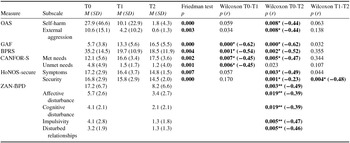
Table 2 shows that there was a statistically significant reduction in both self-harm and externally directed aggression (verbal aggression and physical aggression against objects and people) as rated on the OAS over the 12-month period of admission. While both self-harm and external aggression reduced considerably between the time periods T0 and T1 this was not statistically significant. Effect size of the reduction for both self-harm and externally directed aggression was r = 0.44 indicating a moderate effect size.
Change over the course of 1-year DBT treatment

Notes: T0 = baseline admission data, T1 = 6 month data, T2 = 12 month data. Bold text signifies statistically significant result following Bonferroni correction for multiple testing. r = effect size (Pearson's correlation)
*p<.05, **p<.01, ***p<.001
Global Assessment of Functioning
GAF scores increased significantly between admission and 6 months and a large effect size (r = −0.62) was evident. Although GAF scores changed significantly between admission and 12 months there was no significant change in the second period. This suggests that improvement as measured by the GAF was mostly confined to the first 6 months of admission.
Brief Psychiatric Rating Scale
BPRS scores reduced significantly between admission and 6 months and a large effect size (r = 0.54) was evident. Improvements in symptoms measured on the BPRS appear to have occurred mostly in the first 6 months of admission.
Camberwell Assessment of Need – Forensic Short Version
Met needs
Scores for met needs increased significantly over the first 6 months of admission, a moderate effect size (r = −0.45) was evident. There was no further significant improvement in scores over the subsequent admission period and most change therefore occurred in the first 6 months of treatment.
Unmet needs
Scores for unmet needs decreased significantly over the first 6 months of admission (moderate effect size, r = −0.45). The score for unmet needs did not subsequently change.
Health of the Nation Outcomes Scales
HoNOS scores decreased, indicating improvement, over the whole 12-month period of admission; a moderate effect size was evident (r = −0.49). Non-significant trends towards improvement were apparent in both time periods.
Health of the Nation Outcomes Scales for users of secure and forensic services
HoNOS-secure scores reduced significantly over the whole 12-month period of admission (small effect size, r = −0.23). There was evidence that most change occurred in the second 6-month period of admission where change was significant (moderate effect size, r = −0.48).
Zanarini Rating Scale for Borderline Personality Disorder
ZAN-BPD total scores fell significantly between admission and 12 months, a moderate effect size (r = −0.49) was evident. There was significant change on all four subscales with moderate effect sizes on each: affective disturbance (r = 0.39); cognitive disturbance (r = 0.39); impulsivity (r = 0.47) and disturbed relationships (r = 0.46).
Discussion
The aim of the current study was to evaluate outcomes for women diagnosed with BPD during and after 1 year's treatment in a low secure service offering a DBT programme. The programme was associated with statistically significant positive change on all measures and all subscales of each measure used. Treatment effect sizes were moderate with the exception of two large effect sizes, for the GAF and BPRS, and one small effect size (HoNOS-secure). There was significant improvement on clinician rated symptomatology and on self-reported symptoms, and on measures of social functioning and security need. Moderate and large effect sizes effects were observed for self-reported measures of symptomatology (ZAN-BPD and BPRS respectively). Clinician rated symptomatology was supported by self-reports with medium effect size being observed for HoNOS symptoms and GAF scores. In addition, measures of met and unmet needs (CANFOR-S) provided a moderate effect size. These behaviours and symptomatic improvements were reflected in the reduction of the HoNOS secure ratings, over time, with a medium effect size being observed. Much of the significant change for these items was recorded in the first 6 months of admission. However, non statistically significant positive trends on GAF and HoNOS scores continued in the second half of the admission.
Observed aggression also reduced over the period of treatment, both for self-harm and for verbal and physical aggression directed at objects and people. Interestingly, although observed aggression fell across both categories in the early part of admission, this did not achieve statistical significance until the second half of the evaluation period. This suggests that improvements in behaviour continued beyond the initial 6-month period and that they lagged behind more immediate gains in symptomatology and social functioning. This is supported by the finding that the level of security need as rated by the team on the HoNOS-secure only fell significantly in the second period of admission.
The current findings are consistent with previous research into the effectiveness of DBT within an inpatient service (Bohus et al., Reference Bohus, Haaf, Simms, Limberger, Schmahl and Unckel2004) with both patients and clinicians indicating a significant reduction in symptoms including impulsivity, disturbed relationships, aggression to objects, and self-harming behaviours. The HoNOS-Secure ratings indicated a significant decrease over the 12-month period, with a medium effect size. The need for secure provision remained consistent over the first 6 months as the individuals worked to reduce their levels of impulsivity with regards to aggression (as rated by the OAS), and then over the second 6-month period, once OAS scores had reduced, so the level of physical security could be reduced and the patients typically move to less secure areas of the unit with increased levels of leave.
One major difference between the current study and that conducted by Bohus et al. (Reference Bohus, Haaf, Simms, Limberger, Schmahl and Unckel2004) is that the latter recruited outpatients who, for the purpose of the study, were brought into an inpatient setting. The pre-admission GAF scores of patients in the Bohus study was 48.5, falling in the category of “Serious symptoms” of suicidal ideation. The patients in the current study had an initial GAF score of 5.7, which falls in the “Persistent danger of severely hurting self or others”, indicating that the patients in the current study were at a far lower level of psychological functioning. The patients admitted in the current study were already detained in various secure hospital settings requiring high levels of nursing observation and psychotropic medication to manage their parasuicidal behaviour and level of aggression towards others. Because of the risks indicated patients were deemed to need detention under the MHA (1983 amended 2007) in a low secure placement. However, despite their detention under the MHA (1983 amended 2007) we “actively involve them in the decision” (p. 388 NICE guidelines, 2009) to be admitted into the unit and commit to the DBT programme. The current study reflects findings from a previous naturalistic, within-groups study of DBT for women in secure care. Low et al. (Reference Low, Jones, Duggan, Power and MacLeod2001) similarly found, in a study of 10 women in a high secure setting, that rates of self-harm reduced and there were significant improvements in symptoms. The current study adds information about reductions in externally directed aggression
In accord with Low et al. (Reference Low, Jones, Duggan, Power and MacLeod2001), participants in the present study were not discharged after completing the 12-month treatment. The current study indicates steady progress within the 12-month period, but change was not sufficient that patients were discharged after 12 months of treatment and all stayed in the programme after 12 months of treatment. Coid, Kahtan, Gault, and Jarman (Reference Coid, Kahtan, Gault and Jarman2000) have indicated that women in secure psychiatric care often have longer lengths of stay than men. This is consistent with the Butler Committee findings (1975) that the average length of stay in medium secure settings is 2 ½ years.
The purpose of the Service is to establish behavioural control, for a difficult to manage patient group with symptoms that are “problematic, persistent and pervasive” (Ministry of Justice, 2011), by reducing threats to life and other behaviours that require inpatient hospitalization (Stage 1 DBT treatment). Swenson et al. (Reference Swenson, Sanderson, Dulit and Linehan2001) commented that within inpatient settings the behaviours often being targeted to reduce aggression (towards self and others) are reinforced. As well as needing physical security, patients with BPD admitted to a low secure unit also need clear behavioural boundaries within the unit programme that do not have the paradoxical effect of increasing the risk of self-injurious behaviours and aggression towards others.
The results of the current study indicate a reduction in risk behaviours, suggesting that clear, structured, joined-up low secure services can help patients to develop increased behavioural control, which in turn allows the low secure unit to meet the goals outlined by the draft Low Secure Services commissioning guide (DoH, 2012). This guide suggests that low secure services should provide care and treatment within a safe, secure environment. Full consideration needs to be given to issues that surround risk to the patient and others via the adherence to operational policies, as well as ensuring procedural, relational and physical security needs are met to enable the patients to move through the pathway of care (DoH, 2012).
The overall objective is that at the end of the first year in the current treatment programme, patients will generally need less physical security to manage their behaviours. The majority of patients will not be engaging in self-harming behaviours despite having increased freedoms: unescorted time away from the unit; unsupervised access to their bedroom; and beginning to self-cater. There is a need, however, for additional work at this stage to help the patients to begin to consider ways in which these skills can be generalized to enable them to demonstrate their skills in a greater number of situations (e.g. fully self-medicating and self-catering, significant periods of time spent away from the unit in vocational/educational pursuits).
NICE clinical guidelines (Borderline Personality Disorder: treatment and management, 2009) suggest a key priority is to “explore treatment options in an atmosphere of hope and optimism” (p. 379). The increasing evidence base for DBT programmes, as well as patients seeing their peers getting increased freedoms, allows patients admitted to the unit to be more hopeful about recovery.
In an inpatient setting it is difficult to know which elements of change are due to DBT and which result from the rest of the programme, including the structure, boundaries, trained staff, and occupational therapy pathway of care (Lee and Harris, Reference Lee and Harris2010). However, the structure and principles within DBT marry well with the unit programme. Further, the current study meets the seven basic principles for the effective treatment of patients with Borderline Personality Disorder as outlined by Gunderson (Reference Gunderson2011), which includes: the need for the patient to have a primary clinician (the individual DBT therapist); the need for a therapeutic structure (DBT Skills groups, the occupational therapy programme and relational, physical and procedural security); the need for the clinician's support of the patient (met via DBT skills coaching, individual DBT therapy, and the key worker); need for the patient's involvement in the therapeutic process (care plans and commitment to DBT treatment); need for the clinician's intervention (DBT skills groups, individual DBT therapy and key worker sessions); need for the clinician to deal with the patient's suicidal threats or self-harming acts (targeted in individual DBT therapy sessions); need for clinician self-awareness and readiness to consult with colleagues (as met by the provision of weekly DBT consultation and weekly nursing group consultation/supervision). It is considered that the unit follows these principles, with results indicating that a structured low secure programme, with a strong psychological model, active staff and patients, and robust relational and procedural security, can contribute to a significant reduction in self-harm, aggression and reported symptoms of BPD over 12 months.
Although the study demonstrated a reduction in parasuicidal behaviours and self-reported symptoms, there is a limitation related to the extent to which findings can be generalized to independent living because of the ongoing need for hospitalization. Further, the study only captured the patient's first year of treatment despite the average length of stay (collated from our records) being just over 2 years for all patients discharged from the unit. It is acknowledged that while DBT is the core psychological treatment being offered it is not in isolation. Therefore the findings cannot be attributed to DBT alone, rather to the entire treatment package being offered, which includes occupational therapy sessions (Lee and Harris, Reference Lee and Harris2010), nurse-led sessions that include regular exercise sessions, clear procedural, physical, and relational structures of security as well as pharmaceutical interventions. A final limitation is that there was no control group for the current study; although participants’ previous treatment programmes had not resulted in behavioural control, there is the possibility that given the patients’ commitment (i.e. motivation) to the treatment that they would have fared equally well in other settings. It is intended that future studies will look at the patients’ perceptions of DBT being delivered in a Low Secure setting and an outcome evaluation of all patients discharged from the Service.
Acknowledgements
The authors would like to thank David Nevison-Andrews for having the foresight to start a database and Clive Long for his support and helpful comments on previous drafts.



Comments
No Comments have been published for this article.