Inappropriate or excessive antimicrobial use can lead to avoidable adverse events, development of more resistant bacteria, and increased healthcare costs.Reference Huttner, Harbarth and Carlet 1 , Reference de Kraker, Wolkewitz and Davey 2 Multidrug-resistant infections are associated with high morbidity and mortality, often requiring prolonged hospitalization and high-cost medications.Reference de Kraker, Wolkewitz and Davey 3 , Reference Laxminarayan, Duse and Wattal 4 As the antibiotic era approaches its end, antimicrobial surveillance is a priority of hospital initiatives. National organizations advocate for the creation and implementation of antimicrobial stewardship programs (ASPs) that optimize antimicrobial therapy to minimize development of resistance and adverse events.Reference Dellit, Owens and McGowan 5 – Reference McNulty, Logan and Donald 9 A collateral benefit to improved antimicrobial use in the inpatient setting is limiting antimicrobial expenditures.Reference Lockwood, Perez and Musick 10 – Reference Day, Smith, Harris, Cox and Mathers 14 For example, Standiford and colleaguesReference Standiford, Chan, Tripoli, Weekes and Forrest 15 demonstrated that implementation of a robust ASP in a large, tertiary academic medical center resulted in a 46% reduction in antimicrobial cost per 1,000 patient-days. However, maintenance of such programs is key as there was a 32% cost increase within 2 years of discontinuation of the program.
The UW Health ASP consists of 3 infectious diseases (ID) physicians and 1 pharmacist. One of the 3 ID physicians is dedicated to the stewardship service on a weekly basis for approvals of restricted antimicrobials and prospective audit and feedback. These physicians are in the same practice group as all ID consultants at UW Health. The ID pharmacist completes weekday active surveillance of inpatients receiving antimicrobials and discusses interventions with the ASP physician. The ASP team makes recommendations that promote selection of safe and effective therapy and encourage de-escalation or discontinuation of antimicrobials as appropriate.Reference Schulz, Osterby and Fox 16 Additionally, the ASP implements cost-effective strategies through development of institutional guidelines and protocols, such as an automatic 96-hour stop time for restricted antimicrobials.
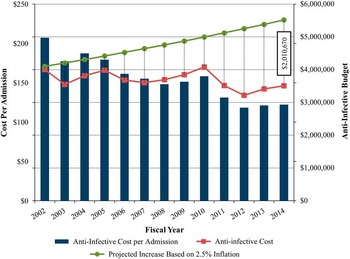
The ASP team is separate from the ID consult services and does not routinely perform daily oversight of antimicrobial recommendations from the consult service, but discusses pertinent stewardship issues, such as drug shortages or restricted drug use, on a case-by-case basis with the consult service. Efforts are made by the lead ID pharmacist to round with the consult teams. Our cost reduction efforts, like most ASP programs, have plateaued over 12 years of implementation. However, when adjusted for a projected 2.5% inflation, a flat budget over this period could be considered further evidence of a significant accomplishment with a projected cost savings estimated to be $2 million in 2014 (Figure 1).Reference Schumock, Li and Suda 17 Our ASP continues to explore areas for improved antimicrobial use and healthcare resource conservation. Complicated patients with difficult-to-treat infections and prolonged hospital stays likely play a significant role in the overall antimicrobial cost. These patients can represent a large fraction of the overall budget, and they reduce cost-control efforts of the ASP team on other patients. This retrospective, descriptive study characterizes the top 1% of patients who contribute to inpatient antimicrobial expenditures. Our goal was to describe the characteristics of this patient population, to identify factors that drive antimicrobial utilization and costs for high-complexity patients, and to assess potential opportunities to improve antimicrobial utilization while curbing expenditures.
Anti-infective cost from 2002–2014.

METHODS
This study was conducted at UW Health, a 600-bed level 1 trauma and academic medical center serving adult and pediatric patient populations. UW Health is the only National Cancer Institute–designated cancer center in Wisconsin and, as such, serves a large hematology and oncology population. A very active solid organ transplant service comprises 13% of hospital admissions.
Patients accounting for the top 1% of the antimicrobial budget from July 1 through December 31, 2014, were identified through a pharmacy billing database. The primary outcome of this study was description of the patients and the antimicrobial agents comprising the top 1% patients. Retrospective chart review also identified cost-saving opportunities as a secondary outcome. Patients were described via demographic information, indication for antimicrobial therapy, Charlson Comorbidity Index score, immunocompromising condition, if applicable, and presence of ID service consultation. Characteristics of the patient’s hospitalization and antibiotic consumption collected included number of admissions, length of inpatient stay, and mortality.
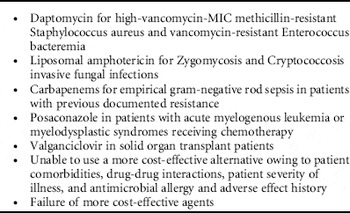
Each patient was presented to the ASP team with 2 ID physician representatives and 1 pharmacist. The ID physicians reviewed patients whom they saw on the consult service. Appropriateness of antimicrobial use was determined by consensus of the physicians and pharmacist. Appropriate use was defined as antimicrobial therapy that was effective, safe, and most cost-effective compared with alternative agents on the basis of patient and disease characteristics and published guidelines or institution-specific standards of care. Examples of appropriate use are listed in Table 1 and focused on antimicrobials that had significant impact on cost. Cases that did not meet these criteria were deemed potentially avoidable and represent intervention opportunities for the ASP team. Intervention opportunities included pharmacokinetic or pharmacodynamic (PK/PD) optimization, inappropriate double coverage, missed opportunity for discontinuation or de-escalation, and intravenous to oral conversion. Other opportunities for potential interventions included allergy consults, therapeutic alternatives, inpatient antimicrobial selection for outpatient convenience, discharge delay due to placement issues, and long turn-around time for reference laboratory results.
Examples of Appropriate Antimicrobial Use

NOTE. MIC, minimum inhibitory concentration.
RESULTS
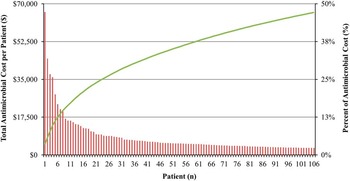
The total antimicrobial expenditure for 2014 was $3,504,524. This comprised 14% of the total inpatient medication budget. During the 6-month study window, 10,460 patients received antimicrobials. The top 1% of these patients (n=106) accounted for $889,543 or 47.2% of the 6-month budget (Figure 2).
Contribution of 106 individual patients to the expenditure of nearly 50% of the antimicrobial budget.

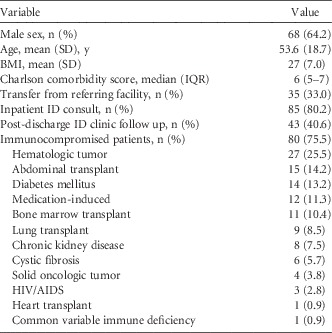
Patient characteristics are presented in Table 2. Patients were generally very ill with an average Charlson Comorbidity Index score of 6.3. The ID consult service directed the antimicrobial treatment in 80.2% of patients. Given the large oncology and solid organ transplant population, it is not unexpected that 80 patients were immunosuppressed.
Demographic Characteristics of 106 Patients

NOTE. BMI, body mass index (calculated as weight in kilograms divided by height in meters squared); HIV, human immunodeficiency virus; ID, infectious diseases; IQR, interquartile range.
Patients were hospitalized an average of 2.6±1.9 times for a median (interquartile range) total of 39.5 (25.3–59.8) days. The inpatient mortality for the study group was 16% and the 30-day mortality was 34.9%. The antimicrobial cost per day and per admission were $219±$192 and $4,733±$7,614, respectively.
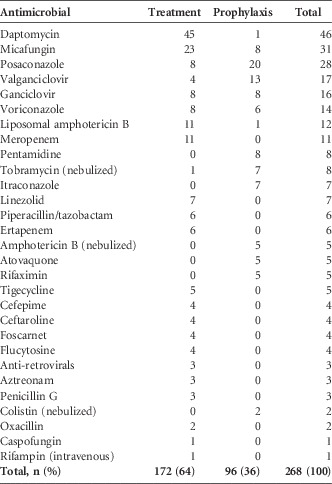
There were 268 antimicrobial courses prescribed during the study period with 172 (64%) prescribed for treatment and 96 (36%) prescribed for prophylaxis (Table 3). For treatment indications, daptomycin (n=45) was the most commonly prescribed antimicrobial followed by micafungin (n=23), liposomal amphotericin B (n=11), and meropenem (n=11). Posaconazole (n=20) and valganciclovir (n=13) comprised the majority of prophylactic antimicrobials.
Treatment vs Prophylaxis High-Cost Antimicrobial Regimens

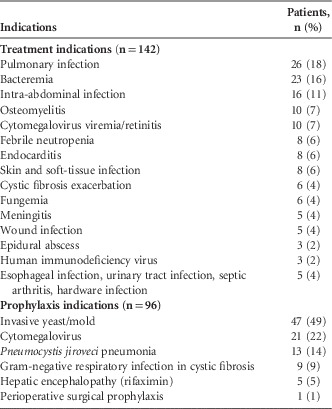
Ninety-five patients required high-cost antimicrobial therapy with the indications listed in Table 4. The most common infections (n=142) were pulmonary infections (18%), bacteremia (16%), and intra-abdominal infections (11%). Forty-seven patients received prophylactic therapy. One-half of high-cost prophylaxis therapies were to prevent fungal infections (49%), followed by cytomegalovirus prophylaxis (22%) and Pneumocystis jirovecii pneumonia prophylaxis (14%).
Indications for High-Cost Antimicrobials for 106 Patients

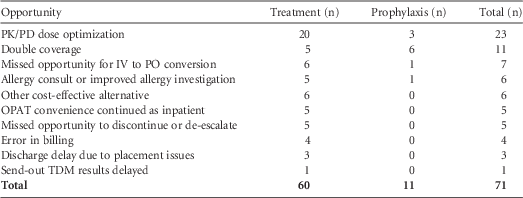
Following review of individual patient cases by the ASP team, 49 (46%) of the 106 patients received appropriate treatment and no opportunity to improve the cost-effectiveness of treatment was identified. Of these 49 patients, 23 were on a treatment regimen, 10 on prophylactic therapy, and 16 on both treatment and prophylactic courses. Notably, 10 of the 49 patients with appropriate antimicrobial treatment scenarios failed cost-conservative therapy before initiation of high-cost, second-line therapy. The remaining 39 patients were treated with first-line therapy for their disease state. Fifty-seven patients were identified for opportunities to avoid or mitigate high-cost antimicrobial therapy, with 48 patients receiving therapeutic courses and 9 patients receiving prophylactic therapy. Opportunities for invention are listed in Table 5.
Intervention Opportunities

NOTE. IV, intravenous; OPAT, outpatient parenteral antimicrobial therapy; PK/PD, pharmacokinetic/pharmacodynamic; PO, oral; TDM, therapeutic drug monitoring.
DISCUSSION
To our knowledge, this is the first study to examine the impact of a small number of patients on the cost of antimicrobials at a single institution. This retrospective study demonstrated that the top 1% of patients receiving antimicrobials accounted for almost half of our antimicrobial expenditure. These patients were immunocompromised with a high Charlson Comorbidity Index score. Their treatment was commonly directed by ID specialists. High-cost antimicrobials were used for both treatment and prophylactic indications.
Prolonged hospitalization was an important factor influencing antimicrobial cost, especially in patients who required prophylactic therapy owing to immunosuppression, such as posaconazole and valganciclovir in oncology and solid organ transplant patients, respectively. The average length of stay at our institution is less than 4 days; however, our study group averaged 50 inpatient days over 2.5 admissions.
After retrospective review of each clinical case scenario by an expert panel, opportunities to improve the cost-effectiveness of care were evident in 54% of patients. Our patients had a mean (SD) body mass index (calculated as weight in kilograms divided by height in meters squared) of 27±7. Interventions for PK/PD optimization were most often due to weight-based dosing adjustments or higher dosing than recommended that led to an adverse effect, prompting the providers to select a high-cost alternative.
During retrospective review, the ASP team observed that dosing optimization could have occurred for antimicrobials such as liposomal amphotericin and foscarnet. Notably, our institution doses daptomycin on ideal body weight and, as such, there were no opportunities to optimize the PK/PD for this agent.Reference Ng, Schulz and Rose 18 The cost of daptomycin would likely have been 32% higher if actual body weight was used. Vancomycin dose optimization was also identified as an area of improvement because some patients developed nephrotoxicity, which resulted in a switch to either daptomycin or linezolid. Our institution is currently transitioning to AUC:MIC dosing (ratio of the antibiotic area under the curve [AUC] to the organism’s minimum inhibitory concentration [MIC]) to optimize vancomycin therapy.Reference Prybylski 19 , Reference Men, Li, Zhai and Zhao 20 In our guideline, AUC:MIC monitoring is considered reasonable in critically ill patients with severe infections who have stable renal function and will be on prolonged vancomycin therapy. An internal calculator was developed in order to facilitate the pharmacist workflow in vancomycin monitoring.
Combination antimicrobial coverage was the second leading contributor to missed intervention opportunities. The most common scenario involved patients with cystic fibrosis receiving treatment for an acute exacerbation. Often, the patient continued his or her prophylactic inhaled therapies concomitantly with systemic antimicrobial therapy. The cystic fibrosis exacerbation guidelines remain silent regarding continued use of prophylactic inhaled therapies during acute exacerbations because there is insufficient evidence to support or oppose combination therapy.Reference Flume, Mogayzel and Robinson 21 However, the example of cystic fibrosis patients who were receiving concomitant prophylactic nebulizers with therapeutic antimicrobial treatment as reflected by the historical practice of our advanced pulmonary service was discussed as an opportunity for future ASP initiatives.
Beta-lactam allergy assessment and documentation continues to be an area for improvement in our institution. Daptomycin and aztreonam use could potentially have been avoided in 6 patients if allergy documentation was improved. Since the study period, pharmacists now confirm allergies with patients during the medication reconciliation process. In patients with a nonsevere, non–immunoglobulin E–mediated allergy history, a graded beta-lactam challenge can be attempted. In other patient cases, the ASP team determined that the allergy consult service should have been involved sooner, which may have resulted in immunoglobulin E–mediated reaction testing and avoidance of costly therapy with aztreonam. In our current practice, the ASP team does not routinely recommend allergy consult, and interventions are managed on a case-by-case basis.
Finally, the ASP review identified transitions of care scenarios where high-cost antimicrobials being utilized in the outpatient setting were continued unnecessarily upon admission. Other times, discharge may have been unexpectedly delayed and the higher-cost, more convenient antibiotics continued. Five patients receiving outpatient antimicrobial therapy with daptomycin and ertapenem for ease or administration convenience, not therapeutic necessity, were admitted and continued on these antimicrobials. Often, the ASP will intervene and change therapy on the basis of expected duration of hospitalization. On the alternative spectrum, 3 patients were transitioned prematurely in anticipation of discharge to high-cost antimicrobials for outpatient use before home infusion and discharge placements were finalized. In these scenarios, the high-cost antimicrobials were continued while placement issues were resolved.
ID consult services managed 80.2% of patients comprising the 1% group. The dynamics of ASP management of ID consult services are controversial. Currently, there are no established practice standards regarding the role of antimicrobial stewardship oversight over other ID physicians. Some studies show that ID physicians may be contributing to inappropriate use of antimicrobials. Reference Yeo, Wu, Chung, Chan, Chen and Hsu 22 , Reference Goldstein, Goff and Reeve 23 Goldstein and colleaguesReference Goldstein, Goff and Reeve 23 propose strategies in managing “outlier” physician behavior that deviates from ASP practice, such as development of communication algorithms to facilitate effective and rapid communication, implementation of institutional guidelines to monitor prescribing habits, peer comparison to evaluate antimicrobial utilization, and obtaining hospital administration support.
Currently, the ASP has 1.0 full-time equivalent pharmacist and 1.0 full-time equivalent physician dedicated to ASP activities. In order to maximize the interaction with the ID consult services, it might be preferable to have ASP resource allocation increased or redistributed to the consult services. The ID pharmacist or pharmacy residents attempt to round daily with the ID consult services to promote ASP initiatives; however, owing to inconsistent schedules and competing priorities, rounding cannot be accomplished daily.
Until such resources are available to increase collaboration with the ID consult services, our ASP team has increased efforts on educating non-ID services through grand rounds, prospective audit and feedback, and directing patient care providers to institutional policies and guidelines.
Antimicrobial stewardship programs are responsible for oversight of antimicrobial utilization and responsible for providing cost-effective care. Our study demonstrated that 1% of patients account for 47% of antimicrobial spending. These patients are often complex and care is interdisciplinary, usually including the ID consult service. The high cost associated with these patients also paradoxically dilutes the value of the daily ASP efforts for the other 99% of patients. However, even with a robust ASP, there remain opportunities for improving the cost-effectiveness of antimicrobial therapy.
ACKNOWLEDGMENTS
We acknowledge Kurt Osterby for his assistance in obtaining billing data for study patients.
Financial support. None reported.
Potential conflicts of interest. All authors report no conflicts of interest relevant to this article.