Introduction
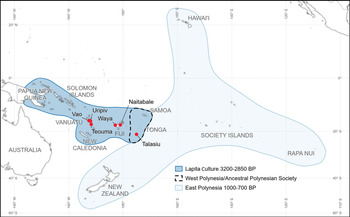
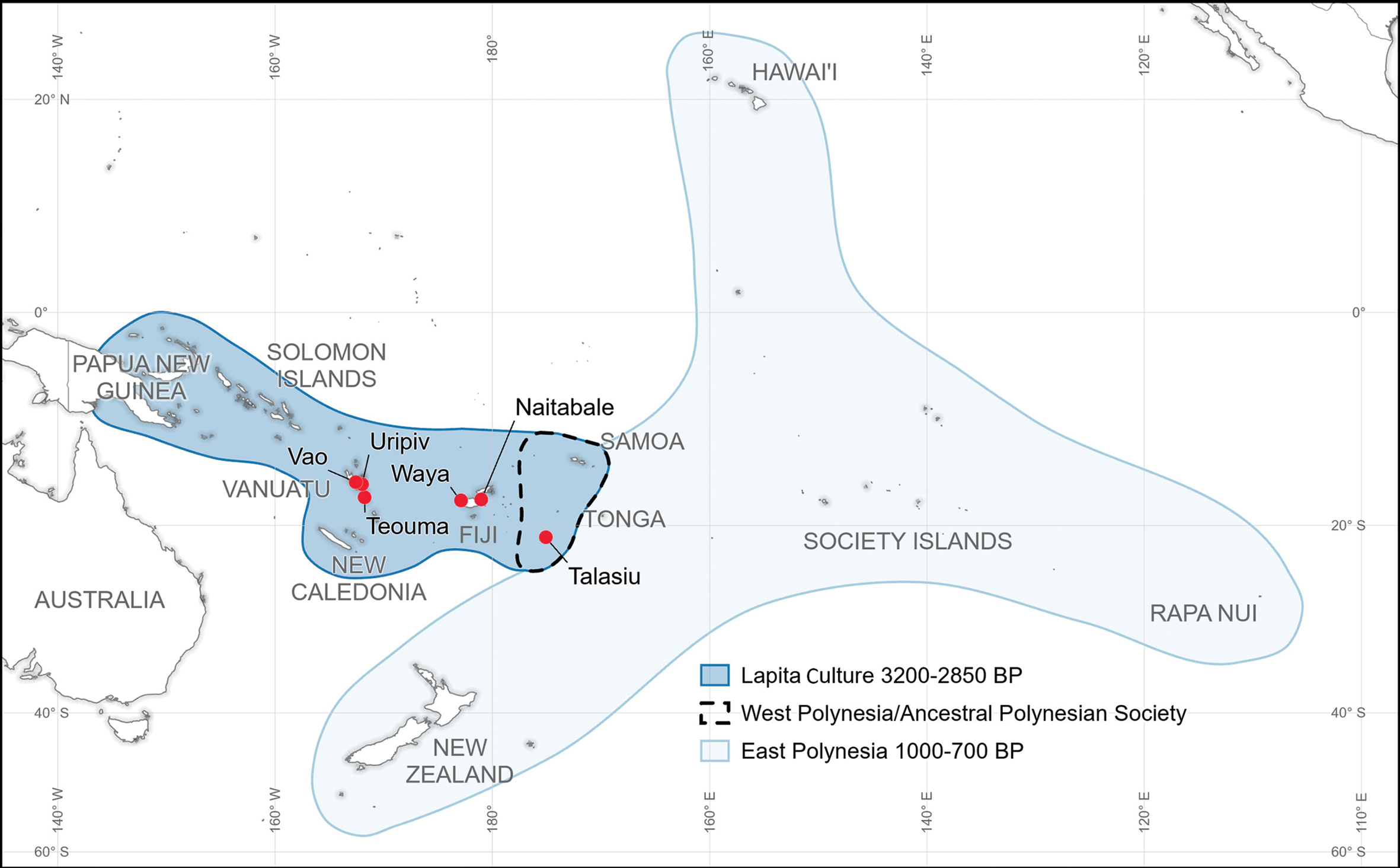
As a result of long-distance maritime migrations, Polynesian people have a vast distribution across the Central and Southern Pacific Ocean. These migrations have been the subject of scholarly speculation for more than 200 years. The phenomenon of becoming ‘Polynesian’, however, is poorly understood, particularly the relationship between those elements of contemporary Polynesian culture that derive from the colonisation of Lapita groups (c. 2850 cal BP; Burley et al. Reference Burley, Edinborough, Weisler and Zhao2015) vs traits that are later innovations or the result of cultural contact with other regions (Kirch & Green Reference Kirch and Green1987; Smith Reference Smith2002). The appearance of Polynesian Plainware pottery and the development of a proto-Polynesian linguistic sub-stage are considered to mark the first emergence of Ancestral Polynesian Society in Tonga and Samoa at c. 2650–2350 cal BP (Kirch & Green Reference Kirch and Green2001; Clark et al. Reference Clark, Grono, Ussher and Reepmeyer2015; Burley et al. Reference Burley, Connaughton and Clark2018). After coalescing in West Polynesia, a recognisable set of Polynesian biological and cultural traits was dispersed c. 1000–700 cal BP by maritime voyages to the remote islands of East Polynesia (Wilmshurst et al. Reference Wilmshurst, Hunt, Lipo and Anderson2011) (Figure 1).
Map of the Pacific, showing the main stages of island settlement (illustration by P. Parton).
Recently discovered burials at the Talasiu midden site in the Kingdom of Tonga, dated to c. 2650 cal BP, represent the oldest burials yet found in any part of Polynesia. The population at Talasiu date to approximately 200 years after the arrival in Tonga of the Lapita Culture (Burley et al. Reference Burley, Edinborough, Weisler and Zhao2015), at a stage when an embryonic Polynesian culture is thought to have developed (Kirch & Green Reference Kirch and Green2001). This article addresses the question of Polynesian ethnogenesis through the description of the spatial contexts and burial practices at the Talasiu site, and by comparing them with: burial behaviour at Lapita sites in Vanuatu and Fiji; late prehistoric Polynesian (700–100 cal BP) mortuary practices exemplified by Tongan burial sites (Clark et al. Reference Clark, Burley and Murray2008); and with linguistic reconstructions of Polynesian Ancestral Society that relate to burial activity (Kirch & Green Reference Kirch and Green2001).
The Talasiu site
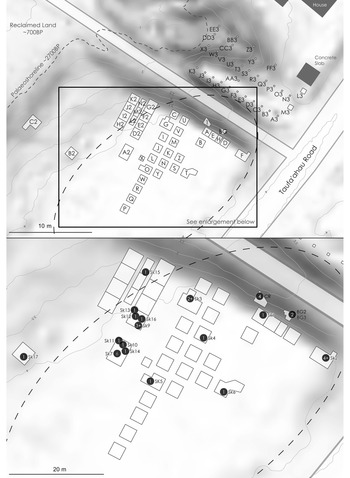
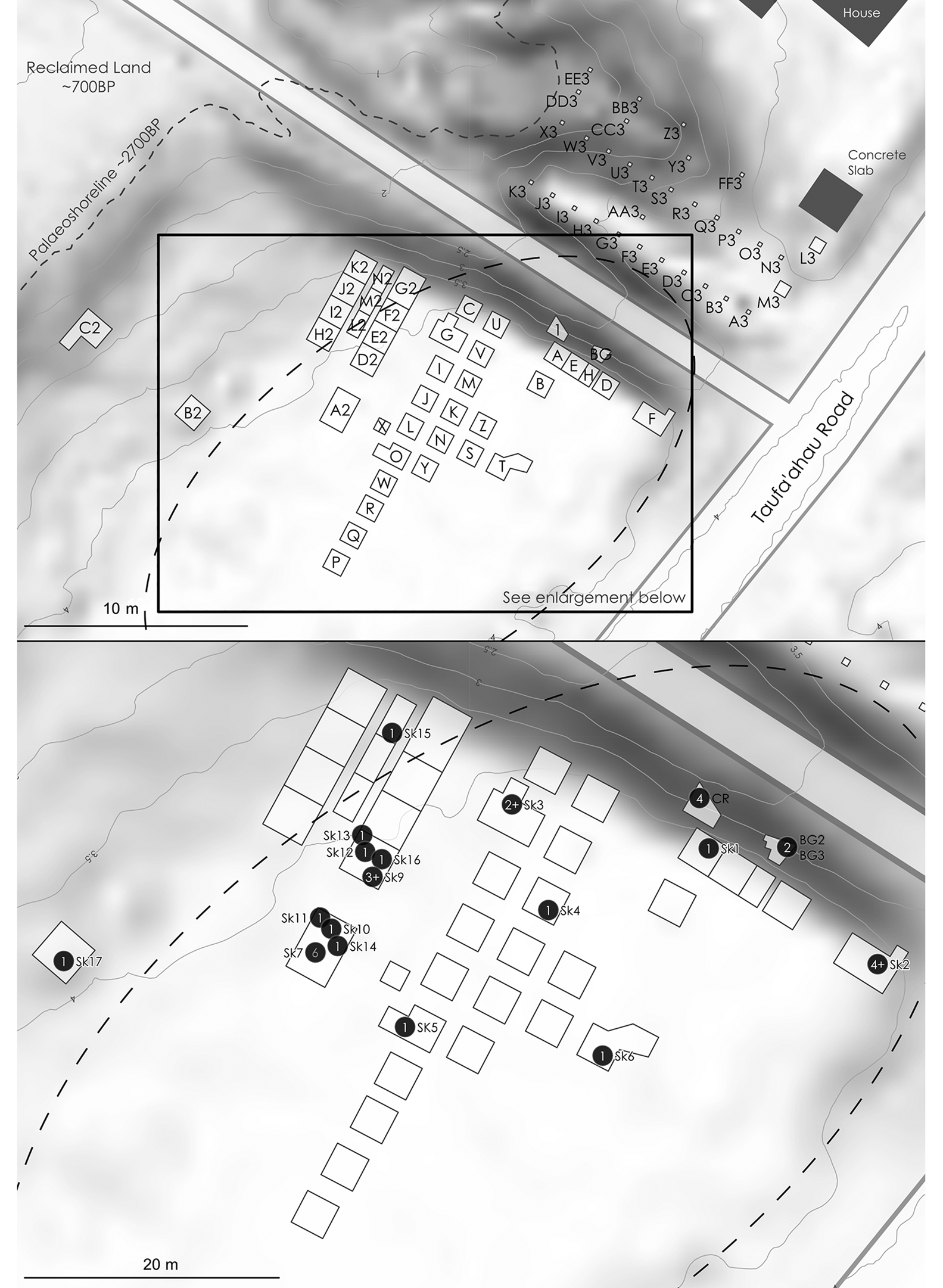
The Talasiu midden site (TO-Mu-2) is located on the main island of Tongatapu, to the immediate north of Lapaha Village. The latter is well known for its monumental tombs of the paramount Tu'i Tonga lineage, which ruled Tonga from c. 800–200 cal BP (Clark et al. Reference Clark, Reepmeyer and Melekiola2016). Situated on the palaeo-limestone shoreline of the Fanga ‘Uta Lagoon, the Talasiu site would have been a particularly suitable area for occupation, due to a nearby freshwater source and proximity to abundant shellfish beds (Figure 2). Four field seasons undertaken by the authors between 2008 and 2016 identified a 0.50–0.90m-thick midden deposit that overlies a dark red, sterile clay soil. The midden predominantly comprises bivalve shells intermixed with sediment containing animal bones (fish, rat, bird and turtle), charcoal and the remains of cultivated plants (Clark et al. Reference Clark, Grono, Ussher and Reepmeyer2015). Pottery is abundant, along with smaller quantities of stone tools, shell ornaments, coral and stone files/grindstones, and oven stones. Interstratified in the midden and dug into the basal clay are burials and features such as hearths, ovens, deposits of dumped/burnt debris, and hearth rake-out characterised by lenses and concentrations of ash and oven stones. The repeated dumping of food refuse at the midden is indicated by the presence of lenses of shells dominated by a single species and by lenses of mixed shellfish species that are distinct in composition from those immediately above and below. Apart from the burials, the Talasiu midden is indistinguishable from other early middens bordering the Fanga ‘Uta Lagoon. These have been interpreted primarily as places where shellfish were consumed and discarded (McKern Reference McKern1929: 102 & 110; Groube Reference Groube1971; Spennemann Reference Spennemann1989a: 131; Burley et al. Reference Burley, Dickinson, Barton and Shutler2001: 102; Clark & Langley Reference Clark and Langley2019).
Map of the Talasiu site, showing the palaeoshoreline, midden extent (the area where the midden is the thickest is delimited by a dashed line) and burial distribution (numbers in black circles refer to the number of individuals in the concentration; see also Table S3 in the online supplementary material) (illustration by P. Parton).
Radiocarbon and uranium-thorium dating
The contemporaneity of the midden material and the burials is demonstrated by intact lenses of ash and marine shell within the stratigraphy that seal several interments. Dating to c. 2700–2400 cal BP, the late Lapita to early Polynesian Plainware era on Tongatapu relates to a segment of the radiocarbon calibration curve known as the Hallstatt plateau. A total of 17 calibrated radiocarbon dates cover a wide span from 2750–2150 cal BP (see Table S1 in the online supplementary material (OSM)). High-precision dates from uranium-thorium (U-Th) measurements of Acropora (coral) tools, AMS radiocarbon dates on short-lived wood charcoal, and Bayesian modelling all indicate the colonisation of Tongatapu by people of the Lapita Culture at c. 2850 cal BP, with a material culture change at c. 2680 cal BP that is linked to the development of Ancestral Polynesian Society (Kirch & Green Reference Kirch and Green2001; Burley et al. Reference Burley, Edinborough, Weisler and Zhao2015). The Talasiu midden yielded a few dentate-decorated ceramic sherds from the lower levels and predominantly undecorated Polynesian Plainware ceramics from the upper levels, suggesting site use spanning c. 2700–2600 cal BP—at the older end of the calibrated date range.
U-Th dating of three coral files from Talasiu midden deposits improve chronological precision, as the method is unaffected by fluctuating atmospheric carbon (Burley et al. Reference Burley, Edinborough, Weisler and Zhao2015). A substantial difference (beyond their 2σ range) in U-Th dates on two pairs of samples from the same coral file indicates the presence of diagenetic processes that would make the dates unreliable (Burley et al. Reference Burley, Edinborough, Weisler and Zhao2015). Initial U-Th dates for two files were 3151±11 BP (TAL-1) and 3045±10 BP (TAL-2), which pre-date the arrival of humans in Tonga (Burley et al. Reference Burley, Edinborough, Weisler and Zhao2015). Microscopic examination of these samples indicated diagenesis, and a duplicate sample on TAL-2 returned a date of 3423±18 BP, confirming diagenetic alteration. An initial date for the TAL-3 file was 2635±10 BP, and the second analysis provided a similar date of 2662±18 BP (Table S2). Additional U-Th dates on coral files are required to confirm the TAL-3 results, yet the 2σ age range (2680–2625 BP) is consistent with both the high-precision Lapita chronology recently established for Tongatapu (Burley et al. Reference Burley, Edinborough, Weisler and Zhao2015) and the Talasiu pottery assemblage (Clark et al. Reference Clark, Grono, Ussher and Reepmeyer2015).
The Talasiu burials
Human skeletal remains of at least 45 individuals were identified in and around 19 burial contexts. There are no trends that age at death and sex were significant factors in the choice of who was interred in the midden (Table S3). Of the 13 sub-adults identified, one is estimated to be an adolescent (12–16 years), another a child (7–11 years), four died between 1.5 and 2.5 years of age, and three were perinates (using the skeletal ageing methodologies of Ubelaker (Reference Ubelaker1989) and Scheuer and Black (Reference Scheuer and Black2000)). The 32 remaining individuals are adult, or are of adult size, six of whom were estimated to be female and seven to be male (using skeletal sexing methodologies of Ferembach et al. (Reference Ferembach, Schwidetzky and Stloukal1979) and Bruzek (Reference Bruzek2002)). Preliminary screening of the skeletal elements indicates a lack of perimortem violence. Ancient DNA analyses of the petrous bones from three individuals indicate an Asian ancestry that no longer exists in an unmixed form (Skoglund et al. Reference Skoglund2016; Posth et al. Reference Posth2018). Isotope analyses suggest that inshore and coastal marine foods formed the predominant dietary staple, which is consistent with the lagoon-edge location of the burials (Herrscher et al. Reference Herrscher, Fenner, Valentin, Clark, Reepmeyer, Bouffandeau and André2018).
Contextualising the dead at Talasiu
The 19 burial contexts were discovered in the central part of the midden, where the deposit is thickest. All but four of the burials were oriented north-east/south-west, north/south or north-west/south-east, roughly parallel to the palaeoshoreline. In eight of these burials, the head was placed to the south-east, north-east or east.
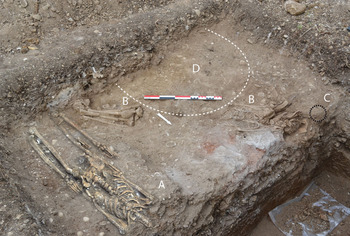
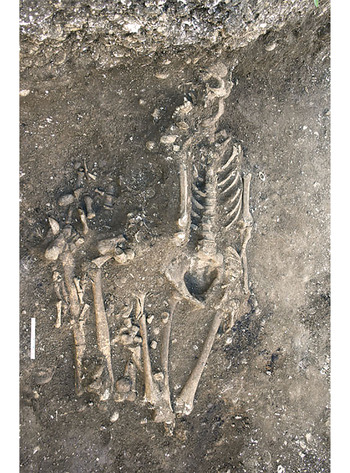
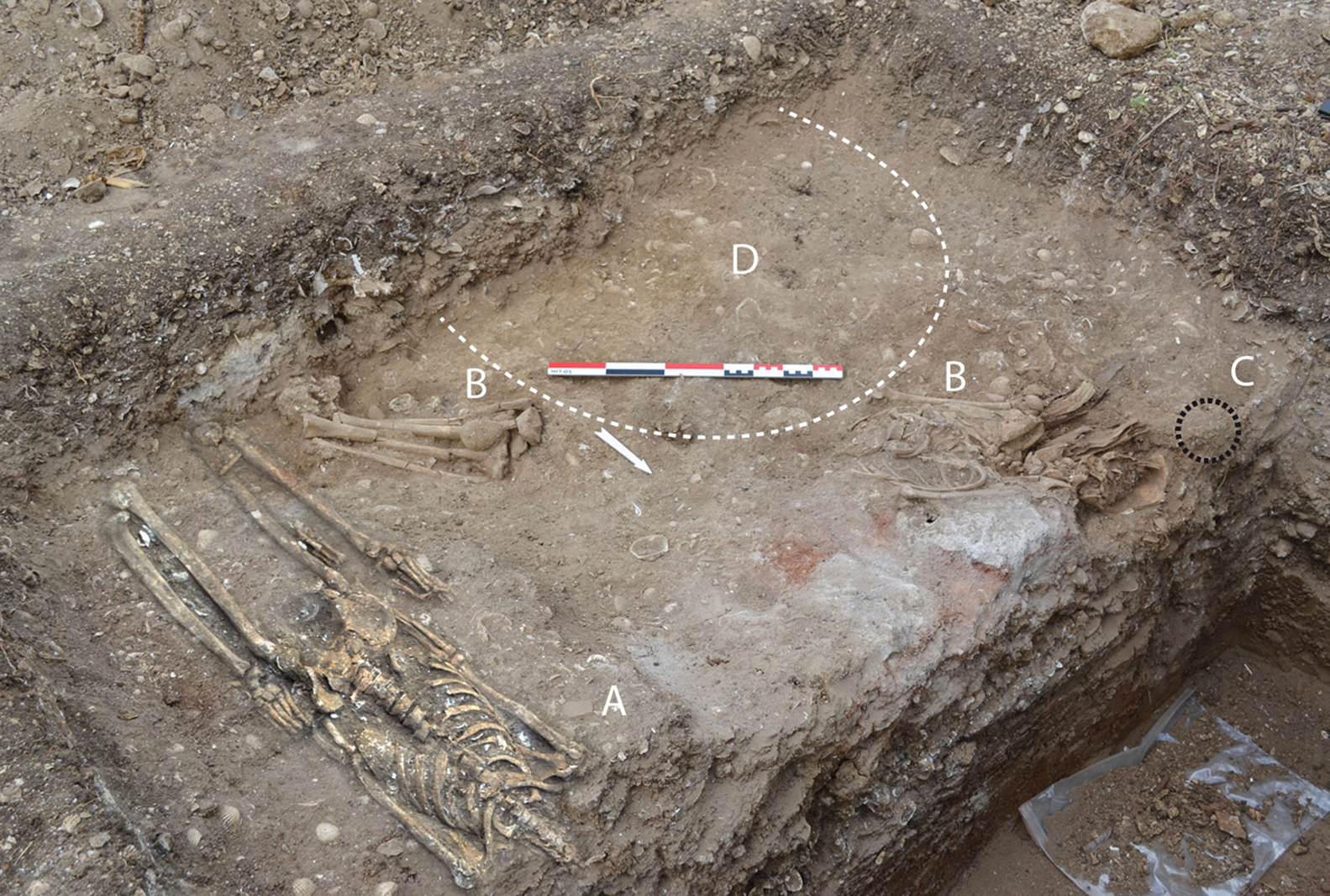
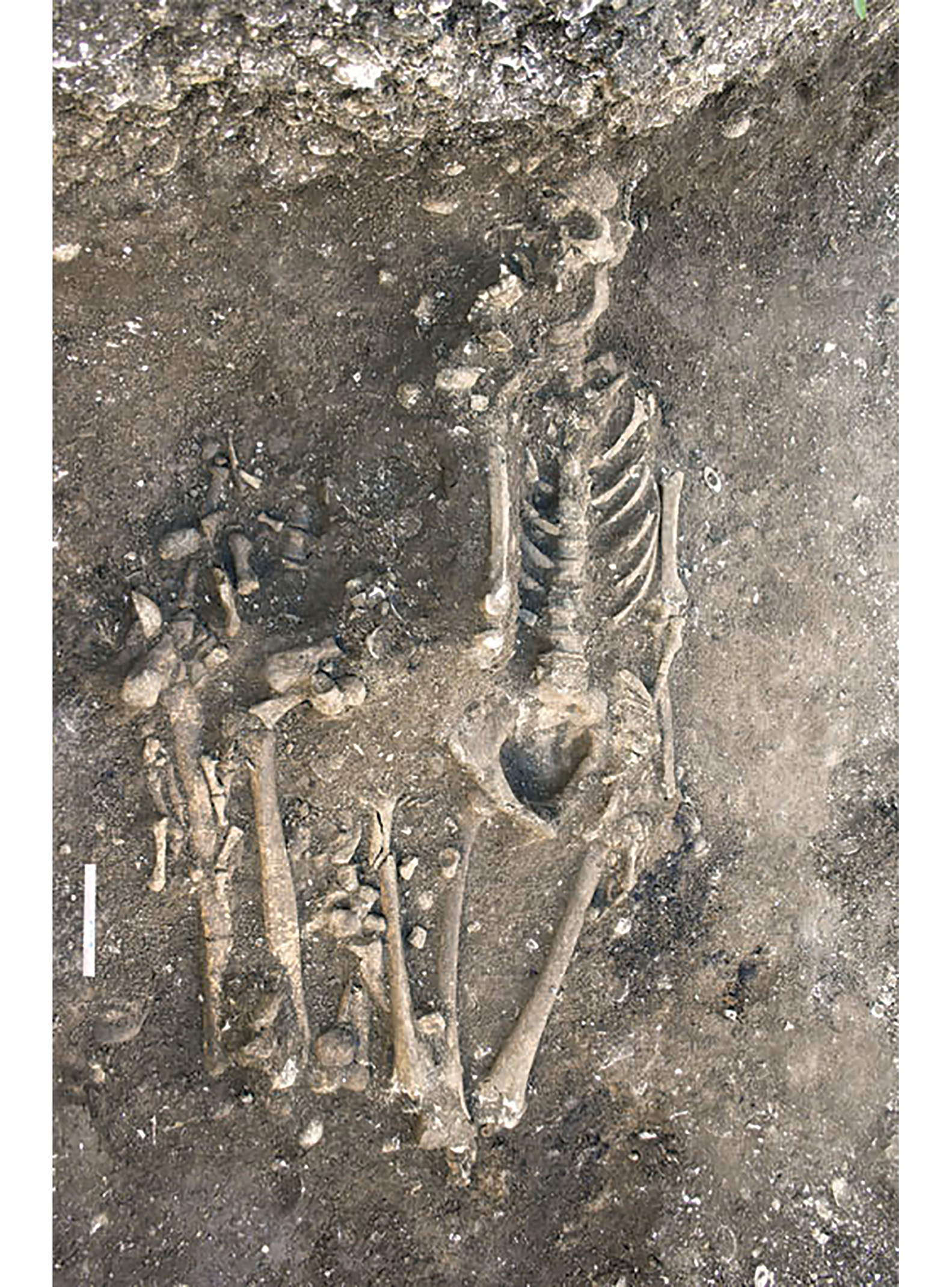
The burial contexts were not spatially organised in rows, in regular equidistant patterns or located in a particular area of the site (Figure 2). Instead, excavations revealed a series of unevenly distributed, discrete burial zones, each comprising one or more burials (Figures 2–3). Interments in several of these clusters are separated by a short distance, as seen in the BG area. One cluster (TPG, Sk3) represents the contemporaneous inhumation of several individuals. It comprised an elderly female and a young male buried side by side, with the same orientations and body positions, one slightly overlapping the other (Figure 3).
Example of burial cluster in TPA2: contexts Sk14 (A), Sk10 (B), Sk11 (C) and Sk7 (D) (illustration by E. Magnifique; photograph by F. Valentin).
Several interments intercut, leaving partial skeletons in articulation. In one case (TPD2-E2), a succession of interments resulted in one large cluster containing the remains of up to ten individuals in an area of less than 6m2. In other concentrations, partial skeletons were found in the same area (TPA2, TPF). This diachronic succession of inhumations is characterised by the loss and fragmentation of skeletal elements, and the in situ re-arrangement of the remaining bones, resulting in palimpsest assemblages that have blurred any distinction between individual burial practices.
Age at death and sex in the burial clusters parallel the evidence from other burial contexts at the site (Table S3). In TPA2 (6m2), for example, the assemblage comprises the remains of two children and seven male and female adults buried successively at the same location. The assemblage in TPF includes the partial skeletons of three adults, including one male and one adolescent.
Mortuary treatment at Talasiu
Bodies and disarticulated bones were placed in pits dug into the midden, with grave cuts intersected by midden layers and visible at the bone level and in re-used oven pits exceeding the size of the body (observable in nine cases in total). Graves were then in-filled with midden material or with the by-products of combustion, particularly ashes. In three locations (TPA2, TPD2-E2 and TPG), graves were further covered with large quantities of undecorated pottery fragments, and some imported lithic artefacts.
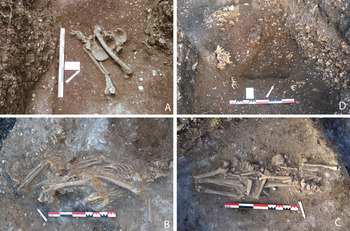
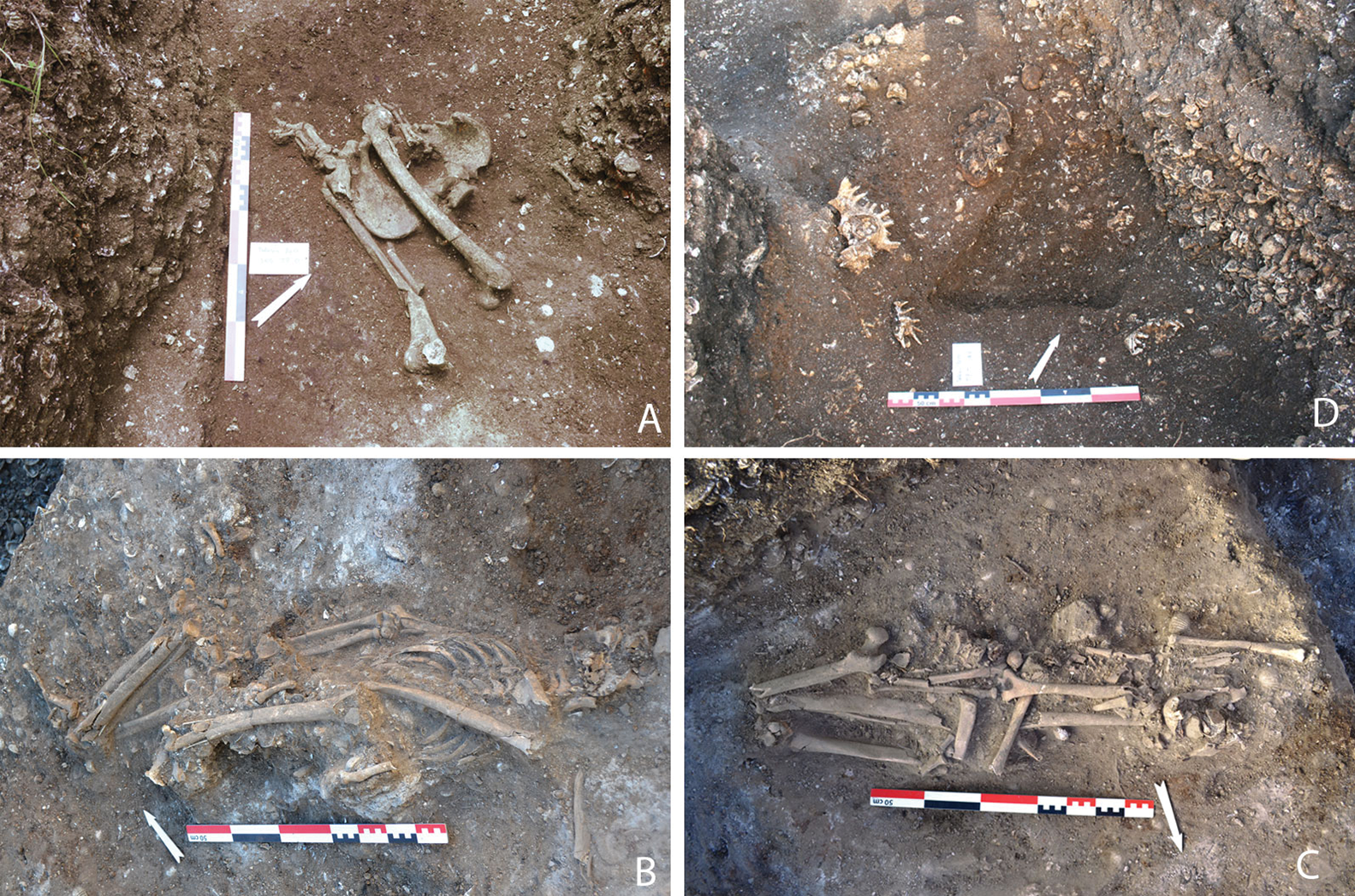
The burial of whole cadavers, as indicated by the anatomical consistency of the skeletons and joints, particularly labile joints (cf. Duday et al. Reference Duday, Courtaud, Crubézy, Sellier and Tillier1990; Duday Reference Duday2009), is common at Talasiu (19 individuals). The bodies of both males and females were placed either supine (9 of 14 cases, including three females, two males, one adolescent and one child), or prone (5 of 14 cases; four females and one male). Upper limbs were generally extended on, or under, the sides of the body (in ten cases). In two cases, the elbow was flexed, with the hand placed close to the ipsilateral shoulder or, in one case, on the opposite forearm. With the exception of two female burials in which the body was fully extended, the lower limbs were consistently flexed at the hip and/or at the knee (at least ten cases), with the feet brought back to the pelvis (Figure 3–5). Evidence of decomposition in an open space (i.e. within a coffin; see Duday et al. Reference Duday, Courtaud, Crubézy, Sellier and Tillier1990) was observed in six cases. Constraining effects (see Duday et al. Reference Duday, Courtaud, Crubézy, Sellier and Tillier1990), narrowness of the burial deposits (four cases) and the very close proximity of the right lower legs and/or the right feet to those of the left side, were observed in three individuals. These may suggest the use of binding or wrapping in a stage of the preparation of the body for interment. The black organic staining that is generally interpreted as the by-product of shrouded body decomposition in a barkcloth (Davidson Reference Davidson1969), however, was not observed.
Example of a burial cluster at Talasiu: context Sk3 in TPG; the bodies were placed together at the same time, supine, with arms extended on each side of the body, the lower limbs reversed-flexed at the knees and the feet brought back to the pelvis (photograph by F. Valentin).
Examples of burial arrangements at Talasiu: contexts Sk5 (A) in TPO; Sk12 (B) in TP; Sk9 (C) in TPD2-E2; and Sk6 in TPT (D) (photograph by F. Valentin, E. Tribouillard & M. Boudou).
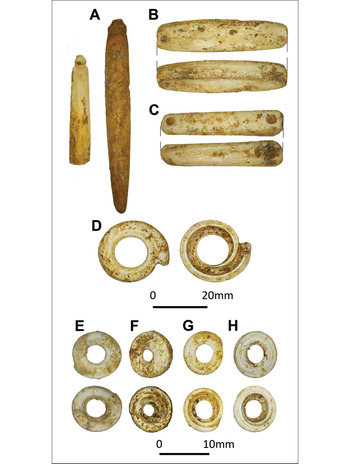
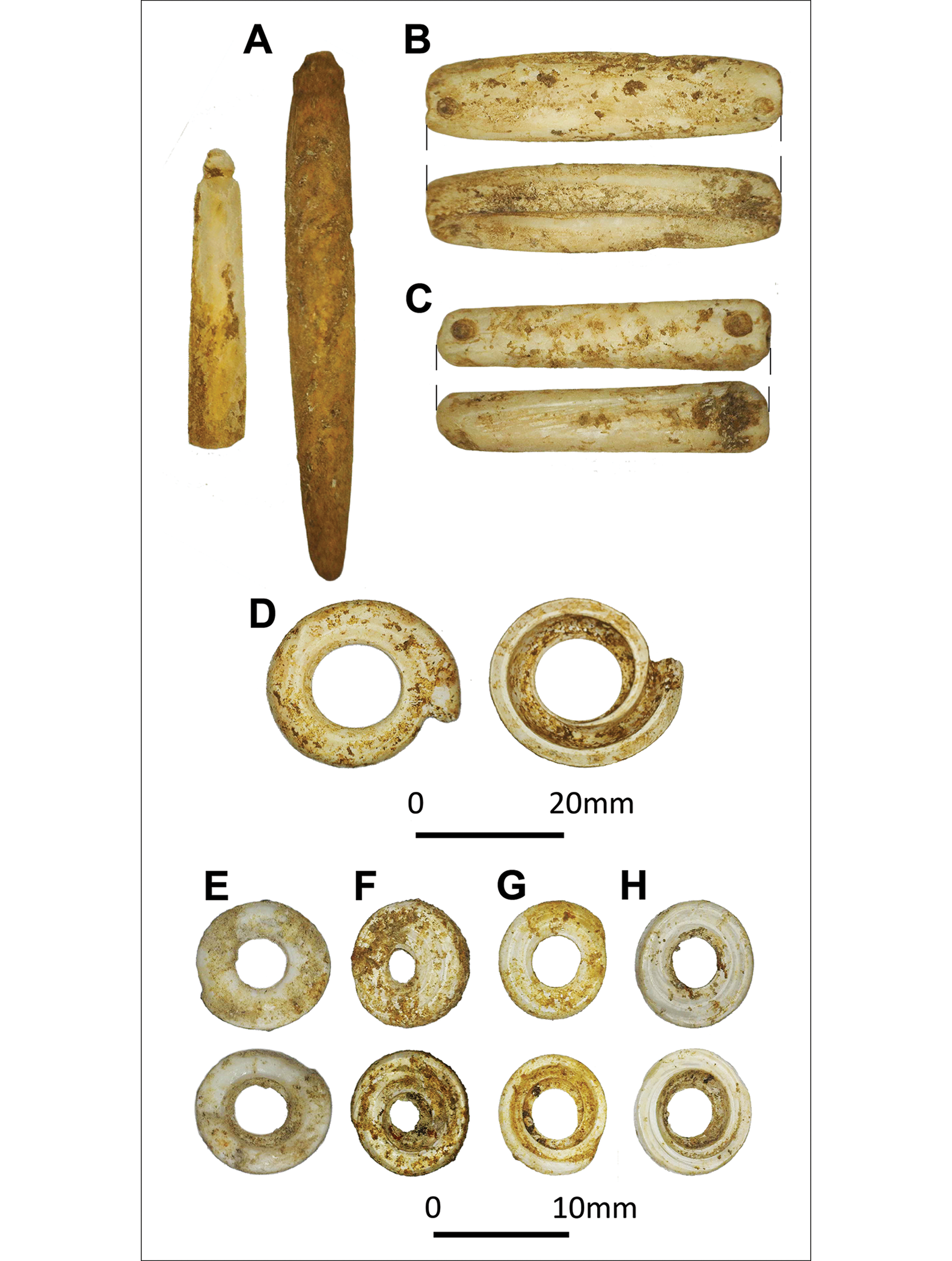
Ornaments were associated with several bodies (Table S4 & Figure 6). Modified sea urchin spines (Sk14), drilled Tridacna ornaments (known as ‘long units’, see Poulsen Reference Poulsen1987; Sk10, Sk12) and small Conus/Strombus beads (BG2, BG3, Sk4), for example, were found in five different burial contexts containing a child (Sk4), male (Sk14) and female adults (BG2, BG3, Sk10, Sk12), respectively. A modified Conus shell, used to make shell rings and perforated broad units (see Poulsen Reference Poulsen1987), was associated with context Sk2, which contained adults and an adolescent. Other large, modified Conus and Tridacna shells were also associated with a burial context in TP1 (Valentin & Clark Reference Valentin and Clark2013).
Examples of ornaments associated with Talasiu burials: worked sea urchin spine in context Sk14 (A); drilled Tridacna long units (see Poulsen Reference Poulsen1987) in contexts Sk10 (B) and Sk12 (C); modified Conus shell in context Sk2 (D); small Conus/Strombus beads in contexts BG2 (E), BG3 (F), Sk4 (G) and Sk10 (H) (photograph by G. Clark).
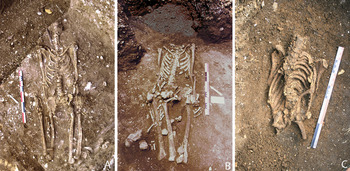
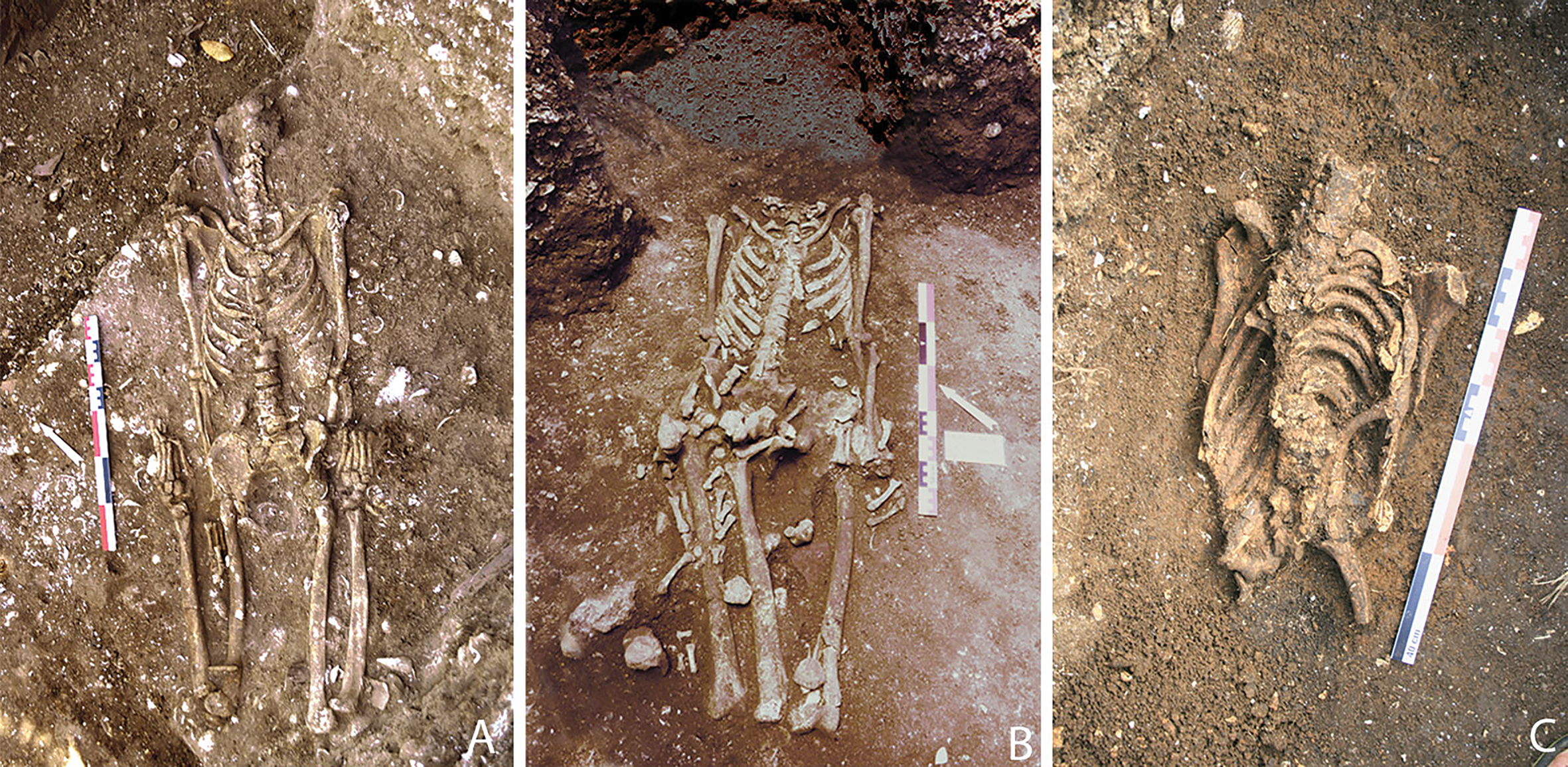
Bone manipulation appears to have been a frequent practice at Talasiu (Figure 7). The intentional post-decomposition removal of the entire skull or of the neurocranium (leaving the mandible in situ) as well as removal of the fibulae was observed in several male and female adult and adolescent burials, with about 40 per cent of burial contexts unaffected by the practice (Table S4). These unaffected contexts comprised predominantly females (Sk10, 12) and children (Sk4, 9, 11, 13). Two isolated adult skulls (both entire skull and neurocranium) were interred in the midden, one of which—a male (Sk6)—was found close to a cache of large spider conch (Lambis lambis) shells (Figure 5). Three other skulls, along with disarticulated and burnt bones (TP1), were also buried in the midden (Valentin & Clark Reference Valentin and Clark2013).
Examples of burial contexts exhibiting post-decomposition bone removal: contexts Sk14 in TPA2 (A); Sk3.2 in TPG (B); and Sk2.4 in TPF (C) (photographs by F. Valentin, E. Tribouillard & M. Boudou).
Summarising Talasiu mortuary practices
Mortuary practices at Talasiu are characterised by the repetition of similar burial positions, the regular use of body wrapping and the association of ornaments and modified shells with males, females and children. Two distinct treatments can be identified. The first consists of simple supine or prone inhumation in either an extended or flexed position, without any post-depositional manipulation of the skeleton. The second, and more complex treatment, comprises supine or prone inhumation in a flexed position, with the lower legs and the feet drawn up to the pelvis, followed by the post-decomposition removal of the entire skull or the neurocranium and the fibulae. This practice of selective skeletal element removal at Talasiu co-occurred with the placement of new inhumations and the in situ rearrangement of extant remains, resulting in localised concentrations of burials containing the partial remains of a number of individuals.
Discussion
The location of Talasiu, situated at the edge of the Fanga ‘Uta lagoon, was intentionally chosen c. 2650 cal BP for the sequential burial of males, females and children. This space does not demonstrate the functional exclusivity of a formal ‘cemetery’, if this is defined as a place separated from domestic habitation and reserved for the dead and funerary activities (e.g. Goldstein Reference Goldstein, Goldstein, Chapman, Kinnes and Randsborg1981; Pardoe Reference Pardoe1988; contra Gibara et al. Reference Gibara, Subira, Terradas, Santos, Agullo, Gomez-Martinez, Allièse and Fernandez-Lopez de Pablo2015; Boulestin Reference Boulestin2016). Similarly, Lapita burials (3000–2500 BP) at Vao and Uripiv in north Vanuatu (Bedford et al. Reference Bedford, Buckley, Valentin, Tayles and Longga2011) and at Waya and Naitable in Fiji were found in shell midden deposits, or in close proximity to occupation areas (Pietrusewsky et al. Reference Pietrusewsky, Hunt and Ikehara-Quebral1997; Nunn et al. Reference Nunn, Ishimura, Dickinson, Katayama, Thomas, Kumar, Matararaba, Davidson and Worthy2007). Lapita burials at Teouma in central Vanuatu (c. 2900 BP) were located adjacent to a large contemporaneous midden area (Ravn et al. Reference Ravn, Spriggs, Bedford, Hawkins, Philip, Valentin, Valentin and Molle2016). All these Lapita sites also display a pattern of discrete burial areas comprising single burials or a group of several burials that are unevenly distributed across the site.
At Talasiu, the sequential burial of several individuals in close proximity suggests that the choice of burial location was intentional, rather than expedient (sensu Boulestin Reference Boulestin2016). The main purpose was probably to group related individuals—a hypothesis consistent with the demographic and isotope data—and perhaps the desire to keep an active link between the living and the dead.
Several treatments were identified at Teouma. These include complicated sequences comprising the dismemberment of adult individuals, followed by the burial of the corpse together with the amputated parts; then, following decomposition, the removal of several bones from the upper part of the skeleton, including the entire skull (Valentin et al. Reference Valentin, Choi, Lin, Bedford, Spriggs, Sand, Chiu and Hogg2015, Reference Valentin, Allièse, Bedford and Spriggs2016). The two forms of inhumation—simple and complex—identified at Talasiu were also in use at Teouma. At the latter site, individuals were either placed in graves in various positions (sometimes with accompanying shell ornaments), followed by the post-decomposition retrieval of bones from the upper part of the skeleton (for males, females and adolescents); or as a simple inhumation without later manipulation (for infants) (Valentin et al. Reference Valentin, Choi, Lin, Bedford, Spriggs, Sand, Chiu and Hogg2015, Reference Valentin, Allièse, Bedford and Spriggs2016). The latter inhumation type is also found in Lapita burials at Uripiv and Vao, which have yielded adult and infant skeletons in articulation and in various burial positions (Bedford et al. Reference Bedford, Buckley, Valentin, Tayles and Longga2011), and in Waya, where a single individual was placed in a flexed position on their right side in a shallow pit, dug into a midden, in association with abundant pot sherds (Pietrusewsky et al. Reference Pietrusewsky, Hunt and Ikehara-Quebral1997: 286). At Naitabale, large shells were associated with a flexed adult burial (Nunn et al. Reference Nunn, Ishimura, Dickinson, Katayama, Thomas, Kumar, Matararaba, Davidson and Worthy2007).
As at Talasiu, the secondary burial of retrieved bones was identified at Teouma. At Talasiu, however, the removal of skulls was followed by isolated reburial of these skulls, while at Teouma, skulls were placed with other individuals or inside Lapita ceramic vessels (Valentin et al. Reference Valentin, Choi, Lin, Bedford, Spriggs, Sand, Chiu and Hogg2015). A single cremation was found at Teouma (Scott et al. Reference Scott, Buckley, Spriggs, Valentin and Bedford2010), while Talasiu yielded a collection of burnt and unburnt remains representing four individuals (Valentin & Clark Reference Valentin and Clark2013). Furthermore, long bones removed from burials at Talasiu and Teouma may have been used to make bone tools (Clark & Langley Reference Clark and Langley2019), or skulls and bones may have been displayed in shrines/houses, as suggested for Lapita sites in north Melanesia (Kirch et al. Reference Kirch, Swindler and Turner1989). Although cannibalism has been suggested when human bone fragments with evidence of cutting or burning have been retrieved from Lapita middens (Poulsen Reference Poulsen1987; Field et al. Reference Field, Cochrane and Greenlee2009), this now appears unlikely, given the bone manipulation and modification seen at Talasiu and Teouma.
In contrast, burial practices at Talasiu differ from those suggested by linguistic reconstructions of Ancestral Polynesian Society and late Polynesian (700–100 cal BP) mortuary practices. Several contemporaneous activities were occurring in the same location at Talasiu c. 2650 BP, including active midden deposition, domestic occupation and burial. In late prehistoric Tonga (700–100 BP), community burial sites and high-status tombs were separated from habitation areas, and were considered highly sacred and restricted (tapu) places (Davidson Reference Davidson1969; Clark Reference Clark2016).
The Tongan practice of keeping the body separate from the earth with a deposit of white beach sand in the grave, or, in the case of Tongan chiefs, a white carbonate stone vault surrounded by white coral gravel, is not seen at Talasiu. Here, the shell-midden was deposited over burials following interment. The complex processes of inhumation and exhumation at Talasiu also contrasted with the simple inhumation practised in late Tongan prehistory, which usually comprised individual, supine, extended burials with infrequent intercutting of graves. Burial goods are rare, and secondary bone deposition represents re-interment after either accidental disturbance or the formal exhumation and relocation (hikitanga) of all the remains of an individual from one burial site to another (McKern Reference McKern1929; Davidson Reference Davidson1969; Spennemann Reference Spennemann1989b: 314).
Linguistic reconstruction of Ancestral Polynesian Society indicates the existence of archetypal ‘Polynesian’ concepts, such as mana (supernatural power), tapu (under ritual restriction) and noa (common, ordinary) (Kirch & Green Reference Kirch and Green2001: 247–49; Table S5). The concept of supernatural power may have existed in the Ancestral Polynesian Society of Talasiu, and was perhaps materialised in the subterranean interment and display of selected human remains, including ‘ancestor’ skulls. Other aspects implied by Ancestral Polynesian Society linguistic reconstruction include a division between ritual and domestic activities, and the separation of ‘ordinary’ burials from those of religious and community leaders (Table S5; Kirch & Green Reference Kirch and Green2001: 196)—neither of which are present at Talasiu. Rather, at Talasiu, there is overlap between burial and habitation spaces, and no evidence that ‘ancestral’ remains were separated from those of the rest of the community, nor that food preparation/consumption areas were separated from burial locations.
Conclusion
The cultural and biological origins of the Polynesians have been debated since the late eighteenth century, and ethnogenesis has been assessed using the linguistic, genetic and ethnographic attributes of recent populations. How colonising cultures such as the maritime migrations of the Lapita colonisers contributed to the development of new societies in the Pacific remains an important but unresolved issue. Archaeological evidence for identity formation in ancestral Polynesia has been limited, and the Talasiu site is unique in providing information on early burial practices and the association of human remains with material culture. Patterns of body placement and treatment at Talasiu demonstrate some continuity from the Lapita period (c. 3000–2800 cal BP) to the time of Ancestral Polynesian Society at 2650 cal BP. Other mortuary activities that are fundamental to modern Polynesian cultural behaviour and inferred for Ancestral Polynesian Society, however, appear to have been regarded differently at Talasiu, such as the interment of bodies in an actively used midden. Tonga was not isolated, and contact with other Pacific Island populations probably occurred before the diffusion of a ‘Polynesian’ cultural package to East Polynesia c. 1000 cal BP (Wilmshurst et al. Reference Wilmshurst, Hunt, Lipo and Anderson2011), as suggested by evidence that the ‘Polynesian’ genome was not fully formed until 1700–1200 BP (Hudjashov et al. Reference Hudjashov2018). Thus, in addition to in situ cultural development, the arrival of new migrants after the development of Ancestral Polynesian Society probably contributed to a re-shaping of funerary practices. In archaeology, ethnogenesis is often seen as an outcome of cultural contact from colonialism, trade, slavery and the expansion of colonising societies (Weik Reference Weik2014). The Talasiu burials, in previously uninhabited Tonga, suggest that early Polynesian identity was defined by social participation and power relations among related groups, and that ‘classic’ Polynesian concepts, such as tapu, noa and mana were expressed differently in the past.
Acknowledgements
We thank the Lapaha Community and Nobles, and the Ministry of Internal Affairs (Government of Tonga). The archaeological excavation was funded by the MAEDI and CNRS, and by an Australian Research Council grant (FT0990591). We also thank our Tongan workers and students who accompanied us in the field, and Edmond Magnifique, Joel Suire and Michèle Ballinger (CNRS UMR7041) for the illustrations. This article is dedicated to the late Nivaleti Melekiola, historian of Lapaha, for his tireless support.
Supplementary material
To view supplementary material for this article, please visit https://doi.org/10.15184/aqy.2020.89.