


Introduction
Social anxiety disorder (SAD) is characterized by a fear of negative evaluation and resultant avoidance of social or performance situations (American Psychiatric Association, 2013). It is a common disorder, with a 12-month prevalence rate of approximately 7% (Kessler et al., Reference Kessler, Petukhova, Sampson, Zaslavsky and Wittchen2012). The course of the disorder is chronic, and is associated with significant disability (Keller, Reference Keller2006). Fortunately, effective treatments are available for SAD and include both psychological and pharmacological approaches (Mayo-Wilson et al., Reference Mayo-Wilson, Dias, Mavranezouli, Kew, Clark, Ades and Pilling2014). The most evidence-based psychological treatment for SAD is cognitive behavioural therapy (CBT). Typically, CBT for SAD is focused on weekly individual or group treatment. While group CBT demonstrates large between-group effect sizes (g = 0.84) when compared with a wait-list control group (Barkowski et al., Reference Barkowski, Schwartze, Strauss, Burlingame, Barth and Rosendahl2016), there is some research to suggest that individual CBT out-performs group-based CBT (Stangier et al., Reference Stangier, Heidenreich, Peitz, Lauterbach and Clark2003). While the relative efficacy of group versus individual treatment requires further investigation, based on current evidence some clinical guidelines recommend individual treatment over group-based treatment for SAD as the first-line treatment (e.g. National Institute for Health and Clinical Excellence, 2013).
There is now considerable evidence from controlled trials to support the efficacy of weekly individual CBT approaches for SAD, with effect sizes at post-treatment ranging from 1.17 to 2.14 (Clark et al., Reference Clark, Ehlers, McManus, Hackmann, Fennell and Campbell2003; Mörtberg et al., Reference Mörtberg, Clark, Sundin and Åberg Wistedt2007; Stangier et al., Reference Stangier, Heidenreich, Peitz, Lauterbach and Clark2003). However, despite these findings, it has been suggested that as many as 40% of patients do not report clinically significant change after treatment (Mörtberg et al., Reference Mörtberg, Clark, Sundin and Åberg Wistedt2007). Given that SAD is a common, chronic and impairing condition that has a high non-response rate despite the availability of effective treatment, it is important to understand how to deliver CBT interventions to this population in the most clinically and cost-effective way. A potential avenue for improving outcomes in individual CBT is to administer the treatment in an accelerated format.
In accelerated CBT (aCBT) the patient attends treatment on an outpatient basis for multiple sessions per week. Due to the shorter time frame between treatment sessions, there is the potential for enhanced learning, perhaps making aCBT more potent than standard weekly CBT. Accelerated CBT is generally under-utilized in the treatment of internalizing disorders (Jónsson et al., Reference Jónsson, Kristensen and Arendt2015). Currently there are a small number of studies that demonstrate the efficacy of out-patient aCBT for a number of anxiety and related disorders including obsessive compulsive disorder (Foa et al., Reference Foa, Liebowitz, Kozak, Davies, Campeas and Franklin2005; Storch et al., Reference Storch, Geffken, Merlo, Mann, Duke and Munson2007), post-traumatic stress disorder (Ehlers et al., Reference Ehlers, Hackmann, Grey, Wild, Liness and Albert2014), agoraphobia (Knuts et al., Reference Knuts, Esquivel, Overbeek and Schruers2015) and panic disorder (Chase et al., Reference Chase, Whitton and Pincus2012; Teng et al., Reference Teng, Barrera, Hiatt, Chaison, Dunn, Petersen and Stanley2015; Wootton and MacGregor, Reference Wootton and MacGregor2016). Results from these preliminary studies indicate that accelerated treatments are efficacious and acceptable to patients (Bevan et al., Reference Bevan, Oldfield and Salkovskis2010).
To date, aCBT has only been studied in SAD in a group format and has been studied in both child (Donovan et al., Reference Donovan, Cobham, Waters and Occhipinti2014) and adult (Chaker et al., Reference Chaker, Hofmann and Hoyer2010; Mörtberg et al., Reference Mörtberg, Berglund and Sundin2005, Reference Mörtberg, Clark, Sundin and Åberg Wistedt2007) populations. In the only study investigating aCBT in a paediatric population, Donovan et al. (Reference Donovan, Cobham, Waters and Occhipinti2014) randomly assigned 40 children to either group-based aCBT or wait-ist control. The aCBT protocol in this study consisted of three weekend treatment sessions across 15 days (week 1: 3 h on Saturday and 3 h on Sunday; week 2: 3 h on Saturday; and week 3: 3 h on Saturday). The study resulted in promising outcomes with 52.4% of children in the treatment group being diagnosis free (compared with 15.8% in the control condition) at post-treatment (Donovan et al., Reference Donovan, Cobham, Waters and Occhipinti2014). However, between-group effect sizes [calculated based on means and standard deviations (SD) provided in the manuscript] on self-report measures of social anxiety were small and non-significant.
Thus far there have been three trials investigating the efficacy of group aCBT for SAD in adult samples. In an initial open trial, Mörtberg et al. (Reference Mörtberg, Berglund and Sundin2005) tested a 3-week aCBT protocol consisting of: week 1: 5 h Monday to Thursday and 3 h on Friday; week 2: no treatment; week 3: 5 h Monday to Wednesday and 3 h on Thursday with 37 individuals with SAD. The results of the study indicated reasonable outcomes with a moderate effect size on the Liebowitz Social Anxiety Scale (Liebowitz, Reference Liebowitz1987) at post-treatment (d = 0.75) and a large effect at 3-month follow-up (d = 1.18) and 12-month follow-up (d = 1.35).
Chaker et al. (Reference Chaker, Hofmann and Hoyer2010) investigated an aCBT group program that consisted of approximately 13 h of treatment over 2 days for individuals with SAD with a primary fear of blushing. On the Social Phobia Diagnostic Questionnaire (Newman et al., Reference Newman, Kachin, Zuellig, Constantino and Cashman-McGrath2003), a moderate effect size was found at post-treatment (d = .74) and a large effect size was found at 6-month follow-up (d = .96; Chaker et al., Reference Chaker, Hofmann and Hoyer2010). On the main outcome measure, the Blushing, Trembling and Sweating Questionnaire (Blushing Version) (Bögels and Reith, Reference Bögels and Reith1999), a large effect was found at post-treatment (d = 1.14) and 6-month follow-up (d = 1.76; Chaker et al., Reference Chaker, Hofmann and Hoyer2010).
In the largest and most comprehensive study conducted to date, Mörtberg et al. (Reference Mörtberg, Clark, Sundin and Åberg Wistedt2007) randomly assigned 100 participants to either (1) individual cognitive therapy consisting of 16 weekly sessions; (2) intensive group cognitive therapy (IGCT) consisting of 16 sessions over 3 weeks (week 1: 9 sessions; week 2: no sessions; week 3: 7 sessions), or (3) treatment as usual (medication management). Based on a social phobia symptom composite score devised by the authors, patients receiving the individual treatment reported improved outcomes over those in the IGCT condition, and those in the IGCT condition did not differ significantly from the treatment as usual condition (Mörtberg et al., Reference Mörtberg, Clark, Sundin and Åberg Wistedt2007).
While to our knowledge no studies to date have examined the efficacy of individually administered aCBT when compared with standard (weekly) individual treatment for SAD, this has been examined in other diagnostic groups. For example, Ehlers et al. (Reference Ehlers, Hackmann, Grey, Wild, Liness and Albert2014) examined the efficacy of accelerated treatment and standard treatment in patients with post-traumatic stress disorder and found that both treatments were equally efficacious. Similarly, Storch et al. (Reference Storch, Geffken, Merlo, Mann, Duke and Munson2007) compared accelerated and standard treatment approaches for paediatric obsessive-compulsive disorder. While results were equivalent between groups on some measures, other outcomes including remission status favoured the intensive treatment group (Storch et al., Reference Storch, Geffken, Merlo, Mann, Duke and Munson2007).
A recent meta-analysis of brief, intensive and accelerated CBT for childhood anxiety disorders demonstrated that treatment intensity significantly moderated outcomes, whereby more intensive treatments led to enhanced outcomes (Öst and Ollendick, Reference Öst and Ollendick2017). This study also found that accelerated treatment produced a larger between-group effect size (g = 0.93) than brief (g = 0.29) and intensive (g = 0.84) treatments, and demonstrated that accelerated treatments may also demonstrate other benefits, such as reduced patient attrition when compared with standard CBT (Öst and Ollendick, Reference Öst and Ollendick2017). Thus, while the literature is small at this stage there is evidence to suggest that accelerated treatments may out-perform standard treatments, at least for some diagnostic groups.
Across all the intensive treatments provided for SAD to date, there is considerable variability in the treatment delivery format and also in the number of sessions provided. For example, some treatment protocols contained several days or weeks where patients did not meet with a therapist at all (e.g. Donovan et al., Reference Donovan, Cobham, Waters and Occhipinti2014, Mortberg et al., Reference Mörtberg, Berglund and Sundin2005), which may limit some of the benefits of the accelerated treatment approach as patients may be unlikely to practise the required skills during these large breaks from treatment. In addition, the number of sessions (and hours involved in treatment) varies considerably across studies. For example, the treatment delivered in the Chaker et al. (Reference Chaker, Hofmann and Hoyer2010) study involved only 13 h of treatment, while the treatment delivered in the Mörtberg et al. (Reference Mörtberg, Berglund and Sundin2005) study involved over 40 h of treatment. Examining total treatment time in accelerated treatments is important as previous research has indicated that shorter treatments produce faster rates of change (Stulz et al., Reference Stulz, Lutz, Kopta, Minami and Saunders2013).
There are several limitations to the current aCBT literature. Firstly, there is a great deal of variability in the treatment delivery format. Secondly, all of the studies to date have used a group treatment approach. This is particularly problematic because some research suggests that individual CBT out-performs group-based CBT (Stangier et al., Reference Stangier, Heidenreich, Peitz, Lauterbach and Clark2003). Finally, the delivery of aCBT in existing treatments for SAD may not allow for optimal learning to take place as all treatments contain several days (or weeks) where participants are not meeting with the therapist at all, and are thus potentially are not having their treatment skills reinforced during this time. Therefore, the aim of the current study is to extend the literature by evaluating the efficacy of aCBT for SAD when delivered on an individual, outpatient basis with multiple (three) sessions across each week.
Method
Design and participants
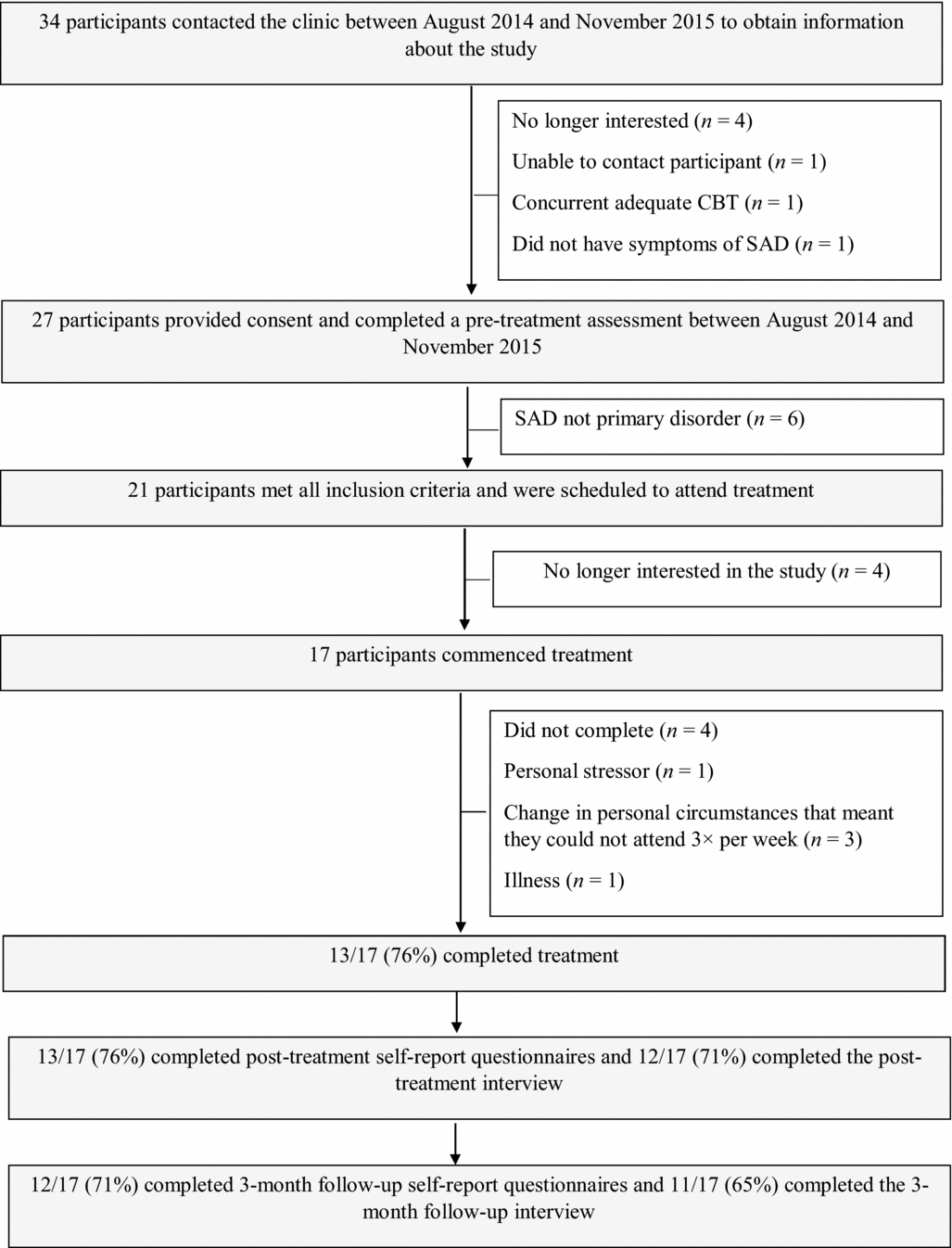
The present study employed an open trial design comparing pre-treatment with post-treatment, pre-treatment with 3-month follow-up, and post-treatment with 3-month follow-up. Participants were recruited from the University of Tasmania psychology clinic and via advertisements placed in community newspapers and flyers on community noticeboards. To be eligible for the study, participants were required to be aged 14–65 years and have a primary diagnosis of SAD. Participants were excluded if they (1) did not have the time to attend three times per week for treatment; (2) reported prior non-responsiveness to adequate CBT (defined as at least weekly sessions with in-session exposure and homework tasks); or (3) displayed moderate to severe suicide risk based on the Columbia Suicide Severity Rating Scale (Posner et al., Reference Posner, Brown, Stanley, Brent, Yershova and Oquendo2011). Seventeen participants (mean age = 39.25 years, SD = 17.68; 71% female; 88% Anglo) with a primary diagnosis of SAD provided informed consent and commenced the study, and 13/17 (76%) completed the treatment (attended at least eight of the 12 treatment sessions). The study participant flow is given in Fig. 1. The study was approved by the institutional Human Research Ethics Committee and the trial was registered with Australian New Zealand Clinical Trials Registry as ACTRN12615000929505.
Participant flow

Measures
Diagnostic status was assessed in a face-to-face interview by either a provisionally registered psychologist (under the supervision of a registered clinical psychologist) or by a clinical psychology registrar using The Diagnostic Interview for Anxiety, Mood, and OCD and Related Neuropsychiatric Disorders (DIAMOND; Tolin et al., Reference Tolin, Gilliam, Wootton, Bowe, Bragdon and Davis2018). The DIAMOND is a clinician-administered diagnostic interview, which demonstrates adequate reliability (inter-rater reliability: .70; test–retest reliability: .86; Tolin et al., Reference Tolin, Gilliam, Wootton, Bowe, Bragdon and Davis2018) for the SAD diagnosis.
The primary outcome measure was the Social Phobia Inventory (SPIN; Connor et al., Reference Connor, Davidson, Erik Churchill, Sherwood, Foa and Weisler2000), a 17-item measure of social anxiety symptoms. The SPIN is a widely used measure of social anxiety symptoms and demonstrates good reliability and validity in previous studies (Antony et al., Reference Antony, Coons, McCabe, Ashbaugh and Swinson2006; Connor et al., Reference Connor, Davidson, Erik Churchill, Sherwood, Foa and Weisler2000). The scale has been demonstrated to be sensitive to the effects of treatment (Antony et al., Reference Antony, Coons, McCabe, Ashbaugh and Swinson2006) and a cut-off score of 19 can be used to discriminate between those with clinical levels of symptomatology and controls (Connor et al., Reference Connor, Davidson, Erik Churchill, Sherwood, Foa and Weisler2000). In the current study Cronbach's alpha was .85.
Other measures of social anxiety symptoms included the Social Interaction Anxiety Scale (SIAS) and Social Phobia Scale (SPS; Mattick and Clarke, Reference Mattick and Clarke1998). The SIAS and SPS demonstrate excellent reliability and validity in previous studies (Mattick and Clarke, Reference Mattick and Clarke1998; Osman et al., Reference Osman, Gutierrez, Barrios, Kopper and Chiros1998). In the current study Cronbach's alpha was .74 for the SIAS and .92 for the SPS.
Depressive symptoms were measured with the depression subscale of the Depression Anxiety Stress Scales-21 Item (DASS-21; Lovibond and Lovibond, Reference Lovibond and Lovibond1995). The DASS-21 is a widely used measure of psychological distress and the depression subscale demonstrates excellent reliability and validity in previous studies (Osman et al., Reference Osman, Wong, Bagge, Freedenthal, Gutierrez and Lozano2012; Sinclair et al., Reference Sinclair, Siefert, Slavin-Mulford, Stein, Renna and Blais2012). Cronbach's alpha in the current study for the depression subscale was .90.
Patient acceptability was measured with a 4-item questionnaire, which has been used extensively in previous research (e.g. Wootton et al., Reference Wootton, Dear, Johnston, Terides and Titov2014). The scale asks participants to rate their overall satisfaction with the treatment on a 5-point Likert scale, as well as how logical the treatment was, and whether the treatment was worth their time. Participants are also asked to indicate how likely they would be to recommend the treatment to a friend.
The DIAMOND was administered in full at baseline, while only the SAD section was delivered at post-treatment and 3-month follow-up. All self-report measures were administered at pre-treatment, post-treatment and 3-month follow-up, with the exception of the acceptability questionnaire, which was administered at post-treatment only.
Treatment
Treatment was based on an accelerated CBT treatment manual which was created by the first two authors specifically for the purpose of this study. The treatment was devised based on the theoretical model of SAD devised by Rapee and Heimberg (Reference Rapee and Heimberg1997). Treatment involved twelve 50-minute treatment sessions delivered over 4 weeks (three sessions per week: Monday, Wednesday and Friday). Participants were also required to complete homework following each session. Session 1 included psycho-education, sessions 2 and 3 involved challenging automatic thoughts, session 4 involved challenging core beliefs, sessions 5 to 11 involved graded in vivo exposure, and session 12 focused on relapse prevention. The treatment was provided by either a provisional psychologist (under the supervision of a registered clinical psychologist) or by a clinical psychology registrar. Treatment fidelity was assessed informally during weekly supervision sessions.
Data analysis
Differences between those who completed treatment and those who did not (as well as those who were no longer interested in the study and those who completed) were analysed using independent samples t-tests for continuous variables and chi-square tests for categorical variables. Preliminary analysis of the dependent variables indicated that all variables and residuals were normally distributed (all p-values > .01) using the Shapiro–Wilk test. Skewness and kurtosis were also within acceptable limits for all variables. Homogeneity of variance was seen across all dependent variables using Levene's test (all p-values >.01).
Pre-treatment to post-treatment, pre-treatment to 3-month follow-up, and post-treatment to 3-month follow-up changes in self-report measures were analysed with mixed linear models (MLM) for both the intention to treat (ITT) and completer samples separately. The analyses used modelled change over time after controlling for the individual's baseline by means of specifying a random intercept and a random slope. The last observation carried forward (LOCF) method was used in the ITT sample where there was missing data. Effect sizes (Cohen's d) with 95% confidence intervals (CI) were calculated for within-group changes according to the following formula: d =  $\scriptstyle\frac{{{X_1} - {X_2}}}{{S{D_{{\rm{pooled}}}}}},$ where X 1 is the pre-treatment score and X 2 is the post-treatment (or follow-up) score. The SD pooled was calculated with the following formula:
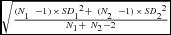 $\scriptstyle \sqrt {\frac{{(N_{1\ }^{} - 1)\,{ \times}\, SD_1^{\ 2} + \ (N_{2\ }^{} - 1)\,{ \times}\, SD_2^{\ 2}}}{{{N_1} + \ {N_2} - 2}}} $, where N 1 is the sample size at pre-treatment, N 2 is the sample size at post-treatment (or follow-up), SD 1 is the standard deviation at pre-treatment, and SD 2 is the standard deviation of the post-treatment (or follow-up). Power calculations indicated that a sample size of 12 participants was sufficient to detect a pre-treatment to post-treatment within-group effect size difference in symptoms of SAD of 0.80 with alpha of 0.05 and power of 0.80.
Three criteria of clinical significance were employed. Firstly, changes in diagnostic status based on the DIAMOND were calculated. Secondly, reliable change (improvement or deterioration) on the SPIN was measured using the Jacobson and Truax (Reference Jacobson and Truax1991) reliable change index. Thirdly, clinically significant change was calculated based on those who met reliable change index criteria and also scored below the clinically significant cut-off score on the SPIN (a score of 19) (Connor et al., Reference Connor, Davidson, Erik Churchill, Sherwood, Foa and Weisler2000) at post-treatment and 3-month follow-up. In the analyses of clinical significance the LOCF was used where there was missing data. Acceptability of the treatment was assessed using descriptive statistics only. All analyses were conducted using SPSS version 22 (IBM Inc., USA).
Results
Demographic information
Seventeen participants (mean age = 39.24 years, SD = 17.68; 71% female; 88% Anglo) with a primary diagnosis of SAD commenced the study and 13/17 (76%) completed the treatment. On average, participants had a mean of 1.47 (SD = 1.28) diagnoses and co-morbid conditions included major depressive disorder (29.4%), generalized anxiety disorder (29.4%), persistent depressive disorder (17.6%), bipolar II disorder (17.6%), agoraphobia (11.8%), specific phobia (5.9%), body dysmorphic disorder (5.9%), obsessive-compulsive disorder (5.9%), and premenstrual dysphoric disorder (5.9%). At baseline 6/17 (35%) were medicated on psychiatric medications. The participants received on average 9.11 sessions (SD = 4.48) (range = 1–12) of CBT during the treatment period.
Attrition
At pre-treatment all participants completed the self-report measures. At post-treatment 13/17 (76%) participants completed the self-report measures and 12/17 (71%) completed the 3-month follow-up self-report measures. All participants completed the diagnostic interview at pre-treatment. Twelve out of the 17 participants (71%) completed the post-treatment diagnostic assessment and 11/17 (65%) completed the 3-month follow-up diagnostic assessment. Those who completed at least eight of the treatment sessions were deemed to have completed treatment and 13/17 (76%) met this threshold. The amount of missing data ranged from 0% (session 1) to 35% (session 11) across each weekly administration of measures. The mean percentage of missing data across weekly measures was 24.02 (SD = 9.20).
A significant difference was not found between those who completed treatment (n = 13) and those who did not (n = 4) on age (t 15 = –.16, p > .05), sex (χ2 (1, N = 17) = .05, p > .05), medication status (χ2 (1, N = 17) = 0.24, p > .05), baseline severity on the outcome measures (SPIN: t 14 = –1.61, p > .05; SIAS: t 15 = –.32, p > .05; SPS: t 15 = –1.16, p > .05: DASS-D: t 15 = –.74, p > .05), or number of co-morbid diagnoses (t 15 = .05, p > .05). We also compared those who commenced treatment (n = 17) and those who did not (n = 4) and found no difference on age (t 19 = .10, p > .05), sex (χ2 (1, N = 21) = 0.03, p > .05), medication status (χ2 (1, N = 21) = 0.30, p > .05), baseline severity on the outcome measures (SPIN: t 17 = –.89, p > .05; SIAS: t 19 = –.68, p > .05; SPS: t 19 = –1.45, p > .05: DASS-D: t 19 = –.27, p >.05), or number of co-morbid diagnoses (t 19 = .60, p >.05).
Outcomes
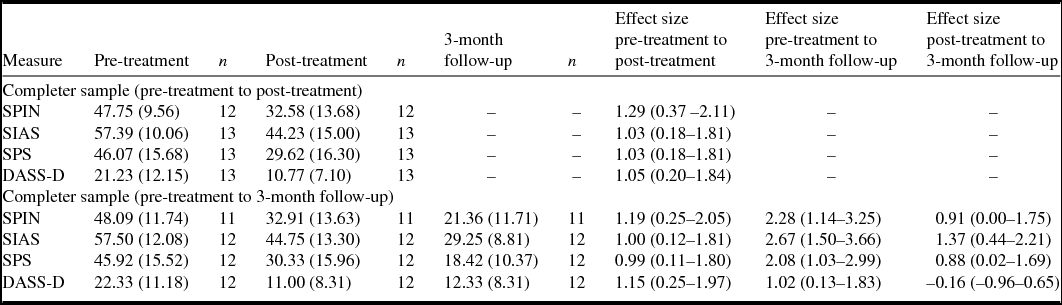
The means, standard deviations and effects sizes for the completer sample on each self-report outcome measure are presented in Table 1. These results were analysed separately for those who completed post-treatment measures (n = 13 for the SIAS, SPS and DASS-D and n = 12 for the SPIN) and those who completed follow-up measures (n = 12 for the SIAS, SPS and DASS-D and n = 11 for the SPIN). For the completer sample, the results of the MLM indicated a statistically significant effect for Time for the primary outcome measure at post-treatment (SPIN; F 1,11 = 22.60, p = .001) and 3-month follow up (SPIN; F 2,19.15 = 63.06, p < .001). A large effect size was seen at both post-treatment and 3-month follow-up. Bonferroni-corrected pairwise comparisons revealed that there was a significant reduction from pre-treatment to post-treatment (p = .001) and from pre-treatment to 3-month follow-up (p < .001). There was also a significant reduction from post-treatment to 3-month follow up (p < .01).
Estimated means, standard deviations and effect sizes (Cohen's d) for the outcome measures for the completer sample

SPIN, Social Phobia Inventory; SIAS, Social Interaction Anxiety Scale; SPS, Social Phobia Scale; DASS-D, Depression subscale of the Depression Anxiety Stress Scales.
There was a statistically significant effect for Time with large effect sizes on the other measures of SAD symptomatology including the SIAS (post: F 1,11.99 = 13.62, p < .01; 3-month follow-up: F 2,10.74 = 54.01, p <.001) and SPS (post: F 1,12.00 = 12.07, p < .01; 3-month follow-up: F 2,14.96 = 41.79, p <.001). Pairwise comparisons indicated that, on all of the SAD symptom measures, scores reduced significantly from pre-treatment to post-treatment (all p-values < .05) and from pre-treatment to 3-month follow-up (all p-values < .05). There was also a significant reduction from post-treatment to 3-month follow-up on the SIAS and SPS (p = < .01).
Finally, there was a significant effect for Time on the measure of depression (post: DASS-D; F 1,12.00 = 12.62, p < .01; 3-month follow-up: DASS-D; F 2,10.62 = 8.14, p < .01), with Bonferroni-corrected pairwise comparisons revealing a significant reduction from pre-treatment to post-treatment (p < .01) and pre-treatment to 3-month follow-up (p = .02). There was no significant change from post-treatment to 3-month follow-up on the DASS-D (p > .05).
The means, standard deviations and effects sizes for the ITT sample (n = 17) for each of the self-report outcome measure are presented in Table 2. There was a statistically significant effect for Time for the SPIN (F 2,20.15 = 20.42, p < .001) with a large effect. A statistically significant effect for Time (with medium to large effect sizes) was also seen on the other measures of SAD symptomatology (SIAS: F 2,18.00 = 21.97, p < .001; SPS: F 2,20.75 = 17.47, p < .001). Pairwise comparisons indicated that on all of the SAD symptom measures, scores reduced significantly from pre-treatment to post-treatment (all p-values <.05) and from pre-treatment to 3-month follow-up (all p-values < .05). Scores on all SAD symptom measures also reduced significantly from post-treatment to 3-month follow-up (p-values = < .01). There was a significant effect for Time on the DASS-D (F 2,16.21 = 6.15, p = .01), with Bonferroni-corrected pairwise comparisons revealing a significant reduction from pre-treatment to post-treatment (p < .01) and pre-treatment to 3-month follow-up (p = .02). There was no significant change from post-treatment to 3-month follow-up on the DASS-D (p > .05).
Estimated marginal means, standard deviations and effect sizes (Cohen's d) for the outcome measures for the ITT sample

SPIN, Social Phobia Inventory; SIAS, Social Interaction Anxiety Scale; SPS, Social Phobia Scale; DASS-D, Depression subscale of the Depression Anxiety Stress Scales.
Clinical significance
At pre-treatment all participants met criteria for SAD on the DIAMOND. Using conservative ITT criteria, at post-treatment 10/17 (59%) participants no longer met criteria for SAD on the DIAMOND and at 3-month follow-up 12/17 (71%) no longer met criteria for SAD. Pre-treatment data on the SPIN was available for only 16 participants. Of these 16 participants, 8/16 (50%) met criteria for reliable improvement at post-treatment and 11/16 (67%) at 3-month follow-up. No participants met criteria for reliable deterioration. Two of the 17 participants (12%) met the conservative criteria for clinically significant change at post-treatment and 7/16 (44%) met criteria for clinically significant change at 3-month follow-up.
Acceptability
Acceptability was assessed at post-treatment only and was completed by 12/17 participants (71%). When asked to provide a rating from 1 (not at all) to 5 (extremely), participants reported high levels of treatment satisfaction (mean = 4.58, SD = 0.67). Participants also found the treatment logical (how logical was the treatment?; mean = 4.67, SD = 0.49) and thought it was worth their time (was the treatment worth your time?; mean = 4.75, SD = 0.45). All 12 participants who completed the treatment (100%) indicated that they would recommend the treatment to a friend.
Discussion
The aim of this study was to evaluate the efficacy of aCBT for SAD when delivered on an individual, out-patient basis with multiple (three) sessions across each week. Treatment consisted of a total of 12 h across 4 weeks, and results indicated that participants experienced a significant reduction in SAD symptoms. When measured at post-treatment, large effect sizes were reported on the SPIN (d = 0.92) and SIAS (d = 0.90), and a medium effect size was found on the SPS (d = 0.76). Larger effect sizes were found at the follow-up assessment on the SPIN (d = 1.47), SPS (d = 1.31) and SIAS (d = 1.79), indicating that symptoms continued to reduce in the 3 months following treatment cessation. Furthermore, 67% of the ITT sample demonstrated a reliable decrease in their SAD symptoms, as measured on the SPIN, and 44% of the participants’ SAD symptoms could be conservatively deemed to have made clinically significant change. Participants’ perception of the treatment at post-treatment was positive, indicating that aCBT is likely to be well-received by patients. In addition, treatment appeared to influence self-reported depression symptoms, with a large treatment effect on the DASS-21 depression subscale at post-treatment (d = 0.89) and moderate effect at follow-up (d = 0.79).
In comparison with the existing literature on aCBT for adults with SAD, the current study demonstrates preliminary, yet promising, results. For example, two studies (Mörtberg et al., Reference Mörtberg, Berglund and Sundin2005, Reference Mörtberg, Clark, Sundin and Åberg Wistedt2007) reported moderate to large effects following 41 h of treatment administered over 3 weeks (d = 0.75 in Mörtberg et al., Reference Mörtberg, Berglund and Sundin2005; d = 0.79 in Mörtberg et al., Reference Mörtberg, Clark, Sundin and Åberg Wistedt2007). These results are comparatively smaller than the post-treatment effects reported in the current study (d = 0.76–0.92). As also seen in the current study, Mörtberg et al. (Reference Mörtberg, Berglund and Sundin2005) reported a further decrease in SAD symptoms in the 3 months succeeding treatment cessation, resulting in a large effect size (d = 1.18). However, this was a comparatively smaller effect than those reported in our study at the 3-month follow-up time point (d = 1.31–1.79). The treatment employed by Mörtberg et al. (Reference Mörtberg, Berglund and Sundin2005, Reference Mörtberg, Clark, Sundin and Åberg Wistedt2007) involved a shorter time period (3 weeks) than the current study (4 weeks). However, the number of treatment hours required for participants was greater; 41 hours (Mörtberg et al., Reference Mörtberg, Berglund and Sundin2005, Reference Mörtberg, Clark, Sundin and Åberg Wistedt2007), in comparison with 12 h in the currrent study. Comparatively, aCBT as delivered in our study may offer a larger reduction in SAD symptoms in fewer treatment hours, albeit over a longer time period, than the group treatment in the studies by Mörtberg et al. (Reference Mörtberg, Berglund and Sundin2005, Reference Mörtberg, Clark, Sundin and Åberg Wistedt2007).
The study by Chaker et al. (Reference Chaker, Hofmann and Hoyer2010) also reported a large effect size at post-treatment (d = 1.14), which is generally comparative to the effect reported in the current study. Again, follow-up assessment revealed a further reduction in symptoms (d = 1.76 at 6-month follow-up; Chaker et al., Reference Chaker, Hofmann and Hoyer2010), which is consistent with the results of our study (d = 1.31–1.79) at 3-month follow-up. Whilst the treatment in the study of Chaker et al. was delivered in approximately the same number of hours (12 h and 45 min) as our study (12 h), it also offers the benefits of receiving treatment in only 2 days, in comparison with 4 weeks in the current study.
In comparison with the post-treatment effect sizes reported in research on weekly individual CBT for SAD (e.g. d =1.17–2.14; Clark et al., Reference Clark, Ehlers, McManus, Hackmann, Fennell and Campbell2003; Mörtberg et al., Reference Mörtberg, Clark, Sundin and Åberg Wistedt2007; Stangier et al., Reference Stangier, Heidenreich, Peitz, Lauterbach and Clark2003), our study reports comparable effects at post-treatment (d = 0.76–0.92). This may indicate that while there may be no additional benefit in terms of symptom reduction achieved by accelerating treatment, clinicians and clients may take advantage from a shorter overall treatment period, which may be advantageous in terms of treatment planning and resource distribution. However, it is important that the acceptability and efficacy of aCBT be studied in comparison with standard weekly treatment within a randomized controlled trial in the future.
In sum, aCBT for SAD when delivered three times a week across 4 weeks offers a brief and convenient treatment for SAD that may be more effective than group aCBT and as effective as standard weekly CBT for SAD. The results of this study indicate that clinicians are not at risk of decreasing treatment efficacy if choosing to accelerate treatment. However, as an accelerated protocol may not improve outcomes over standard weekly treatment, further research is required. Accelerated treatment may nevertheless be more attractive to some patients or treatment providers who may wish to reduce the time frame of treatment. Furthermore, aCBT may be advantageous for individuals with severe and impairing SAD symptoms who wish to experience a rapid reduction in symptoms, and for those in a rural or remote setting who need to travel long distances to treatment.
Despite promising results, the current study presents with several limitations. Firstly, the sample was relatively small and largely homogenous. While a power analysis indicated that the study was sufficiently powered to obtain meaningful results these results should be interpreted with caution given the small sample size and wide confidence intervals. Secondly, while the results compare favourably with other studies, a lack of a comparison group limits the conclusions that may be confidently drawn from the current study. The inclusion of a wait-list control group and/or weekly CBT treatment group in future research would strengthen the validity of results, as would an examination of treatment fidelity. Thirdly, while participants rated the intervention as acceptable, acceptability was only rated at post-treatment, thus those participants who did not reach this stage of treatment may have indicated lower acceptability ratings. Future research should measure acceptability throughout treatment and the acceptability in this study should be interpreted with caution. Fourthly, minimal demographic and concurrent treatment information was collected in this pilot study, and future studies should obtain further information on concurrent pharmacological and non-pharmacological treatment. Finally, the uncontrolled design used cannot account for natural fluctuations in SAD symptoms. Future studies investigating aCBT delivered in this format should use a controlled design and investigate the dose–response relationship in a controlled fashion. Furthermore, future studies should include both treatment-naive and treatment-resistant cases.
In conclusion, the current study provides preliminary evidence that aCBT is effective in the treatment of SAD in adults. Twelve hours of treatment administered in 50-minute sessions three times weekly, over 4 weeks, appears to produce significant reductions in SAD symptoms. The severity of symptoms is further reduced when assessed 3 months following treatment cessation. The results of the current study compare well with other available options for the treatment of SAD with CBT. Despite promising results, the current study is hindered by a small sample size and the lack of comparison group, and thus further research is needed to confirm the efficacy of aCBT for SAD.
Acknowledgements
The authors thank Ms Annie To for her assistance with data collection.
Ethical statement: This research was conducted according to the National Health and Medical Research Council National Statement on Ethical Conduct in Human Research. Ethics clearance was granted by the University of Tasmania Human Research Ethics Committee.
Conflicts of interest: The authors do not have any conflicts of interest to disclose.
Financial support: This study was partially funded by a University of Tasmania School of Medicine Research Development Grant awarded to B. Wootton and K. Felmingham. Ms Alexandra Hunn was supported by an award from the NAHSSS funded by the Commonwealth Government Department of Health. The views expressed in this article do not necessarily represent those of the NAHSSS, its Administrator, Services for Australian Rural and Remote Allied Health (SARRAH) and/or the Commonwealth Government Department of Health.




Comments
No Comments have been published for this article.