Introduction
Depression is the most common cause of disability worldwide, and there is a propensity for first presentations of mood disorders during the reproductive years in women.Reference Pedersen, Mors and Bertelsen 1 Despite increasing public education and awareness of peripartum mood disorders, particularly postpartum depression, they remain underdiagnosed and undertreated. Some studies have suggested that the prevalence of depression in the postpartum period does not vary from the age-matched female population. Yet, the rates of mood disorder identification and treatment during this time remain low.Reference Gaynes, Gavin and Meltzer-Brody 2 The reasons for this are probably numerous and complex. Often symptoms of peripartum mood disorders, such as fatigue and sleep disturbance, overlap with normal experiences of pregnancy and postpartum. As such, they may be dismissed despite being part of an underlying mood disorder. The identification of postpartum depressive episodes is made even more difficult by the overlap of many symptoms with “the baby blues,” which are transient depressive symptoms considered to be a normal part of the postpartum period in many women.Reference Misri and Burgmann 3
Inconsistency in defining the peripartum period has also been a source of confusion. The Diagnostic and Statistical Manual of Mental Disorders, Fifth Edition (DSM-5) allows for the use of a specifier “with peripartum onset,” which can be used when major depressive, hypomanic, or manic episodes onset during pregnancy or within the first 4 weeks postpartum. Some experts believe that expanding the peripartum period to 1 year following delivery would help identify the larger population of women at risk for postpartum mood disorders. Recent epidemiological data from Canada determined that the average time of antenatal suicide was at 5 months gestation and the average time of postpartum suicide was at 7.5 months postpartum. The same study also identified that suicides in peripartum women are often by highly lethal methods, including hanging (33.3%) or jumping from heights (19.6%).Reference Grigoriadis, Wilton and Kurdak 4 Limiting the peripartum period to 1-month duration may increase the risk of clinicians failing to identify women at higher risk for suicide.
Pathophysiology
Despite their high prevalence rates, the pathophysiology of peripartum mood disorders remains poorly understood. Likewise, it is unknown if they have different etiologies from non-peripartum mood disorders. There are likely multiple factors contributing to the increased risk for episodes of mood disorders in the postpartum period, including inflammatory, hormonal, and sleep-related changes.Reference Brummelte and Galea 5 Physiological alterations and medical conditions associated with pregnancy and postpartum, including anemia,Reference Eckerdal, Kollia and Lofblad 6 changes in thyroid hormones,Reference Pedersen, Johnson and Sliva 7 and alterations in serum vitamin D concentrationsReference Gur, Genc and Eskiciogiu 8 may also contribute. Discontinuing medications prior to conception and during pregnancy is likely a factor in many cases of relapse.Reference Wesseloo, Kamperman and Munk-Olsen 9 The hormonal changes of pregnancy and postpartum are likely contributory to the differences observed in peripartum mood disorders versus other time points.Reference Hendrick, Altshuler and Suri 10 However, the evidence associating changes in estrogen and progesterone to postpartum depression has largely been limited to a small study of 8 women. In this study, women with a history of postpartum depression had a much higher rate of depressive symptom recurrence after being exposed to supraphysiologic doses of estrogen and progesterone which were then discontinued over 4 weeks. Five of the 8 women with a history of postpartum depression experienced increased depressive symptoms while none of the women in the control group did.Reference Bloch, Schmidt and Danaceau 11 Although hormonal therapies are not part of the routine treatment for perinatal mood disorders, 2 studies, one of which was a randomized placebo-controlled trial, demonstrated improvements in depressive symptoms after estrogen was administered to women with postpartum depression.Reference Ahokas, Kaukoranta, Wahlbeck and Alto 12 , Reference Gregoire, Kumar and Everitt 13 A later study comparing the use of transdermal estrogen to sertraline and placebo for the treatment of postpartum depression was stopped after it was determined that the estradiol levels were not significantly different between the 3 treatment groups.Reference Wisner, Sit and Moses-Kolko 14 There is also ongoing investigation of brexanolone, an allopregnanolone formulation, which quickly and dramatically reduced symptoms of postpartum depression in a phase two clinical trial.Reference Kanes, Colquhoun and Gunduz-Bruce 15
Principles of Identifying Peripartum Mood Disorders
Given the high prevalence of peripartum mood disorders and the reluctance many women have in reporting depressive symptoms, some organizations have advised universal depression screening during the peripartum.Reference O’Connor, Rossom and Henninger 16 , 17 The American College of Gynecology and Obstetrics has recommended that universal peripartum screening be done using a validated screening instrument and that positive screens be followed up with effective treatment or referral to appropriate resources. 17 Validated questionnaires can be of great assistance in identifying peripartum mood disorders and tracking the illness course. The most frequently used and best studied tool is the Edinburgh Postnatal Depression Screen (EPDS). It is important to note that this is not a diagnostic tool, but rather a screening tool designed to identify women who should be further assessed for depression. The EPDS is a self-completed questionnaire that takes less than 5 minutes to complete and can easily be administered in various treatment settings. It has been validated for both antenatal and postpartum use. A pooled analysis by the US Preventative Services Task Force using the English-language EPDS with a cut-off score of 13 showed a sensitivity ranging from 67–100% and a specificity ranging from 87–100%. The task force also showed a 28–59% reduction in the risk of depression at 3 to 5 months follow-up after involvement of postpartum women in programs screening for depression, with or without treatment.Reference O’Connor, Rossom and Henninger 16 The EPDS was designed to avoid questions that may result in frequent false positives during the postpartum, eg, inquiring about fatigue, impaired sleep, or anhedonia. Many studies have used a score of ≥10/30 as a positive screen for “possible depression” and a score of ≥13/30 as a positive screen for “probable depression.” A score of ≥20/30 has frequently been used as an indication of severe depression.
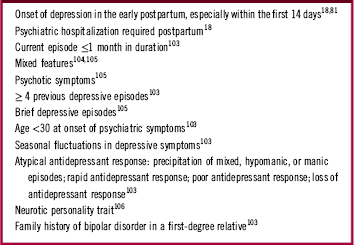
There is an increasing body of evidence showing that the postpartum period is a high-risk time for both first presentations and relapses of bipolar disorders.Reference Munk-Olsen, Laursen and Meltzer-Brody 18 The chronological overlap of the ages where bipolar disorder often first presents with the reproductive years in women is likely a contributory factor. The rate of first psychiatric hospitalization in women with bipolar disorder is increased 23-fold in the first postpartum month.Reference Munk-Olsen, Laursen and Pedersen 19 This high rate of bipolarity complicates the diagnosis of postpartum depression, as bipolar disorder most commonly presents as a major depressive episode (MDE).Reference Viguera, Tondo and Koukopoulos 20 In the Bipolar Disorders: Improving Diagnosis, Guidance and Education (BRIDGE) study, depending on the diagnostic criteria used, 15–50% of women who had a first MDE onset within 4 weeks after childbirth had evidence of bipolarity. This was significantly higher than women with a non-postpartum first episode MDE (5–37% rate of bipolarity) when Diagnostic and Statistical Manual of Mental Disorders, Fourth Edition, Text Revision (DSM-IV-TR) criteria or the bipolar specifier were used, but not when Hypomania Checklist (HCL-32) criteria was used.Reference Azorin, Angst and Gamma 21 Clinical features suggestive of bipolarity include atypical antidepressant response, a history of brief depressive episodes, and episode onset within the first 14 days postpartum. These features are summarized in Table 1.
Features suggestive of bipolarity in postpartum depression

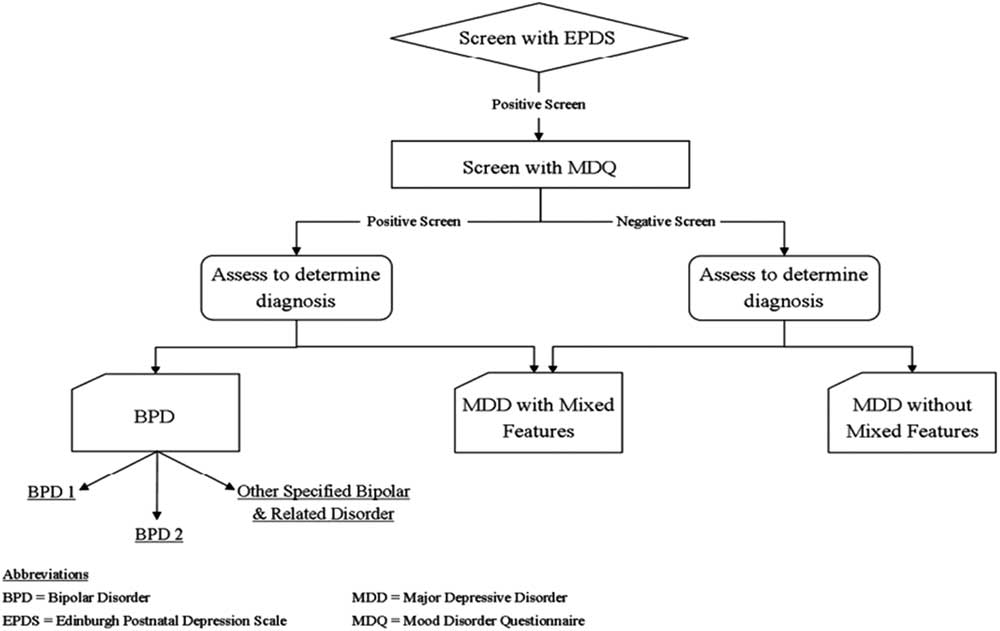
Upon identifying a MDE, it is important to elicit any past history of hypomanic, manic, or mixed episodes. It is also important to be judicious in the use of antidepressant medications, as their use in cases with an underlying bipolar disorder may induce mixed episodes. These are often more treatment-resistant and can have higher risks of suicide.Reference Rihmer and Gonda 22 – Reference Seo, Wang and Jun 24 As bipolar disorder is highly heritable, obtaining a family psychiatric history, particularly of first-degree relatives, is vital. Screening tools can also be used to help assess for a potential bipolar disorder. Sharma and XieReference Sharma and Xie 25 validated the Mood Disorders Questionnaire (MDQ) for use in the postpartum period. They demonstrated a sensitivity of 87.72% and specificity of 85.29% for the MDQ in identifying bipolar disorder when the supplementary questions were excluded. A positive MDQ indicates a possible bipolar spectrum disorder requiring further evaluation through psychiatric assessment. This screening tool has shown to be useful in identifying women at high risk of bipolar disorder or mixed depression when used in the primary care setting.Reference Çelik, Bucaktepe, Uludağ, Bulut, Erdem and Altınbaş 26 A diagnosis of MDD with mixed features should be considered in cases where both the EPDS and MDQ are positive but psychiatric assessment does not identify a bipolar disorder. The diagnostic algorithm presented in Figure 1 shows a potential pathway that can be followed in the screening and diagnosis of postpartum mood disorders. Bipolar disorder screening should be universal prior to initiation of antidepressant medication in any clinical setting.Reference Sharma and Pope 27 Women with a positive MDQ screen should be referred for psychiatric assessment and treatment.
Diagnostic algorithm for postpartum depression.

Studies have suggested that only 40% of depressive episodes identified during the postpartum period actually had postpartum onset.Reference Wisner, Sit and McShea 28 As such, it is important to screen women during the antenatal period and if treatment is not initiated during pregnancy, to reassess the patient again postpartum. Although there may be differences in prognoses and treatment responses between pre-pregnancy, antenatal, and postpartum onset MDD episodes, this has yet to be clearly shown in the literature. For the purposes of this article, the term antenatal will be used to reference any episodes identified during the pregnancy regardless of pregnancy or pre-pregnancy onset. Likewise, postpartum will be used to reference any episodes identified in the first year following childbirth, even if onset was during pregnancy or pre-pregnancy.
Patients with postpartum depression must be screened for psychosis, which in most cases is a manifestation of bipolar disorder.Reference Chaudron and Pies 29 However, schizophrenia, major depressive disorder, substance misuse, and medical conditions may also cause postpartum psychosis. This condition is seen in 0.1% of postpartum women and is considered a psychiatric emergency.Reference Brockington 30 , Reference Spinelli 31
Principles of Treatment in Peripartum Mood Disorders
A wait and watch approach may be appropriate in managing some episodes of postpartum depression, particularly those with early postpartum onset. However, urgent intervention is usually required with mixed episodes or when psychotic features are present. If patients have psychotic features, are at significant risk for suicide, or have significant functional impairment, then psychiatric hospitalization may be required. Otherwise, an appropriate period of observation may assist in differentiating a potential mood disorder from the baby blues or transient distress associated with pregnancy or postpartum. This also allows for further monitoring for symptoms which could be suggestive of bipolarity (Table 1). Should a wait and watch approach be taken, the woman and her supports should be educated on how they can access urgent psychiatric follow-up should her symptoms worsen.
When a woman has opted not to breastfeed, treatment can follow guidelines that have been written for the general mood disorders population, such as those published by the Canadian Network for Mood and Anxiety Treatments (CANMAT) or National Institute for Clinical Excellence (NICE).Reference Kennedy, Lam and McIntyre 32 – Reference Yatham, Kennedy and Parikh 34 However, the woman’s plans for future pregnancies and the use of contraceptive methods should be discussed, as some medications, especially valproate and carbamazepine, have significant teratogenic effects that may impact a future pregnancy.Reference Hernandez-Diaz, Smith and Shen 35
It is important to have a thorough discussion of the risks and benefits associated with psychotropic medications prior to their use in pregnancy. Should medications be used, those that the women previously responded to should be given strong consideration while also considering the medication’s safety profile in pregnancy and compatibility with breastfeeding. Where possible, pharmacotherapy should be limited to a single medication. Higher doses of a single medication are usually safer to the fetus or breastfeeding infant than using lower doses of multiple medications. 33 Clinicians should also be mindful that higher doses may be required during pregnancy to compensate for pharmacokinetic changes, including an increased volume of distribution and alterations in metabolizing enzymes. Reduction in dosage may also be required in the immediate postpartum once these pregnancy-associated pharmacokinetic changes reverse.Reference Costantine 36
A thorough discussion of medication safety in pregnancy and breastfeeding is beyond the scope of this article, but it is an important area of understanding for clinicians. This information is reviewed in the consensus paper by the British Association for Psychopharmacology that summarizes the risks and benefits of psychotropic medication use during the peripartum period.Reference McAllister-Williams, Baldwin and Cantwell 37 Given the increased use of psychotropic medications in the general population, women are increasingly seeking consultation on the use of psychotropic medications both before conception and after a pregnancy has been identified.Reference Huybrechts, Palmsten and Mogun 38 It is also vital to compassionately address the stigma that many women face if they have been diagnosed with a psychiatric disorder or are contemplating the use of psychotropic medications. Many women will opt to discontinue medications during the peripartum. This may be appropriate in some cases, but it is best done after completing a thorough risk assessment considering the past psychiatric history, available social supports, access to psychotherapy, and access to follow-up care. Having a thorough knowledge of the woman’s past psychiatric history is important to determine the indication for the prescribed medication, to assess current symptomatic burden, and to help quantify the risks of relapse if medication is discontinued. This also provides an opportunity to assess for psychiatric comorbidities, which occur in two-thirds of peripartum women with MDD.Reference Le Strat, Dubertret and Le Foll 39 Antenatal anxiety is particularly common, with prevalence rates exceeding those of antenatal depressive symptoms.Reference Lee, Lam, Sze Mun Lau, Chong, Chui and Fong 40 Additionally, antenatal generalized anxiety disorder is an independent predictor of postpartum depression.Reference Coelho, Murray, Royal-Lawson and Cooper 41 Tapering or discontinuing medication with symptom monitoring may be a reasonable treatment option when past mood disorder episodes have been infrequent, mild to moderate in severity, and have not included suicidality. It is important to determine the patient’s preferences for treatment but also to counsel her that discontinuing psychotropic medications can increase the risk of a relapse, especially in women with a history of peripartum mood disorders.Reference Cohen, Altshuler and Harlow 42
Regardless of the etiology, treatment of postpartum psychosis generally involves the use of antipsychotic medications, but may also involve mood stabilizers, benzodiazepines, or electroconvulsive therapy (ECT). Inpatient hospitalization is usually required to minimize the risk of adverse outcomes including infanticide.Reference Spinelli 31
Management of Antenatal Major Depressive Disorder
Major depressive episodes comprise the majority of mood episodes encountered during pregnancy.Reference Viguera, Tondo and Koukopoulos 20 For episodes of mild to moderate severity, psychotherapy should be considered the first-line treatment option. 33 , Reference MacQueen, Frey and Ismail 43 Unfortunately, for many women, access to psychotherapy may be limited by financial concerns, a lack of available practitioners, and inadequate available time. The psychotherapy modalities best supported by evidence are cognitive behavioral therapy (CBT) and interpersonal therapy (IPT). Both of these modalities are supported by positive randomized controlled trials (RCTs) showing small to medium effect size.Reference Sockol 44 , Reference Claridge 45 The use of psychotherapy avoids fetal medication exposure and has a very low risk of adverse effects. Other treatment options with some, but limited, supportive evidence include bright light therapy, exercise, vitamin D, omega-3 oils, folic acid, and supportive psychotherapy.Reference Dennis and Allen 46 These treatment options can be considered in women who wish to avoid the use of psychotropic medications and can reliably access follow-up care should their symptoms worsen.
Antidepressant medication is the first-line treatment for severe antenatal major depressive disorder. Psychotherapy may also be utilized but is best used as augmentation of medication in women who remain sufficiently functional to engage in therapy. However, there are no existing studies that show efficacy for psychotherapy augmentation in antenatal depression. Given this paucity of data, it is reasonable to extrapolate findings from non-peripartum MDD which have shown benefit from the combination of psychotherapy and antidepressant medication. Psychotherapy as a monotherapy treatment may be an option in severe MDD episodes for women who are opposed to the use of medication, but it should be used in combination with psychotropic medications in women with suicidality, significant functional impairment, or psychotic features.
There are no comparative studies on the efficacy of different antidepressants in treating antenatal depression. The use of antidepressant medications has been supported by multiple treatment guidelines when the risk of untreated depression is greater than the risks of fetal medication exposure and medication side effects. 33 , Reference MacQueen, Frey and Ismail 43 There are known risks associated with antidepressant medications that must be carefully considered before their use in pregnancy. The fetal safety data are best established for selective serotonin reuptake inhibitor (SSRI) medications, but even among these medications, large studies and meta-analyses have differed in their findings of adverse outcomes. Some meta-analyses have shown a small increased risk of spontaneous abortion, whereas others did not. A systematic review and meta-analysis by Ross and GrigoriadisReference Ross and Grigoriadis 47 showed a trend toward an increased risk of spontaneous abortion after SSRI exposure with an odds ratio of 1.47, which did not reach statistical significance (95% CI 0.99–2.17, P=0.55). A recent review by Ornoy and KorenReference Ornoy and Koren 48 summarized these studies and concluded that SSRIs do not seem to increase the rate of miscarriage. While previous studies suggested that pregnancy exposure to SSRIs was associated with higher rates of pre-term birth and low birth weight,Reference Oberlander, Bateman and Palmsten 49 this was not found in a larger study by Malm et al,Reference Malm, Sourander and Gissler 50 which used groups unexposed to SSRIs both with and without psychiatric illness as comparators. In this study women treated with SSRIs had a lower risk of preterm (32–36 weeks, adjusted OR 0.84, 95% CI 0.74–0.96) and very preterm (<32 weeks, adjusted OR 0.52, 95% CI 0.37–0.74) births compared to untreated women with psychiatric illness. Rates of preterm births did not significantly differ between the SSRI-exposed pregnancies and the healthy unexposed group after adjustment. In the same study, offspring exposed to SSRIs had higher rates of low Apgar scores and monitoring in a neonatal care unit compared to both the health controls and the untreated women with psychiatric disorders.Reference Malm, Sourander and Gissler 50 A large cohort study of 3.8 million pregnancies showed a slightly increased rate of persistent pulmonary hypertension (PPHN) in fetuses when SSRIs were prescribed late in the pregnancy (31.5/100,000) compared to pregnancies with non-SSRI antidepressant exposure (29.1/100,000) and fetuses from unexposed pregnancies (20.8/100,000). The adjusted OR for PPHN was 1.12 (95% CI 0.95–1.31) in pregnancies exposed to SSRIs.Reference Huybrechts, Bateman and Palmsten 51 It is felt that SSRI medications are not major teratogens, as the overall rates of congenital anomalies in SSRI-exposed fetuses have been similar to unexposed fetuses, except for a small increase in cardiac anomalies.Reference Ornoy and Koren 48 Recent research has also shown an association between antenatal antidepressant use and the development of psychiatric disorders in the exposed offspring.Reference Liu, Agerbo and Ingstrup 52 However, it is possible that the severity of maternal illness is the predominate causal factor for this rather than antidepressant exposure.
Although efficacious in non-antenatal MDD and frequently used to treat MDD in women who later become pregnant, there are no RCTs that have examined the efficacy of serotonin and norepinephrine reuptake inhibitors (SNRIs), bupropion, or mirtazapine in treating antenatal depression. Most studies of these medications have suggested low rates of teratogenicity, but there are much fewer safety data available for these medications compared to the SSRIs.Reference Bellantuono, Vargas and Mandarelli 53 – Reference Cole, Modell and Haight 55 A recent study by Newport et al Reference Newport, Hostetter and Juul 56 showed an increased prevalence of hypertensive disorders of pregnancy with SNRI exposure after 20 weeks of gestation (OR 2.57, 95% CI 1.34–4.93). Early pregnancy use of bupropion was associated with a small increase in the risk of left outflow tract cardiac defects (adjusted odds ratio 2.6, 95% CI 1.2–5.7),Reference Alwan, Reefhuis and Botto 57 but this finding was not seen in a later cohort study.Reference Huybrechts, Hernandez-Diaz and Avorn 58 A systematic review by Smit et al Reference Smit, Dolman and Honig 54 of mirtazapine use in pregnancy concluded that there may be an association between mirtazapine use and spontaneous abortion, but also indicated that underlying psychiatric illness may be a confounder.
When a patient has not previously shown response to another antidepressant, sertraline is recommended as a first-line medication. While most studies analyzing the safety of antidepressants during pregnancy have looked at the SSRI class as a whole, sertraline has been one of the most frequently used medications in these analyses.Reference Briggs 59 It has also shown to have the lowest ratio of umbilical cord serum concentration to maternal serum concentration of the SSRIs. This suggests that sertraline may have less fetal medication exposure than the other SSRIs.Reference Hendrick, Stowe and Altshuler 60 Other positive attributes of sertraline are good tolerability, a wide therapeutic dosage range, and a large amount of data demonstrating breastfeeding compatibility.Reference Pinheiro, Bogen and Hoxha 61 For women who do not tolerate sertraline, escitalopram is a reasonable alternative, as it is generally well tolerated and has a flexible dosing range. Most studies have shown that tricyclic antidepressants have low rates of associated congenital anomalies.Reference Vasilakis-Scaramozza, Aschengrau, Cabral and Jick 62 Monoamine oxidase inhibitors are generally contraindicated in pregnancy given the risk of interaction with various medications, especially anesthetic agents.Reference MacQueen, Frey and Ismail 43 There are no established standards on how many medications of a class should be trialed before switching to another medication class in treating antenatal depression.
Unfortunately, there is little literature and no studies available to guide management of treatment-resistant antenatal MDD. Discussion of medication combinations and augmentation strategies for antenatal depression and the use of neuromodulation through electroconvulsive therapy, repetitive transcranial magnetic stimulation, and deep brain stimulation are beyond the scope of this review but can be further read about in a 2013 review by Robakis and Williams.Reference Robakis and Williams 63
Management of Postpartum Major Depressive Disorder
Postpartum MDD accounts for 70% of MDEs in the postpartum period.Reference Wisner, Sit and McShea 28 , Reference Sharma, Khan, Corpse and Sharma 64 Many aspects of treating postpartum MDD remain the same as in the treatment of antenatal depression. For mild to moderate depressive episodes, CBT and IPT remain first-line treatment options.Reference MacQueen, Frey and Ismail 43 However, many women find it difficult to engage in therapy given the high demands of an infant and financial difficulties that young families often face. Internet- and telephone-based CBT are additional psychotherapy options that are supported by randomized controlled trials for treating postpartum depressive symptoms and are often easier for women to access than conventional psychotherapy.Reference Pugh, Hadjistavropoulus and Hampton 65 – Reference Ngai, Wong and Leung 68 Alternatively, treatment with antidepressant medications may be appropriate in women who are not interested in psychotherapy. Antidepressant medications remain the mainstay of treatment in cases of severe postpartum MDD. Psychotherapy can be used as an augmentation strategy to medications in treating severe postpartum MDD, but this combination has not been supported by research findings. To date, all of the RCTs that have examined the combination of antidepressants with psychotherapy in postpartum depression have been negative. These included trials that showed that there was no benefit from adding CBT to either fluoxetine or paroxetine.Reference Misri, Reebye and Corral 69 , Reference Appleby, Warner and Whitton 70 Another trial showed no benefit in the use of sertraline compared to placebo when combined with brief dynamic psychotherapy.Reference Bloch, Meiboom and Lorberblatt 71 However, there is evidence for increased efficacy of combined pharmacotherapy with psychotherapy in the general MDD population.Reference Cuijpers, De Wit and Weitz 72
SSRI medications have the largest amount of data supporting their use in postpartum episodes of MDD.Reference Thomson and Sharma 73 However, the use of antidepressants in breastfeeding women requires a careful discussion of the benefits versus the potential risks of the medication to the breastfeeding infant. In general, no antidepressant medications are contraindicated in breastfeeding, with the exception of MAOIs. There is also consensus that the breastfeeding exposure to most antidepressant medications is much less, potentially up to 10-fold, than in utero exposure if the same medication was used during pregnancy.Reference Eberhard-Gran, Eskild and Opjordsmoen 74 , Reference Kendall-Tackett and Hale 75 Most antidepressant medications maintain low relative infant doses (RID), defined by the ratio of the serum drug concentration of the infant compared to the mother. Studies have shown very low RIDs for sertraline and paroxetine, often with undetectable serum levels of the medication and its metabolites.Reference Pinheiro, Bogen and Hoxha 61 Among the SSRIs, fluoxetine tends to have a higher relative infant dose because of its long half-life.Reference Kendall-Tackett and Hale 75 When a woman has previously shown response to a particular antidepressant, it is generally recommended to restart that same antidepressant should pharmacotherapy be indicated, even if there are less breastfeeding safety data available.
Although antidepressants as a medication class are the mainstay of treatment for severe postpartum MDD, their overall efficacy is not well established. There have been numerous open trials that showed efficacy for different antidepressants, but meta-analyses of RCTs have shown mixed results. Two recent meta-analysis of antidepressant efficacy in postpartum MDD analyzed the same 6 RCTs. The systematic review by Sharma and SommerdykReference Sharma and Sommerdyk 76 did not find that antidepressants as a group showed efficacy in treating postpartum depression. However, the authors note that methodological limitations, including low recruitment rates resulting in small studies, may potentially explain this finding.Reference Sharma and Sommerdyk 76 The systematic review by De Crescenzo et al Reference De Crescenzo, Perelli and Armando 77 concluded that antidepressants appear to be efficacious and well tolerated in postpartum depression. However, this review also noted that the evidence does not clearly demonstrate that antidepressants are superior to other treatments.Reference De Crescenzo, Perelli and Armando 77 The only antidepressants that have been supported by RCTs in the treatment of postpartum MDD are sertraline and fluoxetine, which each have 1 positive study. Not included in the above mentioned meta-analyses was a more recent positive study by Hantsoo et al Reference Hantsoo, Ward-O’Brien and Czarkowski 78 that showed response and remission rates of 59% and 53%, respectively, for sertraline versus 26% and 21%, respectively, for placebo after 6 weeks of treatment. An additional RCT showed a reduced recurrence of postpartum depression and a longer time to recurrence when sertraline was started in the immediate postpartum.Reference Wisner, Perel and Peindl 79 As it is supported by both these studies and a large amount of breastfeeding safety data, sertraline is a first-line antidepressant in cases of postpartum depression where the woman has not previously shown robust response to another antidepressant.
Open-label studies have suggested efficacy for sertraline, escitalopram, fluoxetine, venlafaxine, and bupropion SR.Reference Thomson and Sharma 73 Usage of bupropion in breastfeeding women has received mixed support, as a case report suggested the possibility of increased infant seizure risk.Reference Chaudron and Schoenecker 80 Bupropion may be a good treatment option in women who are not breastfeeding, especially those with atypical depressive symptoms and without significant comorbid anxiety. Monoamine oxidase inhibitors should be avoided, except for rare and treatment-resistant cases, given their risk of interactions with food and medications.
There is a paucity of literature available to guide management of treatment-resistant postpartum depression. Given this lack of information, guidelines for treatment-resistant depression in the general MDD population, such as CANMAT, can be followed.Reference Kennedy, Lam and McIntyre 32 Based on results from the Sequenced Treatment Alternatives to Relieve Depression (STAR*D) trial involving the general MDD population, if an initial trial with a SSRI medication is ineffective, it is reasonable to try either another SSRI medication or an antidepressant of another medication class. It is also important to monitor for a potential exacerbation of symptoms or the emergence of mixed symptoms, as treatment resistance can be suggestive of an underlying bipolar disorder, especially with postpartum onset depression.Reference Sharma and Khan 81 The only medication with supportive evidence for augmentation in treatment-resistant postpartum MDD is aripiprazole, which showed efficacy in a small open-label trial.Reference Sharma, Sommerdyk and Xie 82
Management of Antenatal Bipolar Disorder
Women with bipolar disorder have a high risk of experiencing a relapse during pregnancy. Most commonly these relapses take the form of MDEs, but they can alternatively be hypomanic, manic, or mixed episodes.Reference Freeman, Smith and Freeman 83 A meta-analysis by Wesseloo et al Reference Wesseloo, Kamperman and Munk-Olsen 9 including 5,700 deliveries from 4,023 women previously diagnosed with bipolar disorder showed an overall relapse rate of 37%. There were no significant differences in the relapse rates between women with bipolar I and bipolar II disorders. Those who remained on prophylactic medications had a much lower relapse rate compared to women who discontinued their medication (23% versus 65%, p=0.001).Reference Wesseloo, Kamperman and Munk-Olsen 9 This risk of relapse must be weighed against the significant fetal risk associated with some mood stabilizing medications. Ideally women with bipolar disorder would be stabilized for a period of 6 months or longer prior to conception, but given that up to two-thirds of pregnancies in women with bipolar disorder are unplanned, this is frequently not the case.Reference Marengo, Martino and Igoa 84 As a result, it is very important to obtain a thorough past psychiatric history, especially with respect to past peripartum course, to determine the severity of the bipolar illness and to help estimate the potential risk of a relapse. It is also vital to discuss how the woman feels about the use of medications for prophylactic or maintenance treatment during pregnancy and to discuss their risks and benefits. Discontinuation of mood stabilizing medications is very common, as both women and practitioners are often concerned about causing fetal harm. However, any alteration in psychotropic medication requires close follow-up to monitor for symptom relapse. Both patients and involved supports should be educated on the potential signs of relapse so that any deteriorations can be quickly identified.
Most guidelines strongly caution against the use of valproate in pregnancy and some deem it contraindicated. The UK NICE guidelines recommend avoidance of valproate for the treatment of mental disorders in women of reproductive age, and also that carbamazepine not be used in women who are pregnant, breastfeeding, or planning to have a baby. 33 Additionally, a study by Wisner et al Reference Wisner, Hanusa, Peindl and Perel 85 demonstrated that valproate was no more effective than monitoring without medication in preventing bipolar depression relapse.Reference Wisner, Hanusa, Peindl and Perel 85 Ideally, euthymic women on valproate planning to become pregnant are identified before conception so that they can be changed to a maintenance medication with less teratogenicity. In cases where women become pregnant while on valproate, it is usually best to discontinue the medication and switch to an alternative mood stabilizer with less fetal risk. It is also recommended to prescribe a daily dose of 1–4 mg of folic acid for the first trimester to potentially reduce the risk of neural tube defects when women have taken anti-epileptic medications in pregnancy. This recommendation has little data supporting it, but theoretically it may reduce the risk of fetal neural tube defects. A study of 311 6-year-old children from mothers with epilepsy taking antiepileptics showed that children exposed to periconceptional folate had higher mean IQs compared to children from pregnancies that were not supplemented with folate (108 vs 101). However, in this study folate exposure was determined by retrospective maternal interview and the authors caution that the findings may have been influenced by confounding factors.Reference Meador, Bkaer and Browning 86
Lamotrigine has shown efficacy as a maintenance treatment in bipolar disorder in the non-peripartum population.Reference Yatham, Kennedy and Parikh 34 A prospective observational trial showed that euthymic pregnant women with bipolar disorder relapsed less frequently when they remained on lamotrigine maintenance compared to pregnant women who discontinued all of their mood stabilizing medications (30% versus 100%).Reference Newport, Stowe and Viguera 87 Lamotrigine is thought to be non-teratogenic and a mood stabilizer with one of the best safety profiles in pregnancy.Reference Chisolm and Payne 88 However, serum lamotrigine levels can vary substantially during pregnancy and the postpartum, requiring frequent monitoring. 33 If women do not respond to or tolerate lamotrigine, quetiapine is an alternative treatment with efficacy in bipolar disorder maintenance in non-peripartum populations and it is not believed to be a major teratogen.Reference Yatham, Kennedy and Parikh 34 , Reference Ennis and Damkier 89
Most studies of prophylactic treatment of bipolar disorder in pregnancy have used lithium. These studies have shown lithium to be efficacious in preventing bipolar depression relapses. An open label trial by Rosso et al Reference Rosso, Albert and Di Salvo 90 showed its efficacy in preventing relapse in women with bipolar I disorder. Of the 18 pregnancies where lithium was continued, there was a relapse of mood episodes in only 17.7%. While there was no comparison group in this study, a relapse rate of 17.7% is much lower than the 65% relapse rate of women who discontinued mood stabilizing medication in the study by Wesseloo et al.Reference Wesseloo, Kamperman and Munk-Olsen 9 However, the first trimester use of lithium has been associated with the development of Ebstein’s anomaly, a congenital cardiac defect of the tricuspid valve. This risk was thought to be 400 times higher than in the general population in original studies.Reference Nora, Nora and Toews 91 More recent data have suggested that this risk was most likely over-estimated. A recent retrospective study showed a rate of cardiac outflow obstructions in babies exposed to lithium of 0.6% versus 0.2% in those not exposed. Lithium may increase the overall risk of congenital malformations by a factor of 2 (6.6% of exposed pregnancies). 33 A cohort study by Patorno et al Reference Nora, Nora and Toews 91 of 1.3 million pregnancies with 663 infants exposed to lithium showed an adjusted risk ratio of 1.65 for cardiac malformations in fetuses exposed to lithium. This decreased to 1.11 for daily doses less than 600 mg and increased to 3.22 for doses greater than 900 mg.Reference Patorno, Huybrechts and Hernandez-Diaz 92 Lithium requires titration of doses based on serum levels and generally requires higher doses throughout pregnancy as glomerular filtration rate increases. There are mixed opinions on the compatibility of lithium with breastfeeding. Most of the recent guidelines are supportive of its use; however, lithium is known to achieve relatively high concentrations in breastmilk resulting in significant infant exposure.Reference Uguz and Sharma 93
General recommendations for the treatment of acute antenatal bipolar depressive episodes do not vary from those used in maintenance treatment. Lamotrigine remains a good medication choice because of the low risk of teratogenicity seen in most studies and favorable side effect profile. Quetiapine is an alternative option in patients who have previously responded to it or do not respond to lamotrigine.
Although it is not supported by data specific to antenatal bipolar depression, there may be benefit in augmenting medication management with psychotherapies such as CBT and IPT. These therapy modalities have shown efficacy in treating bipolar depression in the general psychiatric population. In cases where women opt not to use medications, psychotherapies may help in preventing relapses of mood episodes.Reference Yatham, Kennedy and Parikh 34
Antenatal manic episodes may best be managed by medications that differ from those used for bipolar maintenance treatment and bipolar depressive episodes. Lamotrigine’s use is not well established in treating mania.Reference Yatham, Kennedy and Parikh 34 Lithium has shown high efficacy but has associated teratogenicity, and some clinicians feel that it is slower to elicit a response than antipsychotics. Often antipsychotics are used in treating manic episodes, with both first-generation and second-generation antipsychotics appearing efficacious. Similar to treating other peripartum mood disorder episodes, if a patient has previously responded well to a particular medication in treating manic episodes, then use of that same medication should be strongly considered. However, the use of valproate and carbamazepine are avoided in pregnancy except in very treatment-resistant cases. These medications should be reserved for cases where the episodes have been refractory to all other treatments and only used after careful discussion with the patient and her family. Haloperidol has shown efficacy in treating mania outside of the peripartum period and has not been associated with congenital anomalies.Reference Diav-Citrin, Shechtman and Ornoy 94 The use of second-generation antipsychotics, such as olanzapine and risperidone, are alternative options, but these medications are also associated with metabolic side effects that can pose additional risks for adverse obstetrical outcomes. A thorough discussion of the risks associated with antipsychotic use in pregnancy can be found in the 2015 systematic review by Coughlin et al.Reference Coughlin, Blackwell and Bartley 95
Management of Postpartum Bipolar Disorder
Depressive episodes are the predominate form of bipolar disorder relapse during the postpartum. However, hypomanic, manic, and mixed episodes also happen at a higher rate in the postpartum, especially within the first month.Reference Viguera, Tondo and Koukopoulos 20 Given the high risk of postpartum relapse and the potentially devastating effects that accompany it, prophylactic treatment should be strongly considered. Although women who remain off medication throughout the pregnancy have a significantly higher rate of relapse, the initiation of prophylactic medications immediately prior to or following childbirth may ameliorate this risk. When prophylactic treatment was initiated immediately following delivery, the relapse rate was 29% compared to 65% in women who remained medication-free postpartum. The relapse rate of women who remained on prophylactic pharmacotherapy during pregnancy was the lowest at 23%.Reference Wesseloo, Kamperman and Munk-Olsen 9
Most of the existing studies for prophylactic treatment of peripartum bipolar disorder have used lithium.Reference Doyle, Heron and Berrisford 96 , Reference Bergink and Kushner 97 These studies have shown a significantly decreased risk of relapse after lithium prophylaxis. As a result, lithium is a reasonable medication choice in women who are not planning on breastfeeding. The use of lithium is not contraindicated in breastfeeding women, but it appears to reach relatively high concentrations in breastmilk and some experts have cautioned against it. A systematic review by Uguz and SharmaReference Uguz and Sharma 93 analyzed 26 cases of lithium use in breastfeeding and found that lithium had a milk to plasma concentration ratio of 0.53, an infant serum level of 0.16 mEq/L, and an infant to maternal serum concentration ratio of 0.24. The opinion of the authors was that there are no clear contraindications for lithium use during breastfeeding, but it should be reserved for situations where other options are not available.Reference Uguz and Sharma 93 Olanzapine was also shown to have efficacy in preventing postpartum psychosis and postpartum mood episodes in patients with bipolar disorder. In a small open-label study, 11 women treated with olanzapine, with or without a mood stabilizer, had a much lower relapse rate than 14 women who received either a mood stabilizer, an antidepressant, or no medication (18.2% versus 57.1%, respectively). Only 3 of the 11 women receiving olanzapine started the medication prior to childbirth.Reference Sharma, Smith and Maxmanian 98 Lamotrigine also has evidence in both maintenance and bipolar depression treatment in the non-peripartum population.Reference Yatham, Kennedy and Parikh 34 Although this medication is also known to attain relatively high concentrations in breastmilk, the consensus is that it is probably safe in women who are breastfeeding.Reference Uguz and Sharma 93
To date, the only medication that has supportive evidence in treating acute postpartum bipolar depression is quetiapine. The evidence is limited to a single chart review by Sharma et al Reference Sharma, Khan and Sommerdyk 99 involving 18 women with a diagnosis of bipolar I, bipolar II, or bipolar NOS. All of the women included in this study experienced an onset of depression within the first 4 weeks postpartum. After 8 weeks of treatment with quetiapine, 83% of the women were rated as “much” or “very much” improved. The median dose of quetiapine used was only 75 mg.Reference Sharma, Khan and Sommerdyk 99 As this is the only study of acute treatment for bipolar mood episodes in the postpartum period, it is reasonable to follow existing treatment guidelines for the general bipolar disorder population if the patient is not breastfeeding. However, in accordance with the NICE guidelines, it is recommended to avoid the use of valproate, unless there has been minimal response to other treatment options, as another pregnancy may be considered or encountered during treatment.
No studies have focused on the treatment of hypomania and mania in the postpartum. Given this lack of information, treatment should follow existing guidelines developed for use in the general bipolar disorder population with additional consideration to breastfeeding compatibility where applicable. This will often involve the use of antipsychotic or mood stabilizing medications. The safety of mood stabilizing and second-generation antipsychotic medications in breastfeeding is summarized in systemic reviews by Uguz and Sharma.Reference Uguz and Sharma 93 , Reference Uguz 100
In treating postpartum bipolar disorder, the risks and benefits of breastfeeding should be discussed with the woman and her family. Although there are many established benefits to breastfeeding, the associated sleep disruptions may contribute to the mood disorder episodes.Reference Sharma and Mazmanian 101 Additionally, many mood stabilizing medications are sedating, which can potentially improve sleep but may make nighttime feedings harder. If possible, bottle feeding at night by the woman’s partner or support can be beneficial to allow the woman to maintain a better sleeping schedule. In postpartum psychosis or bipolar disorder with psychotic features, the woman may be too disorganized to safely breastfeed, which must be reviewed on a case-by-case basis.
Conclusions
Peripartum mood disorders remain under-recognized and undertreated. Adding to this issue is the complexity of their management, as antenatal pharmacotherapy results in fetal exposure to medications and postpartum pharmacotherapy may result in infant medication exposure through breastmilk. Unfortunately, there is a paucity of literature to guide treatment decisions, especially with respect to treatment-resistant depression and the treatment of peripartum bipolar disorder. The need to balance the safety of medication exposures against the risk of untreated maternal illness is one of the reasons that peripartum mood disorders can be considered being “stuck between a rock and a hard place.” Untreated peripartum mood disorders increase the risk of adverse obstetrical and child development outcomes, in addition to causing significant maternal suffering.Reference Mirhosseini, Moosavipoor and Nazari 102
Disclosures
Dr. Michael Thomson has nothing to disclose. Dr. Sharma reports grants from Neurocrine Biosciences, Stanley Medical Research Institute, Sunovion Pharmaceuticals, and Assurex Health, outside the submitted work.
Optional Posttest and CME Certificate
CME Credit Expires: November 30, 2020
Posttest Study Guide
NOTE: The posttest can only be submitted online. The below posttest questions have been provided solely as a study tool to prepare for your online submission. Faxed/mailed copies of the posttest cannot be processed and will be returned to the sender. If you do not have access to a computer, contact NEI customer service at 888-535-5600.
-
1. Janet is a 22-year old patient with major depressive disorder who is pregnant with her first child. She is deeply concerned about the effects of psychotropic agents on her developing baby. Which non-pharmacological treatment(s) have the best evidence for efficacy in the treatment of antenatal major depressive disorder?
-
A. Cognitive behavioral therapy
-
B. Interpersonal behavioral therapy
-
C. Bright light therapy
-
D. A and B
-
E. All of the above
-
-
2. Susanna is a 28-year-old woman who gave birth to her second child approximately 3 weeks ago. Screening for postpartum depression reveals a score of 14 on the Edinburgh Postnatal Depression Scale (EPDS). An EPDS score of 14 indicates that this patient has:
-
A. Possible depression
-
B. Probable depression
-
C. Severe depression
-
-
3. Patricia is a 31-year-old patient with major depressive disorder who is currently 2 months pregnant. She has been taking an antidepressant for the past 2 years with good response and would like to continue her current treatment regimen for the duration of her preganncy. However, the patient expresses concerns over continuing antidepressant treatment during the postpartum period because she is planning to breastfeed. Which of the following statements is true regarding antidepressants and breastfeeding?
-
A. Breastfeeding exposure to most antidepressants is 10-fold higher than in utero exposure
-
B. First generation MAOIs should not be used during breastfeeding
-
C. Among selective serotonin reuptake inhibitors (SSRIs), fluoxetine has the lowest relative infant dose
-
-
4. Andrea is a 27-year-old patient with bipolar disorder I whose symptoms have been successfully managed for the past 5 years with lamotrigine. Andrea and her husband are now planning to start a family and are considering stopping lamotrigine when Andrea gets pregnant. What is the relapse rate for women with bipolar disorder I or II who discontinue prophylactic mood stabilizer treatment during pregnancy?
-
A. 23%
-
B. 37%
-
C. 65%
-
Optional Online Posttest and CME Certificate Instructions
There is no posttest fee nor fee for CME credits.
-
1. Read the article.
-
2. Complete the posttest and evaluation, available only online at www.neiglobal.com/CME (under “CNS Spectrums”).
-
3. Print your certificate (passing score = 70% or higher).
Questions? call 888-535-5600, or email CustomerService@neiglobal.com