



1 Introduction
In this article we study finitely splitting subtrees of Aronszajn trees. We prove consistency results related to the issue of the existence or non-existence of uncountable downwards closed subtrees of Aronszajn trees whose elements all have some prescribed number of immediate successors. This topic has deep connections with fundamental notions in the theory of trees, such as the property of being Suslin, as well as having significance to topology. For example, recently Marun [Reference Marun7] has shown that an
 $\omega _1$
-tree, equipped with a natural topology called the fine wedge topology, is Lindelöf if and only it does not contain an uncountable downwards closed finitely splitting subtree.
We introduce a forcing poset for adding an uncountable downwards closed normal subtree of a given Aronszajn tree with some specified arity of its elements using the technique of promises. The idea of a promise was introduced by Shelah [Reference Shelah11, Chapter V, Section 6] and incorporated in his forcing for specializing an Aronzajn tree without adding reals. Roughly speaking, a promise is an uncountable subtree of a derived tree of an Aronszajn tree which can be used in a forcing notion to put constraints on the growth of the working part of a condition. While introduced explicitly by Shelah, a version of promises appeared earlier within Jensen’s proof of the consistency of Suslin’s hypothesis with the continuum hypothesis [Reference Devlin and Johnsbråten2, p. 108]. More recently, the use of promises to force subtrees of Aronszajn trees appears in work of Lamei Ramandi and Moore [Reference Lamei Ramandi and Moore4, Reference Moore9]. Our forcing for adding a subtree uses a generalized version of promises which is similar to that introduced by Abraham–Shelah [Reference Abraham and Shelah1, Definition 4.1] to specialize an Aronszajn tree while preserving Suslin trees.
We now summarize the main results of the article. Let
 $2 \le n < \omega $
and assume that T is a normal Aronszajn tree such that every element of T has at least n-many immediate successors. We prove that there exists a forcing poset which adds an uncountable downwards closed normal subtree of T such that every element of the subtree has exactly n-many immediate successors in the subtree. This forcing poset has several strong properties: it is totally proper,
 $\omega _2$
-c.c. assuming CH, and can be iterated with countable support without adding reals. The forcing preserves Aronszajn trees, and assuming that T does not contain a Suslin subtree, it preserves Suslin trees. In addition, for any
 $2 \le m \le n$
, if S is any Aronszajn tree which does not contain an uncountable downwards closed subtree whose elements have fewer than m-many immediate successors in the subtree, then our forcing preserves this property of S.
Using this forcing poset we prove several consistency results, two of which we highlight here. Solving an open problem due to Marun, we show that it is consistent that there exists an infinitely splitting normal
 $\omega _1$
-tree S which is Suslin, and hence Lindelöf in the fine wedge topology, but the topological square
 $S \times S$
is not Lindelöf. We prove that for all
 $2 < n < \omega $
, it is consistent that any normal Aronszajn tree satisfying that every element has at least n-many immediate successors contains an uncountable downwards closed normal n-ary subtree, yet there exists a normal infinitely splitting Aronszajn tree which contains no uncountable downwards closed subtree for which every element has fewer than n-many immediate successors. In order to show the last consistency result, we prove a new preservation theorem which say that any countable support forcing iteration of forcings which are proper and do not add small-splitting subtrees of Aronszajn trees also does not add such subtrees.
Background. We assume that the reader is familiar with
 $\omega _1$
-trees, proper forcing, and iterated forcing. We describe our notation and some basic results about trees which we need.
Let T be an
 $\omega _1$
-tree, which means a tree of height
 $\omega _1$
with countable levels. For any
 $0 < n \le \omega $
, T is n-splitting if every element of T has exactly n-many immediate successors. Similar properties such as
 $(\le \! n)$
-splitting,
 $(< \! n)$
-splitting, and
 $(\ge \! n)$
-splitting (when n is finite) have the obvious meaning. By a subtree of T we mean any set
 $W \subseteq T$
considered as a tree with the order
 $<_T \cap \ W^2$
. We will mostly, but not exclusively, be interested in subtrees which are downwards closed in the obvious sense. For any
 $x \in T$
, let
 $T_x$
be the subtree
 $\{ y \in T : x \le _T y \}$
.
For any
 $x \in T$
, we write
 $\mathrm {ht}_T(x)$
for the height of x in T. Let
 $T_\alpha $
, or level
 $\alpha $
of T, denote the set of all elements of T with height
 $\alpha $
, for any
 $\alpha < \omega _1$
. Let
 $T \upharpoonright A = \{ x \in T : \mathrm {ht}_T(x) \in A \}$
, for any
 $A \subseteq \omega _1$
. If b is a cofinal branch of T and
 $\alpha < \omega _1$
, let
 $b(\alpha )$
be the unique element of
 $b \cap T_\alpha $
. Whenever
 $x \in T$
and
 $\beta < \mathrm {ht}_T(x)$
,
 $x \upharpoonright \beta $
is the unique element below x with height
 $\beta $
. Similarly,
 $X \upharpoonright \beta = \{ x \upharpoonright \beta : x \in X \}$
and
 $\vec x \upharpoonright \beta = (x_0 \upharpoonright \beta ,\ldots ,x_{n-1} \upharpoonright \beta )$
whenever
 $X \subseteq T_\alpha $
and
 $\vec x = (x_0,\ldots ,x_{n-1}) \in T_\alpha ^n$
for some
 $\beta < \alpha < \omega _1$
.
For any
 $x \in T$
, we write
 $\mathrm {Imm}_T(x)$
for the set of immediate successors of x. We say that T is normal if it has a root, is Hausdorff, every element has incomparable elements above it, and every element has uncountably many elements above it (if T is Aronszajn, then the third assumption is subsumed by the fourth). A subset of T is dense open if it is dense open in the forcing poset consisting of T partially ordered by the reverse of the tree ordering.
A product tree
 $S_0 \otimes \cdots \otimes S_{n-1}$
, where
 $S_0, \ldots , S_{n-1}$
are finitely many
 $\omega _1$
-trees, is the
 $\omega _1$
-tree consisting of the tuples in
 $S_0 \times \cdots \times S_{n-1}$
whose elements all have the same height, ordered component-wise. Note that if
 $S_m$
is normal for all
 $m < n$
, then so is the product. A derived tree of an
 $\omega _1$
-tree T with dimension n is a tree of the form
 $T_{x_0} \otimes \cdots \otimes T_{x_{n-1}}$
, where
 $x_0, \ldots , x_{n-1}$
are distinct elements of T with the same height. If
 $\vec x = (x_0,\ldots ,x_{n-1})$
, we abbreviate
 $T_{x_0} \otimes \cdots \otimes T_{x_{n-1}}$
by
 $T_{\vec x}$
.
The following lemma summarizes some basic facts about trees which we need.
Lemma 1.1. Suppose that T is an
 $\omega _1$
-tree.
-
(a) There exists an uncountable downwards closed subtree U of T such that every element of U has uncountably many elements of U above it.
-
(b) If T is normal, then there exists a club
 $C \subseteq \omega _1$
such that
$T \upharpoonright C$
is infinitely splitting.
-
(c) If there exists a club
$C \subseteq \omega _1$
such that
$T \upharpoonright C$
is special, then T is special. -
(d) If T is normal, then the following are equivalent:
-
(i) T is Suslin;
-
(ii) every dense open subset of T contains some level of T;
-
(iii) for every uncountable downwards closed set
$U \subseteq T$
, there exists some
$x \in T$
such that
$T_x \subseteq U$
.
-


We say that a cardinal
 $\lambda $
is large enough if all parameters under discussion are in
 $H(\lambda )$
. A forcing poset is totally proper if it is proper and it does not add reals. If N is a countable elementary substructure of
 $H(\lambda )$
and
 $\mathbb {Q} \in N$
is a forcing poset, a condition
 $q \in \mathbb {Q}$
is a total master condition for N if for any dense open set D of
 $\mathbb {Q}$
in N, there exists some
 $v \in D \cap N$
such that
 $q \le v$
. We write
 $\text {Lim}(\omega _1)$
for the set of countable limit ordinals.
2 Finitely splitting subtrees and Lindelöf trees
We begin our study by providing some ZFC constructions of finitely splitting Aronszajn trees and Aronszajn trees which contain uncountable downwards closed finitely splitting subtrees. These results are obtained by starting with a given tree and then modifying it to have some desired property. We then define the fine wedge topology on an
 $\omega _1$
-tree and describe a characterization of the Lindelöf property of this topological space in terms of the non-existence of finitely splitting subtrees.
A standard construction of a special Aronszajn tree is to build a normal
 $\omega _1$
-tree T together with a strictly increasing function
 $\pi : T \to \mathbb {Q}$
by recursion, maintaining that whenever
 $\pi (x) < q \in \mathbb {Q}$
and
 $\mathrm {ht}_T(x) < \alpha < \omega _1$
, then there exists some
 $y \in T_\alpha $
above x such that
 $\pi (y) < q$
. Note that this inductive hypothesis implies that T is infinitely splitting.
Lemma 2.1. For every
 $2 \le n < \omega $
, there exists a special Aronszajn tree which is normal and n-splitting.
Proof. Start with a special Aronszajn tree T which is normal and infinitely splitting. We build a normal
 $\omega _1$
-tree U satisfying that
 $U \upharpoonright (\text {Lim}(\omega _1) \cup \{ 0 \}) = T$
. For any
 $x \in T$
, insert
 $\omega $
-many new levels in between x and its immediate successors in T which is a copy of the tree
 $({}^{< \omega } n \setminus \{ \emptyset \},\subset )$
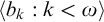
. Now pick distinct cofinal branches
 $\langle b_k : k < \omega \rangle $
of this copy of
 ${}^{< \omega } n \setminus \{ \emptyset \}$
so that every element of the copy belongs to some branch. Enumerating the immediate successors of x in T as
 $\langle y_k : k < \omega \rangle $
, specify
 $y_k$
to be the unique upper bound of
 $b_k$
for all
 $k < \omega $
. It is routine to check that the tree U obtained in this manner is normal and n-splitting. Since U restricted to the club set of countable limit ordinals is special, by Lemma 1.1(c) so is U.
Proposition 2.2. There exists a special Aronszajn tree U which is normal, infinitely splitting, and contains a normal uncountable downwards closed
 $2$
-splitting subtree. In fact, for each
 $x \in U$
,
 $U_x$
contains such a subtree.
Proof. By Lemma 2.1, we can fix a special Aronszajn tree T which is normal and
 $2$
-splitting. Let
 $\pi : T \to \omega $
be a specializing function. We construct by induction a sequence of normal
 $\omega _1$
-trees
 $\langle U^\alpha : \alpha < \omega _1 \rangle $
satisfying that
 $U^0 = T$
and for all
 ${\alpha < \beta < \omega _1}$
,
 $U^\alpha $
is a downwards closed subtree of
 $U^\beta $
and
 $U^\beta \upharpoonright (\alpha +1) = U^\alpha \upharpoonright (\alpha +1)$
. Note that since
 $U^\alpha $
is downwards closed in
 $U^\beta $
,
 $\mathrm {ht}_{U^\beta } \upharpoonright U^\alpha = \mathrm {ht}_{U^\alpha }$
.
Begin by letting
 $U^0 = T$
. Suppose that
 $U^\alpha $
is defined for some fixed
 $\alpha < \omega _1$
. Define
 $U^{\alpha +1}$
which extends
 $U^\alpha $
by adding above each
 $x \in U^\alpha _\alpha $
infinitely many pairwise disjoint trees, which we denote by
 $U(\alpha ,x,n)$
for
 $n < \omega $
, each of them isomorphic to T minus the root of T. Since T is special, we can fix a specializing function
 $\pi _{\alpha ,x,n} : U(\alpha ,x,n) \to \omega $
for each such x and n. This completes the constriction of
 $U^{\alpha +1}$
, which easily satisfies the required properties. Now assume that
 $\delta < \omega _1$
is a limit ordinal and
 $U^\alpha $
is defined for all
 $\alpha < \delta $
. Let
 $U^\delta = \bigcup _{\alpha < \delta } U^\alpha $
. Again, it is straightforward to verify that
 $U^\delta $
is as required. This completes the construction.
Now let
 $U = \bigcup _{\alpha < \omega _1} U^\alpha $
. It is routine to check that U is a normal
 $\omega _1$
-tree, and for all
 $\alpha < \omega _1$
,
 $U^\alpha $
is a downwards closed subtree of U and
 $U \upharpoonright (\alpha +1) = U^\alpha \upharpoonright (\alpha +1)$
. For each
 $\alpha $
, since
 $U^\alpha $
is downwards closed in U,
 $\mathrm {ht}_U \upharpoonright U^\alpha = \mathrm {ht}_{U^\alpha }$
. For each
 $z \in U$
, let
 $\alpha _z < \omega _1$
be the least ordinal such that
 $z \in U^{\alpha _z}$
. Then either
 $\alpha _z = 0$
or
 $\alpha _z$
is a successor ordinal. In the latter case, let
 $\alpha _z = \beta _z+1$
. Note that if
 $y <_U z$
, then
 $\alpha _y \le \alpha _z$
since
 $U^{\alpha _z}$
is downwards closed in U. For each
 $z \in U^0 = T$
, let
 $x_z$
denote the root of T. For each
 $z \in U \setminus U^0$
, let
 $x_z$
be the unique member of
 $U^{\beta _z}_{\beta _z}$
such that
 $x_z <_U z$
and let
 $n_z < \omega $
be such that
 $x_z \in U(\beta _z,x_z,n_z)$
.
To show that U is infinitely splitting, consider
 $z \in U$
. Let
 $\gamma = \mathrm {ht}_{U}(z)$
. If
 $\alpha _z = 0$
, then at stage
 $\gamma $
we have that
 $\mathrm {ht}_{U^\gamma }(z) = \gamma $
, and we added
 $\omega $
-many immediate successors of z in forming
 $U^{\gamma +1}$
. Suppose that
 $\alpha _z> 0$
. Every element of
 $U^{\alpha _z} \setminus U^{\beta _z}$
has height at least
 $\alpha _z$
in
 $U^{\alpha _z}$
. Therefore,
 $\gamma> \beta _z$
. At stage
 $\gamma $
we have that
 $\mathrm {ht}_{U^\gamma }(z) = \gamma $
and we added
 $\omega $
-many immediate successors of z in forming
 $U^{\gamma +1}$
. This completes the proof that U is infinitely splitting.
Claim. Suppose that
 $y <_U z$
. If
 $\alpha _y = \alpha _z$
then
 $x_y = x_z$
, and if also
 $\alpha _y> 0$
then
 $n_y = n_z$
. If
 $\alpha _y < \alpha _z$
then
 $x_y <_U x_z <_U z$
.
Proof. First, assume that
 $\alpha _y = \alpha _z$
. If
 $\alpha _y = 0$
then
 $x_y = x_z$
is the root of T. If
 $\alpha _y> 0$
, then easily
 $x_y = x_z$
and
 $n_y = n_z$
, for otherwise y and z are incomparable. Secondly, assume that
 $\alpha _y < \alpha _z$
. If
 $\alpha _y = 0$
, then clearly
 $x_y <_U x_z$
since
 $x_y$
is the root of T. Suppose that
 $\alpha _y> 0$
. Since
 $y <_U z$
,
 $x_y <_U y$
, and
 $x_z <_U z$
, it follows that
 $x_y$
and
 $x_z$
are comparable in U. But
 $x_y$
has height
 $\beta _y$
, which is less than the height of
 $x_z$
which is
 $\beta _z$
. So
 $x_y <_U x_z$
.
 $\dashv _{\ \text {Claim}}$
To show that U is special, we define a map
 $\pi _U : U \to {}^{<\omega } \omega \setminus \{ \emptyset \}$
by induction as follows. For any
 $z \in U^0 = T$
, let
 $\pi _U(z) = \langle \pi (z) \rangle $
. Now consider
 $z \in U \setminus U^0$
and assume that
 $\pi _U(y)$
is defined for all
 $y \in U$
such that
 $\alpha _y < \alpha _z$
. In particular, we have defined
 $\pi _U(x_z)$
. Let
 $\pi _U(z)$
be the concatenation
 $\pi _U(x_z)^\frown \langle \pi _{\beta _z,x_z,n_z}(z) \rangle $
.
To show that
 $\pi _U$
is a specializing map, suppose that
 $y <_U z$
. Assume by induction that for all
 $c <_U d$
with heights less than
 $\mathrm {ht}_U(z)$
,
 $\pi _U(c) \ne \pi _U(d)$
.
Case 1.
 $\alpha _y = \alpha _z$
. Then by the claim,
 $x_y = x_z$
, and
 $n_y = n_z$
in the case that
 $\alpha _y> 0$
. If
 $\alpha _y = 0$
, then
 $\pi _U(y) = \langle \pi (y) \rangle \ne \langle \pi (z) \rangle = \pi _U(z)$
. Suppose that
 $\alpha _y> 0$
. As
 $\pi _{\beta _y,x_y,n_y}$
is a specializing map on
 $U(\beta _y,x_y,n_y)$
,
 $\pi _{\beta _y,x_y,n_y}(y) \ne \pi _{\beta _z,x_z,n_z}(z)$
. So
 $$ \begin{align*}\pi_U(y) = \pi_U(x_y)^\frown \langle \pi_{\beta_y,x_y,n_y}(y) \rangle \ne \pi_U(x_z)^\frown \langle \pi_{\beta_z,x_z,n_z}(z) \rangle = \pi_U(z). \end{align*} $$
Case 2.
 $\alpha _y < \alpha _z$
. Then by the claim,
 $x_y <_U x_z <_U z$
. By the inductive hypothesis,
 $\pi _U(x_y) \ne \pi _U(x_z)$
. If
 $\alpha _y = 0$
, then
 $\pi _U(y) = \langle \pi (y) \rangle $
, which has length
 $1$
. But
 $\pi _U(z) = \pi _U(x_z) \ \widehat {} \ \pi _{\beta _z,x_z,n_z}(z)$
, which has length at least
 $2$
and hence is different form
 $\pi _U(y)$
. If
 $\alpha _y> 0$
, then
 $$ \begin{align*}\pi_U(y) = \pi_U(x_y)^\frown \langle \pi_{\beta_y,x_y,n_y}(y) \rangle \ne \pi_U(x_z)^\frown \langle \pi_{\beta_z,x_z,n_z}(z) \rangle = \pi_U(z). \end{align*} $$
So indeed U is special, and T is an uncountable downwards closed subtree of U which is normal and
 $2$
-splitting. Now for each
 $x \in U$
with some height
 $\gamma $
,
 $U_x$
contains
 $U(\gamma ,x,0) \cup \{ x \}$
, which is an uncountable downwards closed subtree of
 $U_x$
which is normal and
 $2$
-splitting.
A similar construction yields the following proposition.
Proposition 2.3. Let
 $2 \le m < n \le \omega $
. Assume that T is an
 $\omega _1$
-tree which is
 $(\ge \! n)$
-splitting and for all
 $x \in T$
,
 $T_x$
contains an uncountable downwards closed
 $(\le \! m)$
-splitting subtree. Then T contains an uncountable downwards closed m-splitting subtree. Moreover, if T is normal, then there is such a subtree which is normal.
Proof sketch.
Let W be some uncountable downwards closed
 $(\le \! m)$
-splitting subtree of T. In the case that T is normal, by thinning out further if necessary using Lemma 1.1(a) we may assume that W is normal. Similar to the proof of Proposition 2.2, we build a sequence
 $\langle U^\alpha : \alpha < \omega _1 \rangle $
of subtrees of T roughly as follows. Let
 $U^0 = W$
, and take unions at limit stages. Assuming that
 $U^\alpha $
is defined for a fixed
 $\alpha < \omega _1$
, pick for each
 $x \in U^{\alpha }_\alpha $
,
 $(m-m_x)$
-many immediate successors of x in
 $T \setminus U^\alpha $
, where
 $m_x \le m$
is the number of immediate successors of x in
 $U^\alpha $
. Now construct
 $U^{\alpha +1}$
by adding above each such immediate successor y some uncountable downwards closed
 $(\le \! m)$
-splitting subtree of
 $T_y$
, which we may take to be normal assuming that T is normal. We leave the details to the interested reader.
Corollary 2.4. There exists a special Aronszajn tree T which is normal, infinitely splitting, and satisfies that for each
 $2 \le m < \omega $
, T contains an uncountable downwards closed subtree which is normal and m-splitting.
Let
 $2 \le m < n < \omega $
and suppose that T is a
 $(\ge \! n)$
-splitting
 $\omega _1$
-tree which contains a
 $(\le \! m)$
-splitting subtree. Then T also contains a (non-normal) n-splitting subtree, which can be obtained by adding new elements with successor height to the
 $(\le \! m)$
-splitting subtree to ensure n-splitting, but at limit levels only including members of the
 $(\le \! m)$
-splitting subtree. The triviality of this observation displays the importance of the assumption of normality on the subtrees.
Proposition 2.5. Assume
 $\Diamond $
. Then for any
 $2 \le m < n < \omega $
, there exists an infinitely splitting normal Aronszajn tree which contains a normal uncountable downwards closed m-splitting subtree, but does not contain a normal uncountable downwards closed n-splitting subtree.
We leave the proof as an exercise for the interested reader.
We now turn to topological applications of finitely splitting subtrees. Let T be an
 $\omega _1$
-tree. For any
 $x \in T$
let
 $x {\uparrow }$
denote the set
 $\{ y \in T : x \le _T y \}$
, and for any
 $X \subseteq T$
let
 $X {\uparrow }$
denote the union
 $\bigcup \{ x {\uparrow } : x \in X \}$
.
Definition 2.6 [Reference Nyikos10].
Let T be an
 $\omega _1$
-tree. The fine wedge topology on T is the topological space on T with subbase given by sets of the form
 $x {\uparrow }$
and
 $T \setminus (x {\uparrow })$
for any
 $x \in T$
.
It is routine to show that for any
 $x \in T$
, the collection of sets of the form
 $x {\uparrow } \setminus F {\uparrow }$
, where F is a finite subset of
 $\mathrm {Imm}_T(x)$
, is a local base at x.
Recall that a topological space X is Lindelöf if every open cover of X contains a countable subcover. In recent work, Marun characterized the Lindelöf property of an
 $\omega _1$
-tree in the fine wedge topology in terms of finitely splitting subtrees.
Theorem 2.7 [Reference Marun7, Theorem 4.9].
Let T be an
 $\omega _1$
-tree considered as a topological space with the fine wedge topology. Then T is Lindelöf iff it does not contain an uncountable downwards closed finitely splitting subtree.
Going forward we refer to an
 $\omega _1$
-tree which is Lindelöf in the fine wedge topology as a Lindelöf tree. Note that if an
 $\omega _1$
-tree T is finitely splitting, then the fine wedge topology on T is discrete and hence T is non-Lindelöf. Also, if T has a cofinal branch, then T is non-Lindelöf [Reference Marun7, Lemma 4.2]. Less trivial examples of non-Lindelöf trees are those which are Aronszajn and infinitely splitting. Marun observed that there exists a normal Aronszajn tree which is infinitely splitting and non-Lindelöf, and that any infinitely splitting Suslin tree is Lindelöf.
Corollary 2.8. There exists a normal infinitely splitting non-Lindelöf special Aronszajn tree.
Marun proved that
 $\textsf {MA}_{\omega _1}$
implies that every
 $\omega _1$
-tree is non-Lindelöf. A variation of his proof shows that
 $\textsf {MA}_{\omega _1}$
implies that for every
 $2 \le n < \omega $
, every
 $(\ge \! n)$
-splitting Aronszajn tree contains an uncountable downwards closed n-splitting subtree.
In this article, we address the following questions of Marun [Reference Marun6, Reference Marun7].
Question 2.9. Is the topological square of a Lindelöf tree always Lindelöf?
Question 2.10. Is it consistent with CH that every
 $\omega _1$
-tree is non-Lindelöf?
Question 2.11. Is it consistent that there exists a Suslin tree, and within the class of infinitely splitting
 $\omega _1$
-trees, being Suslin is equivalent to being Lindelöf?
Concerning the first question, we show in Section 9 that it is consistent that there exists an infinitely splitting
 $\omega _1$
-tree which is Suslin, and hence Lindelöf, but its topological square is not Lindelöf. For the second question, we prove in Section 11 that it is consistent with CH that every
 $\omega _1$
-tree is non-Lindelöf. Regarding the third question, we prove in Section 11 that it is consistent that there exist a normal infinitely splitting Suslin tree, and every infinitely splitting
 $\omega _1$
-tree which does not contain a Suslin subtree is non-Lindelöf. By the next proposition, this is the best one can hope for.
Proposition 2.12. Assume that there exists a Suslin tree. Then there exists a normal Aronszajn tree which is infinitely splitting, Lindelöf, and not Suslin.
Proof. It is well-known that if there exists a Suslin tree, then there exists a normal Suslin tree. So by Lemma 1.1(b), if there exists a Suslin tree then there exists a normal infinitely splitting Suslin tree, which we denote by S.
For each limit ordinal
 $\alpha < \omega _1$
fix a cofinal branch
 $b_\alpha $
of the tree
 $S \upharpoonright \alpha $
which has no upper bound in
 $S_\alpha $
. This is possible since S has countable levels yet
 $S \upharpoonright \alpha $
has
 $2^\omega $
-many cofinal branches. Now define a tree T extending S by placing above each
 $b_\alpha $
a copy of S, which we denote by
 $S^\alpha $
. It is routine to check that T is a normal
 $\omega _1$
-tree which is infinitely splitting. If b is a cofinal branch of T, then since S has no cofinal branches, there exists some limit ordinal
 $\alpha < \omega _1$
and some
 $x \in b \cap S^\alpha $
. But
 $S^\alpha $
is upwards closed in T, so
 $S^\alpha $
contains the uncountable chain
 $x {\uparrow }$
, contradicting that
 $S^\alpha $
is Suslin. So T is Aronszajn. For each limit ordinal
 $\alpha < \omega _1$
let
 $x_\alpha $
be the root of
 $S^\alpha $
, that is,
 $x_\alpha $
is the unique upper bound of
 $b_\alpha $
on level
 $\alpha $
of T. Note that
 $\{ x_\alpha : \alpha \in \text {Lim}(\omega _1) \}$
is an uncountable antichain of T, and hence T is not Suslin.
We claim that T is Lindelöf. By Theorem 2.7, it suffices to show that T does not contain an uncountable downwards closed finitely splitting subtree. Suppose for a contradiction that U is such a subtree. By finding a subset of U if necessary using Lemma 1.1(a), we may assume without loss of generality that U is normal. Case 1.
 $U \subseteq S$
. Then S is not Lindelöf, which contradicts that S is Suslin. Case 2.
 $U \not \subseteq S$
. Then there exists some limit ordinal
 $\alpha < \omega _1$
such that
 $U \cap S^\alpha \ne \emptyset $
. Since U is normal and
 $S^\alpha $
is upwards closed in T, it follows that
 $U \cap S^\alpha $
is uncountable. But then
 $U \cap S^\alpha $
witnesses that
 $S^\alpha $
is not Lindelöf, which contradicts that
 $S^\alpha $
is Suslin.
On the other hand, if there exists a Suslin tree, then there exists a normal infinitely splitting Aronszajn tree which contains a Suslin tree but is not Lindelöf. We leave the proof as an exercise for the interested reader.
3 A preservation theorem for iterated forcing
In this section we prove a preservation theorem for iterated forcing related to not adding uncountable small-splitting subtrees of a given
 $\omega _1$
-tree. One of our main consistency results, proven in Section 11, is that for any
 $2 < n < \omega $
, it is consistent that every
 $(\ge \! n)$
-splitting normal Aronszajn tree contains an uncountable downwards closed normal n-splitting subtree, but there exists an infinitely splitting normal Aronszajn tree which contains no uncountable downwards closed
 $(< \! n)$
-splitting subtree. In Section 6 we introduce a forcing for adding such an n-splitting subtree, and in Section 7 we show that this forcing does not add a
 $(< \! n)$
-splitting subtree to any
 $\omega _1$
-tree which did not already contain one. But in order to obtain the above consistency result, we need to be able to iterate such forcings while preserving these properties. To show that this can be done is the purpose of the next theorem.
Theorem 3.1. Let T be an
 $\omega _1$
-tree and let
 $1 < n \le \omega $
. Assume that T does not contain an uncountable downwards closed
 $(< \! n)$
-splitting subtree. Suppose that
 $\langle \mathbb {P}_i, \dot {\mathbb {Q}}_j : i \le \beta , \ j < \beta \rangle $
is a countable support forcing iteration such that for all
 $i < \beta $
,
 $\mathbb {P}_i$
forces that
 $\dot {\mathbb {Q}}_i$
is proper and
 $\dot {\mathbb {Q}}_i$
forces that T does not contain an uncountable downwards closed
 $(< \! n)$
-splitting subtree. Then
 $\mathbb {P}_\beta $
is proper and forces that T does not contain an uncountable downwards closed
 $(< \! n)$
-splitting subtree.
The proof of Theorem 3.1 is an elaboration of a proof of Shelah’s Theorem on the preservation of properness under countable support forcing iterations. We use the following standard fact from the theory of iterations of proper forcing. For a proof of this fact, see [Reference Jech3, Lemma 31.17].
Lemma 3.2. Let
 $\langle \mathbb {P}_i, \dot {\mathbb {Q}}_j : i \le \delta , \ j < \delta \rangle $
be a countable support forcing iteration of proper forcings. Let
 $\lambda $
be a large enough regular cardinal and let N be a countable elementary substructure of
 $H(\lambda )$
containing the forcing iteration as a member. Assume the following:
-
•
$\alpha \in N \cap \delta $
; -
•
$\dot p$
is a
$\mathbb {P}_{\alpha }$
-name for a condition in
$\mathbb {P}_\delta $
; -
• q is an
$(N,\mathbb {P}_{\alpha })$
-generic condition; -
•
$q \Vdash _\alpha (\dot p \in N \ \land \ \dot p \upharpoonright \alpha \in \dot G_{\alpha })$
.


Then there exists some
 $q^+ \in \mathbb {P}_\delta $
such that
 $q^+ \upharpoonright \alpha = q$
,
 $q^+$
is
 $(N,\mathbb {P}_\delta )$
-generic, and
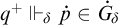 $q^+ \Vdash _\delta \dot p \in \dot G_\delta $
.
Proof of Theorem 3.1.
We prove the statement by induction on
 $\beta $
. Fix T, n, and
 $\langle \mathbb {P}_i, \dot {\mathbb {Q}}_j : i \le \beta , \ j < \beta \rangle $
as in the theorem. Without loss of generality we may assume that for all
 $\gamma \le \beta $
,
 $\mathbb {P}_\gamma $
is separative, for otherwise there exists an equivalent forcing iteration which has this property (this step is not necessary, but it eliminates the need for an additional lemma).
The cases in which
 $\beta $
is equal to
 $0$
or is a successor ordinal are immediate. So assume that
 $\beta $
is a limit ordinal. By the inductive hypothesis, for all
 $\gamma < \beta $
,
 $\mathbb {P}_\gamma $
is proper and forces that T does not contain an uncountable downwards closed
 $(< \! n)$
-splitting subtree.
Suppose that
 $p \in \mathbb {P}_\beta $
and p forces that
 $\dot U$
is a downwards closed
 $(< \! n)$
-splitting subtree of T. We find an extension of p which forces that
 $\dot U$
is countable.
Claim. Suppose that D is a dense open subset of
 $\mathbb {P}_\beta $
,
 $p^* \le _\beta p$
, and
 $\alpha < \beta $
. Then
 $\mathbb {P}_\alpha $
forces that, if
 $p^* \upharpoonright \alpha \in \dot G_\alpha $
, then there exists some
 $\gamma < \omega _1$
so that for all
 $x \in T_\gamma $
, there exists
 $q_{x} \le _\beta p^*$
in D such that
 $q_{x} \upharpoonright \alpha \in \dot G_\alpha $
and
 $q_{x} \Vdash ^V_\beta x \notin \dot U$
.
Proof. We prove that any
 $r \in \mathbb {P}_\alpha $
has an extension in
 $\mathbb {P}_\alpha $
which forces the conclusion of the claim. So let
 $r \in \mathbb {P}_\alpha $
be given. Extending r further if necessary, we may assume that r decides whether or not
 $p^* \upharpoonright \alpha \in \dot G_\alpha $
. If it decides not, then we are done. Otherwise, by separativity
 $r \le _\alpha p^* \upharpoonright \alpha $
. Let
 $r^* = r \cup p^* \upharpoonright [\alpha ,\beta )$
, which is in
 $\mathbb {P}_\beta $
and extends
 $p^*$
. Since D is dense in
 $\mathbb {P}_\beta $
, we can fix some
 $u \le _\beta r^*$
in D. Then
 $u \upharpoonright \alpha \le _\alpha r$
.
We argue that
 $u \upharpoonright \alpha $
is as required. So let
 $G_\alpha $
be a generic filter on
 $\mathbb {P}_\alpha $
which contains
 $u \upharpoonright \alpha $
. In
 $V[G_\alpha ]$
, let
 $\mathbb {P}_\beta / G_\alpha $
be the suborder of
 $\mathbb {P}_\alpha $
consisting of those
 $q \in \mathbb {P}_\beta $
such that
 $q \upharpoonright \alpha \in G_\alpha $
. So
 $u \in \mathbb {P}_\beta / G_\alpha $
. Recall that in V,
 $\mathbb {P}_\beta $
is forcing equivalent to
 $\mathbb {P}_\alpha * (\mathbb {P}_\beta / \dot G_\alpha )$
. So it makes sense to define in the model
 $V[G_\alpha ]$
 $$ \begin{align*}W = \{ x \in T : u \Vdash_{\mathbb{P}_\beta / G_\alpha} x \in \dot U \}. \end{align*} $$
Clearly, W is a downwards closed subtree of T and
 $u \Vdash _{\mathbb {P}_\beta / G_\alpha } W \subseteq \dot U$
. Since
 $u \le _\beta p$
and p forces that
 $\dot U$
is
 $(< \! n)$
-splitting, W must be
 $(< \! n)$
-splitting.
By the inductive hypothesis, T does not contain an uncountable downwards closed
 $(< \! n)$
-splitting subtree in
 $V[G_\alpha ]$
. Therefore, W must be countable. Fix some
 $\gamma < \omega _1$
such that
 $W \subseteq T \upharpoonright \gamma $
. Now consider any
 $x \in T_\gamma $
. Then
 $x \notin W$
, so by the definition of W there exists some
 $p_x \le _\beta u$
in
 $\mathbb {P}_\beta / G_\alpha $
such that
 $p_x \Vdash _{\mathbb {P}_\beta / G_\alpha } x \notin \dot U$
. Since
 $p_x \in \mathbb {P}_\beta / G_\alpha $
,
 $p_x \upharpoonright \alpha \in G_\alpha $
. Find
 $v_x \in G_\alpha $
which forces in
 $\mathbb {P}_\alpha $
over V that
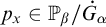 $p_x \in \mathbb {P}_\beta / \dot G_\alpha $
and
 $p_x \Vdash _{\mathbb {P}_\beta / \dot G_\alpha }^{V[\dot G_\alpha ]} x \notin \dot U$
. By separativity,
 $v_x \le _\alpha p_x \upharpoonright \alpha $
. Now let
 ${q_x = v_x \cup p_x \upharpoonright [\alpha ,\beta )}$
. Then
 $q_x \le _\beta p_x \le _\beta u$
. It is easy to check that
 $q_x \Vdash ^V_\beta x \notin \dot U$
. As
 $u \in D$
and D is open,
 $q_x \in D$
.
 $\dashv _{\ \text {Claim}}$
We now work towards finding a condition
 $q \le _\beta p$
which forces that
 $\dot U$
is countable. Let
 $\lambda $
be a large enough regular cardinal and let
 $N \prec H(\lambda )$
be countable such that N contains as members the objects
 $\langle \mathbb {P}_i, \dot {\mathbb {Q}}_j : i \le \beta , \ j < \beta \rangle $
, p, T, and
 $\dot U$
. Fix the following objects:
-
• an enumeration
$\langle D_m : m < \omega \rangle $
of all dense open subsets of
$\mathbb {P}_\beta $
which lie in N; -
• an enumeration
$\langle x_m : m < \omega \rangle $
of
$T_{N \cap \omega _1}$
; -
• an increasing sequence
$\langle \alpha _m : m < \omega \rangle $
of ordinals in
$N \cap \beta $
which is cofinal in
$\sup (N \cap \beta )$
, where
$\alpha _0 = 0$
.


We define by induction sequences
 $\langle \dot p_m : m < \omega \rangle $
and
 ${\langle q_m : m < \omega \rangle }$
satisfying that for all
 $m < \omega $
:
-
(1)
$\dot p_m$
is a
$\mathbb {P}_{\alpha _m}$
-name for a condition in
$\mathbb {P}_\beta $
, and
$\dot p_0$
is a
$\mathbb {P}_0$
-name for p; -
(2)
$q_m$
is an
$(N,\mathbb {P}_{\alpha _m})$
-generic condition and
$q_m \Vdash _{\alpha _m} (\dot p_m \in N \ \land \ \dot p_m \upharpoonright \alpha _m \in \dot G_{\alpha _m})$
; -
(3)
$q_{m+1} \upharpoonright \alpha _m = q_m$
, and
$q_{m+1}$
forces in
$\mathbb {P}_{\alpha _{m+1}}$
that:-
(a)
$\dot p_{m+1} \le _\beta \dot p_m$
; -
(b)
$\dot p_{m+1} \in D_m$
; -
(c)
$\dot p_{m+1} \Vdash ^V_\beta x_m \notin \dot U$
.
-





Note that the statements above imply that for all
 $m < \omega $
,
 $q_m \Vdash _{\alpha _m} \dot p_m \le _\beta p$
.
Begin by letting
 $q_0$
be the empty condition in
 $\mathbb {P}_0$
and letting
 $\dot p_0$
be a
 $\mathbb {P}_0$
-name for p. Now let
 $m < \omega $
and assume that
 $\dot p_m$
and
 $q_m$
are defined as described. Note that properties (1) and (2) imply that the assumptions of Lemma 3.2 hold, where we let
 $\delta = \alpha _{m+1}$
,
 $\alpha = \alpha _m$
,
 $\dot p = \dot p_m \upharpoonright \alpha _{m+1}$
, and
 $q = q_m$
. So fix
 $q_{m+1} \in \mathbb {P}_{\alpha _{m+1}}$
such that
 $q_{m+1} \upharpoonright \alpha _m = q_{m}$
,
 $q_{m+1}$
is
 $(N,\mathbb {P}_{\alpha _{m+1}})$
-generic, and
 $q_{m+1} \Vdash _{\alpha _{m+1}} \dot p_m \upharpoonright \alpha _{m+1} \in \dot G_{\alpha _{m+1}}$
.
To define the
 $\mathbb {P}_{\alpha _{m+1}}$
-name
 $\dot p_{m+1}$
, consider a generic filter
 $G_{\alpha _{m+1}}$
for
 $\mathbb {P}_{\alpha _{m+1}}$
which contains
 $q_{m+1}$
. Since
 $q_{m+1}$
is
 $(N,\mathbb {P}_{\alpha _{m+1}})$
-generic,
 $N[G_{\alpha _{m+1}}] \cap V = N$
. Let
 $G_{\alpha _m} = G_{\alpha _{m+1}} \upharpoonright \alpha _m$
. Since
 $q_{m+1} \upharpoonright \alpha _{m} = q_m$
,
 $q_m \in G_{\alpha _m}$
. Let
 $p_m = \dot p_m^{G_{\alpha _m}}$
. Then
 $p_m \in N$
by (2). By the choice of
 $q_{m+1}$
,
 $p_m \upharpoonright \alpha _{m+1} \in G_{\alpha _{m+1}}$
. Also,
 $p_m \le _\beta p$
. Applying the claim for
 $D = D_m$
,
 $p^* = p_m$
, and
 $\alpha = \alpha _{m+1}$
, in
 $V[G_{\alpha _{m+1}}]$
there exists some
 $\gamma < \omega _1$
so that for all
 $x \in T_\gamma $
, there exists
 $q_x \le _\beta p_m$
in
 $D_m$
such that
 $q_x \upharpoonright \alpha _{m+1} \in G_{\alpha _{m+1}}$
and
 $q_x \Vdash ^V_\beta x \notin \dot U$
. Since the relevant parameters are in
 $N[G_{\alpha _{m+1}}]$
, we can assume that
 $\gamma \in N[G_{\alpha _{m+1}}] \cap \omega _1 = N \cap \omega _1$
.
Letting
 $x = x_m \upharpoonright \gamma $
, we can find a condition
 $p_{m+1} \le _\beta p_m$
in
 $D_m$
such that
 $p_{m+1} \upharpoonright \alpha _{m+1} \in G_{\alpha _{m+1}}$
and
 $p_{m+1} \Vdash ^V_\beta x_m \upharpoonright \gamma \notin \dot U$
. By elementarity, we may assume that
 $p_{m+1} \in N[G_{\alpha _{m+1}}]$
. But
 $N[G_{\alpha _{m+1}}] \cap V = N$
, so
 $p_{m+1} \in N$
. In summary,
 $p_{m+1} \le _\beta p_m$
,
 $p_{m+1} \in N \cap D_m$
,
 $p_{m+1} \upharpoonright \alpha _{m+1} \in G_{\alpha _{m+1}}$
, and
 $p_{m+1} \Vdash ^V_\beta x_m \upharpoonright \gamma \notin \dot U$
. Since
 $\dot U$
is forced to be downwards closed,
 $p_{m+1} \Vdash ^V_\beta x_m \notin \dot U$
. Now let
 $\dot p_{m+1}$
be a
 $\mathbb {P}_{\alpha _{m+1}}$
-name for a member of
 $\mathbb {P}_\beta $
which is forced to satisfy the above properties in the case that
 $q_{m+1} \in \dot G_{\alpha _{m+1}}$
.
This completes the construction. Let
 $q = \bigcup _m q_m$
, which is in
 $\mathbb {P}_{\beta }$
. We argue that
 $q \le _\beta p$
, q is
 $(N,\mathbb {P}_\beta )$
-generic, and q forces that
 $\dot U$
is countable. Fix a generic filter
 $G_\beta $
for
 $\mathbb {P}_\beta $
which contains q and let
 $U = \dot U^{G_\beta }$
. For each
 $m < \omega $
let
 $G_{\alpha _m} = G_\beta \upharpoonright \alpha _m$
and
 $p_m = \dot p_m^{G_{\alpha _m}}$
.
We claim that for all
 $m < \omega $
,
 $q \le _\beta p_m$
, and in particular,
 $q \le _\beta p_0 = p$
. Since
 $q \upharpoonright \alpha _m = q_m$
,
 $q_m \Vdash _{\alpha _m} \dot p_m \upharpoonright \alpha _m \in \dot G_{\alpha _m}$
, and
 $\mathbb {P}_{\alpha _m}$
is separative, it follows that
 ${q \upharpoonright \alpha _m \le _{\alpha _m} p_m \upharpoonright \alpha _m}$
. Hence, for all
 $m < k < \omega $
, since
 $p_k \le _\beta p_m$
we have that
 $q \upharpoonright \alpha _k \le _{\alpha _k} p_k \upharpoonright \alpha _k \le _{\alpha _k} p_m \upharpoonright \alpha _k$
. Now
 $\mathrm {dom}(q) \subseteq \bigcup _k \alpha _k = \sup (N \cap \beta )$
, and since
 $p_m \in N$
, also
 $\mathrm {dom}(p_m) \subseteq \sup (N \cap \beta )$
. So in fact for all
 $\delta < \beta $
,
 $q \upharpoonright \delta \le _\delta p_m \upharpoonright \delta $
, which implies that
 $q \le _\beta p_m$
.
Since
 $G_\beta $
was an arbitrary generic filter which contains q, q forces in
 $\mathbb {P}_\beta $
that for all
 $m < \omega $
,
 $q \le _\beta \dot p_m$
, and hence that
 $\dot p_m \in \dot G_\beta \cap N$
. So by (3), q forces in
 $\mathbb {P}_\beta $
that for all
 $m < \omega $
,
 $\dot p_{m+1} \in D_m \cap N \cap \dot G_\beta $
. This proves that q is
 $(N,\mathbb {P}_\beta )$
-generic. Also by (3), q forces in
 $\mathbb {P}_\beta $
that for all
 $m < \omega $
,
 $p_{m+1}$
is a condition in
 $\dot G_\beta $
which forces over V that
 $x_m \notin \dot U$
, and therefore in fact
 $x_m \notin \dot U$
. Since
 $\dot U$
is forced to be downwards closed, q forces that
 $\dot U \subseteq T \upharpoonright (N \cap \omega _1)$
and hence
 $\dot U$
is countable.
4 Promises and generalized promises
The forcing poset for adding an n-splitting subtree of a given Aronszajn tree, which is introduced in Section 6, consists of conditions with two components. The first component of a condition is a countable approximation of the generic subtree, and the second component is a countable collections of objects which we call generalized promises which constrains the growth of the first component to ensure that the forcing is well-behaved. In this section we describe promises and generalized promises and adapt a result about promises due to Jensen to the context of this article.
Definition 4.1 (Promises).
Let T be an
 $\omega _1$
-tree. For any positive
 $m < \omega $
and
 ${\gamma < \omega _1}$
, a promise on T with dimension m and base level
 $\gamma $
is an uncountable downwards closed subtree U of some derived tree
 $T_{\vec x}$
of T with dimension m and each member of
 $\vec x$
having height
 $\gamma $
such that every element of U has uncountably many elements above it in U.
Note that if T is normal, then so is any promise on T.
Lemma 4.2. Let T be an
 $\omega _1$
-tree. Suppose that W is an uncountable downwards closed subtree of some derived tree
 $T_{\vec x}$
of T. Then W contains a promise with root
 $\vec x$
.
Proof. By Lemma 1.1(a).
We need the following result of Jensen (originally stated without the use of the word “promise”).
Proposition 4.3 [Reference Devlin and Johnsbråten2, Chapter 6, Lemma 7].
Let T be an Aronszajn tree and let U be a promise on T with dimension m and base level
 $\gamma $
. Then for any countable ordinal
 $\alpha \ge \gamma $
and for all
 $\vec a \in U \cap T_\alpha ^m$
, there exists a countable ordinal
 $\beta> \alpha $
and a sequence
 $\langle \vec b_k : k < \omega \rangle $
consisting of pairwise disjoint tuples in
 $U \cap T_\beta ^m$
above
 $\vec a$
.
Definition 4.4. Let T be an
 $\omega _1$
-tree, let
 $\alpha < \beta < \omega _1$
, and let
 $X \subseteq T_\beta $
be finite. We say that X has unique drop-downs to
 $\alpha $
if the map
 $x \mapsto x \upharpoonright \alpha $
is injective on X. More generally, for any
 $1 \le n < \omega $
we say that X has
 $(\le \! n)$
-to-one drop-downs to
 $\alpha $
if for all
 $y \in T_\alpha $
, the set
 $\{ x \in X : x \upharpoonright \alpha = y \}$
has size at most n.
Note that
 $(\le \! 1)$
-to-one drop-downs is equivalent to unique drop-downs.
The following lemma is easy.
Lemma 4.5. Let T be an
 $\omega _1$
-tree, let
 $n < \omega $
be positive, let
 $\alpha < \gamma < \beta < \omega _1$
, and let
 $X \subseteq T_\beta $
be finite. If X has
 $(\le \! n)$
-to-one drop-downs to
 $\alpha $
, then X has
 $(\le \! n)$
-to-one drop-downs to
 $\gamma $
and
 $X \upharpoonright \gamma $
has
 $(\le \! n)$
-to-one drop-downs to
 $\alpha $
. If X has unique drop-downs to
 $\gamma $
and
 $X \upharpoonright \gamma $
has
 $(\le \! n)$
-to-one drop-downs to
 $\alpha $
, then X has
 $(\le \! n)$
-to-one dropdowns to
 $\alpha $
.
The next lemma adapts Proposition 4.3 to the context of this article and is essential to adding generalized promises to conditions in the forcing introduced in Section 6.
Lemma 4.6. Let T be an Aronszajn tree and suppose that U is a promise on T with dimension m and base level
 $\beta $
. Then:
-
• there exists an increasing sequence
$\langle \delta _n : n < \omega \rangle $
of countable ordinals with supremum
$\delta $
, where
$\delta _0> \beta $
; -
• there exists a sequence
$\langle \vec b_n : n < \omega \rangle $
of pairwise disjoint tuples in
$U \cap T_\delta ^m$
, where we let
$X_n$
be the elements of
$\vec b_n$
for all
$n < \omega $
; -
• for all
$0 < k < \omega $
,
$X_0 \cup \cdots \cup X_{k}$
has unique drop-downs to
$\delta _{k-1}$
; -
•
$X_0 \cup X_1$
has
$(\le \! 2)$
-to-one drop-downs to
$\beta $
and for all
$1 < k < \omega $
,
$X_0 \cup \cdots \cup X_k$
has
$(\le \! 2)$
-to-one drop-downs to
$\delta _{k-2}$
; -
• for all positive
$k < \omega $
,
$(\bigcup _n X_n) \upharpoonright \delta _{k-1} = (X_0 \cup \cdots \cup X_k) \upharpoonright \delta _{k-1}$
.


Proof. Let
 $\vec x$
be the root of U. We define a sequence
 $\langle \delta _n : n < \omega \rangle $
and tuples
 $\vec b_n^0$
and
 $\vec b_n^1$
in
 $U \cap T_{\delta _n}^m$
for all
 $n < \omega $
by induction. We maintain inductively that for all
 $k < n < \omega $
and
 $j < 2$
,
 $\vec b_n^j \upharpoonright \delta _k = \vec b_k^0$
.
For the base case, apply Proposition 4.3 to find some countable ordinal
 $\delta _0> \beta $
such that there exist infinitely many pairwise disjoint members of
 $U \cap T_{\delta _0}^m$
above
 $\vec x$
. Pick two among these disjoint tuples and call them
 $\vec b_0^0$
and
 $\vec b_0^1$
. Now let
 $n < \omega $
and assume that
 $\delta _n$
,
 $\vec b_n^0$
, and
 $\vec b_n^1$
are defined. Apply Proposition 4.3 to find some countable ordinal
 $\delta _{n+1}> \delta _n$
such that there exist infinitely many pairwise disjoint members of
 $U \cap T_{\delta _{n+1}}^m$
above
 $\vec b_n^0$
. Take two such disjoint tuples and call them
 $\vec b_{n+1}^0$
and
 $\vec b_{n+1}^1$
. Note that the inductive hypothesis is maintained. This completes the induction. Let
 $\delta = \sup _n \delta _n$
.
For every
 $n < \omega $
pick some tuple
 $\vec b_n$
in
 $U \cap T_{\delta }^m$
above
 $\vec b_n^1$
. Consider
 $k < n < \omega $
. Then
 $\vec b_k \upharpoonright \delta _k = \vec b_k^1$
, which is disjoint from
 $\vec b_k^0$
. On the other hand, by our inductive hypothesis
 $$ \begin{align*}\vec b_n \upharpoonright \delta_k = (\vec b_n \upharpoonright \delta_n) \upharpoonright \delta_k = \vec b_n^1 \upharpoonright \delta_k = \vec b_k^0. \end{align*} $$
So
 $\vec b_k \upharpoonright \delta _k$
and
 $\vec b_n \upharpoonright \delta _k$
are disjoint. It follows that
 $\vec b_k$
and
 $\vec b_n$
are disjoint as well.
Now fix
 $0 < k < \omega $
. Consider
 $n_0 < n_1 \le k$
. Then by the last paragraph,
 $\vec b_{n_0} \upharpoonright \delta _{n_0}$
and
 $\vec b_{n_1} \upharpoonright \delta _{n_0}$
are disjoint. Since
 $\delta _{k-1} \ge \delta _{n_0}$
,
 $\vec b_{n_0} \upharpoonright \delta _{k-1}$
and
 $\vec b_{n_1} \upharpoonright \delta _{k-1}$
are also disjoint. For any
 $n \le k$
,
 $\vec b_n \upharpoonright \beta = \vec x$
, which is injective, so
 $X_n$
has unique drop-downs to
 $\beta $
and hence also to
 $\delta _{k-1}$
. It easily follows from these observations that
 $X_0 \cup \cdots \cup X_{k}$
has unique drop-downs to
 $\delta _{k-1}$
.
By the above,
 $X_0 \cup X_1$
has unique drop-drowns to
 $\delta _0$
, and since
 $(X_0 \cup X_1) \upharpoonright \delta _0$
consists of the elements of
 $\vec b_0^0$
and
 $\vec b_0^1$
, which are disjoint and above
 $\vec x$
,
 $(X_0 \cup X_1) \upharpoonright \delta _0$
has
 $(\le \! 2)$
-to-one drop-downs to
 $\beta $
. By Lemma 4.5,
 $X_0 \cup X_1$
has
 $(\le \! 2)$
-to-one drop-downs to
 $\beta $
. Now let
 $1 < k < \omega $
and we show that
 $X_0 \cup \cdots \cup X_k$
has
 $(\le \! 2)$
-to-one drop-downs to
 $\delta _{k-2}$
. As proved above,
 $X_0 \cup \cdots \cup X_{k-1}$
has unique drop-downs to
 $\delta _{k-2}$
. Now
 $\vec b_k \upharpoonright \delta _k = \vec b_k^1$
and
 $\vec b_{k-1} \upharpoonright \delta _{k-1} = \vec b_{k-1}^1$
. By our inductive hypothesis, it follows that
 $\vec b_k \upharpoonright \delta _{k-2} = (\vec b_k \upharpoonright \delta _k) \upharpoonright \delta _{k-2} = \vec b_{k}^1 \upharpoonright \delta _{k-2} = \vec b_{k-2}^0$
and
 $\vec b_{k-1} \upharpoonright \delta _{k-2} = (\vec b_{k-1} \upharpoonright \delta _{k-1}) \upharpoonright \delta _{k-2} = \vec b_{k-1}^1 \upharpoonright \delta _{k-2} = \vec b_{k-2}^0$
. It easily follows that
 $X_{k-1} \cup X_k$
has
 $(\le \! 2)$
-to-one drop-downs to
 $\delta _{k-2}$
and so
 $X_0 \cup \cdots \cup X_{k}$
has
 $(\le \! 2)$
-to-one drop-downs to
 $\delta _{k-2}$
.
Finally, consider
 $0 < k < \omega $
. For any
 $k < n < \omega $
, we have that
 $\vec b_n \upharpoonright \delta _{k-1} = \vec b_{k-1}^0 = \vec b_k \upharpoonright \delta _{k-1}$
. It follows that
 $(\bigcup _n X_n) \upharpoonright \delta _{k-1} = (X_0 \cup \ldots \cup X_k) \upharpoonright \delta _{k-1}$
.
For many of the purposes of this article, it would suffice to define our forcing poset using promises. But for the preservation of Suslin trees, we need a more general notion (also see the remark after [Reference Abraham and Shelah1, Definition 4.2]).
Definition 4.7 (Generalized promises).
Let T be an
 $\omega _1$
-tree. Let
 $m < \omega $
be positive and
 $\gamma < \omega _1$
. A generalized promise on T with dimension m and base level
 $\gamma $
is a function
 $\mathcal U$
with domain
 $[\gamma ,\omega _1)$
satisfying that, for some derived tree
 $T_{\vec x}$
of T, for all
 $\gamma \le \beta < \omega _1$
:
-
(1)
$\mathcal U(\beta )$
is a non-empty countable collection of infinite subsets of
$T_{\vec x} \cap T_\beta ^m$
; -
(2) for every
$\mathcal Y \in \mathcal U(\beta )$
,
$\mathcal Y$
is well-distributed in the sense that for every finite set
$t \subseteq T_\beta $
, there exists some element of
$\mathcal Y$
which is disjoint from t; -
(3) for all
$\gamma \le \alpha < \beta < \omega _1$
and for any
$\mathcal Y \in \mathcal U(\beta )$
,
$\mathcal Y \upharpoonright \alpha \in \mathcal U(\alpha )$
.


It is implicit in the above that
 $\vec x$
has size m and its elements have height at most
 $\gamma $
. Note that in (2), it suffices that this statement holds for
 $\mathcal U(\gamma )$
. For assume this and suppose that
 $\gamma < \beta < \omega _1$
and
 $\mathcal Y \in \mathcal U(\beta )$
. Then by (3),
 $\mathcal Y \upharpoonright \gamma \in \mathcal U(\gamma )$
. Let
 $t \subseteq T_\beta $
be finite. Then
 $t \upharpoonright \gamma \subseteq T_\gamma $
is finite, so we can find some
 $\vec b_0 \in \mathcal Y \upharpoonright \gamma $
which is disjoint from
 $t \upharpoonright \gamma $
. Now choose
 $\vec b \in \mathcal Y$
such that
 $\vec b \upharpoonright \gamma = \vec b_0$
. Then
 $\vec b$
is disjoint from t.
A generalized promise
 $\mathcal U$
is essentially an
 $\omega _1$
-tree whose elements are sets
 $\mathcal Y$
such that for some
 $\gamma \le \beta < \omega _1$
,
 $\mathcal Y \in [T_\beta ^m]^\omega $
is well-distributed, and if
 $\mathcal Y$
and
 $\mathcal Z$
are members of the tree in
 $[T_\beta ^m]^\omega $
and
 $[T_\delta ^m]^\omega $
, respectively, where
 $\beta < \delta $
, then
 $\mathcal Y$
is below
 $\mathcal Z$
in the tree iff
 $\mathcal Y = \mathcal Z \upharpoonright \beta $
. For all
 $\alpha < \omega _1$
, level
 $\alpha $
of this tree is equal to
 $\mathcal U(\gamma +\alpha )$
. The union of any cofinal branch of this tree is the tail of some promise on T.
Lemma 4.8. Let T be an
 $\omega _1$
-tree. Let
 $m < \omega $
be positive and
 $\zeta < \omega _1$
. Suppose that U is a promise with dimension m and base level
 $\zeta $
. Then for some countable ordinal
 $\gamma < \omega _1$
greater than
 $\zeta $
, the function
 $\mathcal U$
with domain
 $[\gamma ,\omega _1)$
defined by
 $\mathcal U(\beta ) = \{ U \cap T_\beta ^m \}$
is a generalized promise with dimension m and base level
 $\gamma $
.
Proof. By Proposition 4.3, we can fix some
 $\gamma < \omega _1$
greater than
 $\zeta $
for which there exists a pairwise disjoint sequence
 $\langle \vec b_n : n < \omega \rangle $
of tuples in
 $U \cap T_\gamma ^m$
above the root of U. Then for all finite
 $t \subseteq T_\gamma $
, there is some n such that
 $\vec b_n$
is disjoint from t. For all
 $\gamma \le \alpha < \beta < \omega _1$
, the equality
 $(U \cap T_\beta ^m) \upharpoonright \alpha = U \cap T_\alpha ^m$
follows from the fact that U is downwards closed and every element of U has uncountably many elements above it.
5 Splitting subtree functions
For Sections 5–8 and 10, we fix T and
 $\mathcal S$
satisfying that T is a normal Aronszajn tree,
 $\mathcal S \subseteq \omega \setminus 2$
is non-empty, and for any
 $x \in T$
,
 $|\mathrm {Imm}_T(x)| \ge \sup (\mathcal S)$
. Let
 $s = \min (\mathcal S)$
. In the next section we introduce a forcing which adds an uncountable downwards closed normal subtree U of T such that for all
 $x \in U$
,
 $| \mathrm {Imm}_U(x) | \in \mathcal S$
. We are mainly interested in two cases: when
 $\mathcal S = \omega \setminus 2$
, so T is infinitely splitting and we add a finitely splitting subtree of T, and when
 $\mathcal S = \{ s \}$
and we add an s-splitting subtree of T.
As mentioned previously, conditions in the forcing poset we introduce in Section 6 have two components, the first being a countable approximation of the generic subtree and the second being a countable collection of generalized promises. We now develop some basic information about the countable approximations and how they relate to generalized promises.
Definition 5.1 (Subtree functions).
A subtree function with top level
 $\beta < \omega _1$
is a function
 $F : T \upharpoonright (\beta +1) \to 2$
satisfying:
-
(1) the value of F on the root of T equals
$1$
; -
(2) if
$F(a) = 1$
, then for all
$\gamma < \mathrm {ht}_T(a)$
,
$F(a \upharpoonright \gamma ) = 1$
; -
(3) for all
$\alpha < \beta $
and
$x \in T_\alpha $
, if
$F(x) = 1$
then there exists some
$y \in T_\beta $
above x such that
$F(y) = 1$
.





If F is a subtree function with top level
 $\beta $
and U is a promise with dimension m and base level less than
 $\beta $
, then we say that F fulfills U if for every finite set
 $t \subseteq T_\beta $
there exists some
 $(x_0,\ldots ,x_{m-1}) \in U \cap T_\beta ^m$
disjoint from t such that
 $F(x_i) = 1$
for all
 $i < m$
. This definition of fulfillment has as a precursor Shelah’s notion of fulfillment for his specializing function of [Reference Shelah11, Chapter V, Definition 6.4], and is similar to that used by Lamei Ramandi and Moore in their subtree forcing of [Reference Lamei Ramandi and Moore4, Remark 5.2]. The following definition broadens the notion of fulfillment in a natural way to generalized promises, and is similar to that of Abraham–Shelah [Reference Abraham and Shelah1, Definition 4.1].
Definition 5.2 (Fulfilling generalized promises).
Let F be a subtree function with top level
 $\beta < \omega _1$
and let
 $\mathcal U$
be a generalized promise with dimension m and base level less than or equal to
 $\beta $
. We say that F fulfills
 $\mathcal U$
if for any finite set
 $t \subseteq T_\beta $
and for any
 $\mathcal Y \in \mathcal U(\beta )$
, there exists some
 $(a_0,\ldots ,a_{m-1}) \in \mathcal Y$
whose elements are not in t such that
 $F(a_i) = 1$
for all
 $i < m$
.
Definition 5.3 (
$\mathcal S$
-Splitting subtree functions).

An
 $\mathcal S$
-splitting subtree function with top level
 $\beta < \omega _1$
is any subtree function F with top level
 $\beta $
satisfying that for all
 $x \in T \upharpoonright \beta $
, if
 $F(x) = 1$
, then
 $$ \begin{align*}| \{ y \in \mathrm{Imm}_T(x) : F(y) = 1 \} | \in \mathcal S. \end{align*} $$
Two basic results we need concerning the interaction of subtree functions and generalized promises are extension and adding generalized promises, which we prove next. The first result say that if an
 $\mathcal S$
-splitting subtree function fulfills countably many generalized promises, then we can extend the subtree function arbitrarily high while still fulfilling the same generalized promises. The second result says that we can extend an
 $\mathcal S$
-splitting subtree function to satisfy an additional generalized promise which is suitable for it in some sense.
Proposition 5.4 (Extension).
Suppose that F is an
 $\mathcal S$
-splitting subtree function with top level
 $\beta $
and
 $\Gamma $
is a countable collection of generalized promises whose base levels are less than or equal to
 $\beta $
. Assume that F fulfills every generalized promise in
 $\Gamma $
. Let
 $\beta \le \gamma < \omega _1$
, let
 $X \subseteq T_\gamma $
be finite with
 $(\le \! s)$
-to-one drop-downs to
 $\beta $
, and assume that for all
 $x \in X$
,
 $F(x \upharpoonright \beta ) = 1$
. Then there exists an
 $\mathcal S$
-splitting subtree function
 $F^+$
extending F with top level
 $\gamma $
such that
 $F^+(x) = 1$
for all
 $x \in X$
and
 $F^+$
fulfills every generalized promise in
 $\Gamma $
.
Proof. The proof is by induction on
 $\gamma $
, where the base case
 $\gamma = \beta $
is immediate.
Successor case: Assume that the statement is true for some countable ordinal
 $\gamma \ge \beta $
, and we prove that it is true for
 $\gamma +1$
. So let
 $X \subseteq T_{\gamma +1}$
be finite with
 $(\le \! s)$
-to-one drop-downs to
 $\beta $
such that for all
 $x \in X$
,
 $F(x \upharpoonright \beta ) = 1$
. By Lemma 4.5, X has
 $(\le \! s)$
-to-one drop-downs to
 $\gamma $
and
 $X \upharpoonright \gamma $
has
 $(\le \! s)$
-to-one drop-downs to
 $\beta $
. Obviously, for all
 $y \in X \upharpoonright \gamma $
,
 $F(y \upharpoonright \beta ) = 1$
. By the inductive hypothesis, we can fix an
 $\mathcal S$
-splitting subtree function G with top level
 $\gamma $
such that
 $G(x \upharpoonright \gamma ) = 1$
for all
 $x \in X$
and G fulfills every generalized promise in
 $\Gamma $
.
Next we extend G to
 $G^+$
with top level
 $\gamma +1$
. To help with the construction of
 $G^+$
, fix the following objects:
-
• an enumeration
$\langle y_n : n < \omega \rangle $
of
$T_\gamma $
; -
• an enumeration
$\langle \mathcal U_n : n < \omega \rangle $
of
$\Gamma $
; -
• for each
$n < \omega $
, an enumeration
$\langle \mathcal Y^n_k : k < \omega \rangle $
of
$\mathcal U_n(\gamma +1)$
(possibly with repetitions); -
• an enumeration
$\langle t_n : n < \omega \rangle $
of all finite subsets of
$T_{\gamma +1}$
; -
• a bijection
$h : \omega \to 2 \times \omega ^3$
.


We define by induction an increasing sequence
 $\langle Z_n : n < \omega \rangle $
of finite subsets of
 $T_{\gamma +1}$
. Our inductive hypothesis is that for all
 $n < \omega $
and
 $y \in T_{\gamma }$
, y has at most s-many immediate successors in
 $Z_n$
.
To begin, let
 $Z_0 = X$
. Since X has
 $(\le \! s)$
-to-one drop-downs to
 $\gamma $
, the inductive hypothesis holds. Now let
 $n < \omega $
and assume that
 $Z_n$
is defined and satisfies the inductive hypothesis. Let
 $h(n) = (i,k_0,k_1,k_2)$
.
Case 1.
 $i = 0$
. Consider
 $y_{k_0}$
. If
 $G(y_{k_0}) = 0$
, then let
 $Z_{n+1} = Z_n$
. Assume that
 $G(y_{k_0}) = 1$
. Since
 $y_{k_0}$
has at least s-many immediate successors in T and
 $y_{k_0}$
has at most s-many immediate successors in
 $Z_n$
, we can find a finite set
 $Z_{n+1}$
containing
 $Z_n$
such that
 $y_{k_0}$
has exactly s-many immediate successors in
 $Z_{n+1}$
and every member of
 $Z_{n+1} \setminus Z_n$
is an immediate successor of
 $y_{k_0}$
. Clearly, the inductive hypothesis holds.
Case 2.
 $i = 1$
. Consider
 $\mathcal U_{k_0}$
,
 $\mathcal Y^{k_0}_{k_1}$
, and
 $t_{k_2}$
. Let l be the dimension of
 $\mathcal U_{k_0}$
. Applying the fact that G fulfills
 $\mathcal U_{k_0}$
, we can find some
 $\vec a = (a_0,\ldots ,a_{l-1}) \in \mathcal Y^{k_0}_{k_1} \upharpoonright \gamma $
which is disjoint from
 $(Z_n \cup t_{k_2}) \upharpoonright \gamma $
and satisfies that for all
 $i < l$
,
 $G(a_i) = 1$
. Fix
 ${\vec a^+ = (a_0^+,\ldots ,a_{l-1}^+) \in \mathcal Y^{k_0}_{k_1}}$
above
 $\vec a$
. Since
 $\vec a$
is injective,
 $\vec a^+$
has unique drop-downs to
 $\gamma $
. Note that
 $\vec a^+$
is disjoint from
 $Z_n \cup t_{k_2}$
. Define
 $Z_{n+1} = Z_n \cup \{ a_0^+,\ldots ,a_{l-1}^+ \}$
. By the inductive hypothesis for n and the fact that
 $\{ a_0,\ldots ,a_{l-1} \}$
is disjoint from
 $Z_n \upharpoonright \gamma $
, the inductive hypothesis is maintained.
This completes the construction. Now define
 $G^+$
extending G so that for all
 $x \in T_{\gamma +1}$
,
 $G^+(x) = 1$
if
 $x \in \bigcup _n Z_n$
, and
 $G^+(x) = 0$
otherwise. It is routine to check that
 $G^+$
is as required.
Limit case: Assume that
 $\delta> \beta $
is a countable limit ordinal and for all
 $\gamma $
with
 $\beta \le \gamma < \delta $
, the result holds for
 $\gamma $
. Let
 $X \subseteq T_\delta $
be a finite set which has
 $(\le \! s)$
-to-one drop-downs to
 $\beta $
such that for all
 $x \in X$
,
 $F(x \upharpoonright \beta ) = 1$
. To help with the construction, fix the following objects:
-
• an increasing sequence of ordinals
$\langle \delta _n : n < \omega \rangle $
cofinal in
$\delta $
with
$\delta _0 = \beta $
; -
• an enumeration
$\langle y_n : n < \omega \rangle $
of
$T \upharpoonright \delta $
; -
• an enumeration
$\langle \mathcal U_n : n < \omega \rangle $
of
$\Gamma $
; -
• for each
$n < \omega $
, an enumeration
$\langle \mathcal Y^n_k : k < \omega \rangle $
of
$\mathcal U_n(\delta )$
(possibly with repetitions); -
• an enumeration
$\langle t_n : n < \omega \rangle $
of all finite subsets of
$T_{\delta }$
; -
• a surjection
$h : \omega \to 2 \times \omega ^3$
such that every element of the codomain has an infinite preimage.


We define by induction an increasing sequence
 $\langle Z_n : n < \omega \rangle $
of finite subsets of
 $T_{\delta }$
together with a sequence
 $\langle F_n : n < \omega \rangle $
satisfying that for all
 $n < \omega $
:
-
(1)
$Z_n$
has
$(\le \! s)$
-to-one drop-downs to
$\delta _n$
; -
(2)
$F_n$
is an
$\mathcal S$
-splitting subtree function with top level
$\delta _n$
,
$F_n(z \upharpoonright \delta _n) = 1$
for all
$z \in Z_n$
, and
$F_n \subseteq F_{n+1}$
.


To begin, let
 $F_0 = F$
and
 $Z_0 = X$
. Now let
 $n < \omega $
and assume that
 $Z_n$
and
 $F_n$
are defined and satisfy (1) and (2). By Lemma 4.5,
 $Z_n \upharpoonright \delta _{m+1}$
has
 $(\le \! s)$
-to-one drop-downs to
 $\delta _m$
. Let
 $h(n) = (i,k_0,k_1,k_2)$
. As a first step, we define
 $Z_{n+1}$
which has
 $(\le \! s)$
-to-one drop-downs to
 $\delta _{n}$
such that for all
 $x \in Z_{n+1}$
,
 $F_n(x \upharpoonright \delta _n) = 1$
.
Case 1.
 $i = 0$
. Consider
 $y_{k_0}$
. If either (a)
 $\mathrm {ht}_T(y_{k_0})> \delta _n$
, (b)
 $\mathrm {ht}_T(y_{k_0}) \le \delta _n$
and
 $F_n(y_{k_0}) = 0$
, or (c)
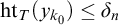 $\mathrm {ht}_T(y_{k_0}) \le \delta _n$
and
 $y_{k_0} \in (Z_n \upharpoonright \mathrm {ht}_T(y_{k_0}))$
, then let
 $Z_{n+1} = Z_n$
(roughly speaking, (a) says
 $y_{k_0}$
is not yet ready to be handled, (b) says
 $y_{k_0}$
is not relevant, and (c) says
 $y_{k_0}$
has already been handled). Now suppose that
 ${\mathrm {ht}_T(y_{k_0}) \le \delta _n}$
,
 $F_n(y_{k_0}) = 1$
, and
 $y_{k_0} \notin (Z_n \upharpoonright \mathrm {ht}_T(y_{k_0}))$
. Since
 $F_n$
is a subtree function, we can fix
 $y' \ge _T y_{k_0}$
with height
 $\delta _n$
such that
 $F_n(y') = 1$
. Note that
 $y' \notin Z_n \upharpoonright \delta _n$
. As T is normal, fix some
 $z \in T_\delta $
above
 $y'$
. Let
 $Z_{n+1} = Z_n \cup \{ z \}$
. By the inductive hypothesis and the fact that
 $z \upharpoonright \delta _n = y'$
is not in
 $Z_n \upharpoonright \delta _n$
, it easily follows that
 $Z_{n+1}$
has
 $(\le \! s)$
-to-one drop-downs to
 $\delta _n$
.
Case 2.
 $i = 1$
. Consider
 $\mathcal U_{k_0}$
,
 $\mathcal Y^{k_0}_{k_1}$
, and
 $t_{k_2}$
. Let l be the dimension of
 $\mathcal U_{k_0}$
. Applying the fact that
 $F_n$
fulfills
 $\mathcal U_{k_0}$
, we can find
 $\vec a = (a_0,\ldots ,a_{l-1}) \in \mathcal Y^{k_0}_{k_1} \upharpoonright \delta _n$
which is disjoint from
 $(Z_n \cup t_{k_2}) \upharpoonright \delta _n$
. Fix
 $\vec a^+ = (a_0^+,\ldots ,a_{l-1}^+) \in \mathcal Y^{k_0}_{k_1}$
above
 $\vec a$
. Since
 $\vec a$
is injective,
 $\vec a^+$
has unique drop-downs to
 $\delta _n$
. Note that
 $\vec a^+$
is disjoint from
 $t_{k_2}$
. Define
 $Z_{n+1} = Z_n \cup \{ a_0^+,\ldots ,a_{l-1}^+ \}$
. By the inductive hypothesis and the fact that
 $\{ a_0^+,\ldots ,a_{l-1}^+ \} \upharpoonright \delta _n$
is disjoint from
 $Z_n \upharpoonright \delta _n$
, it easily follows that
 $Z_{n+1}$
has
 $(\le \! s)$
-to-one drop-downs to
 $\delta _{n+1}$
.
As a second step, we define
 $F_{n+1}$
. Note that by Lemma 4.5,
 $Z_{n+1} \upharpoonright \delta _{n+1}$
has
 $(\le \! s)$
-to-one drop-downs to
 $\delta _n$
, and for all
 $y \in Z_{n+1} \upharpoonright \delta _{n+1}$
,
 $F_n(y \upharpoonright \delta _n) = 1$
. By the inductive hypothesis for
 $\delta _{n+1}$
, we can find an
 $\mathcal S$
-splitting subtree function
 $F_{n+1}$
extending
 $F_n$
with top level
 $\delta _{n+1}$
such that for all
 $y \in Z_{n+1} \upharpoonright \delta _{n+1}$
,
 $F_{n+1}(y) = 1$
.
This completes the construction. Define
 $F^+$
extending
 $\bigcup _n F_n$
so that for all
 $x \in T_{\delta }$
,
 $F^+(x) = 1$
if
 $x \in \bigcup _n Z_n$
, and
 $F^+(x) = 0$
otherwise. It is routine to check that
 $F^+$
is as required.
We now move on to the second main result of the section, which is that we can extend an
 $\mathcal S$
-splitting subtree function to fulfill a generalized promise assuming that the generalized promise is suitable for it in some way which we describe next.
Definition 5.5 (Suitable generalized promises).
Suppose that F is an
 $\mathcal S$
-splitting subtree function with top level
 $\beta $
and
 $\mathcal U$
is a generalized promise with dimension l and base level
 $\delta $
, where
 $\delta> \beta $
is a limit ordinal. We say that
 $\mathcal U$
is suitable for F if for some sequences
 $\langle \delta _n : n < \omega \rangle $
and
 $\langle \vec b_n : n < \omega \rangle $
:
-
•
$\mathcal U(\delta )$
is a singleton
$\{ \mathcal Y_0 \}$
; -
•
$\langle \delta _n : n < \omega \rangle $
is an increasing sequence of countable ordinals with supremum
$\delta $
, where
$\delta _0> \beta $
; -
•
$\langle \vec b_n : n < \omega \rangle $
is a sequence of disjoint tuples in
$\mathcal Y_0$
, where we let
$X_n$
be the elements in
$\vec b_n$
for all
$n < \omega $
; -
• for all
$0 < k < \omega $
,
$X_0 \cup \cdots \cup X_{k}$
has unique drop-downs to
$\delta _{k-1}$
; -
•
$X_0 \cup X_1$
has
$(\le \! 2)$
-to-one drop-downs to
$\beta $
and for all
$1 < k < \omega $
,
$X_0 \cup \cdots \cup X_k$
has
$(\le \! 2)$
-to-one drop-downs to
$\delta _{k-2}$
; -
• for all
$k> 0$
,
$(\bigcup _n X_n) \upharpoonright \delta _{k-1} = (X_0 \cup \cdots \cup X_k) \upharpoonright \delta _{k-1}$
; -
• for all
$x \in \bigcup _n X_n$
,
$F(x \upharpoonright \beta ) = 1$
.


Lemma 5.6. Suppose that F is an
 $\mathcal S$
-splitting subtree function with top level
 $\beta $
, U is a promise on T with base level greater than or equal to
 $\beta $
and root
 $(x_0,\ldots ,x_{m-1})$
, and for all
 $i < m$
,
 $F(x_i \upharpoonright \beta ) = 1$
. Then for some countable limit ordinal
 $\delta $
greater than the base level of U, the function
 $\mathcal U$
with domain
 $[\delta ,\omega _1)$
defined by
 $\mathcal U(\beta ) = \{ U \cap T_\beta ^m \}$
is a generalized promise which is suitable for F.
Proposition 5.7 (Adding generalized promises).
Suppose that F is an
 $\mathcal S$
-splitting subtree function with top level
 $\beta $
,
 $\Gamma $
is a countable collection of generalized promises whose base levels are less than or equal to
 $\beta $
, and F fulfills every member of
 $\Gamma $
. Assume that
 $\mathcal U$
is a generalized promise with base level
 $\delta> \beta $
which is suitable for F. Then there exists an
 $\mathcal S$
-splitting subtree function
 $F^+$
extending F with top level
 $\delta $
such that
 $F^+$
fulfills every member of
 $\Gamma \cup \{ \mathcal U \}$
.
Proof. Let
 $\mathcal U(\delta ) = \{ \mathcal Y_0 \}$
. Fix sequences
 $\langle \delta _n : n < \omega \rangle $
,
 $\langle \vec b_n : n < \omega \rangle $
, and
 ${\langle X_n : n < \omega \rangle }$
as in Definition 5.5. To help with the construction of
 $F^+$
, we fix the following objects:
-
• an enumeration
$\langle y_n : n < \omega \rangle $
of
$T \upharpoonright \delta $
; -
• an enumeration
$\langle \mathcal U_n : n < \omega \rangle $
of
$\Gamma $
; -
• for each
$n < \omega $
, an enumeration
$\langle \mathcal Y^n_k : k < \omega \rangle $
of
$\mathcal U_n(\delta )$
(possibly with repetitions); -
• an enumeration
$\langle t_n : n < \omega \rangle $
of all finite subsets of
$T_{\delta }$
; -
• a surjection
$h : \omega \to 2 \times \omega ^3$
such that every element of the codomain has an infinite preimage.


We define by induction an increasing sequence
 $\langle Z_n : n < \omega \rangle $
of finite subsets of
 $T_{\delta }$
together with a sequence
 $\langle F_n : n < \omega \rangle $
satisfying that for all
 $n < \omega $
:
-
(1)
$Z_n$
has unique drop-downs to
$\delta _n$
; -
(2)
$Z_n \upharpoonright \delta _n$
and
$(\bigcup _m X_m) \upharpoonright \delta _n$
are disjoint; -
(3)
$F_n$
is an
$\mathcal S$
-splitting subtree function extending F with top level
$\delta _n$
such that
$F_n(z \upharpoonright \delta _n) = 1$
for all
$z \in Z_n \cup \bigcup _m X_m$
; -
(4)
$F_n \subseteq F_{n+1}$
.


To begin, let
 $Z_0 = \emptyset $
. Since
 $X_0 \cup X_1$
has
 $(\le \! 2)$
-to-one drop-downs to
 $\beta $
, by Lemma 4.5 also
 $(X_0 \cup X_1) \upharpoonright \delta _0$
has
 $(\le \! 2)$
-to-one drop-downs to
 $\beta $
. We also know that for all
 $x \in X_0 \cup X_1$
,
 $F(x \upharpoonright \beta ) = 1$
. By Proposition 5.4 (Extension), we can fix an
 $\mathcal S$
-splitting subtree function
 $F_0$
extending F with top level
 $\delta _0$
which fulfills every member of
 $\Gamma $
and satisfies that for all
 $x \in X_0 \cup X_1$
,
 $F_0(x \upharpoonright \delta _0) = 1$
. Inductive hypotheses (1) and (2) are immediate, and (3) follows from the fact that
 $(\bigcup _m X_m) \upharpoonright \delta _0 = (X_0 \cup X_1) \upharpoonright \delta _0$
.
Now let
 $n < \omega $
be given and assume that
 $Z_n$
and
 $F_n$
are defined as required. Let
 $h(n) = (i,k_0,k_1,k_2)$
. We begin by defining
 $Z_{n+1}$
satisfying the following properties:
-
•
$Z_{n+1}$
has unique drop-downs to
$\delta _n$
; -
•
$Z_{n+1} \upharpoonright \delta _n$
and
$(\bigcup _m X_m) \upharpoonright \delta _n$
are disjoint; -
• for all
$x \in Z_{n+1}$
,
$F_n(x \upharpoonright \delta _n) = 1$
.


Note that these properties imply inductive hypotheses (1) and (2) for
 $n+1$
.
Case 1.
 $i = 0$
. Consider
 $y_{k_0}$
. If either (a)
 $\mathrm {ht}_T(y_{k_0})> \delta _n$
, (b)
 $\mathrm {ht}_T(y_{k_0}) \le \delta _n$
and
 $F_n(y_{k_0}) = 0$
, or (c)
 $\mathrm {ht}_T(y_{k_0}) \le \delta _n$
and
 $y_{k_0} \in (Z_n \cup \bigcup _m X_m) \upharpoonright \mathrm {ht}_T(y_{k_0})$
, then let
 $Z_{n+1} = Z_n$
. Now assume that
 $\mathrm {ht}_T(y_{k_0}) \le \delta _n$
,
 $F_n(y_{k_0}) = 1$
, and
 $y_{k_0}$
has nothing above it in
 $Z_n \cup (\bigcup _m X_m)$
. Since
 $F_n$
is a subtree function, we can fix some
 $y' \ge _T y_{k_0}$
with height
 $\delta _n$
such that
 $F_n(y') = 1$
. As T is normal, let
 $z \in T_\delta $
be above
 $y'$
. Define
 $Z_{n+1} = Z_n \cup \{ z \}$
. By the inductive hypothesis it easily follows that
 $Z_{n+1}$
has unique drop-downs to
 $\delta _n$
. Since
 $Z_{n} \upharpoonright \delta _n$
and
 $(\bigcup _m X_m) \upharpoonright \delta _n$
are disjoint and
 $y'$
is not in
 $(\bigcup _m X_m) \upharpoonright \delta _{n}$
, it follows that
 $Z_{n+1} \upharpoonright \delta _{n}$
and
 $(\bigcup _m X_m) \upharpoonright \delta _{n}$
are disjoint.
Case 2.
 $i = 1$
. Consider
 $\mathcal U_{k_0}$
,
 $\mathcal Y^{k_0}_{k_1}$
, and
 $t_{k_2}$
. Let l be the dimension of
 $\mathcal U_{k_0}$
. Applying the fact that
 $F_n$
fulfills
 $\mathcal U_{k_0}$
, we can find
 $\vec a = (a_0,\ldots ,a_{l-1}) \in \mathcal Y^{k_0}_{k_1} \upharpoonright \delta _n$
which is disjoint from
 $$ \begin{align*}(Z_n \cup t_{k_2} \cup X_0 \cup \cdots \cup X_{n+1}) \upharpoonright \delta_n, \end{align*} $$
such that for all
 $i < l$
,
 $F_n(a_i) = 1$
. Fix
 $\vec a^+ = (a_0^+,\ldots ,a_{l-1}^+) \in \mathcal Y^{k_0}_{k_1}$
above
 $\vec a$
. Since
 $\vec a$
is injective,
 $\vec a^+$
has unique drop-downs to
 $\delta _n$
. Note that
 $\vec a^+$
is disjoint from
 $t_{k_2}$
. Define
 $Z_{n+1} = Z_n \cup \{ a_0^+,\ldots ,a_{l-1}^+ \}$
. By the inductive hypothesis and the choice of
 $\vec a$
, it easily follows that
 $Z_{n+1}$
has unique drop-downs to
 $\delta _n$
. Also by the inductive hypothesis and the choice of
 $\vec a$
,
 $Z_{n+1} \upharpoonright \delta _n$
and
 $(X_0 \cup \cdots \cup X_{n+1}) \upharpoonright \delta _n$
are disjoint. But
 $(X_0 \cup \cdots \cup X_{n+1}) \upharpoonright \delta _n = (\bigcup _m X_m) \upharpoonright \delta _n$
, so
 $Z_{n+1} \upharpoonright \delta _n$
and
 $(\bigcup _m X_m) \upharpoonright \delta _n$
are disjoint.
This completes the definition of
 $Z_{n+1}$
in both cases. We know that for all
 ${x \in Z_{n+1} \cup X_0 \cup \cdots \cup X_{n+2}}$
,
 $F_n(x \upharpoonright \delta _n) = 1$
. Also,
 $(\bigcup _m X_m) \upharpoonright \delta _{n+1} = (X_0 \cup \cdots \cup X_{n+2}) \upharpoonright \delta _{n+1}$
, which by hypothesis and Lemma 4.5 has
 $(\le \! 2)$
-to-one drop-downs to
 $\delta _{n}$
. Since
 $Z_{n+1}$
has unique drop-downs to
 $\delta _n$
and
 $Z_{n+1} \upharpoonright \delta _n$
and
 $(\bigcup _m X_m) \upharpoonright \delta _n$
are disjoint, it easily follows that
 $(Z_{n+1} \cup X_0 \cup \cdots \cup X_{n+2}) \upharpoonright \delta _n$
has
 $(\le \! 2)$
-to-one drop-downs to
 $\delta _n$
. By Proposition 5.4 (Extension), fix an
 $\mathcal S$
-splitting subtree function
 $F_{n+1}$
extending
 $F_n$
with top level
 $\delta _{n+1}$
which fulfills every member of
 $\Gamma $
and satisfies that
 $F_{n+1}(x \upharpoonright \delta _{n+1}) = 1$
for all
 $x \in Z_{n+1} \cup X_0 \cup \cdots \cup X_{n+2}$
. Since
 $(X_0 \cup \cdots \cup X_{n+2}) \upharpoonright \delta _{n+1} = (\bigcup _m X_m) \upharpoonright \delta _{n+1}$
, for all
 $x \in \bigcup _m X_m$
,
 $F_{n+1}(x \upharpoonright \delta _{n+1}) = 1$
.
This completes the construction. Now define
 $F^+$
extending
 $\bigcup _m F_m$
so that for all
 $x \in T_{\delta }$
,
 $F^+(x) = 1$
if
 $x \in \bigcup _m Z_m \cup \bigcup _m X_m$
, and
 $F^+(x) = 0$
otherwise. It is routine to check that
 $F^+$
is as required.
6 The forcing poset
We are now ready to introduce our forcing poset for adding an uncountable downwards closed
 $\mathcal S$
-splitting normal subtree of T.
Definition 6.1. Let
 $\mathbb {P}(T,\mathcal S)$
be the forcing poset consisting of conditions which are pairs
 $(F,\Gamma )$
, where F is an
 $\mathcal S$
-splitting subtree function,
 $\Gamma $
is a countable collection of generalized promises with base levels less than or equal to the top level of F, and F fulfills every member of
 $\Gamma $
. Let
 $(G,\Sigma ) \le (F,\Gamma )$
if
 $F \subseteq G$
and
 $\Gamma \subseteq \Sigma $
.
We abbreviate
 $\mathbb {P}(T,\mathcal S)$
as
 $\mathbb {P}$
for Sections 6–8 and 10.
If
 $p = (F,\Gamma ) \in \mathbb {P}$
and
 $\beta $
is the top level of F, then we say that
 $\beta $
is the top level of p.
Proposition 6.2 (Extension).
Let
 $(F,\Gamma ) \in \mathbb {P}$
have top level
 $\beta $
. Let
 $\beta \le \gamma < \omega _1$
and let
 $X \subseteq T_\gamma $
be finite. Assume that X has
 $(\le \! s)$
-to-one drop-downs to
 $\beta $
and for all
 $x \in X$
,
 $F(x \upharpoonright \beta ) = 1$
. Then there exists some G such that
 $(G,\Gamma ) \le (F,\Gamma )$
,
 $(G,\Gamma )$
has top level
 $\gamma $
, and for all
 $x \in X$
,
 $G(x) = 1$
.
Proof. Immediate from Proposition 5.4 (Extension).
Proposition 6.3 (Adding generalized promises).
Let
 $(F,\Gamma ) \in \mathbb {P}$
have top level
 $\beta $
. Suppose that
 $\mathcal U$
is a generalized promise with base level
 $\delta> \beta $
which is suitable for F. Then there exists some G such that
 $(G,\Gamma \cup \{ \mathcal U \}) \in \mathbb {P}$
,
 $(G,\Gamma \cup \{ \mathcal U \}) \le (F,\Gamma )$
, and G has top level
 $\delta $
.
Proof. Immediate from Proposition 5.7 (Adding generalized promises).
The following result is the main tool for showing that
 $\mathbb {P}$
is totally proper.
Proposition 6.4 (Consistent extensions into dense sets).
Let
 $\lambda $
be a large enough regular cardinal. Assume:
-
•
$N \prec H(\lambda )$
is countable, and T and
$\mathbb {P}$
are in N; -
•
$(F,\Gamma ) \in N \cap \mathbb {P}$
has top level
$\beta $
; -
• D is a dense open subset of
$\mathbb {P}$
in N; -
•
$X \subseteq T_{N \cap \omega }$
is finite, X has
$(\le \! s)$
-to-one drop-downs to
$\beta $
, and for all
$x \in X$
,
$F(x \upharpoonright \beta ) = 1$
.


Then there exists a condition
 $(G,\Sigma ) \le (F,\Gamma )$
in
 $N \cap D$
with some top level
 $\gamma $
such that for all
 $x \in X$
,
 $G(x \upharpoonright \gamma ) = 1$
.
Proof. Since T is normal, we can fix
 $\xi < N \cap \omega _1$
greater than or equal to
 $\beta $
such that X has unique drop-downs to
 $\xi $
. By Lemma 4.5,
 $X \upharpoonright \xi $
has
 $(\le \! s)$
-to-one drop-downs to
 $\beta $
. Applying Proposition 6.2 (Extension) in N, find
 $F'$
in N such that
 $(F',\Gamma ) \le (F,\Gamma )$
,
 $(F',\Gamma )$
has top level
 $\xi $
, and for all
 $x \in X$
,
 $F'(x \upharpoonright \xi ) = 1$
. Now to simplify notation, let us just assume that
 $\beta = \xi $
and
 $F = F'$
.
Fix some injective tuple
 $\vec a = (a_0,\ldots ,a_{m-1})$
which lists the elements of X. Suppose for a contradiction that for every
 $(G,\Sigma ) \le (F,\Gamma )$
in
 $N \cap D$
with some top level
 $\gamma $
, there exists
 $j < m$
such that
 $G(a_j \upharpoonright \gamma ) = 0$
. Let
 $x_i := a_i \upharpoonright \beta $
for all
 $i < m$
and let
 $\vec x = (x_0,\ldots ,x_{m-1})$
.
Define W as the set of all tuples
 $\vec b = (b_0,\ldots ,b_{m-1})$
in the derived tree
 $T_{\vec x}$
satisfying that whenever
 $(G,\Sigma ) \le (F,\Gamma )$
is in D and has some top level
 $\gamma $
, where the height of the elements of
 $\vec b$
is greater than or equal to
 $\gamma $
, then for some
 $j < m$
,
 $G(b_j \upharpoonright \gamma ) = 0$
. By elementarity,
 $W \in N$
. Note that W is downwards closed in
 $T_{\vec x}$
.
We claim that W is uncountable. If not, then by elementarity there exists some
 $\zeta \in N \cap \omega _1$
greater than
 $\beta $
such that every member of W is in
 $(T \upharpoonright \zeta )^m$
. We claim that
 $\vec a \upharpoonright \zeta $
is in W, which is a contradiction. Otherwise, there exists some
 $(G,\Sigma ) \le (F,\Gamma )$
in D with some top level
 $\gamma $
, where
 $\gamma \le \zeta $
, such that for all
 $j < m$
,
 $G(a_j \upharpoonright \gamma ) = 1$
. Since
 $(a_0 \upharpoonright \zeta ,\ldots ,a_{m-1} \upharpoonright \zeta ) \in N$
, by elementarity we may assume that
 $(G,\Sigma )$
is in N. So
 $(G,\Sigma ) \le (F,\Gamma )$
is in
 $N \cap D$
and for all
 $j < m$
,
 $G(a_j \upharpoonright \gamma ) = 1$
, contradicting our assumptions.
Apply Lemma 4.2 to fix a promise
 $U \subseteq W$
with the same root as W, which by elementarity we may assume is in N. The root of U is
 $\vec x$
, so
 $\beta $
is both the base level of U and also the top level of
 $(F,\Gamma )$
. Also,
 $F(x_i) = 1$
for all
 $i < m$
. Applying Lemma 5.6, fix a countable limit ordinal
 $\delta> \beta $
such that the function
 $\mathcal U$
with domain
 $[\delta ,\omega _1)$
defined by
 $\mathcal U(\gamma ) = \{ U \cap T_\gamma ^m \}$
is a generalized promise which is suitable for F. By elementarity, we may assume that
 $\delta $
and
 $\mathcal U$
are in N. Apply Proposition 6.3 (Adding generalized promises) in N to find some G in N such that
 $(G,\Gamma \cup \{ \mathcal U \}) \in \mathbb {P}$
,
 $(G,\Gamma \cup \{ \mathcal U \}) \le (F,\Gamma )$
, and G has top level
 $\delta $
.
Now fix
 $(H,\Lambda ) \le (G,\Gamma \cup \{ \mathcal U \})$
in
 $N \cap D$
. Let
 $\gamma $
be the top level of H. Since H fulfills
 $\mathcal U$
and
 $\mathcal U(\gamma ) = \{ U \cap T_\gamma ^m \}$
, there exists a tuple
 $\vec b = (b_0,\ldots ,b_{m-1}) \in U \cap T_\gamma ^m$
such that for all
 $i < m$
,
 $H(b_i) = 1$
. Since
 $U \subseteq W$
,
 $\vec b \in W$
. But the condition
 $(H,\Lambda )$
witnesses that
 $\vec b \notin W$
, and we have a contradiction.
Theorem 6.5 (Existence of total master conditions).
Let
 $\lambda $
be a large enough regular cardinal. Assume:
-
•
$N \prec H(\lambda )$
is countable, and T and
$\mathbb {P}$
are in N; -
•
$(F,\Gamma ) \in N \cap \mathbb {P}$
has top level
$\beta $
; -
•
$X \subseteq T_{N \cap \omega }$
is finite, X has
$(\le \! s)$
-to-one drop-downs to
$\beta $
, and for all
$x \in X$
,
$F(x \upharpoonright \beta ) = 1$
; -
• h is a function defined on the set of all generalized promises on T which lie in N such that for any
$\mathcal U \in \mathrm {dom}(h)$
with some dimension l and base level
$\gamma $
,
$h(\mathcal U)$
is a generalized promise on T with dimension l and base level
$\gamma $
such that
$\mathcal U \upharpoonright [\gamma ,N \cap \omega _1) = h(\mathcal U) \upharpoonright [\gamma ,N \cap \omega _1)$
.


Then there exists a condition
 $(G,\Sigma ) \le (F,\Gamma )$
with top level
 $N \cap \omega _1$
such that
 $\Sigma \subseteq N$
,
 $(G,\Sigma )$
is a total master condition for N, for all
 $x \in X$
,
 $G(x) = 1$
, and for any
 $\mathcal U \in \Sigma $
, F fulfills
 $h(\mathcal U)$
.
For the purpose of proving that
 $\mathbb {P}$
is totally proper, we can ignore the third and fourth bullet points of Theorem 6.5 (or let
 $X = \emptyset $
and let h be the identity function). In Section 10, the third bullet point is used to show that
 $\mathbb {P}$
is
 $(< \! \omega _1)$
-proper and the fourth bullet point is used to prove that
 $\mathbb {P}$
has the
 $\omega _2$
-p.i.c.
Proof. To help with the construction of
 $(G,\Sigma )$
, fix the following objects:
-
• an enumeration
$\langle y_n : n < \omega \rangle $
of
$T \upharpoonright (N \cap \omega _1)$
; -
• an enumeration
$\langle D_n : n < \omega \rangle $
of all dense open subsets of
$\mathbb {P}$
which lie in N; -
• an enumeration
$\langle t_n : n < \omega \rangle $
of all finite subsets of
$T_{N \cap \omega _1}$
; -
• an enumeration
$\langle \mathcal U_n : n < \omega \rangle $
of all generalized promises on T which lie in N; -
• for every
$n < \omega $
, enumerations
$\langle \mathcal Y^n_k : k < \omega \rangle $
and
$\langle \mathcal Z^n_k : k < \omega \rangle $
of
$\mathcal U_n(N \cap \omega _1)$
and
$h(\mathcal U_n)(N \cap \omega _1)$
respectively (possibly with repetitions); -
• a surjection
$g : \omega \to 3 \times \omega ^3$
such that every member of the codomain has an infinite preimage.


We define by induction sequences
 $\langle (F_n,\Gamma _n) : n < \omega \rangle $
,
 $\langle \gamma _n : n < \omega \rangle $
, and
 $\langle Z_n : n < \omega \rangle $
satisfying the following properties:
-
(1)
$(F_0,\Gamma _0) = (F,\Gamma )$
,
$\gamma _0 = \beta $
, and
$Z_0 = X$
; -
(2) for all
$n < \omega $
,
$(F_n,\Gamma _n) \in N \cap \mathbb {P}$
has top level
$\gamma _n$
and
$(F_{n+1},\Gamma _{n+1}) \le (F_n,\Gamma _n)$
; -
(3)
$\langle Z_n : n < \omega \rangle $
is an increasing sequence of finite subsets of
$T_{N \cap \omega _1}$
; -
(4) for all
$n < \omega $
,
$Z_n$
has
$(\le \! s)$
-to-one drop-downs to
$\gamma _n$
, and for all
$x \in Z_n$
,
$F_n(x \upharpoonright \gamma _n) = 1$
.


Let
 $(F_0,\Gamma _0) = (F,\Gamma )$
,
 $\gamma _0 = \beta $
, and
 $Z_0 = X$
. Now let
 $n < \omega $
and assume that
 $(F_n,\Gamma _n)$
,
 $\gamma _n$
, and
 $Z_n$
are defined and satisfy the required properties. Let
 $g(n) = (i,k_0,k_1,k_2)$
.
Case 1.
 $i = 0$
. We consider the element
 $y_{k_0} \in T \upharpoonright (N \cap \omega _1)$
. If either (a)
 $\mathrm {ht}_T(y_{k_0})> \gamma _n$
, (b)
 $\mathrm {ht}_T(y_{k_0}) \le \gamma _n$
and
 $F_n(y_{k_0}) = 0$
, or (c)
 $\mathrm {ht}_T(y_{k_0}) \le \gamma _n$
and
 ${y_{k_0} \in (Z_n \upharpoonright \mathrm {ht}_T(y_{k_0}))}$
, then let
 $Z_{n+1} = Z_n$
. Assume that
 $\mathrm {ht}_T(y_{k_0}) \le \gamma _n$
,
 $F_n(y_{k_0}) = 1$
, and
 $y_{k_0}$
is not below a member of
 $Z_n$
. Since
 $F_n$
is an
 $\mathcal S$
-splitting subtree function, we can fix some
 $y' \in T_{\gamma _n}$
with
 $y_{k_0} \le _T y'$
such that
 $F_n(y') = 1$
. As T is normal, fix
 $z \in T_{N \cap \omega _1}$
above
 $y'$
. Define
 $Z_{n+1} = Z_n \cup \{ z \}$
. By the inductive hypothesis,
 $Z_{n+1}$
has
 $(\le \! s)$
-to-one drop-downs to
 $\gamma _n$
. Now in either case, let
 $(F_{n+1},\Gamma _{n+1}) = (F_n,\Gamma _n)$
and
 $\gamma _{n+1} = \gamma _n$
.
Case 2.
 $i = 1$
. Applying Proposition 6.4 (Consistent extensions into dense sets), fix a condition
 $(F_{n+1},\Gamma _{n+1}) \le (F_n,\Gamma _n)$
in
 $N \cap D_{k_0}$
with some top level
 $\gamma _{n+1}$
such that for all
 $x \in Z_{n}$
,
 $F_{n+1}(x \upharpoonright \gamma _{n+1}) = 1$
. Note that
 $Z_{n}$
has
 $(\le \! s)$
-to-one drop-downs to
 $\gamma _{n+1}$
by Lemma 4.5. Define
 $Z_{n+1} = Z_n$
.
Case 3.
 $i = 2$
. If
 $\mathcal U_{k_0} \notin \Gamma _n$
, then let
 $(F_{n+1},\Gamma _{n+1}) = (F_n,\Gamma _n)$
,
 $\gamma _{n+1} = \gamma _n$
, and
 $Z_{n+1} = Z_n$
. Assume that
 $\mathcal U_{k_0} \in \Gamma _n$
. Let l be the dimension of
 $\mathcal U_{k_0}$
. Since
 $(F_n,\Gamma _n)$
is a condition,
 $F_n$
fulfills
 $\mathcal U_{k_0}$
. As
 $\mathcal Y^{k_0}_{k_1} \upharpoonright \gamma _n \in \mathcal U_{k_0}(\gamma _n)$
, we can find a tuple
 ${\vec d = (d_0,\ldots ,d_{l-1})}$
in
 $\mathcal Y^{k_0}_{k_1} \upharpoonright \gamma _n$
which is disjoint from
 $(t_{k_2} \cup Z_n) \upharpoonright \gamma _n$
and satisfies that for all
 $i < l$
,
 $F_n(d_i) = 1$
. Now
 $\mathcal U_{k_0} \upharpoonright [\gamma _n,N \cap \omega _1) = h(\mathcal U_{k_0}) \upharpoonright [\gamma _n,N \cap \omega _1)$
. So
 $\mathcal Z^{k_0}_{k_1} \upharpoonright \gamma _n \in h(\mathcal U_{k_0})(\gamma _n) = \mathcal U_{k_0}(\gamma _n)$
. Again since
 $F_n$
fulfills
 $\mathcal U_{k_0}$
, we can find a tuple
 $\vec e = (e_0,\ldots ,e_{l-1})$
in
 $\mathcal Z^{k_0}_{k_1} \upharpoonright \gamma _n$
which is disjoint from both
 $\vec d$
and
 $(t_{k_2} \cup Z_n) \upharpoonright \gamma _n$
and satisfies that for all
 $i < l$
,
 $F_n(e_i) = 1$
.
Fix tuples
 $\vec d^+ = (d_0^+,\ldots ,d_{l-1}^+)$
and
 $\vec e^+ = \{ e_0^+,\ldots ,e_{l-1}^+ \}$
which are above
 $\vec d$
and
 $\vec e$
and in
 $\mathcal Y^{k_0}_{k_1}$
and
 $\mathcal Z^{k_0}_{k_1}$
, respectively. Observe that
 $\{ d_0^+,\ldots ,d_{l-1}^+,e_0^+,\ldots ,e_{l-1}^+ \}$
has unique drop-downs to
 $\gamma _n$
. Define
 $Z_{n+1} = Z_n \cup \{ d_0^+,\ldots ,d_{l-1}^+,e_0^+,\ldots ,e_{l-1}^+ \}$
. Note that by the inductive hypothesis and the choice of
 $\vec d$
and
 $\vec e$
,
 $Z_{n+1}$
has
 $(\le \! s)$
-to-one drop-downs to
 $\gamma _n$
. Finally, let
 $(F_{n+1},\Gamma _{n+1}) = (F_n,\Gamma _n)$
and
 $\gamma _{n+1} = \gamma _n$
.
This completes the induction. Define a condition
 $(G,\Sigma )$
as follows. Let
 $\Sigma = \bigcup _n \Gamma _n$
. Define G which extends
 $\bigcup _n F_n$
so that for all
 $x \in T_{N \cap \omega _1}$
,
 $G(x) = 1$
if
 $x \in \bigcup _n Z_n$
, and
 $G(x) = 0$
otherwise. We leave it to the reader to check that this works.
Corollary 6.6. The forcing poset
 $\mathbb {P}$
is totally proper.
It is routine to show that whenever G is a generic filter on
 $\mathbb {P}$
, then in
 $V[G]$
the set
 $$ \begin{align*}U = \{ x \in T : \exists (F,\Gamma) \in G \ F(x) = 1 \} \end{align*} $$
is an uncountable downwards closed subtree of T which is normal and satisfies that for all
 $x \in U$
,
 $|\mathrm {Imm}_U(x)| \in \mathcal S$
.
The following lemma is easy.
Lemma 6.7. Suppose that
 $(F,\Gamma )$
and
 $(F,\Sigma )$
are conditions in
 $\mathbb {P}$
. Then
 $(F,\Gamma \cup \Sigma ) \in \mathbb {P}$
is a lower bound of both
 $(F,\Gamma )$
and
 $(F,\Sigma )$
.
Corollary 6.8. Assuming
CH
,
 $\mathbb {P}$
is
 $\omega _2$
-c.c.
Proof. If CH holds, then there are only
 $\omega _1$
-many
 $\mathcal S$
-splitting subtree functions.
7 Not adding small-splitting subtrees
Recall that T is a fixed normal Aronszajn tree,
 $\mathcal S \subseteq \omega \setminus 2$
, for all
 $x \in T$
,
 $|\mathrm {Imm}_T(x)| \ge \sup (\mathcal S)$
, and
 $\mathbb {P} = \mathbb {P}(T,\mathcal S)$
. In Section 11 we prove that for any
 $2 < n < \omega $
, it is consistent that every
 $(\ge \! n)$
-splitting normal Aronszajn tree contains an uncountable downwards closed n-splitting normal subtree, but there exists an infinitely splitting normal Aronszajn tree which contains no uncountable downwards closed
 $(< \! n)$
-splitting subtree. For this purpose, we need the following theorem.
Theorem 7.1. Let
 $1 < n \le s$
. Suppose tlhat S is an
 $\omega _1$
-tree which does not contain an uncountable downwards closed
 $(< \! n)$
-splitting subtree. Then
 $\mathbb {P}$
forces that S does not contain an uncountable downwards closed
 $(< \! n)$
-splitting subtree.
Applying the above theorem for
 $n = 2$
, we get the following corollary.
Corollary 7.2. The forcing poset
 $\mathbb {P}$
preserves Aronszajn trees. In particular,
 $\mathbb {P}$
forces that T is Aronszajn.
The next lemma is an easy consequence of the existence of total master conditions.
Lemma 7.3. Let S be an
 $\omega _1$
-tree. Let
 $(F,\Gamma ) \in \mathbb {P}$
have top level
 $\beta $
and suppose that
 $(F,\Gamma )$
forces that
 $\dot W$
is a subset of S. Then there exists a club
 $D \subseteq \omega _1$
consisting of limit ordinals greater than
 $\beta $
such that for all
 $\delta \in D$
, for any finite set
 $X \subseteq T_\delta $
with
 $(\le \! s)$
-to-one drop-downs to
 $\beta $
and satisfying that for all
 $x \in X$
,
 $F(x \upharpoonright \beta ) = 1$
, there exists some
 $(G,\Sigma ) \le (F,\Gamma )$
with top level
 $\delta $
such that for all
 $x \in X$
,
 $G(x) = 1$
, and
 $(G,\Sigma )$
decides
 $\dot W \cap (S \upharpoonright \delta )$
.
Proof. Fix some large enough regular cardinal
 $\lambda $
. Let
 $\langle N_\alpha : \alpha < \omega _1 \rangle $
be an increasing and continuous sequence of countable elementary substructures of
 $H(\lambda )$
such that T,
 $\mathbb {P}$
,
 $(F,\Gamma )$
, S, and
 $\dot W$
are members of
 $N_0$
and
 $N_\alpha \in N_{\alpha +1}$
for all
 $\alpha < \omega _1$
. Let
 $D = \{ \delta < \omega _1 : N_\delta \cap \omega _1 = \delta \}$
. Then D is a club set of limit ordinals greater than
 $\beta $
.
Consider any
 $\delta \in D$
. Let
 $X \subseteq T_\delta $
be finite with
 $(\le \! s)$
-to-one drop-downs to
 $\beta $
and satisfying that for all
 $x \in X$
,
 $F(x \upharpoonright \beta ) = 1$
. By Theorem 6.5 (Existence of total master conditions), we can find a total master condition
 $(G,\Sigma ) \le (F,\Gamma )$
for
 $N_\delta $
with top level
 $N_\delta \cap \omega _1 = \delta $
such that for all
 $x \in X$
,
 $G(x) = 1$
. Since
 $S \upharpoonright \delta \subseteq N_\delta $
and
 $(G,\Sigma )$
is a total master condition for
 $N_\delta $
,
 $(G,\Sigma )$
decides
 $\dot W \cap (S \upharpoonright \delta )$
.
Lemma 7.4. Let
 $1 < n \le s$
. Assume that S is an
 $\omega _1$
-tree which does not contain an uncountable downwards closed
 $(< \! n)$
-splitting subtree. Let
 $(F,\Gamma ) \in \mathbb {P}$
have top level
 $\beta $
and suppose that
 $(F,\Gamma )$
forces that
 $\dot W$
is a downwards closed
 $(< \! n)$
-splitting subtree of S.
Let
 $\lambda $
be a large enough regular cardinal. Assume:
-
•
$N \prec H(\lambda )$
is countable, and T,
$\mathbb {P}$
,
$(F,\Gamma )$
, S, and
$\dot W$
are in N; -
•
$c \in S_{N \cap \omega _1}$
; -
• Y is a finite subset of
$T_{N \cap \omega _1}$
with
$(\le \! s)$
-to-one drop-downs to
$\beta $
such that for all
$y \in Y$
,
$F(y \upharpoonright \beta ) = 1$
.


Then there exists a condition
 $(G,\Sigma ) \le (F,\Gamma )$
in N with some top level
 $\gamma $
such that for all
 $y \in Y$
,
 $G(y \upharpoonright \gamma ) = 1$
and
 $(G,\Sigma ) \Vdash c \notin \dot W$
.
Proof. As in the first paragraph of the proof of Proposition 6.4, without loss of generality we may assume that Y has unique drop-downs to
 $\beta $
. Fix a club
 $D \subseteq \omega _1$
as described in Lemma 7.3. By elementarity, we may assume that
 $D \in N$
. So
 $N \cap \omega _1$
is a limit point of D. Suppose for a contradiction that for all
 $(G,\Sigma ) \le (F,\Gamma )$
in N, if
 $\gamma $
is the top level of
 $(G,\Sigma )$
and for all
 $y \in Y$
,
 $G(y \upharpoonright \gamma ) = 1$
, then it is not the case that
 $(G,\Sigma ) \Vdash c \notin \dot W$
. Let
 $\vec a = (a_0,\ldots ,a_{l-1})$
be an injective tuple which enumerates Y. Let
 $x_i = a_i \upharpoonright \beta $
for all
 $i < l$
.
Define B as the set of all
 $b \in S$
satisfying that
 $c \upharpoonright \beta <_S b$
, the height
 $\delta $
of b is in D, and there exists a tuple
 $\vec y = (y_0,\ldots ,y_{l-1}) \in T_{\delta }^l$
such that
 $x_i <_T y_i$
for all
 $i < l$
, and whenever
 $(G,\Sigma ) \le (F,\Gamma )$
has some top level
 $\gamma \le \delta $
and for all
 $i < l$
,
 $G(y_i \upharpoonright \gamma ) = 1$
, then it is not the case that
 $(G,\Sigma ) \Vdash b \notin \dot W$
.
Note the following facts:
-
(1)
$B \in N$
by elementarity; -
(2) since
$\dot W$
is forced to be downwards closed, for all
$\zeta \in D$
with
$\beta < \zeta < N \cap \omega _1$
,
$c \upharpoonright \zeta \in B$
as witnessed by
$\vec a \upharpoonright \zeta $
; -
(3) similarly, if
$b \in B$
as witnessed by
$\vec y$
, and
$\zeta \in D$
is such that
$\beta < \zeta \le \mathrm {ht}_T(b)$
, then
$b \upharpoonright \zeta \in B$
as witnessed by
$\vec y \upharpoonright \zeta $
.


Since
 $N \cap \omega _1$
is a limit point of D, (1) and (2) imply that B is uncountable.
Let
 $\bar B$
be the set of
 $y \in S$
for which there exists some
 $b \in B$
with
 $y <_{S} b$
. Then
 $\bar B$
is an uncountable downwards closed subtree of S. Since S does not contain an uncountable downwards closed
 $(< \! n)$
-splitting subtree,
 $\bar B$
is not
 $(< \! n)$
-splitting. So we can fix some
 $d \in \bar B$
which has at least n-many immediate successors in
 $\bar B$
. Fix distinct immediate successors
 $d_0,\ldots ,d_{n-1}$
of d in
 $\bar B$
. For each
 $i < n$
, choose some
 $e_i \in B$
with
 $d_i <_{S} e_i$
. By property (3) in the previous paragraph and dropping down to the lowest height of the elements
 $e_0,\ldots ,e_{n-1}$
, we may assume without loss of generality that all of the
 $e_i$
’s have the same height
 $\delta $
. For each
 $i < n$
, pick a tuple
 $\vec y^i = (y_0^i,\ldots ,y_{l-1}^i) \in T_{\delta }^l$
which witnesses that
 $e_i \in B$
.
Now for all
 $i < n$
and
 $j < l$
,
 $y_j^i \upharpoonright \beta = x_j$
, and in particular,
 $F(y_j^i \upharpoonright \beta ) = 1$
. Define
 $X = \{ y_j^i : i < n, \ j < l \}$
. Then every member of
 $T_\beta $
either has nothing above it in X, or is equal to
 $x_j$
for some
 $j < l$
and has exactly the elements
 $y_j^0,\ldots ,y_j^{n-1}$
above it in X. Since
 $n \le s$
, it follows that X has
 $(\le \! s)$
-to-one drop-downs to
 $\beta $
. As
 $\delta \in D$
, we can fix some
 $(G,\Sigma ) \le (F,\Gamma )$
with top level
 $\delta $
such that for all
 $i < n$
and
 $j < l$
,
 $G(y_j^i) = 1$
and
 $(G,\Sigma )$
decides
 $\dot W \cap (S \upharpoonright \delta )$
. Then for each
 $i < n$
, since
 $\vec y^i$
witnesses that
 $e_i \in B$
, it is not the case that
 $(G,\Sigma ) \Vdash e_i \notin \dot W$
. But
 $(G,\Sigma )$
forces that
 $\dot W$
is
 $(< \! n)$
-splitting and
 $(G,\Sigma )$
decides
 $\dot W \cap S_{\mathrm {ht}_{S}(d)+1}$
. So there must exist some
 $i < n$
such that
 $(G,\Sigma ) \Vdash d_i \notin \dot W$
. As
 $\dot W$
is forced to be downwards closed and
 $d_i <_{S} e_i$
,
 $(G,\Sigma ) \Vdash e_i \notin \dot W$
, which is a contradiction.
Proof of Theorem 7.1.
Let
 $1 < n \le s$
and suppose that S is an
 $\omega _1$
-tree which does not contain an uncountable downwards closed
 $(< \! n)$
-splitting subtree. Consider a condition
 $(F,\Gamma ) \in \mathbb {P}$
with some top level
 $\beta $
and assume that
 $(F,\Gamma )$
forces that
 $\dot W$
is a downwards closed
 $(< \! n)$
-splitting subtree of S. We find an extension of
 $(F,\Gamma )$
which forces that
 $\dot W$
is countable.
Fix a large enough regular cardinal
 $\lambda $
and a countable
 $N \prec H(\lambda )$
such that T,
 $\mathbb {P}$
,
 $(F,\Gamma )$
, S, and
 $\dot W$
are in N. Now proceed as in the proof of Theorem 6.5 (Existence of total master conditions) to build a descending sequence
 $\langle (F_n,\Gamma _n) : n < \omega \rangle $
of conditions in N below
 $(F,\Gamma )$
and a lower bound
 $(G,\Sigma )$
which is a total master condition for N, with the following adjustment. Modify the bookkeeping so that for every
 $c \in S_{N \cap \omega _1}$
, there exists some
 $n < \omega $
such that
 $(F_{n+1},\Gamma _{n+1})$
forces that
 $c \notin \dot W$
. This is possible by Lemma 7.4. As W is forced to be downwards closed, clearly
 $(G,\Sigma )$
forces that
 $\dot W$
is a subset of
 $S \upharpoonright (N \cap \omega _1)$
, and hence is countable.
8 Preserving suslin trees
In some of our consistency results of Sections 9 and 11, we will need to preserve certain Suslin trees after forcing with
 $\mathbb {P}$
. This is possible by the following theorem.
Theorem 8.1. Suppose that S is a normal Suslin tree such that
 $\Vdash _S T \ \text {is Aronszajn}$
. Then
 $\mathbb {P}$
forces that S is Suslin.
The main tool for proving Theorem 8.1 is the following lemma.
Lemma 8.2. Suppose that S is a normal Suslin tree such that
 $\Vdash _S T \ \text {is Aronszajn}$
. Let
 $(F,\Gamma ) \in \mathbb {P}$
have top level
 $\beta $
and suppose that
 $(F,\Gamma )$
forces that
 $\dot E$
is a dense open subset of S.
Let
 $\lambda $
be a large enough regular cardinal. Assume:
-
•
$N \prec H(\lambda )$
is countable, and T,
$\mathbb {P}$
,
$(F,\Gamma )$
, S, and
$\dot E$
are in N; -
•
$c \in S_{N \cap \omega _1}$
; -
• Y is a finite subset of
$T_{N \cap \omega _1}$
with
$(\le \! s)$
-to-one drop-downs to
$\beta $
such that for all
$y \in Y$
,
$F(y \upharpoonright \beta ) = 1$
.


Then there exists a condition
 $(G,\Sigma ) \le (F,\Gamma )$
in N with some top level
 $\gamma $
such that for all
 $y \in Y$
,
 $G(y \upharpoonright \gamma ) = 1$
and
 $(G,\Sigma ) \Vdash c \in \dot E$
.
Proof. As in the first paragraph of the proof of Proposition 6.4 (Consistent extensions into dense sets), without loss of generality we may assume that Y has unique drop-downs to
 $\beta $
. Suppose for a contradiction that for all
 $(G,\Sigma ) \le (F,\Gamma )$
in N, if
 $\gamma $
is the top level of
 $(G,\Sigma )$
and for all
 $y \in Y$
,
 $G(y \upharpoonright \gamma ) = 1$
, then it is not the case that
 $(G,\Sigma ) \Vdash c \in \dot E$
. Fix an injective tuple
 $(a_0,\ldots ,a_{l-1})$
which enumerates Y. Define
 $x_i = a_i \upharpoonright \beta $
for all
 $i < l$
and let
 $\vec x = (x_0,\ldots ,x_{l-1})$
.
Define B as the set of all
 $b \in S$
satisfying that
 $c \upharpoonright \beta <_{S} b$
, and letting
 $\delta = \mathrm {ht}_S(b)$
, there exists some
 $\vec y = (y_0,\ldots ,y_{l-1}) \in T_{\vec x} \cap T_\delta ^l$
such that whenever
 $(G,\Sigma ) \le (F,\Gamma )$
has some top level
 $\gamma \le \delta $
and for all
 $i < l$
,
 $G(y_i \upharpoonright \gamma ) = 1$
, then it is not the case that
 $(G,\Sigma ) \Vdash b \in \dot E$
.
Note the following facts:
-
(1)
$B \in N$
by elementarity; -
(2) since
$\dot E$
is forced to be open, for all
$\zeta $
with
$\beta \le \zeta < N \cap \omega _1$
,
$c \upharpoonright \zeta \in B$
as witnessed by
$\vec a \upharpoonright \zeta $
; -
(3) if
$b \in B$
as witnessed by
$\vec y$
and
$\zeta $
is such that
$\beta \le \zeta \le \mathrm {ht}_T(b)$
, then
$b \upharpoonright \zeta \in B$
as witnessed by
$\vec y \upharpoonright \zeta $
.


These properties imply that B is uncountable and downwards closed in
 $S_{c \upharpoonright \beta }$
.
For any
 $e \in B$
, let
 $\delta _e = \mathrm {ht}_S(e)$
and define
 $\mathcal Y_e$
to be the set of all
 $\vec y = (y_0,\ldots ,y_{l-1}) \in T_{\vec x} \cap T_{\delta _e}^l$
witnessing that
 $e \in B$
, which means that whenever
 $(G,\Sigma ) \le (F,\Gamma )$
has some top level
 $\gamma \le \delta _e$
and for all
 $i < l$
,
 $G(y_i \upharpoonright \gamma ) = 1$
, then it is not the case that
 $(G,\Sigma ) \Vdash e \in \dot E$
. Note that by (3) above, for all e and f in B such that
 $e <_S f$
,
 $\mathcal Y_f \upharpoonright \delta _e \subseteq \mathcal Y_e$
.
Since
 $S_{c \upharpoonright \beta }$
is a normal Suslin tree and B is an uncountable downwards closed subset of
 $S_{c \upharpoonright \beta }$
, we can fix some
 $d \ge _S c \upharpoonright \beta $
such that
 $S_d \subseteq B$
. Fix a generic filter
 $G_S$
on S with
 $d \in G_S$
. So
 $G_S$
is a cofinal branch of S, and since
 $d \in G_S$
,
 $G_S \cap S_{c \upharpoonright \beta } \subseteq B$
. Working in
 $V[G_S]$
, define
 $$ \begin{align*}W = \bigcup \{ \mathcal Y_e : e \in G_S \cap S_{c \upharpoonright \beta} \}. \end{align*} $$
So for all
 $\beta \le \gamma < \omega _1$
,
 $W \cap T_{\gamma }^l = \mathcal Y_{G_S(\gamma )}$
. By the last comment of the previous paragraph, W is a downwards closed uncountable subset of
 $T_{\vec x}$
. Using Lemma 4.2, fix a promise
 $U \subseteq W$
with root
 $\vec x$
.
By our assumption on S, T is still Aronszajn in
 $V[G_S]$
. So we can apply Lemma 5.6 in
 $V[G_S]$
to find a countable limit ordinal
 $\delta> \beta $
such that the function
 $\mathcal U$
with domain
 $[\delta ,\omega _1)$
defined by
 $\mathcal U(\gamma ) = \{ U \cap T_\gamma ^l \}$
is a generalized promise which is suitable for F. Now let
 $\dot W$
,
 $\dot U$
,
 $\dot \delta $
, and
 $\dot {\mathcal U}$
be S-names which d forces satisfy the above properties.
Since S is countably distributive, we can extend d to
 $d'$
which decides
 $\dot \delta $
and
 $\dot U \cap T_{\dot \delta }^l$
as
 $\delta $
and
 $\mathcal Y_0$
, and decides sequences
 $\langle \delta _n : n < \omega \rangle $
and
 $\langle \vec b_n : n < \omega \rangle $
which witness that
 $\dot {\mathcal U}$
is suitable for F. Observe that by absoluteness these sequences satisfy the bullet points of Definition 5.5 (Suitable generalized promises) in V. Working in V and using the countable distributivity of S, define
 $\mathcal V$
with domain
 $[\delta ,\omega _1)$
so that for all
 $\delta \le \zeta < \omega _1$
,
 $\mathcal V(\zeta )$
is the set of all
 $\mathcal Y \subseteq T_\zeta ^l$
such that for some
 $d^* \ge _S d'$
,
 $d^* \Vdash _S \mathcal Y = \dot U \cap T_{\zeta }^l$
. Note that
 $\mathcal V(\delta ) = \{ \mathcal Y_0 \}$
, and each
 $\mathcal V(\zeta )$
is countable as S is c.c.c. It is now routine to check that
 $\mathcal V$
is a generalized promise in V which is suitable for F.
Applying Proposition 6.3 (Adding generalized promises), fix some G such that
 $(G,\Gamma \cup \{ \mathcal V \}) \le (F,\Gamma )$
and G has top level
 $\delta $
. Since
 $(F,\Gamma )$
forces that
 $\dot E$
is dense in S, we can fix
 $(H,\Lambda ) \le (G,\Gamma \cup \{ \mathcal V \})$
which decides for some
 $e \ge _S d'$
that
 $e \in \dot E$
. By Proposition 6.2 (Extension) and the fact that
 $\dot E$
is forced to be open in S, we may assume without loss of generality that the height of e, which is
 $\delta _e$
, is the top level of H. Now fix
 $f \ge _S e$
which decides
 $\dot U \cap T_{\delta _e}^l$
as
 $\mathcal Y$
. Then
 $\mathcal Y \in \mathcal V(\delta _e)$
.
Since
 $(H,\Lambda )$
fufills
 $\mathcal V$
, there exists some
 $\vec y = (y_0,\ldots ,y_{l-1}) \in \mathcal Y$
such that for all
 $i < l$
,
 $H(y_i) = 1$
. Then f forces that
 $$ \begin{align*}\mathcal Y = \dot U \cap T_{\delta_e}^l \subseteq \dot W \cap T_{\delta_e}^l = \mathcal Y_{\dot G_S(\delta_e)} = \mathcal Y_e. \end{align*} $$
So
 $\vec y \in \mathcal Y_e$
, and hence
 $\vec y$
witnesses that
 $e \in B$
. Since
 $H(y_i) = 1$
for all
 $i < l$
, the definition of B implies that
 $(H,\Lambda )$
does not force that
 $e \in \dot E$
, which is a contradiction.
Proof of Theorem 8.1.
Let S be a normal Suslin tree which forces that T is Aronszajn. To show that
 $\mathbb {P}$
forces that S is Suslin, by Lemma 1.1(d) it suffices to show that whenever
 $(F,\Gamma )$
forces that
 $\dot E$
is a dense open subset of S, then there exist
 $(G,\Sigma ) \le (F,\Gamma )$
and
 $\delta < \omega _1$
such that
 $(G,\Sigma ) \Vdash S_\delta \subseteq \dot E$
.
Fix a large enough regular cardinal
 $\lambda $
and a countable
 $N \prec H(\lambda )$
such that T,
 $\mathbb {P}$
,
 $(F,\Gamma )$
, S, and
 $\dot E$
are in N. Now proceed as in the proof of Theorem 6.5 (Existence of total master conditions) to build a descending sequence
 $\langle (F_n,\Gamma _n) : n < \omega \rangle $
of conditions in N below
 $(F,\Gamma )$
and a lower bound
 $(G,\Sigma )$
which is a total master condition for N, with the following adjustment. Modify the bookkeeping so that for every
 $c \in S_{N \cap \omega _1}$
, there exists some
 $n < \omega $
such that
 $(F_{n+1},\Gamma _{n+1})$
forces that
 $c \in \dot E$
. This is possible by Lemma 8.2. Then
 $(G,\Sigma )$
forces that
 $S_{N \cap \omega _1} \subseteq \dot E$
.
9 A Lindelöf tree with non-Lindelöf square
We are now prepared to solve Question 2.9, which asks whether the topological square of a Lindelöf tree is always Lindelöf.
Theorem 9.1. It is consistent that there exists a normal infinitely splitting
 $\omega _1$
-tree S which is Suslin, and hence Lindelöf, but the topological product
 $S \times S$
is not Lindelöf.
Recall that in general the property of being Lindelöf is not preserved under products. For example, the Sorgenfrey line is Lindelöf but its topological square is not [Reference Willard12, Section 16].
Before proving Theorem 9.1, we would like to clarify the relationship between the subspace topology on
 $S \otimes S$
induced by the product topology on
 $S \times S$
and the fine wedge topology on the tree
 $S \otimes S$
.
Proposition 9.2. Let S be an infinitely splitting
 $\omega _1$
-tree. Then the subspace topology on
 $S \otimes S$
induced by the product topology on
 $S \times S$
is strictly finer than the fine wedge topology on
 $S \otimes S$
.
Proof. For showing that the subspace topology is finer than the fine wedge topology, it suffices to show that every member of the subbase of the fine wedge topology on
 $S \otimes S$
is open in the subspace topology. Consider
 $U = (x,y) {\uparrow }$
for some
 $(x,y) \in S \otimes S$
. Then
 $U = ((x {\uparrow }) \times (y {\uparrow })) \cap (S \otimes S)$
, which is open in the subspace topology. Now consider
 $V = S \otimes S \setminus (x,y) {\uparrow }$
for some
 $(x,y) \in S \otimes S$
. Let
 ${(a,b) \in V}$
, and we will find a set W which is open in
 $S \times S$
such that
 $(a,b) \in W \cap (S \otimes S) \subseteq V$
. By the definition of V, either
 $a \not \ge _T x$
or
 $b \not \ge _T y$
. By symmetry, assume the former. Now check that
 $W = (T \setminus x {\uparrow }) \times b {\uparrow }$
works.
It remains to show that the subspace topology is strictly finer than the fine wedge topology. Fix any distinct x and y of the same height in S and let z be an immediate successor of y. In the product topology on
 $S \times S$
, the set
 $V = (x {\uparrow }) \times (y {\uparrow } \setminus z {\uparrow })$
is open, and hence
 $V \cap (S \otimes S)$
is open in the subspace topology. Clearly,
 $(x,y) \in V$
. We claim that there does not exist any set
 $U \subseteq S \otimes S$
which is a basic open set in the fine wedge topology such that
 $(x,y) \in U \subseteq V$
. Otherwise, there exists a finite set F of immediate successors of
 $(x,y)$
in
 $S \otimes S$
such that
 $(x,y) {\uparrow } \setminus F {\uparrow } \subseteq V$
. Since S is infinitely splitting, pick an immediate successor d of x such that for all
 $(a,b) \in F$
,
 $a \ne d$
. Then
 $(d,z) \notin F$
. So
 $(d,z) \in (x,y) {\uparrow } \setminus F {\uparrow }$
, but certainly
 $(d,z) \notin V$
.
Since any open set in the fine wedge topology on
 $S \otimes S$
is open in the subspace topology on
 $S \otimes S$
induced by the product topology, it easily follows that if the fine wedge topology on
 $S \otimes S$
is not Lindelöf, then neither is the subspace topology on
 $S \otimes S$
. However, this is not sufficient for showing that the product topology on
 $S \times S$
is non-Lindelöf, since in general being Lindelöf is not preserved under subspaces. For example,
 $\omega _1+1$
with the order topology is Lindelöf, and in fact is compact, but its subspace
 $\omega _1$
is not Lindelöf.
However, the continuous image of any Lindelöf space is Lindelöf.
Lemma 9.3. Let S be an infinitely splitting
 $\omega _1$
-tree. Define
 $H : S \times S \to S \otimes S$
by
 $$ \begin{align*}H(x,y) = (x \upharpoonright \min(\mathrm{ht}_S(x),\mathrm{ht}_S(y)),y \upharpoonright \min(\mathrm{ht}_S(x),\mathrm{ht}_S(y))), \end{align*} $$
where we consider the domain of H with the product topology and the codomain of H with the fine wedge topology. Then H is continuous and surjective.
Proof. Clearly, H is surjective. For continuity, it suffices to show that whenever U is a member of the subbase of the fine wedge topology on
 $S \otimes S$
, then
 $H^{-1}(U)$
is open in
 $S \times S$
. First, suppose that
 $U = (x,y) {\uparrow }$
, where
 $(x,y) \in S \otimes S$
. It is straightforward to show that
 $H^{-1}(U) = x {\uparrow } \times y {\uparrow }$
, which is open in
 $S \times S$
. Secondly, assume that
 $V = S \otimes S \setminus (x,y) {\uparrow }$
, where
 $(x,y) \in S \otimes S$
. Then
 $H^{-1}(V) = S \times S \setminus H^{-1}((x,y) {\uparrow }) = S \times S \setminus (x {\uparrow } \times y {\uparrow })$
, which is also open in
 $S \times S$
.
Corollary 9.4. Let S be an infinitely splitting
 $\omega _1$
-tree. Suppose that
 $S \otimes S$
contains a finitely splitting uncountable downwards closed subtree. Then
 $S \times S$
is not Lindelöf.
Proof. If
 $S \times S$
is Lindelöf, then by Lemma 9.3, so is the fine wedge topology on
 $S \otimes S$
. By Theorem 2.7,
 $S \otimes S$
does not contain a finitely splitting uncountable downwards closed subtree.
We now prove that it is consistent that there exists a normal infinitely splitting
 $\omega _1$
-tree S which is Suslin, and hence Lindelöf, but the topological product
 $S \times S$
is not Lindelöf.
Proof of Theorem 9.1.
Start with a model in which there exists a normal infinitely splitting Suslin tree S which has the unique branch property, that is, forcing with S yields exactly one cofinal branch of S. For example, assuming
 $\Diamond $
there exists a normal infinitely splitting Suslin tree which is free, which means that any derived tree of S is Suslin (the rigid Suslin tree constructed under
 $\Diamond $
in [Reference Devlin and Johnsbråten2, Chapter V] is free). Fix distinct elements x and y on the same level of S. We claim that if we force with S, then in the generic extension, the tree
 $S_x \otimes S_y$
is still Aronszajn. If not, then in
 $V^S$
a cofinal branch through
 $S_x \otimes S_y$
yields a cofinal branch above x and a cofinal branch above y. Since x and y are incomparable, these branches are distinct, which contradicts the fact that S has the unique branch property.
Consider the forcing poset
 $\mathbb {P} = \mathbb {P}(S_x \otimes S_y,\omega \setminus 2)$
. Then
 $\mathbb {P}$
adds an uncountable downwards closed finitely splitting subtree of
 $S_x \otimes S_y$
. Since S forces that
 $S_x \otimes S_y$
is Aronszajn, by Theorem 8.1 it follows that
 $\mathbb {P}$
forces that S is Suslin. Let G be a generic filter on
 $\mathbb {P}$
. Then in
 $V[G]$
, S is Suslin, and by absoluteness it is still normal and infinitely splitting. In
 $V[G]$
, there exists an uncountable downwards closed finitely splitting subtree U of
 $S_x \otimes S_y$
. Letting
 $U {\downarrow }$
denote the downward closure of U in
 $S \otimes S$
, which just consists of U together with the chain of elements of
 $S \otimes S$
which are below
 $(x,y)$
. Then
 $U {\downarrow }$
is also finitely splitting. By Corollary 9.4,
 $S \times S$
is not Lindelöf.
10 Additional properties of the forcing poset
In this section we briefly discuss some additional properties satisfied by the forcing poset
 $\mathbb {P}$
of Section 6 which imply that this forcing can be iterated with countable support in a well-behaved way. These properties are the
 $\omega _2$
-p.i.c.,
 $(< \! \omega _1)$
-properness, and Dee-completeness.
Definition 10.1 [Reference Shelah11, Chapter VIII, Section 2].
A forcing poset
 $\mathbb {Q}$
has the
 $\omega _2$
-p.i.c. if for any large enough regular cardinal
 $\lambda> \omega _2$
, assuming:
-
•
$\alpha < \beta < \omega _2$
; -
•
$N_\alpha $
and
$N_\beta $
are countable elementary substructures of
$H(\lambda )$
with
$\mathbb {Q} \in N_\alpha \cap N_\beta $
; -
•
$\alpha \in N_\alpha $
,
$\beta \in N_\beta $
,
$N_\alpha \cap \omega _2 \subseteq \beta $
, and
$N_\alpha \cap \alpha = N_\beta \cap \beta $
; -
• there exists an isomorphism
$h : (N_\alpha ,\in ) \to (N_\beta ,\in )$
which is the identity on
$N_\alpha \cap N_\beta $
and satisfies that
$h(\alpha ) = \beta $
;


then for any
 $p \in N_\alpha \cap \mathbb {Q}$
, there exists a condition
 $q \le p, h(p)$
which is both
 $(N_\alpha ,\mathbb {Q})$
-generic and
 $(N_\beta ,\mathbb {Q})$
-generic and satisfies that for any
 $u \in N_\alpha \cap \mathbb {Q}$
and for any
 $r \le q$
, there exists
 $s \le r$
such that (
 $s \le u$
iff
 $s \le h(u)$
).
Our interest in this property is due to the following facts.
Theorem 10.2 [Reference Shelah11, Chapter VIII, Lemma 2.3].
Assuming
 $\textsf {CH}$
, any forcing poset which has the
 $\omega _2$
-p.i.c. is
 $\omega _2$
-c.c.
Theorem 10.3. Let
 $\alpha \le \omega _2$
. Suppose that
 $\langle \mathbb {P}_i, \dot {\mathbb {Q}}_j : i \le \alpha , \ j < \alpha \rangle $
is a countable support forcing iteration such that for all
 $i < \alpha $
,
 $\mathbb {P}_i$
forces that
 $\dot {\mathbb {Q}}_i$
has the
 $\omega _2$
-p.i.c. If
 $\alpha < \omega _2$
, then
 $\mathbb {P}_\alpha $
has the
 $\omega _2$
-p.i.c., and if
 $\alpha = \omega _2$
and CH holds, then
 $\mathbb {P}_{\omega _2}$
is
 $\omega _2$
-c.c.
Proposition 10.4. The forcing poset
 $\mathbb {P}$
has the
 $\omega _2$
-p.i.c.
Proof. Let
 $\lambda $
,
 $\alpha $
,
 $\beta $
,
 $N_\alpha $
,
 $N_\beta $
, and h be as in Definition 10.1. Note that
 $\alpha $
and
 $\beta $
are uncountable and so
 $N_\alpha \cap \omega _1 = N_\beta \cap \omega _1$
. It easily follows that whenever
 $\mathcal U \in N_\alpha $
is a generalized promise on T with dimension l and base level
 $\gamma $
, then
 $h(\mathcal U)$
is a generalized promise on T with dimension l and base level
 $\gamma $
, and moreover,
 $\mathcal U \upharpoonright [\gamma ,N_\alpha \cap \omega _1) = h(\mathcal U) \upharpoonright [\gamma ,N_\alpha \cap \omega _1)$
. Consider
 $(F,\Gamma ) \in N_\alpha \cap \mathbb {P}$
. By Theorem 6.5 (Existence of total master conditions), there exists
 $(G,\Sigma ) \le (F,\Gamma )$
which is a total master condition for
 $N_\alpha $
, has top level
 $N_\alpha \cap \omega _1$
, and satisfies that
 $\Sigma \subseteq N$
and for any
 $\mathcal U \in \Sigma $
, G fulfills
 $h(\mathcal U)$
.
We claim that
 $(G,h[\Sigma ])$
is an extension of
 $h((F,\Gamma )) = (F,h[\Gamma ])$
which is a total master condition for
 $N_\beta $
. The fact that
 $(G,h[\Sigma ])$
is a condition extending
 $(F,h[\Gamma ])$
is clear. To show that
 $(G,h[\Sigma ])$
is a total master condition for
 $N_\beta $
, it suffices to show that if
 $v \in N_\alpha \cap \mathbb {P}$
and
 $(G,\Sigma ) \le v$
, then
 $(G,h[\Sigma ]) \le h(v)$
. For then if
 $E \in N_\beta $
is a dense open subset of
 $\mathbb {P}$
and
 $v \in h^{-1}(E) \cap N_\alpha $
satisfies that
 $(G,\Sigma ) \le v$
, where such v exists since
 $(G,\Sigma )$
is a total master condition for
 $N_\alpha $
, then
 $h(v) \in E \cap N_\beta $
and
 $(G,h[\Sigma ]) \le h(v)$
. So let
 $v = (H,\Lambda )$
be in
 $N_\alpha \cap \mathbb {P}$
such that
 $(G,\Sigma ) \le v$
. Then
 $H \subseteq G$
and
 $\Lambda \subseteq \Sigma $
. Therefore,
 $h(v) = (H,h[\Lambda ])$
,
 $H \subseteq G$
, and
 $h[\Lambda ] \subseteq h[\Sigma ]$
, so
 $(G,h[\Sigma ]) \le h(v)$
.
By Lemma 6.7,
 $(G,\Sigma \cup h[\Sigma ])$
is a condition which extends both
 $(G,\Sigma )$
and
 $(G,h[\Sigma ])$
, and hence is a total master condition for both
 $N_\alpha $
and
 $N_\beta $
which extends
 $(F,\Gamma )$
and
 $h(F,\Gamma )$
. Now consider
 $u \in N_\alpha \cap \mathbb {P}$
and
 $r \le (G,\Sigma \cup h[\Sigma ])$
. We find
 $s \le r$
such that
 $s \le u$
iff
 $s \le h(u)$
. Consider the dense open set D in
 $N_\alpha $
of conditions which are either below u or incompatible with u. Fix
 $v \in D \cap N_\alpha $
such that
 $(G,\Sigma ) \le v$
. By the previous paragraph,
 $(G,h[\Sigma ]) \le h(v)$
. As
 $r \le (G,\Sigma \cup h[\Sigma ]) \le (G,\Sigma ), (G,h[\Sigma ])$
, it follows that
 $r \le v, h(v)$
. Case 1.
 $v \le u$
. Then
 $h(v) \le h(u)$
. So
 $r \le u, h(u)$
. Case 2. v is incompatible with u. Then
 $h(v)$
is incompatible with
 $h(u)$
. Since
 $r \le v, h(v)$
, r is incompatible with u and
 $h(u)$
, and in particular, r does not extend u or
 $h(u)$
.
Definition 10.5 [Reference Shelah11, Chapter V, Definition 3.1].
For any
 $\alpha < \omega _1$
, a forcing poset
 $\mathbb {Q}$
is
 $\alpha $
-proper if for any large enough regular cardinal
 $\lambda $
, if
 $\langle N_i : i \le \alpha \rangle $
is an increasing and continuous sequence of countable elementary substructures of
 $H(\lambda )$
with
 ${\mathbb {Q} \in N_0}$
and for all
 $\beta < \alpha $
,
 $\langle N_i : i \le \beta \rangle \in N_{\beta +1}$
, then for all
 $p \in N_0 \cap \mathbb {P}$
, there exists
 $q \le p$
such that q is
 $(N_\beta ,\mathbb {Q})$
-generic for all
 $\beta \le \alpha $
. A forcing poset
 $\mathbb {Q}$
is
 $(< \! \omega _1)$
-proper if it is
 $\alpha $
-proper for all
 $\alpha < \omega _1$
.
Proposition 10.6. The forcing poset
 $\mathbb {P}$
is
 $(< \! \omega _1)$
-proper.
Proof. Let
 $\lambda $
be a large enough regular cardinal. The goal is to prove by induction on
 $\alpha < \omega _1$
the following statement: Assuming:
-
•
$\langle N_i : i \le \alpha \rangle $
is an increasing and continuous sequence of countable elementary substructures of
$H(\lambda )$
with
$\mathbb {P} \in N_0$
; -
• for all
$\gamma < \alpha $
,
$\langle N_i : i \le \gamma \rangle \in N_{\gamma +1}$
; -
•
$(F,\Gamma ) \in N_0 \cap \mathbb {P}$
has top level
$\beta $
; -
•
$X \subseteq T_{N_\alpha \cap \omega _1}$
is finite, X has unique drop-downs to
$\beta $
, and for all
$x \in X$
,
$F(x \upharpoonright \beta ) = 1$
;





then there exists
 $(G,\Sigma ) \le (F,\Gamma )$
which is a total master condition for
 $N_\gamma $
for all
 $\gamma \le \alpha $
, has top level
 $N_\alpha \cap \omega _1$
, and satisfies that for all
 $x \in X$
,
 $G(x) = 1$
.
The base case
 $\alpha = 0$
is immediate from Theorem 6.5 (Existence of total master conditions). For the successor case, suppose that
 $\alpha = \gamma +1$
and the statement holds for all ordinals less than
 $\alpha $
. Let
 $\langle N_i : i \le \gamma +1 \rangle $
,
 $(F,\Gamma )$
,
 $\beta $
, and X be as above. By the inductive hypothesis applied to
 $X \upharpoonright (N_\gamma \cap \omega _1)$
, we can find
 $(G,\Sigma ) \le (F,\Gamma )$
which is a total master condition for
 $N_\xi $
for all
 $\xi \le \gamma $
, has top level
 $N_\gamma \cap \omega _1$
, and satisfies that for all
 $x \in X$
,
 $G(x \upharpoonright (N_\gamma \cap \omega _1)) = 1$
. Now apply Theorem 6.5 (Existence of total master conditions) to find
 $(H,\Lambda ) \le (G,\Sigma )$
which is a total master condition for
 $N_{\gamma +1}$
with top level
 $N_{\gamma +1} \cap \omega _1$
such that for all
 $x \in X$
,
 $H(x) = 1$
.
Now assume that
 $\alpha $
is a limit ordinal and the result holds for all
 $\gamma < \alpha $
. Let
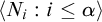 $\langle N_i : i \le \alpha \rangle $
,
 $(F,\Gamma )$
,
 $\beta $
, and X be as above. Fix an increasing sequence
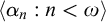 ${\langle \alpha _n : n < \omega \rangle }$
of non-zero ordinals cofinal in
 $\alpha $
. Now repeat the argument of Theorem 6.5 (Existence of total master conditions) to build a descending sequence of conditions
 $\langle (F_n,\Gamma _n) : n < \omega \rangle $
in
 $N_\alpha $
below
 $(F,\Gamma )$
, with the following adjustment. At a stage
 $n+1$
where we previously extended to get into a dense open set, we instead apply the inductive hypothesis to extend to a condition with top level
 $N_{\alpha _{n}} \cap \omega _1$
which is
 $(N_\gamma ,\mathbb {P})$
-generic for all
 $\gamma \le \alpha _n$
. We leave the details to the interested reader.
In [Reference Shelah11, Chapter V, Section 5], the notion of a simple
 $\omega _1$
-completeness system
 $\mathbb D$
is defined, as well as the idea of a forcing poset
 $\mathbb {Q}$
being
 $\mathbb D$
-complete. Define a forcing
 $\mathbb {Q}$
to be Dee-complete if there exists some simple
 $\omega _1$
-completeness system
 $\mathbb D$
such that
 $\mathbb {Q}$
is
 $\mathbb D$
-complete.
Theorem 10.7 [Reference Shelah11, Chapter V, Theorem 7.1].
Suppose that
 $\langle \mathbb {P}_i, \dot {\mathbb {Q}}_j : i \le \alpha , \ j < \alpha \rangle $
is a countable support forcing iteration such that for all
 $i < \alpha $
,
 $\mathbb {P}_i$
forces that
 $\dot {\mathbb {Q}}_i$
is
 $(< \! \omega _1)$
-proper and Dee-complete. Then
 $\mathbb {P}_\alpha $
does not add reals.
Proposition 10.8. The forcing poset
 $\mathbb {P}$
is Dee-complete.
We omit the proof because it is essentially identical to the proof of [Reference Shelah11, Chapter V, Section 6] that the forcing for specializing an Aronszan tree with promises is Dee-complete (and that proof itself is quite trivial). We leave the matter to be explored by the interested reader.
11 Consistency results
In this section, we complete the main consistency results of the article.
Lemma 11.1. Let
 $2 \le n < \omega $
. Suppose that every normal infinitely splitting Aronszajn tree contains an uncountable downwards closed n-splitting subtree. Then every Aronszajn tree contains an uncountable downwards closed
 $(\le \! n)$
-splitting subtree.
Proof. By Lemma 1.1(a), the assumption implies that every normal infinitely splitting Aronszajn tree contains an uncountable downwards closed n-splitting normal subtree. Let T be an Aronszajn tree. We may assume that T has a root, for otherwise we can restrict our attention to
 $T_x$
for some x of height
 $0$
. If T is not Hausdorff, then by a standard shifting argument find a Hausdorff tree
 $T^+$
such that
 $T^+$
is equal to T restricted to non-limit levels. Note that if
 $T^+$
has an uncountable downwards closed
 $(\le \! m)$
-splitting subtree, then so does T. So without loss of generality assume that
 $T = T^+$
. By Lemma 1.1(a), T contains an uncountable downwards closed subtree U such that every element of U has uncountably many elements of U above it. So again let us just assume that
 $T = U$
. Then T is normal. So by Lemma 1.1(b), there exists a club
 $C \subseteq \omega _1$
such that
 $T \upharpoonright C$
is infinitely splitting. Note that
 $T \upharpoonright C$
is normal. Find an uncountable downwards closed normal subtree
 $W \subseteq T \upharpoonright C$
which is m-splitting. By the normality of W, it is easy to check that the downwards closure of W in T is
 $(\le \! m)$
-splitting, and we are done.
Theorem 11.2. It is consistent that CH holds and for all
 $2 \le n < \omega $
, every
 $(\ge \! n)$
-splitting normal Aronszajn tree contains an uncountable downwards closed n-splitting normal subtree. In particular, it is consistent that CH holds and there do not exist any Lindelöf trees.
Proof. Start with a model satisfying GCH. Define a countable support forcing iteration
 $\langle \mathbb {P}_i, \dot {\mathbb {Q}}_j : i \le \omega _2, \ j < \omega _2 \rangle $
where we bookkeep so that for every
 $2 \le n < \omega $
and every normal
 $(\ge \! n)$
-splitting normal Aronszajn tree T in the final model, there exists some
 $i < \omega _2$
such that
 $\Vdash _{i} \dot {\mathbb {Q}}_i = \mathbb {P}(T,\{n\})$
. By Proposition 10.4 and Theorems 10.2 and 10.3, this bookkeeping is possible since each
 $\mathbb {P}_i$
has size
 $\omega _2$
and is
 $\omega _2$
-c.c. By Propositions 10.6 and 10.8 and Theorem 10.7,
 $\mathbb {P}_{\omega _2}$
does not add reals, and in particular, preserves
 $\omega _1$
and CH. We claim that in
 $V^{\mathbb {P}_{\omega _2}}$
there do not exist any Lindelöf trees. Start with an
 $\omega _1$
-tree T. If T is not Aronszajn, then it is not Lindelöf by [Reference Marun7, Lemma 4.2]. So assume that T is Aronszajn. By Lemma 11.1, T contains an uncountable downwards closed
 $(\le \! 2)$
-splitting subtree. By Theorem 2.7, T is not Lindelöf.
Now we turn to consistency results involving the preservation of Suslin trees. We make use of the following forcing iteration theorem.
Theorem 11.3 [Reference Abraham and Shelah1, Reference Miyamoto8].
Let S be a Suslin tree. Then the property of a forcing poset being proper and forcing that S is Suslin is preserved by any countable support forcing iteration.
Theorem 11.4 [Reference Lindström5].
Let T be an Aronszajn tree which does not contain a Suslin subtree. Then for any Suslin tree S,
 $\Vdash _S T$
is Aronszajn.
Namely, if
 $x \in S$
forces that T is not Aronszajn, then there exists a club
 $C \subseteq \omega _1$
and a strictly increasing function of
 $S_x \upharpoonright C$
into T. The image of this function is a Suslin subtree of T.
Lemma 11.5. Let
 $2 \le m < \omega $
. Suppose that every normal infinitely splitting Aronszajn tree which does not contain a Suslin subtree contains an uncountable downwards closed m-splitting subtree. Then every Aronszajn tree which does not contain a Suslin subtree contains an uncountable downwards closed
 $(\le \! m)$
-splitting subtree.
The proof is the same as for Lemma 11.1, using the fact that the downward closure of a Suslin subtree is Suslin.
Theorem 11.6. It is consistent that
CH
holds, there exists a Suslin tree, and for every
 $\omega _1$
-tree T, T either contains a Suslin subtree or is non-Lindelöf.
Proof. Start with a model satisfying GCH and there exists a Suslin tree. Repeat the construction of Theorem 11.2 to build
 $\langle \mathbb {P}_i, \dot {\mathbb {Q}}_j : i \le \omega _2, \ j < \omega _2 \rangle $
, except that we obtain the conclusion only for those normal Aronszajn trees which contain no Suslin subtree. By Theorems 8.1 and 11.4, each forcing we iterate preserves all Suslin trees. By Theorem 11.3,
 $\mathbb {P}_{\omega _2}$
preserves all Suslin trees, and in fact, if T is a normal Aronszajn tree which has no Suslin subtree in the final model, then it does not have a Suslin subtree in any intermediate model. Now repeat the same argument as in the end of the proof of Theorem 11.2, but using Lemma 11.5 instead of Lemma 11.1
Finally, we show that we can consistently separate different degrees of subtree splitting.
Theorem 11.7. Let
 $2 < n \le \omega $
. It is consistent that
CH
holds, every normal
 $(\ge \! n)$
-splitting Aronszajn tree contains an uncountable downwards closed n-splitting normal subtree, and there exists a normal Aronszajn tree which is infinitely splitting but does not contain an uncountable downwards closed
 $(< \! n)$
-splitting subtree.
Proof. Start with a model satisfying GCH and there exists a normal infinitely splitting Suslin tree S. By [Reference Marun7, Theorem 4.12], S does not contain an uncountable downwards closed finitely splitting subtree. In particular, S does not contain an uncountable downwards closed
 $(< \! n)$
-splitting subtree. Now define a countable support forcing iteration
 $\langle \mathbb {P}_i, \dot {\mathbb {Q}}_j : i \le \omega _2, \ j < \omega _2 \rangle $
as in the proof of Theorem 11.2, except that we only force with
 $\mathbb {P}(T,\{n\})$
for normal Aronszajn trees T which are
 $(\ge \! n)$
-splitting. By Theorem 7.1, each such forcing preserves the fact that S does not contain an uncountable downwards closed
 $(< \! n)$
-splitting subtree, so by Theorem 3.1 so does
 $\mathbb {P}_{\omega _2}$
.
Acknowledgements
The author thanks Pedro Marun for providing helpful comments and corrections on an earlier draft of the article, and the referee for writing a careful report.
Funding statement
The author acknowledges support from the Simons Foundation under the Travel Support for Mathematicians gift 631279.



