




No CrossRef data available.
Article contents
- Abstract
- THE INTELLECTUAL ROOTS OF THE INDUSTRIAL REVOLUTION
- THE ENLIGHTENMENT AND EIGHTEENTH-CENTURY TECHNOLOGY
- ACCESS COSTS: SOME REFLECTIONS
- ACCESS COSTS: TECHNICAL FACTORS
- ACCESS COSTS: CULTURAL AND SOCIAL FACTORS
- ACCESS COSTS: INSTITUTIONAL FACTORS
- ACCESS COSTS: ECONOMIC FACTORS
- THE INDUSTRIAL ENLIGHTENMENT AND ECONOMIC GROWTH
- QUANTIFYING THE ENLIGHTENMENT
- CONCLUSIONS
- References
The Intellectual Origins of Modern Economic Growth
Published online by Cambridge University Press: 16 June 2005
Article contents
- Abstract
- THE INTELLECTUAL ROOTS OF THE INDUSTRIAL REVOLUTION
- THE ENLIGHTENMENT AND EIGHTEENTH-CENTURY TECHNOLOGY
- ACCESS COSTS: SOME REFLECTIONS
- ACCESS COSTS: TECHNICAL FACTORS
- ACCESS COSTS: CULTURAL AND SOCIAL FACTORS
- ACCESS COSTS: INSTITUTIONAL FACTORS
- ACCESS COSTS: ECONOMIC FACTORS
- THE INDUSTRIAL ENLIGHTENMENT AND ECONOMIC GROWTH
- QUANTIFYING THE ENLIGHTENMENT
- CONCLUSIONS
- References
Abstract
The intellectual origins of the Industrial Revolution are traced back to the Baconian program of the seventeenth century, which aimed at expanding the set of useful knowledge and applying natural philosophy to solve technological problems and bring about economic growth. The eighteenth-century Enlightenment in the West carried out this program through a series of institutional developments that both increased the amount of knowledge and its accessibility to those who could make best use of it. Without the Enlightenment, therefore, an Industrial Revolution could not have transformed itself into the sustained economic growth starting in the early nineteenth century.
Information
- Type
- ARTICLES
- Information
- Copyright
- © 2005 The Economic History Association
Economic growth was not a novelty in 1800. In a celebrated passage, Adam Smith had noted that the “annual produce of land and labour” had been growing in Britain for a long time.1
Smith, Wealth of Nations, pp. 365–66. Modern economic historians have reached similar conclusions. While none of their methods are uncontroversial, their unanimity seems to indicate that the “assumption” of modern economists such as Robert Lucas and Oded Galor that there was no economic growth before 1800 is a gross oversimplification. See for instance Clark, “Secret History”; and Snooks, “New Perspectives.”
There is a substantial literature that asks with Jeffrey Williamson “why was economic growth so slow during the Industrial Revolution?” although the answers tend to be different from the ones given by him. See Williamson, “Why Was British Growth,”6 pp. 687–712. For some suggested answers see Mokyr, “Editor's Introduction,” pp. 12–17.
Modern economic growth differs from the processes that Smith identified and that made Britain and the rest of Western Europe so much richer in 1700 than they had been in 1066. To the hard-nosed scholar who insists that “it was all only a matter of degree,” one response is that “in economic history, degree is everything.” There is a qualitative difference between an economy in which GDP per capita grows at 1.5 percent and one in it which grows at 0.2 percent. Another response is that it was not just a matter of degree. It was qualitatively different in at least three fundamental aspects. First, growth gradually ceased to be a niche phenomenon. Before 1750, growth had been limited to relatively small areas or limited sectors, often a successful city state, a capital of a powerful monarchy, or a limited agricultural region. These niches had to spend much of their riches to protect their possessions against greedy neighbors, real-life manifestations of Mancur Olson's “roving bandits” who often killed entire flocks of golden-egg-laying geese. After the Industrial Revolution, it became a more aggregative phenomenon, with a substantial number of economies becoming members of the much-coveted “convergence club.” Second, pre-1750 growth, such as it was, was dominated by institutional change in its widest sense: law and order, the establishment of commercial relations, credit, trust, and enforceable contracts created the preconditions for wealth to expand through more efficient allocation, exchange and investment.3
See Greif, Institutions.
De Vries and Van Der Woude. First Modern Economy; and Drelichman, “American Silver.”
How do we explain this change? What has been missing, so far, is a full appreciation of the importance of useful knowledge. Economic decisions are made by individuals on the basis of certain beliefs they hold and knowledge they possess. It recent years, it has once again become “kosher” if not quite de rigueur to speak of “cultural beliefs” following Avner Greif's pathbreaking work on the emergence of institutions that made trade possible in stateless and even largely lawless societies.5
Greif, “Cultural beliefs”; and Temin, “Is it Kosher,” pp. 267–87.
See North, Understanding the Process.
The short answer as to why the West is so much richer today than it was two centuries ago is that collectively, these societies “know” more.7
For a more detailed statement on this, see Mokyr, Gifts.
Helpman, Mystery.
THE INTELLECTUAL ROOTS OF THE INDUSTRIAL REVOLUTION
Economic historians like to explain economic phenomena with other economic phenomena. The Industrial Revolution, it was felt for many decades, should be explained by economic factors. Relative prices, property rights, endowments, demand factors, fiscal and monetary institutions, investment, savings, exports, and changes in labor supply have all been put forward as possible explanations.9
For a full survey, see Mokyr, “Editor's Introduction,” pp. 1–127.
One possible reason why this literature has been inconclusive is that many scholars have sought the causes for the economic change in the West as something particular to Britain. Yet this approach might be misleading. The Industrial Revolution was a Western phenomenon. It was more than just a British affair, if less than a “European” affair. The causes for the differences in technological patterns and rates of development between the several European economies that by 1914 constituted the core of the convergence club is a source of a fascinating and instructive debate, but may not hold the keys to the riddle of the Industrial Revolution. Britain's position as the lead car in the Occident Express that gathered speed in the nineteenth century and drove away from the rest of the world is of tremendous interest, but it does not tell us much about the source of power. Was Britain the engine that pulled the other European cars behind it, or was the Western world like an electric train deriving its motive power from a shared source of energy? If so, what was this source?
One answer, I submit, that thus far has not received nearly enough attention from economic historians involves the intellectual changes that occurred in Europe before the Industrial Revolution. These changes affected the sphere of useful knowledge, and its interaction with the world of production. In a sense, this statement is so obvious as to be almost trivial, but the insight has been clouded by the somewhat tedious debate on the role of science in the Industrial Revolution. As economic historians have known for many years, it is very difficult to argue that the scientific revolution of the seventeenth century we associate with Galileo, Descartes, Newton, and the like had a direct impact on the pivotal technological breakthroughs of the Industrial Revolution. To be sure, a few important inventions, especially before 1800, can be directly attributed to great scientific discoveries or were dependent in some way on scientific expertise.10
The opus classicus on this topic remains Musson and Robinson, Science and Technology. For the best recent statement, see Jacob, Scientific Culture and “Cultural Foundations,” pp. 67–85.
Gillispie, Science … End of Old Regime, p. 336. For canonical statements on the “unimportance of science” see Hall, “What Did the Industrial Revolution?”; Neil McKendrick, “Role of Science”; Mathias, “Who Unbound Prometheus?” John R. Harris has been even more skeptical of the importance of science relative to “tacit” skills and has even argued that France's backwardness in steelmaking was in part due to its reliance on scientists, who at first gave misleading and later rather useless advice to steel makers; compare Harris, Industrial Espionage, pp. 219–21.
True enough: in the early stages of the Industrial Revolution, many of the important advances owed little to science in a direct way. However, had technological progress been independent of what happened at the loftier intellectual level, had it consisted purely of disseminating best-practice existing procedures, standardizing them, and hoping for learning-by-doing effects, the process would eventually have run into diminishing returns and fizzled out. What was it that prevented that from happening in the decades following the burst of macroinventions we identify with the classic Industrial Revolution? In part, it is our own thinking of “science” that is at fault, because we tend to think of science as more “analytical” than descriptive. The eighteenth century, however, spent an enormous amount of intellectual energy on describing what it could not understand. The three “C's”—counting, classifying, cataloguing—were central to the Baconian program that guided much of the growth of useful knowledge in the century before the Industrial Revolution. Heat, energy, chemical affinities, electrical tension, capacitance, resistivity and many other properties of materials from iron to bricks to molasses were measured and tabulated before they were, in some sense, “understood.” Measurement itself was not novel in the eighteenth century; the accuracy, thoroughness, and reliability, the scope of phenomena and quantities being measured, and the diffusion of this knowledge surely were.
In the nineteenth century the connection between science and technology became gradually tighter, yet remained sufficiently uneven and heterogeneous to make any dating very hazardous. Scholars such as Nathan Rosenberg and Derek Price have argued for the causality running mainly from technology to science rather than the reverse.12
Price, “Notes towards a Philosophy.” Rosenberg, Perspectives and “How Exogenous is Science?”
The confusion surrounding the role of science in the eighteenth century on economic developments and the rather tiresome debate regarding the merits and shortcomings of the so-called linear model (in which science supposedly “leads” to technology) stem from the narrow and possibly anachronistic definitions of the concept of useful knowledge. In addition to what the eighteenth century called “natural philosophy,” it consisted of catalogs of facts, based on experience and experiment rather than on understanding or careful analysis and testing. Many of these facts were organized compilations about what worked: the right mixture of materials, the right temperature or pressure in a vessel, the correct fertilizer in a given type of soil, the optimal viscosity of a lubricant, the correct tension on a piece of fabric, the shortest way to sail across the sea while using the right trade winds and avoiding reefs, and not-so-basic facts of nature used in productive activities from medicinal herbs to cattle breeding to glass blowing to marling. It involved not only the work of people whom we regard today as scientists but also those who collected data and practices—botanists, zoologists, geographers, mineralogists, instrument-makers, and other highly skilled artisans—and placed this knowledge in the public realm. For that reason I prefer the much wider category of propositional knowledge.13
For more details, see Mokyr, Gifts, chap. 2, and “Long-term Economic Growth.”
THE ENLIGHTENMENT AND EIGHTEENTH-CENTURY TECHNOLOGY
The Enlightenment of the late seventeenth and eighteenth centuries bridges the Scientific and the Industrial Revolutions. Definitions of this amorphous and often contradictory historical phenomenon are many, but for the purposes of explaining the Industrial Revolution we need only to examine a slice of it, which I have termed the Industrial Enlightenment—a belief in the possibility and desirability of economic progress and growth through knowledge.14
One of the most cogent statements is by McNeil, Under the Banner, pp. 24–25, who notes the importance of a “faith in science that brought the legacy of the Scientific Revolution to bear on industrial society … it is imperative to look at the interaction between culture and industry, between the Enlightenment and the Industrial Revolution.” As Spadafora has noted, the belief in the possibility (if not the inevitability) of progress was necessary if the West was to actually experience anything like it. Spadafora, Idea of Progress.
The Scottish philosopher George Campbell (1719–1796) noted for example in 1776 that “for some centuries backwards, the men of every age have made great and unexpected improvements on the labours of their predecessors. And it is very probable that the subsequent age will produce discoveries and acquisitions which we of this age are as little capable of foreseeing as those who preceded us in the last century were capable of conjecturing the progress that would be made in the present” (cited by Spadafora, Idea, p. 56).
It surely is true that not all Enlightenment philosophers believed that material progress was either desirable or inevitable, or were persuaded that the rise of a commercial and industrial society was a desirable end. And yet the cultural beliefs that began to dominate the elites of the eighteenth-century West created the attitudes, the institutions, and the mechanisms by which new useful knowledge was created, diffused, and put to good use. Above all was the increasingly pervasive belief in the Baconian notion that we can attain material progress (that is, economic growth) through controlling nature, and that we can only harness nature by understanding her in order, as he himself put it, to bring about “the relief of man's estate.” Francis Bacon, indeed, is a pivotal figure in understanding the Industrial Enlightenment and its impact. “Lord Bacon,” as he was referred to by his eighteenth-century admirers, was cited approvingly by many of the leading lights of the Enlightenment, including Diderot, Lavoisier, Davy, and the astronomer John Herschel.16
Sargent, ed., Francis Bacon, pp. xxvii–xxviii. In a wonderful piece of doggerel entitled Ode to the Royal Society, written by the now (deservedly) neglected poet Abraham Cowley (one of the Society's co-founders) and reprinted as a preface to Thomas Sprat's celebrated History of the Royal Society of London, the gratefulness of the scholars of the time to Bacon was well-expressed: “From these and all long Errors of the Way; In which our wandring Predecessors went; And like the old Hebrews many Years did stray; in Desarts but of small Extent; Bacon, like Moses, led us forth at last; The barren Wilderness he past; Did on the very Border stand; of the blest promis'd Land; And from the Mountain's Top of his exalted Wit; Saw it himself and shew'd us it.”
As always, there were earlier expressions of such ideas, not always wholly acknowledged by Bacon. One example is the sixteenth-century French theologian Pierre de la Ramée (Peter Ramus), with whom Bacon would have agreed that “the union of mathematics and the practice of scholarly arts by artisans would bring about great civic prosperity” (Smith, Business, p. 36).
Farrington, Francis Bacon. Vickers, “Francis Bacon.” Bacon's influence on the Industrial Enlightenment can be readily ascertained by the deep admiration the encyclopédistes felt toward him, exemplified by a long article on Baconisme written by the Abbé Pestre and the credit given him by Diderot himself in his entries on Art and Encyclopédie. The Journal Encyclopédique wrote in 1756 “If this society owes everything to Chancellor Bacon, the philosopher does not owe less to the authors of the Encyclopédie” (cited by Kronick, History, p. 42). The Scottish Enlightenment philosophers Dugald Stewart and Francis Jeffrey agreed on Baconian method and goals, even if they differed on some of the interpretation (Chitnis, Scottish Enlightenment, pp. 214–15). A practical enlightenment scientist such as Humphry Davy had no doubt that Bacon was “… was the first philosopher who laid down plans for extending knowledge of universal application; who ventured to assert, that all the science could be nothing more than expressions or arrangements of facts … the pursuit of the new method of investigation, in a very short time, wholly altered the face of every department of natural knowledge. Davy, “Sketch,” pp. 121–22. Across the channel, the French minister of the Interior, Nicolas-Louis François de Neufchâteau invoked the spirit of Francis Bacon when opening the 1798 French industrial exhibition. See Jacob, “Putting Science.”
Rosenberg, “Adam Smith,” p. 137.
A typical passage in this spirit was written by the British chemist and philosopher Joseph Priestley: “If, by this means, one art or science should grow too large for an easy comprehension in a moderate space of time, a commodious subdivision will be made. Thus all knowledge will be subdivided and extended, and knowledge as Lord Bacon observes, being power, the human powers will be increased … men will make their situation in this world abundantly more easy and comfortable.” Priestley, Essay, p. 7.
McClellan, Science Reorganized, p. 52.
As Musson and Robinson stress in Science and Technology, p. 16, “Bacon's influence can be perceived everywhere among men of science in the seventeenth and eighteenth centuries, constantly encouraging them to comprehend workshop practices.”
Of course, the eighteenth century still saw a lot of efforts that were purely epistemic or metaphysical in motivation, but the emphasis was slowly changing. The message that the Industrial Revolution inherited from the seventeenth century concerned the very purpose and objective of propositional knowledge. The result was a change in the agenda of research, in which the “useful arts” began to assume an equal, and eventually dominant, place alongside the liberal arts. This “Baconian Program” assumed that the main purpose of knowledge was to improve mankind's condition rather than the mere satisfaction of that most creative of human characteristics, curiosity, or the demonstration of some metaphysical point, such as illustrating the wisdom of the creator.23
Calvin in the sixteenth century still followed St. Augustine's condemnation of curiosity as a “vanity.” By way of contrast, in the 1660s, Thomas Sprat felt that gentlemen were suitable to research precisely because they were “free and unconfined.”
Thus in 1710 the Tatler wrote that “It is the duty of all who make philosophy the entertainment of their lives, to turn their thoughts to practical schemes for the good of society, and not pass away their time in fruitless searches which tend rather to the ostentation of knowledge than the service of life.” Cited by Shapin, “Scholar,” p. 309. In a similar vein, The Gentleman's Magazine wrote in 1731 that “our knowledge should be in the first place that which is most useful, then that which is fashionable.” Cited by Burke, Social History, p. 111.
Cohen, “Inside Newcomen's,” p. 127, points out that the Baconian ideology “went under the sainted name of Newton.”
Desaguliers, Course, vol. 1, p. iii.
Furbank, Diderot, p. 110. Hankins, Science, p. 45. Hankins add that “Diderot was wrong … in the years between 1780 and 1840 … mathematics and mechanics found a place precisely where Diderot thought they had no place.”
See above all, Reynolds, Stronger, pp. 233–50. Another example of such an application of mathematical knowledge to a mundane problem is Colin MacLaurin's ingenious solution (1735) to the problem of measuring the quantity of molasses in irregularly shaped barrels by the use of classical geometry. Not only did he solve the rather difficult mathematical problem with uncommon elegance, he also provided simple formulas, tables, and algorithms for the customs officers, that were used for many years. See Grabiner, “Some Disputes,” pp. 139–68.
One source of confirmation of the belief in the possibility of economic progress may have been perceptions of agricultural progress. As John Gascoigne has recently noted, “as the land bore more, better, and increasingly diversified fruits as a consequence of patient experiment with new techniques and crops, so, too, the need to apply comparable methods to other areas of the economy and society came to seem more insistent.” Gascoigne, Joseph Banks, p. 185.
Many of the answers that mathematicians and natural philosophers gave to engineers, industrialists, and farmers were, of course, useless, misleading, or wrong. The eighteenth century was nothing at all like a steady progress of better understanding of nature and its application to agriculture and manufacturing. The alleged “usefulness” of knowledge was often an attempt by scholars to secure financial support and patronage from wealthy individuals and official sponsors.30
A good early example of such hope was the work of the Scottish botanist and physician, Sir Robert Sibbald (1641–1721), whose widespread interests, extensive correspondence network, and continental education were harbingers of things to come in the eighteenth century. Sibbald was extremely active in reforming the University of Edinburgh and helped establish the Royal College of Medicine as well as an early botanical garden in town. Yet as Paul Wood remarks, much of Sibbald's work failed to bear fruit in his lifetime, and his dream to turn learning into material benefit was largely disappointed in his lifetime. See Wood, “Science.” For a general discussion of the quest for patronage through claims for usefulness, see especially, Spary, Utopia's Garden, p. 127.
ACCESS COSTS: SOME REFLECTIONS
The Industrial Enlightenment was in part about the expansion of useful knowledge. Knowledge exists in the final analysis within the mind of an individual, but for it to be socially productive it needs to be shared and distributed. If a vital piece of knowledge is discovered but only one individual possesses it and keeps it secret, it is by definition part of social knowledge, but has little economic value. What counted for useful knowledge to play a role in generating economic growth was therefore access costs, the marginal cost involved in acquiring knowledge possessed by someone else in society. The concept is in line with recent thinking about the Enlightenment which regards it above all “as a system of communication creating a public of rational individuals.”31
Censer, “Journals,” p. 311, though he should have added “informed” to the “rational.”
The classic example of such an invention during the Industrial Revolution is surely Cort's patent for the second half of his puddling and rolling process, in which the common rolling mill was used to weld together pieces of scrap iron at a sufficiently high temperature. His invention “clearly inspired” a naval contractor named William Forbes who used grooved rollers to produce improved copper bolts for naval ships (Harris, “Copper,” p. 183). For a theoretical discussion of recombination in technological change, see Weitzman, “Hybridizing,” pp. 207–13.
McGee, “Rethinking Invention.”
I use the term “effective” rather that “correct” because terms such as “true” or “correct” are irrelevant and inappropriate here. The best we can do is to say that a piece of knowledge held in the past was “right” or “wrong” in the sense that it is inconsistent with our beliefs. By “effective” I mean such knowledge on which certain techniques rest that perform better than techniques based on some other base according to some prespecified criterion. For instance, bloodletting might have been effective simply because it did help patients if only through a placebo effect.
As Voltaire noted in his The Age of Louis XV, written late in his life in 1770: “pure natural philosophy has illustrated the necessary arts; and these arts have already begun to heal the wounds of the state caused by two fatal wars. Stuffs manufactured in a cheaper manner, by ingenuity of the most celebrated mechanics” (Vol. 2, pp. 369–70).
Young, Political Essays, p. v., emphasis in original.
One telling example is Neilson's hot blast (1828), a fuel-saving innovation from the “second stage” of the Industrial Revolution. Neilson had learned of Gay-Lussac's calculation of the rate of expansion of oxygen and nitrogen between 0° and 80° C and used laboratory experiments to persuade Scottish ironmasters to apply it, which proved “the salvation of the Scottish iron industry” (Clow and Clow, Chemical Revolution, p. 356).
The level of access costs can be decomposed into four separate components. First, there was the cost involved in establishing that this knowledge actually existed, that is, that there was at least one individual in society who possessed it. Second, there was the cost of finding out who the lowest-cost supplier of this knowledge was and where it could be found. Third, there was the actual cost of acquiring it, which could range from a simple search through a library or catalog to the need of reading a scientific article, visiting a site, or hiring a consultant or expert who could convey it. Fourth, there was the cost of verifying the knowledge and establishing the extent of its “tightness,” that is, to what extent was this a consensus view among the experts or authorities on certain propositions and how certain were they of its truthfulness?
What determined access costs? One obvious determinant is technological: how costly was it to code, store, transmit, and receive useful knowledge, what was the best-practice technology through which it was transmitted, and in what language and terminology was it expressed? Another is social and cultural: to what extent were individuals who made a discovery willing to share such useful knowledge (for example as part of “open science” that awards credit for priority), and allow inventions to be used freely (for instance in processes of collective invention or “open source” development)? Did organizations exist that channeled knowledge from those who knew useful things to those who could and were willing to exploit such knowledge? Finally, there are economic factors: did markets for useful knowledge exist? Economists know that such markets (and the intellectual property on which they rest) will be deficient and incomplete, yet some of them clearly did exist and others emerged during the Industrial Revolution.
ACCESS COSTS: TECHNICAL FACTORS
The decline in access costs in the century or so before the Industrial Revolution cannot be attributed to a single factor. There is no question that the costs of transmitting information was declining already before the arrival of the railroad. Abstracting from homing pigeons and the semaphore telegraph, knowledge moved as fast and as far as people did. People and carriages carried books, periodicals, and other storage devices. All the same, much of the knowledge that counted was not written down or depicted in the (increasingly detailed and sophisticated) technical drawings of the age, but embodied in implicit forms we would call “skills,” “dexterity,” and other synonyms for what is known as tacit knowledge. The ratio of codified knowledge to tacit knowledge was itself a function of the technology and costs of codification and the payoff to efforts to do so, although tacit knowledge inevitably remained an essential part of knowledge.38
For a more detailed analysis of the economics of tacit knowledge, see Cowan and Foray. “Economics,” pp. 595–622.
Harris, “Skills.” Epstein, “Knowledge Sharing,” especially pp. 15–20. Eighteenth-century Europe was crisscrossed by a variety of technological informants and spies such as Gabriel Jars (studying metalmaking) and Nicolas Desmarest (papermaking) (Gillispie, Science … End of Old Regime, pp. 429–37, 444–54). For a discussion of the importance of geographical mobility on the diffusion of artisanal skills in Italy, see Belfanti, “Guilds.” The effect of traveling was also notable in the improved access to agricultural knowledge, as attested to by the many Frenchmen who visited Britain after 1750 to study farm methods and techniques. See Bourde, Influence.
Harris, “Industrial Espionage,” pp. 164–75, and Industrial Espionage. British legislation to prevent the outflow of skilled craftsmen and certain kinds of machinery were in the long run doomed to failure, though it is hard to disagree with Harris's assessment that they raised access costs and had a retardative effect on the diffusion of technology.
In Britain, better-built roads and coaches sharply reduced internal travel time in the eighteenth century: the coach from London to Edinburgh still took 10–12 days in the mid 1750s, whereas in 1836 (just before being replaced by a railroad) it could cover the distance in 45.5 hours. In France, travel times were halved or better on many routes between 1765 and 1785. See data reported by Szostak, Role, p. 70.
The eighteenth century also witnessed the improvement of the transfer of formerly tacit knowledge. Part of it was simply the improvement of the language of technology: mathematical symbols, standardized measures, and more universal scales and notation added a great deal to the ease of communication of codified technological information. Diagrams and illustrations became more sophisticated.42
Thomas Newcomen surely must have seen Papin's sketches of his models of proto-engines and pumps, published in various issues of Philosophical Transactions between 1685 and 1700. One example of a book that codified a great deal of formerly tacit knowledge was Bernard de Bélidor's famed Architecture Hydraulique, published in four volumes in 1737. It discussed almost all fields of civil engineering, and the great British engineers John Smeaton, John Rennie, and Thomas Telford all owned copies. Charles Plumier (1646–1704) wrote a book on the art of using a lathe (l'Art de Tourner), which—whether of use to craftsmen or not—was sufficiently regarded to be translated into Russian, the translation attributed to Emperor Peter the Great himself.
For a study of Pierre Montgolfier, one of the most progressive paper manufacturers of eighteenth-century France, see Rosenband, Papermaking.
Jones, “Culture,” p. 13.
Musson and Robinson, Science and Technology, p. 113. In 1697 the rev. Thomas Bray [1697, (1967)] called for 400 lending libraries to be established throughout Britain, believing that making knowledge more accessible would “raise a Noble Spirit of Emulation in those Leaned Societies and would excite more of the members thereof to exert themselves in being serviceable to the world” (p. 11).
See Outram, Enlightenment, p. 21.
The Swedish metallurgist Tobern Bergman published his major work, De Praecipitatis Metallicis (a major theoretical essay on the nature of steel) in Latin as late as 1780. An English translation, by no less a scholar than William Withering, a founding member of the Lunar Society, came out in 1783.
A telltale sign of the changing age were the scientific and other technical magazines that began appearing all over Europe. Many of these periodicals were derivative popularizations and intended to summarize and review the existing literature, and thus directly reduced access costs even if their respect for intellectual property left a lot to be desired. To be sure, only a minority of the population read, and that of those the bulk read novels, romantic potboilers turned out by hacks in what Robert Darnton has called “Grub Street,” scandalous pamphlets and religious tracts. Books on the useful arts, science, and mathematics were without doubt of interest to only a small minority.48
A study of the contents of French private libraries (probably unrepresentative) shows only about 3.2 percent of all books devoted to what we may call useful knowledge, more than half being novels and 32 percent being devoted to history or theology. See Mornet, “Enseignements,” p. 457.
The “Natural Science” section of J. D. Reuss's Repertorium (Index of scientific literature) published between 1801 and 1821 (covering only a small part of the scientific journals) indicates that astronomy accounted for 19 percent of the scientific papers published between 1665 and 1800 and zoology for 18 percent, whereas mechanics accounted for 4 percent and chemistry for 6 percent. See Gascoigne, Historical Catalogue, p. 100.
Useful knowledge was thus transmitted in codified form through “storage devices.” John R. Harris, an authority on British eighteenth-century technology, has doubted the extent that codified knowledge mattered in the early stages of the Industrial Revolution. As far as skills and workmanship were concerned, it is possible to exaggerate the importance of books and periodicals as means through which technical knowledge was accessed. It surely was less important in the metal trades or mining than in medicine, agriculture, instrument-making, electricity, astronomy, or chemistry. It changed over time, with much of the volume of technical and scientific publishing concentrated in the last third of the eighteenth century.50
Harris, “Skills,” pp. 21–23. It might be added that Harris writes specifically about mining and coal-using technology, and that outside geology and the adoption of steam-powered pumps, there was actually little technological progress in the mining sector.
Thus the Portuguese instrument maker Jean Hyacinthe de Magellan—who had worked with Priestley in the 1770s—bought thermometers from Wedgwood, and sold the needed instruments to Alessandro Volta. Volta in turn used these to construct his eponymous pile (reputedly upon hints received from William Nicholson in London). See Stewart, “Laboratory,” p. 13.
It could be objected that this knowledge, whether codified or tacit, was shared by only a minute percentage of the population. However, the technological thrust during the Industrial Revolution was not the result of the action of the majority of population; in the hurry of the economic history profession to get away from the absurd hero-worship of a few key inventors as having carried the Industrial Revolution, it has tended to go too far in the other direction by asserting that unless much or most of the population had access to technical knowledge, the spread of new techniques was limited. The truth is somewhere in between; it is undeniable that technological progress during the Industrial Revolution was an elite phenomenon, carried not by a dozen or two of big names who made it to the National Dictionary of Biography, but by the thousands of trained engineers, capable mechanics, and dexterous craftsmen on whose shoulders the inventors could stand.
Yet when all is said and done, we are talking about thousands, perhaps a few tens of thousands, not hundreds of thousands or millions of people in industrializing Europe; democratic instincts notwithstanding, what the large majority of workers knew mattered little as long as they did what they were told by those who knew more.52
Adam Smith expressed this kind of elitism in his “Early Draft,” in which he noted that “to think or to reason comes to be, like every other employment, a particular business, which is carried on by very few people who furnish the public with all the thought and reason possessed by the vast multitudes that labour.” The benefits of the “speculations of the philosopher … may evidently descend to the meanest of people” if they led to improvements in the mechanical arts. Smith, Lectures on Jurisprudence, pp. 569–72. Soame Jenyns, a mid-eighteenth-century writer, advocated ignorance for the poor as “the only opiate capable of infusing the insensibility which can enable them to endure the miseries of poverty and the fatigues of the drudgeries of life.” See Jenyns, Free Inquiry, pp. 65–66. As Rosenberg points out, such a division of knowledge was increasingly pertinent to a sophisticated (“civilized”) society in which specialized “philosophers” would account for technological progress. Compare Rosenberg, “Adam Smith,” pp. 134–36.
The exact composition of who these “few” were changed during the period in question. Late in the seventeenth century and in the first decades of the eighteenth, it was clearly the political elite that felt that new knowledge and the rejection of age-old sacred cows were the keys to social progress. Over the eighteenth century, conservative elements slowly gained the upper hand, especially when liberal and progressive elements were allied with both the American rebels and the French Jacobins. Especially in Britain, anti-Enlightenment sentiments flared up in the 1790s. But whatever happened in the center of power in London, it could not stop the Industrial Enlightenment from spreading into provincial society. In the European provincial societies of Manchester, Liverpool, Newcastle, Leeds, Antwerp, Lyons, Marseilles, Nantes, and Milan, J. H. Plumb has noted, we do not find Diderots and Humes, but neither do we find [reactionary thinkers] such as Samuel Johnson or Edmund Burke. Instead, “we find knots of enlightened men with a passionate regard for empirical knowledge, secular in their intellectual attitudes, although often muddled, uncertain and tentative, with … rational and irrational beliefs combined in the same man.” Their religious feelings were quite diverse and many thoughtful and well-read minds of the enlightenment still fell for bogus and faddish ideas put out by charlatans.53
Well-known examples were the wondrous Dr. John Brown (1735–1788), whose popularity was based on his insistence that all diseases could be cured by either alcohol or opium, and the notorious fraud Alessandro Cagliostro (1743–1795), who peddled elixirs of youth and love powders to the high and mighty, and whose séances had become the rage of fashionable society in Paris by 1785, until he found himself in the Bastille.
For example, von Hayek, “Legal and Political Philosophy,” p. 106.
Plumb, “Reason,” pp. 5, 23.
ACCESS COSTS: CULTURAL AND SOCIAL FACTORS
In addition to the technology of access there was culture. The culture of “open science” that evolved in the seventeenth century meant that observation and experience were placed in the public domain and that credit was assigned by priority. Its openness manifested itself in two dimensions, both in the full disclosure of findings and methods, and in the lack of barriers to entry for competent persons willing to learn the language. Scientific knowledge became a public good, communicated freely rather than confined to a secretive exclusive few as had been the custom in medieval Europe. Openness, as Paul David and others have pointed out, had major benefits in that validation was made easy, duplication reduced, and spillover effects could be augmented. It increasingly closed down research roads that led to cul-de-sacs and bogus knowledge. Magic, occult, mystical beliefs, and simple charlatanry, while still alive and often well in the eighteenth century, found themselves on the defensive against an increasingly skeptical community that demanded to reproduce or refute their results.
Access costs depend crucially on the culture and social customs of useful knowledge. The rhetorical conventions of scientific discourse changed in the seventeenth century. Authority and trust, of course, remained essential to the pursuit of knowledge as they must, but the rules of the discourse and the criteria for “what was (believed to be) true” or “what worked” shifted toward a more empirical and verifiable direction. The community of those who added to useful knowledge demanded that it be tested, so that it could be trusted.56
Steven Shapin has outlined the changes in trust and expertise in Britain during the seventeenth century, associating expertise, for better or for worse, with social class and locality. Although the approach to science was ostensibly based on a “question authority” principle (the Royal Society's motto was nullius in verba—on no one's word), in fact no system of shared useful (or any kind of) knowledge can exist without some mechanism that generates trust. The apparent skepticism with which scientists treated the knowledge created by their colleagues increased the trust that outsiders could have in the findings, because they could then assume—as is still true today—that these findings had been scrutinized and checked by other “experts.” See Shapin, Social History.
By “tight,” I mean knowledge that is believed to be true by a consensus, and that this consensus is based on considerable confidence.
As Hilaire-Pérez put it, “the value of inventions was too important an economic stake to be left to be dissipated among the many forms of recognition and amateurs: the establishment of truth became the professional responsibility of academic science.” (Hilaire-Pérez, Invention Technique, p. 60).
In the scientific world of the late seventeenth and eighteenth centuries, a network of trust and verification emerged in the West that seems to have stood the test of time. It is well described by Polanyi; the space of useful knowledge is divided in small neighboring units. If an individual B is surrounded by neighbors A and C who can verify his work, and C is similarly surrounded by B and D and so on, the world of useful knowledge reaches an equilibrium in which science, as a whole, can be trusted even by those who are not themselves part of it. Polanyi, Personal Knowledge, pp. 216–22.
This trend was reinforced by a redefinition of fact and experience: seventeenth-century and early enlightenment scientific thought became more interested in cataloguing specific events, to be reassessed and reformulated into general principles based in the best Baconian tradition, on hard empirical facts and the results of experiment. Yet there are facts and there are facts. In the second half of the eighteenth century, those in charge of augmenting the set of propositional knowledge increasingly relied on quantification and formal mathematical methods. The increasing reliance on mathematics and graphical representation in the writing of technical works supported this need for precise and effective communication. As Robin Rider puts it, “mathematics was eminently rational in eighteenth century eyes, its symbols and results were truly international … in an age that prized the rational and the universal, mathematics … offered inspiration and example to the reformers of language.”60
Rider, “Measure,” p. 115.
The triumph of Lavoisier's chemistry over its British opponents in the later 1790s is a good example. See Golinski, “Nicety.”
Heilbron, “Introductory Essay,” p. 9. These methods soon were applied to mundane purposes. An example is Dougharty, General Gauger. The first half or so of the book lays out arithmetic manipulations, starting from the basics.
Smeaton, Experimental Enquiry. Beighton's Table is reproduced in Desaguliers, Course of Experimental Philosophy, p. 535. Desaguliers remarked that “Mr. Beighton's table agreed with all the experiments made ever since 1717.” For more details on Beighton, a remarkable early example of the Industrial Enlightenment, see Stewart, Rise, pp. 242–51.
Desaguliers, Jewellers Accounts.
Playfair, The Commercial and Political Atlas. “As knowledge increases amongst mankind, and transactions multiply, it becomes more and more desirable to abbreviate and facilitate the modes of conveying information.” Cited by Headrick, When Information, p. 127. This text does not appear in the 1786 original edition. Playfair's book was concerned with economic data, not science and technology.
James Watt, Playfair's employer, advised him “that it might be proper to give in letter press the Tables from which the Charts have been constructed.” Cited by Spence, “Invention,” p. 78.
Precisely because the Industrial Enlightenment was not limited to being a national or local phenomenon, it became increasingly felt that differences in language and standards were an impediment and increased access costs. Watt, James Keir, and the Derby clockmaker John Whitehurst, worked on a system of universal terms and standards that would make French and British experiments “speak the same language.”67
Uglow, Lunar Men, p. 357.
For an excellent discussion of the growing mobility of scientific and technological knowledge in the eighteenth century, see Inkster, “Mental Capital.”
Darnton, “Unity.” The idea of the Respublica Litteraria goes back to the late middle ages, and by the eighteenth century had extended to mechanical and technical knowledge. John R. Harris has noted that as early as the 1720s the development of the early steam engine was the center of intense interest in the European scientific community, and “international intelligence about the engine diffused with great speed, the speed of correspondence between the scientific luminaries of Europe of that period.” See Harris, Industrial Espionage, p. 296.
Robert Hooke taught himself Dutch to read Leeuwenhoek's famous letters on microscopy, and a century later John Smeaton taught himself French to be able to read the papers of French hydraulic theorists such as de Parcieux and traveled to the Netherlands to study their use of wind power firsthand.
Uglow, Lunar Men, p. 27. The movement of translations was symmetrical. In 1780 a French publisher published a whole bundle of Ouvrages sur l'économie politique et Rurale, traduit de l'Anglais including work by Arthur Young and John Arbuthnot (who had written an important work on ploughs). Bourde, Influence, p. 97. In agriculture, as Gillispie correctly points out, the impact of such information flows “beyond the circle of persons who wrote, printed and read the books,” was probably small. See Gillispie, Science … End of Old Regime, p. 367.
Schofield, Lunar Society, p. 378.
de Beer, Sciences, passim.
Access costs consisted in great measure of knowing what was known, and to facilitate access, knowledge had to be classified. This turned out to be an involved project, and much intellectual capital was spent on taxonomy and the organization of knowledge.74
Burke, Social History, chap. 5.
Darnton, Business, p. 286.
Heilbron, “Introductory Essay,” p. 20, notes that Diderot and d'Alembert were but indolent in comparison with the massive (64 volumes) work published by J. H. Zedler, Grosses vollständiges Universal-Lexikon aller Wissenschafte und Künste, published 1732–1754.
Pannabecker points out that the plates in the Encyclopédie were designed by the highly skilled Louis-Jacques Goussier who eventually became a machine designer at the Conservatoire des arts et métiers in Paris. They were meant to popularize the rational systematization of the mechanical arts to facilitate technological progress. Pannabecker, “Diderot,” pp. 6–22, and “Representing Mechanical Arts.”
Broberg, “Broken Circle,” pp. 45–71.
Furthermore, then as now, works that have an “encyclopedic” nature are instinctively trusted. It is believed—perhaps too optimistically—that such synthetic works reflect authority and best-practice knowledge, and that any statements reflecting baseless speculation and personal bias have been excised by conscientious encyclopedia editors. As such, the emergence of encyclopedias as an accessible source of useful knowledge reduced access costs on another front, namely the costs of verification. Many other works of useful knowledge were sponsored by the French Royal Academy, the British Royal Society, or similar formal institutions. Such quasi-official imprimaturs were intended to make them look more believable and tighter.79
The “Philosophical Transactions” published by the Royal Society and the “Histoire et Mémoires” published by the Académie Royale des Sciences were among the most influential publications of their time. They were routinely reported on in the wide-circulation Gentleman's Magazine and abridged, abstracted, and translated all over the Continent.
Encyclopedias and “dictionaries” were supplemented by a variety of textbooks, manuals, compendia, gazettes, and compilations of techniques and devices that were in use somewhere, none more detailed than the over 13,000 pages of the 80 volumes of the Descriptions des Arts et Métiers compiled in France before the Revolution—in Gillispie's judgment the “largest body of technological literature ever produced.”80
Cole and Watts, Handicrafts. Gillispie, Science … End of Old Regime, p. 344.
For instance, Jaubert, Dictionnaire Raisonné; Hall, New Royal Encyclopædia; and Society of Gentlemen, New and Complete Dictionary.
William Ellis's Modern Husbandman or Practice of Farming (1731) gave a month-by-month set of suggestions, much like Arthur Young's most successful book, The Farmer's Kalendar (1770). Summaries of this information often took the form of frequently updated dictionaries and compendia, such as Society of Gentlemen, Complete Farmer first published by the Society of Arts in 1766. Most of these writings were empirical or instructional in nature, but a few actually tried to provide the readers with some systematic analysis of the principles at work. One of those was Francis Home's Principles of Agriculture and Vegetation (1757). Some of the great private data collection projects of the time were Arthur Young's famed Tours of various parts of England and William Marshall's series on Rural Economy (Goddard, “Agricultural Literature”). They collected hundreds of observations on farm practice in Britain and the continent, although at times Young's conclusions were contrary to what his own data indicated. See Allen and Ó Gráda, “On the Road.” In France, Duhamel de Monceau's Traité de la Culture des Terres (1753) found a wide readership and was translated into English and published in 1759. His textbook Élements d'agriculture (1762) was also widely translated and reprinted. The French repaid the honor in 1801/02 by publishing an 18-volume translation of Arthur Young's works on agriculture and politics under the title Le Cultivateur Anglais.
Macquer, Dictionary of Chemistry. Originally printed in 1771, a fifth edition had already been published by 1777, indicating the success of the work.
Walkingame, Tutor's Assistant. By the end of the century, student guidebooks to the Tutor's Assistant had appeared. See Wallis, “Early Best-seller,” pp. 199–208. Walkingame included mathematical methods employed by glaziers, painters, plasterers, and bricklayers, pointing to the applied and pragmatic nature of the mathematics he taught.
Furthermore, access costs had a strictly social dimension. Technological communication inevitably often took the form of personal contact, and such exchanges on knowledge were more effective when the two sides trusted one another. Historically, one of the great sources of technological stagnation had been the social divide between those who knew things (“savants”) and those who made things (“fabricants”). The relationship between those who possessed useful knowledge and those who might find a use for it was changing in eighteenth-century Europe and points to a further reduction in access costs. To construct pipelines through which those two groups could communicate was at the very heart of the movement.85
This point was first made by Edward Zilsel in 1942, who placed the beginning of this movement in the middle of the sixteenth century. Although this may be too early for the movement to have much economic effect, the insight that technological progress occurs when intellectuals communicate with producers is central to its historical explanation. Compare Zilsel, “Sociological Roots of Science,” pp. 544–60. For a recent restatement, see Jacob, Scientific Culture.
Thomas Sprat recognized this in the 1660s when he wrote that no New Atlantis (Bacon's ideal scientific community) was possible unless “Mechanick Labourers shall have Philosophical heads; or the Philosophers shall have Mechanical hands.” See Sprat, History, p. 397. In its early days, the Royal Society invested heavily in the study of crafts and technology and commissioned a History of Trades, but this effort in the end failed. Compare Hunter, Establishing the New Science.
Humphry Davy felt in 1802 that “in consequence of the multiplication of the means of instruction, the man of science and the manufacturer are daily becoming more assimilated to each other.” Davy, Discourse, vol. 2, p. 321. Not all agreed at the time: William Thompson, Count Rumford, noted in 1799 that “there are no two classes of men in society that are more distinct, or that are more separated from each other by a more marked line, than philosophers and those who are engaged in arts and manufactures” and that this prevented “all connection and intercourse between them.” He expressed hope that the Royal Institution he helped found in 1799 would “facilitate and consolidate” the union between science and art and to direct “their united efforts to the improvement of agriculture, manufactures, and commerce, and to the increase of domestic comfort.” See Thompson, Complete Works, pp. 743–45.
Open science and the sharing of useful knowledge meant, of course, that the persons who created this knowledge could not extract the rents it created. Those who added to propositional knowledge would be rewarded by honor, peer recognition, and fame—not a monetary reward proportional to their contribution. For most of the truly great scientists of the era, from Newton to Linnaeus to Lavoisier, the honor and recognition were usually enough if a certain reservation comfort constraint was satisfied. Even those scientists who discovered matters of significant import to industry, such as Claude Berthollet, Joseph Priestley, Benjamin Franklin, and Humphry Davy, often wanted credit, not profit.
ACCESS COSTS: INSTITUTIONAL FACTORS
The Industrial Enlightenment consisted in large part of the emergence of institutions devoted to the flow of ideas. Among those, it would seem, Universities should have played a major role. This was surely true for Scotland, where such leading lights as Colin McLaurin, William Cullen, Joseph Black, John Robison, and many others taught courses of considerable technical significance. At the University of Glasgow, many of these courses were opened to artisans and other townspeople interested in studying chemistry and other applied fields. The course taught by Joseph Black in Edinburgh was attended by 200 listeners, and his successor, Thomas Charles Hope, occasionally addressed over 500 auditors.88
Wood, “Science,” p. 109.
Outram, Enlightenment, p. 60.
Yet, oddly enough, the role of formal educational institutions in the reduction of access costs was quite modest in the first century of the Industrial Revolution.90
Oxford and Cambridge have been given little credit for teaching much of value to a vibrant economy, and their enrollments declined in the eighteenth century. Adam Smith in a famous sentence remarked sarcastically that at Oxford the dons had “long ago given up all pretence of teaching,” and Priestley compared them to “pools of stagnant water.” There were a few exceptions, especially in Cambridge where Richard Watson was “chiefly concerned with manufacturing processes rather than with the advancement of pure science” and John Hadley who showed a “noticeable interest in industrial-chemical processes” (Musson and Robinson, Science and Technology, pp. 168, 36). His colleague in Magdalene College, John Rowning, was a mathematician who wrote a popular Compendious System of Natural Philosophy that went through seven editions between 1735 and 1772. Birse has collected data that show that out of 498 applied scientists and engineers born between 1700 and 1850, 91 were educated in Scotland, 50 at Oxbridge, and 329 (about two-thirds) had no university education at all. See Birse, Engineering, p. 16. Over the eighteenth century, moreover, the number of engineers and applied scientists who received a formal institutionalized education declined.
Schofield, Lunar Society, p. 195.
Inkster, “Social Context,” pp. 277–307.
Roderick and Stephens, Education, pp. 54–60.
The other institutional mechanism emerging during the Industrial Enlightenment to connect those who possessed prescriptive knowledge to those who wanted to apply it was the emergence of meeting places where men of industry interacted with natural philosophers. Many of these meetings were ad hoc lectures and demonstrations by professional lecturers and popularizers.94
Of the itinerant lecturers, the most famous was John T. Desaguliers. Desaguliers, a leading proponent of Newton with an international reputation (he lectured in the Netherlands) received a royal pension of £70 per annum as well as a variety of patents, fees, and prizes. His Course of Mechanical and Experimental Philosophy (1724) was based on his hugely popular lectures on science and technology. William Whiston, one of Newton's most distinguished proponents and successor at Cambridge “entertained his provincial listeners with combinations of scientific subjects and Providence and the Millennium.” James Jurin, master of the Newcastle Grammar School, gave courses catering to the local gentlemen concerned with collieries and lead-mines. (See Stewart, Rise, p. 147). Other British lecturers of note were Peter Shaw, a chemist and physician, the instrument maker Benjamin Martin, Stephen Demainbray who lectured both in France and England and later became Superintendent of the King's Observatory at Kew, and the Reverend Richard Watson at Cambridge whose lectures on Chemistry in the 1760s were so successful that he drew a patronage of £100 for his impoverished chair. In France the premier lecturer and scientific celebrity of his time was Abbé Jean-Antoine Nollet, whose fame rests on early public experiments with electricity (he once passed an electrical charge from a Leyden jar through a row of Carthusian monks more than a mile long). Nollet also trained and encouraged a number of his disciples as lecturers, as well as some of the most celebrated scientists of his age, such as Lavoisier and Monge. Similarly, Guillaume-François Rouelle's lectures on chemistry in the Jardin du roi drew an audience that included Rousseau, Diderot, and even Lavoisier himself. Compare Stewart, “Laboratory.” In Napoleonic France, the “best scientific minds of the day” were lecturing to the public about steam engines, and it became common to regard some scientific training as a natural prelude for entrepreneurial activity (Jacob, “Putting Science”).
For a magisterial survey, see Musson and Robinson, Science, pp. 87–189.
In the closing years of the seventeenth century, the Marine Coffee House in Birchin Lane behind the Royal Exchange in London was the first location for an organized set of lectures on mathematics given by the Reverend John Harris, to be followed by a series on experimental philosophy. See Stewart, “Selling of Newton,” p. 180. Among the best-known private eighteenth-century Paris salons were those of Mme de Tencin and Mme l'Espinasse.
Levere and Turner, Discussing Chemistry. Its membership reads like a veritable list of the “Who's who” of the British Industrial Enlightenment of the 1780s. Needless to say, many of these lecturers structured their lectures around topics that had no immediate or even remote applicability, presented theories that were bogus even by the standards of the time, and at times they showed a bias toward the flashy and dramatic experiment over the strictly useful. Schaffer, “Natural Philosophy,” pp. 1–43. Desaguliers himself admitted that “a great many persons get a considerable knowledge of Natural Philosophy by way of amusement” (cited by Schaffer, “Machine Philosophy,” p. 159). But as Stewart (“Laboratory,” p. 8) remarks, “a sense of practical consequence was not immediately excluded by the spectacular.”
On the significance of Masonic Lodges, see Jacob, Living the Enlightenment; and Im Hoff, Enlightenment, pp. 139–45.
Elliott, “Birth,” p. 96, apparently influenced by notions of the “Habermasean public sphere,” thinks that their attractiveness came from their being intellectually challenging, morally uplifting, and that they enhanced polite education while not being socially disruptive and offering no threat to peace and stability. This would equally apply to lectures on classical sculpture or cooking classes.
After 1750 informal meetings started to slowly dwindle in importance, as they were replaced by more formal organizations, but the demand for useful knowledge remained strong. The establishment of the Royal Society in 1662 was one of the first signs of what was to come. There had, of course, been precedents, such as the Accademia dei Lincei founded in 1603 in Rome and disbanded in 1630. Formal academies were founded and bankrolled by states or local governments, whereas spontaneous societies, often specialized, were organized by their participants. It is striking to what degree this phenomenon in the eighteenth century became a provincial phenomenon; small towns increasingly found they had the critical mass of interested persons to form a formal club devoted to scientific and technological discourse. Of those, a few have attained fame as the kind of organizations that were instrumental in bringing about the Industrial Revolution, none more so than the Birmingham Lunar Society.100
This is most eloquently expressed by Uglow, Lunar Men. See also the classic Schofield, Lunar Society.
In 1776 Josiah Wedgwood consulted his fellow Lunar Society member, the chemist James Keir, on matters of heating vitreous substances, and together they discovered a way to reduce the veins and streaks that disfigured glass at the time. See Schofield, Lunar Society, p. 172. Henry Cort, whose invention of the puddling and rolling process was no less central than Watt's separate condenser, also consulted Joseph Black during his work. Compare Clow and Clow, Chemical Revolution.
In France, great institutions were created under royal patronage, above all the Académie Royale des Sciences, created by Colbert and Louis XIV in 1666 to disseminate information and resources.102
Its membership included most of the distinguished scientists of France in the eighteenth century including d'Alembert, Buffon, Clairaut, Condorcet, Fontenelle, Laplace, Lavoisier, and Reaumur. It published the most prestigious and substantive scientific series of the century in its annual proceedings Histoire et Memoires and sponsored scientific prize contests such as the Meslay prizes. It recognized achievement and rewarded success for individual discoveries and tried to enhance the social status of scientists by granting salaries and pensions. A broad range of scientific disciplines were covered, with mathematics and astronomy well represented, and botany and medicine not less prominent.
McClellan, “Academie Royale des Sciences,” p. 547.
Hilaire-Pérez, L'invention technique, pp. 37, 50. Gillespie, Science … End of Old Regime, pp. 81–99, 461–63.
For a recent statement, see Jacob and Stewart, Practical Matter, p. 119.
Elsewhere on the Continent, too, there was a growing recognition of the importance of the creation of new useful knowledge and improved access to the entire stock. In the Netherlands, rich but increasingly technologically backward, heroic efforts were made to infuse the economy with more innovativeness.106
The first of these was established in Haarlem in 1752, and within a few decades the phenomenon spread (much as in England) to the provincial towns. The Scientific Society of Rotterdam known oddly as the Batavic Association for Experimental Philosophy was the most applied of all, and advocated the use of steam engines (which were purchased in the 1770s but without success). The Amsterdam Society, known as Felix Meritis, carried out experiments in physics and chemistry. These societies stimulated interest in physical and experimental sciences in the Netherlands, and they organized prize-essay contests on useful applications of natural philosophy. A physicist named Benjamin Bosma for decades gave lectures on mathematics, geography, and applied physics in Amsterdam. A Dutch Society of Chemistry founded in the early 1790s helped to convert the Dutch to the new chemistry proposed by Lavoisier (see Snelders, “Professors”). The Dutch high schools, known as Athenea, taught mathematics, physics, astronomy, and at times counted distinguished scientists among their staff.
Lowood, Patriotism, pp. 26–27.
Lowood, Patriotism, has argued that the German local societies were predominantly private institutions, unlike state-controlled academies, which enabled them to be more open, with few conditions of entry, unlike the selective, elitist academies. They broke down social barriers, for the established structures of Old Regime society might impede useful work requiring a mixed contribution from the membership of practical experience, scientific knowledge, and political power. Unlike the more scientifically inclined academies, they were open to a wide circle of occupations, including farmers, peasants, artisans, craftsmen, foresters, and gardeners, and attempted to improve the productivity of these activities. Prizes rewarded tangible accomplishments, primarily in the agricultural or technical spheres. Unlike earlier academies, their goal was not to advance learning, but rather to apply useful results of human knowledge, discovery, and invention to practical and civic life.
Some of these societies fit perfectly into the idea of an Industrial Enlightenment. One such was the Society of Arts, founded in 1754, which made a point of encouraging invention by awarding prizes, publicizing new ideas, and facilitating communication between those who possessed useful knowledge and those who could use it. The Royal Institution, founded by Count Rumford and Joseph Banks in 1799, provided public lectures on scientific and technological topics. Its stated purpose in its charter summarizes what the Industrial Enlightenment was about: it was established for “diffusing the knowledge, and facilitating the general introduction, of useful mechanical inventions and improvements; and for teaching, by courses of philosophical lectures and experiments, the application of science to the common purposes of life.”109
The lectures given by Humphry Davy were so popular that the carriages that brought his audience to hear him so clogged up Albermarle Street in London that it was turned into the first one-way street of the city.
Allan, “Society,” pp. 434–52.
What did these scientific societies do to further economic development in Europe? They organized lectures, symposia, public experiments, and discussion groups, and published “proceedings” on a variety of topics. Many of them had prize essay contests. Much of the material discussed by these organizations was of course quite remote from economic applications. Many of them were meant to standardize languages, or were engaged in discussing issues of archaeology and local history. Others discussed music, the arts, poetry, and the theater. A substantial number of them were either the drinking clubs of a bored leisure class or the pet projects of local nobles, magistrates, or bourgeois busybodies to show off to the next town or county.111
For a good summary see McClellan, “Learned Societies,” pp. 371–77. See also the six entries under “academies” in id., vol. 1, pp. 4–17.
The first agricultural “improvement society” in Britain was the Scottish Honorable Society of Improvers of the Knowledge of Agriculture (founded in 1723 and disbanded in 1745 after the rebellion). Ireland followed suit in 1731 with the Dublin Society established “to promote the development of agriculture, arts, science and industry in Ireland.” The 1750s and 1760s witnessed the founding of such agricultural societies as the Scottish Gordon's Mill Farming Club, founded in 1758, by Thomas Gordon of Aberdeen University on the idea that “agriculture ought to be considered as a noble & important branch of natural Philosophy.” The Continent was not far behind. The idea of agricultural progress on the eighteenth-century Continent was personified in the work of Duhamel du Monceau, a French agronome and “specialist in things English” and in that of the German Albrecht Thaer. The Florence Accademia dei Georgofili (1753) and the Société d'Agriculture, de Commerce et des Arts de Bretagne (1757) in Rennes were followed by the Académie d'Agriculture de la France (1761), the Royal Danish agricultural society (1769) and many others. Terms such as “useful knowledge” start cropping up increasingly after 1750, in the names and charters of institutions such as the Akademie Gemeinnütziger Wissenschaften zu Erfurt and the British Society for the Encouragement of Arts, Manufactures and Commerce (both founded in 1754).
Habermas, Structural Transformation, p. 36.
This was well expressed by Eric Jones 20 years ago: “Much of the activity of the science subculture, the club meetings, the flooding exchange of information by mail, fell by the wayside as far as material gain was concerned at the hands of tired or dilettantish or unlucky individuals … Nevertheless there was so very much activity … that some seeds from hobby science and technological curiosity were almost certain not to fall on stony ground.” Jones, “Subculture,” p. 877.
ACCESS COSTS: ECONOMIC FACTORS
The economic issue of the endogeneity of access costs must be confronted head-on. The decline in access costs was not, of course, a purely supply-driven process. The demand for such technical knowledge by the inventors of the time is exemplified by the rise in technical publications and technical essays in general-purpose periodicals that popularized and summarized best-practice research, and did not publish original findings but popularized and summarized (and often plagiarized) best-practice research published elsewhere. The influence of the Industrial Enlightenment came from both sides, the desire of the savants to give and the desire of the fabricants to receive. The only attempt to date to try to estimate the impact of exogenous variables such as population and relative prices on the diffusion of knowledge in agriculture is an important and neglected paper by L. Simon and Richard Sullivan.115
Simon and Sullivan, “Population Size,” pp. 21–44. They find the growth of publications and patenting to depend on population size and the relative price of food products. The problem of course is that if the relative price of agricultural goods explains publication of tracts on farming technology, how can we explain the increase of works in chemistry, mechanics, and mathematics?
In any event, in the closing decades of the seventeenth century and the first half of the eighteenth, a market for “commodified” useful knowledge started to emerge and became a hallmark of the Industrial Enlightenment. Professional scientists such as John Harris, James Hodgson, William Whiston, and John T. Desaguliers made money by lecturing, consulting, and publishing.116
For details on their careers, see Jacob and Stewart, Practical Matter, pp. 61–92
Stewart, “Selling,” p. 181.
Such markets often concerned technical consultants such as the great John Smeaton and the “Smeatonian” engineers that followed his example. Soho-trained engineers traveled widely through Britain, dispensing expertise. The clock- and instrument maker John Whitehurst, a charter member of the Lunar Society, consulted for every major industrial undertaking in Derbyshire, where his skills in pneumatics, mechanics, and hydraulics were in great demand; Joseph Priestley worked as a paid consultant for his fellow “lunatics” Wedgwood and Boulton. See Elliott, “Birth,” p. 83. Schofield, Lunar Society, pp. 22, 201. Another striking example is the emergence of so-called coal viewers who advised coal mine owners on the optimal location and structure of coal mines, the use of equipment, and similar specific issues. Sidney Pollard recounts that these consultants were often called to check on one another, which clearly enhanced their credibility, and that they were generally the “fountain-head” of managerial and engineering talent in the engineering industry. Pollard, Genesis, p. 153.
Some Enlightenment figures made a career (and often a good living) out of specializing in building such bridges between propositional and prescriptive knowledge, and might therefore be called access-cost reducers or facilitators. Among them was William Shipley, famous for founding the Society of Arts, but also the Maidstone Society, which was expanded later into the Kentish Society for Promoting Useful Arts. Not a very creative or original individual himself, he was highly active in the management of the Society of Arts and in agricultural improvements in Kent where he had a country home, a hotbed of farm innovation. His credo is summed up in his “plan” for the establishment of the Society of Arts: “Whereas the Riches, Honour, Strength and Prosperity of a Nation depend in a great Measure on Knowledge and Improvement of useful Arts, Manufactures, Etc… . several [persons], being fully sensible that due Encouragements and Rewards are greatly conducive to excite a Spirit of Emulation and Industry have resolved to form [the Society of Arts] for such Productions, Inventions or Improvements as shall tend to the employing of the Poor and the Increase of Trade.”119
Allan, William Shipley, p. 192.
Lettsom, Natural History. Lettsom was only one of many who translated experimental and empirical data about tea into positive medical recommendations. See MacFarlane, Savage Wars, pp. 146–47.
Nicholson was also a patent agent, representing other inventors. Around 1800 he ran a “scientific establishment for pupils” on London's Soho square. The school's advertisement announced that “this institution affords a degree of practical knowledge of the sciences which is seldom acquired in the early part of life,” and promised to deliver weekly lectures on natural philosophy and chemistry “illustrated by frequent exhibition and explanations of the tools, processes and operations of the useful arts and common operations of society.”
In it, leading scientists including John Dalton, Berzelius, Davy, Rumford, and George Cayley communicated their findings and opinions. Yet it also contained essays on highly practical matters, such as an “Easy Way of churning Butter” or a “Description of a new Lamp upon M. Argand's Principle.”
His “Essay on Phlogiston” was translated by none other than Mme. Lavoisier herself, with adverse commentaries appended by her husband, as well as Berthollet, Monge, and Morveau. In 1791 Kirwan admitted his conversion to the antiphlogistonist position. Lever and Turner, Discussing Chemistry, passim. See also Reilly and O'Flynn, “Richard Kirwan,” pp. 298–319.
Drayton, Nature's Government, chap. 4. Gascoigne, Joseph Banks, passim.
Porter, Creation, p. 149.
Britain had no8 monopoly on such facilitators, The same traditions can be observed on the Continent, although after 1789 some talented persons were distracted by and diverted into political or military careers. Among the more notable of them was Henri-Louis Duhamel de Monceau, a noted agronome and the chief editor of the massive Descriptions des Arts et Métiers.126
For details see Bourde, Agronomie, pp. 253–76, 313–68. Gillispie, who also studied Duhamel in some detail summarized his intellectual persona: “his hallmark was neither style nor wit but usefulness.” Condorcet, in his eulogy, wrote of him that in his writings he expected little prior knowledge of his readers and composed his works, not for scientists but for persons who would put what they had learned to use. See Gillispie, Science … End of Old Regime, p. 338.
McClellan, “Scientific Journals,” pp. 45–46. Gillispie, Science … End of Old Regime, p. 188.
Jacob, “Putting Science to Work.” An excellent survey of Chaptal's career and importance is contained in Horn and Jacob, “Jean-Antoine Chaptal,” pp. 671–98. See also Gillispie, Science … Napoleonic Years, pp. 611–34.
The paper established beyond any doubt the chemical differences between cast iron, steel, and wrought iron, and attributed the differences in physical properties to differences in carbon content without the use of phlogiston. See Gillispie, Science … End of Old Regime, pp. 438–44.
de la Plombanie, La France Agricole, pp. 342–462. In Bourde's assessment, he combined beauty with truth in his description and depiction of these tools.
Smith, Business, characterizes his career as “halfway between the world of artisans and that of scholars, he became an intermediary—both physical and intellectual—between them” (p. 5, see also pp. 71–77).
As might be expected, in some cases the bridge between propositional and prescriptive knowledge occurred within the same mind: the very same people who also were contributing to science made some critical inventions (even if the exact connection between their science and their ingenuity is not always clear).132
Kranakis, “Hybrid Careers,” pp. 177–204. One of her examples is the French engineer and mathematician Claude-Louis Navier (1785–1836), who, among others, used the recently developed Fourier analysis to analyze the vibration in suspension bridges, and did pioneering work in fluid dynamics for which he is still famous. His work, and that of other polytechniciens, was highly abstract and mathematical, and of long-term rather than immediate applicability.
As I have argued elsewhere, the adoption of the scientific method by inventors and engineers in the eighteenth century was central to the acceleration of technological progress. See Mokyr, Gifts, pp. 36–38.
Richard Kirwan was “philosophically indifferent to money,” and William Nicholson was “continually occupied in useful work but failed to derive any material advantages from his labour.” (Dictionary of National Biography, vol. 11, p. 229; vol. 14, p. 475. Not all scientists eschewed such profits: the brilliant Scottish aristocrat Archibald Cochrane (Earl of Dundonald) made a huge effort to render the coal tar process he patented profitable, but failed and ended up losing his fortune.
THE INDUSTRIAL ENLIGHTENMENT AND ECONOMIC GROWTH
The Industrial Enlightenment, thus, had two dimensions. One was to expand the body of propositional knowledge and to steer it in those directions that might turn out to be useful, that is, both to increase research and to adjust its agenda to make it more likely for discoveries to have useful applications. The second was a deliberate effort to reduce access costs to existing knowledge. As noted, those two objectives were not independent, but rather neatly complemented one another. Although they were, of course, like the rest of the Enlightenment, confined to a small elite in the West and never constituted a mass movement, that elite was pivotal in igniting the processes that brought about the Industrial Revolution. Natural philosophers, physicians, engineers, skilled mechanics, and entrepreneurs combined to change the rate and direction in which new useful knowledge was accumulated and diffused.
How much did all this matter? To dwell on one example of the effect of the improved access to knowledge, consider the development of steam power. There is little doubt that the scientific milieu of Glasgow in which Watt lived was indispensable to his technical abilities. He maintained direct contact with the Scottish scientists Joseph Black and John Robison, and as H. W. Dickinson and Rhys Jenkins note in their memorial volume, “one can only say that Black gave, Robison gave, and Watt received.”135
Dickinson and Jenkins, James Watt, p. 16.
Hills explains that Black's theory of latent heat helped Watt compute the optimal amount of water to be injected without cooling the cylinder too much. More interesting, however, was his reliance on William Cullen's finding that in a vacuum, water would boil at much lower, even tepid temperatures, releasing steam that would ruin the vacuum in a cylinder. In some sense that piece of propositional knowledge was essential to his realization that he needed a separate condenser. Hills, Power, p. 53.
Richard Trevithick, the Cornish inventor of the high pressure engine, posed sharp questions to his scientist acquaintance Davies Gilbert (later President of the Royal Society), and received answers that supported and encouraged his work. See Burton, Richard Trevithick, pp. 59–60.
Thermodynamics not only made essential contributions to the design of steam engines, such as pointing to the advantages of compounding and steam-jacketing, but also created an entirely new way of thinking about what thermal efficiency was and how to measure it. Most important, the widening of the understanding of power technology in this direction pointed to what could not be done, for example the realization that John Ericsson's caloric engine (1853) based on the idea that energy could be “regenerated” (that is, used over and over again) was impossible. See Bryant, “Role.”
Stewart, “Meaning.”
In Leeds, for instance, both the flax-spinner John Marshall and the woolen manufacturer Benjamin Gott had wide-ranging interests in hydraulics, bleaching, mechanics, and related topics. In Manchester, M'Connell and Kennedy, one of the most successful early cotton manufacturers were highly technologically “literate” and closely involved with the Manchester Philosophical and Literary society.
Nothing of the sort, I submit, can be detected at this time in the Ottoman Empire, Japan, India, Africa, or China. Floris Cohen, indeed, has argued flat-out that Francis Bacon was a typically European figure, who could not possibly have come from anywhere else.141
Cohen, “Causes.” In a similar vein, Mark Elvin, “Some Reflections,” p. 58, notes whereas Giambattista Dellaporta, who dominated the Accademia dei Lincei in its early days, can be compared to a Chinese intellectual of that time, he was replaced by Galileo, who cannot.
As J. H. Plumb has noted, “Too much attention … is paid to the intellectual giants, too little to their social acceptance. Ideas acquire dynamism when they become social attitudes, and this was happening in England,” compare Plumb, “Reason,” p. 24.
Pomeranz, Great Divergence, p. 48.
The Industrial Enlightenment insisted on asking not just “which techniques work” but also “why techniques work” (that is, what natural regularities explain their success). The search for higher levels of generality and encompassing natural regularities were inherent in the massive intellectual heritage of Isaac Newton. The influence of the Newtonians grew steadily through Western Europe in the first half of the eighteenth century, often overlapping with the Enlightenment. Access costs to Newton's work was high because, as Voltaire said, to read Newton the student must be deeply skilled in mathematics and many Enlightenment thinkers worked hard to make Newton's writings more accessible.144
Reprinted in Jacob, Enlightenment, p. 104. Voltaire himself did as much as anyone to popularize Newton's work on the Continent, including his Elémens. An interesting case in this regard is the career of Voltaire's companion, the Marquise de Châtelet (1706–1749), one of the most remarkable female Enlightenment figures, who published one of the more user-friendly translations of Newton's work into French. In a touching preface, Voltaire dedicated his work to this “vaste et puisante génie, Minerve de la France, immortelle Emilie, disciple de Neuton & de la Verité.”
Cassirer, Philosophy, pp. 51–56.
The men and women of the Industrial Enlightenment increasingly felt that a research program based on an empirical-experimentalist approach held the key to continuing economic and social progress. Physicists, engineers, chemists, botanists, medical doctors, and agricultural improvers made sincere efforts to generalize from the observations they made, to fit observed facts and regularities (including successful techniques) to the formal propositional knowledge of the time. The bewildering complexity and diversity of the world of techniques in use was to be reduced to a finite set of general principles governing them. The success of such attempts varied enormously with the complexity of the matter at hand.146
Thus Erasmus Darwin, grandfather of the biologist and himself a charter member of the Lunar Society and an archetypical member of the British Industrial Enlightenment, complained in 1800 that Agriculture and Gardening had remained only Arts without a true theory to connect them. For details about Darwin, see especially McNeil, Under the Banner; and Uglow, Lunar Men.
Posing the questions why and how a technique worked was of course much easier than answering them. In the longer term, however, raising the questions and developing the tools to get to the answers were essential if technical progress was not to fizzle out.147
George Campbell, an important representative of the Scottish Enlightenment noted that “All art [including mechanical art or technology] is founded in science, and practical skills lack complete beauty and utility when they do not originate in knowledge” (cited by Spadafora, Idea, p. 31).
Heilbron, “Introductory Essay,” p. 5. This tradition, of course, goes back in a sense to Newton and is central to the methodologies of mid-eighteenth-century chemists such as William Cullen and Joseph Black, who insisted on separating empirical knowledge and theoretical explanation—and often did little of the latter.
Lundgren, “Changing Role,” pp. 263–64.
Once such knowledge had been established and found to be helpful, it needed to be made available to the men in the workshops. From the widely felt need to rationalize and standardize weights and measures, to the insistence on writing in vernacular languages, to the launching of scientific societies and academies, to the construction of botanical gardens by enthusiasts such as Georges-Louis Buffon and Joseph Banks to teach the knowledge of plants, to that most paradigmatic Enlightenment triumph, the Grande Encyclopédie, the notion of the diffusion and accessibility of shared knowledge found itself at the center of attention among intellectuals.150
See especially Headrick, When Information, pp. 142–43. Daniel Roche (France, pp. 574–75) notes that “if the Encyclopédie was able to reach nearly all of society (although … peasants and most of the urban poor had access to the work only indirectly), it was because the project was broadly conceived as a work of popularization, of useful diffusion of knowledge.” The cheaper versions of the Diderot-d'Alembert masterpiece, printed in Switzerland, sold extremely well; the Geneva (quarto) editions sold around 8,000 copies and the Lausanne (octavo) editions as many as 6,000.
See Jacob, “Putting Science.”
To summarize, then, the philosophes realized that, in order for useful knowledge to be economically meaningful, low access costs were crucial and useful knowledge should not be confined to a select few but should be disseminated to those who could put it to productive use. Some Enlightenment thinkers believed that this was already happening in their time: the philosopher and psychologist David Hartley believed that “the diffusion of knowledge to all ranks and orders of men, to all nations, kindred and tongues and peoples … cannot be stopped but proceeds with an ever accelerating velocity.”152
Hartley, a deeply religious man, made this point in the context of the diffusion of Christian beliefs, but then added that “the great increase in knowledge, literary and philosophical, which has been made in this and the two last centuries … must contribute to promote every great truth … the coincidence of the three remarkable events, of the reformation, the invention of printing, and the restoration of letters … deserves particular notice here.” See Hartley, Observations, p. 528.
The best summary of this aspect of the Industrial Enlightenment was given by Diderot in his widely quoted article on “Arts” in the Encyclopédie: “We need a man to rise in the academies and go down to the workshops and gather material about the [mechanical] arts to be set out in a book that will persuade the artisans to read, philosophers to think along useful lines, and the great to make at least some worthwhile use of their authority and wealth.”
QUANTIFYING THE ENLIGHTENMENT
To quantify the Enlightenment seems to violate Einstein's dictum that not everything that counts can be counted and that not everything that can be counted counts. Yet it would be useful to get a measure of the quantitative dimensions of the growth of the Enlightenment as an intellectual movement and to get a sense of the degree to which this was a local or a continent-wide phenomenon.154
A few quantitative assessments exist, though it is not clear how they were arrived at. Thus Richard Herr has estimated that less than 1 percent of the Spanish population “welcomed” the Enlightenment, a tenth as many as in France. See Herr, Eighteenth-Century Revolution, pp. 198–200.
For a devastating rebuttal to the first of these two statements, see Porter, Creation. For a qualification of the latter, see Mokyr, “Long-term Economic Growth.”
Kors, ed., Encyclopedia. The procedure followed the extensive index in vol. 4. If an essay on a general topic mentioned a country or region, we counted the lines that discussed that area only. If an article was devoted to a geographical concept (e.g., “Scandinavia” in vol. 4, pp. 20–25) we counted all the lines in that article. The article on “academies” includes a subheading on “Scandinavia” (vol. 1, pp. 18–19) which was then counted in its entirety. The article on “Education, reform” (vol. 1, p. 385) has a three line sentence that mentions Scandinavia, as well as France, England, and Scotland; those three lines were then entered for all four countries.
Of the nine members of the board of editors, six are affiliated with universities in the United States, one in Canada, one in Ireland, and one in France. The composition of the board, however, cannot be accused of anti-French bias, as two of its American members are noted experts on eighteenth-century France and the French revolution. In that limited sense it is a more unbiased source to study the spread of the enlightenment than Delon, ed., Encyclopedia, which is written by a preponderant majority of French scholars. The Delon volumes, in any case, did not have an index that was useful for our purpose, so no direct comparison could be made.

The striking thing about Table 1 is, of course, that France's alleged supremacy in the enlightenment movement is not confirmed. Leaving out North America (which may well be biased by the fact that so many of the contributors are North Americans and the publisher is in New York), the image of Table 1 is that Britain and the Low Countries represent a higher level of the Enlightenment than a group of Western Continental countries that includes Germany, Scandinavia, Central Europe, and in which France occupies a less than overwhelming middle position. The importance of France is reflected in the fact that Paris (991 lines) is more heavily mentioned than any other town, but British towns between them covered more lines (London, Glasgow, and Edinburgh alone had 1,168), and France's population was three times Britain's in 1750. Adding the mentions of cities does change the numbers a bit (and worsens double counting if we add lines that mention a town to those that mention a country), but does not seriously change the overall picture.
The Encyclopedia index is of course biased and flawed in many other ways; the many references to “Greece” clearly refer to ancient Greece rather than indicate a hitherto unknown flourishing of the enlightenment in Ottoman-occupied Greece.158
Some of these towns reflect topics of classical rather than eighteenth-century interest, e.g., the 174 lines devoted to Pompeii and Herculaneum or the 31 devoted to Sparta. Neither of those were included.
To capture at least the first of these, we can look at the geographical incidence of scientific and technological periodicals, the publication of which became increasingly associated with the European enlightenment in the eighteenth century.159
See especially McClellan, “Scientific Journals.”
Kronick, Scientific and Technical Periodicals and History
At times, periodical titles could be misleading. The Ladies' Diary, edited by the engineer, surveyor, and mathematician Henry Beighton, was full of essays on mathematical and physical topics including his famous 1718 table on the capacity of the Newcomen engine cited previously. The Gentleman's Diary, edited by Thomas Peat between 1756 and 1780, was similarly largely devoted to the solution of mathematical problems See Musson and Robinson, Science, p. 47; and Dictionary of National Biography, vol. 15, p. 625.
The analysis here differs somewhat from the one Kronick conducts himself in that I make no distinction between “substantive” journals, “society proceedings,” and journals of abstracts and reviews. My main purpose here is to illustrate the decline in access costs, and journals that published abstracts and reviews served a similar purpose.
Kronick, History, p. 239.
Gascoigne's sample of the most important scientists born in the period 1665–1780 shows that a full 65 percent of them published in scientific journals, though there is no real way of telling whether such journals were their main channel of communication. The percentages rises steeply over time: for scientists born in 1600–1609 it is 17 percent, for those born in 1700–1709 it is 65 percent and for those born in 1770–1779 it is 85 percent. These statistics entirely exclude engineering, medical, and agricultural journals. See Gascoigne, Historical Catalogue, p. 92.
There are three major findings to report. The first, unsurprisingly, is that the number of new journals published accelerated rapidly after 1650; indeed, the new journals published in the last three decades of the eighteenth century account for 68 percent of all journals published in this period. This is demonstrated clearly in Figure 1. Second, the distribution by topic, roughly defined, shows some interesting changes during this period. On the whole, Science and Medicine each account for about 30 percent of all journals, and this total remains fairly stable over the entire period (Figure 2). What is remarkable is the steep rise in the journals devoted to political economy and social science, from essentially nil to a substantial number in the second half of the eighteenth century, especially in Germany where interest in political economy and the science of government was substantial. The same is true for journals dedicated to technology and engineering (including agriculture). This increase comes at the expense of more general and philosophical journals, whose share declines despite an increase in absolute numbers.

SCIENTIFIC PERIODICALS BY YEAR OF FIRST APPEARANCE

NEW SCIENTIFIC JOURNALS, BY GENERAL SUBJECT AND DATE
The geographical distribution of journals shows an interesting pattern. Europe as a whole seems to divide into three regions: areas with a high rate of publication relative to population (Scandinavia, Low Countries, Switzerland), an intermediate group including France and Britain, and the expectedly low-intensity countries such as Spain and Austria, not to mention Russia. In absolute terms, German periodicals had a large advantage, but their mean life expectancy was only about seven years, as opposed to the 16 or 17 years for the average periodical in Britain or France.165
This is pointed out by Kronick, History, pp. 86–87. Elsewhere (p. 160) he notes that in Germany “the lack of political centralization was reflected in the large number of regional journals, every intellectual center or University town in Germany had its own journal of learned and scholarly news.”

NUMBER OF SCIENTIFIC JOURNALS PER CAPITA, WEIGHTED BY YEARS OF PUBLICATION

SUBJECT AREA OF NEW PERIODICALS, BY COUNTRY
Finally, to get a better quantitative handle on the development of the formal institutions that were meant to reduce access costs, I utilize a database that relies heavily on the website “Scholarly Societies” collected by the University of Waterloo.166
http://www.scholarly-societies.org. The database was put together by its editor Jim Parrott. I am grateful to Mr. Parrott for his advice and assistance.
Among those are Lowood, Patriotism; McClellan, Science Reorganized; Daniel Roche, Le Siècle des Lumières; and Cochrane, Tradition.

SCIENTIFIC SOCIETIES BY PERIOD AND MAIN PURPOSE

SCIENTIFIC SOCIETIES, 1600–1800, BY COUNTRY AND PURPOSE

SCIENTIFIC SOCIETIES PER CAPITA, 1600–1800
Such numbers, taken at face value, are misleading. In Italy and Germany many of the local societies reflect the political fragmentation of the countries, in which local aristocrats or magistrates had to display their independence, accounting for some provincial societies in small towns such as Cortona, Palermo, and Rovereto. Yet similar provincial institutions are found in France and Spain. It is also true that some societies were of an ephemeral nature and duplicated others.168
A good example is the Societas Disputatoria Medica Haunienis (Medical Debating Society of Copenhagen), founded in 1785 as the result of a disagreement between two Danish physicians. It folded two years later.
To summarize these findings, two things stand out. The first is that the eighteenth century found a variety of mechanisms to reduce access costs, and that all measures we can find point to a rapid acceleration in the institutions that brought this about. Second, differences among the national styles and emphases among the main societies that later were to constitute the “convergence club” can be discerned, but most of them were secondary to their partaking in the more general movements of the Industrial Enlightenment. There is little in the quantifiable evidence to single out the Enlightenment movement in Britain as being unusual or particularly conducive to economic success. The historical factors that explain the rise of the Industrial West are thus not the same as the ones that explain Britain's leadership.
CONCLUSIONS
The Enlightenment in the West is the only intellectual movement in human history that owed its irreversibility to the ability to transform itself into economic growth. It did so by fueling the engine of economic growth with the sustained supply of useful knowledge and the miraculous ability to apply this knowledge eventually to the nitty-gritty of production in the fields and workshops where the GDP is ultimately produced. It did so also by providing the economies with institutional steering wheels that on the whole prevented them from crashing the vehicle of economic growth into the trees of rent seeking, war, and other forms of destructive behavior.169
On this see Mokyr, “Mercantilism.”
The Industrial Enlightenment produced technological progress, but there was no guarantee that it would have resulted in sustained economic growth. In addition to the Baconian program, the Enlightenment produced what might best be called a doctrine of economic reasonableness, which became embodied in the tenets of political economy, and eventually influenced policy makers in most Western economies. Economic reasonableness concerned issues of political economy such as free trade, improved infrastructure, law and order's effect on commerce, and more efficient, less distortionary taxes. Above all is the Enlightenment idea that when individuals work for their own good, they normally also contribute to the welfare of society, unless they choose to engage in redistribution and rent seeking. It redefined the role of the public sphere in the economic game, pointing to the delicate balance between those who lubricate the wheels of economic activity and those who manipulate them for their own private profit. It recognized the possibility of what we might call today coordination failures and suggested policies to rectify them.
Without institutional progress to complement the technological progress, the sustainability of economic improvement would have been limited and in the end might have been frittered away and eliminated by the relentless erosion of rent seeking. Needless to say, the growth of economic reasonableness was far less monotonic and irreversible than technological progress. Opportunistic and selfish behavior did not go away simply because Enlightenment intellectuals denounced it. The cosmopolitan, internationalist subtext of the most progressive wings of the Enlightenment was constantly struggling with the traditions of mercantilism and the instincts of economic rivalry and political hostility between the major European powers. As long as the Enlightenment was a movement of elites, who saw themselves as members of the Republic of Letters, it could maintain a cosmopolitan character. By its own logic, however, as it spread to larger and larger circles, nationalist and romantic sentiments inevitably clashed with the enlightened internationalist instincts of the philosophes, threatening the great synergy between institutional and technological elements of the Enlightenment.
The interactions between these elements is of course complex and makes positive identification of causal factors difficult. The impact of enlightenment thought on institutional reforms took place with long lags and over a very long period of time.170
Indeed, John Nye has argued that the impact of political economy on trade liberalization in Britain has traditionally been misdated and took place much later than hitherto supposed. Nye, Wars.
Horkheimer and Adorno, Dialectic. Gray, Enlightenment's Wake.
This revulsion has deep philosophical roots in the works of Nietzsche and Heidegger, but the usefulness of the critique to historians interested in economic progress is doubtful. Even left-wing historians are embarrassed by notions that the Enlightenment inevitably led in some way to male-domination, imperialism, totalitarianism, environmental degradation, and exploitation. Eric Hobsbawm notes with some disdain that this literature describes the Enlightenment as “anything from superficial and intellectually naive to a conspiracy of dead white men in periwigs to provide the intellectual foundation for Western Imperialism.” See Hobsbawm, “Barbarism,” pp, 253–65.
The central fact of modern economic growth is the ultimate irreversibility of the accumulation of useful knowledge paired with ever-falling access costs. As long as knowledge was confined to a small number of specialists with high access costs for everyone else, there was a serious risk that it could be lost. Many of the great inventions of China and Classical Antiquity were no longer available to subsequent generations. The decline in access costs meant that knowledge was spread over many more minds and storage devices, so that any reversals in technological progress after the Industrial Revolution were ruled out. If the continued growth of the West was ever in danger, it came from the imbalance between rapid progress in the accumulation of useful knowledge and the more halting and ambiguous changes in supporting institutions.
Such an approach to modern growth would imply that the differences between the nations of the West should be less important than their basic commonalities. The point is not so much that there were no national differences in the institutions and culture that generated useful knowledge in France, Germany, or Britain, as that when the knowledge was accepted, it was readily diffused within the world in which the Enlightenment had taken root through periodicals, translations, international exhibitions and conferences, and personal communications. Stressing national differences in style and emphasis within the West is to miss the fundamental unity of the world affected by this intellectual movement. In this view of the Industrial Revolution, Britain had a first-mover advantage that was extended by the political upheavals of the Revolutionary and Napoleonic era, but the convergence of technology and income in the later nineteenth century was inherent in the nature of the movement that generated economic growth.
All this leaves in the middle what explains the Enlightenment itself. It surely was no autonomous shock like the Black Death or a Mongol invasion that altered the course of European history without requiring an explanation itself. The Enlightenment had roots in the commercial capitalism of the later middle ages and the sixteenth century. Many of the elements of a progressive society—such as individualism, man-made formal law, corporatism, self governance, and rules that were determined through an institutionalized process (in which those who were subject to them could be heard and have an input)—already existed in late medieval Europe.173
Greif, Institutions, chap. xiii–17.
In order for commercial expansion and Smithian growth to transform themselves into a self-sustaining process of rapid growth something more was required. The ultimate economic significance of the Enlightenment was to bring this about. But whence the Industrial Enlightenment itself? Understanding its intellectual origins is a daunting task. Of the many explanations that have been proposed, it is worth mentioning a powerful argument made by the late B. J. T. Dobbs that when a period of relative stability settled on Europe's social and political life in the later seventeenth century, hopes for an imminent millennium were becoming dimmer, and open useful knowledge with utilitarian purposes (inspired by Bacon) replaced the more mystical and secretive activities of the late Renaissance alchemists. It is also plausible that an impulse to the Industrial Enlightenment came from below, from artisanal writers writing about mechanical arts such as mining and architecture in the previous centuries.174
Dobbs, “From the Secrecy.” Long, Openness.
Yet such purely intellectual explanations need to be complemented by institutional ones. In coming to grips with the oversimplified question of “why there was a European Enlightenment,” a starting point is to ask not so much why some people emerged who elucidated ideas and policies we now consider to be “enlightened,” as much as why these people succeeded. It is highly probable that men and women with novel ideas emerged outside the West, and would have been part of an Islamic Enlightenment or a Chinese Enlightenment, had these grown to become movements of historical importance.175
It could well be argued that seeds of an Enlightenment were sown by Fang Yi-Chih (1611–1671), the author of a book meaningfully entitled Small Encyclopedia of the Principles of Things, which discussed potentially useful forms of propositional knowledge such as meteorology and geography. He was a harbinger of the eighteenth-century school of kaozheng, or school of “evidentiary research,” which sounds promising until we realize that it was primarily interested in linguistics and historical studies, “confident that these would lead to greater certainty about what the true words and intentions of China's ancient sages had been and, hence, to a better understanding of how to live in the present” (Spence, Search for Modern China, p. 103). Similarly, the great scholar Tai Chen who was “a truly scientific spirit … whose principles hardly differed from those which in the West made possible the progress of the exact sciences. But this scientific spirit was applied almost exclusively to the investigation of the past” (Gernet, History, p. 513). The vast efforts of the Chinese Ch'ing emperors in publishing encyclopedias and compilations of knowledge under K'ang Chi and Qian Long, above all the massive Gujin tushu jicheng compiled by Chen Menglei and published in 1726 (one of the largest books ever produced with 10,000 chapters, 800,000 pages and 5,000 figures) indicate an awareness of the importance of access cost. It is meaningful, however, that Chen was arrested and deported (twice), that his name was removed from the project, and that the entire project was done under imperial auspices. Altogether about 60 copies were made of it, a number that pales in comparison with the 25,000 copies sold of the encyclopédie.
See Lebow, Parker, and Tetlock, eds., Unmaking the West.
If so, there was nothing inevitable or inexorable about modern economic growth. Much like the emergence of homo sapiens sapiens in the Pleistocene after some 60 million years of mammal development, and not, say, in the long period (50 million years) between the Eocene and the end of the Miocene, a long period of “prehistory” occurred before the dramatic phase transition that changed the face of the planet forever. There is nothing in evolutionary theory that makes the rise of homo sapiens inevitable or its precise timing an explicable phenomenon. Although metaphors may mislead, the parallel points to the possibility that radical and irreversible historical change may occur as a contingency. That does not absolve us from the possibility of thinking about its causes—contingency does not mean randomness.
To understand the origins of the triumphs of Enlightenment thought, we must understand the victory of skepticism and rebellion against authority in the centuries of early modern Europe. Aside from the obvious cases of Luther and his fellow reformers, we may point to the growing proclivity of Europeans to question traditions that had ruled during centuries in which original scholarship had rarely consisted of more than exegesis and commentary on the classics.177
Illustrative of this inclination is the career of Lorenzo Valla (1407–1457). Humanist, philologist, and professional rebel, most famous for his demonstration that the “Donation of Constantine” was a forgery, he attacked other sacrosanct icons such as Cicero's style, Livy's history, and St. Thomas's theology. He seemed to “delight in challenging established authorities” and his work was “an attempt by a humanist intellectual to change rhetorical study from a process that involved the ‘passive’ acquisition of erudition into an ‘active’ discipline that would be capable of engaging practical problems” (Connell, “Introduction,” pp. 1, 6).
In an unpublished work, oddly entitled The Masculine Birth of Time, Bacon launched a sharp and severe attack on Aristotelian philosophy. The entire canon of classical thought, from Plato to Hippocrates and from Thomas Aquinas to Peter Ramus was denounced. Their sin was, above all, moral: they were, in Bacon's view, indifferent to the mastery of man over nature, which was the only way to alleviate the plight of mankind “with new discoveries and powers.” See Farrington, Francis Bacon, pp. 62–68. Ramus (1515–1572) himself, an influential Calvinist philosopher, had been similarly disrespectful of accepted orthodoxy (his 1536 thesis was entitled Everything that Aristotle Taught is False), but had the bad fortune to find himself in Paris on St. Bartholomew's Day in 1572, where he was murdered.
Valla himself was protected by King Alphonso of Naples from the recriminations of Pope Eugenius V and the Naples Inquisition. So fragmented were the politics of Europe at the time that Eugenius's successor, Nicholas V, appointed him Papal secretary.
The most outspoken example was the pugnacious German physician Paracelsus (1493–1541), sometimes referred to as a “medical Luther,” who in 1527 publicly burned the books of Galen and Avicenna, the medical authorities he despised.
Britain's supremacy in the late eighteenth century may well have benefited from the adventitious events that spared it the fate that befell the scientific and intellectual center of pre-1620 Prague. It seems not unreasonable to speculate that had the Czech Renaissance not been destroyed by the Thirty-Years War, it might have evolved into a center of a Central European Enlightenment and the innovative thrust of the eighteenth century might have had a different locational pattern. For a discussion of the intellectual glories of the Habsburg court around 1600, see Evans, Rudolf II. The Moravian religious leader and educational reformer Jan Amos Comenius, fleeing his native Czech lands from the Imperial forces, repeatedly found himself in politically uncomfortable circumstances and spent time in Poland, London, Paris, Sweden, and Amsterdam.
David, “Patronage.”
In the end, the Enlightenment delivered perhaps less than what the more naive idealists of the Enlightenment had hoped for. The more ambitious and optimistic schemes of such philosophes as Condorcet or David Hartley are not to be confused with the whole of Enlightenment thought and work in the eighteenth century.183
Broadie has noted that the optimism of most Enlightenment “literati” was guarded and that there was no serious streak of utopianism in the Scottish Enlightenment. Broadie, Scottish Enlightenment, p. 39.
Davy, Discourse, vol. 2, p. 323.
And yet the Baconian program succeeded beyond the wildest dreams of the natural philosophers and engineers who made the Industrial Enlightenment. The Enlightenment believed that human improvement could be attained through reason and knowledge. But as belief in reason has become more and more qualified in the centuries after Davy, the notion that the growth of useful knowledge is the mainspring of economic growth has proven to be an overwhelming truth. The result has been what Robert Darnton has termed “progress with a little p,” distinct from the ambitious utopianism and political sentimentalism characteristic of some Enlightenment thinkers, but conforming to the economist's prosaic and sober notion that economic growth is not an undivided blessing but the best we can hope for in a second-best world.185
Darnton, “Case,” p. 23.
This Presidential Address was delivered at the sixty-fourth annual meetings of the Economic History Association in San Jose, California, 11 September 2004. The comments and suggestions of Kenneth Alder, Maristella Botticini, Margaret Jacob, Edward Muir, Cormac Ó Gráda, Avner Greif and Richard Unger are acknowledged. I am indebted to Fabio Braggion, Chip Dickerson, Hillary King, and Michael Silver for research assistance.
References
Allan D. G. C.
1974
“The Society of Arts and Government, 1754–1800: Public Encouragement of Arts, Manufactures, and Commerce in Eighteenth-century England.”
In Eighteenth-century Studies
7
no. 4
434–
52Google Scholar
Allan D. G. C..
1979.
William Shipley: Founder of the Royal Society of Arts
London
Scolar Press
Allen Robert C.,
and Cormac Ó Gráda.
1988:
“On the Road Again with Arthur Young: English, Irish, and French Agriculture During the Industrial Revolution.”
This JOURNAL
38
93–
116.Google Scholar
Birse Ronald M.,
1983.
Engineering at Edinburgh University: A Short History, 1673–$1983
Edinburgh:
School of Engineering, University of Edinburgh,
Belfanti Carlo Marco,
July 2004
“Guilds, Patents, and the Circulation of Technical Knowledge,”
Technology and Culture
45
569–
89.Google Scholar
Bourde André J.
1953.
The Influence of England on the French Agronomes, 1750–1789
Cambridge:
Cambridge University Press,
Bourde André J..
1967.
Agronomie et Agronomes en France au XVIIIe Siècle.
Vol. 1.
Paris:
S.E.V.P.E.N.,
Bray Thomas.
An Essay toward Promoting Necessary and Useful Knowledge.
London:
E. Holt,
1697
(repr. 1967).
Broadie Alexander.
2001
The Scottish Enlightenment.
Edinburgh:
Birlinn Press,
Broberg Gunnar.
1990.
“The Broken Circle,”
In The Quantifying Spirit in the 18th Century,
edited by Tore Frängsmyr,
J. L. Heilbron,and
Robin E. Rider,
Berkeley:
University of California Press
45–
71.
Bryant Lynwood.
April 1973
“The Role of Thermodynamics in the Evolution of Heat Engines.”
In Technology and Culture
14,
No.2Google Scholar
Burke Peter.
2000
A Social History of Knowledge.
Cambridge:
Polity Press,
Burton Anthony
Richard Trevithick: Giant of Steam
London:
Aurum Press
Cassirer Ernst.
The Philosophy of Enlightenment.
Boston:
Beacon Press,
1955
Censer Jack R..
2003.
“Journals, Newspapers, and Gazettes: France”
In Encyclopedia of the Enlightenment 2,
edited by Allen Kors,
311.
New York:
Oxford University Press
Chitnis Anand.
1976
The Scottish Enlightenment.
London:
Croom Helm,
Clark Gregory.
2001.
“The Secret History of the Industrial Revolution.”
Unpublished manuscript.
University of California, Davis
Clow Archibald, and
Clow Nan L.,
1952,
The Chemical Revolution: A Contribution to Social Technology.
London:
Batchworth.
Reprinted: New York: Gordon and Breach
1992
Cochrane Eric W.
1961.
Tradition and Enlightenment in the Tuscan academies, 1690–1800.
Chicago:
University of Chicago Press
Cohen H. Floris.
2001.
“Causes of the Transformation, and what was Specifically European about it.”
Unpublished Manuscript,
University of Twente,
the Netherlands,
Cohen H. Floris.
2004.
“Inside Newcomen's Fire Engine: the Scientific Revolution and the Rise of the Modern World.”
History of Technology
25
pp.111–
32.Google Scholar
Cole Arthur H.,and
George B. Watts.
1952.
The Handicrafts of France as Recorded in the Descriptions des Arts et Métiers 1761–1788.
Boston:
Baker Library
Connell William J.
1996.
“Introduction to Lorenzo Valla: a Symposium.”
Journal of the History of Ideas
57,
no.1
1
6.Google Scholar
Cowan Robin, and
Dominique Foray.
1997.
“The Economics of Codification and the Diffusion of Knowledge.”
Industrial and Corporate Change
6,
no. 3:
595–
622.Google Scholar
Darnton Robert.
1979.
The Business of Enlightenment,
Cambridge, MA:
Harvard University Press
Darnton Robert.
2003.
“The Case for the Enlightenment.”
In George Washington's False Teeth,
3–
24.
New York:
W.W. Norton
Darnton Robert.
2003.
“The Unity of Europe.”
In George Washington's False Teeth,
76–
88.
New York:
W.W. Norton
David Paul A.
Aug. 2004.
“Patronage, Reputation, and Common Agency Contracting in the Scientific Revolution.”
Unpublished manuscript.
Stanford University,
Davy Humphry.
1840.
A Discourse, Introductory to a Course of Lectures on Chemistry.
In The Collected Works of Sir Humphry Davy 2,
edited by John Davy.
London:
Smith, Elder & Co.
Davy Humphry.
1840.
“Sketch of the Character of Lord Bacon.”
In The Collected Works of Sir Humphry Davy, Part 7,
edited by John Davy,
121–
22.
London:
Smith, Elder & Co.
de Beer Gavin.,
1960.
The Sciences were Never at War.
London:
Thomas Nelson
Delon Michel, ed.
2001.
Encyclopedia of the Enlightenment.
2 vols.
Chicago:
Fitzroy-Dearborn
Desaguliers John T.
1763.
A Course of Experimental Philosophy,
third edition,
Vol. 2.
London,
Desaguliers John T..
1724.
Course of Mechanical and Experimental Philosophy.
30.
Desaguliers J. H.
1734.
Jewellers Accounts made Easy.
London:
printed for the author
De Vries Jan,and
Ad Van Der Woude.
The First Modern Economy: Success, Failure and Perseverance of the Dutch Economy,
1500–1815.
Cambridge:
Cambridge University Press.
Dickinson H. W.,and
Rhys Jenkins.
1927.
James Watt and the Steam Engine.
London:
Encore editions
1963,
Dictionary of National Biography,
Oxford:
Oxford University Press,
entries for “Richard Kirwan,”“William Nicholson,”and “Thomas Peat.”
Dobbs B. J. T..
“From the Secrecy of Alchemy to the Openness of Chemistry.”
1990.
In Solomon's House Revisited: The Organization and Institutionalization of Science
, edited by Tore Frängsmyr,
75–
94.
Canton, MA:
Science History Publications
Dougharty John.
1750.
The General Gauger: or, the Principles and Practice of Gauging Beer, Wine, and Malt.
London:
John and Paul Knapton,
sixth edition,
corrected by the author,
Drayton Richard.
2000.
Nature's Government: Science, Imperial Britain, and the “Improvement”of the World.
New Haven, CT:
Yale University Press
Drelichman Mauricio.
2003.
“American Silver and the Decline of Spain.”
Ph.D. diss.,
Northwestern University,
Elliott Paul.
2000:
“The Birth of Public Science in the English Provinces: Natural Philosophy in Derby, c. 1690–1760.”
Annals of Science
57,
61–
101.Google Scholar
Elvin Mark.
“Some Reflections on the Use of ‘Styles of Scientific Thinking’ to Disaggregate and Sharpen Comparisons between China and Europe.”
2004.
History of Technology
25,
pp. 53–
103.Google Scholar
Epstein Stephan R.
September 2004.
“Knowledge-Sharing and Technological Transfer in Premodern Europe, C. 1200–C. 1800.
Unpublished manuscript,
presented to the EHA Annual Conference,
San Jose,
Evans R. J. W..
1997.
Rudolf II and his World.
London:
Thames & Hudson
Farrington Benjamin.
1979.
Francis Bacon: Philosopher of Industrial Science.
New York:
Farrar, Straus and Giroux
Furbank P. N.
1992.
Diderot: A Critical Biography.
New York:
Knopf
Gascoigne John.
1994.
Joseph Banks and the English Enlightenment.
Cambridge:
Cambridge University Press
Gascoigne Robert Mortimer.
1985
A Historical Catalogue of Scientific Periodicals 1665–1800.
New York:
Garland
Gernet Jacques.
1982
A History of Chinese Civilization.
Cambridge:
Cambridge University Press,
Gillispie Charles C.
Science and Polity in France at the End of the Old Regime.
Princeton, NJ:
Princeton University Press
1980.
Gillispie Charles C..
2004
Science and Polity in France: The Revolutionary and Napoleonic Years.
Princeton, NJ:
Princeton University Press.
Goddard Nicholas.
1989.
“Agricultural Literature and Societies.”
In The Agrarian History of England and Wales, Vol. 6, 1750–1850
edited by G. E. Mingay,
361–
83.
Cambridge:
Cambridge University Press
Goyon Henri de la Plombanie.
1762.
La France Agricole et Marchande.
2 vols.
Avignon:
no publisher,
Golinski Jan.
1995.
“The Nicety of Experiment: Precision of Measurement and Precision of Reasoning in Late Eighteenth-century Chemistry.”
In The Values of Precision,
edited by Norton Wise,
72–
91.
Princeton, NJ:
Princeton University Press
Grabiner Judith V.
1998:
“'Some disputes of Consequence': MacLaurin among the Molasses Barrels,”
Social Studies of Science
28,
No 1.
139–
168.Google Scholar
Gray John.
1995.
Enlightenment's Wake: Politics and Culture at the Close of the Modern Age.
London; New York:
Routledge
Greif Avner.
1994:
“Cultural Beliefs and the Organization of Society: A Historical and Theoretical Reflection on Collectivist and Individualist Societies.”
Journal of Political Economy
102,
no. 5
912–
41.Google Scholar
Greif Avner.
2005.
Institutions: Theory and History.
Cambridge:
Cambridge University Press,
forthcoming
Habermas Jürgen.
1991.
The Structural Transformation of the Public Sphere.
Cambridge, MA:
MIT Press
Hall A. Rupert.
1974.
“What Did the Industrial Revolution in Britain Owe to Science?”
In Historical Perspectives: Studies in English Thought and Society in Honour of J. H. Plumb,
edited by Neil McKendrick,
129–
51.
London:
Europa Publications
Hall William Henry.
1788.
The New Royal Encyclopædia; or, Complete Modern Dictionary of Arts and Sciences.
3 vols.
London:
C. Cooke
Hankins Thomas L.
1985.
Science and the Enlightenment.
Cambridge:
Cambridge University Press
Harris John R.
1992.
“Copper and Shipping in the Eighteenth Century.”
In Essays in Industry and Technology in the Eighteenth Century,
176–
94.
Ashgate:
Variorum
Harris John R..
1992.
“Industrial Espionage in the Eighteenth Century.”
In Essays in Industry and Technology in the Eighteenth Century,
164–
75.
Ashgate:
Variorum
Harris John R..
1992.
“Skills, Coal and British Industry in the Eighteenth Century.”
In Essays in Industry and Technology in the Eighteenth Century,
18–
33.
Ashgate:
Variorum
Harris John R..
2001
Industrial Espionage and Technology Transfer.
Aldershot:
Ashgate.
Hartley David.
1791
Observations on Man, his Duty and his Expectations.
London:
J. Johnson,
Headrick Daniel.
2000.
When Information Came of Age.
New York:
Oxford University Press
Heilbron J. L.
1990.
“Introductory Essay.”
In The Quantifying Spirit in the 18th Century,
edited by Tore Frängsmyr,J. L. Heilbron, andRobin E. Rider,
1
–23.
Berkeley:
University of California Press
Helpman Elhanan.
2004.
The Mystery of Economic Growth.
Cambridge, MA:
Harvard University Press
Herr Richard.
1958.
The Eighteenth-Century Revolution in Spain.
Princeton, NJ:
Princeton University Press
Hilaire-Pérez Liliane.
2000.
L'invention technique au siècle des lumières.
Paris:
Albin Michel
Hills Richard L.
1989.
Power from Steam: A History of the Stationary Steam Engine.
Cambridge:
Cambridge University Press
Hobsbawm Eric.
1997.
“Barbarism: A User's Guide.”
In On History,
253–
65.
New York:
New Press
Horkheimer Max,and
Theodore W. Adorno.
1976.
Dialectic of the Enlightenment.
New York:
Continuum
Horn Jeff,and
Margaret C. Jacob.
1998.
“Jean-Antoine Chaptal and the Cultural Roots of French Industrialization.”
Technology and Culture
39,
no. 4:
671
–98.Google Scholar
Hunter Michael.
1989.
Establishing the New Science : The Experience of the Early Royal Society.
Woodbridge, Suffolk, and Wolfeboro, NH:
Boydell Press,
Im Hoff Ulrich.
1994.
The Enlightenment.
Oxford:
Blackwell
Inkster Ian.
“Mental Capital: Transfers of Knowledge and Technique in Eighteenth Century Europe.”
In Scientific Culture and Urbanization in Industrialising Britain.
Aldershot:
Ashgate Variorum
1997.
Inkster Ian.
1997.
“The Social Context of an Educational Movement: A Revisionist Approach to the English Mechanics' Institutes, 1820–1850.”
Reprinted in Scientific Culture and Urbanisation in Industrializaing Britain, 277–307.
Aldershot:
Ashgate Variorum
Jacob Margaret C.
1991.
Living the Enlightenment: Freemasonry and Politics in Eighteenth-Century Europe.
New York:
Oxford University Press
Jacob Margaret C..
1997.
Scientific Culture and the Making of the Industrial West.
New York:
Oxford University Press.
Jacob Margaret C..
1998.
“The Cultural Foundations of Early Industrialization.”
In Technological Revolutions in Europe,
edited by Maxine Berg, andKristin Bruland,
67–
85.
Cheltenham:
Edward Elgar
Jacob Margaret C..
July 2004.
“Putting Science to Work.”
Unpublished paper,
presented to the History of Science meetings in Halifax, NS,
Jacob Margaret C.,and
Larry Stewart.
2004.
Practical Matter: Newton's Science in the Service of Industry and Empire, 1687–1851.
Cambridge, MA:
Harvard University Press.
Jaubert Abbé.
1773.
Dictionnaire Raisonné Universel des Arts et Métiers.
4 vols.
Paris:
P. Fr. Didot
Jenyns Soame.
1761.
A Free Inquiry into the Nature and Origin of Evil. Fourth edition, with an additional preface, and some explanatory notes.
London:
R. and J. Dodsley
Jones Eric L..
“Culture and the Price of Information.”
Unpublished Manuscript.
Jones Eric L..
“Subculture and Market.”
Economic Development and Cultural Change
32,
no. 4
1984:
877.Google Scholar
Kors Alan Charles, ed.
2003.
Encyclopedia of the Enlightenment.
4 vols.
New York:
Oxford University Press
Kranakis Eda.
1992.
“Hybrid Careers and the Interaction of Science and Technology.”
In Technological Development and Science in the Industrial Age,
edited by Peter Kroesand Martijn Bakker,
177–
204.
Dordrecht:
Kluwer
Kronick David A.
1991.
Scientific and Technical Periodicals of the Seventeenth and Eighteenth Centuries: A Guide.
Metuchen, NJ:
Scarecrow Press
Kronick David A..
1962.
A History of Scientific and Technical Periodicals,
New York:
Scarecrow Press
Lebow Richard Ned,
Geoffrey Parker, and
Philip Tetlock, eds.
Unmaking the West.
Working Paper,
University of Michigan.
Lettsom John Coakley.
1772.
The Natural History of the Tea-Tree, with Observations on the Medical Qualities of Tea, and Effects of Tea-Drinking.
London:
Edward and Charles Dilly
Levere T. H.,and
G. L'E. Turner,
2002.
Discussing Chemistry and Steam: The Minutes of a Coffee House Philosophical Society 1780–1787.
Oxford:
Oxford University Press
Long Pamela O.
2004.
Openness, Secrecy, Authorship: Technical Arts and the Culture of Knowledge from Antiquity to the Renaissance.
Baltimore:
Johns Hopkins Press
Lowood Henry.
1991
Patriotism, Profit, and the Promotion of Science in the German Enlightenment: The Economic and Scientific Societies, 1760–1815.
New York:
Garland Pub..
Lundgren Anders.
1990.
“The Changing Role of Numbers in 18th Century Chemistry.”
In The Quantifying Spirit in the 18th Century,
edited by Tore Frängsmyr,J. L. Heilbron, andRobin E. Rider,
363–
64.
Berkeley:
University of California Press
MacFarlane Alan.
1997
The Savage Wars of Peace.
Oxford:
Blackwell's,
Macquer Pierre Joseph.
1771.
A Dictionary of Chemistry: Containing the Theory and Practice of that Science.
London:
printed for T. Cadell and P. Elmsly,
Mathias Peter.
1979.
“Who Unbound Prometheus?”
In The Transformation of England,
45–
72.
New York:
Columbia University Press
McClellan III James E.,
“The Academie Royale des Sciences, 1699–1793: A Statistical Portrait.”
In Isis
72,
no. 4
1981:
547.Google Scholar
McClellan III. James E..
2003.
“Learned Societies.”
In Encyclopedia of the Enlightenment 3,
edited by Alan Charles Kors,
371–
77.
New York:
Oxford University Press
McClellan III. James E..
1985.
Science Reorganized: Scientific Societies in the Eighteenth Century.
New York:
Columbia University Press
McClellan III. James E..
2003.
“Scientific Journals.”
In Encyclopedia of the Enlightenment 4,
edited by Alan Charles Kors,
45–
46.
New York:
Oxford University Press
McGee Gary.
2004.
“Rethinking Invention: Cognition and the Economics of Technological Creativity.
”Department of Economics, University of Melbourne,
McKendrick Neil.
1973.
“The Role of Science in the Industrial Revolution.”In Changing Perspectives in the History of Science,
edited by Mikulásˇ Teichand Robert Young,
274–
319.
London:
Heinemann.
McNeil Maureen.
1987.
Under the Banner of Science: Erasmus Darwin and his Age.
Manchester:
Manchester University Press
Mokyr Joel.
1998.
“Editor's Introduction: The New Economic history and the Industrial Revolution.”
In The British Industrial Revolution: An Economic Perspective,
edited by Joel Mokyr,
1
–127.
Boulder, CO:
Westview Press
Mokyr Joel.
The Gifts of Athena: Historical Origins of the Knowledge Economy.
Princeton, NJ:
Princeton University Press
2002.
Mokyr Joel.
2005.
“Long-term Economic Growth and the History of Technology.”
In The Handbook of Economic Growth,
edited by Philippe Aghionand Steven Durlauf.
Forthcoming,
Mokyr Joel.
2005.
“Mercantilism, the Enlightenment, and the Industrial Revolution,”
Presented to the Conference in Honor of Eli F. Heckscher, Stockholm,
May 2003, revised, July 2004. Forthcoming in Eli F. Heckscher (1879–1952): A Celebratory Symposium,
edited by Ronald Findlay,Rolf Henriksson,Hokan Lindgren, andMats Lundahl.
Cambridge, MA:
MIT Press
Mornet Daniel.
1910:
“Les Enseignements des Bibliothèques privées, 1750–1780.”
Revue d'Histoire Litteraire de la France
17.
457.Google Scholar
Musson A. E.,and
Eric Robinson.
1969.
Science and Technology in the Industrial Revolution.
Manchester:
Manchester University Press
North Douglass C.
2004.
Understanding the Process of Economic Change.
Princeton, NJ:
Princeton University Press
Nye John.
Wars, Wine and Roses.
Unpublished Manuscript.
O'Flynn N.,and
J. Reilly,
1930:
“Richard Kirwan, an Irish Chemist of the Eighteenth Century.”
In Isis
13,
no. 2
298–
319.Google Scholar
Outram Dorinda.
1995
The Enlightenment.
Cambridge:
Cambridge University Press,
Pannabecker John R.
1996:
“Diderot, Rousseau, and the Mechanical Arts: Disciplines, Systems, and Social Context.”
In Journal of Industrial Teacher Education
33,
no. 4
6–
22.Google Scholar
Pannabecker John R..
Jan. 1998
“Representing Mechanical Arts in Diderot's Encyclopédie.”
Technology and Culture
39,
no. 1
33–
73.Google Scholar
Parrot Jim.
http://www.scholarly-societies.org.
Playfair William.
1786.
The Commercial and Political Atlas: Representing, by Means of Stained Copper-plate Charts, the Exports, Imports, and General Trade of England.
London:
J. Debret
Plumb J. J.
1972.
“Reason and Unreason in the Eighteenth Century.”In
In the Light of History,
3–
24.
New York:
Delta Books
Polanyi Michael.
1962
Personal Knowledge: Towards a Post-Critical Philosophy.
Chicago:
Chicago University Press,
Pollard Sidney.
1968.
Genesis of Modern Management.
Harmondsworth:
Penguin Books
Pomeranz Kenneth.
2000.
The Great Divergence: China, Europe, and the Making of the Modern World Economy.
Princeton, NJ:
Princeton University Press
Porter Roy.
2000.
The Creation of the Modern World: The Untold Story of the British Enlightenment.
New York:
W.W. Norton
Price Derek J. de Solla.
1984.
“Notes towards a Philosophy of the Science/Technology Interaction.”
In The Nature of Knowledge: Are Models of Scientific Change Relevant?
edited by Rachel Laudan.
Dordrecht:
Kluwer.
Priestley Joseph.
1768.
An Essay on the First Principles of Government and on the Nature of Political, Civil and Religious Liberty.
London:
Printed for
J. Doosley in Pall Mall,
Reynolds Terry S.
1983.
Stronger than a Hundred Men: A History of the Vertical Water Wheel.
Baltimore:
Johns Hopkins Press
Rider Robin E.
“Measure of Ideas, Rule of Language: Mathematics and Language in the 18th Century.”
In The Quantifying Spirit in the 18th Century
, edited by Tore Frängsmyr,J. L. Heilbron, andRobin E. Rider,
113–
40.
Berkeley:
University of California Press.
Roche Daniel.
1998.
France in the Enlightenment.
Cambridge, MA:
Harvard University Press
Roche Daniel.
1978
Le Siècle des Lumières en Province: Académies et académiciens Provinciaux, 1680–1789.
Paris:
Mouton,
Roderick Gordon W.,and
Michael Stephens.
1978.
Education and Industry in the Nineteenth Century.
London:
Longman
Rosenband Leonard.
2000
Papermaking in Eighteenth Century France.
Baltimore:
John Hopkins University Press,
Rosenberg Nathan.
1965.
“Adam Smith on the Division of Labour: Two Views or One?”
Economica
32,
no. 126:
127–
39.Google Scholar
Rosenberg Nathan.
1976.
Perspectives on Technology.
Cambridge:
Cambridge University Press.
Rosenberg Nathan.
1982.
“How Exogenous is Science?”
In Inside the Black Box: Technology and Economics,
141–
59.
Cambridge:
Cambridge University Press
Sargent Rose-Mary, ed.
1999.
Francis Bacon: Selected Philosophical Works.
Indianapolis:
Hackett Publishing Co.
Schaffer Simon.
1983:
“Natural Philosophy and Public Spectacle in the Eighteenth Century.”
History of Science
21,
no. 1
1–
43.Google Scholar
Schaffer Simon.
1994:
“Machine Philosophy: Demonstration Devices in Georgian Mechanics.”
Osiris
9
157–
82.Google Scholar
Schofield Robert.
1963
The Lunar Society of Birmingham.
Oxford:
Clarendon Press,
Shapin Steven.
1994
The Social History of Truth.
Chicago:
University of Chicago Press,
Simon L.,and
Richard J. Sullivan,
1989:
“Population Size, Knowledge Stock, and Other Determinants of Agricultural Publication and Patenting: England, 1541–1850.”
Explorations in Economic History
26
21–
44.Google Scholar
Smeaton John.
1760.
An Experimental Enquiry Concerning the Natural Powers of Water and Wind to turn Mills, and other Machines, Depending on a Circular Motion.
London:
Smith Adam.
1978.
Lectures on Jurisprudence.
Edited by R. L. Meeket al.
Oxford:
Oxford University Press,
Smith Adam.
1976.
An Inquiry into the Nature and Causes of the Wealth of Nations.
Edited by Cannan.
Chicago:
University of Chicago Press.
Reprint. Oxford: Oxford University Press,
Smith Pamela.
1994.
The Business of Alchemy: Science and Culture in the Holy Roman Empire.
Princeton, NJ:
Princeton University Press
Snelders H. A. M..
1992.
“Professors, Amateurs, and Learned Societies.”
In The Dutch Republic in the Eighteenth Century: Decline, Enlightenment, and Revolution,
edited by Margaret Jacoband Wijnand W. Mijnhardt
308–
23.
Ithaca, NY:
Cornell University Press
Snooks Graeme.
1994.
“New Perspectives on the Industrial Revolution.”
In Was the Industrial Revolution Necessary?
edited by Graeme Donald Snooks.
London:
Routledge
Spary E. C.
2000.
Utopia's Garden: French Natural History from Old Regime to Revolution.
Chicago:
University of Chicago Press
Spence Ian.
2000:
“The Invention and Use of Statistical Charts.”
Journal de la Societé Française de Statistique
141,
no. 4
77–
81.Google Scholar
Spence Jonathan.
1990.
The Search for Modern China.
New York:
W.W. Norton
Society of Gentlemen.
A New and Complete Dictionary of Arts and Sciences; comprehending all the Branches of Useful Knowledge.
4 vols.
London:
W. Owen
1763/
64.
Society of Gentlemen.
1793.
The Complete Farmer: Or, a General Dictionary of Husbandry in All its Branches; Containing the Various Methods of Cultivating and Improving Every Species of Land.
fourth ed.,
London:
T. Longman
Spadafora David.
1990.
The Idea of Progress in Eighteenth-Century Britain.
New Haven, CT:
Yale University Press
Sprat Thomas.
1702.
The History of the Royal Society of London, for the Improving of Natural Knowledge.
London:
Printed for Rob. Scot, Ri. Chiswell, Tho. Chapman, and Geo. Sawbridge,
Stewart Larry.
1992
The Rise of Public Science.
Cambridge:
Cambridge University Press,
Stewart Larry.
1986:
“The Selling of Newton: Science and Technology in Early Eighteenth-Century England.”
Journal of British Studies
25,
no. 2
181.Google Scholar
Stewart Larry.
1998,
“A Meaning for Machines: Modernity, Utility, and the Eighteenth-Century British Public,”
Journal of Modern History
70,
no. 2
pp. 259–
94.Google Scholar
Stewart Larry.
“2004.
The Laboratory and the Manufacture of the Enlightenment.
”Unpublished Manuscript,
University of Saskatchewan,
Szostak Rick.
1991.
The Role of Transportation in the Industrial Revolution.
Montreal:
McGill's-Queen's University Press
Temin Peter.
1997:
“Is it Kosher to talk about Culture?”
This JOURNAL
57,
no. 2
267–
87.Google Scholar
Thompson William,
Count Rumford,
1876.
The Compete Works of Count Rumford.
London:
The Compete Works of Count Rumford
London:
the American Academy of Arts and Sciences, MacMillan & Co.
Uglow Jenny.
2002.
The Lunar Men: Five Friends whose Curiosity changed the World.
New York:
Farrar, Strauss and Giroux
Vickers Brian.
1992:
“Francis Bacon and the Progress of Knowledge.”
Journal of the History of Ideas
53,
no. 2
493–
518.Google Scholar
Voltaire.
1738.
Elémens de la philosophie de Neuton
Londres [i.e., Paris]:
no publisher,
Voltaire.
1770.
The Age of Louis XV. Being the sequel of The age of Louis XIV,
Vol. 2.
London:
G, Kearsly
von Hayek Friedrich.
1967.
“The Legal and Political Philosophy of David Hume.”In Studies in Philosophy, Politics and Economic,
106–
21.
Chicago:
University of Chicago Press
Walkingame Francis.
1751.
The Tutor's Assistant: being a Compendium of Arithmetic; and a Complete Question-book. In five parts.
London:
Dan. Browne
Wallis P. J.
“An Early Best-seller: Francis Walkingame's ‘Tutor's Assistant'.”
Mathematical Gazette
47,
no. 361
1963:
199–
208.Google Scholar
Weitzman Martin.
1996:
“Hybridizing Growth Theory.”
American Economic Review
86
207–
13.Google Scholar
Williamson Jeffrey G..
1984:
“Why Was British Growth So Slow During the Industrial Revolution?”
This JOURNAL
44
687–
712.Google Scholar
Wood Paul.
2003.
“Science in the Scottish Enlightenment.”
In The Cambridge Companion to the Scottish Enlightenment,
edited by Alexander Broadie,
94–
116.
Cambridge:
Cambridge University Press
Young Arthur.
1772
Political Essays concerning the Present State of the British Empire.
London:
printed for
W. Strahan and T. Cadell,
Zilsel Edgar.
1942:
“The Sociological Roots of Science.”
In American Journal of Sociology
47,
no. 4
544–
60.Google Scholar
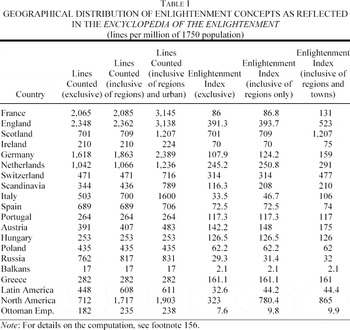
TABLE 1 GEOGRAPHICAL DISTRIBUTION OF ENLIGHTENMENT CONCEPTS AS REFLECTED IN THE ENCYCLOPEDIA OF THE ENLIGHTENMENT (lines per million of 1750 population)
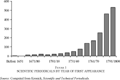
SCIENTIFIC PERIODICALS BY YEAR OF FIRST APPEARANCE
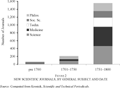
NEW SCIENTIFIC JOURNALS, BY GENERAL SUBJECT AND DATE
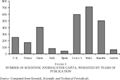
NUMBER OF SCIENTIFIC JOURNALS PER CAPITA, WEIGHTED BY YEARS OF PUBLICATION
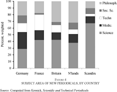
SUBJECT AREA OF NEW PERIODICALS, BY COUNTRY
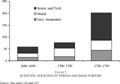
SCIENTIFIC SOCIETIES BY PERIOD AND MAIN PURPOSE
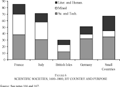
SCIENTIFIC SOCIETIES, 1600–1800, BY COUNTRY AND PURPOSE
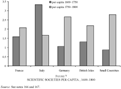
SCIENTIFIC SOCIETIES PER CAPITA, 1600–1800
 You have
Access
- 174
- Cited by