INTRODUCTION
Hemispatial neglect patients with good walking ability tend to collide with objects located on the left side of their body more frequently than with objects located on the right side (Grossi et al., Reference Grossi, Lepore, Napolitano and Trojano2001; Huitema et al., Reference Huitema, Brouwer, Hof, Dekker, Mulder and Postema2006; Robertson et al., Reference Robertson, Tegnér, Goodrich and Wilson1994). This has been referred to as lateralized bumping, and it has been observed that normal individuals experience a similar (although nonsignificant) but opposite lateral bias (Turnbull & McGeorge, Reference Turnbull and McGeorge1998). Turnbull and McGeorge (Reference Turnbull and McGeorge1998) investigated self-reported lateralized bumping and found that individuals report colliding into objects on the right side of their body more often. They also found that individuals who reported bumping their right side showed a significant leftward bias on line bisection (i.e., bisect to the left of center), illustrating a potential relationship between lateralized bumping and another measure of perceptual asymmetry. However, as self-report measures are susceptible to false memory (Hyman & Loftus, Reference Hyman and Loftus1998; Winograd et al., Reference Winograd, Peluso and Glover1998), they may not reflect real-world behavior, making an objective behavioral measure desirable.
Nicholls et al. (Reference Nicholls, Loftus, Mayer and Mattingley2007) further investigated lateralized bumping by constructing an adjustable doorway for participants to walk through. Participants were asked to shoot a toy gun at a target while walking through the doorway using either their left or their right hand, or both hands. When targeting with their left hand, participants were more likely to collide with the right side of the doorway, while the opposite was true when using the right hand. In the bimanual condition, thought to reflect bilateral activation, participants experienced more collisions with the right side. Furthermore, across conditions, more right-side collisions occurred, providing behavioral evidence of lateralized bumping.
A recent study investigated perceptual asymmetries when individuals are asked to make distance judgments. Krupp et al. (in press) examined perceptual asymmetries for distance judgments by presenting a pair of three-dimensional rectangle boxes in the center of the screen. Each box had a dark square representing the front. Both boxes were identical but mirror-reversed so that one box was facing slightly left and the other slightly right. Participants were asked to judge which of the pair appeared to be closer to them. Krupp et al. (in press) found that when the box was facing left, it was judged to be closer than the rightward facing box, despite the boxes being equidistant. This was indicative of a leftward bias (i.e., chosen as being closer, despite a lack of difference in distance), and the authors concluded that this bias in distance judgments may contribute to the phenomenon of lateralized bumping.
Perceptual asymmetries have been examined extensively using the grayscales task (Mattingley et al., Reference Mattingley, Berberovic, Corben, Slavin, Nicholls and Bradshaw2004; Nicholls et al., Reference Nicholls, Bradshaw and Mattingley1999; Okubo & Nicholls, Reference Okubo and Nicholls2006). In the grayscales task, participants are presented with a pair of equiluminant, mirror-reversed rectangles that are bright on one side and dark on the other. Images are presented parallel to one another, and participants are asked to select which image appears darker. Participants tend to select the image that is dark on the left side as being darker overall, despite the images being identical (Mattingley et al., Reference Mattingley, Berberovic, Corben, Slavin, Nicholls and Bradshaw2004), referred to as pseudoneglect (Bowers & Heilman, Reference Bowers and Heilman1980; Jewell & McCourt, Reference Jewell and McCourt2000). When performed by hemispatial neglect patients who have suffered right parietal damage (Brain, Reference Brain1941; Vallar & Perani, Reference Vallar and Perani1986), the grayscales task shows a similar but opposing rightward bias (Mattingley et al., Reference Mattingley, Berberovic, Corben, Slavin, Nicholls and Bradshaw2004). The grayscales task exhibits a bias similar to that observed on line bisection tasks (Mattingley et al., Reference Mattingley, Pierson, Bradshaw, Phillips and Bradshaw1993); however the grayscales are a newer task that have demonstrated both large and reliable effects (i.e., Nicholls et al., Reference Nicholls, Bradshaw and Mattingley1999). Furthermore, using the grayscales, Nicholls and Roberts (Reference Nicholls and Roberts2002) demonstrated that the leftward bias likely results from an attentional bias and not a premotor or scanning bias.
Horizontal biases have also been examined in the upper and lower fields; however, research in this area has been inconclusive. Examinations using a landmark task where participants are presented with a pretransected line and asked to indicate whether the transector is to the left or right of center have suggested the presence of a stronger leftward bias in the upper field (McCourt & Garlinghouse, Reference McCourt and Garlinghouse2000; McCourt & Jewell, Reference McCourt and Jewell1999). However, Barrett et al. (Reference Barrett, Crosson, Crucian and Heilman2000) found a stronger leftward bias in the lower field using a line bisection task. This indicates a need for further research to understand the nature of visual field differences on perceptual asymmetries.
Handedness influences performance on various cognitive and perceptual tasks (Jewell & McCourt, Reference Jewell and McCourt2000). Several reports have included hand-use effects on line bisection by having participants bisect with both hands; however, few studies have investigated the effect of handedness. Left-handed participants have been found to bisect farther to the left of center than right-handed participants (Luh, Reference Luh1995; Scarisbrick et al., Reference Scarisbrick, Tweedy and Kuslansky1987); however, bisections for both handedness groups are typically leftward (Luh, Reference Luh1995; Sampaio & Chokron, Reference Sampaio and Chokron1992). Although this illustrates that perceptual asymmetries are influenced by handedness, the nature of this effect is not clearly understood.
The current study further examined the factors listed above, with the goal being to determine whether more right-side collisions would occur on a computer-based route-following task. An exploratory route-following task was used to assess directional differences in the number of collisions participants experienced. Furthermore, upper and lower field differences during the route-following task were explored by including three presentation conditions: central as well as upper and lower field conditions.
Neurologically normal individuals have shown a leftward bias on the grayscales task (implying greater attention to the left), and lateralized bumping measures demonstrate a right-side collision bias, also suggesting an attentional bias. Therefore, performance on these two tasks should be correlated. Furthermore, individuals show a stronger leftward bias in the upper visual field on the landmark task, which is also an attentional measure. In contrast, performance on line bisection tasks (i.e., Barrett et al., Reference Barrett, Crosson, Crucian and Heilman2000) suggests that the leftward attentional bias (leading to right-side collisions) may be moderated by leftward motor biases (causing left-side collisions) in the lower visual field. These results would predict that performance on the current task would lead to more right-side collisions in the upper field, where attentional biases would dominate. In the lower field, the number of right-side collisions should be reduced as leftward motor biases oppose or potentially surpass the effects of the attentional bias. In addition, performance in the upper field would be predicted to be correlated with performance on the grayscales task, whereas performance in the lower field would only correlate weakly in the lower field.
METHODS
Participants
A total of 52 students from the University of Saskatchewan (17 male; mean age = 20.94, SD = 4.47) were tested. Three participants were excluded due to technical errors in recording their data. Four participants were classified as left handed (two male) based on scores from the Waterloo Handedness Questionnaire (Elias et al., Reference Elias, Bryden and Bulman-Fleming1998). Students received course credit in exchange for their participation. This study was conducted with the ethical approval of the Behavioural Research Ethics Board at the University of Saskatchewan.
Materials
Waterloo Handedness Questionnaire–Revised
The questionnaire consists of 15 questions assessing hand preference on various tasks and 3 questions related to potential reasons for hand preference. Participants respond on a 5-point Likert-type response scale consisting of right hand always (score of +2), right hand usually (+1), equally often (0), left hand usually (−1), and left hand always (−2) in terms of preference. These values were then summed to create an overall handedness score (range +30 to −30), where positive scores indicate an overall right preference and negative scores indicate an overall left preference. Participants were classified as either left handed or right handed depending on whether their scores were positive or negative. This questionnaire was taken from Elias et al. (Reference Elias, Bryden and Bulman-Fleming1998).
Computer-based route-following task
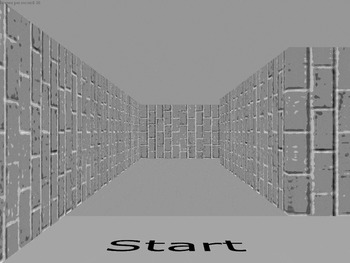
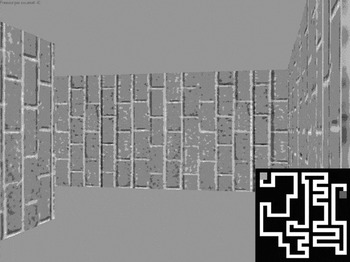
Stimuli were administered on an IBM clone computer (PIV 2.4 GHz) interfaced with a 19-inch SVGA CRT monitor running at 1024 × 768 resolution. A computer-based program used bitmaps (128 × 128 pixels) to generate three possible pathways for participants to follow (Figures 1 and 2). All three pathways consisted of 26 left turns and 26 right turns. There were no wrong turns or dead ends along the pathway, removing the need for path selection during the task. Three presentations were used: upper field (UVF), lower field (LVF), or central (C) view. The size of the pathway was held consistent in each condition as the view of the entire screen was shifted either above or below center. During the UVF and LVF presentations, the opposing field was blacked out to ensure that participants were directing their attention to the desired field. The order of presentation was counterbalanced among participants, and each presentation followed a different pathway (also counterbalanced) to avoid practice effects.
Starting view of the virtual route-following task.

Interior view of virtual maze. Inset is a sample bitmap of a pathway of the maze, with the colored squares indicating the start and endpoints of the pathway. This inset was not visible to the participant; it is included currently to illustrate a sample pathway to the reader.

Participants were seated directly in front of the computer in the same location, and neither the computer nor the screen was moved between participants. All participants were told to use the forward and side arrow keys on the keyboard to move along the pathway. All participants performed the task with their right hand as the keypad was located on the right side of the keyboard and it would not be desirable for participants to use their left hand in the right side of space. Although left-handed participants did not complete the task with their preferred hand, prior research indicates that hand use may also influence performance (i.e., Jewell & McCourt, Reference Jewell and McCourt2000), and therefore, this factor was controlled. Furthermore, there were no reaction time differences between handedness groups [repeated-measures analysis of variance (ANOVA): F(2,94) = 1.102, p = .337] illustrating that left-handed participants were able to complete the task in a similar fashion as the right-handed participants.
Participants were naive to the purpose of the task but were told to complete the route as quickly as possible and that there were no wrong turns or dead ends. The pathway was not visible to participants, and they were not provided with a map or with directions. Time taken to complete the task, as well as the number of collisions with the right and left walls, was automatically recorded. Participants were given an unlimited amount of time [mean completion time for UVF (M = 162.97 s, SD = 70.71), C (M = 162.65 s, SD = 64.04), and LVF (M = 156.85 s, SD = 70.41)]. Bias scores were created for each condition by subtracting left-side collisions from right-side collisions and dividing by the total number of collisions. An overall bias score was also created by summing the total number of left- and right-side collisions across presentation conditions.
Grayscales task
E-prime (Psychology Software Tools, Inc., Pittsburgh, PA; www.pstnet.com/eprime) was used to administer a series of 36 grayscales, of varying lengths, on the same computer described above. Two mirror-reversed images were presented in the central visual field, one directly above the other, one of the images being dark on the left side and the other dark on the right. Participants were asked to select whether the image on the top or the bottom appeared darker, with the instructions emphasizing the forced-choice nature of the task. Key press responses, as well as response time, were recorded. A response bias score was calculated by subtracting the number of leftward responses from the number of rightward responses, with a negative score indicating a leftward bias (Nicholls et al., Reference Nicholls, Bradshaw and Mattingley1999). This task has been used extensively in examinations of perceptual asymmetries as the key press required by this task minimizes motor involvement in comparison to that required in line bisection tasks (i.e., McCourt & Olafson, Reference McCourt and Olafson1997).
Lateralized bumping questionnaire
This questionnaire was given as a measure of lateralized bumping, which could be correlated with performance on the route-following task. Participants were asked if they had ever bumped themselves against an object while concentrating on something else. They were to then describe the specifics of the incident, including the part and side of the body that they bumped. All participants were instructed to answer the first question, and those who responded no to this question were instructed to return the questionnaire to the experimenter. Additionally, those participants who could not recall a specific incident were instructed to indicate so on the questionnaire and return it to the experimenter. As only preliminary research has been conducted in this area (Turnbull & McGeorge, Reference Turnbull and McGeorge1998), psychometrics are not available for this questionnaire.
Procedure
Following informed consent, participants completed the Waterloo Handedness Questionnaire–Revised (Elias et al., Reference Elias, Bryden and Bulman-Fleming1998). The questionnaire also contained additional demographic questions, such as sex, age, visual or hearing impairments, and familial sinistrality. Following this, participants completed three route-following tasks, followed by the grayscales task, and last the lateralized bumping questionnaire.
RESULTS
A 3 × 2 × 2 repeated measures ANOVA with within-subject factor presentation conditions (UVF, C, and LVF) and between-subject factors handedness (right handed and left handed), and sex (male and female) was computed to examine directional bias for collisions on the route-following task; however, none of the effects related to sex reached significance (all F < 1, all p > .433). The dependent measure was the bias score for each presentation condition. There was a significant main effect of presentation condition, F(2,94) = 7.779, p = .001. Paired samples t tests indicated that there was a significant difference between the UVF and the LVF presentations, t(48) = 2.913, p = .005, with the LVF presentation demonstrating more left-side collisions and the UVF presentation demonstrating more right-side collisions (both significantly different from zero, t(48) = −2.475, p = .009 and t(48) = 1.912, p = .031, respectively). The LVF presentation was also significantly different from the C presentation, t(48) = 2.525, p = .015, which did not exhibit a directional bias, t(48) = −1.006, p = .160.
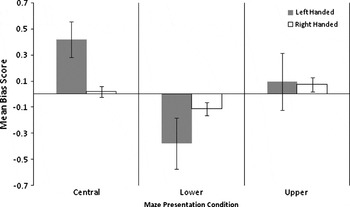
This main effect was qualified by a significant handedness × presentation condition interaction, F(2,94) = 3.794, p = .026. Post hoc comparisons indicated that handedness did not influence performance in either the UVF or the LVF conditions; however, left-handed individuals had a significantly more right-side collisions in the C condition, t(47) = −2.237, p = .030 (Figure 3).
Handedness × presentation condition interaction. Values represent mean bias scores obtained by subtracting the number of leftward collisions from the number of rightward collisions, with positive values indicating a rightward bias and negative values indicating a left-side bias. Error bars represent the standard errors of the mean.

The overall number of left- and right-side collisions (collapsed across conditions) was also examined; however, no significant overall bias emerged, t(48) = 0.586, p = .561. The total number of collisions in each condition was compared to assess whether more collisions were recorded in any one presentation condition. A repeated measures ANOVA with presentation conditions (UVF, C, and LVF) as the within-subject factor revealed a main effect of presentation condition, F(2,96) = 4.625, p = .012. Paired samples t tests revealed that there were more collisions overall in the UVF condition when compared with both the C condition, t(48) = 2.314, p = .025, and the LVF condition, t(48) = 2.468, p = .017. The C and LVF conditions did not differ from one another.
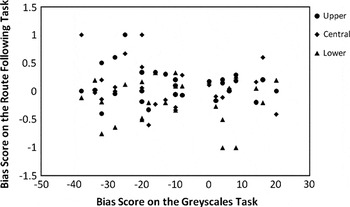
A one-sample t test was computed for bias scores on the grayscales task and a significant leftward bias emerged, t(26) = −3.215, p = .003. Although the self-report measure indicated slightly more right-side bumps, this difference was not significant, t(47) = 1.159, p = .252. Pearson product moment correlations were performed to examine potential relationships among the three conditions on the route-following task as well as the grayscales task and the self-report measure; however, all failed to reach significance (all p values > .05; Figure 4).
Scatterplot illustrating the lack of relationship between the grayscales task and each of the conditions of the route-following task.

DISCUSSION
A computer-based route-following task was used to compare the number of collisions made with the left and right walls. In the central condition, participants did not demonstrate a bias, which was contrary to the expectation of more right-side collisions in this condition. When the task was performed in either the upper or the lower field, significant biases were observed. Participants collided with the walls on the right side more often than in the upper field condition; however, when performing the task in the lower field, collisions occurred more often with the left side.
The finding of more right-side collisions in the upper field is consistent with the findings of McCourt and Jewell (Reference McCourt and Jewell1999) and McCourt and Garlinghouse (Reference McCourt and Garlinghouse2000) regarding upper and lower field biases. The incidence of more right-side collisions could reflect either a slight neglect of the right side or an overestimation of the left side. McCourt and Jewell (1999) and McCourt and Garlinghouse (2000) observed stronger leftward biases in the upper field using a landmark task, which would be consistent with the occurrence of more right-side collisions in the upper field. It was suggested that in the lower visual field, the leftward attentional bias may be moderated by leftward motor biases that would decrease or possibly even reverse the right-side collision bias. Therefore, the left-side collision bias observed in the lower field was also in line with hypotheses.
Handedness was found to influence performance on the route-following task in the current study; however, as the number of left-handed participants was very small, no firm conclusions can be made. In the central condition, left-handed participants experienced more right-side collisions than right-handed participants. As prior research examining handedness in relation to perceptual asymmetries has shown a stronger leftward bias (i.e., Luh, Reference Luh1995; Sampaio & Chokron, Reference Sampaio and Chokron1992; Scarisbrick et al., Reference Scarisbrick, Tweedy and Kuslansky1987), it follows that left-handed individuals would experience significantly more right-side collisions. Nicholls et al. (Reference Nicholls, Loftus, Mayer and Mattingley2007) examination of lateralized bumping did not find an effect of handedness; however, as research in this area is preliminary, it remains possible that laterality influences performance. These findings suggest that handedness effects should be considered in future investigations of directional collisions to better illustrate whether laterality contributes significantly to performance.
The finding of a lack of correlation between performance on the route-following task and the grayscales task was not consistent with expectations. As research linking performance on perceptual asymmetries tasks with lateralized bumping has been inconclusive, it is possible that performance on the current task is not related to perceptual asymmetries. Future research should examine performance on the grayscales task in the upper and lower visual fields as performance on this measure should be similar to that observed on the landmark task (i.e., McCourt & Garlinghouse, Reference McCourt and Garlinghouse2000; McCourt & Jewell, Reference McCourt and Jewell1999), also an attentional measure. It appears that vertical biases differ for attentional and motor biases whereby stimuli that are higher in the visual field demonstrate a stronger attentional bias; however, stimuli that are lower in the visual field show a stronger motor bias.
Preliminary investigations of lateralized bumping have suggested that right-side collisions occur more often than left-side collisions (Nicholls et al., Reference Nicholls, Loftus, Mayer and Mattingley2007; Turnbull & McGeorge, Reference Turnbull and McGeorge1998). The current study further suggests the existence of a directional difference in the number of collisions that individuals experience; however, it appears that this effect is further mediated by the vertical visual field in which the task is carried out. The exploratory route-following task used in the current study also appears to be a useful measure that merits inclusion in future studies examining this phenomenon. Other factors that should be considered include further examination of handedness differences by including equal numbers of left- and right-handed participants as well as a specific comparison of performance on the route-following task in near and far space. Furthermore, handedness comparisons related to hand use should also be considered in future research. This may be able to shed light on the nature of upper and lower visual field differences in directional collisions and potentially also perceptual asymmetries.
ACKNOWLEDGMENTS
This research was supported with a fellowship to N.A.T. and a grant to L.J.E. from the Natural Sciences and Engineering Research Council. There are no financial or other relationships that could be interpreted as a conflict of interest affecting this manuscript.