Introduction
Most dry seeds readily imbibe when exposed to ample water, due to their negative water potential, whether physiological dormancy is present or not. During imbibition, three phases have been distinguished: phase I, marking a rapid uptake of water due to the low water potential of the seed; followed by phase II, in which the water content does not change substantially in the intact seed prior to radicle protrusion; and phase III, when rupture of the covering layers (testa and endosperm) allows growth of the collet and the protruded radicle becomes visible (Bewley and Black, Reference Bewley and Black1994; Sliwinska et al., Reference Sliwinska, Bassel and Bewley2009, Reference Sliwinska, Mathur and Bewley2012). Phases I and II represent the intact seed, while phase III represents the germinated seed with a visibly growing radicle. In this context radicle protrusion is usually the only developmental change that is observed.
Viable seeds that cannot complete germination when exposed to optimal germination conditions are considered to be dormant (Bewley and Black, Reference Bewley and Black1994). Physiological dormancy is the most common type of dormancy (Baskin and Baskin, Reference Baskin and Baskin1998), and this form of dormancy can be released through a range of environmental factors that form a requirement for the completion of germination (Cadman et al., Reference Cadman, Toorop, Hilhorst and Finch-Savage2006). In most temperate species dormancy is lost by dry afterripening at higher temperatures or wet chilling (Hilhorst, Reference Hilhorst1995). Nitrate is an additional natural environmental component that is capable of releasing dormancy in several species (reviewed by Benech-Arnold et al., Reference Benech-Arnold, Sánchez, Forcella, Kruk and Ghersha2000). While the nitrate content of seeds seems to play a limited role, the sensitivity to nitrate is of ecological significance (Bouwmeester et al., Reference Bouwmeester, Derks, Keizer and Karssen1994). Nitrate has been described as a way to release dormancy in a range of Brassicaceae species, including Arabidopsis thaliana and Sisymbrium officinale (Hilhorst et al., Reference Hilhorst, Smitt and Karssen1986; Ali-Rachedi et al., Reference Ali-Rachedi, Bouinot, Wagner, Bonnet, Sotta, Grappin and Julien2004; Finch-Savage et al., Reference Finch-Savage, Cadman, Toorop, Lynn and Hilhorst2007; Iglesias- Fernandez et al., Reference Iglesias-Fernandez, Matilla, Pulgar and de la Torre2007; Toorop et al., Reference Toorop, Cuerva, Begg, Locardi, Squire and Iannetta2012; Carrillo-Barral et al., Reference Carrillo-Barral, Matilla, Rodríguez-Gacio and Iglesias-Fernández2014). Nitrate reduction seemed to play no role in dormancy release (Hilhorst and Karssen, Reference Hilhorst and Karssen1989). Instead, in Arabidopsis, nitrate was thought to interfere with the degradation of abscisic acid (ABA) during imbibition (Matakiadis et al., Reference Matakiadis, Alboresi, Jikumaru, Tatematsu, Pichon, Renou, Kamiya, Nambara and Truong2009). Seeds provided with nitrate still required light for radicle protrusion, indicating that nitrate alone is not sufficient for the completion of germination.
Completion of germination has been described as the product of two forces: embryo growth potential and the restraint of the covering layers (Ni and Bradford, Reference Ni and Bradford1993). Exogenous ABA was found to inhibit embryo growth potential during germination of Brassica napus (Schopfer and Plachy Reference Schopfer and Plachy1985), Lycopersicon esculentum (Toorop et al., Reference Toorop, Van Aelst and Hilhorst2000) and Coffea arabica (da Silva et al., Reference da Silva, Toorop, van Aelst and Hilhorst2004, Reference da Silva, Toorop, van Lammeren and Hilhorst2008). The endosperm cap or micropylar endosperm is the tissue that weakens during germination, prior to radicle protrusion (Watkins and Cantliffe, Reference Watkins and Cantliffe1983; Sanchez et al., Reference Sanchez, De Miguel and Mercuri1986; Welbaum et al., Reference Welbaum, Muthui, Wilson, Grayson and Fell1995; Toorop et al., Reference Toorop, Van Aelst and Hilhorst2000; da Silva et al. Reference da Silva, Toorop, van Aelst and Hilhorst2004; Müller et al., Reference Müller, Tintelnot and Leubner-Metzger2006; Pinto et al, Reference Pinto, da Silva, Davide, Mendes de Jesus, Toorop and Hilhorst2007). Exogenous ABA inhibits radicle protrusion and contributes to the inhibition of germination. In tomato seeds, ABA completely inhibits germination by inhibiting the second step in the weakening of the covering layers (Toorop et al., Reference Toorop, Van Aelst and Hilhorst2000). ABA also inhibits the second step in the endosperm weakening of C. arabica (da Silva et al., Reference da Silva, Toorop, van Aelst and Hilhorst2004), Solanum lycocarpum (Pinto et al., Reference Pinto, da Silva, Davide, Mendes de Jesus, Toorop and Hilhorst2007) and Genipa americana (Queiroz et al., Reference Queiroz, da Silva, Davide, José, Silva, Fraiz, Faria and Hilhorst2012); and delays the onset of endosperm weakening in Lepidium sativum (Müller et al., Reference Müller, Tintelnot and Leubner-Metzger2006). Endosperm from dormant Arabidopsis seeds produces and releases ABA, maintained by high expression of RGL2 (RGA-LIKE2), inhibiting embryo growth through ABI5 (ABA-INSENSITIVE5; Lee et al., Reference Lee, Piskurewicz, Turečková, Strnad and Lopez-Molina2010). The expression of ABI5 is localized to the micropylar endosperm (Penfield et al., Reference Penfield, Li, Gilday, Graham and Graham2006), which makes it likely that endogenous ABA plays a similar role as exogenous ABA in weakening of the endosperm.
Rupture of the testa has been described to precede rupture of the endosperm (reviewed by Weitbrecht et al., Reference Weitbrecht, Müller and Leubner-Metzger2011) in Chenopodium album (Karssen, Reference Karssen1976); Trollius ledebouri (Hepher and Roberts, Reference Hepher and Roberts1985); Nicotiana tabacum (Leubner-Metzger et al., Reference Leubner-Metzger, Fründt, Vögeli-Lange and Meins1995); Phacelia tanacetifolia (Serrato-Valenti et al., Reference Serrato-Valenti, Cornara, Modenesi, Piana and Mariotti2000); Nicotiana attenuata (Krock et al., Reference Krock, Schmidt, Hertweck and Baldwin2002); Petunia hybrida, Nicotiana sylvestris and Nicotiana plumbaginifolia (Petruzelli et al., Reference Petruzelli, Müller, Hermann and Leubner-Metzger2003); A. thaliana and Lepidium sativum (Liu et al., Reference Liu, Koizuka, Homrichhausen, Hewitt, Martin and Nonogaki2005; Müller et al., Reference Müller, Tintelnot and Leubner-Metzger2006); S. lycocarpum (Pinto et al., Reference Pinto, da Silva, Davide, Mendes de Jesus, Toorop and Hilhorst2007); and S. officinale (Iglesias-Fernandez and Matilla, Reference Iglesias-Fernandez and Matilla2010). ABA did not alter the testa rupture of non-dormant Cestroideae-type seeds in the Solanaceae family (Petruzelli et al., Reference Petruzelli, Müller, Hermann and Leubner-Metzger2003), nor of Lepidium, Arabidopsis or S. officinale in the Brassicaceae family (Müller et al., Reference Müller, Tintelnot and Leubner-Metzger2006; Carrillo-Barral et al., Reference Carrillo-Barral, Matilla, Rodríguez-Gacio and Iglesias-Fernández2014). On the other hand, nitrate stimulated the testa rupture of S. officinale (Carrillo-Barral et al., Reference Carrillo-Barral, Matilla, Rodríguez-Gacio and Iglesias-Fernández2014). Observations of testa rupture in this wide range of species suggest that this phenomenon is widespread in the plant kingdom.
In S. lycocarpum, testa rupture was accompanied by an increase in the water content of the embryo and a split in the testa that envelops the endosperm cap (Pinto et al., Reference Pinto, da Silva, Davide, Mendes de Jesus, Toorop and Hilhorst2007). In Arabidopsis it was noted that ‘the endosperm elongates and emerges from the opened testa’ upon testa rupture (Liu et al., Reference Liu, Koizuka, Homrichhausen, Hewitt, Martin and Nonogaki2005), which typically is parallel to the axis. No detailed observations of changes in the seed water content or morphology have been described in relation to testa rupture. However, it seems likely that rupture of the testa, which is dead tissue, facilitates swelling of underlying tissues. The hypothesis is tested here that testa rupture in S. officinale seeds concurs with an increase in water content prior to endosperm rupture, and facilitates an increase in the seed dimensions.
Materials and methods
Seed material
Sisymbrium officinale (L.) Scop. seeds were collected in a field near Wageningen, The Netherlands, in the autumn of 2004, cleaned and stored. Plants of the Arabidopsis thaliana (Arabidopsis) accession Cape Verdi Islands (Cvi; accession number N8580) were grown as described by Cadman et al. (Reference Cadman, Toorop, Hilhorst and Finch-Savage2006). Seeds were cleaned, dried and subsequently stored at 15% relative humidity (RH) and 15°C.
Germination
Seeds of S. officinale were sown in a 9-cm Petri dish on two layers of filter paper (Whatman No.1) and imbibed with 5 ml water or a solution containing (a combination of) 10 μM abscisic acid (racemic mixture, Sigma-Aldrich, Gillingham, Kent, UK), 50 μM paclobutrazol (Sigma-Aldrich), 20 mM KCl, 20 mM KNO3 or 20 mM NaNO3 (Fisher Chemicals, Loughborough, Leics, UK). Seeds were incubated in an incubator at 30°C with 8 h white light per day; Petri dishes were placed in a closed box lined with moist paper towel to avoid evaporation. For germination tests, three replicates of at least 50 seeds were used. Seeds were considered to have completed germination when 1-mm protrusion of covering layers by the gravitropically bent radicle was observed with a binocular microscope at 10 × magnification. For optimization of germination temperature, dishes were placed at 1, 5, 10, 15, 20, 25, 30 or 35°C; germination was scored until a stable plateau was reached (up to 491, 281, 157, 144, 54, 25, 51 and 51 d, respectively). The germination rate was calculated for individual dishes as the reciprocal value of the time until 50% endosperm rupture, using the Boltzmann equation (Origin v6.1; http://www.originlab.com/). Occasional fungal infection observed during very long incubations was removed by rinsing the seeds briefly in water and transferring to a new dish; no fungal contamination was observed within 7 d of incubation.
Single-seed analysis of water content and length
Single seeds were weighed on a seven-place balance (model UMT2. Mettler Toledo, Leicester, UK) with a 0.1 μg readability, before, as well as various intervals after, imbibition in 5-cm Petri dishes on two layers of filter paper (Whatman No.1) on 10 μM ABA, to facilitate single-seed analysis of water content and length upon testa rupture but prior to endosperm rupture, with or without 20 mM KNO3 and incubation at 30°C, as above. Water content was calculated by comparing data for dry and imbibed seeds, using 12 seeds per sampling time and treatment, and was expressed as the increase in water content after correction for the dry weight. Before recording the weight upon imbibition, single seeds were blotted briefly on two filter papers wetted with 2 ml demineralised water, to remove the excess water. Testa rupture was recorded for each seed. Prior to weighing, digital images were taken of individual seeds at × 200 magnification with a USB microscope (Dino-Lite AM413T; Absolute Data Services, Hemel Hempstead, Bucks, UK) connected to a computer. These images were used to measure the length of seeds, expressed as pixel number. Seed length and water content of individual seeds were used for single-seed analysis. The small size of Arabidopsis seeds and the presence of much mucilage formed an obstacle to performing single-seed analysis. Hence, only seed length was recorded for this species. The length of Arabidopsis seeds was measured 21 d after imbibition and incubation at 20°C on 100 μM ABA, 100 μM ABA and 10 mM KCl, or 100 μM ABA and 10 mM KNO3. Testa rupture was recorded for each seed. All single-seed experiments were conducted in duplicate.
Statistical analysis
Data were analysed for two replicate experiments using GenStat (v.14.2; http://www.vsni.co.uk/). Since data did not follow a normal distribution and were not homoscedastic, Kruskal–Wallis analysis of variance (ANOVA) was applied to test differences between treatments, and Mann–Whitney U tests for post-hoc comparison of sets of two treatments within each group. A Spearman's rank correlation was applied to the increased seed length and water content.
Results
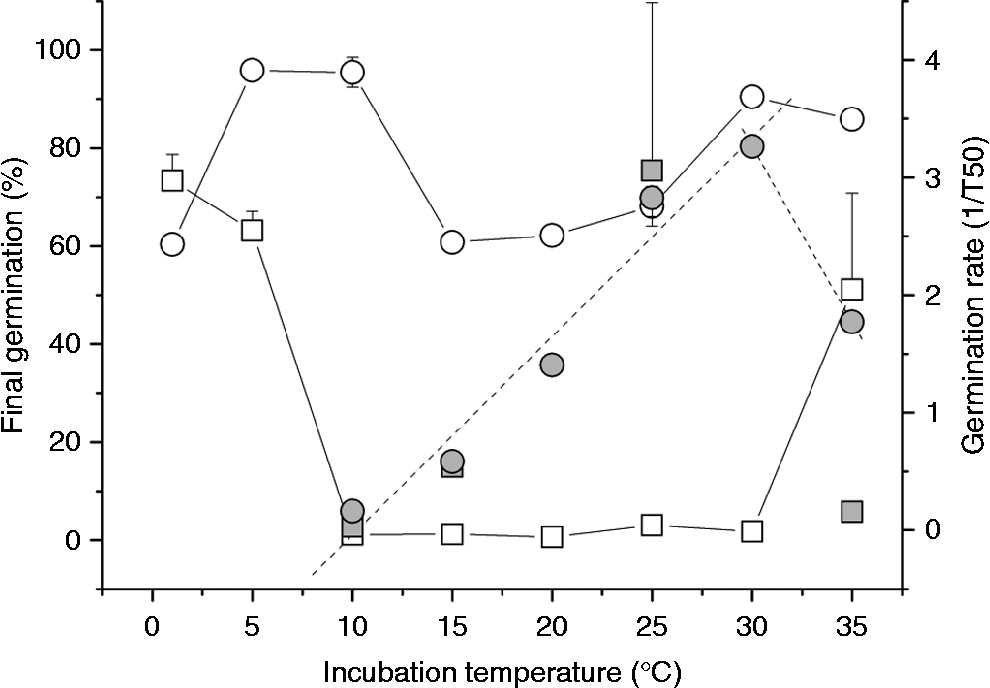
Germination of S. officinale seeds showed a bimodal response to temperature, with low germination in water at temperatures between 10 and 30°C and high germination at both lower (1 and 5°C) and higher (35°C) temperatures (Fig. 1). KNO3 at 20 mM increased germination between 5 and 35°C, although germination at 15–25°C was less stimulated than at 10 or 30°C. The germination rate (GR) showed a single peak around 30°C and was extremely slow in water at low and high temperatures, with 98 d until half-maximal germination at 5°C and 26 d at 35°C (Fig. 1). When taking into account both the GR and the maximum germination in KNO3, 30°C was considered the optimum temperature for germination. The low germination response in water at this temperature allowed investigation of the role of nitrate in the release of physiological dormancy.
Final germination (open symbols) and germination rates (grey symbols) of Sisymbrium officinale seeds in water (squares) or 20 mM KNO3 (circles). Data are means of three replicates with at least 50 seeds per plate; error bars are standard error.

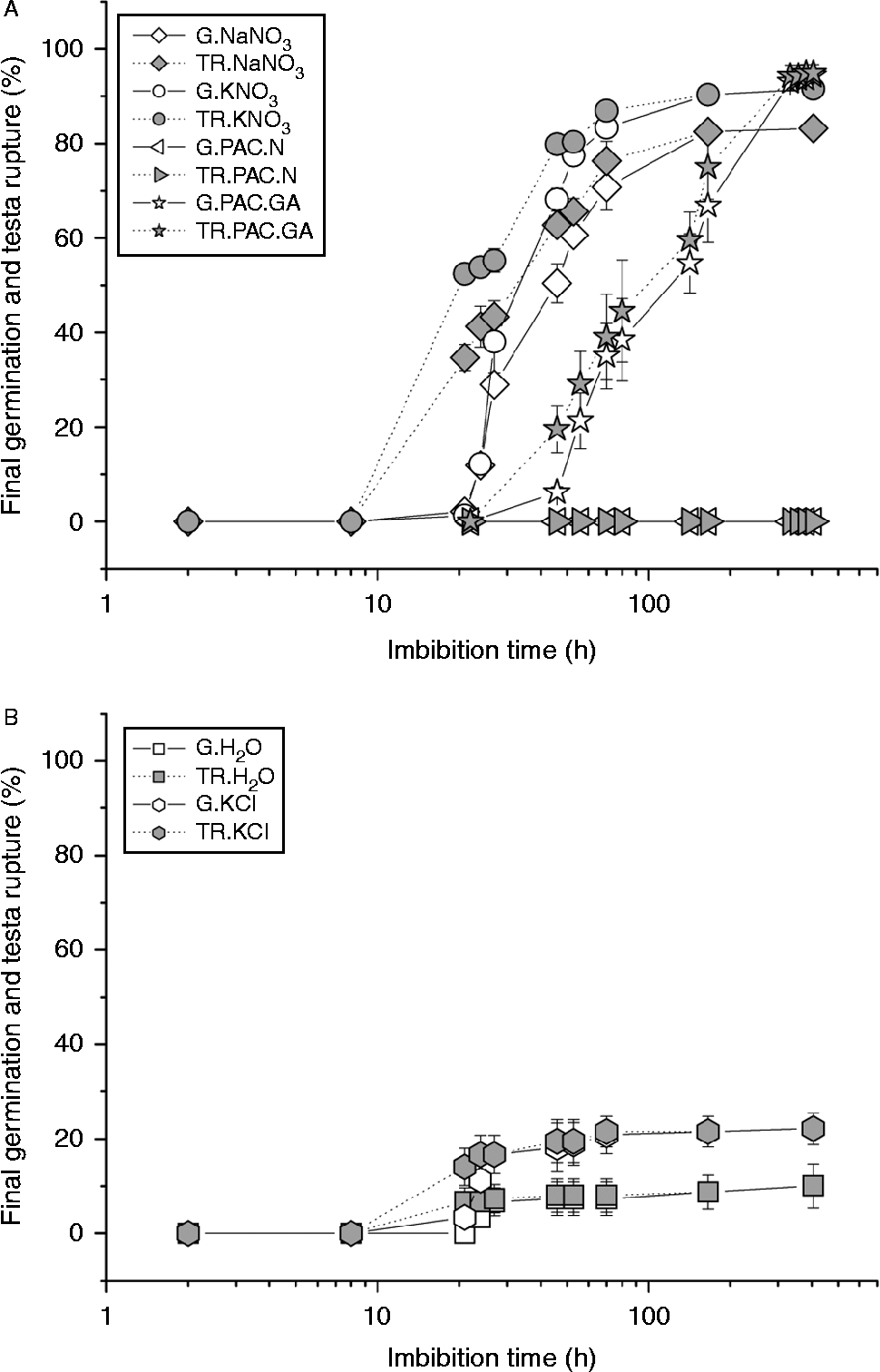
KNO3 was more efficient than NaNO3 in facilitating endosperm rupture, while the KCl treatment confirmed the specificity of nitrate (Fig. 2). Testa rupture preceded endosperm rupture in all treatments. Both testa rupture and endosperm rupture were fully inhibited by tetcyclacis (data not shown) and paclobutrazol, two inhibitors of gibberellic acid (GA) synthesis, and KNO3 could not reverse this inhibition; in contrast, exogenous GA4 fully restored testa rupture and endosperm rupture in paclobutrazol, although the rate was low (Fig. 2). Constant darkness also fully inhibited endosperm rupture and testa rupture, despite the presence of nitrate (data not shown). ABA at a concentration of 10 μM fully inhibited endosperm rupture in the presence of KNO3 but only delayed testa rupture, increasing the time until half-maximal testa rupture from 20 ± 2 to 38 ± 2 h in KNO3. Multiple testa ruptures were commonly observed and the orientation of these testa ruptures was transverse to the axis (Fig. 3). This observation prompted the hypothesis that elongation of seeds and a concurrent increase in water content takes place prior to endosperm rupture, facilitated by testa rupture. To test this, ABA was applied to inhibit endosperm rupture, facilitating the measurement of seed length prior to the completion of germination.
Germination (G, or endosperm rupture: closed symbols, solid lines) and testa rupture (TR: open symbols, dotted lines) of S. officinale seeds at 30°C in white light in 20 mM NaNO3 (diamonds), 20 mM KNO3 (circles), 50 μM paclobutrazol with 20 mM KNO3 (triangles) or 50 μM paclobutrazol with 10 μM GA4 (stars) (A), and in water (squares) or 20 mM KCl (hexagons) (B). Data are means of three replicates with at least 50 seeds per plate, error bars are standard error.

Sisymbrium officinale seeds after 7 d incubation in 100 μM ABA plus 20 mM KCl (top) or in 100 μM ABA plus 20 mM KNO3 (bottom). Testa rupture was observed in the presence of nitrate, indicated by arrows. Typically, multiple ruptures occur which are transverse to the seed axis, wider at the axis side and narrower at the cotyledon side. Scale bar = 0.5 mm.

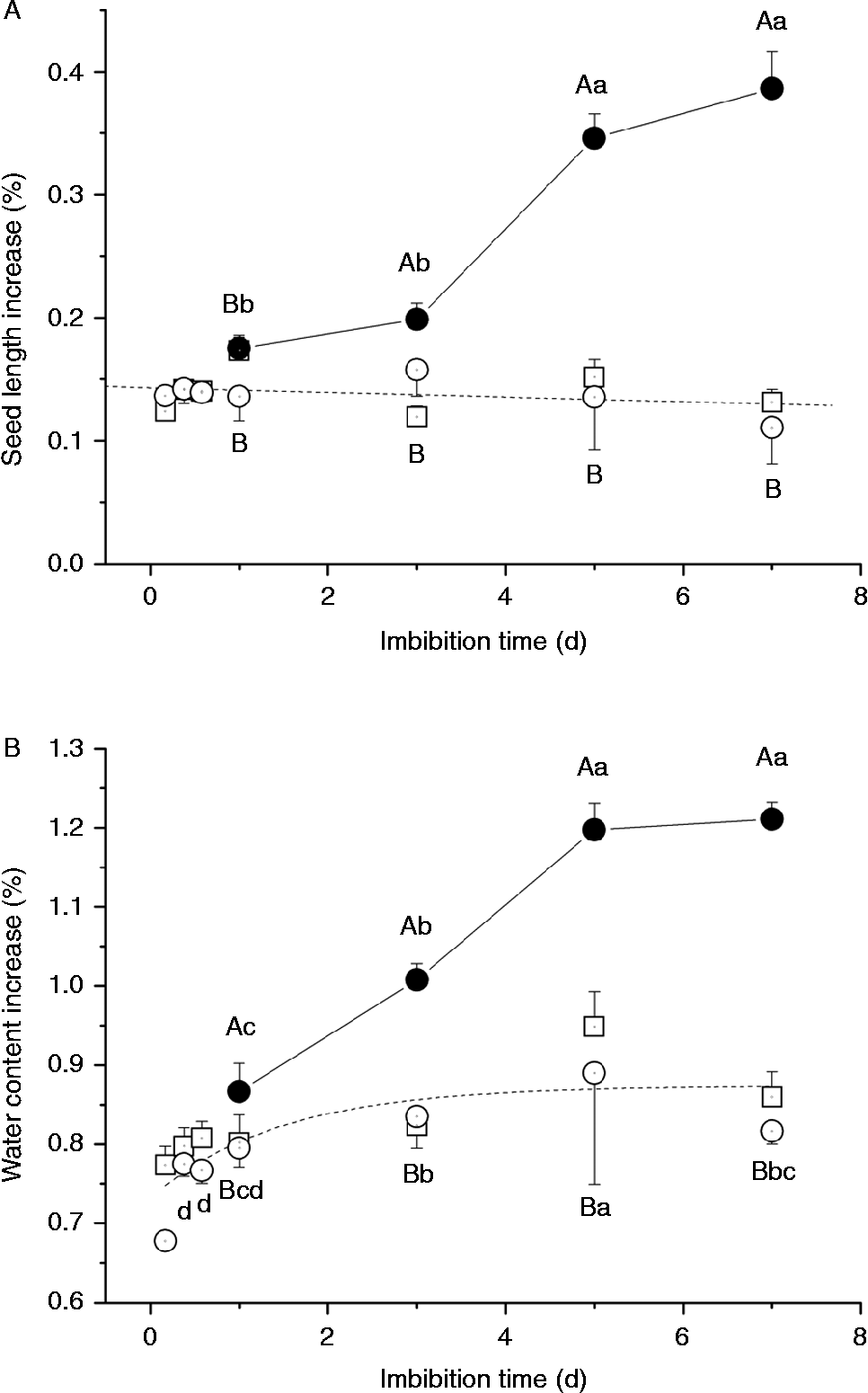
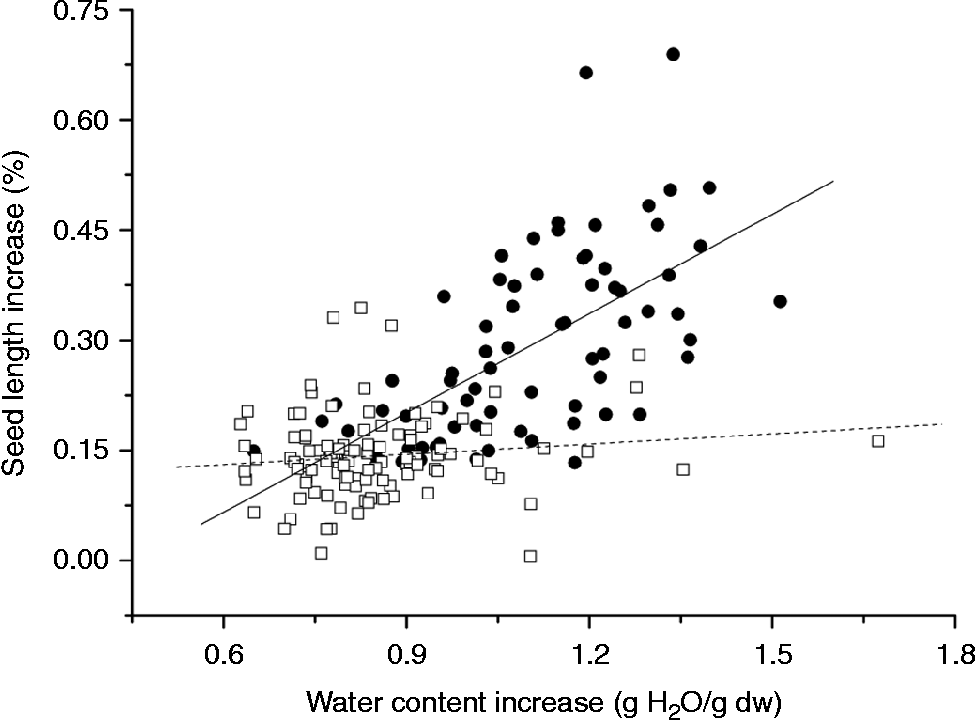
Seeds imbibed on ABA for 7 d displayed 88 ± 1% testa rupture in the presence of KNO3, similar to the 94 ± 5% in the absence of ABA (data not shown). Seed length increase and water content increase differed for the following groups: imbibition on ABA without testa rupture, imbibition on ABA and KNO3 without testa rupture, and imbibition on ABA and KNO3 with testa rupture (P< 0.001). These parameters also differed for the sampling times 4, 9 and 14 h and 1, 3, 5 and 7 d (P< 0.001; Fig. 4). Because, after 4 h, seeds seemed not to be fully imbibed, this time point was excluded from further analysis, to restrict data to those that appeared fully imbibed. Seeds that did not display testa rupture, imbibed on ABA or ABA with KNO3, did not show differences in length increase (P= 0.419). Although the water content increase of these seeds differed significantly (P= 0.004), the water content increase of the seeds imbibed on ABA with KNO3 was only 5% more than those imbibed on ABA. Moreover, the separate comparisons of sampling times for these two treatments did not differ significantly. Therefore, seeds without testa rupture, imbibed on ABA and imbibed on ABA with KNO3, were grouped and compared with seeds that displayed testa rupture and imbibed on ABA with KNO3. The resulting groups (seeds with and seeds without testa rupture) differed in seed length increase (P< 0.001) and water content increase (P< 0.001), while sampling times also differed. When considering only the group of seeds without testa rupture, no differences were observed for the length increase between the sampling times (P= 0.184). Water content increase of seeds without testa rupture differed between the sampling times (P< 0.001), displaying an 18% increase in the water content between incubations of 1 and 5 d (Fig. 4). The sampling times 9 h, 14 h and 1 d did not differ, indicating a plateau in water content between 9 h and 1 d. In contrast, the seeds with testa rupture differed in length increase (P< 0.001) and water content increase (P< 0.001) for 1 d and subsequent sampling times, displaying a 38% increase in the water content after 5 d (49% compared with seeds without testa rupture after 1 d) and a 94% increase in the length for the same interval (Fig. 4). The length and water content increase of seeds imbibed on paclobutrazol with or without KNO3 remained at a similar level as that of seeds in ABA without KNO3 (data not shown). Seeds without testa rupture, restricted to incubations of 1 d and longer to provide for a proper comparison of testa rupture, did not show a significant correlation for water content increase and length increase (P= 0.192), while seeds with testa rupture showed a significant correlation (R= 0.654, P< 0.001; Fig. 5).
Increase in length (A) and water content (B) of S. officinale seeds upon imbibition on 10 μM ABA without nitrate showing no testa rupture (open squares), with 20 mM KNO3 but showing no testa rupture (open circles), and with 20 mM KNO3 showing testa rupture (closed circles). Identical capital letters indicate no differences for data points representing seeds with and without testa rupture (TR) at each sampling time; identical small letters indicate no differences for data points between sampling times within treatments (TR, no TR).

Water content increase versus length increase of S. officinale seeds, determined in a single-seed assay sampled 1, 3, 5 and 7 d after the start of imbibition. Treatments are: seeds without testa rupture (open squares, dotted line, y= 0.103+0.047x) and seeds with testa rupture (closed circles, solid line, y= − 0.205+0.451x). Lines and equations represent linear regressions fitted separately for the groups.

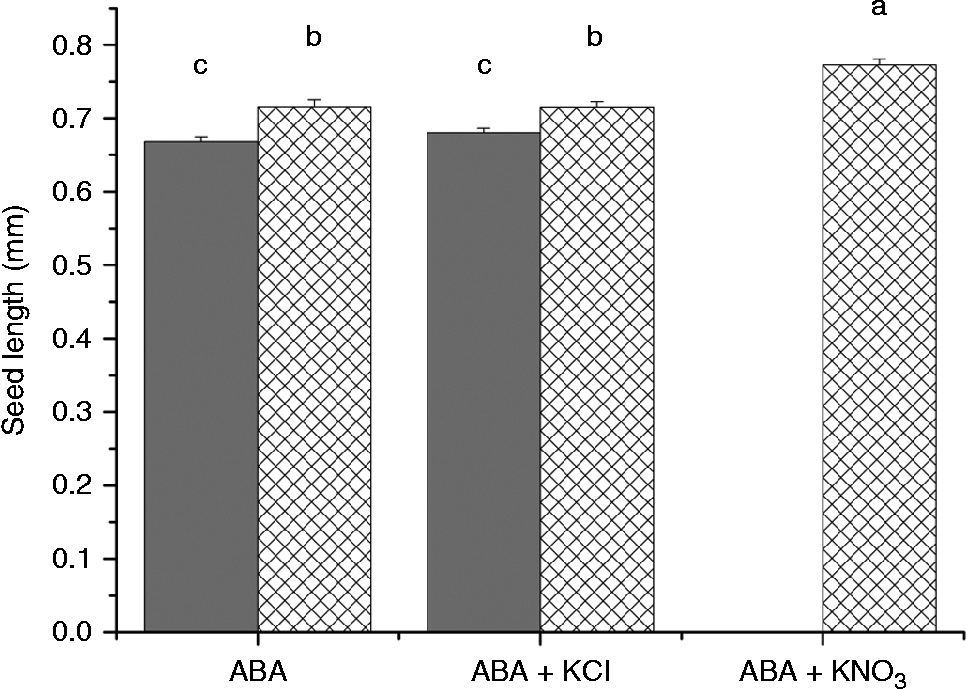
Since testa rupture also preceded endosperm rupture in Arabidopsis Cvi seeds and ABA was incapable of inhibiting testa rupture, the effect of nitrate on length was also investigated in this species, which similarly displayed nitrate-stimulated dormancy release (12% germination in water, 100% in 10 mM KNO3). ABA fully inhibited endosperm rupture of Arabidopsis seeds (not shown), but not testa rupture in the presence of KNO3. In ABA, and ABA with KCl, Arabidopsis seeds with testa rupture were 6% longer than seeds without testa rupture (Fig. 6). In ABA with KNO3, seeds with testa rupture were 16% longer than seeds in ABA without testa rupture (Fig. 6).
Seed length of Arabidopsis Cvi seeds after 21 d incubation in 10 μM ABA, 10 μM ABA with 10 mM KCl, and 10 μM ABA with 10 mM KNO3. Cross-hatched bars represent seeds with testa rupture (TR), filled bars seeds without testa rupture. Identical letters indicate no differences between treatments and state of TR. Data are means of at least 20 seeds; error bars are standard error.

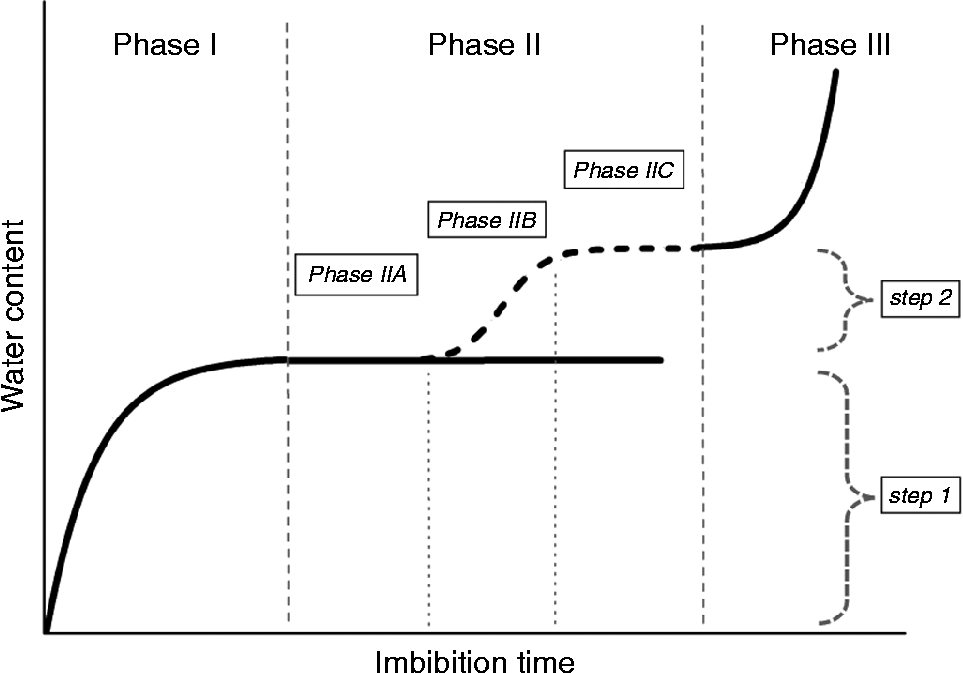
A conceptual model that explains the current results is presented (Fig. 7). In this model, the classical phase II of the triphasic imbibition model is split into three sub-classes: phase IIA is identical to the classical phase II, phase IIB is associated with testa rupture, while the transition between phase IIC and phase III marks endosperm rupture and radicle protrusion. This multiphasic model distinguishes two steps in water uptake, associated with dormancy and the absence of testa rupture (step 1) and with dormancy release with concomitant testa rupture (step 2).
A new dormancy-dependent conceptual model for multiphasic imbibition of seeds that display testa rupture preceding endosperm rupture. Of the three phases in the classical model, delineated by the vertical dashed lines, the second phase is replaced by three sub-phases indicated with boxed italic text and separated by vertical dotted lines. Phase IIA concurs with the classical phase II. Phase IIB is associated with the onset of testa rupture, and phase IIC represents the elongated seed with testa rupture but without endosperm rupture. The dashed curve indicates phases IIB and IIC. The transition between phase IIC and phase III now marks endosperm rupture and radicle protrusion. The brackets indicate the two steps in water uptake prior to endosperm rupture. Step 1 is observed in dormant seeds without testa rupture, while in addition step 2 is observed in seeds with released dormancy and displaying testa rupture.

Discussion
Nitrate-induced testa rupture caused additional uptake of water and seed length increase. Isodiametric growth of embryo cells followed by cell elongation was described for coffee embryos upon full imbibition during germination (da Silva et al., Reference da Silva, Toorop, van Lammeren and Hilhorst2008). Elongation of the coffee embryo cells resulted in the appearance of a protuberance, since no restraining testa was present in these seeds, and in elongation of the seed later during imbibition. The current results are in agreement with this report, showing no continuing increase in length for seeds without testa rupture between 1 and 5 d, while elongation was detected upon testa rupture only after 5 d. The relatively short axis compared with the cotyledons in these seeds is probably the reason why elongation is observed only late after testa rupture compared with the increased water uptake, requiring a longer lag time until the axis extends beyond the dimensions of the cotyledons. Unlike coffee seeds, the rupturing of the testa precedes that of the endosperm in S. officinale and Arabidopsis (Linkies & Leubner-Metzger, Reference Linkies and Leubner-Metzger2012), two species with similar seed structure, and forms a prerequisite for seed elongation in both species. Although testa rupture in Arabidopsis is typically parallel to the axis (e.g. Liu et al., Reference Liu, Koizuka, Homrichhausen, Hewitt, Martin and Nonogaki2005), unlike the transverse testa rupture pattern in S. officinale, seed elongation is still induced by nitrate, albeit after a longer time. Multiple ruptures were commonly observed in S. officinale seeds and the gaps of these ruptures were typically wider on the side of the axis than on the side of the cotyledons (Fig. 3, lower panel). This indicates that seed elongation and increased water content is a result of the swelling of the collet, the lower hypocotyl cells that elongate during radicle protrusion (Sliwinska et al., Reference Sliwinska, Bassel and Bewley2009, Reference Sliwinska, Mathur and Bewley2012). The observed delay in testa rupture in the presence of ABA suggests that exogenous ABA modifies the embryo growth potential, possibly by delaying the swelling of the collet. Testa rupture of S. lycocarpum seeds appears to be limited to the micropylar region, and is typically observed as splitting along the plane of symmetry (Pinto et al., Reference Pinto, da Silva, Davide, Mendes de Jesus, Toorop and Hilhorst2007). A split testa in these seeds would allow expansion of the underlying tissues; although such observations have not been described. No increased water content of the collet has been reported prior to radicle protrusion in any species. However, it seems highly likely that this occurs shortly before endosperm rupture, thus driving the protrusion of the radicle through the endosperm cap. Even despite a growing protuberance and the absence of a rigid testa during germination, no increase in water content was reported for coffee seeds (da Silva et al., Reference da Silva, Toorop, van Aelst and Hilhorst2004). The most likely reason for overlooking this detail in this and other species is that imbibition is typically described as an increase in mass instead of water content, resulting in large variation; and that single-seed analysis is not usually applied.
Water uptake of S. officinale seeds in the presence of potassium nitrate was described as being faster in non-dormant afterripened seeds than in dormant seeds; nevertheless, phase II was reached after 5 h of imbibition at 30°C and remained stable up to 9 h (Iglesias-Fernandez and Matilla, Reference Iglesias-Fernandez and Matilla2009). The current data are in agreement, and confirmed that a plateau in water content was extended to 1 d. The complete dependence on nitrate for testa rupture, concurring with nitrate-dependent dormancy release, allowed further investigation of the role of nitrate in the present study. The limited continuing increase in water content in S. officinale seeds without testa rupture is possibly caused by radial swelling. Robert et al. (Reference Robert, Noriega, Tocino and Cervantes2008) observed a stronger early increase in radial swelling (termed short diameter in this reference) than elongation (termed long diameter) in Arabidopsis seeds, with further elongation between 3 and 24 h but no further radial swelling. No testa ruptures were reported in that study, and it is assumed that this did not take place within the first 24 h of imbibition. Although increased water content was described in Arabidopsis upon testa rupture but prior to endosperm rupture (fig. 1C in Dekkers et al., Reference Dekkers, Pearce, van Bolderen-Veldkamp, Marshall, Widera, Gilbert, Drost, Bassel, Müller, King, Wood, Grosse, Quint, Krasnogor, Leubner-Metzger, Holdsworth and Bentsink2013), this feature was not tested or described in detail. Hypothetically, the different water content for seeds with and without testa rupture may have contributed to the observed differences in gene expression (Dekkers et al., Reference Dekkers, Pearce, van Bolderen-Veldkamp, Marshall, Widera, Gilbert, Drost, Bassel, Müller, King, Wood, Grosse, Quint, Krasnogor, Leubner-Metzger, Holdsworth and Bentsink2013). Increased water content upon testa rupture was reported for tobacco seeds, which have highly noticeable elongation of the structures within prior to endosperm rupture (fig. 2B in Manz et al., Reference Manz, Müller, Kucera, Volke and Leubner-Metzger2005). The current results demonstrate that testa rupture also facilitates elongation in both Arabidopsis and S. officinale, and increased water uptake in S. officinale. An increase in water content in phase II of the imbibition curve, concurring with testa rupture, has been described for B. napus (Schopfer and Plachy, Reference Schopfer and Plachy1984). However, this species is not endospermic and, since the testa forms only a barrier for swelling and growth of the embryo, this increase in water content is to be expected. In contrast, both S. officinale and Arabidopsis seeds are endospermic. The proposed new phases IIB and IIC were not observed in dormant seeds in the absence of nitrate. Therefore, it must be concluded that imbibition differs between dormant and non-dormant seeds.
Carrillo-Barral et al. (Reference Carrillo-Barral, Matilla, Iglesias-Fernández and Rodríguez-Gacio2013) reported that, in the presence of nitrate, in dormant S. officinale seeds the gibberellin synthesis inhibitor paclobutrazol allowed an intermediate degree of testa rupture, while in the absence of nitrate, testa rupture was fully inhibited; ABA also nearly completely inhibited testa rupture in these seeds. Testa rupture of afterripened seeds, on the other hand, was not sensitive to paclobutrazol (Carrillo-Barral et al. Reference Carrillo-Barral, Matilla, Rodríguez-Gacio and Iglesias-Fernández2014). In contrast, our results demonstrated that, in the presence of nitrate, paclobutrazol completely inhibited testa rupture as well as endosperm rupture, indicating that gibberellin synthesis is required for testa rupture. This was further supported by the absence of testa rupture in the dark with or without nitrate. The accession that was used in the current study is considered to have stronger dormancy, since both testa rupture and endosperm rupture depended completely on exogenous nitrate. Moreover, the accession used here did not display afterripening despite several years of dry storage, providing further evidence for the deeply dormant status. Paclobutrazol was reported to inhibit transcription of GA20ox2 and GA3ox2, two members of gene families involved in the synthesis of GA4 during seed germination (Ogawa et al., 2003; Iglesias-Fernandez and Matilla, Reference Iglesias-Fernandez and Matilla2010), while light at ambient temperature induced GA3ox1 expression in the axis (Yamauchi et al., Reference Yamauchi, Ogawa, Kuwahara, Hanada, Kamiya and Yamaguchi2004). When GA synthesis is inhibited, testa rupture in Arabidopsis is repressed by RGL2, which confers sensitivity to gibberellins; exogenous ABA allows RGL2 expression and consequently does not repress testa rupture, which explained why ABA completely allowed testa rupture (Fig. 2; Piskurewicz et al., Reference Piskurewicz, Jikumaru, Kinoshita, Nambara, Kamiya and Lopez-Molina2008). RGL3 also controls testa rupture but its contribution is minor compared with that of RGL2, with both genes acting redundantly in the inhibition of testa rupture (Piskurewicz and Lopez-Molina, Reference Piskurewicz and Lopez-Molina2009). It is possible that differences in GA signalling, which is possibly part of the nature of the different provenances, explain the different observations between the S. officinale accessions used here and those used by Carrillo-Barral et al. (Reference Carrillo-Barral, Matilla, Iglesias-Fernández and Rodríguez-Gacio2013, Reference Carrillo-Barral, Matilla, Rodríguez-Gacio and Iglesias-Fernández2014).
The current results demonstrate an association of testa rupture, controlled by nitrate and associated with dormancy release, with an increase in seed length prior to endosperm rupture. A new multiphasic imbibition model is proposed to describe this phenomenon, in line with earlier observations by Manz et al. (Reference Manz, Müller, Kucera, Volke and Leubner-Metzger2005). In this model, new elements are phase IIB, which is associated with the onset of testa rupture, and phase IIC, which forms a plateau prior to endosperm rupture, indicated by the transition between phases IIC and III. The duration of each phase varies with species and environmental conditions (Iglesias-Fernandez and Matilla, Reference Iglesias-Fernandez and Matilla2009). Complete reduction of time between testa and endosperm rupture can revert this model to the classical triphasic imbibition model (Bewley and Black, Reference Bewley and Black1994).
Acknowledgement
I would like to thank Susanne Richardson for collecting the seeds.
Financial support
This work was supported by grant-in-aid from the UK Department for Environment, Food and Rural Affairs (DEFRA) to the Millennium Seed Bank Project of the Royal Botanic Gardens, Kew.
Conflict of interest
None.