Introduction
The most recent data from the Global Burden of Disease Study (2013) concluded that Major Depressive Disorder (MDD) is the second leading cause of disability globally.1 The human capital costs attributable to MDD are largely due to impairment in role function.Reference Kessler2 Cost-of-illness studies as well as “workplace depression” studies provide replicated and robust evidence of tremendous personal and societal costs attributable to MDD.Reference McIntyre and O’Donovan3, Reference Greenberg, Fournier, Sisitsky, Pike and Kessler4 Macroeconomic theories (e.g. the Solow–Swan model) have described the correlation between technology, productivity, and employment opportunity. Historically, a positive correlation has existed between all 3 aforementioned variables.Reference Cashin and Sahay5
The current digital revolution (i.e. as evidenced by 3D printing and automation) has, however, created a polarized workforce wherein economic/vocational opportunities are differentially available for those individuals with the highest skillsets and educational attainment [e.g. sciences, technology, engineering, maths (STEM)]. Consequently, advances in technology are increasing productivity (in some sectors) but are not increasing overall workplace employment opportunities. The foregoing description of the global economic environment has tremendous implications for MDD: a multidimensional syndrome that manifests (or has prodromal stages) early in life (i.e. interfering with educational attainment). Moreover, MDD often pursues a recurrent, chronic, and/or lifelong course, debasing human capital throughout the illness trajectory.Reference Sahakian, Bruhl and Cook6–Reference Collins, Patel and Joestl8 Consequently, the projected human and economic costs attributable to MDD and other mental/brain disorders are projected to rise.1 A derivative of the foregoing set of observations is that, at the individual patient level, there is an urgent need to refine therapeutic objectives to achieve the desired health outcomes defined from the perspectives of the patient, the provider, and the society.
For much of the last two decades, the importance of and rationale for achieving response to treatment have been convincingly presented both conceptually and empirically.Reference Prien, Carpenter and Kupfer9, Reference McIntyre, Fallu and Konarski10 Subsequently, it was determined that the presence of subsyndromal depressive symptoms was associated with adverse patient-reported outcomes (i.e. decreased quality of life, function) as well as unfavorable illness course (e.g. increased risk for recurrence and healthcare utilization).Reference Judd, Paulus and Schettler11, Reference Judd, Akiskal and Zeller12 A clarion call for “remission,” which denotes the full abatement of depressive symptoms, was subsequently issued. The elimination of depressive symptoms has been highly associated with a more favorable illness trajectory and a reduction in illness-related measures.Reference Gaynes, Warden, Trivedi, Wisniewski, Fava and Rush13, Reference Frank, Prien and Jarrett14
Notwithstanding the emphasis on remission, a substantial percentage of adults with MDD who achieve “full remission” continue to report unfavorable health outcomes. For example, many individuals with MDD “in remission” continue to be functionally impaired within the work domain, as well as in other interpersonal, social, and family domains.Reference Conradi, Ormel and de Jonge15, Reference Mojtabai16 Moreover, qualitative research in adults with MDD indicates that a prioritized therapeutic objective in MDD is the return of premorbid functioning, positive mental health, and vitality, over the elimination of depressive symptoms.Reference Zimmerman, Posternak and Chelminski17 The disconnection between remission and full functional recovery in depression may be more pronounced in individuals in later stages of the illness trajectory and/or who have failed previous antidepressant agents.Reference Trivedi, Morris and Wisniewski18
The overarching therapeutic objective in MDD is to achieve and sustain full functional recovery.Reference McIntyre19 Insufficient outcomes achieved in MDD, even among those individuals who achieve symptomatic remission, have provided the impetus to identify and refine determinants of ongoing functional impairment. Several lines of evidence indicate that cognitive dysfunction in MDD is a critical determinant of health outcome, warranting assessment, measurement, and specific targeting.Reference McIntyre, Cha and Soczynska20
In this review, we will provide a synopsis of data supporting multiple modalities of treatment capable of facilitating symptomatic remission in MDD. We briefly summarize the literature supporting pharmacological, psychosocial, and neuromodulatory treatments, as well as complementary/alternative medicines (CAMs). Reference to investigational approaches is also briefly covered to the extent to which they are clinically relevant. This article is not intended to be a repository of all information related to this broad topic and instead is intended to be a synthetic review with clinical recommendations. The mechanisms hypothesized to mediate beneficial effects of treatment are also briefly reviewed.
Methods
Electronic search of the PubMed/Medline database was conducted on August 14, 2015. “Major depressive disorder” was cross-referenced with “response,” “remission,” “treatment resistance,” “mechanism of action,” “antipsychotics,” “antidepressants,” “combination,” and “augmentation.” Articles selected for inclusion in this review were those articles that were commensurate with the stated objectives of this article and informed by randomized-controlled trials or reviews. For mechanistic studies, decisions to include were based on method rigor. Article reference lists were also reviewed to further identify citations that were not identified in the initial search.
Results
Treating to target: measuring symptoms, cognitive function, and general function
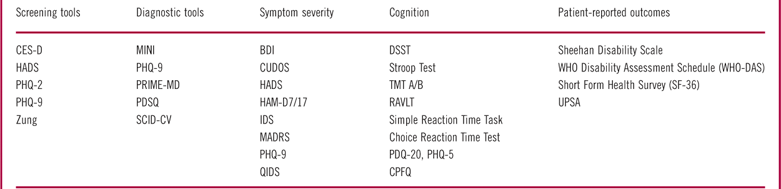
The successful management of MDD begins with timely and accurate diagnosis (the rates of false positives and false negatives in diagnosing MDD remain alarmingly high).Reference Mitchell, Vaze and Rao21 A highly reproducible finding has been that duration of untreated illness is a powerful predictor of nonresponse to antidepressant treatment. After establishing the diagnosis, operationalizing remission is personalized to each individual as part of a collaborative approach.Reference Harding, Rush, Arbuckle, Trivedi and Pincus22 Broadly speaking, full symptomatic remission is a guiding principle with a particular emphasis on cognitive and psychosocial function. Table 1 summarizes recommended tools for the screening, diagnosis, and rating MDD symptom severity, as well as recommended objective/subjective measures of cognitive and general function.
Tools for diagnosing MDD and measuring depressive symptom severity/ cognition/general function

MDD, major depressive disorder; MINI, Mini International Neuropsychiatric Interview; PHQ, Patient Health Questionnaire; PRIME-MD, Primary Care Evaluation of Mental Disorders; PDSQ, Psychiatric Diagnostic Screening Questionnaire; SCID-CV, Structured Clinical Interview for DSM-IV Axis I Disorders, Clinician Version; CES-D, Center for Epidemiological Studies—Depression Scale; HADS, Hospital Anxiety and Depression Scale; Zung SDS, Zung Self-Rating Depression Scale; BDI, Beck Depression Inventory; CUDOS, Clinically Useful Depression Outcome Scale; HAM-D, Hamilton Depression Rating Scale; IDS, Inventory of Depressive Symptomatology; MADRS, Montgomery–Åsberg Depression Rating Scale; QIDS, Quick Inventory of Depressive Symptomatology; DSST: Digit Symbol Substitution Test; TMT: Trail Making Test; RAVLT: Rey Auditory Verbal Learning Test; PDQ: Perceived Deficits Questionnaire; CPFQ: Cognitive and Physical Functioning Questionnaire; UPSA: University of California San Diego Performance-Based Skills Assessment.
Adapted from: Gelenberg AJ. J Clin Psychiatry 2010;71(Suppl E1):e01.
It is well established in medicine that supplementing clinical assessment with measurement-based devices provides opportunity for precision, consistency, and appropriate selection/sequencing of care (e.g. glycated hemoglobin).Reference McIntyre, Konarski and Gupta23, Reference Trivedi, Rush and Wisniewski24 Measurement-based care in MDD that is targeted and tailored to an individual has been demonstrated to improve health outcomes in MDD.Reference McIntyre, Konarski and Gupta23, Reference Trivedi, Rush and Wisniewski24
Treatment modalities
Incredulously, 6 decades after imipramine was introduced into psychiatry, the fundamental question as to what comprises a sufficient antidepressant trial duration remains a point of discussion/debate.Reference Kudlow, Cha and McIntyre25, Reference Szegedi, Jansen, Van Willigenburg, van der Meulen, Stassen and Thase26 Available evidence indicates that changes in cognitive-emotional processing with antidepressants are apparent after a single dose of antidepressant treatment.Reference Harmer, O’Sullivan and Favaron27 Notwithstanding, the question remains as to when a clinically significant benefit from an antidepressant would be expected to be observed. The preponderance of data indicates that response trajectories (i.e. using latent class analysis: a statistical approach that attempts to identify subgroups within a larger sample that exhibit different response trajectory) within heterogeneous samples of adults with MDD are highly variable between subpopulations.Reference Uher, Mors and Rietschel28 A separate line of evidence suggests that some MDD subpopulations exhibit robust improvements within 1–3 weeks of treatment commencement, while others have a slower velocity of symptom change across weeks of observation and/or manifest detectable symptom improvement after 4 weeks of treatment.Reference Kudlow, Cha and McIntyre25, Reference Uher, Mors and Rietschel28 Indeed, a sizeable subpopulation exhibits no response at all, and an underemphasized subpopulation exhibits symptomatic worsening with antidepressant treatment.
Notwithstanding, a “best fit” trajectory across MDD subpopulations indicates that symptomatic improvement within 2–3 weeks of treatment assignment has modest positive prediction of achieving response/remission upon completion of the acute phase (i.e. 6–8 weeks). A more robust negative prediction, however, is identified among individuals with minimal symptomatic improvement within 2–3 weeks, inviting the need for treatment intensity optimization. From a clinical perspective, it is not practical to expect an individual with MDD who is minimally responsive to treatment to continue with the index treatment intensity beyond 2–4 weeks. Integrating best evidence with pragmatism provides the rationale for recommending an intervention (i.e. dose optimization) after approximately 2–4 weeks of treatment if insufficient outcome is observed (i.e. equal to or greater than 20% reduction in symptoms).Reference Lam, Kennedy and Grigoriadis29 Tacit to the foregoing recommendation is the requirement for quantitative and objective measurement to determine whether treatment targets have been achieved.
In addition to ongoing questions as to optimal treatment duration, there is no compelling evidence that any particular symptom-based “subtype” of MDD exhibits preferential response to any particular agent/class of treatments. For example, a recent subgroup analysis of the iSPOT-D trial (N=1008), which was a randomized, open-label, practical clinical trial, reported that depressive subtypes in individuals with MDD (e.g. melancholic, atypical, or anxious depression) did not predict remission or change in depressive symptoms after acute antidepressant therapy (i.e. escitalopram, sertraline, or extended-release venlafaxine).Reference Arnow, Blasey and Williams30
Predicting antidepressant response (or nonresponse) with biomarkers/biosignatures remains an area of particular interest, given insufficient clinical phenotypes for prediction. For example, the iSPOT-D trial reported that single-nucleotide polymorphism at the ABCB1 gene was a significant predictor of remission and side effects in individuals with MDD with or without cognitive impairment. For example, individuals homozygous for the common allele for rs10245483 responded significantly better to and had fewer side effects with escitalopram and sertraline. In comparison, individuals with MDD homozygous for the minor allele responded better to, and had fewer adverse events with, venlafaxine, particularly among those with impaired cognition.Reference Schatzberg, DeBattista, Lazzeroni, Etkin, Murphy and Williams31 Notwithstanding the foregoing promising finding, it does not seem likely that a single, or modest set, of biomarkers will be able to sufficiently predict a “trait” of response in a heterogeneous syndrome such as MDD. The future of psychiatry, it seems, is predicting response using both clinical and biological markers with dimensions/domains as the principle target of interest.
Pharmacological treatments
Individuals with MDD who remain symptomatic despite optimization of initial pharmacotherapy may be offered combined pharmacological treatments or may be switched to a mechanistically dissimilar pharmacological monotherapy.Reference Gelenberg32 Results from STAR*D indicate that adults with MDD prefer augmentation if partial improvement is achieved with the index agent.Reference Rush, Trivedi and Wisniewski33 Empirical support for add-on pharmacotherapy as a superior therapeutic avenue, when compared to switching to a separate antidepressant modality, is surprisingly modest. Notwithstanding, a randomized, direct comparison study of 101 individuals with MDD reported that aripiprazole augmentation was superior to antidepressant switching in individuals with current depressive episode despite adequate antidepressant dosage.Reference Han, Wang and Kwak34 Similarly, post hoc analyses from the pivotal trials of aripiprazole as augmentation in MDD indicate that nonresponse to the index conventional antidepressant (or worsening on the index antidepressant) was highly associated with response and remission with aripiprazole augmentation.Reference Nelson, Rahman and Laubmeier35, Reference Nelson, Thase and Bellocchio36
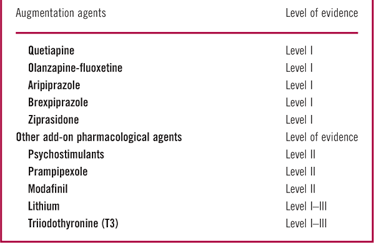
The U.S. Food and Drug Administration (FDA)-approved treatment strategies as augmentation are quetiapine, olanzapine-fluoxetine combination, aripiprazole, and more recently, brexpiprazole. Each of these agents has been comprehensively reviewed and published elsewhere.Reference Nelson and Papakostas37–Reference McIntyre, Cha, Kim and Mansur39 Brexpiprazole is the newest atypical antipsychotic FDA-approved as an augmentation agent (also approved for adults with schizophrenia).Reference Citrome40 Brexpiprazole has a relatively lower intrinsic activity at the dopamine D2 receptor and significantly higher affinity at 5HT1A and 5HT2A, as well as several adrenergic receptors when compared to aripiprazole.Reference Citrome40 The differential affinity for the D2 receptor may explain the lower relative risk of akathisia observed with brexpiprazole relative to aripiprazole.Reference Citrome40 The optimal duration of add-on treatment with atypical agents is currently not known. In the absence of sufficient empirical basis to guide this decision, it seems prudent that individuals who are tolerating treatment and achieving therapeutic objectives should be offered ongoing therapy for a minimum of 6–12 months with ongoing reassessment and, in many cases, continuation of the treatment for an indefinite period of time.
Clinical and pharmaco-epidemiology data indicate that the combination of antidepressants is common and increasing in frequency when compared to a decade ago.Reference Mojtabai and Olfson41 Moreover, individuals with MDD who are prescribed combination antidepressants are receiving the combination regimen for a longer period of time.Reference Mojtabai and Olfson41 The combination of contemporary antidepressants is possible due to a greater safety profile when compared to the older classes of antidepressants [e.g. tricyclic antidepressants (TCAs), monoamine oxidase (MAO) inhibitors]. In addition to an acceptable safety profile, the combination of antidepressants provides the opportunity for “treating to target” (i.e. an individual insufficiently responsive to a selective serotonin reuptake inhibitor (SSRI)/serotonin–norepinephrine reuptake inhibitor (SNRI) may be offered bupropion to target symptoms including, but not limited to, fatigue, apathy, and amotivation).Reference Kennedy, McCann and Masellis42, Reference Cooper, Tucker and Papakostas43 (Notwithstanding the common practice of selecting monoamine-based antidepressants to abrogate symptoms across multiple dimensions, it is abundantly clear that monoamine antidepressants are not sufficient, and other cellular targets are needed. For example, targeting inflammatory systems in adults with MDD may be particularly effective in mitigating aspects of anhedonia).Reference Soczynska, Kennedy, Goldstein, Lachowski, Woldeyohannes and McIntyre44 Moreover, combining antidepressants may provide opportunity for the add-on agent to antidote adverse events that emerge with an index agent (e.g. mitigating sexual dysfunction with bupropion, reducing nausea with mirtazapine).Reference Kennedy, McCann and Masellis42, Reference Kast45
Notwithstanding the common practice of co-prescribing antidepressants for longer trial durations, the evidentiary base supporting the practice is modest in size. For example, there is an absence of large, adequately powered, and replicated placebo-controlled trials documenting the efficacy of antidepressants as augmentation strategies in depression. Moreover, the co-prescription of 2 antidepressants at the initiation of therapy (i.e. rather than adjunctively administering the second agent following insufficient outcome with the index agent) with an aim to enhance and accelerate desired treatment outcomes has not produced consistent results.Reference Blier, Ward, Tremblay, Laberge, Hebert and Bergeron46, Reference Rush, Trivedi and Stewart47
Pharmacological treatments other than conventional antidepressants, which may be considered as add-on strategies, are listed in Table 2. The evidentiary base for lithium and triiodothyronine is composed of studies wherein these 2 agents have typically been combined with TCAs or MAO inhibitors, with relatively fewer studies with SSRIs/SNRIs/multimodals (e.g. vortioxetine, vilazodone).Reference Lam, Kennedy and Grigoriadis29 The evidence for psychostimulants has been mixed, with most studies failing to provide robust and consistent signal of efficacy in reducing depressive symptoms.Reference Ravindran, Kennedy, O’Donovan, Fallu, Camacho and Binder48, Reference Lavretsky, Reinlieb, Cyr, Siddarth, Ercoli and Senturk49 Similar to psychostimulants, modafinil has not been able to provide reproducible efficacy in MDD, but has demonstrated improvement in symptoms/dimensions of psychopathology highly relevant to patient function (e.g. fatigue, apathy, anhedonia, amotivation).Reference DeBattista, Doghramji, Menza, Rosenthal and Fieve50, Reference Rizvi, Geraci, Ravindran and Kennedy51 A recent meta-analysis (N=6654) of all augmentation approaches in MDD reported that adjunctive quetiapine, aripiprazole, thyroid hormone, and lithium significantly reduced depressive symptoms in individuals with treatment-resistant MDD, with more robust improvements with add-on quetiapine or aripiprazole.Reference Zhou, Ravindran and Qin52
Pharmacological Agents
Psychosocial treatments
Manual-based psychosocial treatments are unequivocally established as efficacious in the symptomatic treatment of MDD.Reference Hollon, DeRubeis and Fawcett53, Reference DeRubeis, Hollon and Amsterdam54 Psychosocial treatments are often preferred by many individuals with MDD and may be preferential as first-line treatment strategies in individuals with mild baseline severity. An additional rationale for prioritizing psychosocial treatments over pharmacological treatments in MDD of mild severity is the insufficient demonstration of efficacy in this subpopulation with antidepressants as part of placebo-controlled trials.Reference Fournier, DeRubeis and Hollon55
Additional subpopulations that may differentially respond to psychosocial treatments include adults with MDD who are chronic and/or highly recurrent in course, individuals with comorbid mental disorders (e.g. personality disorders), and individuals with history of early childhood adversity.Reference Hollon and Ponniah56 Moreover, psychosocial treatments may be sequenced as add-on approaches to insufficient antidepressant treatment or considered as an initial treatment strategy with antidepressant therapy reserved for those insufficiently responsive to psychosocial treatment.Reference Hirschfeld, Dunner and Keitner57, Reference Thase, Friedman and Biggs58 Many individuals, however, with moderate or severe subtypes of depression, as well as individuals with more cognitive problems as part of MDD, will require some degree of pharmacological treatment to engage and maintain participation in psychotherapy.
Neuromodulatory treatments
Electroconvulsive therapy (ECT) has consistently been identified as the most effective treatment strategy in treatment-resistant depression.Reference Pagnin, de Queiroz, Pini and Cassano59 Notwithstanding, electroconvulsive therapy is highly stigmatized, not acceptable/accessible to most individuals, and is associated with problematic neurocognitive consequences.Reference Kellner, Greenberg, Murrough, Bryson, Briggs and Pasculli60 Repetitive transcranial magnetic stimulation (rTMS) is a much more acceptable neuromodulatory treatment in MDD and is generally well tolerated and without prominent cognitive consequence.Reference Schulze-Rauschenbach, Harms, Schlaepfer, Maier, Falkai and Wagner61–Reference Grunhaus, Dannon and Schreiber63 Notwithstanding, rTMS appears to be inferior to ECT in its overall effect size in highly pharmacologically resistant patients.Reference Rasmussen64 The foregoing conclusion may, however, be related to rTMS parameters and delivery methods, which are being refined. Other neuromodulatory approaches include magnetic seizure therapy (MST), transcranial direct current stimulation (tDCS), and vagus nerve stimulation (VNS).Reference Kennedy and Giacobbe65
Complementary/alternative medicines (CAMs)
The efficacy of complementary/alternative medicines to treat depressive symptoms is reviewed elsewhere.Reference Thachil, Mohan and Bhugra66 The most compelling evidence exists for S-adenosyl methionine (SAMe) and for L-methylfolate. For example, in a double-blind, randomized, placebo-controlled study, Papakostas et al Reference Papakostas, Mischoulon, Shyu, Alpert and Fava67 reported that adjunctive SAMe was effective in reducing depressive symptoms in individuals with MDD with inadequate response to SSRIs. In a separate report, Papakostas et al Reference Papakostas, Shelton and Zajecka68 reported that adjunctive L-methylfolate was effective, safe, and well tolerated in the treatment of SSRI-resistant MDD. It has also been reported that a collection of biomarkers (e.g. genetics, peripheral proteins) relevant to metabolism and inflammation identifies a subset of adults with MDD differentially responsive to L-methylfolate.Reference Papakostas, Shelton and Zajecka68
The data supporting omega-3 as a treatment strategy in MDD had been mixed, with more recent studies indicating that most individuals receiving omega-3 as augmentation may expect minimal to no benefit.Reference Grosso, Pajak and Marventano69 For example, a recent meta-analysis of 19 randomized controlled trials reported effect sizes ranging from –0.07 to 0.52 in individuals with MDD based on the type of omega-3 supplementation (e.g. EPA, DHA).Reference Grosso, Pajak and Marventano69
Investigational treatments
The NMDA receptor antagonist and dissociative anesthetic ketamine has been studied as a treatment strategy in MDD (and bipolar depression) where it has demonstrated robust, fast-onset antidepressant effects. For instance, a recent pooled analysis reported a response rate of 67% (i.e. ≥50% improvement in Montgomery–Åsberg Depression Rating Scale score) with the administration of intravenous ketamine among individuals with treatment resistant depression.Reference Wan, Levitch and Perez70 Moreover, ketamine has also demonstrated anti-suicide effects; although they appear to be largely modified by reduction of depressive symptom severity, may also involve independent effects.Reference Aligeti, Quinones and Salazar71–Reference Price, Iosifescu and Murrough73 Ketamine’s mechanism of action is hypothesized to involve the mammalian target of rapamycin (mTOR), which is a critical intracellular protein that mediates neuroplasticity and neurotrophic processes.Reference Niciu, Henter, Luckenbaugh, Zarate and Charney74
Ketamine is available in several formulations, including oral, sublingual, intravenous, and intranasal. Methodological limitations affecting inferences that can be drawn from the interventional trials with ketamine in MDD are their short-term duration and the inadvertent unblinding via the induction of psychotomimetic effects. Although the use of a benzodiazepine as an act of reference agent in pivotal trials is reasonable, it would be preferred to include a reference agent that possesses psychotomimetic effects but no known antidepressant effects (e.g. mescaline). It needs also to be underscored that long-term data for ketamine do not exist, and its use without consideration of its limitations, safety hazards, and need for surveillance is very strongly discouraged. Notwithstanding, the intranasal formulation of es-ketamine, which appears to be more potent at the NMDA-receptor system than its racemic mixture, appears to have a lower propensity to induce psychotomimetic effects and has been shown to be safe and effective in depression studies.Reference Yang, Shirayama and Zhang75
The availability of ketamine has provided cause for introduction of a new typology “rapid-onset” and “delayed-onset” antidepressants. Although this typology provides for descriptive and axiomatic categorization, it is however imprecise, as available evidence indicates that immediate effects on emotional and cognitive processing offered by conventional antidepressants would suggest that active antidepressants are all “rapid-onset.” Nonetheless, clinically significant benefits, as have been obtained in more treatment-resistant populations with the NMDA-receptor antagonist ketamine (and nitrous oxide) in less than 3 days of treatment, suggest that some individuals may be offered sequential pharmacological therapy, wherein they receive a rapid-onset antidepressant for symptomatic improvement followed by transition to delayed-onset antidepressant.
E-based treatment interventions
Insufficient access to cost-effective and integrated healthcare, as well as modest resources in many jurisdictions for integrated mental health services, provide rationale for offering treatments via e-based platforms. For instance, recent evidence suggests that Web-based self-help intervention programs based on cognitive behavioral therapy or acceptance and commitment therapy may improve depression symptom outcomes in individuals with MDD.Reference Pots, Fledderus, Meulenbeek, Ten Klooster, Schreurs and Bohlmeijer76–Reference Renton, Tang and Ennis78 None of these treatments has received FDA-approval in MDD, nor have any been adequately established as efficacious. Nonetheless, e-based treatments (e.g. Telehealth) are being actively studied with an aim to identify a subpopulation of adults with MDD who may respond to them.
Targeting dimensions/domains: a focus on cognition
The guiding principle of treating to target with remission as the symptomatic target increases the likelihood of, but does not guarantee, full functional recovery. Moreover, results from the STAR*D trial indicate that workplace attendance and performance are dissociated from symptomatic remission beyond the first antidepressant treatment.Reference IsHak, Mirocha and Pi79 The empirical observation that depressive symptoms and general function are modestly correlated indicates that there are other determinants of functional outcome in MDD independent of core depressive symptoms.Reference Papakostas80
During the past decade, a concatenation of study results indicates that cognitive dysfunction is a critical determinant of health outcome in adults with MDD who are otherwise in symptomatic remission.Reference Conradi, Ormel and de Jonge15, Reference Jaeger, Berns, Uzelac and Davis-Conway81, Reference Buist-Bouwman, Ormel and de Graaf82 It has been determined, for example, that functional outcomes among adults with MDD are associated with and/or mediated by cognitive dimension/domain disturbances to a greater extent than other domains in MDD (e.g. mood symptoms).Reference McIntyre, Cha and Soczynska20
For example, results from the International Mood Disorders Collaborative Project (IMDCP) indicate that, among adults with syndromal MDD who continue to be employed at least at a part-time level, their overall attendance and performance in the workplace is attributable to a greater extent to their self-rated cognitive abilities than it is to their overall depressive symptom severity.Reference McIntyre, Soczynska and Woldeyohannes83
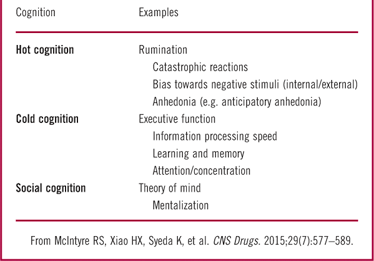
The notion that dimensions/domains within MDD have differential effects on the functional trajectory of an affected individual has several parallels in other areas of medicine. For example, it is well established that the subfractionated components of cholesterol [e.g. low density lipoprotein (LDL)] have very differential risk associations (i.e. end organ damage). In addition to treating to a predefined total cholesterol target, it is incumbent to also treat to target within one of the subdomains of cholesterol fractionation. It would not be acceptable for an individual to have a normal total cholesterol level for their age and gender (and other cardiovascular risk factors), yet have an abnormal LDL (or HDL, triglycerides) level. A parallel in MDD would be that in addition to aiming for a broad improvement in depressive symptoms [i.e. remission as defined according to the Hamilton Depression Rating Scale 17-item (HAMD-17) or Montgomery–Åsberg Depression Rating Scale (MADRS)], treating to target also includes mitigation of cognitive dysfunction. In this context, cognitive dysfunction is broadly defined to include hot (e.g. cognitive emotional processing), cold (e.g. non-emotionally valenced cognitive processing), and social cognition (Table 3).Reference McIntyre, Xiao and Syeda84
Domains of cognition in MDD
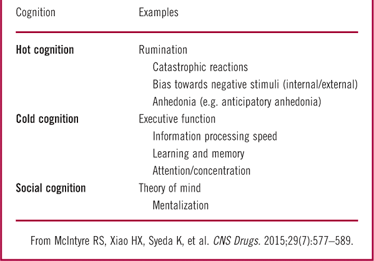
From McIntyre RS, Xiao HX, Syeda K, et al. CNS Drugs. 2015;29(7):577–589.
The pertinence of cognitive dysfunction in psychiatry across the developmental trajectory has been underscored in the rationale for creating the Research Domain Criteria (RDoC).Reference Insel85, Reference Insel, Cuthbert and Garvey86 The RDoC matrix provides a taxonomy wherein convergent psychopathologies across all mental disorders are presented as disturbances in emotional valence (i.e. positive and negative valence disturbances), general cognitive function, social cognition, and fear/arousal processes. Although the language of the RDoC is less familiar to most busy practitioners, the heuristic framework is highly familiar to patients, families, and care providers. For example, adults with MDD frequently ruminate about negative and maladaptive experiences. In addition, MDD is often characterized by profound anhedonia. Rumination and anhedonia would be examples of disturbances in negative valence and positive valence, respectively.
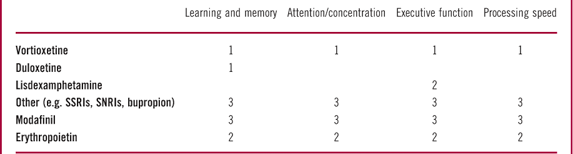
The foregoing has provided the impetus for determining whether psychotropic agents, as well as other treatment modalities, are capable of improving dimensions/domains of psychopathology within MDD (Table 4). As reviewed elsewhere, unequivocal evidence now indicates that the multimodal agent vortioxetine is capable of improving multiple domains of cognitive function (i.e. executive function, processing speed, attention, learning/memory) independent of its effect on core mood symptoms.Reference McIntyre, Lophaven and Olsen87–Reference Al-Sukhni, Maruschak and McIntyre89 Replicated evidence also exists for duloxetine offering an independent and direct effect on the domain of learning and memory in adults with MDD.Reference Katona, Hansen and Olsen90, Reference Raskin, Wiltse and Siegal91 A single published study has reported that the adjunctive use of the psychostimulant lisdexamfetamine offers significant benefits compared to placebo in improving self-reported measures of executive functionReference Madhoo, Keefe and Roth92. Healthy controls, as well as clinical populations (e.g. schizophrenia, dementing disorders), exhibit beneficial effects across cognitive measures (e.g. working memory) with modafinil treatment.Reference Sahakian, Bruhl and Cook6 Replicated evidence supporting modafinil’s efficacy in hot or cold cognition in MDD is not available.Reference McIntyre, Xiao and Syeda84
Antidepressants and psychotropic agents improve measures of cognition in individuals with MDD independent of improvements in measures of depressive symptom severity
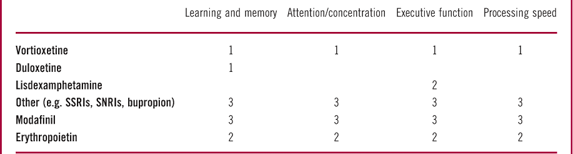
Independent effect indicated by a priori specification, cognition as primary; pathoanalysis; subgroup analysis in nonresponders and nonremitters.
Level 1: replicated placebo-controlled trial evidence with demonstration of independent effect; Level 2: single placebo-controlled trial evidence with demonstration of independent effect; Level 3: uncontrolled evidence (e.g. lacking placebo, case-series) with lack of demonstration of independent effect.
SNRIs, selective norepinephrine reuptake inhibitors; SSRIs, selective serotonin reuptake inhibitors.
Adapted from McIntyre RS, Xiao HX, Syeda K, et al. CNS Drugs. 2015;29(7):577–589.
Summary and Conclusion
Major depressive disorder is a common, often severe, and lifelong disorder known to significantly debase human capital. Modifiable deficiencies that currently exist are timely and accurate diagnosis of MDD; access to coordinated, integrated, longitudinal, high-quality, and accountable care; insufficient concordance to chronic disease management principles (e.g. measurement-based care, inclusion of decision support); and the selection and sequencing of treatment modalities deemed effective in MDD.
It is now well established that for many adults with MDD, achieving the symptomatic target of remission is not associated with full functional recovery, nor is the improvement of symptoms alone commensurate with patient-prioritized therapeutic objectives.Reference Conradi, Ormel and de Jonge15 It is now established that, like other mental disorders (e.g. schizophrenia, bipolar disorder), cognitive impairment in MDD is prevalent, pervasive, and a critical determinant of overall functional outcome.Reference Trivedi, Morris and Wisniewski18 As clinicians and patients treat to target, it will be critical to assess and measure not only conventional depressive symptoms, but also cognitive function and overall general psychosocial function.
The foregoing objective begins with the avoidance, to the extent possible, of concomitant agents that may adversely affect cognitive function (e.g. benzodiazepine) and to manage comorbid conditions that are known to interfere with cognitive function (e.g. substance use disorder, diabetes mellitus, hypothyroidism). Emerging evidence indicates that there are differences between antidepressants and their ability to mitigate cognitive function in MDD.Reference Rosenblat, Kakar and McIntyre88 Moreover, several psychotropic agents as well as other pharmacological agents are being studied to determine whether they can be repurposed for psychiatric application that may have beneficial effects in the domain of cognition.Reference Moskal, Burch and Burgdorf93–Reference McIntyre, Powell and Kaidanovich-Beilin95
Integrated care with a multidisciplinary team that involves focusing on physical health is also critical, as it is now well established that comorbid medical disorders are not only common in MDD, but affect health outcomes. For example, the American Heart Association now recognizes that having a mood disorder is a risk factor for having premature cardiovascular disease.Reference Goldstein, Carnethon and Matthews96 Moreover, obesity is associated with decreased treatment responses to conventional antidepressants, as well as less favorable functional outcomes.Reference Liu, Carvalho, Mansur and McIntyre97–Reference Rizvi, Grima and Tan99 A separate line of evidence also indicates that diabetes interferes with cognitive performance.Reference McCrimmon, Ryan and Frier100 Taken together, optimal symptomatic, functional, and health outcomes are only likely to occur with contemporaneous attention given to both mental and physical health targets.
Trial evidence, as well as clinical experience, indicate that most individuals with MDD will not achieve functional recovery with pharmacological treatment alone.Reference Conradi, Ormel and de Jonge15 Notwithstanding the availability of results from efficacy studies, and more recently meta-analyses that report on and compare between-agent efficacy in MDD, there is a paucity of “real-world” effectiveness studies in MDD as augmentation to determine the most appropriate and acceptable treatment to patients and clinicians. It is hoped that results from the Patient-Centered Outcomes Research Institute (PCORI) will provide instructive insights as to the appropriate “best next steps” when an initial antidepressant is unsuccessful.Reference Nierenberg, Sylvia and Doederlein101 Instead, pharmacological treatments should be integrated with general lifestyle improvement, risk factor modification, sleep hygiene, psychoeducation, and, in some cases, manual-based psychotherapy. The body of evidence supporting aerobic/resistance exercise has also become compelling, with a particular therapeutic offering in critical patient-reported outcomes (e.g. quality of life, function).Reference Kucyi, Alsuwaidan, Liauw and McIntyre102–Reference Shay and Roth106
Advances in medical technology (e.g. electronic health records, mobile phone technology, app-based health devices) provide a mechanism to digitalize and facilitate treating to target objectives in MDD.Reference Shelton and Trivedi107 Moreover, the digitalization of medical care provides a unique opportunity for patients and families to play an increasing and more central role in directing, monitoring, and measuring their chronic diseases. Treating to target is a collaborative, dynamic, and iterative process; the guiding principles of measurement-based care within the framework of chronic disease management and colocation of integrated care providers increase the probability of cost-effective, high-quality, accountable care.
Disclosures
Roger McIntyre has the following disclosures: AstraZeneca, advisory board/researcher, consulting fees and speaker fees, no equity; BristolMyers Squibb, advisory board/researcher, consulting fees and speaker fees, no equity; Eli Lilly, advisory board/researcher, consulting fees and speaker fees, no equity; Lundbeck, advisory board/researcher, consulting fees and speaker fees, no equity; Pfizer, advisory board/researcher, consulting fees and speaker fees, no equity; Merck, advisory board/researcher, consulting fees and speaker fees, no equity; Sunovion, advisory board/researcher, consulting fees and speaker fees, no equity; Otsuka, advisory board/researcher, consulting fees and speaker fees, no equity; Takeda, advisory board/researcher, consulting fees and speaker fees, no equity; Allergan, advisory board/researcher, consulting fees and speaker fees, no equity; Janssen-Ortho, researcher, speaker fees, no equity; Shire, Research, funding for research, no equity. Yena Lee has nothing to disclose. Rodrigo Mansur has the following disclosure: Lundbeck, researcher and other duties, fellowship funding.
Optional CME Posttest and Certificate
CME Credit Expires: November 30, 2018
CME Posttest Study Guide
NOTE: The posttest can only be submitted online. The below posttest questions have been provided solely as a study tool to prepare for your online submission. Faxed/mailed copies of the posttest cannot be processed and will be returned to the sender. If you do not have access to a computer, contact NEI customer service at 888-535-5600.
1. A 28-year-old woman presents with symptoms of depressed mood, executive dysfunction, and anxiety. What symptom dimension/domain is most associated with functional outcomes in major depressive disorder?
A. Anxiety
B. Cognition
C. Mood
2. A recent meta-analysis of adjunctive treatments for depression found that which of the following significantly reduced depressive symptoms with the most robust improvement in treatment-resistant major depressive disorder?
A. Buspirone
B. Methylphenidate
C. Modafinil
D. Quetiapine
3. The evidence base regarding combining antidepressants at the outset of treatment to enhance/accelerate treatment outcomes is:
A. Positive
B. Negative
C. Inconsistent
4. A 23-year-old patient with depression has experienced partial response and wants to attempt augmentation with a complementary/alternative medicine (CAM). Which of the following has the LEAST evidence to support efficacy in depression?
A. L-methylfolate
B. S-adenosyl methionine (SAMe)
C. Omega-3
CME Online Posttest and Certificate Instructions
There is no posttest fee nor fee for CME credits.
1. Read the article, evaluating the content presented
2. Complete the posttest and activity evaluation, available only online at www.neiglobal.com/CME (under “CNS Spectrums”)
3. Print your certificate, if a score of 70% or more is achieved
Questions? call 888-535-5600, or email CustomerService@neiglobal.com