




No CrossRef data available.
Article contents
Contrasting regulation of fecundity in two abomasal nematodes of Svalbard reindeer (Rangifer tarandus platyrhynchus)
Published online by Cambridge University Press: 12 July 2001
Abstract
Stability of trichostrogylid populations indicates that some form of density-dependent regulation occurs which could act through fecundity. We present evidence for intraspecific density-dependent effects in 1 of 2, dominant, abomasal nematodes species (Ostertagia gruehneri) of Svalbard reindeer (Rangifer tarandus platyrhynchus). We found evidence in O. gruehneri, for density-dependent regulation of female worm length in April, July and October 1999. However, it is only in July that female worm length explains the variation in the number of eggs in utero which is also related to egg production per female worm only in this month and not at other times of the year. The seasonal pattern in faecal egg output in this species focuses egg production in the summer months when conditions are favourable to transmission. In contrast, we found no evidence in the other common species (Marshallagia marshalli) for density-dependent regulation of female worm length during or the number of eggs in utero. Faecal egg output in M. marshalli was positively related to worm burden but not to the mean number of eggs in utero. Neither inter-specific interactions nor host body condition appeared to influence worm fecundity. The contrasting patterns of density-dependent regulation of fecundity provides further evidence for divergent life-histories in this nematode community.
Information
- Type
- Research Article
- Information
- Copyright
- © 2001 Cambridge University Press
INTRODUCTION
The long-term stability or cyclic behaviour found in many gastrointestinal parasite populations suggests that they are regulated by density-dependent processes (Hudson & Dobson, 1995). One possible candidate is female worm fecundity which is often strongly affected by nematode abundance (Barger, 1985; Scott & Lewis, 1987) and is therefore an important parameter in the understanding of the dynamics of nematode populations (Anderson & Michel, 1977; Anderson & May, 1991).
There are at least 3 possible density-dependent mechanisms that may affect nematode fecundity and all involve retarded worm development. First, trickle challenge experiments with gastrointestinal nematode infections of sheep and cattle have shown that the faecal egg output is related to the size of the adult worm population in a density-dependent manner (Michel, 1969; Boag & Thomas, 1977). This suggests direct intra-specific competition for space and/or resources that may reduce worm development and maturation (Tompkins & Hudson, 1999). Second, increasing burdens of nematodes are likely to stimulate a greater immune response that may contribute to the density-dependent reduction in fecundity (Quinnell, Medley & Keymer, 1990). Specifically, the impact of the immune response in sheep has been found to reduce female worm development (Stear et al. 1995) giving shorter, less well developed worms that have fewer eggs in utero. However, a complicating factor is that the size of the immune response is likely to be determined by the nutritional status of the host (reviewed by Van Houtert & Sykes, 1996) so that animals in poor condition may allow larger worm burdens to establish. Third, inter-specific competition may also limit the fecundity and ultimately the population size of a cohabiting species (Dobson, 1985; Adamson & Noble, 1993). There is, however, no evidence for inter-specific density-dependent fecundity in gastrointestinal nematodes of ruminants. These 3 mechanisms may combine to generate the characteristic seasonal pattern of fecundity in gastrointestinal nematodes in which faecal egg output increases in spring in parallel with rising nematode burdens due to high transmission, then declines again because density dependence reduces per capita egg production (Michel, 1974). Worm burden and egg output may be reduced through a density-dependent immune response (Quinnell et al. 1990) but the drop in egg output in the autumn may also be due to senescence rather than changes in worm density ( Shaw & Moss,1989) and this may generate the illusion of density dependence. Nevertheless, previous studies have not been able to determine which of these mechanisms is more important in the regulation of nematode fecundity. It is only recently that analysis of the inter-specific density-dependent effects has been possible through the use of PCR techniques to aid in the often difficult identification of adult female worms (Dallas et al. 2000).
The aim of this study was to determine which of these mechanisms could explain the contrasting patterns of fecundity observed in the two, dominant, abomasal nematodes species (Ostertagia gruehneri and Marshallagia marshalli) of Svalbard reindeer (Rangifer tarandus platyrhynchus). Both species show strong seasonality in faecal egg output which in O. gruehneri, is confined to the summer but in M. marshalli appears to be in winter (Irvine et al. 2000). Here we investigate whether: (1) nematode fecundity is regulated through density-dependent effects on female worm length, number of eggs in utero or faecal egg output: (2) seasonality in faecal egg output is due to changes in the abundance of infection, nematode fitness measured as worm length, or density-dependent effects on reproduction; (3) nematode fecundity is affected by seasonality in host condition suggesting the possibility of an immune response that, combined with contrasting seasonality in the observed dynamics, may affect the two species differently; (4) female fecundity is limited by inter-specific competition.
MATERIALS AND METHODS
Reindeer hosts
Fifty adult female reindeer were culled during 1999 (10 in late April, 16 at the end of July and 24 in late October). Total body weight was recorded using a clock face spring balance (100×0.5 kg). Body condition was assessed using a measure of back fat depth over the rump (10 cm in and at 45 ° from the base of the tail). Abomasa and faecal samples were recovered for the parasitology protocol outlined below. For the female worm measures we randomly selected 10 reindeer from April and July and 11 from October. Faecal egg counts and worm burdens from a larger data set of 128 adult female reindeer culled during the same months in 1995 to 1999 were also obtained.
Parasite populations
Adult abomasal worm burdens and faecal egg counts were collected and counted as described by Halvorsen et al. (1999) using methods modified from MAFF/ADAS (1986). Adult male worms were identified to species based on morphology as described by Irvine et al. (2000). For each of the 31 reindeer selected for the female worm measurements, 25 adult female worms were chosen at random and examined microscopically. In 2 hosts, fewer than 25 female worms were available. The number of eggs in utero in each female was counted using a compound microscope. (10×ocular and 40×objective). The image of each worm was captured using a camera mounted on a stereoscope at 6.25×magnification. The length of each worm was measured using a segmented line drawn on screen and calibrated for the magnification used. Each female worm was then identified to species using a species-diagnostic DNA assay based on a polymerase chain reaction (PCR; Dallas et al. 2000).
Measures of adult female worm fecundity
Mean number of eggs in utero and mean female worm length were calculated for each nematode species in each reindeer host and, when analysed, weighted for the number of worms on which the mean was based. These means were assumed to be normally distributed. Few M. marshalli females were found in July (Table 1) and when less than 3 worms of a species were present per host, the data point was excluded from the analysis. The analysis tested whether a non-linear power function (y = α(x)β) provided a better fit than a linear relationship (y = α+βx1+βx2+ …) using linear and non-linear regression. Season was added as month (April, July or October) and both the slope and the intercept were allowed to vary. The abundance of the cohabiting species was fitted additively to determine the inter-specific density-dependent effects. Total body mass or back fat thickness was added to the best-fit models to determine the effect of body condition as an indirect method of detecting the effects of an immune response. The analysis consisted of 3 stages. First, factors responsible for the variation in female worm length were determined, second the number of eggs in utero was analysed. Third, the relationship between faecal egg output (a measure of fecundity) and the number of eggs in utero (standing crop) was then established. The number of eggs in utero can vary between individuals and is only an instantaneous measure but can give individual based information in support of analyses of faecal egg output. Individual reindeer faecal egg count data by species was divided by the number of females of that species in each host to give a measure of eggs per gramme faeces per female worm (epgf) for O. gruehneri and, because of the low egg output, eggs per kilogramme faeces per female (epkgf) for M. marshalli.
Table 1. The proportion of each abomasal nematode species expressed as a percentage of the total number of adult female nematodes that were identified from 31 reindeer culled in April (10), July (10) and October (11) (Numbers in parentheses indicate the number of nematodes that were identified to species. (Note the low numbers of M. marshalli found in July and that these were distributed in only 5 reindeer hosts.))

Analysis of faecal egg counts
Faecal egg counts and adult worm burden estimates from 128 adult and yearling female reindeer including the 31 deer used in the analysis of female worms were collected. In all samples the 2 species were identified and recorded separately (Irvine et al. 2000). The relationship between faecal egg counts and worm burdens was analysed using generalized non-linear models with a negative binomial error distribution (Wilson & Grenfell, 1997). Curves were fitted by the maximum likelihood method. The negative binomial factor k was allowed to vary linearly with the mean or was held constant (Irvine et al. 2000). Following other studies (Croll et al. 1982, Anderson & Schad, 1985; Michael & Bundy, 1989) a power function was fitted to the faecal egg count data and in the absence of compelling biological rationale this was chosen in preference to the more complex Ricker or Gompertz functions (Lebreton, 1989). Preliminary examination of the data indicated that the gamma-type function (Bishop & Stear, 2000) was not appropriate for this data because no decline in egg output was observed at higher worm burdens. Intra-specific density dependence of O. gruehneri faecal egg output with the number of adult O. gruehneri was determined. Inter-specific competition was analysed by additively fitting the abundance of adult M. marshalli to the model and we allowed the impact of M. marshalli to differ from that of O. gruehneri by fitting a separate parameter for each species. The M. marshalli faecal egg output was analysed the same way. The above models were re-run using the smaller data set (n = 31) to confirm that these animals were representative and that the best-fit models were the same in both the larger and the subdata set.
RESULTS
Factors affecting female worm length
Female worm length and worm burden in O. gruehneri showed a clear, negative density-dependent relationship (Fig. 1A) which did not vary with season. This was best described by a power function which explained more of the total variance (68%) than a linear function (62%) and used the same number of degrees of freedom (Table 2). There was no significant improvement in the model by allowing either the elevation term (α) or the power term (β) to vary with month. Variation in O. gruehneri worm length was unrelated to either M. marshalli burden (P>0.3) or host body condition (back fat depth or dressed carcass weight, P>0.4). The rest of the female worm fecundity analyses follows the structure given in Table 1, but only the statistics from the best fit models are quoted in the text. All other relevant models can be assumed to be non-significant.

Fig. 1. Data and predicted values for the best-fit models from the analysis of the relationships between the fecundity variables. (A, C and E) Ostertagia gruehneri. (B, D and F) Marshallagia marshalli. (○) Data for April; ([bull ]) data for July; (X) data for October. (A) The relationship between O. gruehneri female worm length (Oglength) and the number of adults (Og). The fitted line represents the best-fit model where worm length is predicted by a power function Oglength = α(Og)β. (Parameter estimates for the fitted line are: α = 17.3, 95% CI = (14.91–16.98) and β = 0.064, 95% CI of −0.08–−0.05. (F1,29 = 60.57, P<0.01). (B) M. Marshalli female worm length (Mmlength) plotted on the abundance of M. marshalli in the same host. There was no significant relationship between the two variables. (C) The relationship between mean number of O. gruehneri eggs in utero in females (eiu) and mean female Oglength (mm). The fitted lines represent the best fit from a model where eiu is predicted by month, Oglength and the interaction between month and Oglength. There is a positive relationship in July and no significant relationship in April and October. (Parameter estimates (± standard errors) for July are: Ogeggs =−54.17(±9.23)+7.68(±0.92) Oglength.) (D) The relationship between mean number of M. marshalli eggs in utero (eiu) in females and the mean Mmlength (mm) in April and October. The fitted lines represent the best fit from a model where eiu is predicted by month and Mmlength. In July no line was fitted because the abundance and prevalence of M. marshalli was very low. (Parameter estimates (± standard errors) for the fitted lines are: M. marshalli eiuApril =−20.81(±13.68)+2.32(±0.96) Mm lengthApril and M. marshalli eiuOctober=−10.09(±14.57)+2.32(±0.96) Mm length October.) (E) The relationship between O. gruehneri eggs per gramme faeces per female worm (epgf) and the mean number of eggs in utero (eiu) per adult female O. gruehneri. The fitted lines indicate the best-fit model where epgf was predicted by month with a month by eiu interaction. There was a significant positive relationship in July but not in April and October. (Parameter estimates (± standard errors) for the fitted line in July are O. gruehneri epgf=−0.11(±0.017)+0.007(±0.0007) Og eiu.) (F) M. marshalli eggs per kilogramme faeces per female worm (epkgf) plotted on the mean number of eggs in utero per adult female M. marshalli for April, July and October. No significant relationship was detected.
Table 2. Comparison of models for the mean female length of adult female Ostertagia gruehneri (Oglength) (Table shows analysis of sums of squares (Res SS) for the model of Oglength predicted by month, and worm burdens of O. gruehneri (Og) and Marshallagia marshalli (Mm) separately or in combination. A power function of the form α(Og)β (model 3) provided a better fit than a linear relationship (model 2). The mean female worm length for each reindeer host was weighted for the number of females of that species used in calculating that mean. MS, mean squares; D.F., extra degrees of freedom used in that model. The best fit model, 3, is in bold.)

In contrast to O. gruehneri, there was no linear or non-linear relationship between M. marshalli worm length and worm burden in any of the 3 months sampled (Fig. 1B). In practice the analysis was based on 19 hosts from April and October because insufficient data were available from July for analysis. The 2 data points plotted for July refer to hosts where more than 2 M. marshalli females were measured.
Factors affecting the number of eggs in utero
The number of eggs in utero was significantly related to female worm length in O. gruehneri (Fig. 1C). The model including the interaction of worm length and month explained 90% of the variation (F5,25 = 49.81, P<0.001). The relationship was only significantly positive in July (Fig. 1C). In April and October the numbers of eggs in utero were similar and low independent of worm length.
In contrast, the number of eggs in utero was significantly related to female worm length in M. marshalli in both April and October (Fig. 1D). The relationships had similar slopes but different elevations because the number of M. marshalli eggs in utero was significantly higher in October, than in April (F1,17 = 53.05, P<0.01). The model explained 77% of the variation (F2,17 = 29.46, P<0.01, Fig. 1D).

Fig. 2. The relationship between faecal egg counts and adult worm burdens. (A and C) Ostertagia gruehneri. (B and D) Marshallagia marshalli. The larger data set is displayed in (A) and (B) and the subset used in the analysis of individual female worms is shown in (C) and (D). (A) The relationship between faecal egg output (epg) and adult worm burden (Og) in April, July, and October for 128 reindeer sampled between 1995 and 1999. The fitted lines for each month are derived from a model where epg was predicted from adult worm burden using a power function (epg = α*Og*Ogβ). (Parameter estimates for fitted lines: αApril = 0.034, 95% CI = [0.00023,7.59], βApril =−0.34, 95% CI =−0.95,0.28]; αJuly = 5.02, 95% CI = (0.22,63.57), βJuly = −0.65, 95% CI = (−0.94,−0.30) αOctober = 0.0000121, 95% CI = (0.000000007,0.0093), βOctober =−0.65, 95% CI = [−0.94,0.30]). (B) The relationship between faecal egg output (epg) and Mm worm burden in April, July, and October for 122 reindeer sampled between 1995 and 1999. The best-fit model provides a linear fit that does not vary with month (R2 = 0.48, P<0.01). (C) The mean and standard error for O. gruehneri adult worm burden (columns) and O. gruehneri faecal egg counts (line) for April July and October 1999 (n = 31). (D) The mean and standard error for M. marshalli adult worm burden (columns) and M. marshalli faecal egg counts (line) for April July and October 1999 (n = 31).
Eggs per gramme faeces per female and the number of eggs in utero relationships
A strong positive relationship between eggs per gramme faeces per female and the mean number of eggs in utero was found for O. gruehneri in July but not in April or October. The best fit model included eggs in utero, month and the eggs in utero by month interaction (F5,21 = 26.27, P<0.01, Fig. 2E). The values of egg output per gramme faeces per female were very low and similar in April and October (Fig. 2E).
In contrast, variation in M. marshalli eggs per kilogramme faeces per female was not related to any of the variables tested (Fig. 1F).
Faecal egg counts and worm burden relationships
In the larger data set representing 128 adult female animals for which we had data on faecal egg output and worm burdens, O. gruehneri faecal egg output was higher in July than in April and October consistent with the seasonal peak for this species (Irvine et al. 2000). A power function that allowed eggs per gramme faeces to vary with month provided a significantly better fit for the relationship between faecal egg output and worm burden than the equivalent linear model (χ2 = 9.9, D.F. = 1, P<0.001). Both the slope (α: χ2 = 147.3, D.F. = 2, P<0.01) and the power parameter (β: χ2 = 7.3, D.F. = 2, P<0.01) varied significantly with month (Fig. 2A). β was negative and less than unity in July suggesting egg output during this month was density dependent (Fig. 2A). In contrast, β was not significantly different from zero in April or October (Fig. 2A). The pattern in O. gruehneri abundance and faecal egg output was the same in the smaller subset (n = 31) of animals sampled in 1999 and the analysis confirmed that the same model provided the best fit. As found in an earlier study (Irvine et al. 2000), the abundance of O. gruehneri for the subset of data remained high in all seasons yet the faecal egg output varied considerably (Fig. 2C).
There was a simple linear relationship between faecal egg output and worm burden in M. marshalli (R2 = 0.48, P<0.01, n = 123, Fig. 2B) for the larger sample of animals. The percentage of the total variance explained was similar for both linear (8.2%) and power functions (8.8%). There were no significant differences between months or interactions between worm burden and month. The pattern on M. marshalli abundance and faecal egg output was the same in the smaller subset of animals sampled in 1999 and the analysis confirmed that the linear model also provided the best fit in this case. The abundance of M. marshalli exhibited a strong seasonal pattern with peak intensities in April and almost negligible levels in July and faecal egg output mirrored this pattern confirming that worm burden is the main predictor of faecal egg counts in this species (Fig. 2D).
In both these species, no additional variation in egg output could be explained by adding the rival cohabiting species and fitting a parameter that allows the impact of 1 worm species to differ from that of the other (P>0.1).
DISCUSSION
This is the first study to demonstrate contrasting patterns of density dependence in fecundity of 2 cohabiting gastrointestinal nematode species in the wild. We found evidence in O. gruehneri for density-dependent effects on worm length irrespective of season. Nonetheless, the effect of worm length on the number of eggs in utero was significant only in July, when peak egg production occurs. Furthermore, it appears that the observed seasonal changes in the number of eggs in utero in female O. gruehneri is matched by the seasonal pattern of O. gruehneri faecal egg output. In contrast, we found no evidence to support the hypothesis that M. marshalli worm length is related to the density of adult M. marshalli. However, there was evidence of a positive relationship between M. marshalli worm length and the number of eggs in utero but the latter was not strongly related to faecal egg output. Evidence for contrasting life-histories in these 2 species has been described before (Irvine et al. 2000) and it is notable that the pathogenic O. gruehneri (Langvatn et al. 1999) is where we find strong evidence for density-dependent fecundity.
Analysis of nematode fecundity is prone to Type 1 errors (Keymer & Slater, 1987) because of the highly skewed distributions commonly found for both the number of nematodes in the hosts and the estimates of their fecundity. In our analysis of worm length and eggs in utero this problem was avoided since the worm burdens in the host sample set were relatively evenly distributed across the worm burden range, and since the sample size (number of females), on which the estimates of worm length and eggs in utero were based, showed no increase with increasing worm burdens. The statistical problems associated with analysing faecal egg output is more difficult to solve, but can be partly overcome by using an appropriate error structure in the statistical analysis (negative binomial). The results from our analysis of faecal egg output are also corroborated by the worm length and eggs in utero analysis, and this is in agreement with the observed density-dependent relationship, suggesting the result may not be a statistical artefact.
For O. gruehneri, the intra-specific density-dependent relationship between adult worm burden and female length is notable in that there were no significant differences between months in either the elevation (α) or the degree of density dependence measured by the negative exponent (β) of the power function. This is consistent with studies of Teladorsagia circumcincta in blackface sheep (Stear et al. 1995) and Heterakis gallinarum in ring necked pheasants (Tompkins & Hudson, 1999). In both these studies, fecundity was strongly related to female worm length and in the case of H. gallinarum female worm length alone explained the variation in the number of eggs in utero. Nonetheless, our study is the first to show seasonal variation in the number of eggs in utero, which cannot be fully explained by density-dependent regulation in female worm length. Worm length was only a good predictor of the number of eggs in utero in July. In both April and October when the mean temperature is below zero and the ground is snow covered, the number of eggs in utero was low. The seasonal pattern in eggs in utero is reflected in the low faecal egg output in winter (April and October) and high output in summer (July) and it is this intrinsic seasonal pattern in eggs in utero that may be responsible for the observed seasonality in faecal egg output while density dependence is only important in the summer. However, because the egg output is markedly high in the summer, a large proportion of the annual egg output is probably under density-dependent regulation. We suggest that these results provide empirical evidence that the seasonal pattern of faecal egg output may be an adaptive strategy to focus transmission efforts in the summer months when the ground is snow free and the temperature is above zero and therefore infective stages of these nematode parasites can develop and successfully transmit to naïve hosts (Halvorsen et al. 1999).
Although this study is the first to demonstrate density dependence in nematode fecundity in the wild, and confirms similar findings in sheep and pheasants (Gulland, 1992; Stear, Park & Bishop 1996; Tomkins & Hudson 1999), other studies have failed to detect this form of regulation (Shaw & Moss, 1989; Coyne & Smith, 1991; Hudson & Dobson 1997) and have implicated worm senescence or density-dependent survival as the regulatory mechanisms. For example, in the red grouse/Trichostrongylus tenuis system where there is also no evidence for immunity (Hudson & Dobson 1997), it has been suggested that, rather than density-dependent regulations of fecundity, egg output decreases due to the decrease in fecundity in older worms (Shaw & Moss, 1989). The seasonal fecundity in the present study might be explained by worm age. If worms were young and immature in April, of prime age and fecund in July and, in October, senescent, we might predict the observed pattern. However, we do not have any data on demography that may indicate worm age, other than worm length and there are no differences in length, possibly because worm burdens are consistently high across seasons and length is strongly governed by density dependence. Although it lies outside the scope of this study, the role of worm demography in nematode population dynamics may be worth exploring to fully understand the pattern of fecundity in naturally infected wild and domestic ruminant systems.
Density-dependent effects of immunity on fecundity have been described (Smith & Grenfell, 1985; Quinnell et al. 1990). In the blackface sheep study (Stear et al. 1995) there was evidence that worm length was governed by a density-dependent immune response in the form of plasma immunoglobulin (IgA) which appeared to retard worm development and, consequently, reduce the numbers of eggs in utero. Without discounting the potential effects of immunity on fecundity, there are 3 lines of evidence that point to its limited involvement in the present study. First, there is no observed decline in total egg output at high worm burdens. Second, analysis of the relationship between host age and worm intensity provides no strong evidence for acquired immunity (Irvine et al. 2000). Third, using body condition as surrogate for nutritional status and assuming poor nutrition compromises the ability to mount an immune response (Van Houtert & Sykes, 1996) then the lack of a relationship between body condition and female worm length and the number of eggs in utero may also suggest that immunity is not important.
In the analysis of the M. marshalli population, we found no evidence for density-dependent female worm length. However, as found in O. gruehneri, worm length was the best predictor of the number of eggs in utero and although worms had more eggs in utero in October than April, the slope of the relationship was similar in both months. There was no relationship between faecal egg output per female worm and eggs in utero and this may be due to the very low level of faecal egg output observed in this species and raises questions about the value of the linear relationship between faecal egg output and the density of adult M. marshalli when only 8% of the variation is explained. Regulation of fecundity in M. marshalli is difficult to explain using the density-dependent hypothesis but the relationship between worm length and the number of eggs in utero may also reflect changes in nematode demography such as worm senescence. It is interesting, to note that when worm burden is low in October, mean eggs in utero is highest while the converse is true in April. We also know that in July hosts have very few adult M. marshalli and that by October they have a resident M. marshalli population with high numbers of eggs in utero. The drop in the number of eggs in utero by April may be due to the age of the worms. However, relevant worm age data are difficult to obtain for a natural infection but would provide a valuable addition to our understanding of natural systems.
Earlier work has again not provided any indirect evidence for immunity to this species in reindeer (Halvorsen et al. 1999; Irvine et al. 2000) and, we found no relationship between body condition (surrogate for immunity) and either nematode worm length, or eggs in utero. M. marshalli shows very stable within-year cycles in the adult population that do not vary between years or host age classes (Irvine et al. 2000) indicating that regulation of this population occurs. It is unlikely that factors such as host grazing patterns coupled with the fluctuating host density (Langvatn et al. 1999) are important because of this observed stability. The cycles may suggest a short-lived adult population and the potential role of immunity can only be elucidated through developing direct measures of immune response such as ELISAs to circulating nematode-specific antibodies.
The lack of evidence for inter-specific competition is consistent with a previous study (Adamson & Noble, 1993). These two species may also avoid competition by adopting seasonally polarized periods of reproduction. Certainly, the lack of adult M. marshalli in July eliminates any possibility of inter-specific interactions but we also found no effects in winter when O. gruehneri abundance remains high and M. marshalli burden is increasing (Irvine et al. 2000). This conclusion potentially simplifies studies of fecundity traits in communities of parasitic nematodes. However, in the case of M. marshalli, sample sizes for the number of female worms measured are small, therefore, it might be profitable to investigate the density-dependent effects of O. gruehneri on M. marshalli development and standing crop of eggs in a larger data set.
This study provides clear evidence that 1 mechanism governing fecundity in O. gruehneri is density-dependent effects of the adult O. gruehneri population on female worm development. The role of immunity in the regulation of nematode fecundity is not clear and the development of direct measures of immune response are needed to explore this candidate mechanism. However, we also highlight the importance of seasonality in the pattern of fecundity and caution against studies that fail to take into account this possibility when analysing nematode dynamics. Whether the degree of density-dependent fecundity found in O. gruehneri is sufficient to regulate the nematode population and thereby affect the host–parasite dynamics (Anderson & May, 1978) has not been investigated but there may be other density-dependent mechanisms acting on other stages of the life-cycle that are important. However, it is clear that the fecundity of nematode species in mixed natural infections can be strikingly different and therefore resolution of data to the species level will be important in any analysis of natural populations.
We thank Sysselmannen, Svalbard for permission to carry out fieldwork, Telenor A/S for field accommodation, Fred Skanke Hansen and Jørn Dybdahl at the University Courses on Svalbard for logistic support. This work was supported by the Arktisk Lys and Terrøk programmes of the Research Council of Norway, Reindriftens Utviklingsfond, The Directorate of Nature Management, Norway, the Natural Environment Research Council (NERC), UK (GR3 10811) and by the NERC Molecular Genetics in Ecology initiative, University of Aberdeen, UK. Thanks also to Kevin Mckenzie at the University of Aberdeen Microscopy facility and Rory Gordon for valuable technical assistance.
References
ADAMSON, M. L. & NOBLE, S. J. (1993). Interspecific and intraspecific competition among pinworms in the hindgut of Periplaneta americana. Journal of Parasitology 79, 50–56.CrossRefGoogle Scholar
ANDERSON, R. M. & MAY, R. M. (1991). Infectious Diseases of Humans: Dynamics and Control. Oxford University Press, Oxford, UK.
ANDERSON, R. M. & MAY, R. M. (1978). Regulation and stability of host-parasite population interactions. I. Regulatory processes. Journal of Animal Ecology 47, 219–248.Google Scholar
ANDERSON, R. M. & SCHAD, G. A. (1985). Hookworm burdens and faecal egg counts: an analysis of the biological basis of variation. Transactions of the Royal Society of Tropical Medicine and Hygiene 79, 812–825.CrossRefGoogle Scholar
ANDERSON, R. M. & MICHEL, J. F. (1977). Density dependent survival in populations of Ostertagia ostertagi. International Journal for Parasitology 7, 321–329.CrossRefGoogle Scholar
BARGER, I. A. (1985). The statistical distribution of trichostrongylid nematodes in grazing lambs. International Journal for Parasitology 15, 645–649.CrossRefGoogle Scholar
BISHOP, S. C. & STEAR, M. J. (2000). The use of a gamma-type function to assess the relationship between the number of adult Teladorsagia circumcincta and total egg output. Parasitology 121, 435–440.CrossRefGoogle Scholar
BOAG, B. & THOMAS, R. J. (1977). Epidemiological studies on gastro-intestinal nematode parasites of sheep: the seasonal number of generations and succession of species. Research in Veterinary Science 22, 62–77.Google Scholar
CROLL, N. A., ANDERSON, R. M., GYORKOS, T. W. & GHADIRIAN, E. (1982). The population biology and control of Ascaris lumbricoides in a rural community in Iran. Transactions of the Royal Society of Tropical Medicine and Hygiene 76, 187–197.CrossRefGoogle Scholar
COYNE, M. J. & SMITH, G. (1991). Fecundity of gastrointestinal trichostrongylid nematodes of sheep in the field. American Journal of Veterinary Research 52, 1182–1188.Google Scholar
DALLAS, J. F., IRVINE, R. J., HALVORSEN, O. & ALBON, S. D. (2000). Identification by polymerase chain reaction (PCR) of Marshallagia marshalli and Ostertagia gruehneri from Svalbard reindeer. International Journal for Parasitology 30, 863–866.CrossRefGoogle Scholar
DOBSON, A. P. (1985). The population dynamics of competition between species. Parasitology 91, 317–347.CrossRefGoogle Scholar
GULLAND, F. M. D. (1992). The role of nematode parasites in Soay sheep (Ovis aries) mortality during a population crash. Parasitology 105, 493–503.CrossRefGoogle Scholar
HALVORSEN, O., STIEN, A., IRVINE, J., LANGVATN, R. & ALBON, S. (1999). Evidence for continued transmission of parasitic nematodes in reindeer during the Arctic winter. International Journal for Parasitology 29, 567–579.CrossRefGoogle Scholar
HUDSON, P. J. & DOBSON, A. P. (1995). Macroparasites: observed patterns. In Ecology of Infectious Diseases in Natural Populations (ed. GRENFELL, B. T. & DOBSON, A. P.), pp. 144–176. Cambridge University Press, Cambridge.CrossRef
HUDSON, P. J. & DOBSON, A. P. (1997). Transmission dynamics and host parasite interactions of Trichostrongylus tenuis in red grouse (Lagopus lagopus scoticus). Journal of Parasitology 83, 194–202.CrossRefGoogle Scholar
IRVINE, R. J., STIEN, A., HALVORSEN, O., LANGVATN, R. & ALBON, S. D. (2000). Life-history strategies and population dynamics of abomasal parasites of Svalbard reindeer (Rangifer tarandus platyrhynchus). Parasitology 120, 297–311.CrossRefGoogle Scholar
LANGVATN, R., ALBON, S. D., IRVINE, R. J., HALVORSEN, O. & ROPSTAD, E. (1999). Parasitter, kondisjon og reproduksjon hos svalbardrein. In Svalbardtundraens Økologi (ed. BENGSTRON, S. A. MEHLUM, F. & SEVERINSEN, T.), pp. 139–148. Norsk Polarinstitut, Tromsø, Norway.
KEYMER, A. E. & SLATER, A. F. G. (1987). Helminth fecundity: density dependence or statistical illusion? Parasitology Today 3, 56–58.Google Scholar
LEBRETON, J.-D. (1989). Statistical methodology for the study of animal populations. Bulletin of the International Statistical Institute 53, 267–282.Google Scholar
MAFF/ADAS. (1986). Manual of Veterinary Parasitological Techniques. Reference Book 418. HMSO, London.Google Scholar
MICHAEL, E. & BUNDY, D. A. P. (1989). Density dependence in establishment, growth and worm fecundity in intestinal helminthiasis: the population biology of Trichuris muris (Nematoda) infection in CBA/Ca mice. Parasitology 98, 451–458.CrossRefGoogle Scholar
MICHEL, J. F. (1969). Some observations on the worm burdens of calves infected daily with Ostertagia ostertagi. Parasitology 59, 575–595.CrossRefGoogle Scholar
MICHEL, J. F. (1974). Arrested development of nematodes and some related phenomena. In Advances in Parasitology 12, 279–344.CrossRefGoogle Scholar
QUINNELL, R. J., MEDLEY, G. F. & KEYMER, A. E. (1990). The regulation of gastrointestinal helminth populations. Philosophical Transactions of the Royal Society of London, B 330, 191–201.CrossRefGoogle Scholar
SCOTT, M. E. & LEWIS, J. W. (1987). Population dynamics of helminth parasites in wild and laboratory rodents. Mammal Review 17, 95–103.CrossRefGoogle Scholar
SHAW, J. L. & MOSS, R. (1989). The role of parasite fecundity and longevity in the success of Trichostrongylus tenuis in low density red grouse populations. Parasitology 99, 253–258.CrossRefGoogle Scholar
SMITH, G. & GRENFELL, B. T. (1985). The population biology of Ostertagia ostertagi. Parasitology Today 1, 76–81.CrossRefGoogle Scholar
STEAR, M. J., BISHOP, S. C., DOLIGALSKA, M., DUNCAN, J. L., HOLMES, P. H., IRVINE, J., MCCRIRIE, L., MCKELLAR, Q. A., SINSKI, E. & MURRAY, M. (1995). Regulation of egg production, worm burden, worm length and worm fecundity by host responses in sheep infected with Ostertagia circumcincta. Parasite Immunology 17, 643–652.CrossRefGoogle Scholar
STEAR, M. J., PARK, M. & BISHOP, S. C. (1996). The key components of resistance to Ostertagia circumcincta in lambs. Parasitology Today 12, 438–441.CrossRefGoogle Scholar
TOMPKINS, D. M. & HUDSON, P. J. (1999). Regulation of nematode fecundity in the ring necked pheasant (Phasianus colchicus): not just density dependence. Parasitology 118, 417–423.CrossRefGoogle Scholar
VAN HOUTERT, F. J. & SYKES, A. R. (1996). Implications of nutrition for the ability of ruminants to withstand gastrointestinal nematode infections. International Journal for Parasitology 26, 1151–1168.CrossRefGoogle Scholar
WILSON, K. & GRENFELL, B. T. (1997). Generalised linear modelling for parasitologists. Parasitology Today 13, 33–38.CrossRefGoogle Scholar
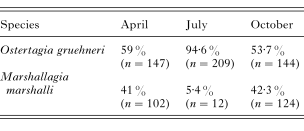
Table 1. The proportion of each abomasal nematode species expressed as a percentage of the total number of adult female nematodes that were identified from 31 reindeer culled in April (10), July (10) and October (11)
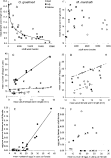
Fig. 1. Data and predicted values for the best-fit models from the analysis of the relationships between the fecundity variables. (A, C and E) Ostertagia gruehneri. (B, D and F) Marshallagia marshalli. (○) Data for April; ([bull ]) data for July; (X) data for October. (A) The relationship between O. gruehneri female worm length (Oglength) and the number of adults (Og). The fitted line represents the best-fit model where worm length is predicted by a power function Oglength = α(Og)β. (Parameter estimates for the fitted line are: α = 17.3, 95% CI = (14.91–16.98) and β = 0.064, 95% CI of −0.08–−0.05. (F1,29 = 60.57, P<0.01). (B) M. Marshalli female worm length (Mmlength) plotted on the abundance of M. marshalli in the same host. There was no significant relationship between the two variables. (C) The relationship between mean number of O. gruehneri eggs in utero in females (eiu) and mean female Oglength (mm). The fitted lines represent the best fit from a model where eiu is predicted by month, Oglength and the interaction between month and Oglength. There is a positive relationship in July and no significant relationship in April and October. (Parameter estimates (± standard errors) for July are: Ogeggs =−54.17(±9.23)+7.68(±0.92) Oglength.) (D) The relationship between mean number of M. marshalli eggs in utero (eiu) in females and the mean Mmlength (mm) in April and October. The fitted lines represent the best fit from a model where eiu is predicted by month and Mmlength. In July no line was fitted because the abundance and prevalence of M. marshalli was very low. (Parameter estimates (± standard errors) for the fitted lines are: M. marshalli eiuApril =−20.81(±13.68)+2.32(±0.96) Mm lengthApril and M. marshalli eiuOctober=−10.09(±14.57)+2.32(±0.96) Mm length October.) (E) The relationship between O. gruehneri eggs per gramme faeces per female worm (epgf) and the mean number of eggs in utero (eiu) per adult female O. gruehneri. The fitted lines indicate the best-fit model where epgf was predicted by month with a month by eiu interaction. There was a significant positive relationship in July but not in April and October. (Parameter estimates (± standard errors) for the fitted line in July are O. gruehneri epgf=−0.11(±0.017)+0.007(±0.0007) Og eiu.) (F) M. marshalli eggs per kilogramme faeces per female worm (epkgf) plotted on the mean number of eggs in utero per adult female M. marshalli for April, July and October. No significant relationship was detected.
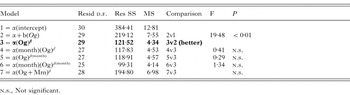
Table 2. Comparison of models for the mean female length of adult female Ostertagia gruehneri (Oglength)
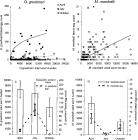
Fig. 2. The relationship between faecal egg counts and adult worm burdens. (A and C) Ostertagia gruehneri. (B and D) Marshallagia marshalli. The larger data set is displayed in (A) and (B) and the subset used in the analysis of individual female worms is shown in (C) and (D). (A) The relationship between faecal egg output (epg) and adult worm burden (Og) in April, July, and October for 128 reindeer sampled between 1995 and 1999. The fitted lines for each month are derived from a model where epg was predicted from adult worm burden using a power function (epg = α*Og*Ogβ). (Parameter estimates for fitted lines: αApril = 0.034, 95% CI = [0.00023,7.59], βApril =−0.34, 95% CI =−0.95,0.28]; αJuly = 5.02, 95% CI = (0.22,63.57), βJuly = −0.65, 95% CI = (−0.94,−0.30) αOctober = 0.0000121, 95% CI = (0.000000007,0.0093), βOctober =−0.65, 95% CI = [−0.94,0.30]). (B) The relationship between faecal egg output (epg) and Mm worm burden in April, July, and October for 122 reindeer sampled between 1995 and 1999. The best-fit model provides a linear fit that does not vary with month (R2 = 0.48, P<0.01). (C) The mean and standard error for O. gruehneri adult worm burden (columns) and O. gruehneri faecal egg counts (line) for April July and October 1999 (n = 31). (D) The mean and standard error for M. marshalli adult worm burden (columns) and M. marshalli faecal egg counts (line) for April July and October 1999 (n = 31).
 You have
Access
- 38
- Cited by