This article reports the findings of a pilot EfS program implemented in 2011 for international students in a multi-campus distributed learning environment at an Australian university. The study focused on international students from developing economies (in Asia, Latin America, Africa and Eastern Europe) studying business and IT programs. The program was developed within the context of environmental views conditioned by a range of contextual influences: the societal/system context, that is, the structural and behavioural dimensions of students’ home societies and their local business context; the university context, particularly the institution's progress towards sustainability across functional areas of curriculum, campus, community and consulting/research; the EfS learning context and pedagogy; and, the cultural/personal context, reflected in personal and cultural norms and attitudes.
Tertiary education is now a global industry with global tertiary student populations predicted to reach 150 million by 2025 (Moe & Blodget, 2000, as cited in Kapur & Crowley, Reference Kapur and Crowley2008). In 2008, 3.3 million tertiary students were enrolled outside their country of citizenship, of whom 2.7 million (79.1%) studied in Organisation for Economic Co-operation and Development (OECD) countries (OECD, 2010). Australia is a popular offshore destination, accounting for 7% of the total in 2008; thus Australia's educational system can play a key role in developing ‘environmental moralities’ (Lesser, Reference Lesser2009, p. 26), and in preparing decision-makers of tomorrow through educational strategies (Marion & Reid, Reference Marion and Reid2007, Brown, Ham, & Hughes, Reference Brown, Ham and Hughes2010). Universities are institutions that can act as key agents of change for sustainability (Hansen & Lehmann, Reference Hansen and Lehmann2006) by embedding initiatives across all functional areas, namely campus operations (facilities management), curriculum (teaching content and pedagogy) research and knowledge development, consultancy activities, and community outreach and support (Ferrer-Balas, Cruz, & Segalàs, Reference Ferrer-Balas, Cruz, Segalàs, Holmberg and Samuelsson2006; Ferrer-Balas et al., Reference Ferrer-Balas, Adachi, Banas, Davidson, Hoshikoshi, Mishra and Ostwald2008; Geli & Filho, Reference Geli and Filho2006; Gough & Scott, Reference Gough and Scott2007; Wals, Reference Wals2009).
Around 56% of Australia's international student enrolments are in social sciences, business and law programs (OECD, 2010), and business education is arguably the key catalyst for retooling business management systems. Leading business schools can demonstrate their intellectual and moral leadership to influence business behaviour through methods such as research and consulting, and importantly, through teaching activities (Aspen Institute 2002, 2008a, 2008b; Holt, Reference Holt2003), such as introducing Sustainable Development (SD), Corporate Social Responsibility (CSR) and Triple Bottom Line (TBL) topics as well as ethical issues, into the curriculum of all business management programs.
In 2007–2008, approximately 80% of Australia's international students originated from Asia, particularly India and China (OECD, 2010). In many developing economies, economic growth has increased people's material wellbeing and lifted many out of poverty; however, it has also come at the expense of the natural environment (World Bank, 2007). While international studies confirm environmental education is now embedded in school curricula in developing economies (Bhandari & Abe, Reference Bhandari and Abe2000; UNESCO, 2005), other researchers (Mbalisi & Offor, Reference Mbalisi and Offor2012) suggest more effort is needed as students are less aware of or concerned about serious degradation of natural ecosystems and related problems. Furthermore, according to a survey of tertiary institutions conducted by the Ethical Corporation (2006), demand for CSR courses in Asia is low and predicted to grow only 5–10% percent in the next 5 years. Perhaps this can also be explained by looking at Asian business culture, which is characterised by a preference for community/corporate philanthropy over formalised systems such as CSR/TBL (United Nations Economic and Social Commission for Asia and the Pacific [UNESCAP], 2011). To be successful, CSR courses must be grounded in the current mindset of students and until the Western type of CSR course is adapted to the core values of an Asian context, it will continue to bewilder most potential students and present a challenge to educators in designing effective pedagogies for sustainability literacy.
The journey or route to sustainability is situated within a particular context. In any particular country, a series of influences creates the context for sustainability, which depends on history, culture, traditions, local institutions, infrastructure, resource challenges, national wealth, and level of economic development (Wals, Reference Wals2009). Irrespective of cultural background, all graduates require skills in ethical competence and sustainability. Studies show that increasing student awareness and understanding of sustainability concepts often leads to increased acceptance of sustainability (Filho, 1999, as cited in Davis, Edmister, Sullivan, & West, Reference Davis, Edmister, Sullivan and West2003). However, educators should not assume students have similar knowledge or views about sustainability, but instead must identify and gradually develop the sustainability literacy of their students. This first step of raising student awareness is the focus of this research study, which was designed to enhance international student awareness and understanding of sustainability as a concept and as a practice. The next section presents a review of pedagogical approaches to sustainability and environmental worldviews of young people.
Literature
Education for Sustainability
Education for Sustainability (EfS) refers to education that builds the knowledge, skills and dispositions for living sustainably and aims to provide individuals with ‘the knowledge, skills and understanding necessary to make decisions based upon their full environmental, social and economic implications’ (Leihy & Salazar, Reference Leihy and Salazar2011, p. iv). Key elements in developing sustainability literacy identified in studies are modifying curriculum content, experiential and social learning, systems thinking, interdisciplinarity, connecting curriculum to local contexts (business/NGOs), taking a critical approach, and a strong research program (Blewitt & Cullingford, Reference Blewitt and Cullingford2004; Filho, Reference Filho2002; Filho & Carpenter, Reference Filho and Carpenter2006; Galea, Reference Galea2004, Reference Galea2007; Gough & Scott, Reference Gough and Scott2007; Matthews, Reference Matthews, Tripp and Muzzin2005; Tripp & Muzzin, Reference Trip and Muzzin2005). These are consistent with principles of Australia's National Action Plan for EfS (Australian Department of the Environment, Water, Heritage and the Arts, 2009), namely: (1) transformation and change, (2) education for all and lifelong learning, (3) systems thinking, (4) envisioning a better future, (5) critical thinking and reflection, (6) participation, and (7) partnerships for change. Before designing any particular educational intervention, it is important to effectively gauge student interest that will be affected by their prior environmental knowledge, skills and values. These in turn will influence the impact of any particular EfS interventions. The effectiveness of such educational initiatives will be determined by the learner's state of readiness, an issue to which we now turn.
Environmental Attitudes
People's views about the environment are affected by a variety of influences such as age, gender, level of education, income, culture and personality. In terms of age, Generations X and Y are readily identified as being more concerned about the environment generally than older generations, although within the younger X and Y generations, older students are more concerned than younger students (Shephard, Mann, Smith, & Deaker, Reference Shephard, Mann, Smith and Deaker2009). In terms of income, people in richer countries are more concerned than those in poorer, industrialising countries (Franzen, Reference Franzen2003). In terms of education, studies reveal education has a key role in raising awareness, interest and capability to act more sustainably in the longer term. People with higher levels of schooling are consistently more pro-environmental than those with less formal education (Ostman & Parker, Reference Ostman and Parker1987; Scott & Willits, Reference Scott and Willits1994; Tarrant & Cordell, Reference Tarrant and Cordell1997).
Culture and personality also play a significant role in environmental concern. A large body of evidence indicates that values are organised across cultural contexts. According to the World Values Survey conducted over a period of 30 years, countries with similar cultures cluster around key values, including those closely associated with sustainability such as universalism and self-expression (Inglehart & Welzel, Reference Inglehart and Welzel2012), which also correlate to universal values of benevolence and universalism identified by Schwartz (Reference Schwartz2007). Conversely, other international surveys indicate that as incomes grow, sustainability ‘values’ begin to converge around the world (Pew Global Attitudes Project and World Bank surveys, 2007, as cited in Burke, Reference Burke2008; Johnson Controls, 2010; Supply and Demand Chain Executive, 2010), although differences in environmental concern between geographic regions and cultures remain (Diekmann & Franzen, Reference Diekmann and Franzen1999; IBM, 2009; Shen & Tatsuyoshi, Reference Shen and Tatsuyoshi2008; Schultz & Zelezny, Reference Schultz and Zelezny1999; Stern, Dietz, & Kalof, Reference Stern, Dietz and Kalof1993).
Gender differences in environmental attitudes were extensively reviewed and researched by Zelezny, Chua, and Aldrich (Reference Zelezny, Chua and Aldrich2002), who show women reporting stronger environmental attitudes and behaviours than men. Zelezny et al. (Reference Zelezny, Chua and Aldrich2002) offer gender socialisation as the reason for these gender differences. In a more recent study, Shephard, Mann, Smith, & Deaker (Reference Shephard, Mann, Smith and Deaker2009) report marked gender differences in pro-environmental stance.
A popular conceptual framework used to describe a person's views/values/attitudes around sustainability is environmental worldviews, which characterise how individuals regard the relationship between humans and the natural world. In a review of the literature, studies reveal the emergence of several discrete environmental worldviews. Stern, Dietz, & Guagnano (Reference Stern, Dietz and Guagnano1995) were the first to combine environmental worldviews in a social–psychological context and proposed three distinct bases for environmental attitudes, namely concern for the individual (egocentrism), concern for all people (anthropocentrism), and concern for all living livings (ecocentrism). These three values have been shown as distinctly different (Schultz, Reference Schultz2001). In a review of studies covering more than 20 countries, Milfont, Duckitt, and Cameron (Reference Milfont, Duckitt and Cameron2006) found support for the three-factor model of environmental concerns, and also that culture influences environmental attitudes people are likely to develop and that environmental beliefs and behaviours vary by ethnicity.
New Ecological Paradigm
The New Environmental Paradigm (NEP) scale is one of the more popular instruments for measuring attitudes towards the environment (Dunlap, Reference Dunlap2008). Originally devised in 1978 by Dunlap and van Liere (Reference Dunlap and Van Liere1978), the scale was revised into the New Ecological Paradigm in 2000 (Dunlap, Van Liere, Mertig, & Jones, Reference Dunlap, Van Liere, Mertig and Jones2000). The term ‘paradigm’ was used to suggest the NEP scale was able to measure endorsement of a coherent cognitive structure or ecological worldview. The scale was developed to predict environmental attitudes and measure people's shifting worldviews from a human dominant view (anthropocentrism) to an ecological one (ecocentrism), with humans viewed as part of nature. The former view reflects the Dominant Social Paradigm (DSP) of individualism, free enterprise, endless progress, growth, abundance, confidence in science, and one that is contributing to environmental degradation, while the latter reflects the New Ecological Paradigm where nature is a limited resource, delicately balanced and also adversely affected by modern industrialised societies.
The Revised NEP contains 15 items with each rated on a 5-point Likert scale (strongly agree, mildly agree, unsure, mildly disagree, strongly disagree). The eight odd-numbered items are worded to indicate a proecological view while the seven even-numbered items are worded to indicate a proanthropocentric view. Each response is scored on a scale of 1–5, with the highest value corresponding to the most ecocentric response (scoring is reversed for proanthropocentric items). A high score represents beliefs and attitudes that are pro-environmental: a maximum score of 75 represents extreme ecocentrism and a minimum score of 15 indicates extreme anthropocentrism. The scale is designed to measure five hypothesised facets of an ecological worldview, namely: limits to growth, based on constraints of nature (items 1, 6, 11); anti-anthropocentrism, being a rejection of the idea that humans have domination over nature (items 2, 7, 12); balance of nature, emphasising the fragility and susceptibility of ecosystems to human interference (items 3, 8, 13); anti-exemptionalism, a rejection of the idea that humans are exempt from the constraints of nature (items 4, 9, 14), and eco-crisis, resulting from human interference (items 5, 10, 15).
Stern, Dietz, and Guagnano (Reference Stern, Dietz and Guagnano1995) suggest NEP measures an individual's general awareness and concern of the consequences of harming the natural environment and they describe it as positive ‘folk’ ecological theory about the relationship of humanity and nature. Researchers disagree whether NEP is able to detect more nuanced attitudes or sophisticated interpretations of the relationship between humans and nature. Some studies support cross-cultural validity of the NEP scale (Rideout, Hushen, McGinty, Perkins, & Tate, Reference Rideout, Hushen, McGinty, Perkins and Tate2005), whereas other studies found lower levels of internal consistency in China, Latin American and Eastern European countries, suggesting it is not always translatable outside Western countries (Kopina, Reference Kopina2011b; Erdogan, Reference Erdogan2009). This multidimensionality is arguably due to contextual characteristics of study populations, such as culture and history, and Erdogan (Reference Erdogan2009) concludes that using the unmodified NEP scale in different cultures may be problematic. The main reason is the DSP and NEP were conceptualised in the United States and studies in Western countries support a polarisation between anthropocentric and ecocentric worldviews. However, this polarisation is not universal and other studies suggest some integration of these two worldviews. Corral-Derdugo, Carrus, Bonnes, Moser, & Sinha (Reference Corral-Verdugo, Carrus, Bonnes, Moser and Sinha2008) demonstrate that in some cultures, the ecocentric view is compatible with anthropocentric beliefs, as borne out by studies of Brazilian, Japanese and Mexican participants. They suggest conciliation between the eco-anthropocentric dichotomy and offer an alternative New Human Interdependence Paradigm (NHIP), which integrates the two approaches. This integrated worldview is supported by their own research and by other studies, particularly in developing or transitional economies (Bechtel, Corral-Verdugo, Asai, & Riesie, Reference Bechtel, Corral-Verdugo, Asai and Riesie2006). In studies of Turkish university students, Dervisoglu (Reference Dervisoglu2010) reports most students hold an ‘anthropocentric environmentalist’ or ‘utilitarian’ point of view, where nature is valued for the direct benefits it can provide to humans, while Erdogan (Reference Erdogan2009) finds the majority of students hold a mild pro-environmental view with the remainder holding either ambivalent or pro-anthropocentric views.
Dunlap et al. (Reference Dunlap, Van Liere, Mertig and Jones2000) acknowledge that differing populations vary in the degree to which the NEP beliefs are organised into a highly consistent belief system, and suggest that in many cases it is more appropriate to treat NEP as multidimensional. Dunlap (Reference Dunlap2008) points to the belief-systems approach by some researchers who regard multidimensionality of NEP as useful in documenting variation in the structure and coherence of an ecological worldview across cultures.
To overcome such wide variation in environmental views, Kopina (Reference Kopina2011b) proposed quantitative tools such as NEP be combined with qualitative studies that are context-specific and critical probing to enable a clearer understanding of the underlying causes for such inconsistencies. We now discuss the overarching theoretical framework used in this study.
Theoretical Framework
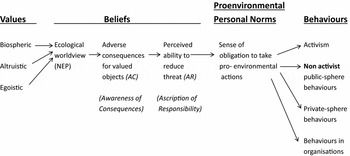
The conceptual framework of this study has theoretical underpinnings in two main areas, namely pedagogy for sustainability, and environmental psychology and behaviour. The study of human behaviour adopted in this study is the framework of Value-Belief-Norm (VBN) theory of environmentalism proposed by Stern (Reference Stern2000). This framework was chosen as it is a comprehensive approach to conceptualising environmentalism and the influence of peoples’ values, beliefs and behaviour, and it also indicates possible points of incidence. The VBN framework links value theory, norm-activation theory, and the New Environmental Paradigm (NEP) perspective through a causal chain that lead to environmental behaviour. These are personal values, beliefs about the natural environment, personal/social norms, and finally, behaviours, as illustrated in Figure 1.
Value-Belief-Norm (VBN) theory of environmentalism
Source: Stern, Reference Stern2000, page 412
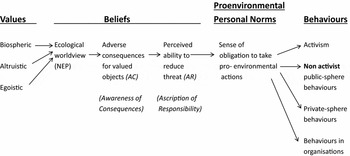
In the VBN framework, environmental attitudes are differentiated based on concern for self (egoistic), concern for other people (social-altruistic), and concern for plants and animals (biospheric) (Schultz et al., Reference Schultz, Gouveia, Cameron, Tankha, Schmuck and Franěk2005). An important element in the VBN theory is that beliefs have a mediating role between values and environmentalism (personal norms and behaviours). Beliefs relate to the kind of things or people affected by environmental conditions (adverse consequences for valued objects) and the efficacy of individual actions on alleviating the threat to such valued persons or things (perceived ability to reduce threat). Beliefs can be influenced by information, and the proposition in this study is that EfS provides sustainability information that can potentially alter beliefs.
Most advocates of sustainable development recognise the need for changes in human values, attitudes and behaviours to achieve a sustainable transition. Using the VBN framework, Stern (Reference Stern2000) suggests that a combination of interventions (religious and moral appeals, education, material incentives and penalties, communal rules and expectations) is most effective at eliciting changes in environmental behaviour.
The aim of this exploratory study was to examine the nature of environmental worldviews of international students in order to design effective pedagogical interventions and build their sustainability literacy. The specific purpose was to identify students’ underlying environmental attitudes/knowledge and to determine the impact of a generic 20–30 minute, introductory EfS seminar presented to students in-class (and somewhat related to their course) as well as the impact of sustainability topics in the curriculum.
In this study, individual NEP scores are averaged across all 15 items and also calculated as an average for each of the five dimensions of the NEP. Based on previous research findings reported above, we expected students’ NEP scores to be affected by geographic region (culture), age, level of study, gender, and EfS intervention.
Methodology
In 2011, (Central Queensland University) CQUniversity had one of the highest percentages of international student enrolments in Australia with around 40% of enrolments in taught courses overall and almost 50% of taught courses in Business and IT programs (CQU, 2011). This research study focused on the views of international students who predominantly come from non-Western cultures and also from developing economies, particularly in the Indian subcontinent, China, North Asia and South East Asia. In light of this, the study focused specifically on the CQUniversity Melbourne and Sydney (metropolitan) campuses for two reasons. First, CQUniversity operates a multi-campus distributed learning model with courses/programs managed centrally in Queensland and campuses unable to alter assessment or curriculum; and second, metropolitan campuses have hitherto focused exclusively on international students, particularly in Business, Accounting and IT programs. Most courses do not contain EfS-related material; however, a few courses do have some ethics and sustainability in the curriculum, providing an opportunity to explore student views and investigate the impact of various pedagogical initiatives on their sustainability knowledge and attitudes. It is both pertinent and interesting to determine the current environmental views of our international students and assess what impact (if any) educators can have on increasing their sustainability knowledge and attitudes.
The context of this study is a two-stage action research project, initiated by individual academics and conducted at CQUniversity's Melbourne and Sydney campuses. As teachers at these metropolitan campuses, we observed low levels of environmental awareness and action by our international students. Our intention was to try to influence international students’ knowledge/attitudes about sustainability in a short presentation in class, and we also conducted surveys to determine the effectiveness of this approach.
In Stage 1, teachers at the Melbourne campus volunteered their classes in Term 1, 2011 for the researcher (Liz Sidiropoulos) to conduct a pilot introductory EfS seminar (around 30 minutes) during weeks 4–7. A total of 20 in-class visits were completed, covering 23 courses in IT & Business programs across diploma, undergraduate and postgraduate levels, reaching an estimated 500 students. In these EfS seminars, students were introduced to sustainability concepts (global challenges and issues in achieving wellbeing), as well as new graduate skills/competences required, new pedagogical approaches and the role of tertiary education. Students were shown YouTube videos on sustainability actions by global business leaders and their peers (young adults), encouraged to adopt personal sustainability behaviours, and also assisted to make connections between their individual courses/programs and improved sustainability outcomes in terms of benefits to the economy, the environment and to society/culture.
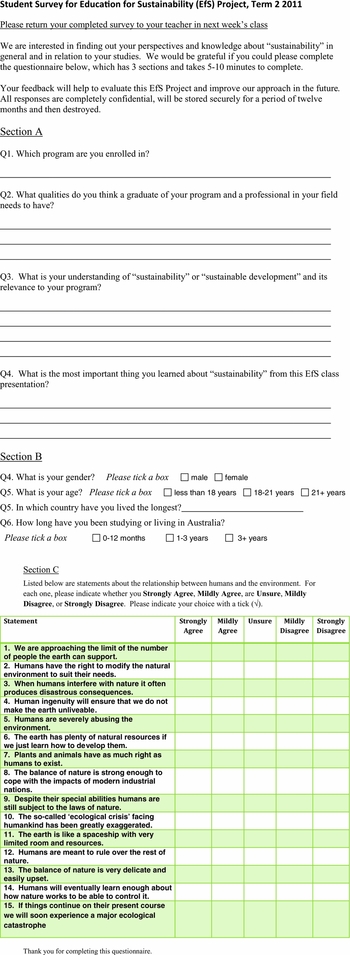
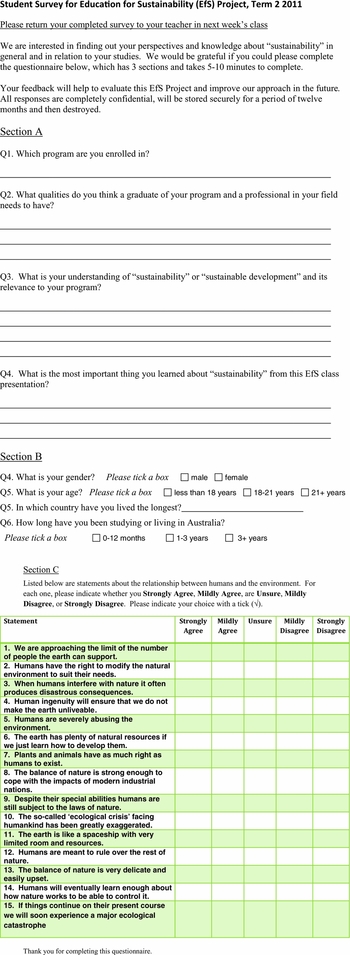
Surveys were distributed at the end of the sessions and completed voluntarily by both teachers and students. The survey consisted of three sections. In Section A, students were asked ‘open’ questions relating to their views about what graduate skills are important and the relevance of sustainability to their course. Section B consisted of closed-ended questions designed to gather general demographic data. In Section C, student attitudes to the environment and sustainability were assessed through the Revised NEP.
At the end of Stage 1, students and teachers who participated in the Melbourne sessions were given a separate feedback questionnaire requesting comments on the EfS seminar itself and suggestions for improvement. Student responses indicate the EfS seminar had an appreciable impact on their views thus:
• Different to what we would normally see in a class but am aware that it is something we should think about.
• Made me think how we could be more environmentally friendly as it is not promoted where we are from.
• Was good for raising awareness.
• Created a sense of responsibility generally and for IT.
• Mandate it — force students to learn.
• Make it more interactive — show some videos, bring in models.
• Provide more real world cases studies.
• The most important thing I learned today from this class is that the resources on the earth are limited, we should protect our earth, for our environment and generation kids.
• A lot of interesting things that we have to discover about sustainability.
Responses from teachers indicate the EfS seminar also impacted on their environmental views, and they also made suggestions for improvement, thus:
• Very useful as it creates an awareness of such an important issue.
• Very relevant to current world situation —with respect to global warming. Right timing in their life to tell them this story.
• An eye-opener for self [of the importance of environmental considerations].
• . . . put more practical things ‘in’ to the presentation on what to do (e.g., 3Rs).
• Videos, props, further interactivity would help them understand the concept firstly and show them actual ways to reduce their carbon footprint.
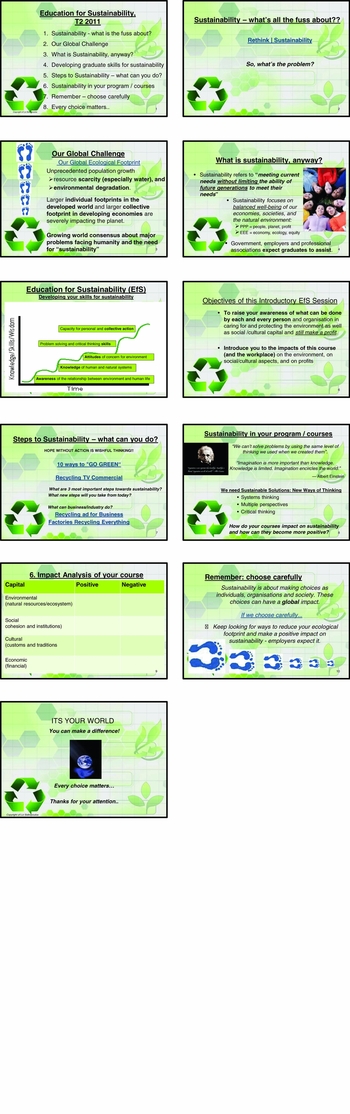
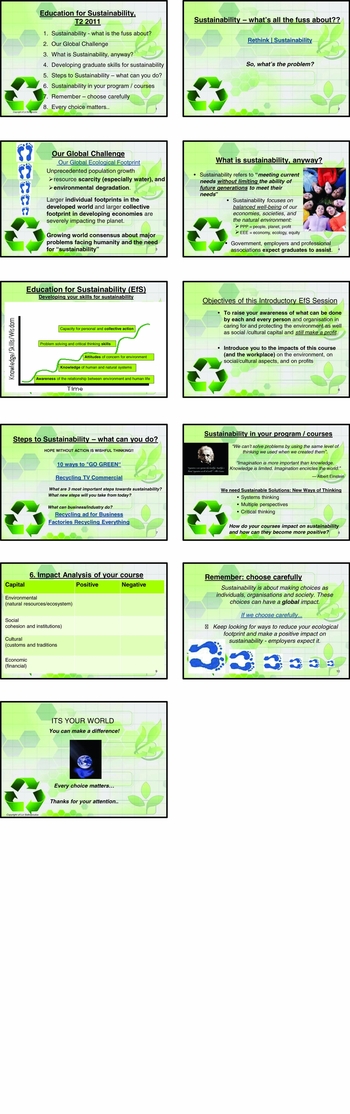
For stage 2, the seminar was altered according to student and teacher feedback and conducted during Term 2, 2011 in Melbourne. The Power Point slides shown in the seminar are presented in Figure 2 (Appendix 1). Specifically, sessions were more interactive — additional You Tube videos were shown on how young people, individuals and business could act more sustainably, additional props were used and the overall sessions were longer. Students were more engaged and appeared to enjoy these longer sessions more, as did the presenters, which often included the regular classroom teachers. Given the length, a small number of the longer sessions were run in Melbourne. In Sydney, due to time restrictions, it was decided to run the original EfS seminar during Term 2, 2011, although more surveys were distributed to collect a larger baseline sample as well as pre- and post-EfS samples. The EfS seminars in Sydney were presented by the researcher (Irene Wex) to four classes, covering 100 students in undergraduate business programs.
The survey was distributed on both campuses to collect information from various class situations, including pre- and post-EfS seminars, non-participating EfS seminar classes, and also classes with no EfS seminar but some sustainability-related assessment in the curriculum. An additional question was included in the post-EfS survey that asked students what they had learned about sustainability in the EfS seminar presentation or in sustainability topics of their course. The survey is presented in Figure 3 (Appendix 2). The Revised NEP scale was used to measure the environmental worldview for three groups of students: first, students not exposed to any EfS interventions (baseline); second, students who participated in the EfS seminar (some students were surveyed both pre-and post-seminar); and third, students with sustainability topics in their course curriculum but not exposed to the EfS seminar.
Data Analysis
Survey data was analysed using a combination of qualitative and quantitative investigations. As the primary tests for quantitative analysis related to the Revised NEP in the survey, readability tests were conducted on NEP statements to assess the validity of this instrument to elicit reliable responses from international students for whom English is a second language. Readability test results (Tests Document Readability, 2012; Text Readability Consensus Calculator, 2012) show a Flesch Reading Ease score of 54.4 (where 100 = very easy, 0 = very difficult), a Flesch-Kincaid Grade Level of 8.7, and Gunning Fog result of 11 years of formal education. Accordingly, the survey requires advanced English language reading level to comprehend at first reading. Undergraduate students with a required IELTS score of at least 6.0 (equivalent to 12 years) should be able to comprehend at first reading, although students in ELICOS (English Language Intensive Courses for Overseas Students) and diploma programs would face probable readability issues, so the researcher used neutral language to explain the meaning of key words in NEP statements.
Tests for difference were conducted on students’ NEP scores to ascertain potential differences between the baseline and pre-EfS scores. Based on previous studies, we investigated differences based on gender, age, level of study, years in Australia (acculturation effect), and region of residence (cultural effect). Missing variables in the NEP scale were replaced by sample means in cases where at least 80% of questions were answered.
T tests were applied to corresponding pre- and post-EfS seminar data to investigate the impact on students’ perceptions and attitudes, as reflected in mean NEP scores, as well as scores for the five NEP dimensions. We also investigated the influence on student responses of variables such as gender, age, level of study, years in Australia and region of residence. Average NEP scores for pre-and post-EfS data was also compared in terms of Cronbach's Alpha to detect any change in standard deviations which may indicate a change in the coherence of student environmental worldviews as a result of the seminar.
Qualitative investigation of survey results involved a thematic review of student responses to the open questions about sustainability and its relevance to students’ courses/professions. Student comments were investigated to detect any influences on baseline responses as well as changes in students’ responses after the EfS intervention, either via the seminar or curriculum topics.
Results
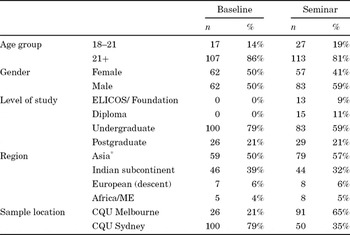
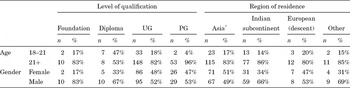
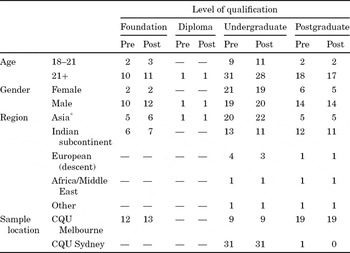
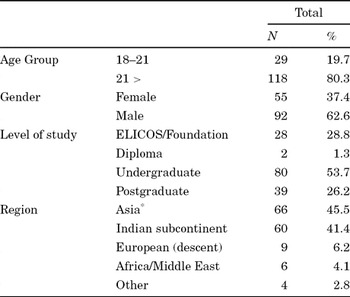
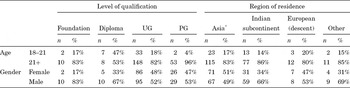
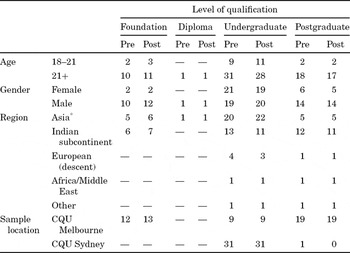
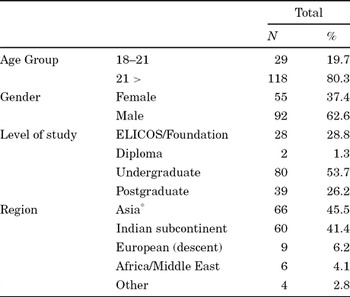
A total sample of 267 student surveys were analysed, comprising three groups, namely baseline, pre- and post-EfS seminar, and post-EfS curriculum. Quantitative analysis of NEP results was conducted on two groups: the baseline sample (N = 126) was amalgamated with Pre-EfS seminar sample (N = 92) data to investigate cross sectional effects, and corresponding (paired samples) of pre- and post-EfS seminar survey data (N = 75) were compared to investigate longitudinal effects. Qualitative analysis was conducted on these two groups and also included post-EfS curriculum survey data (N = 15). The sample composition for the baseline and seminar groups are shown in Table 1a and a profile of the overall sample is provided in Table 1b. A description of the sample of corresponding pre- and post-EfS seminar survey data (by level of study) is shown in Table 2.
Sample Composition By Group
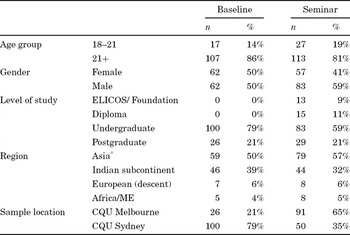
Note: *Comprises China, Japan, Korea and South East Asia.
Profile of Overall Sample
Note: *Comprises China, Japan, Korea and South East Asia.
Composition of Pre- and Post-EfS Seminar Sample
Note: * Comprises China, Japan, Korea and South East Asia.
Qualitative Analysis
Student responses to open survey questions in Section A were investigated to identify the influence of key variables such as age, gender, level of education, years in Australia (acculturation) and region of residence (culture) on student views about sustainability and their relevance in graduate skills. As evidenced in students’ comments, students from the Indian subcontinent appear to be more environmentally sensitive than students from Asia, who appear to be more consumer-driven and rely on technology to solve sustainability-related issues.
Typical responses from subcontinent students include:
• Storing the Earth will keep us maintain a better living for a better future.
• I guess that we should fulfil our present needs without harming the needs of future generations.
Typical responses from Asian students include:
• Development can go on in the future because there are more and more markets.
• To me, it's like a choice between to sell more products to make money, or to save the expenses for the company. I prefer to sale, therefore I prefer to find new resources or new materials for future.
This is arguably because the concepts of sustainable development (SD) and CSR are new to Asia (United Nations, 2007, p. 1, as cited in UNESCAP, 2011). In a survey of tertiary institutions in Asia, Ethical Corporation (2006) found: ‘while the craze for corporate social responsibility (CSR) courses continues to resonate across Europe and North America, the Asia Pacific region continues to lag behind’.
Responses reveal, as per Zelezny, Chua, and Aldrich (Reference Zelezny, Chua and Aldrich2002), that female respondents adopted a more humanistic/social-altruistic approach compared to their male counterparts (Schultz et al, Reference Schultz, Gouveia, Cameron, Tankha, Schmuck and Franěk2005), as typified in the following quotes:
• Using different resources in present without compromising the future generations.
• Save the Earth and environment for the future.
• Manage and develop human resources to realise the important of sustainability for everyone.
Furthermore, as prior studies have revealed, women tend to focus on welfare, while men focus on assets (Annan, Reference Annan2011). Hence, female students notably identified individual/social responsibility as contributing factors:
• Making choice as individuals, organisations, and society.
• If each person do something about it — even if it's small — they can make big changes, slow down reduce the negative environmental effects.
• It is the ability of the Earth to sustain the increase of the population, lead to the pollution or the global warming due to the development of human to improve their standard of living. Therefore, in order to help the Earth, not only me but also all the people over the world must aware and start the solution before it's too late.
Male respondents, on the other hand, tended to take on a more self-interested/egotistical approach (Schultz et al., Reference Schultz, Gouveia, Cameron, Tankha, Schmuck and Franěk2005) and were more concerned with the present:
• Sustainability is something (that) keeps happening and keeps extending.
• I know what things can be recycled and also use less water, drive less, plant tree. It helps the Earth sustainable development.
• I am not quite sure about what the sustainability is but I think that the means is the economising something for our next generation. The something may be reducing emission from electricity, gas and water.
Male respondents were also more sceptical, and as noted above, Asian males in particular believed that scientific and/or technological innovations would provide the necessary solutions:
• Maintain the current situation; even improve the environment to live. Use high tech with little harm to atmosphere to a large extent. The refinement and control can bring assistance to sustainability.
• Capable of being maintained at a steady state without exhausting natural resources or causing severe ecological damage.
• The progress of mankind has minimal impact on environment [and] on sustainable development. Carbon tax is not the solution for an eco-friendly world. There have been allegations against Al Gore and many other pro-carbon of manipulation data.
Students’ professional aspirations/goals also came to the fore and again, stereotypically, males were more concerned with their professional future and even entertained the prospect of marketing benefits:
• To me, it's like a choice between to sale more products to make money, or to save the expenses for the company. I prefer to sale or, therefore I prefer to find new resources or new materials for future.
• For marketing development to make the target market for the long-term customer then make long-term profit not just present.
• This is unlimited field for marketing, you could know that you need more knowledge when you learn more.
• In relevance to my program, it awares ecological things while dealing with anti-environment which little helps towards saving globe and profession.
The responses from female students, however, identified accountability on the part of businesses/companies (CSR):
• Very important, as managers they have to set goals for organisations, if managers want to focus on the environment, then the implementation will be quicker.
• It is relevance because each company has to be or should be committed to it.
• To put the right person to the right job at the right place, time and cost. Then the company will obtain effective human capital in order to lead the organisation achieve goals.
• It's about how to run a business with sustainable development.”
Female students without EfS acknowledged that CSR is an important consideration in their future profession:
• As an accountant, co needs to fulfil social expectations.
• Sustainability is the economic, social and environmental condition of any company. Environmental development matters in my accounting program.
• I do not think that sustainability only relates to my program. Each person as a human being should be aware of it no matter what profession she/he is working in.
• . . . made me think how we could be more environmentally friendly, as it is not promoted where we are from.
• . . . created a sense of responsibility generally and for IT.
• We need to raise everybody's awareness to prevent pollution.
Their non-EfS male counterparts, on the other hand, tended to either not respond to these questions at all or responded with ‘I don't know’. These responses, in turn, have several implications. First, they confirm previous studies that women are more concerned with environmental welfare than men and that the lack of concern (and/or perhaps even knowledge) on the part of the male respondents may have led to a dismissal of such topic questions; second, that cultural differences may have played a further role, as Asian students outnumbered the other student participants and, as noted above, Asian males, in particular, tend to not be environmentally sensitive; and third, unfamiliarity with the topic questions, coupled with a lack of confidence in regard to the perceived language skills required to answer such question in English, may have further played a role in the non-response.
In regard to the impact of EfS intervention by way of inclusion in the course, it was found that students who were exposed to sustainability in their courses were also not only more aware of sustainability but also recognised the value of EfS in their course:
• Sustainability is about the relationship of human beings and the environment. We should find a method to be ‘win-win’ in this relationship.
• Sustainability is the way to keep and control the number of products such as, bottle glass of water, reusing timber of house.
• Sustainable development is pattern of resource use that meets human needs along with nature's preservation.
• Actual society must think critically about all aspects in the society, such as the environment to give to the future generations; accounting programs must understand that profit is not just about economic topics.
Quantitative Analysis
Influences on student attitudes towards and knowledge of sustainability
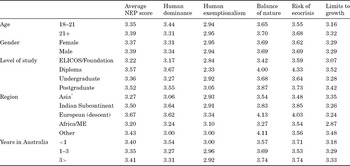
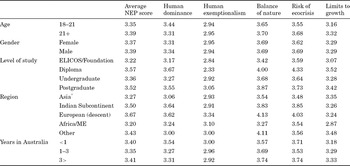
There was no statistical difference detected in mean NEP scores and standard errors for the Pre-EfS seminar (N = 92) and baseline (N = 126) survey results, so these groups were combined into a larger sample. For this combined group (hereafter referred to as baseline), average NEP scores and scores for each of the five NEP dimensions are shown in Table 3. These results provide a comparison of student responses by variables such age, gender, number of years in Australia, country of residence, and level of study, as suggested by previous studies.
Comparative NEP Scores Across the Combined Baseline Sample
Note: * Comprises China, Japan, Korea and South East Asia.
Average NEP scores across the baseline sample indicate no appreciable differences in student's responses irrespective of gender, age, level of study or years in Australia, although this contrasts with our findings in the pre- and post-EfS sample. However, closer examination reveals that average NEP scores mask more divergent responses in the underlying dimensions of the NEP. Students living in Australia for longer periods hold stronger views supporting human domination over nature (decreasing the average NEP score) although this is offset by more pro-environmental views expressed in terms of human exemptionalism, balance of nature and limits to growth (increasing the average NEP score). This indicates greater sensitivity to environmental concerns (suggesting an acculturation effect), even though average NEP score remains largely unchanged. Older students hold similar stronger views of human domination over nature, although again this is offset by more pro-environmental beliefs than their younger counterparts across all remaining dimensions, again rendering the average NEP scores unaffected by age.
Our findings confirm the literature that region of residence (our proxy for culture) does significantly impact environmental concern. As expected, average NEP scores for Western students were higher than non-Western students and particularly across the NEP dimensions of human exemptionalism, balance of nature and risk of ecocrisis. Cultural differences were further detected between students from the Indian subcontinent (such as India, Pakistan and Nepal) and students from Asia (such as China, Taiwan and Vietnam). Due to low sample sizes for ‘Africa/Middle East’ and ‘Other’, these groups were excluded from further statistical tests, which reveal significant differences between mean NEP scores for students from Asia, the Indian subcontinent, and European descent. Further tests show statistically significant differences between Asia and both Indian subcontinent and European (descent), although no significant difference is detected between mean NEP scores for Indian subcontinent and European (descent). Once again, average NEP scores mask larger divergences between ‘cultures’ in underlying dimensions of the NEP. These results are congruent with qualitative findings regarding culture, discussed above. The suggested reason for significantly higher NEP responses from ‘Western’ students (European descent) is that environmental issues are a greater part of the social discourse and there is more engagement with sustainability issues in education, the informal environment (such as media/entertainment), social groups and activities, the business sector, laws/regulations, and also physical infrastructure.
Quantitative results do not support gender differences in environmental concern across the amalgamated baseline sample, either in average NEP scores or in underlying dimensions of the NEP. This contrasts with our quantitative results in the pre- and post-EfS seminar data (discussed in the next section) and also our qualitative findings, which show markedly different responses by gender and demonstrates the importance of using mixed research methods to detect nuances in students’ environmental views.
Impact of the EfS seminar on student attitudes and knowledge of sustainability
Quantitative analysis was conducted to assess the impact of the EfS seminar presentation on corresponding samples of pre- and post-EfS seminar surveys (N = 75). The composition of the total sample data points (pre and post) is shown in Table 4.
Composition of Pre- and Post-EfS Seminar Data
Note: *Comprises China, Japan, Korea and South East Asia.
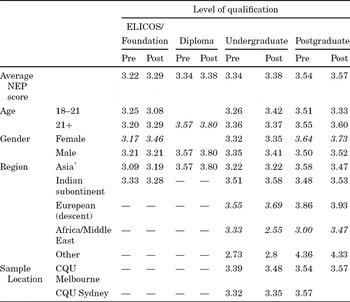
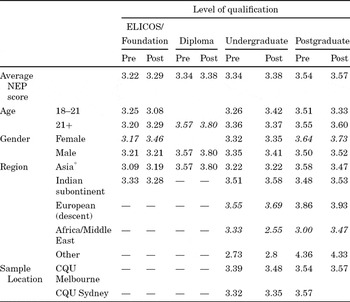
Average pre- and post-EfS NEP scores, by level of education are presented in Table 5. Key findings are that at diploma level, NEP scores for Asian males increased most after the longer seminar in Melbourne; at the undergraduate level, Europeans NEP scores increased the most; and, at the postgraduate level, female scores increased most, as did those for Indian subcontinent and European students, while those for Asian students actually decreased.
Comparative Pre- and Post EfS Seminar NEP scores, By Level of Study
Note: *Comprises China, Japan, Korea and South East Asia.
Our results indicate no significant change in students’ average NEP score following the EfS seminar: the pre-EfS score of 3.37 increased to only 3.41 after the EfS seminar. However, as shown in Table 5, average NEP results mask two major types of differences: first, there are significant differences in ex-ante responses by different groups (e.g., age, gender) and second, there are divergent ex-post responses in the underlying NEP dimensions within each group that offset each other and leave average NEP unchanged. Our analysis shows ex-ante average NEP scores are affected by age (older is higher than younger), level of study (postgraduate higher than undergraduate), gender (female greater than male), region of residence (European higher than Indian subcontinent or Asia) and also years in Australia (longer is greater than shorter duration). Specifically, average NEP scores for pre- and post-EfS seminar escalate with each level of study: ELICOS/Foundation students’ score rises from 3.22 to 3.29; undergraduate students from 3.34 to 3.38; and postgraduate students from 3.54 to 3.57. Also, the longer students live in Australia, the greater is their environmental awareness and also their confidence in human exemptionalism and ability to solve ecological problems.
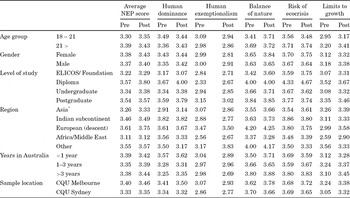
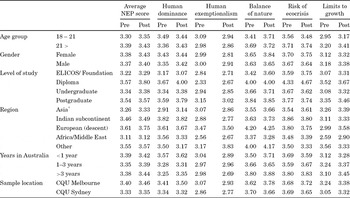
To identify any changes in the structure of student worldviews following the EfS seminar, average NEP scores and scores for each of the underlying NEP dimensions for each group were calculated and these are presented in Table 6.
Comparative NEP scores for Pre- and Post EfS seminar
Note: *Comprises China, Japan, Korea and South East Asia.
Further investigation of responses within each group shows that unchanged average NEP scores conceal significant shifts in underlying NEP dimensions that offset each other. Several key trends are observed in underlying NEP dimensions as a result of the EfS seminar. The most significant ex-post effects are a stronger belief in human exemptionalism and greater confidence in human ingenuity/science to solve ecological problems (a stronger anthropocentric orientation, reducing the NEP score), coupled with heightened environmental awareness and concern for the balance of nature and limits to growth (a more ecocentric view, increasing the NEP score). These shifts following the EfS seminar suggest greater integration of ecocentric and anthropocentric views, resulting in a more ‘utilitarian’ view of balancing the needs of nature and humans, and also suggest that students adopted the main tenets of modernity towards the environment. This confirms the aforementioned studies that find an ‘anthropocentric environmentalist’ or ‘utilitarian’ point of view in students in developing or transitional economies (Bechtel et al., Reference Bechtel, Corral-Verdugo, Asai and Riesie2006), as well as studies of Brazilian, Japanese and Mexican participants (Corral-Derdugo et al., Reference Corral-Verdugo, Carrus, Bonnes, Moser and Sinha2008) and studies of students in Turkey (Dervisoglu, Reference Dervisoglu2010; Erdogan, Reference Erdogan2009).
Prior to the EfS seminar, students held a more fractured or incoherent worldview that was not in alignment with the dichotomous interpretation of the revised NEP scale. Paradoxically, despite a greater integration of the DSP-NEP worldviews, the seminar also produced greater coherence in students’ overall responses, as represented by a change in the value of Cronbach's α from 0.558 to 0.675 in pre- and post-EfS samples respectively. While still below the acceptable level of 0.7, it indicates a more coherent worldview, as represented by the NEP. Importantly, it suggests students learned something from the EfS seminar, reflected in an increased concern about an eco-crisis, greater acceptance of limits to growth and balance of nature.
Experimental Limitations
While our results relate to paired surveys for pre- and post-EfS seminar respondents, it is still a quasi-experimental approach as we cannot ascribe any changes in NEP scores as being caused by the EfS intervention, whether it is the seminar or curriculum topics. To overcome this limitation, a larger study tracking views of other students not exposed to any EfS intervention would provide insight to other possible influences occurring at the same time. Further research investigating the connection between student views and behaviour towards the environment would also be useful. This research is the first step in our journey of teaching for sustainability. The intention for the next stage is to conduct more research with large sample sizes, across multiple campuses and types of intervention to obtain a clearer picture of our students’ views and impressions and to determine the impact of different approaches to EfS pedagogy in the context of international students in Australia.
Conclusion
This study found that environment values and attitudes differ greatly among university students, based on their cultural background, gender, age and prior exposure/knowledge of sustainability. Older students generally displayed a more heightened awareness of environmental issues than younger students, regardless of whether they were postgraduate or undergraduate students. Culture and gender, however, had a more significant impact, and prior EfS knowledge, either by way of a seminar or inclusion in the curriculum, further significantly impacted on student views. Specifically, a heightened awareness of sustainability concepts, as well as increased concern about environmental damage and limits to growth were evident as a result of EfS intervention, either by way of seminar or inclusion in the course. This was accompanied by an increased confidence in human exemptionalism from nature, an increased confidence in technology and in human capability to solve environmental problems. This suggests some aspects may be easier to influence than others and has distinct teaching implications. First, educators must not make general assumptions about student awareness of or concern with environmental/sustainability issues as a cohesive group. Underlying differences in views will influence their responses to any particular EfS intervention, so educators must understand their student cohorts’ views and tailor specific pedagogies accordingly to assist their students learning for sustainability. An introductory EfS seminar may be an effective orienting/priming mechanism to stimulate student awareness in sustainability issues, as well as their potential interest in creating solutions and developing opportunities through their chosen fields of study. By embedding sustainability topics and assessment into more courses, educators can increase attention to sustainability issues and the development of sustainability literacy in students.
Appendix 1
Power Point Slides for Pilot EfS Seminar, 2011
Appendix 2
Figure 3:
Author Biographies
Liz Sidiropoulos is a lecturer and course coordinator at Central Queensland University, Australia and teaches Economics, Marketing, Finance and Tourism courses at diploma, undergraduate and postgraduate levels. Liz began teaching in 2004 and in 2007 received both Carrick Tier One and Carrick Tier Two Teaching Awards. A strong advocate for sustainability, Liz has published several academic papers and her research interests are in environmental sustainability, social responsibility, EfS pedagogy and the process of social transformation.
Irene Wex is a course coordinator and senior lecturer in law at Central Queensland University. Irene began teaching in 1977 and has been teaching mainstream law courses since 2005. Irene has published various papers in disciplines other than law, such as philosophy, linguistics and gender studies, but her main interests now focus on environmental and animal law.
Jonathan Sibley is a social researcher at Central Queensland University, Australia. His research focuses on the measurement of behavioural and attitudinal change from participation in both formal and informal learning interventions, in particular outcomes from learning interventions to enhance financial competence.