Antihistamines are widely used in paediatrics for the treatment of a variety of conditions, including acute allergic reactions, allergic rhinitis, allergic conjunctivitis, allergic asthma, urticaria, and atopic dermatitis. Reference Anagnostou, Swan and Brough1 Ebastine is a long-acting antihistaminic, which is second-generation, and selective H1-receptor inverse agonist. Reference Rico, Antonijoan and Barbanoj2 There are few factors that signify the suicide rate among adolescents compared with other age groups, particularly an increase in relationship problems, educational distress, social media use, depression, anxiety, and trauma. TikTok is one of the most used social media platforms among adolescents. Reference Minhaj and Leonard3 In 2021, TikTok reported 1.2 billion monthly active users, and 1.5 billion monthly users are predicted for the end of 2022. Reference Purushothaman, McMann and Nali4 In recent years, TikTok has become a major player in the social media environment, especially with regard to teenagers. One of the key factors of this success is the idea of challenges, that is, video competitions on a certain topic, which a user can launch and other ones can join. Most of the challenges are funny and harmless. However, there are also users who launch challenges that are dangerous. Reference Bonifazi, Cecchini and Corradini5 Recently, it has been reported that there has been an increase in challenge video trends on TikTok among paediatric populations. Reference Kriegel, Lazarevic, Bojan and etal6 This report presents here a temporary prolongation of the QTc interval after acute ebastine intoxication due to challenge video on the TikTok.
Case presentation
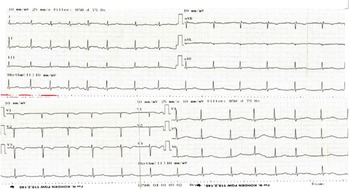
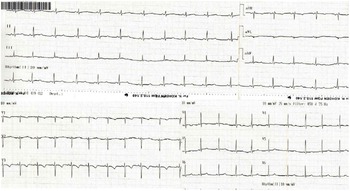
A twelve-year-and-six-month-old healthy girl was admitted to the paediatric emergency unit with complaint of drowsiness. Past history showed that 6h before admission, she attempted suicide by ingesting 20 tablets of ebastine (Ebafit 10 mg/tablet, Neutec, Sakarya, Turkey) (5 mg/kg). The patient’s anamnesis revealed no chronic diseases and no intake of other drugs. Her family stated that she was sleepy even though she did not normally sleep during those hours. The patient did not complain for dizziness, dryness of the mouth, palpitations, or other symptoms. According to her anamnesis, she had decided to take the drugs after watching challenge video on TikTok. She was cooperative and oriented. Her Glasgow Coma Score was 14, and her neurological examination was unremarkable. On physical examination, her body weight was 40 kg (25th percentile), blood pressure was 110/60 mmHg, heart rate was 89 bpm, respiration rate was 25breaths/minute, and body temperature was 36.7°C. Cardiac auscultation showed normal cardiac sounds. Arterial oxygen saturation was 98%. Laboratory examinations showed a serum haemoglobin of 14.6 g/dl, haematocrit 45.1%, white cell count 7950/mm3, platelet count 247000/mm3, glucose 104mg/dl (normal 70–115), urea 19 mg/dl (normal 17–43), creatinine 0.63 mg/dl (normal 0.6–1.1), sodium 141 mmol/l (normal 136–146), potassium 4.1 mmol/l (normal 3.5–5.1), calcium 9.7 mg/dl (normal 8.8–10.6), bicarbonate 19.9mmol/l (normal 21–26), lactate 0.89 mmol/l (normal 0.1.8), pH 7.37 (normal 7.35–7.45), alkaline phosphatase 224 IU/l (normal 42–362), aspartate aminotransferase 15U/l (normal 0–31), alanine aminotransferase 9 U/l (normal 0–34), albumin 49.6 g/I (normal 35–53), amylase 20 U/I (normal 28–100), lipase 15 U/I (normal 0–60) lactate dehydrogenase 206 U/I (normal 0–247), creatine phosphokinase 65 U/l (normal 0–145), CK-MB test 0.08µg/I (normal 0–3.6), troponin I 3.21 ng/l (normal 0–65.2), prothrombin time 12.4 s (normal 9.8–14), activated partial thromboplastin time 26.2s (normal 22.1–28.1), and C-reactive protein < 3.19mg/l (normal 0–5). Electrocardiogram on admission showed sinus arrhythmia (72 beats/minute) and prolongation of the QT interval (QTc 482 milliseconds) (Fig 1). Gastric lavage was performed. Intravenous fluid was administered, and activated charcoal (1g/kg/per dose) was given and repeated every 6h. Haemogram and blood biochemistry tests, repeated after 24 and 48h, remained normal. During follow-up, the patient did not suffer from neurological, cardiorespiratory, or gastroenterological symptoms. The patient’s urine output was normal. By the third hour of her admission, she had sinus rhythm (78 beats/minute) with normal QT interval (QTc 414 milliseconds) (Fig 2). During follow-up, no electrocardiogram abnormalities were detected with electrocardiogram monitoring. She was discharged on day 2 without any complications.
Electrocardiogram 6 h after drug ingestion on admission showing sinus arrhythmia (72 beats/minute) and prolongation of the QTc interval (QTc 482 milliseconds).

Electrocardiogram 9 h after drug ingestion showing sinus rhythm (78 beats/minute) and normal QTc interval (QTc 414 milliseconds).

Discussion
Though technology has great potential for improved access to information and social joining among children and adolescents, it can be dangerous for their health. Reference Kriegel, Lazarevic, Bojan and etal6 TikTok is a social media platform where individuals view short videos that are curated to their interests based on TikTok’s algorithms. Around 41% of users on TikTok are between the ages of 16 and 24, and a third of users in the United States are 14years old or younger. It is defined as internet challenge, when social media users make video recordings of a challenge and encourage others to watch and repeat it. Although most of these challenges are harmless, some can be fairly dangerous. TikTok is constantly working to remove such video challenges. Reference Minhaj and Leonard3,Reference Kriegel, Lazarevic, Bojan and etal6 In the literature, challenge intoxications have been reported due to an antihistaminic difenhidramine. Reference Minhaj and Leonard3,Reference Darracq and Thornton7 This case report is the first in the literature to show temporary prolongation of the QTc interval in acute ebastine intoxication due to challenge video on TikTok.
The new generation antihistamines have been shown to be efficacious with few adverse events, including no clinically relevant cytochrome P450 mediated metabolic-based drug-drug interactions or QT interval prolongation/cardiac dysrhythmias. Appropriate treatment of an antihistamine overdose depends upon which class of compound has been ingested. There is no specific antidote for antihistamine overdose, and treatment is supportive particularly for ingestions of these drugs. Reference Ten Eick, Blumer and Reed8 The present case who was haemodynamically stable, was treated with conventional treatment.
Ebastine is now marketed in over 80 countries, and to date, there have been no reports of fatal arrhythmias related to its use. Nevertheless, caution is warranted in patients with a long QT interval, in those who are on drugs that affect the P450 cytochrome system, and in patients with hypokalaemia. Reference Rico, Antonijoan and Barbanoj2 Studies concerning the effect of ebastine on cardiac conduction have been controversial for long years. Hey et al. Reference Hey, del Prado and Egan9 showed accentuation of QTc prolongation by ebastine (10 mg po, approximately 20 mg/kg) in conscious guinea pigs pre-treated with ketoconazole (200 mg po, approximately 400 mg/kg). Gras et al. Reference Gras and Llenas10 found contradictory evidence of the dose-related prolongation of QTc interval. Another study indicated that ebastine caused no significant prolonging effect on the QTc interval, even when administered at a dose almost 120 times higher than the corresponding dose of terfenadine. According to the results of an adult study by Gillen et al. Reference Gillen, Miller and Chaikin11 , ebastine 60 mg did not significantly alter any QTc, vs placebo. Gispert et al. Reference Gispert, Esbri and Garcia12 showed a relationship between ebastine dose and QTc and heart rate in their study in adults, but no significant increase in QTc was observed. Moss et al. Reference Moss and Morganroth13 found that 3.5% of 202 children given ebastine 1–10mg/day had a QTc interval increase of greater than 15% over baseline. However, only 1.9% of 842 adults receiving ebastine 1–30 mg/day had a QTc interval increase greater than 15% above baseline. Huang et al. Reference Huang, Argenti and Wilson14 found no clinically significant abnormalities on electrocardiographic and 24-hour Holter studies in patients treated with 10 mg of ebastine. According to the results of the studies mentioned earlier, the reasons why ebastine prolongs the QT interval in some patients and does not in others may be due to the different age groups of the studies, different doses of drugs, drug-drug interactions, and polymorphisms in the genes encoding the P450 cytochrome enzyme systems and histamine receptors of the study individuals. Reference Li, Liu, Peng, Chen and Li15
Pecoraro et al. Reference Pecoraro, Paiola and Pietrobelli16 reported that a 44-month-old child did not experience any significant adverse events and did not lead to a prolongation QT interval after an involuntary overdose of oral ebastine (total 60 mg, 4.1mg/kg). In the present case, there was significant QTc interval prolongation in the electrocardiogram 6 h after taking the drug, while the QTc interval became normal after 9–h.
Conclusion
This case report is the first in the literature to show acute intoxication with ebastine due to challenge video on TikTok, which leads to a temporary prolongation of the QTc interval. Also, with this case report, I assert the fact that it is important to properly supervise the use of social media such as TikTok and to review the content of TikTok videos.
Acknowledgements
None.
Financial support
This research received no specific grant from any funding agency, commercial, or not-for-profit sectors.
Conflicts of interest
None.
Ethical standards
As this work is a case presentation and does not involve human and/or animal experimentation, ethical standards statement was omitted.