Implication
Worldwide, nitrate contamination presents a major problem for animal and human health and production. Concentration of nitrate has gradually increased in many countries. An increase in nitrate in ground water in many European countries was shown, and concentration above 50 mg/l was reported (Fried, Reference Fried1991). Similar trend was recently reported in the United States (Burow et al., Reference Burow, Nolan, Rupert and Dubrovsky2010), China (Zhang et al., Reference Zhang, Tian and Li1996), New Zealand (Thomson et al., Reference Thomson, Nokes and Cressey2007), India (Chaudhary et al., Reference Chaudhary, Kumar, Sharma and Yadav2010), Nigeria (Okafor and Ogbonna, Reference Okafor and Ogbonna2003), Saudi Arabia (Alabdula'aly et al., Reference Alabdula'aly, Al-Rehaili, Al-Zarah and Khan2010) and Jordan (Obeidat et al., Reference Obeidat, Massadeh, Al-Ajlouni and Athamneh2007). In Egypt, nitrate concentration in the ground water varies widely from 66.5 to 265.8 mg/l water, and this has shown to increase because of increasing agricultural activity and linked to many human health problems (Saleh et al., Reference Saleh, Brunn, Paetzold and Hussein1998). In addition to the increase in nitrate in ground water, there is an increase in nitrate intakes in foods, which ranged from 1 to 7410 mg/kg for carrots and spinach, respectively (Hord et al., Reference Hord, Tang and Bryan2009). Detoxication of nitrate could improve human health and performance of farm animals. Antioxidants could play a significant role in detoxication of nitrate and reduce their negative effects on animal performance in areas of high nitrate pollution.
Introduction
Nitrate is a serious problem worldwide, and recent research indicated that nitrate in ground and well water is increasing (Manassaram et al., Reference Manassaram, Backer and Moll2006; Burow et al., Reference Burow, Nolan, Rupert and Dubrovsky2010; Cockburn et al., Reference Cockburn, Brambilla, Fernández, Arcella, Bordajandie, Cottrill, van Peteghem and Dorne2010; Ward et al., Reference Ward, Kilfoy, Weyer, Anderson, Folson and Cerhan2010). The use of high levels of nitrate on rabbit performance was investigated by Gilman et al. (Reference Gilman, Villeneuve, Secours, Yagminas, Tracy, Quinn, Valli and Moss1998); Bassuny et al. (Reference Bassuny, Shehata, Bahgat and Mohamed2004); Shehata (Reference Shehata2005); and Djekoun-Bensoltane et al. (Reference Djekoun-Bensoltane, Kammerer, Larhantec, Pilet and Thorin2007). They showed that nitrate concentration at 600 to 700 ppm had a deleterious effect on rabbits’ performance, but no attention was given to semen quality and litter traits. The adverse effect of nitrate was obvious with increasing nitrate intake in animals and humans (Shehata, Reference Shehata2005; Djekoun-Bensoltane et al., Reference Djekoun-Bensoltane, Kammerer, Larhantec, Pilet and Thorin2007; Hord et al., Reference Hord, Tang and Bryan2009). Nitrate pollution could be increased because of agro-industry (Wahaab and Badawy, Reference Wahaab and Badawy2004; Burow et al., Reference Burow, Nolan, Rupert and Dubrovsky2010). Ingestion of high concentrations of nitrates (NO3) builds up nitrite (NO2) concentrations and the nitrite is absorbed into the animal's bloodstream. Once in the bloodstream, nitrites bind with hemoglobin (Hgb), creating methemoglobin and preventing the normal transfer of oxygen (Shehata, Reference Shehata2005). Depending on the amounts consumed, symptoms of nitrate poisoning may be hardly noticeable in ruminant animals whose gut microbial populations are able to convert nitrites to ammonia and ultimately to amino acids and proteins (Atef et al., Reference Atef, Abo-Norage, Hanafy and Agag1991; Bassuny et al., Reference Bassuny, Shehata, Bahgat and Mohamed2004). However, nonruminant animals are unable to carry out this conversion (Robson, Reference Robson2007). Low nitrate intake often causes lower milk production, abortion, breeding problems or symptoms that mimic a nutritional deficiency (vitamin (Vit) A and E, rickets, phosphorus or calcium imbalance). Signs of acute nitrate toxicity are a result of severe inhibition of oxygen transfer and are strikingly obvious. Symptoms include bluish color of mucous membranes, rapid and difficult breathing, a rapid pulse (>150 beats/min), tremors, staggering, collapse and death (Bassuny et al., Reference Bassuny, Shehata, Bahgat and Mohamed2004). In addition, nitrites react with secondary amines in food to form nitrosamines, many of which are carcinogenic in experimental animals and exert other toxic effects (Shehata, Reference Shehata2005).
Increasing body reserves of antioxidants may help animals cope with the production of free radicals (oxidants) by eliminating the harmful effect of nitrate (Roth, Reference Roth2000) and inhibiting the oxidation reactions (Botsoglou et al., Reference Botsoglou, Florou-Paneri, Christaki, Giannenas and Spais2004). In the literature, an adverse effect of nitrate in animal performance was observed at 600 to 700 ppm. In the literature, the efficacy of Vit C on detoxication of nitrate and mercury was reported (Bassuny et al., Reference Bassuny, Shehata, Bahgat and Mohamed2004; Shehata, Reference Shehata2005; Yasmina and Abdennour, Reference Yasmina and Abdennour2008). In addition, Umar et al. (Reference Umar, Toma, Akombum, Nnadi, Mahdi, Gidado, Igbokwe and Buratai2010) demonstrated the antioxidant effect of Vit E and C. The basis for using the probiotic is to determine its ability to convert nitrite to ammonia and ultimately to amino acids and proteins (Atef et al., Reference Atef, Abo-Norage, Hanafy and Agag1991; Robson, Reference Robson2007; Martarelli et al., Reference Martarelli, Verdenelli, Scuri, Cocchioni, Silvi, Cecchini and Pompei2011).
Vitamins such as α-tocopherol is a natural antioxidant that protects cellular membranes against oxidative damage (Morrissey et al., Reference Morrissey, Buckley, Sheehy and Monahan1994; Chow and Hong, Reference Chow and Hong2002). Ascorbic acid (Vit C) is an electron donor and reducing agent, and this property accounts for all its known functions. As an electron donor, Vit C is a potent water-soluble antioxidant in many experiments in vitro (Attia et al., Reference Attia, Hassan and Qota2009 and Reference Attia, Al-Hanoun and Bovera2011). In addition, Vit C can reduce regenerates of α-tocopherol from its oxidation form (Reed, Reference Reed1992). Another element implicated in the degradation of hydroperoxides is selenium (Se). Se is a cofactor of glutathione peroxidase, the enzyme that catalyzes the degradation of peroxides (Castellini et al., Reference Castellini, Lattaioli, Dal Bosco and Beghelli2002; Attia et al., Reference Attia, Abdalah, Zeweil, Bovera, Tag El-Din and Araft2010). Probiotics are live microorganisms that could improve gastrointestinal tract microflora and confer health benefits to the host and improve feed utilization (Rolfe, Reference Rolfe2000; Montville and Mattews, Reference Montville and Mattews2005; Kannan et al., Reference Kannan, Viswanathan and Mohan2007), and have been recently shown to decrease oxidative stress and neutralizing reactive oxygen species (Martarelli et al., Reference Martarelli, Verdenelli, Scuri, Cocchioni, Silvi, Cecchini and Pompei2011).
The effect of nitrate on semen quality and reproductive performance of rabbit bucks needs further research. Hence, we aim to determine the effects of the different nitrate concentrations (0, 350 and 700 ppm) in drinking water, on blood and seminal plasma biochemical constituents, semen quality, reproductive traits and histopathology changes of testes of New Zealand White (NZW) rabbit bucks, and determine the capability of Vit C and Vit E with Se and probiotic on the deleterious effects of nitrate in drinking water.
Material and methods
Animals and dietary treatments
Forty-two, 16-week-old NZW male rabbits, having an average BW of 2180 ± 50.8 g, were distributed randomly among six treatment groups of seven rabbits each, during 16 to 61 weeks of age.
The treatments included three main groups in which nitrate concentrations were 0 (tap water), 350 and 700 ppm. Only within the 700 ppm group, there were four subgroups in which one group was used as the control group and the other three groups were supplemented with either 200 ppm of Vit C (United Company for Chemicals and Medical preparation, Cairo, Egypt) or 200 ppm of Vit E with 0.2 ppm of Se as a sodium selenite (United company for Chemicals and Medical Preparation) or 1000 ppm of a probiotic containing Lactobacillus acidophilus, Saccharomyces cerevisiae, sodium chloride, monobasic potassium phosphate, sodium bicarbonate and dextrose (Vetapharm Company, Cairo, Egypt). The nitrate was supplemented as sodium nitrate (Misr Company for Chemical and Medical Preparation, Cairo, Egypt).
The nitrate content in the tap water used was 14 ppm, whereas nitrate content in the well water was 7 ppm, and that in the agricultural drainage water was 12 ppm. The nitrate content in feed was 50 ppm. Determination of nitrate contents in feeds and water was according to Association of Official Analytical Chemists (AOAC, 2007) (method number 968.07). The experiment was approved by the committee of Department of Animal and Poultry Production, Faculty of Agriculture, Damanhour University.
Housing and management
Rabbits were individually caged in an open-system rabbitry and housed in galvanized wire cage batteries with standard dimensions. All cages were provided with a manual feeder and clean fresh water was available continuously. Rabbits were fed on commercial pellet diet and offered water ad libitum. Rabbits were kept under the same hygienic (health and vaccination program) and environmental (temperature (27°C), relative humidity (58%) and day length) conditions during the experimental period. Light–dark cycle was 1410 h daily.
Diet nutrient profiles
The diet was commercial pelleted composed mainly of hay barley, wheat bran, maize, soybean meal, dicalcium phosphate, sodium chloride and vitamin and mineral premix. Chemical analysis of the diets as feed basis was done according to AOAC (2007) showed that dry matter, organic matter, crude protein, crude fiber, ether extract, nitrogen free extract and ash, whereas NDF and ADF (Van Soest and Wine, Reference Van Soest and Wine1967) and hemicellulose contents by difference were 89.74%, 90.59%, 16.17%, 13.71%, 2.51%, 58.20%, 9.41%, 32.31%, 15.9% and 16.41%, respectively.
Collection of data
Blood hematological criteria
Hgb concentration was determined using a hemoglobinometer, according to the method by Tietz (Reference Tietz1982). Red blood cells (RBCs) were counted on bright line hemocytometer using light microscope at 400× magnification, according to the method of Helper (Reference Helper1966) and Hawkey and Dennett (Reference Hawkey and Dennett1989). White blood cells (WBCs) were assessed according to the method of Helper (Reference Helper1966) and Hawkey and Dennett (Reference Hawkey and Dennett1989) using a light microscope at 100× magnification. Blood film was prepared according to the method described by Lucky (Reference Lucky1977) to determine different leukocytes count. Ten drops from any gunwale stain stack solution, a dry, unfixed smear were added to equal amount of distilled water, then mixed and left for 1 min for staining. The dye was ‘de courted’ without rinsing. Diluted Giemsa's solution (10 drops of the day were added to 10 ml distilled water) was poured over the film as counter stain and left for 20 min, then rounded in water current and absolute value for each type of cells was calculated.
Packed cell volume (PCV; %) was determined according to Wintrobe (Reference Wintrobe1965) by Wintrobe Hematocrit tubes after centrifugation for 20 min at 2000 × g. The mean cell volume (MCV), the mean cell hemoglobin (MCH) and the mean cell hemoglobin concentration (MCHC) were calculated as absolute values:
 $$\openup 6pt{{\rm{MCV}}\,{\rm{(\rmu }}{{{\rm{m}}}^{\rm{3}}} \:{\rm{/}}\:{\rm{red}} \ {\rm{blood}} \ {\rm{cell) = }}\frac{{{\rm{Hematocrit}}\:{\rm{\times }}\:{\rm{10}}}}{{{\rm{Number}} \ {\rm{of}} \ {\rm{RBCs}}}} \cr \[{\rm{MCH}}\,{\rm{(\rmu g)}}\:{\rm{ = }}\:\frac{{{\rm{Hemoglobin}} \ {\rm{concentration}} \ {\rm{(g/dl)}}\:\times \:{\rm{10}}}}{{{\rm{Number}} \ {\rm{of}} \ {\rm{RBCs}}}}\]$$
Phagocytoses
Phagocytic activity (PA) was determined according to Kawahara et al. (Reference Kawahara, Ueda and Nomura1991). Candida albicans culture (50 μg) was added to 1 ml of citrated blood and shaken in water bath at 23°C to 25°C for 3 to 5 h, smears of the blood was then stained with Giemsa solution.
Phagocytic index (PI) was estimated by determining the proportion of macrophages, which contained intracellular yeast cell in a random count of 300 macrophages and expressed as percentage of PA. The number of phagocytized organisms was counted in the phagocytic cells and called PI (P1).
PA = Percentage of phagocytic cells containing yeast cells.
PI = Number of yeast cells phagocytes Number of phagocytic cells.
Biochemical constituents of blood and seminal plasma
At 24, 32, 48 and 56 weeks of age, three blood samples per treatment were randomly collected from marginal ear vein under vacuum in clean heparinized tubes for determination of biochemical and hematological criteria. At the same ages, seminal plasma was collected. The plasma of both fluids was obtained after centrifugation for 20 min at 2000 × g and the plasma was frozen at −18.0°C for analyses of biochemical constituents.
Plasma and seminal plasma total protein were measured by the methods Doumas et al. (Reference Doumas, Bayso, Carter, Peters and Schaffer1981). Plasma and seminal plasma albumin were determined according to Reinhold (Reference Reinhold1953). Plasma and seminal plasma globulin were determined by subtracting the total plasma albumin from total plasma protein, according to Coles (Reference Coles1974). Blood plasma total cholesterol was determined according to the method of Watson (Reference Watson1960). Seminal plasma urea concentration was determined according to the special kits produced by Diamond diagnostics (23 EL-Montazah St. Heliopolis, Cairo, Egypt, http://www.diamonddiagnostics.com). Seminal plasma creatinine concentration was measured using special kits delivered from N.S. BIOTEC (http://www.nsbiotec.com).
Plasma total antioxidant capacity (TAC) was determined as a mean of antioxidant status and/or indirect indicator of oxidative stress induced by nitrate. It was determined using commercial kits produced by Diamond diagnostics (23 EL-Montazah St. Heliopolis, Cairo, Egypt, http://www.diamonddiagnostics.com).
The activities of aspartate aminotransferase (AST) and alanine aminotransferase (ALT) as (U/L) in the seminal plasma were determined, according to Reitman and Frankel (Reference Reitman and Frankel1957), using commercial kits produced by Pasteur Lab (http://www.pasteurvetlab.com).
Blood and seminal plasma testosterone
Blood and seminal plasma testosterone were determined by using special kits delivered from Dia Metra Com, Foligno, Italy.
Semen quality traits
Semen was collected weekly from all bucks at 28 weeks of age and continued for 16 weeks to determine semen quality, according to Attia et al. (Reference Attia, Hassan, Tag El-Din and Abou-Shehema2011) and Attia and Kamel (Reference Attia and Kamel2012). Semen collection was carried out using artificial vagina. Its internal temperature at the time of collection was kept in the range of 41°C to 44°C. Throughout the course of semen collection time, the place of collection and collector were not changed. Moreover, special attention was given to protect semen ejaculator from cold shock and direct light. The semen samples were transferred immediately after collection to laboratory where it was placed in a water bath (at 37°C) to determine spermatozoa quality.
Semen volume was measured directly by graduated collecting tubes to the nearest 0.1 ml. Percentage of progressively motile spermatozoa in a phase-contrast microscope, with warm stage, adjusted at temperature of 37°C was used to examine the motility of the spermatozoa. A small drop of raw semen and a few drops of warm sodium citrate buffer (2.9%) were deposited on a warm slide, mixed and covered with a cover slip. The advanced motility was observed at a power of 400×, and an average of five fields was obtained.
The percentage scale used was between 0 and 100 in an increment of 5%.
Estimation of the total number of spermatozoa per ml of semen was carried out by using direct count on a hemocytometer chamber, according to the procedure described by Bratton et al. (Reference Bratton, Foote and Shipman1956). Two subsamples from each ejaculate were diluted with 0.9% NaCl. Few drops of 20% formalin solution (instead of boric acid in Bratton's method) were added to the NaCl solution to toxicate spermatozoa to avoid its movement during counting. Semen subsamples were diluted at a rate of 1 : 200 times. Five minutes were allowed before counting to allow spermatozoa to be settled down on the hemocytometer slide. Sperm concentration per ml semen was calculated from the dilution rate of the subsample, and the mean sperm count/mm3 of the hemocytometer. pH value for semen samples was measured by using pH paper.
Duplicated stained smears from each freshly collected ejaculate were prepared to determine the numbers of live, dead and abnormal spermatozoa and their percentage. Eosin–nigrosin stain was used to differentiate the dead and live spermatozoa, according to Blom (Reference Blom1950). A total of 200 sperm cells were examined randomly for each smear using oil immerimmer sead lens. Normal live sperm exclude the eosin stain and appear white in color, whereas dead sperm take up eosin and appear pinkish in color because of the loss of membrane integrity. Normal sperm have an oval head with a long tail. Abnormal sperm have head, midpiece or tail defects, such as a large or misshapen head or a crooked or double tail.
The total number of spermatozoa/ejaculate (sperm output) was calculated by multiplying semen ejaculate volume and sperm concentration.
Reproductive traits
At 32 weeks of age, reproductive efficiencies of bucks such as fertility, number of offspring, total of offspring weight, number of weaned offspring, total weight of weaned offspring, kid weight and livability were evaluated using four bucks per treatment. Bucks were met with five NZW untreated female per treatment.
Histopathology of testes
Tissue specimens (n = 3 per treatments) were collected from the slaughtered bucks and fixed in 10% neutral buffered formalin solution for at least 24 h. After fixation, specimens were washed in tap water and then passed through the routine paraffin embedding technique (dehydration in ascending grades of the ethyl alcohol, clearing in a series of xylene and then passed through a series of melted paraffin wax, embedded and put in paraffin blocks). Later on, the paraffin blocks were subjected for microtome to prepare paraffin sections of 3- to 5-μm thickness, which were stained with Mayer's hematoxylin and eosin (Culling, Reference Culling1983), and then examined under a microscope.
Statistical analysis
Data were statistically analyzed using GLM procedure of the statistical analysis system of SAS Institute (2002). The main effect was nitrate concentration and the effect Vit C, Vit E with Se and probiotics within the high concentration of nitrate. A P-value of ⩽0.05 significance of Student–Newman–Keuls test was used for testing mean differences among the experimental groups. Before analysis, all the percentages were subjected to logarithmic transformation to normalize data distribution.
Results
Blood hematology
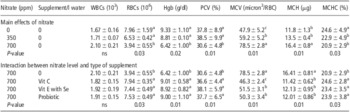
Table 1 showed the effects of different treatments on hematological constituents of blood. There was dose–response-negative effect of only 700 ppm of nitrate on RBCs, Hgb, PCV and MCHC, but the effect was linear and positive for MCV. The effect on MCH was positive only at 700 ppm of nitrate. The RBCs, Hgb and PCV were lower by 50.6%, 19.1% and 31.2%, respectively, of only group given700 ppm nitrate than those of the control group. Differences between the control group and given water contained 350 ppm nitrate were not significant.
Effects of different nitrate concentrations in drinking water and the supplementation of Vit C (200 ppm) or Vit E with Se (200 ppm + 0.2 mg) or probiotic (1000 ppm) on blood hematology of NZW rabbit bucks (mean ± s.d.)

Vit = vitamin; Se = selenium; NZW = New Zealand White; WBCs = white blood cells; RBCs = red blood cells; Hgb = hemoglobin; PCV = packed cell volume; MCV = mean cell volume; MCH = mean cell hemoglobin; MCHC = mean cell hemoglobin concentration; ns = not significant.
n = 12 observations per treatment.
a,b,cMeans within a column under similar treatment with different letters are significantly different (P ⩽ 0.05).
Addition of Vit C or Vit E with Se or probiotic significantly improved RBCs, Hgb, PCV, MCV, MCH and MCHC than those supplemented with only 700 ppm nitrate, and Vit C was the most potent agent for improving MCV.
WBCs, types of WBCs, PA and PI
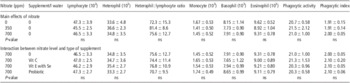
Nitrate concentration up to 700 ppm and supplementation of Vit C or Vit E with Se or probiotic had no effect on WBCs (Table 1) and differential WBCs, nor a significant difference on the percentage of heterophil, heterophil/lymphocyte ratio, PA and PI as immune indices (Table 2).
Effects of different nitrate concentrations in drinking water and the supplementation of Vit C (200 ppm) or Vit E with Se (200ppm+0.2 mg) or probiotic (1000 ppm) on differential WBC counts, phagocyte activity and phagocyte index of NZW rabbit bucks (mean ± s.d.)

Vit = vitamin; Se = selenium; WBC = white blood cell; NZW = New Zealand White; ns = not Significant.
n = 12 observations per treatment.
Biochemical constituents of blood plasma
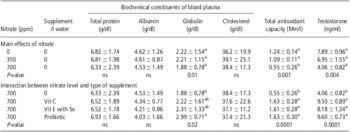
Table 3 summarized biochemical constituents of blood plasma of NZW bucks. There was a dose–response-negative effect of nitrate concentration at only 700 ppm on plasma globulin, TAC and testosterone, but differences in plasma total protein and albumin concentrations were not significant.
Effects of different nitrate concentrations in drinking water and the supplementation of Vit C (200 ppm) or Vit E with Se (200 ppm + 0.2 mg) or probiotic (1000 ppm) on biochemical constituents and testosterone of blood plasma of NZW rabbit bucks (mean±s.d.)

Vit = vitamin; Se = selenium; NZW = New Zealand White; ns = not significant.
n = 12 observations per treatment.
a,bMeans within a column under similar treatment with different letters are significantly different (P ⩽ 0.05).
Globulin of probiotic-supplemented group was significantly greater than the 700 ppm nitrate basal group. TAC and testosterone were similarly recovered because of supplementation of Vit C, E with Se and probiotic.
Seminal plasma
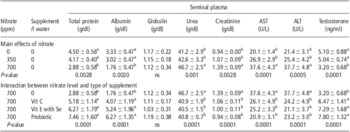
Table 4 shows the effects of different treatments on seminal plasma biochemical constituents and testosterone. There was a dose–response-negative effect of nitrate concentration at only 700 ppm on seminal plasma total protein, albumin and testosterone concentrations, but seminal plasma urea, creatinine concentrations, AST and ALT activity increased. Vit C or Vit E with Se or probiotic similarly overcomes the negative effect of high concentration of nitrate (700 ppm).
Effect of different nitrate concentrations in drinking water and the supplementation of Vit C (200 ppm) or Vit E with Se (200 ppm + 0.2 mg) or probiotic (1000 ppm) on biochemical constituents of seminal plasma of NZW rabbit bucks (mean ± s.d.)

Vit = vitamin; Se = selenium; NZW = New Zealand White; AST = aspartate aminotransferase; ALT = alanine aminotransferase; ns = not significant.
n = 10 per treatment.
a,bMeans within a column under similar treatment with different letters are significantly different (P ⩽ 0.05).
Semen quality
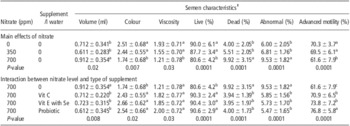
The results of semen quality of the different treatments are shown in Tables 5 and 6. There was a dose–response-negative effect of nitrate concentration at only 700 ppm on most of the semen quality traits. The results showed that semen color, semen viscosity, live sperm (%), advanced motility (%), sperm concentration and total sperm output and total live sperm were significantly lower than the control and 350 ppm nitrate-supplemented group, but other semen quality characteristics were not affected.
Effects of different nitrate concentrations in drinking water and the supplementation of Vit C (200 ppm) or Vit E with Se (200 ppm + 0.2 mg) or probiotic (1000 ppm) on age at first ejaculate and semen characteristics of NZW rabbit bucks (mean ± s.d.)

Vit = vitamin; Se = selenium; NZW = New Zealand White; ns = not significant.
†n = 7 animals per treatment.
‡n = 70 ejaculates per treatment.
a,bMeans within a column under similar treatment with different letters are significantly different (P ⩽ 0.05).
Effects of different nitrate concentrations in drinking water and the supplementation of Vit C (200 ppm) or Vit E with Se (200 ppm + 0.2 mg) or probiotic (1000 ppm) on semen characteristics of NZW rabbit bucks (mean ± s.d.)

Vit = vitamin; Se = selenium; NZW = New Zealand White.
†n = 70 ejaculates per treatment.
a,b,cMeans within a column under similar treatment with different letters are significantly different (P ⩽ 0.05).
Reproductive traits
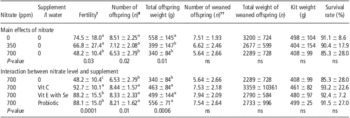
Table 7 demonstrates the effects of different treatments on reproductive traits of NZW bucks. A significant negative effect of 700 ppm nitrate concentration on most of the criteria of reproductive traits, but number of weaned offspring, the total weight of weaned offspring, kid's weight at 28 days of age and livability at 28 days of age were not affected. The supplementation of Vit C or Vit E with Se or probiotic induced a significant greater fertility (%), number of offspring and total offspring weight than 700 ppm nitrate basal group; however, Vit C induced the greatest improvement in only fertility.
Effects of different nitrate concentrations in drinking water and the supplementation of Vit C (200 ppm) or Vit E with Se (200 ppm+0.2 mg) or probiotic (1000 ppm) on reproductive traits of NZW rabbit bucks (mean ± s.d.)

Vit = vitamin; Se = selenium; NZW = New Zealand White; ns = not significant.
†Number of observations of fertility = 20 per treatment.
‡Number of offspring ranged from 130 to 170 per treatment.
††Number of weaned offspring ranged from 112 to 158 per treatment.
a,b,cMeans within a column under similar treatment with different letters are significantly different (P ⩽ 0.05).
Histopathologic examination of the testes
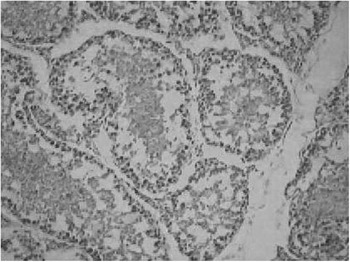
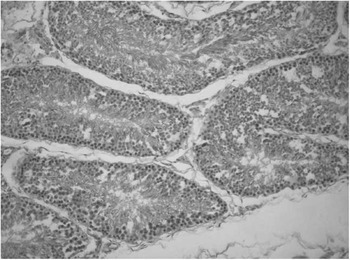
The testes of control rabbit bucks revealed normal histology with presence of normal spermatozoal contents inside the lumina of the seminiferous tubules filled with spermatogenesis (Figure 1). The testes in case of administration with 350 ppm nitrate in drinking water showed moderate changes of less spermatogenesis and vacuolation in the seminiferous tubules (Figure 2). The testes in some cases of administration with 700 ppm nitrate in drinking water showed severe changes of damaged and necrotic seminiferous tubules widely separated with edema (Figure 3), whereas in other cases severe degenerative changes with central necrosis in the seminiferous tubules appeared lined with only one layer of degenerated spermatogonial cells (Figure 4). The reaction was more prominent in the two data points at 5 and 10 months of age. The supplementation with Vit C, Vit E and Se or probiotic had a beneficial effect on reducing the severity of the abnormal testicular changes induced by administration with 700 ppm nitrate. The testes in case of supplementation of Vit C or Vit E and Se showed moderate changes of less spermatogenesis in the seminiferous tubules (Figure 5), whereas the testes in case of supplementation of probiotics showed nearly normal seminiferous tubules (Figure 6).
Testis of a rabbit in control group showing normal seminiferous tubules filled with several stages of spermatogenesis (H and E, ×100).

Testis of a rabbit administered 350 ppm nitrate in drinking water showing moderate changes of less spermatogenesis and vacuolations in seminiferous tubules (H and E, ×100).

Testis of a rabbit administered 700 ppm nitrate in drinking water showing severe changes of damaged and necrotic seminiferous tubules widely separated with edema (H and E, ×100).

Testis of a rabbit administered 700 ppm nitrate in drinking water showing severe degenerative changes of central necrosis in the seminiferous tubules that lined with only one layer of degenerated spermatogonial cells (H and E, ×100).

Testis of a rabbit administered 700 ppm nitrate and 200 mg Vit C in drinking water showing moderate changes of less spermatogenesis in the seminiferous tubules (H and E, ×100).

Testis of a rabbit administered 700 ppm nitrate and 1 g probiotics in drinking water showing nearly normal seminiferous tubules (H and E, ×100).

Discussion
Nitrate effects
Nitrate up to 350 ppm had no harmful effect on RBCs, Hgb and the PCV, but 700 ppm did, and this concurred with adaptive changes in MCV, MCH and MCHC. These are in agreement with those obtained by Kammerer and Siliart (Reference Kammerer and Siliart1993), Mahboob et al. (Reference Mahboob, Sherif, Shakoori, Raza and Andleeb2001) and Bassuny et al. (Reference Bassuny, Shehata, Bahgat and Mohamed2004). The negative effect of 700 ppm nitrate on hematological traits could be explained, first, by an increase in the activity of the endothelial heme oxygenase by nitric oxide, which degrades heme to carbon monoxide and biliverdin (Foresti et al., Reference Foresti, Clark, Green and Motterlini1997). Second, by the formation of peroxynitrite, which reduces the production of the rabbit tissue factor, a primary initiator of physiological blood coagulation (Nielsen and Crow, Reference Nielsen and Crow2004). Nitric oxide produced in the lung causes injury to pulmonary cells (Gow et al., Reference Gow, Thom and Chiropoulos1998). However, Shehata (Reference Shehata2005) found that addition of 729 mg nitrate/l of drinking water of growing NZW female rabbits significantly decreased RBCs and Hgb. In addition, Abd El-Hamid (Reference Abd EL-Hamid2006) found a decrease in the Hgb concentration in quails drinking waste water, which could be attributed to excessive amounts of nitrites that oxidize the iron in Hgb to methemoglobin and reduce the oxygen-carrying capacity of the blood (National Research Council (NRC), 1974; Hairston, Reference Hairston1995). High nitrate intakes can cause methemoglobinemia (blue baby syndrome) in infants, which reduces the ability to the blood to carry oxygen (Bassuny et al., Reference Bassuny, Shehata, Bahgat and Mohamed2004).
Similar to the present results, Bassuny et al. (Reference Bassuny, Shehata, Bahgat and Mohamed2004) and Shehata (Reference Shehata2005) found that nitrate addition at 729 ppm significantly decreased total protein, albumin and globulin. The decrease in plasma total protein, albumin, globulin and TAC may be due to formation of nitric oxide or peroxynitrite, which oxidizes proteins and lipoproteins (Gow et al., Reference Gow, Thom and Chiropoulos1998; Guzik et al., Reference Guzik, West, Black, Mcdonald, Ratnatunga and Channon2000). The decrease in globulin caused by nitrate at 700 ppm may indicate an immunodepressive response (Atef et al., Reference Atef, Abo-Norage, Hanafy and Agag1991). However, the present findings indicated that WBCs and their fractions, PA and PI, were not significantly affected by nitrate concentration up to 700 ppm, and thus antioxidants did not show any effect.
The changes in blood profiles indicate that 700 ppm nitrate-induced hypercholesterolemia indicates vascular disease and endothelial dysfunction caused by nitric oxide and superoxide (Guzik et al., Reference Guzik, West, Black, Mcdonald, Ratnatunga and Channon2000). Furthermore, the same dose of nitrate negatively affected seminal plasma total protein, albumin and testosterone while increasing seminal plasma urea, creatinine, AST and ALT. The change in blood and seminal plasma testosterone concentration is coincided with the alternations observed in the testes histopathology, which could explain its toxic effects of nitrate on semen quality, fertility and offspring performance. Nitrate at only 700 ppm impaired age at first ejaculation, whereas the increase in ejaculate volume could be explained by the decrease in semen viscosity, as semen tended to be watery. The marked decrease in fertility (35.3%), number of offspring (23.3%) and total weight of offspring (39.1%) could be explained by the toxic effect of nitrate on sperm vitality. Similarly, Brun et al. (Reference Brun, Theau-Clément and Bolet2002) found that the mass motility (number of motile sperm per ejaculate) significantly influenced the fertility rate, and this agreed with the decrease in motility observed in bucks supplemented with 700 ppm nitrate. In addition, Edwards and Guillette (Reference Edwards and Guillette2007) reported that increasing nitrate concentration up to 5 mg/l decreased total sperm counts per spermatozeugmatum.
Effect of antioxidants and probiotic
The Vit C or Vit E with Se as an antioxidant and probiotic as an enhancer of the gut function similarly improved TAC, RBCs, Hgb and PCV of NZW bucks; in addition, probiotic improved blood plasma globulin. Similar results were reported by Hirneth and Classen (Reference Hirneth and Classen1984), who observed that Vit C inhibited the production of plasma nitric oxide and methemoglobin in female rats fed a diet containing 5% NaNO3. The improvement caused by Vit C may be because of the stimulation of the immune system, which results in an increase in the corticosterone (Rama Rao et al., Reference Rama Rao, Nagalakshmi and Reddy2002) and reduced endogenous formation of N-nitrosodimethylamine and N-nitrosopiperidine from nitrate (Vermeer et al., Reference Vermeer, Monnen, Dallingam, Kleijans and Van Maane1999). Umar et al. (Reference Umar, Toma, Akombum, Nnadi, Mahdi, Gidado, Igbokwe and Buratai2010) also reported similar results when Vit C or Vit E was supplemented to rabbits. In addition, Castellini et al. (Reference Castellini, Lattaioli, Dal Bosco, Minelli and Mugnai2003) and Yasmina and Abdennour (Reference Yasmina and Abdennour2008) concluded that Vit C protected testicular tissues and sperms from mercury intoxication and inhibited the oxidative stress increased glutathione concentration and improved quality of fresh and stored rabbits’ semen.
In addition to the improvements in blood plasma biochemical indices, Vit C or Vit E with Se or probiotic supplementation also overcame the negative effect of 700 ppm of nitrate on seminal plasma total protein, albumin, urea, creatinine, testosterone, AST and ALT activity. These results are in agreement with the works of Castellini et al. (Reference Castellini, Lattaioli, Barnardini and Dal Bosco2000 and Reference Castellini, Lattaioli, Dal Bosco and Beghelli2002). The protective effect of Vit E against the adverse effect of nitrate/nitrite could be attributed to its ability to reduce peroxynitrite (ONOO–) formation, whereas Se exerts its protective influences through seleno-enzymes/compounds, which reduce ONOO– formed (Chow and Hong, Reference Chow and Hong2002). This could explain the improvement in semen quality and fertility of Vit C or Vit E with Se or probiotic-supplemented group compared with the control group. These novel findings indicated that Vit C and Vit E with Se as an antioxidant or probiotic as gut function enhancer eliminated the negative effect of nitrate on most of the semen quality and reproductive traits (fertility, number of offspring and total offspring weight), and this concurred with increasing plasma TAC, which indicated an increase in body antioxidant reserve and/or a decrease in oxidative stress. The positive effect of these agents included an increase in Hgb, blood plasma globulin, RBCs and PCV% and increasing testosterone (Castellini et al., Reference Castellini, Lattaioli, Barnardini and Dal Bosco2000; El-Kelawy, Reference EL-Kelawy2003). In addition, Brun et al. (Reference Brun, Theau-Clément and Bolet2002) found that the mass motility (number of motile sperm per ejaculate) significantly influenced the conception rate and this agree with the increase in advanced motility observed of bucks supplemented with Vit C, E with Se and probiotic. It should be mentioned that the potentiality of the different agents used was similar; however, fertility of Vit C was superior to the other agents and this could be attributed to its effects as an antistress and an antioxidant. Similar to the present findings, Martarelli et al. (Reference Martarelli, Verdenelli, Scuri, Cocchioni, Silvi, Cecchini and Pompei2011) reported that probiotic strains (1 : 1 L. rhamnosus IMC 501 and L. paracasei IMC 502; ∼109 cells/day) and probiotic supplementation increased plasma antioxidant levels, thus neutralizing reactive oxygen species. The two strains, L. rhamnosus IMC 501® and L. paracasei IMC 502®, exert strong antioxidant activity.
In addition, supplementation of Vit C or Vit E with Se and probiotic had a beneficial effect on reducing the severity of the changes within the somniferous tubules and improve testicular picture, as observed in histological study. Similarly, Masukawa and Iwata (Reference Masukawa and Iwata1979) showed that selenite decreases nitrite-induced mortality in a dose-dependent manner, and suggested that the protective effect is because of its action in reducing methemoglobin formed by nitrite. These earlier findings indicate a critical role of dietary Vit E and Se in preventing the adverse cellular effects of nitrite. The available information, concerning the interrelationship among nitrite, Vit C, E, Se or probiotic on eliminating the free radicals NO, superoxide and ONOO, has provided a better insight of the protective effects of Vit C, E and Se or probiotic against nitrite toxicity observed (Masukawa and Iwata, Reference Masukawa and Iwata1979). The positive effect of probiotic could be attributed to the change in gut microbiota toward beneficial ones, which could utilize nitrate for growth and thus detoxication of nitrate.
Conclusion
In conclusion, 350 ppm of nitrate had no harmful effect on reproductive and physiological traits of bucks and histopathological changes of testes, although increasing nitrate concentration to 700 ppm negatively affects the aforementioned criteria. Furthermore, supplementation of Vit C, Vit E with Se or probiotic was equally effective for relief the negative effects of 700 ppm of nitrate offering protective agents for rabbits producers in area with high nitrate contamination.