Introduction
In Australia, financial counselling has emerged as an important component of policy responses to assist households in financial stress. However, the evidence on its effectiveness in alleviating or resolving debt-related issues is patchy. This article presents the findings of a national Australian empirical study of 225 financial counselling clients on the impact of financial counselling for low income households, and considers the implications for social policy trajectories in terms of the assistance provided to the least advantaged members of society.
Financial stress is an ongoing social and economic problem that causes individual hardship and affects the wider community (Schetzer, Reference Schetzer2007; Nelthorpe and Digney, Reference Nelthorpe and Digney2011; Russell, Bailey et al., Reference Russell, Bailey and Wall2011; Russell, Wall et al., Reference Russell, Wall and Doan2011). On a societal level, it is linked to social and financial exclusion, poverty and deprivation (Connolly and Hajaj, Reference Connolly and Hajaj2001; Chant Link and Associates, 2004; Engels et al., Reference Engels, Nissim and Landvogt2009). Financial stress affects 19 per cent of Australians (ABS, 2010), and 12.8 per cent of the population live below the poverty line (ACOSS, 2012a). People relying on government payments and allowances as their main source of income are particularly susceptible and constitute betweeen 80 and 90 per cent of recipients of emergency relief and financial counselling services (Brackertz, Reference Brackertz2012; Wise and Wilks, Reference Wise and Wilks2012; Homel and Ryan, Reference Homel and Ryan2013; Salvation Army, 2013). This is not surprising, as compared to wages the single rate of Newstart Allowance is the lowest unemployment payment in the OECD, at just 40 per cent of a low full-time wage after tax (ACOSS, 2012b).
Financial stress can mean that people miss out on essential consumption, experience negative health outcomes (Drentea, Reference Drentea2000; Jacoby, Reference Jacoby2002; Balmer et al., Reference Balmer, Pleasence, Buck and Walker2006; Fitch et al., Reference Fitch, Hamilton, Bassett and Davey2011) and find it difficult to cope. Household financial stress negatively impacts on children, with studies showing that 72 per cent of children of families seeking emergency relief experience recurrent food insecurity (Wise and Wilks, Reference Wise and Wilks2012: 38–40), 39 per cent cannot afford up to date school books and 37 per cent cannot afford to participate in school activities and outings (Salvation Army, 2013).
Social policy responses to disadvantage are shaped by assumptions about the roots of and remedies for poverty, ranging from individual responsibility to rights-based views that emphasise society's collective responsibility towards those who are less fortunate. Ideas about poverty that distinguish the ‘deserving poor’ (the elderly, ill and disabled) from the ‘undeserving poor’ (all those of working age who are not working) will engender different policy approaches than will conceptualisations that highlight the multiple interlinked factors that contribute to poverty (individual, social and structural) and the kinds of longitudinal interventions that may address these. These issues are acutely felt in debates around the provision of income security and the best ways to assist people experiencing financial stress.
Australia's social policies for income security emphasise individual responsibility and mutual obligation, i.e. the duty of welfare recipients to seek work in order to continue receiving income support, over individual rights or collective responsibility. This was most recently demonstrated in early 2013, when single parents whose youngest child had turned eight years of age were shifted from the sole parenting payment onto the less generous Newstart unemployment benefit.
This trend is also evident in the types and modalities of debt and money management advice aimed at low income households, which favour programmes that promote individual responsibility and self-sufficiency via financial literacy and low income saving schemes. However, for many of the most vulnerable individuals such an approach is not realistic, as their financial stress is often not caused by irresponsible spending or poor budgeting, but is rooted in complex and intertwined personal, environmental and structural factors (Kempson, Reference Kempson2002; Edwards, Reference Edwards2003; Pleasence et al., Reference Pleasence, Buck, Balmer and Williams2007) that they find difficult to overcome on their own.
Even within the current policy environment, some services take a holistic and systemic view of financial stress and include an advocacy component, aiming to empower individuals to navigate their financial difficulties, resolve attendant legal problems and address issues in other areas of their life. One such service is the financial counselling model incorporating a case management approach, as practised in Australia.
Financial counselling is a relatively minor and often misunderstood programme, but the available evidence, limited as it is, suggests important benefits. This article presents the findings of the first nationwide Australian study on its impact on low income, vulnerable individuals who are experiencing financial stress.
The first part of this article provides the policy context and outlines Australian and international models of financial counselling and debt advice. This is followed by a discussion of key concepts underpinning the survey instrument. The research findings demonstrate the complex factors contributing to financial stress and the effectiveness of financial counselling in providing positive outcomes on a range of measures, including debt resolution, financial capability and health and wellbeing, and highlight the importance of early intervention. The conclusion considers the policy implications.
Financial counselling models and policy context
In Australia, the post-war social welfare state aimed to produce equality of outcomes (a ‘fair go’ for all) through redistributive means and the passive protection of benefits and rights. This was challenged in the 1990s by the emergence of an aggressive slant of neo-liberalism that emphasised the market as the most effective mechanism for redistribution, and viewed social spending as wasteful and a source of dependency on the basis that generous ‘handouts’ would discourage people from seeking work and lead them to become welfare dependent. While the neo-liberal view still holds sway, it is now progressively being transformed by ideas about social investment that seemingly offer a third way between the post-war welfare state and neo-liberalism (Perkins et al., Reference Perkins, Nelms and Smyth2004; Smyth, Reference Smyth2007). This social investment perspective emphasises the need to overcome disadvantage through individual responsibility, investment in human capital and social inclusion through economic work (Giddens, Reference Giddens1998; Lewis and Surender, Reference Lewis and Surender2004). In this way, it aims to integrate the economic and social dimensions of policy by supporting programmes that advance economic development. The core underlying idea is that social policy should not focus on ‘passively’ protecting people from the perils of the market through cash handouts, but rather should aim to integrate them into the market via productive economic work (Jenson and Saint-Martin, Reference Jenson and Saint-Martin2003).
Recent Australian social policy has prioritised financial literacy, with a focus on money management information and education, as a primary mechanism to address financial stress and over-indebtedness, driven in part by the banking sector's reassessment of its community service obligations. The establishment of the Financial Literacy Taskforce in 2004 was a major milestone, followed by the formation of the Financial Literacy Foundation in 2004 and in 2011 by the release of the National Financial Literacy Strategy (ASIC, 2011). These policies emphasise individual responsibility in achieving financial self-sufficiency and in overcoming barriers or obstacles. However, such goals may be unrealistic if the ‘social conditions for autonomy’ (Grahame and Marston, Reference Grahame and Marston2012; Smyth, Reference Smyth2012) cannot be met.
Concurrently, yet quietly and on a much smaller scale, financial counselling has been offering social justice-based individualised assistance to some of the most disadvantaged members of society. In their comprehensive comparison of Australian, UK and US systems to address consumer financial stress, Livingstone et al. (Reference Livingstone, Bruce, Kotnik and King2009: 2) found that there are important differences in approaches to delivering financial counselling and concluded that the Australian system ‘almost certainly represents world's best practice at present’. However, the evidence on the effectiveness of financial counselling in alleviating or resolving debt-related issues is equivocal internationally, and in Australia there have been only two empirical studies in the past ten years.
Financial counselling models vary internationally in approach, scope and context. The model prevalent in Australia has evolved since the 1970s from an ‘emergency relief’ model, where short-term material support was typically provided by a welfare agency to the client, towards the contemporary model founded on a community development approach underpinned by social justice principles. The present-day model combines advocacy, empowerment, education and service linkage functions, with a view to providing short-term crisis management as well as longer-term and prevention strategies (Pentland, Reference Pentland2006). Financial counsellors work in around 100 government-funded services, predominately not-for-profit (NFP) agencies (FaHCSIA, 2012). Most counselling is delivered face to face, but telephone counselling is becoming increasingly popular. Advice is free, confidential and independent, ensuring that there is no conflict of interest. State and national peak organisations engage in law reform, community education and professional development, but the system is hampered by inadequate and precarious funding, lack of career pathways, limited workforce development (Guthrie, Reference Guthrie2012) and lack of a comprehensive policy framework to underpin a whole of government response to financial stress.
Financial counselling is bundled with other policy tools under the Commonwealth Financial Counselling (CFC) service strategy within the Australian Government's Financial Management Program (FMP) (FaHCSIA, 2012). The financial counselling programme is jointly funded by the Commonwealth (Figure 1) and State and Territory governments, with States and Territories providing the lion's share (63 per cent in 2010/11).Footnote 1 The distribution of funds is uneven and there are wide disparities when viewed on a per capita basis (Figure 2). Many NFPs internally fund financial counselling services.
Commonwealth Financial Counselling total funding (excluding GST) 2003–13
Source: Email from FaHCSIA, 30 October 2012.

Commonwealth, State and Territory funding for financial counselling on a per capita basis 2010/11
Source: Financial Counselling Australia.
There are around 900 financial counsellors Australia-wide (Guthrie, Reference Guthrie2012), available to assist the 2.2 million Australians who live below the poverty line (ACOSS, 2012a). Even if only a proportion of these require financial counselling, it adds up to an unmanageably large number of clients for every financial counsellor, which clearly illustrates the level of underfunding.
In contrast to Australia, the US system focuses primarily on debt restructuring and credit counselling, and services frequently operate on a business basis. The system exhibits limited cohesion in regulation and low levels of consumer education on harm prevention regarding the provision of credit and related financial stress (Livingstone et al., Reference Livingstone, Bruce, Kotnik and King2009). The UK model has greater similarities with Australia in terms of the modalities and types of services provided. Until early 2011, the UK had a high level of commitment to developing consumers’ financial capability and achieving financial inclusion. This was matched by a research agenda and research infrastructure for the sector that facilitated a consistent approach to data capture to evidence the outcomes of financial counselling, an approach that is lacking in Australia. However, recent funding cuts are endangering the ongoing existence of many of the UK's financial counselling services, especially the more expensive to provide face-to-face delivery model, in favour of cheaper telephone services, internet tools and provision of written consumer education material.
Evidence on the impact of financial counselling
Most research on the impact of financial counselling originates in the UK. Studies in the 1990s indicated that debt advice leads to short-term alleviation of financial pressures, but that over time debt problems resurface, especially in low income households as these struggle to maintain payment plans (Hinton and Berthoud, Reference Hinton and Berthoud1988; Mannion, Reference Mannion1992; Jones et al., Reference Jones, Wainwright and Doling1993; Money Advice Trust, 1999). Recent research underlines the positive short-term impact of debt advice (Muller et al., Reference Muller, Trier-Damgaard, Devnani and Stonehouse2012; Stamp, Reference Stamp2012) and, although evidence remains patchy, is more optimistic about the intermediate and longer-term effects, pointing to enduring positive effects not only on clients’ financial situation, but also on their health, wellbeing and outlook for the future (Balmer et al., Reference Balmer, Pleasence, Buck and Walker2006; Pleasence et al., Reference Pleasence, Buck, Balmer and Williams2007; Turley and White, Reference Turley and White2007; Orton, Reference Orton2010).
Australian evidence on the impact of financial counselling is scant. The only recent substantive empirical research was conducted by Schetzer (Reference Schetzer2007, Reference Schetzer2008) and had a specific focus on the State of Victoria. Schetzer aimed to determine whether access to advice helped debtors with the resolution of consumer debt-related problems. The study found that even though people often presented with complex problems involving multiple debts and were socially and economically disadvantaged, 65 per cent of participants benefited from financial counselling, and indicated that their matters had been resolved.
A study conducted on behalf of Consumer Affairs Victoria and the Department of Justice (bluemoon research + planning, 2007) was more modest. Based on thirty face-to-face or telephone interviews with financial counselling recipients in Victoria, the study found that short-term outcomes were achieved in all cases. These included debt consolidation and waiver, and uptake of government support. Clients benefited through reduced stress, improved self-esteem and empowerment. In some cases, longer-term outcomes were also achieved in relation to financial literacy and capability, enabling clients to tackle future financial difficulties without the help of financial counselling.
Financial capability
Financial education is a key theme in financial literacy. The Australian Government's National Financial Literacy Strategy defines this as the ‘ability to make informed judgements and to take effective decisions regarding the use and management of money’ (ASIC, 2011). However, knowledge does not necessarily change behaviour, as financial literacy alone cannot guarantee the resolution of financial difficulties if there are systemic factors, such as inadequate incomes and housing price inflation.
To account for these issues, many writers have advocated that an individual's behaviour should be understood according to context and not be solely based on their financial knowledge (Green et al., Reference Green, McAllister and Tarte2004; Kempson et al., Reference Kempson, Collard and Moore2005; Russell, Bailey et al., Reference Russell, Wall and Doan2011; Turnell, Reference Turnell2012). This is embodied in the concept of financial capability, which was adopted for this study. The most widely recognised framework was developed by Atkinson et al. (Reference Atkinson, McKay, Kempson and Collard2006). Its four key aspects are: managing money, including making ends meet and keeping track of expenses; planning ahead, being prepared for unexpected events and planning for the future; choosing products, knowing about financial products, being aware of risk; and staying informed, keeping up to date with new financial products or changes to existing ones, knowing where to access relevant information.
Full participation in economic life also requires, in addition to financial capability, the opportunity to act on these capabilities. Consequently, provision of adequate structural elements, such as consumer protection and appropriate and affordable financial products and services, are necessary, alongside adequate income support and regulation. This underlines the key role institutions and policies have in creating a fair and equitable structural environment to enable people's autonomous choices.
Causes and symptoms of debt and deprivation
The demand for financial counselling is driven by a combination of low income, indebtedness and credit as a way of life. However, the need for financial counselling cannot be considered solely as a matter of debt and poor money management. Financial stress rarely stems from one isolated reason, and its effects are interconnected and complex and any number of stressful life events can either cause or result from financial difficulties. Frequently individual, environmental and structural issues conspire to place low income, marginalised or vulnerable individuals, families and groups in precarious financial situations. Debt problems stem from a variety of causes, including changing circumstances, ill health, relationship breakdown, loss of employment, parenthood, credit over-commitment and poor money management (Kempson, Reference Kempson2002; Edwards, Reference Edwards2003; Pleasence et al., Reference Pleasence, Buck, Balmer and Williams2007). Debt problems are a significant cause of anxiety (Drentea, Reference Drentea2000; Reading and Reynolds, Reference Reading and Reynolds2001; Jacoby, Reference Jacoby2002), and the literature consistently identifies a link with physical and mental illness (Stansfeld et al., Reference Stansfeld, Fuhrer, Shipley and Marmot2002; Pleasence et al., Reference Pleasence, Buck, Balmer and Williams2007; Wesley Mission, 2010; Fitch et al., Reference Fitch, Hamilton, Bassett and Davey2011; Nelthorpe and Digney, Reference Nelthorpe and Digney2011). Debt also negatively impacts on relationships with family and friends (Nettleton et al., Reference Nettleton, Burrows, England and Seavers1999; Kempson, Reference Kempson2002), work, social networks, housing status, employment, education and plans for the future, making it hard to carry on living normally (Pleasence et al., Reference Pleasence, Buck, Balmer and Williams2007). Many people with debt problems lead unstable lives and move house frequently, and it is often a combination of events that provides the trigger for a debt crisis, with disadvantage being both a contributor to, and a symptom of, debt problems (Schetzer, Reference Schetzer2007; Nelthorpe and Digney, Reference Nelthorpe and Digney2011).
When debt problems are considered in context, it is not surprising that many people may not make debt their priority until it reaches crisis point. Consequently, assistance to resolve debt issues often involves resolving other difficulties. It is not unusual for people to experience a cycle of debt during which causes mount and increase.
Research design and method
The research aimed to establish recipients’ perceptions of the impact of financial counselling, as well as their circumstances, behaviours and wellbeing (psychological and physical). A survey was used to measure financial capability and wellbeing modelled on indicators from three tested frameworks (Atkinson et al., Reference Atkinson, McKay, Kempson and Collard2006; Cummins et al., Reference Cummins, Woerner, Tomyn, Gibson and Knapp2006; Saunders et al., Reference Saunders, Naidoo and Griffiths2007), and to collect socio-economic and demographic characteristics, as well as data on life and environmental stressors contributing to financial stress.
This study is the first empirical national study of the effectiveness of financial counselling in Australia. It presents the responses of 225 clients of a major provider of financial counselling services, the Salvation Army. Of the 1,200 surveys sent out to forty-eight sites in each State and Territory, 225 completed questionnaires were returned by the closing date. While a response rate of 5.34 per cent may normally be low, in this instance it is considered a success as respondents are among the least advantaged members of society, who can be difficult to engage in research, with many experiencing literacy and language barriers. To ensure representativeness of the sample, respondent socio-economic and demographic characteristics were matched with the Salvation Army's 10,000 strong national database of recipients and the survey sample was found to be representative of the overall population. Consequently, survey responses can be seen to be representative of the Salvation Army's financial counselling clients nationally.
The sample was selected randomly and is homogenous. With a sample size of 225 the sample error at the 95 per cent confidence level is estimated to be approximately 6.5 per cent (De Vaus, Reference De Vaus2002: 81) and was considered to be sufficiently robust for statistical analysis. Statistical analysis was carried out using SPSS.
A short, voluntary, anonymous and confidential paper-based survey was administered to individuals accessing the Salvation Army's financial counselling services nationwide between 1 July and 3 August 2012. Due to the sensitive nature of the issues, and because many potential respondents are hard to reach for research purposes (low income, marginalised and vulnerable persons), a number of practical and methodological challenges had to be overcome.
It was anticipated that up to 40 per cent of clients would not be able to complete the survey on their own because of low literacy, insufficient English language skills or the impact of chaotic lives. In order to capture a representative sample, financial counsellors were asked to assist some clients to complete the survey. Financial counsellors were directed to ask all individuals over the age of eighteen (except first-time users of the service and persons who may experience emotional or psychological trauma as a result of answering the questions) using the service during the survey period whether they would like to participate. Clients were given the option to complete the survey while waiting for their scheduled appointment and could consult with the counsellor if there were questions they did not understand, or if they had literacy or language issues. Clients could then seal the completed survey in a pre-paid and addressed envelope and give it to their financial counsellor (who then forwarded it to the researchers) or post their response themselves.
One site was a telephone counselling service, and in this instance clients fitting the respondent profile were sent a copy of the survey in the mail. Based on this precedent, other sites experiencing difficulties administering surveys face-to-face due to time constraints were also offered the option of mailing out surveys to regular clients, an offer that was taken up by seven sites.
The research was commissioned by the Salvation Army with funding from Westpac, and conducted by researchers at Swinburne Institute for Social Research at Swinburne University. The research was cleared by the Swinburne Human Research and Ethics Committee.
Respondent profiles
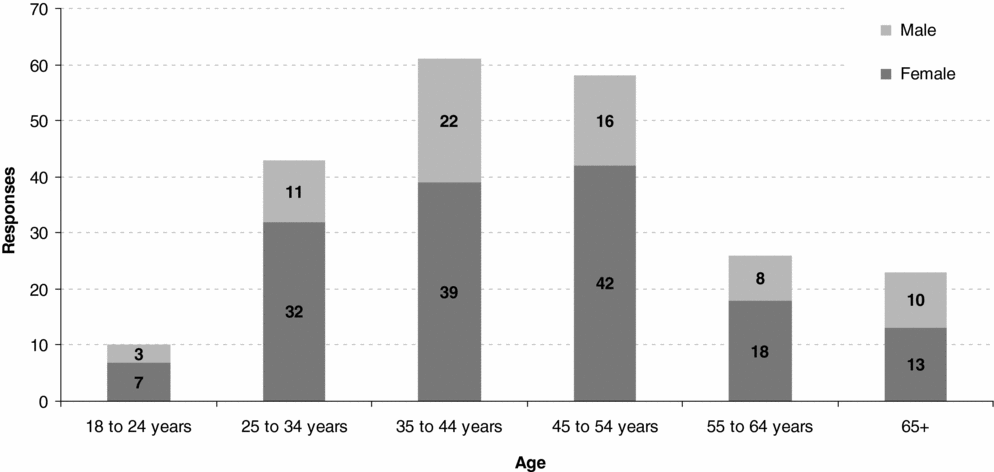
The survey elicited 225 responses, of which 67 per cent were from women (n = 151), 31 per cent from men (n = 70) and 2 per cent of respondents did not state their gender (n = 4). Most respondents (52.9 per cent) were thirty-five to fifty-four years of age with 19.1 per cent aged from twenty-five to thirty-four (Figure 3). This suggests two important things. Women are more likely to seek assistance in alleviating debt on behalf of themselves and their households. Secondly, households are vulnerable to financial stress in the middle years of adulthood (thirty-four to fifty-four) when caring for others often conflicts with work. This is consistent with findings from research on who seeks emergency relief because they are finding it hard to make ends meet (Engels et al., Reference Engels, Nissim and Landvogt2009).
Number of respondents by age and gender (n = 221)
Most respondents (84 per cent) spoke English at home, which is similar to the overall Australian population (80 per cent) (ABS, 2011). Respondents were almost three times more likely to indicate that they were Aboriginal or Torres Strait Islanders (7 per cent) than the general population (2.5 per cent), pointing to high levels of financial stress within that community.
The main source of income for most respondents was a government allowance or pension (79.1 per cent), with a smaller proportion (14.7 per cent) earning wages or a salary.
For low income earners, the cost of housing is a key contributor to financial stress. Most respondents were private renters (39.1 per cent) or were paying off a mortgage (20.9 per cent). Public or community housing renters constituted 21.8 per cent of respondents. Few owned their home outright (4.9 per cent) or lived with relatives (3.6 per cent) or friends (1.3 per cent). Only a small proportion were living in transitional housing, crisis/short-term accommodation or a caravan/car (1.3 per cent each).
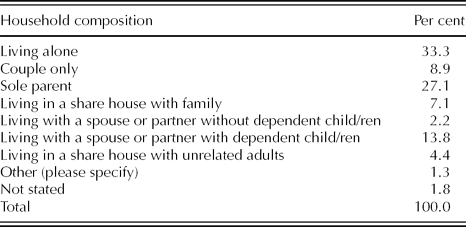
The susceptibility of lone person households and sole parents to financial stress is borne out by respondents’ household composition, which showed that most lived alone (33 per cent), or were sole parents (27 per cent) (Table 1).
Household composition (n = 225)
Debt profile
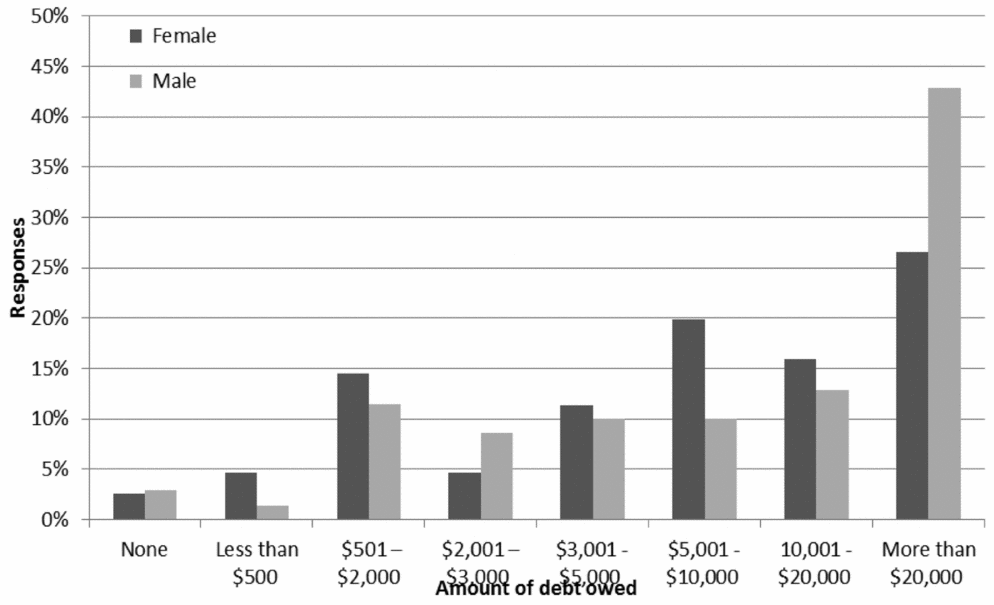
Respondents were asked to estimate their level of debt from all sources, excluding their mortgage, but including credit cards, store cards, car loans, rental arrears, gas or electricity arrears and loans from banks and friends. The median amount of debt owed was $5,000 to $10,000, but a third had debts in excess of $20,000. Men (42.9 per cent) were statistically more likely to owe over $20,000 than were women (26.5 per cent) (chi square = 6.75, p = 0.034). Women were more likely to owe sums ranging from $3,100 to $20,000 (Figure 4).
Amount of debt owed by gender (n = 221)
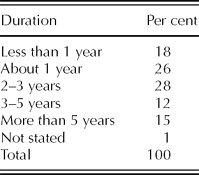
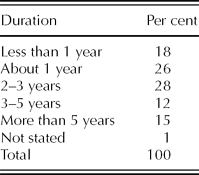
More than half of respondents (56 per cent) experienced two years or more of financial stress (Table 2). Men were more likely to have been in debt for a long time, with 20 per cent reporting that they had experienced financial stress for more than five years, compared to 11.9 per cent of women.
How long have you been experiencing financial difficulties? (n = 225)
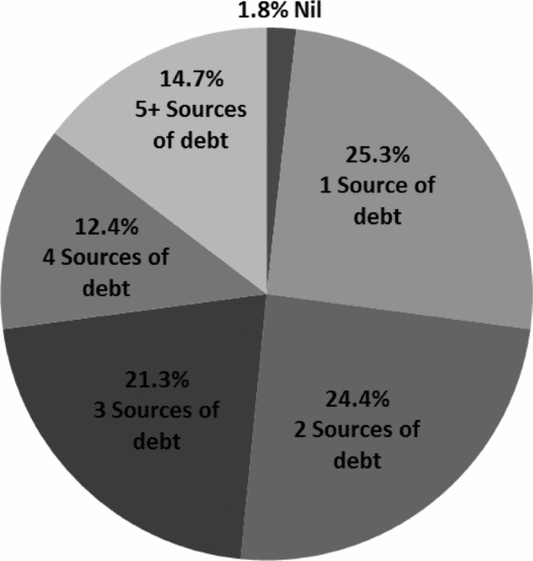
Most respondents had multiple sources of debt (Figure 5), for example, utilities (56 per cent) and credit or store cards (42 per cent) (Figure 6).
Number of sources of debt (n = 225)
Sources of debt (n = 225)
Differences were observed between men and women on some key items. Women were more likely to nominate costs associated with running a household, such as utilities (60 per cent) and telephone/ICT debts (32 per cent) (47 per cent and 21 per cent of men, respectively). Men more frequently nominated debts to lending agencies, such as personal loans (25 per cent), mortgage repayments (29 per cent) and payday loans (16 per cent) than did women (20 per cent, 16 per cent and 9 per cent, respectively). It is difficult to speculate on the reasons for this difference. It may be that women are more likely to seek financial counselling for outstanding bills, rather than seeking further credit. With a large proportion of female respondents being sole parents or living alone, it is suggested that many will be in receipt of allowance payments which may present as a major barrier to accessing loans.
Causes and symptoms of financial stress
A range of personal, circumstantial and structural factors (stressors), not all of which are directly related to money management, can either cause or result from financial stress. These stressors are cumulative, and the more a person experiences in a given period of time, the more likely they are to be in financial stress. To capture this, respondents were asked to indicate from a multiple response list the stressors they had experienced in the past year.
Results showed that 9 per cent of respondents experienced no stressors and 29 per cent, one to two stressors. The majority (41 per cent) experienced three to five stressors in the past year, with 22 per cent experiencing a high six to nine stressors. Perhaps not surprisingly, 68 per cent had felt stressed about the future and 41 per cent had experienced harassment from creditors (Figure 7).
Stressors experienced in the past twelve months (n = 225)
When grouped, stressors relating to health were most prevalent, followed closely by events related to credit/dissaving measures, reduced income and family issues. Substance abuse and gambling constituted only 6 per cent of responses, possibly because there are specialist gambling counselling services, which were not included in the sample, in a number of states.
When the number of stressors a person was experiencing was linked with the amount of time they had been in financial stress, a clear relationship became evident. Clients who had been experiencing financial difficulties for longer than one year were, on average, likely to experience higher levels of stressors than people who were in financial difficulties for less than a year (t(218) = 2.18, p = 0.03, CI = –1.4, –0.07), indicating that stressors are cumulative and that the longer a person remains in debt, the harder it becomes to break out of the debt cycle (Figure 8).
Number of stressors by duration of financial difficulty (n = 225)
The impact of financial counselling
Although most respondents experienced multiple sources of debt, persistent financial stress, low incomes and complex personal and environmental situations, survey data showed that respondents perceived financial counselling to be effective on a number of dimensions directly and indirectly linked to financial stress, such as debt resolution or alleviation, financial capability and health and wellbeing. The fact that 94 per cent agreed or strongly agreed that they would be willing to seek help sooner as a result of attending the financial counselling service attests to its efficacy.
Respondents were asked to indicate their agreement on a five point scale (strongly agree to strongly disagree) with a series of statements describing possible financial counselling outcomes.
The time a person was in financial difficulty before seeking help affected how effective the service was in resolving their debt problems, and many (44 per cent) waited a year or more after the onset of financial stress before seeking financial counselling. Two-thirds of respondents agreed or strongly agreed that financial counselling had helped to resolve their financial difficulties (Figure 9), but only 60.3 per cent of those who had experienced long-term financial stress answered favourably, compared to 72 per cent of those who had experienced financial difficulties for a year or less. This shows that seeking financial counselling early on in a financial crisis increases the likelihood of resolving debt problems as the person is likely to experience fewer stressors contributing to their difficulties. It also demonstrates the persistent nature of debt problems for people on low incomes.
Financial counselling outcomes (n = 225)
Other indicators of debt alleviation were also favourable. More than two-thirds (68 per cent) of respondents agreed or strongly agreed that ‘My financial situation has improved’, 53 per cent thought that ‘Advice helped me avoid bankruptcy’ and 51 per cent indicated ‘My housing situation is more secure’.
A similarly positive response was evident in perceptions of the service's advocacy function. Almost three-quarters agreed or strongly agreed that ‘Advice helped me avoid or curtail legal action’ and ‘I now have access to creditors’ hardship programs’. The service aided 59 per cent of clients in accessing utility relief grants and 48 per cent had debts or fines waived or reduced. This attests to its efficacy in alleviating acute financial stress and ameliorating the legal consequences of debt by advocating on behalf of clients.
A mixed response was evident on measures of financial capability. On the positive side, almost all respondents (94 per cent) indicated that they would be willing to seek help sooner, which shows that their experience with the service made a positive difference, and that they now knew where to seek help and information in a financial crisis. Respondents felt they were better able to prioritise debt (75 per cent) and to budget (74 per cent). A large proportion had more awareness of their benefits and entitlements (70 per cent) and were better able to choose appropriate financial products (62 per cent), demonstrating the educational benefits of financial counselling in terms of helping people to manage their money, choose products and stay informed.
Over a third of clients (37 per cent) felt that they were now better able to save. Given the limited financial resources of most of the survey cohort, this represents a significant achievement. The fact that more people did not feel able to save suggests that as a means of planning ahead for unforeseen circumstances, saving on a limited income is not only a function of financial capability. Saving may not be a realistic option given the limited financial resources of many clients.
Just over a third (36 per cent) of respondents indicated that they had access to low interest or no interest loans (NILS) as a result of using the service. This is a positive outcome for people whose acute financial stress may be due to, or exacerbated by, the need for an essential household item. There are a number of possible reasons why this number is not higher. NILS may not be appropriate for a number of clients, or may not meet the credit needs of certain types of clients, and very limited incomes and poor credit history may prevent some from accessing NILS.
These results show that while individuals can make great strides in improving their financial capability, there are underlying structural factors that pose barriers to people on low incomes, such as the adequacy of allowance payments income and the availability of suitable credit and financial products.
Financial counselling also had positive flow-on effects for health, with 45 per cent of respondents indicating that their physical health had improved. Mental health and wellbeing outcomes were even more pronounced. While 68 per cent of respondents indicated that they had felt stressed about the future in the past twelve months, over two-thirds (69 per cent) felt more positive about the future as a result of attending financial counselling, 63 per cent agreed that their mental and/or emotional wellbeing had improved and just over half (52 per cent) now worried less about money problems. These wellbeing effects also extended to relationships with their friends and family, which 45 per cent of respondents felt had improved, and their children, where 46 per cent agreed or strongly agreed that these had improved. Positive effects on physical health were also recorded by 45 per cent of respondents.
Conclusion
The evidence from this study suggests that Australian financial counselling practice facilitates positive client outcomes on a range of measures, including financial capability, debt resolution, advocacy and health and wellbeing. Significantly, these benefits accrue even in the face of clients’ often complex personal circumstances, multiple sources of debt, low incomes and persistent financial stress. The identified benefits, especially with regard to debt resolution, are even greater if people seek financial counselling early on in a financial crisis, highlighting the importance of early intervention as well as financial crisis counselling.
While financial counselling cannot address the structural and underlying causes of financial stress, such as low incomes, inadequate government pensions and allowances and the lack of suitable financial products and services, it can help mitigate immediate crises, help forestall the legal consequences of debt and provide information and education to assist people to develop longer-term financial management strategies. In particular, financial counselling using a holistic case management approach has the capacity not only to change financial behaviour, but, through advocacy and referral, to contribute to the alleviation or resolution of circumstantial and environmental stressors that contribute to or result from financial stress, making it far more effective for people experiencing multiple stressors than financial literacy initiatives centred on the provision of educational material through print and internet media. This is an important factor, as financial stress in low income individuals is not caused mainly by poor financial management, but is due to external factors.
The study has a number of implications for research, policy and practice. It is important to recognise that it provides a snapshot in time only. While the findings presented here are encouraging, many people experience long-term financial stress, which may indicate that not all benefits of financial counselling endure or accrue to the same degree for all individuals. This highlights the need to gather evidence of its medium and long-term impacts. This could be especially beneficial in demonstrating the costs or savings that eventuate over time, vis-à-vis the cost of providing the service. Many people delay seeking help for a long time after the onset of financial stress, which points to a need to discover the barriers to accessing financial counselling and developing strategies to overcome these. The different debt profiles and presentation ratios of men and women also hint that such strategies may need to be tailored to different groups.
From a policy perspective, the effectiveness of the Australian financial counselling model, as demonstrated by this and other studies (Consumer Affairs Victoria, 2006; bluemoon research + planning, 2007; Schetzer, Reference Schetzer2007, Reference Schetzer2008; Livingstone et al., Reference Livingstone, Kotnik and King2008), should raise questions about the place of financial counselling in the portfolio of policy initiatives to address financial stress. While an integral part of the Financial Management Program, Commonwealth funding for financial counselling is low and State and Territory funding is precarious and uneven across Australia, causing significant service gaps in some areas. Anecdotal evidence suggests that potential clients often have to wait many weeks before being able to get an appointment, exacerbating their financial and emotional stress. In an attempt to maintain a manageable case load, many organisations providing financial counselling do not actively promote their services to potential clients. Thus, in addition to the embarrassment of needing help with financial matters, the inadequate number of available services and a reluctance of providing organisations to actively promote the service means that many persons who could benefit from financial counselling miss out because they are unaware of the service. This is reflected in a sentiment expressed repeatedly in respondent comments on the survey, stating ‘I wish I'd known sooner’ about the service, and the extremely high (94 per cent) proportion who indicated that they would be more willing to seek financial help earlier in future now that they were aware of the service.
The study points to the importance of having a mix of strategies to address financial stress in low income earners that combine approaches based on individual responsibility and models based on social justice and advocacy. While the social investment perspective is a softening of the neo-liberal stance, the danger remains that emphasising individual characteristics and capacity for economic work as the reason why people within our society are poor over structural and societal factors that contribute to disadvantage can lead reductive ‘solutions’ to poverty to be favoured over systemic interventions, and can cause questions of social justice to be overlooked. Furthermore, it fails to recognise that some of the most vulnerable individuals continue to require protection and may not be able to contribute to economic work (Cantillon and Lancker, Reference Cantillon and Lancker2013). For example, from a structural perspective, the very low level of welfare payments in Australia can undermine people's capacity to seek out work (ACOSS, 2012b) and, especially after a prolonged period of worklessness, can erode their assets and resources to a degree that it constitutes a pathway into poverty. This is borne out by statistics on who uses financial counselling and emergency relief services which show that, depending on the service, typically 80 to 90 per cent are welfare recipients (Wise and Wilks, Reference Wise and Wilks2012; Salvation Army, 2013).
Holistic approaches such as financial counselling can potentially also lead to system-wide savings in terms of foregone cost shifting onto more expensive specialist services, such as the legal system (for example, through avoided bankruptcy) and health system (through demonstrated positive impacts on clients’ health and wellbeing). The magnitude and likelihood of these savings would constitute a fertile field for further research.