

13.1 Introduction
Horticulture is one of the most important branches of agricultural production in Poland. Although it occupies an area of only 635,000 ha, i.e. 4.4 per cent of agricultural land in good condition (GUS 2020), the value of horticultural production accounted for more than 40 per cent of total plant production in 2019 (EC 2020). Poland is the largest producer of apples in the EU and the fourth in the world, as well as a leading producer of cherries, raspberries, currants and gooseberries (Wójcik and Traczyk Reference Wójcik and Traczyk2020). Poland’s revenues from the export of fruit and fruit preserves reaches EUR 2.04 billion and the export value of fresh vegetables and their preserves amounts to EUR 971 million (IERiGŻ 2020).
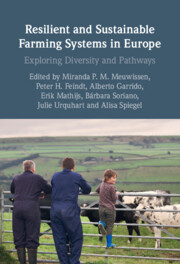
Apple orchard in the Mazovian region.

Cauliflower from the Mazovian region.

There are twenty times more horticultural farms in Poland than in much larger countries, such as Germany. The main horticultural production is carried out in small (less than 10 ha) private farms located in Central-Eastern Poland. Therefore, our case study analyses resilience of family, fruit and vegetable farming in two regions: Mazowieckie and Lubelskie (see Annex 13.1). The area is traditionally dominated by horticulture carried out on family farms and that is what distinguishes Poland from other horticultural systems in the Central East Europe (especially from Hungarian, Slovak and Czech farms). In these other countries, horticultural production is located, due to historical reasons, in corporate farms, which have proved less effective than family farms, so those countries are net importers of horticultural production from Poland (Kudová and Chládková Reference Kudová and Chládková2008; Német and Masár Reference Német and Masár2014). According to Kraciński (Reference Kraciński2017), the revealed comparative advantage (RCA) indicators of the ex post competitive position indicate that Polish apples were competitive in the world market in the years 2004–2015. Their position was increasing until the period 2013–2015, during which this position started decreasing. The key hard fruits cultivated are: apples, pears, plums, cherries, sweet cherries and, to a lesser extent, peaches and apricots; among soft fruits: strawberries, raspberries, currants (black and red) and gooseberries. Most popular vegetables cultivated are onions, carrots, cabbages, cucumbers, tomatoes and sugar beets. However, the system has its weaknesses. First, a minority of farmers within this farming system (FS) belongs to producer groups (e.g. for joint investments in storage facilities), as currently the network of horizontal integration connections in agriculture is poorly developed, with the exception of some fruit production (e.g. apples). The soft fruit market is also poorly organized, due to the lack of horizontal and particularly vertical integration links. There are very frequent distortions in this market, manifested by drops in purchase prices, at some points reaching levels below costs (e.g. apples, blackcurrants). Farms are also confronted with a lack of seasonal workers. Fruit and vegetable production as well as growing of industrial plants (tobacco, hops, herbs, sugar beets) requires high labour inputs, yet in recent years the demand for seasonal workers significantly exceeds supply, which influences the development of production – see the list of challenges in Annex 13.1.
From a historical perspective, the year 1989 was a ground-breaking moment for Poland and its agriculture, as that was when the country won its total independence from the USSR and started the process of transformation from a centrally planned to a market economy. By that time the state farms provided employment and housing for about 435,000 workers. However, taking into account their families, the state farms provided subsistence for about 2 million people (Milczarek Reference Milczarek2002). These farms were inefficient, employing more people than necessary, as such employment was nearly the only source of income in rural areas. Ten years later, after privatization only 122,500 people remained employed there, 28 per cent of what was in 1989. At that time, the system had lots of buffer resources (in terms of labour, land, environmental amenities, etc.) and there were no alternative jobs for farmers outside of agriculture (as they had low education and there was high unemployment in the economy). However, there was a good demography in rural areas (e.g. due to high fertility). However, the situation has changed very much since then and many processes that the system faces even reversed. For example, the situation at the labour market has reversed – there is almost no unemployment and yet a high shortage of the workers in off-agricultural sectors. Besides, over time, the farmers invested a lot in education of their children also thanks to CAP, as part of the direct payments were spent on education according to a survey carried out by Polish Ministry of Agriculture (MRiRW 2020). So the young generation has much better opportunities to choose good jobs, both in Poland and abroad. The introduction of the CAP also helped reverse the falling trend of support for agriculture and resulted in a significant increase in income for the agricultural households.
The horticulture FS in the case study area consists not only of the horticultural family farms but also: (i) other types of farms (especially medium arable, milk and poultry farms) providing manure supply or doing common crop rotation for those farms; (ii) producer groups and cooperatives; (iii) farm organizations (e.g. Agricultural Chambers, agricultural NGOs); (iv) local financial institutions (e.g. banks); (v) insurance companies; (vi) local retailers; and (vii) local wholesalers, seasonal workers (especially from Ukraine) and other entities and actors who affect the farms and the farms also have impact on them (see Chapter 1 for the definition of FS, and Annex 13.1).
According to Krupin et al. (Reference Krupin, Zawalińska, Bańkowska and Gradziuk2019), the key functions delivered by the FS are mainly focused on the provision of private goods – maintaining economic viability and carrying out food production – as well as public goods – delivering bio-based resources for the processing sector and protecting biodiversity of habitats, genes and species. The functions which are assessed by the stakeholders in the SURE-Farm project as the least performing are economic viability and maintaining natural resources (water, soil, air). More details on the evaluation of provision of the essential functions can be found in Annex 13.1.
The FS faces challenges, among which five are particularly hindering the resilience of the current and possibly future FS (see the summary in Annex 13.1), which are discussed next.
Succession problem (social challenge, classified as a long-term trend, see Annex 13.1). There is an uncertainty on the continuity of the farms although most of the interviewed farms in our FS had three or more children. There are push and pull factors behind it. As for the former, the parent-farmers changed their attitude and stopped pressing their children to stay at the farm, as they realized their children have better job opportunities outside of agriculture. So they paid for higher education for their children and in that way they increased their chances for better positions on the job market. As for the pull factors, the spouses of the young farmers usually looked for good quality of life and often did not want to live on a farm, far from urban facilities. Besides, what makes the real succession unattractive is a retirement law because the parents start retirement at age 55/60, when the children are in their thirties and already working in other industries. Succession to non-family members, as an alternative, still seems less typical. So far, the most probable reason for taking over the farm is in the case of emotional attachment, otherwise the demographic and economic conditions are rather discouraging.
Economic viability struggle (economic challenge, classified as a long-term trend, see Annex 13.1). Most of the surveyed farmers have run their farms for more than twenty years and all of them experienced a significant decline in the profitability of their production. Despite the undertaken investments (CAP support), such as increasing the scale, changes in the production structure, they are still not able to maintain profitability at the previous level. This is in line with research by Czyżewski (Reference Czyżewski2017), showing the presence of a treadmill in European agriculture. The observed indicator is a much faster increase in production costs (fuel, pesticides, fertilizers, labour costs) than in the revenues of farmers. Average prices associated with the current means of production increased in the last fifteen years by at least 100 per cent, while sales prices, apart from a few years and during this period, remained unchanged. A very important factor determining profitability was the decrease in supply, mainly due to the Russian embargo, the difficult situation in Ukraine and the inflow of some products from China. Farmers also pointed out that even if the embargo with Russia eventually ends, it would be difficult to enter these markets, because in both countries there was a significant development of horticultural production. However, from the point of view of the entire FS and the enabling environment, the Russian embargo was an example of a successful resilient response. The actors who have helped facilitate adapting to the situation were the exporters (wholesalers, retailers) who found a way to export the products to old markets and establish relationships with new markets. Intermediaries (producer groups) invested in cold-storage facilities. Government initiated the intervention purchases of perishable horticulture products and compensation payments.
Extreme weather events (environmental challenge, classified as a noise, see Annex 13.1): Occurrence of extreme weather events (e.g. late frosts in May, hailstorms, droughts, violent rainfalls) are especially harmful in the case of horticulture. These events have a much greater impact on the volume of horticultural production than on traditional agricultural production (especially on the harvest of apples). For example, the same unfavourable weather conditions in the years 2016/2017 impacted the harvest of apples by about 32 per cent (a decline from 3,604.3 million tons to 2,444.4 million tons), while in the case of cereals the decline was about 16 per cent (from 31,925.0 million tons to 26,779.8 million tons). The countermeasures are very costly and sometimes difficult (e.g. investment in irrigation systems is a good example since difficulty stems from the fragmentation of farms into many non-neighbouring agricultural plots. Other related environmental problems are reduction of the pollinator population (due to the reduction of biodiversity), use of pesticides (not always in accordance with the Code of Good Agricultural Practice), increase in the occurrence of pests (with the simultaneous lack of effective pesticides to control them) and increasing deficit of organic matter (a decline in manure availability over the past twenty years due to a significant decrease in the number of livestock animals such as cattle, pigs, horses and sheep).
Shortage of workforce (economic challenge, classified as a noise, see Annex 13.1): The lack of seasonal workers is a gradually growing problem that affects Polish agriculture. The processes of industrialization in the twentieth century followed by post-industrial changes have decreased the rural population employed in agricultural activities, as well as causing major migration either to urban areas or abroad (about 2 million people emigrated abroad). Remuneration in agriculture is relatively low compared to other sectors of the Polish economy, which is decreasing the attractiveness of agricultural employment, especially on a seasonal basis.
Insufficient and overregulated policies (institutional challenge, classified as a cycle, see Annex 13.1): The ad hoc public intervention in this market is perceived by farmers as ineffective (mainly in the fruit market), as it only mitigates the occurrence of price fluctuations to a small extent. Processors benefited the most from CAP due to funding for investments, and to a small extent, producers. There is also an ineffective policy of agricultural production insurance. Despite the subsidies, the insurance premiums are very high, farmers have many complains about the liquidation of damages, and having had bad experiences, many of them no longer insure their production. There is also a common view that the system of direct payments inhibits structural changes at the agricultural land market. The respondents give examples of land owners who take subsidies and lease the land. The other difficulty is more and more restrictive pro-environmental and food safety policies which require certification and cumbersome documentation.
Based on the data collected by the SURE-Farm project (from in-depth interviews, mini-cases, surveys, learning interviews) and the applied SURE-Farm methodology, this chapter presents the lessons learnt on current and future resilience capacities of this FS – robustness, adaptability and transformability – as well as the possible future strategies for current and alternative FSs.
13.2 From Past to Current Resilience
13.2.1 Four Adaptive Cycles
The described challenges faced by the FS are difficult to address because they are embedded within a long-term dynamic setting depicted by four adaptive cycles, consisting of four stages: growth, conservation, collapse and reorganization. Those cycles identified in SURE-Farm adaptive cycles, explained in detail in Chapter 1, are: (1) “risk management” – related to environmental challenges; (2) “governance” related to policy instruments, work regulations, succession law, environmental deficiencies; (3) “farm demographics” with succession and workforce availability; (4) “agricultural production” with economic viability, changes in consumer tastes and policy instruments – see the middle part of Annex 13.1.
Concerning the risk management adaptive cycle, it is in the advanced growth phase but still far from the point of conservation as depicted by a star in Annex 13.1. The system has developed new management strategies but farmers are still hesitant about adapting them. For example, insurance for extreme weather events is still not common among farmers although the offer of private and public insurance tools increases. Some strategies are being implemented to mitigate the negative consequences of droughts and to promote good water management. However, many risk management practices are still not developed, e.g. towards environmental risks, price change risks and alike.
Concerning the governance adaptive cycle, it seems to be at the reorganization phase, as depicted by a star in Annex 13.1. The ResAT analysis (describe in Chapter 4) reveals that the policies seem to have more ambitious goals than the instruments available to support adaptability and transformability. The advancement in reorganization of the policy is visible but the learning and demographic interviews reveal that the farmers perceive the changes as not enough and sometimes too constraining for their activities. They complained about overregulation and bureaucracy as well as the lack of long-term vision. However, from the policy-makers point of view it seems logical to introduce high demands (to avoid abuse of the funds) and if they realize they are too tight (the uptake from beneficiaries is low) then they release the conditions. That is why this governance adaptive cycle is classed as under reorganization as a result of learning processes from both sides – policy-makers and beneficiaries.
The farm demographic cycle has just passed the conservation phase and moves towards the collapse phase. This means that, from a statistical point of view, the demographic situation in this system is relatively good (in the Polish agriculture sector there is the highest percentage of young farmers in the EU), but that is likely to change quickly over the next few years. The signals from the learning and demographic interviews are very clear, that there is already a problem with farm successors, due to high emigration of young people abroad or moving into other occupations and at the same time low availability of foreign qualified workers for the system in Poland. The important factor influencing deteriorating demographics in rural areas is that the system fails to provide one of its main functions, i.e. attractiveness of rural areas in term of residence. The living conditions and a hard and risky occupation discourages young people and new entrants into the FS.
Concerning the agricultural production cycle, it is at a fast growth phase and it still has potential for further development if it manages to improve its overall resilience. The statistics show development of the horticulture sector and especially apple producers are very competitive and expanding further at the EU markets. However, it is important to mention that apart from small family farms (our case study system) there are also large corporate farms, which contribute to the overall success for that sector.
All in all, the stakeholders in our study assessed that taking the above into account, the resilience capacities of the current FS in the case study area is low to moderate. That is due to its relatively high robustness, i.e. the ability to maintain the basic functions of the system without major changes despite the presence of external disturbances (Urruty et al. Reference Urruty, Tailliez-Lefebvre and Huyghe2016). At the same time the FS has a medium capacity of adaptability, i.e. the ability of the system to adapt internal elements and processes in response to changing external circumstances and thus continue to develop along the previous trajectory while maintaining all vital functions (Folke et al. Reference Folke, Carpenter, Walker, Scheffer, Chapin and Rockström2010). The current FS shows very low capacity to transform, i.e. the ability to develop or incorporate new elements and processes to an extent that alters operational logic to maintain important functions when structural changes make the existing system unsustainable or dysfunctional (Walker et al. Reference Walker, Holling, Carpenter and Kinzig2004). Since the current FS does not properly address two essential functions, i.e. ensuring economic viability and maintaining natural resources in good condition (see Annex 13.1), the strategies for alternative future FSs were explored in the study, as presented next.
13.3 Resilience Strategies for the Future
13.3.1 Alternative Farming Systems
The stakeholders proposed three alternative FSs in the case study area which would more effectively fulfil the private and public functions. Those FSs are: (1) higher specialization in fruit and vegetables of the area (horticulture production FS); (2) more focus on soft fruit production (shelter farming FS – farming under cover, e.g., greenhouses); and (3) specialization in organic products (local organic production FS). The alternative systems, firstly, improve delivery of private good functions by: (a) creating new opportunities for higher purchase prices of agricultural products, (b) providing sources of higher income and (c) enabling alternatives for high labour costs. Secondly, those systems also support public good functions, such as: natural resources, biodiversity and habitat, as well as increasing the attractiveness of the areas. In order to understand the mechanisms determining the current and future resilience, the so-called causal loop diagram (CLD – see Herrera Reference Herrera2017) was depicted (see Figure 13.3) showing the relationship between challenges (C), main resilience indicators (I), resilience attributes (A) and strategies relevant for alternative FSs, i.e. better serving the private and public functions in the areas (depicted by letter S). The loop shows five distinctive parts depicting five interrelating mechanisms determining resilience in a dynamic setting.
Causal loop diagram depicting the relations between indicators, challenges, resilience attributes and possible strategies in the horticulture FS in Poland. Where C – relates to challenges to resilience, I – resilience indicators, A – resilience attributes, S – strategies.

Part 1 of the causal loop shows that lack of seasonal workers influences the labour costs thus impacting the income dynamics. Income dynamics has influence upon the uptake of additional employment by potential seasonal workers. The availability of the labour force can be one of the factors influencing the decision-making by farmers to convert to organic farming (possible alternative FS in the region), thus leading to increase in the number of ecological farms. Increasing the number of organic farms could have an impact on the increase in labour costs, as it generates additional demand for labour. It also has an impact on the demand for agricultural products, as well as consumer awareness (shifts in their behaviour – it is a two-way loop as by shifts in consumer behaviour it is also possible to increase the number of ecological farms). Increasing the number of ecological farms could intensify creation of new locally recognized brands. Consumer awareness influences the demand for agricultural products, just as emergence of a new brand on the market could shift the structure of demand. Changes in demand influence the shifts in prices for agricultural products, which in turn influence the farm income and income dynamics in the country. The level of farm income influences its financial abilities concerning the costs of inputs, including fertilization intensity. The latter feeds soil fertility (quality) and influences the quality and volume of outputs (crop yields). Achieved crop yields influence the farm income, but also the utilisation of agricultural land. Land use structure determines farming practices, e.g. crop rotation techniques affect the level of fertilization, that in turn influences the soil quality, the fertilization intensity thus affecting the local and natural capital. Local and natural capital (production) affects the price relationship between agricultural products and agricultural production costs. Demand for agricultural products influences the emergence of new locally recognized brands, while education campaigns for consumers further strengthens these relations (this is represented by reinforcing feedback loop; R1 in Figure 13.3).
Part 2 of the causal loop shows that actions in the RDP influence the price relation of agricultural products to agricultural production costs, as well as on the attribute ‘reasonable profitability’, which in turn affects the level of farm income and income dynamics in the country. Diversification of markets (outlets) affects the demand for agricultural products, simultaneously influencing the prices for agricultural products, thus also affecting the price relation of agricultural products to agricultural production costs. Diversification of markets (outlets) also influences the eventual focus on greenhouse and other types of farming under cover (‘shelter farming’), which is supported by preferential taxation. This is a two-way relation.
Part 3 of the causal loop explains that extreme weather events are a variable impacting fertilization intensity (as it can lead to severe losses of organic matter in the soil and washing-out of nutrients in the soil), the severe weather conditions also affect the yields (e.g. hail or frosts can cause loss of crops, droughts decrease yields, while excessive rainfall leads to increased plant disease). The frequency of extreme weather conditions in the region impacts its local and natural capital. The natural capital (in other words local conditions) is most likely to influence the level of prices in local trade (e.g. in areas with frequent hail, producers quit cultivating soft fruit and the local price for these products would be most likely higher compared to other regions).
Part 4 of the causal loop indicates how simplification of regulations influences response diversity and functional diversity. It is important to emphasize that there is a two-way relationship between the procedures’ simplification and lack of seasonal workers. Such simplification can impact labour supply, at the same time current availability of the labour force can lead to pressure upon policy-makers to simplify procedures regarding employment and labour markets (e.g. employee registration or unemployment support). Of course, indirectly such simplification could further lead to costs of employment. Overall, primarily the income dynamics in the economy influences the lack of seasonal workers, which in turn affects the availability of the labour force (being a balancing feedback loop; B1 in Figure 13.3).
Part 5 of the causal loop reveals the weakness of Polish farms, as it was mentioned by the stakeholders, relating to cooperation. Development of both horizontal and vertical cooperation influences functional diversity and response diversity – there will also be reciprocal relations; while searching for various solutions, the entities of the agricultural system would be interested in either intensifying or minimizing cooperation depending on what would be their mutual interests. Intensification of cooperation also impacts the price relation of agricultural products to agricultural production costs, as united they can achieve additional benefits from the scale of production and negotiate the wholesale prices for production inputs.
13.3.2 Future Strategies for Current and Alternative FSs
Alternative FSs are perceived as beneficial for rural areas in general and farmers in particular, as they potentially lead to improvement in incomes and are more efficient and environmentally safe farming approaches. Maintaining adequate profit margins and increasing cooperation (both horizontal and vertical) were often mentioned as crucial boundary conditions, which would have a positive effect upon the FS’s development. According to stakeholders, the alternative system defined as ‘horticulture production’ requires implementation of the following strategies: entering new foreign markets, simplification of regulations (e.g. quicker processing of applications submitted in the framework of CAP financing programmes) and education campaigns for consumers (e.g. supporting consumption of domestic products, increasing the share of fruits and vegetables in the daily diet).
The alternative system ‘shelter farming’ defines several strategies important for implementation in order to achieve this alternative state: additional dedicated action in the Rural Development Programme framework targeting quality and profitability of agricultural production, preferential taxation system for shelter farming and creation and promotion of a locally recognized brand ‘Sheltered strawberry’. The ‘local organic production’ was defined to require the following strategies: (1) increase the number of farms adopting ecological approaches and gradually (yet steadily) switching to organic farming, increase the use of mechanization in organic farming, target and support organic farming by the state policies and funds; (2) intensification of vertical cooperation (‘farmers–wholesalers’ relationship); (3) diversifying outlets: direct sales to consumers supported by promotion and educational campaigns (see Table 13.1).
| Strategy | Domain | Current system | Future systems | ||
|---|---|---|---|---|---|
| Horticulture production | Shelter farming | Local organic production | |||
| Simplification of regulations | Institutional | V | |||
| Awareness-raising campaigns for consumers | Economic/social | v | |||
| Additional actions in the RDP targeting quality and profitability of agricultural production | Institutional | v | |||
| Preferential taxation system for shelter farming | Institutional/economic | v | |||
| Creation and promotion of a locally recognized brand | Institutional/economic | v | |||
| Increase in the number of ecological farms | Social | v | |||
| Intensification of vertical cooperation | Social/economic | V | v | v | |
| Diversifying outlets (entering new markets) | Economic | v | |||
| State support | Institutional | V | |||
| Horizontal cooperation | Social/economic | V | v | v | v |
| Marketing | Economic | V | v | v | v |
| Insurance | Economic | V | |||
| Enduring | Economic | v | |||
| Diversification | Economic | v | |||
Note: “V” implies that a boundary condition is relevant for both current and future systems, while “v” indicates that only for a future system; Bold font indicates that these strategies were mentioned during the workshop for a specific system. Normal font indicates that, based on the discussions during the workshop, it seems likely that strategies will be applied in certain systems.
In most cases the resilience attributes would benefit from the introduction and development of alternative systems. ‘Coupled with local and natural capital (production)’ was rather beneficial for all systems, with the highest positive return relationship in the case of ‘local organic production’. ‘Response diversity’ is the most unpredictable, and dependent on the economic situation and investment conditions in the case of ‘shelter farming’, while the ‘reasonably profitable’ is hard to predict for ‘local organic production’ due to numerous possibilities in terms of prices and consumer behaviour.
According to the participants of our study, the current situation is close to the tipping point, especially in the case of profitability (derived from fluctuating prices – confirmed, among others, by Świetlik Reference Świetlik2019), weather conditions (extreme events as hail, droughts, frosts – analysed by Hamulczuk et al. Reference Hamulczuk, Kufel-Gajda, Stańko, Szafrański and Świetlik2016) and bureaucracy and administration (number and frequency of controls, complexity application for CAP payments – confirmed by studies of Drygas et al. Reference Drygas, Nurzyńska and Bańkowska2019). Many of them express the feeling that if the situation with some of these issues worsens, they wouldn’t be able to continue their business as usual. But they have quite clear understanding of their resilience capacities, mostly regarding adaptation.
13.4 Conclusion: Lessons Learnt
The lessons learnt from the past are summarized in Annex 13.1 and they are relevant for the future in the following ways.
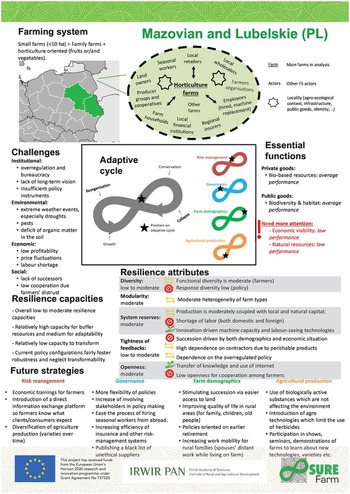
First, the overall current resilience is between low and moderate, taking into account the stakeholder’s assessment of resilience capacities and attributes as well as the policy assessment based on the ResAT wheel (Buitenhuis et al. Reference Buitenhuis, Candel, Termeer and Feindt2020). Future resilience depends on the ability of the FS to strengthen its weak resilience attributes, such as reasonable profitability and response diversity. For both attributes the future resilience-enabling actors would be advisors (with the strategy of enhancing the transfer of knowledge) and government (facilitating and providing funding with proper incentives behind it).
Second, the current FS has a relatively high capacity for buffer resources (robustness) and medium for adaptability and very low for transformability. It is expected in the future that the buffer resources will deplete, especially in terms of human resources and financial ones due to demographic and economic challenges which are in the form of long-term negative trends. So adaptability is a must for future resilience, while transformability is a complementing option.
Third, the adaptation of the current FS leads to alternative future FSs (more focused on horticulture than now, oriented more towards shelter production and specializing in ecological production and sale). In order to achieve that, the most desirable adaptability strategies would be: increasing vertical and horizontal cooperation, enhancing knowledge (for instance, carrying out educational campaigns to improve consumers’ dietary habits to include more fruit and vegetable consumption) and expanding horticulture and ecological sales into new foreign markets.
Fourth, in relation to policy, the current configuration mostly fosters robustness and neglects transformability, while adaptability is in the middle – supported by funds for investments. The resilience-oriented policy would need to overcome the main challenges identified, such as overregulation and bureaucracy, insufficient aid instruments (e.g. for insurance, income stability, knowledge transfer) and lack of long-term vision for resilience support.
All in all, achieving future resilience requires more emphasis on speeding up adaptability, which will trigger the evolution of the current system into more resilient alternative systems in the future. That means, in particular, enhancing the resilience attributes (indicated in red in Annex 13.1) by applying the resilience strategies towards (see the bottom part of Annex 13.1) the following:
(a) increasing policy diversity towards instruments supporting adaptability rather than buffer resources – i.e. with more flexible policies, oriented towards risk management tools, learning capacities, increased involvement of stakeholders in the policy-making, increasing effectiveness of agricultural insurance – see Chapters 2 and 4 for more details;
(b) adapting farmers to the shortage of labour – by replacing human labour with new machines; switching to less labour-intensive vegetable farming, e.g. beans and pumpkin instead of cauliflowers and broccoli;
(c) adapting the farms to the demographic situation – by stimulating succession via easier access to land, improving quality of life in rural areas, easing earlier retirement in agriculture, increasing work mobility for farmers’ spouses;
(d) adapting farmers to the economic situation – by providing economic training for farmers, introduction of direct information exchange platforms on consumers’ preferences, diversification of production, publishing a black list of unethical suppliers, teaching new technologies;
(e) increase cooperation – currently, the value share of the horticultural production sold by producer organizations in the total value of fruit and vegetables production and in the value of export of these products does not exceed 20 per cent in Poland (5 per cent for vegetables), compared to more than 50 per cent on average in the EU and above 80 per cent in Belgium and the Netherlands. That can happen by working on enhancing the trust and application of user-friendly legal solutions for cooperation.


 Open access