INTRODUCTION
Greater global coverage of protected areas (PAs) is needed to effectively stem the ongoing, accelerated loss of the Earth's biodiversity, particularly in the species-rich tropics (Rodrigues et al. Reference Rodrigues, Andelman, Bakarr, Boitani, Brooks, Cowling, Fishpool, da Fonseca, Gaston, Hoffmann, Long, Marquet, Pilgrim, Pressey, Schipper, Sechrest, Stuart, Underhill, Waller, Watts and Yan2004). The prioritization of additional areas for protection should consider not only ecological and evolutionary criteria, but also socioeconomic opportunity costs (Carwardine et al. Reference Carwardine, Wilson, Ceballos, Ehrlich, Naidoo, Iwamura, Hajkowicz and Possingham2008) and assessments of long-term implementation success. Biodiverse areas in need of protection are often densely inhabited by humans (Balmford et al. Reference Balmford, Moore, Brooks, Burgess, Hansen, Williams and Rahbek2001), many of whom live in poverty (Sachs et al. Reference Sachs, Baillie, Sutherland, Armsworth, Ash, Beddington, Blackburn, Collen, Gardiner, Gaston, Godfray, Green, Harvey, House, Knapp, Kumpel, Macdonald, Mace, Mallet, Matthews, May, Petchey, Purvis, Roe, Safi, Turner, Walpole, Watson and Jones2009). In such areas, the creation and enforcement of new strictly protected zones that exclude humans is questionable on both ethical and pragmatic grounds (Rodrigues et al. Reference Rodrigues, Andelman, Bakarr, Boitani, Brooks, Cowling, Fishpool, da Fonseca, Gaston, Hoffmann, Long, Marquet, Pilgrim, Pressey, Schipper, Sechrest, Stuart, Underhill, Waller, Watts and Yan2004; Walpole & Wilder Reference Walpole and Wilder2008).
Community-based natural resource management (CBNRM), with its dual goal of conservation and poverty alleviation, may improve biodiversity protection prospects in these areas (Wells & McShane Reference Wells and McShane2004). Over the last decade, however, community-based approaches to conservation have been criticized for failing to deliver tangible sustainable benefits to either biodiversity or humans (Wells & McShane Reference Wells and McShane2004; Chan et al. Reference Chan, Pringle, Ranganathan, Boggs, Chan, Ehrlich, Haff, Heller, Al-Krafaji and Macmynowski2007). Such perception of failure has led some to question the validity of an integrative approach (Kellert et al. Reference Kellert, Mehta, Ebbin and Lichtenfeld2000) and dampened enthusiasm among major funding agencies (Wells & McShane Reference Wells and McShane2004; Roe Reference Roe2008). Yet the interdependence of biodiversity conservation and poverty alleviation is too strong for either goal to be effectively pursued in isolation (Fisher Reference Fisher2004; Sachs et al. Reference Sachs, Baillie, Sutherland, Armsworth, Ash, Beddington, Blackburn, Collen, Gardiner, Gaston, Godfray, Green, Harvey, House, Knapp, Kumpel, Macdonald, Mace, Mallet, Matthews, May, Petchey, Purvis, Roe, Safi, Turner, Walpole, Watson and Jones2009). The question thus is not whether community-based conservation initiatives are useful, but how they can best be implemented to achieve their dual objective (Wells & McShane Reference Wells and McShane2004). Unfortunately, balanced assessments that examine socioeconomic as well as biological strengths and weaknesses of community-based initiatives are rare (Brockington et al. Reference Brockington, Igoe and Schmidt-Soltau2006; Chan et al. Reference Chan, Pringle, Ranganathan, Boggs, Chan, Ehrlich, Haff, Heller, Al-Krafaji and Macmynowski2007). To address this data gap, we here review the socioeconomic and ecological results of ten years of community-governed environmental management in Wechiau (Ghana).
The Wechiau Community Hippo Sanctuary (WCHS), founded in 1998 as a response to government pressure regarding hippopotamus protection, builds on traditional authority systems and taboos, and incorporates the complexities of a multi-ethnic, multi-lingual group of communities along northern Ghana's international border with Burkina Faso. Situated in one of the poorer corners of Ghana and the world (CPRC [Chronic Poverty Research Centre] 2009), WCHS operates in a region where comparatively little land is under formal protection (UNEP-WCMC [United Nations Environment Programme-World Conservation Monitoring Centre] 2008), wildlife serves as a primary source of protein (Brashares et al. Reference Brashares, Arcese, Sam, Coppolillo, Sinclair and Balmford2004), hippopotami are generally in decline (Lewison & Oliver Reference Lewison and Oliver2008) and even protected areas are often devoid of animals (Brashares et al. Reference Brashares, Arcese and Sam2001).
The indicators we use to judge the success of WCHS in the face of these challenges are necessarily context-specific and shaped by data availability (Conley & Moote Reference Conley and Moote2003), but are guided by a broad comprehensive evaluation framework. Our framework builds on previously proposed parameters (Kellert et al. Reference Kellert, Mehta, Ebbin and Lichtenfeld2000; Michaelidou et al. Reference Michaelidou, Decker and Lassoie2002; Weber et al. Reference Weber, Lovrich and Gaffney2005; Plummer & Armitage Reference Plummer and Armitage2007), but focuses on current outcomes and resilience to future risks. We postulate that, to be truly successful, projects that integrate poverty alleviation with conservation must improve both the livelihoods of local people and ecosystem viability in the short and long term. To prevent one goal from eclipsing the other (Walpole & Wilder Reference Walpole and Wilder2008), they should foster linkages between human well-being and environmental health, both physical (for example improved ecosystem services) and perceptual (for example greater ecological awareness). Moreover, to be viable in the long term, they should cultivate economic, societal and ecological mechanisms of resilience by, for example, promoting income diversification, minimizing conflicts through equitable distribution of benefits (Kellert et al. Reference Kellert, Mehta, Ebbin and Lichtenfeld2000), improving trust networks and problem-solving capacity (Kellert et al. Reference Kellert, Mehta, Ebbin and Lichtenfeld2000; Weber et al. Reference Weber, Lovrich and Gaffney2005; Plummer & Armitage Reference Plummer and Armitage2007), empowering people to take greater control over factors impacting their lives (Kellert et al. Reference Kellert, Mehta, Ebbin and Lichtenfeld2000; Weber et al. Reference Weber, Lovrich and Gaffney2005) and promoting ecosystem connectivity (Plummer & Armitage Reference Plummer and Armitage2007). We examine WCHS’ performance against these parameters to generate recommendations for the implementation and evaluation of other community-based conservation initiatives.
Study area
Wechiau Community Hippo Sanctuary is a 180 km2 community PA. It lies between 9° 52.530′N, 2° 45.460′W and 9° 38.501′N, 2° 44.733′W in Ghana's Upper West Region along the border of Burkina Faso (Fig. 1). It incorporates 34 km of the Black Volta River, housing one of only two remaining populations of the common hippopotamus (Hippopotamus amphibius) in Ghana. Its climate is tropical, with daytime temperatures in excess of 30°C and a single rainy season June–October.
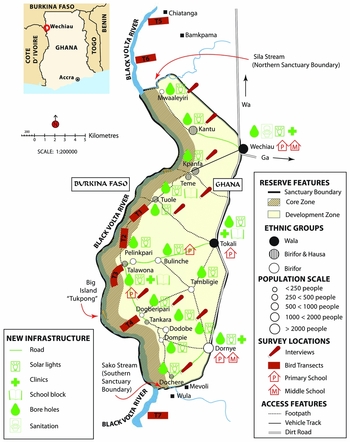
Map of the Wechiau Community Hippo Sanctuary and surroundings, indicating population centres, new infrastructure developments (1999–2009), and survey locations for surveys of inconvenienced adults (microphones), school children (primary and middle schools), and birds (transects).

The Sanctuary was founded in 1998 by the Paramount Chief of the Wechiau Traditional Area, his sub chiefs and local opinion leaders. Fearing alienation from their land, these community leaders, who are elected among rotating traditional constituencies, had previously rejected proposals by Ghana's Wildlife Division to establish a government-run hippopotamus reserve in the area (Asase et al. Reference Asase, Oteng-Yeboah and Mason2006). Instead, they elected to establish a community-managed sanctuary that would protect the hippopotami, prevent further habitat degradation, restore habitat and recover wildlife, while also assuring community participation in decision-making to increase emphasis on poverty alleviation, yield livelihood alternatives and facilitate knowledge dissemination.
Accordingly, the Sanctuary was split into two zones (Fig. 1). The 1–2 km wide core zone contains hippopotamus feeding lawns within riparian forest, flood plain and Guinea savannah habitat which also house at least 226 plant, 237 bird, 50 mammal, 32 reptile and nine amphibian species (Oteng-Yeboah et al. Reference Oteng-Yeboah, Beier and Oduro2001a, Reference Oteng-Yeboah, Beier and Odurob, Reference Oteng-Yeboah, Beier and Oduro2003). The core zone is protected through prohibitions on farming, bush-burning, hunting, the cutting of plants/trees and vehicle access, as well as restrictions on fishing, oyster collection, livestock and the harvest of shea (Vitellaria paradoxa) and locust bean (Parkia filicoidea).
The adjacent, 5–10 km wide development zone consists of wooded savannah interspersed with human settlements and farmland. The ‘local community’ consists of c. 720 dwellings housing 10268 people (including 5620 children) in 17 communities. These communities comprise four ethnic groups, each with distinct languages, namely Wala (locally known as Wechiegee), Birifor, Hausa and Dagaabe. The Wala settled the area in the 17th century and have customary rights to the land (Assenheim Reference Assenheim2000), whereas the other three ethnic groups do not. Instead, Wala chiefs and ‘tendamba’ (land priests) hold the land in trust for the use and welfare of the entire community (AppiahOpoku & Mulamoottil Reference AppiahOpoku and Mulamoottil1997). The Birifor migrated from Burkina Faso during the 1920s and are now more numerous than the Hausa and Dagaabe, who immigrated after the 1940s. Of the Sanctuary's 17 communities, two are primarily Wala and 15 primarily Birifor, although Dagaabe are interspersed and six Birifor settlements include contiguous Hausa fishing camps (Fig. 1). These fishing camps were originally located by the river, but were moved to the development zone in 2002 to enhance core zone habitat protection. The need to resettle the 14 households involved was determined by the Sanctuary's Management Board in agreement with representatives from the affected communities.
The Sanctuary's Management Board is composed of the Wala chiefs, Wala and Birifor community representatives, and non-voting advisory bodies that include the Ghana Tourist Board, Wa West District Assembly (regional government) and the Nature Conservation Research Centre (a Ghanaian conservation non-governmental organization [NGO]). The last provides assistance and advice to facilitate external funding, help programme administration and assist capacity building.
Both Wala and Birifor people have legends and taboos that contribute to the local conservation ethic. The Wala believe they escaped enemies in the 1800s thanks to being carried across the river by hippopotami. The Birifor believe that the forest houses Kontoma (little bush spirits), who hang from tree branches along the river to warn hippopotami of danger (Assenheim Reference Assenheim2000). Hippopotami are also part of creation stories and puberty rites, and are considered children of the river spirit. Both the Birifor and the Wala have hunting taboos surrounding the species’ harvest.
METHODS
In evaluating WCHS, we considered three parameters: (1) short- and long-term socioeconomic viability, (2) short- and long-term ecological viability and (3) linkage mechanisms that foster the continued integration of development and conservation. To assess socioeconomic viability, we compiled data on the Sanctuary's financial viability and its impacts on household well-being with respect to job creation and infrastructure improvements. Using qualitative information, we also judged socioeconomic resilience mechanisms that promote long-term viability, such as the equity of benefit allocation, economic diversification, empowerment and conflict/problem-solving capacity (Kellert et al. Reference Kellert, Mehta, Ebbin and Lichtenfeld2000; Wells & McShane Reference Wells and McShane2004; Weber et al. Reference Weber, Lovrich and Gaffney2005; Plummer & Armitage Reference Plummer and Armitage2007). To determine ecological viability, we examined population trends in the Sanctuary's focal species, analysed biodiversity patterns inside versus outside the Sanctuary and gathered qualitative information on change in threats and on connectivity (Kellert et al. Reference Kellert, Mehta, Ebbin and Lichtenfeld2000; Michaelidou et al. Reference Michaelidou, Decker and Lassoie2002; Wells & McShane Reference Wells and McShane2004; Plummer & Armitage Reference Plummer and Armitage2007). To gauge linkage, we measured ecological awareness among school children and polled attitudes among WCHS residents who were disadvantaged by the Sanctuary's creation (Michaelidou et al. Reference Michaelidou, Decker and Lassoie2002; Conley & Moote Reference Conley and Moote2003). We also used qualitative information to estimate the community's emotional investment in project success.
Financial viability
To determine the Sanctuary's prospects for financial independence, we obtained fiscal records from the Sanctuary Management Board, the Nature Conservation Research Centre and the Calgary Zoological Society, a donor that has supported WCHS since inception. Total income and visitor numbers were available from 1999 onwards; more detailed records were available following standardization of the Sanctuary's financial reporting system in 2003. Because the Ghana cedi has undergone considerable inflation and a redenomination since 1999, finances are reported in US dollars. Currency conversions were achieved using appropriate annual mean exchange rates as compiled by the World Bank. Our figures show actual and purchasing-power-parity adjusted exchange rates. The latter reflect country-specific commodity costs and effectively adjust for inflation.
Household well-being
One obvious index of household well-being is income. Measures of income were unavailable for WCHS communities, however, and can be problematic in subsistence economies where barter remains prevalent and cultural obligations to share property may discourage people from declaring their riches. We therefore used newly created employment as one alternative indicator of economic well-being. Estimates of full-time employees, commissioned and occasional staff directly involved in WCHS's operation were obtained through Donna Sheppard's intimate knowledge of Sanctuary business. We also obtained employment records from the Savannah Fruits Company, which coordinates an organic shea nut collectors’ cooperative whose establishment in 2008 was facilitated by the Sanctuary's institutional network and environmental awareness education programme.
We used new infrastructure development as a second indicator of well-being since infrastructure is linked to basic needs such as clean water, health care and education. Little formal infrastructure existed in the area prior to the Sanctuary's establishment. New infrastructure acquired by the Sanctuary's 17 communities between 1999 and 2007 was compared to infrastructure acquired by all other 93 communities in the Wechiau Paramountcy during this time. Like WCHS, the latter communities fall under the jurisdiction of the Paramount Chief of Wechiau and have similar ethnic and socioeconomic characteristics. Data on borehole, well, road, school, clinic and sanitation projects were obtained late in 2007 from the Paramountcy's four administrative area councils in Gaa, Gurungu, Wechiau and Vieri. To enable a fairer comparison, communities were separated into small (<1000 inhabitants) and large (≥1000 inhabitants). In the absence of accurate census information, community size was judged based on the knowledge of Gurungu-Naa Bandanaa Chielinah, the divisional chief of Gurungu, who as the son of a former Paramount Chief is familiar with communities throughout the study area.
Focal species trends
Regular counts of the local hippopotamus population were initiated in 2000. All counts were conducted between 7:00 and 10:00 am from dugout canoes launched concurrently at four points, such that each boat surveyed a different but abutting stretch of the Black Volta River. Between them, the four boats covered the entire 34 km stretch of river encompassed by the Sanctuary. Counts in 2000–2004 were conducted by Earthwatch Institute scientists, who completed multiple counts over a two-week period and recorded maxima or means. Subsequently a single count per season was completed by Sanctuary personnel, with two trained staff per boat verifying each other's observations. Available data were used to construct Poisson models of population trend over time. Because hippopotamus detectability can decline in the rainy season (Roth et al. Reference Roth, Hoppe-Dominik, Muhlenberg, Steinhauer-Burkart and Fischer2004), we tested the following variables as covariates (one at a time to avoid collinearity): rainfall in the census month, rainfall in the census month plus rainfall in the previous one or two months, total annual rainfall, cumulative monthly rainfall per year and a categorical variable for season. Rainfall data came from a government-run weather station in Wechiau.
Species richness
To gain insights on the Sanctuary's biodiversity beyond hippos, bird surveys were undertaken in 2007 and 2008, within the Sanctuary and in comparable areas outside. We chose birds because they can be useful indicators of habitat integrity (Wilson et al. Reference Wilson, Reid, Stanton and Perry1997). All surveys were undertaken by one award-winning local bird guide along permanently marked transects: four within the Sanctuary, two to the North and one to the South (Fig. 1). Each transect began on the river bank, followed a well-trodden foot-path for 2 km and was divided into eight 250 m segments. All transects were surveyed multiple times in both dry and wet season months. Surveys began between 5:00 and 5:45 am and took four hours to complete, with the observer spending 30 minutes per segment to record all bird species seen (using binoculars) or heard. Segment habitat type and an ordinal index of tree cover (0–25%, 26–50%, 50–75%) were estimated on subsequent visits to all transects in June 2009. Repeat surveys along single transects on consecutive days allowed us to estimate transect and segment-specific detection rates as the number of species seen on both days divided by the total number of species seen along the transect in the two-day period. Differences in detection and species richness inside versus outside the Sanctuary by season, habitat type and tree cover were analysed via linear mixed models and generalized linear mixed models with a Poisson error structure, respectively. These models included transect identity and the order of segments as random effects, and tested one or multiple predictor variables at a time. Differences in overall species richness were examined with the help of extrapolated species accumulation curves. All analyses were completed in R (R Development Core Team 2009) using contributed packages ares (van Loon et al. Reference van Loon, Cleary and Fauvelot2007) and nlme (Pinheiro et al. Reference Pinheiro, Bates, DebRoy, Sarkar and Team2009).
Ecological awareness
Children growing up in the 17 communities of the development zone are the Sanctuary's future guardians. To determine their ecological knowledge and perspective on the Sanctuary, we interviewed a representative sample of students from all seven schools in June 2004 and again in June 2007 (Fig. 1). In total, 309 primary and 50 middle school students were canvassed: 200 in 2004, 159 in 2007. These students, aged 8–26 (mean age 14, 210 boys and 149 girls) were picked at random but stratified for school size and gender ratios. Questions concerned basic understanding of fauna, flora and ecological linkages, conservation concepts and the Sanctuary. Interviews were conducted in each child's preferred language and answers recorded verbatim. Answers were then categorized to extract summary statistics and to assign each student a percentage score for individual questions, sections and the questionnaire as a whole. Scores were analysed with respect to age, grade, gender, year of interview and a three-level categorical variable that ranked school communities based on visitor exposure. The number of years students had spent in school and a categorical variable ranking schools’ proximity to the Sanctuary's core zone were dropped from analysis because of collinearity with grade and tourism exposure, respectively. All possible single and multi-predictor models were computed using generalized linear models with a binomial error structure appropriate for proportional response variables (Insightful 2001). We then employed multi-model inference based on Akaike weights to calculate model-averaged parameter estimates and errors, and to determine which combination of covariates most reliably explained differences in scores (Burnham & Anderson Reference Burnham and Anderson2004). Analyses were completed in R using contributed packages combinat (Chasalow Reference Chasalow2009) and pgirmess (Giraudoux Reference Giraudoux2009).
Attitudes among inconvenienced residents
Local resentment resulting from loss of access to important resources can severely curb the success of conservation initiatives (Adams & Hulme Reference Adams and Hulme2001; Brockington et al. Reference Brockington, Igoe and Schmidt-Soltau2006). To gauge this risk, we interviewed individuals in nine communities bordering the Sanctuary's core zone (Fig. 1). The interviews targeted herbalists, fishers, oyster collectors and farmers who prior to Sanctuary establishment lived in the core zone or depended on its natural resources. Per community, 5–6 respondents were selected based on first encounter. Interviews were conducted in October 2007 in the respondent's preferred language and followed a standard questionnaire. Respondents were asked to describe the Sanctuary, list its benefits and speculate what would happen if the core zone were no longer protected and the hippopotami disappeared. They were also encouraged to voice additional comments regarding the Sanctuary.
RESULTS
WCHS scored positively on all parameters considered.
Financial viability
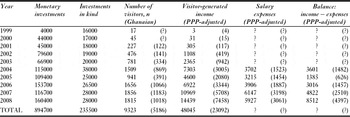
The Sanctuary's external and internal income streams have increased with time (Table 1). WCHS has managed to attract sustained external investment from a variety of donors. Cash investments were small initially, but grew over time, in line with the community's absorptive capacity (Wells & McShane Reference Wells and McShane2004); in-kind investments assured ongoing technical advice.
Sanctuary finances (in US$) and visitor numbers 1999–2008. Monetary investments comprise financial contributions from the Calgary Zoological Society, Canadian Hydro Developers Incorporated, Earthwatch Institute, United States Agency for International Development and other donors. Investments in kind reflect salaries of technical support personnel seconded by the US Peace Corps and Calgary Zoological Society. Visitor-generated income comprises entrance fees and earnings from service provision, such as guided tours and accommodation. Salary expenses include staff salaries and stakeholder stipends. PPP = purchasing-power-parity. All monetary figures are in US$ rounded to the nearest dollar.

Internal income derived primarily from visitors. Visitor numbers grew quickly in the first five years, then stabilized at 1500–1800 annually; >50% of visitors were Ghanaian. Visitor-generated income has comfortably covered staff salaries and stakeholder stipends since 2004 (see balance column, Table 1). A second income stream from conservation premiums on organic shea nuts collected within Sanctuary boundaries opened in 2008. The premium, paid by the shea exporter, is equivalent to 5% of the price paid to collectors, amounting to US$ 1047 (US$ 541 if adjusted for purchasing-power-parity) in 2008 and US$ 1502 (US$ 1559) in 2009.
Household well-being
Employment
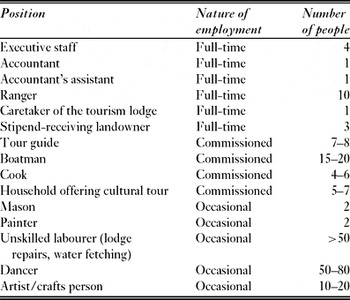
Approximately 50 community members received regular income directly from the Sanctuary, including three stipend-receiving land owners, 17 full-time employees and 31–41 commissioned staff. Approximately 100 more people benefited from occasional employment (Table 2). Less tangible employment spin-offs, such as provision of food and transport, also existed. In 2008, WCHS spurred additional job creation by facilitating an organic shea collective. In the inaugural year, 726 women participated, earning US$ 23082 between them (US$ 12438 if adjusted for purchasing power parity). Participant numbers rose to 1010 in 2009, with a projected harvest value of US$ 34564 (US$ 35858 if adjusted for purchasing power parity).
Employment opportunities directly linked to operation of the Wechiau Community Hippo Sanctuary. Note that prior to 2007, the Sanctuary employed seven rather than 10 rangers and that dancers are organized into four dance troupes with 15–20 members each.

Infrastructure
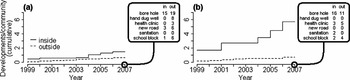
Infrastructure development between 1999 and 2007 occurred faster within the Sanctuary than in the communities outside its boundaries (Fig. 2). Large settlements inside the Sanctuary received eight times as many new amenities per community as large settlements outside. Small communities inside the Sanctuary received 2.2 times as many new amenities per community as small communities outside. In addition, external partners enabled a targeted solar lighting campaign for Sanctuary communities. Between 2005 and 2009, 546 solar-powered LED lighting systems were provided to interested households in exchange for an affordably-priced contribution to a light maintenance fund. A separate solar lighting scheme targeting Ghana's non-formal teaching sector provided a total of less than 50 lights to homes inside and outside the Sanctuary. Thus there are probably 60 times as many lights per community within WCHS than outside (546 lights in 17 communities inside versus a maximum of 50 in 93 communities outside).
Type and cumulative number of new infrastructure developments per community between 1999 and 2007, inside and outside the Wechiau Community Hippo Sanctuary in (a) small communities (<1000 inhabitants) and (b) large communities (>1000 inhabitants). The sample size for small communities was 13 inside, 65 outside; for large communities it was 4 inside, 28 outside.

Equity
Despite the disproportionate authority that the Wala have as chiefs and landowners, employment and infrastructure benefits spanned ethnic divisions, gender and the Sanctuary's geographic expanse. Ethnic representation among Sanctuary employees reflected traditional skill sets and geography. For example, boatmen were Hausa or Birifor from Talawona, Kpanfa and Kantu, the three communities where tourists access the water for river safaris. Tour guides were Wala from Wechiau, where the visitor centre is located. Rangers were distributed throughout the development zone and included a mixture of Wala and Birifor. The shea collective benefited families in all 17 communities. Infrastructure improvements and solar light installations have also occurred throughout the Sanctuary (Fig. 1).
Economic diversification
A broad donor base of conservation and aid funding and the ongoing development of new revenue streams have resulted in a more diversified and hence more sustainable economic baseline than ever before. One improvement often spurred another. Early borehole developments inspired the solar lighting initiative. Improved infrastructure attracted the shea cooperative and facilitated ecotourism, which is now sufficiently lucrative to sustain Sanctuary salaries and support capital needs. Tourism has encouraged a nascent trade in arts and crafts, and visitors have sponsored schools and scholarships.
Empowerment
The community enjoyed substantial autonomy in its management of local natural resources. All voting members of the Sanctuary Management Board emanated from the community and the Board's decisions were respected by local government. The local police force backed enforcement of the Sanctuary's by-laws by providing jail space. Official devolution of control from central government is outstanding but in process. Since the Sanctuary's Management Board comprised representatives from all 17 communities, empowerment was also present at the more local scale, with each community able to influence management decisions.
Problem-solving capacity
Successful implementation of the organic shea collective, which the exporter previously failed to establish in other regions, illustrated improvements in local social capital. Exposure to participatory decision-making processes and village representation on the Sanctuary's Management Board have fostered trust networks and provided mechanisms for conflict resolution.
Focal species trends
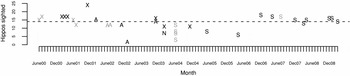
On average, 14 hippopotami were sighted in censuses spanning 2000–2009 (Fig. 3). No significant temporal trends were detected, and hippo counts were not correlated with any of the rainfall variables tested. Because the single count statistics of recent census years are more conservative than the maxima available for earlier years, and because juveniles were observed annually, the data inspire confidence in the population's stability.
The number of hippopotami sighted within the Sanctuary during all census seasons between 2000 and 2009. Plotting symbols indicate whether available statistics reflect the maximum (X), minimum (N), or average (A) of several counts (sample size uncertain), or results of a single (S) count. Censuses undertaken during the rainy season are indicated in grey. The horizontal dotted line indicates the mean over time (14 individuals).

Species richness
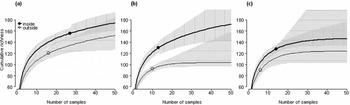
Bird surveys in 2007 and 2008 encountered a total of 167 species: 156 inside the Sanctuary and 120 outside. The average species richness per sample (one four-hour survey along a single transect) was similar inside and outside the Sanctuary during the wet season, but significantly higher inside the Sanctuary during the dry season (inside-wet: 51.78 ± 6.73, outside-wet: 48.17 ± 3.54, Wilcoxon's W = 60, p = 0.15; inside-dry: 53.61 ± 4.23, outside-dry: 45.7 ± 3.74, W = 120, p < 0.001). Owing to these dry-season differences, species richness extrapolation curves estimated total species richness to be higher inside (Fig. 4a–c). These results held when cumulative species richness extrapolations were based on any three rather than all four inside transects, suggesting that higher richness within the Sanctuary did not merely reflect the larger area surveyed. Neither were differences due to bias in detectability: year-round and season-specific repeat detection rates were no different inside than outside WCHS (mean percentage of species seen on both days inside: 60 ± 7, outside: 65 ± 5, W = 52, p = 0.09). If anything, detection rates were higher in habitats that predominantly occurred outside the Sanctuary: according to linear mixed models of segment-specific species counts, repeat detection rates were significantly higher in segments with low tree cover and savannah-farmland mixtures. Such segments were more common outside (42% and 25% of segments, respectively) than inside (3% and 13%, respectively), reflecting not poor transect placement but the reality of farmland encroachment on riparian habitat outside WCHS. Generalized linear mixed models did not detect any significant tree cover or habitat-specific differences in per-segment species counts that could have explained species richness differences among regions, perhaps because landscape-scale resource availability was inadequately reflected. Thus, differences in habitat quality may still offer the best explanation for the season-specific divergence in species richness between WCHS and its surroundings, as species may be able to overcome the deficiencies of degraded habitat only when resources are less limited during the wet season.
Cumulative bird species richness inside and outside the Sanctuary (a) year-round, (b) in the dry season and (c) in the wet season. Actual sample sizes and observed richness values are indicated by solid or open circles. Shaded areas represent 95% confidence intervals.

Threats
Major threats to ecosystem integrity and hippopotami at Wechiau have been dramatically reduced through by-law enforcement and mitigation measures. Farms have been moved away from the river, allowing for forest regeneration and minimal human-hippo conflict. Fishing is regulated to protect hippopotamus wallowing zones. Livestock encroachment on riparian habitats has been limited thanks to alternative water access via boreholes. A fire belt now surrounds the core zone. The exploitation of plants and animals has been reduced. Notably, rangers are confident that no hippopotamus has been killed since the Sanctuary's establishment, whereas 11 were reportedly killed in the area between 1995 and 1997 (Choribe Reference Choribe1997).
Ecosystem connectivity
Since most hippopotamus sightings occurred in the Sanctuary's core and hippopotami require less than 100 m of river or 4 km of grazing lawns (Eltringham Reference Eltringham and Oliver1993, Reference Eltringham and MacDonald2001), the local hippopotami likely reside primarily or entirely within the 34 km riverine stretch of the Sanctuary. Hippopotami sightings south along the Black Volta in the 1980s (Roth et al. Reference Roth, Hoppe-Dominik, Muhlenberg, Steinhauer-Burkart and Fischer2004) are suggestive of possible connections, at least historically, with Ghana's only other remaining hippopotamus population 150 km downstream at Bui National Park, which is now imperilled (Bennett et al. Reference Bennett, Green and Basuglo2000). More recent sightings of hippopotami 70 km upstream at Bontioli Forest Reserve in Burkina Faso (Pierre Kafando, National Parks Department of Burkina Faso, personal communication 2009) indicate that connections with populations further north are also possible. Such connectivity, if indeed present, should soon benefit from Burkina Faso's plans to reinvigorate forest protection along the Black Volta River, from Bontioli south to Koulbi, a forest reserve across from WCHS that was first gazetted in 1955 but never enforced (Pierre Kafando, National Parks Department of Burkina Faso, personal communication 2009).
Ecological awareness
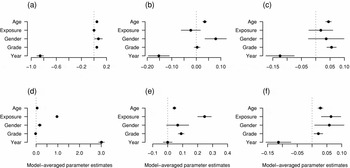
The vast majority of students canvassed (91%) had heard of WCHS, and most (59%) could accurately describe some or all of the Sanctuary's aspects. Answers reflected the students’ pastoral lifestyle. Examples given of animals and plants were predominantly agricultural (71% and 80%, respectively). Their most frequently mentioned uses were fuel (74%), income or trading opportunities (72%), building materials (69%), and food (66%). Less frequent answers included medicine and cosmetics (47%), shade (45%), clothing (42%), spiritual and cultural practices (29%), ecosystem health (18%), aesthetics (14%), companionship or entertainment (4%) and writing materials (2%). Perceived benefits of WCHS included income and employment (67%), infrastructure developments (18%), educational opportunities (9%), visitors, friendships and alliances (8%), gifts of equipment such as sports gear, books and rangers’ bikes (8%), ecosystem health (4%), fame, prestige and pride (3%). Model-averaging results (Fig. 5) suggest that (1) older students scored higher than younger students; (2) boys did slightly better than girls except when describing WCHS or nature's benefit to humans; (3) students in higher grades had a better grasp of basic biological concepts, nature's benefits to humans and the Sanctuary's purpose and benefits than students in lower grades; (4) pupils in communities with extensive tourism exposure provided more comprehensive descriptions of WCHS and better understood conservation concepts than students in communities with little or no exposure to tourists; and (5) students in 2007 scored better than students in 2004 on conservation concepts, but had a poorer grasp of basic biological concepts, ecological linkages and nature's benefits to humans. These results suggest that awareness is high, that tangible benefits are most noted but that intangible benefits are also recognized, and that visitor contact may spur curiosity and engagement among young people.
Model averaging results for analyses of school children's responses to questions regarding (a) basic biological concepts, (b) ecological linkages, (c) nature's benefits to humans, (d) conservation concepts, (e) the Wechiau Community Hippo Sanctuary's perceived purpose and benefits and (f) all questions combined. Shown are model-averaged parameter estimates (dots) and standard errors (horizontal lines) for all explanatory variables considered: the student's age, tourism exposure, gender, grade and the year of survey. Predictors whose error bar crosses zero have no significant influence on students’ scores.

Attitudes among the inconvenienced
Among the 46 respondents interviewed, seven had been displaced from their original homes in the core zone. All but three respondents had heard of WCHS and were able to describe it. Descriptions focused on it being a place for hippopotami and other wildlife (89%), and a protected area (78%) with use restrictions, including prohibitions on fire, tree felling, hunting, farming and cattle grazing (33%). Most respondents (72%) acknowledged benefits to local people, particularly infrastructure (67%), but also employment (9%) and an improved economy (4%). Moreover, nine respondents (20%) mentioned the potential for unspecified future benefits to themselves or their children. When asked what might happen if the Sanctuary's core zone were turned into farmland and the hippopotami disappeared, most respondents (83%) implied a negative impact on the local community. Such a scenario, respondents thought, would entail the loss of unspecified benefits (50%), reduced employment (22%), economic stagnation (17%), less tourism (13%), a halt to infrastructure development (4%), and environmental detriment (4%). Only two respondents doubted that developing the core zone would harm the hippopotami. In providing additional feedback, 15 respondents (33%) raised grievances, primarily over lost farmland (nine respondents), access to oysters (4), firewood (1) and/or forest herbs (1). Yet three of these 15 respondents also expressed overall contentment with the Sanctuary. In total, 16 respondents (35%) used additional feedback to articulate their appreciation, expressing hopes for future benefits to their children (10) and the Sanctuary's continuation (4), approval of its creation (4), gratitude for specific benefits received (2) or joy over their children being able to know hippopotami and other wildlife (2). These results suggest that community-based conservation can avoid widespread resentment even where sacrifices are required.
Emotional investment
Although inherently difficult to quantify, pride in the initiative is palpable at WCHS. Pride was specifically mentioned by several school students, and has since been reinforced by at least two events: (1) attainment in 2008 of the prestigious US$ 20000 UN Equator Prize and (2) attendance of the Sanctuary's 10th anniversary celebrations by foreign and national dignitaries. Moreover, the Sanctuary's Chairman has travelled to two other regions in Ghana to acclaim the success of WCHS and the benefits it has brought to his people. Such local advocacy invests the community in a reputation to keep.
DISCUSSION
The Wechiau Community Hippo Sanctuary has alleviated poverty by increasing income through ecotourism employment and a shea nut cooperative, by improving access to water, schools, lighting and health care, and by developing social capacity to create self-sustaining revenue streams. The stability of the Sanctuary's hippopotamus population is remarkable in a region where people are malnourished, bushmeat is commonly harvested (Brashares et al. Reference Brashares, Arcese, Sam, Coppolillo, Sinclair and Balmford2004), large mammals are frequently extirpated (Brashares et al. Reference Brashares, Arcese and Sam2001) and hippopotamus populations in neighbouring countries are declining (Lewison & Oliver Reference Lewison and Oliver2008). Greater bird diversity within the Sanctuary than in surrounding areas indicates that the Sanctuary has not only been effective in the protection of one charismatic mammal, but also in terms of broader biodiversity conservation.
Sufficient local governance capacity was crucial to success. Chieftaincy remains integral to Ghana's electoral system and, as ultimate land owners, the chiefs are a respected authority that external agencies can engage directly. Since chiefs challenge one another, a balance of power is established that facilitates accountability, transparency and equitable benefit distribution. Although all chiefs were Wala, the creation of a Sanctuary Management Board allowed all ethnic groups and communities to be represented in decisions regarding developments or environmental protection. Consequently, the designation of the protected core zone, the establishment of conservation-related by-laws, and the negotiated resettlement of communities were made at the most local level. As opposed to decrees passed down by remote government agencies, our results suggest that local representation in the decision process can yield support from even the most disadvantaged individuals.
Despite success, several social and ecological risks remain. Strong beliefs in supernatural forces may make efforts seem futile and foster expectations of ecological replenishment despite excessive exploitation. Increasing revenue and infrastructure developments have become status quo and people could become disenchanted if the frequency of new benefits decreases over time. Like all political systems with powerful authority, future elections among the Wala could yield chiefs whose interests are not aligned with the Sanctuary's current successes. Poor leadership could result in limited opportunities to express grievances, favouritism for family members, the marginalization of ethnic minorities, ethnic conflict, inequitable distribution of benefits or ecosystem deterioration if chiefs saw advantages in activities that harm protected habitats. Newly trained staff could seek employment with external tourism operators. The fact that rangers are locals may help expose by-law violations, but could encourage bribery or reduced penalties for kin. Finally, benefits associated with protected areas may attract migrants (Mutandwa & Gadzirayi Reference Mutandwa and Gadzirayi2007). Already, Burkina Faso children traverse the river and core zone daily to attend Sanctuary schools. Underlying social, economic and political pressures are difficult to predict or control across an international border, but increases in human density would likely diminish the Sanctuary's ecological integrity.
Ecologically, too, the Sanctuary is vulnerable to forces beyond the community's control. Wechiau's small hippopotamus population requires gene flow; recent sightings upstream at Bontioli are encouraging, but the connectivity or size of the collective hippopotamus population remains unknown. The recent completion in 2009 of a hydroelectric dam 150 km downstream at Bui has likely diminished grazing habitat and increased poaching risks for the 300 hippopotami (Bennett & Basuglo Reference Bennett and Basuglo1998; Bennett et al. Reference Bennett, Green and Basuglo2000) of Ghana's largest and only other remaining hippo population. Hence the Sanctuary's ecotourism is primarily linked to an imperilled species that has uncertain population viability. Moreover, climate change is expected to hit this region hard (Desanker & Justice Reference Desanker and Justice2001). Resulting increases in the frequency or severity of droughts and floods could yield profound social, economic or ecological impacts.
These issues reveal that the Sanctuary's social and ecological conditions are tightly linked, development and conservation agendas would fail if pursued in isolation and interdisciplinary approaches are necessary to address long-term sustainability. The resolution of future challenges will depend on resilience aspects of the socioecological system (Plummer & Armitage Reference Plummer and Armitage2007). The local socioecological system has already buffered one significant ecological ‘surprise’ without exceeding thresholds that would precipitate a system ‘flip’: when flooding rendered several hundred thousand people homeless in northern Ghana in 2007, the loss of homes, farms and key habitats inside the Sanctuary was prevented because of the prior resettlement of riverside dwellings and the core zone's ecological integrity. The formation of the Sanctuary Management Board to deal with emerging economic and biodiversity issues manifests local ability to ‘self-organize in the context of change’. In 2009 the implementation of a local tour guide's idea to plant mahogany trees as a core zone buffer illustrates that ‘social learning and innovation’ is welcomed and flourishing. ‘Adaptive co-management’ was demonstrated when concerns among external agencies about increasing migration into the Sanctuary recently prompted chiefs to prevent a settler from developing operations that could have impacted the core zone. Such collaborative ‘vertical inte-gration’ with external agencies is necessary to tackle prospective challenges, such as wide-scale habitat loss or degradation, that affect Wechiau but are rooted in other regions of Ghana and Burkina Faso (Weber et al. Reference Weber, Lovrich and Gaffney2005; Plummer & Armitage Reference Plummer and Armitage2007). Encouragingly, Burkina Faso is planning to reinvigorate forest protection along a large stretch of the Black Volta River in the near future, including areas abutting WCHS, with possible use of community-based approaches to ease implementation (Pierre Kafando, National Parks Department of Burkina Faso, personal communication 2009). The resulting network of protected riparian forests would benefit not only hippopotami, but also other fauna and flora at WCHS.
Reflecting on the lessons learnt at Wechiau, we provide recommendations for the planning, implementation and evaluation of CBNRM that integrate poverty reduction and biodiversity protection:
In the planning phase, sufficient time should be invested to learn about the community's spiritual, cultural and economic connections to nature. Local taboos against hippo hunting were a crucial precursor for the Sanctuary's establishment at Wechiau. A community's governance system should be understood and, if aligned with CBNRM approaches, co-management systems should be developed to fully empower community control over revenues and natural resources. Ecological and social parameters should be monitored in target and non-target communities to enable before-after control-impact (BACI) assessments which could manifest relative project benefits, even if regional conditions deteriorate over time. Without pre-Sanctuary data, for example, we are left to surmise whether differences in bird species richness inside and outside Sanctuary boundaries always existed or reflect habitat protection in the core zone.
In the implementation phase, diverse skill sets and traditions should be integrated to assist development and collect ecological or sociological data. This can foster community pride, which may be crucial to long-term sustainability. A communal labour ethic was harnessed in the Sanctuary when a new road and schools were built through the unpaid voluntary participation of residents. External investments should be gradual but visible. Communities’ capacity to handle external funds and seize opportunities will grow over time, and while conservation may provide long-term benefits, poor people's needs are often immediate (Wells & McShane Reference Wells and McShane2004). At Wechiau, the continued presence of a Sanctuary advisor has revealed that empowered communities may require ongoing assistance in strategic planning, accounting or communications with external agencies. Finally, community leaders should be engaged as advocates for community-based conservation. Local messengers tend to be afforded greater credibility than government representatives or western outsiders among local communities: travels by the chairman of WCHS, for example, helped lay the foundation for similar conservation initiatives in other regions of Ghana.
The evaluation phase should be iterative, reflective and ongoing. We recommend regular monitoring of certain social and ecological assets, such as the visitor revenue streams and hippo numbers at Wechiau. Intensive comparisons such as our infrastructure or bird diversity assessments may be implemented more rarely. Frequently showcasing successes can positively reinforce the community and attract new funds or opportunities for economic diversification, while identified shortcomings can allow for adaptive management interventions (Plummer & Armitage Reference Plummer and Armitage2007).
CONCLUSIONS
The Wechiau Community Hippo Sanctuary has received the 2008 UN Equator Prize, built the foundation for a possible cross-border PA with Burkina Faso, and catalysed at least three other CBNRM initiatives in Ghana. To date, the Sanctuary is an example of success where traditional PA approaches would have failed. Since chiefs rejected government advocacy for a national park, the only alternative to community-based conservation would have been no conservation at all. This reflects a new reality where the displacement of people or their exclusion from ecosystem services in the name of conservation is increasingly unacceptable (Roe Reference Roe2008). We seldom have the luxury to choose between state- and community-based conservation opportunities.
Clearly, CBNRM failures have occurred, and striving for the dual goal of biodiversity protection and poverty alleviation sets a particularly high bar. Nevertheless we believe that long-term sustainability depends on the simultaneous pursuit of both objectives. While refinements are necessary (Berkes Reference Berkes2007), WCHS's current success in a region with high biodiversity, high poverty (Sachs et al. Reference Sachs, Baillie, Sutherland, Armsworth, Ash, Beddington, Blackburn, Collen, Gardiner, Gaston, Godfray, Green, Harvey, House, Knapp, Kumpel, Macdonald, Mace, Mallet, Matthews, May, Petchey, Purvis, Roe, Safi, Turner, Walpole, Watson and Jones2009) and few conservation successes reaffirms that positive outcomes for both people and nature are possible. At the least, CBNRM is needed to mend cracks within the PA system; at best, such approaches could still yield profound improvements for humans and ecosystems. Past initiatives have generally been insufficiently interdisciplinary (Chan et al. Reference Chan, Pringle, Ranganathan, Boggs, Chan, Ehrlich, Haff, Heller, Al-Krafaji and Macmynowski2007) and criticisms have been based on a paucity of data (Brockington et al. Reference Brockington, Igoe and Schmidt-Soltau2006). Yet, we are optimistic that the continued evolution of resilience and sustainability science can yield novel approaches for future opportunities.
ACKNOWLEDGEMENTS
We dedicate this paper to Naa Imoru Nandom Gomah-II, Paramount Chief of Wechiau Traditional Area, Naa Danyagiri Walaman-i, Divisional Chief of Tokali Traditional Area, Naa Bandanaa Chielinah, Divisional Chief of Gurungu Traditional Area, and Brian Keating, the inspirational Head of Conservation Outreach at the Calgary Zoological Society who has persistently supported and advocated for the WCHS. Further, we thank all who helped gather or prepare data: Tungbani Issahaku Agba, Bobkuu Mathais, Sammy John, John Baptist, Gurungu-Naa Bandanaa Chielinah, R. Y. Abudulai Issahaku, Laurie Lin, Savannah Fruits Company, Patrick Adjwodah, Victor Mombu, Charles Bandari, Paul Beier, Bill Quayle, Jill Hockaday and Abbey Camaclang. We are grateful for constructive comments on earlier versions of this manuscript by Clément Lanthier, Charlie Shackleton, Des Smith and three anonymous referees. Funding was provided by the Calgary Zoological Society's Conservation Fund, Husky Energy and the Centre for Conservation Research.