Introduction
The increasing availability of HIV-related prevention and treatment services in sub-Saharan Africa, the region currently accounting for approximately 70% of people living with HIV in 2012 (UNAIDS, 2013), introduces new questions about how HIV affects people's childbearing desires and pregnancy prevention behaviour. The expanded coverage of antiretroviral therapy (ART) and drug regimens for the prevention of mother-to-child transmission of HIV (PMTCT) have offered people living with HIV hope for a longer, healthier life and dramatically increased the chances that they can bear children who are free of the virus. In 2012, an estimated 68% of adults in sub-Saharan Africa in need of ART were receiving it, although coverage is uneven with West and Central Africa tending to report lower ART coverage than East and Southern Africa (UNAIDS, 2013). In the same year, an estimated 64% of pregnant women living with HIV received antiretrovirals to prevent transmission of HIV to their children (UNAIDS, 2013). While ART and PMTCT coverage must still progress further in sub-Saharan Africa, childbearing and family planning decisions in the context of the AIDS epidemic are potentially very different in the region now than just a decade ago. This study contributes new community-based evidence on whether and how knowledge about ART and PMTCT changes the association between HIV status and fertility preferences and contraceptive use in two sub-Saharan African countries with different levels of HIV prevalence and ART and PMTCT coverage.
Arguments about how living with HIV influences childbearing desires and pregnancy prevention in countries with generalized AIDS epidemics, in the absence of widespread coverage of ART and PMTCT, have been in opposite directions (Rutenberg et al., Reference Rutenberg, Biddlecom and Kaona2000; United Nations, 2002). The actuality or perception of being HIV-positive could lead people to want to stop childbearing because of the uncertainty about how long they will live to be able to take care of their children, worry about who will take care of their orphaned children after they die, fear that newborn children will be infected or concerns that pregnancy may negatively affect the mother's health. Social and cultural factors, particularly the pressures of family members or the need to continue the family lineage, also play a critical role in how HIV shapes childbearing decisions (Nattabi et al., Reference Nattabi, Li, Thompson, Orach and Earnest2009).
Recent cross-sectional and longitudinal evidence from different sub-Saharan African countries generally supports a positive association of living with HIV and a desire to stop childbearing, although these positive associations do not apply across all countries (Johnson et al. Reference Johnson, Akwara, Rutstein and Bernstein2009; Bankole et al. Reference Bankole, Biddlecom and Dzekedzeke2011). Longitudinal data from a clinical trial in Malawi showed that HIV-positive women were about three times more likely to change from wanting more children to wanting no more children over a 12-month period compared with HIV-negative women and more than half as likely to change from wanting no more children to continue childbearing. Despite these divergent fertility desires, pregnancy rates were comparable among both groups over the 12-month follow-up period (Taulo et al., Reference Taulo, Berry, Tsui, Makanani, Kafula and Li2009). The positive association between living with HIV and lowered childbearing intentions is also dependent on being part of a sero-discordant couple (Bonnenfant et al., Reference Bonnenfant, Hindin and Gillespie2012).
Data from a mixed-method, longitudinal study in rural Malawi that focused explicitly on fertility preferences and HIV status, and where ART and PMTCT were just being introduced, found that fewer men and women desired to have more children following their receipt of a positive HIV test result, and the main rationale for the change in continued childbearing differed by gender: men tended to focus on their premature death and longer-term consequences for the care of their children while women tended to focus on the health consequences in the short-term of pregnancy and childbirth (Yeatman, Reference Yeatman2009). Moreover, the impact on fertility preferences was weaker among women than men, and the qualitative data suggested a continued strong role of social pressures on women for continued childbearing. Evidence from a rural Mozambique setting provides even further nuance to these arguments by showing that women and men who perceive themselves as probably being HIV-positive – a relevant indicator given that many people have not received a test and are making reproductive decisions in a context of uncertainty about their status – are not only more likely to want to stop childbearing (versus wanting a birth later) but also more likely to want to have a child soon (Hayford et al., Reference Hayford, Agadjanian and Luciana2012). The study authors argue that the association of being HIV-positive with intentions of ‘limiting or accelerating’ childbearing reflects a balanced calculus of the health concerns, premature death and uncertainty associated with being HIV-positive and the strong desires for childbearing in a high-fertility setting. A similar finding of preferences for having a child sooner rather than later was observed among young adults in Malawi who were uncertain about their HIV status compared with young adults who were certain that they were HIV-negative (Trinitapoli & Yeatman, Reference Trinitapoli and Yeatman2011).
As with fertility desires and intentions, arguments about how HIV status influences contraceptive use for pregnancy prevention have also been in both directions: being HIV-positive could make one more likely to use contraceptives because of an increased motivation to avoid further childbearing, or less likely to use contraceptives because of concerns about health side-effects of methods, especially if one's health is already compromised from HIV. Studies from sub-Saharan African countries generally show a positive association between women's actual or probable knowledge of their HIV-positive status and using contraception, especially condoms (Elul et al., Reference Elul, Delvaux, Munyana, Lahuerta, Horowitz and Ndagije2009; Johnson et al., Reference Johnson, Akwara, Rutstein and Bernstein2009; Bankole et al., Reference Bankole, Biddlecom and Dzekedzeke2011; Maharaj et al., 2011).
The increased availability of ART and PMTCT has added a further level of complexity to these associations. Qualitative research from Cape Town, South Africa, suggests that ART and PMTCT have motivated women and men living with HIV to reconsider their childbearing desires towards having (more) children precisely for health-related reasons: the increased chances that the children they bear will not be infected with HIV and because of their own improved health (Cooper et al., Reference Cooper, Harries, Myer, Orner and Bracken2007).
Health facility-based studies that focus on women receiving ART and PMTCT provide some support for these qualitative findings, though again not always consistently. A study involving women enrolled in an HIV care and treatment programme in seven sub-Saharan African countries found that women receiving ART had a significantly higher pregnancy rate than HIV-positive women who were not yet receiving ART and the risk of pregnancy increased the longer a woman was on ART, though the study could not discern if fertility desires were different or if the pregnancies were intended (Myer et al., Reference Myer, Carter, Katyal, Toro and El-Sadr2010). A study of women in Uganda had similar findings of a higher pregnancy rate among HIV-positive women on ART compared with HIV-positive women who had not yet initiated ART, and the desire for more children played an important role in explaining these differences (Makumbi et al., Reference Makumbi, Nakigozi, Reynolds, Ndyanabo and Lutalo2011). A cross-sectional study of HIV-positive patients attending an ART service facility in South Africa found that women's desire to have children increased with duration of ART treatment (Myer et al., Reference Myer, Morroni and Rebe2007) and a two-year prospective cohort study in Uganda of women who had recently initiated ART found an increase in pregnancy incidence over time, though not all women wanted to become pregnant (less than 7% of women reported wanting more children compared with 14% of women who became pregnant during the study period, and 26 of the 140 pregnancies ended in an induced abortion; Homsy et al., Reference Homsy, Bunnell, Moore, King, Malamba and Nakityo2009).
The small but growing literature on how ART and PMTCT change the relationship between living with HIV and using contraception also shows some supportive findings. Two cross-sectional studies of women attending an HIV clinic in Uganda found greater fertility desire among women receiving ART compared with those who were not (Maier et al., Reference Maier, Andia, Emenyonu, Guzman, Kaida and Pepper2009) and greater use of contraception, especially barrier methods, among women receiving ART compared with those who were not (Andia et al., Reference Andia, Kaida, Maier, Guzman, Emenyonu and Pepper2009). Among women recruited from a perinatal HIV research unit in South Africa, there was no statistically significant difference in contraceptive use (either any method or barrier methods) among HIV-positive women by ART use, though women on ART were more likely to use contraceptives than HIV-negative women (Kaida et al., Reference Kaida, Laher, Strathdee, Money, Janssen, Hogg and Gray2010). A study of condom use among women receiving ART at a teaching hospital in Nigeria showed that the longer women received ART-related services, the higher the prevalence of condom use, and this was especially the case for married women (Akinyemi et al., Reference Akinyemi, Awolude, Adewole and Kanki2010). Of course, the use of barrier methods of contraception could be for preventing HIV transmission among partners in addition to, or instead of, pregnancy prevention purposes.
This study builds on the evidence from community-based studies on HIV status (or perceived status) and fertility preferences and contraceptive use as well as facility-based studies on the impact of ART and PMTCT on reproductive behaviours by drawing on community-based data that explicitly factor in people's awareness of ART and PMTCT and their perceptions of effectiveness. Data for the study come from Nigeria and Zambia, two countries from the western and southern sub-regions of sub-Saharan Africa, respectively, chosen for their different HIV, fertility preference and abortion contexts, as well as ART and PMTCT coverage. In Nigeria in 2009, when the study was designed, desired family size was 6.1 children and contraceptive prevalence was 14.6% among married or in-union women of reproductive age and 61.0% among unmarried, sexually active women (National Population Commission & ICF Macro, 2009). In 2012, HIV prevalence among adults was 3.1% in Nigeria, 36% of adults who needed ART were receiving it and just 17% of pregnant women with HIV received antiretrovirals to prevent MTCT (UNAIDS 2013).
In Zambia, in 2009, mean desired fertility was 4.6 children and contraceptive prevalence was 40.8% among married or in-union women of reproductive age and 47.5% among unmarried, sexually active women (Central Statistical Office et al., 2009). In 2012, HIV prevalence among adults in Zambia was 12.7% (UNAIDS, 2013). Antiretroviral therapy and PMTCT coverage were also much higher than in Nigeria: 86% of adults in need of ART were receiving it in 2012 and 95% of pregnant women with HIV were receiving a prophylaxis to prevent the transmission of HIV from mothers to their babies (UNAIDS, 2013).
Although the two countries have different levels of HIV prevalence, they are home to two of the largest HIV-positive populations in sub-Saharan Africa. They provide contrasting contexts within which to examine how knowledge about ART and PMTCT may interact with the association between HIV status and fertility preference and contraceptive behaviour. Much of the existing research evidence is based on studies of people living with HIV and receiving ART or HIV-positive women who have received PMTCT, yet the fact remains that many women of reproductive age in sub-Saharan African countries still do not know their HIV status or, if they know they are HIV-positive, many lack access to ART or PMTCT, if needed (Mishra et al., Reference Mishra, Praween, Soumya, Yuan and Wang2009; UNAIDS, 2013). A contribution of this study is its use of community-based survey data to reflect people's uncertain knowledge of their HIV status and actual knowledge about ART and PMTCT.
Data and Methods
Data for this study come from 2009–2010 household-based surveys in Nigeria and Zambia, which were part of a larger study of how women and men achieve their reproductive goals while living with or trying to prevent HIV. The surveys were conducted in three provinces in Zambia (Lusaka, Northern and Southern) and four states in Nigeria (Kaduna, Benue, Lagos and Enugu) to ensure that data were gathered from different parts of the country and from regions with varying HIV prevalence and fertility levels. The surveys are national in scope though not nationally representative. The study protocols were approved by the Institutional Review Board (IRB) of the Guttmacher Institute, the IRB of the University of Ibadan/University College Hospital in Nigeria and the University of Zambia Biomedical Research Ethics Committee.
To conduct the survey in Nigeria, one rural and one urban Local Government Area (LGA) were randomly selected from each of the four selected states. The target sample size was proportionately allocated to the LGAs based on the 2006 Nigeria population census figures. The number of Enumeration Areas (EAs) sampled in each LGA was based on the sample allocated to the LGA. Ten and 20 EAs were then systematically selected from the rural and urban LGAs, respectively. In the selected EA, 10% of households were systematically selected for interview.
The Zambia survey sample was based on the sample frame from the 2007 Zambia Demographic and Health Survey (DHS). The number of households selected was determined by the ratio of households to completed interviews of the population 15 years and older observed in the 2007 DHS. In order to yield the target sample size, 60 Enumeration Areas (EAs) were selected by equal probability systematic sampling, including 38 rural and 22 urban EAs. The total sample was allocated to the provinces proportional to its projected population of 2009 distributed by urban and rural areas, which was obtained from the Central Statistical Office.
In both countries, all eligible adults (women aged 18–49 and men aged 18–59) in selected households were interviewed by trained interviewers from the same province or state as the respondents. A total of 2451 reproductive-age adults (1256 women and 1195 men) in Nigeria and 2400 (1280 women and 1120 men) in Zambia were successfully interviewed. The response rates were 94.3% and 92.4% in Nigeria and Zambia, respectively. Data collection lasted from November 2009 to May 2010 in Nigeria and from October 2009 to February 2010 in Zambia.
Outcome variables
Two outcome variables were examined. The first was ‘desire for a/another birth’, which was obtained from responses to a DHS-type question ‘Would you like to have a/another child, or would you prefer not to have any (more) children?’ (If pregnant, the question was prefaced by ‘After this pregnancy …’) and was defined as a two-category variable taking on the value of 1 if the respondent wanted more children and 0 otherwise. Those who said they were unsure were treated as wanting more.
The second outcome variable (current use of any method) was measured from survey responses to another DHS-type question ‘Are you currently doing something or using any method to delay or avoid getting pregnant?’ This variable was defined as 1 if a married person or an unmarried individual who was sexually active (i.e. had had sex in the 3 months prior to the survey) responded affirmatively to the question, otherwise it assumed the value of 0.
HIV status
HIV status, the key independent variable, was based on self-reports of status from a series of survey questions beginning with ‘Have you ever been tested to see if you have the AIDS virus?’ Those who said ‘yes’ were asked follow-up questions, including ‘How long ago were you last tested for the AIDS virus?’ and ‘Did you get the results of that test?’ Those who responded affirmatively to this last question were then asked ‘Would you tell me your HIV test results?’ with an interviewer instruction to say ‘Please know that I will keep this information confidential’. In addition, because stigma associated with being HIV-positive may prevent an HIV-positive person reporting her/his status in a face-to-face interview, a sealed-envelope module was added to the survey. In this module, which was fielded at the end of the face-to-face interview, the respondent was able to respond to questions on several sensitive issues, including HIV status, in confidence by marking their responses on a sheet of paper, putting the paper in an envelope and sealing it before handing it over to the interviewer. From the responses to questions on HIV status in both of these approaches, the HIV status variable was created with the following three categories: (1) HIV-positive; (2) HIV-negative; (3) HIV status unknown. Women who reported being HIV-positive in either the face-to-face interview or the sealed-envelope module were coded as being HIV-positive.
Knowledge about HIV-treatment variables
The variables considered in this paper were (1) knowledge about antiretroviral (ARV) drugs and (2) knowledge about prevention of mother-to-child transmission drugs. Each of these variables was constructed from respondents' answers to two questions on the respondents' awareness of the existence of a drug for this purpose and what they think about the efficacy of the drug.
Knowledge about ARV drugs
Each respondent who had heard of HIV was asked ‘Have you heard about special antiretroviral drugs (USE LOCAL NAME) that people infected with the AIDS virus can get from a doctor or nurse to help them live longer?’ Those who said ‘yes’ to this question were asked a series of follow-up questions including, ‘Do you know of any place that gives these drugs to people with the virus that causes AIDS?’ and ‘Do you think that these drugs work all of the time, some of the time or none of the time?’ Responses to the first and the last question indicated above were used to create the knowledge about ART variable with two categories: (1) know a drug, works at least some of the time; (2) know a drug, does not work/know no drug.
Knowledge about PMTCT drugs
The knowledge about PMTCT drugs variable was similarly created based on direct responses to questions in the survey that reflect both the respondents' awareness of a drug for PMTCT and their perception of its efficacy. The respondent was asked ‘Are there any special drugs that a doctor or nurse can give to a woman infected with the AIDS virus to reduce the risk of transmission to the baby?’ Those who answered ‘yes’ were then asked the following question ‘Do you think that these drugs prevent the baby from getting the virus that causes AIDS all of the time, some of the time or none of the time?’ As was done in the case of knowledge about ART, the responses to this and the penultimate question (above) were used to construct the ‘knowledge about PMTCT’ variable with the following two categories: (1) know a drug, works at least some of the time; (2) know a drug, does not work/know no drug. For survey questions about ART and PMTCT drugs, some of the respondents are likely to be incorrect in their assessment of the efficacy of the drugs, but respondent assessments (whether factually correct or not) were used since what affects their reproductive behaviour is their perception of the efficacy of the drugs rather than how correct they are in their understanding of actual drug efficacy.
Other demographic and socioeconomic variables included in the models were age, rural–urban residence, education, number of living children, union status and religion. These covariates were selected because they have been shown in the literature reviewed to be correlated with desire for more children and current contraceptive use. All covariates were used as categorical variables in the analysis and were measured at the time of the survey.
The multivariate analysis is based on a set of logistic regression models. First, a regression equation was fitted modelling the association between HIV status and the outcome variables, controlling for the effects of women's background characteristics (i.e. age, residence, education, union status, number of living children and religion) (Model 1, Tables 3 and 4). Second, knowledge about ARV drugs and the interaction between HIV status and knowledge about ARV drugs were added to Model 1 (Model 2, Tables 3 and 4). The results from this model determine whether knowledge about ARV drugs has a direct association with the outcome variable and whether it has an impact on the association between HIV status and the outcome variables. A significant interaction between HIV status and knowledge about ARV drugs implies that knowledge about ART has some influence on the association between HIV status and the outcome variable. Third, knowledge about PMTCT drugs and the interaction between HIV status and knowledge about PMTCT drugs were added to Model 2 in order to assess the direct effect on the outcome variables as well as the influence of knowledge about PMTCT drugs on the association between HIV status and the outcome variables (Model 3, Tables 3 and 4). Finally, a model including all variables in Model 1 plus knowledge about ARV drugs and PMTCT drugs and their interactions with HIV status was run (Model 4, Tables 3 and 4). The objective was to examine whether knowledge about ARV drugs and knowledge about PMTCT drugs simultaneously affect the association between HIV status and the outcome variables.
Since Model 1 is nested under each of the other three models (Models 2 to 4), whether each of the successive models has a better fit compared with the parsimonious Model 1 was examined. The adjusted Wald test was used to examine whether inclusion of the additional parameters in Models 2 to 4 contributes significantly to the fit of Model 1. All estimates presented in this paper are weighted national estimates. For the regression results, statistical significance is indicated at the 0.10, 0.05 and 0.01 levels, using two-tailed tests. The standard errors of the estimates were computed using the ‘svy’ procedure in STATA 12 to account for the complex sample designs (Stata Corporation, 2007).
Results
Background characteristics of respondents
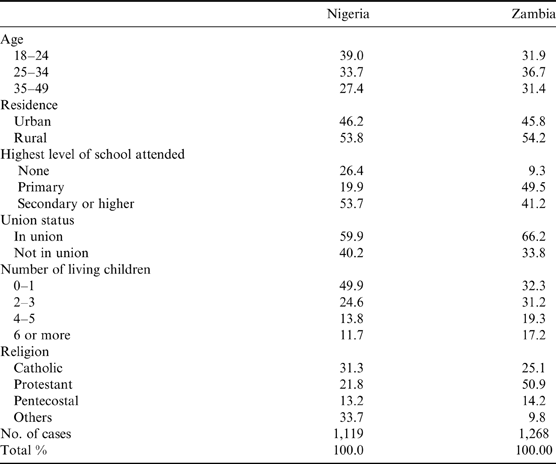
The socio-demographic profiles of the respondents are presented in Table 1. The age distributions of respondents in Nigeria and Zambia are generally similar, though the sample was somewhat younger in Nigeria than in Zambia (39% versus 32% were 18–24 years old in Nigeria and Zambia, respectively). In both countries the majority of women (54%) lived in rural areas. The education profiles are quite different: 26% of Nigerian women had no education compared with 9% of their Zambian counterparts, yet 54% of Nigerian women had attended school at secondary or higher level compared with 41% of women in Zambia. Most adult women were married or in a union: 60% in Nigeria and 66% in Zambia. The distribution of the number of living children among women tends towards lower numbers in Nigeria (e.g. 50% of women have 0–1 living children compared with 32% of women in Zambia), though this may be due in part to the younger age distribution of women in Nigeria compared with women in Zambia. The vast majority of the sampled women in each country identified as Catholic, Protestant or Pentecostal (66% in Nigeria and 90% in Zambia). Again, the surveys were national in scope but not nationally representative, so the sample characteristics are not generalizable to the country level.
Percentage distribution of female respondents by socio-demographic characteristics, Nigeria and Zambia, 2009–2010

HIV status, knowledge about ARV drugs and knowledge about PMTCT drugs
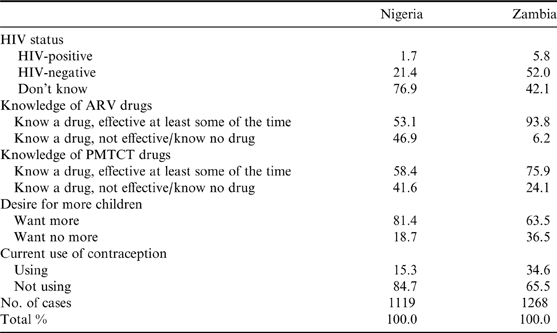
Table 2 shows the percentage distribution of women by their reported HIV status, knowledge about ARV drugs and knowledge about PMTCT drugs, by country.
Percentage distribution of female respondents by HIV status, knowledge of ARV and PMTCT drugs, desire for more children and contraceptive use, Nigeria and Zambia, 2009–2010
HIV status
About 2% of women in Nigeria and 6% in Zambia reported themselves as HIV-positive, 21% in Nigeria and 52% in Zambia said they were HIV-negative and the rest did not know their status. Because of the stigma associated with HIV in sub-Saharan Africa, HIV-positive status is expected to be under-stated in self-reports. Thus, while only 2% of women in the Nigeria sample and 6% in the Zambia sample reported being HIV-positive, the prevalence rates among adults in the two countries were 3.1% for Nigeria and 12.7% for Zambia (UNAIDS, 2013). While the difference between these estimates may be partly due to the fact that the study is not nationally representative, self-reports of status in the study, including reports from the confidential sealed-envelope method, as compared with findings from biomarker HIV tests account for some of the difference. Another reason for the gap is because many people had not received an HIV test (or obtained their results) and therefore did not know their status.
Knowledge about ARV drugs
The majority of Nigerian women (53%) and almost all Zambian women (94%) reported that they knew of antiretroviral drugs and believed that they work at least some of the time. Forty-seven per cent of women in Nigeria and only 6% in Zambia indicated that they did not know of ARV drugs or knew of them but believed that they were not effective. The substantially higher percentage of women in Zambia than in Nigeria who knew of ARV drugs and believed that they were effective is probably a reflection of the greater coverage of ARV in Zambia than in Nigeria (in 2012, 86% of adults who needed ARV drugs received them in Zambia compared with 36% of adults in Nigeria) (UNAIDS, 2013)
Knowledge about PMTCT drugs
With respect to drugs for preventing mother-to-child transmission of HIV, 58% of women in Nigeria and 76% of women in Zambia knew of PMTCT drugs and believed that they work at least some of the time. As in the case of ARV drugs, knowledge about PMTCT drugs is more pervasive in Zambia than in Nigeria, and this difference is probably associated with higher levels of access to PMTCT for pregnant Zambian women compared with pregnant women in Nigeria. As noted earlier, while more than 95% of pregnant women with HIV received antiretrovirals to prevent MTCT in Zambia, the percentage was just 17% in Nigeria (UNAIDS, 2013).
Desire to limit childbearing and contraceptive use
Nineteen per cent of women in Nigeria compared with 37% of women in Zambia wanted to stop childbearing. Similarly, while only 15% of Nigerian women were currently using a method of family planning, 35% of their Zambian counterparts were doing so. The difference between the two countries in terms of the levels of desire and motivation of women in this study to limit family size is not surprising. As noted in the Introduction, both the wanted and actual fertility rates are lower in Zambia compared with Nigeria and contraceptive prevalence is higher in Zambia than in Nigeria. Moreover, the age distribution of this sample was younger and the number of living children lower in Nigeria than in Zambia, which would explain in part the smaller percentage of women who wanted to stop childbearing in Nigeria compared with Zambia.
HIV status, knowledge about ARV and PMTCT drugs and desire for more children
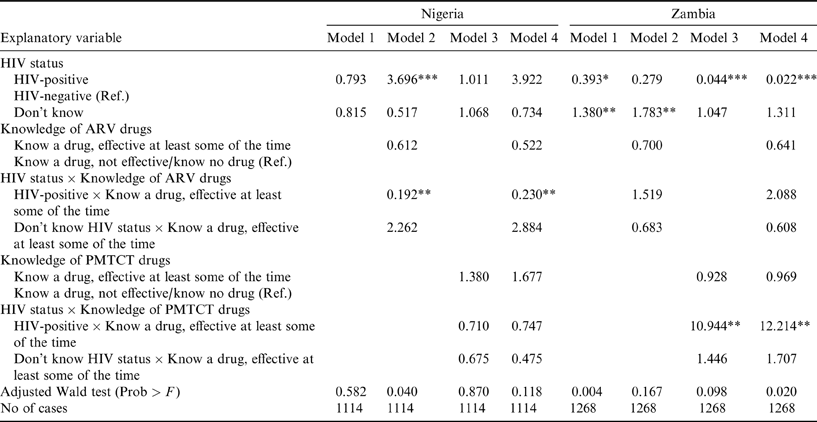
Table 3 presents the odds ratios from logistic regression models of the association between HIV status, knowledge about ARV and PMTCT drugs and desire for more children when controlling for women's socio-demographic background characteristics. In Nigeria, there is no significant association between HIV status and desire for more children, net of women's background characteristics (Table 3, Model 1, Column 1). In fact, the model does not constitute an improvement over the parsimonious model (not shown), which includes only the women's background characteristics (p=0.582). When knowledge about ARV drugs and its interaction with HIV status were added to the model, HIV status emerged as an important predictor of desire for additional children. HIV-positive women who did not know about ARV drugs or believe that they are effective were about two and a half times more likely to desire more children than HIV-negative women who did not know about ARV drugs or believe that they work (Table 3, Model 2, Column 2). Knowledge about ARV drugs does not show an independent association with desire for more children. However, it interacts with HIV status to produce a significant association with desire for more children. HIV-positive Nigerian women who knew of ARV drugs and believed that they worked at least some of the time were about 80% less likely to desire more children than HIV-positive women who were not aware of any ARV drug or did not believe that such drugs were effective.
Odds ratios of the effects of HIV status, knowledge of ARV drugs and knowledge of PMTCT drugs on desire for more children, Nigeria and Zambia, 2009–2010
Ref.=reference category. N values are unweighted.
The socioeconomic variables included in Models 1 to Model 3 are age, residence, number of living children, education, union status, children and religion (results not shown).
*p≤0.1; **p≤0.05; ***p≤0.01.
When knowledge about PMTCT drugs and its interaction with HIV status were added to Model 1 neither HIV status nor knowledge about PMTCT drugs emerged as a significant predictor of desire for more children among women in Nigeria (Table 3, Model 3, Column 3). Similarly, when knowledge about ARV drugs and knowledge about PMTCT drugs and their interactions with HIV status were added to Model 1, none of the two variables emerged as a significant predictor of desire for more children (Table 3, Model 4, Column 4). Consequently, since Model 2 is the most parsimonious, it provides the best fit for the Nigeria data and it is concluded that knowledge about ARV drugs exerts a significant effect on the association between HIV status and desire for more children among Nigerian women.
In Zambia, HIV status emerged as an important determinant of desire for more children among women, net of background characteristics (Table 3, Model 1, Column 5). Women who were HIV-positive were about 60% less likely than HIV-negative women to desire more children. This difference is marginally significant (at 10% level). Women who did not know their HIV status were about 40% more likely to want more children compared with their HIV-negative counterparts. The inclusion of the HIV status variable in a model with only the women's background characteristics significantly improved the fit of the model (p=0.004). Neither knowledge about ARV drugs nor its interaction with HIV status emerged as significant predictors of desire for more children when these variables were added to Model 1 (Table 3, Model 2, Column 6). Although the inclusion of the two variables eliminated the marginal difference between HIV-positive and HIV-negative women with respect to their desire for more children, the significant difference between the desires of HIV-negative women and those who did not know their status remained unchanged. Consequently, Model 2 is the preferred model for Zambia.
The inclusion of knowledge about PMTCT drugs and its interaction with HIV status shows that knowledge about PMTCT drugs exerts a significant impact on the association between HIV status and desire for more children (Table 3, Model 3, Column 7). HIV-positive women who did not know a PMTCT drug or believed it works are about 96% less likely to desire more children than HIV-negative women with the same knowledge about PMTCT drugs. There is no difference between the desires of HIV-negative women who did not know about PMTCT drugs or believe that they work and those of their counterparts who did not know their HIV status. Furthermore, HIV-positive women who knew about a PMTCT drug and believe that it works at least some of the time are about 10 times more likely to desire more children compared with HIV-positive women who did not know of a PMTCT drug or believe that such drugs are effective. The inclusion of knowledge about PMTCT drugs and its interaction with HIV status does provide marginal improvement of the fit of the model compared with Model 1 (p=0.098). Finally, when knowledge about ARV drugs and knowledge about PMTCT drugs, as well as their interactions with HIV status, were added to Model 1, the results remained quite similar to the results in Model 3 (Table 3 Model 4, Column 8). HIV-positive women who did not know about ARV and PMTCT drugs or believe that they are effective were about 98% less likely to desire more children than HIV-negative women who did not know about ARV and PMTCT drugs or believe that they work. When an HIV-positive woman knows about a PMTCT drug that works at least some of the time, she is about 11 times more likely to desire more children compared with a HIV-positive woman who does not. Since Model 4 is more superior to Model 1 than Model 3, Model 4 was adopted as the preferred model for Zambia and it is concluded that knowledge about PMTCT drugs influences the association between HIV status and desire for more children among Zambian women.
HIV status, knowledge about ARV and PMTCT drugs and current use of contraception
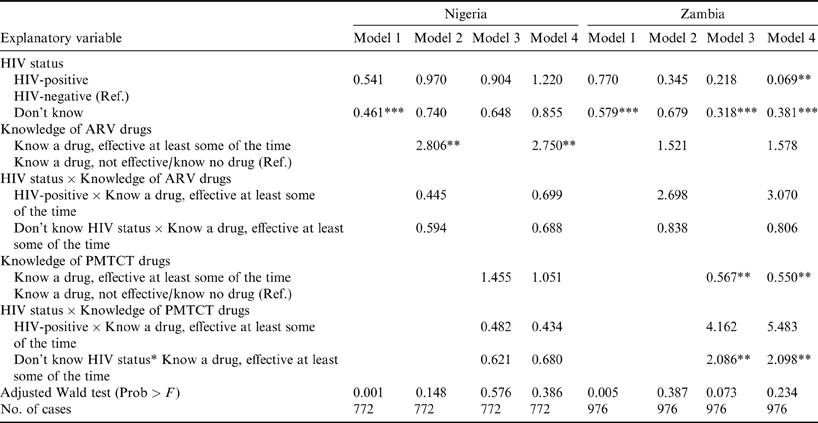
Table 4 presents the results of the logistic regression models of the relationship between HIV status, knowledge about ARV and PMTCT drugs and current use of contraception among sexually active women in Nigeria and Zambia. For Nigeria, HIV status emerged as a significant predictor of current use of contraception, net of women's background characteristics (Table 4, Model 1, Column 1). Women who did not know their status were about 54% less likely to be using a method than HIV-negative women. While HIV-positive women tend to be less likely to use a method than HIV-negative women, the difference is not statistically significant. Overall, this model is superior to the model (not shown) that includes only women's characteristics (p=0.002). When knowledge about ARV drugs and its interaction with HIV status were added to Model 1, the results indicate that knowledge about ARV drugs shows a significant association with current use of contraception (Table 4, Model 2, Column 2). HIV-negative women who knew of ARV drugs and believed they worked at least some of the time were almost three times as likely to use contraception as HIV-negative women who did not know of ARV drugs or believe that they are effective. The inclusion of these variables eliminated the significant difference between the contraceptive use of HIV-negative women and women who did not know their status. However, Model 2 does not constitute an improvement over Model 1 (p=0.148), so the findings from the parsimonious Model 1 are preferred.
Odds ratios of the effects of HIV status, knowledge of ARV drugs and knowledge of PMTCT drugs on current contraceptive use, Nigeria and Zambia, 2009–2010
Ref.=reference category. N values are unweighted.
The socioeconomic variables included in Models 1 to Model 3 are age, residence, number of living children, education, union status, children and religion (results not shown).
*p≤0.1; **p≤0.05; ***p≤0.01.
The results of the inclusion of knowledge about PMTCT drugs and its interaction with HIV status are shown in Model 3 (Table 4, Model 3, Column 3). Although the inclusion of the two variables reduced the difference in contraceptive use according to HIV status, knowledge about PMTCT drugs is not a significant predictor of contraceptive use. Furthermore, Model 3 is not an improvement over Model 1 (p=0.576). The final model adds knowledge about ARV and knowledge about PMTCT drugs and their interactions with HIV status to Model 1 and shows similar results to Model 2, where only knowledge about ARV drugs was an important predictor of current use of contraception (Table 4, Model 4, Column 4). Again, this model is not superior to Model 1 (p=0.386). Consequently, Model 1 was adopted as the best model for Nigeria and it is concluded that neither knowledge about ARV drugs nor knowledge about PMTCT drugs has an effect on the association between HIV status and contraceptive use among women in Nigeria.
In Zambia, as in Nigeria, HIV status is significantly associated with current use of contraception among women, net of their background characteristics. While women who were HIV-positive were not different from their HIV-negative counterparts in this regard, women who did not know their HIV status were about 42% less likely to be using a method compared to their HIV-negative counterparts (Table 4, Model 1, Column 5). This model is superior to a model (not shown) that includes only women's background characteristics as predictors of current use of contraception (p=0.005). The results for Model 2 show that neither the main effect of knowledge about ARV drugs nor its interaction with HIV status was a significant predictor of current use (Table 4, Model 2, Column 6). Although the addition of these variables in Model 1 attenuates the association between HIV status and contraceptive use observed in Model 1, Model 2 does not provide a better fit to the data than Model 1 (p=0.387). Therefore, Model 1 is more parsimonious and its findings are preferred.
The inclusion of knowledge about PMTCT drugs and the interaction with HIV status produces a different conclusion. Both the main effect and the interaction effect were significant (Table 4, Model 3, Column 7). Women who did not know their HIV status and did not know about PMTCT drugs or believe that they work were about 68% less likely to be using a method compared with their counterparts who were HIV-negative. Similarly, HIV-negative Zambian women who knew of PMTCT drugs and believed that they work at least some of the time were 57% as likely to be using a contraceptive method as HIV-negative women who did not know about PMTCT drugs or believe that they are effective. Furthermore, women who did not know their HIV status but knew about a PMTCT drug that works at least some of the time were about two times as likely to be using a method as women who did not know their HIV status and were not aware of a PMTCT drug that works. Since Model 3 fits the data better than Model 1 (p=0.073), this finding is considered to be an improvement over the findings based on Model 1. Finally, when knowledge about ARV and PMTCT drugs and their interactions with HIV status were added to Model 1, the findings remained similar to the findings under Model 3 (Table 4, Model 4, Column 8). The only exception is that this model shows that HIV-positive women were also less likely to be using contraception compared with HIV-negative women. However, since Model 4 does not produce a better fit to the data compared with Model 1 (p=0.234) Model 4 was rejected and Model 3 retained as the most parsimonious for Zambia. It is therefore concluded that knowledge about PMTCT drugs has a significant impact on the association between HIV status and current use of contraception among women in Zambia.
The data used for this study have the strength of coming from a large-scale community-based survey with respondents selected through a probability process, and the data include self-reported information that are not available in standard Demographic and Health Surveys. However, there are some study limitations that may impact the results. First, the information on HIV status is from respondent self-reports of status. As with other sensitive and stigmatized issues, HIV status is mostly likely to be under-reported in a face-to-face interview. While the reports here also include reports obtained from a confidential sealed-envelope method used at the end of the face-to-face interview, under-reporting is still likely to be a problem. Second, the measures of knowledge about ARV and PMTCT drugs combined information from respondents indicating that they know of drugs given by doctors or nurses for ART and PMTCT and that they believe the drugs are effective at least some of the time. It is therefore difficult to know how accurate these statements are. However, this is unlikely to constitute a serious bias for the study because its aim was to examine how perceptions about ARV and PMTCT availability and effectiveness shape childbearing desires and contraceptive use.
Discussion
This study provides new information about how knowledge about ARV and PMTCT drugs might moderate the impact of HIV status on women's fertility preferences and contraceptive behaviour in Nigeria and Zambia. In Nigeria, knowledge about ARV drugs significantly altered the relationship between HIV status and desire for more children. HIV-positive women were more likely to want more children than HIV-negative women, when the effect of knowledge about ARV drugs was controlled. Additionally, HIV-positive women who knew about ARV drugs and believed that they are effective at least some of the time were less likely to desire more children compared with HIV-positive women who did not know about ARV drugs or believe that they are effective. This finding suggests that in the absence of knowledge about ARV drugs, the strong pronatalist nature of Nigerian society, which makes individuals want to prove their fertility and ensure continuity of their lineage, seems to weigh stronger in HIV-positive women's minds than the impact of HIV on women or the risk of transmission to the children they may bear. It is also likely that HIV-positive individuals who know about ARV drugs that work may have had more counselling on HIV and pregnancy, been exposed to more messages about the risks of MTCT, received more advice against continued childbearing by counsellors and may therefore be less likely to want another child. This would help explain why pronatalist norms do not continue to weigh strongly for women who know about ARVs, like they do for those who do not know about ARVs.
In Zambia it is knowledge of PMTCT drugs and belief in their effectiveness that influence the association between HIV status and desire for more children. HIV-positive women tend to be less likely to want more children than HIV-negative women when knowledge about PMTCT drugs is taken into account. However, HIV-positive women who knew of PMTCT drugs and believed they were effective at least some of the time were more likely to desire more children than HIV-positive women who did not know of a drug that works. This suggests that in the absence of knowledge about PMTCT drugs, the potential negative impact of HIV on the children women may bear seems to predominate in influencing HIV-positive women's desire to have or not to have another child. Thus, when an HIV-positive woman is aware of a PMTCT regimen and believes in its effectiveness, she is likely to be more positive about having another child.
The different findings observed for Nigeria and Zambia with regard to the moderating impact of knowledge about ART and PMTCT on the relationship between HIV status and desire for more children may be due to a number of factors. First, the fertility transition and the desire for smaller family sizes are further along in Zambia than in Nigeria (National Population Commission & ICF Macro, 2009; Central Statistical Office et al., 2009), so HIV-positive women in Zambia may not be under as much pressure to prove their fertility by having many children or another child as their Nigerian counterparts. Second, both ART and PMTCT are still relatively unknown and unavailable in Nigeria compared with Zambia (UNAIDS, 2013). Since the two HIV treatment and prevention services are taking off in Nigeria, the knowledge that ART can prolong the life of an HIV-positive person seems to weigh more than knowledge about the positive impact of PMTCT on reducing the risk of HIV in future children in the fertility decision-making of Nigerian women. In Zambia, perhaps because PMTCT is more novel than ART, knowledge about the former seems to be more of a determining factor in the decision of HIV-positive women to have or not have another child.
With regard to contraceptive use, in Nigeria the relationship between HIV status and current use of contraception is not affected by either knowledge about ARV drugs or knowledge about PMTCT drugs. HIV-positive women were not different from HIV-negative women with respect to current use of contraception. Yet women who did not know their HIV status were significantly less likely to be using contraception than women who were HIV-negative, suggesting that women who did not know their HIV status might have been more ambivalent about having another child than HIV-negative women. In Zambia, the relationship between HIV status and current use of contraception was moderated by knowledge about PMTCT drugs. Women who did not know their HIV status were less likely to be using a method compared with HIV-negative women. However, among women who did not know their HIV status, those who knew about PMTCT drugs and believed that they are effective were more likely to be using a method than their counterparts who did not know of the existence of such a drug. Thus, in Zambia, knowledge about PMTCT drugs seemed to enhance the motivation of women who did not know their HIV status to use contraception. This finding is somewhat difficult to interpret. It may suggest that knowing that they are able to have a child without the risk of transmitting HIV to that child reduces the desire of women who do not know their HIV status to have more children out of fear that they may be HIV-positive in the future. Alternatively, the relationship may be spurious, given that knowledge about PMTCT and use of contraception are both likely to be associated with greater access to counselling on HIV and family planning.
Because knowledge about ARV drugs and PMTCT drugs affects the childbearing desires and pregnancy prevention behaviours of Nigerian and Zambian women – albeit not consistently across outcomes – more efforts are needed to implement programmes to increase coverage and accurate knowledge about ART and PMTCT (as well as voluntary counselling and testing, VCT) in both countries. Although awareness of the two HIV treatments is high, especially in Zambia, evidence from other studies shows that detailed knowledge about HIV prevention in general is often much lower than awareness (Biddlecom et al., Reference Biddlecom, Hessburg, Susheela, Bankole and Darabi2007). In order to improve detailed knowledge about ART and PMTCT, especially awareness that they are effective in preventing HIV transmission and reducing viral load, there is need to improve women's access to better and accurate information about ART and PMTCT. As noted earlier, Zambia has recorded great success with ART and PMTCT coverage (UNAIDS, 2013). The country faces the challenge of continued expansion of these services to reach universal availability as well as ensure adequate service provision at the point of delivery. Nigeria has a much longer way to go with ART and PMTCT coverage. Although the government is making efforts to improve access to both of these treatments, it is important that these efforts be strengthened, especially given that in terms of the number of people living with HIV, Nigeria is only second to South Africa. To ensure adequate and effective coverage, programmes to promote knowledge about ART and PMTCT should concentrate on reaching women and their partners, not only at maternal and newborn care and HIV treatment facilities, but also at family planning centres and via general public education sources, particularly the mass media.