INTRODUCTION
Natural disasters have a significant impact on the planet, public health, and well-being of populations affected.Reference Mishra and Adhikari1,Reference Adhikari, Mishra and Babu Marahatta2 Affected populations suffer from physical, psychological, and social problems.Reference Adhikari, Mishra and Babu Marahatta2 However, among the populations affected, the magnitude of impact on the vulnerable population of older adults is disproportionately higher.Reference Parker, Lie and Siskind3 Disaster survivors are reported to have impact on their physicalReference Bartels and VanRooyen4 and mental healthReference Neria and Shultz5 and, consequently, can develop posttraumatic stress disorder (PTSD), depression,Reference Stratta and Rossi6 and suicidal tendencies.Reference Adhikari, Mishra and Babu Marahatta2,Reference Chen, Lee and Yen7 The studies from the Sichuan earthquake in China and Spitak earthquake in Armenia concluded poor health-related quality of life (HQL) among older survivors.Reference Cao, Chen, Tian and Jiang8,Reference Khachadourian, Armenian, Demirchyan and Goenjian9 Although, globally, there is an increase in the aging population, there are very few studies evaluating HQL associated with natural disasters, such as the earthquakes, and even less in developing countries, such as Nepal, after the Gorkha earthquakes in 2015. Gorkha earthquakes are also known as the April 2015 Nepal earthquake. Since the first earthquake had its epicenter at the east of Gorkha District (located northwest of Kathmandu and south of the China border) at Barpark, it was named, Gorkha earthquake(s).10
Nepal is a Himalayan nation located between China on the North and India on the South, with a geographical size comparable to New York (Nepal: 147 181 sq km; New York: 122 283 sq km) and has a current population close to 30 million.11 Nepal was hit by 7.8 Richter earthquakes on April 25, 2015, that killed more than 9000 people, injured 23 000, damaged 500 000 houses, and displaced 2 million people from 14 severely affected districts.Reference Mishra and Adhikari1,Reference Adhikari, Mishra and Raut12,13 About 1000 health facilities, including primary health care centers, village health posts, and birthing centers, were destroyed.Reference Adhikari, Mishra and Babu Marahatta2,Reference Adhikari, Mishra and Raut12–15 As of May 24, 2016, 459 aftershocks had occurred with different epicenters and magnitudes equal to or above 4. Fifty-one aftershocks out of 459 were equal to or above 5 magnitudes. There were more than 20 000 aftershocks of less than 4 magnitude.16
In the aftermath of the earthquakes, although children and women received priority in rescue and recovery, older adults’ health and concerns were overlooked and were not fully attended. In Nepal, most past research on older people were focused on mental health during conflict, political violence, and internal displacement.Reference Luitel, Jordans and Sapkota17 Few other studies explored HQL among older adults, which were disease-specific and were conducted before the earthquakes.Reference Karki, Bhatta and Aryal18 Two studies were found to focus on post-earthquake situations in NepalReference Mishra19,Reference Shrestha20 ; however, none focused on HQL among the older adults after the earthquakes.
The main objective of this study was to assess the HQL, PTSD, perceived social support, coping strategies, accessibility to resources, and resilience among older adults, after the Gorkha earthquakes of 2015.
MATERIALS AND METHODS
Population, Sampling, and Study Site
A multi-stage sampling technique was used to select the sample of older adults who were affected by the earthquakes. An earthquake-affected member of a community was provided with a red card by the government of Nepal to account the number of casualties. From the 14 heavily affected districts, 1 district was chosen as a sample by simple randomization. Lalitpur District consisted of 41 Village Development Committees (VDCs), and the list of the affected VDCs was obtained from the district administrative office. Among the affected VDCs, 1 VDC was selected by randomization. The list of the households with older adults affected in the earthquakes was identified from the district administrative office. After calculating a required sample size, using a systematic random sampling method, 362 older adults meeting the inclusion criteria were selected to participate in the study. The inclusion criteria included (1) the prospective participant’s age older than 60 years; (2) being able to provide informed consent with or without the literate witness; (3) no existing debilitating conditions, including severe mental disorders (not being able to communicate); and (4) availability at their residence during second and third follow-ups. Data were collected between December 2016 and June 2017.
The 2 research assistants (undergraduate public health students) were trained and provided with data collection materials before collecting data. The researcher contacted the local administrative office in Lalitpur District to inform about the research and the objectives of the study. The information about the study was provided in detail to each older adult together with the consent form before collecting data. Thus, selected participants were first approached at their households and were interviewed with the questionnaire.
Instruments
An interview questionnaire was used in the study. A reliability test of each scale was first piloted among 30 older adults of similar characteristics to those of a study population. The questionnaires used in the study are described below.
Posttraumatic Stress Disorder and Depression
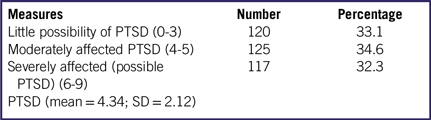
PTSD and depression were measured using a disaster mental health questionnaireReference Fujii, Kato and Maeda21 HQL questionnaire in supplementary material). The Screening Questionnaire for Disaster Mental Health (SQD) comprised 12 items. PTSD was measured using 9 items of the 12-item SQD. The PTSD result was interpreted in terms of severity of PTSD and had a cutoff point of slightly affected (0-3); moderately affected (5-4); and severely affected (6-9).
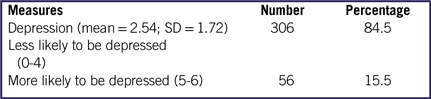
The 6 items of the 12-item SQD were used to measure depression. One example question asked was, “In the past month, have you noticed any changes in your stomach?” Depression was categorized in terms of severity, using the cutoff point scores. A score of 0-4 was less likely to be depressed and 5-6 was more likely to be depressed.
Functional Ability
Functional ability was measured using the Instrumental Activities of Daily Living (IADLs)Reference Lawton and Brody22 (HQL questionnaire). This questionnaire comprised 8 items. Each item measured by the scale relied on either cognitive or physical function, though all required some degree of both. The score was categorized as “0” for “less able” and 1 for “more able.” Lower scores indicated the higher level of dependence. The IADLs were interpreted as percentage of the dependence.
Coping Strategies
The coping strategies were measured using the standardized and previously tested and validated Brief Coping Scale (BCS) questionnaireReference Carver23 (HQL questionnaire). It comprised 28 items with 14 topics. Each topic had 2 items. The result was interpreted in a percentage and having a higher score indicated greater coping strategies.
Social Support
Social support was measured using the standardized and previously tested and validated Perceived Social Support (PSS) questionnaireReference Zimet, Powell and Farley24 (HQL questionnaire). This questionnaire comprised 12 items. The total scale was calculated when all 12 items had been answered. The possible range of a total score was 12-48. A high score meant high social support.
Resilience
Resilience was measured using the standardized and previously tested and validated Brief Resilience Scale (BRS)Reference Smith, Dalen and Wiggins25 (HQL questionnaire). This questionnaire consisted of 6 items. A sample question item was, “I tend to bounce back quickly after a hard time.” The Likert scale scores ranged from 1-5. The score was calculated by dividing the total sum by the total number of questions answered.
Health-Related Quality of Life
HQL was measured using the 12-item Short-Form Health Survey Version-2 (SFHS-v2)1Reference Ware, Kosinski and Keller26 (HQL questionnaire). This set of questionnaires comprised 12 items. SF-12v2 covers the mental and physical functioning and overall HQL. The scores were interpreted as PCS (Physical Component Score) and MCS (Mental Component Score). A higher mean score indicates better HQL. Physical and mental health composite scores (PCS and MCS) were computed using the scores of 12 questions and range from 0 to 100, where zero indicates the lowest level of health measured by the scales and 100 indicates the highest. The results were interpreted as the mean and standard deviation (SD) of mental component summary and physical component summary. A score above 50 represented better than average health status and below 50 represented poorer than average.
Ethical Consideration and Individual Informed Consent
The study was undertaken in partial fulfillment of the requirements for the first author’s degree of Doctor in Public Health (Major Global Health), Faculty of Public Health, Mahidol University.
The Ethics Committee for Human Research, Faculty of Public Health, Mahidol University, Thailand (COA.NO. MUPH 2016-122; 2016, September 26), and Nepal Health Research Council, Nepal (Ref: 718; 2016, October 26), approved the study protocol.
Participants were approached with a study sheet containing information about the study. Each study participant was first informed about the study and was asked if he/she would participate in the study. A written informed consent was obtained before the interview. Participants were well informed that they could opt out of the study at any time without providing justification.
Data Management and Analysis
Data were collected in a paper questionnaire and were later entered into a Microsoft Excel sheet. Data were curated against the paper questionnaire for outlying and aberrant data and were later copied to a Statistical Software for Social Sciences (SPSS; IBM Corp, Armonk, NY) sheet. Data were analyzed using SPSS® software (version 18; IBM Corp, Armonk, NY). For descriptive statistics, frequency and a percentage distribution were computed.
For inferential statistics, a multivariate analysis was performed to examine factors affecting HQL. Statistical significance was set at a P-value of 0.05. “B” was the nonstandardized regression coefficient, and “β” was the standardized regression coefficient. The standardized regression coefficient was computed to explore the factors affecting HQL.
RESULTS
General Characteristics
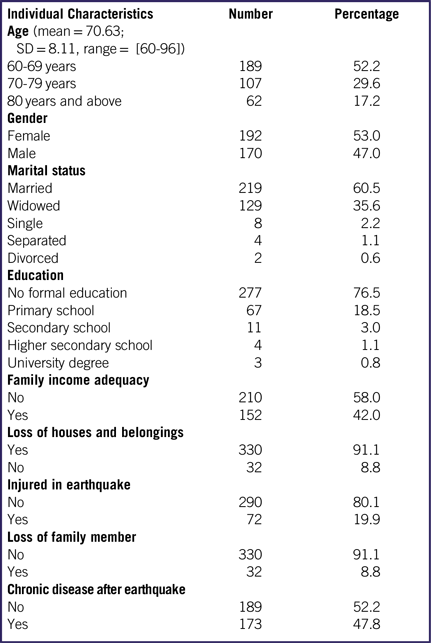
The mean age of the participants was 70 years (Table 1). The majority (53%; 192/362) of the participants were female, around 61% (219/362) were married, and approximately 77% (277/362) had no formal education. More than a half (58%; 210/362) of the participants’ incomes were perceived to be inadequate (as reported by the respondents). The majority (91%; 330/362) of the participants lost their houses and belongings due to the earthquakes. One in 5 (20%; 72/362) was injured. About 10% (32/362) of older adults lost a family member in the earthquakes. Nearly a half of the participants (48%; 173/362) had a chronic disease.
Frequencies and Percentage Distribution of General Characteristics of Participants (n = 362)

Posttraumatic Stress Disorder
More than one-third (35%; 125/362) of the participants were moderately affected by PTSD, nearly one-third (32%; 117/362) were severely affected by possible PTSD, and about one-third (33%; 120/362) of the participants had little possibility of PTSD (Table 2).
Frequencies and Percentage of Level of PTSD (n = 362)

Depression
About 16% (56/362) were more likely to be depressed, whereas the majority (85%; 306/362) of the participants reported that they were less likely to be depressed (Table 3).
Frequencies and Percentage of Level of Depression (n = 362)

Functional Ability
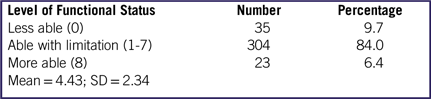
The majority (84%; 304/362) of the participants were able to function with some limitation. About 10% (35/362) of them were “less able,” indicating a high dependence (Table 4). Less than one-tenth (6%; 23/362) were “more able” to function.
Frequencies and Percentage of Level of Functional Status (n = 362)

Coping Strategies
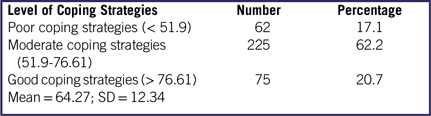
More than a half (62%; 225/362) of the participants reported moderate coping strategies. Less than a quarter (21%; 75/362) of the participants had good coping strategies (Table 5). Only less than a half (17%; 62/362) had moderate coping strategies.
Frequencies and Percentage of Level of Coping Strategies (n = 362)

Social Support
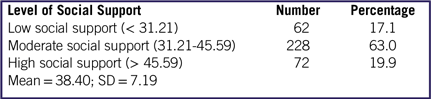
Less than one-fifth (17%; 62/362) of the participants agreed that they have low social support (Table 6). The majority (63%; 228/362) of the participants had moderate social support, and about only one-third (20%; 72/362) perceived themselves to have high social support.
Frequencies and Percentage Distribution of Level of Social Support (n = 362)

Accessibility to Resources
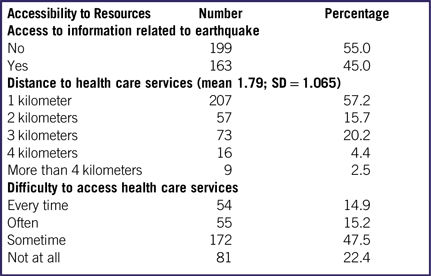
More than a half (55%; 199/362) of the participants agreed that access to the information was related to the earthquakes during and/or after their occurrence (Table 7). More than a half (57%; 207/362) of the participants agreed that the distance to health care services was less than a kilometer. Almost half (48%; 172/362) of the participants had experienced difficulties accessing health care services.
Frequencies and Percentage Distribution of Participants’ Accessibility to Resources (n = 362)

Resilience
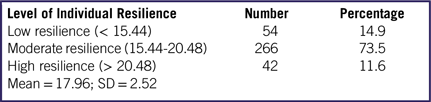
The majority (74%; 226/362) of the participants had moderate resilience (Table 8). Only a few (12%; 42/362) of the participants reported that they had a high resilience. About 15% (54/362) reported having a low resilience.
Frequencies and Percentage Distribution of Level of Resilience (n = 362)

Health-Related Quality of Life
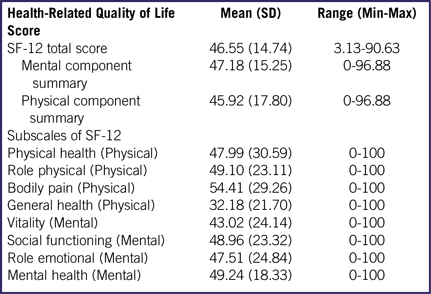
HQL among older adults after 1.5 years of 2015 earthquakes in Nepal was measured to explore the mean scores for HQL (Table 9). This also includes measures by subscales of HQL, including the percentages for mental and physical components. The score of total SF-12 ranged from 3.13 to 90.63, with a mean score of 46.55 and SD of 14.74. Both the physical and mental health components summary showed more or less the same in mean scores, which were 45.92 and 46.55, respectively. In the subscales of the physical health component summary, the highest mean score of 54 was seen in bodily pain, and the lowest mean score of 32 was shown in the general health perceptions. In the mental health component summary, the highest mean score of 49 was found in social functioning, whereas the lowest mean score of 43 was found in the vitality.
Summary of Mean Scores of Participants’ Health-Related Quality of Life Measures and Subscales (n = 362)

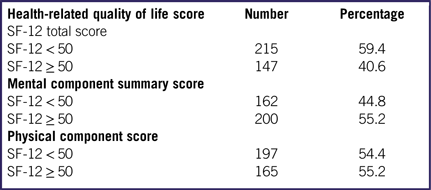
The study revealed that more than a half (59%; 215/362) of the participants had poor HQL. In addition, more than a half (54%; 197/362) of the participants had poor physical health, and nearly a half (44%; 162/362) of the participants had poor mental health (Tables 10).
Frequencies and Percentage Distribution of Participants’ Health-Related Quality of Life Summary Measures (n = 362)

Factors Affecting Health-Related Quality of Life
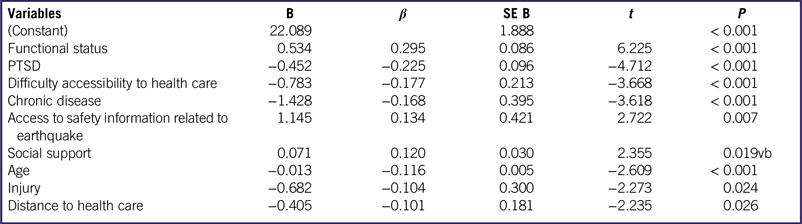
Using multivariate regression, the following factors were found to affect HQL (Table 11): (1) age (β = −0.116, P < 0.001); (2) injury (β = −0.104, P = 0.014); (3) distance to health care facility (β = −0.101, P = 0.026); (4) access to safety information related to an earthquake (β = 0.134, P = 0.007); (5) social support (β = 0.120, P = 0.019); (6) chronic disease (β = −0.168 P < 0.001); (7) PTSD (β = −0.225, P < 0.001); (8) functional status (β = 0.295, P < 0.001); and (9) difficulty of accessibility to health care services (β = −0.177, P < 0.001), which was significantly associated with HQL. Approximately 31% of variability of HQL could be predicted by these predictors.
Summary of Multiple Regression Analysis for Predictors of Health-Related Quality of Life Participants (n = 362)

RReference Adhikari, Mishra and Babu Marahatta2 = 0.31
B is nonstandardized regression coefficient; β is standardized regression coefficient; SE B is Standard Error for nonstandardized regression coefficient.
Higher age of the participants increased the likelihood of having a poor HQL. With a unit change in age, HQL decreased by 0.116 units. Injuries from the earthquakes tended to decrease HQL. With a unit change in injuries, HQL decreased by 0.104 units. Longer distances to health care facilities were associated with a poor HQL. With a unit change in distance to health care, HQL decreased by 0.101 units. Accessibility to safety information related to an earthquake was associated to have a better HQL. With a unit change in accessibility to safety information related to an earthquake, HQL increased by 0.134 units. A good social support tended to improve HQL. With a unit change in social support, HQL increased by 0.120 units. Chronic disease was associated with a poor HQL. With a unit change in chronic disease, HQL decreased by 0.168 units. PTSD was associated with a poor HQL. With a unit change in PTSD, HQL decreased by 0.225 units. A good functional status increased the possibility of obtaining a good HQL. With a unit change in functional status, HQL increased by 0.295 units. Difficulty of accessing health care services was associated with a poor HQL. With a unit change in the difficulty of accessing health care, HQL decreased by 0.177 units.
DISCUSSION
Overall Findings
This is the first study to explore HQL among the older adults at 1.5 years after the Gorkha earthquakes. The study found poor HQL among older adults living in Lalitpur District of Nepal and that HQL was affected by age, chronic disease, functional status, social support, and limited access to resources related to an earthquake. In addition, social support and access to resources after the earthquakes influenced better HQL of older adults.
Age
Age had a linear association with poorer HQL among older adults. Being older and having chronic diseases may reduce social involvement and activity and, therefore, can hinder older adults’ physical and mental health. This study was consistent with a previous study conducted among older survivors at 15 months after the Sichuan earthquake in which advanced age was a significant predictor of HQL.Reference Jia, Tian and Liu27
Injury
Injury had a significant negative association with HQL among older adults in Nepal. While injuries can decrease the quality of life among all age groups, the elderly population can have worsening impacts due to delayed recovery, higher immobility, and poor physical abilities. In a cohort study conducted over a 6-month period after an earthquake in Padang city, Indonesia (2009), a significantly lower quality of life among injured people was reported compared with those uninjured.Reference Sudaryo, Besral and Endarti28
Chronic Diseases
This study revealed a significant negative association between chronic disease and HQL among older adults after the 2015 Gorkha earthquakes. In a cross-sectional study conducted among 2525 survivors of the Wenchuan earthquake, having chronic diseases negatively affected the HQL even after 3 years of the earthquake.Reference Wen, Shi and Li29 For the elderly living alone, chronic diseases may become a double burden because it may further limit their social participation (due to lack of relatives or neighbors to support them) and may further compromise HQL.Reference Liu, Zeng, Li and Wang30 With the change in population dynamics (emigration of youths from Nepal) and urban culture coupled with the increase in the number of nuclear families, the elderly population in Nepal is further made vulnerable due to deprivation of a cohesive familial support and neighborhoods.Reference Mishra and Adhikari1,Reference Yadav31
Posttraumatic Stress Disorder
This study revealed a significant negative association between PTSD and HQL among older adults after the earthquakes in Nepal. This could be explained by the fact that older adults in Nepal were more vulnerable to feel the impact of earthquakes than the adults. Due to a relative lack of high mobility compared to the adults, consequent decrease in social participation, and the nature of being homebound, older adults may have experienced more aftershocks that lasted for more than a year. During the Wenchuan earthquake, survivors experienced PTSD even after a year.Reference Xu and Song32 Consistently, previous studies reported an association of the poorer quality of life with PTSD.Reference Khachadourian, Armenian, Demirchyan and Goenjian9 In a cross-sectional survey of Wenchuan earthquake survivors, quality of life and mental health were found to be correlated with score of the PTSD symptoms. In the same study, symptoms of PTSD were found to be relatively high, and the quality of life was poor among victims in the hard-hit areas at 3 years after the earthquake.Reference Wen, Shi and Li29 In Nepal, mental health and psychological issues are labeled as mental health problems, highly stigmatized, and are often underprioritized.Reference Adhikari, Mishra and Babu Marahatta2,Reference Rijal33 Given this cultural backdrop, the majority of older adults do not like to accept that they might be suffering from mental health problems and psychological issues that can lead to delayed treatment seeking behavior, worsening of symptoms, and development of complications.
Functional Status
The study found a positive significant association between functional status and HQL among older adults after the earthquakes. The findings are consistent with the number of post-earthquake studies in which the functional status of older survivors was associated with older adults’ HQL.Reference Liang and Ju34 The current study was consistent with a cross-sectional study on predictors of quality of life and depression among 189 older people living in temporary houses at 13 months after the Wenchuan earthquake in western China that reported IADLs as predictors of HQL.Reference Xie, Chen and Chen35 Those older adults, who were physically, mentally, and socially active in the aftermath of the earthquake, had better HQL. A majority of the older adults were found “more able” to execute their routine works, such as using transportation, housekeeping, and finances; however, they were less able for activities such as food preparation, handling finances, shopping, laundry, and self-medication.
Access to Safety Information Related to the Earthquakes
The access to safety information related to an earthquake was significantly associated with HQL among older adults. The information exchange after disaster was mostly word of mouth in hills and mountains. Media, such as radio and television, were effective, facilitating information sharing. The post-earthquake rescue policies significantly improved HQL of survivors and directly affected the promotion of the physical component score of survivors.Reference Liang and Wang36
Difficulty Access to Health Care Facilities
Access to health facilities depends on distance, facilitators, and barriers of mobility – means of transport, road conditions, cost of travel and other direct and indirect costs – and are established to hinder the utilization of health care and affect the health outcome in developing countries.Reference Adhikari, Phommasone and Pongvongsa37,Reference Acharya, Kaehler and Marahatta38 In this study, difficulty to access health care services was significantly associated with HQL among older adults. A previous study showed that patients living farther away from health care facilities had worse health outcomes than those who lived closer.Reference Kelly, Hulme, Farragher and Clarke39 Those who were injured and had chronic illnesses needed support and assistance for seeking health care services. Most of the time, older adults could not reach the health care services due to poor road conditions and their injuries. However, the majority of the participants (without significant injuries) indicated that they had access to health care services after the earthquakes such as mobile clinics, hospitals, and health posts. The study resonates with a previous study, in which older adults were able to attend health centers.Reference Adhikari, Upadhaya and Paudel40 All medical services for the earthquake victims were provided free of charge because there is no universal health coverage, and health expenses are generally out of pocket in Nepal. Most of the participants got access to a hospital and health post for a basic health checkup and treatment. Nevertheless, for those who are injured and lose mobility due to earthquakes, remote-based intensive care facilities are critical.Reference Adhikari, Mishra and Babu Marahatta2
Social Support
Social support had a significant positive association with HQL among older adults after the earthquakes in Nepal. The significance of social support in predicting HQL could be attributed to the positive impact of emotional and financial support from family and friends. For those older adults living alone and on their own with less support were likely to have poor HQL. This study was consistent with a cross-sectional study from China in which the earthquake survivors with strong social support had a better quality of life.Reference Ke, Liu and Li41 Another study showed that personal safety, the neighborhood physical activity environment, social support for physical activity from family or friends, and neighborhood social cohesion were positively associated with mental HQL.Reference Van Dyck, Teychenne and McNaughton42 A study from Armenia conducted 23 years after the 1988 Spitak earthquake reported social support to be significantly associated with a better quality of life.Reference Khachadourian, Armenian, Demirchyan and Goenjian9 In Nepal, this study echoes a previous study, which showed that the social and emotional support of the family was found to be a protective factor against developing psychosocial problems in older people.Reference Adhikari, Upadhaya and Paudel40
Implications for Health Policy and Disaster Preparedness
A recent systematic review classified the disaster risk reduction interventions into primary, secondary, and tertiary actions taken at an individual/household, community, and at health system levels.Reference Chan, Man and Lam43 The primary measures at individual/household level can range from increasing the health and disaster risk literacy. For example, through training in first aid, risk assessment, understanding warning and evacuation, and increasing access to clinics and vaccinations for preventable diseases. A community can be prepared by increasing the dissemination of disaster-related information through education and community engagementReference Adhikari, Mishra and Raut12 and having contingency plans for medical stocks and vaccination, and kits for first aid.Reference Adhikari, Mishra and Babu Marahatta2 These preparedness interventions at the individual and community levels, however, require a health system’s plans to increase health and disaster-risk literacy, disaster contingency plans, training in disaster management, and establish routine childhood and emergency vaccination programs. Ensuring the health system’s response and facilities to treat disaster injuries, including the resilience of these facilities through backup plans, are equally important. Nonetheless, these responses and preparedness are also affected by the socio-geographical conditions (remote versus poor), health system’s functionality (performance of the health system in health coverage), and the economic conditions of the country (budgetary constraints and the availability of backup plans).Reference Adhikari, Mishra and Babu Marahatta2 Nepal is vulnerable to risks and impacts from disasters because of the factors embedded in individual, community, and a health system’s preparedness. In addition to these layers of vulnerabilities, extreme age groups, pregnant women, and disabled persons are even more vulnerable during a disaster.
This study highlights that the older population in Nepal was affected by age, decreased mobility, injuries, poor access to health care, weak social support, and PTSD. Although Nepal has made good progress in reducing infant and maternal mortality rates over the decades, the universal health coverage through a primary health care system is still poor.44 While increasing the health coverage through strengthening the health system and universal coverage of primary health care require time and resources, cost-effective and immediate measures using the principles of community engagementReference Adhikari, Pell and Phommasone45,Reference Adhikari, James and Newby46 could be used to mitigate the impacts of disasters in Nepal.Reference Adhikari, Mishra and Babu Marahatta2,Reference Adhikari, Mishra and Raut12 Establishing a disaster preparedness group within the community consisting of volunteer community members can be an initial step. These volunteers can be responsible for relaying the earthquake-related information, identifying and assisting the vulnerable population (ie, extreme age groups, women, pregnant, disabled, and diseased), and supporting these special groups to help access health care and build their social network.Reference Adhikari, Mishra and Raut12,Reference Peleg47 In the immediate terms, a disaster preparedness group can work under the stewardship of the Nepal Government to promote the recognition of their work and accountability.
Strengths and Limitations
This is the first comprehensive study to explore HQL, combining several of the instruments available in the literature to include all of the dimensions, hence broadening the scope of the findings. Although the standard sampling procedure and sample size were used in this study, the findings represent a population of a relatively urban district within Kathmandu valley and thus may compromise the generalizability to other districts, which were affected by the earthquakes. Nevertheless, given the similar socio-demographic characteristics of the population with commonalities in culture and tradition, the findings in this study can be applied to other earthquake-affected districts of Nepal. Because this study employed a quantitative questionnaire and relied on its responses, it could have suffered from recall and social desirability biases. Care was taken to build up rapport, and questions were often frequented to ensure the validity of the responses. By virtue of using a quantitative questionnaire, deeper reasons for the responses presented in this study could not be explored. In the future, qualitative interviews using in-depth interviews and focus group discussions will be helpful in understanding HQL, contributing factors, and the reasons behind the responses. In addition, building on this study, future research can explore the possible interventions to address HQL of older adults. Operational and health system studies can further explore the feasibility and cost-effectiveness of future interventions, specifically to mitigate the hazards of disasters in the special population.
CONCLUSION
This study revealed poor HQL following Gorkha earthquakes in Nepal. Health-related, poor quality of life was found to be associated with older adults’ injuries, chronic disease, and their functional limitation after the earthquakes. In addition, social support and access to resources after the earthquakes influenced HQL of older adults. Those who had chronic diseases were more likely to have a poorer HQL. Social support among older adults and family members, including community, needs urgent improvement through community-initiated social support and counseling for groups and families. This is also because elderly victims seem to lose the social network after the earthquakes. There is an urgent need for an intervention to mitigate the poor HQL among older adults in disaster-affected districts of Nepal.
Abbreviations
- BCS
Brief Coping Scale
- BRS
Brief Resilience Scale
- HQL
health-related quality of life
- IADLs
instrumental activities of daily living
- MCS
Mental Component Score
- PCS
Physical Component Score
- PSS
Perceived Social Support questionnaire
- PTSD
posttraumatic stress disorder
- SD
standard deviation
- SFHS
Short Form Health Survey
- SPSS
Statistical Software for Social Sciences
- SQD
Screening Questionnaire for Disaster Mental Health
- VDCs
Village Development Committees
Acknowledgments
We are thankful to all of the respondents of this study. We would like to express our gratitude to Bijaya Laxmi Shrestha who helped coordinate the study with the local community. We are very grateful to research assistants Sita Thapa and Sheela Shrestha for their work with data collection. We are thankful to Bina Wagle for her support in training the research assistants.
Author Contributions
SW, KA, PK, MVP, and PS were involved with the concept and design of the study. SW was responsible for data management, curation, and analysis. SW and BA were responsible for the drafting of the manuscript, and KA, BA, PK, MVP, and PS were involved in the overall supervision. All authors read and approved the final proof.
Conflict of Interest Statement
The authors have no conflicts of interest to declare.
Data Availability Statement
All relevant data from this study are within the manuscript and supporting files.
Supplementary material
To view supplementary material for this article, please visit https://doi.org/10.1017/dmp.2019.154