1. Introduction
One might intuit that there are two ways to create something useful. First, conceive the thing’s purpose in advance and somehow determine, top-down, how it should be built—“intelligent design.” Second, generate (somehow) many possible solutions and choose among them those that work best for the purpose at hand—selection. The culling of failed structures repeated many times over (“iterated variation-and-selection”; Godfrey-Smith Reference Godfrey-Smith2015), each time starting with successful products of the last, will hone the fit to whatever use. It is a tribute to the tyranny of the belief in a purposeful universe and its creator that the idea that the second way to create provides a fully coherent “how possibly” explanation for the exquisite fit of organisms to their environments is scarcely 150 years old and still not widely accepted. Nevertheless it accomplishes, in Maynard Smith’s (Reference Maynard Smith and Waddington1969, 82) words, “The main task of any evolutionary theory … to explain adaptive complexity, i.e. to explain the same set of facts which Paley used as evidence for a Creator.”
Arguably, those 150 years have left us with a too narrow version of that second way of thinking, the narrowing being the downside of one reason for the success among biologists of Darwin and Wallace’s broad theory. Depew and Weber (Reference Depew and Weber2011, 89) interestingly assert that “natural selection, would probably have gone the way of other grand nineteenth century ideologies or ‘meta-narratives’ if it had not been turned in the first half of the twentieth century into a mathematized science. In this respect, Darwinism’s fate contrasts with that of two other seminal nineteenth and early twentieth century discourses, Marxism and Freudianism.” But the almost exclusive focus of this mathematization on allele frequency changes in conspecific sexual populations (Gould Reference Gould and Grene1983; Smocovitis Reference Smocovitis1992; Pigliucci Reference Pigliucci2008b) to the general neglect of trans-species macroevolutionary modeling, asexuals, and prokaryotes biased the synthesis toward “bean-bag genetics” (Rao and Nanjundiah Reference Rao and Nanjundiah2011) and ultimately selfish gene centrism (Dawkins Reference Dawkins1976). Williams spoke for the majority in the mid-1960s when he wrote that “in explaining adaptation, one should assume the adequacy of the simplest form of natural selection, that of alternative alleles in Mendelian populations, unless the evidence clearly shows that this theory does not suffice” (Reference Williams1966, 4).
It was not until the last decade of the last century that many of evolutionary biology’s prominent theorists were willing to seriously take on board that evolution by natural selection (ENS) ensues of logical necessity for any entities exhibiting heritable variation in fitness (as in Lewontin’s [Reference Lewontin1970] formulation). Such entities can be found at the level of genes, cells, organisms, and species (multilevel selection, or MLS theory). There are, however, several good reasons not to extend ENS to the next higher level of the genealogical hierarchy, genera, or more generally supraspecific clades, in spite of a seeming fit to intuition. Indeed, clade selection (CS)—defined here as the differential persistence of clades due to clade-specific properties—maps imperfectly to Lewontin’s three-part recipe, and whether or not we consider it a form of ENS is a matter of choice. But a coherent CS theory is possible, can be shoehorned into our intuition about creation, and does do some explaining about how things are in the living world.
2. Imagine No Genetics
It is instructive in this context to contemplate a counterfactual history of Darwinism after 1900, one in which Mendel’s work remains undiscovered, Fisher sticks to agricultural statistics, and Watson and Crick never even meet. We would still have paleontology, biogeography, and phylogenetics (at least protein sequence-based), “metanarratives” already considerably more mathematized than Marxism or Freudianism (Hunt, Hopkins, and Lidgard Reference Hunt, Hopkins and Lidgard2015 and work cited therein). In such an alternative universe our ENS paradigm might be species selection.
Species selection was first championed by paleontologists (Stanley Reference Stanley1979; Arnold and Fristrup Reference Arnold and Fristrup1982; Vrba and Eldredge Reference Vrba and Eldredge1984; Jablonski Reference Jablonski2008) and is the easiest sort of supraindividual ENS for evolutionists in the universe we actually do inhabit to accept, especially when arguments for it are uncoupled from disputes around the evolution of altruism within species that take up so much of the literature. The former type of theory (called MLS2) addresses the differential reproduction of groups, while the latter (MLS1) looks at the reproductive advantages accruing to individuals from group membership (Damuth and Heisler Reference Damuth and Heisler1988; Okasha Reference Okasha2001, Reference Okasha2006). Many biologists would now accept that speciation and extinction are—for sexual species—the species-level equivalents of organismal birth (reproduction) and death, that daughter species resemble their parent species (exhibit heredity), and thus that variable traits that enhance diversification (increase speciation or suppress extinction) will be selected for at the level of species. The academic and popular paleontological literature focuses as much on extinction (and thus, indirectly, survival) as on speciation (e.g., Raup Reference Raup1991; Van Valen Reference Van Valen and Glen1994; McKinney Reference McKinney1997; Jablonski Reference Jablonski2001; Longrich, Bhullar, and Gauthier Reference Longrich, Bhullar and Gauthier2012; Wagner and Estabrook Reference Wagner and Estabrook2014), perhaps because it is easier to observe and more dramatic. In contrast, the gene-centric Modern Synthesis, although touting “survival and reproduction,” values the former only insofar as it serves the latter.
In the early 1980s, when species selection seemed a radical notion linked to punctuated equilibria, its major proponents cautiously and conservatively focused on identifying speciation-promoting (or extinction-deferring) traits that could be cast as emergent at the level of species (Vrba Reference Vrba1983; Vrba and Gould Reference Vrba and Gould1986; Grantham Reference Grantham1995, Gould and Lloyd Reference Gould and Lloyd1999; Lieberman and Vrba Reference Lieberman and Vrba2005). Parameters like population size, sex ratio, or geographic distribution of populations would be such traits. On the other hand, features common among species because they are commonly beneficial to organisms within species would not count. The higher-level consequences of such “aggregate traits” would be considered mere by-products or effects, even when such effects also enhance species diversification (positive effect macroevolution). Indeed, only when an emergent trait selected for at the species level is for that reason common among organisms in spite of being detrimental to them as individuals (“downward causation”) was species selection to be invoked. Sex, supposedly wasteful for individuals but good for species, would be a paradigmatic example of such a trait (Maynard Smith Reference Waddington1988).
More recently though, several theorists have come to accept positive effect macroevolution—that even traits that might be selected for among individuals within species can have independent speciation-promoting or extinction-discouraging effects, and thus are subject to selection at both levels (Damuth and Heisler Reference Damuth and Heisler1988; Jablonski Reference Jablonski2007, Reference Jablonski2008). The prevalence of such traits within species reflects the benefit to individuals, while the prevalence of species whose members exhibit such traits may reflect additional speciation-promoting or extinction-discouraging effects. Determining the relative strengths of these collaborating forces might of course be very difficult, but as Jablonski nicely summarizes the current state of play
The growing acceptance of species selection (in the broad sense [including effect macroevolution]) as a potential evolutionary force derives in part from an expansion in the range of evolutionary questions being addressed. The focus is no longer so exclusively on changes in allele frequencies and how those might drive the origin of features such as eyes and horns, but instead it more actively includes the frequencies of such features among clades (how many species have horns), the fates of those features (how long do horns last, in evolutionary terms), and origination and extinction rates of species and clades (why do clades wax and wane, and do horns determine clade dynamics). (Reference Jablonski2008, 502)
3. Major Transitions Theory and Other Reasons Why CS Is Interesting but Problematic
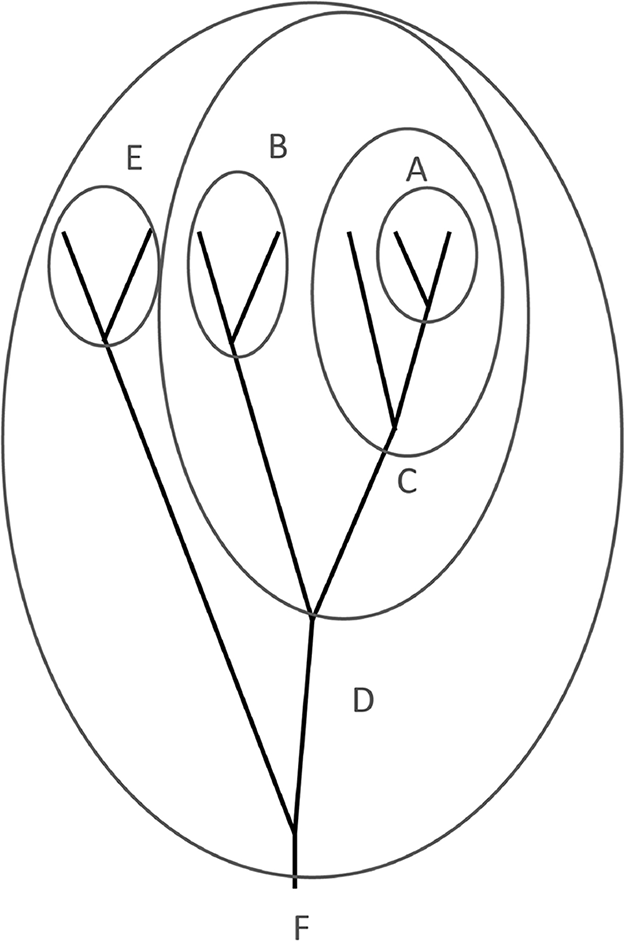
In the current century, interest in MLS theory has been rekindled by the recognition that most major transitions in evolution (MTE; Maynard Smith and Szathmary Reference Maynard Smith and Szathmary1995)—such as the origin of cells, eukaryotes, multicellularity, and eusocial species—involved surrendering (at least partially) the evolutionary interests of lower-level reproducing entities in favor of those of a higher-level collective reproducer (Okasha Reference Okasha2005). If in fact MLS was itself necessary for establishing the hierarchy of genes, cells, organisms, and species in the first place, it is surely worth our serious attention. But the MTE connection also points out one of several problems in extrapolating upward from species selection to “genus selection” or more generally to CS (see fig. 1 for a definition of ‘clade’). Species in a genus or higher-level clade (and, as we will see, bacteria in a clone) do not surrender their evolutionary interests to a higher-level collective: they do not depend on each other for reproduction or survival in the quite direct way that genes in a genome, cells in a multicellular organism, or organisms in a sexually reproducing species do. Nor, unlike lower-level entities (arguably including species), are clades collectively “interactors” conforming to a formulation first fleshed out by Hull (Reference Hull1980). Damuth (Reference Damuth1985, 1132), who is also opposed to species selection but not to a form of community selection, noted that “clades are not localized, their members do not share an environment, and they cannot be said to respond to local selective regimes.” Certainly, members of a clades are more likely to occupy the same “adaptive zone” in Simpson’s sense (Arnold Reference Arnold2014), but this is not required by the definition of ‘clade’. Moreover, Haber and Hamilton (Reference Haber and Hamilton2005) note that clades lack the cohesion-generating relationships (such as interbreeding) that help define at least some species as individuals.
Clades within clades. Lines represent species. Clades comprise a common ancestral species and all and only its descendant species (surrounded by ellipses). Each clade is necessarily part (a “subclade”) of a more inclusive clade (as A is part of C, and C part of D), the subclade/clade distinction being relational. I use “clade” to refer to the most inclusive entity relevant in a specific context. Whether clades correspond to recognized supraspecific taxa such as genera or families is irrelevant: the hierarchy shown is rank-free (Okasha Reference Okasha, Calcott and Sterelny2011). Genes replicate, organisms reproduce, and species speciate, but by definition a clade cannot “cladiate” because all included subclades (and their subclades and individual species) remain parts of the clade. Clades can, however, grow (by comprising more species) and die (by the extinction of all contained species). Growth is one (but not the only) way in which chances of clade survival might be enhanced but, in the view presented here (contra Van Valen Reference Van Valen1989) is not by itself a measure of a clade’s evolutionary success.

There is also a simple reproductive process issue, encapsulated in the aphorism attributed to Michael Ghiselin by Hamilton and Haber (Reference Hamilton and Haber2006, 382): “Individuals copulate, and species speciate, but genera do not generate.” The means by which multicellular (sexual) individuals reproduce is different from that by which their constituent cells reproduce, and the means by which (sexual) species reproduce (speciate) is different from that by which the individuals making them up reproduce. In contrast, the only way a genus or higher taxon can “give birth” to another of the same rank is as a consequence of the speciation of a constituent species: there is no distinct genus- or higher clade-level reproductive mechanism. Similarly, asexual species (and bacterial clones) have no means of reproduction other than that enjoyed by the individuals (or bacterial cells) that make them up, and thus they are incapable of species selection, evolving as do clades, as detailed below. (Most theorists of species selection focus on sexually reproducing organisms conforming to the Biological Species Concept: few if any discuss asexuals or bacteria.)
Finally, there is an insurmountable logical problem. As Okasha (Reference Okasha2003, 740; see also Rieppel Reference Rieppel2008) puts it, “Clades do not have what it takes to be units of selection in the first place.” Reproduction of any sort is inconsistent with the very definition of the term. The reasoning here seems ironclad. Since a clade comprises an ancestor and all its descendants, it cannot have descendants that are not part of it (fig. 1). A clade can grow (by having more of its species alive at any one time), and it can die (if all its species go extinct). And it can survive variously long, thanks to the survival of one or more of its lineages. But it cannot—by the rules of logic that are at the base of my argument in this essay—reproduce.
Where I differ from Okasha and with the usual representations of ENS, however, is in my claim, fleshed out in the next sections of this essay, that differential persistence alone can support a process that we cannot dismiss as a form of ENS, unless we stipulate by fiat that ENS must involve reproduction of the selected entities. Many discussions of clade-level evolutionary processes, particularly in the paleontological literature, imply selection, to be sure (McKinney Reference McKinney1997; Finnegan et al. Reference Finnegan, Heim, Peters and Fischer2012; Longrich et al. Reference Longrich, Bhullar and Gauthier2012). But most fail to offer any sufficiently explicit MLS formulation or to distinguish between species-level and higher-level processes, paying little attention to the problem of nonreproduction of clades more inclusive than species, the problem I focus on here. In this my arguments parallel those of Bouchard (Reference Bouchard2008, Reference Bouchard2011, Reference Bouchard2014; see also Dussault and Bouchard Reference Dussault and Bouchard2016), whose emphasis has been on the persistence of clonal individuals and ecosystems. And although my thesis might seem to some to depend too much on a mere convention—cladist rules of naming—there are interesting and useful consequences to thinking this way.
4. Why Reproduction?
That ENS is indeed most often taken to entail some sort of reproduction of the target entities seems inarguable. “How else could such entities exhibit heritability?” one automatically asks. Even when ENS is cast as “survival of the fittest,” survival is useful only because it allows time for reproduction, understood to underwrite selection in one of three ways. First, when resources limit populations, one individual’s having more progeny entails others having fewer. Reproductive competition drives selection in this case. Second, even when there is no resource or population size limitation, more fecund variants will (all else being equal) eventually come to dominate. A third way, having little to do with giving favored mutants the numerical edge, is as replenishment. It is only (or overwhelmingly most often) through a succession of selections on mutations of small effect that “complex adaptations” might arise and realize natural selection’s full creative potential, according to the Modern Synthesis. So after each step of selection, the favored mutant must proliferate in order to create a population in which the next mutation is likely to occur.
An experimentally tractable analogy that exemplifies such reproduction-as-replenishment is the sequential selection of bacteria resistant to increasingly high levels of an antibiotic (Toprak et al. Reference Toprak, Veres, Michel, Chait, Hartl and Kishony2011). Sensitive bacteria die at each step because they are killed by the antibiotic, not because resistant mutants have stolen their resources or crowded them off the Petri plate. There is no reproductive competition, but growth at each higher level of antibiotic requires a sizable population of organisms resistant to lower amounts of antibiotic in which subsequent mutations to resistance at higher amounts might occur.
5. A Model for CS
Visualizing selection without reproduction—through differential persistence of clades alone—requires some perspectival reorientation. The entities under selection, although differing in survival potential synchronically (horizontally in fig.1) are not delimitable diachronically (vertically), and there are no discrete generations as in the microbial example above. The hierarchy of clades is “rank-free” in the sense of Okasha (Reference Okasha, Calcott and Sterelny2011), comprising nested individuals, indefinite in number. Although species reproduce and go extinct, clades (i.e., ancestral species together with their descendant species) can only survive (with or without growth) or go extinct. The survival of a single species makes the nested set of clades to which the species belongs a success, as far as persistence goes, but is not necessarily a mark of CS. If survival is due only to “chance” (independent of the properties of surviving species or clades), then this is merely species “sorting” (Vrba and Gould Reference Vrba and Gould1986). If survival is due solely to individual or species-level properties (e.g., organismal tolerance to environmental challenges or broad geographical distribution of the species’ populations), that would also be nonselective at the clade level. If however it is a property of the clade that its species are numerous, widely separated from each other (dispersed) geographically or divergent ecologically (see below), and such a property explains why at least one species survives (why the clade has greater survival potential), then this is CS.
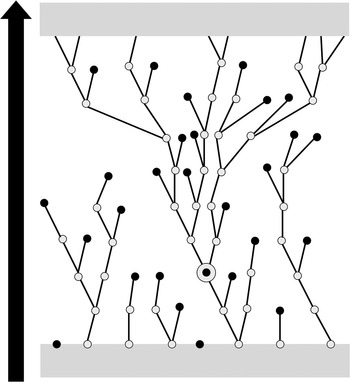
Again, bacterial genetics provides a usefully analogous model (fig. 2): the chemostat. In a continuously operated constant-volume chemostat, the number of cells is kept constant by balancing discharge of culture with input of fresh sterile medium. Assume that at time t 0 there are N cells, each reproducing by fission every m minutes. Because culture discharge randomly and continuously eliminates cells, roughly one-quarter of these N cells will have two daughters remaining in the chemostat at t 0 + m minutes, while half of them will have only one daughter, and one-quarter will have none. Lineages derived from original cells will continue to be lost until, at some time in the future, all cells in the chemostat will be descendants of only one of the original N cells, constituting a single clone. If mutants arise that more efficiently make use of the chemostat’s resources (and thus leave more than the average of one surviving daughter every m minutes), such mutants will more quickly and more certainly become the exclusive ancestors (founders) of a future population (achieve “fixation”) in the chemostat (Dykhuizen and Hartl Reference Dykhuizen and Hartl1983).
Differential clone or clade persistence. Model either for a chemostat with a constant population of eight cells or for clade growth in a similarly limited environment. Circles represent cells or species that can have two, one, or zero progeny cells (surviving chemostat discharge) or species (surviving extinction). Gray circles have one or two surviving progeny; black circles have none. The large double circle is the ancestor of the single lucky clone or clade that persists into the future. If there is no selection, the average time required for all descendents to be part of this single clone or clade is 2N “generations,” where N is the number of cells or species in the population (Zhaxybayeva and Gogarten Reference Zhaxybayeva and Gogarten2004 and citations therein). “Fixation” is faster if there is selection. Vertical arrow is time; horizontal bars, the past and present.

Although a takeover of the chemostat by more efficient resource utilizers depends on their differential reproduction, it is survival or persistence of the clone founded by the mutation (and thus of the deeper clones in which it is nested) that interests us. Should the chemostat suddenly suffer a loss of almost all of its contents (a “mass extinction”), being present in greater numbers should give our clone an advantage, a greater chance of having some surviving cells.
Another way to increase survival potential would be to diverge ecologically. Chemostats offer two niches, floating free in the middle or clinging to the walls: mutations favoring the latter are selected for because mutants are not washed out in discharges. Clones that more readily spawn lineages diverging ecologically like this, even if less fecund, will persist longer (Dykhuizen and Hartl Reference Dykhuizen and Hartl1983). Also favoring clone survival could be changes in mutation rates. In laboratory evolution experiments, “mutator” alleles can be selected as “hitchikers” on the favorable mutations they have fostered (Notley-McRobb and Ferenci Reference Notley-McRobb and Ferenci2000; Elena and Lenski Reference Elena and Lenski2003).
In the analogy I want to draw, bacterial cells in a chemostat correspond to species, and clones correspond to (indeed are) clades. Clones can grow (through the reproduction of the cells that are their parts) or die (through death of all cells), but they cannot reproduce. If, analogously, the biosphere is constrained in the number of species it can hold—if speciation and extinction are in even a rough balance—and if there are no differences in survival chances among species, the biosphere will of necessity eventually come to hold a single clade, corresponding to the single clone in the chemostat model. Indeed, this will eventually happen even in a continually expanding biosphere, as long as there is some extinction. And of course there will be differences in survival potentials because of intrinsic clade-level properties, hastening such a result.
6. Objections to the Theory
Several objections can be raised against any claim that ENS can occur via differential clade persistence. Here I hope to counter five obvious ones.
6.1. First Objection: Clades Are Not Easily Compared, and Relevant Causal Properties Are Hard to Establish
The rank-free nature of clade hierarchies (Okasha Reference Okasha, Calcott and Sterelny2011) and the asynchrony of speciation events make enumerations and comparisons problematic. In figure 1, for instance, is it the relative survival potential of B versus A or rather B versus C that selection addresses? Contemporaneity of clade ancestors might be a relevant parameter but hard to establish, and assessments of the relative abundances of species within clades will be dependent on contestable definitions of ‘species’ (Rabosky Reference Rabosky2015). Genus-to-genus or phylum-to-phylum comparisons are even harder to defend. Moreover, “survival to our particular year or moment has no privileged ontological status” (Van Valen Reference Van Valen and Glen1994, 202).
Biological causal properties will also be complex, theory dependent, and unverifiable, with forces leading to extinction often outside the apparent purview of selection (Leroi Reference Leroi2000). It is nevertheless nonsensical to assert that the biological features of clades have no influence on the relative likelihoods of persistence and are not selected at the clade level. Clades are not arbitrary groupings, like the 26 “higher taxa” one could assemble by alphabetical ordering of species names. These too might be differently represented among extinct and surviving species, but not for biological reasons. That we do not know and may never be certain about causes does not mean that there are not causes or that there is nothing to be gained by attempting to identify them.
6.2. Second Objection: There Are No Clade-Specific Properties
In The Structure of Evolutionary Theory, Gould writes: “I am not comfortable with this general argument, for no one has yet articulated firm and operational criteria for distinguishing true clade selection (based on irreducible fitness conferred by a clade-level property) from descriptive clade sorting (or differential survival) as an effect of lower-level properties belonging to species or organisms, but translating upwards to success or failure of a clade as a geologically persistent entity” (Reference Grene2002, 713). For sure, the persistence of a clade only because it possesses highly persistent species would not count as selection at the clade level. The size and habits of mammals might have spared them the fate of the dinosaurs with selection only at the level of species and their individuals. No “emergent” or clade-level specific properties need necessarily be invoked. However, there are in fact “firm and operational”—bona fide emergent—clade-level properties, dependent on lower-level properties only in the same sense that molecules depend on atoms, animals on their constituent cells, or species on individual organisms (see Okasha Reference Sterelny2014). And these clade-level properties cannot but have consequences for clade persistence. In particular, clades with (1) more species, (2) species that are more widely dispersed geographically, or (3) species that are more divergent (different) ecologically are, all else being equal, inarguably more likely because of such properties to survive challenges that are, respectively, (1) random, (2) geographically localized, or (3) restricted in their environmental or biotic effects. One might break each of these three compositional properties down into subcategories to make the list seem richer: there are very many ways to generate ecological divergence, for instance. But equally one might lump the myriad of organism-level properties normally considered selectable into a few, for instance, homeostasis, fecundity, and robustness.
Clades are indeed variously speciose (so very many beetles), dispersed (there are no marsupials in Europe), and divergent (many types of arthropods, few of tardigrades, although the latter are of equal or higher taxonomic rank) and must, all else being equal, variously survive because of this. Paleontologists commonly correlate clade persistence with such properties, and new methods for making causal inferences are under development (Mayhew Reference Mayhew2007; Rabosky and McCune Reference Rabosky and McCune2009; Wagner and Estabrook Reference Wagner and Estabrook2014; Hoehn, Harnik, and Roth Reference Hoehn, Harnik and Roth2016). In an exemplary early study, Jablonski distinguished two sorts of extinctions in marine bivalves and gastropods, concluding that “during background times, traits such as planktotrophic larval development, broad geographic range of constituent species, and high species richness enhanced survivorship of species and genera. In contrast, during the end-Cretaceous and other mass extinctions these factors were ineffectual, but broad geographic deployment of an entire lineage, regardless of the ranges of its constituent species, enhanced survivorship” (Reference Jablonski1986, 129).
Although such clade-level features do derive from properties that “translate upwards” from selection or drift at the levels of genes, cells, organisms, and species, they are not the same as those properties, and the functions for which such properties are selected at species and clade levels are different. Species selection for trait t might both relatively and absolutely increase the number of species with t. If but only if the latter happens, CS for species richness could then help explain why persistent clades are so frequently made up of species with t: these are connected but distinct explanans. Alternatively, a persistent clade might preferentially comprise species that are especially “evolvable,” but it is the resulting realized ecological disparity between the species, not the mechanisms diversifying them, that is the clade-level selected property. When a clade’s demise is attributable to its species collectively being too few, too geographically close, or too ecologically similar, these are clade-level deficiencies. The shared traits that are too similar are organism-level or species-level properties: that they are too similar is the clade-level property.
This disconnection is a sort of “screening off,” given that clade persistence attributable to species richness, dispersal, or divergence does not depend on how those properties are determined and that the determining lower-level processes are not foolproof (Sober Reference Sober1992). Of course, selection on lower- and clade-level properties can be fortuitously aligned, analogously to positive effect macroevolution for species. Uniquely, however, since clades are neither collective replicators nor interactors, there is no necessary “downward causation.” Species selection might be said to downwardly cause (in the sense that they would otherwise be absent) the presence of genes regulating sexual activity in sexually reproducing species. Sexually reproducing organisms necessarily need conspecific mates. But a beetle species does not similarly need any of the other 380,000 species in the clade Coleoptera (Smith and Marcot Reference Smith and Marcot2015). The causal arrow goes only one way. CS is thus a sort of limited positive “effect macroevolution” for nonreproducing entities.
What might override this limitation, making for a fourth clade-level selectable property with potential downward causation, would be intraclade cooperation. Competitive exclusion (Hardin Reference Hardin1960) notwithstanding, there are evolved syntrophies and symbioses among species in many clades. Indeed, the recently articulated Black Queen Hypothesis makes it seem inevitable that these will arise in certain environments (Morris, Lenski, and Zinser Reference Morris, Lenski and Zinser2012; Fullmer, Soucy, and Gogarten Reference Fullmer, Soucy and Gogarten2015). Moreover, some clade-wide processes might be seen as collaborative strategies. Lateral gene transfer, for instance, arguably increases the survival potential of strains within bacterial species, by establishing a “pangenome” of genes that can be drawn on as needed—what McInerney et al. (Reference McInerney, Pisani, Bapteste and O’Connell2011) call the Public Goods Hypothesis. Genes can in fact be shared between disparate species in the clade Bacteria (and with their archaeal sisters). Agents of gene transfer may well be “selfish” in origin, but that Bacteria have survived several billion years on this planet is to some extent attributable to sharing genes and maintaining a library of shareable genes (the global pangenome). Since gene sharing requires commonalities of genetic systems (e.g., a universal genetic code), the presence of such features in most contemporary genomes might be seen to reflect downward causation at the time of LUCA (the Last Universal Common Ancestor). Vetsigian, Woese, and Goldenfeld (Reference Vetsigian, Woese and Goldenfeld2006) have advanced something like this argument with respect to the code, as have Jankovic and Cirkovic (Reference Jankovic and Cirkovic2016) in an even broader theory about the genetic apparatus in general.
The biggest clade of all, “Life,” comprising LUCA and all its descendants, might be thought of as an individual in the sense that species are (Ghiselin Reference Ghiselin1974; Hull Reference Hull1976), only older and much more loosely held together. The claim made here that clade-level properties—especially possible intraclade cooperation—are targeted by selection opens the door to claims that Life as an individual has adaptations, and thus to a naturalized version of the Gaia hypothesis (Doolittle Reference Doolittle2014). One objection to Gaia has been that selection requires more than a single selected entity, especially if it is to accrue complex adaptations. CS seems to get around this objection (next section). Furthermore, no theory of the origin of Life holds that LUCA was alone on the earth, that there were not competing cells, species, and thus whole clades that have left no surviving cellular lineages. So Life had its competitors: it just drove them all to extinction—it is the last clade standing.
6.3. Third Objection: CS Is Not Cumulative and Thus Not “Interesting”
Prominent philosophers of biology are not so much opposed to the notion of selection on survival alone as to the possibility that it plays a significant creative role in ENS. Okasha notes that defenders of CS “concede that clades do not reproduce, but argue that differential extinction of clades might still occur. This is true enough. However, selection on entities that do not reproduce their kind is not very interesting, and will not lead to adaptation” (Reference Okasha2006, 214, emphasis mine). Okasha’s skepticism is based in large part on the nonreproduction of clades, as would be that of Godfrey-Smith, who muses that “when we consider elements of the tree of life even larger than species, the idea of reproduction becomes even more tenuous, however. I see the logical difficulties that Okasha cites as a symptom, rather than the core, of the problem. There are probably ways of redefining ‘clade’ so that the idea of clade reproduction is at least coherent (Haber and Hamilton Reference Haber and Hamilton2005), but it will be a very marginal kind of reproduction indeed. And clades might be differentially eliminated, but that is not enough for a significant Darwinian process” (Godfrey-Smith Reference Godfrey-Smith2009, 105).
A requirement for reproduction as replenishment is for Godfrey-Smith a general feature of ENS. He writes in a broader context that “in both biology and culture, successive rounds of undirected variation can yield significant design improvements, provided that the successful variants in one generation proliferate and provide many independent platforms at which further innovation can occur” (Godfrey-Smith Reference Godfrey-Smith2012, 2166, emphasis mine). Similarly, Dawkins describes as “one-off” selection the way that pebbles on a seashore are size-sorted by waves and contrasts it with biological evolution. “Complex adaptation requires many generations of cumulative selection, each generation’s change building on what has gone before. In one-off selection, a stable state develops and then is maintained. It does not multiply, does not have offspring” (Dawkins Reference Dawkins, Bedau and Cleland2010, 370). At first blush, selection without reproduction would indeed seem to be limited to the type of one-off selection Dawkins here dismisses. In this view, it might at best be like selection on crystal formation: crystal peculiarities can be passed on and may affect crystallization itself, but no one expects crystals to go on and acquire wings or spoken language (Bedau Reference Bedau1991).
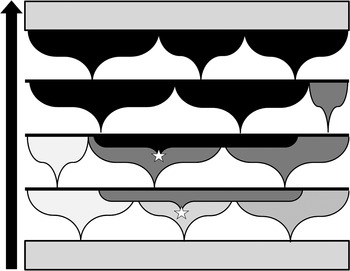
However, although clades by definition lack offspring clades, they are not in fact bereft of “independent platforms at which further innovation can occur” (to use Godfrey-Smith’s language). Again a bacterial chemostat analogy may aid understanding (fig. 3). Suppose a favorable mutation is approaching clonal fixation in an episode of “periodic selection” (Notley-McRobb and Ferenci Reference Notley-McRobb and Ferenci2000). As this proceeds, a secondary mutation that further enhances the reproductive advantage conferred by the first occurs, and a doubly mutant sub-subclone (black in fig. 3) emerges within the spreading singly mutant (darkest gray) subclone. A multistep “complex” adaptive process has begun, multiply ensuring the survival of the original clone (in an “improved” and further “improvable” form). Reproduction is involved here but of cells not subclones, which instead decrease in number while growing in size and increasing in persistence. Similar models have been proposed by the philosopher Frédéric Bouchard for the evolution through persistence of nonreproducing clonal biological individuals (Bouchard Reference Bouchard2008, Reference Bouchard2011, Reference Bouchard2014), but his emphasis is on clonal individuals like aspen groves or communities as biological organisms, and mine is on understanding clades above species as entities under selection within a MLS framework.
Cumulative chemostat selection. Arrow, bars, as in figure 2. Lines indicate flushings of the chemostat eliminating all but three randomly recovered cells. Stars indicate mutations to more efficient substrate use, selected for among cells. But, importantly, an efficient utilizer has no advantage over a less efficient sister in the random recovery process: there is at the clone level no selection based on efficiency, only on cell number whatever its cause. This model is directly relevant to the claim that clades (the analog of clones) with more species (the analog of cells) are more likely to survive extinctions that are “random” (independent of biology). The claim that clades whose species are more geographically dispersed or ecologically divergent are similarly favored by selection for persistence requires more complex microbial models.

Analogously, within a growing clade each subclade and species lineage is potentially a platform for further innovation. When selective processes at the species level or below are more likely than not to enhance by “upward causation” species richness, dispersal, or divergence, subclades bearing further innovations will assume dominance, and such innovations will be cumulatively encoded and more or less reliably passed on in the genomes of the responsible lineages. It is of course the heritability of traits in its reproducing parts that confers a heritability-like continuity of properties on a clade.
All else being equal we do expect such a cumulative process to obtain much of the time. Species selection generally favors species richness and, through avoidance of local extinctions, geographic dispersal of species populations, which may subsequently speciate and diverge (Stanley Reference Stanley1979). Specific physical or behavioral traits that coincidentally increase species number, population dispersal, and divergence are selectable within species. Species richness, dispersal, and divergence are the indirect outcomes, selectable as traits at the clade level. Proposals that “evolvability has evolved” (increased) over time are credible if hard to prove and often imply cumulative CS (Wagner and Altenberg Reference Wagner and Altenberg1996; Kirschner and Gerhart Reference Kirschner and Gerhart1998; Pepper Reference Pepper2003; Pigliucci Reference Pigliucci2008a; Watson and Szathmary Reference Watson and Szathmary2016). And the Zero Force Evolutionary Law (ZFEL; McShea and Brandon Reference McShea and Brandon2010) promises that even in the absence of any selection, organismal and higher-level complexity and divergence will inevitably increase with time within a clade. Older subclades not surprisingly have an advantage over younger, and, since Life is thought to have diverged from LUCA more than 3.5 billion years ago, ZFEL alone could make this biosphere more persistent than one on a younger planet.
A similar view to mine on cumulative CS has been endorsed by Sterelny, who writes, “Suppose a lineage survived an extinction event (meteor strike, climate change) because it happened to be a little more widespread, through range and niche, than its rivals. It then, as a result of the extinction event, has the chance to move into vacated range and niche, and hence is somewhat more widespread yet. The next extinction event it therefore survives, and the process repeats. Now is that not honing by cumulative selection?” (Reference Sterelny2001, 142, emphasis mine).
6.4. Fourth Objection: CS Collapses into Species Selection
Superficially, what is proposed here resembles a reformulation of ENS that Okasha (Reference Okasha2003) entertains only to reject. He writes
Consider the clades marked A and B … [comparable to the surviving and extinct clades in my fig. 2], each containing two extant species. If clade A is fitter than clade B, according to the suggested re-definition, this means that A has a greater probability of becoming bushier in the future, i.e. coming to contain more subclades as parts. But cladogenesis only occurs when species lineages split, so this means that the species in A must have a greater probability of speciating than the species in B. (For example, perhaps the species in A are more ecologically specialised, which tends to promote speciation.) This means that clade selection, in the suggested sense, is entirely redundant: species selection can do all the work. Clade A has a higher probability of becoming bushy, but this is because the species in clade A have a higher species fitness (i.e. a higher probability of leaving offspring species) than those in clade B. Defining clade fitness as “probability of becoming bushy,” and then invoking a process of clade selection is therefore pointless. (Okasha Reference Okasha2003, 747)
But clade fitness in fact should not be redefined as the ‘probability of becoming bushy’. In Okasha’s scenario, species fitness becomes the ‘probability of becoming bushy’ due to something like species selection for specialization: there is a physical or behavioral trait that is selected for, in consequence of which there are more species with that trait and, quite possibly although not necessarily, more species overall. Clade fitness, however, depends on the actuality of being bushy, of a clade’s already having many species. What selection sees at the species level (specialization) is not what it sees at the clade level (bushiness itself). Mechanistically they are uncoupled (“screened off”), and we should not conflate a trait that is selected for with the outcome of that selection at an adjacent hierarchical level.
A good analogy, one level down the hierarchy, may be floral symmetry, which Rabosky and McCune (Reference Rabosky and McCune2009) infer to be selected for within species because it reduces waste by pollinators but also between species (increasing speciation) because it increases the specificity of these pollinators. They write, “Selection at the individual level contributes to trait variation between species by transforming intraspecific variation into species differences that might result in species selection. However, the mechanism by which a trait becomes fixed within a species, whether through selection or drift, need not be the same as the mechanism by which the trait influences diversification” (Rabosky and McCune Reference Rabosky and McCune2009, 70).
Admittedly, even in CS as here conceived, evolutionary success entails an increase in the relative number of selected-for entities. But a relative increase can occur through either differential reproduction or differential persistence, the latter entailing dwindling populations (Doolittle Reference Doolittle2014). In the case of CS, dwindling is the only option—all Life becomes a single clade.
Recently, Doolittle (Reference Doolittle2014) suggested that planetary biospheres (ours in particular) can be said to evolve through differential persistence, those with adaptations for survival making up a larger and larger fraction of a population of biospheres that diminishes over time. Critics might be troubled not only by this dwindling but by the implied existence of a large number of undetected alien biospheres, mostly failed. However, in an interesting elaboration of a similar line of thought, Chopra and Lineweaver (Reference Chopra and Lineweaver2016) have just this year proposed that the fact that we only know one kind of life (Life) is not due to life’s failure to start on other planets but to its failure (elsewhere than here) to persist through a “Gaian bottleneck” requiring evolution of intraclade cooperation of the sort mooted above.
In any case, what recasting Doolittle’s (Reference Doolittle2014) argument as CS does is make such speculation unnecessary. Selection for persistence indeed entails dwindling in the number of entities under selection, but this does not hinder further innovation, as detailed above. As time advances, in either the chemostat or the world depicted in figures 2 and 3, there will be fewer and fewer surviving maximally inclusive clades—ultimately there will be only one. But new subclades and species that are part of this expanding and ultimately to be victorious clade are continuously generated and can compete with each other at all levels of inclusiveness. So as the number of maximally inclusive clades decreases, the number of species lineages in which clade-preserving innovations can occur increases. Clade growth is a fire that never consumes its fuel.
6.5. Fifth Objection: CS Produces Adaptedness but Not Adaptation
Another sense in which CS might be thought “uninteresting” is this. Even though clade-specific properties of species richness, dispersal, and divergence may be very complexly instantiated in the biological and ecological characteristics of constituent species, such complexity is generated by lower-level selection processes. All CS does, in effect, is “rubber stamp” the results, increasing the probability of persistence of clades. It maintains at the level of clades that which originates at the level of species.
Since “adaptation” as a claim about the history of a trait and “adaptedness” as a measure of the suitability of an entity’s properties to the situation in which it finds itself are so often defined in terms of realized or potential differential reproduction (Amundson Reference Amundson, Rose and Lauder1996; Forber Reference Forber and Kampourakis2013), it is unclear how to apply them to nonreproducing entities. Redefining ‘adaptation’ for clades as an increase over time in the propensity to survive, in consequence of selection on the biological and ecological characteristics of constituent species, seems arguably appropriate.
Generalizing this, we would hold that a trait is an adaptation for any entity just in case that entity has proportionately higher numerical representation among entities of its type because of its prior possession of the trait, and that such higher representation can be achieved either by differential reproduction (as normally contemplated) or by differential persistence. In CS (as in figs. 2 and 3) clades achieve proportionately higher numerical representation because the denominator in the ratio (selected clades/total clades; fig. 2) decreases rather than because the numerator increases. Whether a clade as large and as old as Life has adaptations for persistence, as in the popular Gaia hypothesis (Doolittle Reference Doolittle2014), then becomes a matter for empirical rather than philosophical investigation (Tyrrell Reference Tyrrell2013).
7. Summing Up
What good, then, is CS? First, it makes a particular kind of biological sense of questions like “Why are there so many species of beetles?” or “Why did the dinosaurs go extinct?” These are similar to questions Raup asks about the extinct class Trilobita in his popular book Extinction: Bad Genes or Bad Luck: “Did the trilobites do something wrong? Were they fundamentally inferior organisms? Were they stupid? Or did they just have the bad luck to be in the wrong place at the wrong time?” (Reference Raup1991, 5). But they are not exactly the same sort of questions, insofar as each trilobite species might have independently succumbed because of its bad genes or bad placement. If all had the same bad genes (lack of clade divergence) or all happened to be living in the same wrong place (lack of dispersal), then CS would provide a useful additional explanatory framework. If extinction of clades is the explanandum, then it seems important to make such a distinction in explanans. “Why did Trilobita go extinct?” is not the same question as “Why did trilobites go extinct?”
Second, although fueled by reproduction of its parts (species, and their parts, organisms), the persistence of a clade and its subclades fits poorly into popular formulations equating ENS with heritable variation in fitness, at least as these are implemented in population genetic models of the Modern Synthesis. To the extent that clades are expected to become more persistent with time as a result of ZFEL or of lower-level selection as in section 6.3, CS could expand ENS beyond the existing frameworks of discrete entities with definable reproductive processes (Godfrey-Smith Reference Godfrey-Smith2009). We could include a range of phenomena conforming to our intuitions about the second way to create something useful but involving gradual “improvement” over time in single entities.
One of these phenomena may be learning. Watson and Szathmary suggest that evolutionary and learning theories might be mutually informative, writing that “learning and evolution share common underlying principles both conceptually and formally. … This provides access to well-developed theoretical tools that have not been fully exploited in evolutionary theory (and conversely suggests opportunities for evolutionary theory to expand cognitive science). Learning theory is not just a different way of describing what we already knew about evolution. It expands what we think evolution is capable of. In particular, it shows that via the incremental evolution of developmental, ecological, or reproductive organisations natural selection is sufficient to produce significant features of intelligent problem solving” (Reference Watson and Szathmary2016, 155).
Third, if acceptance of CS leads to liberation of the concept of adaptation from even the most nuanced definitions of reproduction (Godfrey-Smith Reference Godfrey-Smith2015), then what Maynard Smith considered the “main task of any evolutionary theory … to explain adaptive complexity, [that is] the same set of facts which Paley used as evidence for a Creator” would be usefully broadened. In particular the question whether our biosphere has evolved homeostatic mechanisms (Doolittle Reference Doolittle2014) could be properly phrased in evolutionary terms and brought in out of the cold of anthropic and theological speculation.