


Why would authoritarian rulers introduce judicial reforms that constrain their own power? Consider Mexico’s President Zedillo, who in 1994 expanded the Supreme Court’s judicial review powers, or Kazakhstan’s President Nazarbayev, who in 2017 abolished his veto power over the Constitutional Council (Finkel Reference Finkel2008, Pistan Reference Pistan2017). These actions seem to contradict the nature of authoritarian regimes, which typically concentrate power in the hands of the dictator (Solomon Reference Solomon2007).
This paper argues that higher rates of judicial independence are likely in authoritarian states with higher risk of leader turnover. The risk of post-exit punishment drives autocrats to behave in seemingly counterintuitive ways. When autocratic leaders perceive a higher risk of losing office, they become more likely to tolerate or create independent courts. This strategy aims to minimize the risks and costs associated with losing power. The calculation is straightforward: an independent judiciary can provide greater protection for regime leaders after they leave office.
This approach extends beyond traditional views of judicial independence in autocracies, which often focus on political competition (Epperly Reference Epperly2018; Randazzo et al. Reference Randazzo, Gibler and Reid2016) or electoral dynamics (Epperly Reference Epperly2013, Reference Epperly2018, Reference Epperly2019). Instead, it considers a spectrum of factors that might signal to an autocrat that their grip on power is weakening. As Svolik (Reference Svolik2012) notes, most autocratic leaders don’t leave office through elections, but rather through coups or popular uprisings (Figure 1).
How did the Autocratic Regime End?
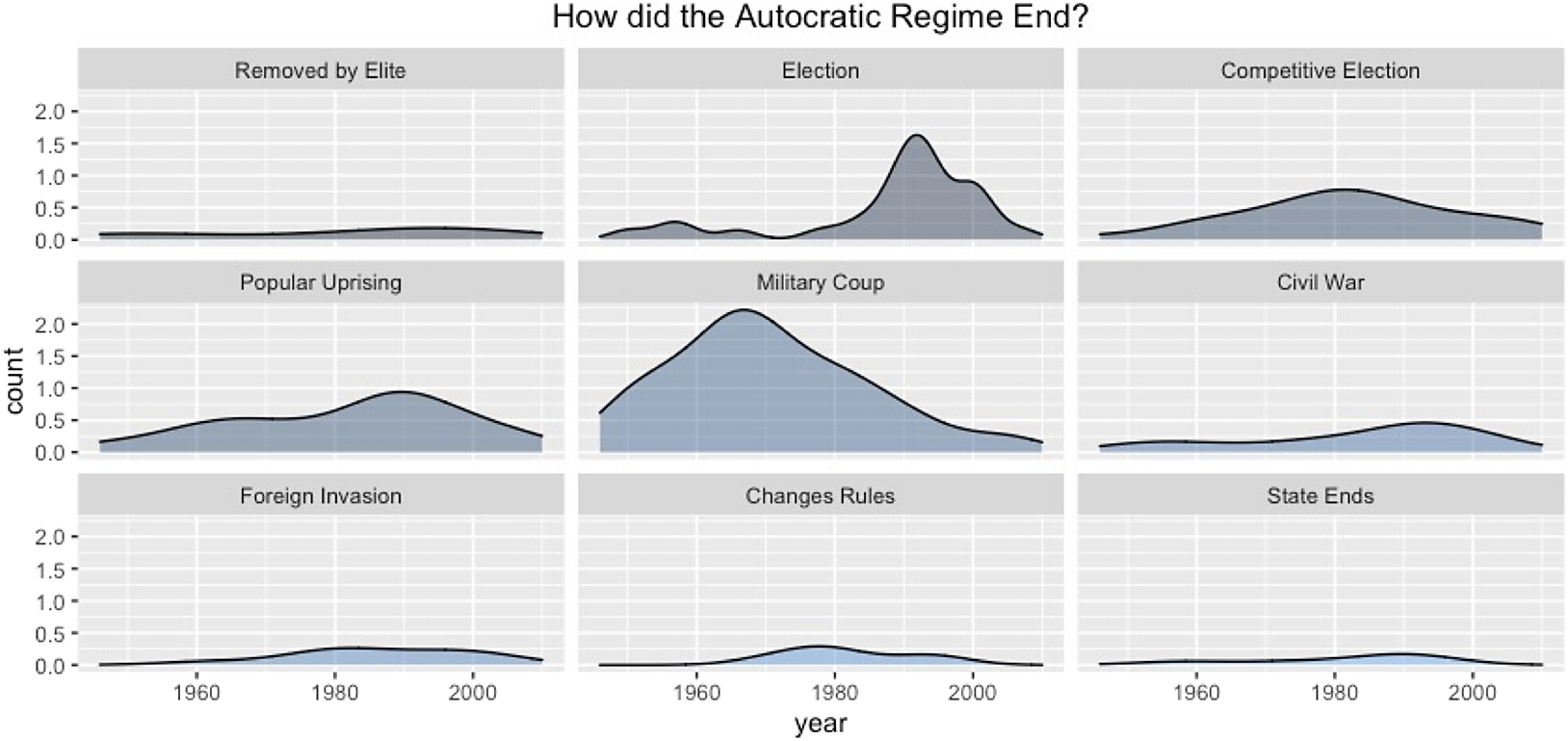
Building on Svolik’s (Reference Svolik2012) insights into autocratic regime volatility, this paper employs a novel empirical approach. Using the autocratic regime dataset from Geddes et al. (Reference Geddes, Wright and Frantz2014), I construct a hazard rate for each country-year to measure the perceived risk of losing office. This allows me to examine how this perceived risk influences decisions about judicial independence, offering new insights into the strategic calculations of autocratic leaders. Autocratic leaders navigate a complex landscape of political and socio-economic risks. Beyond overt political challenges, they monitor various indicators - from civil unrest to economic growth - that might signal underlying discontent and threaten their grip on power. This multifaceted risk assessment informs their strategic decisions, including the establishment or toleration of independent judiciaries.
For this study, judicial independence is defined as the capacity of the judiciary to adjudicate cases based on established legal principles, free from external interference (Finkel Reference Finkel2008). This independence serves as a mechanism for safeguarding the rule of law and curbing executive overreach within autocratic systems.
This study’s findings corroborate the theoretical assertion that authoritarian leaders strategically bolster or tolerate judicial independence when faced with increased regime instability. The paper aims to deepen the understanding of the insurance theory of judicial independence in autocracies, offering insights into the political calculus that drives autocrats to leverage an independent judiciary as a safeguard against potential post-exit reprisals.
This paper proceeds as follows: first, it examines existing scholarly discourse on independent courts in autocracies. Second, the paper advances a novel theory on the relationship between perceived threat and judicial independence. Third, it provides empirical evidence through rigorous analysis, and finally, the paper discusses implications for understanding authoritarian governance and outlines future research directions.
Judicial independence and independent courts in autocracies
Judicial independence, like democracy, is a complex concept that requires clear definition and operationalization for meaningful research and policy implications. While scholarly debate surrounds the characteristics of an independent judiciary, this paper defines judicial independence as the capacity of the judiciary to adjudicate cases based on established legal principles, free from external interference or manipulation (Finkel Reference Finkel2008; Ramseyer Reference Ramseyer1994; Iaryczower, Spiller, and Tommasi Reference Iaryczower, Spiller and Tommasi2002; Munger Reference Munger2002).
Key characteristics of an independent judiciary include impartiality and insularity. Becker (Reference Becker1987) defines judicial independence as “the degree to which judges… decide cases consistent with… their interpretation of the law.” This underscores the importance of judges making decisions based solely on legal principles, free from external influence or pressure (Schedler Reference Schedler2004). In practice, this often means that rulings by an independent judiciary may diverge from the expectations or preferences of powerful political entities.
Judicial independence serves not only as a mechanism for conflict resolution but also as a safeguard for the impartial adjudication of disputes. Shapiro (Reference Shapiro1981) contends that judicial independence forms the cornerstone of the judiciary’s social logic, emphasizing the necessity of a neutral arbiter when adjudicating conflicts. This is particularly crucial when the government itself is party to a dispute, as an independent judiciary acts as a check on the potential abuse of governmental power.
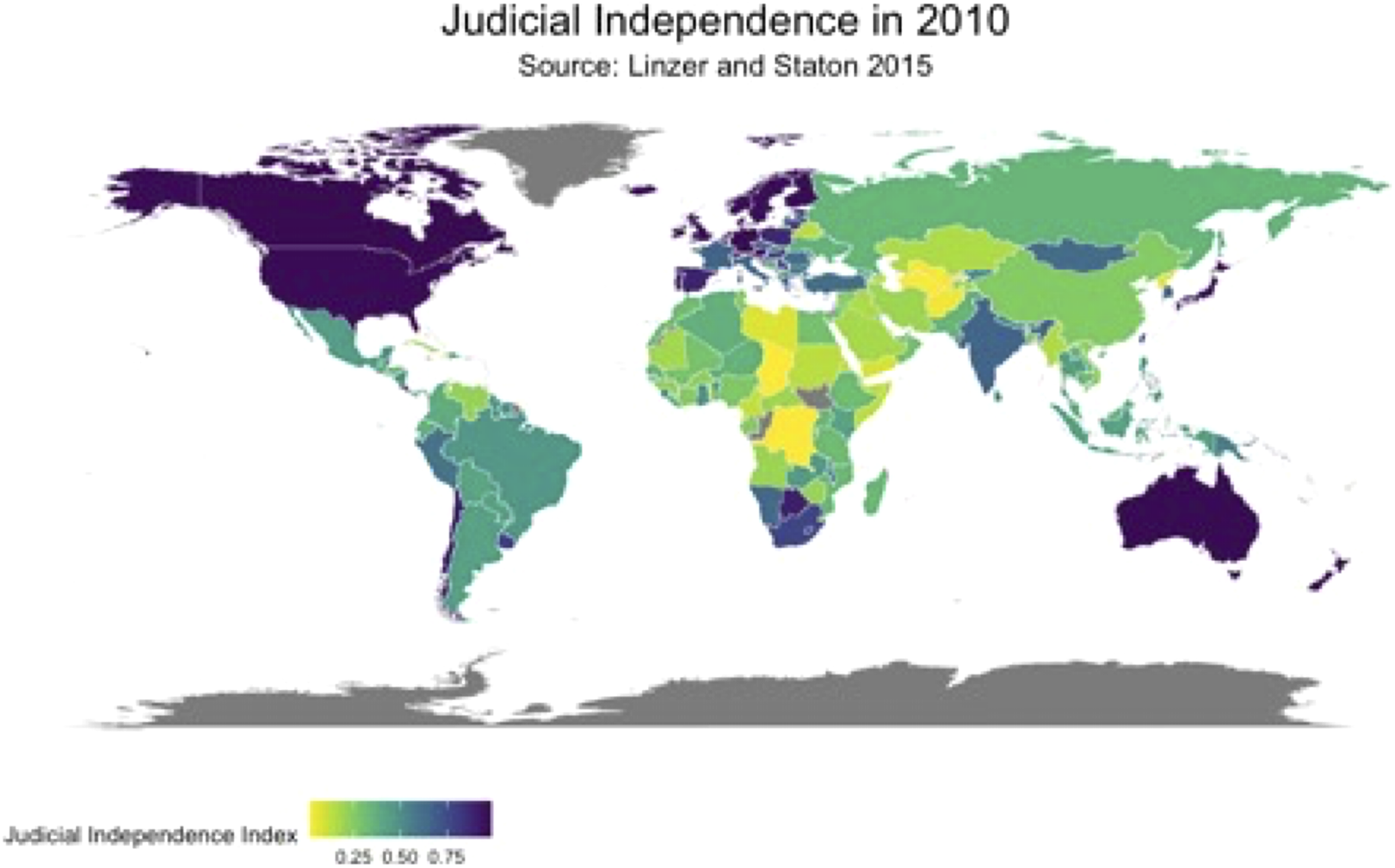
As articulated by Rosenn (Reference Rosenn1987), judicial independence encapsulates the capacity of judges to adjudicate cases based on their discernment of evidence, legal statutes, and principles of justice, shielded from any form of coercion or undue pressures. Larkins (Reference Larkins1996) further illuminates that judicial independence refers to “the existence of judges who are not manipulated for political gain, who are impartial toward the parties of a dispute, and who form a judicial branch which has the power of an institution to regulate the legality of government behavior, enact ‘neutral’ justice, and determine significant constitutional and legal values.” Figure 2 displays the global landscape of judicial independence in 2010 underscoring the diverse institutional practices of legal systems worldwide.
Judicial Independence in 2010.
There are two primary reasons why actors within a political system may find it advantageous to respect judicial independence. First, executive and legislative officeholders may recognize its potential utility in achieving their policy objectives more effectively. Vanberg (Reference Vanberg2015) argues that policymakers may perceive direct benefits from an independent judiciary, particularly in terms of informational advantages and as a safeguard against potentially undesirable legislation.
Second, an independent judiciary offers a means for political actors to sidestep direct accountability for contentious decisions. This strategic maneuvering is exemplified by the deliberate crafting of ambiguous legislation, leaving details to be delineated by the judiciary in subsequent rulings.
While leaders in democracies may primarily view independent courts as a safeguard against policy reversals, autocrats stand to derive a distinct benefit from judicial independence as a form of protection against targeted retribution post-exit. In this light, the perceived utility of independent courts may be amplified for autocratic leaders, offering a mechanism to shield themselves from potential punitive measures following their removal from office.
Independent courts in autocracies
This section examines three key explanations for the existence of independent courts in autocratic regimes, with particular emphasis on how these courts serve autocratic leaders’ interests.
Information gathering
In autocracies, courts can serve as a crucial mechanism for gathering information about societal grievances. Sievert (Reference Sievert2018) argues that courts solve bargaining problems by allowing opposition groups to voice their concerns through legal channels. When opposition groups or individuals file lawsuits against the government, they provide detailed information about how they have been harmed and the circumstances surrounding their grievances. This process serves two purposes: it allows individuals to seek redress for grievances, potentially reducing societal tension and it provides the regime with valuable insights into grievances and dissent within society.
The court system offers a unique vantage point for the regime to gauge the resolve and resources of various opposition groups. By observing which groups are willing to engage in legal battles and their strategies, the regime can assess the threat posed by different segments of society. This information enables the regime to tailor its responses accordingly, whether through concessions, co-optation, or repression, thereby potentially mitigating the risk of widespread unrest or conflict escalation.
Moreover, the ongoing interaction between the regime and opposition groups within the judicial system offers valuable insights into potential areas of contention and avenues for conflict resolution. By actively participating in legal proceedings, both the regime and dissenting factions reveal their preferences, priorities, and red lines. This transparency can foster a degree of predictability and stability in the political landscape, potentially reducing the likelihood of sudden upheavals or violent confrontations.
Property rights protection
Independent courts in autocracies can play a significant role in safeguarding property rights, fostering an environment conducive to commerce and investment (Feld and Voigt Reference Feld and Voigt2003; Haggard et al. Reference Haggard and Tiede Annual2008). By ensuring that legal disputes related to property ownership and contractual agreements are adjudicated fairly and impartially, independent courts offer a level of predictability and security that is essential for economic transactions.
This judicial role is particularly important for attracting investment. Investors are more inclined to commit capital to ventures in environments where their property rights are protected by an impartial judicial system. Independent courts in an autocracy can help the regime make a credible commitment to “keep its hands off” private commodities (Root and May Reference Root, May, Ginsburg and Moustafa2008).
By demonstrating a willingness to abide by legal norms and uphold contractual obligations, regimes signal their commitment to maintaining stability and fostering economic growth. This, in turn, can attract investment and stimulate economic activity, as investors perceive reduced risks associated with property expropriation or arbitrary government interference.
However, it’s important to note that the decision to allow judicial independence in economic matters is often driven by pragmatic considerations rather than a genuine commitment to democratic principles or the rule of law. For example, in China, government leaders are willing to tie their hands to some extent to provide credible commitments to investors, but this represents only a partial yielding of power in the commercial realm, not the political one (Wang, Reference Wang2016).
Insurance against post-exit punishment
The insurance theory of judicial independence, while well-established in democratic contexts, offers intriguing insights when applied to autocracies. The insurance theory, as articulated by Landes and Posner (Reference Landes and Posner1975), suggests that both democratic and autocratic leaders have incentives to empower courts when they anticipate potential loss of power. In autocracies, this theory gains salience due to heightened risks of political instability and regime change.
The insurance theory posits that the establishment of judicial independence is contingent upon the perceived risk of incumbent politicians losing power in the future. Independent courts serve as a safeguard for regimes against the uncertainties and risks associated with leadership turnover, offering protection for at-risk leaders who fear reprisals following regime change (Ginsburg, Reference Ginsburg2003; Finkel, Reference Finkel2005, Reference Finkel2008; Randazzo et al. Reference Randazzo, Gibler and Reid2016).
In the context of autocracies, the insurance theory becomes especially relevant, as non-democratic leaders often confront heightened risks of political instability and regime change. When faced with credible challenges to their rule, whether from electoral threats, internal dissent, or external pressures, autocratic leaders may be more inclined to support independent courts as a strategic response to minimize the potential costs of relinquishing power (Epperly Reference Epperly2019).
By establishing or allowing independent judicial institutions, autocrats seek to mitigate the risks of political reprisals and ensure a degree of protection for themselves and their inner circle in the event of regime transition (Epperly Reference Epperly2013, Reference Epperly2018). The decision to invest in judicial independence can be viewed as a form of risk management strategy employed by autocrats to “hedge their bets” against future uncertainties.
Empirical studies support this theory, demonstrating a positive correlation between the presence of independent courts and the likelihood of political turnover in autocratic regimes (Epperly, Reference Epperly2019). When autocratic leaders perceive a heightened risk of defeat or internal upheaval, they are more inclined to invest in or allow judicial independence as a strategic means of safeguarding their interests and preserving a degree of influence even after losing power. This leads us to our hypothesis testing the insurance theory of judicial independence in autocracies.
H1: Higher rates of judicial independence are likely in authoritarian states with a higher risk of leader turnover.
This hypothesis extends the insurance theory of judicial independence to autocracies, considering a broader range of factors beyond electoral competition that might signal to an autocrat that their grip on power is weakening (Svolik Reference Svolik2012). While previous research has focused on political or electoral competition as measures of uncertainty (Randazzo et al. Reference Randazzo, Gibler and Reid2016; Epperly Reference Epperly2016), this study argues for a more comprehensive approach in autocratic contexts. The perceived utility of independent courts for autocratic leaders lies in their potential to shield against punitive measures following removal from office. This strategic calculus reflects the complex dynamics of regime stability and the multifaceted risks faced by autocratic leaders.
This research builds upon and extends previous work on judicial independence in several ways. Unlike studies that focus primarily on electoral competition, this approach considers a wider range of factors that may signal regime vulnerability in autocracies. By focusing on autocracies, including those without meaningful elections, this study extends the applicability of the insurance theory beyond democratic and competitive authoritarian regimes. This study introduces a new method for measuring perceived risk in autocracies, addressing a key gap in the existing literature.
Unique aspects of autocratic uncertainty
Autocratic leaders face unique challenges in assessing their tenure stability. Unlike democracies, where electoral cycles provide clear signals, autocrats must navigate a complex landscape of potential threats, including coups, popular uprisings, and internal power struggles (Svolik Reference Svolik2012). This uncertainty about their time horizon influences their strategic decisions, including those related to judicial independence.
The risk of post-exit punishment significantly influences autocratic behavior (Geddes et al. Reference Geddes, Wright and Frantz2014). Imprisonment, exile, or execution are potential consequences that autocrats seek to avoid (Epperly Reference Epperly2013). An independent judiciary, while costly in terms of curtailing executive power, can serve as an insurance policy against these risks.
This paper proposes a novel approach to testing this hypothesis by creating a measure of perceived risk based on factors directly observable to autocratic leaders. Unlike previous studies that focus on predicting regime breakdown, this research aims to model the autocrat’s perception of instability. By considering economic crises (Geddes Reference Geddes1999), civil unrest (Randazzo et al. Reference Randazzo, Gibler and Reid2016), and the leader’s age (using data from Geddes et al. Reference Geddes, Wright and Frantz2014), I construct a hazard rate that serves as a proxy for the leader’s perceived risk of losing power. These factors have been identified in previous research as significant to regime stability and I repurpose them to model the leader’s perception of risk. This approach allows us to examine how this perceived risk influences decisions about judicial independence, offering new insights into the strategic calculations of autocratic leaders.
This study attempts to capture this uncertainty by creating a measure of perceived risk based on these directly observable factors. By constructing a hazard rate that serves as a proxy for the leader’s perceived risk of losing power, I can model the autocrat’s perception of instability more accurately than previous studies focused on predicting regime breakdown. This novel approach enables us to examine how perceived risk influences decisions about judicial independence, providing new insights into the strategic calculations of autocratic leaders.
Judicial independence as insurance in autocratic contexts
This study argues that the degree of judicial independence in autocracies is linked to the perceived risk of losing office and the probability of that outcome. When autocrats feel secure in their position, they have less incentive to allow judicial independence. However, when they perceive a higher risk of losing power, the benefits of an independent judiciary as a safeguard against future reprisals may outweigh the costs of constraining their current authority.
In autocratic contexts, independent courts can provide several forms of insurance:
-
1. Protection against severe punishment: An independent judiciary may limit the ability of successors to impose harsh penalties on former leaders.
-
2. Preservation of assets: Courts may help protect the financial interests of former regime members.
-
3. Maintaining political influence: Independent courts might allow former leaders to retain some degree of influence in the political system even after losing power.
Cost-benefit analysis for autocrats
The strategic calculus for autocrats involves weighing the immediate costs of empowering an independent judiciary against the potential future benefits of protection from retribution. This decision is influenced by various factors including regime stability and perceived threats to power, the strength of opposition forces, economic conditions and potential for unrest, international pressures and the geopolitical environment, personal wealth, and exit options (Albertus and Menaldo, Reference Albertus and Menaldo2012; Escribà-Folch, Reference Escribà-Folch2013).
Autocrats must consider whether the long-term benefits of judicial independence outweigh the short-term costs of constrained power. In situations where the risk of losing power is high, the value of judicial independence as an insurance policy increases, potentially tipping the balance in favor of supporting independent courts.
By examining the relationship between perceived risk of losing power and judicial independence, this study offers insights into the complex dynamics of autocratic rule and the factors that influence institutional design in non-democratic settings. It provides a more nuanced understanding of when and why autocrats might support judicial independence, contributing to our broader knowledge of institutional development in autocratic regimes.
This approach allows us to examine how this perceived risk influences decisions about judicial independence, offering new insights into the strategic calculations of autocratic leaders. By linking the hazard rates derived from our model to measures of judicial independence, I can illuminate the mechanisms through which political threats influence institutional responses and governance dynamics in autocratic regimes. This analysis also directly addresses the limitations identified in the existing literature. By considering a range of factors that influence autocratic leaders’ perceptions of risk, we move beyond the narrow focus on electoral competition prevalent in previous studies. My novel measure of perceived risk, based on directly observable factors, allows me to capture the unique aspects of autocratic uncertainty and overcome some of the measurement challenges associated with studying judicial independence in opaque regimes.
To test the hypothesis and implement this more nuanced approach, I employ a two-stage analytical strategy that combines hazard modeling with regression analysis. This methodology allows me to operationalize the abstract concept of perceived risk and examine its relationship with judicial independence in autocratic contexts. The following section details the research design, data sources, and analytical methods.
Research design and methodology
The central hypothesis in this study investigates the relationship between an autocrat’s perceived threat of losing power and the level of judicial independence. Drawing on the Geddes Autocratic Regime Data, this study examines country years from 1960 to 2010. Geddes et al. (Reference Geddes, Wright and Frantz2014) use criteria for classification beyond institutional characteristics. Their dataset looks at a regime control over access to power and influence. Regimes are a set of in/formal rules that choose leaders and policies. A country year is coded autocratic when an executive achieves power through any means besides free and fair elections. Other reasons a country year could be coded as autocratic include if the government came to power through democratic means but changed rules that would limit competition in future elections, or the military prevented parties from competing in a competitive election. Coding by this method has minimal conditions for suffrage and does not include the alternation rule from other scholars.
Mimicking the threat of power removal and leaders’ empowerment of courts poses a distinct challenge for field experiments in this area. No natural experiments of this phenomenon are known to exist. Measuring an autocrat’s perception of the risk of losing power is complex. To overcome this measurement difficulty, a two-stage analytical approach is adopted. The first stage utilizes a Cox Proportional Hazard Model to evaluate multiple factors associated with regime stability (Austin Reference Austin2017). Central to this study’s contribution is the creation of a hazard rate based on factors directly observable to autocratic leaders, thereby influencing their perception of regime stability and power loss risk. Three key variables inform the model: economic crisis (Geddes Reference Geddes1999), civil unrest (Randazzo et al. Reference Randazzo, Gibler and Reid2016), and leader age (derived from the Archigos database, Geddes et al. Reference Geddes, Wright and Frantz2014). These variables were chosen not to predict regime breakdown per se, but to model the factors that would shape an autocrat’s perception of their risk of losing office. This statistical model estimates the relative risk of autocratic breakdown for each country-year observation relative to a baseline period. By incorporating these covariates, the analysis aims to capture the multidimensional nature of regime stability and vulnerability as perceived by the autocrat. The use of the Cox Proportional Hazard Model represents a robust analytical strategy for assessing the relationship between an autocrat’s perceived risk of losing power and the dynamics of regime stability. This method is particularly useful for studying how autocratic regimes govern.
First, the Cox model allows for the simultaneous consideration of multiple risk factors that may contribute to regime instability. Autocratic regimes are characterized by a complex interplay of political, economic, and social factors, all of which can influence the likelihood of leadership turnover.
Second, the Cox model facilitates the calculation of a hazard rate for each country-year observation, providing a dynamic measure of the risk of autocratic breakdown over time. This hazard rate reflects the instantaneous rate of regime change at any given point, allowing for the identification of periods of heightened instability or vulnerability. The analysis can explain the underlying mechanisms driving regime dynamics by examining changes in the hazard rate in response to shifts in key variables, such as changes in the political environment or economic conditions.
In the second stage, the hazard rates estimated in the first stage are used as a proxy for an autocrat’s perceived risk of losing power. The hazard rates capture the dynamic nature of political threats and serve as a practical measure for operationalizing the abstract concept of the perceived political risk of an autocrat losing office. These hazard rates are then incorporated as an independent variable in a regression model examining the determinants of judicial independence. The second-stage analysis aims to illuminate the mechanisms through which political threats influence institutional responses and governance dynamics by linking the hazard rates to measures of judicial independence, such as the level of judicial autonomy or the presence of constitutional safeguards. This two-stage approach allows us to thoroughly investigate how political threats and regime stability affect judicial independence in autocracies. By combining advanced statistical techniques with theoretical insights, the analysis aims to generate nuanced and empirically grounded findings that contribute to our understanding of authoritarian governance and institutional development.
Dependent variable (first stage)
The dependent variable for the first stage of the analysis is the presence of autocratic breakdown in a country-year, as coded in the Autocratic Regimes dataset (Geddes et al. Reference Geddes, Wright and Frantz2014). In this dataset, an autocratic breakdown is defined as a fundamental change in the informal and formal rules for choosing leaders and policies. This definition captures more than just transitions to democracy; it also includes transitions from one form of autocracy to another.
For the purposes of our first-stage analysis, autocratic breakdown is coded as a binary variable: 1 if a breakdown occurred in a given country-year, and 0 if it did not. While the Geddes dataset distinguishes between different types of breakdowns (such as regime change through elections, military coups, popular uprisings, elite-led transitions, and foreign interventions), our analysis does not differentiate between these types. Our focus is on whether a breakdown occurred, regardless of its nature.
I use this binary measure of autocratic breakdown because the primary goal in the first stage is to generate a hazard rate that captures the overall risk of regime instability. This approach aligns with the research question, which seeks to understand how an authoritarian leader’s perceived risk of losing office influences their willingness to allow judicial independence. Using a binary measure of autocratic breakdown to generate a hazard rate creates a proxy for the perceived risk of losing office, which is key to our investigation.
This broad definition of autocratic breakdown allows for a comprehensive measure of autocratic regime instability, capturing the multifaceted nature of autocratic vulnerability. The resulting hazard rate serves as a key independent variable in our second stage, where I examine its impact on judicial independence.
Independent Variables (first stage). Regime breakdowns are more likely in economic downturns (Geddes Reference Geddes1999). For the first stage model for each country and year, this paper will use a measure of economic crisis. Economic crisis is identified from World Bank Data as any GDP change that is greater than 3% and coded as a dummy variable. Next, civil unrest is included from the Index of Civil Unrest from the Major Episodes of Political Violence data (1946–2008) The index ranges from 0 to 10 and includes the magnitude of civil violence, civil war, ethnic violence, and ethnic war (Randazzo et al. Reference Randazzo, Gibler and Reid2016). Lastly, to predict regime breakdown, the leader’s age will be used from the Archigos database on leaders.
It’s important to note that the primary purpose of this first stage analysis is to generate a hazard rate that will be used as an independent variable in our second stage. Therefore, the significance of individual variables in this stage is less crucial than the overall measure of regime instability that is derived from it.
Dependent variable (second stage)
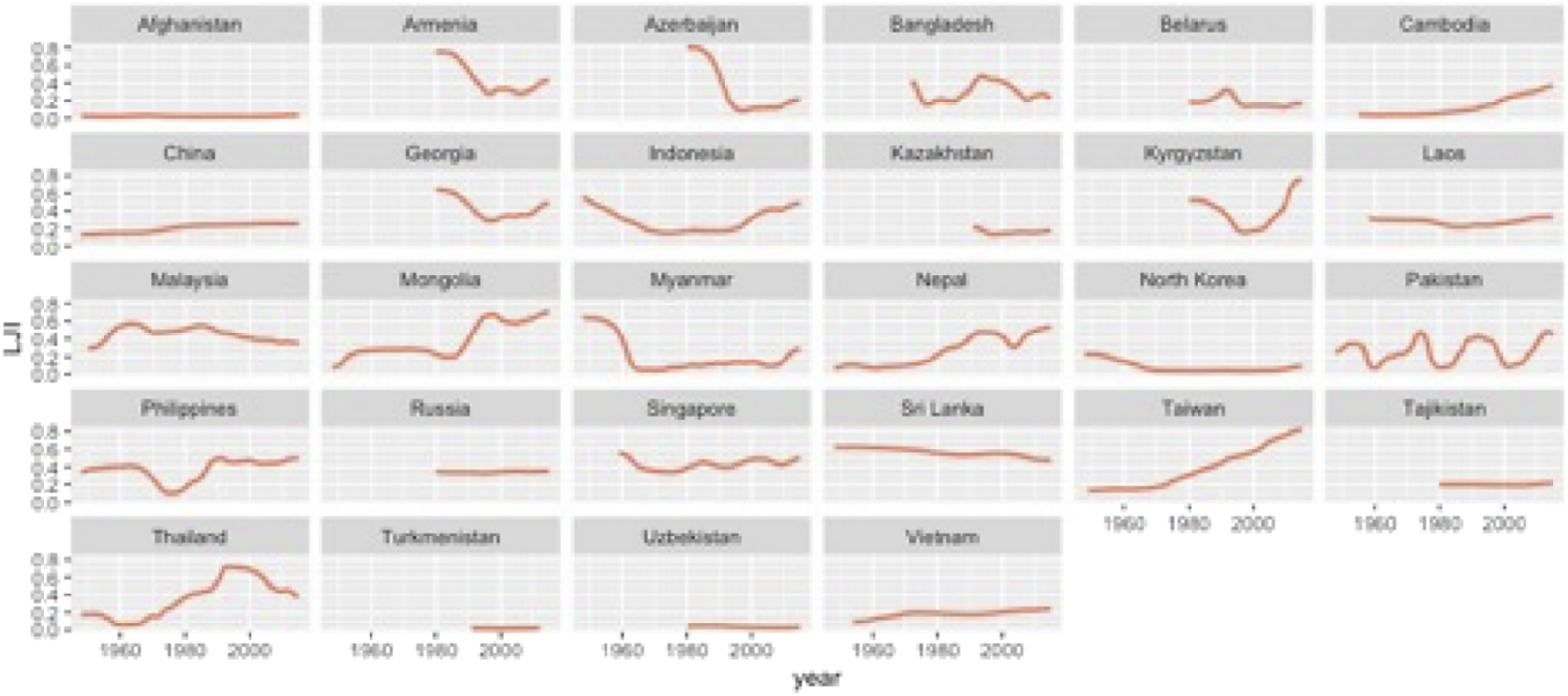
For the dependent variable in the second stage of the model, I will use a dataset from Linzer and Staton (Reference Linzer and Staton2015) that uses a latent measure for judicial independence. The authors extract relevant and common information from eight separate independent judiciary measurements.Footnote 1 Independent judging in practice (de facto) exhibits decisions based on the evaluation of the legal record without external influence and the judiciary can expect their decisions to be implemented properly. The continuous variable LJI ranges from 0 to 1 with the highest value indicating “complete independence.” This measure encapsulates the operationalization of independent judging in practice, de facto judicial independence (Linzer and Staton Reference Linzer and Staton2015). Figure 3 displays the variation in the level of judicial independence in autocracies in Asia as an example.
Judicial Independence in Autocracies in Asia.
Independent variable (second stage)
The hazard rate from the first stage will be used to estimate the exogenous effect of a leader’s perceived threat of losing power on judicial independence. I expect a positive and significant result regarding the threat of losing power and judicial independence.
Other covariates
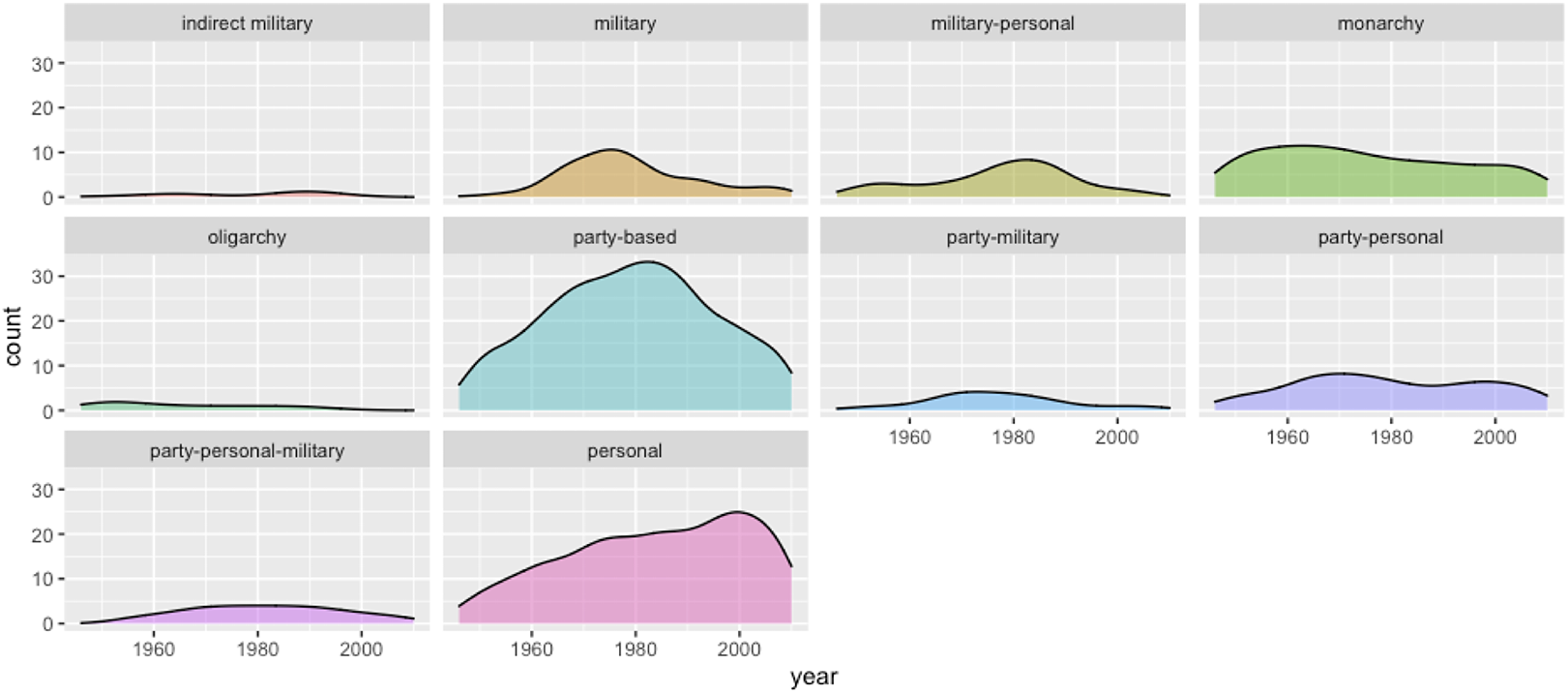
This paper will control for regime type and as coded in the Autocratic Regimes Dataset. Geddes et al. (Reference Geddes, Wright and Frantz2014) code autocratic regimes as either party, personal, military, or monarchy, along with different combinations. A personalist regime is where government leaders do not have the ability to constrain leader behavior. A military regime has a group of offices that decides who will rule and exercises some influence over policy. Single-party regimes have access to political office, and control over policy is dominated by one party. The dataset also has classifications for party-personal, party-military, military-personal, party-personal-military, oligarchy, and indirect military. For this paper, binary indicators of the main autocratic regime types will be used. The reason this method is used as opposed to a continuous measure such as the Polity scale is because political competition is thought to play a role in whether a regime has independent courts. Using different categories can help us see whether there is a difference between a monarchy and a party autocracy. Figure 4 displays the counts for the expanded classification of regime types for reference.
Regime Types as Coded by Geddes et al. Reference Geddes, Wright and Frantz2014.
The second control variable is the level of economic development. GDP per capita (logged) serves as the measure of economic development. As economic development increases, there may be an increased need for independent courts to protect property rights and enforce contracts (Feld and Voigt Reference Feld and Voigt2003; Sievert Reference Sievert2018; Haggard et al. Reference Haggard and Tiede Annual2008).
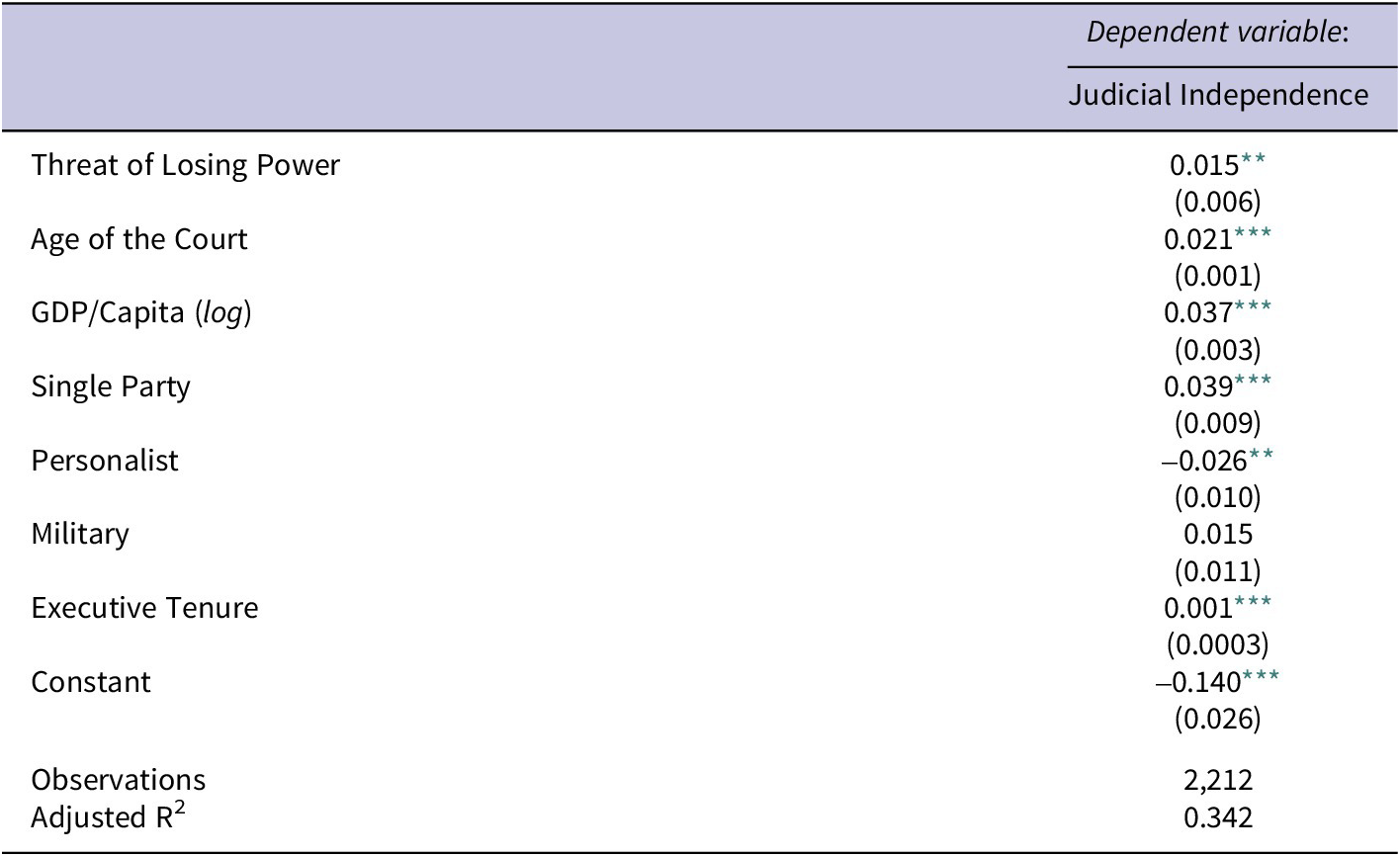
Judicial independence could increase as the court gains legitimacy over time (Randazzo et al. Reference Randazzo, Gibler and Reid2016), so I include the number of years an executive has been in office (executive tenure) and the age of the court will be used to control for the fact that the court may be more independent as a function of time. In the second stage, Model 1 in Table 2 is a statistical model based on the insurance theory of judicial independence in autocracies. It includes the hazard rate from the first stage as the main explanatory variable to test the main hypothesis while controlling for the age of the court, wealth, regime type, and executive tenure for 1960-2010.
Discussion
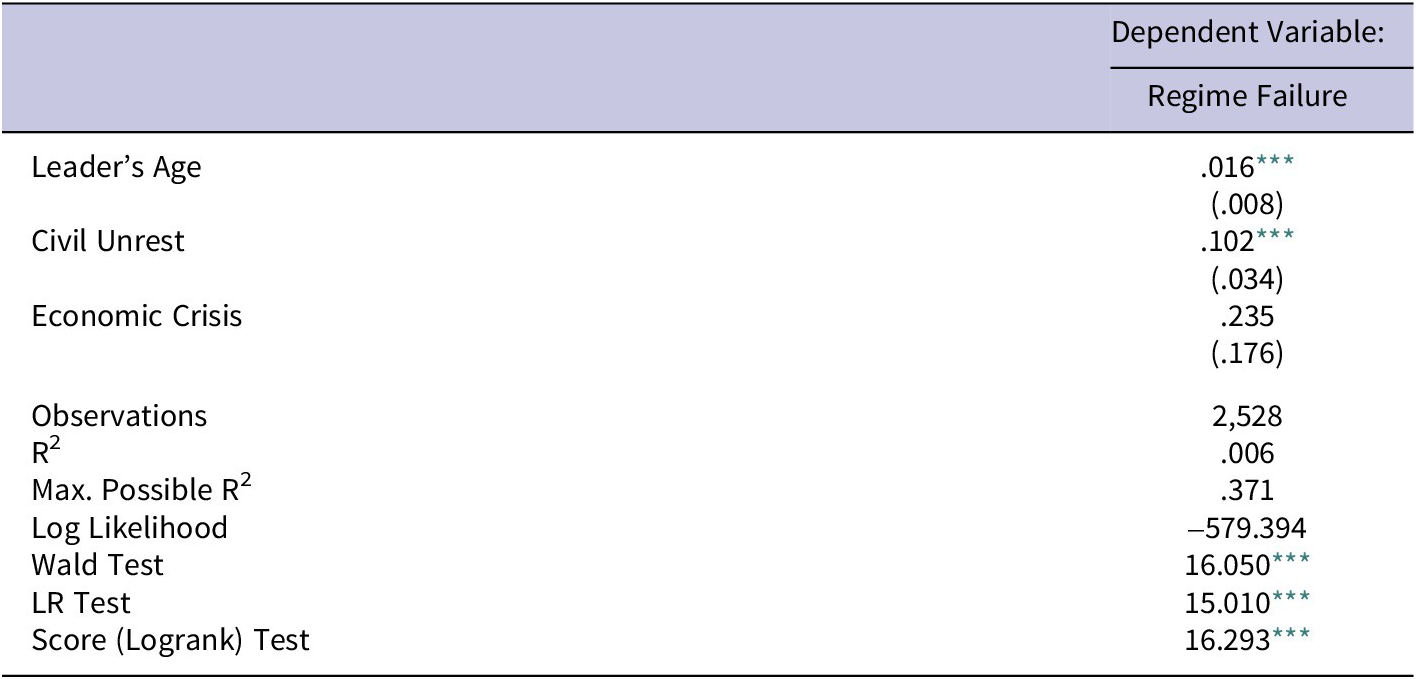
This section analyzes the findings from our two-stage analytical approach, beginning with the results of the first-stage Cox Hazard Model presented in Table 1. It’s crucial to reiterate that the primary purpose of this first-stage analysis is to generate a hazard rate that serves as a proxy for an authoritarian leader’s perceived risk of losing office, rather than to comprehensively explain regime breakdown. This hazard rate is subsequently used as an independent variable in the second-stage analysis.
Hazard Model
Note:
* p < .1
** p < .05
*** p < .01
Table 1 displays the results of the Cox Hazard Model, which includes key variables (leader’s age, civil unrest, and economic crisis) theoretically linked to an autocrat’s perception of regime stability. Notably, leader’s age and civil unrest demonstrate positive and statistically significant correlations with regime failure. This suggests that higher values for age and civil unrest are associated with an increased risk of autocratic breakdown. When controlling for other covariates, increases in age and civil unrest correspond with decreased regime survival prospects. While the economic crisis variable does not show statistical significance, its inclusion is theoretically justified based on previous literature and its potential influence on regime stability perceptions.
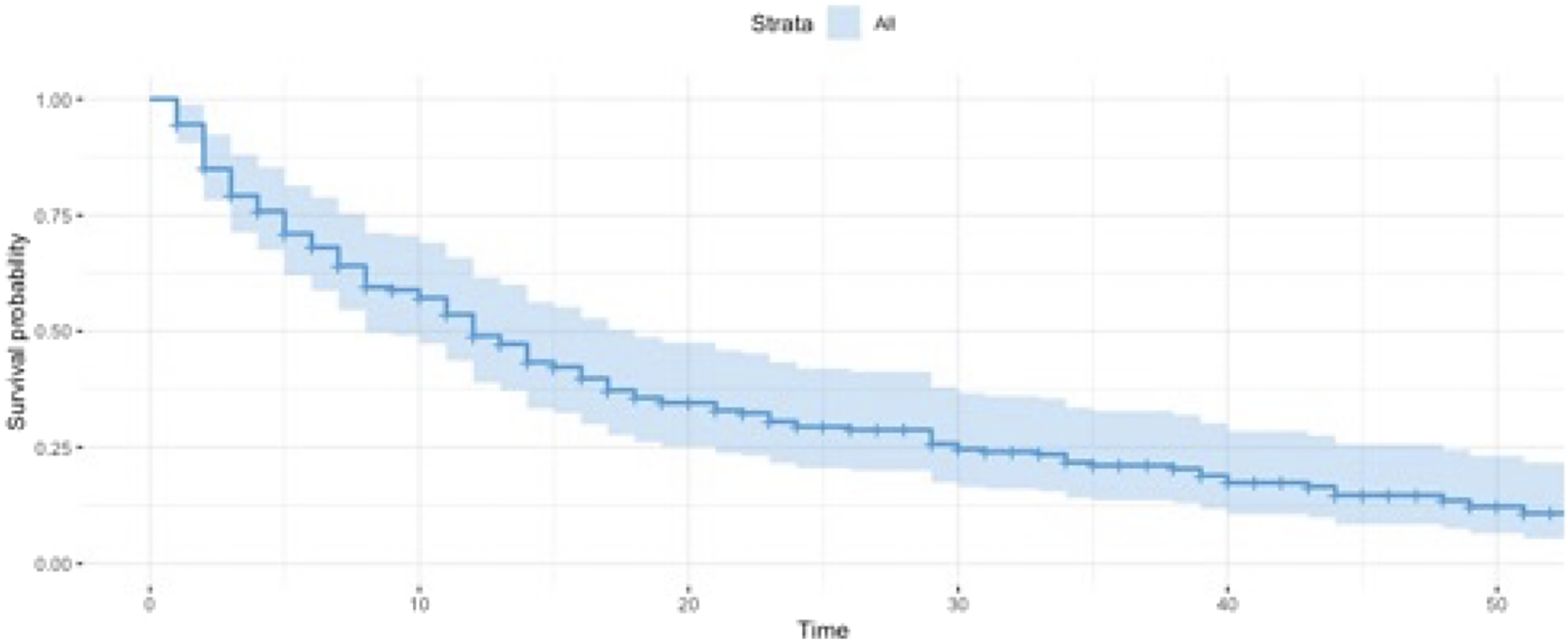
The model’s overall significance is supported by the substantial p-values associated with the Likelihood Ratio Test, Wald test, and Score test. These statistical measures, which are more appropriate for Cox proportional hazards models than R-squared, evaluate the null hypothesis that all beta coefficients (β) are zero. The consistency across these test statistics and the decisive rejection of the null hypothesis reinforces the model’s robustness in capturing factors influencing autocratic regime breakdown. Figure 5 illustrates the predicted survival proportion over time, providing visual context for the model’s implications.
Predicted Survival Proportion over Time.
The central argument of this paper posits that judicial independence is closely related to incumbents’ perceived risk of losing power. Table 2 presents the results from the second-stage linear regression model, incorporating relevant control variables.Footnote 2 The analysis yields significant insights into the relationship between the risk of losing office and the level of judicial independence.
Table 2: Second Stage
Note:
* p<0.1
** p<0.05
*** p<0.01
The results indicate a significant positive relationship between increasing hazard rates—signifying a higher risk of leadership turnover—and the level of judicial independence. This finding supports the hypothesis that authoritarian leaders facing a higher risk of removal from power are more likely to grant or tolerate greater independence to the judiciary, potentially as a strategic measure to safeguard against future consequences.
The analysis also identifies other factors influencing judicial independence. Both court age and economic prosperity demonstrate positive and statistically significant associations with judicial independence. These findings corroborate previous research, affirming the importance of institutional longevity and economic stability in fostering judicial autonomy (Randazzo, Reference Randazzo, Gibler and Reid2016).
Regime type emerges as a significant factor in determining judicial independence. Single-party regimes exhibit a positive impact on judicial independence, while personalist regimes show a negative influence. This distinction highlights the varying effects of different autocratic systems on judicial institutions. The positive and statistically significant relationship between executive tenure and judicial independence suggests that longer-serving leaders may establish conditions conducive to more independent judiciaries.
In sum, the regression analysis supports the paper’s main argument and provides detailed insights into the factors shaping judicial independence in autocratic regimes. These results underscore the value of extending the insurance theory of judicial independence to autocratic contexts. The novel hazard rate measure, based on factors observable to autocratic leaders, offers a new method to operationalize the perceived risk of losing power in these regimes. This approach enables direct testing of how perceived risk influences decisions about judicial independence in non-democratic settings, addressing a significant gap in the existing literature, which has predominantly focused on democracies.
Conclusion
This study addresses a fundamental question in the study of autocratic governance: why do authoritarian leaders, who typically centralize power, allow for an independent judiciary? The analysis, grounded in the insurance theory of judicial independence, provides insights into this complex dynamic.
Risk perception and uncertainty play a crucial role in shaping autocratic leaders’ strategic decisions. Regardless of their electoral nature, autocratic regimes face uncertainties about their tenure. The threat of post-exit punishment emerges as a significant factor, driving autocrats to adopt strategies that might secure their future and guard against potential reprisals.
The analysis reveals the complex nature of regime stability, showing how economic conditions, political transitions, and governance calculations impact judicial independence. As the theory suggests, autocratic leaders who perceive a higher risk of losing office are more likely to empower or tolerate an independent judiciary. This strategic decision, based on a careful assessment of the costs and benefits of judicial independence, significantly influences the trajectory of authoritarian governance.
Institutional safeguards prove to be pivotal in determining post-tenure outcomes for autocratic leaders. Our examination of how judicial independence can check executive power and mitigate post-tenure reprisals offers valuable insights into the mechanisms of authoritarian resilience and adaptation.
By exploring the relationships between political threats, institutional responses, and governance dynamics in autocratic regimes, this research contributes to a more nuanced understanding of judicial independence in autocracies. This work not only enhances academic understanding but also lays a foundation for future research in authoritarian governance and institutional development.
Ultimately, the findings suggest that promoting judicial independence in autocracies is not merely a concession to democratic ideals, but a calculated strategy for regime survival. This insight carries important implications for our understanding and approach to autocratic systems, potentially informing both scholarly research and policy approaches in engaging with authoritarian regimes.
Data availability statement
Replication materials are available at the Law and Courts Dataverse.



