




No CrossRef data available.
Article contents
Effect of bioactive compounds from Sainfoin (Onobrychis viciifolia Scop.) on the in vitro larval migration of Haemonchus contortus: role of tannins and flavonol glycosides
Published online by Cambridge University Press: 16 June 2005
Abstract
Anthelmintic bioactivity against gastrointestinal nematodes has been associated with leguminous forages supporting the hypothesis of a role of condensed tannins. However, the possibility that other compounds might also been involved has received less consideration. Using bio-guided fractionation, the current study aimed at characterizing the biochemical nature of the active compounds present in sainfoin (Onobrychis viciifolia), previously identified as an anthelmintic leguminous forage. The effects of sainfoin extracts were evaluated on 3rd-stage larvae (L3) of Haemonchus contortus by using a larval migration inhibition (LMI) assay. Comparison of extracts obtained with several solvent systems showed that the bioactivity was associated with the 70[ratio ]30 acetone/water extract. Further fractionation of the later allowed the separation of phenolic compounds. By use of a dialysis method, compounds were separated with a molecular weight cut-off of 2000 Da. The in vitro anthelmintic effect of the fraction with condensed tannins was confirmed. In the fraction containing molecules of MW <2000 Da, 3 flavonol glycosides were identified as rutin, nicotiflorin and narcissin. At 1200 μg/ml, each inhibited significantly the migration of larvae. Addition of polyvinyl pyrrolidone (PVPP) to both fractions before incubation restored larval migration. These results confirmed the role of both tannins and flavonol glycosides in the anthelmintic properties of sainfoin.
Keywords
Information
- Type
- Research Article
- Information
- Copyright
- © 2005 Cambridge University Press
INTRODUCTION
Parasitic nematodes are of major economic importance in livestock, and anthelmintics have to be employed to reduce the production losses caused by them. However, because of the widespread development of resistance to broad-spectrum anthelmintics, the control of gastrointestinal parasites based on chemical substances is now severely impaired (Roos, Kwa and Grant, 1995; Waller, 1997; Jackson and Coop, 2000). Therefore, there is an urgent need to seek alternative or complementary solutions to the control of parasitic nematodes of ruminants (Niezen et al. 1996; Waller, 1999). One of these novel approaches is represented by the use of nutraceutical forages (Waller and Thamsborg, 2004). Several legume forages (Hedysarum coronarium L., Onobrychis viciifolia Scop., Lotus pedunculatus Cav. or Lotus corniculatus L.) containing condensed tannins have been reported to have anthelmintic properties. This was shown either through in vivo or in vitro studies (see reviews by Kahn and Diaz-Hernandez, 2000; Athanasiadou, Kyriazakis and Jackson, 2003; Paolini and Hoste, 2003c; Min and Hart, 2003). The strategic use of condensed-tannin forages in grazing management may therefore, lead to a promising solution for the control of parasite infections both in conventional and in organic farming systems. However, some variability in results has been described which related either to the nematode species or to the sources of tannins. This emphasizes the need to understand the mechanisms of action of the plant secondary metabolites and to better characterize the bioactive compounds associated with the anthelmintic properties of these forages.
To date, the anthelmintic properties of tanniferous legume forages have mainly been related to their condensed tannins content. This conclusion was drawn from studies that demonstrated (1) the bioactivity on nematodes of condensed tannins purified from plants and (2) the inhibition of these anti-parasitic effects by addition of specific inhibitors of tannins to plant extracts (Molan et al. 2000b). In addition, Molan et al. (2003) have recently shown that flavan-3-ols and flavan-3-ol gallates, the basic units of condensed tannin polymers, presented an inhibitory activity on egg hatching, larval development and the viability of Trichostrongylus colubriformis 3rd-stage larvae (L3). Some authors have suggested that other plant compounds, in particular plant secondary metabolites, might also affect the biology of worms (Athanasiadou et al. 2003; Molan et al. 2003). However, no study has investigated, in detail, the role of the different fractions isolated from a bioactive forage to determine whether and which compounds other than tannins might be associated with the effects.
Sainfoin is a tanniferous legume forage (Bate-Smith, 1973; Koupay-Abyazani et al. 1993) which has shown positive effects against various parasitic nematode species in field studies (Paolini, Dorchies and Hoste, 2003b; Thamsborg et al. 2003). In addition, in vitro experiments have demonstrated that extracts of sainfoin showed an inhibitory activity against L3 of gastrointestinal nematodes, as measured by the larval migration inhibition assay (Molan et al. 2000b; Paolini, Fouraste and Hoste, 2004). Sainfoin contains tannins and also other phenolic compounds, such as flavonoid glycosides (Lu et al. 2000; Marais et al. 2000).
The aim of the current study was to fractionate extracts of sainfoin in order to characterize the biochemical nature of the active compound(s) with anthelmintic effects and better to understand the mechanisms of action. Haemonchus contortus was used as the parasitic model, using a larval migration inhibition assay (LMI), to investigate the anthelmintic properties.
MATERIALS AND METHODS
Plant materials
Sainfoin, Onobrychis viciifolia Scop. cv. ‘Fakir’ and ryegrass, Lolium perenne L. were harvested at the end of spring 2002 in the south east of France, and air-dried at room temperature. Rye grass hay was used as a negative control because of its low percentage of tannins. The water content of the hays was 16% for the sainfoin and 33% for the gramineous hay at the time of extraction.
Experimental design and biochemical procedure
In a first step, we compared results between different extracts of Sainfoin and ryegrass hays, with various solvents in order to determine the polarity of the active compounds. In a second step, we examined the best solvent to use to improve the extraction of those active components from sainfoin. In a third step, we used activity guided fractionation to isolate and characterize the biochemical substances presenting the anthelmintic properties.
Preparation of extracts
First, a ‘successive step extraction’ was applied to determine the polarity of the active compounds. Hexane, methylene chloride, 30[ratio ]70 alcohol/water (v/v) and distilled water were used as solvents, known to present different polarity, in order to extract successively: lipids, sterols, isoflavons, polyphenols, vitamins, glycosides compounds, tannins, amino acids, proteins, sugars, mucilages. One hundred grams of ground hay was extracted with 2×600 ml of solvent at room temperature for 30 min. The extracts were concentrated under low pressure at 35 °C. Water was removed by freeze-drying.
Improvement of the extraction yield
After the polarity of the active compounds was determined, we focused on improving the yield of extraction by using another appropriate solvent. An acetone extract was then used for comparison with 30[ratio ]70 alcohol/water. Five hundred grams of dry, ground plant were extracted with 2×3 l of 70[ratio ]30 acetone/water (v/v) containing ascorbic acid (1 g.l−1). The acetone was removed under low pressure (at temperature <35 °C), and the aqueous solution was washed 4 times with 500 ml methylene chloride to remove chlorophyll and lipids. The extract was freeze-dried. Compared with the 30[ratio ]70 alcohol/water (v/v) (yield 15%), the yield of extraction with 70[ratio ]30 acetone/water was found to be approximately 30%.
Fractionation
In order to continue the identification of the active compounds, we have further fractionated the active extract using a polarity method. The defatted 70% aqueous acetone extract (300 g) was suspended in water and subjected to chromatography over a C-18 silica column using first 100% H2O and then 100% MeOH. The result of fractionation was monitored by thin layer chromatography (TLC) on Al plates coated with Kieselgel 60F254 (Merck), developed in CHCl3/MeOH/H2O, 65: 45: 10 (v/v/v) and detected using UV and vanillin sulphuric acid spray reagent followed by heating the plate at 110 °C for 5–10 min. Before being tested on the nematode larvae, using the LMI test, the 2 fractions, the aqueous one (Faq) and the methanolic one (Fmet), were concentrated under low pressure at 35 °C and the water was removed by freeze-drying. After the results of this first bioassay, a second fractionation on the Fmet fraction was performed using a dialysis method, in order to separate, the molecules with high or low molecular weight. A spectrapor 7 membrane of 2000 Da molecular weight cut off (MWCO), (Spectrum Industries, Laguna Hills, CA) was washed with distilled water to remove the sodium azide. The Fmet fraction was suspended in water by sonication and was then pipetted into the dialysis bag and placed in a glass flask with 500 ml of distilled water. Dialysis was performed at room temperature for 48 h with 2 changes of the outer dialysate. The dialysate and dialysed solutions were then freeze-dried before being tested on the nematode larvae, with the LMI test.
Identification of compounds
In order further to characterize biochemically the active compounds of the Fmet fraction, purifications were achieved by chromatography on a reverse-phase silica cartridge (Mega Bond Elut Varian® C18 cartridge), eluting with a water-MeOH gradient.
HPLC analysis was performed on Merck-Hitashi apparatus equipped with a LaChrom L-7100 quaternary gradient pump and a LaChrom L-7450 DAD detector using a Touzart and Matignon100 Å (150–46 mm) column. Solvent A: 2% AcOH in H2O, solvent B: CH3CN; starting from 5% B up to 15% B in 20 min, to 20% B in 30 min, to 50% B in 50 min. The flow rate was set 1 ml/min and UV detection was at 280 mm.
ES-MS (positive and negative ion mode), 3·5 kV (water, MeOH) was measured on a Perkin-Elmer Siex API 365 mass spectrometer. 1H-NMR (400 MHz) was recorded on a Bruker ARX – 400 spectrometer with TMS as internal standard and dimethyl sulfoxide (DMSO) (Sigma Ltd) d6 as solvent.
Larval Migration Inhibition (LMI) bioassay
In vitro experiments were undertaken to determine the effect of the different solutions, extracted or fractionated, on the mobility of ensheathed Haemonchus contortus L3 using the LMI bioassay developed by Wagland et al. (1992) and modified by Rabel, McGregor and Douch (1994).
The 3rd-stage larvae (L3) were obtained from a donor goat infected with a pure, susceptible strain of H. contortus. The larvae collected were stored at 4 °C for 4 months before use in the assay. One thousand L3 were added to microtubes containing the negative control (distilled water, PBS) or anthelmintic control (levamisole at 1% concentration) or the solutions to be tested. All incubations were carried out for 3 h at 20 °C. After this time, the L3 were washed and centrifuged (at 3180 g for 5 min) 3 times and then transferred to sieves (inserts equipped with a 20 μm mesh positioned in a conical tube). The 20 μm mesh size was selected in order to ensure that migration of larvae through the sieves was active. After 3 h at room temperature, the number of L3 that had migrated through the mesh, was counted at a 40× magnification. Percentage migration was calculated as

where T is the total number of L3 deposited on the sieve and M the number of L3 that had successfully migrated through the sieve.
LMI bioassay of extracts
The freeze-dried extracts were dissolved in distilled water alone or distilled water with 5% DMSO for hexane and methylene chloride extracts. We first verified that the addition of 5% of DMSO had no significant effect on the migration of larvae (Rabel et al. 1994). If needed, 5% DMSO was also added to the controls. The concentration of plant extracts solution used for incubation was 1200 μg/ml. Three replicates were run per assay.
LMI bioassay of fractions
The freeze-dried samples of fractions were dissolved in phosphate buffer solution (PBS; 0·1 M phosphate, 0·05 M NaCl; pH 7·2) in order to buffer any acidity in the fractions. The concentration used for incubation was 1200 μg/ml. Five replicates were run per assay.
LMI bioassay of flavonol glycosides
Three flavonol glycosides were identified in the Fmet fraction. For biological assay, quercetin-3-rutinoside was obtained from Prolabo Co. (Nogent sur Marne, France), kaempferol-3-rutinoside and isorhamnetin-3-rutinoside were purchased from Extrasynthese Co. (Gemay, France). The three flavonol glycosides were dissolved in PBS with 5% of DMSO and 5% DMSO was added to the controls. Three concentrations were used for incubation, i.e. 300, 600, and 1200 μg/ml. Five replicates were run per flavonol glycoside and per concentration.
Binding with polyvinyl pyrrolidone (PVPP)
In order to confirm the role of phenolic compounds in anthelmintic activity, a series of incubations were undertaken using insoluble PVPP (Doner, Becard and Irwin, 1993; Makkar, Blummel and Becker 1995). Five hundred mg of PVPP were added to 10 ml of the incubation solution corresponding to the 2 fractions obtained after dialysis and also to the rutin solution before being used in the LMI test. The mixture was vortexed and then centrifuged (3000 g for 10 min). The supernatant was collected for use in the LMI assay. The LMI values obtained with the different fractions, with or without PVPP (Sigma Aldrich Co.), were compared.
Statistical analyses
Statistical analyses of data were performed using StatView 5.0. computer software (SAS Institute, Cary, NC). P values less than 0·05 were considered statistically significant. Significant differences between treatment means were assessed using the non-parametrical test of Kruskall-Wallis. In addition, comparisons were carried out by means of the Student's t-test for the experiments when 5 replicates were available.
RESULTS
Effects of plant extracts
No significant effects were found with the extracts of ryegrass irrespective of the solvent used (Fig. 1). For the sainfoin extracts, no difference was found in the percentage of migration between the hexane (Fig. 1A) or methylene chloride (Fig. 1B) extracts and the DMSO control values. In contrast, 30[ratio ]70 alcohol/water (v/v) (Fig. 1C), distilled water (Fig. 1D) or 70[ratio ]30 acetone/water (v/v) (Fig. 1E) extract of sainfoin presented a significant inhibition of L3 migration (P<0·05). Those three extracts were then shown by TLC to have very similar compound profiles: flavonol glycosides, sugar and tannins which were visible under UV and developed specific colorations under vanillin sulphuric acid spray reagent (data not shown). Since a better yield of extraction was achieved by the 70[ratio ]30 acetone/water (v/v), this solvent was used in the rest of the study for further fractionation steps.

Fig. 1. The effect of sainfoin and ryegrass extracts on the larval migration inhibition (LMI) of infective 3rd-stage (L3) larvae of Haemonchus contortus. The incubations were performed with distilled water, levamisole 1%, and (A) hexane, (B) methylene chloride, (C) 30[ratio ]70 alcohol/water, (D) distilled water and (E) 70[ratio ]30 acetone/water extracts. DMSO (5%) was added to the controls and the hexane and methylene chloride fractions. All incubations were made in triplicate. Results are presented as mean with standard error of the mean. The asterisks indicate significant differences to control values (P<0·05).
Bio-guided fractionation
The Fmet and the Faq fractions (Fig. 2) showed differences in their efficacy to inhibit larvae migration. Compared with the PBS control values (90·45% of larval migration), the migration was affected after incubation with 70[ratio ]30 acetone/water (v/v) extracts (P<0·04) and with the Fmet fraction (P<0·01). In contrast, no difference was found in the percentage of migration between the Faq fraction and the PBS control values. By thin-layer chromatography, the Faq fraction was found to contain mainly a mixture of sugars, which were detected based on a green coloration after treatment with vanillin sulphuric acid spray reagent. In contrast, the Fmet fraction was shown to contain a complex mixture of phenolic compounds (data not shown).

Fig. 2. The effect of Faq and Fmet fractions of acetone extract of sainfoin on the larval migration inhibition (LMI) of infective 3rd-stage (L3) larvae of Haemonchus contortus. The incubations were performed with PBS, levamisole 1%, and the 2 fractions of sainfoin. All incubations were made in 5 replicates. Results are presented as the mean±standard error of the mean. The asterisks indicate the significant differences to control values (*P<0·05; **P<0·01; ***P<0·001).
The dialysate and the dialysed parts of the Fmet fraction caused a significant reduction (P<0·001) of the larval migration (Fig. 3). The most effective fraction (dialysate) produced a 50% reduction in larval migration compared with the PBS control. As revealed by TLC, the dialysate fraction contained a mixture of flavonol glycosides and tannins (<2000 Da). The dialysed fraction, which developed a red coloration upon treatment with vanillin sulphuric acid spray reagent, contained only tannins (data not shown).

Fig. 3. The effect of dialysis fractions of Fmet fraction of sainfoin on the larval migration inhibition (LMI) of infective 3rd-stage (L3) larvae of Haemonchus contortus. The incubations were performed with PBS, levamisole 1%, and the dialysis fractions. All incubations were made in 5 replicates. Results are presented as the mean±standard error of the mean. The asterisks indicate the significant differences to control values (*P<0·05; **P<0·01; ***P<0·001).
Identification of compounds
In the Fmet fraction, the most abundant flavonoid was isolated and identified as quercetin-3-rutinoside (or rutin) from the ES-MS which yielded the [M−H]+peak at m/z 609. This was confirmed by NMR spectra comparison to an authentic sample (Lu et al. 2000; Marais et al. 2000). Kaempferol-3-rutinoside (or nicotiflorin) and the isorhamnetin-3-rutinoside (or narcissin) were also identified through their ES-MS spectra. This was confirmed based on HPLC retention time and UV absorption of an authentic sample (Lu et al. 2000).
Bioactive effects of flavonol glycosides
The inhibitory activities of the 3 flavonol glycosides against L3 larvae are presented in Fig. 4. No significant differences in activities were detected between these compounds and the PBS control values at low concentrations (300 and 600 μg/ml). In contrast, at 1200 μg/ml, the three compounds inhibited significantly (P<0·02) the migration of Haemonchus L3. Compared with the PBS values, the migration was reduced respectively by 25% with rutin, 30% with nicotiflorin and 35% with narcissin.

Fig. 4. The effect of rutin [squf ] nicotiflorin and narcissin on the larval migration inhibition (LMI) of infective 3rd-stage (L3) larvae of Haemonchus contortus. The incubations were performed with PBS, levamisole 1%, and 3 concentrations of each compound. DMSO (5%) was added. All incubations were made in 5 replicates. Results are presented as the mean±standard error of the mean. The asterisks indicate significant differences to control values (*P<0·05; **P<0·01; ***P<0·001).
Effect of PVPP on the activity of the dialysis fractions and of rutin
The dialysate and the dialysed fractions caused a significant reduction in larval migration compared to the control. Addition of PVPP (Fig. 5) to these 2 fractions restored the percentage of migration to values that did not differ significantly from those recorded using PBS.

Fig. 5. The effect of dialysis fractions without ; or with the addition of PVPP on the larval migration inhibition (LMI) of infective 3rd-stage (L3) larvae of Haemonchus contortus. The incubations were performed with PBS, levamisole 1%, and the dialysis fractions. All incubations were made in 5 replicates. Results are presented as the mean±with standard error of the mean. The asterisks indicate significant differences to control values (*P<0·05; **P<0·01; ***P<0·001).
Similarly, the addition of PVPP to the incubation solution of rutin at 1200 μg/ml (Fig. 6) eliminated its inhibitory effect against the L3 of Haemonchus contortus.

Fig. 6. The effect of rutin compound without or with the addition of PVPP on the larval migration inhibition (LMI) of infective 3rd-stage (L3) larvae of Haemonchus contortus. The incubations were done with PBS +5% DMSO, levamisole 1%, and the rutin. All incubations were made in 5 replicates. Results are presented as the mean ±with standard error of the mean. The asterisks indicate the significant differences to control values (*P<0·05; **P<0·01; ***P<0·001).
DISCUSSION
Most of the previous studies examining the activity of sainfoin extracts against parasitic nematodes in vitro have used Trichostrongylus colubriformis (Molan et al. 2000a; Athanasiadou et al. 2001; Paolini et al. 2004). In contrast, for Haemonchus contortus, there is a paucity of information despite its economic importance due to its high pathogenicity and to the severe production losses associated with its presence (Allonby and Urquhart, 1975; Perry et al. 2002). Only Paolini et al. (2003a) assessed the impact of condensed tannins in goats infected with adult H. contortus.
The results of the current study confirmed the activity of sainfoin extracts on Haemonchus larvae. They also showed how the activity is attributable to different fractions of Onobrychis viciifolia. Different fractions of sainfoin significantly reduced the migration of L3 of H. contortus compared with control incubations, and the biochemical nature of these compounds was not restricted to condensed tannins.
The first aim of our study was to determine the best way to extract the active compounds from sainfoin. We showed that only extracts obtained with high polarity solvents retained activity. However, such extracts contained only a small proportion of the total proanthocyanidins present in tissues, noticeably in the case of sainfoin (Bate-Smith, 1973). This fact seems to be associated with the particular chemical composition of condensed tannins in this plant, and showed how the extraction system is a discriminating factor in evaluating in vitro activity.
By measuring the migration of L3, it was possible to screen the inhibitory effect of the different compounds of sainfoin during the whole fractionation procedure. The first fractionation obtained after chromatography on C-18 silica column allowed the separation of the extracts into 2 parts. The Faq (mainly composed of sugars) had no anthelminthic activity, but the bioactivity was associated with the Fmet fraction. The second fractionation of this active Fmet part, aimed to separate high and low MW compounds (> or < to 2000 Daltons). Min and Hart (2003) reported that the MW of condensed tannins of sainfoin ranged from 2040 to 3060. Using the separation, we confirmed that a part of the activity was due to high MW tannins of up to 2000 Da. However, other compounds whose MW was less than 2000 Da, such as flavonol, flavonol glycosides, proanthocyanidins, presented a higher inhibitory effect on the migration of Haemonchus L3.
Of the non-tannin compounds of the Fmet, the most abundant one was rutin. Moreover, several closely related glycosides were also identified (Lu et al. 2000; Marais et al., 2000), but were difficult to purify. After identification from the Fmet fraction, commercially purchased rutin, nicotiflorin and narcissin were used in order to measure their activity based on the LMI assay. All of these compounds had an activity against the Haemonchus L3 at the concentration of 1200 μg/ml. This concentration is low compared with previous studies. For example, Molan et al. (2000a) found that sulla extracts inhibited the migration of exsheathed H. contortus L3 by 37% at the concentration of 100 mg condensed tannins/ml. In contrast, 80% inhibition on H. contortus ensheathed L3 was measured with sainfoin extracts at a concentration of 1200 μg/ml (Paolini et al. 2004), which is similar to the current results. This seems to correspond to some physiological values for small ruminants. In the abomasal digesta of a sheep fed with a diet containing condensed tannins, the concentrations of total condensed tannins were estimated to range between 1100 to 2800 μg/ml whilst the measurements of acetone-extractable tannins was about 350 to 900 μg/ml (Terril et al. 1994; Molan et al. 2000b). Jones and Mangan (1977) have previously indicated the absence of any free tannin in the rumen fluid of sheep fed sainfoin, and due to this result, they questioned the possible in vivo activity of this forage. According to the current results, the presence of non-tannin compounds active against an abomasal nematode could explain this apparent discrepancy.
The specific effect of condensed tannins was further assessed by use of PVPP, which is known to bind and to inactivate the biological properties of tannins. As the capture of tannins with PVPP was achieved before incubation with Haemonchus L3 and since the tannins would have been then precipitated with PVPP, the supernatant might contain only simple phenolic compounds other than tannins. Makkar et al. (1995) showed that the binding of tannins was maximum at pH 3. In the LMI assay, PBS solvent buffered the fractions at pH 7·2, which could explain why the activity of dialysed fraction did not disappear completely. In contrast, addition of PVPP to the dialysate fraction (compounds < to 2000 Da) also eliminated the effects, which is probably due to the capacity of PVPP to bind also with flavonoids (Doner et al. 1993). This was also confirmed by the addition of PVPP to rutin (1200 μg/ml), which contributed to the restoration of control values of larval migration. The restoration of L3 migration to similar values of the controls was observed after PVPP addition, and supports the hypothesis that the bioactivity was associated with both high MW condensed tannins and flavonol glycosides.
From the current and previous studies (Molan et al. 2000b, Paolini et al. 2004), the evidence shows that the condensed tannins from sainfoin contribute to inhibit the mobility of nematode L3s. In some previous reports (Molan et al. 2003), it has been underlined that, besides the concentration, the chemical structure of tannins, (i.e. the MW, the ratio between prodelphinidins and procyanidins) from different sources of condensed tannins may also be considered as being possible modulating factors for the anti-parasitic properties. Current results suggest that the presence of other compounds, such as flavonol glycosides, might also participate in the modulation of bioactivity. However, it is worth to underline the proximity of biochemical structure between flavonol glycosides and condensed tannins, that are polymers of flavan-3-ols. This similarity suggests a similar or close mechanism of action for both types of compounds. These data indicate that, to estimate the preventive value of any legume forage for the control of gastrointestinal nematodes in livestock, further analyses of the precise mechanisms involved and measurements of phenolic compounds like flavonol glycosides in addition to condensed tannins are required.
The authors would like to acknowledge the financial support from the European Union through the Contract WORMCOPS (number QLK5-CT 2001-01843), which is part of collaboration between Denmark, UK, the Netherlands, Sweden, Spain and France. We also thank Dr Virginie Paolini (Unité Mixte de Recherches 1225 INRA/DGER) for her help and fruitful discussion. The financial help of the Region Midi Pyrénées (contract 030121196) is also sincerely acknowledged.
References
REFERENCES
Allonby, E. W. and
Urquhart, G. M. (
1975).
The epidemiology and pathogenic significance of haemonchosis in a merino flock in East Africa.
Veterinary Parasitology
1,
129–143.CrossRefGoogle Scholar
Athanasiadou, S.,
Kyriazakis, I.,
Jackson, F. and
Coop, R. L. (
2001).
Direct anthelmintic effects of condensed tannins towards different gastrointestinal nematodes of sheep in vitro and in vivo studies.
Veterinary Parasitology
99,
205–219. DOI: 10.1016/S0304-4017(01)00467-8.CrossRefGoogle Scholar
Athanasiadou, S.,
Kyriazakis, I. and
Jackson, F. (
2003).
Can plant secondary metabolites have a role in controlling gastrointestinal nematode parasitism in small ruminants?
Proceedings of the Satellite Symposium: Secondary Compounds and Browse Utilization. The VIth International Symposium on the Nutrition of Herbivores. Satellite Symposium, 19–24 October 2003, Merida, Mexico. pp.
16–25.Google Scholar
Bate-Smith, E. C. (
1973).
Tannins of herbaceous leguminosae.
Phytochemistry
12,
1809–1812. DOI: 10.1016/0031-9422(73)80409-1.CrossRefGoogle Scholar
Doner, L. W.,
Becard, G. and
Irwin, P. L. (
1993).
Binding of flavonoids by polyvinylpolypyrrolidone.
Journal of Agriculture and Food Chemistry
41,
753–757.CrossRefGoogle Scholar
Jackson, F. and
Coop, R. L. (
2000).
The development of anthelmintic resistance in sheep nematodes.
Parasitology
120,
S95–S107.CrossRefGoogle Scholar
Jones, W. T. and
Mangan, J. L. (
1977).
Complexes of the condensed tannins of sainfoin (Onobrychis viciifolia Scop.) with fraction 1 leaf protein and with submaxillary mucoprotein, and their reversal by polyethylene glycol and pH.
Journal of Science, Food and Agriculture
28,
126–136.Google Scholar
Kahn, L. P. and
Diaz-Hernandez, A. (
2000).
Tannins with anthelmintic properties. Tannins in Livestock and Human Nutrition:
Proceedings of an International Workshop, Adelaide, Australia. ACIAR Proceeding
92,
140–149.Google Scholar
Koupai-Abyazani, M. R.,
Muir, A. D.,
Bohm, B. A.,
Towers, G. H. N. and
Gruber, M. Y. (
1993).
The proanthocyanidin polymers in some species of Onobrychis.
Phytochemistry
34,
113–117. DOI: 10.1016/S0031-9422(00)90791-X.CrossRefGoogle Scholar
Lu, Y.,
Sun, Y.,
Yeap Foo, L.,
McNabb, W. C. and
Molan, A. L. (
2000).
Phenolic glycosides of forage legume Onobrychis viciifolia.
Phytochemistry
55,
67–75. DOI: 10.1016/S0031-9422(00)00143-6.CrossRefGoogle Scholar
Makkar, H. P. S.,
Blummel, M. and
Becker, K. (
1995).
Formation of complexes between polyvinyl pyrrolidones or polyethylene glycols and tannins, and their implication in gas production and the true digestibility in in vitro techniques.
British Journal of Nutrition
73,
897–913.CrossRefGoogle Scholar
Marais, J. P. J.,
Mueller-Harvey, I.,
Brandt, E. V. and
Ferreira, D. (
2000).
Polyphenols, condensed tannins, and other natural products in Onobrychis viciifolia (sainfoin).
Journal of Agriculture and Food Chemistry
48,
3440–3447. DOI: 10.1021/jf000388h S0021-8561(00)00388-5.CrossRefGoogle Scholar
Min, B. R. and
Hart, S. P. (
2003).
Tannins for suppression of internal parasites.
Journal of Animal Science
81 (E. Suppl. 2),
E102–E109.Google Scholar
Molan, A. L.,
Alexander, R. A.,
Brookes, I. M. and
McNabb, W. C. (
2000 a).
Effect of an extract from sulla (Hedysarum coronarium) containing condensed tannins on the migration of three sheep gastrointestinal nematodes in vitro.
Proceeding of New Zealand Society for Animal Production
60,
21–25.Google Scholar
Molan, A. L.,
Waghorn, G. C.,
Min, B. M. and
McNabb, W. C. (
2000 b).
The effect of condensed tannins from seven herbages on Trichostrongylus colubriformis larval migration in vitro.
Folia Parasitologica
47,
39–44.Google Scholar
Molan, A.L.,
Meagher, L. P.,
Spencer, P. A. and
Sivakumaran, S. (
2003).
Effect of flavan-3-ol on in vitro egg hatching, larval development and viability of infective larvae of Trichostrongylus colubriformis.
International Journal for Parasitology
33,
1691–1698. DOI: 10.1016/S0020-7519(96)00207-8.CrossRefGoogle Scholar
Niezen, J. H.,
Charleston, W. A. G.,
Hodgson, J.,
Mackay, A. D. and
Leathwick, D. M. (
1996).
Controlling internal parasites in grazing ruminants without rescourse to anthelmintics: approaches, experiences, prospects.
International Journal for Parasitology
26,
983–992. DOI: 10.1016/S0020-7519(96)00082-3.CrossRefGoogle Scholar
Paolini, V.,
Bergaud, J. P.,
Grisez, C.,
Prevot, F.,
Dorchies, Ph. and
Hoste, H. (
2003 a).
Effects of condensed tannins on goats experimentally infected with Haemonchus contortus.
Veterinary Parasitology
113,
253–261. DOI: 10.1016/S0304-4017(03)00064-5.CrossRefGoogle Scholar
Paolini, V.,
Dorchies, Ph. and
Hoste, H. (
2003 b).
Effects of sainfoin hay on gastrointestinal nematode infections in goats.
Veterinary Record
152,
600–601.Google Scholar
Paolini, V. and
Hoste, H. (
2003 c).
Effects of condensed tannins on goats infected with gastrointestinal nematodes: a short review.
Proceedings of the satellite symposium: secondary compounds and browse utilization. The VI International Symposium on the Nutrition of Herbivores. Satellite Symposium 19–24 October 2003, Merida, Mexico. pp.
26–36.Google Scholar
Paolini, V.,
Fouraste, I. and
Hoste, H. (
2004).
In vitro effects of three woody plant and sainfoin extracts on third-stage larvae and adult worms of three gastrointestinal nematodes.
Parasitology
129,
69–77. DOI: 10.1017/S0031-1820(04)00526-8.CrossRefGoogle Scholar
Perry, B. D.,
Randolph, T. F.,
McDermott, J. J.,
Sones, K. R. and
Thornton, P. K. (
2002).
Investing in Animal Health Research to Alleviate Poverty,
ILRI,
Nairobi
Kenya.
Rabel, B.,
McGregor, R. and
Douch, P. G. C. (
1994).
Improved bioassay for estimation of inhibitory effects of ovine gastrointestinal mucus and anthelmintics on nematode larval migration.
International Journal for Parasitology
24,
671–676. DOI: 10.1016/S0020-7519(93)E0011-W.CrossRefGoogle Scholar
Roos, M. H.,
Kwa, M. S. G. and
Grant, W. N. (
1995).
New genetic and practical implications of selection for anthelmintic resistance in parasitic nematodes.
Parasitology Today
11,
148–150. DOI: 10.1016/0169-4758(95)80136-7.CrossRefGoogle Scholar
Terrill, T. H.,
Waghorn, G. C.,
Woolley, D. J.,
McNabb, W. C. and
Barry, T. N. (
1994).
Assay and digestion of 14C-labelled condensed tannins in the gastrointestinal tract of sheep.
British Journal of Nutrition
72,
467–477.CrossRefGoogle Scholar
Thamsborg, S. M.,
Mejer, H.,
Bandier, M. and
Larsen, M. (
2003).
Influence of different forages on gastrointestinal nematode infections in grazing lambs.
World Association for the Advancement of Veterinary Parasitology. The 19th International Conference, August 10–14, 2003. New Orleans. p.
189.Google Scholar
Wagland, B. M.,
Jones, W. O.,
Hribar, L.,
Bendixsen, T. and
Emery D. L. (
1992).
A new simplified assay for larval migration inhibition.
International Journal for Parasitology
22,
1183–1185. DOI: 10.1016/0020-7519(92)90040-R.CrossRefGoogle Scholar
Waller, P. J. (
1997).
Anthelmintic resistance.
Veterinary Parasitology
72,
391–412. DOI: 10.1016/S0304-4017(97)00107-6.CrossRefGoogle Scholar
Waller, P. J. (
1999).
International approaches to the concept of integrated control of nematode parasites of livestock.
International Journal for Parasitology
29,
155–164. DOI: 10.1016/S0020-7519(98)00178-7.CrossRefGoogle Scholar
Waller, P. J. and
Thamsborg, S. M. (
2004).
Nematode control in “green” ruminant production systems.
Trends in Parasitology
20,
493–497. DOI: 10.1016/j.pt.2004.07.012.CrossRefGoogle Scholar
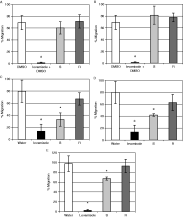
Fig. 1. The effect of sainfoin and ryegrass extracts on the larval migration inhibition (LMI) of infective 3rd-stage (L3) larvae of Haemonchus contortus. The incubations were performed with distilled water, levamisole 1%, and (A) hexane, (B) methylene chloride, (C) 30[ratio ]70 alcohol/water, (D) distilled water and (E) 70[ratio ]30 acetone/water extracts. DMSO (5%) was added to the controls and the hexane and methylene chloride fractions. All incubations were made in triplicate. Results are presented as mean with standard error of the mean. The asterisks indicate significant differences to control values (P<0·05).
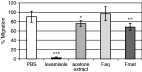
Fig. 2. The effect of Faq and Fmet fractions of acetone extract of sainfoin on the larval migration inhibition (LMI) of infective 3rd-stage (L3) larvae of Haemonchus contortus. The incubations were performed with PBS, levamisole 1%, and the 2 fractions of sainfoin. All incubations were made in 5 replicates. Results are presented as the mean±standard error of the mean. The asterisks indicate the significant differences to control values (*P<0·05; **P<0·01; ***P<0·001).
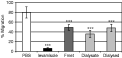
Fig. 3. The effect of dialysis fractions of Fmet fraction of sainfoin on the larval migration inhibition (LMI) of infective 3rd-stage (L3) larvae of Haemonchus contortus. The incubations were performed with PBS, levamisole 1%, and the dialysis fractions. All incubations were made in 5 replicates. Results are presented as the mean±standard error of the mean. The asterisks indicate the significant differences to control values (*P<0·05; **P<0·01; ***P<0·001).
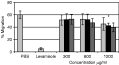
Fig. 4. The effect of rutin [squf ] nicotiflorin and narcissin on the larval migration inhibition (LMI) of infective 3rd-stage (L3) larvae of Haemonchus contortus. The incubations were performed with PBS, levamisole 1%, and 3 concentrations of each compound. DMSO (5%) was added. All incubations were made in 5 replicates. Results are presented as the mean±standard error of the mean. The asterisks indicate significant differences to control values (*P<0·05; **P<0·01; ***P<0·001).
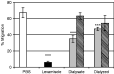
Fig. 5. The effect of dialysis fractions without ; or with the addition of PVPP on the larval migration inhibition (LMI) of infective 3rd-stage (L3) larvae of Haemonchus contortus. The incubations were performed with PBS, levamisole 1%, and the dialysis fractions. All incubations were made in 5 replicates. Results are presented as the mean±with standard error of the mean. The asterisks indicate significant differences to control values (*P<0·05; **P<0·01; ***P<0·001).
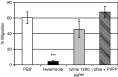
Fig. 6. The effect of rutin compound without or with the addition of PVPP on the larval migration inhibition (LMI) of infective 3rd-stage (L3) larvae of Haemonchus contortus. The incubations were done with PBS +5% DMSO, levamisole 1%, and the rutin. All incubations were made in 5 replicates. Results are presented as the mean ±with standard error of the mean. The asterisks indicate the significant differences to control values (*P<0·05; **P<0·01; ***P<0·001).
 You have
Access
- 159
- Cited by