Preambule
One day, after a public conference on stress featuring the principal investigator (PI) of this study, a woman confided that her husband had been suffering from severe, refractory depression for the last 2 years. This woman told the PI that she was under considerable stress, but this was nothing compared to the effects of her husband's depression on her two children. She also reported that her oldest daughter was refusing to bring her new boyfriend home because she did not want him to see her dad “like this.” Then, she told the PI a last sentence before leaving. She said: “You know, if my husband had been paralyzed in a wheelchair, everyone around us would be understanding of our ordeal and my daughter would introduce her dad with no problem to her friends. But because my husband is suffering from a severe mental health disorder, the stress of the stigma surrounding his disorder, along with the disorder itself, is killing us all very slowly.”
This study has been performed for her, her children and husband, and the thousands of other families suffering in silence.
Introduction
In 2001, the World Health Organization (WHO) declared stigma and discrimination associated with mental disorder to be the single most important barrier to overcome in the community (WHO, 2001). Stigma affects people with mental illnesses as well as their families. The process by which a person is stigmatized by association with another stigmatized person has been referred to as “courtesy” or “associative” stigma (Goffman, Reference Goffman1963) whereby parents, siblings, spouses, and children of people with mental illness also experience the stigma.
The nature of the public's attitude toward people with mental illness is reflected in false convictions. Often individuals with mental disorders are perceived as dangerous, unpredictable, and worrying (Phelan, Bromet, & Link, Reference Phelan, Bromet and Link1998). Many people assume that these individuals are at least partially responsible for their condition (Crisp, Gelder, Rix, Meltzer, & Rowlands, Reference Crisp, Gelder, Rix, Meltzer and Rowlands2000). In an exhaustive survey (Crisp et al., Reference Crisp, Gelder, Rix, Meltzer and Rowlands2000), 46% of respondents believed that a diagnosis of mental illness is merely an “excuse for poor behavior and personal failings.” Ten percent believed that people with mental illness could “just snap out of it if they wanted,” and 42% would no longer socialize with a friend diagnosed with a mental illness. People with mental disorders, as well as their relatives, are aware of the stigmatization surrounding mental illnesses (Angermeyer, Schulze, & Dietrich, Reference Angermeyer, Schulze and Dietrich2003). For these reasons many affected individuals tend to keep the illness a secret or to avoid contact with people who reject them (Angermeyer & Matschinger, Reference Angermeyer and Matschinger2003; Angermeyer et al., Reference Angermeyer, Schulze and Dietrich2003), denying themselves of the protective effects of social support.
Yet, it is important to study these spouses and their children because the chronic stress brought about by caring for and living with a person that suffers from a stigmatized mental health disorder could impact their own mental health. More than 40 years of research in the field of stress has now provided us with the putative mechanisms by which chronic stress in humans can lead to cognitive and mental problems in adults and in children.
Physiological stress and human biomarkers of stress
In animals and humans, response to stress involves activation of the hypothalamic–pituitary–adrenal (HPA) axis and the release of cortisol. Under basal, nonstressful conditions, cortisol secretion exhibits a 24-h circadian profile in which concentrations present a morning maximum in humans, and slowly declining levels during the afternoon, evening, and nocturnal period. Cortisol is the primary mammalian stress hormone that functions to mobilize energy in the form of glucose metabolism at the expense of other biological systems such as reproduction, immunity, inflammation, and growth (Sapolsky, Krey, & McEwen, Reference Sapolsky, Krey and McEwen1986). A wealth of animal studies have shown that this system is adaptive only when activated briefly, proportionally to the stressor magnitude, and when shut off promptly once no longer required (McEwen, Reference McEwen1998).
We now know that enduring stressors may produce states of chronic stress that can lead to mental health problems because stress hormones (particularly cortisol) can access the brain and impact cognitive processing. Recent studies show that stress hormones can lead to impairments in attention and memory (Golier et al., Reference Golier, Yehuda, Lupien, Harvey, Grossman and Elkin2002; Lupien & Brière, Reference Lupien, Brière and Fink2000; Lupien, Buss, Schramek, Maheu, & Pruessner, Reference Lupien, Buss, Schramek, Maheu and Pruessner2005a; Lupien et al., Reference Lupien, Fiocco, Wan, Maheu, Lord, Schramek and Tu2005b; Lupien, Gillin, & Hauger, Reference Lupien, Gillin and Hauger1999), and in emotional regulation (Maheu, Joober, Beaulieu, & Lupien, Reference Maheu, Joober, Beaulieu and Lupien2004; Maheu, Joober, & Lupien, Reference Maheu, Joober and Lupien2005; Maheu & Lupien, Reference Maheu and Lupien2003) in children and adults (for a review, see Lupien, McEwen, Gunnar, & Heim, Reference Lupien, McEwen, Gunnar and Heim2009). Learning and memory problems, as well as deficits in emotional regulation co-occur with exposure to glucocorticoids because these hormones bind to glucocorticoid receptors in the prefrontal cortex, the amygdala, and the hippocampal formation (see Lupien et al., Reference Lupien, McEwen, Gunnar and Heim2009). Each of these brain structures is affected by glucocorticoids and, in turn, is involved in its regulation (for a complete review, see Lupien & Lepage, Reference Lupien and Lepage2001). Chronic production of glucocorticoids has been associated with an increased risk for the development of depressive disorders or emotional exhaustion. Increased secretion of cortisol has been reported in depressed adults (Burke, Davis, Otte, & Mohr, Reference Burke, Davis, Otte and Mohr2005) and children/teenagers (Lopez-Duran, Kovacs, & George, Reference Lopez-Duran, Kovacs and George2009), while decreased levels of cortisol are observed in cases of emotional exhaustion (Pruessner, Hellhammer, & Kirschbaum, Reference Pruessner, Hellhammer and Kirschbaum1999) or posttraumatic stress disorder (PTSD) (Yehuda, Golier, & Kaufman, Reference Yehuda, Golier and Kaufman2005). Consequently, physiological markers of stress such as salivary cortisol can provide important information as to how chronic stress can get “under the skull” and increase vulnerability to mental health disorders.
Caregiver stress as a model of chronic stress
It is well documented that caring for a family member suffering from a physical or mental health problem is a significant chronic stressor in humans (Bookwala & Schulz, Reference Bookwala and Schulz2000; Gerain & Zech, Reference Gerain and Zech2019; Vitaliano, Russo, Bailey, Young, & McCann, Reference Vitaliano, Russo, Bailey, Young and McCann1993), and caregiver stress is now seen as a model of chronic stress in the stress literature (DePasquale, Polenick, Davis, Berkman, & Cabot, Reference DePasquale, Polenick, Davis, Berkman and Cabot2018; Lupien et al., Reference Lupien, McEwen, Gunnar and Heim2009; Sejourne, Sanchez-Rodriguez, Leboullenger, & Callahan, Reference Sejourne, Sanchez-Rodriguez, Leboullenger and Callahan2018). In general, studies show that the stress brought about by caregiving negatively influences both mental and physical health of the caregiver (Pinquart, Reference Pinquart2001). Specifically, caregiver stress has been linked to clinical depression and anxiety and lower perceived health status (Ricard, Bonin, & Ezer, Reference Ricard, Bonin and Ezer1999; Schulz, O'Brien, Bookwala, & Fleissner, Reference Schulz, O'Brien, Bookwala and Fleissner1995; Schulz, Visintainer, & Williamson, Reference Schulz, Visintainer and Williamson1990), elevated blood pressure (King, Oka, & Young, Reference King, Oka and Young1992; Moritz, Kasl, & Ostfeld, Reference Moritz, Kasl and Ostfeld1992), heightened cardiovascular reactivity (Vitaliano et al., Reference Vitaliano, Russo, Bailey, Young and McCann1993), and lower immune function (Kiecolt-Glaser, Dura, Speicher, Trask, & Glaser, Reference Kiecolt-Glaser, Dura, Speicher, Trask and Glaser1991). Studies assessing cortisol levels in caregivers report increased production of cortisol in older caregivers of patients with Alzheimer's disease (Bauer et al., Reference Bauer, Vedhara, Perks, Wilcock, Lightman and Shanks2000; Liu et al., Reference Liu, Granger, Kim, Klein, Almeida and Zarit2017).
Telomere length has been used as a biomarker of exposure to chronic stress in humans including the caregiver population (Epel et al., Reference Epel, Blackburn, Lin, Dhabhar, Adler, Morrow and Cawthon2004; Mason et al., Reference Mason, Adler, Puterman, Lakmazaheri, Brucker, Aschbacher and Epel2019). Overall, telomere length signals the onset of disease and mortality. Chronic stress associated with caregiving accelerates telomere shortening (Damjanovic et al., Reference Damjanovic, Yang, Glaser, Kiecolt-Glaser, Nguyen, Laskowski and Weng2007), a finding adding new pathways to consider in delineating the causal mechanisms involved between the experience of chronic stress and later disease (Blasco, Reference Blasco2005). Although studies assessing biomarkers of stress in caregivers have provided a wealth of data on chronic stress associated with caring for a loved one, the experiences of families with children are seldomly examined. This contrasts with evidence that children are highly responsive to familial stress and that spillover effects of parental stress on children's stress hormone levels may be at play.
Spillover effects of parental stress on children
Anyone who ever came back from a stressful day at work while having to care for two young and tired children would agree with the fact that, in some instances, parental stress can spillover on children. In 2000, our laboratory performed a study that provided evidence of spillover effects of parental stress on children's stress hormone levels (Lupien, King, Meaney, & McEwen, Reference Lupien, King, Meaney and McEwen2000b). In a study of 406 children and teenagers from 6 to 16 years of age, we measured salivary cortisol levels in all children, and performed a semistructured phone interview with their mother in order to assess their subjective stress level and depressive symptomatology. We reported the presence of a significant positive association between stress/depressive symptomatology in the mother and higher levels of cortisol in her child (Lupien, King, Meaney, & McEwen, Reference Lupien, King, Meaney and McEwen2000a).
These results suggested that family environments that modify interactions between the mother and the child (due to stress/depressive symptoms, or other challenging conditions) could potentially increase stress hormone levels in children. These results were later replicated by the group of Essex and colleagues (Essex, Klein, Cho, & Kalin, Reference Essex, Klein, Cho and Kalin2002) from the University of Wisconsin who reported that the mother's own stress and depressive symptomatology is the strongest predictor of her child's cortisol levels (Essex et al., Reference Essex, Klein, Cho and Kalin2002). More recent results by the group of Megan Gunnar at University of Minnesota revealed the stress buffering effects of parental presence on children's stress response (Gunnar, Hostinar, Sanchez, Tottenham, & Sullivan, Reference Gunnar, Hostinar, Sanchez, Tottenham and Sullivan2015), an effect that tends to disappear during adolescence (Hostinar, Johnson, & Gunnar, Reference Hostinar, Johnson and Gunnar2015). Given that chronic production of cortisol has been shown to negatively affect brain activity and development in children (Lupien et al., Reference Lupien, Fiocco, Wan, Maheu, Lord, Schramek and Tu2005b; Lupien et al., Reference Lupien, McEwen, Gunnar and Heim2009; Lupien et al., Reference Lupien, Ouelle-Morin, Hupback, Walker, Tu, Buss, McEwen, Cicchetti and Cohen2006), and has been associated with susceptibility to depressive symptomatology in children (Goodyer et al., Reference Goodyer, Herbert, Altham, Pearson, Secher and Shiers1996), the study of spillover effects of parental stress related to caring for a family member with a stigmatized mental health disorder ought to be investigated.
Stigma as an add-on stressor
It has been shown that a majority of relatives of people with mental illness experience high levels of psychological stress. In a study of 162 relatives (spouses, children, or siblings) of mentally ill patients, 10% felt a burden so heavy to contemplate suicide (Ostman & Kjellin, Reference Ostman and Kjellin2002). In a study on caregivers of mentally ill patients, the stigma experienced by caregivers caused them to retreat from their social support role and adopt avoidant coping mechanisms in order to fend off anticipated social rejection (Perlick et al., Reference Perlick, Rosenheck, Clarkin, Sirey, Salahi, Struening and Link2001). Studies have shown that about 70% of caregivers of people with mental illness report feeling stigmatized (Link, Struening, Neese-Todd, Asmussen, & Phelan, Reference Link, Struening, Neese-Todd, Asmussen and Phelan2001; Struening et al., Reference Struening, Perlick, Link, Hellman, Herman and Sirey2001), and that perceived stigma is associated with reports of depressive symptoms (Phelan et al., Reference Phelan, Bromet and Link1998). In a nation-wide survey, 50% would tell friends or coworkers that they have a family member with a mental illness, compared to 72% for a diagnosis with cancer (Association, Reference Spurgeon2008). An illuminating and revealing study in the United States asked employers about job-offer intentions, and results showed that ex-convicts were seen to be more acceptable than people with mental illness, and the only group less favored by employers were those with tuberculosis (Angermeyer & Matschinger, Reference Angermeyer and Matschinger2003).
Regardless of the objective level of discrimination that an individual is exposed to, it is the subjective perception of being devalued and marginalized that directly affects a person's sense of self-esteem and level of distress (Corrigan, Reference Corrigan1998; Corrigan & Watson, Reference Corrigan and Watson2002). Internalized stigma refers to the devaluation, shame, secrecy, and withdrawal triggered by applying negative stereotypes to oneself (Corrigan, Reference Corrigan1998; Corrigan & Watson, Reference Corrigan and Watson2002). When the daughter of this lady in the conference refuses to bring her new boyfriend home so that he does not see her dad “like this,” she is showing signs of internalized stigma that affect her distress toward the disorder of her father. Recent studies show that children and teenagers can react with a physiological stress response to stigmatizing situations. A study showed that telling students that their group might be viewed by others as less competent and smart led to increased cortisol levels (Matheson & Cole, Reference Matheson and Cole2004). In a similar vein, African American students taking an academic test under conditions of discrimination threat (i.e. when the idea that tests might be biased against particular cultural subgroups was mentioned) showed larger increases in blood pressure than African Americans not exposed to stereotype threat (Blascovich, Spencer, Quinn, & Steele, Reference Blascovich, Spencer, Quinn and Steele2001).
In order for a stigma toward mental illness to be internalized, one must be aware of the presence of a mental illness in another person and/or oneself. Attitude has been described as a multidimensional concept consisting of affective, cognitive, and behavioral components (Fishbein & Ajzan, Reference Fishbein and Ajzan1975). Given age-related normative differences in affective and cognitive capacities during development, some researchers investigated age differences in attitudes toward mental illness among children and teenagers (Poster, Reference Poster1992). Preteens attributed mental illness to the character's behavior in vignettes more frequently than did younger children, revealing an important developmental trend of children's attribution in general, and of mental illness in particular. This result is consistent with research showing a developmental sequence in children's attribution of deviance to the disordered behavior of others (Bareboim, Reference Bareboim1981), which suggests that preteens and teenagers may be more prone to have a subjective experience of the mental illness in their parent, compared to younger children who may feel that “something is wrong” without being able to understand it fully. In a qualitative study of preteens and teens aged between 11 and 15 years and who have a depressed parent, Garley et al. (Garley, Gallop, Johnston, & Pipitone, Reference Garley, Gallop, Johnston and Pipitone1997) first reported that a majority of them are well aware of their parent's depression, with four central themes characterizing the essence of their subjective experience: “struggle to understand the illness,” “managing the illness,” “recognizing the signs,” and “impact of parent's hospitalization.” These preteens/teens learned the signs of the parent's illness and tried to prevent its social consequences. More importantly, they reported that the sense of burden experienced by these youth was overwhelming and role reversals common, making them particularly prone to suffer from the stigma related to the presence of a mental health disorder in their parent. Based on the results reported above, and given that we seek to assess the effects of stigma related to mental illness on physiological and psychological markers of stress in spouses and their children, it will be important to control for the age of the children and their awareness of their parent's medical condition.
Assessing the effects of stigma
In order to determine whether the stigma associated with mental illness is associated with elevated stress in spouses and their children, we need to compare them to spouses and children of individuals with a physical disorder. To adequately compare the families of individuals with a mental health disorder, the condition should affect parents aged between 35 and 55 years who have children/teens at home without involving a degenerative disease or a handicap that could induce a severe mental health disorder. This eliminates de facto populations suffering from multiple sclerosis (degenerative disease), cardiovascular disorders and arthritis (older age range with adult children), and HIV. A recent study showed that almost four out of 10 HIV-infected parents avoid casual interaction such as hugging, kissing, or sharing utensils with their children out of fear of infection (Schuster, Beckett, Corona, & Zhou, Reference Schuster, Beckett, Corona and Zhou2005). These behaviors alone could impact biomarkers of stress. As well, it eliminates populations with a spinal cord injury shown to be a predictor of posttraumatic stress disorder (Hatcher, Whitaker, & Karl, Reference Hatcher, Whitaker and Karl2009; Jurisic & Marusic, Reference Jurisic and Marusic2009).
While no populations with a physical disorder perfectly match the group of mentally ill patients, as most types of physical disorders may induce mild to severe depression and anxiety symptoms, families with a parent with cancer meet most of these criteria. Similarly to mental illness, cancer is a life-altering and life-threatening experience that not only touches the affected person but also the spouse, children, and other family members (Alptekin, Gonullu, Yucel, & Yaris, Reference Alptekin, Gonullu, Yucel and Yaris2009). As well, similarly to mental illness, patients with cancer may be hospitalized. Rates of depression and anxiety in cancer patients are mild to moderate (i.e. 30%) and do not vary as a function of type of cancer (Brintzenhofe-Szoc, Levin, Li, Kissane, & Zabora, Reference Brintzenhofe-Szoc, Levin, Li, Kissane and Zabora2009). The mean age of caregiver is 45 and the majority are spouses with children (Alptekin et al., Reference Alptekin, Gonullu, Yucel and Yaris2009). Moreover, the percentage of caregivers with a high level of psychological distress varies from 41% to 62%, while this percentage is estimated at 19.2% in the general population (Dumont et al., Reference Dumont, Turgeon, Allard, Gagnon, Charbonneau and Vezina2006; Ezer et al., Reference Ezer, Ricard, Bouchard, Souhami, Saad, Aprikian and Taguchi2006). In terms of stigma of mental disorders, studies report that when stigma exists for cancer patients, the negative attributions target more specifically people who have engaged in behaviors that are perceived to have contributed to their cancer (e.g., smoking and lung cancer), compared with those who are not perceived to have contributed to their disease (e.g., breast, digestive cancers; Lebel & Devins, Reference Lebel and Devins2008; Schonfeld & Timsit, Reference Schonfeld and Timsit2008). Comparing spouses and children of a parent with non behavior-induced cancers to the spouses and children of a parent with a mental health disorder may help us to delineate the added effects of stigma toward mental health problems on chronic stress markers.
The stigma of mental disorder: Which mental disorder to choose ?
In trying to circumscribe the potential role of stigma related to a parent's mental health disorder on physiological and psychological markers of stress in their spouse and children, one needs to be very careful at not mixing populations suffering from various mental health disorders because each may be associated with distinct stigma. Other characteristics of the illness of the affected individuals should also be attended to, such as the nature and chronicity of some mental health disorders (e.g., schizophrenia), a significant proportion of them without children, or not living with them, or in fear of violent behaviors. Schizophrenia is not well suited for this study for two main reasons. First, schizophrenia is most commonly associated with a perceived propensity for violence (Brinn, Reference Brinn2000; DePonte, Bird, & Wright, Reference DePonte, Bird and Wright2000; Wolff, Pathare, Craig, & Leff, Reference Wolff, Pathare, Craig and Leff1996a, Reference Wolff, Pathare, Craig and Leff1996b), which may lead to increased stress in family members who have to cope with this fear, along with the stigma associated with it. Second, large epidemiological studies show that the majority of the caregivers of schizophrenia patients are mothers (mean age of 68) who take care of their children afflicted with schizophrenia, rather than spouses (van Wijngaarden et al., Reference van Wijngaarden, Koeter, Knapp, Tansella, Thornicroft, Vazquez-Barquero and Schene2009). Bipolar disorder could have been studied because, contrary to a large proportion of patients suffering from schizophrenia, individuals suffering from bipolar disorder usually have a family (Dell'osso et al., Reference Dell'osso, Buoli, Riundi, D'Urso, Pozzoli, Bassetti and Altamura2009), and this disorder is associated with public stigma (Stip, Caron, & Mancini-Marie, Reference Stip, Caron and Mancini-Marie2006). However, due to its chronic, progressive, and variable course (alternating phases of depression and mania), it is possible that the manic aspects of the disorder, where socially inappropriate behaviors might be publicly visible at some points in time and not at others, may differentially affect the stigma of the spouse and children related to the disorder.
Depression was selected in the present study for many reasons. Major depressive disorder (MDD) is one of the most common and disabling conditions among individuals seeking psychiatric care in general medical and mental health treatment facilities (Wells, Sturm, Sherbourn, & Meredith, Reference Wells, Sturm, Sherbourn and Meredith1996). In addition, the majority of caregivers of depressed patients are spouses/partners (mean age of 45; van Wijngaarden et al., Reference van Wijngaarden, Koeter, Knapp, Tansella, Thornicroft, Vazquez-Barquero and Schene2009), and a majority of depressed patients have children at home. Contrary to schizophrenia that is perceived to trigger violent behaviors, the stigma related to depression relates to people seeing depressed individuals as being weak and not confident (Ben-Porath, Reference Ben-Porath2002). Contrary to bipolar patients who may be exposed to different stigmas as a function of the phases of the disorder, the stigma related to depression is constant (Ben-Porath, Reference Ben-Porath2002). Finally, and similarly to cancer, MDD can lead to long-lasting first episodes or recurrent episodes in a significant proportion of patients (Nuevo et al., Reference Nuevo, Leighton, Dunn, Dowrick, Lehtinen, Dalgard and Ayuso-Mateos2010).
Stigma toward depression or a consequence of disability?
Depression and cancer are associated with a number of socioeconomical and psychological sequalae such as unemployment, financial strain, social withdrawal, and difficulties in accomplishing daily activities (Park, Park, Kim, Lee, & Hahm, Reference Park, Park, Kim, Lee and Hahm2010; Wells et al., Reference Wells, Sturm, Sherbourn and Meredith1996). Disability, unlike depression or cancer, is not a diagnosis. Disability is a status in which a person is unable to perform specific activities, such as work or family tasks, due to one or more health impairments. Worldwide, depression is the leading cause of years lived with disability and it can affect many aspects of life, including work and family life. A survey showed that 79% of individuals who had a depressive episode in the previous year reported an interference with their ability to work (Gilmour & Patten, Reference Gilmour and Patten2007). In addition, a study of 748 cancer patients revealed that a change in employment status was reported by 73.4% of the sample. However, it was also found that only 5.6% of cancer patients reported that they had experienced discrimination in the workplace due to their disability (Park et al., Reference Park, Park, Kim, Lee and Hahm2010). In contrast, 78% of consumers participating in a membership survey reported that they had experienced discrimination in the workplace due to their disability (Stuart, Reference Stuart2004).
Given that stigma is also induced by the presence of disabilities (Park et al., Reference Park, Park, Kim, Lee and Hahm2010; Stuart, Reference Stuart2004), it may be possible that the effects of associative stigma on spouses and children be related to the level of disability presented by the ill parent, rather than being related to the nature of the disorder from which he/she suffers. An ill parent who functions reasonably well may be exposed to less stigma than an individual who is experiencing a high level of disability. This in turn could moderate the effects of stigma related to MDD and/or cancer in spouses and their children. Given that disability is a significant factor at inducing stigma in people with physical or mental health disorders, it thus becomes important to examine its potential moderating influence to the burden induced by the disorder on psychological and physiological markers of stress in spouses and children of patients suffering from cancer or MDD.
Objectives and hypotheses
The main objective of this study was to determine whether the public stigma surrounding depression has an impact on physiological and psychological markers of stress in spouses and children from families in which one parent suffers from cancer or depression. We predicted that spouses and children of patients suffering from MDD would present more externalized and internalized stigma than spouses and children of patients suffering from cancer, and that the former group would present higher scores on measures of disability and burden. The second objective was to determine whether caregiver burden (i.e., MDD and cancer) has an impact on physiological and psychological markers of stress above and beyond those of stigma related to depression. To do so, we compared depression and stressful life events as well as basal levels of salivary cortisol in spouses and children from families in which a parent has cancer, depression, or no disorder. We predicted that psychological and physiological markers of stress would be greater in spouses and children of the MDD and cancer groups when compared to the control group. It was also predicted that the correlation between spouses’ subjective stress and cortisol levels in their child/ren would be greater in the MDD and cancer groups, when compared to the control group, and that it would be greater in the MDD group when compared to the cancer group (spillover effects of parental stress on children).
Method
Participants
Participants recruited for this study included spouses and children of individuals with a first or recurrent episodes of MDD (adult onset), spouses and children of patients with cancer (breast or digestive), and parents and children of individuals with no physical or mental health problems. Although the original age range for spouses was between 35 and 55 years, two spouses were 32 years and one was 56 and they were included in the analyses. Only spouses and children of patients showing current (long-lasting first episode or recurrent MDD diagnosed by a psychiatrist, and current diagnosis of cancer) were recruited in order to control for the active presence of the illness on psychological and physiological markers of stress in spouses and their children. For the MDD and cancer groups, the onset of the illness must had occurred no more than 2 years before participation in the study to control for the chronicity and variation in intensity of the stress associated with the disorder.
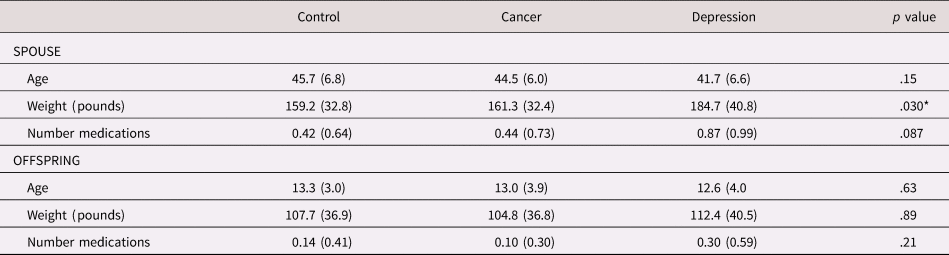
To be included in the study, participants needed to meet the following criteria : (a) the spouse or partner was living with the ill parent in the same household; (b) the spouse was between the age of 35 and 55 years of age with at least one biological child living in the same household; (c) children of spouses (MDD and cancer groups) must know about the disease of their parent; (d) in control group, families did not have any member of the household suffering from a physical or mental illness, and (e) spouse and children should not take medication interfering with cortisol levels. However, spouse and children could take any other type of medication and the number of medication taken on a weekly basis was recorded from each participant (see Table 1).
Demographic characteristics of the total sample of parents and offspring (mean and standard deviations in parenthesis)

* Significant difference on post-hoc test between depression and control group.
In order to recruit families with a parent suffering from cancer, we teamed up with the oncology department of the Hôpital Maisonneuve Rosemont in Montreal, one of the largest oncology departments in Montreal, and worked weekly with the medical team to approach families. For the families with a parent suffering from depression, we teamed us with the Montreal Mental Health Foundation and the Montreal Mental Health University Institute and gave numerous public conferences to recruit families.
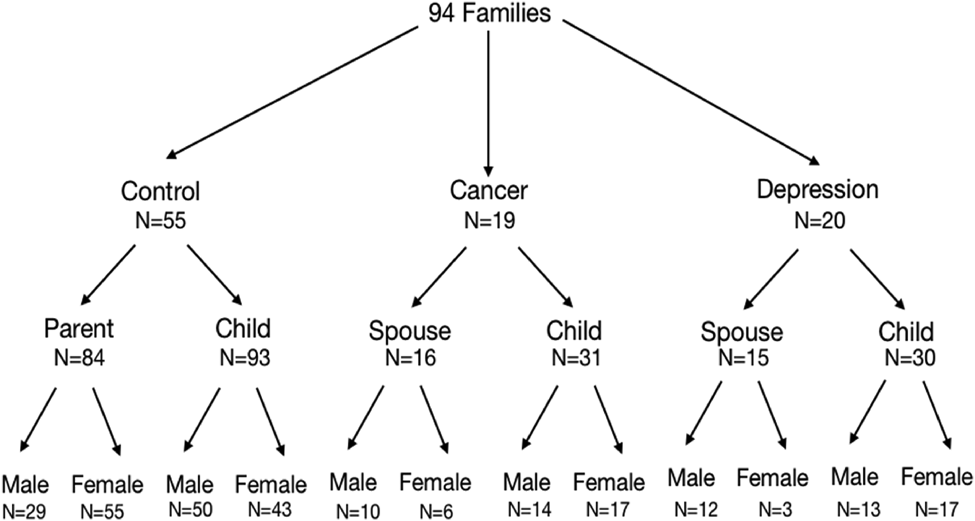
Figure 1 presents a schematic representation of the study population. The sample included 94 families, for a total of 269 participants who provided saliva for cortisol measurement and information about their socioemotional functioning (115 parents and 154 children). Fifty-five families were in the control group (84 parents and 93 children), while 19 families had one parent with cancer (16 spouses and 31 children) and 20 families had one parent with depression (15 spouses and 30 children). In the control families, we collected information from both the mother and father for 29 families (55 mothers and 29 fathers). In the cancer families, 10 spouse/fathers and six spouse/mothers completed the questionnaires, while in the depression families, 12 spouse/fathers and three spouse/mothers did so. In the present sample, 45 families had only one child, 36 had two children, 11 had three children, and two families comprised four children. The sex of the parent is not evenly distributed across the groups but, in absence of scientific rationale underlying the choice of selecting between the mother and father's data in the control group, we elected to consider all available information for sake of comparison with the cancer and depression groups.
Schematic representation of the sample tested in the study.

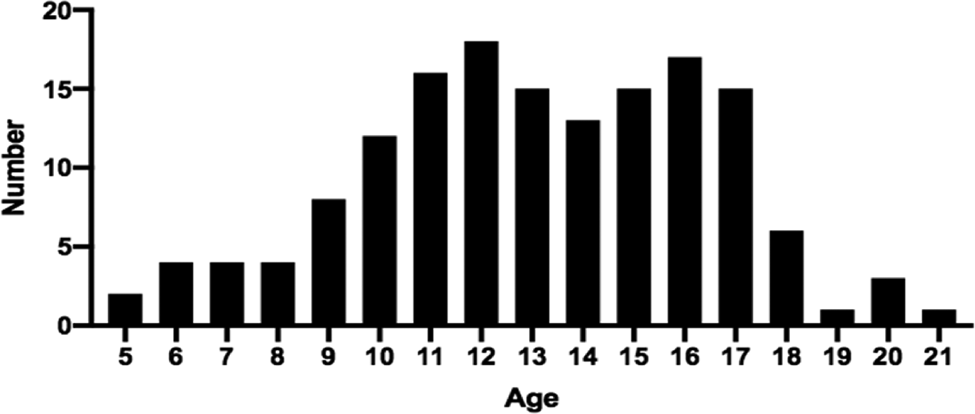
For the cancer and depression families who participated in this study, it was very important for the parents who called us that we tested all children. Consequently, the age range of children in the sample is large, from 5 to 21 years of age (see Figure 2). We chose not to exclude any participant from the study population given the small sample size and the absence of objective and documented threshold for excluding children based on age. All analyses nonetheless statistically controlled for children's age. Of note, children aged 11 years or younger only participated to the saliva sampling but did not complete the questionnaires due to the minimum level of literacy required.
Age distribution of the 150 offspring of this study.

Disclosures
Our analysis plan was uploaded to the Open Science Framework (OSF) on October 29, 2019 prior to conducting the analyses. This analysis plan is available at: https://osf.io/uaxwf/. Data and the R code used for the analyses and figures are available at https://osf.io/uaxwf/.
Procedure
This study was approved by the Research Ethic Committee of the Montreal Mental Health University Institute and all participants signed informed consent/assent (as a function of age). As summarized before, participating families were recruited through our partners in outpatient clinics, our stakeholder community partners, as well as with ads in newspapers. Interested participants were instructed to phone our laboratory in order to assess eligibility. Once meeting all inclusion criteria, participants were met at home or at the laboratory according to their preference. During this visit, the spouse and his/her child(ren) each received a “saliva bag” and were instructed on how and when to take the saliva samples. Participants were provided with saliva tubes (Sarstedt ©, tubes Part No. 62.558.201) and instructions for proper collection. A video explaining how to sample their saliva was offered to participants on the Centre for Studies on Human Stress’ website (https://humanstress.ca/saliva-lab/methodology/how-to-provide-a-saliva-sample/). Participants were instructed not to eat or brush their teeth immediately prior to saliva collection to avoid contamination and to record exact sampling time in logbooks. To facilitate sampling and reduce errors, each tube cap was color coded in accordance with time of day (i.e. AWK = red, +30 = yellow, DIN = green, BED = blue). Participants were asked to store the samples in their home freezer until pickup.
Participants were provided with a journal in which they could indicate if they experienced any difficulties or failed to follow instructions. Compliance to saliva sampling was performed using the Medication Event Monitoring System (MEMS™, AARDEX Ltd, Sion, Switzerland), which records sampling time for each sample. The MEMS is an electronic recording system comprising two parts: a standard plastic container and the 45 mm MEMS 6 TrackCap (serial number 292,668–292,692, Lot 117) to close the container. Once activated with the Wake-Up software (AARDEX Ltd, Sion, Switzerland), the MEMs cap registers dates and time at which the MEM's cap is opened. Participants were instructed to put the four color-coded saliva sampling tubes in the MEMS bottle the night before sampling day. They were instructed to retrieve the appropriate tube (following the color code on the MEMS bottle) in the MEMS bottle and provide 2 ml of saliva. The MEMS log information was then transferred to a computer and analyzed to detect noncompliant individuals (less than 2% of the population in this study sample).
For both parents/spouses and children, questionnaires were completed electronically via a secured web-based questionnaire interface called the Studies Web Automation Tool that meets all the requirements for conducting ethical and secure encryption. Participants could pause anytime during the completion of the questionnaires and resume at a later time.
Measures
Externalized stigma was assessed in parents/spouses and offspring using the 15-item Devaluation of Consumer Families Scale (DCFS; Struening, Perlick, & Link, Reference Struening, Perlick and Link2001). Ten statements (such as “Most people look down on families that have a member who is mentally ill”) are rated on a 4-point Likert scale (1 = strongly disagree; 4 = strongly agree) and five statements are reversed items (“Most people would accept a person who once had a serious mental illness as a close friend”). These reversed items are reverse coded to make the higher score represent higher levels of externalized stigma. This instrument can be completed by children over 11 years of age who understand the nature of mental illness (Wahl, Reference Wahl2003). The depression and control families filled the original scale. In line with previous studies with various stigmatized populations (Dimitropoulos, McCallum, Colasanto, Freeman, & Gadalla, Reference Dimitropoulos, McCallum, Colasanto, Freeman and Gadalla2016), we modified the items to assess stigma toward cancer in that group (“Most people look down on families that have a member who has cancer”). The DCFS has a mean internal coefficient alpha rating of .85 (Chang et al., Reference Chang, Su, Chang, Lin, Koschorke and Thornicroft2018).
Internalized stigma was assessed using the Internalized Stigma of Mental Illness (ISMI) scale (Ritsher, Otilingam, & Grajales, Reference Ritsher, Otilingam and Grajales2003). This 29-item scale measures the subjective experience of stigma, with subscales capturing constructs of alienation, stereotype endorsement, perceived discrimination, social withdrawal, and stigma resistance. Developed to be completed by individuals with mental illness, we adapted the scale for spouses and children (e.g., “I am embarrassed or ashamed that I have a mental illness” modified to “I am embarrassed or ashamed that my spouse (or parent) has a mental illness”). The scale was also adapted for families of cancer patients (“I am embarrassed or ashamed that my spouse (parent) has a cancer”). Only the participants from the depression and cancer groups were invited to complete this questionnaire. The ISMI scale has a mean internal coefficient alpha rating of .66 (Chang, Wu, Chen, Wang, & Lin, Reference Chang, Wu, Chen, Wang and Lin2014).
Disability level was measured in MDD and cancer groups using the Work and Social Adjustment Scale (WSAS; Mundt, Marks, Shear, & Greist, Reference Mundt, Marks, Shear and Greist2002). The WSAS is a simple, reliable, and valid self-reported measure of impaired functioning according to various domains, such as inability to work, adequately perform household task, take care of children etc. The questionnaire was modified to be completed by the spouses and their children (“Because of my disorder, my home management (cleaning, cooking, looking after children) is impaired” modified for “Because of his/her disorder, my spouse's (or parent's) home management (cleaning, cooking, looking after children) is impaired”). Cronbach's alpha measure of internal scale consistency on the WSAS range from 0.70 to 0.94 (Mundt et al., Reference Mundt, Marks, Shear and Greist2002).
Caregiver burden was assessed in the MDD and cancer groups using the 22-item Zarit Burden Scale (ZBI; Zarit, Orr, & Zarit, Reference Zarit, Orr and Zarit1985). The Zarit Burden Interview (ZBI) is a widely used 22-item assessment tool for measuring caregiver's perceived burden of providing family care. It asks family caregivers about areas that may cause stress and strain such as physical, psychological, economic, and relational problems. Items are answered on a 5-point scale ranging from 0 = “never” to 4 = “always”. Although originally developed toward caregivers of patients with Alzheimer's disease, this scale is now widely used with other populations (Higginson & Gao, Reference Higginson and Gao2008; Ramos-Cerqueira, Torres, Torresan, Negreiros, & Vitorino, Reference Ramos-Cerqueira, Torres, Torresan, Negreiros and Vitorino2008). The ZBI scale has a mean internal coefficient alpha rating of .92 (Al-Rawashdeh, Lennie, & Chung, Reference Al-Rawashdeh, Lennie and Chung2016).
Depressive symptoms were measured in parents/spouses using the Beck Depression Inventory (BDI; Beck, Steer, & Garbin, Reference Beck, Steer and Garbin1988), that is a 21-question survey that asks respondents to rate how they have felt over the preceding week. Scores can range from 0 to 63, with a higher score reflecting a greater severity of symptoms. The BDI has been widely used, and its internal consistency and content validity are high. The BDI has a mean internal coefficient alpha rating of .92 (Richter, Werner, Heerlein, Kraus, & Sauer, Reference Richter, Werner, Heerlein, Kraus and Sauer1998). In children, depressive symptoms were assessed using the 27-item French-validated version (Saint-Laurent, Reference Saint-Laurent1990) of the Child Depression Inventory (CDI) developed for children ages 7–17 (Kovacs, Reference Kovacs1981, Reference Kovacs1992). Each item contains three choices, ranging from 0 to 2, providing a possible score between 0 and 54. Total scores on the CDI (t scores) served as the primary measure of self-rated depressive symptoms. The CDI has a mean internal coefficient alpha rating of .83 (Crowley, Thompson, & Worchel, Reference Crowley, Thompson and Worchel1994). In the case a child or a parent had a score that reached the threshold for depression, we communicated with the parent to refer this person to the clinical psychologist on the team (RL) for evaluation and referral, as specified in the participants’ consent form.
Family stressors were measured in parents/spouses using the Family Inventory Life Experience Survey (FILE; McCubbin & Patterson, Reference McCubbin, Patterson, McCubbin and Patterson1987). The FILE is a 72-item self-reported questionnaire that assesses psychological stress in parents resulting from adjustments and changes occurring in the family interactions. The FILE comprises nine subscales (intra-family strains, marital strains, pregnancy or child-bearing strains, finance and business strains, work–family transitions and strains, illness and family care strains, losses, transition, and legal strains). To this day, internal consistency coefficient data on the FILE are limited although some authors report internal coefficient alpha rating of .81 in non-American populations (Augusto, Araujo, Rodrigues, & de Figueiredo, Reference Augusto, Araujo, Rodrigues and de Figueiredo2014). In offspring, subjective stress was assessed using the Adolescent Stress Questionnaire (ASQ; Byrne & Mazanov, Reference Byrne and Mazanov2002). This questionnaire has been validated in preteens over the age of 11 to measure the perception of stress related to 10 domains: 1, home life; 2, school performance; 3, school attendance; 4, romantic relationships; 5, peer pressure; 6, teacher interactions; 7, future uncertainty; 8, school/leisure conflict; 9, financial pressure; 10, emerging adult responsibilities. Cronbach's alpha measure of internal scale consistency on the adolescent stress questionnaire (ASQ) range from 0.62 to 0.92 (Byrne, Davenport, & Mazanov, Reference Byrne, Davenport and Mazanov2007).
Basal salivary diurnal cortisol levels were measured in parents/spouses and children on two different weekdays, separated by 3 days, and on a weekend day, allowing us to compare cortisol levels during week and weekend days, when more interactions are generally taking place between children and parents. On the days of saliva sampling, saliva was collected using salivettes (Starsdedt, Germany) at four time points: (a) upon awakening, (b) 30 min after awakening, (c) before dinner time, and (d) before bed. This sampling protocol was shown to reliably capture the diurnal cycle of cortisol secretion, as well as the cortisol awakening response (CAR; Lupien et al., Reference Lupien, de Leon, de Santi, Convit, Tarshish, Nair and Meaney1998; Smyth et al., Reference Smyth, Ockenfels, Gorin, Catley, Porter, Kirschbaum and Stone1997; Stone et al., Reference Stone, Schwartz, Smyth, Kirschbaum, Cohen, Hellhammer and Grossman2001). Moreover, this protocol maximized the likelihood that the saliva sampling could be done at home and thus not be hinder by work schedule or school activities.
At the end of the study, samples of saliva were retrieved from the participating families’ home by the research assistants, stored in −20°C freezers at the Centre for Studies on Human Stress (www.humanstress.ca) until determination using a high sensitivity enzyme immune assay kit (Salimetrics® State College, PA, Catalogue No. 1-3102). Frozen samples were brought to room temperature to be centrifuged at 15,000 × g (3,000 rpm) for 15 min. The range of detection for this assay is between 0.012–3 μg/dl. Upon receiving duplicate assay values for each sample, we averaged these values for the subsequent analyses.
Data analytic strategy
Data cleaning procedure
Samples taken more than 30 min from the predetermined sampling time as measured by MEMcaps was excluded from the analyses. This led to <1% exclusion of samples. For each sampling time, we calculated the cortisol mean and standard deviations within each group and identified samples higher than three standard deviations (SD) above or below the mean. If a particular sample was above/below the mean at only one time point, we eliminated this sample and referred instead on the same time point collected at the second and third day of sampling. If a particular sample was 3 SD above the mean every week or weekend days of collection, we did not eliminate this sample as it represented stable high levels of production of cortisol for this participant. A similar cleaning procedure was undertaken for the children, except that this examination was conducted separately for prepubertal versus pubertal children (younger or older than 12 years of age) considering earlier report of changes in basal cortisol levels during this developmental period (Tsai, Seller, & Jacobson, Reference Tsai, Seller and Jacobson2013).
Main analyses
We used a linear mixed effect model to test the mean differences between the groups (control, cancer, depression) in our target variables completed by both the spouse and children. Specifically, the mixed model allowed to correct for the intra-family correlations (i.e., nonindependence) between the spouses in the control group (two parents) and among the children for the families with more than one child included in the study, as specified below:

where yijk is the dependent variable (e.g., area under the curve of the basal cortisol or AUCg) for family member k ∈{1, 2, 3, 4} in group j ∈{1 = control, 2 = cancer, 3 = depression} in family i ∈{1, 2, …, 96}, β_0i is a random intercept, τj is the group effect (τ_1 = 0 for estimability) and ɛijk and ξi are respectively the residuals and the random effect on the intercept.
For the correlation between the spouse and the children we used a similar model:

where yijk is the dependent variable (e.g., AUCg) for child k ∈{1, 2, 3, 4} in group j ∈{1 = control, 2 = cancer, 3 = depression} in family i ∈{1, 2, …, 96}, zijl for the same variable measured in spouse (each spouse for the control group), β0i is a random intercept, β1 is the coefficient between the spouse and the child and ɛijk, ξi are respectively the residuals and the random effect on the intercept.
We performed standard error adjustments in cases where multiple tests were run on scores with subscales. Given that the tests were not independent from each other, the p values were adjusted using the Holm–Hochberg false-discovery adjustment. For all post-hoc comparisons between the three groups, p values were adjusted using Tukey family-wise adjustments. All statistical analyses were performed using R.
Statistical power
We initially planned to recruit a larger sample of families with a parent suffering from cancer or depression. However, our research protocol was quite demanding (3 days of saliva sampling for cortisol and over 2 hours of questionnaires to complete) considering the existent burden on the caregiver spouse. After 4 years of recruitment and testing, we ended data collection. Given the smaller than expected sample size of the cancer and depression groups, we performed a power analysis to determine whether we had sufficient statistical power to test our hypotheses. The power analyses and effect-size calculations were performed using G*Power 3.1.9.2. The main variables were the stress biomarkers (cortisol), depressive symptoms (BDI), and FILE to be compared between the three groups. Below are the minimal differences that we expected to detect for this study.
• Cortisol: There are no clinical norms for cortisol secretion, but a minimal effect could be less than half a standard deviation (i.e., 0.5). For example, an effect size of f=0.37 would corresponds to a mean of 0.7, 1.2, and 1.7 for the control, cancer, and depression groups, respectively.
• Depression (BDI): An indication for clinical change is usually considered present for a difference of 5 points for this instrument. Assuming scores of 7.7, 12.7, and 17.7 for the control, cancer, and depression groups, respectively, would yield an effect size of f = 0.50.
• FILE: Clinical change is generally considered present for a difference of 3 points for this instrument. An effect size of f = 0.43 would thus be noted for a mean to 7.7, 10.7, 13.7 for the control, cancer, and depression groups, respectively.
For these main outcomes, the effect size necessary to detect a minimum effect was set to f = 0.37. The power calculation for our group mean differences was thus based on this effect size. To detect this effect with 80% power between three groups using a 5% Type-I error we estimated that a sample size of 75 families was required. That is, our sample size of 94 families was deemed adequate to test our hypotheses with adequate power, which only grew when considering that more than one child per family was included in the statistical analyses. Finally, we estimated that 82 participants were required to detect correlation coefficients of at least modest magnitude (i.e., r = .30) between the biological and psychological markers of stress of the parents and their children with adequate (80%) power using a 5% Type-I error. Given the results of this power analysis, we concluded that our sample of 154 offspring was sufficient to perform all analyses with sufficient power. Because of the nonindependence of the observations within certain families (i.e., more than one child per family), we added random effects for the intercept to the previous model, which further increased the estimated power.
Results
Descriptive analyses
Table 1 presents basic demographic information for the spouses and children belonging to the three groups. For the parents/spouses, no significant differences were noted on age and number of medication, although differences were detected on weight [F (2,112) = 3.617; p = .030), with spouses from the depressed group being heavier than the controls. No group differences were noted on age, weight, and number of medications for the participating children.
Effects of public stigma
Spouses
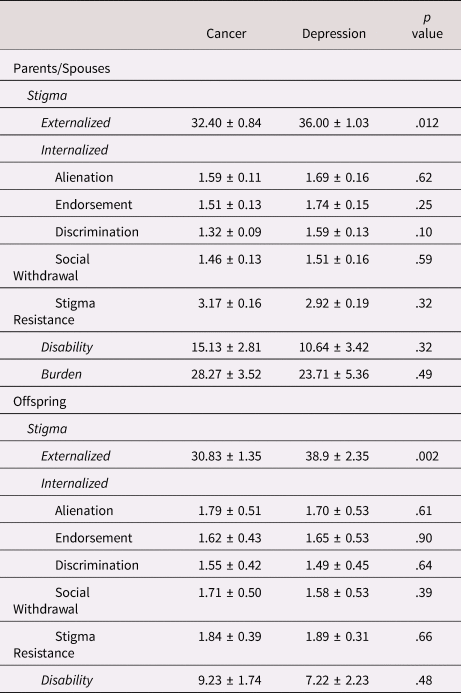
Table 2 presents the average score on the measures of externalized and internalized stigma, disability, and burden for the spouses and children separately. We focused our attention on the cancer and depression groups because we wanted to test whether the stigma was higher for the depression group. Results in spouses showed that these two groups differed on externalized stigma [t (28) = −2.706; p = .012; 95% CI: −6.33 to −0.875] with spouses of families with a depressed parent reporting significantly more externalized stigma (toward mental illness) than spouses from families with parent diagnosed with cancer (stigma toward cancer). No other group differences were detected.
Mean ± SE of stigma, disability, and burden levels in parents/spouses and offspring in the cancer and depression groups

Note: p values are associated with a Welch two-sample t test for a mean difference for parents/spouses and on a linear mixed-effect model with a random effect on the intercept to account for intra-family variation.
Children
Similar findings were noted for the children [t (26) = 3.40; p = .002; 95% CI: −17.24 to −3.82], whereby children from the parental depression group reported experiencing more externalized stigma toward mental illness than those growing up in the parental cancer group (see Table 2). No group differences were detected on the measures of internalized stigma and disability.
Effects of caregiver burden
Psychological markers of stress
Parents/spouses
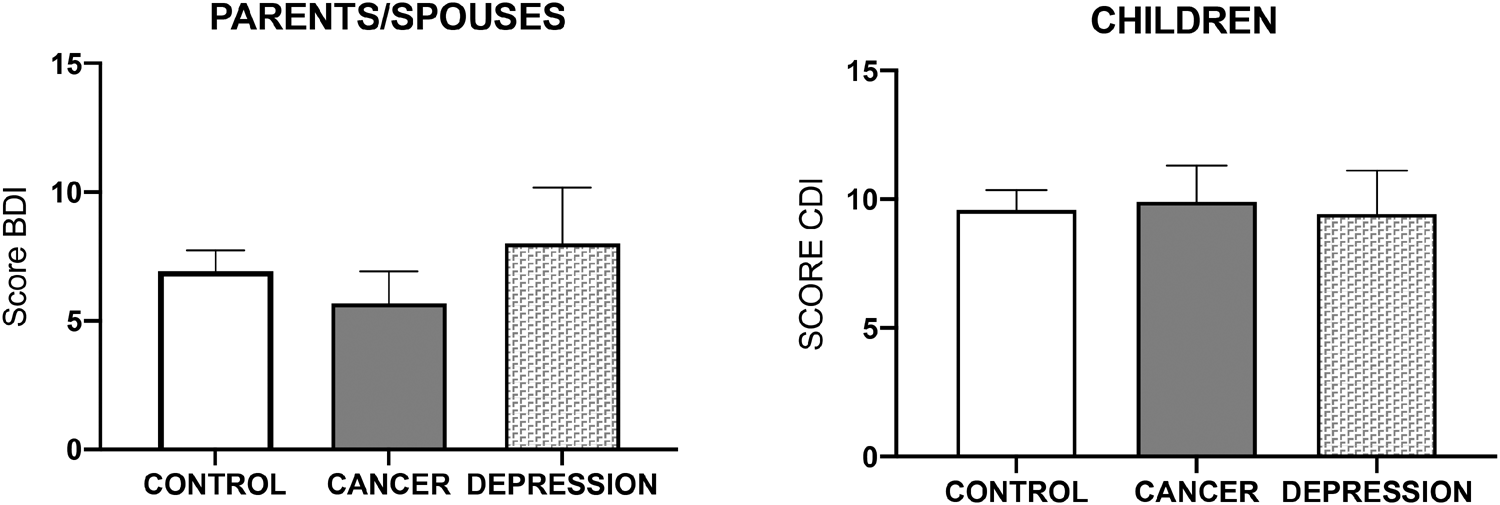
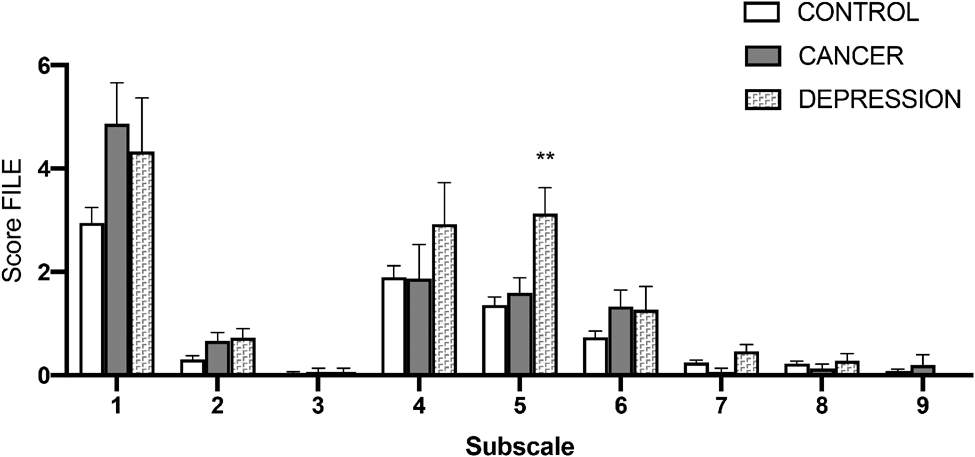
To examine the effects of caregiver burden in spouses, we compared the adult participants in the three groups (control, cancer, and depression) on the measures of depression (BDI score) and family stress (FILE score). As shown in Figure 2 (left side), no group difference was detected for depressive symptomatology (all ps > 0.3). Multivariate analyses performed on the nine subscales of the FILE questionnaire and using the Benjamini–Hochbert false-discovery rate correction for multiple dependent tests revealed a significant group difference on the subscale of work/family stress [F (2, 94) = 9.17; p = .002; Adjusted R2: 0.09], whereby spouses from the depression group reported higher work/family stress when than parents/spouses from the control [depression – control = 1.78; t (91) = 4.274; p = .001] and cancer groups [depression – cancer = 1.53; t (95) = 2.895; p = .013]; the difference between the cancer and control group were not statistically significant [cancer – control = 0.251; t (91) = 0.60; p = .82] (see Figure 3).
Scores on the Beck Depression Inventory (Parents/Spouses) and the Child Depression Inventory (Children) in the control, cancer, and depression groups.

Children
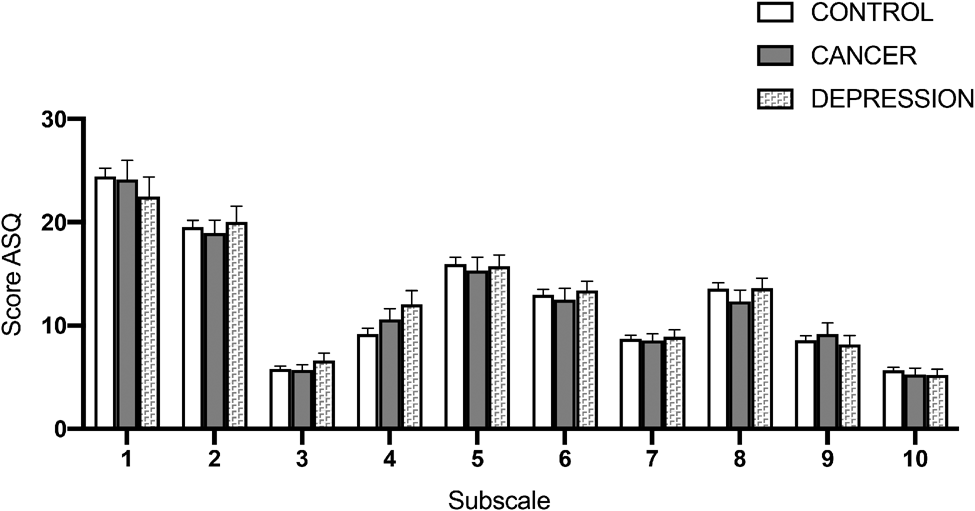
Similar tests were conducted for the children on depressive symptoms (CDI score) and child/adolescent stress (ASQ score). As shown in Figure 2, no significant group differences were detected for depressive symptoms. Multivariate analyses performed on the 10 subscales of the ASQ questionnaire while statistically controlling for age and correcting for multiple tests using the Benjamini–Hochbert false-discovery rate did not reveal any significant differences between the groups (see Figure 4).
Scores on the nine subscales of the Family Inventory Life Experience Survey (FILE) in the control, cancer, and depression groups : 1, Intra-familial strains; 2, Marital strains; 3, Pregnancy strains; 4, Finance/business strains; 5, Work/family stress; 6, Illness strains; 7, Losses; 8, Transitions; 9, Legal issues.

Physiological markers of stress
Parents/Spouses
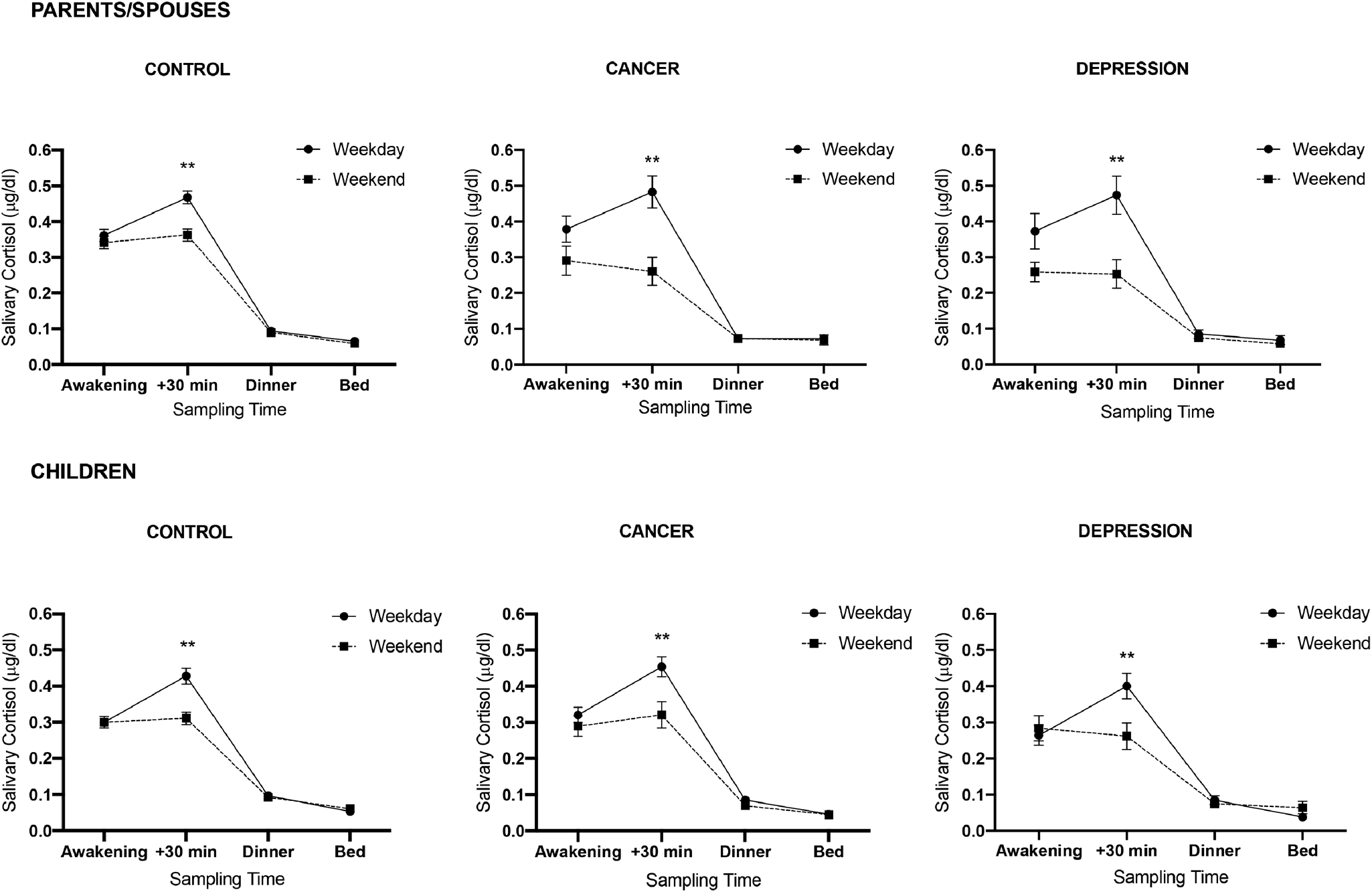
For the salivary cortisol levels, we first verified whether there was a significant difference between cortisol levels sampled on the two weekdays in parents/spouses, but none was detected [F (1,97) = 0.189; p = .664]. Consequently, we averaged the two weekdays cortisol measures at each timepoint to create a measure of “weekday cortisol levels.” We then examined whether cortisol levels were different between weekdays and weekends (thereafter termed “period”) for the parents/spouses, and found a significant effect of time by period [F (3, 757) = 19.36; p < 0.001]. Figure 5 presents the diurnal cortisol levels for the three groups of parents/spouses according to weekdays and weekends. This figure shows that the main period difference is observed between awakening and +30 min, which corresponds to the CAR. The analysis performed on CAR with group (control vs. cancer vs. depression) and period (weekday vs. weekend) as between-subjects factors revealed a significant effect of period [F (1,146) = 12.80; p < .001], but no main group differences.
Scores on the 10 subscales of the adolescent stress questionnaire (ASQ): 1, Home life; 2, School performance; 3, School attendance; 4, Romantic relationships; 5, Peer pressure; 6, Teacher interactions; 7, Future uncertainty; 8, School/leisure conflict; 9, Financial pressure; 10, Emerging adult responsibilities.

Salivary cortisol levels during weekday and weekend in the parents/spouses and children of the control, cancer, and depression groups.

Children
We applied the same procedure for cortisol analysis for the children. The repeated-measures analysis of variance (ANOVA) performed on cortisol levels did not reveal a significant main effect of day (weekday 1 vs. weekday 2; F (3,1076) = 0.24; p = .87]). We then examined whether cortisol levels were different for period (weekdays v weekends) and found a significant main effect of period [F (3,1005) = 26.01; p < 0.001], but no significant interaction between period, group and time (p = .97). Figure 5 presents the salivary cortisol levels for the three groups according to the weekdays and weekends. In line with results observed in parents/spouses, children showed a main period difference between awakening and +30 min. The analysis performed on CAR revealed a period effect [F (1,221) = 8.86; p = .003], but no group differences on measures of cortisol.
Finally, to assess the putative spillover effects of parental stress on children, we performed a linear regression on the total score of parents/spouses on the FILE questionnaire (subjective stress) and CAR in their child(ren) separately for each group. For the control group for which information for both parents were available, the averaged FILE score was used. No significant correlations were detected between FILE score of parents and CAR in children in either groups.
Evidential value of null results using Bayes factors
In this study, the analyses performed on most of the variables (stigma, socioemotional, and physiological) yielded nonsignificant findings. As thoroughly discussed by Aczel and colleagues (Aczel, Palfi, & Szaszi, Reference Aczel, Palfi and Szaszi2017; Aczel et al., Reference Aczel, Palfi, Szollosi, Kovacs, Scaszi, Szecsi and Wagenmakers2018), null results can occur because the effect does not exist, or because the power was insufficient to detect the true effect. Although we performed a power analysis beforehand that suggested we had enough power to detect group differences, the number of participants within the cancer and depression groups was very small, raising the possibility that the obtained null results could be due to low power. To further investigate this possibility, recent reports argue the use of Bayes factors to evaluate the strength of evidence for the null hypothesis (Aczel et al., Reference Aczel, Palfi and Szaszi2017, Reference Aczel, Palfi, Szollosi, Kovacs, Scaszi, Szecsi and Wagenmakers2018; Dienes, Reference Dienes2014, Reference Dienes2016). Unlike power analyses that require specifying the minimal effects expected to address a given theory (see section on Power analysis in this paper) as based on a priori knowledge and data, Bayes factors use the data of the current study to determine their sensitivity in distinguishing theories (Dienes, Reference Dienes2014, Reference Dienes2016). Consequently, Bayes factors calculate evidential support for the null results (H0) portrayed in a given study. As discussed by Aczel et al. (Reference Aczel, Palfi and Szaszi2017, Reference Aczel, Palfi, Szollosi, Kovacs, Scaszi, Szecsi and Wagenmakers2018), Bayes factors greater than 1 usually indicate relative evidence for the null hypothesis. In contrast, Bayes factors smaller than 1 indicate relative evidence for the alternative hypothesis (H1 = significant difference).
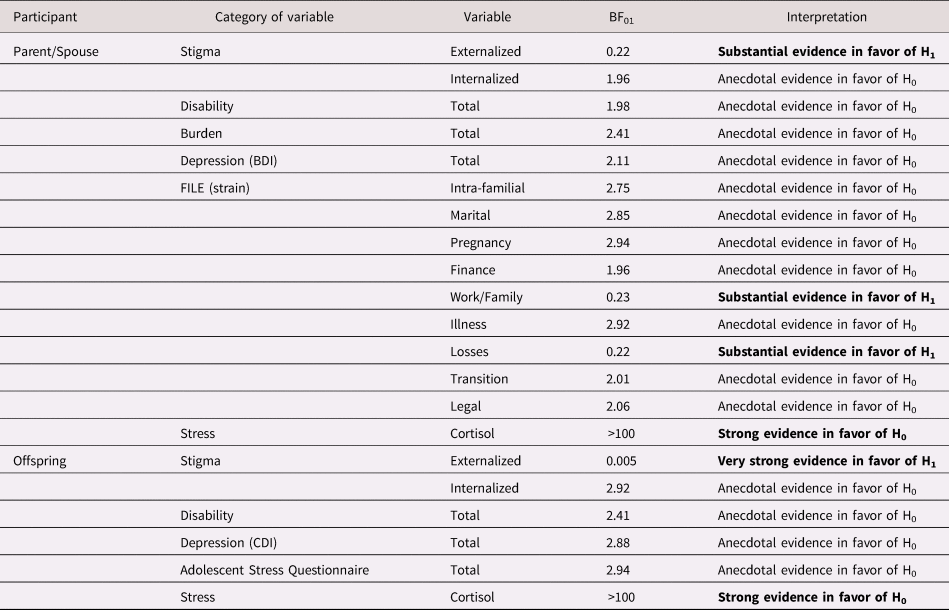
To complete the inferential tests of our hypotheses, we calculated Bayes factors (BF01 –evidence in favor of the null or alternative hypothesis) with a medium-scale (r = √2/2) Cauchy prior under the alternative hypothesis (see Table 3). The 21 tests yielded 15 anecdotal evidence in favor of H0 (71%), 3 substantial evidence in favor of H1 (14%), and 2 strong evidence in favor of H0 (10%) and 1 very strong evidence in favor of H1 (5%). The interpretation of these Bayes factors in the light of the inference tests reported previously is presented in the Discussion.
Bayes factors calculated for the stigma, psychological and physiological markers of stress in parent/spouse and offspring

Discussion
The goal of the present study was to assess stigma associated with parental depression or cancer and to test whether group differences can be observed on psychological and physiological markers of stress in spouses and offspring. To do so, we recruited families in which one parent presented a non-stigmatized cancer or depression and compared their functioning on a series of targeted variables separately for parents and offspring drawn from control families.
We first showed that both spouses and offspring from families with parental depression presented greater externalized stigma toward depression when compared to spouses and children from families with parental cancer. Interestingly, the increased levels of externalized stigma in spouses and children from families with parental depression were not shown to be internalized, as we found no significant group differences in scores on the ISMI scale in spouses or children. However, the Bayes factor calculated on these effects (see Table 3) for spouses (BF01 : 1.96) and children (BF01 : 2.92) did not allow us to clearly favor the null hypothesis over the alternative hypothesis. Consequently, and despite clear evidence suggesting a group difference for externalized stigma among spouses and children from the parental depression group, there is so far no evidence of co-occurring externalized and internalized stigma in these participants.
As well, the analysis comparing groups on depressive symptomatology did not show significant group differences, suggesting that spouses and children from the parental depression group did not differ in terms of depressive symptoms when compared to spouses and children from parental cancer group. However, we found that the Bayes factors for the spouse (BF01 : 2.11) and children (BF01 : 2.88) once again only provided anecdotal evidence in favor of the null hypothesis. It is thus possible that evidence for significant group differences in terms of depressive symptomatology could be present but would require much larger sample sizes for conclusions to be drawn with more confidence.
Spouses from families with parental depression reported significantly greater work/family stress when compared to parents/spouses from families with parental cancer and the control groups. Bayes factor for this effect was 0.23, providing substantial evidence in favor of the alternative hypothesis (H1), suggesting that greater stress is experienced by spouses of parents with depression when one has to negotiate work and family issues. Interestingly, and although cancer may necessitate more visits to the hospital than depression, the spouses from the parental cancer group did not present greater scores on the work/family stress subscale when compared to the control group. This result suggests that the nature of work/family stress reported by the spouses of individuals with depression may be more closely related to the familial environment and the fair share of the family chores, than related to the burden and time spent associated with the treatment of the disorder. For children, the analysis did not show a significant group difference on perceived stress, which concurred with the Bayes factor (2.94) only providing anecdotal evidence in favor of the null hypothesis.
When we analyzed salivary cortisol levels, we found that parents/spouses had a smaller CAR on weekends when compared to weekdays. This finding is in accordance with a previous study from Kunz–Ebrecht and colleagues (Kunz-Ebrecht, Kirschbaum, Marmot, & Steptoe, Reference Kunz-Ebrecht, Kirschbaum, Marmot and Steptoe2004) in participants from the Whitehall II cohort study. Interestingly, we also found a similar effect in children, with greater CAR observed during weekdays when compared to weekend days. A recent study performed by Bernsdorf and Schwabe (Bernsdorf & Schwabe, Reference Bernsdorf and Schwabe2018) reported a similar decrease of the CAR in children during weekends, but they cautioned that the CAR is generally less pronounced and stable in children in comparison to adults. In the present study, we found a stable decrease of the CAR during weekends in children across the three groups. The anticipation of the work laying ahead has been suggested to induce the increased CAR observed during weekdays in adults (Kunz-Ebrecht et al., Reference Kunz-Ebrecht, Kirschbaum, Marmot and Steptoe2004). A similar effect may occur in children, whereby the increased CAR observed during weekdays could be related to anticipation of the school day. In order to test this hypothesis, it could be interesting to compare the CAR in children during normal school weekdays and during a weekday school holiday.
Although both parents/spouses and offspring showed similar period effects (CAR weekday vs. CAR weekend days), the analysis testing group differences on basal cortisol levels did not reveal significant group differences. Moreover, the Bayes factor calculated for this effect was very high (BF01 > 100) for both parents/spouses and children, providing strong evidence in favor of the null hypothesis (H0) over the alternative hypothesis (H1), suggesting that this effect is not induced by low statistical power. Altogether, this suggests that parents/spouses and children from families with cancer or depression do not differ in terms of basal diurnal cortisol levels measured over a period of three days. This result is consistent with a previous study performed by Sieh and colleagues (Sieh, Visser-Meily, Oort, & Meijer, Reference Sieh, Visser-Meily, Oort and Meijer2012), who investigated salivary cortisol patterns in 100 children and adolescents from single-headed families, an ill parent (target group) and healthy parents (control group). The authors hypothesized that families with single and ill groups would display higher morning cortisol values than controls. However, results did not show evidence for such significant differences. Although Bayes factor or other analyses estimating power for equivalence tests were not performed on this null finding, Sieh et al. (Reference Sieh, Visser-Meily, Oort and Meijer2012) interpreted these results as showing that children of single and chronically ill parents may be resilient in terms of salivary cortisol.
We partially agree with this suggestion for the following reason. It is possible that children of chronically ill parents show undisturbed patterns of psychological and physiological markers of stress, but we do not consider that this effect may be strong enough to apply to the entire population of spouses and offspring of parents with cancer or depression. However, we acknowledge that it is quite possible that those parents who manifested their interest to participate in our study (and provided a large number of saliva samples for themselves and their children and filled out the questionnaires), may manifest resilient behaviors and passed on this characteristic to their children through social learning processes and/or passive genes transmission.
The majority of parents who called us to participate in the study were parents who were either suffering from cancer or depression and who were worried that their spouse and/or child(ren) would suffer from the presence of their illness, or were spouses worried about their children and who wanted to participate in the study. One could speculate that these parents presented psychological and/or physiological characteristics that rendered them more resilient to the illness of their spouse, allowed them to support better than expected family functioning despite the stress endured, which could have buffered their children from the stressful impact of the parental illness. This suggestion is in line with results from the group of Megan Gunnar showing the buffering effects of parents on children's cortisol response to stress (Gunnar et al., Reference Gunnar, Hostinar, Sanchez, Tottenham and Sullivan2015). If this hypothesis is correct, then it would imply that the results of this study can be explained by a selection bias where those willing to participate into the study are those who are less susceptible to suffer from stress (Lupien, King, Meaney, & McEwen, Reference Lupien, King, Meaney and McEwen2001).
Notwithstanding the possibility that selection bias may have favored the description of resilient families in the present study, these findings call for a more systematic investigation of the factors that promote resilience in families exposed to chronic stress. In a study, Collishaw et al. (Reference Collishaw, Hammerton, Mahedy, Sellers, Owen, Craddock and Thapar2016) showed that as a group, children of parents with recurrent depression reported themselves high rates of mental health problems. However, they showed that about 1 in 5 adolescents upheld good mental health over a period of 6 months. They found that these resilient teenagers had parents who expressed positive emotions, provided support, and had positive social relationships. These findings are important in that they underline some key practices and protective factors that could be associated with resilience in adolescents at high risk of psychiatric problems because of the context and externalized stigma related to the experience of living with a parent with recurrent depression.
The Kauai longitudinal study on resilient children and youth followed participants for 25 years and showed that resilience is fostered by a balance between accumulative life stressors, personal elements, and protective factors (Werner, Reference Werner2015). Adults who have grown up in a household with a parent diagnosed with a mental illness and transcended this adversity had in common that they shared humor or family rituals and routines. Open communication about mental illness was also found to promote coping abilities and family cohesion (Power et al., Reference Power, Goodyear, Maybery, Reupert, O'Hanlon, Cuff and Perlesz2015). Other studies in the literature similarly showed the importance of parent–child relationships in buffering stressors faced by adolescents (Brumariu & Kerns, Reference Brumariu and Kerns2010). Future studies ought to include measures of parent–child relationships to further understand and test how the effect of parental illness (stigmatized or not) could be mitigated.
Another possibility for the lack of group differences on socioemotional and physiological markers of stress is that we have tested the groups too early in the unfolding process of the disease. One of our inclusion criteria was that the onset of the disorder of the ill parent must had occurred no more than 2 years before participation in the study. This criterion was set to control for the chronicity of the stress associated with the disorder in families across groups. Although important, it is possible that the somewhat limited period between the diagnosis of the disorder and the study was not long enough to allow the stress to become chronic and to “get under the skin” (Lupien et al., Reference Lupien, King, Meaney and McEwen2001). It is thus possible that the families of the parental cancer and depression groups were still in an acute stress phase in which chronic dysregulations of diurnal cortisol levels and subjective reports of stress were not yet apparent. However, such an effect would increase the variability in physiological and psychological markers of stress within the groups of participants of the families of the parental cancer and depression groups (since not everyone has the same resistance to stress) in comparison to the control group, but such an effect was not observed in the present study.
Although the results of this study are of interest, they are not without limitations. First and foremost, the sample size for the parental cancer and depression group was small and, although we were careful at calculating statistical power of the sample and measuring Bayes factors, it is still possible that the absence of significant group differences reported for psychological and physiological markers of stress is due to low power. Future studies should try to increase sample size, which could require to significantly diminish the testing load on participants to not fend off families confronted to illness to participate in this type of study. Second, the small sample size did not allow us to assess potential sex differences in psychological and physiological markers of stress and in stigma related measures. Third, the age range of children was very large and again, although we covaried for age in all of the analyses, the small sample size did not allow us to measure potential age differences across groups. As we previously reported, it was very important for the participating parents that all of their children be tested and this significantly increases the age range of offspring to be tested. Finally, we did not measure family relationships and this type of measure could have provided us with very important data to understand the factors that can lead to resilience in families with parental cancer of depression.
Be this as it may, the present study shows that although spouses and children from families with parental depression present greater externalized stigma than spouses and children from families with parental cancer, these populations do not differ on diurnal salivary cortisol levels taken on weekdays and weekends. Moreover, we provide anecdotal evidence showing that spouses and children from families with parental cancer, depression or no illness do not differ either in self-reported depressive symptoms and major stressful life events. These results suggest that the families that participated in the present study may have personal and familial characteristics that render them resilient in face of parental cancer or depression, although more research is needed to adequately test this possibility.
Acknowledgments
The work of SJL is supported by a Canada's Research Chair on Human Stress and the work of IOM is supported by a Canada's Research Chair in the Developmental Origins of Vulnerability and Resilience.
Financial Statement
This study was supported by a grant from the Canadian Institutes of Health Research to SJL and a Foundation Grant from the same agency to SJL. The Research Center of the Mental Health Institute of Hospital Louis-H. Lafontaine is supported by an infrastructure grant from the Fonds de Recherche du Québec-Santé (FRQ-S).
Conflicts of Interest
None.