INTRODUCTION
My intention is to give a rather personal perspective on the prospects for being able to treat or control cryptosporidiosis. I have chosen to use Zambia as an example as I have worked in Zambia for over 20 years, and a good deal of the work I have undertaken has been on cryptosporidiosis in children and in adults. While Zambia will have a great deal in common with other tropical countries, there may also be substantial differences. For example, while cryptosporidiosis is a major contributor to morbidity and mortality in malnourished children in Lusaka, this appears less true in Malawi, Zambia's immediate neighbour to the east. So while much of what we have learned about cryptosporidiosis in Zambia may be true in other parts of Africa, some of it may be more geographically restricted.
WHAT IS THE PROBLEM?
Of all the 19 species in the genus Cryptosporidium (Fayer, Reference Fayer2010) there are only two which commonly infect man: C. parvum and the more recently described C. hominis. There are occasional reports of infections with other species, including C. meleagridis, C. felis and C. canis (for example see Lucca et al. Reference Lucca, De Gaspari, Bozzoli, Funada, Silva, Iuliano and Soares2009), and there is evidence from Nigeria of a high degree of species diversity during infection, including C. meleagridis, C. canis and unclassified rabbit and cervine genotypes (Molloy et al. Reference Molloy, Smith, Kirwan, Nichols, Asaolu, Connelly and Holland2010). C. hominis is restricted to human hosts whereas C. parvum has a zoonotic reservoir. The literature suggests that there is a higher diversity of Cryptosporidium species in human infections in tropical areas (for example see Adamu et al. Reference Adamu, Petros, Hailu and Petry2010; Molloy et al. Reference Molloy, Smith, Kirwan, Nichols, Asaolu, Connelly and Holland2010). In a recent study of dairy farms in Zambia, 34% of 207 dairy calves were shedding Cryptosporidium oocyst antigens (as assessed by ELISA), 10% of dairy workers were shedding antigens, and 5% of household contacts were shedding antigens (Siwila et al. Reference Siwila, Phiri, Vercruysse, Goma, Gabriel, Claerebout and Geurden2007). The transmission of cryptosporidiosis is evidently on a large scale in rural Africa. In a study of children with diarrhoea in one community in Lusaka, Cryptosporidium oocysts were found in 18% of 222 episodes (Nchito et al. Reference Nchito, Kelly, Sianongo, Luo, Feldman, Farthing and Baboo1998), thus confirming that cryptosporidiosis is also an urban problem.
Worldwide the picture is the same. Cryptosporidiosis is a major contributor to diarrhoeal disease in children (Mor and Tzipori, Reference Mor and Tzipori2008). Importantly, among the diarrhoea-causing pathogens, cryptosporidiosis is associated with worse outcomes. Mortality was higher among children with cryptosporidiosis in Guinea-Bissau (Molbak et al. Reference Molbak, Hojlyng, Gottschau, Sá, Ingholt, da Silva and Aaby1993), and was associated with impaired subsequent development in studies in Guinea-Bissau and in Brazil (Molbak et al. Reference Molbak, Andersen, Aaby, Højlyng, Jakobsen, Sodemann and da Silva1997; Newman et al. Reference Newman, Sears, Moore, Nataro, Wuhib, Agnew, Guerraut and Lima1999). In Zambia too, cryptosporidiosis in hospitalised malnourished children was associated with higher mortality (Amadi et al. Reference Amadi, Kelly, Mwiya, Mulwazi, Sianongo, Changwe, Thomson, Hachungula, Watuka, Walker-Smith and Chintu2001). There can be no doubt that treatment and prevention of cryptosporidiosis would be highly desirable.
TREATMENT OF CRYPTOSPORIDIOSIS
The current standard of care for treatment of cryptosporidiosis in children is nitazoxanide (Pantenburg et al. Reference Pantenburg, Cabada and White2009). This thiazolide has a wide spectrum of antimicrobial activity, including helminths, protozoa and viruses (notably hepatitis C virus; Rossignol, Reference Rossignol2009). Given to children in a dose of 100 mg twice daily for 3 days it hastens clinical remission, increases parasitological clearance and, in at least one study in Zambia, reduced mortality (Amadi et al. Reference Amadi, Mwiya, Musuku, Watuka, Sianongo, Ayoub and Kelly2002). However, in this study from Zambia it was apparent that nitazoxanide was not effective in children with HIV infection, as no effect was seen against any endpoint. We have subsequently gone on to examine the possible effect of higher dose (200 mg twice daily) and prolonged treatment (28 days) in HIV-infected children, but still there was no effect (Amadi et al. Reference Amadi, Mwiya, Sianongo, Payne, Watuka, Katubulushi and Kelly2009).
This lack of effect in cryptosporidiosis in children with AIDS is sadly consonant with the difficulty in finding any effective treatment in adults with AIDS, a long history of an unrewarding search for an effective therapy. Over 100 agents have been tried, without success. The most promising agent before nitazoxanide was paromomycin, but this too has not shown efficacy when evaluated formally (Hewitt et al. Reference Hewitt, Yiannoutsos, Higgs, Carey, Geiseler, Soave, Rosenberg, Vazquez, Wheat, Fass, Antoninievic, Walawander, Flanigan and Bender2000). Recent systematic reviews conclude that there is no effective treatment for cryptosporidiosis in immunocompromised patients (Abubakar et al. Reference Abubakar, Aliyu, Arumugam, Hunter and Usman2007). We have recently completed a phase 1 evaluation of the potential of miltefosine in cryptosporidiosis in AIDS patients. Seven adults with AIDS-related cryptosporidiosis or related infections were evaluated, but safety could not be confirmed and the trial was abandoned (Sinkala et al. 2011). It would appear that the difficulty in maintaining good hydration in patients with severe diarrhoeal disease precipitates renal toxicity, but a high frequency of hepatic dysfunction was also observed.
There were attempts in the 1980s and 1990s to treat cryptosporidiosis with passive immunotherapy (Nord et al. Reference Nord, Ma, DiJohn, Tzipori and Tacket1990). Hyperimmune bovine colostrum was given orally as a source of antibodies to several stages of the life cycle, but this form of therapy was never subjected to a randomised controlled trial and its use in a resource-limited setting would be unlikely even if it did work.
Nitazoxanide and miltefosine would both have the merit of being affordable in any country where health budgets are severely limited. Obviously this is not true of passive immunotherapy. What are the prospects of new, affordable antiprotozoal drugs? In a recent analysis of novel thiazolide anti-protozoal agents (Gargala et al. Reference Gargala, Le Goff, Ballet, Favennec, Stachulski and Rossignol2010) there may be some promising compounds but much further evaluation is needed. However, the current position is that new approaches are probably needed and combination therapy is likely among them.
PREVENTION OF CRYPTOSPORIDIOSIS
There are no vaccines against any species in the genus Cryptosporidium; indeed there are no commercially available vaccines against any human parasitosis. Immunisation against protozoa is not intrinsically impossible, as there has been a highly successful vaccine against Eimeria tenella in veterinary use for many years (McDonald and Shirley, Reference McDonald and Shirley2009). However, immunisation against Plasmodium (which is closely related to Cryptosporidium) has so far been elusive and without question malaria is a much more important human disease than cryptosporidiosis in terms of the overall burden of morbidity and mortality. With so much less funding available for research into cryptosporidiosis than for malaria, the prospects of a vaccine are indeed remote. So without a vaccine, we have to examine the prospects for interruption of transmission.
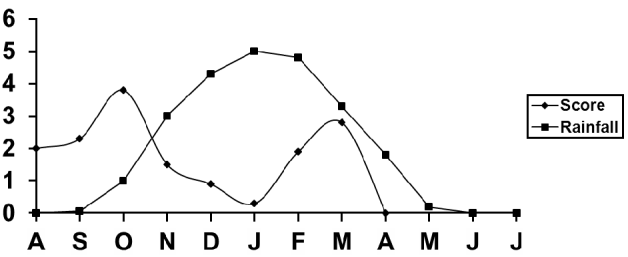
Water-borne transmission is probably a major contributor to the spread of infection. In any given endemic disease setting the relative contributions of water-borne, zoonotic and direct person-to-person transmission to the overall burden of cryptosporidiosis are hard to quantify, but there is no doubt that water-borne transmission is the source of several major epidemics and probably a very large number of minor epidemics. The largest epidemic on record affected Milwaukee in 1993 with over 400,000 cases (McKenzie et al. Reference MacKenzie, Hoxie, Proctor, Gradus, Blair, Peterson, Kazmierczak, Addiss, Fox and Rose1994). It is distinctly possible that ‘endemic’ infection in fact comprises a series of overlapping micro-epidemics, to which water-borne transmission would make a significant contribution. In Lusaka, we identified oocyst contamination of the municipal water supply and were able to detect a correlation between the intensity of oocyst contamination and the prevalence of cryptosporidiosis in the townships supplied from that water source (Kelly et al. Reference Kelly, Nchito, Baboo, Ndubani, Okeowo, Luo, Feldman and Farthing1997). The contamination of the water supply showed seasonal variation (Fig. 1) which correlated with seasonal infection incidence in this and subsequent studies (Kelly et al. Reference Kelly, Todd, Sianongo, Mwansa, Sinsungwe, Katubulushi, Farthing and Feldman2009). Our estimate of the population attributable risk fraction of cryptosporidiosis attributable to the presence of water-borne oocysts was 25%, which although a very crude (and probably under-) estimate would suggest that interventions to interrupt water-borne transmission would reduce overall disease burden considerably.
Score of intensity of oocyst contamination of principal (river-drawn) municipal water inflow to Lusaka during 1995–1997 set alongside rainfall averaged over these years. Oocyst contamination was measured using DPPPY MicroWynd filters (Cuno Europe, Tachbrook Park, Warwick, UK) which were used to sample from 100 litres of water drawn at the water treatment plant inflow. A series of smears was made from the washes of the filters and expressed as a score using arbitrary units as previously described (Kelly et al. Reference Kelly, Nchito, Baboo, Ndubani, Okeowo, Luo, Feldman and Farthing1997). Rainfall is the monthly Lusaka average (×25 mm to allow visualisation on the same scale) over the period 1991–1996 (data from Zambia meteorological office, Lusaka).

As noted above, zoonotic transmission is likely also to contribute to the disease burden in a country like Zambia. Farm workers can acquire the infection directly and then transmit it directly to other members of their households, or they may acquire infection from shared, contaminated drinking water. Cattle are major reservoirs of infection, which contaminate surface waters during periods of rainfall. One would expect that the ratio of C. parvum to C. hominis would be considerably greater in rural than in urban populations, but this has not been tested directly. As either species could contaminate drinking water, and either species can be transmitted directly person-to-person, only formal trials of interventions will truly determine the dominant routes of transmission and simultaneously inform public health policy.
What interventions need to be evaluated? First, filtration technologies have been reduced in scale such that cheap domestic units are available (such as the Life Straw, Vestergard Frandsen, Switzerland, Fig. 2). Second, water boiling is effective against Cryptosporidium oocysts, but given the expense of fuel it is not clear how effective this intervention would be at a population level. My own experience is that residents of Zambian peri-urban ‘compounds’ use boiling to disinfect drinking water only when there is a public health emergency such as a cholera epidemic. Very few households do this every day. Third, ultraviolet sterilisation has been reported to have significant impact on childhood diarrhoeal disease, and SOlar water DISinfection (SODIS) is being rolled out at scale, but to my knowledge its impact on cryptosporidiosis has not been studied. It would be predicted to be effective if water turbidity is not too high and post-treatment contamination is not too intense. Fourth, intensive handwashing has been reported to reduce diarrhoeal disease, including cryptosporidiosis, in American AIDS patients (Huang and Zhou, Reference Huang and Zhou2007) but this finding has not to our knowledge been replicated in a tropical setting.
Domestic water filtration device (Life Straw, Vestergard Frandsen) in use in Lusaka. This filtration unit contains a pre-filter to remove larger particulates and a textile filter to remove microbe contaminants with an effective pore size of 20 nm. The unit is expected to last for 3 years with a daily load of 16 litres.

CONCLUDING REMARKS
The prospects for control of cryptosporidiosis for a sub-Saharan African country like Zambia are not promising in the short term. The most immediately productive approach would be completion of formal controlled trials of interventions based on filtration and clean storage of drinking water. Such interventions would be predicted to have a very considerable impact not only on cryptosporidiosis but on a wide range of diarrhoea-causing pathogens. Hand washing interventions may also help. As diarrhoea remains one of the major causes of the still unacceptably high mortality in children under 5 years of age, filtration interventions remain a very attractive avenue to pursue. Effective treatment remains further off, even though those of us who are physicians feel the urgency of the need to be able to offer more effective treatments to our patients than we can at the moment.
FINANCIAL SUPPORT
Much of our work described was supported by the Wellcome Trust and Romark Laboratories.
CONFLICT OF INTEREST
I am co-investigator in a clinical trial funded by Vestergard Frandsen.