Introduction
The new technologies that optimize feed conservation by means of ensilage has been the subject of research worldwide with the aim of improving the use of feed resources and intensifying the production of ruminants. Thus, the use of mixed total feed silages consists of a homogeneous mixture through the combination of ingredients in the silo, which minimizes the occurrence of the selection of ingredients by animals, improving the performance of herds, and reducing costs in relation to conventional rations.
The advantages of providing feed as silage improve rumen energy and protein efficiency. In the case of rations based on Cactus and Gliricidia, this technique takes advantage of co-ensiling both cactus and legume, which ensure the balance of both the fibre and protein requirements of the ruminant, thus optimizing the production system from a nutritional perspective.
In order to ensile forage plants with high moisture content to create silages in the form of total ration, Macêdo et al. (Reference Macêdo, Santos, Araújo, Edvan, Oliveira, Perazzo, Sá and Pereira2018) categorized Opuntia as an option to be ensiled both for adaptation in semi-arid regions and because of its low DM content, to provide a source of water for the animal. Additionally, Cactus contributes to the supply of fermentable substrates for lactic acid bacteria, which convert them into organic acids, ensuring the preservation of the ensiled mass. As the fermentation process is highly dependent on the community of associated microorganisms, it is beneficial to study the microbial diversity and how this changes over the ensiling period.
There are no published sequencing studies on the bacterial structure and composition in silages based on Cactus and Gliricidia, although the Opuntia is already widely used in silages in several parts of the world. Thus, the aim of this study was to investigate effects of Cactus levels in total mixed ration silages based on Cactus and Gliricidia on the fermentation profile, microbial populations, aerobic stability and taxonomic diversity of silages.
Materials and methods
Local considerations for carrying out the experiment
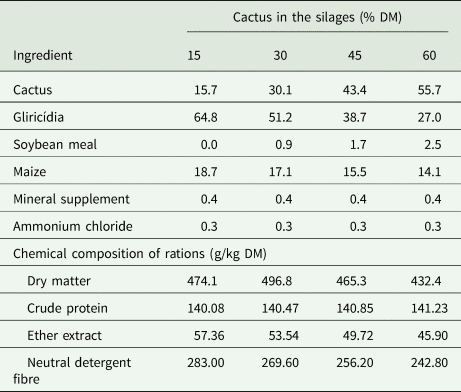
The experiment was performed in the Forage Laboratory belonging to the Department of Animal Science of the Federal University of Paraíba, in the microregion of Brejo Paraibano, Brazil located at the geographical coordinates 6° 58′ 12″ S, 35° 42′ 15″ W and 619 m altitude. The Cactus used was the Mexican Elephant Ear variety (Opuntia spp) and Gliricidia (Gliricidia sepium (Jacq.) Steud). The completely randomized design was used in a 4 × 4 factorial design with four replications, being four Cactus levels in the rations (15, 30, 45 and 60%) based on a dry matter (DM) and four opening periods (0, 15, 30 and 60 days of fermentation), totalling 64 experimental units. Diets were formulated to meet the nutritional requirements of lambs for a daily weight gain of 200 g (NRC, 2007), including the following ingredients: Cactus, Gliricidia, soybean meal and maize meal in the total mixture (Table 1).
Proportions of ingredients in the experimental silages and chemical composition of diets based on the dry matter (DM)

A total of 64 experimental silos (15 cm diameter × 40 cm height) of polyvinyl chloride (PVC) and hermetically sealed were used. At the bottom of the silos, 1 kg of sand was added to capture the effluents. Cactus and Gliricidia were harvested from an intercropping area of 2371.4 m2. The double row cactus plantings were spaced 1.5 m between rows and 0.5 m between plants, with the Gliricidia grown within the cactus rows and spaced 1.5 m between plants. The harvest was performed manually and the collected material was processed through a stationary forage (PP-35, Pinheiro máquinas, Itapira, São Paulo, Brazil) chopper to an average particle size of approximately 2.0 cm. Thereafter, the experimental silos were closed with a PVC cover equipped with Bunsen-type valves, sealed with adhesive tape and stored at room temperature. At every opening period, four silos from each treatment were opened
Assessments of pH, ammonia nitrogen (N-NH3), organic acids and microbial populations
The pH values were determined by collecting a sample of approximately 25 g of the ensiled material from each treatment and adding 100 ml of water. The reading was performed after 1 h, according to the methodology described by Bolsen et al. (Reference Bolsen, Lin, Brent, Feyerherm, Urban and Aimutis1992), using a potentiometer. The analysis of ammonia nitrogen (N-NH3) was determined according to the methodology described by Detmann et al. (Reference Detmann, Souza, Valadares Filho, Queiroz, Berchielli, Saliba, Cabral, Pina, Ladeira and Azevedo2012). For the analysis of organic acids, lactic acid (LA), acetic acid (AA), propionic acid (PA), a high-performance liquid chromatography (HPLC; Shimadzu model SPD-10a VP, Dallas, Texas, USA) was used, coupled to the ultra-violet detector using a wavelength of 210 nm. The column was a C18 (reverse-phase) Supelco brand, with dimensions of 30 cm × 4.5 mm diameter, a flow rate of 0.6 ml/min and a column pressure of 87 Kgf, mobile phase: Water added to 1% sulfuric acid and injected volume: 10 μl, 10 g samples were collected and diluted in 90 ml of distilled water and filtered through Whatman filter paper (Kung Jr and Ranjit, Reference Kung and Ranjit2001). For assessment of microbial populations, 25 g of fresh silage sample extracted according to the predefined opening period was collected, added in 225 ml of distilled water. For counting the lactic bacteria (LAB), the samples were plated in MRS agar (Difco) using Petri dishes and incubated anaerobically at 37°C for 48 h. Moulds and yeasts (MY) were quantified using the pour plate method on potato dextrose agar (Difco) which was acidified by adding 1.5% tartaric acid at 10% (w/v) and the plates were incubated at 25°C for 5 days. Colonies were counted from appropriate dilution plates containing 30–300 colony forming units (CFU).
Aerobic stability assessment
The aerobic stability test was evaluated by monitoring the internal temperature of silages exposed to air. The silage samples were placed without compaction in experimental silos of uncovered PVC and kept in a closed environment with controlled temperature (25°C). The temperatures were checked every 30 min by thermometers (digital immersion) positioned in the centre of the silage mass throughout 96 h. The onset of deterioration was considered when the internal temperature of the silages reached 2°C above the ambient temperature (Kung Jr et al., Reference Kung, Robinson, Ranjit, Chen, Golt and Pesek2000).
Analysis of chemical composition
The samples of the silages and the respective ingredients used in the formulation of the silages dried in a convection oven at 55°C for 72 h, ground in a knife mill (Willey mill, Arthur H. Thomas, PA, USA) with a 1 mm screen and stored in plastic containers for determination of DM (method 934.01) and ether extract (method 920.39), crude protein (CP) was calculated by determining the total nitrogen content using the micro-Kjeldahl method (method 920.87) using a fixed conversion factor (6.25) and neutral detergent fibre (method 973.18) with α-amylase were determined as described by the Association of Official Analytical Chemists (AOAC, 1990).
Analysis of the bacterial community of silages by 16s rRNA marker gene sequencing (metataxonomics) using high-throughput sequencing
The bacterial community analyses were conducted on material immediately before packing the silos and 60 days after ensiling. Three of the four treatments were chosen to represent the lowest (15%), intermediate (45%) and highest (60%) inclusion levels of cactus. The DNA extraction from silage samples was performed using the commercial kit (Power Soil DNA Isolation kit, MoBio, Carlsbad, CA), as recommended by the manufacturer. The V3–V4 region of the 16S rRNA gene was amplified by polymerase chain reaction (PCR) (95°C for 3 min, followed by 25 cycles at 95°C for 30 s, 55°C for 30 s and 72°C for 30 s and a final extension at 72°C for 5 min) using the 16S Amplicon PCR Forward Primer = 3′ TCGTCGGCAGCGTCAGATGTGTATAAGAGACAGCCTACGGGNGGCWGCAG ' e 16S Amplicon PCR Reverse Primer = 5′ - GTCTCGTGGGCTCGGAGATGTGTATAAGAGACAGGACTACHVGGGTATCTAATCC 3′. The PCR was performed in triplicate, in a final volume of 25 μl containing 12.5 μl 2× kapa hifi hotstart readymix price, 5 μl of each primer and 2.5 ng of template DNA. The purified PCR products were quantified by fluorometric method using Qubit 3.0 (Life Invitrogen).
The library was prepared using the adapters of the ‘Nextera XT sample Prep Kit’ (Illumina). Subsequently, the DNA fragments were purified with Agencourt AMPure XP reagent (Beckman). After purification, the library was validated in the fragment analyser (Agilent Technologies). Paired-end sequencing was performed in Miseq using the kit V2 for 2 × 250 bp (Illumina), according to the manufacturer's recommendations.
Processing of data sequencing
The raw sequences, demultiplexed and in pairs, were subjected to processing by the QIIME 2 v.19.7 platform (Bolyen et al., Reference Bolyen, Rideout and Dillon2019), where they were joined, selected by the maximum and minimum sizes (200–500 bp), minimum Phred quality score of 20 and de-replicated through the VSEARCH (Rognes et al., Reference Rognes, Flouri, Nichols, Quince and Mahé2016). Chimeric sequences were removed using UCHIME (Edgar et al., Reference Edgar, Haas, Clemente, Quince and Knight2011). Clusterization was performed using the De Novo method, with 99% similarity among the centroid groups, in which it was possible to obtain the OTUs (Operational Taxonomic Unit).
The number of sequences per sample was normalized to 14 900 reads in order to perform the analyses of ecological diversity alpha (richness uniformity) and beta (principal component analysis (PCA)); aligned by the mafft (Katoh et al., Reference Katoh, Misawa and Kuma2002) and then used for the construction of the phylogenetic tree by fasttree2 (Price et al., Reference Price, Dehal and Arkin2010). The visualizations of the taxonomic composition, especially relative abundance and alpha diversity, were made using the phyloseq package v. 1.8.2 (Mcmurdie and Holmes, Reference McMurdie and Holmes2013) of the R software v.3.5.7. The taxonomic classification was attributed using the Naïve Bayes method with 99% for region V3–V4 (Quast et al., Reference Quast, Pruesse, Yilmaz, Gerken, Schweer, Yarza, Peplies and Glöckner2013).
The assessment of alpha diversity was made by estimating the ecological indexes of richness and uniformity of the communities, respectively, Chao1 and Shannon. As for beta diversity, we proceeded through the graphical visualization of PCA (PcoA – principal coordinate analysis), with the unweighted qualitative metric being chosen for the assembly of the base distance matrix for the analysis, generated from Unifrac (Lozupone and Knight, Reference Lozupone and Knight2005).
Statistical analysis
The data were subjected to analysis of variance and the averages were compared using the Tukey's test at 5% (P < 0.05) probability level, using the Statistic Analysis System 9.4 (SAS Institute, Cary, NC, EUA), according to the statistical model below:

where: Yijk = dependent variable, μ = overall mean, αi = fixed effect of cactus levels, βj = fixed effect of the j th time, αβ × ij = interaction between cactus levels and time, ∑ijk = random error associated with each observation.
Beta diversity indices were assessed using the paired Kruskal–Wallis test, while the dissimilarity among treatments was assessed using the permutational multivariate analysis of variance (PERMANOVA).
Results
Microbial populations and fermentation profile
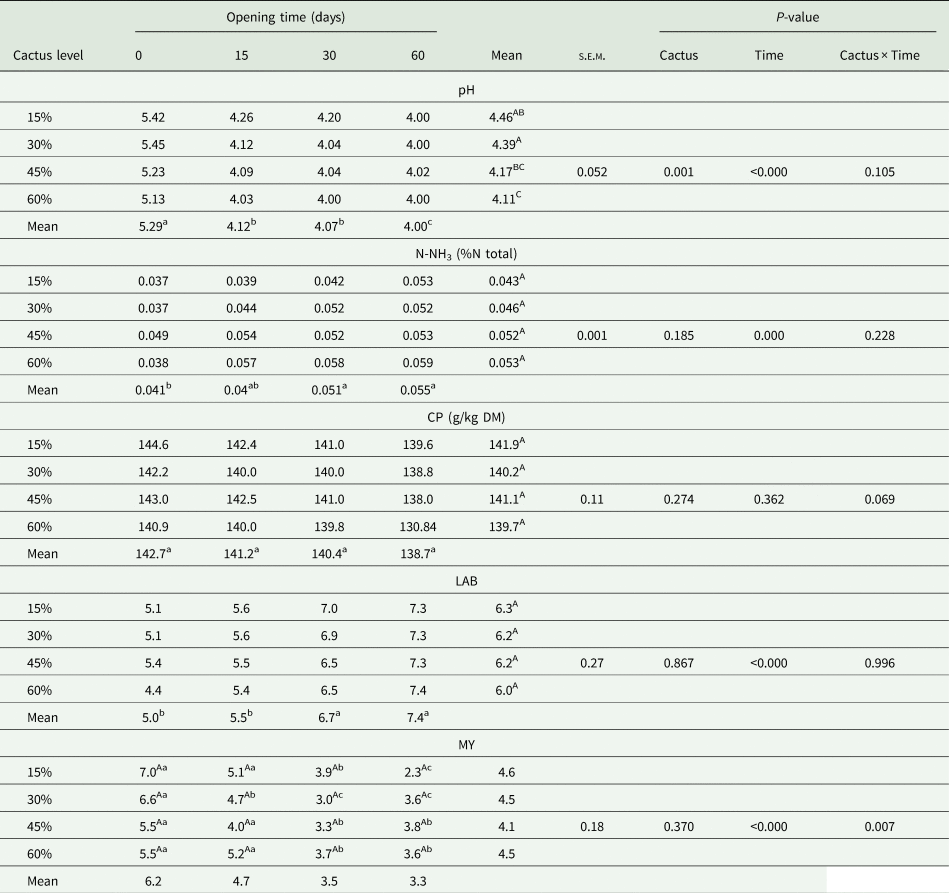
No interaction effect was observed for pH, LAB, N-NH3 and CP values (P < 0.050). Regarding opening times, higher pH values were found for time 0 and lower values for time 60 (P < 0.050; Table 2). On the other hand, higher LAB values were observed at 30 and 60 days in all silages, and as expected, lower values at the time of ensiling in all silages. It is worth mentioning that these populations stabilized at the end of the fermentation period. An interaction effect (P < 0.050) between factors was observed for the MY population. The silages before ensiling showed higher averages (6.21 log10 cfu/g silage) when compared to the other opening times; however, a significant difference (P > 0.050) was not observed in the Cactus levels. Soon after, the silages presented low MY development values and these values decreased over the opening periods, remaining around 3.5 and 3.3 log CFU/g.
Hydrogen ionic potential (pH), ammonia nitrogen (N-NH3), crude protein (CP), lactic acid bacteria (LAB) count, moulds and yeasts (MY) (log10 cfua/g silage) of total mixed ration silages based on Cactus and Gliricidia
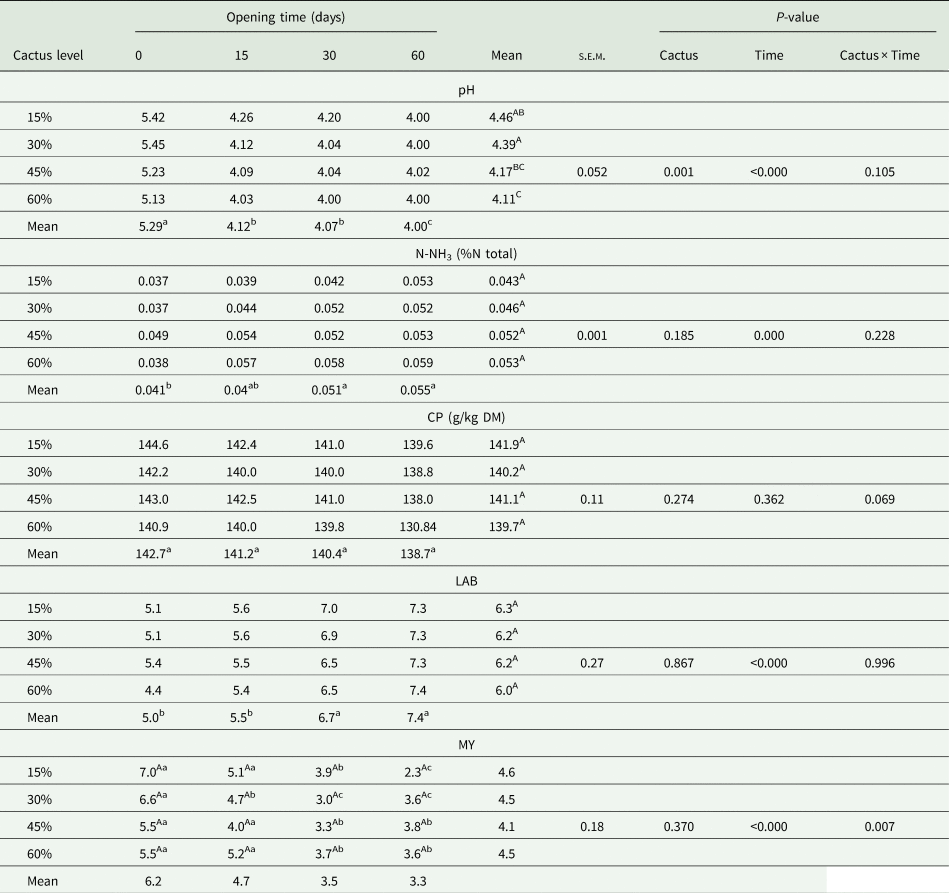
Means followed by uppercase letters in the columns and lowercase letters in the lines differ by Tukey's test at 0.05 probability. aColony-forming units; s.e.m., standard error of the mean.
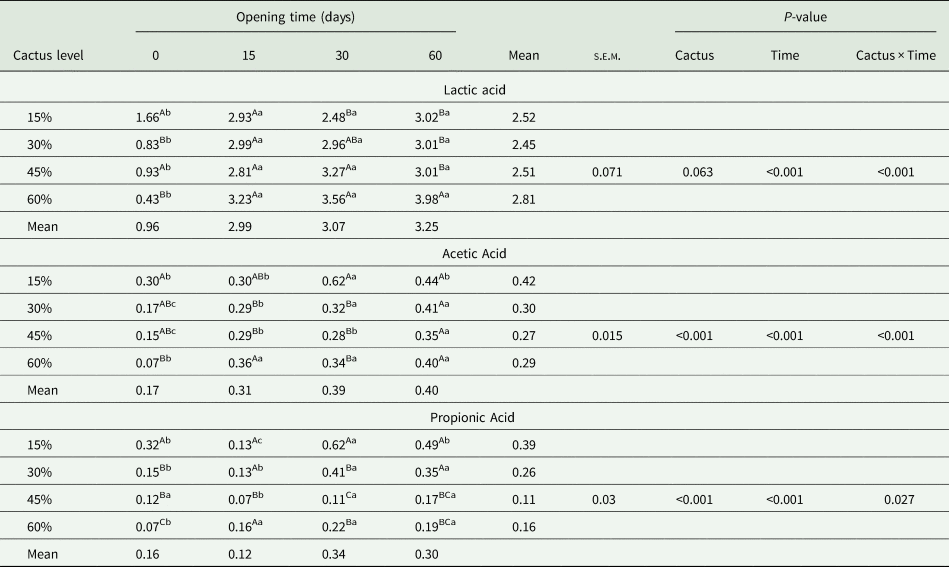
An interaction effect (P < 0.050) on the lactic acid contents was observed (Table 3). Higher values were observed for diets with 60% of Cactus at 60 days (3.98 g/kg dry matter (DM)). Moreover, lower values were observed on day 0 for all evaluated Cactus levels, with average (0.96 g/kg DM).An interaction effect (P < 0.050) for the acetic acid content was observed, where the diets 15%, 30%, 45% and 60% showed higher values in the period at 60 days (0.44, 0.41, 0.35 and 0.40 g/kg DM, respectively) when compared to other opening periods. There was variation for propionic acid (P < 0.050) content both in the evaluated Cactus levels and opening periods. However, higher values were observed in silages with 15% Cactus at 30 days (0.62 g/kg DM), followed by the diet with 30% Cactus at 60 days (0.35 g/kg DM).
Concentrations of organic acids (g/kg DM) of total mixed ration silages based on Cactus and Gliricidia
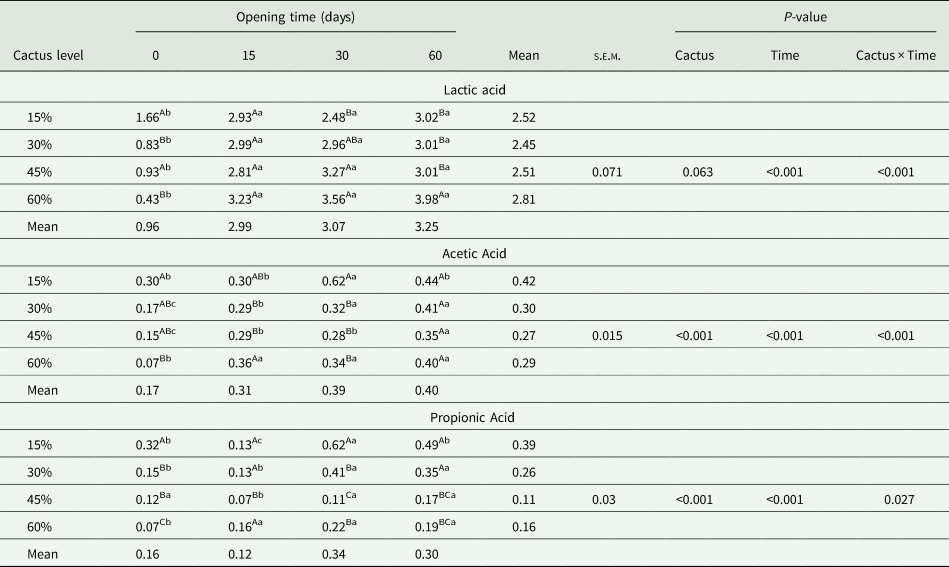
DM = dry matter; Means followed by uppercase letters in the columns and lowercase letters in the lines differ by Tukey's test at 0.05 probability. s.e.m. standard error of the mean.
The same result was observed in relation to the acetic acid content (P < 0.05), although lower when compared to lactic acid. The ration with 15% Cactus showed the highest values in the first opening period, although it was reduced at 60 days when compared to the period of 30 days ensiling.
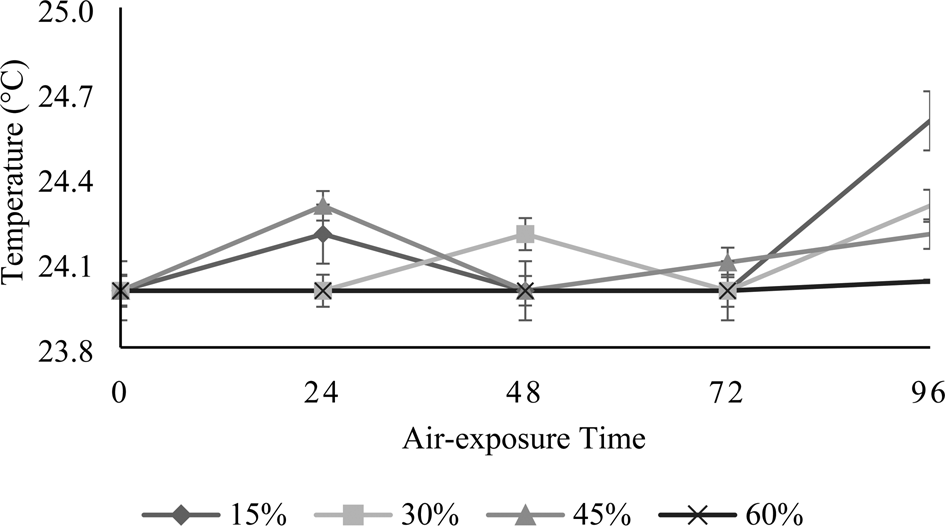
The results for aerobic stability assessment are presented in Fig. 1. The data showed that the silages remained stable during the 96-h period of exposure to oxygen, i.e. there was no increase in temperature by 2°C compared to the ambient temperature during the entire period evaluated.
Aerobic stability of total mixed ration silages based on Cactus and Gliricidia exposed for 96 h to oxygen.

Taxonomic diversity
The 45% treatment samples at the time of ensiling did not produce a significant amount of sequences, showing lower than 3000 reads (sequences) so the authors did not include them in the results.
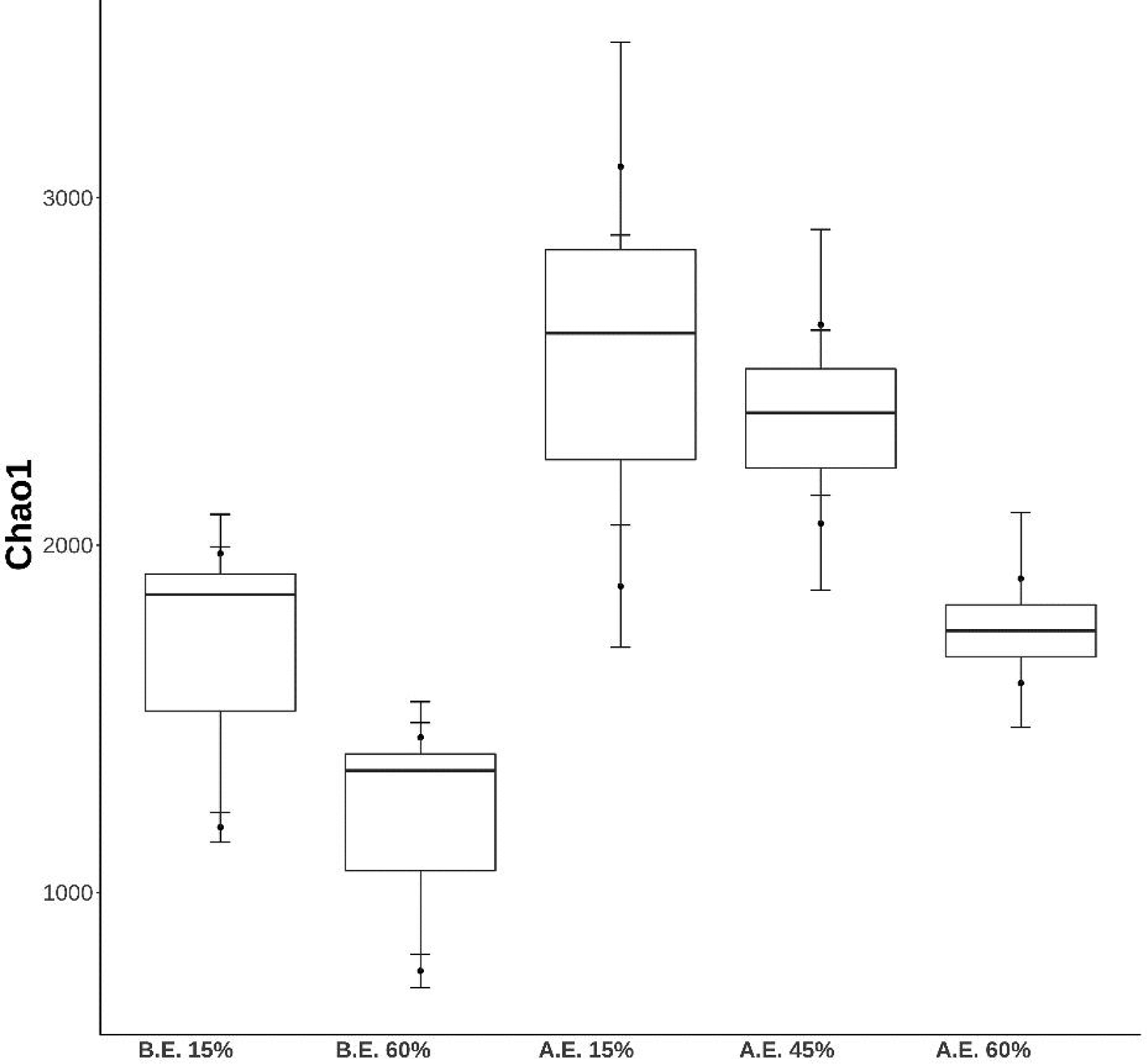
A significant difference was observed for the richness index (P < 0.050) (Chao1), showing that the taxonomic groups differed when the fermentation periods were compared (Fig. 2). When treatments within the period were analysed, silages with 15% Cactus before ensiling showed a richer microbiota; however, as the level of Cactus in the diets increased, the richness index decreased with increasing cactus per cent. There was no difference (P < 0.050) among diets after the fermentation period.
Richness index (Chao1) of total mixed ration silages based on Cactus and Gliricidia in different fermentation periods. BE = before ensiling (15 and 60% cactus in silage; AE = after 60 days ensiling (15, 45 and 60% cactus in silage)).

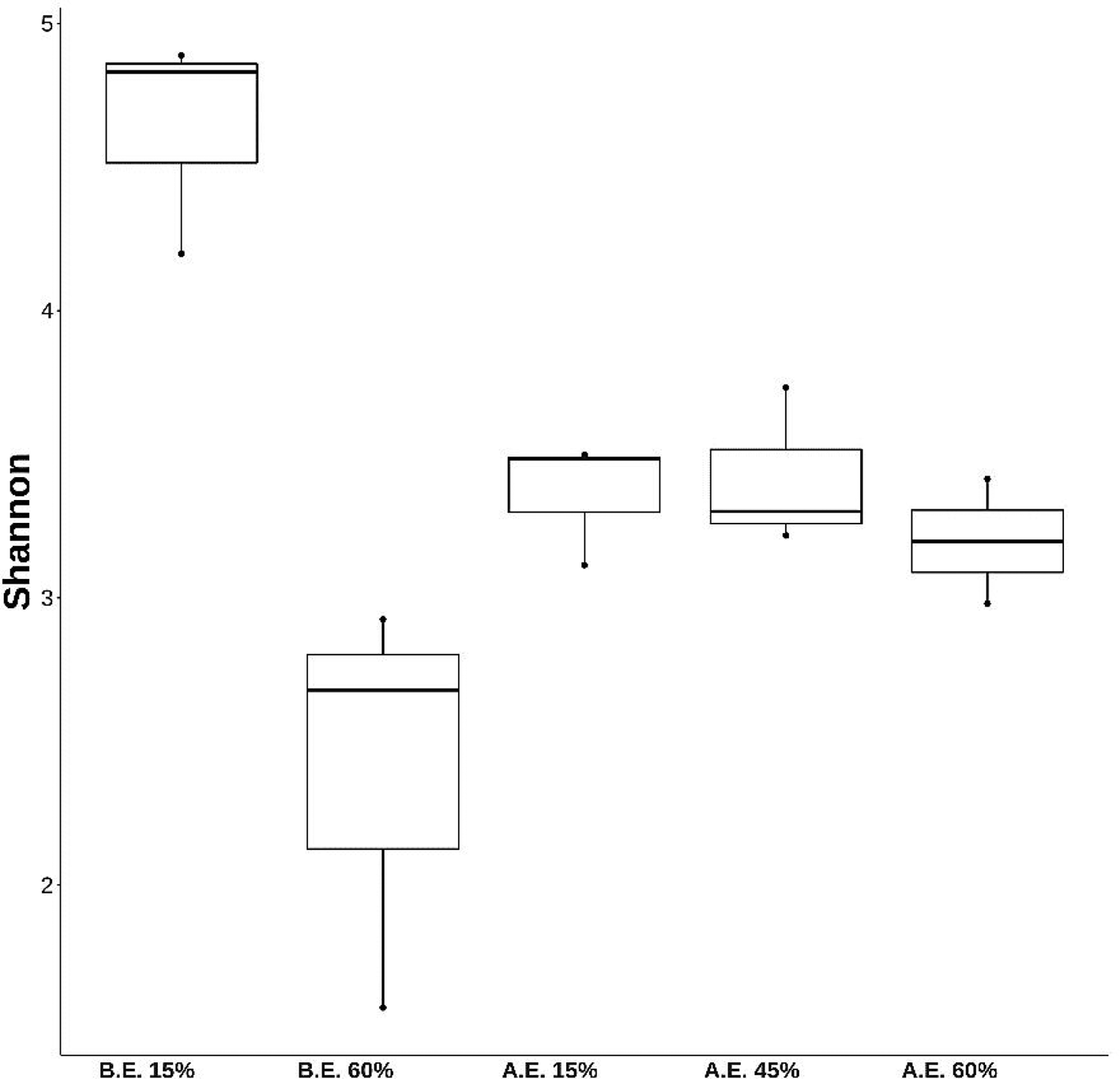
Regarding diversity (Shannon diversity index), the same behaviour occurred, with higher diversity in the 15% cactus silage than the 60% cactus silage. The surveyed results also showed that the diversity of the bacterial community was significantly reduced under the effect of fermentation over time regardless of Cactus levels in the silages (Fig. 3).
Diversity index (Shannon–Wiener) of total mixed ration silages based on Cactus and Gliricidia in different fermentation periods. BE = before ensiling (15 and 60% cactus in silage; AE = after 60 days ensiling (15, 45 and 60% cactus in silage)).

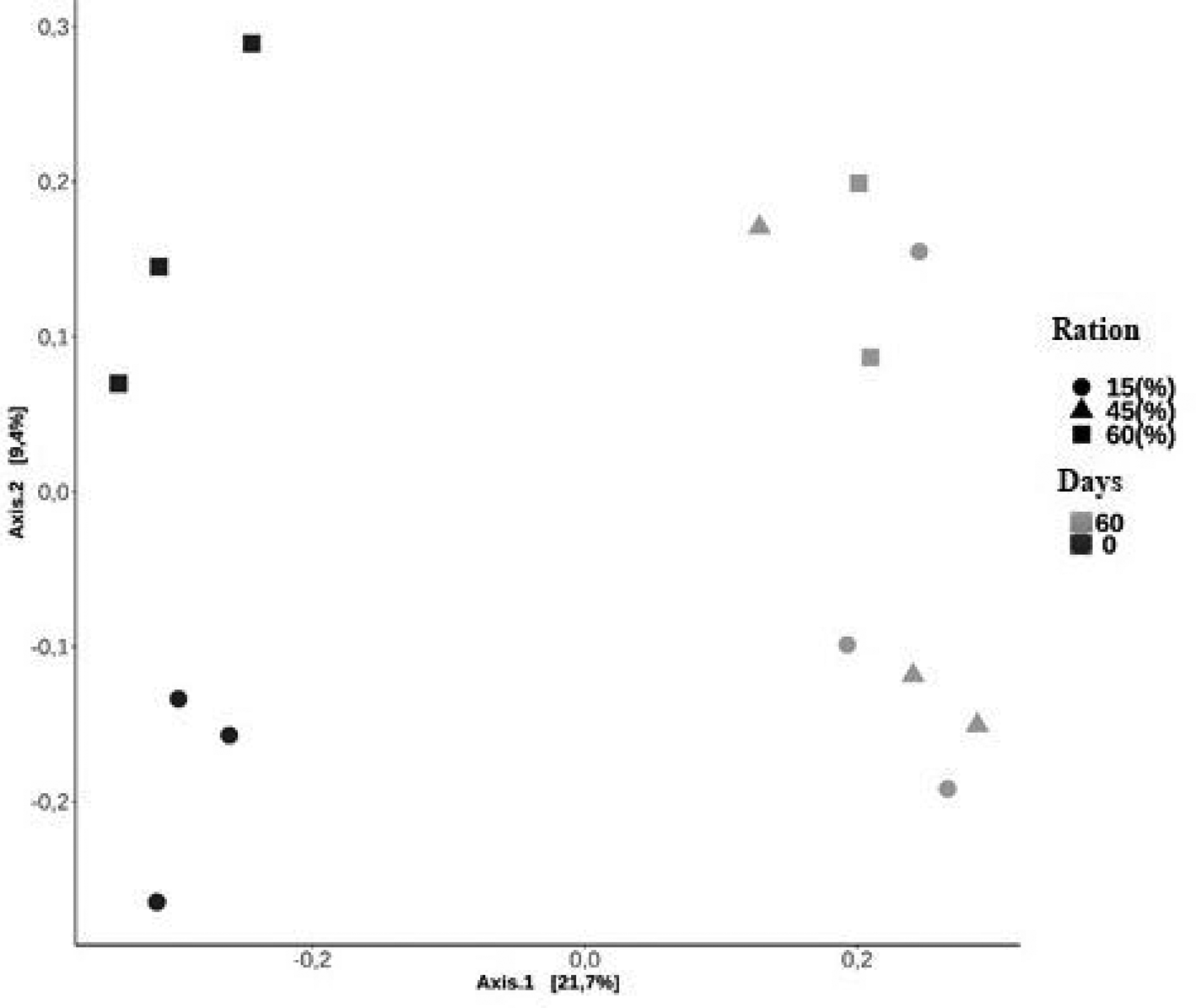
In an exploratory way, the spatial distribution of the silage samples by PCA showed a significant difference (P < 0.050) among the fermentation periods and dissimilarity between the proposed treatments (Fig. 4).
Principal coordinate analysis (PCoA) UniFrac weighted distances for the bacterial community of total mixed ration silages based on Cactus and Gliricidia for 0- and 60-day fermentation periods.

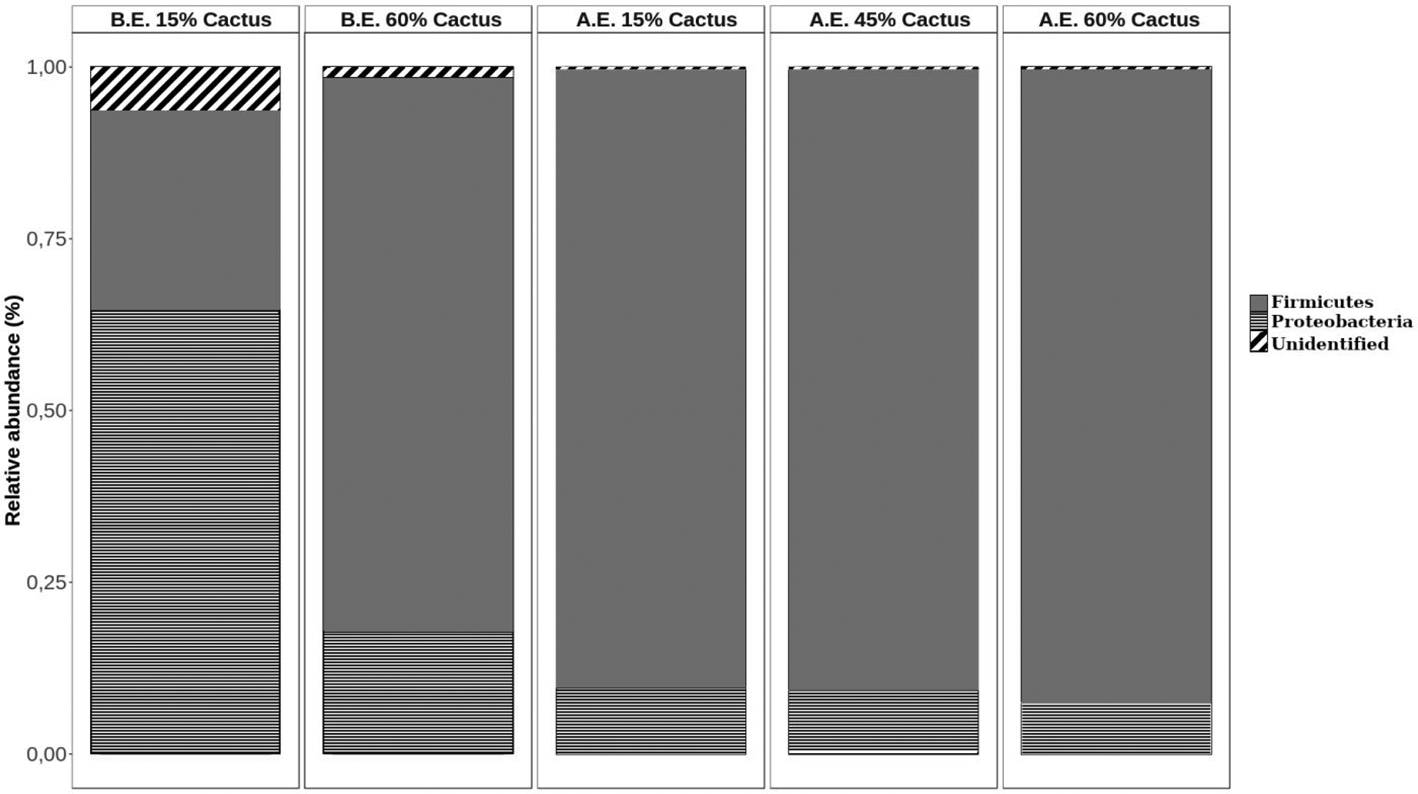
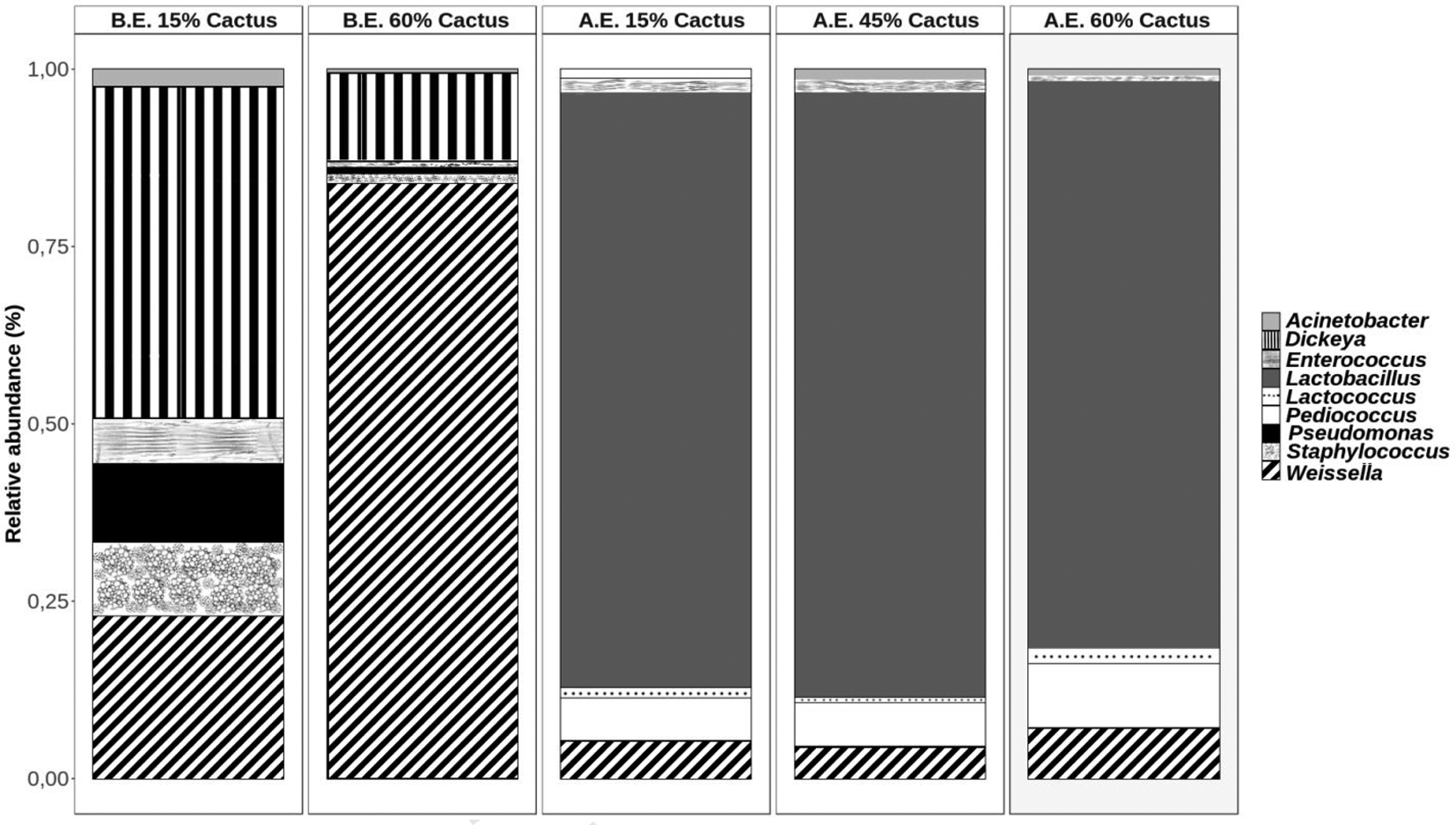
In general, the taxonomic depth of bacterial communities is characterized by the occurrence of two bacterial phyla, namely Proteobacteria and Firmicutes (Fig. 5). Regarding the genus, nine types of the genera, in which the most abundant were: Dickeya, Pseudomonas, Staphylococcus, Lactobacillus and Weissella (Fig. 6).
Taxonomic affiliations at the phylum level of bacterial communities of total mixed ration silages based on Cactus and Gliricidia in different fermentation periods. BE = before ensiling (15 and 60% cactus in silage; AE = after 60 days ensiling (15, 45 and 60% cactus in silage)).

Taxonomic affiliations at the level of Genus of bacterial communities of bacterial communities of total mixed ration silages based on Cactus and Gliricidia in different fermentation periods. BE = before ensiling (15 and 60% cactus in silage; AE = after 60 days ensiling (15, 45 and 60% cactus in silage)).

Regarding the fermentation period (60 days), the silages showed the same taxonomic composition in genera. The genus Lactobacillus was the most abundant and common for all evaluated levels (95%), followed by Weissella (0.2%). The change in the structure of the bacterial communities was evident, contrasting samples before ensiling and after the fermentation period at 60 days.
Discussion
Microbial populations and fermentation profile
The fermentation process occurred in total ration silages based on Cactus is similar to other types of silages. Thus, the values obtained in the present study are in accordance with the values proposed by McDonald et al. (Reference McDonald, Henderson and Heron1991) in maize silages.
These silages are of good quality and with adequate fermentation, with all silages reaching a satisfactory pH of around 4, regardless of the opening period. Additionally, the proportions of NH3 in relation to total nitrogen ranged from 0.041 to 0.055.
Costa et al. (Reference Costa, Pires, Moura, Sales, Rodrigues and Rigueira2016) stated that well-fermented silages should provide N-NH3 levels below 100 g/kg of total nitrogen. Regarding the crude protein values, the silages showed adequate values for a diet that reaches the requirements for lambs, as indicated by the NRC (2007), which recommends around 130 g/kg of CP for 200 g live weight gain per day.
All silages presented similar results for the propagation of lactic acid bacteria. In general, the silo environment itself is a limiting factor for the growth of certain microorganisms, which can be explained by changes in the internal conditions.
LAB are predominant because they constitute the essential microbiota for silage fermentation, being generally present in forages with population 1000 times smaller than their competitors, fungi and enterobacteria, but they can multiply quickly after ensiling when oxygen is expelled (McDonald et al., Reference McDonald, Henderson and Heron1991).
These results are corroborated by the findings by Chekir et al. (Reference Chekir, Ayed, Hamdi and Ben Salem2013) when evaluating the fermentation profile of total mixed ration silages based on Cactus, whey and Barley grains with different Cactus proportions, where they found an adequate fermentation pattern with pH values within the appropriate range and predominance of LAB. The Cactus, besides being rich in water and non-fibrous carbohydrates, has high concentrations of pectin, which provides high fermentation rates and hence a quick release of soluble sugars, which are, in turn, efficiently used by microbial groups, especially LAB (Tegegne et al., Reference Tegegne, Kijora and Peters2007).
As expected, MY counts were higher in the first times of ensiling, and then these populations decreased due to anaerobiosis and the intense lactic fermentation inside the silo. Consequently, moulds and yeasts inflicted little damage to the fermentation process.
According to França et al. (Reference França, Oliveira, Miyagi, Silva, Perón and Basto2011), the relationship between lactic and acetic acid, among others, are valuable parameters when evaluating the fermentation process. Silage production aims for a proportionally greater amount of lactic acid in relation to acetic acid. However, the presence of acetic acid is desirable to aid in yeast inhibition and thus ensure high aerobic stability of silages after opening the silos. The values of acetic acid observed for all silages corroborate with the minimum to guarantee yeast control and high aerobic stability of the silages (McDonald et al., Reference McDonald, Henderson and Heron1991).
The likely explanation for the adequate levels of acetic acid in silages may be the occurrence of high populations of heterofermentative lactic bacteria due to the less pronounced reduction in pH throughout the fermentation period. This explains the predominance of the genus Weissella in silages. Similar results were observed by Macedo in silages of rations based on Cactus.
In relation to the propionic acid levels, the diets showed varying values in the opening times, with higher averages for the 15 and 30% Cactus diets both before ensiling (time 0) and at 15 and 30 days of opening, while no differences were observed at 60 days. Values of propionic acid above the established limit indicate degradation of lactic acid, which was not evidenced in the present study since the levels of propionic acid were below 0.5 and the values of lactic acid were much higher.
Propionic acid occurs on a smaller scale, as reported by Muck (Reference Muck2010), and is produced by heterofermentative propionic bacteria and LAB with antifungal potential during the initial and final silage phase. The propionic acid, in turn, can effectively contribute to control of undesirable microorganisms.
The analysis of the results obtained in the aerobic stability evaluation showed that the Cactus, when added in complete diets, fulfilled its function of triggering the lactic and acetic fermentation, thus reflecting in a better fermentative pattern. Similarly, the acetic acid produced during fermentation played an important role in ensuring aerobic stability in silages.
Wang and Nishino (Reference Wang and Nishino2013) also observed that complete feed silage has high aerobic stability after opening the silo, which helps the conservation of green mass and which, in turn, makes the ensiling technique of complete diets viable as a single mixture inside the silo.
In this scenario, an interesting characteristic for silages with Cactus added in the rations would be the concentration of acetic acid, favouring the growth of heterofermentative LAB by the slow decline in the pH of the silages due to the presence of buffering substances, such as oxalic, malic, citric, malonic, succinic and tartaric acid resulting from the crassulacean acid metabolism (Abidi et al., Reference Abidi, Ben Salem, Martín-García and Molina-Alcaide2009; Petera et al., Reference Petera, Delattre, Pierre, Wadouachi, Elboutachfaiti, Engel, Poughon, Michaud and Fenoradosoa2015; Isaac, Reference Isaac2016). Some of these acids may have an antifungal action, which associated with the high acetic acid content, ensuring high aerobic stability of the silage when Cactus is present in the rations. These results corroborate with the finding by Pereira et al. (Reference Pereira, Santos, Araújo GG, Oliveira, Pinho, Zanine, Souza, Macedo, Neto and Nascimento2020), who exposed Nopallea ssp silages to oxygen for 96 h and did not observe a break in aerobic stability.
Taxonomic diversity
Microbiota of samples before ensiling is quite rich and diverse, and the description of the community is appropriate, based on the number of sequences obtained. The diversity, as well as the richness of bacteria found at the field level, is already well known, and the reduction of these indexes of the bacterial community is directly associated with the change in the environmental conditions of a (micro) ecosystem that can represent a type of disruption to their community, thereby exerting selective pressure on the microbiota, a fact that explains the low diversity within the fermentation period.
In the results of studies conducted by Kraut-Cohen et al. (Reference Kraut-Cohen, Tripathi, Chen, Gatica, Volchinski, Sela, Weiberg and Cytryn2016), the authors observed that the microbiota of silages in a trench silo on an agricultural scale, in which well-fermented silages presented low taxonomic diversity while silages that did not present an adequate fermentative profile, showed a highly diversified microbiota.
Furthermore, the influence of this disturbance will depend on its frequency and intensity. Thus, the interaction among microorganisms within the silo can occur through competition for the same substrate or energy source, decreasing the survival of communities.
The structure of the bacteria population associated with silages in different fermentation periods varied and was evidenced in the PCA. Thus, the effect of the fermentation period on the dissimilarity of the bacterial groups was remarkable, with a clear separation of samples from silages fermented at 60 days. Similar results were observed by Bao et al. (Reference Bao, Mi, Xu, Zheng, Kwok, Zhang and Zhang2016) when evaluated the quality of Mendicago sativa silage and the monitoring of bacterial composition.
The variation presented according to the fermentation period can probably be attributed to the condition of anaerobiosis established inside the silo, which in turn enabled the predominance of specific and highly specialized communities in LAB.
After 60 days of fermentation, the phylum Firmicutes was predominant, which increased with the addition of Cactus in the silages at all levels evaluated. This phylum encompasses important groups, such as LAB. Typically, members of Proteobacteria dominate the bacterial silage microbiota before ensiling, which demonstrates the existence of a negative correlation of this phylum with the advance of the fermentation period. Thus, the reverse happens when considering the phylum Firmicutes.
In order to characterize groups of bacteria at the phylum level in different fermentation periods, Romero et al. (Reference Romero, Joo, Park, Tiezzi, Gutierrez-Rodriguez and Castilho2018) reported a greater predominance of the phylum Fermicutes (99.8%) while Proteobacteria represented only 0.07% of the total sequences after 217 days of fermentation. However, there is no published data on taxonomic composition in cactus silages. The results of the present research demonstrate a taxonomic pattern that results in well-fermented silage dominated the by phylum Firmicutes.
The genera observed before ensiling did not thrive in the silages fermented at 60 days, except for the genus Weissella. In this way, the silo environment itself was a limiting factor for the growth of certain groups of microorganisms, evidenced by the succession of the genera Lactobacillus and Weissella, which show essential performance in the fermentation process for preservation of the ensiled mass.
The disappearance of certain groups of bacteria during the fermentation process was described by Pahlow et al. (Reference Pahlow, Muck and Driehuis2003) when reporting that many of these genera present in the ensiled material are facultative aerobic bacteria and do not contribute to the preservation of silage, thus having growth inhibited soon after the silo is closed. In this respect, an important factor to consider in Cactus silages is the high density obtained due to the presence of mucilage, which aggregates the plant particles, rapidly expelling oxygen from the silo, thus inhibiting unwanted populations.
Considerable similarities were observed between the dominant genera in the fermentation process when different studies are compared. In most cases, LAB such as Lactobacillus, Pediococcus and Lactococcus tend to be the predominant ones (Schmidt et al., Reference Schmidt, Emara and Kung Junior2008; Wang et al., Reference Wang, Bai, Liu and Cao2011). However, these results were not observed in the present study since the taxonomic composition will depend not only on the fermentative process but also on the nature of the ensiled material, the substrate used by bacteria in its metabolism.
Therefore, Pereira et al. (Reference Pereira, Santos, Araújo GG, Oliveira, Pinho, Zanine, Souza, Macedo, Neto and Nascimento2020) reported the occurrence of the genus Weissella when the isolation and identification of lactic acid bacteria were evaluated in Cactus silages and their effects on fermentation and aerobic stability. The authors reported the survival of this group of bacteria in the acidic conditions of the silo. Although not belonging to the group of the largest acetic acid producers, this genus was essential in inhibiting undesirable microorganisms in the ensiled material, which improved the aerobic stability of the silages.
The succession of a microbiota dominated by Proteobacteria for a microbiota dominated by Firmicutes mainly by the genus Lactobacillus was fundamental to guarantee the conservation of total mixed ration silages based on Cactus. However, the literature on studies with Cactus silages with regard to sequencing is scarce. Studies must be performed in order to explore the potential of these microorganisms; genomics can add value to the understanding of the ensiling process.
Conclusion
Cactus in combination with Gliricidia can be added in total mixed ration silages up to the level of 60%. There were positive effects on qualitative indicators of the silages and beneficial taxonomic communities, identifying important groups for the preservation of the ensiled mass.
Financial support
The authors would like to thank the National Semi-Arid Institute, Coordenação de Aperfeiçoamento de Pessoal de Nível Superior (CAPES, Brazil) and the Brazilian Agricultural Research Corporation for financial support.
Conflict of interest
The authors declare there are no conflicts of interest.
Ethical standards
Not applicable.