Knowledge Process Outsourcing Explained
What is Knowledge Process Outsourcing?
In a nutshell, Knowledge Process Outsourcing (or KPO, as it is commonly known) is the delivery of high-value knowledge and information processes by an outside supplier. The processes are provided by the supplier through a dedicated team and may be for internal as well as external use. KPO services typically require specialised skills, domain knowledge and expertise, and may include business research, analytics and Legal Support Services (also known as LPO). To deliver these services, KPO providers typically employ a highly educated workforce, with a significant proportion of staff having tertiary and professional qualifications, including MBAs, CFAs, PhDs, engineers and lawyers.
Edward Gill

A potted history of KPO
KPO is a relatively new form of outsourcing. While the term itself was coined much later, many trace the origins of the industry to 1999 with the establishment of the McKinsey Knowledge Centre in Gurgaon, just outside of New Delhi, India. The centre was developed to provide rapid access to research and analytics support for McKinsey's consultants worldwide. Other leading organisations soon followed McKinsey's lead with many establishing their own captive KPO centres.Footnote 1
The early years of the new millennium were something of a pioneering period for the industry with a small number of niche companies, known as ‘pure-play’ KPO providers, establishing themselves to provide investment banks, professional services firms and corporates with business research and analytics support. In recent years, a number of traditional IT and Business Process Outsourcing (BPO) providers have also looked to expand into the KPO space in an attempt to capture a slice of a global market that is expected to expand to an estimated US$17 billion by 2014.Footnote 2
Why and how KPO works for law firms
KPO drivers for law firms
The move towards working with third-party providers has been a relatively recent one for many law firms, starting with facilities and maintenance contracts and moving towards back-office functions such as IT and HR. The focus for firms was to reduce costs by transferring work to either cheaper locations (such as Linklaters with the establishment of its Colchester office, and Clifford Chance with its captive ‘Global Shared Service Centre’ in Gurgaon, India) or to third-party BPO providers. Services including knowledge management, information services and business development, as well as legal services were regarded as sacrosanct and not suitable for outsourcing.
For a law firm, knowledge processes are at the heart of the business; it is the collective expertise and capability of the firm that clients are buying. Partners had been reluctant to engage external support for these areas, citing reputational and other risks to their business and a feeling that only those that work within the firm can understand their specific requirements. This reluctance has been tempered in part as partners see the success that other professional services firms have had with outsourcing the support for their knowledge, information and business development requirements, and as a result of external pressures on their traditional business model.
With the turmoil in financial markets since the Lehman Brothers collapse in 2008, and now with more recent market pressures affecting firms, the focus is shifting to other services that are higher up the value chain. These services include knowledge management, information services, pricing analytics and business development. In addition, many firms are exploring some legal services that were previously regarded as not appropriate for outsourcing. Despite the perceived uniqueness of these areas within a firm and the traditional view that they provide key market differentiators, law firms are now realising the benefits of partnering with external suppliers to provide these services. There appear to be three key drivers for this activity: cost reduction, improved productivity and the ability to deliver new and enhanced capabilities to enable firms to get closer to their clients and win more business.
Cost reduction
In the current economic climate, and with some commentators predicting a return to recession in the UK, management teams are increasingly looking at the cost base across their organisations, identifying areas that may be delivered in a more cost-effective manner. Emboldened by the success of other professional and financial services organisations to reduce costs in these areas and with increased confidence as to the stringent security measures of KPO providers, many firms are now seizing the opportunity to save money and to get more out of their existing budgets. They are engaging the services of a specialist knowledge supplier to deliver their high-value knowledge, legal and business development processes more cost effectively.
Productivity improvements with existing services
Following the events of 2008 and the ensuing instability that impacted the financial sector, and subsequently all other sectors, many law firms faced a difficult decision: how to reduce expenditure in the face of a marked reduction in profitable client work. As clients continue to put downward pressure on fees, while expecting more value from their lawyers, many are challenging their lawyers to deliver greater value for money and abandon traditional approaches to working. In some instances, these clients are actively encouraging firms to explore working with external suppliers. In response to this, law firms are increasingly engaging the services of KPO providers to improve the delivery of key knowledge services for their fee earners and enable them to deliver their existing legal services more productively. Where the KPO supplier is able to provide process re-engineering capability, these core services may be redesigned to maximise potential by reducing waste and improving quality.
New services
In response to increased competition for the limited available work, firms are exploring new services that may help them protect their revenue streams and more effectively achieve their strategic aims. During periods of expansion in the legal sector, the demand for support from clients enabled firms to win business with limited client development effort. With less work to go around and more pressure on the fees that firms may quote, firms are conscious of the need to revisit their strategy for retaining existing clients, winning new business and delivering their service efficiently, if they are to continue to succeed during this period of market contraction. These firms are turning to KPO providers to help them understand their clients more effectively by providing services, including:
• detailed client, industry and sector reports to support business planning and strategy-setting initiatives;
• increased client insight through account mining and programmed research, including ‘triggered’ reports, competitor tracking and opportunity identification; and
• dedicated continuous improvement and project management support to identify and deliver new opportunities across the organisation.
How KPO companies work with law firms
KPO services for law firms
Typically, a KPO provider manages a firm's knowledge processes that are complex in nature, change over time and across departments, and are numerous, but small in size. In contrast to the more common, rule-based approach of Business Process Outsourcing (BPO), where activities are performed following a set of previously agreed steps, KPO requires people with a higher level of education, specific skills and core business experience, and an ability to engage with both internal and external clients.
The KPO Process Matrix

Given the varied nature of these knowledge services, there is no strict rule as to which services constitute KPO work. Historically, these services have included business and strategic research, data support and analytics, knowledge and information management, business development and marketing support, and desktop publishing. Specific services for law firms include intellectual property, pitching and legal services support.
Confidentiality and data security
A fundamental requirement for a KPO provider's success is its ability to satisfy prospective clients as to the rigour of their client confidentiality and security procedures. As the provider may have access to information that includes valuable and commercially sensitive client information, it is important for it to demonstrate clear policies that showcase a stringent approach to ensuring the security of this information. This is of paramount concern for law firm clients where the firm's intellectual capital is key to maintaining its competitive advantage. Firms will want to ensure that their suppliers take an equally robust approach to ensuring the security of client-sensitive information.
With local prohibitions against foreign law firms operating in India, and the on-going litigation facing a number of international firms, law firms have ancillary concerns regarding where certain services are supplied from. In response to this, some KPO suppliers have ensured that they are able to provide specific legal services from alternative locations. These may include having on-site teams within the client's own offices (for services requiring very high levels of security) or centres in countries such as Chile and Romania, and elsewhere in the UK.
Transferring of staff to a KPO provider
Where the KPO provider is to take responsibility for an existing service performed by the firm, it may be advantageous for the client to transfer certain personnel, along with its services, to the KPO provider via TUPE (see ‘TUPE – a brief overview’, below). This ensures continuity of service, while avoiding significant redundancy costs. It is a particularly beneficial approach, where existing staff perform a niche or specialised function within the organisation that requires specific experience of the firm's systems, processes, people or culture.
TUPE – a brief overview
TUPE is an acronym for the Transfer of Undertakings (Protection of Employment) Regulations 2006 (see http://www.legislation.gov.uk/uksi/2006/246/contents/made). These regulations automatically protect employees who transfer from one employer to another, by:
• providing the employee with the legal right to transfer to the new employer on their existing terms and conditions of employment, retaining all of their existing employment rights and liabilities. Their salary, benefits, employment conditions transfer as is (although there are special provisions under the regulations that deal with pension schemes); and
• ensuring that the liability for all statutory rights, claims and liabilities arising from the employee's contract of employment transfer to the new employer.
In essence, the new employer steps into the shoes of the old employer, as though the employee's contract had always been with the new employer.
Expected benefits for law firms
For law firms, the reasons to partner with a KPO provider are manifold. In particular, it enables firms to realise the benefits of cost reduction, improve the quality of service delivery and develop new and enhanced capabilities, helping them to get closer to their clients and win more business. In this increasingly competitive sector, law firms have to pay increased attention to how they focus their limited resources to win new business and retain clients. KPO services help firms to control costs while utilising specialist services to develop new opportunities in a crowded market place.
Benefits for transferring staff
Against a backdrop of reducing budgets and limited resources, many support functions are struggling to deliver the services that they aspire to provide. In many instances, teams operate in an environment where there is little appetite to invest in their tools and processes – there always seems to be a more pressing ‘IT’ or ‘finance’ project to allocate the limited available funds to. In addition, staff themselves may struggle to develop their skills and achieve their potential, finding themselves in roles where they are performing a job rather than furthering their careers.
The employees who are transferred to a KPO provider may find that they are provided with an opportunity to develop their skills and have greater mobility to move into new and varied roles. As front-line staff for the provider, the transferring staff bring a unique skillset – experience in their fields, coupled with insight into the specific requirements of their previous firm. These are the core skills their new employer will be looking to leverage and develop; the success of the relationship will depend in no small part on them investing in transferring staff and the tools they use. Effectively, these employees move from being support staff within a law firm to being valued fee-earners for their new employer.
The Evalueserve model
Overview
As a larger KPO provider, with a significant client base across the Financial, Corporate, Professional Services and Healthcare sectors, Evalueserve has considerable experience working with professional services organisations, including law firms and, in many instances, their clients. While other providers may approach outsourcing engagements in a different manner, the section below sets out the approach that Evalueserve has developed with its clients for running new engagements.
Background to Evalueserve
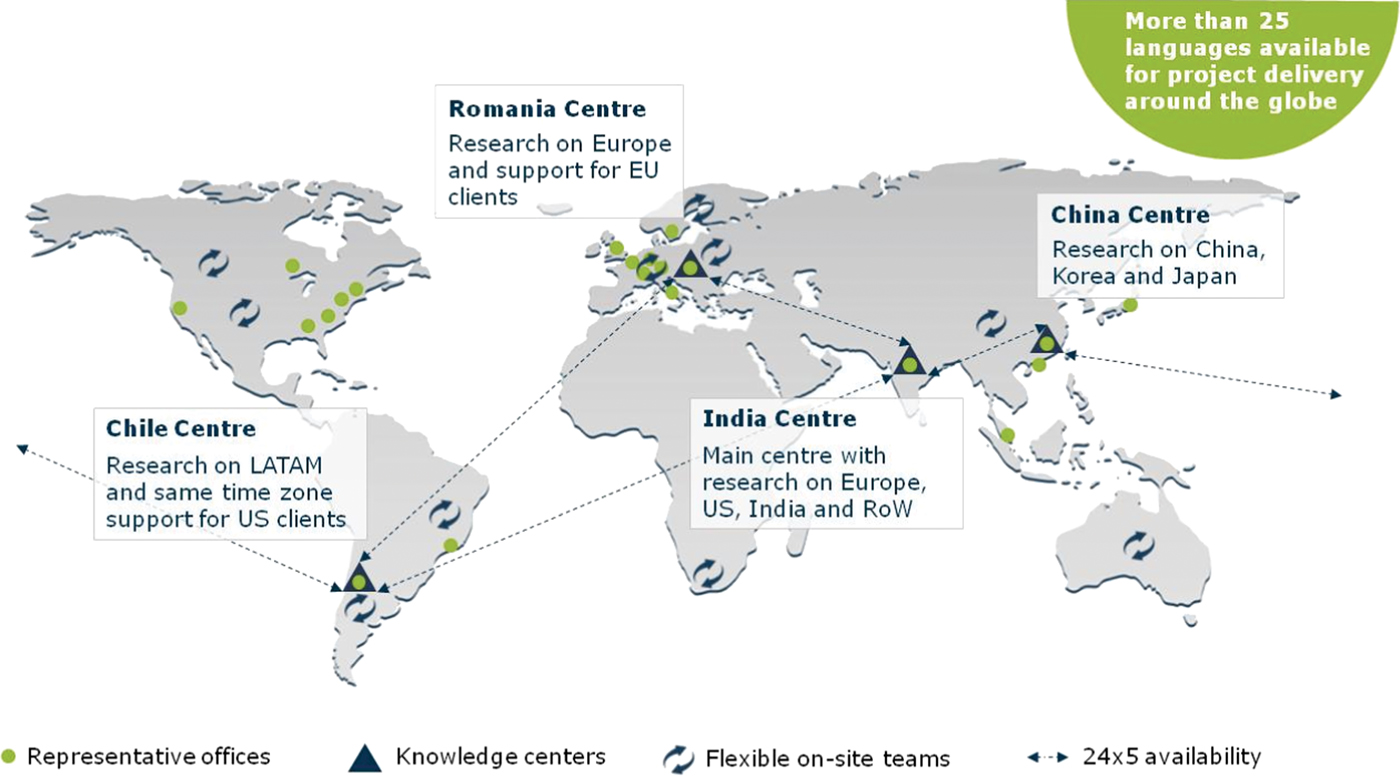
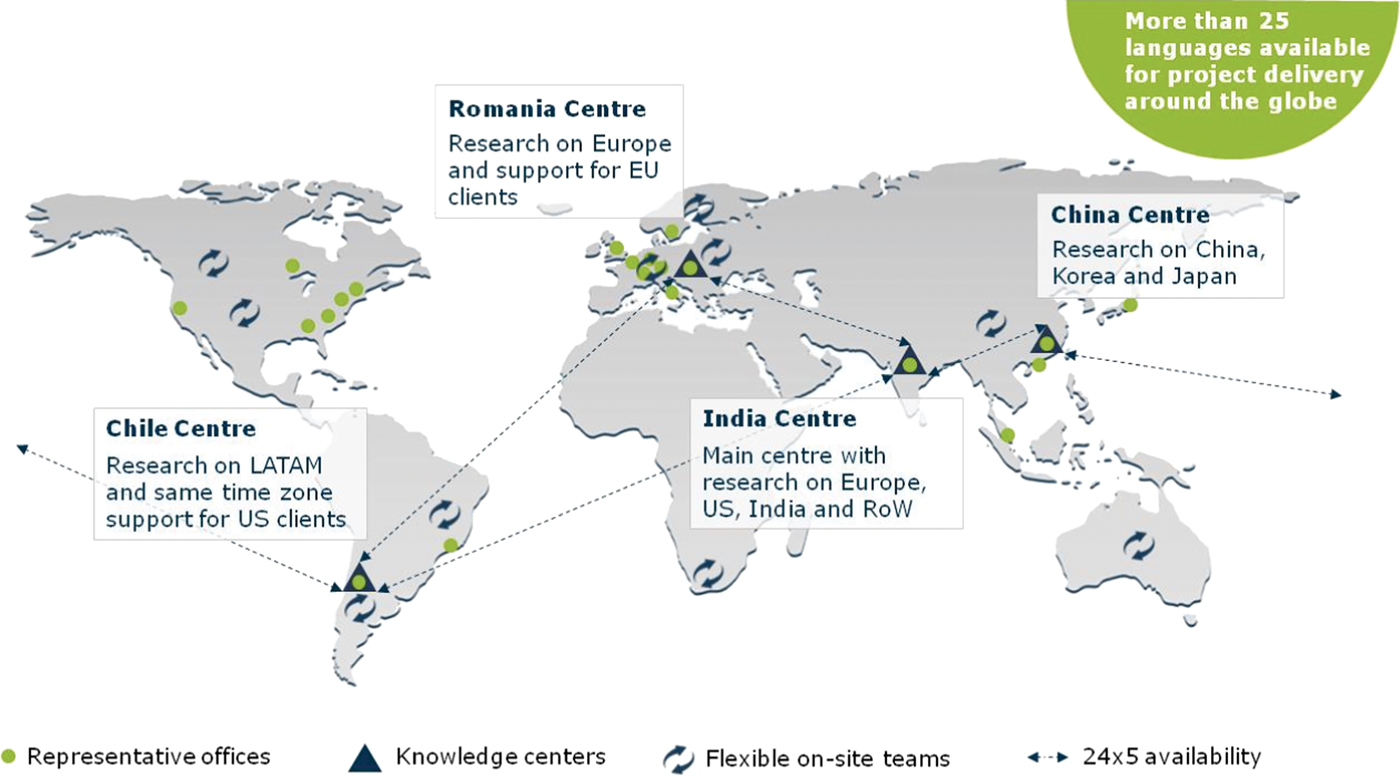
Evalueserve is a global specialist in KPO, delivering knowledge and information management processes and support to more than 600 clients in over 25 languages. It is the largest ‘pure-play’ KPO company in the world, with more than 2,600 analysts located in clients' premises and the company's global knowledge centres in Chile, China, India and Romania, as well as a dedicated client centre in the UK. Its clients include three of the top-five strategy consulting firms, three of the big four accounting and advisory firms, and three of the top-five investment banks. Within the legal sector, the company's clients include two magic circle law firms, as well as international, national and regional firms across the UK, US, Europe and Asia. It provides teams both within the clients' premises and off-site.
Evalueserve was established in 2000 by the CEO, Marc Vollenweider, and the Chairman, Dr Alok Aggarwal. Mr Vollenweider is a former McKinsey & Co. partner, who was responsible for running the McKinsey Knowledge Centre in Delhi since its inception. Dr Agarwal was a director at IBM and responsible for setting up the IBM Research Lab, also in Delhi.
Evalueserve's Global Presence
Evalueserve's services
Evalueserve provides dedicated teams of analysts to clients, both on-site and off-site, that analyse, improve and manage their knowledge-intensive processes and produce over 4.5 million hours of knowledge-related output each year. The focus is on delivering knowledge solutions that support a client's business drivers, reducing cost through the redesigning of processes and leveraging technology to manage difficult workflow and information retrieval challenges.
Below is a sample of services that the company provides specifically for law firms.
• Intellectual Property (IP) – Evalueserve has one of the largest IP practices in the world, with over 270 professionals (115 with master's degrees and 10 with PhDs). The IP services provided include:
– prior art searching (patentability, novelty, freedom to operate and invalidity searching);
– patent licensing and litigation support;
– competitive intelligence;
– due diligence support; and
– patent prosecution support.
• Business and strategic research – This includes rapid turnaround requests to extensive, detailed research reports supporting firm-wide business planning exercises. Requests include:
– company profiles (including company description, key financials, business strategy, recent company news, business issues and executive information);
– industry, sector and country overviews (including competition, trends, drivers, inhibitors, outlook and business issues); and
– market intelligence briefings (on-going global tracking of specific companies and identifying news and litigation activities).
• Information services – This includes:
– legal research and information retrieval – covering UK and international case law, legislation, publications and commentary;
– electronic and hardcopy procurement – managing the end-to-end procurement process for the firm and responsibility for a multi-million-pound budget; activities include vendor selection, management and performance monitoring; and
– library services – electronic and hardcopy collection management, including books, journals and loose-leaf publications.
• Business development (BD) – The company supports firms' marketing and business development activities. This includes:
– providing pitch and experience support;
– providing client financial and data analytics;
– creating client and internal newsletters and publications (for example, employment law developments across financial services, and transport and logistics domains across European jurisdictions, leveraging Evalueserve's non-English-language research capabilities);
– ensuring practice and sector group business planning; and
– co-ordinating client initiatives, seminars, training courses and events.
• Knowledge and data management – Evalueserve manages data across disparate systems, including customised or internally developed platforms. These cover:
– knowledge repositories and systems, including knowledge management databases, intranets and wikis;
– firm-wide contact and contact relationship management (CRM) systems; and financial and client data systems.
• Learning and development – It provides training to the client's fee earning and support teams, covering internal systems and processes associated with research and knowledge management.
• Transformation/Continuous improvement support
– Providing a team of programme managers, project managers, business analysts and continuous improvement practitioners (including Lean and Six Sigma)
– Developing new services for the client and enhancing the existing services, including CRM, knowledge management, research and BD activities, on behalf of the firm.
Evalueserve's approach to confidentiality
Evalueserve employs a comprehensive approach to maintaining client confidentiality with internal information barriers, or ‘Chinese Walls’, in operation among all dedicated client teams. Each client team is ring-fenced within its own secure, physical area, and technical barriers are implemented to ensure the security of client information.
To ensure that clients are not impacted by the prohibition on providing legal services from India, Evalueserve is able to provide these services from its knowledge centres in Chile, Romania and China. In addition, on-site teams are located within clients' offices to manage specific services, where the sensitivity of the data requires that it reside only on clients' internal systems.
Security processes underpin all working activities and are deemed as ‘mission critical’ to the organisation, with regular training courses and internal and external audits to ensure total compliance. In addition, all employees are required to sign confidentiality and non-disclosure agreements.
At a technical level, the company is certified as conforming to the international data security standard, ISO 27001, and applies structured processes, including a ‘least privilege principle’, to ensure that staff only have access to information that is critical to perform their roles. Moreover, Evalueserve has a search policy in place for all staff and visitors to ensure that no paper or electronic systems are taken in or out of the office.
Evalueserve's engagement model
A consultative approach to ensure success
The culture, working practices and focus of law firms are very different from those of other industries. Similarly, the values and approach to working varies markedly across law firms. As such, Evalueserve takes a client-centric, consultative approach to engagements, developing solutions that align clients' specific business ambitions with Evalueserve's experience.
Every engagement starts with a consulting phase in which the client's processes and pain points are identified, analysed and improved. Evalueserve's engagement teams work in collaboration with clients to provide services that are tailored to fit their requirements and working needs, and support them through change. This enables Evalueserve to transform the client's existing knowledge processes and develop new solutions that meet its business needs, while leveraging industry best practices developed with clients across similar industries.
Hybrid on-site/off-site delivers best results
Unlike many back-office routines that may be processed using pre-agreed steps, knowledge processes typically form part of a longer value chain, are less able to be finalised in advance and require more ‘face’ time with end users. Evalueserve's experience is that this is most effectively achieved by having employees located within the client's premises, supported by larger teams from the company's global knowledge centres in Chile, China, India and Romania, enabling 24-hour-a-day, 5-day-a-week coverage. For example, on-site teams may be responsible for process re-design, productive and complex work, interface for workflow, client communication, and quality control. These teams would be supported remotely by team members located in one or more of the global knowledge centres to provide support for research, data collection and analysis.
The on-site team members provide the direct client liaison capability that may be supported by off-site analysts, enabling the team to develop a better understanding of the client and to develop a close working relationship with the client's key personnel. This client knowledge is then shared across the engagement team to ensure collective development and increased understanding of the client's business needs, values and drivers. The on-site team members are responsible for developing the relationship with the client, introducing practice areas and support teams to the new capabilities available through the team, and identifying areas for further development and enhancement of services. As other business units within the client engage with the on-site/off-site teams, they have a clear focal point to discuss extending the team's services to include their areas of responsibility. For one large client, the presence of the on-site team enabled significant further savings and productivity improvements to be identified, as new business units requested Evalueserve to provide services more efficiently than they were able to.
Evalueserve's On-site and Off-site Client Model

Evalueserve's continuous improvement methodologies: Agile K6TM and Agile D3TM
To ensure the stability of service and minimum disruption to client organisations during the transition of services, Evalueserve has developed its own business strategy methodologies, called Agile K6TM and Agile D3TM, for analysing, optimising and continuously improving a client's knowledge processes. Developed in conjunction with the company's clients and using tools and techniques grounded in continuous improvement systems such as Lean and Six Sigma, the methodologies provide a systematic approach to diagnosing, designing and delivering enhanced knowledge processes.
The methodologies were developed specifically for improving knowledge processes and to follow a ‘light touch’ approach: being non-invasive for client staff while extracting key information that ensures a complete understanding of the challenges faced by firms and to identify improvement opportunities. While the focus is to minimise the time commitment for busy staff, their involvement is crucial to the success of any initiative.
In addition, the tools provide a platform for improving processes, enabling the team to benchmark against, and leverage as appropriate, the best practices for each process garnered by working with Evalueserve's extensive client base. This ensures that processes are delivered in the most effective and cost-efficient manner.
In a partnership environment, such as a law firm, it is important to be able to deliver new services with minimum upheaval and to get it right the first time. Agile D3TM is a proven mechanism for managing new engagements from start to finish, from diagnosis through to design and delivery. The Agile D3TM framework guides clients through each step and supports staff through the change curve. It has been developed to provide seamless integration of new services while minimising disruption to staff.
Agile D3TM

Using Agile K6TM, Evalueserve's continuous improvement methodology designed precisely for knowledge-intensive processes, ensures that the client's key services are benchmarked against industry best practices and are developed to ensure they receive the most efficient service from the most cost-effective location. The model sets out the approach for engaging with stakeholders who manage the firm's knowledge processes, to identify the services that will deliver the most benefit to the firm, understand how and why things are done today, and improve and develop effective solutions in the future.
Agile K6TM

The use of technology to support improvement
Evalueserve invests extensively in the use of proprietary knowledge technology tools to provide greater efficiency, cost savings and analysis for clients. The company's sophisticated workflow, tracking and time-recording tools enable detailed quantitative analysis of actual requests to maximise throughput, ensuring resources are focused on the right areas and to identify further improvement opportunities (for example, templating or automation). In addition, each client is able to utilise a secure knowledge portal that provides a knowledge repository for materials produced by the team (or linked to existing internal systems) to enable the quick search and retrieval of materials and to reduce duplication of effort.
Process improvement and efficiency
Evalueserve's ethos of continuous improvement underpins the working approach of every business unit, driving efficiency and evolving services to meet the growing needs of the firm. As every aspect of work is tracked and all team members use timesheets, the teams are able to utilise clear quantitative information to track usage patterns, demands and improvement areas. Coupled with regular service management reviews with key stakeholders, this forms a very useful set of information to identify areas of future focus and improvement.
How Evalueserve's clients have benefited from KPO
Saving money and improved productivity
Evalueserve transforms its clients' existing services and delivers new opportunities to drive growth and profitability. Using the company's engagement methodologies, the focus is on providing each service from the most appropriate and cost-effective location. This enables clients to either realise the cost savings achieved or to channel the savings into new, innovate areas to win more business and support their fee-earning activities.
For one professional services client, this approach enabled it to re-engineer its research and marketing activities, including organisational improvement, process redesign, developing reusable content and storage capability to reduce waste caused by the duplication of effort. This saved the client more than US$3 million per year, which represented a 10% saving from their annual budget.
A large international law firm client wished to transform its significant library collection to suit the needs of the modern lawyer. This included significantly reducing the extensive hardcopy collection within the library from an estimated 25,000 items and moving the library to a new location. A stock management system was implemented, including the electronic tagging of all materials, enabling the effective tracking of usage. Usage patterns enabled the categorising of hardcopy content into primary and secondary materials, with secondary materials moved into cheaper storage. To support the move, 60% of hardcopy materials (including around 15,000 books and journals) were moved out of the library to cheaper storage, significantly reducing the costly space requirements for the library, saving the firm more than £230,000 per annum in library space and storage costs alone. In addition, the improved stock management systems reduce expenditure, replacing lost books or updating infrequently used materials, and provide an efficient tool for staff to locate reference materials more quickly.
Winning more business
Law firm clients have been leveraging Evalueserve's services to target the right work and to win more business. For an international law firm, the team was able to provide significant business and strategic research and competitive insight to underpin the firm's global practice area and sector group business plans. In the span of a month, more than 3,000 hours of input was provided to the firm – an exercise that would not have been possible previously.
In another instance, a partner at a global law firm needed a detailed overview of a new client at short notice. The overview included competitor challenges and impending litigation activity facing the company in Asia, as well as an overview of the firm's engagements with the company by practice and region. The client remarked that the partner knew his organisation better than he did. Instead of tendering for the work, the client instructed the partner to undertake the company's Asian litigation work.
Developing the firm's client base
Clients have leveraged Evalueserve's capability to better understand their existing clients, develop new opportunities and grow their client base. Whether at a firm level or for individual partners targeting specific clients, the team's research and data analytics capabilities have provided clients with an edge, equipping partners with the information and support they need to differentiate themselves in a crowded market. Examples include client and competitor intelligence, thought leadership capabilities (including newsletters, white papers and other publications in multiple languages) and business development activities (such as client analysis, contact management and pitching processes).
For the managing partner of an international law firm, this was a particularly powerful service. The partner was to attend a major summit attended by the world's economic leaders. The Evalueserve team prepared detailed, insightful summaries and analysis of key existing and potential clients whose leaders would also attend the summit. The overviews were tiered by importance of client and included a summary of the delegates attending, industry activity, specific challenges facing the client and an overview of the legal work provided by the firm, as well as their estimated legal spend/structure. The partner saw the information as invaluable; it allowed him to turn impromptu meetings into targeted, strategic discussions with a number of key clients whom he ‘bumped into’ at events.
Conclusion
While law firms have not been early embracers of the concept, the legal sector has now realised the potential of KPO to support its business needs. It is clear that firms that are able to control costs and align themselves most closely with their clients will be in the strongest position in the coming years. Many firms are now realising the benefits that partnering with an external provider may have in ensuring their profitability and developing their client base in the face of increasing market pressure.
Disclaimer
The information contained in this article has been obtained from sources believed to be reliable. The author disclaims any and all warranties as to the accuracy, completeness or adequacy of such information and the author shall have no liability for errors, omissions or inadequacies in the information contained herein or for interpretations thereof.