Introduction
The study of the paradigmatic traits of teenage slang has shown that a sense of togetherness is predominant (Eble, Reference Eble1996; Allen, Reference Allen, Mey and Asher1998; Mattiello, Reference Mattiello2005, Reference Mattiello2008; Smith, Reference Smith2011). This cohesive linguistic device is not consciously intended to exclude unwished members from conversations or common understanding, but the idea of relying on a preserved sense of solidarity and acceptance is a human urge, especially among teenagers or young adults (cf. Mattiello, Reference Mattiello2005: 13). These features are a necessary starting point to understand that the colloquial nature or social restriction of these words and phrases are precisely aimed to ‘establish or reinforce social identity within a group or with a trend or fashion in society at large’ (Eble, Reference Eble1996: 11).
Teenagers’ slang reflects the influence of friends and classmates on the processes of lexicalization and creativity. This is connected with the interaction among peer group members, which appears to be more influential at that age than TV newscasters or the media in general (Adger, Wolfram & Christian, Reference Adger, Wolfram and Christian2007: 27). The unusual or extra-grammatical patterns that characterize teenage speech are especially visible in speakers aged 30 or above. This process, also known as ‘age grading’ (Nash, Reference Nash1993: 31–32), is especially remarkable in the transitory standardization of the language that occurs as users get older and enter a new age-defined sociolinguistic stratum.
Lexical creativity and ephemerality are precisely two features that make teenage slang ‘mutate’ on the levels of morphology and semantics (Eble, Reference Eble1996: 13), which is found in various word formation patterns: ellipsis + derivation (bestie < best friend), clipping (perf < perfect), clipping + conversion (to Insta < Instagram), borrowing (chiquita) and acronymy (BFF < best friend forever). These examples demonstrate the innovative nature of this type of language, and the extrapolation of these mainstream mechanisms to the creation of nonstandard word stock. Of all these processes, a group of words have been identified as rather common in teenage slang: back-clipped words whose spelling, but not necessarily their pronunciation, is altered, e.g. Geez (< Jesus), ork (< orchestra), siff (< shyphilis).Footnote 2 In particular, one type of back-clipping that shows a recurring word formation pattern involves truncated bases ending in –sh /ʃ/ such as pash < passion, mensh < mention, sesh < session or fash < fashion (see examples i–iii below). This empirical paper aims at exploring the linguistic motivations and variations that are involved in the marginalization of teenage language through the processes of back-clipping and the respelling of the fricative /ʃ/ in final position.
(i) Want beauty tips, fash inspo, guy advice and free stuff? (Girl's Life, 03 March, 2018)
(ii) We know catching up with your friends is way more appealing than actually studying, but staying on task is essential for a successful study sesh. (Girl's Life, 27 February, 2018)
(iii) The definitions of words like ‘smalls’ (an ironic term for underpants), ‘pash’ (passion) and ‘nunga-nungas’ (Girl's breasty business) are truly hilarious and are worth the cover price alone. (Rennison, Reference Rennison2005)
Although some of these words are found in colloquial or slang texts, some earlier coinages date as far back as the 19th century, as in the case of profesh < professional (iv), in Harper's Magazine (OED3). Also, the word sosh has been historically used by political writers since 1918 to refer to Socialism or even socialists (cf. Partridge, Reference Partridge1984).
(iv) If you're enjoying the last blowout night with your ride-or-die squad, you're perfecting your couple pose with your date (for that profesh photo and so many selfies). (Teen Vogue, 02 March, 2018)
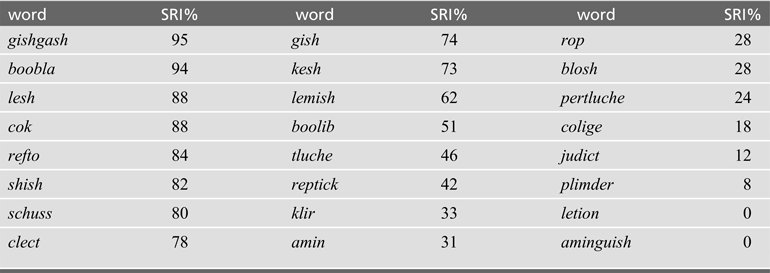
By collecting authentic examples from descriptive dictionaries of slang (Partridge, Reference Partridge1984; OED3; Ayto, Reference Ayto1998; Spears, Reference Spears2000; Thorne, Reference Thorne2005) and teenage websites (e.g. teenvogue.com, seventeen.com, girlslife.com, teentoday.co.uk, teensnowtalk.com), I also wish to look at the correlation between back-clipped words ending in –sh and slangy paradigms in contemporary English; in other words, the ending cluster –sh that originates from back-clipping and respelling is prone to gaining some ‘slang-sounding’ value. The influence of phonaesthesia and phonotactics on the process of lexicalization is not new: some earlier studies have found a connection between phonological sequence and meaning in etymologically unrelated words (cf. Bolinger, Reference Bolinger1950, Reference Bolinger1965; Markel & Hamp, Reference Markel and Hamp1960), which has been corroborated by David Crystal (Reference Crystal2003) in his description of the so-called ‘submorpheme’. The collection of authentic examples has contributed to the identification of morphological and phonological changes, but there was also a need to check whether the sound /ʃ/ has a particular connection with the process of slangification, which explains the use of a ‘slang identification test’ in the form of a questionnaire. The questionnaire contains 24 words, inexistent in English. 78 native speakers of English (34 Americans, 28 Britons, eight South Africans and eight Australians), aged between 15 and 23, were asked to choose an approximate percentage that might comply with a certain degree of slang conversion in teenage speech. The percentages varied from 0% (standard word) to 95% (slang word) (see Table 1). This is expected to show if there exists a common paradigm connecting some specific spelling-pronunciation form with marginal or slang words. That is, the answers can help us understand if some sounds/letters are more prone to slangification than others, in particular the form –sh /ʃ/. The nonexistent words, used as inputs, show a number of vowels and consonants, and both monosyllabic and disyllabic structures have also been introduced. The exposure to various phonological and morphological stimuli should trigger an approximate quantification of slang-sounding traits, similarly to the cognitive principle of the connection between sounds and the meaning of referenced objects (Yorkston & Menon, Reference Yorkston and Menon2004: 43).
Slang Recognition Indexes (SRIs) of 24 nonexistent words used in the questionnaire

Morpho-phonological variations
The number of back-clipped bases + –sh /ʃ/ used in the present study is 32 (see Table 2). These 32 words result from a process of spelling adaptation, in which the consonants or consonant clusters –sc (conscious), –t (mention), –ss (professional), –c (special) are replaced by –sh. This morphological or graphemic variation is necessary to keep word spelling consistent to the original pronunciation of the etymon.
List of the lemmas used in the study, their etymons and their corpus-based frequency

Lexical frequency, as seen in some slang paradigms, is varied. Some of these words are far more frequent than others (see Table 2), which might be linked to their lifespan and their marginal traits. Besides the lemmas identified as more ‘conventional’ and less slangy, i.e. profesh and sosh, some others such as delish, fash or sesh stand out as particularly frequent in teenage speech, being corroborated by the number of hits collected and disambiguated on the News on the Web Corpus (Davies, Reference Davies2018).
The case of sesh is of an interesting nature as some indications of high combinatory levels have been confirmed: gym sesh, cry sesh, makeout sesh, movie sesh, sweat sesh, etc. Dictionaries, particularly descriptive ones, have also associated the origin of the word with services’ jargon as in dessert sesh ‘dessert time’ (Ayto, Reference Ayto1998) or more lexicalized colloquialism as in full sesh ‘completely’ (Spears, Reference Spears2000).
This phenomenon is not solely restricted to the voiceless silibant /ʃ/. Examples such as natch < natural show that the spelling adaptation might also occur in the case of voiceless affricate /tʃ/, especially when this sound has a middle position in the etymon and a final one in the clipped form. Interestingly, the bases in consh (< conscious) and conch(ie) (< a conscientious objector) are spelled differently but their pronunciation patterns are alike.
All these words are either monosyllabic (spesh) or disyllabic (profesh)Footnote 4, which is somehow dependent on the truncation of the last syllable. That is, the syllabic structure of the remaining base is connected with the morphological position in which the ‘trimming’ occurs. Logically, these two-syllable words are more prone to prosodic changes as in delish. Yet, this does not appear to be a common trend: with the exception of delish, the other disyllabic units keep the same levels of stress, thus not affecting the length of vowels.
The majority of these words are nouns, but various cases of adjectives have also been attested, most of which are derived from adjectival or nominal etymon, e.g. fash < fashionable/fashion, nutrish < nutritional/nutrition. In these homonymic cases, context plays a fundamental role. Only one personal name has been found that complies with this pattern: Trish < Tricia < Patricia, which confirms its low productivity in the formation of hypocoristic names. Only one verb has been found: to condish < to (hair) condition. The adjectives have undergone the loss of a similar phonological segment: /əs/ (as in delicious and conscious) and /əl/ (e.g. special). The nominal etymons share the ending –ion, which is omitted in the process of lexical clipping, leading to a relocation of a mid-fricative to a final one. In fact, the graphemic reduction of the ending /ʃən/ (as in mention) might be owing to a rendering of ‘slangy-sounding’ features in colloquial language (Wescott, Reference Wescott1978: 187). The questionnaire has proven to be highly effective in this respect: the doublets letion and lesh, used randomly in the questionnaire to avoid suspicion of lexical connection between them, reveal that letion has a slang recognition index (SRI) of 0% whilst that of lesh is 88%. Taking into account that poll-takers are not visually biasedFootnote 5 by the input (i.e. doublets are not arranged in an orderly fashion), it is easy to predict that the ending –sh, together with its monosyllabic structure, is logically expected to have an impact on the slangification of the word.
Pragmatic and linguistic motivations
From a pragmatic point of view, the process of ‘morpho-phonological salience’ has been used to explain the standardization of this type of clipped words. Salience in clipping is manifest through the keeping of certain morphological and phonological traits that are easily recognizable by interlocutors. This communicative, and dynamic, interplay unravels the complex nature of lexical clipping. Various motivations such as language economy or expressiveness are of interest to better understand the link between the pragmatic functions of language (Jakobson, Reference Jakobson and Sebeok1960) and the word-formation paradigms in slang. Evidently, for a morphological unit to form a ‘salient’ structural pattern, the features of the morpheme should be effective enough to become first a ‘recognized’ unit and then a productive ‘analogy’. Slang words are particularly prone to this innovative transition owing to the intrinsic cohesiveness of slang users or group members.
However, the difficulty in the study of these processes lies in understanding whether –sh /ʃ/ is morphologically and phonologically salient in the formation of slang units, which might trigger a natural recognition of slang connotation by interlocutors, and the analogical duplication of the pattern. The quest for this morphological ‘permissibility’ is not novel. In her article ‘Phonotactics and phonoæsthesia: the power of folk lexicology’, Wales (Reference Wales and Ramsaran1990) reviews some prior studies on the influence of ‘phonaesthetic constellations’ and ‘sense groupings’ on lexical creativity:
In general, what we can see as an ‘Expressive principle’ influences neologism, especially in colloquial registers, helped by the process of association or analogy with the forms and senses of existing words in the language. Certain vowel and consonant sequences are perceived as being more salient than others by the native speaker […] (339).
The slang-sounding potentiality of the cluster –sh /ʃ/ is related to the perception, by native speakers, of a degree of ‘likelihood’ or ‘permissibility’ in terms of lexical realization, which has nothing to do with lexical productivity, but rather a psycholinguistic detection of what is permitted in the language or what is not. That is, the more slang-sounding a word is, the less permissible it becomes to language users. This is also connected with the attributions of folk or colloquial lexicon and with what leads speakers to the identification and use of lexical analogies. Three major factors might be involved: ‘semantic association’, ‘syllabic segmentation’ and ‘morpho-phonological configuration’.
The influence of ‘semantic association’ on slang lexicalizations might be owing to the transfer of meaning among phonologically and morphologically similar words, which has to do with the intrinsic urge by speakers to associate semantically and structurally existing words with the nonexistent ones. This is clearly seen in some of the words used in the questionnaire, which have been intentionally used to measure how semantic association could intervene in the slangification of words: colige, judict and blosh show a low Slang Recognition Index (SRI), possibly because users relate their bases with words such as college, judicial or blush. This might explain why blosh, unlike the other ‘shashified’ units, has a lower tendency towards slangification. However, the SRIs of boobla and cok are remarkably high (94% and 88% correspondingly), but this might have been motivated by cognitive and semantic correlations with the slangs boob ‘female breast’ and cock ‘penis’. In short, there might be a tight connection between the semantic association of standard words and the degree of permissibility.
As regards to ‘syllabic segmentation’, known as the number of syllables of words, there is a clear tendency towards monosyllabic neologisms as forms of slang. The cases of lesh, lemish and aminguish reveal that a correlation between SRI and the number of syllables is noticeable, not only in the ‘shashified’ units under scrutiny but also in the rest of the examples introduced in the questionnaire. The case of aminguish is of interest as speakers might also relate it to morphological paronyms such as distinguish or anguish: the ending –guish is clearly more permissible than –sh in standard English.
‘Morpho-phonological configuration’ refers to the morphological features of the units that make up these neologisms. One of these features is precisely the process of reduplication, which is less permissible as in gashgish (SRI = 95%), as opposed to gish (SRI = 74%). Another aspect is related to certain Yiddish-based ‘prototypical phonotactic structures’ in English (Hickey, Reference Hickey, Kytö and Pahta2014: 13), in particular /ʃ/ + sonorant sequences as in schnitzel. The spread of Yiddish words and structures throughout English, especially the American variant, has been widely documented since the 1950s (Barnhardt, Reference Barnhart1973; Gold, Reference Gold1986), and the connection of Yiddish with slang-sounding units, associated with American slang. Barnhardt even compared the frequency of Yiddish words to a greater number of terms ‘growing out of the drug culture’ (Reference Barnhart1973: 106). The projection of the sound /ʃ/ is of highly expressive connotation, mostly pejorative, which is reinforced in ‘reduplicative (echo-) retorts’ as in ‘President-schmesident, I'm voting my way’ (Wales, Reference Wales and Ramsaran1990: 344).
In addition to these morphological restrictions of slang language, some studies on phonology have remarked the high perceptibility of hissing sounds such as sibilant phonemes (/s/, /ʃ/) because of the high-pitch sound they produce (cf. Maddieson, Reference Maddieson1984). This corroborates analogous examinations that assert the ‘significant phonaesthetic or expressive possibilities’ of the fricative sound /ʃ/ (Wales, Reference Wales and Ramsaran1990: 340–343). This might explain why the suffix –s is added to clipped or elliptical bases in some slang words as in whatevs < whatever or lates < see you later (McCumber, Reference McCumber2010: 124). Voiceless sibilants in final position, such as /ʃ/ and /s/, seem to be operational in the process of slangification.
A discursive or textual motivation is also connected to the morpho-phonological processes of lexical rhyming and compounding, in which two elements are clipped and ‘shashified’ (see v–viii): nutrish mish < nutritional mission, mish posish < missionary position. These two examples show the effectiveness of this type of word-formation mechanism in trade labeling (Nutrish Mish), euphemism (mish posish), slogan making (squish to condish), or conceptualization (bach discush). Note that in (vii) only condish has undergone both back-clipping and ‘shashification’ so that the final rhyming is applicable. Also, (viii) does not necessarily involve two fricative sounds as the aforementioned examples do, the fricative /ʃ/ and the affricate /tʃ/ are fully compatible in the expression of this type of rhyme. Therefore, the elliptical and marginal traits of this type of clipping is particularly useful in some product names such as sosh < social (as in mysosh.com, a website used to promote teenagers’ social skills), Vish < (Vicious Circle, a board game).
(v) Nutritionist and exercise physiologist Michelle champions healthy eating and weight loss under the name Nutrish Mish. (groupon.com, 03 March, 2018)
(vi) Fionn immediately breaks it up. It'd kill him, of course, the idea of me doing the old mish posish with his sister. (The Irish Times, 20 August, 2011)
(vii) Well ‘Squish to Condish’ isn't just another trendy method of the moment. This somewhat new method is getting plenty of well-deserved buzz these days (naturllycurly.com, 04 April, 2016)
(viii) An entertainment journalist at the Los Angeles Times and a longtime fan of the show (she has, she writes, a ‘bach discush’ cohort) (‘How sincere is ‘the Bachelor’?’, The New Yorker, 07 March, 2018)
As expected, word clipping and syllabic segmentation or ‘trimming’ are responsible for occasional homonymic clash, e.g. mish (< missionary, mission), condish (< condition, (hair) conditioner), fash (< fashionable, fashion), presh (< pressure, precious), sosh (< Socialism, social). This might also affect already-existing monosyllabic words in English such as to fash ‘to irritate’ (mainly in Scotland), dialectal to pash ‘to smash’ (England), ish ‘to some extent’, or even posh. In general, the number of homonymic elements is rather low, which could indicate that homonymy does not play a foreground role in the diffusion of slang meaning.
Conclusions
The evidence shows that the fricative /ʃ/ does seem to produce a slang-sounding effect in the lexicalization process in teenage slang, which is also connected to three overlapping motivations (namely ‘semantic association’, ‘syllabic segmentation’ and ‘morphological configuration’). The questionnaire, in particular the Slang Recognition Index (SRI), has allowed for a better understanding and identification of the salient features of slangy units. Monosyllabic structure, reduplication, semantically related words (as in boobla or cok), and evidently the fricative /ʃ/ or the cluster –sh in a final position (also known as shashification), have been identified as slang-sounding traits. The connotative or expressive projections of /ʃ/ have been documented, as well as its high phonoaesthetic possibilities. However, as seen in bach discush or nutrish mish, the discursive or textual motivations can also generate the clipping and shashification of bases. Evidently, these processes might also be prompted by stylistic devices such as trademark labelling or slogan making, in which an attention-grabbing effect is paramount.
The study of ‘permissible’ morpho-phonological patterns in the questionnaire has also led to the conclusion that slang, mostly characterized by extra-grammatical traits, is also the reflection of imported standard rules. The consistency of such morpho-phonological features is mostly the product of common pragmatic salience. In other words, teenage slang users, motivated by a natural sense of togetherness and belonging, have adopted the process of shashification as a structural marker, but as mentioned, this does not seem to be the result of random choice and arbitrariness.
 JOSÉ ANTONIO SÁNCHEZ FAJARDO is a lecturer at the University of Alicante (Spain), at which he is currently teaching and supervising courses/workshops on linguistic theory. He has a PhD in Linguistics (2016) and his core research domains are English Morphology, Pragmatics, and Lexicology. He has special research interests in lexical borrowing and marginal language in English and Spanish, particularly slang words and hispanicisms. Email: jasanchez@ua.es