Introduction
A nonlinear optical (NLO) response is one of the most important optical process and key technology toward next-generation optoelectronic and/or photonic device applications,[Reference Rinkevicius, Li, Sandberg and Agren1] e.g., optical wiring,[Reference Aljada, Alameh, Lee and Chung2] optical transistor,[Reference Hwang, Pototschnig, Lettow, Zumofen, Renn, Gotzinger and Sandoghdar3] random lasing,[Reference Luan, Gu, Gomes, Yong, Wen and Prasad4] optical memory,[Reference Okamoto, O'Brien, Hofmann, Nagata, Sasaki and Takeuchi5] and all optical computing system.[Reference Smith6] NLO materials should be needed to provide much large third-order NLO susceptibility, χ (3)(ω), and femto-second order of highly optical response so as to fulfill these optical and/or photonic devices. In common, organic NLO materials exhibit rapid optical response, whereas inorganic NLO materials take large χ (3)(ω).[Reference Oikawa, Onodera, Masuhara, Kasai and Nakanishi7, Reference Yarimaga, Jaworski, Yoon and Kim8] Polydiacetylene (PDA) is synthesized by topochemical solid-state polymerization of diacetylene (DA) monomer in a crystal state and a unique one-dimensional π-conjugated polymer.[Reference Wegner9] Some PDA derivatives are well known as one of the most promising organic NLO materials.[Reference Matsuda, Molyneux, Kar, Wherrett, Okada and Nakanishi10, Reference Giorgetti, Margheri, Sottini, Chen, Cravino, Comoretto, Cuniberti, Dell'Erba and Dellepiane11]
Instead of material designs and synthetic developments, morphologically controlled nanostructures such as nanocrystallization and/or hybridization on a nano-scale level would be expected to further enhance NLO properties,[Reference Oikawa12] but this is still much challenging and interesting topics in current organic NLO material science, although the enhancement of χ (3)(ω) has been already reported in semiconductor quantum dots, owing to the quantum confinement effect.[Reference Oikawa12] On the other hand, π-conjugated organic and polymer nanocrystals (NCs) (hereinafter, organic NCs),[Reference Oikawa, Kasai, Nakanishi, Glaser and Kaszynski13, Reference Oikawa, Nakanishi, Masuhara, Nakanishi and Sasaki14] for example, PDA NCs and fluorescent perylene NCs, exhibited the dependence of linear optical properties, i.e., absorption and emission spectra, on crystal size, which is in the range of several tens nanometers to sub-micrometers. This is due to thermally softened crystal lattice structure with decreasing crystal size.[Reference Oikawa12–Reference Oikawa, Nakanishi, Masuhara, Nakanishi and Sasaki14] In other words, intermolecular optical interaction and/or strongly coupled exciton–lattice interaction in a short range should be reduced intensively with an increasing much large specific surface area in organic NCs.[Reference Oikawa, Mitsui, Onodera, Kasai, Nakanishi and Sekiguchi15, Reference Volkov, Asahi, Masuhara, Masuhara, Kasai, Oikawa and Nakanishi16] It is, however, still unclear whether or not morphological effect like crystal size and shape would affect definitely the third-order NLO response from the viewpoint of enhancement of χ (3)(ω) in organic NLO nanomaterials.[Reference Iimori, Onodera, Kasai, Mitsuishi, Miyashita and Oikawa17]
In the present article, PDA nanofibers (NFs) have been paid much an attention, and then the wavelength dispersions of χ (3)(ω) for well-defined PDA NCs and PDA NFs have been evaluated with a high precision by suitably combining pump-probe spectroscopy and spectroscopic ellipsometry.[Reference Sato, Momida, Ohnuma, Sasase, Ohno, Kishimoto and Takeda18–Reference Sato, Ishii, Nagao, Naito and Takeda21] This would lead to the possibility to control and tune the third-order NLO properties through the morphological effect in organic NLO nanomaterials.
Materials and methods
Materials
1,6-di(N-carbazolyl)-2,4-hexadiyne (DCHD) was used as a DA monomer. DCHD, sodium dodecyl sulfate (SDS), and polyvinyl alcohol (PVA; degree of polymerization = 3100 and degree of saponification = above 96%) were purchased from Wako Pure Chemical Industries Ltd., Sendai, Japan and Sigma-Aldrich Co. LLC, Sendai, Japan, respectively. The solvents with 99% purity or greater were all purchased from Wako Pure Chemical Industries Ltd. and used without purification.
Fabrications of PDA NCs, PDA NFs, and PDA bulk crystals, and their characterization
PDA NCs were prepared by the conventional reprecipitation method,[Reference Oikawa, Kasai, Nakanishi, Glaser and Kaszynski13, Reference Oikawa, Nakanishi, Masuhara, Nakanishi and Sasaki14] and PDA NFs were also fabricated as follows.[Reference Iimori, Onodera, Kasai, Mitsuishi, Miyashita and Oikawa17] A 200 μL of DCHD–acetone solutions (5 mM) containing SDS (1 mM) was quickly injected into vigorously stirred pure water (10 mL) as a poor medium at given temperature, after the retention time for about 30 min, followed by UV irradiation (λ = 254 nm, 1.55 W/m2) to convert DA into the corresponding PDA [poly(DCHD)] through solid-state polymerization.[Reference Wegner9] The resulting PDA NCs and PDA NFs were characterized with a scanning electron microscope (SEM; JEOL, JSM-6700F) after the platinum sputtering process and with a UV–Vis absorption spectrophotometer (JASCO, V-570). On the other hand, DCHD was crystallized by slow-evaporating saturated DCHD–DMF solutions at 5 °C for a few months. The obtained DCHD bulk crystals were further irradiated with γ-ray irradiation from 60Co radiation source so as to prepare PDA [poly(DCHD)] bulk crystals. Powder x-ray diffraction (XRD) patterns for PDA NCs, PDA NFs, and PDA bulk crystal were measured with x-ray diffractometer (Bruker, D8 ADVANCE, Cu Kα: 0.154 nm) (Supplementary Fig. S1). The crystal dimensions of the resulting PDA bulk crystal are about 5 mm (length) × 3 mm (width) × 1 mm (height) in crystal size without having macroscopically voids and cracks from the photograph [Inset in Supplementary Fig. S1(d)].
PVA composite thin films of PDA NCs and/or PDA NFs
PVA composite thin films of PDA NCs and/or PDA NFs with highly optical quality were fabricated as follows. An aqueous dispersion liquid (1.0 mL) of PDA NCs (or PDA NFs) was mixed with PVA aqueous solution (0.14 wt%, 0.1 mL) and then water medium was evaporated rapidly on an quartz substrate (KU1) heated around at 100 °C.
Measurements of transient transmission spectrum and complex refractive index for evaluating NLO properties
As given by Eqs. (1) and (2), the wavelength dispersions of χ (3)(ω) have been evaluated from the variations of complex dielectric function, Δε*(ω) = Δε′(ω) + i·Δε″(ω), by means of the experimental combination of transient response with femtosecond (fs) pump-probe spectroscopy (Supplementary Fig. S2) and optical analysis with spectroscopic ellipsometry.[Reference Sato, Momida, Ohnuma, Sasase, Ohno, Kishimoto and Takeda18–Reference Sato, Ishii, Nagao, Naito and Takeda21]


where |E|2 is the intensity of incident laser light, and 3/4 means K-factor for the intensity-dependent refractive index.
Transient transmission spectrum, {ΔT(ω) + T(ω)}/T(ω), was measured with the pump-probe method having a fs-pulsed Ti:sapphire laser system (Spectra-Physics, Inc., Mai-tai and Spitfire) with BBO (β-BaB2O4) crystal for second harmonic generation (Supplementary Figs. S2 and S3). As a pump beam, the incident laser pulse (λ = 400 nm, 150 fs, 0.5 kHz) was irradiated to PVA composite thin films through the optical delay system, and the probe beam was continuum white light (1.0 kHz) through a self-phase modulator of sapphire. On the other hand, linear complex dielectric function, ε*(ω) = ε′(ω) + i·ε″(ω), and film thickness were evaluated by the use of a variable angle spectroscopic ellipsometer (J. A. Woollam Co., Inc., M-1000 and CompleteEASE) with multiple angles of incidence with steps of 10° from 50° to 80° in the wavelength range from 200 to 1000 nm (Supplementary Fig. S4). The wavelength dispersion of ε*(ω) was obtained by using some oscillator models (Lorentz and interband contribution model and Cauchy function model) under the assumption of homogeneously suitable optical models. T(ω) is simulated from the analyzed dispersion, and then the measured {ΔT(ω) + T(ω)}/T(ω) is multiplied by T(ω) to calculate the modulated component, ΔT(ω) + T(ω). The small modulation can derive ε′(ω) + Δε′(ω) and ε″(ω) + Δε″(ω) in the ellipsometric analysis according to causality of Kramers–Kronig. Finally, one can estimate Δε′(ω) and Δε″(ω) at the left sides in Eqs. (1) and (2) so as to determine χ (3)(−ω probe; ω probe, −ω pump, ω pump) in the present case. There is the corresponding absorption to the extinction coefficient at the pumping wavelength (λ = 400 nm) as shown in Supplementary Fig. S4. In addition, the measurements have been performed with the polarized pump beams in parallel with the b-axis (π-conjugation) direction of the bc-plane in the case of PDA bulk crystal.[Reference Enkelmann22]
Results and discussion
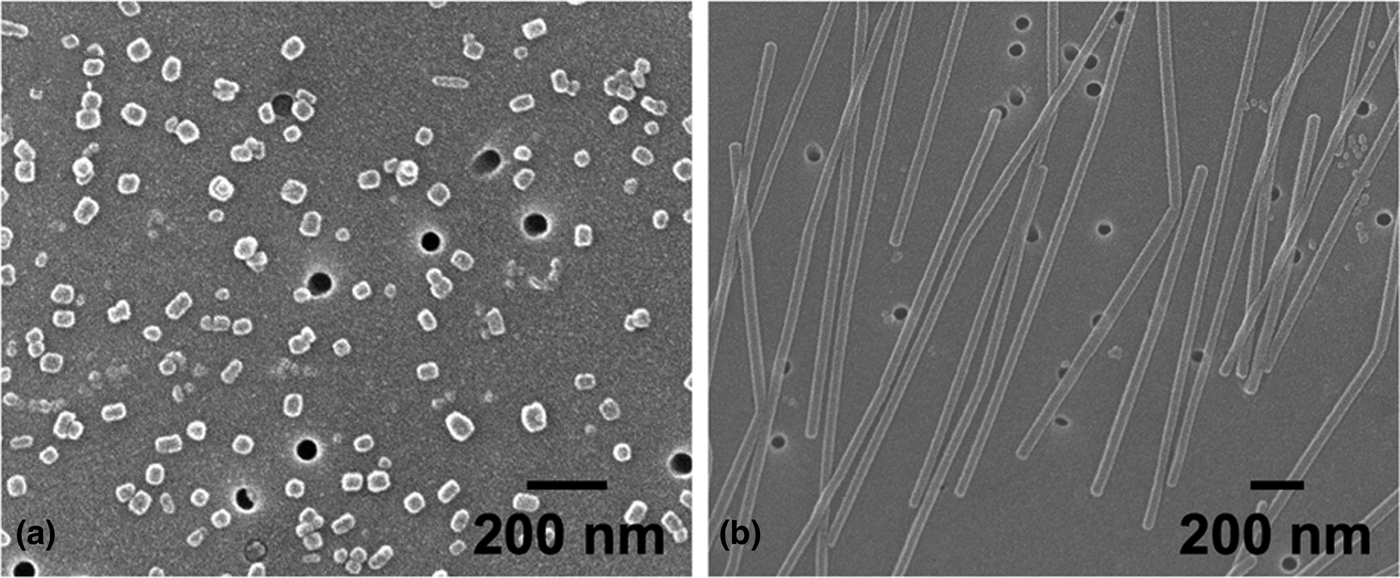
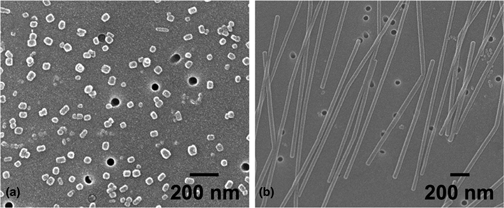
Figure 1 shows the SEM images of PDA NCs and PDA NFs. It is possible to control the diameter and counter length of PDA NFs by changing water temperature as a poor medium in the reprecipitation method.[Reference Iimori, Onodera, Kasai, Mitsuishi, Miyashita and Oikawa17] The diameter of PDA NFs was about 50 nm, and the counter length was above a few μm. The conversion of solid-state polymerization is 100% in the present case, owing to characteristic mechanism of monomer crystal-to-polymer crystal-phase transition.[Reference Oikawa, Kasai, Nakanishi, Glaser and Kaszynski13, Reference Oikawa, Nakanishi, Masuhara, Nakanishi and Sasaki14, Reference Iimori, Onodera, Kasai, Mitsuishi, Miyashita and Oikawa17] In addition, PDA NFs have the same crystal lattice structure as PDA NCs and/or PDA bulk crystals (Supplementary Fig. S1).[Reference Iimori, Onodera, Kasai, Mitsuishi, Miyashita and Oikawa17]
SEM images of (a) PDA NCs and (b) PDA NFs.

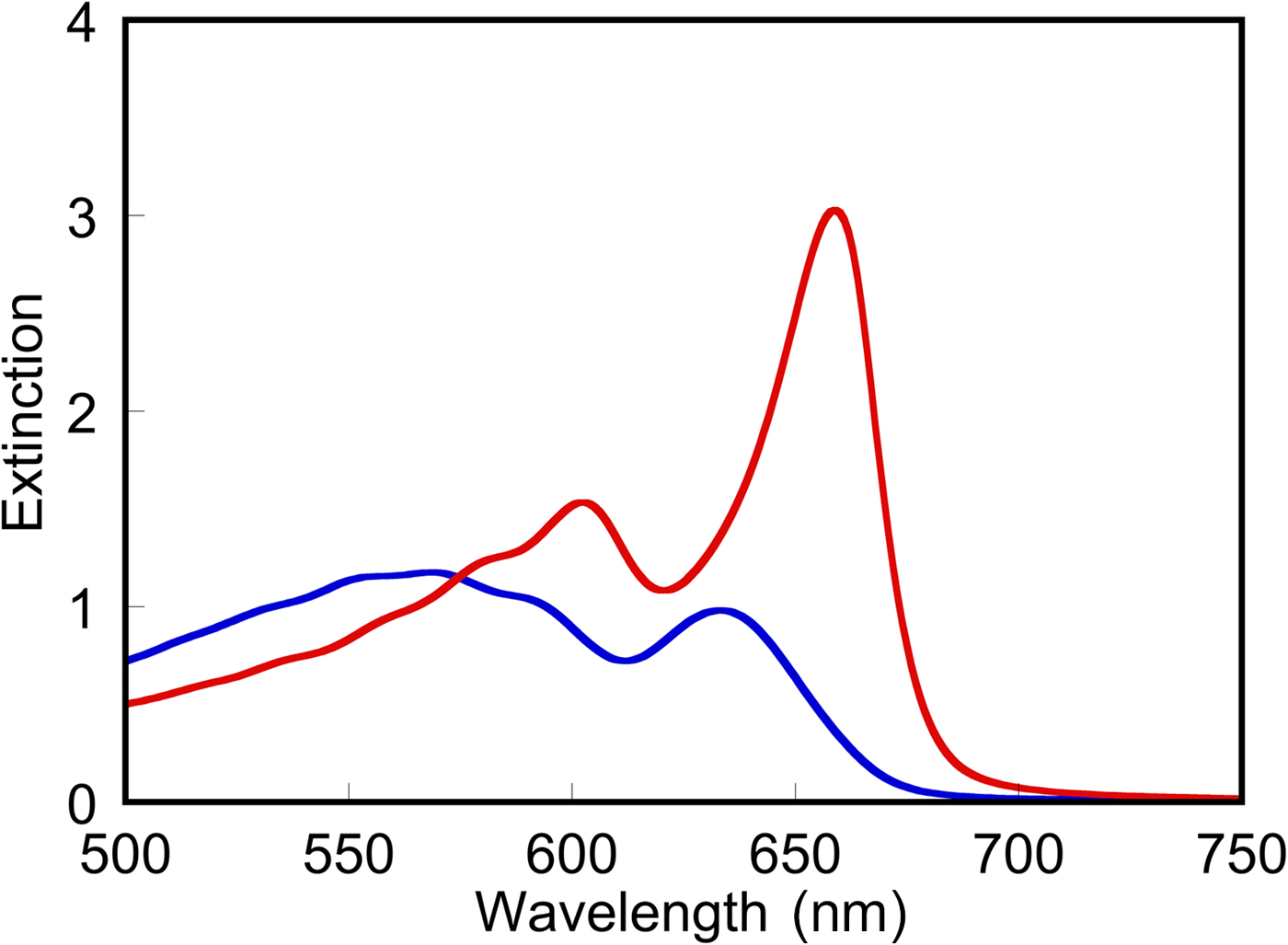
PDA has the excitonic absorption peak around at λ = 650 nm, which is originated from π-conjugation along the PDA backbone formed by solid-state polymerization, and broad phonon-side band around at λ = 580–620 nm.[Reference Wegner9] Figure 2 indicates the extinction (excitonic absorption) spectra of PDA NCs and PDA NFs. In PDA NFs, the excitonic absorption peak was clearly stronger than the small intensity of phonon-side band, which tendency is basically similar to PDA bulk crystals. On the other hand, the extinction of excitonic absorption peak (excitonic absorbance) is inclined to diminish with decreasing crystal size.[Reference Oikawa12–Reference Oikawa, Nakanishi, Masuhara, Nakanishi and Sasaki14] Interestingly, the excitonic absorption peak position of PDA NFs (λ exc, PDA NFs = 659 nm) was so red-shifted, rather than typical PDA NCs with approximately 50 nm in crystal size (λ exc, PDA NCs = 633 nm) and/or PDA bulk crystal (λ exc, PDA bluk crystal = 655 nm). These facts suggest that the effective π-conjugation length along the PDA backbone became much longer in PDA NFs, compared with PDA NCs and/or PDA bulk crystals, and then the enhancement of χ (3)(ω) is expected according to the theoretical prediction by so-called the three-state model.[Reference Sato, Ohnuma, Oyoshi and Takeda20] On the other hand, the bc-plane surface of PDA bulk crystal has a luster like a facet shown in the inset in Supplementary Fig. S1(d), and the optical quality was confirmed to be enough suitable from the measurements with pump-probe spectroscopy [Supplementary Fig. S3(b)] and spectroscopic ellipsometry [Supplementary Fig. S4(c)].
Extinction (excitonic absorption) spectra for aqueous dispersion liquids of PDA NCs (blue sold line: λ exc, PDA NCs = 633 nm, ~50 nm in crystal size) and of PDA NFs (red solid line: λ exc, PDA NFs = 659 nm). PDA bulk crystals exhibit λ exc, PDA bulk crystal = 655 nm.
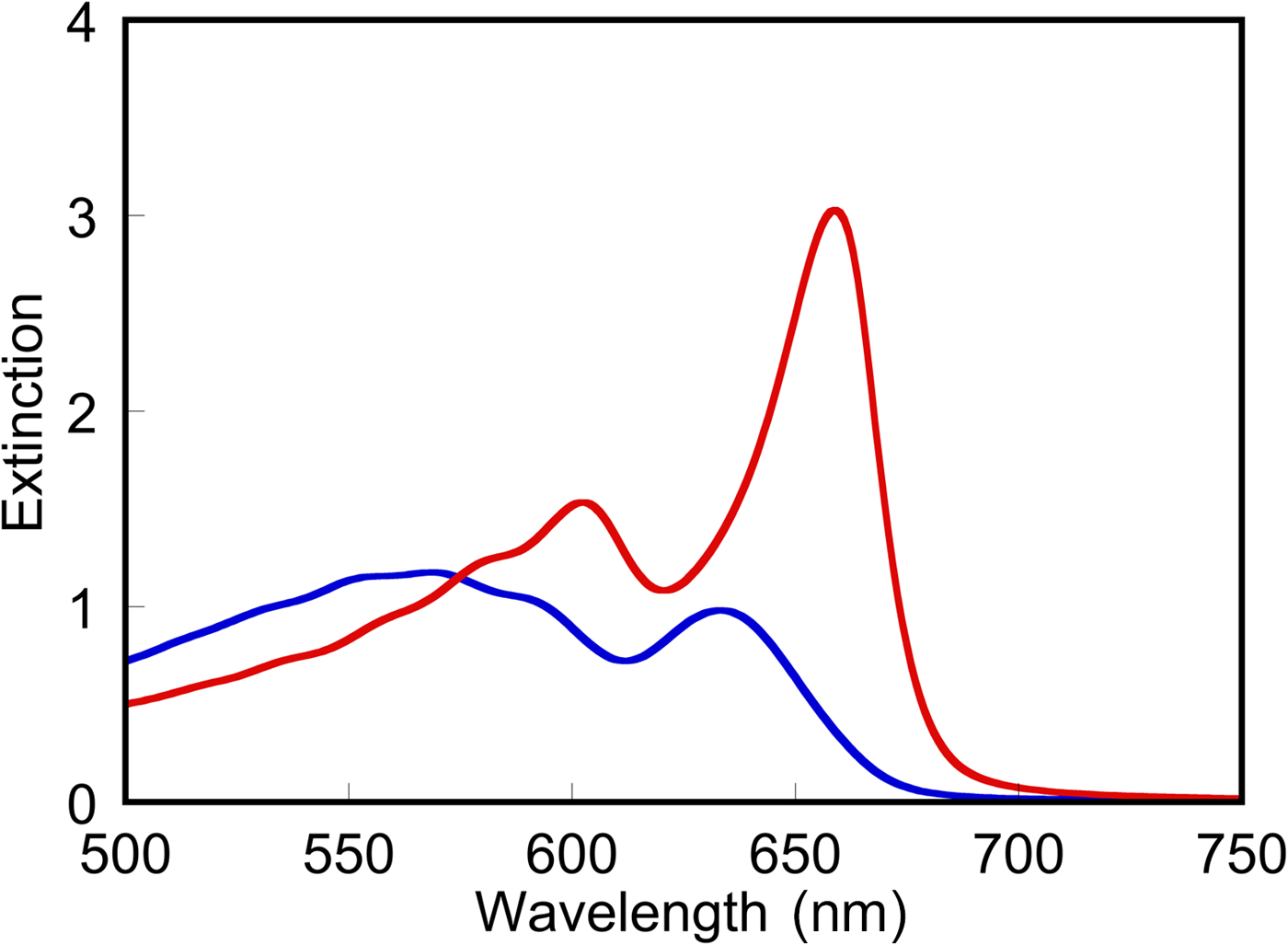
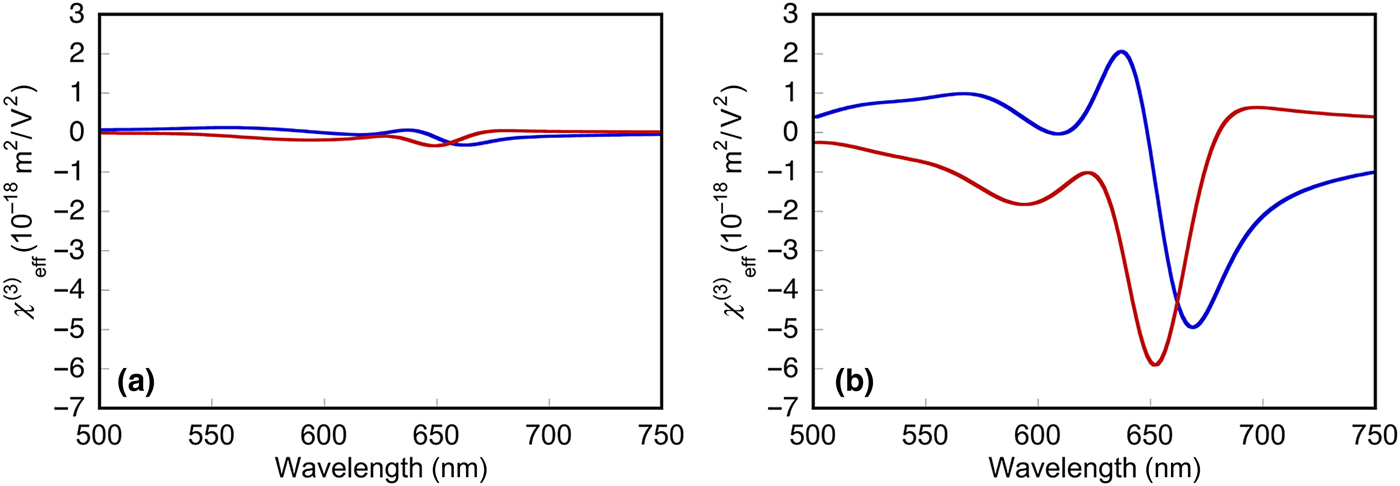
Figure 3 exhibits the wavelength dispersions in the real and imaginary parts of effective χ (3)(ω), χ eff(3)(ω), in both cases of PDA NCs and PDA NFs, which were evaluated from the transient transmission spectrum (Supplementary Fig. S3) and complex refractive index, n*(ω) = n(ω) + i·k(ω) = ε*(ω)1/2, (Supplementary Fig. S4) as described in Materials and Methods. The obtained χ eff(3)(ω) means the optical constant of χ (3)(ω) for the whole thin films of PVA composites that contained PDA NCs and/or PDA NFs. From the overviews in Fig. 3, the intensity of χ eff(3)(ω) in PDA NFs was obviously larger than that of PDA NCs in the broad wavelength range including the excitonic absorption region, i.e., in both resonant and nonresonant regimes. In addition, the present NLO response time (the excitonic relaxation time) was typically 0.65 ps in the case of PDA NFs (Supplementary Fig. S5), which suggests an ultra-fast optical response without the thermal relaxation process even in the resonant region.[Reference Agrawal, Cojan and Flytzanis23] To our knowledge, the present experimental results are the first example that could clearly reveal the morphological effect on (or difference in) χ (3)(ω) in organic NLO nanomaterials, except for the enhancement of χ (3)(ω) by the quantum confinement effect in semiconductor quantum dots.[Reference Nomura, Kumagai, Iwamoto, Ota and Arakawa24, Reference Flory, Escoubas and Berginc25]
Wavelength dispersions of effective χ (3)(ω), χ eff(3)(ω): (a) PDA NCs at E = 2.27 × 10⁸ V/m and (b) PDA NFs at E = 1.88 × 10⁸ V/m, where E is the electric field strength of the pump beam. Blue and red solid lines are the real and imaginary parts of χ eff(3)(ω), respectively.
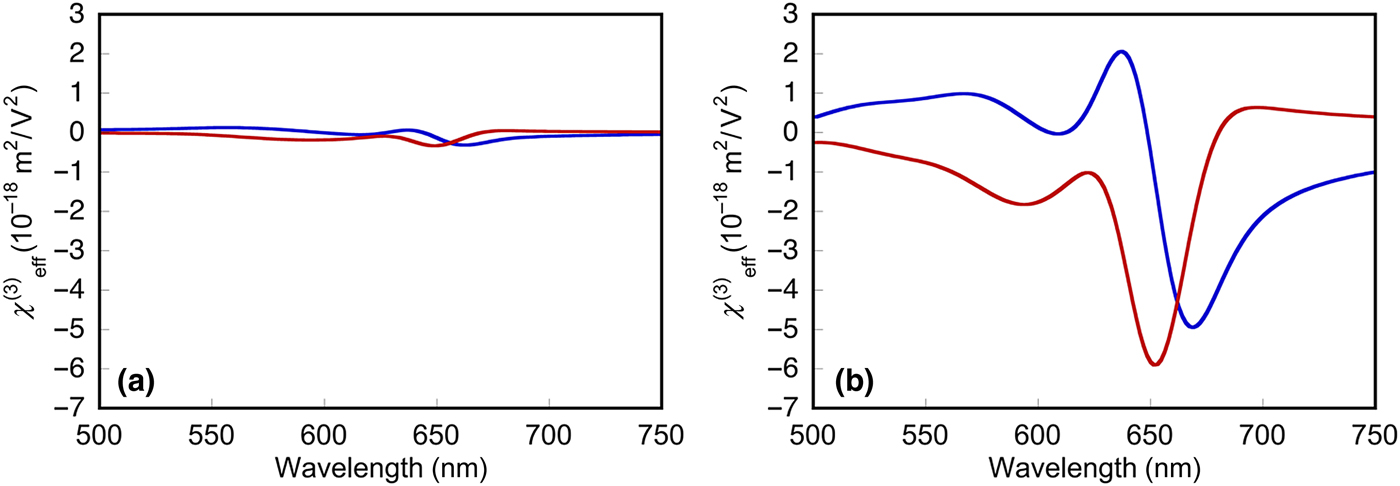
In general, the wavelength dispersions of χ eff(3)(ω) would be a reflection of the extinction spectra as shown in Fig. 2. Especially, the minimum of Im[χ eff(3)(ω)] corresponds to the excitonic absorption peak, while Re[χ eff(3)(ω)] behaviors are closely correlated with the refractive index that is in common changed sharply at the lower energy region in the vicinity of the excitonic absorption peak position.[Reference Ganeev and Usmanov26] Actually, the obtained χ eff(3)(ω) is affected by some experimental factors in PVA composite thin films, that is, thickness, optical absorption and scattering loss, and volume fraction of PDA NCs and/or PDA NFs. The figure of merit (FOM) is often introduced to avoid above-mentioned effects and/or problems and usually defined as the absolute value of χ eff(3)(ω) normalized reasonably and properly by a factor such as absorbance, A Abs(ω): FOM = |χ eff(3)(ω)|/A Abs(ω).[Reference Astill27] A Abs(ω) is experimentally calculated from the measured extinction, A Obs(ω), under the semi-empirical assumption of the following additive property: A Obs(ω) = A Abs(ω) + A Scat(ω), where A Scat(ω) is a scattering factor and given by C·ωn (C: constant and n: adjustable exponent) on the basis of generalized Rayleigh scattering theory.[Reference Bruggeman28] FOM, however, would diverge at nonresonant regime in the present case because of substantially A Obs(ω) ≈ A Abs(ω) ≈ A Scat(ω) ≈ 0 at the long wavelength region as shown in Fig. 2. So, FOM was redefined as FOM = |χ eff(3)(ω)|/|χ (1)(ω)| without using A Abs(ω), where χ (1)(ω) is the first-order linear optical susceptibility and given by ε*(ω) = 1 + χ (1)(ω). As a result, FOMPDA NFs is 2.24 × 10⁻¹⁸ m2/V2 in PDA NFs, whereas FOMPDA NCs is 5.65 × 10⁻¹⁹ m2/V2 in PDA NCs. Therefore, FOMPDA NFs is higher than FOMPDA NCs by a factor of about 4, closely relating that the effective π-conjugation length of the PDA backbone is relatively much longer in PDA NFs as discussed in Fig. 2.
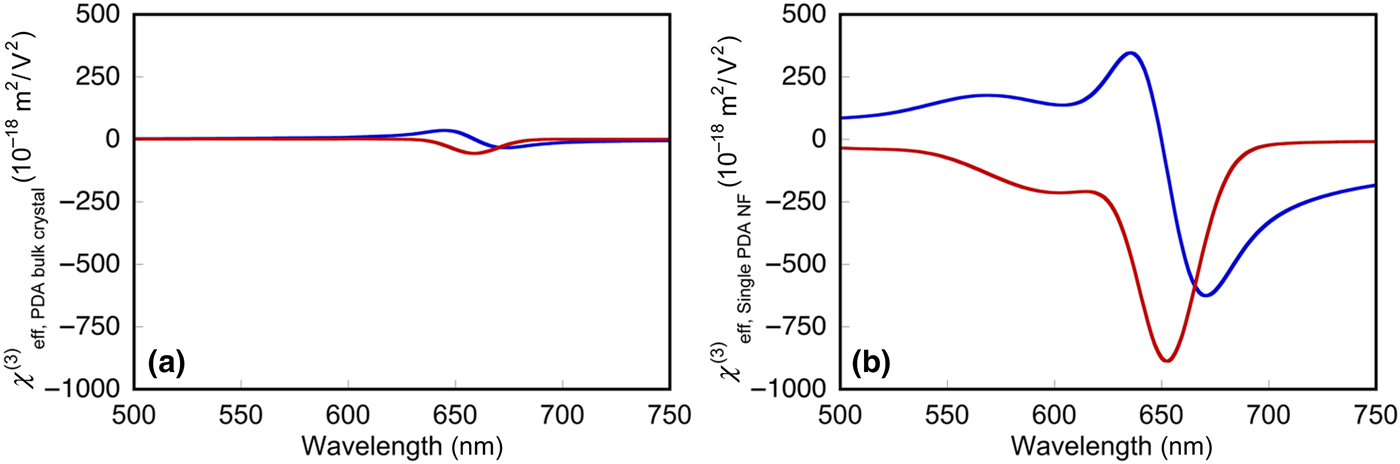
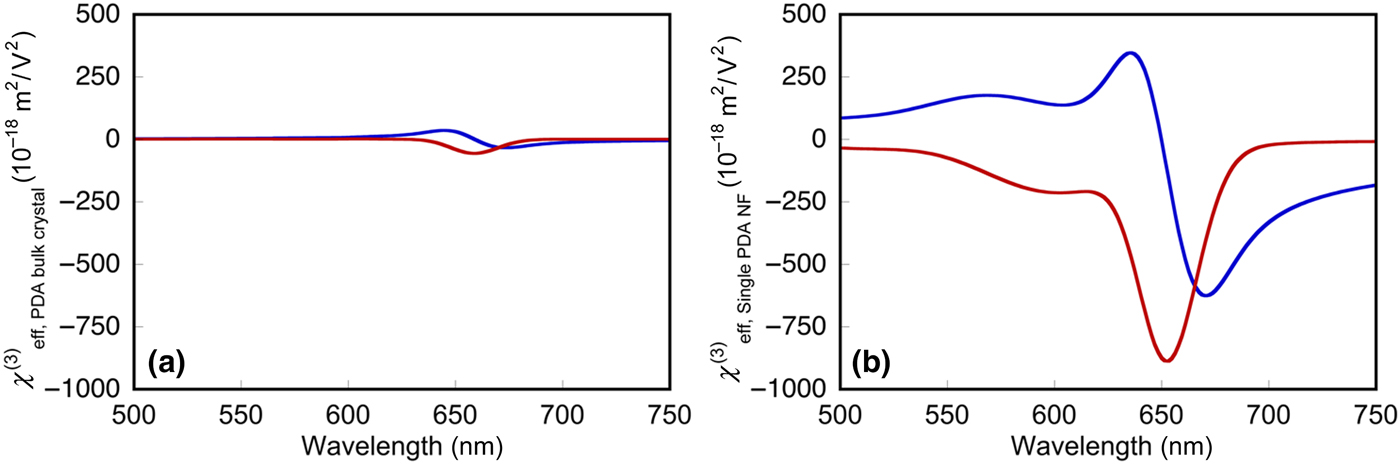
Next, the intrinsic values of χ eff, Single PDA NF(3)(ω) and FOMSingle PDA NF for the single component of PDA NF were compared with those of PDA bulk crystal as shown in Fig. 4. The volume fraction of PDA NFs, f PDA NFs, was first calculated to be 0.028 in PVA composite thin films on the assumption of homogeneously nonaggregated loading of PDA NFs into the PVA matrix by employing the density of materials, d, as follows: d PDA NFs = 1.3 g/cm3 and d PVA = 1.27 g/cm3. The wavelength dispersion of χ eff, Single PDA NF(3)(ω) could be calculated successfully by utilizing so-called the effective medium approximation model.[Reference Aspnes29] It has become apparent that the χ Single PDA NF(3)(ω) was multiplied about one order of magnitude, by comparison with χ PDA bulk crystal(3)(ω). Namely, FOMSingle PDA NF is 1.07 × 10⁻¹⁷ m2/V2 and about 1.5 times superior to FOMPDA bulk crystal = 7.25 × 10⁻¹⁸ m2/V2.
Wavelength dispersion of χ eff(3). (ω): (a) PDA bulk crystal at E = 1.74 × 10⁸ V/m and (b) single PDA NF at E = 1.57 × 10⁸ V/m. Blue and red solid lines indicate the same symbols as in Fig. 3.
Let us further consider again about the dependences of the determined χ eff(3)(ω) and FOM on crystal direction, orientation effect, and effective π-conjugation length, although those have already discussed somewhat in Figs. 2 and 3. The first point is the crystal direction, which is an important factor, when linear optical properties and the NLO response are discussed.[Reference Oikawa, Mitsui, Onodera, Kasai, Nakanishi and Sekiguchi15–Reference Iimori, Onodera, Kasai, Mitsuishi, Miyashita and Oikawa17] The direction of π-conjugation along the present PDA backbone is parallel to the long-axis direction of PDA NFs.[Reference Oikawa, Kasai, Nakanishi, Glaser and Kaszynski13, Reference Oikawa, Nakanishi, Masuhara, Nakanishi and Sasaki14] On the other hand, the b-axis corresponds to the direction of π-conjugation along the PDA backbone in a bulk crystal state.[Reference Enkelmann22] In practice, PVA composite thin films were prepared as described in Materials and Methods. That is, the a-, b-, and c-axis directions are isotropically random in the films of PDA NCs, and the long-axis (and π-conjugation) direction of PDA NFs is parallel to a substrate surface and random in-plane of the films. On the other hand, the bc-plane of PDA bulk crystal is located in parallel on a substrate surface on the basis of the above-mentioned crystal dimension in Materials and Methods, and powder XRD data are displayed in Supplementary Fig. S1. Thus, these preparation conditions suggest that there is no influence of orientation effect in the present study when the resulting order (or superiority) of the magnitude of χ eff(3)(ω) and/or FOM is compared among three kinds of PDA NCs, PDA NFs, and PDA bulk crystal, owing to the difference enough in χ eff(3)(ω) and/or FOM as shown in Figs. 3 and 4.
The second point is effective π-conjugation length.[Reference Murata, Takada, Tsutsui, Saito, Kurihara and Kaino30, Reference Schrof, Rozouvan, Hartmann, Möhwald, Belov and Van Keuren31] The measured χ eff(3)(ω) is extensively affected by band structure,[Reference Sato, Ohnuma, Oyoshi and Takeda20] especially effective π-conjugation length along the polymer backbone (or the diffusion length of exciton), which is closely related to the distribution of the degree of polymerization[Reference Murata, Takada, Tsutsui, Saito, Kurihara and Kaino30, Reference Schrof, Rozouvan, Hartmann, Möhwald, Belov and Van Keuren31], local steric hindrance, the conformational change of π-conjugated polymers, crystal defects, and so on.[Reference Oikawa, Onodera, Masuhara, Kasai and Nakanishi7, Reference Wegner9–Reference Iimori, Onodera, Kasai, Mitsuishi, Miyashita and Oikawa17, Reference Enkelmann22] For example, the excitonic absorption peak in PDA NCs is commonly blue-shifted with decreasing crystal size from a bulk crystal state.[Reference Oikawa12–Reference Oikawa, Nakanishi, Masuhara, Nakanishi and Sasaki14] This is the typical size effect of linear optical properties in organic NCs, and the effective π-conjugation length becomes shorter with decreasing crystal size, due to thermally soften crystal lattice (or reduction of intermolecular interaction in a crystal state) induced by the increase in a specific surface area.[Reference Oikawa, Mitsui, Onodera, Kasai, Nakanishi and Sekiguchi15, Reference Volkov, Asahi, Masuhara, Masuhara, Kasai, Oikawa and Nakanishi16] Usually, mechanical strain is accumulated in the PDA backbone inside crystal lattice because of the difference in crystal cell parameters before and after solid-state polymerization.[Reference Oikawa, Onodera, Masuhara, Kasai and Nakanishi7, Reference Oikawa, Mitsui, Onodera, Kasai, Nakanishi and Sekiguchi15, Reference Volkov, Asahi, Masuhara, Masuhara, Kasai, Oikawa and Nakanishi16, Reference Enkelmann22] Probably, mechanically accumulated strain could release smoothly in PDA NFs, since the rigidity of crystal lattice in PDA NFs is an intermediate state between PDA NCs and the corresponding bulk crystal.[Reference Iimori, Onodera, Kasai, Mitsuishi, Miyashita and Oikawa17] Actually, the excitonic absorption peak in PDA NFs was more red-shifted than that in bulk crystal as shown in Fig. 2, which suggests that the PDA backbone is almost strain-free, less local steric hindrance, and then the longest effective π-conjugation length among the present three kinds of PDA samples.[Reference Oikawa, Kasai, Nakanishi, Glaser and Kaszynski13, Reference Oikawa, Nakanishi, Masuhara, Nakanishi and Sasaki14, Reference Volkov, Asahi, Masuhara, Masuhara, Kasai, Oikawa and Nakanishi16] On the other hand, it is often difficult to prepare defect-free organic and/or conjugated polymer bulk crystal, in which effective π-conjugation length along the polymer backbone does not necessarily correspond to the crystal dimensions.[Reference Oikawa12–Reference Oikawa, Nakanishi, Masuhara, Nakanishi and Sasaki14]
Namely, χ eff(3)(ω) is, in principle, enhanced by the effectively long π-conjugation length and/or narrow band gap in the three-state model,[Reference Sato, Ohnuma, Oyoshi and Takeda20] being strongly dependent on crystal morphology such as PDA NFs and/or PDA NCs.
Conclusions
It was obviously found that χ eff(3)(ω) and FOM of PDA NFs were much higher than those of PDA NCs and/or the corresponding PDA bulk crystals because of sufficiently developed and grown effective π-conjugation of PDA backbone in PDA NFs. In addition, PDA NFs exhibited sub-pico second order of NLO response. These facts are exactly morphological effect on third-order NLO properties and would provide advantage in organic NLO nanomaterials. That is to say, one can expect more enhancement of χ eff(3)(ω) and FOM for oriented thin films of PDA NFs[Reference Iimori, Onodera, Kasai, Mitsuishi, Miyashita and Oikawa17] and/or for hybridization with plasmonic metal nanoparticles toward photonic device application.[Reference Gu, Zhao, Baev, Yong, Wen and Prasad32]
Supplementary materials
The supplementary material for this article can be found at https://doi.org/10.1557/mrc.2019.97.
Acknowledgment
The present research was performed under the Cooperative Research Program of “Network Joint Research Center for Materials and Devices” and “NIMS Joint Research Hub Program.”