Introduction
Dengue is a mosquito-borne viral disease found in three clinical forms: dengue fever (DF), dengue haemorrhagic fever (DHF) and dengue shock syndrome. It is endemic in more than 100 countries in Africa, the Americas, the West Pacific and Asia (including Sri Lanka), and has become the most important and the fastest-growing mosquito-borne disease in these countries. A total of 40% of the world's population (over 2.5 billion) has been reported to be at risk of dengue, and an average of about 50 million cases of dengue infections are reported each year (WHO Media Centre, 2012). In South and Southeast Asian regions, several countries (including Sri Lanka) are currently experiencing an upsurge of reported cases of dengue (WHO, 2010). In Sri Lanka, the first dengue outbreak was recorded in 1965–1966. A dramatic increase in the number of reported annual cases from 2003 (4749 cases with 33 deaths) to 2004 (15,467 cases with 88 deaths) created an alarming situation where disease control, including vector control, had to be addressed urgently. The worst affected districts were Colombo, Kandy, Gampaha, Kalutara and Kurunegala (Ministry of Health, Sri Lanka, 2009).
In South and Southeast Asia, Aedes aegypti Linnaeus (Diptera: Culicidae) is considered the primary vector of dengue and is found mainly in urban areas. Aedes albopictus Skuse (Diptera: Culicidae) is considered the secondary vector and is found mainly in semi-urban and rural areas. Climatic, geographical, environmental and social conditions in Sri Lanka provide favourable conditions for the survival of both the vector species and the dengue virus. Aedes aegypti is commonly known as the ‘yellow fever mosquito’, since it transmits the yellow fever virus in Africa (Womack, Reference Womack1993). Aedes albopictus is known as the ‘Asian-tiger mosquito’ or ‘forest day mosquito’ and was the native vector of the dengue virus in the Oriental region (Novak, Reference Novak1992). Both vectors lay eggs stuck onto a damp surface just above the water level, in containers filled with clean and clear water, preferably with a small amount of organic matter (Lenhart et al., Reference Lenhart, Walle, Cedillo and Kroeger2005). A single female oviposits about 100 eggs at a time, about three times in its lifespan. Eggs of both the vector species are oval in shape; the egg of Ae. albopictus is smaller (length about 0.5 mm) than that of Ae. aegypti (length about 1 mm). These eggs hatch within 7 days or remain dormant for about 1 year, resisting desiccation until the conditions become favourable for hatching. Egg surveillance (ovitrap surveillance) and larval surveillance have been recommended to determine the prevalence of dengue vectors (Nathan and Knudsen, Reference Nathan and Knudsen1991; Service, 1993; Richards et al., Reference Richards, Ghosh and Zeichner2008).
Sri Lanka experiences two rainy seasons, one from April to June (southwest monsoon) and the other from October to January (northeast monsoon). Apart from isolated small-scale studies, a comprehensive study on the bionomics of dengue vectors and vector resistance to insecticides has never been reported from Sri Lanka. The present study was conducted to investigate the seasonal prevalence and preferred breeding sites of the dengue vectors Ae. aegypti and Ae. albopictus in Kandy and Kurunegala, two of the worst affected districts of Sri Lanka, by carrying out egg surveys (using ovitraps) and larval surveys. Prevalence data were compared with the number of dengue cases and climatic parameters. Egg and larval indices were calculated to predict the risk of disease transmission in these areas. A parallel study on vector resistance to insecticides was also conducted to assess the effectiveness of insecticides that are routinely used in vector control programmes (Karunaratne et al., 2013).
Materials and methods
Study sites
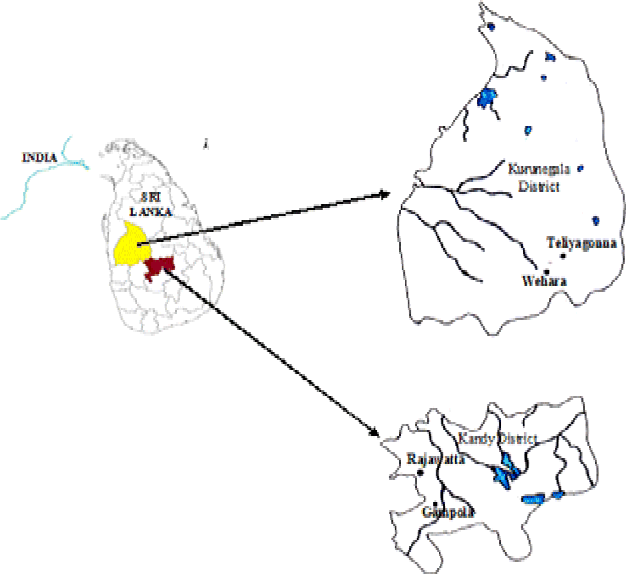
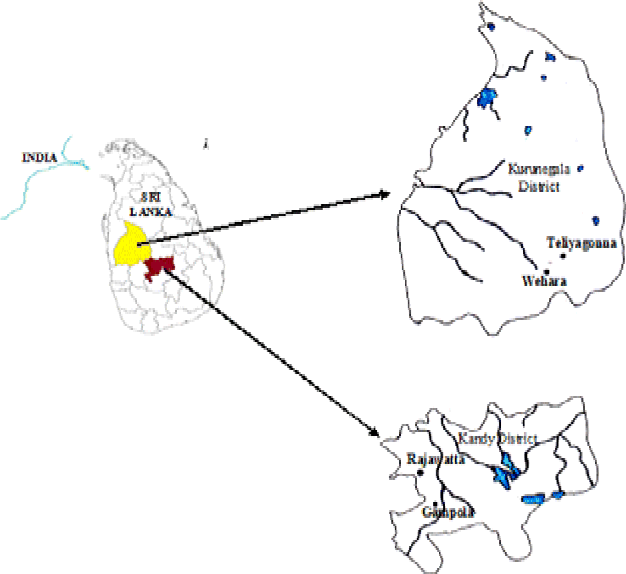
This study was conducted over a 12-month period from June 2007 to May 2008 in four selected localities in two administrative districts of Sri Lanka: Gampola and Rajawatta in the Kandy District (hill country, wet zone; 2000 mm mean annual rainfall; 21–30 °C temperature) and Teliyagonna and Wehara in the Kurunegala District (low country, intermediate zone; 1412 mm mean annual rainfall; 22.8–32.0 °C temperature) (Fig. 1). In 2006, 1512 DF/DHF cases had been reported from Kandy and 691 cases from Kurunegala. All the four selected localities were semi-urban areas with a high incidence of DF/DHF cases. Clearance of breeding sites with public participation, use of temephos as a larvicide and insecticide fogging were the vector control measures routinely used by the health authorities.
(colour online) Map showing the study sites: Teliyagonna and Wehara from the Kurunegala District; Rajawatta and Gampola from the Kandy District
In general, the study sites in the Kandy District had more vegetation surrounding the houses. Most of the housing in Rajawatta consisted of blocks of four to five houses attached in a row with a small patch of home garden. A few scattered and isolated private houses with larger home gardens were also found within the area. In the Gampola and Wehara study sites, all the houses were isolated with comparatively larger and densely vegetated home gardens. Teliyagonna had isolated houses as well as clusters of houses with little vegetation. For conducting egg surveys (25) and larval surveys (50), houses/house premises (home gardens) from each area were randomly selected to represent 200 houses in Rajawatta, 340 in Gampola, 268 in Wehara and 372 in Teliyagonna.
Egg surveys
Mosquito eggs were collected using ovitraps prepared using black plastic cups and strips of filter paper as the oviposition substrate according to the guidelines of the World Health Organization. Plastic cups of 250 ml capacity (8 cm height × 7 cm diameter) were used and filled with 200 ml of dechlorinated tap water. The cups were painted black inside and outside. A rectangular strip of filter paper (3 × 22 cm), labelled with the date, house number and location, was placed and adhered to the inside wall of the water-filled plastic cup so that about 2.0 cm of the filter paper strip was below the water level and 1.0 cm was above it. Due to evaporation, the water level was lowered by 1.0–1.5 cm per week.
The egg survey was conducted weekly in 25 randomly selected houses from each study site for 1 year. Two ovitraps per house premise (trap ‘A’: 10–20 m away from the house depending on the size of the garden; trap ‘B’: under the outside roof of the house) were installed at each selected house premise. Safety and protection were ensured once the ovitraps were installed. After 1 week, the filter paper strip from each ovitrap was carefully collected and brought to the laboratory for the examination of the eggs of Ae. aegypti and Ae. albopictus. In each ovitrap, a new filter paper strip replaced the removed filter paper strip, and the water of the ovitrap was also completely replaced. Larvae were also collected into separate labelled plastic vials and brought back to the laboratory for identification. In the laboratory, filter paper strips with the eggs were air-dried and stored at room temperature. The eggs were identified from their shape and size with a stereomicroscope. These identifications were confirmed by using the larvae and adults arising from the two different egg types. Larval identifications were carried out using standard keys (Pratt et al., 1964; Tanaka et al., Reference Tanaka, Mizusawa and Saugstad1979). The mean number of eggs/ovitrap (total number of eggs/total number of ovitraps installed) and ovitrap index (OI) (number of ovitraps positive for eggs/number of ovitraps installed) were calculated.
Larval surveys
Larval surveys of Ae. aegypti and Ae. albopictus were conducted monthly in the four localities. During each visit, 50 house premises in each study site were randomly selected by drawing lots and surveyed for the presence of Aedes larval habitats. House premises where ovitraps had been installed were not included in the larval survey to avoid the effect of the removal of eggs on larval density. The possible indoor and outdoor breeding habitats were carefully observed for the presence of larvae. All the larvae were collected into labelled plastic vials, transported to the laboratory and identified as described above.
Larval indices, i.e. house/premise index (HI) (percentage of houses or premises infested with larvae or pupae), container index (CI) (percentage of water-holding containers infested with larvae or pupae) and Breteau index (BI) (number of positive containers per 100 houses inspected), were calculated to determine the larval density levels of the particular area. Entomological indices, i.e. mean number of larvae per positive breeding habitat type, percentage positivity [(total number of positive breeding habitat type ‘X’/total number of positive breeding habitats examined) × 100] and larval density index (LDI) [(total number of larvae/total number of houses examined) × 100], were calculated. The risk factor (RF) of any given habitat type (RFX) (ratio of the proportion of breeding habitat of type ‘X’ among the positive breeding habitats/the proportion of breeding habitat of type ‘X’ among the potential breeding habitats) was also calculated to determine the repulsiveness/attractiveness of a breeding site (Favier et al., Reference Favier, Degallier, Vilarinhos, Carvalho, Yoshizawa and Knox2006).
Dengue cases and climatic data
Data about dengue cases in each area were collected from the Regional Office of Anti-Malaria Campaign, Kandy and Kurunegala. Climatic data (rainfall, temperature and humidity) were obtained from the Department of Meteorology, Colombo.
Data analysis
Statistical difference in the mean number of eggs/ovitrap and the difference in the mean number of larvae per positive breeding habitat among the study sites and between the districts were determined for each species using the generalized linear model. OI values were compared within a study site and between the study sites for both the species using χ2 tests. The effect of climatic factors on the number of eggs/larvae was also determined using the generalized linear model for each district. The relationship between the abundance of eggs/larvae and the number of dengue cases in the area was determined by Spearman's correlation analysis.
Results
Egg collection
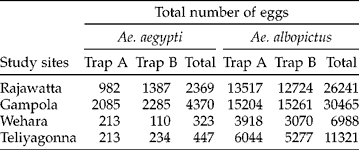
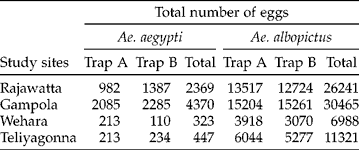
A total of 82,524 eggs of the two vectors were collected from the four study sites during the period from June 2007 to May 2008. The total number of eggs collected per site is presented in Table 1. According to the results, the highest number of eggs was recorded from the study sites of the Kandy District. Ae. albopictus was the dominant species in all the study sites of both the districts throughout the study period.
Total number of Aedes aegypti and Aedes albopictus eggs collected on a weekly basis from 50 ovitraps placed in 25 randomly selected home gardens (two ovitraps per garden: trap ‘A’: 5–20 m away from the house depending on the size of the garden; trap ‘B’: outside the house but under the roof of the house) during the study period of 1 year
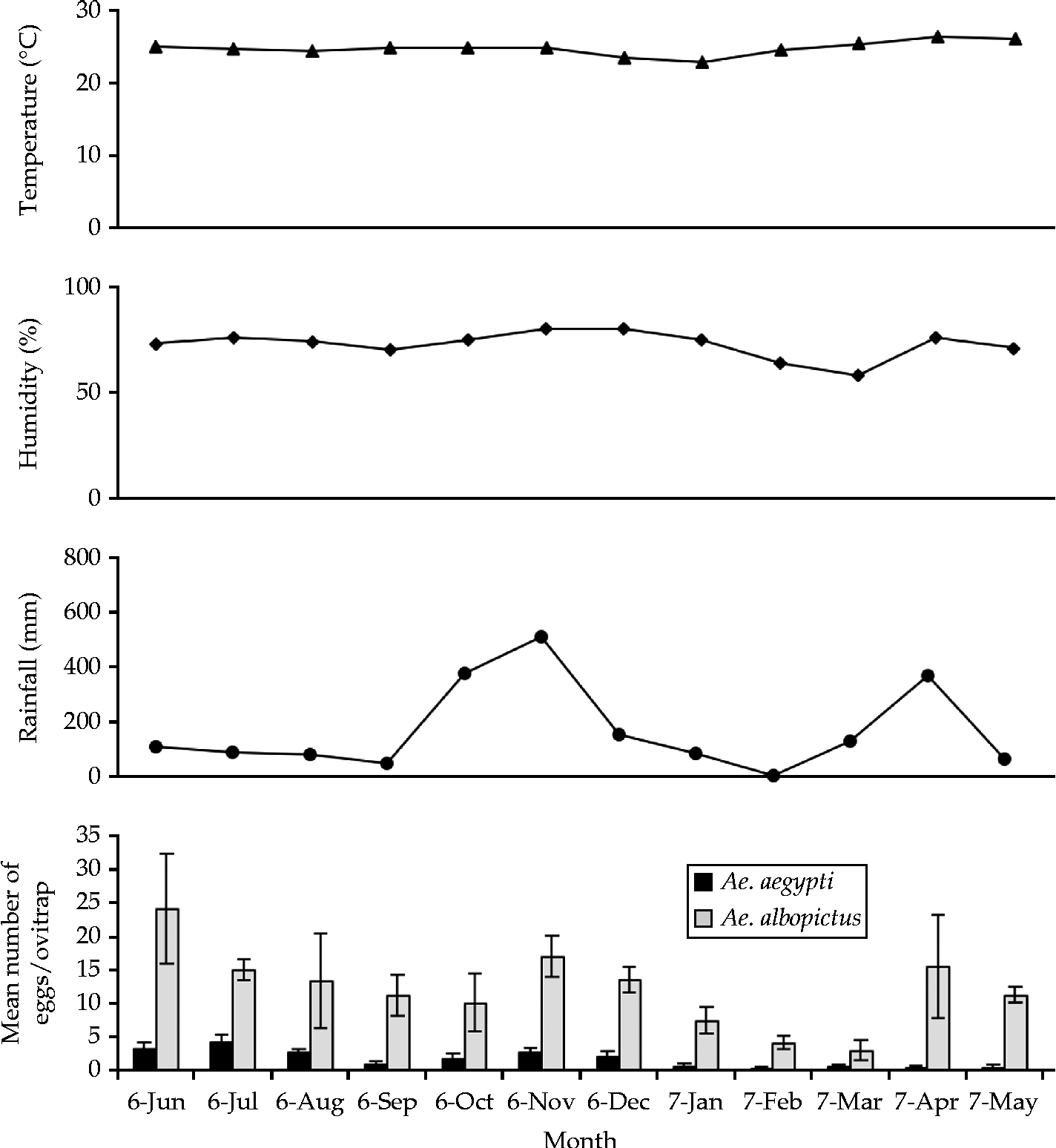
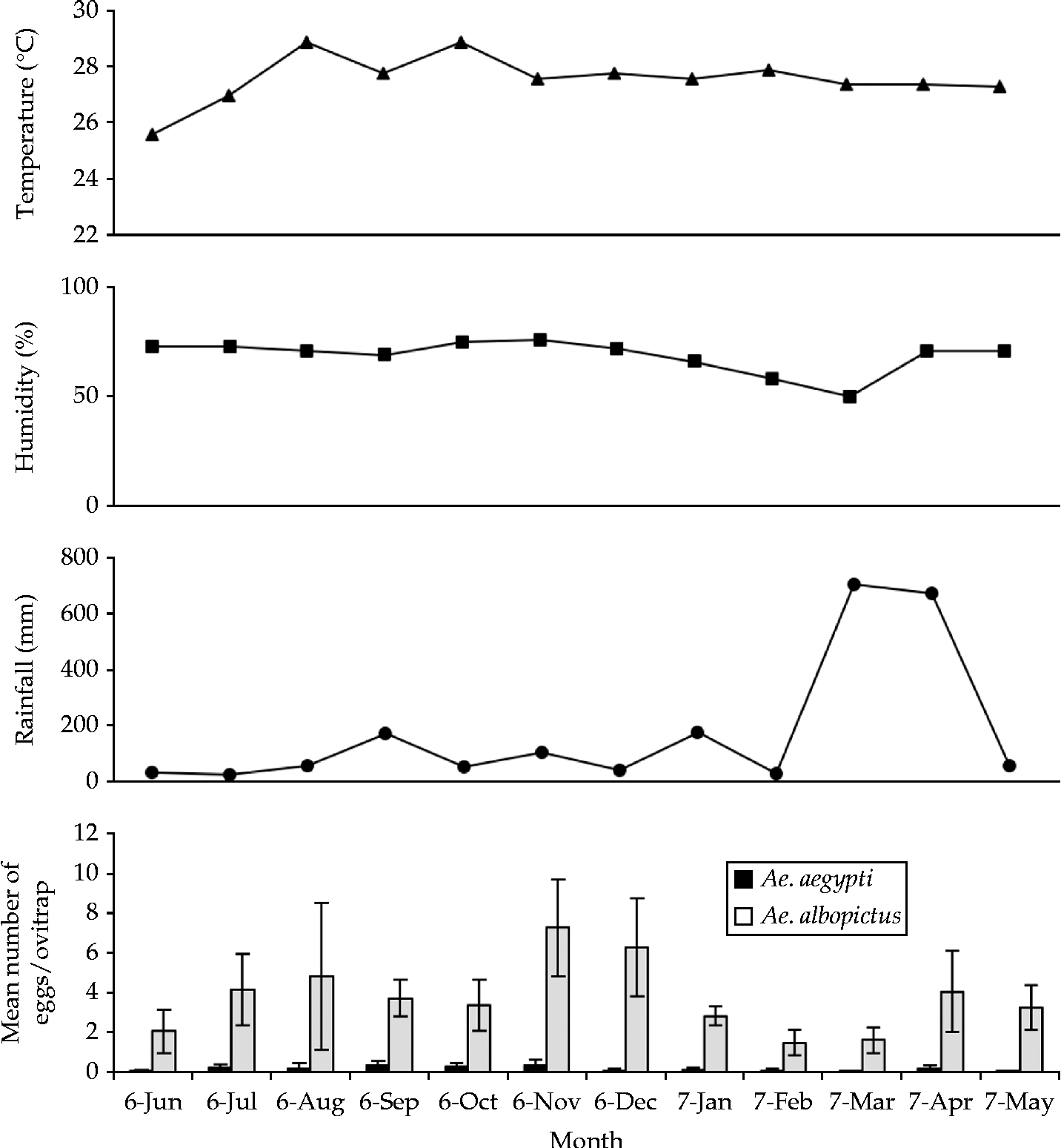
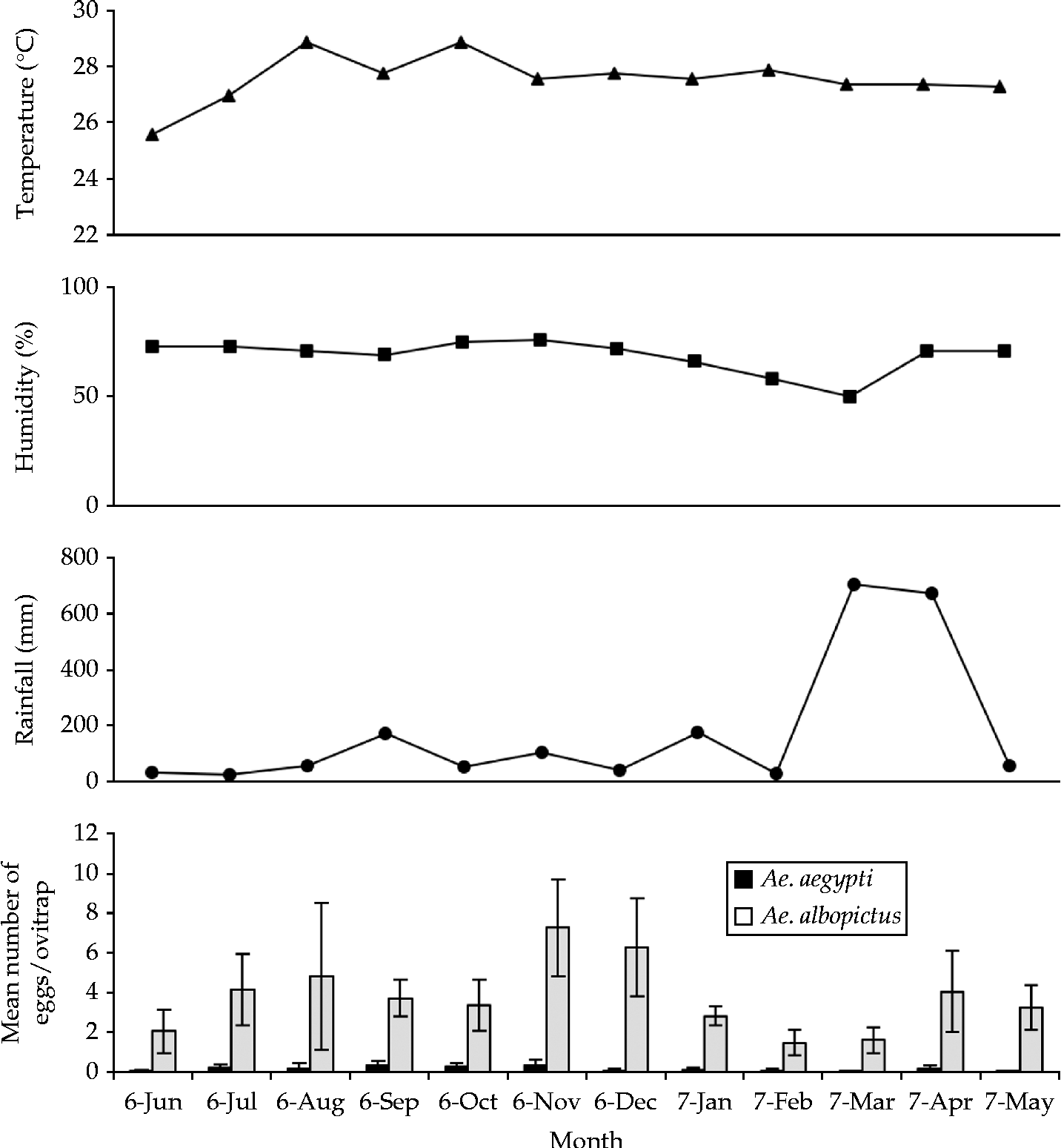
The statistical analysis showed that, for each species, there was no significant difference between the number of eggs collected in trap ‘A’ and trap ‘B’ placed in each house premise. For both the species, no significant difference was observed in the monthly mean number of eggs/ovitrap between the two study sites in the same district, although the values from the Kandy District were significantly higher than those from the Kurunegala District (P< 0.05). The monthly mean number of eggs/ovitrap per district and the monthly variation of climatic factors are shown in Figs 2 and 3. The results showed that for Ae. aegypti, there were no relationships with rainfall, temperature and humidity in both the Kandy and Kurunegala districts. However, for Ae. albopictus, there was a positive relationship with relative humidity in both districts and with rainfall in the Kandy District (P< 0.05). The abundance of eggs did not show any correlation with the number of dengue cases on a monthly basis.
Mean number of Aedes aegypti and Aedes albopictus eggs/ovitrap per month, and variation of rainfall, temperature and humidity in the Kandy District during the study period
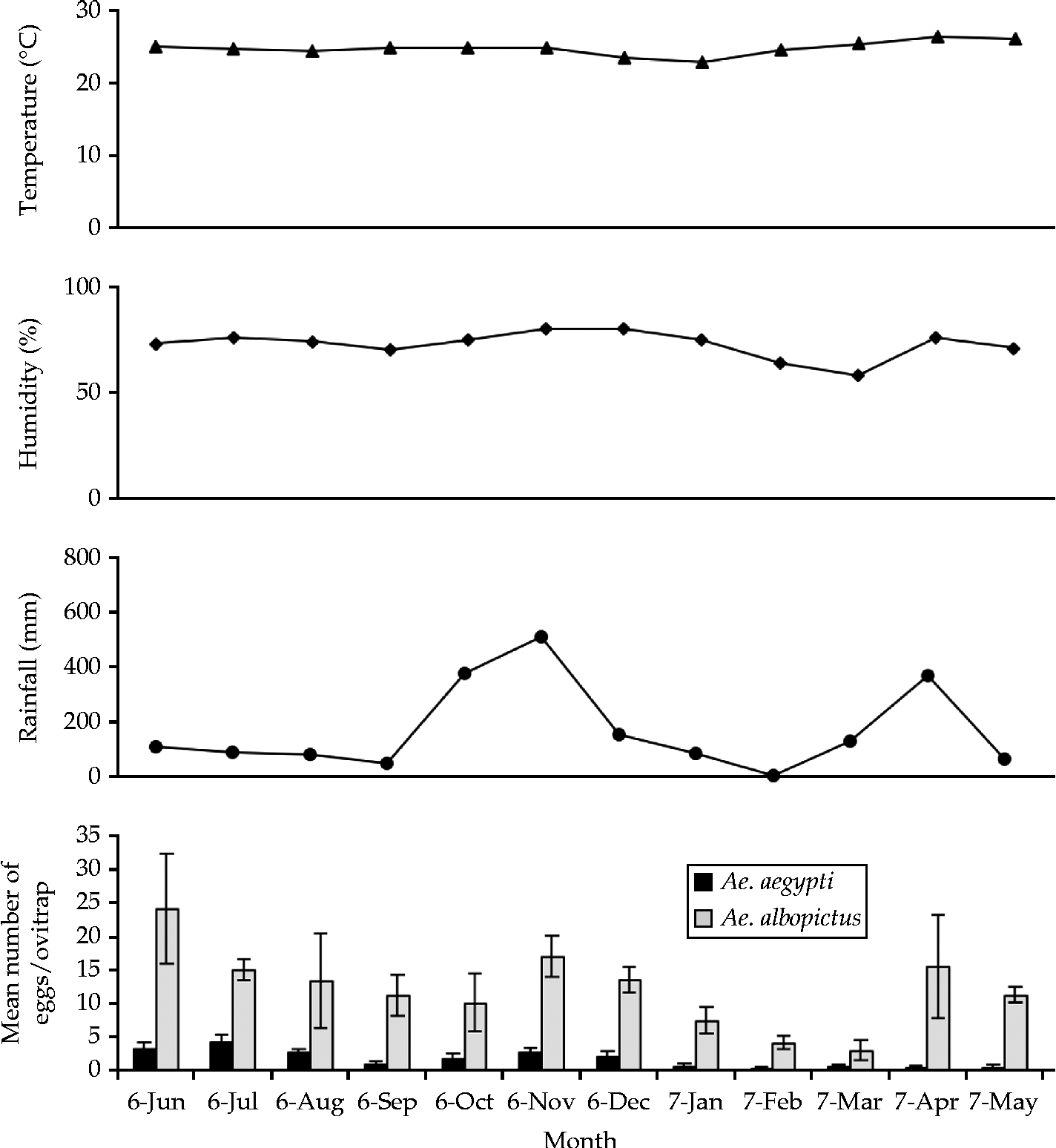
Mean number of Aedes aegypti and Aedes albopictus eggs/ovitrap per month, and variation of rainfall, temperature and humidity in the Kurunegala District during the study period
A total of 4687 oviposition substrates were collected from the Kandy District during the study period: 14.62% were positive for the eggs of Ae. aegypti and 75.14% for the eggs of Ae. albopictus. Of the 4917 oviposition substrates collected from the Kurunegala District, 3.17% were positive for the eggs of Ae. aegypti and 54.32% for the eggs of Ae. albopictus. The OI values for both the species in the Kandy District were significantly greater than those in the Kurunegala District (P< 0.05). In both the districts, the OI values were significantly higher for Ae. albopictus than for Ae. aegypti. However, there was no significant difference between the OI values for the same species between the two study sites of the same district.
Larval collection
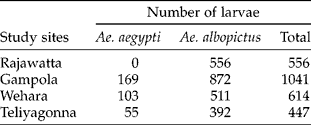
A total of 3699 potential breeding habitats for Aedes mosquitoes were examined and 2658 larvae belonging to the two vectors were collected during the study period. The total number of larvae collected per site is presented in Table 2. Among the variety of breeding habitats examined, 0, 4.04, 2.94 and 4.78% were infested with Ae. aegypti and 11.76, 28.68, 22.79 and 25% were infested with Ae. albopictus in Rajawatta, Gampola, Wehara and Teliyagonna, respectively.
Total number of Aedes aegypti and Aedes albopictus larvae collected from the four study sites during the study period of 1 year+
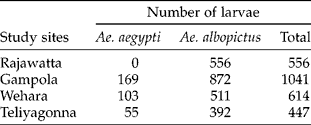
+ Collections were done on a monthly basis from 50 randomly selected house premises per site (houses where ovitraps had been installed were not included) and all possible indoor and outdoor larval breeding habitats were examined.
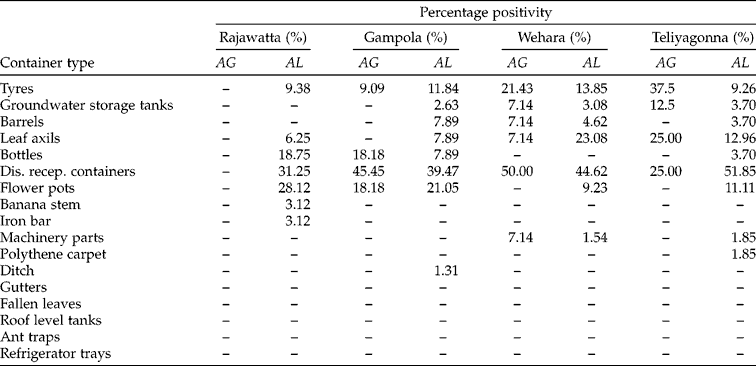
Of the 17 types of breeding habitat types examined during the study period, the larvae of Ae. aegypti were found only in five habitat types from Gampola, six from Wehara and four from Teliyagonna. The larvae of Ae. albopictus were found in seven habitat types from Rajawatta, eight from Gampola, eight from Wehara and nine from Teliyagonna (Table 3).
Percentage positivity of breeding habitats for Aedes aegypti and Aedes albopictus larvae during the larval survey conducted at the four study sites
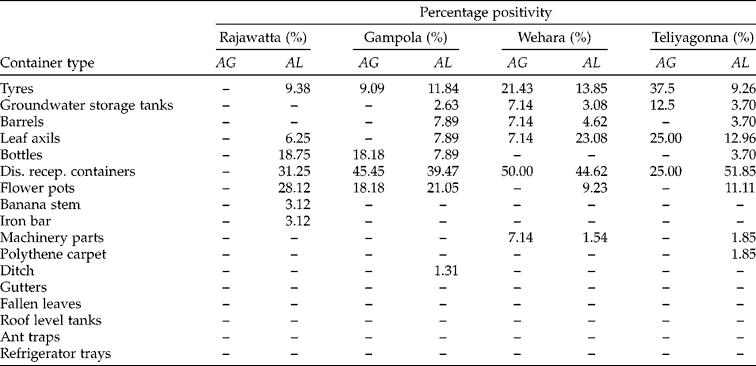
AG, Ae. aegypti; AL, Ae. albopictus; Dis. recep., discarded receptacles; –, absent.
In all the four study sites, the majority of water receptacles were groundwater storage tanks followed by miscellaneous containers or discarded receptacles (clay pots, coconut shells, coconut husks, yoghurt cups, disposable plastic/paper cups, small metal containers, etc.). According to the calculated percentage positivity values, discarded receptacles were found to be the most common breeding habitat for both the dengue vector species except in Teliyagonna, where tyres were the most positive breeding habitat type for the larvae of Ae. aegypti (Table 3).
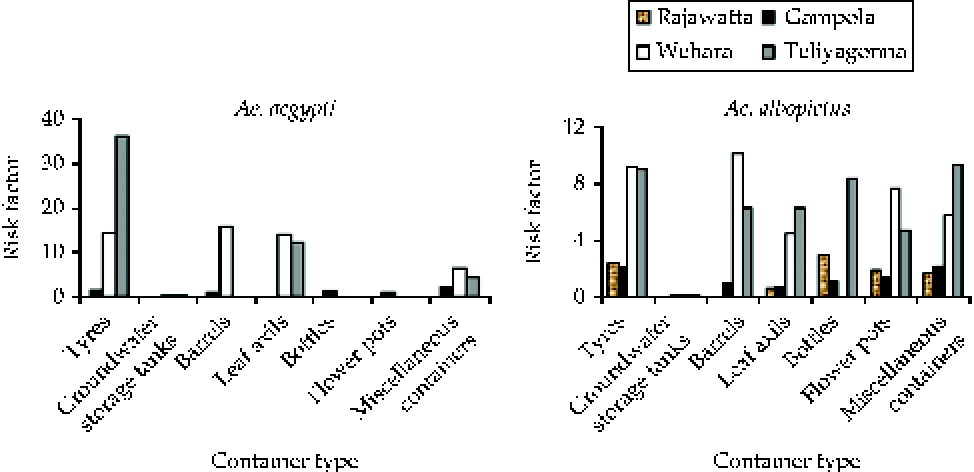
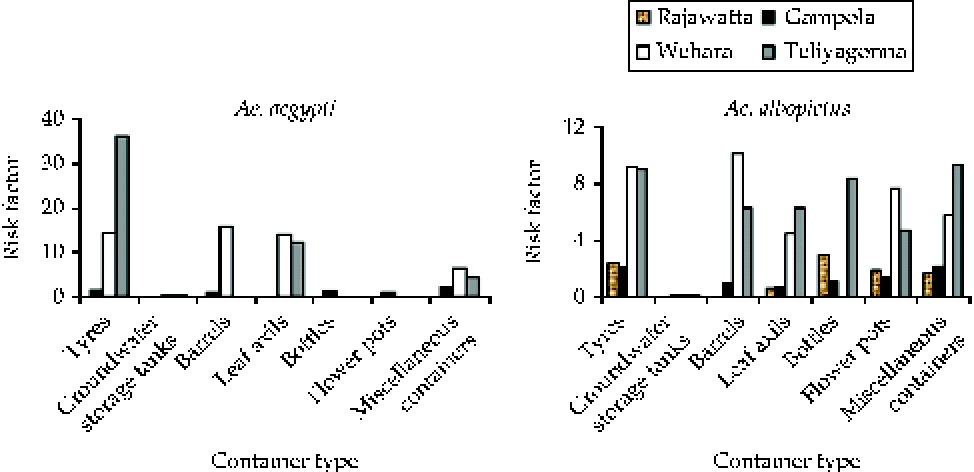
An RF value greater than 1 denotes attractive (at risk) containers, whereas a value less than 1 denotes repulsive (not at risk) containers. Of all the positive breeding habitat types, groundwater storage tanks were found to be the only repulsive breeding habitat common to both the vectors in the two districts. Leaf axils in Gampola (RF = 0.72) and Rajawatta (RF = 0.64) were a repulsive breeding habitat type for Ae. albopictus.
Tyres were the most attractive type of breeding habitat for Ae. aegypti in Teliyagonna (RF = 36.29), barrels in Wehara (RF = 15.8) and discarded receptacles in Gampola (RF = 2.13). Bottles (RF = 1.24) and flower pots (RF = 1.19) were attractive breeding habitats for Ae. aegypti only in Gampola. Barrels in Wehara (RF = 10.2), discarded receptacles in Teliyagonna (9.33) and Gampola (RF = 2.13) and bottles in Rajawatta (RF = 2.97) showed the highest RF values for Ae. albopictus (Fig. 4). The mean number of larvae per positive container type was always significantly lower than the mean number of eggs/ovitrap within the study sites.
(colour online) RFs of the positive dengue vector breeding sites in all the four study sites
The larval index values for both the species in all the four study sites are presented in Table 4. According to Service (1993), the values of BI >5, CI >3 and HI >4 are considered to be the indicators of epidemic risk. When the average larval indices for the total study period are considered, none of the areas was at a risk of the dengue epidemic due to Ae. aegypti because of its low prevalence. However, all the areas were at risk for the epidemic due to the prevalence of the secondary dengue vector Ae. albopictus. Gampola had the highest epidemic risk, whereas Rajawatta had the least (Table 4).
Larval indices of Aedes aegypti and Aedes albopictus calculated for the different study sites

For both the species, no significant difference in the monthly mean number of larvae per positive breeding habitat was observed between the two study sites of the same district and between the districts (P>0.05).
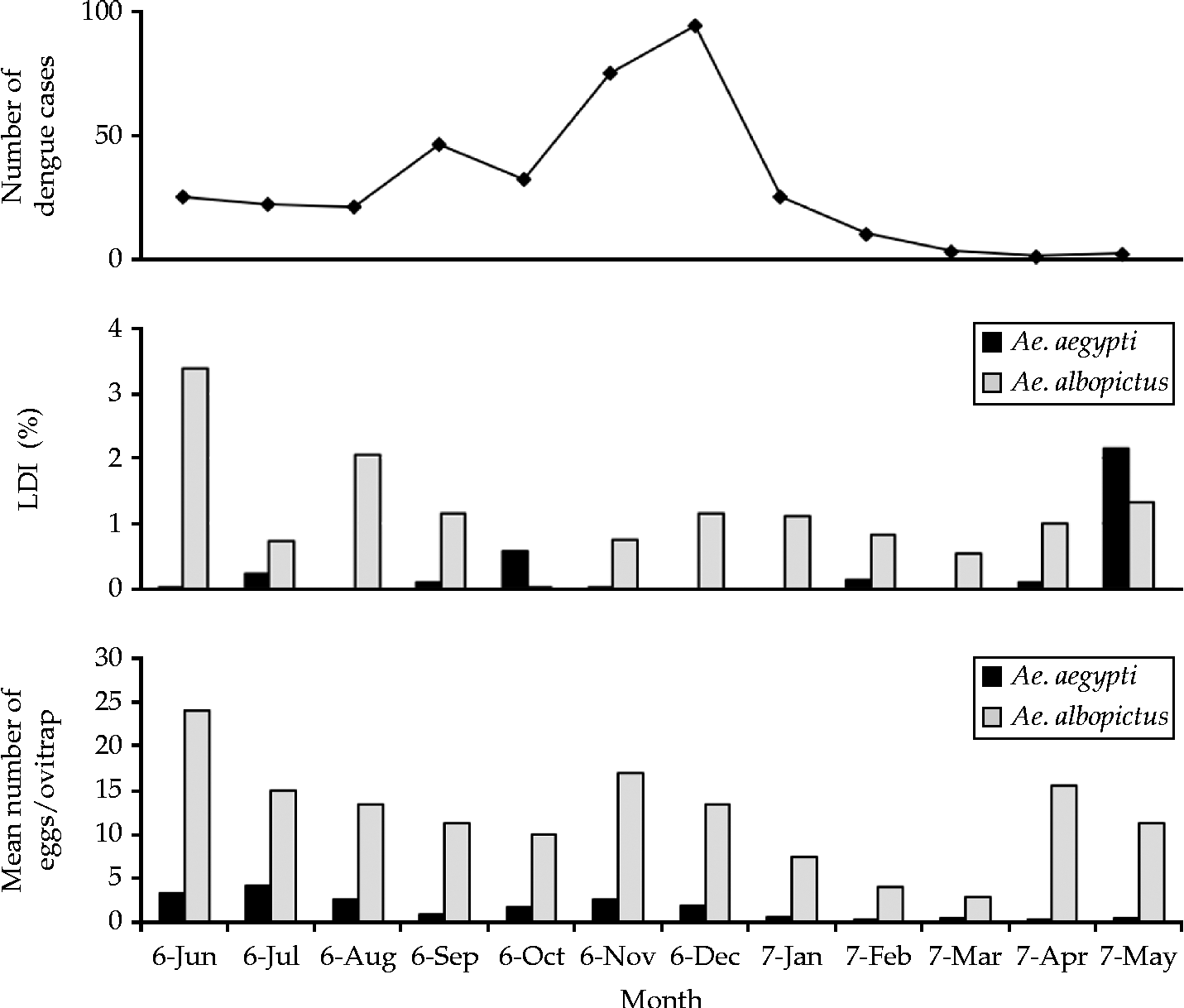
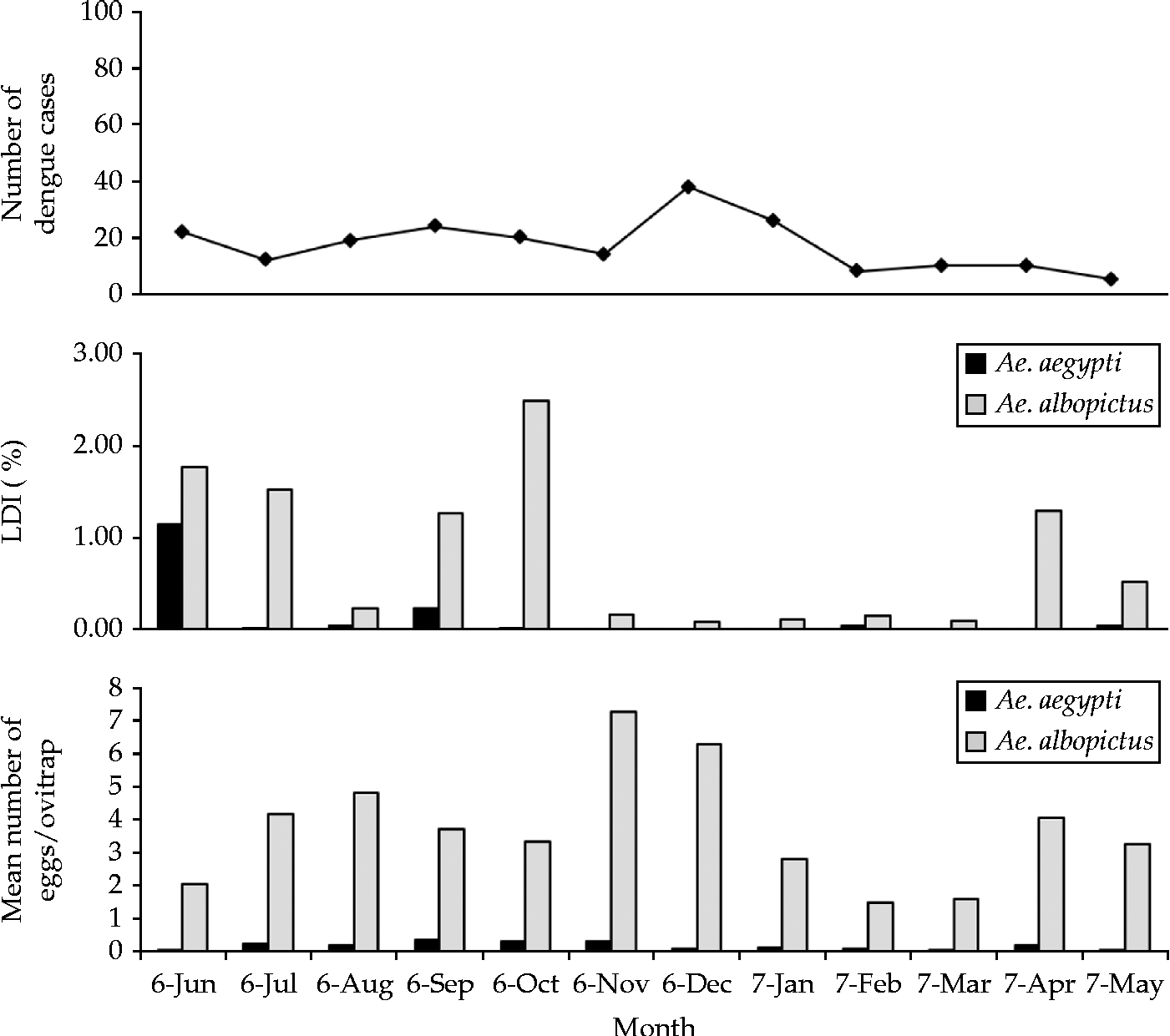
The LDIs, mean number of eggs/ovitrap and recorded dengue cases/district per month are presented in Figs 5 and 6. There was no significant relationship of the monthly mean number of larvae per positive breeding habitat or the LDI with the rainfall, temperature, relative humidity and number of dengue cases.
Mean number of eggs/ovitrap per month, monthly LDIs of Aedes aegypti and Aedes albopictus and number of dengue cases in the Kandy District during the study period
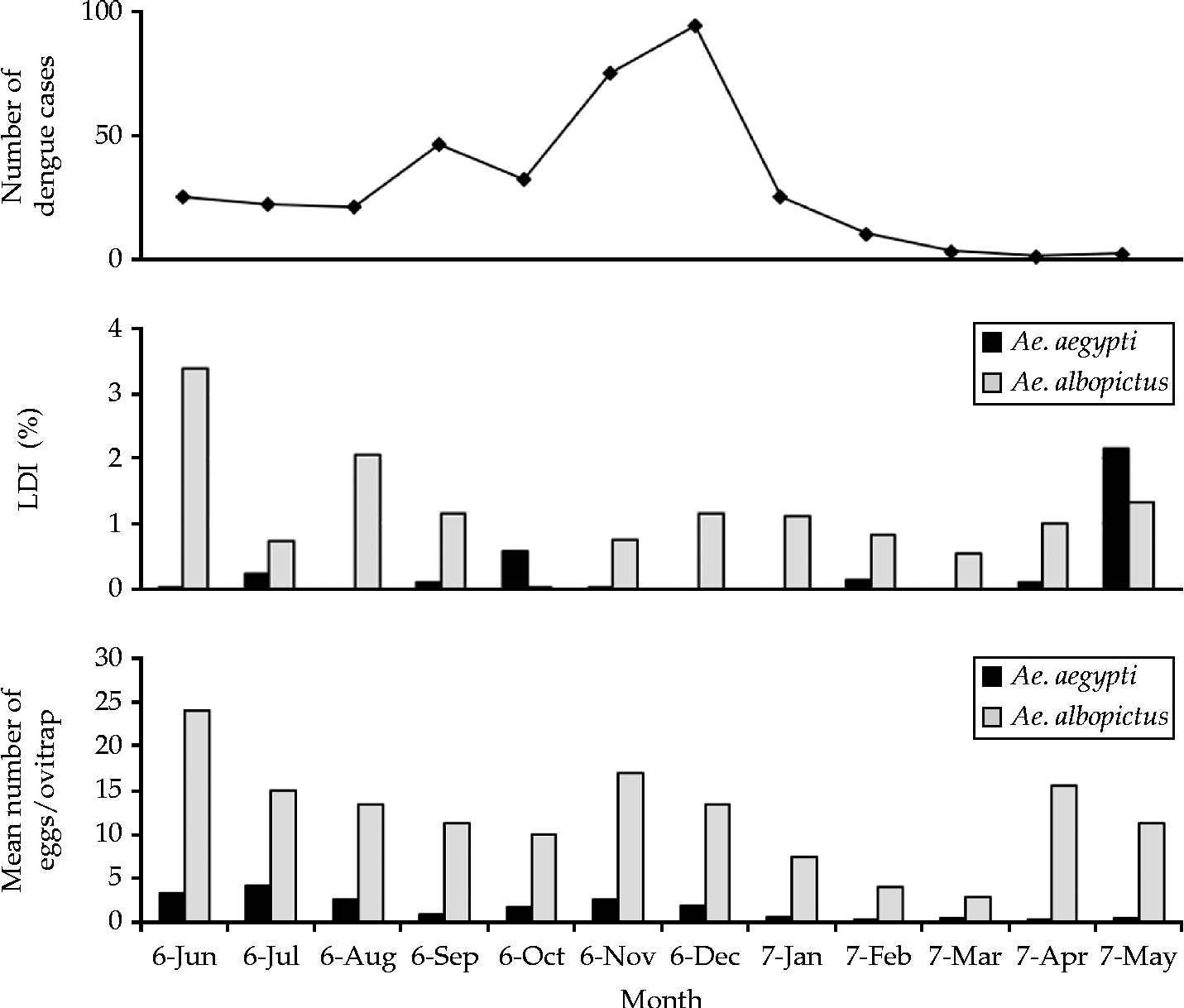
Mean number of eggs/ovitrap per month, monthly LDIs of Aedes aegypti and Aedes albopictus and number of dengue cases in the Kurunegala District during the study period

Discussion
Sri Lanka is located in the tropics and its population has a high risk of contracting DF. It is well known that the dengue vectors Ae. aegypti and Ae. albopictus have the ability to transmit the dengue virus. The ovitrap and larval surveys indicated the presence of both the vectors in all the four study sites of the Kandy and Kurunegala districts, and their results revealed that the areas studied were at a high risk of the dengue epidemic.
The results of the larval and egg surveys revealed that Ae. albopictus is the predominant species in all the four semi-urban study sites. No larvae of Ae. aegypti could be collected during the entire study period from the study site Rajawatta in the Kandy District. A major decline in the abundance of Ae. aegypti has been observed in many countries throughout the world in association with the prevalence of Ae. albopictus in both urban and rural areas (Meara et al., Reference Meara, Evans, Alan and Cuda1995; Hobbs et al., 1999; Moore, Reference Moore1999; Fontenille and Toto, Reference Fontenille and Toto2001). In laboratory conditions, high temperature and precipitation negatively affected the growth and dispersal of Ae. aegypti but not of Ae. albopictus (Neto and Navarro-Silva, Reference Neto and Navarro-Silva2004). This might be another factor allowing the secondary vector Ae. albopictus to survive more successfully and replace the primary vector.
Compared with the number of eggs encountered, the number of larvae observed was lower than expected in all the study sites, indicating that conducting an egg survey alone would overestimate the vector abundance and the disease risk in an area. Ovitraps have been successful in many parts of the world in detecting dengue vectors especially at low densities (Service, 1993). A study on the distribution of Ae. albopictus was conducted by Richards et al. (Reference Richards, Apperson, Ghosh, Cheshire and Zeichner2006) in North Carolina. In that study, no correlation was observed between the mean number of immature stages and the number of eggs collected using ovitraps. This may indicate a decreased rate of egg hatching and a high larval mortality rate resulting from unfavourable weather conditions, predation, larval parasitism, decreased food supply and changes in physical parameters, such as pH level. Li et al. (Reference Li, Lim, Han and Fang1985) and Hornby et al. (Reference Hornby, Moore and Miller1994) have demonstrated that heavy rainfall causes an accumulation of excess water that prevents oviposition and flushes the breeding sites.
According to the results of the larval surveys, the risk is due to the secondary vector, Ae. albopictus, but not to the primary vector, Ae. aegypti. Previous studies have also shown that Ae. albopictus was the main species found in some localities with reported dengue cases (Hapugoda et al., 2001; Kusumawathie and Fernando, Reference Kusumawathie and Fernando2003; Kusumawathie et al., 2011). Aedes albopictus is susceptible to all four dengue serotypes under laboratory conditions, and serotype 3 has been detected in Ae. albopictus that is caught in the wild (Hapugoda et al., Reference Hapugoda, Gunasekera, de Silva, Gunasena, Prithimala, Dayanath and Abeyewickreme2003).
The OI values obtained in the present study fall into the level 4 (high risk) of the classification introduced by the Department of Food and Environmental Hygiene, the Government of Hong Kong Special Administrative Region (2003). The high abundance of Ae. albopictus may be the reason for the observed positive relationships between the mean number of Ae. albopictus eggs and some of the climate parameters. A study conducted in Vietnam has shown an increased risk of dengue during rainy months with increased vector populations (Pham et al., 2011). An ovitrap survey conducted by Rozilawati et al. (Reference Rozilawati, Zairi and Adanan2007) showed that the number of eggs increases only 1 week after the rainfall. However, breeding sites may become more productive even during dry seasons when there is concentrated and accumulated larval food (Koenraadt et al., Reference Koenraadt, Aldstadt, Kijchalao, Sithiprasasna, Getis, Jones and Scott2008). Richards et al. (Reference Richards, Apperson, Ghosh, Cheshire and Zeichner2006) have shown that oviposition intensity is significantly associated with a specific type of land cover. Increased vegetation and a cool-shaded environment positively support larval development (Rozilawati et al., Reference Rozilawati, Zairi and Adanan2007). A meteorological study conducted in the Ratnapura, Colombo and Anuradhapura districts of Sri Lanka during the period from 2005 to 2011 has concluded that the weekly average maximum temperature and the weekly total rainfall did not significantly affect dengue incidence in these areas (Goto et al., 2013). It is obvious that several factors contribute to an increased incidence of dengue. A combination of lowered herd immunity (of the human population), virus transmission outside the home, an increase in the age of infection and the adoption of a case-reactive approach to vector control has contributed to an increased incidence of dengue in Singapore (Ooi et al., Reference Ooi, Goh and Gubler2006). Favourable factors such as high rainfall and dense vegetation cover must have significantly contributed to providing a greater number of breeding grounds for Aedes in the study sites of Kandy. In contrast, the study sites of Kurunegala had fewer natural breeding sites and the weather pattern also might not have been as favourable as it was in Kandy.
A comparable level of insecticide cross-resistance spectra was shown by both the species collected from the same study areas, suggesting a similar level of exposure to insecticides exhibited by both the species through the loss of habitat boundaries. Adults of both the vectors were susceptible to malathion/propoxur, resistant to DDT and moderately resistant to permethrin. Recommended dosages of temephos sand granules could control larvae successfully for up to 10 months under laboratory conditions and up to 6 months in groundwater storage tanks in the field (Karunaratne et al., 2013). Discarded receptacles were the most preferred type of breeding habitat for dengue vectors in both the districts, and the accumulation of these containers was mainly due to improper practices of garbage disposal. The attractiveness of these breeding sites remains at a risk level; the general public and government organizations must make maximum efforts to eliminate them. The use of insecticides would be an alternative way for controlling both larvae and adults, especially during the outbreaks of dengue.
Conclusion
Aedes albopictus is the dominant dengue vector species found in the Kandy and Kurunegala districts of Sri Lanka. Ovitrap and larval indices indicate that both the districts are at a high risk of experiencing dengue outbreaks and need extensive control programmes involving the elimination of breeding sites and the application of synthetic insecticides. OI would overestimate the vector abundance and the disease risk.
Acknowledgements
The authors acknowledge the financial support received from the National Science Foundation, Sri Lanka (grant no. RG/2006/HS/02) and the field assistance provided by the entomological team of the Anti-Malaria Campaign, Kurunegala.