





1. Introduction
Demonstratives and locative adverbs are considered universal elements of language that are used early on in children’s development, but research to date suggests that they are not used with target-like competence until relatively late (e.g. Küntay & Özyürek, Reference Küntay and Özyürek2006). Demonstratives are pronouns and determiners which convey the location of the referent generally relative to the speaker, such as this and that, while locative adverbs are adverbs which specify a place generally relative to the speaker, such as here and there. Both demonstratives and locative adverbs require an understanding of another person’s perspective in relation to a reference point, so their late acquisition has been linked to various cognitive biases such as children’s inability to view referents from an interlocutor’s perspective (egocentric bias) or children’s focus on their immediate surroundings (proximity bias) (Chu & Minai, Reference Chu and Minai2018; Clark & Sengul, Reference Clark and Sengul1978; Espinosa Ochoa, Reference Espinosa Ochoa2022). However, much of the research on demonstrative acquisition has focused on languages with relatively simple systems in which demonstratives have only a two- or three-way distance distinction (i.e. near speaker vs. far from speaker) (e.g. Chu & Minai, Reference Chu and Minai2018; Guijarro-Fuentes et al., Reference Guijarro-Fuentes, Gudde, Gonzálex-Peña and Coventry2024; Rodrigo et al., Reference Rodrigo, González, de Vega, Muñetón-Ayala and Rodríguez2004). Research on more complex systems focuses on the difference between speaker-oriented versus addressee-oriented demonstratives (e.g. Skilton, Reference Skilton2023).
In contrast, Inuktitut, a language of the Inuit-Yupik-Unangan family spoken in Canada, has complex demonstrative and locative adverb systems in which all forms are speaker-oriented but provide more locational detail. They represent entities and locations that are near/far from the speaker, above/below the speaker, or inside/outside a structure that the speaker is in (Denny, Reference Denny1982; Dorais, Reference Dorais2010). Demonstratives additionally differentiate whether the entity is still or moving. To our knowledge, there are no studies focused on the acquisition of demonstratives or locative adverbs in Inuktitut or other languages with similar systems.Footnote 1 Studying the acquisition of these structures in Inuktitut can provide insight into how children manage conceptual knowledge; for example, can they differentiate between the six possible locations, and can they integrate information on location and movement? This will expand the body of work on children’s cognition in relation to demonstrative acquisition cross-linguistically.
To gain an understanding of demonstrative and locative adverb systems in Inuktitut and their acquisition, we completed two studies. First, we examined the use of these structures in elicited narratives produced by early school-aged children (age 8;7 to 9;7), adolescents (age 15;3 to 16;8), and adults (age 30–60). Second, we examined the use of demonstratives and locatives in spontaneous speech produced by young children (age 0;11 to 3;6) and in the child-directed speech (CDS) of their mothers. We investigate which demonstratives and locative adverbs are used and if/when they are used in a target-like manner. Further, we investigate if the demonstratives in child language align with those in CDS or if a difference between child language and CDS provides evidence of a cognitive bias.
1.1. Demonstratives and locatives across languages
Demonstratives are pronouns or determiners that refer to an entity. Many researchers additionally include locative adverbs in the demonstrative category, although they refer to a place rather than an entity (Diessel, Reference Diessel2006). The existence of demonstratives and locative adverbs appears to be universal across languages (Diessel, Reference Diessel2006).
Demonstratives and locative adverbs have two main defining characteristics: joint attention and deixis. Joint attention is a component of social cognition in which the speaker directs the addressee’s attention to an entity or situation so that both the speaker and addressee focus on the same referent and are aware of each other’s attention to that referent (Diessel, Reference Diessel2006; Tomasello, Reference Tomasello2000). Thus, joint attention requires some ability to understand another person’s perspective. Deixis has been defined in many ways, but it is most typically described as a linguistic expression or gesture that functions to point to or identify entities; it is semantically dependent on a point of reference or origo, which is often the speaker but can also be the addressee (Bühler, Reference Bühler, Jarvella and Klein1982 [1934]; Diessel & Coventry, Reference Diessel and Coventry2020; Todisco et al., Reference Todisco, Guijarro-Fuentes, Collier and Coventry2021).
Demonstratives and locative adverbs can be used with various communicative functions. For example, demonstratives used to focus the addressee’s attention on the referent can be considered directive,Footnote 2 while demonstratives or locative adverbs used with the action of giving an object to the addressee can be considered presentative and represent a fixed expression rather than a productive use (González-Peña et al., Reference González-Peña, Doherty and Guijarro-Fuentes2020; Espinosa Ochoa, Reference Espinosa Ochoa2022; Skilton, Reference Skilton2023).
While these structures are universal, demonstrative and locative adverb systems across languages differ in terms of their size and complexity. For example, English has a relatively simple demonstrative system with only a two-way distinction for a referent near the speaker or proximal (this) and a referent far from the speaker or distal (that) (González-Peña et al., Reference González-Peña, Doherty and Guijarro-Fuentes2020). The Turkish demonstrative system is somewhat more complex with a three-way distinction, encoding proximal (bu), distal (o), and a third form (s̹u), which has been analysed as signalling the absence of the addressee’s visual attention on the referent (Küntay & Özyürek, Reference Küntay and Özyürek2006) or as a demonstrative used for entities at a medial distance from the speaker with no relevance of joint attention (Peeters et al., Reference Peeters, Azar, Ozyurek, Bello, Guarini, McShane and Scassellati2014; Rubio-Fernandez, Reference Rubio-Fernandez2022). Ticuna provides an example of a relatively complex demonstrative system, with six demonstratives and six locative adverbs (Skilton, Reference Skilton2023). Four of each demonstrative type have productive deictic uses: speaker-proximal, speaker-distal, dyad-proximal, and addressee-proximal. One of the other demonstratives is anaphoric, and the last is used only in idioms.
1.2. The acquisition of demonstratives
Considerable research has investigated the acquisition of demonstratives in the first language of children. Three main findings are consistent across this body of work. First, children start using demonstratives very early, typically in the one-word stage (Clark, Reference Clark, Bruner and Garton1978; Diessel & Coventry, Reference Diessel and Coventry2020). Second, they use proximal demonstratives before other demonstratives. Finally, they do not reach target-like use of demonstratives until beyond seven years of age. For example, Rodrigo et al. (Reference Rodrigo, González, de Vega, Muñetón-Ayala and Rodríguez2004) investigated the production of demonstratives by four one-year-olds and four two-year-olds acquiring Spanish, which has three demonstratives – speaker-proximal (este), addressee-proximal/speaker-medial (ese), and dyad-distal (aquel) – conveying number and gender. They found that children as young as 12–24 months used deictic words in naturalistic daily interactions. They predominantly used the demonstrative este to refer to objects within touching distance; they almost never referred to objects that were farther away, so there were few cases of ese and aquel in the data. The children consistently used the masculine, singular form regardless of the actual gender and number of the referent. Guijarro-Fuentes et al. (Reference Guijarro-Fuentes, Gudde, Gonzálex-Peña and Coventry2024) present similar findings for children ages 2–10, which contrast with findings for older children and adults who predominantly used ese. Aquel was used infrequently at all ages. Similarly, Chu and Minai (Reference Chu and Minai2018) examined the comprehension of demonstratives by English- and Mandarin-speaking children (ages 3;0 to 6;3). Demonstratives in both languages express a two-way distance distinction: speaker-proximal vs. speaker-distal. The study found that both speaker groups performed better on this-items (proximal) than that-items (distal) in an act-out task. Further, in a study of Turkish-speaking four-year-olds, six-year-olds, and adults, Küntay and Özyürek (Reference Küntay and Özyürek2006) found that both child groups had acquired the basic speaker-proximal (bu) and speaker-distal (o) distinction. However, neither child group was sensitive to the addressee’s visual attention when using the third demonstrative (s̹u) which the authors analysed as marking the absence of the addressee’s visual attention on the referent. Instead, they used s̹u as an additional speaker-proximal demonstrative but overwhelmingly preferred bu to s̹u. Lastly, another example comes from Sagna et al.’s (Reference Sagna, Vihman, Vihman and Brown2022) study of demonstrative acquisition by Eegimaa-speaking children (ages 2;0 to 3;0). Eegimaa has four demonstrative types with differing syntactic functions that can all express a three-way distance distinction. They include gender agreement (10 genders) and deictic suffixes, and the morphological form varies based on the demonstrative type, resulting in approximately 160 different demonstrative forms (Sagna et al., Reference Sagna, Vihman, Vihman and Brown2022). The youngest children (age 2;0) used a restricted range of demonstratives, which were almost exclusively proximal with only two genders. The frequency and distribution of various demonstrative forms increased with child age.
While this trajectory of demonstrative acquisition appears consistent, more nuances become apparent when examining the acquisition of more complex demonstrative systems. This is demonstrated, for example, in Skilton’s (Reference Skilton2023) study of demonstrative acquisition by 46 Ticuna-speaking children aged 1;0 to 4;11 (see above for description of the Ticuna demonstrative system). These children used the speaker-proximal demonstrative more frequently than their caregivers did in their CDS (the study did not examine whether this use was target-like in terms of semantics or pragmatics). In addition, both the speaker-proximal and speaker-distal demonstratives were used before the addressee-proximal and dyad-proximal demonstratives. While the speaker-proximal demonstrative was not target-like in frequency, children attained target-like frequencies with the other demonstrative types as soon as they appeared in the data: at 2;0 for speaker-distal and between 2;0 and 3;0 for addressee-proximal and dyad-proximal. Further, demonstratives – which have a directive function in Ticuna – were used more frequently than locative adverbs, and the locative terms were never acquired before their corresponding demonstratives. In sum, although proximal demonstratives are among the first to appear and most used across languages, differences in the origo and function/form of demonstratives may lead to differences in the trajectory of acquisition. Also, the age at which children master target-like use of demonstratives may differ across languages.
The studies on the acquisition of demonstratives generally agree that the early emergence of demonstratives is linked to their high frequency in the input (Diessel & Coventry, Reference Diessel and Coventry2020; González-Peña et al., Reference González-Peña, Doherty and Guijarro-Fuentes2020). However, the reasoning for the late attainment of target-like use of demonstratives is less clear. Some studies argue that young children have an egocentric cognitive bias, and thus struggle with viewing referents from the interlocutor’s perspective, so they are unable to produce appropriate demonstratives (Chu & Minai, Reference Chu and Minai2018; Diessel & Coventry, Reference Diessel and Coventry2020; Küntay & Özyürek, Reference Küntay and Özyürek2006). Other studies suggest that young children have a proximity bias – a tendency to focus on their immediate surroundings – and this leads them to use proximal before distal demonstratives (Espinosa Ochoa, Reference Espinosa Ochoa2022; Rodrigo et al., Reference Rodrigo, González, de Vega, Muñetón-Ayala and Rodríguez2004). Skilton’s (Reference Skilton2023) study found evidence of a cognitive bias in the production of demonstratives, but because the demonstratives combine addressee orientation and other forms of semantic complexity, either an egocentric cognitive bias or a proximity bias could be responsible for the late acquisition of the structures. Differing views are also evident in explaining the order of acquisition of demonstratives and locative adverbs in respect to each other. Some studies link the emergence of these structures to differences in syntactic category, since young children are more likely to use locative adverbs than demonstratives (pronouns/determiners) (González-Peña et al., Reference González-Peña, Doherty and Guijarro-Fuentes2020). Other studies suggest a pragmatic explanation: that structures with the presentative function – which may be fixed forms – are acquired before fully deictic terms. For some languages, locative adverbs have the presentative function (English; González-Peña et al., Reference González-Peña, Doherty and Guijarro-Fuentes2020), while for other languages, demonstratives do (Yucatec Maya; Espinosa Ochoa, Reference Espinosa Ochoa2022). Yucatec Maya has a specific presentative/directive demonstrative, which some children produce prior to all other demonstratives. Similarly, in Ticuna demonstratives with a directive function are particularly early emerging (Skilton, Reference Skilton2023). Overall, the factors affecting the trajectory of acquisition of demonstratives are not agreed upon in the literature.
To summarize, in languages with relatively simple demonstrative systems, children use mainly proximal demonstratives early on and are slow to reach target-like use of the system. This pattern is extended in languages with more complex demonstrative systems, with speaker-oriented and presentative demonstratives appearing earlier. Further, studies attribute the trajectory of acquisition of demonstratives and locative adverbs to various causes, but there is no clear consensus on this issue. Thus, the trajectory and contributing factors of demonstrative and locative adverb acquisition remain open questions.
In the present study, we contribute to this literature by investigating the acquisition of demonstratives and locative adverbs in Inuktitut. Crucially, the demonstrative and locative adverb systems of Inuktitut are more complex or complex in different ways than the systems in languages studied to date. Although all the demonstratives and locative adverbs are speaker-oriented, they encode more detailed information about location than the systems mentioned to date, including not only distance but also elevation and enclosure, crossed with whether the entity is still or moving for demonstratives. Through studying the acquisition of such a system, we aim to provide more insight into the factors that are relevant for the acquisition of demonstratives and locative adverbs, as well as the acquisition of grammar of space/spatial language in general.
1.3. Inuktitut and its demonstrative and locative adverb systems
Inuit languages are spoken across Alaska, Northern Canada, and Kalaallit Nunaat (Greenland) by around 100,000 people, and Inuktitut is spoken by approximately 34,000 people in northeastern Canada (Dorais, Reference Dorais2010). The current study focuses on the Tarramiut variety, which is spoken along the Ungava coast in Nunavik. It is a polysynthetic language with primarily agglutinative morphology, ergative case marking, and extensive argument ellipsis. The default word order is SVO with variation due to information structure. The language is typically described as having three word classes – verbs, nouns, and uninflected particles – and word structure is root-affix-inflectional affix (Fortescue, Reference Fortescue1980).
Inuktitut has 10 singular and 10 plural demonstrative roots (Arnakak, Reference Arnakak1995; Denny, Reference Denny1982 Footnote 3; Dorais, Reference Dorais2010; Dorais, Reference Dorais1971; Gagné, Reference Gagné, Valentine and Vallee1968), which take all eight cases available in the language (absolutive, ergative, modalis, allative, ablative, locative, vialis, and equalis). All demonstratives are speaker-oriented and refer to an entity based on its spatial position according to three pairs of criteria: proximal/distal to the speaker, above/below the speaker, inside/outside a structure that the speaker is in. The exact semantics of the inside/outside demonstratives is not entirely clear in the literature. Gagné (Reference Gagné, Valentine and Vallee1968) specifies that these demonstratives refer to entities that are outside the space the speaker is in or inside a space that the speaker is outside of. In contrast, Arnakak’s (Reference Arnakak1995) description of these demonstratives in the Baffin Islands dialect is broader and only requires a physical barrier between the speaker and the referent; it even includes the example qamma ippiarjunni “in (there) my pocket” (p. 124).
The referents are also classified as static (not moving) or dynamic (moving) (Dorais, Reference Dorais2010). However, the static/dynamic distinction is not agreed upon in the literature, and it has also been described as perceptible/imperceptible (Dorais, Reference Dorais1971), equidimensional/non-equidimensional (Gagné, Reference Gagné, Valentine and Vallee1968), aggregative/non-aggregative (Arnakak, Reference Arnakak1995), and restricted/extended (Denny, Reference Denny1982). Despite the apparent differences between these classifications, non-equidimensional and non-aggregative seem to share features of movement and continuity, as well. Further, this distinction is collapsed for the enclosure-based demonstratives (thus the total of 10 roots rather than 12). Table 1 shows the demonstrative paradigm for the absolutive, singular forms with the demonstrative root included in parentheses (adapted from Dorais, Reference Dorais2010, pp. 147–148). Although the English translations include locatives to describe the location of the entity that the demonstrative refers to, the Inuktitut words are demonstratives, not locative adverbs.
Inuktitut demonstrative paradigm

Table 1. Long description
The table is organized into four columns. The first two columns define the spatial category and sub-category, while the third and fourth columns provide the Static and Dynamic linguistic forms with their English translations.
* Distance Category
- Speaker-proximal: Static is una (u-) meaning this one right here. Dynamic is manna (matsu-) meaning this one here.
- Speaker-distal: Static is inna (itsu-) meaning that one there. Dynamic is anna (atsu-) meaning that one there away.
* Elevation Category
- Below speaker: Static is kanna (katsu-) meaning this one down here. Dynamic is unna (utsu-) meaning that one down there.
- Above speaker: Static is pinna (pitsu-) meaning this one up here. Dynamic is panna (patsu-) meaning that one up there.
* Enclosure Category
- Inside a structure: Static is qanna (qatsu-) meaning this one here inside. Dynamic is qanna (qatsu-) meaning that one there inside.
- Outside a structure: Static is kinna (kitsu-) meaning this one here outside. Dynamic is kinna (kitsu-) meaning that one there outside.
Demonstratives can occur independently or as part of a null copula construction (1). Further, demonstratives can be used to express time as an extent of space through which one is moving (2); proximity in space is equivalent, then, to proximity in time. The prefix ta- “external reference (ext)” can be added when referring to space that is difficult to perceive or is in relation to something other than the speaker (2) (Dorais, Reference Dorais2010; Gagné, Reference Gagné, Valentine and Vallee1968).
(1)
Natsiik kakkua.
natsiq-ik
kakku-a
seal-abs.du
below.speaker.dy.du.pl-abs.pl
Footnote 5
“There are two seals down here.” [lit. two seals these down here (moving)]
(Dorais, Reference Dorais2010, p. 84)
(2)
Taitsumani.
ta-itsu-mani
ext-speaker.distal.st.sg-loc.sg
“Formerly.” [lit. in that one (not moving) far away]
(Dorais, Reference Dorais2010, p. 147)
Locative adverbs in Inuktitut index a location rather than referring to an entity (noun). The locative adverb system has 10 roots expressing the same spatial positions as the demonstratives. However, there is no static/dynamic element. Rather, there is an additional proximal/distal division (Dorais, Reference Dorais2010, p. 83), which is semantically simpler than the demonstrative system. Denny (Reference Denny1982) describes this difference as restricted (i.e. single space, location is easily comprehensible) or extended (i.e. stretch of space, location is not easily comprehensible). Denny states, however, that the pragmatic use of the extended locative adverbs often corresponds to a sense of farther away compared to their restricted counterparts. For example, uv- “here, restricted” refers to a place right beside the speaker, while ma- “here, extended” refers to the area around the speaker or even to the whole room that the speaker is in. We decided to use proximal/distal because those labels are more transparent, and they correspond to the descriptions of the locative adverb system in Kalaallisut (Greenlandic; Fortescue, Reference Fortescue1984; Grenoble et al., Reference Grenoble, McMahan and Petrussen2019; McMahan et al., Reference McMahan, Grenoble and Petrussen2022). Additionally, locative adverbs only take four cases (locative, allative, ablative, and vialis) and do not express grammatical number, which is morphologically simpler than the demonstrative system. Table 2 shows the paradigm of locative adverbs with locative case marking, and the roots are included in parentheses.
Inuktitut locative adverb paradigm

Table 2. Long description
The table is organized into four columns: Category, Sub-category, Proximal, and Distal.
1. Distance category:
- Speaker-proximal: Proximal is uvani (uv-) meaning ‘right here’; Distal is maani (ma-) meaning ‘here’.
- Speaker-distal: Proximal is ikani (ik-) meaning ‘there’; Distal is avani (av-) meaning ‘there away’.
2. Elevation category:
- Below speaker: Proximal is kanani (kan-) meaning ‘down here’; Distal is unani (un-) meaning ‘down there’.
- Above speaker: Proximal is pikani (pikk-) meaning ‘up here’; Distal is paani (pa-) meaning ‘up there’.
3. Enclosure category:
- Inside a structure: Proximal is qamani (qam-) meaning ‘here inside’; Distal is qamani (qam-) meaning ‘there inside’.
- Outside a structure: Proximal is qaani (qa-) meaning ‘here outside’; Distal is kiani (ki-) meaning ‘there outside’.
Finally, several studies have described the demonstrative and locative adverb systems in Kalaallisut, another language in the Inuit-Yupik-Unangan family that is mutually intelligible to some degree and has many structural similarities to Inuktitut. In particular, the demonstrative and locative adverb systems in Kalaallisut are nearly identical to those of Inuktitut. Kalaallisut has the three spatial divisions of distance, elevation, and enclosure crossed with an additional proximal/distal distinction (Fortescue, Reference Fortescue1984; Grenoble et al., Reference Grenoble, McMahan and Petrussen2019; McMahan et al., Reference McMahan, Grenoble and Petrussen2022).
1.4. Acquisition of demonstratives and locative adverbs in Inuktitut
Three studies have touched on the acquisition of demonstratives and locative adverbs in Inuktitut child speech and CDS. Two of these studies used a subset of the data analysed in the present paper, but no previous study has systematically examined demonstratives in a large data set.
In their Acquisition Sketch of Inuktitut – an overview of child language and CDS using just five hours of data from children age 1;4 to 3;4 – Lee and Allen (Reference Lee, Allen, Hellwig, Allen, Davidson, Defina, Kelly and Kidd2023) found that the youngest children only used the demonstrative root u- “this one here,” and more demonstrative types appeared through the later ages. Further, children used more demonstrative and locative adverb tokens as they aged. Similarly, mothers most frequently used the demonstrative u- “this one here” with the youngest children, and more demonstrative types appeared through the later ages. The frequency of demonstrative and locative adverb tokens remained relatively consistent in CDS. This analysis used a subset of the data used in Study 2 below and shows the general pattern that Inuktitut-speaking children use the proximal demonstrative before other demonstrative types, as do mothers in their CDS. This raised the question of whether these patterns hold more widely, which inspired the current study.
Two studies adapting language assessments for Inuktitut also show that children use the proximal demonstrative (u-) and locative adverb (ma-) earlier and more frequently than other demonstratives and locative adverbs. First, Allen et al. (Reference Allen, Dench, Isakson, Ball, Fletcher and Crystal2019) conducted an analysis of demonstratives and locative adverbs in spontaneous speech data of children ages 1;8 to 3;6 as part of the foundation for adapting the Language Assessment, Remediation, and Screening Procedure (LARSP), an assessment of morphosyntactic ability. This analysis found that the most frequently used demonstrative was una “this one here (abs),” which first appeared in Stage 1. The next demonstratives to appear were uminga “this one here (mod)” and ukua “these ones here (abs)” in Stage 4 and kanna “that one down there (abs)” in Stage 5. The locative adverb maani “here (loc)” appeared in Stage 2. No other demonstratives or locative adverbs occurred consistently enough across children to be a useful criterion on the Inuktitut LARSP. The study defined the stages based on mean length of utterance in morphemes (MLUm): children generally used one-morpheme utterances at Stage 1, a root and up to three more morphemes at Stage 2, a root and up to six more morphemes at Stage 4, and a root and up to seven more morphemes at Stage 5. Second, Allen et al. (Reference Allen, Cain, Dench, Genest, Trudeau and Leein preparation) adapted the MacArthur Bates Communicative Development Inventory (CDI), which is an assessment of early vocabulary acquisition in the form of a checklist to be completed by parents. The Inuktitut adaptation includes the following demonstratives and locative adverbs: una “this one here,” ikkua “those ones there,” ukua “these ones here,” maani “here,” kanani “down here,” avani “there away,” and paani “up there.” A pilot study conducted with 30 children ages 1;6 to 4;2 found that una “this one here” and maani “here” were two of the 50 most frequent words on the CDI, and they were used by 28 and 27 of the children, respectively. The locative adverb kanani “down here” was one of the 60 least frequent words on the CDI and was only used by 5 of the children. The frequency of the other demonstratives and locative adverbs fell between the 50 most frequent and 60 least frequent words.
While these studies provide insight into the early use of demonstratives and locative adverbs in Inuktitut, they were based on a limited amount of data of preschool children (ages 1;4 to 4;2) and did not have a particular focus on demonstratives or locative adverbs. Thus, more research is needed to have a fuller understanding of the trajectory of acquisition of demonstratives and locative adverbs in Inuktitut.
1.5. The current studies
The factors that play a role in the acquisition of demonstratives and locative adverbs remain an open question. Prior studies have suggested that the trajectory of acquisition of demonstratives and locative adverbs could be due to children having an egocentric bias or proximity bias and/or due to the semantic complexity, syntactic category, or communicative function of demonstratives and locative adverbs (e.g. Chu & Minai, Reference Chu and Minai2018; Diessel & Coventry, Reference Diessel and Coventry2020; Espinosa Ochoa, Reference Espinosa Ochoa2022; Küntay & Özyürek, Reference Küntay and Özyürek2006; Rodrigo et al., Reference Rodrigo, González, de Vega, Muñetón-Ayala and Rodríguez2004; Skilton, Reference Skilton2023). Therefore, studying demonstrative and locative adverb acquisition in Inuktitut can expand our understanding of children’s cognition by providing insight into how children manage conceptual knowledge that requires integrating location and movement information.
In the studies reported in this paper, we explored the trajectories of demonstrative and locative adverb acquisition in Inuktitut. In particular, we investigated which demonstratives and locative adverbs are used by children and when they produce them in a target-like manner. We also determined if the children’s use of these structures aligns with the use of the structures in CDS. We approached these questions through two studies. In Study 1: Target-Like Use of Demonstratives and Locative Adverbs, we examined the use of demonstratives and locative adverbs in narratives by early school-age children (ages 8;7 to 9;7), adolescents (ages 15;3 to 16;8), and adults (ages 30–60) to gain insight into the target-like use of these structures. We predicted that all speaker groups would use demonstratives and locative adverbs in the same way, as they are typically acquired in full by around seven years of age (Chu & Minai, Reference Chu and Minai2018; Küntay & Özyürek, Reference Küntay and Özyürek2006). This study should provide a picture of the real-life target for children acquiring Inuktitut.
In Study 2: Acquisition of Demonstratives and Locative Adverbs, we examined the use of both structures in spontaneous naturalistic interactions between preschool-age children (ages 0;11 to 3;6) and their mothers to gain insight into the trajectory of acquisition of demonstratives and locative adverbs. First, we predicted that none of the preschool-age children would use demonstratives or locative adverbs in a fully target-like manner at these ages. Second, we predicted that the preschool-age children would use the proximal demonstratives and locative adverbs before and more frequently than all other demonstratives (Rodrigo et al., Reference Rodrigo, González, de Vega, Muñetón-Ayala and Rodríguez2004; Skilton, Reference Skilton2023). Given that there has been no previous cross-linguistic research on the acquisition of demonstrative systems with distinctions based on elevation, enclosure, and dynamicity, we were not sure what to predict for order of acquisition. Based on previous work in Inuktitut, we expected that demonstratives specifying elevation would appear earlier and more frequently than those specifying enclosure and that demonstratives specifying static entities would appear earlier and more frequently than those specifying dynamic entities (Allen et al., Reference Allen, Dench, Isakson, Ball, Fletcher and Crystal2019; Allen et al., Reference Allen, Cain, Dench, Genest, Trudeau and Leein preparation; Lee & Allen, Reference Lee, Allen, Hellwig, Allen, Davidson, Defina, Kelly and Kidd2023). Third, we expected that the preschool-age children would use the locative adverb system earlier and more frequently than the demonstrative system due to its relative simplicity. Finally, we predicted that preschool-age children’s use of demonstratives and locative adverbs would reflect the CDS input; however, differences from the CDS input may indicate a cognitive bias in the children (Diessel & Coventry, Reference Diessel and Coventry2020; González-Peña et al., Reference González-Peña, Doherty and Guijarro-Fuentes2020).
2. Study 1: Target-like use of demonstratives and locative adverbs
2.1. Participants and data
In this study, we analysed narratives by 18 speakers evenly divided into three age groups: school age (8;7–9;7), adolescent (15;3–16;8), and adult (30–60). All of the participants were native speakers of Inuktitut living in Inuktitut-speaking homes in Nunavik. Half of the participants in each group came from two small communities (225–350 inhabitants) with daily social and business interactions conducted almost exclusively in Inuktitut. The other half of the participants came from a larger community (1100 inhabitants) with a substantial use of English or French in daily social and business interactions. The child and adolescent participants all received education solely in Inuktitut through grade 2 and then switched to receiving education in English or French for content subjects (courses such as culture, religion, and physical education were still taught in Inuktitut). The data were originally collected in 1995 for Allen et al.’s (Reference Allen, Crago and Pesco2006) study on the effect of majority language education on minority Inuktitut language.
The participants were asked to narrate a 24-page wordless picture book, Frog, Where Are You? (Mayer, Reference Mayer1969), which has been widely used in studies of narrative development across languages. Each participant looked through the book and then told the story to a research assistant while still looking at the book. This type of elicitation task may favour proximal demonstratives and locative adverbs as all entities are near the speaker in the book. It is also possible that proximity is manipulated within the pictures themselves, meaning the origo is a character in the book rather than the reader/participant. In that case, Frog, Where Are You? has the potential to elicit elevation and enclosure demonstratives and locative adverbs in a way that more spontaneous speech may not. In the story, the boy is on/under his bed, a tree, a cliff, etc. He is in/out of his house, as well as looking into a variety of spaces, and the frog is in/out of a jar. The sessions were audiotaped and then transcribed and translated in CHAT (Codes for the Human Analysis of Transcripts) format according to the CHILDES (Child Language Data Exchange System) standards (MacWhinney, Reference MacWhinney2000). All participant utterances during the narration were annotated, including questions to the research assistant. Specifically, demonstratives and locative adverbs were coded for spatial position and number, and their inflections were coded for case and number. Demonstratives were additionally coded for dynamicity.
Table 3 includes the mean age and age range for the three groups. It additionally includes the participants’ mean length of utterance in words (MLUw) and MLUm and number of utterances as a mean and a range per group.
Participants

Table 3. Long description
The table consists of ten columns organized under four main categories: Age, M L U w, M L U m, and Utterances.
* Child Group: Mean age 9;1 (range 8;8 to 9;7). M L U w mean 3.06 (range 2.19 to 4.04). M L U m mean 7.68 (range 5.19 to 9.59). Utterances mean 31 (range 26 to 37) with a total of 186.
* Adolescent Group: Mean age 15;10 (range 15;3 to 16;8). M L U w mean 3.61 (range 2.42 to 4.67). M L U m mean 9.16 (range 6.42 to 12.22). Utterances mean 37 (range 22 to 55) with a total of 222.
* Adult Group: Mean age 41;8 (range 30 to 60). M L U w mean 4.60 (range 4.23 to 5.46). M L U m mean 14.91 (range 12.95 to 19.57). Utterances mean 62 (range 38 to 134) with a total of 372.
Allen et al. (Reference Allen, Crago and Pesco2006) examined the participants’ fluency, lexical diversity, grammatical complexity (mean length of word in morphemes [MLW]), and narrative structure. They found that MLW was essentially the same for the school-age children and adolescents, while adults used substantially longer words. In contrast, the adolescents showed more advanced language (relative to the child group) in terms of fluency, lexical diversity, and narrative structure. There was also evidence that, within age groups, language ability was stronger among participants from the smaller communities with less English/French exposure. This suggests that there is some amount of language stagnation or subtractive bilingualism, particularly among the adolescent speakers, which may be relevant to our results.
2.2. Demonstrative use
We determined the mean number of demonstrative roots (types and tokens) used by participants per group, and we calculated the frequency of demonstrative roots per 100 morphemes and per 100 utterances by group as shown in Table 4. On average, adults used more demonstratives (types and tokens) than the children and adolescents. Specifically, the average frequency of demonstrative root types ranged from 4.1 to 6.4 per 100 utterances with adults using slightly more than children and adolescents. The average frequency of demonstrative root tokens ranged from 11.8 to 32.9 per 100 utterances with adults again using more than children and adolescents. As relevant, tables include a caption with the mean number of morphemes (types and tokens) to provide context for the frequency of demonstratives and locative adverbs relative to the actual data.
Mean frequency (SD) of demonstrative roots by group

Table 4. Long description
The table is organized into seven columns. The first column identifies the Group (Children, Adolescents, and Adults). The remaining six columns are divided into two primary categories: Mean types and Mean tokens. Each category includes three sub-columns: Number, Per 100 morphemes, and Per 100 utterances. Values are presented as Mean (S D).
* Children: Mean types are 1.5 (1.4) for Number, 0.6 (2.9) per 100 morphemes, and 4.6 (3.9) per 100 utterances. Mean tokens are 4.2 (7.8) for Number, 1.6 (2.9) per 100 morphemes, and 11.8 (20.8) per 100 utterances.
* Adolescents: Mean types are 1.5 (1.0) for Number, 0.4 (1.5) per 100 morphemes, and 4.1 (2.7) per 100 utterances. Mean tokens are 5.5 (5.9) for Number, 1.5 (1.5) per 100 morphemes, and 13.7 (15.3) per 100 utterances.
* Adults: Mean types are 3.8 (2.0) for Number, 0.4 (0.2) per 100 morphemes, and 6.4 (2.5) per 100 utterances. Mean tokens are 26.7 (34.6) for Number, 2.2 (1.4) per 100 morphemes, and 32.9 (24.3) per 100 utterances.
Footnote data indicates total demonstrative tokens are 25 for children, 33 for adolescents, and 160 for adults.
Total demonstrative tokens by group: child = 25, adolescent = 33, adult = 160. Mean morpheme types by group (SD): child = 89.2 (24.0), adolescent = 118.8 (17.7), adult = 232.83 (75.0). Mean morpheme tokens by group (SD): child = 240.0 (60.4), adolescent = 316.8 (60.1), adult = 977.0 (784.0).
We also examined the frequency of tokens of the proximal static demonstrative roots u- “this one here” and uku- “these ones here” in comparison with tokens of all other roots as shown in Table 5. It is clear that all three groups used the two proximal static roots more frequently than all of the 18 other possible roots combined.
Mean number (SD) of proximal static root tokens and all other root tokens per 100 utterances by group

Table 5. Long description
The table consists of three columns: Group, Proximal static (u- and uku-), and Other.
* Child group: Proximal static mean is 10.9 with an S D of 18.6. Other mean is 0.9 with an S D of 2.2.
* Adolescent group: Proximal static mean is 13.2 with an S D of 14.3. Other mean is 0.5 with an S D of 1.1.
* Adult group: Proximal static mean is 20.5 with an S D of 13.9. Other mean is 12.4 with an S D of 13.5.
Next, we looked more closely at which demonstrative roots were used by each group, as shown in Table 6. For each demonstrative root, the total tokens and the percentage out of the total demonstratives in that group are included.
Demonstratives used by each group (total tokens/percentage of total)

Table 6. Long description
The table consists of four columns: Root, Child, Adolescent, and Adult.
- u- (this one right here S T): Child 21 (84.0%), Adolescent 25 (75.8%), Adult 68 (42.5%).
- uku- (these ones right here S T): Child 2 (8.0%), Adolescent 7 (21.2%), Adult 24 (15.0%).
- matsu- (this one here D Y): Child 0, Adolescent 0, Adult 2 (1.3%).
- makku- (these ones here D Y): Child 0, Adolescent 0, Adult 10 (6.3%).
- itsu- (that one there S T): Child 1 (4.0%), Adolescent 0, Adult 19 (11.9%).
- ikku- (those ones there S T): Child 0, Adolescent 0, Adult 3 (1.9%).
- atsu- (that one there away D Y): Child 1 (4.0%), Adolescent 1 (3.0%), Adult 30 (18.8%).
- akku- (those ones there away D Y): Child 0, Adolescent 0, Adult 4 (12.5%).
As expected, the majority of demonstratives that occur in the data have the proximal static roots u- or uku-, and (3) shows the use of u- by a child. The adults use a wider range of demonstrative roots. (4) shows an adult’s use of atsu-, and (5) shows an adult’s use of itsu-. That being said, only eight of the 20 possible demonstrative roots occur in the data. The roots that occur only indicate spatial position based on distance, i.e. proximal or distal, not based on elevation or enclosure. All possible roots that indicate distance (proximal/distal, static/dynamic, singular/plural) do occur in the data. Overall, the majority of the roots used are static (78%), while many fewer are dynamic (22%). This pattern is similar across age groups: 96% of children’s demonstratives are static, 97% of adolescents’ demonstratives are static, and 71% of adults’ demonstratives are static. It is possible that the narrative does not create the context necessary to elicit the unused demonstratives. Alternatively, it is possible that the subset of distance-based demonstratives is used more frequently than the other demonstratives in the language generally. Interestingly, (4a) shows the utterance “he has this little frog inside a glass jar,” but instead of using an enclosure demonstrative, the speaker uses the locative adverb atsu- “that one there” and the locative noun root ilu- “inside” to represent this meaning. This contrasts with the expected use of atsu- in (4b) to refer to a distal entity that is moving.
(3)
Qimminga tanna surqajairtu.
qimmiq-nga
ta-u-na
suq-qajaq-it-juq
dog-abs.3sg.sg
ext-speaker.proximal.st.sg-abs.sg
do-can-neg-par.3sg.sbj
“His dog this one can’t do anything.”
(AT, age 8;7)
(4)
a.
Taatsuminga nirlinaujarulumik pullaujau iluaniitisiju.
ta-atsu-minga
nirlinaujuq-guluk-mik
ext-speaker.distal-dy.sg-mod.sg
frog-emph-mod.sg
pullaujaq-up
ilu-ngani-it-tit-tsi-juq
jar-erg.sg
inside-loc.3sg.sg-cop-caus-antip-par.3sg.sbj
“He has this little frog inside a glass jar.”
b.
Asuilaa unnuasiutikallamu taatsumunga anivviukallatugulu.
asuila
unnasiuti-kallaq-mut
ta-atsu-munga
at.last
night.bird-endr-all.sg
ext-speaker.distal.dy.sg-all.sg
ani-vik-u-kallak-juq
go.out-place-cop-suddenly-that.which.emph
“Then there that little night bird quickly came out on him.”
(GA, age 60)
(5)
Qininginnaramik isumangnginnatu taitsuminga uumajuqutimminik.
qiniq-nginnaq-gami
isuma-nginnaq-juq
look.for-still-csv.4sg.sbj
think-still-par.3sg.sbj
ta-itsu-minga
uumajuq-quit-minik
ext-speaker.distal.st.sg-mod.sg
animal-possession-mod.4sg.sg
“Since he is still looking, he is still thinking of that pet of his.”
(MN, age 40)
The most frequently used demonstrative inflections were in the absolutive case, which made up 72.0% of the total demonstrative inflections. This was followed by inflections in the modalis case (19.7%). Adults additionally used inflections in the ergative, allative, and locative cases, but these each made up under 5.0% of the total demonstrative inflections. See Supplementary Materials, Appendix A for details on the frequency of demonstrative roots with their inflections by age group.
Lastly, we found that demonstratives with the prefix ta- “external reference” are more frequent in the data: 84.4% of the demonstratives in the data had the prefix, while only 15.6% did not. By group, the results differed. Only 36% of children’s demonstratives had ta-, while 78% and 88% of demonstratives in the adolescent and adult data, respectively, had ta-. All of the demonstratives with ta- were used within the narrative. However, the majority of demonstratives without ta- were used when asking the research assistant questions, not while actually telling the story (6). This explains the children’s different use of ta- for demonstratives compared to the other groups; they had more questions about what things were in the story than the adolescents and adults. This also possibly explains the unexpected frequent use of ta-. The prefix can be used to represent space that is difficult to perceive or is in relation to something other than the speaker (Dorais, Reference Dorais2010; Gagné, Reference Gagné, Valentine and Vallee1968). The elements in the story might not be in relation to the speaker because they are not physically in the same space or because a story character may be the origo.
(6)
Narrator:
Una suna?
u-na
suna
speaker.proximal.st.sg-abs.sg
what
“What is this?”
Research Assistant:
Nirlinaujaq.
“Frog.”
(CS, age 9;7)
2.3. Locative adverb use
We determined the average number of locative adverb roots (types and tokens) used by each participant per group and also calculated the frequency of locative adverb roots per 100 morphemes and per 100 utterances for each age group (Table 7). The average frequency of locative adverb root types ranged from 1.3 to 3.2 per 100 utterances, and the average frequency of locative adverb root tokens ranged from 1.8 to 8.0 per 100 utterances. The adults used more locative adverb roots (types and tokens) than the children and adolescents with adolescents using locative adverbs least. Further, locative adverbs occurred less frequently than demonstratives in the data.
Mean frequency (SD) of locative adverb roots by group

Table 7. Long description
The table is organized into seven columns. The first column identifies the Group. The next three columns fall under the header Mean types, and the final three columns fall under Mean tokens. Each sub-header includes Number, Per 100 morphemes, and Per 100 utterances.
* Child group: Mean types are 0.8 (0.8) for Number, 0.4 (0.4) per 100 morphemes, and 2.5 (2.2) per 100 utterances. Mean tokens are 1.5 (1.9) for Number, 0.6 (0.6) per 100 morphemes, and 4.4 (5.3) per 100 utterances.
* Adolescent group: Mean types are 0.5 (0.5) for Number, 0.2 (0.2) per 100 morphemes, and 1.3 (1.5) per 100 utterances. Mean tokens are 0.7 (0.8) for Number, 0.2 (0.2) per 100 morphemes, and 1.8 (2.3) per 100 utterances.
* Adult group: Mean types are 2.2 (2.2) for Number, 0.2 (0.2) per 100 morphemes, and 3.2 (2.5) per 100 utterances. Mean tokens are 7.8 (14.9) for Number, 0.5 (0.6) per 100 morphemes, and 8.0 (10.7) per 100 utterances.
Footnote data indicates total locative adverb tokens are 9 for children, 4 for adolescents, and 47 for adults.
Total locative adverb tokens by group: child = 9, adolescent = 4, adult = 47. Mean morpheme types by group (SD): child = 89.2 (24.0), adolescent = 118.8 (17.7), adult = 232.83 (75.0). Mean morpheme tokens by group (SD): child = 240.0 (60.4), adolescent = 316.8 (60.1), adult = 977.0 (784.0).
We also examined the frequency of the proximal roots uv- “right here” and ma- “here” compared to all other locative adverb roots (Table 8). The children and adults both used more proximal roots than all other roots, but the adolescents used more of the other roots than the proximal roots. For adults and children, the difference in frequency between proximal and other locative adverb roots is smaller than that for demonstratives. Adolescents’ reversal of the pattern is likely due to the limited amount of data; there are only four locative adverbs in the adolescents’ narratives.
Mean number (SD) of proximal static root tokens and all other root tokens per 100 utterances by group

Table 8. Long description
The table consists of three columns: Group, Proximal, and Other. The data is presented as Mean followed by S D in parentheses.
* Child group: Proximal tokens mean 3.9 with S D 4.3. Other tokens mean 0.5 with S D 1.2.
* Adolescent group: Proximal tokens mean 0.0 with S D 0.0. Other tokens mean 1.8 with S D 2.3.
* Adult group: Proximal tokens mean 4.6 with S D 8.2. Other tokens mean 3.4 with S D 3.0.
Next, we looked more closely at which locative adverb roots were used by each group, as shown in Table 9. For each root, the number of tokens and the percentage out of the total locative adverb root tokens in that group are included.
Locative adverbs used by each group (total tokens/percentage of total)

Table 9. Long description
The table consists of four columns: Root, Child, Adolescent, and Adult.
* Root uv- (meaning right here): Child and Adolescent columns are empty. Adult shows 16/34.0%.
* Root ma- (meaning here): Child shows 8/88.9%. Adolescent column is empty. Adult shows 15/31.9%.
* Root ik- (meaning there): Child column is empty. Adolescent shows 2/50.0%. Adult shows 3/6.4%.
* Root kan- (meaning down here): Child and Adolescent columns are empty. Adult shows 2/4.3%.
* Root un- (meaning down there): Child shows 1/11.1%. Adolescent shows 2/50.0%. Adult shows 8/17.0%.
* Root pikk- (meaning up here): Child and Adolescent columns are empty. Adult shows 2/4.3%.
* Root qam- (meaning here inside): Child and Adolescent columns are empty. Adult shows 1/2.1%.
As expected, the majority of locative adverbs in the data have the proximal roots uv- “right here” and ma- “here” (7). Ma- is more frequent, making up 38.3% of the locative adverbs, while uv- makes up 26.7% of the locative adverbs. These are followed in frequency by un- “down there” (18.3%) and ik- “there” (8.3%). The other locative adverb roots that occur in the data each make up less than 5% of the total locative adverbs. The roots that occur in the data represent spatial position based on all three possible characteristics – distance, elevation, and enclosure. However, four locative adverb roots do not appear in the data: av- “there away,” pa- “up there,” qa- “outside,” ki- “there outside.”
(7)
Surusi qinilirqu maaniimmangaa saniraani.
surusi
qiniq-liq-vuq
ma-ani-it-mmangat
saniraq-ani
boy
look.for-incp-ind.3sg.sbj
here-loc-cop-dub.3sg.sbj
side-loc
“The boy is looking if it is here on the side.”
(CS, age 9;7)
All four of the possible cases used for nominal inflections on locative adverbs occur in the data. Inflections in the locative case were the most frequent, making up 53.3% of the total inflections. This was followed by inflections in the allative case (36.7%). Inflections in the ablative and vialis cases both made up only 5% of the total inflections. Supplementary Materials, Appendix A includes more details on the frequency of locative adverb roots with their inflections.
We found that locative adverbs with the prefix ta- “external reference” are more frequent in the data: 85% of the locative adverbs had the prefix, while only 15% of them did not. Unlike the demonstratives, all of the locative adverbs without ta- (9 total) were part of the narratives, not part of the conversation with the research assistant.
Lastly, for both locative adverbs and demonstratives the children and adolescents used the same three to four different root types in their narratives at a similar frequency, while adults used a wider range of root types at a higher frequency. This may be another example of language stagnation in the adolescent group as described by Allen et al. (Reference Allen, Crago and Pesco2006).
3. Study 2: Acquisition of demonstratives and locative adverbs
3.1. Participants and data
In this study, we analysed the speech of eight typically developing, Inuktitut-speaking, preschool-age children (aged 1;0 to 2;10 at the start of data collection) and their mothers. The families lived in small communities in Nunavik with populations of under 400 inhabitants. The adults spoke Inuktitut fluently, and the children learned Inuktitut from birth in their homes.
The data come from two sets of video recordings of spontaneous naturalistic interactions between the children and their families, collected in the late 1980s (Allen, Reference Allen1996; Crago, Reference Crago1988). The first set includes 80 hours of video recordings of four children (aged 0;11 to 1;8 at onset) collected four times during the year at three-and-a-half-month intervals. The second set includes 130 hours of video recordings of four children (aged 2;0 to 2;10 at onset) collected 9 times during 9 months at one-month intervals. Approximately half of the video for each child at each age was previously transcribed and translated into English in the CHAT format following the CHILDES initiative standards (MacWhinney, Reference MacWhinney2000). There were a total of 23,650 utterances by the children and 11,189 utterances by the mothers directed to the children. The morphemes were identified and glossed, and nonverbal information was included to contextualize utterances. Demonstratives and locative adverbs were coded for spatial position and number, and their inflections were coded for case and number. Demonstratives were additionally coded for dynamicity. The data collection took place primarily during indoor play, which may affect the range of demonstratives and locative adverbs that occur in the data.
The data files were grouped into data collection points (DCPs), which included all data from one child collected within one month (Johnson & Allen, Reference Johnson and Allen2022). Only data files with more than 15 child utterances or more than 15 child-directed utterances were included. Thus, the DCPs for the target child and for the corresponding mother could differ slightly; for example, if a child produced more than 15 utterances in a file but the mother produced under 15 utterances, the file would be included in the DCP for the child speech analysis but excluded from the DCP for the CDS analysis. Table 10 provides an overview of the DCPs; the details of each individual DCP are included in Supplementary Materials, Appendix B.
Summary of DCPs

Table 10. Long description
The table contains six columns and eight rows of data for specific children.
* Jini: 4 D C P s, age 1;0 to 2;0, M L U m 1.10 to 1.70, Child Utterances 228 to 303, Mother Utterances 38 to 335.
* Sarah: 4 D C P s, age 1;4 to 2;4, M L U m 1.15 to 1.59, Child Utterances 170 to 429, Mother Utterances 177 to 808.
* Lucasi: 4 D C P s, age 1;8 to 2;8, M L U m 1.43 to 1.60, Child Utterances 124 to 535, Mother Utterances 88 to 310.
* Tumasi: 4 D C P s, age 1;9 to 2;9, M L U m 1.20 to 2.68, Child Utterances 114 to 519, Mother Utterances 62 to 185.
* Elijah: 9 D C P s, age 2;0 to 2;9, M L U m 2.39 to 3.91, Child Utterances 368 to 913, Mother Utterances 314 to 777.
* Paul: 9 D C P s, age 2;6 to 3;3, M L U m 2.39 to 3.43, Child Utterances 191 to 601, Mother Utterances 25 to 160.
* Lizzie: 9 D C P s, age 2;6 to 3;2, M L U m 2.53 to 4.14, Child Utterances 307 to 850, Mother Utterances 18 to 546.
* Louisa: 9 D C P s, age 2;9 to 3;6, M L U m 2.05 to 3.16, Child Utterances 143 to 795, Mother Utterances 16 to 245.
We used the CLAN (Computerized Language Analysis) program to extract the demonstrative root types and tokens (and their inflections) used by the children. In Excel, we calculated the number of roots (types and tokens) per 100 utterances for each DCP. We also determined the proportion of proximal tokens (u-, uku-) and the proportion of non-proximal tokens out of the total demonstrative tokens for each DCP. We similarly determined the proportion of static vs. dynamic demonstratives for each DCP. To determine if the children’s demonstrative use changed with their MLUm (as a proxy for linguistic ability), we used the cor.test () function in R (R Core Team, 2023). Specifically, we used Pearson’s R to see if there was a correlation between demonstrative types/tokens per 100 utterances and MLUm. We also determined if there was a correlation between the proportion of proximal/distal and static/dynamic demonstrative tokens and MLUm. For this measure, we used Kendall’s tau because the data are bounded proportions, which are not appropriate for Pearson’s R. We completed this procedure for the mothers’ CDS, as well as for locative adverbs in both children’s speech and mothers’ CDS.
3.2. Demonstrative use
We calculated the number of demonstrative types and tokens used by each child. We found that children’s use of demonstrative types per 100 utterances increased significantly with MLUm (r(50) = 0.37, p = .006), and their use of demonstrative tokens per 100 utterances increased significantly with MLUm as well (r(50) = 0.57, p < .001). However, the use of demonstrative types and tokens in CDS did not change with the children’s MLUm (types: r(44) = 0.17, p = .266; tokens: r(44) = 0.24, p =.114). Figure 1 shows the children’s developmental trend for demonstrative types in the left panel and the developmental trend for demonstrative tokens in the right panel in purple; mothers’ results are included in green for comparison although they do not show a significant trend. All graphs (Figures 1 through 4) have different y-axis scales across panels for ease of readability within panels, so trend lines are not directly comparable across panels.
The developmental trends (lines) show the correlation between child MLUm and the number of demonstrative types (Panel A) and demonstrative tokens (Panel B) per 100 utterances used in each DCP (dots and triangles). Children’s results are shown in purple. Mothers’ results are shown in green for comparison although they do not represent a significant trend. All figures were created with the ggplot2 package in R (Wickham, Reference Wickham2016).

Figure 1. Long description
A two-panel scatter plot with linear regression lines and shaded confidence intervals.
Common Axes:
The horizontal X-axis is labeled M L U m, ranging from 1.0 to 4.0.
The vertical Y-axis is shared and labeled Demonstratives per 100 utterances.
Panel A: Types
The Y-axis ranges from 0 to 15.
Purple dots representing children show a slight linear increase from near 0 to approximately 2.
Green triangles representing mothers are more dispersed, ranging from 0 to 17, with a regression line showing a gradual increase from 2 to 4.
Panel B: Tokens
The Y-axis ranges from 0 to 40.
Purple dots for children show a significant linear increase from approximately 10 to 23.
Green triangles for mothers show high variance, with a regression line indicating a shallower increase from 10 to 16.
Legend:
Located on the right, titled Speaker.
A purple line with a square dot represents Child.
A green line with a square dot represents Mother.
We also examined the frequency of tokens of the proximal static demonstrative roots u- “this one right here” and uku- “these ones right here” in comparison with tokens of all other demonstrative roots. We calculated the proportion of both categories out of the total demonstrative roots for each DCP. We found that although children’s overall use of u- and uku- increased, the proportion of proximal static roots out of the total roots decreased significantly with MLUm (𝜏 = −0.47, p < .001). Given this, it is obvious that the proportion of all other roots out of the total roots increased significantly with MLUm (𝜏 = 0.47, p < .001). However, u- and uku- remained more frequent than all other roots at every MLUm. Mothers’ use of u- and uku- was more frequent than that of all other demonstrative roots, but their use of each was consistent across children’s MLUm (proximal: 𝜏 = 0.02, p = .850; other: 𝜏 = −0.06, p = .589). Figure 2 shows the developmental trend in the proportions of proximal static and other demonstrative roots in children’s speech along with mothers’ results for comparison.
The developmental trends (lines) show the correlation between child MLUm and the proportion of certain demonstratives out of the total demonstratives used in each DCP (dots and triangles). Panel A: proximal static demonstratives (u- and uku-). Panel B: all other demonstratives (i.e. not u- or uku-). Panel C: static demonstratives. Panel D: dynamic demonstratives. Children’s results are shown in purple. Mothers’ results are shown in green for comparison although they do not represent a significant trend.

Figure 2. Long description
A multi-panel scatter plot with four panels arranged in a two-by-two grid. The horizontal x-axis for all panels is labeled M L U m, ranging from 1.0 to 4.0. The vertical y-axis represents the proportion out of total demonstrative roots, with varying scales per panel. Purple dots and lines represent children, while green triangles and lines represent mothers. Shaded gray areas indicate confidence intervals.
* Panel A (Top-Left), Proximal: The y-axis ranges from 0.00 to 1.00. The child data shows a linear decrease from nearly 1.00 at 1.0 M L U m to approximately 0.75 at 4.0 M L U m. The mother data remains relatively flat near 0.75.
* Panel B (Top-Right), Other: The y-axis ranges from 0.0 to 0.6. The child data shows a linear increase from near 0.0 to approximately 0.2. The mother data is stable around 0.25.
* Panel C (Bottom-Left), Static: The y-axis ranges from 0.0 to 0.9. Both groups show high proportions above 0.8. The child trend is nearly horizontal at 0.9, while the mother trend shows a slight downward slope.
* Panel D (Bottom-Right), Dynamic: The y-axis ranges from 0.0 to 0.3. The child data shows a slight linear increase starting from 0.0. The mother data shows a slightly higher but also flat trend around 0.05.
A legend on the right identifies the purple line with a square as Child and the green line with a square as Mother.
Next, we looked more generally at the use of static demonstrative roots and dynamic demonstrative roots. Again, we calculated the proportion of both categories out of the total demonstrative roots for each DCP. We found that children’s use of static demonstrative roots decreased significantly with MLUm (𝜏 = −0.44, p < .001), and children’s use of dynamic demonstrative roots increased significantly with MLUm (𝜏 = 0.47, p < .001). However, the static demonstrative roots remained more frequent than the dynamic demonstrative roots at every MLUm. Further, mothers’ use of static and dynamic demonstrative roots was consistent across children’s MLUm (static: 𝜏 = −0.07, p = .526; dynamic: 𝜏 = 0.01, p = .911). Figure 2 shows the developmental trend in the proportions of static and dynamic demonstrative roots in children’s speech along with mothers’ results for comparison.
From this, it is clear that children’s use of demonstratives increases in frequency and variety as they develop linguistically, but mothers do not adjust their CDS in terms of demonstratives in accordance with children’s linguistic development. That being said, we would still expect CDS input to correspond with children’s use of demonstratives, so we correlated the frequency of demonstratives in the mother’s CDS and the children’s speech. There was a significant correlation between mothers’ and children’s number of demonstrative types per 100 utterances (r(43) = 0.34, p = .021). However, there was no correlation in their number of demonstrative tokens per 100 utterances (r(43) = 0.23, p = .125). This means that children use more demonstrative types when there are more demonstrative types in the input or vice versa. It is also possible that this is a result of context of the interaction, so when more demonstrative types are required for a particular topic both mothers and children use more.
3.3. Demonstrative roots
Children’s speech. Next, we looked more closely at which demonstrative roots were used in the children’s speech. Table 11 shows the demonstratives used by each group as both the number of tokens of each root and a percentage out of the total demonstrative tokens in the subset of data corresponding to the following MLUm ranges: 1–1.5, 1.5–2, 2–2.5, 2.5–3, 3–3.5, and >3.5.
Children’s demonstratives by MLUm (total tokens/percentage of total)

Table 11. Long description
The table consists of seven columns. The first column lists the linguistic Root and its English gloss. The subsequent six columns represent M L U m ranges: 1 to 1.5, 1.5 to 2, 2 to 2.5, 2.5 to 3, 3 to 3.5, and greater than 3.5. Data is presented as total tokens forward slash percentage of total.
* u- (this one right here S T): 129/94.9%, 184/92.0%, 491/84.5%, 1136/83.0%, 711/70.6%, 560/71.5%.
* uku- (these ones right here S T): 2/1.5%, 2/1.0%, 39/6.7%, 108/7.9%, 123/12.2%, 84/10.7%.
* matsu- (this one here D Y): 0, 0, 3/0.5%, 7/0.5%, 3/0.3%, 8/1.0%.
* makku- (these ones here D Y): 0, 0, 0, 3/0.2%, 0, 0.
* itsu- (that one there S T): 5/3.7%, 14/7.0%, 35/6.0%, 69/5.0%, 76/7.5%, 51/6.5%.
* ikku- (those ones there S T): 0, 0, 3/0.5%, 8/0.6%, 8/0.8%, 9/1.1%.
* atsu- (that one there away D Y): 0, 0, 1/0.2%, 10/0.7%, 11/1.1%, 7/0.9%.
* akku- (those ones there away D Y): 0, 0, 0, 2/0.1%, 5/0.5%, 3/0.4%.
* pitsu- (this one up here S T): 0, 0, 2/0.3%, 1/0.1%, 0, 7/0.9%.
* pikku- (these ones up here S T): 0, 0, 1/0.2%, 2/0.1%, 0, 0.
* patsu- (that one up there D Y): 0, 0, 0, 1/0.1%, 1/0.1%, 1/0.1%.
* katsu- (this one down here S T): 0, 0, 5/0.9%, 18/1.3%, 64/6.4%, 42/5.4%.
* kakku- (these ones down here S T): 0, 0, 0, 2/0.1%, 3/0.3%, 3/0.4%.
* ukku- (those ones down there D Y): 0, 0, 1/0.2%, 2/0.1%, 2/0.2%, 8/1.0%.
Total demonstrative tokens by group from lowest to highest MLUm: 136, 200, 581, 1369, 1007, 783. Total morpheme types by group from lowest to highest MLUm: 253, 373, 913, 1310, 1071, 1175. Total morpheme tokens by group from lowest to highest MLUm: 2089, 2964, 11460, 22107, 17190, 15410.
The most frequently used demonstrative root is u- “this one right here” (8), which makes up 78.8% of the demonstrative roots in the child speech data. This is followed by uku- “these ones right here” (9), which makes up 8.8% of the data. These two roots are proximal static demonstratives, so it is expected that children would use them more frequently than other demonstrative roots. Also, in Study 1, we found that all age groups used the proximal static roots more frequently than other roots, which suggests that they are more frequent in Inuktitut in general. Itsu- “that one there” is the next most frequently used root (6.1%) followed by katsu- “this one down here” (3.2%). The other roots in the data make up less than 2% of the total roots used by the children. Example (10) shows one of the infrequently used roots, kakku- “these ones down here.” Children in the lowest MLUm ranges (1.0–2.0) only used the roots u-, uku-, and itsu-. All of the roots that occur in the data appear by the MLUm range 2.5–3.0.
(8)
Paipai.
Piipi
Baby
“Doll.” [context: Jini grabs doll off of shelf]
Una.
u-na
speaker.proximal.st.sg-abs.sg
“Here.” [Context: Jini picks up the doll and walks towards mother]
(Jini, age 1;4, MLUm 1.23)
(9)
Ukua paajuit.
uku-a
paa-juq-it
speaker.proximal.st.du.pl-abs.du.pl
beat.up-that.which-abs.pl
“These are fighting.”
(Tumasi, age 2;5, MLUm 2.67)
(10)
Sunaaluit kakkua?
suna-aluk-it
kakku-a
what-emph-abs.pl
below.speaker.st.du.pl-abs.du.pl
“What are those down there?”
(Elijah, age 2;8, MLUm 3.91)
All of the roots that indicate spatial position based on distance occurred in the children’s speech, and all but two of the roots that represent spatial position based on elevation (i.e. above/below speaker) occurred. However, none of the roots that represent spatial position based on enclosure (i.e. inside/outside a structure) occurred in the data. Specifically, the demonstrative roots that did not occur in the data are pakku- “those ones up there,” utsu- “that one down there,” qatsu-/qakku- “this/these one/s here inside,” and kitsu-/kikku- “that/those one/s there outside.” Of the roots that represent spatial position based on elevation, the two that did not occur are dynamic. In fact, 98.1% of the demonstrative roots used by children were static, and only 1.9% of the demonstrative roots used by children were dynamic.
Of the 4,084 total demonstrative roots in the data, all but eight were marked with an inflection. Only three of the inflections were used incorrectly, in that they did not match the number of the demonstrative root (11). The inflections were most frequently in the absolutive case; absolutive inflections made up 90.6% of the inflections on demonstratives in the data. This was followed by inflections in the modalis case (5.7%) and inflections in the allative case (2.7%). Inflections in the ergative, locative, and ablative cases each made up less than 1% of the total inflections on demonstratives. There were no occurrences of inflections in the vialis or equalis cases. See Supplementary Materials, Appendix B for details on the frequency of demonstrative roots with their inflections by MLUm. This is consistent with the findings of Study 1.
(11)
Child:
Kakkia.
kakku-na
below.speaker.st.du.pl-abs.sg
“That one down there (not moving).”
Mother:
Kanna?
katsu-na
below.speaker.st.sg-abs.sg
“That one down there (not moving).”
Child:
Aah.
“Yes”
(Elijah age 2;1 and his mother)
Lastly, the majority of demonstratives in the data did not include the prefix ta- “external reference.” Overall, 93.6% of the demonstratives did not include the prefix, and this pattern was similar across MLUm.
CDS. We also looked at the demonstrative roots used in CDS. Table 12 shows the demonstratives used by mothers directed to their children in each MLUm group. It includes the number of tokens of each root as well as the percentage out of the total demonstrative tokens in the subset of data corresponding to the children’s MLUm ranges (1–1.5, 1.5–2, 2–2.5, 2.5–3, 3–3.5, >3.5).
Mothers’ demonstratives by child MLUm (total tokens/percentage of total)

Table 12. Long description
The table categorizes mothers’ demonstrative usage into 13 linguistic roots across six child M L U m (Mean Length of Utterance in morphemes) ranges: 1 to 1.5, 1.5 to 2, 2 to 2.5, 2.5 to 3, 3 to 3.5, and greater than 3.5.
* u- (this one right here S T): Consistently the most frequent root, ranging from 52.3% to 67.4% of total tokens across all stages.
* uku- (these ones right here S T): Usage fluctuates between 3.4% and 12.3%.
* matsu- (this one here D Y): Low frequency, peaking at 2.7% in the greater than 3.5 M L U m group.
* makku- (these ones here D Y): Minimal usage, absent in the 1 to 1.5 and 3 to 3.5 groups.
* itsu- (that one there S T): The second most frequent root, ranging from 10.5% to 14.7%.
* ikku- (those ones there S T): Increases from 0.3% in the earliest stage to 5.0% in the final stage.
* atsu- (that one there away D Y): Shows a peak of 6.5% in the 2.5 to 3 M L U m group.
* akku- (those ones there away D Y): Peaks at 5.0% in the greater than 3.5 M L U m group.
* pitsu- (this one up here S T): Highest at 3.1% in the 1 to 1.5 group, then declines.
* pikku- (these ones up here S T): Only recorded in the 2 to 2.5 group at 1.3%.
* katsu- (this one down here S T): Starts at 11.9% in the 1 to 1.5 group and decreases to 2.7% in the final group.
* kakku- (these ones down here S T): Low frequency, ranging from 0.5% to 2.2%.
* ukku- (those ones down there D Y): Only recorded in the 2 to 2.5 group at 1.3%.
Total demonstrative tokens per M L U m group are 256, 91, 158, 408, 187, and 258 respectively.
Total demonstrative tokens by group from lowest to highest MLUm: 256, 91, 158, 408, 187, 258. Total morpheme types by group from lowest to highest MLUm: 675, 136, 361, 476, 179, 375. Total morpheme tokens by group from lowest to highest MLUm: 7367, 225, 980, 1797, 457, 1143.
In the CDS data, 13 of the 20 possible demonstrative roots appear. The most frequent demonstrative root was u- “this one right here,” which makes up 63.0% of the total demonstrative roots. This is followed by itsu- “that one there” (12.2%), uku- “these ones right here” (8.7%), and katsu- “this one down here” (5.2%). The other demonstrative roots in the data each make up less than 4% of the total demonstratives. The demonstrative root patsu- “that one up there” is the only demonstrative root that does not appear in the mothers’ speech but does appear in the children’s speech; patsu- only occurred twice in the child data. Thus, mothers, like children, use demonstratives that represent the spatial position based on distance (i.e. proximal/distal) and on elevation (i.e. above/below the speaker; Example 12), but they do not use demonstratives that represent the spatial division of enclosure (i.e. inside/outside a structure). Further, of the roots representing spatial position based on elevation, the three that do not occur are dynamic. In fact, 93.1% of all demonstrative roots in CDS are static, while only 6.9% are dynamic.
(12)
a.
Hai, pinna pinna.
hai
pitsu-na
pitsu-na
pay.attention
above.speaker.st.sg-abs.sg
above.speaker.st.sg-abs.sg
“Hey, up there, up there.” [Context: mother tosses the ball up to the ceiling]
b.
Kanna qailiruk.
katsu-na
qai-liq-guk
below.speaker.st.sg-abs.sg
come-pol-imp.2sg.sbj.3sg.obj
“Give me that down there.” [Context: mother points to sock on the floor]
c.
Kakkua pilikkit.
kakku-a
pi-liq-kkit
below.speaker.st.du.pl-abs.du.pl
do-pol-imp.2sg.sbj.3pl.obj
“Have those down there.” [Context: mother is referring to chips spilled on the couch]
(Sarah’s mother addressing Sarah, age 1;4, MLUm 1.08)
The demonstrative inflections were most frequently in the absolutive case. Absolutive inflections made up 92.9% of the demonstrative inflections in the data, and this was followed by inflections in the modalis case (3.8%). Inflections in the allative case made up 1.7% of the total inflections, inflections in the ergative case made up 1.4% of the total inflections, and inflections in the ablative case made of 0.2% of the total inflections. There were no inflections in the locative case even though they occurred in the children’s speech. There were additionally no occurrences of demonstrative inflections in the vialis or equalis cases. Supplementary Materials, Appendix B provides details on the frequency of demonstrative roots with their inflections by MLUm.
Lastly, the majority of demonstratives in the data (84.0%) did not include the prefix ta- “external reference.” Example (13) shows one of the infrequent uses of ta- in the CDS, and the referent is a kayak on television (TV), not something physically in the space, and (14) demonstrates a child’s use of ta- when the origo is a different person.
(13)
Tanna qaja, atjinga qajau!
ta-u-na
qajaq
atji-nga
qajaq-up
ext-speaker.proximal.st.sg-abs.sg
kayak
same-abs.3sg.sg
kayak-erg.sg
“That’s a kayak, same as what we are used to.” [Context: mother and child are watching TV]
(Elijah’s mother addressing Elijah, age 2;7, MLUm 3.63)
(14)
Tanna akannga.
ta-u-na
aggak-nga
ext-speaker.proximal.st.sg-abs.sg
hand-abs.3sg.sg
“That’s his hand.”
(Louisa, age 3;0, MLUm, 2.47)
3.4. Locative adverb use
We calculated the number of locative adverb types and tokens used by each child. We found that children’s use of locative adverb types per 100 utterances remained consistent across MLUm (r(50) = 0.16, p = .249), but their use of locative adverb tokens per 100 utterances increased significantly with MLUm (r(50) = 0.39, p = .004). The use of locative adverb types and tokens in CDS did not change significantly with the children’s MLUm (types: r(44) = −0.03, p = .817; tokens: r(44) = −0.19, p = .206). Figure 3 shows the children’s number of locative adverb types (left panel) and tokens (right panel) per 100 utterances by DCP in purple, and mothers’ results are included in green for comparison; the only significant trend is the children’s use of locative tokens per 100 utterances.
The developmental trends (lines) show the correlation between child MLUm and the number of locative adverb types (Panel A) and locative adverb tokens (Panel B) per 100 utterances used in each DCP (dots and triangles). Children’s results are shown in purple. Mothers’ results are shown in green for comparison although they do not represent a significant trend.

Figure 3. Long description
A two-panel scatter plot with linear regression lines and shaded confidence intervals.
Common Axes and Legend:
* The horizontal x-axis is labeled M L U m, ranging from 1.0 to 4.0.
* The vertical y-axis is labeled Locatives per 100 utterances.
* Legend: Purple circles and lines represent Child. Green triangles and lines represent Mother.
Panel A: Types
* The y-axis ranges from 0 to 8.
* Child data (purple): Shows a slight linear increase starting near 1 on the y-axis at M L U m 1.0 and ending slightly above 1 at M L U m 4.0. Data points are clustered low.
* Mother data (green): Shows a nearly flat, slightly negative trend starting at 2.5 and ending just below 2.5. Data points are more widely dispersed vertically than the child's.
Panel B: Tokens
* The y-axis ranges from 0 to 15.
* Child data (purple): Shows a distinct linear increase, starting at approximately 3 on the y-axis at M L U m 1.0 and rising to nearly 9 at M L U m 4.0.
* Mother data (green): Shows a slight linear decrease, starting at approximately 7.5 and ending near 5 at M L U m 4.0.
We also examined the frequency of tokens of the proximal locative adverb roots ma- “here” and uv- “right here” in comparison with tokens of all other roots. We calculated the proportion of both categories out of the total locative adverb roots for each DCP. We found that although children’s overall use of proximal and other roots increased, the proportion of proximal roots out of the total roots decreased significantly with MLUm (𝜏 = −0.24, p = .014)Footnote 6. Given this, it is obvious that the proportion of all other roots out of the total roots increased significantly with MLUm (𝜏 = 0.24, p = .014). On the other hand, mothers’ use of ma- and uv- and their use of all other locative adverb roots were consistent across children’s MLUm (proximal: 𝜏 = −0.05, p = .641; other: 𝜏 = 0.05, p = .641). Figure 4 shows the developmental trend in the proportions of proximal static and other locative adverb roots in children’s speech along with mothers’ results for comparison.
The developmental trends (lines) show the correlation between child MLUm and the proportion of the proximal locative adverb roots (ma- and uv-) tokens out of the total locative adverbs (Panel A) and all other locative adverb root tokens out of the total locative adverbs (Panel B) used in each DCP (dots and triangles). Children’s results are shown in purple. Mothers’ results are shown in green for comparison although they do not represent a significant trend.

Figure 4. Long description
The figure consists of two side-by-side scatter plots, Panel A and Panel B, sharing a common x-axis and y-axis scale. The x-axis is labeled M L U m, ranging from 1.0 to 4.0. The y-axis is labeled Proportion out of total locative roots, ranging from 0.00 to 1.00. A legend on the right identifies purple circles and lines as Child and green triangles and lines as Mother.
* Panel A Proximal: Shows the proportion of proximal locative adverb roots. The purple child data points are concentrated in the upper half of the graph, with a regression line showing a linear decrease from approximately 0.85 at 1.0 M L U m to 0.65 at 4.0 M L U m. The green mother data points are more widely dispersed, with a nearly flat regression line remaining around 0.50.
* Panel B Other: Shows the proportion of all other locative adverb roots. The purple child data points show a linear increase, with the regression line starting near 0.15 at 1.0 M L U m and rising to approximately 0.35 at 4.0 M L U m. The green mother data points are scattered across the plot, with a regression line showing a very slight upward trend from 0.45 to 0.50.
Both panels include shaded gray areas around the regression lines representing confidence intervals.
From this, it is clear that children’s use of locative adverb tokens increases in frequency as they develop linguistically, but mothers’ use of locative adverbs stays consistent. That being said, we would still expect that the frequency of locative adverbs in the CDS input corresponds with that in children’s speech. However, we found no correlation between the frequency of locative adverbs in the mothers’ CDS and the children’s speech (types: r(43) = 0.27, p = .525; tokens: r(43) = −0.03, p = .869).
3.5. Locative adverb roots
Children’s speech. Next, we looked more closely at which locative adverb roots were used in the children’s speech. Table 13 shows the locative adverb roots used by each group, including the number of tokens of each root and the percentage out of the total locative adverb tokens in the subset of data corresponding to the following MLUm ranges: 1–1.5, 1.5–2, 2–2.5, 2.5–3, 3–3.5, >3.5.
Children’s locative adverbs by MLUm (total tokens/percentage of total)

Table 13. Long description
The table consists of 7 columns and 10 rows. The columns represent the Root of the adverb and six M L U m ranges: 1 to 1.5, 1.5 to 2, 2 to 2.5, 2.5 to 3, 3 to 3.5, and greater than 3.5. Data is presented as total tokens forward slash percentage of total.
* uv- right here: 2 to 2.5 (5/1.5); 2.5 to 3 (13/2.7%); 3 to 3.5 (6/1.8%); >3.5 (6/2.3%).
* ma- here: 1 to 1.5 (20/95.2%); 1.5 to 2 (63/91.3%); 2 to 2.5 (219/67.8); 2.5 to 3 (379/78.6%); 3 to 3.5 (249/75.7%); >3.5 (172/66.9%).
* ik- there: 2 to 2.5 (1/0.3); 2.5 to 3 (4/0.8%); 3 to 3.5 (2/0.6%); >3.5 (1/0.4%).
* av- there away: 1 to 1.5 (1/4.8%); 1.5 to 2 (4/5.8%); 2 to 2.5 (56/17.3); 2.5 to 3 (55/11.4%); 3 to 3.5 (48/14.6%); >3.5 (52/20.2%).
* kan- down here: 2 to 2.5 (4/1.2); 2.5 to 3 (9/1.9%); 3 to 3.5 (3/0.9%); >3.5 (2/0.8%).
* un- down there: 2 to 2.5 (4/1.2); 2.5 to 3 (4/0.8%); 3 to 3.5 (7/2.1%); >3.5 (1/0.4%).
* pikk- up here: >3.5 (1/0.4%).
* pa- up there: 1.5 to 2 (2/2.9%); 2 to 2.5 (33/10.2); 2.5 to 3 (18/3.7%); 3 to 3.5 (13/4.0%); >3.5 (22/8.6%).
* qa- here outside: 2 to 2.5 (1/0.3); 3 to 3.5 (1/0.3%).
Total locative adverb tokens by group from lowest to highest M L U m: 21, 69, 323, 482, 329, 257.
Total locative adverb tokens by group from lowest to highest MLUm: 21, 69, 323, 482, 329, 257.
The most frequently used locative adverb root is ma- “here” (15), which makes up 74.4% of the locative adverb roots in the child speech data. This is followed by av- “there away” (14.6%) and pa- “up there” (5.9%), while the other locative adverb roots in the data each make up under 5% of the total locative adverb roots. This does not align with the results of Study 1; in Study 1, ma- “here” was used most frequently, but it made up only 38.3% of the total locative roots compared to 74.4% in the child speech here. Further, av- and pa- did not appear in the data from Study 1 at all. This is likely because the context of the data differs, and a larger variety of locative adverbs may be needed in the context of indoor play than is needed to narrate Frog, Where Are You?. Children in the lowest MLUm ranges (1.0–2.0) only used the roots ma-, av- and pa-. All of the roots that occur in the data appear by MLUm range 3.0–3.5. The locative adverb roots that did not occur in the data are qam- “here inside” and ki- “there outside.” This means that all of the roots that indicate spatial position based on distance and elevation occur in the children’s speech, but only roots representing “outside,” not “inside,” appear for spatial position based on enclosure (16).
(15)
Anaana.
“Mother”
Maani
ma-ani
here-loc
“here.” [Context: Jini motions for her mother to sit on a seat closer to her]
(Jini, age 2;0, MLUm 1.42)
(16)
Qaungatillaunga.
qa-unnga-aq-tit-lauq-nnga
here.outside-all-go.by.way-caus-pol-imp.2sg.sbj.1sg.obj
“Let me go out.” [Context: asking his mother to let him go outside]
(Elijah, age 2;0, MLUm 2.39)
All four of the possible inflections used for locative adverbs appear in the data. The inflection -ani “loc” was most frequent and made up 70.4% of the total inflections used on locatives. This was followed by -unnga “all,” which made up 20.6% of the inflections. This is consistent with the findings of Study 1. There is one instance in which a child used two inflections on a locative adverb, which is not target-like (Example 17). See Supplementary Materials, Appendix B for details on the frequency of locative adverb roots with their inflections by MLUm.
(17)
Mother:
Nakkii?
Nakit
where.from
“Where did you get it from?”
Paul:
*Avunganna.
av-unnga-anngat
speaker.distal-all-abl
“It comes from there.”
[Target: uvangaunna “it’s mine” or avannguanna “it comes from there”]
(Paul and his mother, age 2;6, MLUm 2.59)
Lastly, the majority of locative adverbs in the data did not include the prefix ta- “external reference.” Overall, 85.3% of the locative adverbs did not include the prefix. More specifically, for children with an MLUm of 1.0–3.0 over 87% of the locative adverbs did not include ta-, while for children with an MLUm of 3.0 or more 79.7% of the locative adverbs did not include ta-.
CDS. Next, we looked more closely at which locative adverb roots were used in the CDS. Table 14 shows the locative adverb roots used by mothers for each group of children, including the number of tokens of each root and the percentage out of the total locative adverb tokens in the subset of data corresponding to the following child MLUm ranges: 1–1.5, 1.5–2, 2–2.5, 2.5–3, 3–3.5, >3.5.
Mothers’ locative adverbs by child MLUm (total tokens/percentage of total)

Table 14. Long description
The table categorizes locative adverbs by their root and meaning across six M L U m stages: 1 to 1.5, 1.5 to 2, 2 to 2.5, 2.5 to 3, 3 to 3.5, and greater than 3.5.
* Root uv- meaning right here: 3/2.0%, 2/2.7%, 3/3.5%, 3/2.1%, 2/2.6%, and no data for the final stage.
* Root ma- meaning here: 93/63.3%, 34/45.3%, 38/44.7%, 82/56.2%, 40/52.6%, and 52/52.1%.
* Root ik- meaning there: 1/0.7%, 1/1.3%, no data, 2/1.4%, no data, and 1/1.0%.
* Root av- meaning there away: 36/24.5%, 27/36.0%, 18/21.2%, 43/29.5%, 22/28.9%, and 20/20.2%.
* Root kan- meaning down here: 3/2.0%, 1/1.3%, 8/9.4%, 3/2.1%, 2/2.6%, and 6/6.0%.
* Root un- meaning down there: 8/5.4%, 2/2.7%, 8/9.4%, 3/2.1%, 6/7.9%, and 11/11.0%.
* Root pa- meaning up there: 3/2.0%, 8/10.7%, 10/11.8%, 10/6.8%, 3/3.9%, and 10/10.0%.
* Root qa- meaning here outside: No data for the first four stages, 1/1.3% for 3 to 3.5, and no data for greater than 3.5.
Total locative adverb tokens by group from lowest to highest M L U m are 147, 75, 85, 146, 76, and 100.
Total locative adverb tokens by group from lowest to highest MLUm: 147, 75, 85, 146, 76, 100.
The most frequently used locative adverb root is ma- “here,” which makes up 53.9% of the locative adverb roots in the CDS data. This is followed by av- “there away” (26.4%), pa- “up there” (7.0%), and un- “down there” (6.0%; 18), while the other locative adverb roots in the data each make up under 4% of the total locative adverb roots. Again, this does not align with the results of Study 1, but the locative adverb roots used in CDS are relatively consistent with those used in the children’s speech overall. However, mothers addressing children in the lowest MLUm ranges (1.0–2.0) use all of the locative adverb roots that appear in the data except qa- “outside” which appears in the MLUm range 3.0–3.5, while the children did not use all of these locative adverb roots until the MLUm range 2.0–2.5. The locative adverb roots that did not occur in the CDS data are pikk- “up here,” qam- “here inside,” and ki- “there outside.” Note that qam- and ki- also did not occur in the child data, and pikk- occurred only once.
(18)
Unaningalirit.
un-ani-ngaaq-liq-git
down.there-rather-pol-imp.2sg.sbj
“Go down there instead.”
(Lizzie’s mother addressing Lizzie, age 2;10, MLUm 2.81)
All four of the possible inflections that can occur with locative adverb roots appear in the data. The inflection -ani “loc” was most frequent and made up 63.3% of the total inflections used with locative adverb roots. This was followed by -unnga “all,” which made up 27.3% of the inflections. This is consistent with the children’s speech, as well as with the findings of Study 1. See Supplementary Materials, Appendix B for details on the frequency of locative adverb roots with their inflections by MLUm.
Lastly, the majority of locative adverbs in the data did not include the prefix ta- “external reference.” Overall, 70.7% of the locative adverbs did not include the prefix. When directed to children with an MLUm of 1.0–2.0, 86.5% of the locative adverbs did not include ta-, and when directed to children with an MLUm of 2.0–3.5, 67.4% of the locative adverbs did not include ta-. However, when directed to children with an MLUm of 3.5 or more, only 46% of the locative adverbs did not include ta-; this means that mother’s use of locative adverbs with ta- surpasses those without ta- when addressing the most linguistically advanced children.
4. Discussion
In this study, we have investigated the acquisition trajectory of demonstratives and locative adverbs in Inuktitut by examining their use in target-like speech (ages 8–60 years), child speech (ages 1;0 to 3;6), and CDS. Across languages, children tend to overuse speaker-oriented proximal demonstratives and locative adverbs early on and acquire the full system of their language relatively late (Chu & Minai, Reference Chu and Minai2018; Küntay & Özyürek, Reference Küntay and Özyürek2006; Rodrigo et al., Reference Rodrigo, González, de Vega, Muñetón-Ayala and Rodríguez2004; Skilton, Reference Skilton2023). However, most studies have analysed systems with two- or three-way distance distinctions or with speaker versus addressee orientation. In contrast, the demonstrative and locative adverb systems in Inuktitut have six spatial contrasts and demonstratives additionally differentiate between entities that are still or moving. No studies have investigated the acquisition of a comparable system. Thus, we asked which demonstratives and locative adverbs are used by children and when they produce them in a target-like manner, and we asked if children’s use of these structures aligns with the input from CDS.
To answer these questions, we built on previous studies that have analysed demonstrative acquisition. These studies had three main conclusions: (1) children start using demonstratives as early as the one-word stage, (2) they use proximal demonstratives before other demonstratives, and (3) they do not reach target-like use of demonstratives until beyond seven years of age. From this, we hypothesized that Inuktitut-speaking children (aged 1;0 to 3;6) would not use demonstratives or locative adverbs in a fully target-like manner and that they would use the proximal roots (u-, uku-, uv-, and ma-) before and more frequently than all other demonstrative and locative adverb roots. Beyond this, we predicted that demonstratives and locative adverbs related to elevation would appear earlier and more frequently than those related to enclosure and that static demonstratives would appear earlier and more frequently than dynamic demonstratives. We also expected that children would use the locative adverb system earlier and more frequently than the demonstrative system, as the locative adverbs do not have a static/dynamic distinction, making them relatively simpler. Finally, we predicted that the use of these structures by children would reflect the use of them in the CDS input; differences from the input may suggest that children’s use of demonstratives or locative adverbs is affected by some cognitive bias.
We found that children with an MLUm as low as 1.0–1.5 used demonstratives, and the demonstratives they used were almost exclusively the proximal static roots u- “this one right here” and uku- “these ones right here.” As children’s MLUm increased, they used more demonstratives (types and tokens), and the proportions of proximal demonstrative tokens and static demonstrative tokens out of the total demonstrative tokens decreased. This suggests that children initially use proximal and static demonstratives before and more frequently than other demonstratives, but as they progress linguistically, they incorporate more complex demonstratives into their speech. This aligns with findings from other languages. In contrast to other studies, however, we found that children did not have a protracted acquisition of these structures – at least in terms of frequency of use. Children’s use of demonstratives coincided with the use of demonstratives in CDS as well as in narratives by eight- to sixty-year-olds (despite the different pragmatic contexts), indicating that children’s demonstrative use is largely target-like at early ages. For example, we found that in children’s speech, CDS, and the narratives, proximal and static demonstratives were used most frequently, as were demonstratives that represent spatial position based on distance. Demonstratives representing spatial position based on elevation occurred in both the children’s speech and CDS, but not the narratives, while demonstratives representing spatial position based on enclosure did not occur at all in our data. Demonstrative inflections of the absolutive and modalis cases were most frequent. Children and their mothers infrequently used the prefix ta-, which indicates that something is difficult to perceive or is not in relation to the speaker. In the narrative data, ta- was used with the majority of demonstratives, but when the participant was interacting directly with the data elicitor, ta- was generally not used. While Frog, Where Are You? did not create a context that promoted extensive demonstrative use in the narratives, these similar patterns across the data sets are suggestive of the preschool-age children’s target-like use of these structures.
Similarly to their use of demonstratives, children used locative adverbs early on and used proximal locative adverbs before other types of locative adverbs. All locative adverb types representing spatial division based on distance and elevation occurred in the data, while the only enclosure locative adverb to occur was qa- “here outside” (two tokens total). Children with an MLUm as low as 1.0–1.5 used locative adverbs, and at this point, they mainly used the locative adverb root ma- “here.” As their MLUm increased, children’s use of locative adverb tokens increased, while their use of locative adverb types remained consistent in terms of frequency (likely due to the small number of locative adverbs overall in Inuktitut). Also, the proportion of proximal locative adverb tokens out of all locative adverb tokens decreased with MLUm, suggesting that initially children use proximal locative adverbs more than other locative adverbs, but their use of locative adverbs increases in complexity as they develop linguistically. Further, children’s use of locative adverbs largely aligned with mothers’ use of locative adverbs. For example, we found that in children’s speech and CDS, proximal locative adverbs were most frequent although locative adverbs representing all spatial divisions did occur. Inflections with locative and allative cases were most frequent on locative adverbs, and the use of the prefix ta- was infrequent. Frog, Where Are You? did not promote the use of enough locative adverbs to provide a comparison.
Thus, we conclude that at the youngest ages children use only a small subset of the complex demonstrative and locative adverb systems, but by MLUm 2.5, they seem to use the full systems in a target-like manner. Children did not use inside/outside demonstratives, but they did not appear in the CDS or narratives, either; it is not clear if this is due to the context of indoor play/narratives or due to the general frequency of use in Inuktitut. The main difference between children’s and mothers’ use of these structures is children’s decreasing proportion of proximal demonstratives and locative adverbs as MLUm increases. The children’s pattern of acquisition could be explained in at least three ways. First, children initially talk predominantly about things close to them, suggesting they may have a proximity bias. Alternatively, proximal demonstratives and locative adverbs can both have a presentative function, and other studies have attributed the early use of these structures to this function (Espinosa Ochoa, Reference Espinosa Ochoa2022; Skilton, Reference Skilton2023), which could be why u- “this one here” and ma- “here” are used so frequently in early Inuktitut. Finally, we did not determine if children use demonstratives or locatives in a target-like manner in terms of semantics or pragmatics, so it is also possible that children initially incorrectly use proximal forms when others would be more appropriate, which would account for the higher proportion early on.
Further, we had expected children to acquire locative adverbs prior to demonstratives due to the relative simplicity of the locative adverb system and because other studies have suggested that syntactic category is linked to the emergence of locative adverbs before demonstratives (nominal; González-Peña et al., Reference González-Peña, Doherty and Guijarro-Fuentes2020). Instead, Inuktitut-speaking children do not appear to acquire either structure before the other, and the part of the demonstrative system that is used regularly by speakers, at least in these contexts, is simpler than the locative adverb system. Thus, relative simplicity and syntactic category do not account for the ease of acquisition of either structure.
Additionally, the use of demonstratives and locative adverbs in CDS did not change with children’s linguistic ability, so CDS does not seem to be structured in a way to directly facilitate the acquisition of these structures. In CDS, the frequency of demonstratives (types and tokens) and locative adverbs (types and tokens), as well as the proportion of proximal forms to all others, was consistent across children’s MLUm. This is perhaps unexpected as Inuktitut CDS is simplified and sensitive to children’s linguistic ability for other aspects of the language, such as structures with a word class change (Johnson & Allen, Reference Johnson and Allen2022) and verbal inflections (Crago & Allen, Reference Crago and Allen2001; Lee et al., Reference Lee, Johnson and Allen2023). However, word class change and verbal inflections are both complex morphological features relevant to the polysynthetic structure of Inuktitut, whereas demonstratives and locative adverbs are semantically complex. Studies particularly on the morphology of CDS show that CDS emphasizes morphological features that facilitate language acquisition and de-emphasize those that are detrimental (e.g. Kempe et al., Reference Kempe, Brooks, Pirott, Almgren, Barrena, Ezeizabarrena, Idiazabal and MacWhinney2001; Ravid et al., Reference Ravid, Dressler, Nir-Sagiv, Korecky-Kröll, Souman, Rehfelddt, Laaha, Bertl, Basbøll, Gillis and Behrens2008). Thus, it is likely that Inuktitut CDS is adjusted for the language features most relevant to its complex, polysynthetic structure, rather than to specific sets of word roots.
Our findings advance our understanding of the acquisition and use of demonstratives and locative adverbs cross-linguistically. First, young children can make locational distinctions between entities in their environment beyond just the proximal versus distal distinction, as evidenced by Inuktitut-speaking children’s use of demonstratives and locative adverbs representing elevation. Prior studies suggest that any demonstratives other than proximal and distal forms are very difficult for children. However, the demonstratives that are late-acquired by children acquiring languages like Turkish and Ticuna are addressee-oriented, which is likely conceptually more challenging for children than additional levels of locational information due to the incompatibility of addressee orientation with egocentrism. Therefore, by studying Inuktitut we learn more about the range of concepts that children can attend to or express. Second, demonstratives and locative adverbs of the proximal versus distal distinction, whether they are speaker- or addressee-oriented, seem to be the most frequent (or only) demonstratives and locative adverbs across languages, which suggests that dividing space into near/far may be most useful for communication universally. Although demonstratives and locative adverbs in Inuktitut offer different spatial divisions – and speakers can use those different forms – the vast majority of demonstratives and locative adverbs used in our data are proximal or distal. This additionally raises two questions. First, the context of our data, which was mainly collected during indoor play, may well have a large effect on the range of demonstratives and locative adverbs that we found. Further research should explore what type of data can both test the limits of a demonstrative or locative adverb system and also demonstrate the actual use of the systems. Second, it would be useful to investigate languages with different types of demonstrative and locative adverb systems than those that have already been studied to see if speakers of those languages also primarily use proximal and distal forms and/or if children learning those languages first acquire proximal forms.
Future studies, then, should investigate the use of Inuktitut’s demonstrative and locative adverb systems in different contexts to determine if the full demonstrative system is ever used and also examine the acquisition of different typologies of demonstratives and locative adverbs.
In sum, our results show that Inuktitut-speaking children use demonstratives and locative adverbs at early ages and use predominantly proximal forms, which supports the conclusions of previous studies. However, Inuktitut-speaking children appear to use demonstratives and locative adverbs in a target-like manner as the structures emerge in their language, which differs from the conclusions of previous studies. Specifically, Skilton’s (Reference Skilton2023) study on Ticuna found that only demonstratives, not locative adverbs, are used in a target-like manner as they emerge. This advances our understanding of the acquisition of Inuktitut specifically and of demonstratives and locative adverbs cross-linguistically. It additionally adds to the body of knowledge of Inuktitut CDS and the ways in which it may or may not facilitate language acquisition.
Supplementary material
The supplementary material for this article can be found at http://doi.org/10.1017/S0305000925100172.
Acknowledgements
The research reported here was funded by grants to Shanley Allen and to Martha Crago from Kativik Ilisarniliriniq – The School Board of Nunavik, and from the Social Sciences and Humanities Research Council of Canada. We are very grateful to all the participants in the studies discussed here, as well as to the community members who were very welcoming and supported this work. We also thank Lizzie Aloupa, Sible Andringa, Louisa Angutigirk, Betsy Annahatak, Elizabeth Annahatak, Martha Crago, Catherine Dench, Leah Doroski, Mary Elliot, Fred Genesee, Alice Johnson, Patsy Lightbown, Lucy Maniapik, Jeannie May, Billy Nowkawalk, Johnny Nowra, Annie Okpik, Vickie Okpik, Diane Pesco, Hannah Powers, Heike Schroeder, Nina Spada, Mary Swift, Annie Tukkiapik, and Robert Watt for their collaboration in the studies reported here.
Competing interests
The authors declare none.
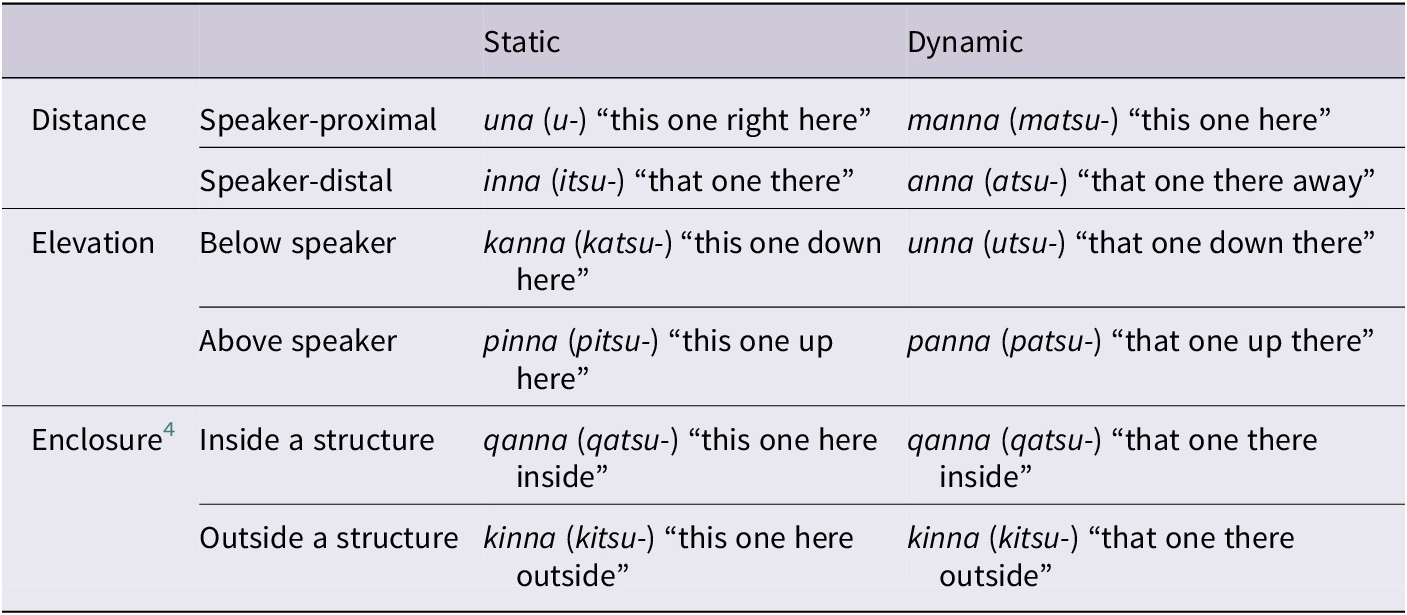
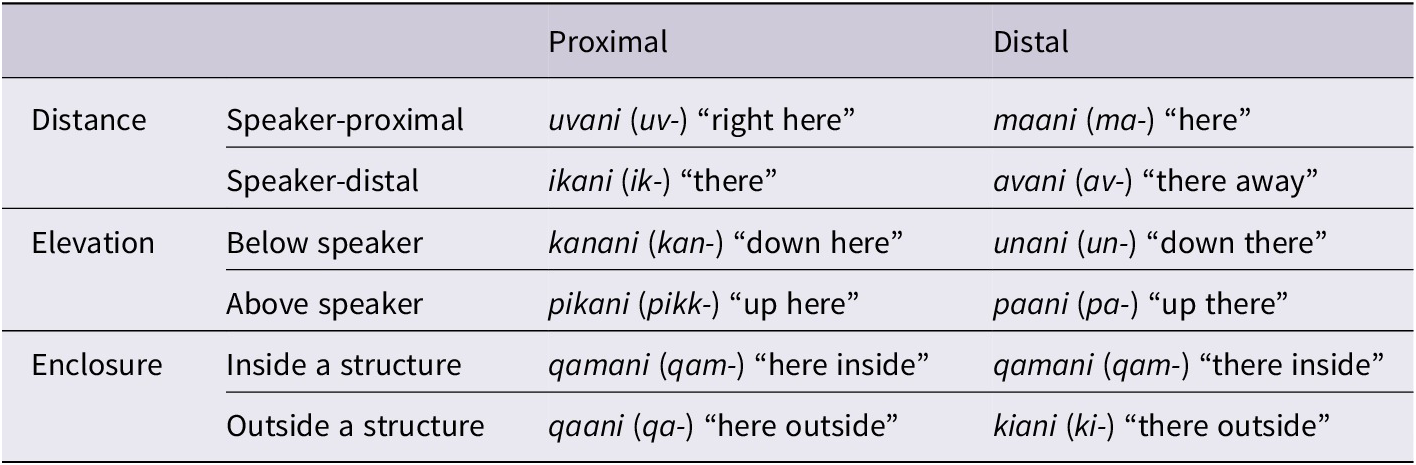
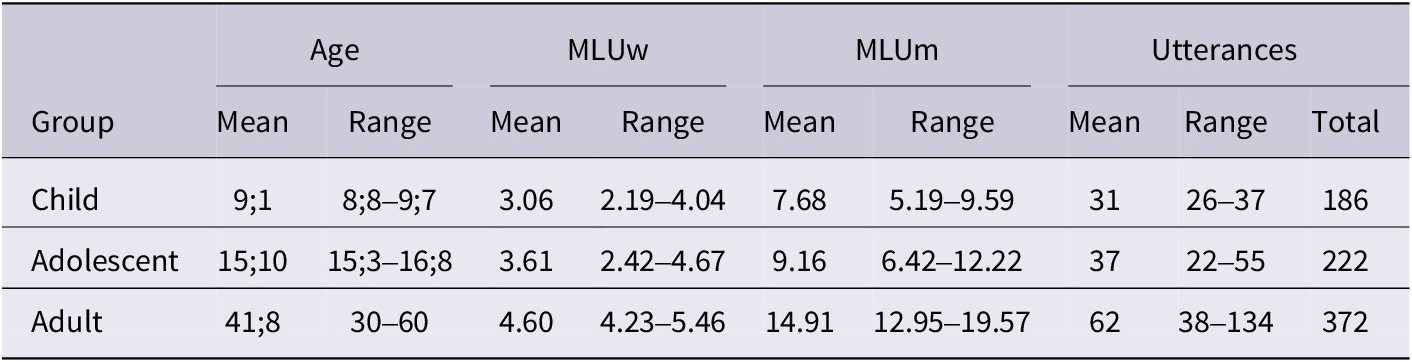
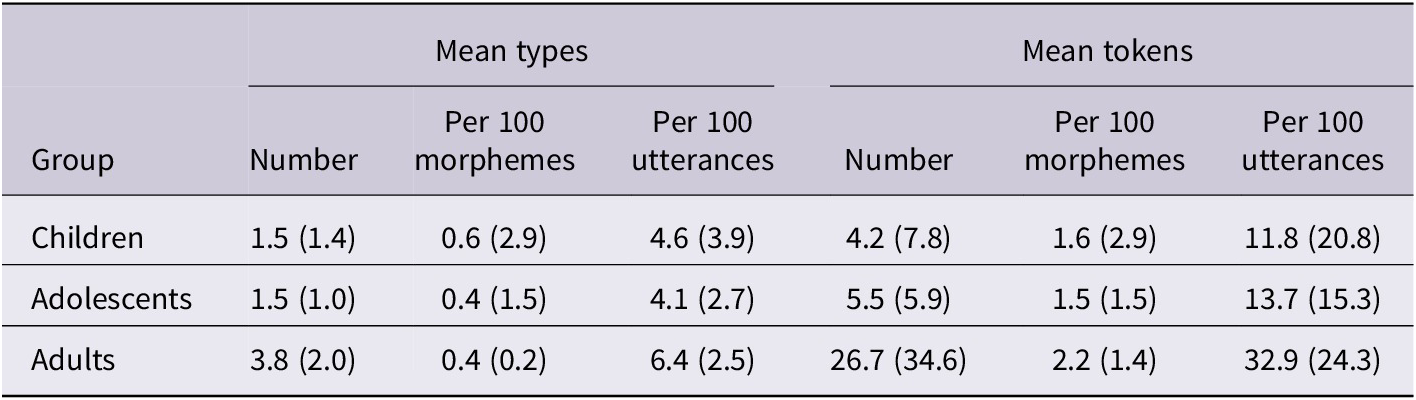

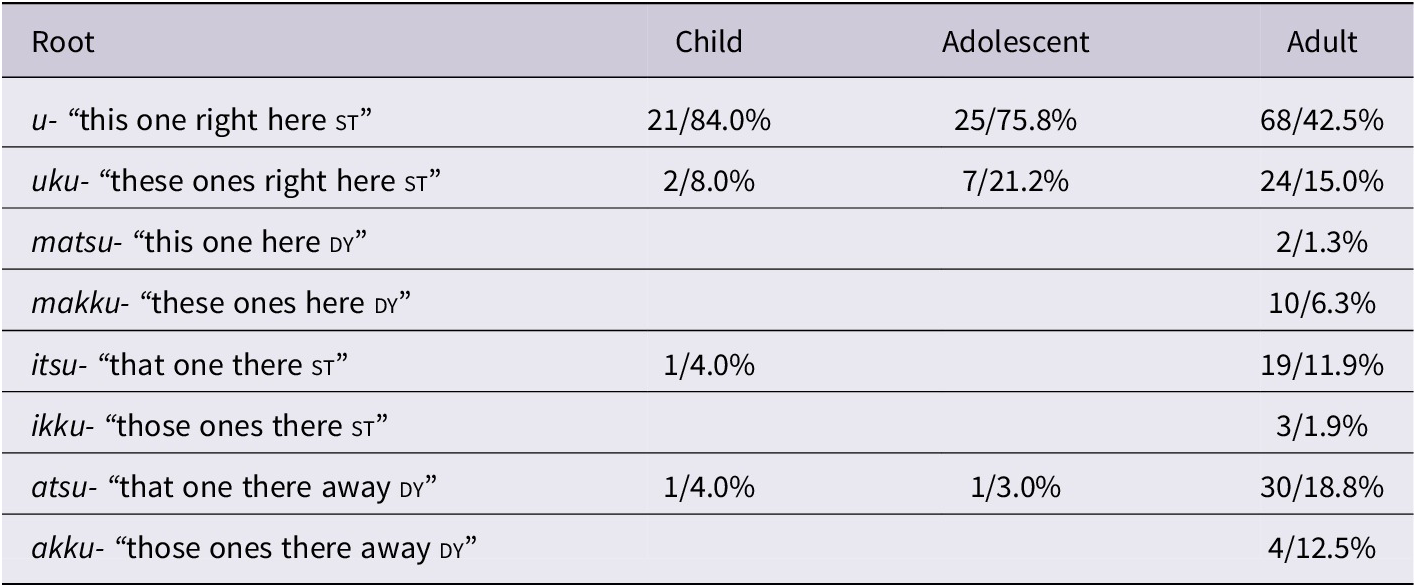
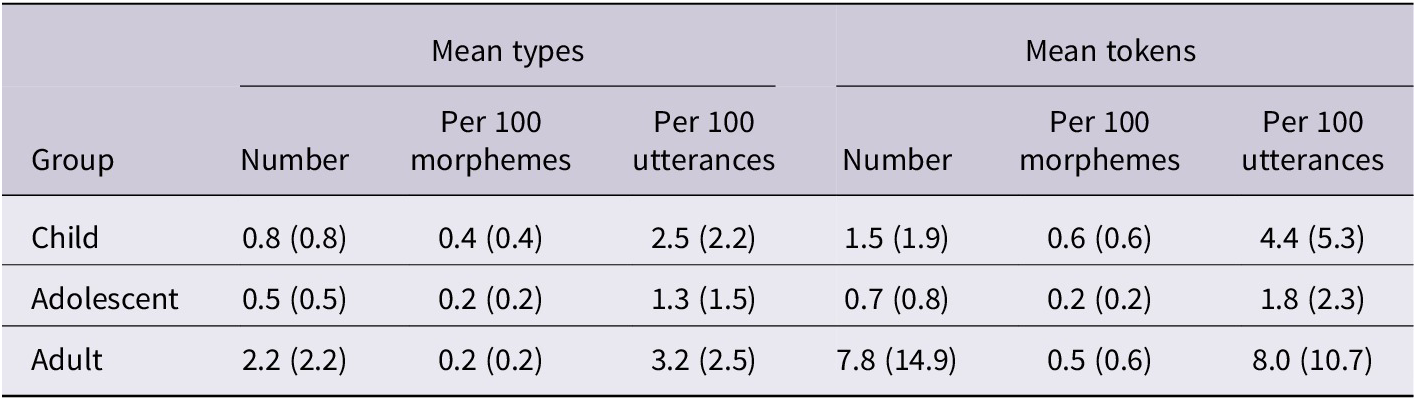

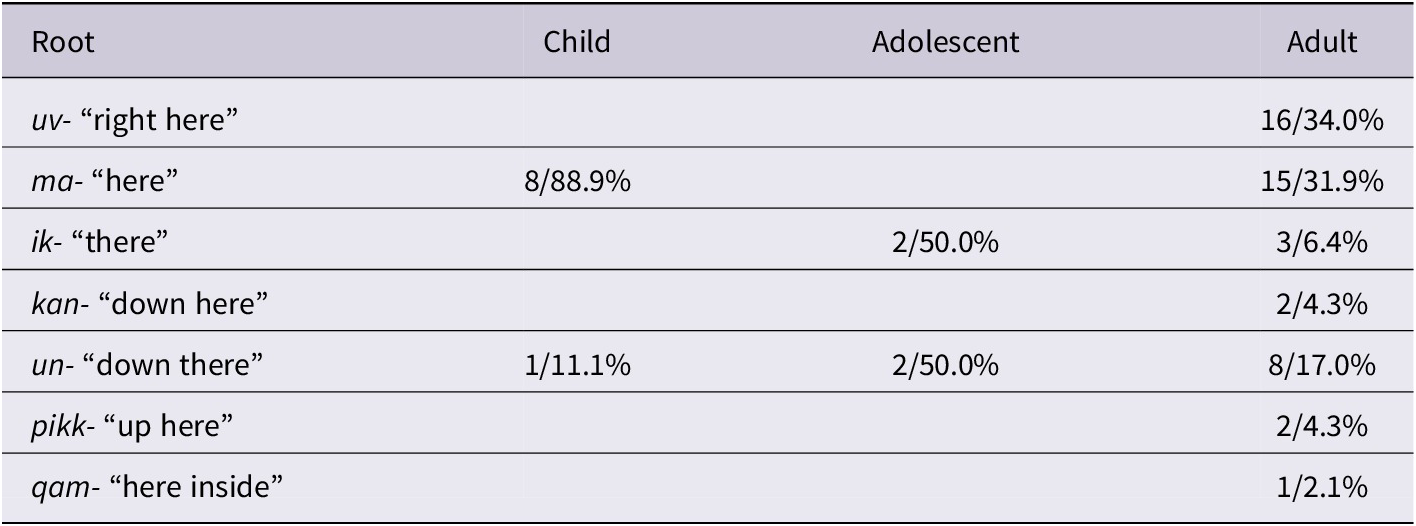
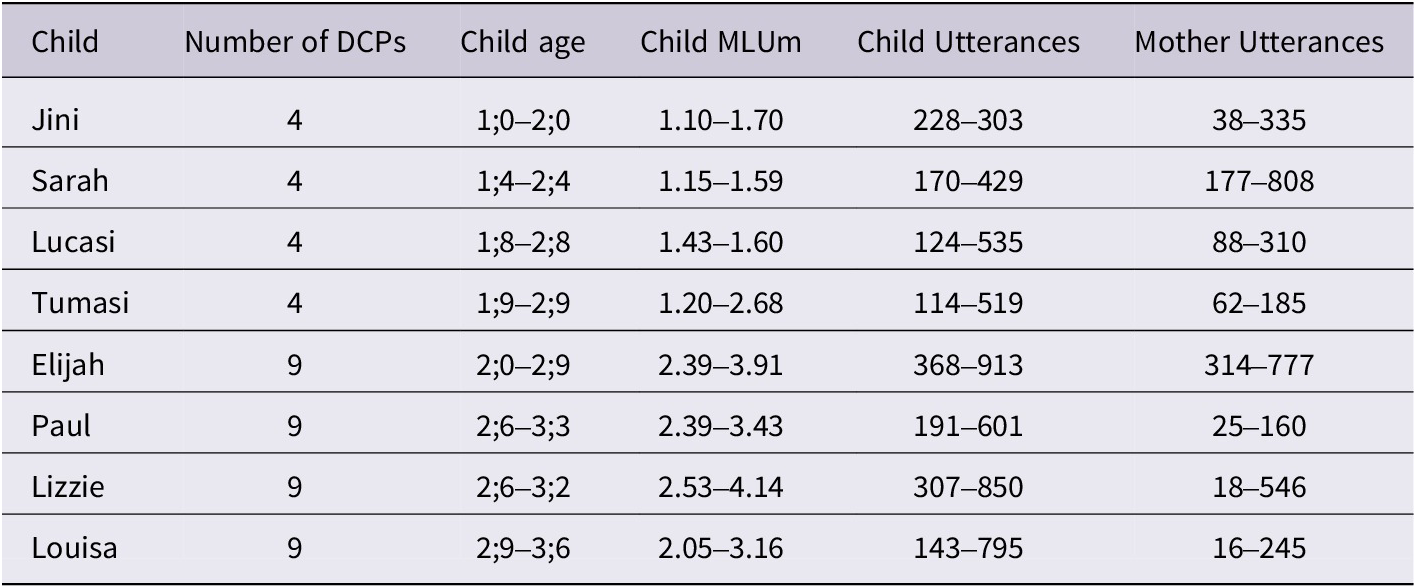
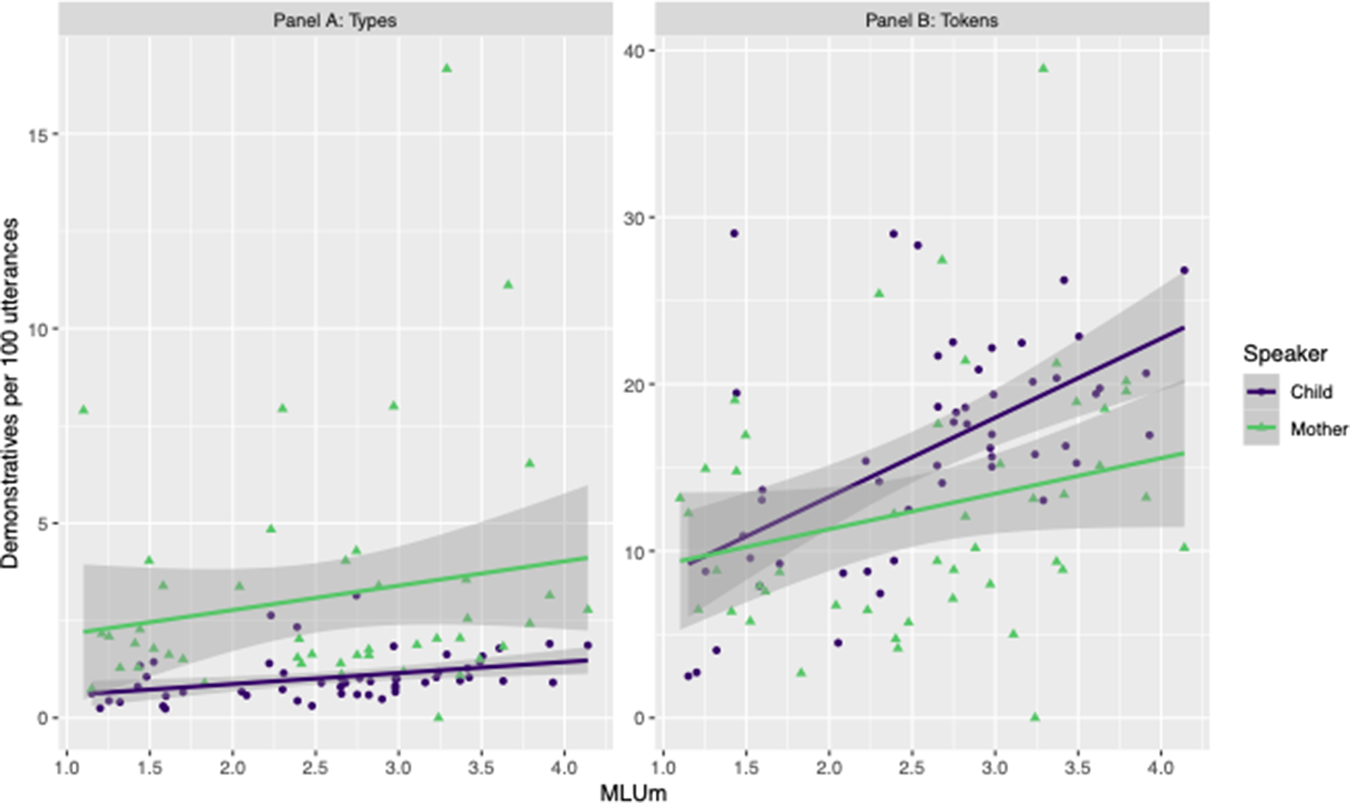
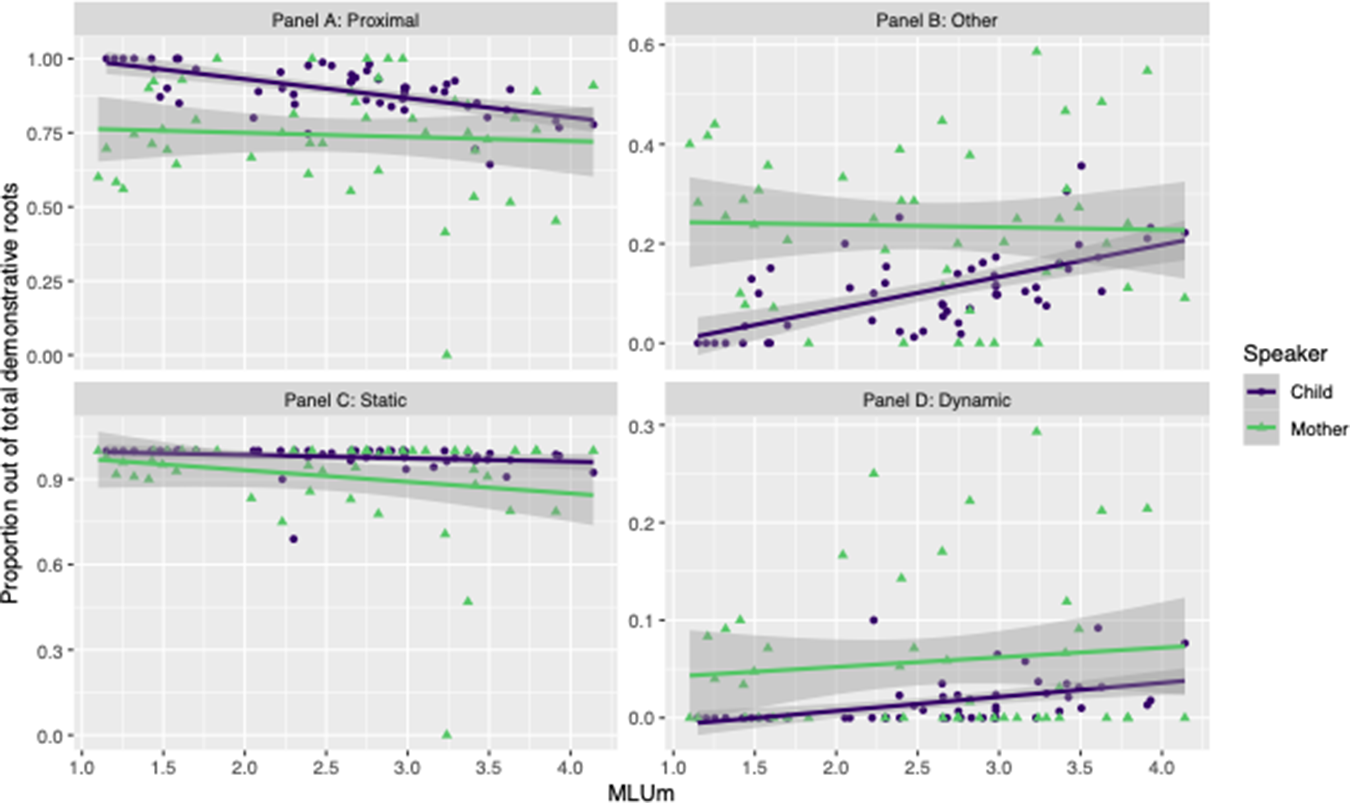
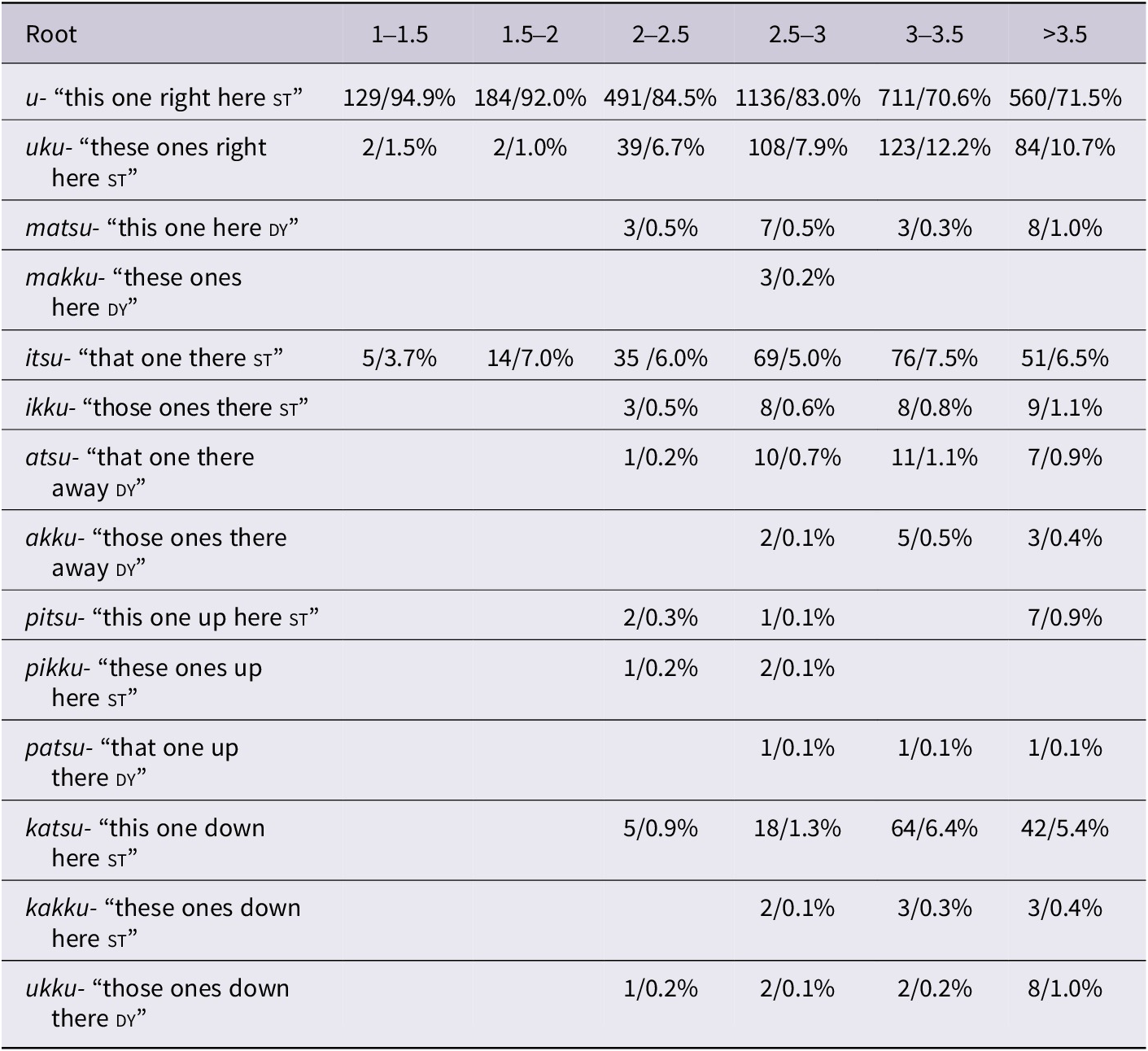
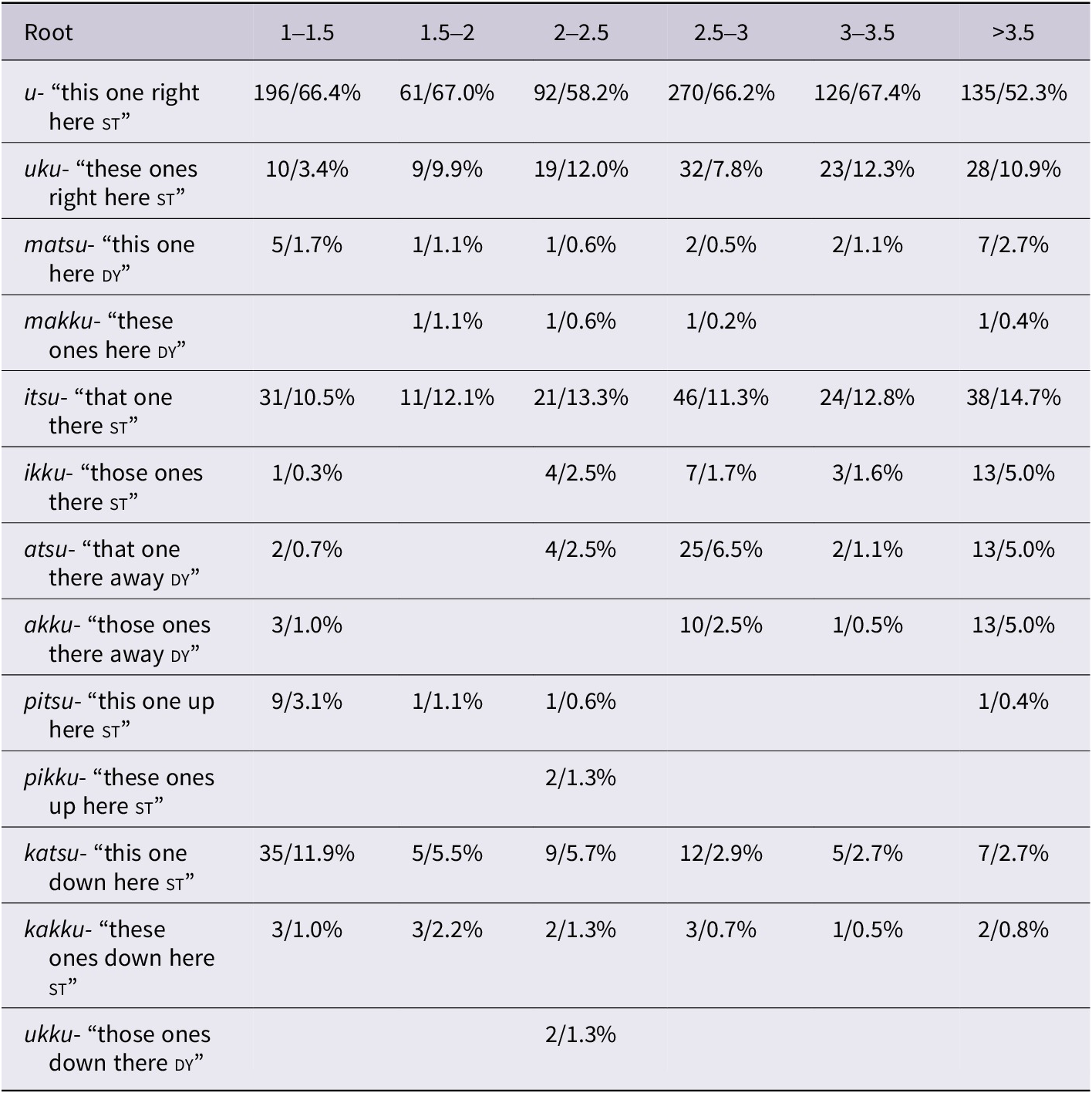
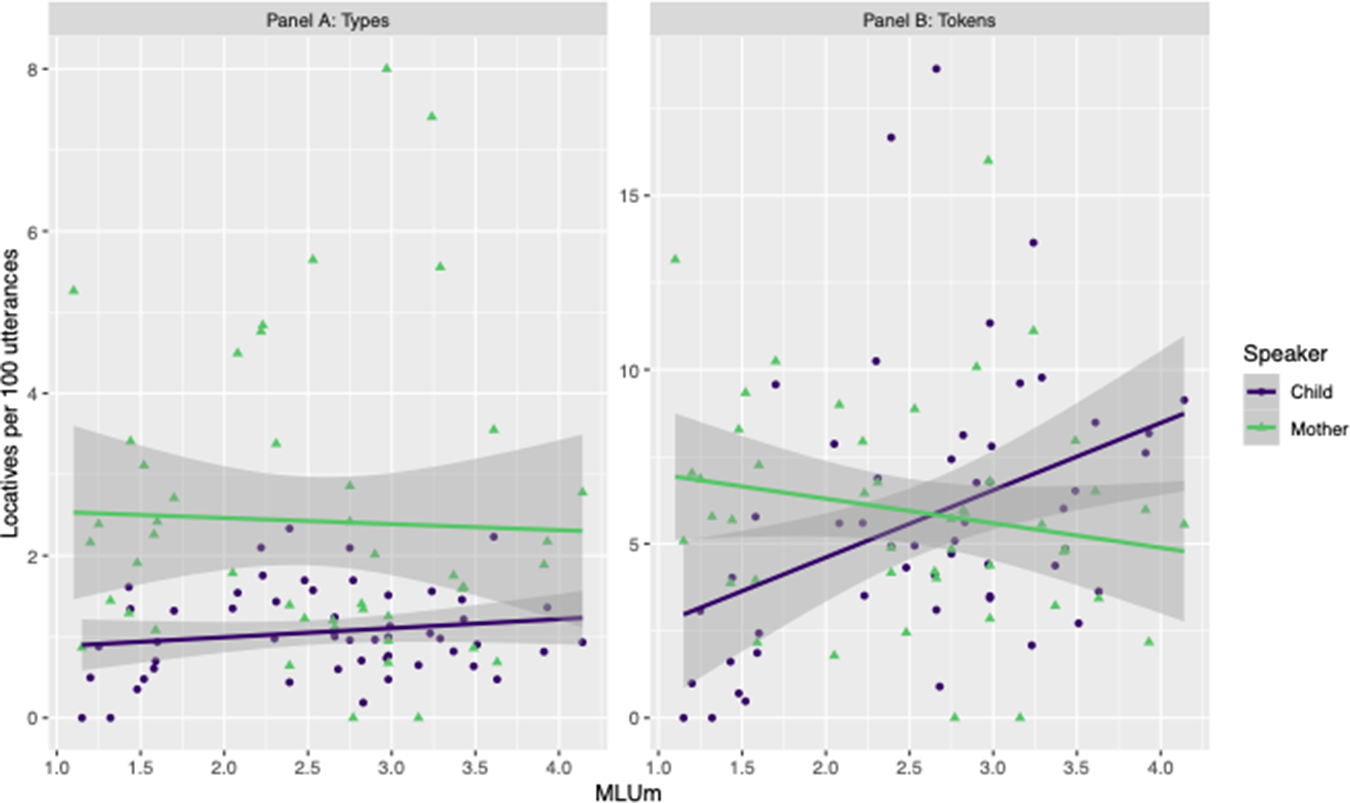
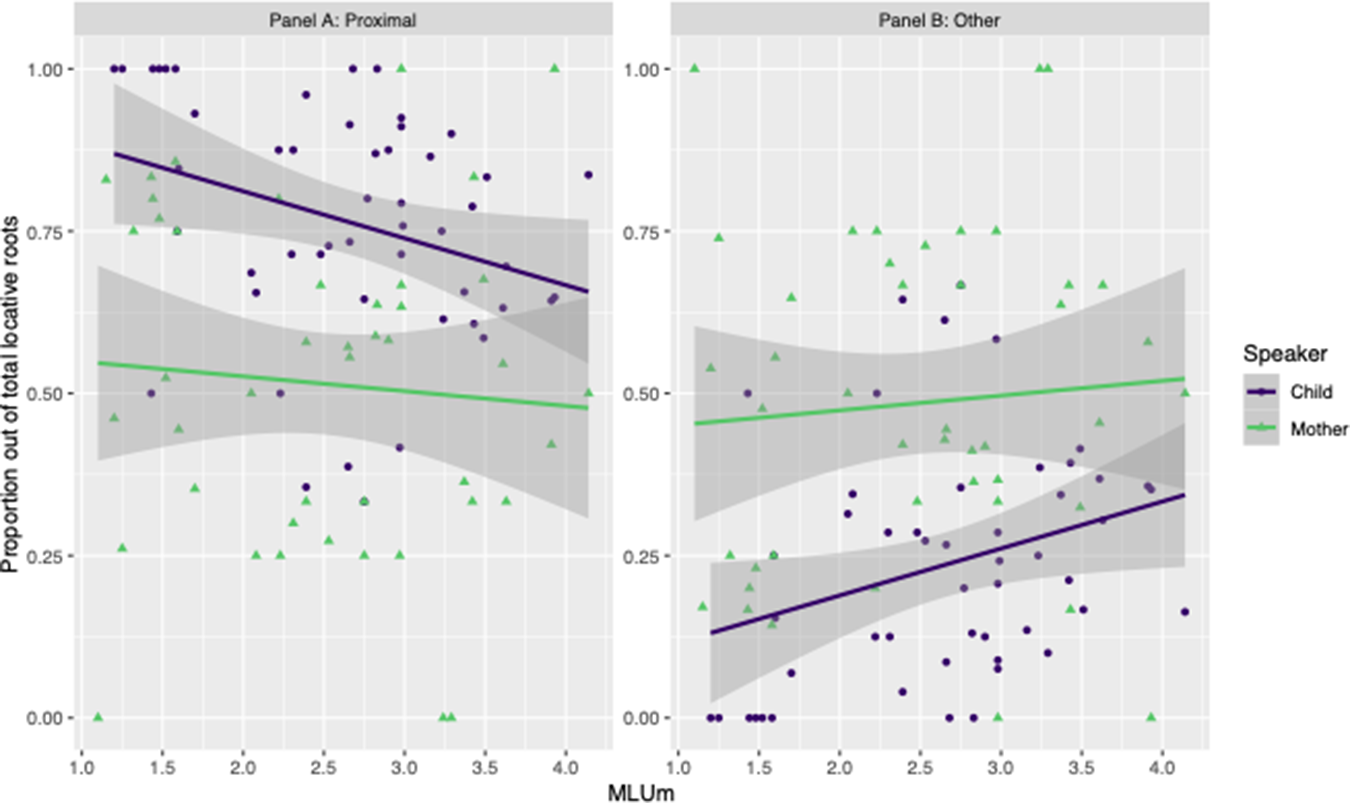
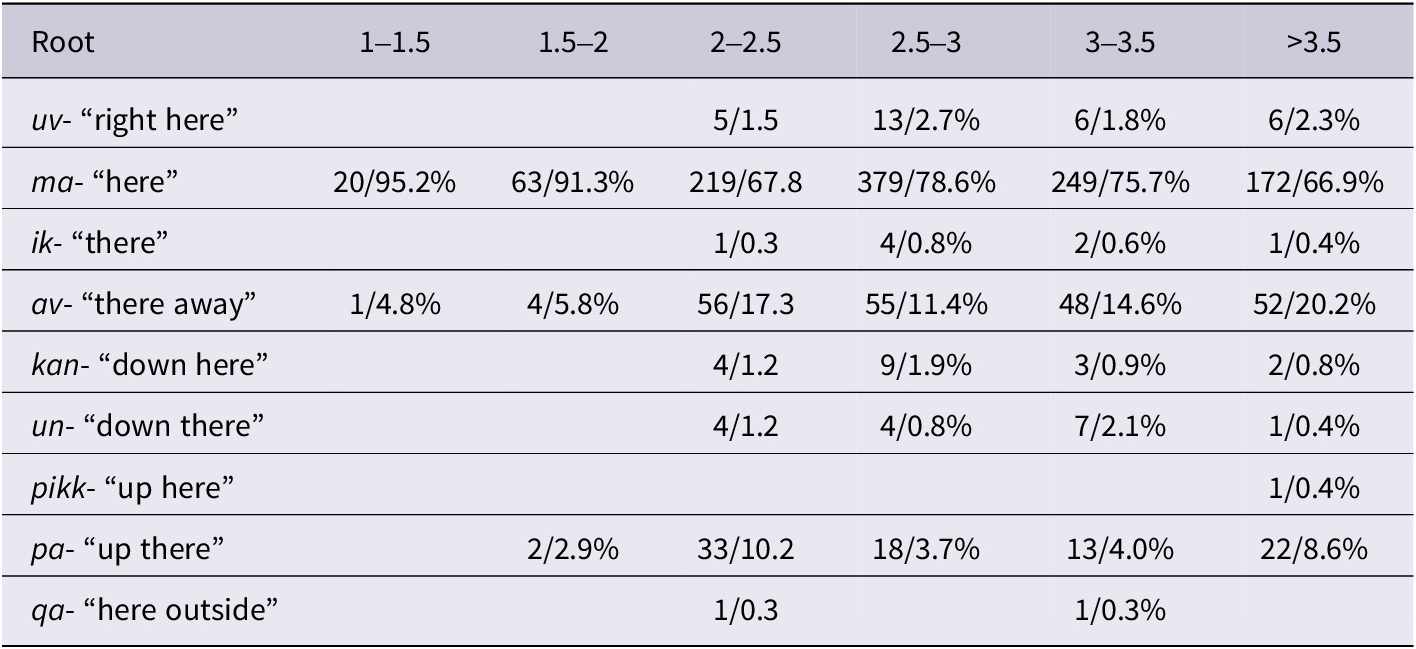
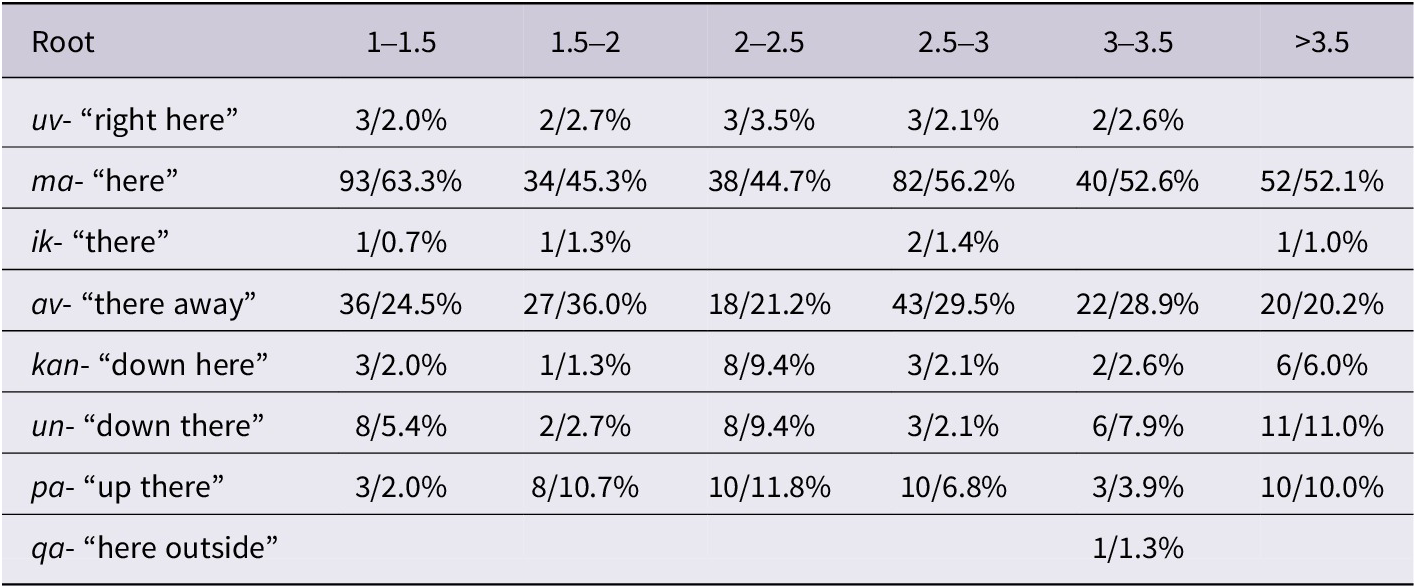


 Open access

