Introduction
Influenza A or B viruses of the Orthomyxoviridae family cause an acute systemic viral illness in humans, and are spread by droplets and close contact. Reference Paules and Subbarao1,Reference Arbeitskreis and Untergruppe2 Influenza continues to be a cause of preventable deaths worldwide, with expected annual epidemics occurring during winter months. Reference Green, Andrews, Fleming, Zambon and Pebody3 This seasonal disease burden predominantly affects those who are most vulnerable to infections, such as those with pre-existing health conditions and extremes of age. Reference Green, Andrews, Fleming, Zambon and Pebody3 However, the pattern of mortality seen in influenza pandemics disproportionately affects healthy younger adults. Reference Paules and Subbarao1,Reference Green, Andrews, Fleming, Zambon and Pebody3
The 100-year anniversary of the ‘1918 Spanish Flu’ was marked in 2018 and serves as a reminder of the most lethal global disease outbreak in recent history. Reference Murray, Lopez, Chin, Feehan and Hill4 Green, et al., Reference Green, Andrews, Fleming, Zambon and Pebody3 state that the annual deaths from influenza are significantly under-reported, accounting for approximately 600 deaths per year in the United Kingdom (UK). The UK death rate during the 2008/2009 H1N1 pandemic appeared to have increased to more than 20-times the annual death from influenza (ibid). Estimates of global deaths from a catastrophic influenza pandemic range from 2 to 360 million people. Reference Murray, Lopez, Chin, Feehan and Hill4 Taking even the lowest estimate, the number of deaths caused by a global influenza pandemic would surpass the total number of deaths recorded from all natural hazards between 1994 – 2013 combined. 5 The publication of the World Health Organisation (WHO) pandemic influenza preparedness framework, and the inclusion of pandemic influenza in the WHO greatest health threats of 2019, acknowledges pandemic influenza as a potential mega-disaster. 6,7
Despite efforts to monitor the distribution of global influenza cases, it is still not possible to predict exactly when an influenza pandemic will occur. Reference Jacobs, Taylor, Agho, Stevens, Barr and Raphael8 Increasing numbers of people are living in densely populated areas, as urbanization of the global population continues. Reference Birks and Prater9 If we consider this growing trend in the context of a future influenza pandemic, urban dwellers will account for the majority of the affected population and these factors will also increase the likelihood and rapidity of disease transmission. Reference Wu, Perrings, Kinzig, Collins, Minteer and Daszak10 Therefore, having a greater understanding of the risk perception of urban populations is paramount.
Priority 4 of The Sendai Framework for Disaster Risk Reduction is attempting to shift the focus of national governments from response to preparedness. 11 Public awareness, and more specifically, the public’s perception of risk, is a fundamental component in the ability of populations to adequately, and appropriately prepare for, and respond to any natural hazard. Reference Jacobs, Taylor, Agho, Stevens, Barr and Raphael8
Theoretical Framework of Risk Perception
Research gaps in influenza pandemic literature are deemed a high priority for further study by the WHO, including risk perceptions among the general population and the impact of public health authorities’ risk communication practices. 12 Previous research has shown that the perception of risk, whether it’s risk from a natural hazard or infectious disease, significantly impacts actions that people take when faced with that risk. Reference Sadique, Edmunds and Smith13 An interesting comparison can be made between the definitions of disaster and risk; whereby risk is a complex interaction between the potential physical harm of a risk event and the sociocultural processes that influence the interpretations of that event, Reference Kasperson, Kasperson, Pidgeon and Slovic14 and disasters are products of the interaction of humans and human practices (with their root causes in social interdependencies) with specific natural hazards as discoursed by Wisner et al. Reference Wisner, Blaikie, Cannon and Davis15
The theories of behavior, attitudes and perception of individuals are less studied than their knowledge and may assist in understanding reasons for particular choices related to an individual’s health or acceptance of risk. Reference Bish, Yardley, Nicoll and Michie16,Reference Panagopoulou, Montgomery and Benos17 Given that a catastrophic global pandemic could affect millions of people worldwide, adequate preparedness and response to seasonal influenza as a tangible means of pandemic preparedness, Reference Gilbert18 and the knowledge of risk perception, are essential for an effective plan for risk communication. Reference Jacobs, Taylor, Agho, Stevens, Barr and Raphael8
According to the United Nations Office for Disaster Risk Reduction (UNISDR), 19 “Risk is the combination of the probability of an event and its negative consequences” whilst Rosa argues that “risk is a situation or event where something of human value (including humans themselves) is at stake and where the outcome is uncertain.” Reference Rosa20 There is however, no universally accepted definition of risk perception and its components. Reference de Vries, van Osch, Eijmael, Smerecnik and Candel21
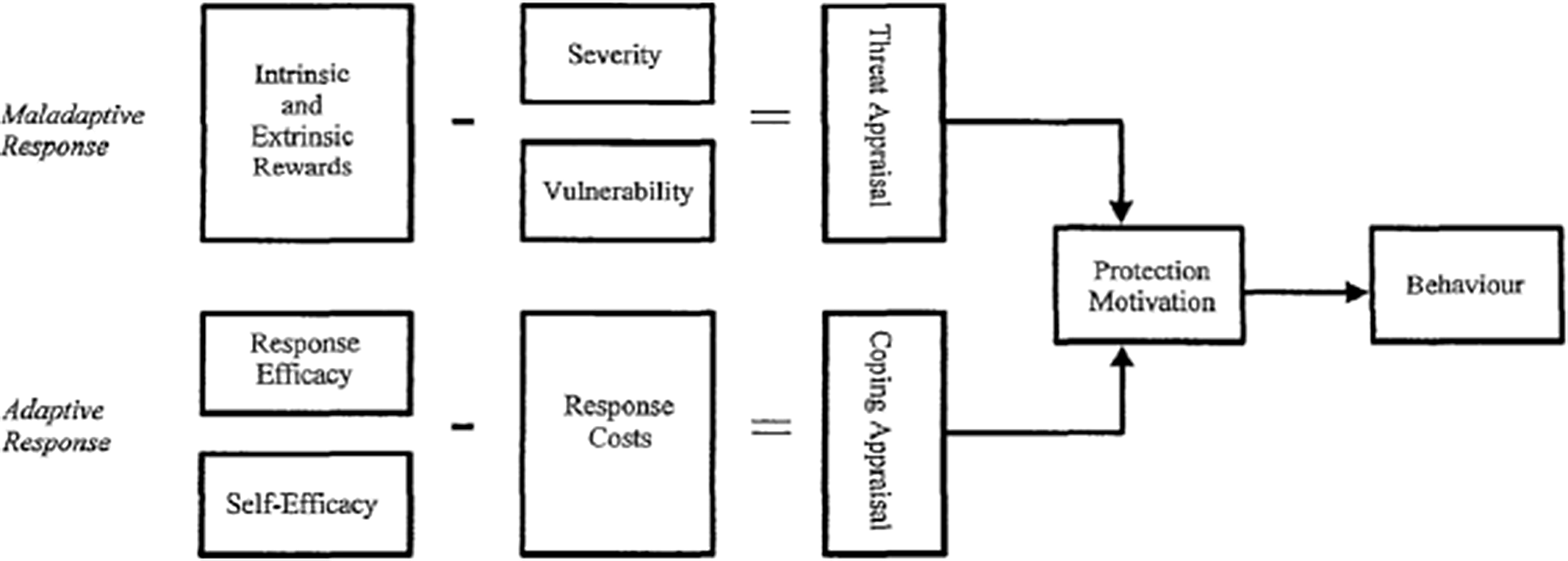
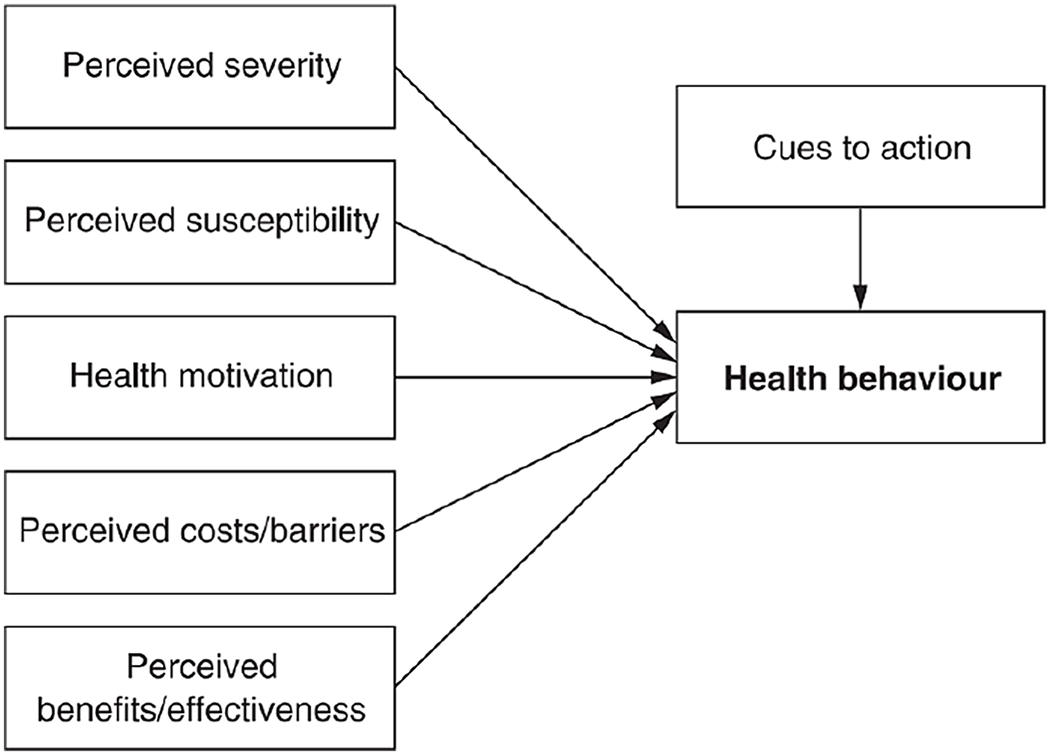
The review article by Leppin and Aro, Reference Leppin and Aro22 analysed primary research and outlined a summary of key concepts of risk perception underscored in literature. Many models have been proposed in order to categorize and explain the risk perception behavior described in literature, among which are the Protection Motivation Theory (PMT), and Health Belief Model (HBM). The former relates to fear acting as a driving force to promote modified behavior, and thereby reducing the fear (i.e. risk), with an effective predictive capacity (up to 60%) (Figure 1). Reference Norman, Boer and Seydel23,Reference Ali Morowatisharifabad, Abdolkarimi, Asadpour, Fathollahi and Balaee24 The latter relates to the relationship between the perceived susceptibility, severity and consequences of an illness, and the perceived benefits of a recommended health behavior, with a predictive capacity of up to 40% (Figure 2). Reference Abraham and Sheeran25,Reference Orji, Vassileva and Mandryk26
Protection Motivation Theory (PMT) model of risk perception behavior.

Health Belief Model (HBM) of risk perception behavior.

Taking the theories and models above, a concept of risk perception can be adapted and organized into key components of: knowledge, severity/seriousness of the disease, personal risk/susceptibility to the disease, personal comparative risk, response efficacy, self-efficacy, intention to carry out the measures, motivating/hindering factors, and information needs. Reference Leppin and Aro22,Reference Norman, Boer and Seydel23,Reference Abraham and Sheeran25,27,Reference de Zwart28
This study aims at exploring the components of risk perception in relation to pandemic influenza, the potential associations with sociodemographic factors of urban populations, and the implications for future public health research and programs.
Methods
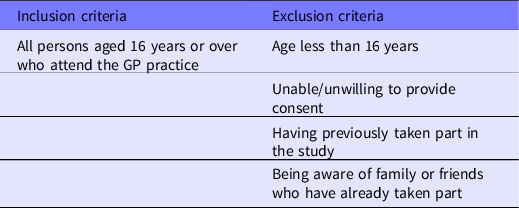
A prospective, cross-sectional, questionnaire-based study was undertaken in Cardiff and London, the capital cities of Wales and England respectively. The Health and Care Research Wales Network and The Clinical Research Network North Thames assisted with identifying suitable research sites. Medical practices were considered as suitable research sites for convenience sampling with 7 centers initially identified. A total of 3 centers were excluded prior to commencement of the study. Inclusion and exclusion criteria are shown in Table 1.
Study inclusion and exclusion criteria

Ethical review and approval was granted by The Health Research Authority in the UK (Approval Number: 19/LO/1227). An influenza information leaflet produced by Public Health England/Public Health Wales was made available to participants following completion of the questionnaire. Participants also had the option to request that the findings of the study be made available to them upon completion.
A total of 464 paper questionnaires were distributed equally to each of the 4 sites. Recruitment commenced on September 19, 2019 and continued until October 18, 2019. The study was ceased early due to the difficulty in recruitment of respondents and time constraints. The questionnaire utilized in this study was based on questionnaires from previous research on Severe Acute Respiratory Syndrome in Europe, 27,Reference de Zwart28 and a telephone survey conducted in Australia in 2009. Reference Eastwood, Durrheim, Jones and Butler29 The devised questionnaire was piloted with 6 persons prior to review and re-wording for the final version, with a Cronbach α of 0.8.
Exposure variables were selected on the basis of known predictors for risk-taking behavior and health status (such as chronic disease status and vaccination status). Reference Sadique, Edmunds and Smith13,Reference Bish, Yardley, Nicoll and Michie16,Reference de Vries, van Osch, Eijmael, Smerecnik and Candel21,Reference de Zwart28,Reference Kok, Jonkers, Gelissen, Meertens, Schaalma and de Zwart30–36 Bivariate and multivariate analyses were performed using Statistical Package for the Social Sciences (SPSS version 26, 2019; IBM Armonk, New York). The results were presented as odds ratios (ORs) and respective 95% confidence intervals (CI). A P - value < 0.05 was taken as the cut-off for statistical significance. In order to allow for inclusion of possible confounding variables, associations with P -value < 0.25 in bivariate analysis were included for the purposes of a multivariate analysis.
Personal susceptibility to influenza in this study, is defined as ‘the individual’s evaluation of the danger of influenza to their health at their current status.’ Reference de Vries, van Osch, Eijmael, Smerecnik and Candel21,27,Reference Kok, Jonkers, Gelissen, Meertens, Schaalma and de Zwart30–Reference Weinstein32 Comparative influenza susceptibility in this study is defined as, ‘the individual’s evaluation of the danger of influenza to their health, compared to the danger it poses to another person of the same characteristics and demographics as them.’ 27,Reference Kok, Jonkers, Gelissen, Meertens, Schaalma and de Zwart30–Reference Weinstein32 Pandemic influenza knowledge in this study is assessed by combining scores obtained from responses to questions focusing on the definition of the term ‘pandemic,’ and the understanding of the level of immunity to a new pandemic influenza afforded by previous seasonal influenza vaccinations.
Results
Out of the 464 questionnaires, 222 were returned with an overall return rate of 47.8%. A Cardiff site had a return rate of 87.0%, with the lowest return rate at a London site (2.7%). Data regarding the number of people that declined to take part in the study after reading the participants’ information leaflet was not available.
The majority of respondents identified as female (70.3%). Secondary data of patient gender within the catchment area of the medical centers in Cardiff were recorded as 53% female and 48% male. The secondary data for the centers in London was not made available. The median age was 45.5 years, with an age range of 16 - 87 years. The majority of respondents were 30 - 59 years old (49.0%), while those older than 60 years accounted for 25.7% of the total number. The cultural identity of respondents was not collected.
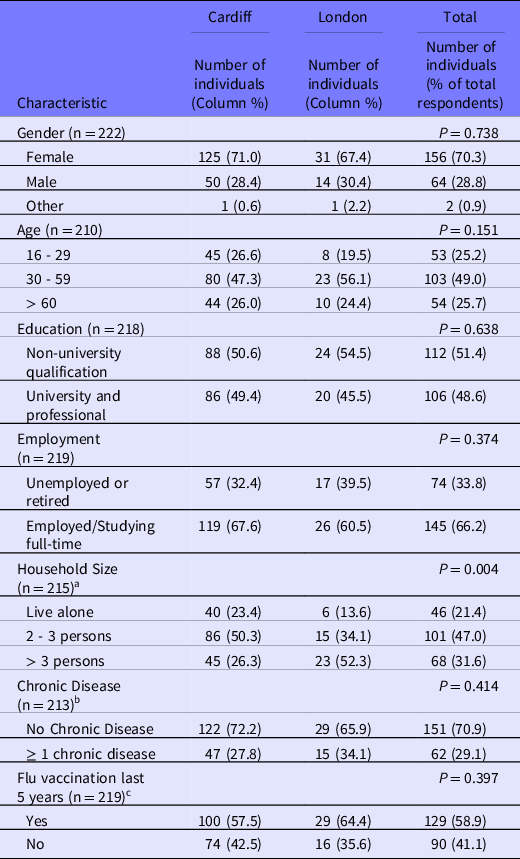
The proportion of respondents living in a household with 4 or more persons in Cardiff and London were 26.3% and 52.3% respectively (P = 0.004). The overall prevalence of those who reported that they suffered from 1 or more chronic disease was 29.1% (with a prevalence of 27.8% and 34.1% in Cardiff and London, respectively; P = 0.414). The overall prevalence of chronic respiratory disease was 17.4% (18.3% and 13.6% in Cardiff and London, respectively; P = 0.463). The proportion of respondents that travelled to work by private transport (including walking and cycling) were 91% and 78% for Cardiff and London, respectively (P = 0.012) (see Table 2).
Characteristics of respondents regarding gender, age, educational background, employment status, size of household, self-reported health status regarding chronic disease, and status of flu vaccination

a The number of people reported to live in the respondent’s household, including adults, children and the respondent.
b Chronic disease relates to those respondents who reported that they suffered from 1 or more of either breathing problems, heart disease, cancer within the last 5 years, diabetes or a clinically diagnosed immunosuppressed state.
c Self-reporting, having received a seasonal influenza vaccination within the last 5 years.
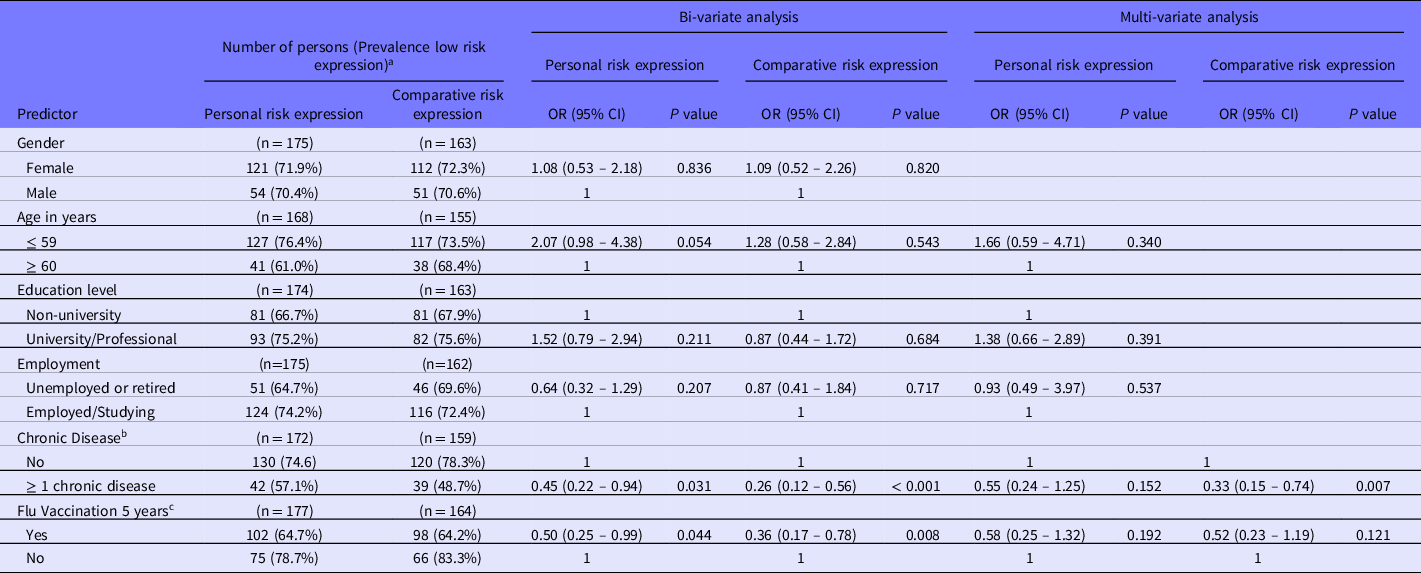
Bivariate analysis demonstrated no statistically significant association between gender and low personal susceptibility expression. Respondents aged less than 60 years were more likely to report low personal influenza susceptibility, than those older than 60 years (OR = 2.07; 95% CI: 0.98 − 4.38). This association had borderline statistical significance (P = 0.054). Both chronic disease and influenza vaccination status were statistically significant predictors of high influenza personal susceptibility expression. Respondents with a chronic disease were less likely to have a low personal susceptibility expression (OR = 0.45; 95% CI: 0.22 - 0.94), and respondents who had received an influenza vaccination within the past 5 years were associated with a low personal susceptibility expression for influenza (OR = 0.50; 95% CI: 0.25 - 0.99). With multivariate analysis, no statistically significant associations were observed between chronic disease or vaccination status, and low personal susceptibility expression (see Table 3).
Statistical associations between selected predictors and respondent’s low personal/comparative influenza susceptibility expression; results of bivariate and multivariate analyses

a Reference category for multivariate and bivariate analysis
b Chronic disease relates to those respondents who reported that they suffered from 1 or more of breathing problems, heart disease, cancer within the last 5 years, diabetes or a clinically diagnosed immunosuppressed state.
c Self-reporting having received a seasonal influenza vaccination within the last 5 years.
Bivariate analysis observed a statistically significant association between respondents reporting a chronic disease, and a low comparative susceptibility expression (OR = 0.26; 95% CI: 0.12 – 0.56) (P < 0.001). A significant association between influenza vaccination within the last 5 years and a low comparative susceptibility expression was also observed (OR = 0.36; 95% CI: 0.17 - 0.78) (P = 0.008). Multivariate analysis observed a statistically significant association between the presence of chronic disease and a low comparative risk expression (OR = 0.33; 95% CI: 0.15 – 0.74) (P = 0.007) (see Table 3).
A statistically significant association was observed between respondents who had received an influenza vaccination within the last 5 years, and being likely/highly likely to accept a newly developed vaccine for a pandemic influenza (OR = 2.90; 95% CI: 1.64 - 5.14) (P < 0.001). A statistically significant association was also observed for respondents self-reporting a chronic disease and being likely/highly likely to accept a pandemic influenza vaccination (OR = 2.43; 95% CI: 1.24 - 2.76) (P = 0.01). There were no statistically significant associations observed between exposure variables and knowledge of pandemic influenza.
The proportion of respondents indicating they would wash their hands more than usual in the event of a pandemic influenza was 20.7%. A statistically significant association between females and the intention to wash hands more than usual was observed (OR = 2.46; 95% CI: 1.26 - 4.79) (P = 0.007). The overall prevalence of other measures that respondents would consider taking included 15.8% avoiding public transport, and 10.8% avoiding air travel.
Discussion
Health promotion campaigns focus on the dissemination of information, with the expectation that the information will lead to improved knowledge, and that this knowledge will lead directly to positive health behavior/avoidance of risks. Reference Panagopoulou, Montgomery and Benos17,Reference Aven and Renn37 Of course, education and improved awareness of health risks have reduced morbidity and mortality for many diseases worldwide, Reference Hahn and Truman38 and awareness has also been shown to reduce risk and risk-taking behavior in other aspects of life. Reference Aven and Renn37,Reference Hahn and Truman38 However, the means of disseminating public health information has changed very little in recent times, resulting in a ‘translational gap’ between the science and the intended audience. Reference Brownson, Eyler, Harris, Moore and Tabak39
This study did not observe any significant association between a respondent’s socio-demography and knowledge of pandemic influenza. In addition, no association was observed with sub-analysis of pandemic influenza knowledge and personal influenza susceptibility expression, as may have been expected. Knowledge is difficult to investigate and challenging to define in this context. Reference Rosa20,Reference Aven and Renn37 Therefore, an association may not have been observed due to the method in which knowledge was measured in this study. Additionally, respondents were asked if they worked within a health-related field, as previous research has shown an association between greater medical knowledge and likelihood of accepting influenza vaccination. Reference Bish, Yardley, Nicoll and Michie16 However, the proportion of respondents who reported working within a health-related field (8.2%) was deemed too small for a meaningful analysis in this study.
Those self-reporting a chronic disease were more likely to identify influenza as a high personal susceptibility risk than respondents reporting no chronic disease. When controlled for confounders, in a multivariate analysis, the association was not found to be statistically significant. This would suggest that the presence of chronic disease or acceptance of vaccination, are not independent predictors of high personal susceptibility expression. These 2 exposure variables are also not entirely independent from each other, as patients with chronic disease in the UK are advised to be vaccinated with the seasonal influenza vaccine every year. 40 This vaccination advice is based on WHO recommendations, whereby persons with chronic disease are categorized as high risk for influenza infection complications. 36,41 Indeed, it is plausible to consider that those respondents with any chronic disease would express a higher personal risk for any disease-related issue or risk-factor overall. This is supported by an Australian study that suggests respondents with poor self-rated health were also more likely to consider pandemic influenza as a higher risk compared to those reporting good health. Reference Jacobs, Taylor, Agho, Stevens, Barr and Raphael8
Associations observed between chronic disease, vaccination status, and higher personal susceptibility, could be seen to agree with the HBM Reference Abraham and Sheeran25 ; whereby those respondents with a chronic disease consider themselves to have high personal susceptibility and are therefore motivated to reduce their health risk from influenza through vaccination. However, despite being vaccinated, these respondents still express a high personal susceptibility to pandemic influenza. It is not clear why this may be the case, although it is plausible that the respondents may not consider partial immunity afforded by the vaccine as a protective factor, or perhaps regular targeted consultations with medical personnel regarding their chronic disease risk influences this association. It is possible, that respondents with a chronic disease will always express a high personal susceptibility to influenza, despite adoption of protective behavior. In fact, if we consider personal susceptibility expression in terms of the lifetime risk of complications from their chronic disease, adoption of protective behavior will only reduce the likelihood of complications over time, and not mitigate them all together. If this concept transfers into their risk perception of pandemic influenza, these individuals will continue to consider themselves to have a high personal risk, despite adopting multiple protection methods and/or behavior.
Respondents reporting a chronic disease or vaccination within the last 5 years were also associated with a higher comparative susceptibility expression through bivariate analysis. This may seem surprising in some ways, as the HBM would suggest that those who have received vaccination (a protective health behavior) would recognize themselves as better protected and thereby have a lower comparative susceptibility expression. Reference Norman, Boer and Seydel23,Reference Abraham and Sheeran25 This concept can be defined as the appraisal effect, whereby lower risk perceptions occur due to higher protective behavior. Reference Leppin and Aro22 However, the correlation between adoption of a protective behavior, education of the risks of influenza, and expression of low comparative susceptibility are not observed in this study. The respondents’ understanding of these terms was not established in this study, and therefore may have impacted on the association observed.
The recent resurgence of vaccine-preventable diseases in Europe and worldwide, has been attributed to lower public trust in vaccination safety and efficacy, resulting in loss of herd-immunity. Reference Seale, Heywood and McLaws34 Vaccination during an influenza pandemic is 1 of the key pharmaceutical interventions included in the WHO (2017) preparedness plan. The results of this study suggest 3-times higher odds of previously vaccinated respondents accepting vaccination with a new pandemic influenza vaccine, and those with chronic disease having 2-times higher odds of accepting this vaccination. This finding is not surprising, as respondents who have already engaged in disease-reducing behavior are more likely to continue with this risk avoidant behavior. Reference Bish, Yardley, Nicoll and Michie16,Reference Madsen42
However, it is important to highlight that individuals not included in the ‘at-risk groups’ during seasonal influenza vaccination campaigns (i.e., generally ‘healthy’ adults in ages 18 - 55) are the individuals that may become more at risk during an influenza pandemic, Reference Paules and Subbarao1,Reference Green, Andrews, Fleming, Zambon and Pebody3 and those that have low personal and comparative susceptibility expression in this study. If these study findings can be generalized to the UK population, it may indicate that a large proportion of the urban population not usually considered during seasonal influenza campaigns, should be specifically targeted in the early phases of an influenza pandemic or at least recognized, and highlighted as a potentially emerging at-risk group within pandemic preparedness frameworks.
Furthermore, there is some evidence that seasonal influenza vaccination can provide a degree of cross-protective immunity for pandemic influenza, as demonstrated for the H1N1 2009 influenza virus strain. Reference Fielding, Grant, Garcia and Kelly43,Reference Johns, Eick and Blazes44 The cross-protection is not observed in all studies, with 1 Australian study failing to demonstrate that seasonal vaccination prevented morbidity from pandemic influenza, although the outcome measure was days of work lost (and not through an objective measure of antigen levels) during the 2009 H1N1 pandemic. Reference Yin, Wang, Skinner, Salkeld and Booy45 Thus, should the question, ‘should all individuals be offered the seasonal influenza vaccination as a mitigating action of pandemic influenza?’ be asked? Would the general public be willing to accept the potential risks of the vaccine for a largely intangible benefit for many?
Unlike personal susceptibility, respondents with chronic disease were observed to express a higher comparative susceptibility after controlling for confounders through multivariate analysis. This suggests that chronic disease is an independent predictor of comparative influenza susceptibility. If the presence of a chronic disease is considered in isolation, this finding is not surprising. However, what is important to note, is that pandemic influenza disproportionally affects individuals who usually consider themselves healthy (i.e., not suffering from a chronic disease), Reference Paules and Subbarao1,Reference Green, Andrews, Fleming, Zambon and Pebody3 and thereby demonstrating a potentially important mismatch in risk perception. The results of sub-analysis showed a significant association between those that deemed themselves to have a low self-susceptibility to influenza and a low comparative susceptibility. Furthermore, considering these finding in terms of both the HBM and the PMT, this may indicate that individuals who consider themselves as ‘healthy’ (that is, a lower personal and comparative risk expression) may be less likely to adopt protective measures in the event of a pandemic influenza and have a lower risk perception overall.
A significant association between taking private transport to work (including cycling and walking), and lower comparative susceptibility for influenza was observed on bivariate analysis. The association may have been related to respondents considering public transport as a higher risk for transmission of influenza (27.4% of respondents in this study identified public transport as a significant exposure risk to influenza transmission). A study in Australia demonstrated no significant association between seeking medical advice for an acute respiratory infection and the use of public transport regularly. Reference Troko, Myles and Gibson46 Although this association warrants further investigation, the WHO Pandemic Preparedness, 41 advises that reducing crowds on public transport should be encouraged, but does not explicitly advise closure of public transport networks. The WHO (2017) preparedness also states that there is no current evidence to support restrictions on public gatherings or closure of public institutions, such as schools. Likewise, the UK pandemic preparedness plan details advice on reducing transmission between individuals using public transport and reducing transmission between family members, rather than closure or travel restrictions. 47
Trustworthy and accurate information is an important factor to consider in risk management, and may reduce the spread of rumors and gossip in a crisis. Reference van der Weerd, Timmermans, Beaujean, Oudhoff and van Steenbergen33,Reference Hagar48 Its importance in influencing the acceptance of recommended measures should not be underestimated, and trust can have a marked influence on risk perception, risk prevention behavior, and government support. Reference van der Weerd, Timmermans, Beaujean, Oudhoff and van Steenbergen33 Vulnerable populations should also be specifically considered, as they may require information in other forms or languages. Reference Vaughan and Tinker49 Combining the components of the HBM and the PMT, findings of this study would suggest that a focus on personal and comparative risk perception is warranted.
Limitations
As a pilot quantitative study, there was a relatively small sample size, and findings that cannot necessarily be generalized to the whole urban population of the UK. Additionally, the respondents completing the questionnaires had initially presented to seek medical advice and may have unrecognized bias on the associations observed. The targeting of urban dwellers may also prevent generalization to a rural population. However, this study can be considered as a basis to progress with further cross-sectional studies with a larger sample size, or as a mixed - methods study exploring the cultural aspects of risk with qualitative work. The use of online questionnaires or mobile apps should also be considered to improve participation. Questionnaires should also be translated and validated into the other predominant languages of the study sites, as a means of including potentially under-represented cultural groups.
Cross-sectional surveys are prone to selection bias, including respondents intentionally or unintentionally choosing the desired response or attempting to demonstrate a certain behavior. Specifically, the fact that the study focuses on pandemic influenza may have influenced respondents to indicate that they consider the risk or their susceptibility to the disease to be much higher than it may actually be. The respondents may also indicate that they would adopt certain protective behaviors or actions, when in fact they may not.
Conclusion
Normalized risk is an on-going risk that becomes incorporated into our daily lives, demonstrating our complex social interactions with hazards. Reference van Voorst, Wisner, Hellman and Nooteboom50,Reference Wachinger, Renn, Begg and Kuhlicke51 At the time this research was undertaken, pandemics were not a risk we faced on a daily basis. It was considered an unpredictable future risk, albeit with potentially catastrophic consequences; a Black Swan in the true sense as described by Taleb in 2010. Reference Taleb52 However, we are now experiencing the potential impact of a pandemic influenza manifesting as the novel Coronavirus-2019 pandemic. This highlights the fact that a viral pandemic is more complex than being non-existent 1 day and at maximal level the next. It is a dynamic and evolving risk over time, and 1 that demonstrates protracted periods of unpredictable resurgence. Despite surveillance and monitoring of global seasonal influenza epidemics, it still remains challenging to accurately predict when an influenza pandemic will reoccur.
We cannot rely entirely on a pharmaceutical response to a pandemic, with a suitable vaccine likely to be available only after several months or years into an established pandemic. Non-pharmaceutical interventions are the first resources available to individuals to reduce disease transmission in the initial phase. In the UK and many other European countries, seasonal influenza vaccinations are targeted towards children, the elderly, pregnant women, those with chronic disease, and healthcare workers, as these groups are deemed to have a higher exposure risk. However, during pandemics the vulnerable groups are not identical, whereby younger, usually well persons may be disproportionally affected. This group is also less likely to be vaccinated and more likely to have a low pandemic influenza risk perception. The wider knock-on effects of a higher mortality and morbidity rate in this group could pose significant socioeconomic and medico-ethical challenges. Specific, targeted, consistent, and relevant information campaigns highlighting the need for vaccination in younger age groups with lack of co-morbidities, with the inclusion of what protective behavior can reduce risk e.g., hand hygiene, is suggested. In particular, the forum in which this is communicated must also be relevant to this group, such as social media platforms.
It is unclear from the findings of this study whether they can be fully supported by either the PMT or HBM in isolation. The dynamic nature of pandemics and the variable risk to a population group as the pandemic evolves, could influence the risk perception to shift from 1 theory to another; such that, a consistent behavior in ‘healthy’ people of increased handwashing to reduce the likelihood of infection (based on the PMT) may lead to a reduction in handwashing once those individuals are vaccinated, due to a reduced perceived susceptibility, and perhaps related to a desensitization to the cue for action (based on the HBM). Therefore, understanding how individuals construct an overall risk perception of pandemic influenza requires further study, and is integral to the adoption of recommended actions/interventions during a pandemic.
Supplementary material
To view supplementary material for this article, please visit https://doi.org/10.1017/dmp.2021.221