


Introduction
Neurodegeneration and ageing
The last few decades have been very productive for scientists in the field of ageing research. We have witnessed conceptual advances such as the identification and categorisation of cellular and molecular hallmarks of ageing (Ref. Reference López-Otín1), the evolution of said hallmarks and the division of ageing into unicellular and metacellular (Ref. Reference Lemoine2). This was accompanied by experimental studies targeting ageing with drugs such as metformin and rapamycin, and by genetic and dietary manipulations in various model organisms (Ref. Reference Longo3). Clinical studies that will test the effects of certain compounds in the context of human ageing (such as TAME or PEARL) are either planned or already recruiting.
As interest in the field grows, so does the application of novel techniques such as artificial intelligence/deep learning (Refs Reference Zhavoronkov4, Reference Fabris5). These tools may aid in the discovery of geroprotective drugs/targets, or be used in precision medicine – to assess individual health risks and tailor healthspan-optimised interventions based on deep ageing clocks (Ref. Reference Zhavoronkov, Bischof and Lee6). Hence, it is likely that in the not-so-distant future, we will start seeing interventions aimed at delaying or even preventing multiple age-related diseases at once by targeting ageing itself (geroscience interventions (Ref. Reference Kennedy7)). Currently, diseases in older people are targeted individually, despite uncertain benefits and even potential harm of numerous simultaneous treatments, which might interact and worsen a single disease by treating a coexisting one (Ref. Reference Tinetti, Fried and Boyd8). The coexistence of multiple chronic diseases, termed multimorbidity, affects more than half of the older population, with prevalence increasing with age (Ref. Reference Marengoni9). Ageing represents a major risk factor for multimorbidity, so interventions that target the ageing process have been proposed to reduce multimorbidity and extend healthspan (Refs Reference Zealley and De Grey10, Reference Fabbri11).
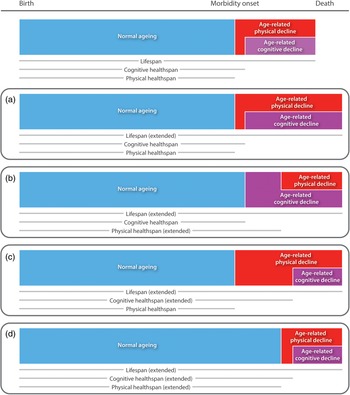
Although many tissues can be regenerated, the central nervous system (CNS) contains terminally differentiated post-mitotic neurons with very limited capacity for regeneration in specific brain areas (Ref. Reference Yun12). In addition to neurogenic capacity being limited, some argue that synaptic plasticity declines in an age-associated manner as well (both in aged animals and humans), which correlates with neurocognitive impairments (Ref. Reference Oberman and Pascual-Leone13). However, other cell types such as microglia have important roles in the CNS, such as supporting its development, maintenance, homoeostasis and repair (Refs Reference Ginhoux and Prinz14, Reference Mehl15), and present a target for therapeutic intervention (Ref. Reference Zhang16). Finally, although other organs such as kidneys and liver may be replaced when damaged (either through organ donation or using advances in bioengineering), the same can hardly be applied to the brain. A progressive loss of neuronal structure and function (neurodegeneration) ultimately leads to chronic and currently incurable neurological disorders such as Alzheimer's disease (AD), Parkinson's disease (PD) and Huntington's disease (HD). The burden of these diseases for society is very heavy at a global level: in 2015, there were around 46 million cases of AD and other dementias, and approximately 6 million cases of PD worldwide (Ref. Reference Feigin17). In the USA, 6.2 million people are living with AD in 2021, and the lifetime risk for AD at the age of 45 is 20% for women and 10% for men (Ref. 18). Age is a major risk factor for these neurodegenerative diseases, as well as for cognitive decline, which usually accelerates late in life (Ref. Reference Salthouse19). Some researchers even consider a decline in the function of the CNS, manifested as defects in motor coordination and cognition, to be one of the main hallmarks of mammalian ageing (Ref. Reference Hayano20). The mean and maximum lifespans are both projected to continue to increase (Refs Reference Partridge, Deelen and Slagboom21, Reference Pearce and Raftery22), so we can expect that these health challenges will become more common. Thus, approaches that attempt to improve the cognitive healthspan in conjunction with lifespan are becoming increasingly important, as illustrated in Figure 1. In short, the effects of lifespan extension approaches on healthspan increase, and consequently on cognitive capacity, remain contentious.
Possible effects of lifespan extension on (cognitive) healthspan. Extending lifespan via a hypothetical intervention by 10% can have different effects on healthspan (period of life in good health) and cognitive healthspan (period of life without age-related cognitive decline). (a) Lifespan extension is not accompanied by either healthspan or cognitive healthspan extension, and results in a longer proportion of time spent in disability. Many medical treatments consisting of disease management could be placed in that category, evidenced by the fact that, so far, lifespan extension has not been met with a proportionate healthspan extension (Ref. Reference Garmany, Yamada and Terzic315). (b) Lifespan extension is accompanied by physical, but not cognitive, healthspan extension. This could occur if a geroscience-based intervention could affect the periphery, but not the CNS. (c) Lifespan extension is not accompanied by physical healthspan extension, but is accompanied by cognitive healthspan extension. A combination of lifespan- (but not healthspan-) extending interventions with supplements with nootropic potential may result in this outcome. (d) Lifespan extension is accompanied by both physical and cognitive extension. Interventions that affect all three outcomes are the end goal of geroscience, as extending physical health without delaying the onset of age-associated cognitive decline is an equally bad outcome as extending lifespan without healthspan following. This is an idealised schematic since certain interventions may improve some aspects of healthspan while at the same time deteriorate others. We propose that upcoming geroscience-based interventions should be classified according to these four groups. The NIA-ITP already follows up the interventions that reliably extend lifespan (phase I) in Phase II studies which include an array of ancillary studies, and we suggest to include measures of cognitive healthspan in these and other studies.

Effects of lifespan-extending interventions on cognitive healthspan
There are currently no interventions that are known to extend lifespan in humans, so our rationale for choosing interventions is based on data obtained from animal models. Although there are compounds whose application results in higher maximum and average lifespan extension in diverse model organisms (Ref. Reference Berkel and Cacan23), many of them have not been tested in the context of neurodegeneration and cognition. Thus, we start with the safest interventions and the ones that have accumulated extensive mechanistic data, and include different types of approaches to give a balanced perspective on the current stage of translational geroscience interventions. In this review, we examine the effects of several types of interventions on cognitive healthspan: (1) lifestyle interventions, (2) pharmacological approaches and, lastly, (3) epigenetic reprogramming strategies. We did not include genetic approaches such as CRISPR-Cas9, as there is insufficient (pre)clinical data, and because its potential as a treatment for human diseases (and in particular AD) has been reviewed elsewhere (Refs Reference Sharma24, Reference Rohn25).
Lifestyle interventions
Several lifestyle interventions, such as environmental enrichment (EE), physical exercise (PE) and caloric restriction (CR) are associated with a beneficial effect on lifespan and healthspan in animal models. They are overall regarded safe and easy to implement.
Environmental enrichment
EE is defined as ‘an improvement in the biological functioning of captive animals resulting from modifications to their environment’ (Ref. Reference Newberry26). These modifications usually involve animals in larger cages that are equipped with objects that are cognitively stimulating, such as nesting material and tunnels in the case for mice (Ref. Reference Sztainberg and Chen27).
Effects on lifespan. Acoustic environmental enrichment, a single-factor form of EE which uses only tropical rainforest sound exposure, extends the natural lifespan of mice by 17% (Ref. Reference Yamashita28). Another study where mice were exposed to a classical form of EE (toys changed every 2 days, no running wheels) showed that EE improved multiple health-related indices, especially in animals at older ages, and extended the lifespan of mice (Ref. Reference Arranz29). Similarly, a study in which mice were exposed to EE that included a running wheel found that exposure to EE increased their lifespan. Lastly, a study that implemented EE (with running wheels) after middle age in mice showed that exposure to EE led to various positive health-related changes, a trend in mean lifespan increase (~45 days), but no extension of maximum lifespan.
Effects on neurodegenerative diseases in animal models and possible effects on humans. Exposing animals to EE has beneficial effects in various models of neurodegenerative diseases. For example, exposing 12-week old pregnant 5xFAD mice, which overexpress human amyloid-β precursor protein (APP) and presenilin-1 (PS1) genes with familial AD mutations, to an EE (toys and a running wheel) reduced their amyloid-β (Aβ) deposits and stimulated neurogenesis (Ref. Reference Ziegler-Waldkirch30). Another study of EE (with plastic tubes and toys, but no running wheel) in the same model, but with non-pregnant animals, found improvements in cognition (improved short- and long-term memory in the novel object recognition test) and epigenetic alterations correlated with neuronal function (e.g. reduced DNA-methylation levels and increased hydroxymethylation levels), influencing gene expression (Ref. Reference Griñán-Ferré31). Furthermore, in another AD model which exhibits both plaque and tangle pathology, housing 3xTg-AD mice in cages with toys and a tilted running wheel restored the impaired hippocampal neurogenesis (Ref. Reference Rodriguez32).
Exposure to EE (with and without the running wheel) in mouse models of HD delayed the onset of neurological signs of HD (Refs Reference van Dellen33, Reference Couly34, Reference Hockly35) and modulated their behavioural pharmacology (Ref. Reference Zajac36). Exposure to the neurotoxin MPTP (1-methyl-4-phenyl-1,2,3,6-tetrahydropyridine), a pharmacological model of PD, resulted in a 40% loss of dopaminergic (DA) neurons in the substantia nigra of the mice housed in EE (toys and a running wheel), whereas control mice showed a 75% loss, suggesting that EE confers resistance to MPTP (Ref. Reference Bezard37). Exposure to EE (with running tunnels) early in life had neuroprotective properties in a rat model of PD containing 6-hydroxydopamine (6-OHDA) lesions of the substantia nigra and EE was able to rescue the DA cells after 6-OHDA treatment of rats in adulthood, as they had less nigral cell loss and less severe hypokinaesia (Ref. Reference Jungling38). Additionally, EE (boxes/toys and running wheels) has been shown to improve cognitive impairments in mouse models of multiple sclerosis (Ref. Reference Silva39) and epilepsy (Ref. Reference Suemaru40).
Thus, EE seems to be neuroprotective in many animal models of neurodegenerative diseases, delaying the onset of the disease and ameliorating the associated deficits. It is not clear which environment would be considered enriching for humans, but some argue that enrichment of psychosocial environments is protective against dementia (Ref. Reference Fratiglioni, Marseglia and Dekhtyar41). Specifically, although lower levels of education are linked with a higher risk of dementia, remaining socially active may be protective against it (Ref. Reference Wahl42). The topic of EE in humans has been reviewed in detail by Clemenson et al. (Ref. Reference Clemenson, Gage, Stark and Chao43), who concluded that while there are many similarities between animal and human EE studies, more direct comparisons are needed to determine what EE means to humans. Some authors also note that certain antecedents of EE (e.g. community resources) are influenced by socioeconomic status, which thus impacts EE (Ref. Reference Figuracion and Lewis44).
Physical exercise
In humans, PE is commonly defined as a ‘subset of physical activity that is planned, structured, and repetitive and has as a final or an intermediate objective the improvement or maintenance of physical fitness’ (Ref. Reference Caspersen, Powell and Christenson45). In rodent studies, PE usually denotes voluntary running on a wheel or a treadmill.
Effects on lifespan. The interaction between PE and lifespan is far from clear. A recent review on the effects of running in mice argued that PE can extend their average (but not maximum) lifespan (Ref. Reference Manzanares, Brito-da-Silva and Gandra46), mirroring the findings in male rats (Ref. Reference Holloszy47). A form of PE in Caenorhabditis elegans (swim exercise) increased midlife survival but did not affect the maximum lifespan (Ref. Reference Laranjeiro48). However, in some animal studies, PE induced a reduction in lifespan or had no significant effect on it. For example, in a study in 3-month--old mice, life-long spontaneous exercise was not able to extend the lifespan, but prevented several signs of frailty and thus improved healthspan (Ref. Reference Garcia-Valles49). Furthermore, in a study where female rats were used to test solely the effects of exercise without interference from CR, it was shown that PE was associated with a reduction in life expectancy (Ref. Reference Karvinen50).
In humans, PE has been associated with reduced mortality risk (Ref. Reference Lee51) and multiple health benefits (Ref. Reference Pasanen52). However, a causal relationship between PE and an extension in lifespan was not found in randomised controlled trials (RCTs) with individuals that were healthy at the onset of the study (reviewed in Ref. Reference Kujala314). Some observational studies show potential adverse cardiovascular effects from excessive PE and a U-shaped association between jogging and mortality (Refs Reference O'Keefe53, Reference Huxley54, Reference Schnohr55). This is why some authors suggest that there is an optimal dose of running that confers well-being and longevity, suggesting to jog at a slow to moderate pace, two or three times per week, with a cumulative duration between 1 and 2.5 h (Refs Reference Schnohr55, Reference O'Keefe, O'Keefe and Lavie56). Overall, although PE indeed clearly does confer improvements in fitness and multiple health-related indices, a causal relationship between PE and an increase in lifespan has not been firmly established and more research is needed.
Effects on neurodegenerative diseases in animal models. Numerous studies in animal models have shown that PE confers neuroprotective properties. For example, it has been shown that access to a running wheel (Ref. Reference García-Mesa57), treadmill running (Ref. Reference Cho58) and swimming (Ref. Reference Souza59) and resistance training (Ref. Reference Liu60) all protect against AD (or even reverse some of its symptoms) in mice. However, it is not yet clear if the timing when the wheel is provided and the period of time during which animals have access to it have important roles. Some studies suggest that running might have neuroprotective effects at an early, presymptomatic time point, but not if access to a running wheel is provided after the onset of plaque deposition in transgenic AD mice (Ref. Reference Richter61). However, others show that PE can have beneficial effects even after inducing neurodegeneration with streptozotocin in rats (Ref. Reference Sim62). A recent systematic review on this topic concluded that PE significantly reduces Aβ and pro-inflammatory protein levels, as well as inhibits cognitive decline and memory loss (Ref. Reference de Sousa63).
In two transgenic mouse models of PD, PE (running wheel) improved motor (Ref. Reference Lai64) and cognitive abilities (Ref. Reference Zhou, Barkow and Freed65). Similarly, neuroprotective properties of PE (treadmill running) were observed after MPTP administration where ‘runners’ were able to, among other positive effects, perform better than sedentary mice on the balancing beam (Ref. Reference Lau66), the rota-rod (Refs Reference Jang, Chae and Kim67, Reference Ji68) and the challenging beam (Ref. Reference Pothakos, Kurz and Lau69), all indicative of improved motor coordination. Although the majority of data supports the neuroprotective effects of PE in PD, some authors note that neurotoxin-based models of PD do not completely recapitulate PD pathologies in humans and thus advocate for further research in other animal models of PD to confirm these positive effects (Ref. Reference Palasz70).
Results from studies carried out in animal models of HD have been somewhat puzzling. Some studies have shown that PE (running wheel) can delay the onset of some aspects of HD, but unlike exposure to EE, it was not able to rescue certain motor coordination deficits (Refs Reference Pang71, Reference van Dellen72). In a CAG140 knock-in model of HD, PE (treadmill running) rescued some aspects of motor behaviour impairments (Ref. Reference Caldwell73) and delayed the onset of non-motor impairments (Ref. Reference Stefanko74). In contrast, a study carried out in male N171-82Q transgenic HD mice showed that PE (running wheel) was not only not beneficial, but might even be detrimental, as HD ‘runners’ displayed earlier onset of symptoms (Ref. Reference Potter75). Similar adverse effects of PE (forced rota-rod exercise combined with voluntary exercise on a running wheel) on HD pathogenesis were found in another transgenic model of HD (Ref. Reference Corrochano76). The authors argue that PE might have acted as a stressor in an already vulnerable HD model or that the detrimental effects were the result of energetic imbalance, and that EE may result in a superior outcome. Specifically, it is speculated that the activation of autophagy and mitophagy by AMP-activated protein kinase (AMPK) activation might be compromised in HD because of huntingtin-induced damage to the mitochondria.
Effects on patients with neurodegenerative diseases. In humans, PE has been identified as a potent neuroprotective factor, associated with reduced risks of cognitive decline, AD and dementia in the older people (Ref. Reference de la Rosa77). In addition, current knowledge supports the idea that PE, especially in the form of aerobic exercise combined with strength training and stretching, is crucial for the maintenance or slow decline of optimal functional ability levels in AD and PD patients (Ref. Reference Paillard, Rolland and de Souto Barreto78). Although there is no definite proof that PE slows PD progression in humans, some clinicians argue that it should be highly encouraged since (1) a neuroprotective effect is very plausible, (2) the effects of PE on general health indices is positive and (3) side effects are extremely limited (Ref. Reference Ahlskog79). Similarly, a clinical study exploring the effects of PE (endurance training) in HD patients found that PE was able to stabilise their motor functions, with no adverse effects reported (Ref. Reference Frese80). A review exploring the same topic found beneficial effects of PE on cardiovascular and mitochondrial function in HD patients, but less clear effects on cognition, motor function and body composition (Ref. Reference Mueller, Petersen and Jung81).
Caloric restriction
CR is generally defined as a ‘chronic reduction of total calorie intake without malnutrition’ and is the only known intervention that reliably extends lifespan and healthspan in most species, including non-human primates (Ref. Reference Madeo82). We review its effects, as well as other similar interventions (such as intermittent fasting, dietary restriction, etc.), which still need to be tested in more animal models.
Effects on lifespan. So far, CR is the only known non-genetic intervention that can consistently and reliably prolong lifespan and healthspan across multiple species, from single-celled organisms to mammals, including rhesus monkeys (Ref. Reference López-Lluch and Navas83). Studies that have shown how restricting a specific dietary component (without a decrease in the overall caloric intake; dietary restriction, DR) can also result in the extension of lifespan (Refs Reference Solon-Biet84, Reference Brown-Borg and Buffenstein85, Reference Juricic, Grönke and Partridge86, Reference Solon-Biet87). On the other hand, data from a recent study in male mice suggested that extended periods of fasting, independent of diet composition or of total caloric intake, might be an effective intervention to enhance healthspan and longevity (Ref. Reference Mitchell88). However, this issue is well covered in other reviews exploring the topic of DR and various fasting regimens (Refs Reference Simpson89, Reference Green, Lamming and Fontana90, Reference Duregon91). Data from studies exploring the effect of CR on humans show that moderate CR improves human health and leads to the same metabolic and molecular adaptations typical of long-lived CR animals (Ref. Reference Most92). Furthermore, data from the CALERIE 2 trial, which was a 24-month RCT to evaluate the effects of CR on human physiology and behaviour, showed that moderate CR (11.9%) improved ageing-related biomarkers in healthy (non-obese) individuals, without reducing cognitive performance (Ref. Reference Dorling93). Still, the ideal reduction in calorie intake for maximising life/healthspan is currently not known. And the intervention itself is very hard to incorporate and sustain for longer periods, so alternative approaches such as intermittent fasting and CR mimetics are promising strategies to delay the onset of age-related diseases and enhance healthspan (Refs Reference Madeo82, Reference Di Francesco94).
Effects on neurodegenerative diseases in animal models. CR ameliorated neurodegenerative phenotypes in various mouse models of AD (Ref. Reference Yang and Zhang95). For example, 40% CR started at 3 months in 3xTgAD mice ameliorated learning and memory deficits (assessed in the Morris water maze), as well as reduced levels of Aβ and phospho-tau in the hippocampus (Ref. Reference Halagappa96). In cDKO mice (conditional double knockout of PS1 and PS2 in the forebrain), 4 months of 30% CR started at 4 months of age improved novel object recognition and contextual fear conditioning memory, as well as attenuated phosphorylation of tau (Ref. Reference Wu97). Mixed results came from a study in transgenic mice, where CR partially rescued certain memory deficits, but had no impact on tau deposition (Ref. Reference Brownlow98). Lastly, one study found that CR provided no benefit in a transgenic mouse model of AD – in fact, CR accelerated the disease progression (Ref. Reference Pedersen and Mattson99). Regardless, the majority of data supports the idea that both CR and DR confer beneficial effects in AD (Refs Reference van Cauwenberghe100, Reference Fontana101). Beneficial neuroprotective properties of CR have been found in an MPTP-induced mouse model of PD as well, where both CR (Ref. Reference Bayliss102) and an alternate-day feeding (ADF) regimen were able to ameliorate the MPTP-induced loss of DA neurons and deficits in motor function (Ref. Reference Duan and Mattson103). In a study where the same neurotoxin was used to induce hemiparkinsonism in adult male rhesus monkeys, 30% CR lessened the severity of neurochemical deficits and motor impairment (Ref. Reference Maswood104). ADF was also able to prevent striatal damage and motor impairments in a rat model of HD (Ref. Reference Bruce-Keller105), and suppress neuropathological and behavioural impairments in a mouse HD model, resulting in increased lifespan (Ref. Reference Duan106). Although ADF is an intervention that differs from daily CR, some studies show that rodents maintained on that regimen consume 30–40% less calories compared with animals fed ad libitum (Ref. Reference Duan107).
In summary, data collected from various animal models suggest that a potential beneficial role of CR in humans may exist, but further research in human studies is necessary to ascertain it. Although the exact mechanism(s) through which CR promotes neuroprotection are not completely understood, multiple signalling pathways have been implicated. For example, CR reduced the cognitive deficits in naturally aged mice by inhibiting mechanistic target of rapamycin (mTOR) and inducing autophagy (Ref. Reference Yang108), which are highly promising targets against neurodegeneration that have been recently reviewed elsewhere (Ref. Reference Ajoolabady109).
Effects on patients with neurodegenerative diseases. A study exploring the relationship between caloric intake and the risk of AD in humans found that higher calorie and fat intake in individuals homozygous or heterozygous for the Apolipoprotein E (APOE) ε4 allele may be associated with higher risk of AD (Ref. Reference Luchsinger110). Furthermore, a clinical trial carried out in obese older patients with mild cognitive impairment (MCI) found that intentional weight loss via CR was associated with cognitive improvement (Ref. Reference Horie111). It has been suggested that low-caloric intake could confer protection against PD (Ref. Reference Agim and Cannon112). Higher-caloric intake was observed in patients with PD than in control subjects, along with significantly higher energy-adjusted fat intake (Ref. Reference Logroscino113). Similarly, higher-caloric and carbohydrate intake were observed in HD patients, despite their lower body mass index (BMI), which might be related to their higher sedentary energy expenditure, maybe because of HD-associated motor symptoms such as chorea (Refs Reference Trejo114, Reference Pratley115). It should be noted that a causal relationship has not been proved in these studies, as the temporal sequence cannot be firmly established and the higher-calorie/fat/carbohydrate intake could be a consequence of the disease, rather than its causative factor. Regardless, some authors argue that CR (or PR) should be undertaken with caution in PD patients with low BMI or sarcopaenia (Ref. Reference Chu116). In summary, although there is currently no evidence that CR would benefit symptomatic AD and PD patients, some researchers have suggested that a low-calorie diet started before the onset of first symptoms might have protective properties against those diseases (Ref. Reference Fontana101).
Pharmacological approaches
In choosing the compounds whose effects we will review, our main criteria were (1) a good safety profile, (2) the amount of accumulated mechanistic data and (3) potential effects on lifespan and cognitive healthspan. Using this set of criteria, we will describe the effects of the following compounds: nicotinamide adenine dinucleotide (NAD+)-boosting molecules (NBMs), resveratrol (RSV), rapamycin, metformin, spermidine and senolytics. Some molecules that have been found to reliably extend lifespan in heterogenous mice (such as acarbose and 17-α-estradiol) were not included because of the small number of studies exploring their effects in models of neurodegenerative diseases, and especially so on humans.
NAD+-boosting molecules
Many types of molecules have been shown to increase the levels of NAD+, a coenzyme crucial for redox reactions and energy metabolism (Ref. Reference Covarrubias117). These include NAD+ precursors, CD38 inhibitors, Poly (ADP-ribose) polymerase (PARP) inhibitors, Sterile alpha and TIR motif containing protein (SARM) inhibitors and nicotinamide phosphoribosyltransferase (NAMPT) activators (Ref. Reference Rajman, Chwalek and Sinclair118). In this review we focus on a subset of NAD+ precursors – nicotinamide mononucleotide (NMN), nicotinamide riboside (NR) and nicotinamide (NAM) because of the largest amount of data currently available for our topic.
Effects on lifespan. An increase in lifespan has been observed after supplementation with NR or NMN in both C. elegans and Drosophila models of Werner syndrome (Ref. Reference Fang119). Extension of lifespan has also been observed in mice when NR treatment started at 2 years of age (Ref. Reference Zhang120), and in a mouse model of ataxia telangiectasia where mice were given NR throughout their lifespans (Ref. Reference Fang121). Although a 12-month intervention consisting of NMN administration was able to mitigate age-associated physiological decline in wild-type mice, no differences in survival were observed between vehicle- and NMN-treated mice in that period (Ref. Reference Mills122). A mouse study exploring the effects of another NAD+ precursor, NAM, found its positive effects on certain aspects of healthspan, but not on lifespan (Ref. Reference Mitchell123). NR is one of the compounds that was tested in mice by the National Institute on Aging (NIA) Interventions testing Program (ITP), and the recently published data have shown that it was unable to significantly increase the lifespan of either sex at the doses tested (Ref. Reference Harrison124).
Effects on neurodegenerative diseases in animal models. More is known about the effects of NBMs in terms of neurodegenerative disorders in animal models, where they have shown beneficial effects. Three months of NR treatment had beneficial effects (reduced neuroinflammation, improved learning and memory) in an AD mouse model with DNA repair deficiency (Ref. Reference Hou125). Similarly, in a different transgenic mouse model of AD, 3 months of NR treatment (started at 7–8 months old) was able to significantly attenuate cognitive deterioration, which might be linked to the Peroxisome proliferator-activated receptor gamma coactivator (PGC)-1α-regulated reduction of Aβ (Ref. Reference Gong126). NMN was able to confer similar beneficial effects; it protected against cognitive impairment (learning and memory function, assessed by the Morris water maze) in a rat model of AD (Ref. Reference Wang127) and improved behavioural measures of cognitive impairment in a transgenic mouse model of AD, while also decreasing Aβ production, amyloid plaque burden, synaptic loss and inflammatory responses (Ref. Reference Yao128).
In regard to PD, numerous studies suggest that neurons affected in PD suffer from a deficit of NAD+ (reviewed in Ref. Reference Lautrup129). NMN was able to improve energy activity and survival rate in rotenone-treated PC12 cells, an in vitro model of PD (Ref. Reference Lu130), whereas NR was able to rescue motor deficits in a Drosophila model of PD (Ref. Reference Schöndorf131). This topic, along with additional beneficial effects of NR on brain and cognitive performance has been more comprehensively reviewed recently (Ref. Reference Braidy and Liu132).
Effects on patients with neurodegenerative diseases. Clinical trials have established that chronic NR supplementation is safe in humans: a dose of 500 mg, 2×/day, administered for 6 weeks was well tolerated with no serious adverse effects reported and even conferred potential cardiovascular benefits (Ref. Reference Martens133). Similarly, no serious adverse events because of NR supplementation were observed in a clinical trial where NR was supplemented at 1000 mg, 2×/day, for 12 weeks (Ref. Reference Dollerup134). Regarding the effects of NR on cognitive function in healthy older individuals, a clinical trial has been completed (NCT03562468), but results are not yet available. A clinical trial exploring the effects of a year-long NR supplementation (1000 mg per day) in early PD (NOPARK; NCT03568968) is currently recruiting, and once completed, should give us insight whether NR is able to delay PD progression. A shorter clinical trial (4 weeks) exploring the effects of NR in newly diagnosed and drug naïve PD patients has been completed (NCT03816020), and shows that NR recipients with increased brain NAD levels were associated with mild clinical improvement (in the form of decreased score in the Movement Disorder Society Unified Parkinson's Disease Rating Scale), suggesting that NR may be potentially neuroprotective in PD (Ref. Reference Brakedal135). There are also clinical trials designed to explore the effects of NR supplementation in people with MCI and/or mild AD, with one of them completed (but no results posted) (NCT02942888), two currently recruiting (NCT03482167 and NCT04430517) and one active (NCT04078178). Other NAD+ precursors are being tested for these and other neurodegenerative conditions, but will not be reviewed here because of space constraints and since they have been thoroughly reviewed elsewhere (Ref. Reference Lautrup129). In sum, although NBMs seem to be safe and well tolerated in animals and people, we need to wait for the results of larger clinical trials to determine their effects on neurodegenerative disorders.
Resveratrol
RSV (3,5,4′-trihydroxy-trans-stilbene) is a naturally occurring plant polyphenol with purported ‘anti-ageing’ effects and has been the subject of intensive investigation (Ref. Reference Pezzuto136). Although some propose that RSV mechanistically works as a sirtuin-activating compound (Refs Reference Fischer-Posovszky137, Reference Howitz138), there is controversy regarding this claim since multiple methods have shown that RSV does not directly activate SIRT1 (Ref. Reference Pacholec139), a histone deacetylase whose function decays with ageing (Ref. Reference Imai and Guarente140) which has been implicated in the ageing process as well as protection from neurodegeneration (Ref. Reference Godoy141). Additionally, oral bioavailability of RSV seems to be poor, even less than 1% after metabolism in the liver and the intestine (Refs Reference Walle142, Reference Smoliga, Baur and Hausenblas143).
Effects on lifespan. Although RSV is able to extend the lifespan of multiple species ranging from Saccharomyces cerevisiae to Nothobranchius furzeri, the data from mice and other higher-order species are less clear (Ref. Reference Li, Li and Lin144). A meta-analysis exploring the effect of RSV on lifespan in six species concluded that RSV extends lifespan in yeast, nematodes and killifish, with the effect not nearly so reliable in flies and mice (Ref. Reference Hector, Lagisz and Nakagawa145), a conclusion echoed by a comprehensive review on that topic (Ref. Reference Pallauf146). An observational epidemiological study in people aged 65 years and older in Chianti (Italy) found no association between urinary RSV metabolites derived from normal diet and longevity (Ref. Reference Semba147). Finally, a recent review about RSV calls for additional development and further clinical investigation, suggesting that there is insufficient data to support the idea that RSV would increase lifespan in humans (also see Ref. Reference Fernández and Fraga148), but noting its pristine safety profile (Ref. Reference Pezzuto136).
Effects on neurodegenerative diseases in animal models. RSV administration in animal models of neurodegenerative diseases is mostly associated with beneficial outcomes. In a transgenic mouse model of AD, intracerebroventricular injection of RSV provided neuroprotective effects. Specifically, it reduced neurodegeneration in the hippocampus and prevented learning impairment (Ref. Reference Kim149). In a rat model of AD induced by ovariectomy and d-galactose, long-term RSV administration protected the animals from developing spatial memory decline (Ref. Reference Zhao150) and reduced the level of the insoluble Aβ 1–42 in the hippocampus (Ref. Reference Zhao151). In the MPTP mouse model of PD, chronic administration of RSV was able to elicit neuroprotection of DA neurons (Refs Reference Lofrumento152, Reference Blanchet153). Similarly, long-term (10 weeks) RSV administration was able to exert a neuroprotective effect on a 6-OHDA-induced rat model of PD (Ref. Reference Jin154). Other studies, as well as mechanisms of action of RSV on AD and PD are reviewed elsewhere (Ref. Reference Andrade155). In regard to HD, a study has found that 28 days of RSV administration significantly improved motor coordination and learning in YAC128 mice, a transgenic model of HD (Ref. Reference Naia156). However, a proprietary RSV preparation (SRT501-M) was not able to improve motor deficits in another transgenic mouse model of HD (N171-82Q mice) (Ref. Reference Ho157), which might be explained by differences between the models. Although the N171-82Q mice express an htt fragment containing the expanded polyCAG domain, YAC128 mice express full-length human htt, leading to different model features (Ref. Reference Tallaksen-Greene and Albin158) and variable expression of PGC-1α in the CNS (Ref. Reference Naia156). In a pharmacological rat model of HD, RSV significantly improved the induced motor and cognitive impairment (Ref. Reference Kumar159). Although not a model of neurodegeneration, neuroprotective effects of RSV have also been observed after dietary stress (high-fat/high-sugar diet) in middle-aged rhesus monkeys (Ref. Reference Bernier160). In summary, based on the results from studies carried out in animal models of neurodegenerative diseases, RSV represents a promising compound for the treatment of such diseases.
Effects on patients with neurodegenerative diseases. Six months of RSV supplementation in patients with MCI was able to preserve hippocampal volume and improve hippocampus resting-state functional connectivity, but resulted in no significant effects on memory performance (Ref. Reference Köbe161). A 52-week clinical trial in individuals with mild-to-moderate AD found that RSV treatment inexplicably increased the brain volume loss, but that it was not associated with cognitive or functional decline (Ref. Reference Turner162). Although underpowered to detect differences in clinical outcomes, researchers observed results in Alzheimer's disease Cooperative Study Activities of Daily Living Scale (ADCS-ADL) that indicated less decline with RSV treatment (Ref. Reference Turner162). In a retrospective study of a subset of individuals from the same clinical trial (NCT01504854), 52 weeks of RSV supplementation was able to attenuate cognitive and functional decline, as observed in the mini-mental status examination (MMSE) scores and the change in ADCS-ADL scores (Ref. Reference Moussa163). A small pilot study in 29 subjects with mild-to-moderate AD found that bi-daily treatment with a preparation consisting of 5 g dextrose, 5 g malate and 5 mg RSV for 1 year was associated with less deterioration in change scores on the Alzheimer's Disease Assessment Scale–cognitive subscale, MMSE, ADCS-ADL and Neuropsychiatric Inventory, but without reaching statistical significance (Ref. Reference Zhu164). Regarding the effects of RSV supplementation in early HD patients, a clinical trial has been completed (NCT02336633), but the results are not yet available. Finally, we were not able to find clinical trials exploring the effects of RSV on cognition in PD patients. In summary, although RSV appears to be safe and well tolerated, the interpretation of the effects on clinical outcomes is inconclusive and larger clinical trials are needed to determine if it might confer beneficial effects against neurodegenerative diseases.
Rapamycin
Rapamycin is a naturally occurring molecule that is clinically used as an immunosuppressant. It is a potent inhibitor of mTOR which exists as two different complexes in mammals – mTORC1 and mTORC2. Acute treatment with rapamycin inhibits mTORC1, a central nutrient sensor and a key regulator of growth and survival, while chronic administration can inhibit mTORC2 as well (Ref. Reference Hambright, Philippon and Huard165). Although some researchers consider it to be a calorie restriction mimetic (CRM) (Ref. Reference Martel166), others disagree and argue that it exerts its lifespan promoting effects through different mechanisms (Ref. Reference Unnikrishnan167).
Effects on lifespan. It has been shown that treatment with rapamycin increased lifespan in model organisms ranging from yeast to mice (Ref. Reference Weichhart168), even when starting mice at 600 days of age (Ref. Reference Harrison169). Supplementation of rapamycin to genetically heterogeneous mice extended the median lifespan in a dose- and sex-dependent manner, further increasing the lifespan in females at each dose evaluated (Ref. Reference Miller170). In addition to increasing lifespan, rapamycin treatment is also able to improve measures of healthspan in middle-aged mice (Refs Reference Bitto171, Reference Zhang172). Because of its beneficial effects on lifespan and healthspan, some researchers call for clinical trials focusing on its side effects, establishing its safety for prolonged (lifelong) use in humans (Ref. Reference Blagosklonny173). PEARL (Participatory Evaluation (of) Aging (With) Rapamycin (for) Longevity Study) is one such clinical trial (NCT04488601) that aims to determine its long-term safety and efficacy in reducing clinical, biochemical and physiological changes associated with declining health and ageing in healthy older adults (Ref. 174). However, it should be noted that in humans, rapamycin is associated with certain adverse effects (e.g. thrombocytopenia, impaired wound healing, etc.), and thus these studies are essential for determining the doses and treatment regimens that result in beneficial effects while minimising adverse ones (Ref. Reference Johnson and Kaeberlein175).
Effects on neurodegenerative diseases in animal models. Treatment with rapamycin in animal models of neurodegenerative diseases is generally associated with positive neurological outcomes. In a transgenic mouse model of AD (PDAPP mice), rapamycin supplementation slowed down or blocked the progression of the disease by reducing Aβ 42 levels and improving learning and memory in the Morris water maze (Ref. Reference Spilman176). Similar results were observed in transgenic human (h)APP male mice, where supplementation with rapamycin after the onset of moderate AD-like cognitive deficits improved their cognitive function (memory and learning in the Morris water maze) and reduced Aβ plaque load (Ref. Reference Lin177). Finally, 10 weeks of rapamycin administration in 3xTg-AD mice was sufficient to rescue learning and memory deficits, as well as to ameliorate Aβ and tau pathology by increasing autophagy, pointing to mTOR as a molecular link between Aβ accumulation and cognitive dysfunction (Ref. Reference Caccamo178).
Regarding PD, rapamycin treatment in 10-week-old male C57BL MPTP-treated mice provided neuroprotection, suppressing neuronal death (Ref. Reference Malagelada179). This neuroprotective effect was observed behaviourally as well, and rapamycin treatment reversed the detrimental effect of MPTP in the grasping test and the pole-climbing test (Ref. Reference Zhang180). In 6-OHDA rats, pre-treatment with rapamycin provided behavioural improvements and protected against the loss of DA neurons (Ref. Reference Jiang181).
Studies exploring the effects of rapamycin on in vivo models of HD are less numerous, so we will include the studies that used rapamycin analogues as well. In Ross/Borchelt transgenic mice expressing mutant huntingtin, treatment with a rapamycin analogue temsirolimus reduced the size and number of huntingtin aggregates, and improved motor performance (Ref. Reference Ravikumar182). However, treatment with another rapamycin analogue, everolimus, failed to reduce mutant huntingtin levels in the brains of R6/2 mice (Ref. Reference Fox183). Finally, a study carried out in a Drosophila model of HD found that rapamycin in combination with lithium exerts a protective effect against neurodegeneration (Ref. Reference Sarkar184). In summary, all these encouraging results support further investigation of rapamycin and its analogues as potentially feasible interventions for the treatment of neurodegenerative diseases.
Effects on patients with neurodegenerative diseases. The first clinical study aimed at the safety and efficacy of rapamycin in healthy older people (from 70 to 95 years) showed that it was safe with no significant adverse effects in 8 weeks and with no significant differences in cognition (Ref. Reference Kraig185). A second trial is currently recruiting for longer term of treatment (12 months) on aged people (from 50 to 85 years) (NCT04488601). We performed a search of the clinical trials database and found two results. On June 2020, the first trial of rapamycin in older adults with MCI or early AD, named CARPE DIEM (NCT04200911) has started and is no longer recruiting. Another clinical trial aimed to explore the effects of rapamycin on AD (NCT04629495) is still recruiting as of April 2022. The trial will include AD patients from 55 to 89 years of age and the treatment duration will be 12 months.
We were not able to find clinical trials of rapamycin in PD or HD at the time of writing this review. A combination of rapamycin and another mTOR inhibitor, RTB101, is currently being evaluated in patients with PD in a phase 1b/2a trial (Ref. 186). In summary, because of the safety profile of rapamycin, its mild and reversible side effects and the bulk of data from preclinical studies that show its beneficial effects in various models of neurodegenerative disorders, some researchers argue there is a strong case for the initiation of clinical trials, especially for AD (Ref. Reference Kaeberlein and Galvan187). However, others partially disagree and caution against using rapamycin in people already affected by dementia because the drug may further damage an injured lysosomal system (Ref. Reference Carosi and Sargeant188).
Metformin
Metformin is a biguanide that is clinically used for treatment of hyperglycaemia in type 2 diabetes (T2D). The full molecular mechanism of action is still not completely understood, but data from animal and human studies show that it inhibits gluconeogenesis in the liver (Ref. Reference Flory and Lipska189). Similar to rapamycin, some researchers argue that it is a CRM (Ref. Reference Anisimov190), whereas data from others do not support that view (Ref. Reference Smith191).
Effects on lifespan. Effects of metformin on lifespan are highly dependent on the model organism, its genetic background, sex and the dose utilised. In diverse Caenorhabditis species, it can have a positive, negative or neutral effect on lifespan, depending on the genetic variant (Ref. Reference Onken192). In the R6/2 mouse model of HD, metformin treatment started at 5 weeks of age prolonged the lifespan of male, but not female mice (Ref. Reference Ma193). Conversely, when started at 3 months of age, it increased the mean and maximum lifespan of female outbred SHR mice (Ref. Reference Anisimov194), an effect which diminishes as the initiation of the treatment is postponed (Ref. Reference Anisimov195). The effects of metformin are also dose dependent: while a lower dose increased the mean lifespan in various strains of male mice, a higher dose was toxic and shortened it (Ref. Reference Martin-Montalvo196). No changes in lifespan were observed in a study using both male and female fruit flies (Ref. Reference Slack, Foley and Partridge197) nor in a study in rats where metformin supplementation started at 6 months of age (Ref. Reference Smith198). Finally, an NIA-ITP study failed to observe the significant effect of metformin administration on mean lifespan in genetically heterogeneous mice of both sexes (Ref. Reference Strong199). A recent critical review of the literature concluded that, despite data supportive of metformin's putative ‘anti-ageing’ benefits, the evidence as to whether it extends lifespan is controversial (Ref. Reference Mohammed200).
In humans, metformin-treated patients had a significant improvement in survival compared with matched, non-diabetic controls (Ref. Reference Bannister201). A reduction in all-cause mortality and diseases of ageing compared with both non-diabetics and diabetics receiving non-metformin therapies was observed in a systematic review exploring the potential geroprotective effects of metformin (Ref. Reference Campbell202). Although these observational studies support the hypothesis that metformin might be able to extend lifespan and healthspan, only large placebo-controlled randomised trials can verify such an effect. One such trial is TAME (Targeting Aging with Metformin), the world's first clinical trial designed to test if metformin can delay the onset of age-related diseases (Ref. Reference Barzilai203). However, data from a recently published study in adults at high risk for T2D concluded that metformin was unable to reduce all-cause, cancer or cardiovascular mortality rates (Ref. Reference Lee204). Furthermore, some argue that the evidence for metformin being protective in subjects free of chronic disease is not conclusive and call for caution (Ref. Reference Mohammed200). Finally, metformin usage is associated with certain side effects such as anaemia and gastrointestinal disturbances, especially in older people, so there is a need to determine the dosing formula with optimal effects on longevity while mitigating side effects (Refs Reference Adak205, Reference Chaudhari, Reynolds and Yang206).
Effects on neurodegenerative diseases in animal models. Metformin administration has been associated with mixed results in animal models of neurodegenerative disorders, with some studies reporting beneficial effects and others detrimental, depending on the condition modelled and experimental design. Metformin treatment in a transgenic mouse model of AD (APP/PS1 female mice) reduced Aβ deposition and exerted functional recovery of memory deficits (Ref. Reference Ou207). Results from another model of AD (AβPP mice) were more mixed, as metformin treatment (in drinking water, starting at between 6 and 8 weeks of age) improved AD-related behavioural phenotypes in female mice, but worsened them in male mice (Ref. Reference DiTacchio, Heinemann and Dziewczapolski208). Metformin elicited neuroprotective effects in a rat model of AD (high-fat diet-fed rats intrahippocampally injected with Aβ), but this study did not examine effects on behaviour (Ref. Reference Asadbegi209).
Neuroprotective effects of long-term metformin treatment (21 days, orally administered) were also observed in a mouse model of PD (MPTP/probenecid-induced), as well as improvement of locomotor and muscular activities (Ref. Reference Patil210). A study in the same PD model found that 5 weeks of metformin supplementation in drinking water ameliorated the degeneration of DA neurons in the substantia nigra and improved the MPTP/p-induced motor impairment (Ref. Reference Lu211). However, two studies found deleterious effects of metformin in different models of PD. In both a rat model of PD (intranigral injection of lipopolysaccharide (LPS)) and a mouse model of PD (MPTP), metformin administration not only failed to protect against the damage in the nigral DA system but even exacerbated it (Refs Reference Tayara212, Reference Ismaiel213). Regarding the effect of metformin in animal models of HD, the results are less mixed. Beneficial effects were observed in a study using 3-month-old male transgenic (zQ175) mice, where 3 months of metformin supplementation in drinking water alleviated their neuropsychiatric and motor phenotypes (Ref. Reference Sanchis214). Sex-specific effects were observed in a different model of HD (R6/2 mice), where metformin partially improved motor deficits in male, but not female mice, with an analogous effect on lifespan (Ref. Reference Ma193).
Effects on patients with neurodegenerative diseases. Studies exploring the effects of metformin in neurodegenerative diseases are similarly characterised by mixed results. Some studies have observed that exposure to metformin is associated with an increased risk of AD and PD in older patients with T2D (Refs Reference Imfeld215, Reference Kuan216) or with impaired cognitive performance (Ref. Reference Moore217). However, others have found no association between metformin use and the risk of AD (Ref. Reference Huang218) or have reported a favourable effect of metformin on (1) executive functioning in nondiabetic subjects with MCI or mild dementia because of AD (Ref. Reference Koenig219), and on (2) lowering the risk of cognitive decline among diabetic patients (Ref. Reference Ng220). A recent meta-analysis concluded that metformin use decreases the risk of developing AD or dementia, in comparison with other patients with diabetes (Ref. Reference Campbell221). It will be interesting to see the results of the previously mentioned TAME clinical trial, which includes AD as one of its clinical outcomes (Ref. Reference Wahl222).
Controversial findings have been also observed regarding PD. The study we mentioned, which found that metformin treatment is associated with an increased risk of PD in patients with T2D (Ref. Reference Kuan216) has been contrasted by a study which found that metformin decreases the increased risk of PD development in patients with T2D treated with sulphonylurea (Ref. Reference Wahlqvist223). In regard to HD patients, metformin use has been associated with better results on cognitive tests and a trend in motor function improvement (Ref. Reference Hervás224). A recent review goes into more detail about the effects of metformin in HD, and concludes that careful dosing of metformin at a prodromal stage might be able to delay the onset of HD symptoms and their severity, thus warranting future studies and trials (Ref. Reference Tang225).
Spermidine
Spermidine is a polyamine present in all cells and declining with age (Refs Reference Pucciarelli226, Reference Gupta227). When it is given as a supplementation it acts as a CRM and induces autophagy.
Effects on lifespan. Spermidine acts as a CRM and shows inhibitory effects on insulin signalling (Ref. Reference Tain228). It increases lifespan in multiple organisms such as yeast, worm, fly, mice and human cells (Refs Reference Tain228, Reference Eisenberg229, Reference Eisenberg230). Although this effect on lifespan is still debated, a basic mechanism of action is that it increases autophagy (Refs Reference Eisenberg230, Reference Morselli231, Reference Yue232). In a clinical trial conducted by the Medical University of Innsbruck, 829 participants between 45 and 84 years of age were evaluated for dietary spermidine intake over 20 years (Ref. Reference Kiechl233). According to the results, there is an inverse relationship between the spermidine intake and all-cause mortality.
Effects on neurodegenerative diseases in animal models. Because polyamines are cell-intrinsic and natural compounds, they have been used in neurodegenerative disease models for many years. In a preprint from Charité – Universitätsmedizin Berlin, dietary spermidine supplementation induced autophagy in microglia and astrocytes of APP/PS1 mouse model by decreasing the inflammasome and nuclear factor (NF)-κB pathway activities (Ref. Reference Freitag234). In contrast, a tau-induced mouse model (rTg4510) exhibited an accumulation of acetylated spermidine levels, and knock-out of spermidine/spermine-N1-acetyltransferase had beneficial effects on rota-rod task, marble burying task and elevated plus-maze (Ref. Reference Sandusky-Beltran235). Despite the controversial results obtained in different mouse models, spermidine supplementation showed protective effects on other organisms. For example, supplementation with 5 mM spermidine protected against the behavioural deficits in PD and AD model worms (Ref. Reference Yang236). It improved the short-term and intermediate-term memory performances of 30-day-old flies (Ref. Reference Gupta227). Similarly, it improved the locomotor activity of a human α-synuclein expressed PD model of flies and prevented DA neurons loss in worms (Ref. Reference Büttner237). In the rotenone-induced PD rat model, subcutaneous injection of 1.5 mg/kg spermidine for 28 days rescued DA neurons, reduced oxidative stress and neuroinflammation (Ref. Reference Sharma, Kumar and Deshmukh238). In addition, intrastriatal administration of spermine, which is a shorter polyamine than spermidine, improved the object recognition of HD model rats (Ref. Reference Velloso239).
In senescence-accelerated mouse 8 (SAMP8), spermidine supplementation maintained mitochondrial health, regulated autophagy proteins, prevented apoptosis, reduced inflammation resulting in a delay in both brain ageing and cognitive decline (Ref. Reference Xu240).
Effects on patients with neurodegenerative diseases. Metabolic profiling found that spermidine and spermine levels were higher in 10 AD patient brains compared with healthy individuals (Ref. Reference Inoue241). A similar analysis on plasma samples of 34 AD, 20 MCI patients and 25 healthy controls found lower spermidine levels in both patient groups and three times higher spermine levels in MCI compared with AD and healthy individuals (Ref. Reference Joaquim242). Therefore, they proposed that the increase in spermine might be an attempt to fight against the toxicity of Aβ. Further evidence from brain tissues of 17 AD patients in the Baltimore Longitudinal Study of Aging revealed a higher concentration of spermidine in AD (Ref. Reference Mahajan243). Therefore, it was supported that the polyamine stress response plays a central role in AD pathology (Ref. Reference Polis, Karasik and Samson244). These spermidine data resulted in different approaches to be tried. The first clinical trial on people with subjective cognitive decline (SCD) (NCT02755246, SmartAge) concluded that a spermidine-rich diet was safe and well-tolerated in older humans with SCD (Refs Reference Schwarz245, Reference Wirth246). The final results of the trial showed that higher spermidine intake resulted in higher hippocampal volume and greater cortical thickness (Ref. Reference Schwarz247). Spermidine has proven its safety in human clinical trials, and the conserved autophagy induction and lifespan extension effects on different organisms support its value. However, the fact that the change in polyamine levels in neurodegenerative diseases is different from the change in ageing makes the use of the spermidine approach in these diseases controversial. On the other hand, as Schwarz et al. suggested (Ref. Reference Schwarz247), the use of spermidine shows promise in terms of preserving brain health in humans, and is being tested as an intervention (Ref. Reference Schwarz247).
Senolytics
Accumulation of senescent cells in the tissues is one of the hallmarks of ageing. These cells can cause inflammation and chronic stress in neighbouring cells via the senescence-associated secretory phenotype factors they secrete into the microenvironment (Ref. Reference Acosta248). One of the geroscience approaches focuses on the clearance of these senescent cells by inducing apoptosis. In this way, it is hypothesised that tissue-wide ageing will be slowed down when senescent cells in different tissues are killed specifically by senolytics (Ref. Reference Baker249). Although many senolytics are effective on different age-related diseases, the evidence for lifespan extension is limited. Currently, two senolytics are known to prolong lifespan in mice and be effective on neurodegenerative models. These are (1) the combination of a tyrosine kinase inhibitor dasatinib with the mTOR/PI3K inhibiting flavonoid quercetin (D + Q) and (2) another flavonoid fisetin (Ref. Reference Zhang250).
Effects on lifespan. Genetic clearance of senescent cells has been shown to prolong lifespan in two different genetic backgrounds of ATTAC transgenic mice (Ref. Reference Baker249). The purpose of these transgenic mice is to observe the senescent cells with regard to green fluorescent protein (GFP) expression and induce apoptosis in these cells upon administration of a synthetic drug AP20187. After induction of apoptosis in p16Ink4a-positive cells, the lifespans of both genetic backgrounds increased between 24 and 27% in both sexes. D + Q (Ref. Reference Xu251) and fisetin (Ref. Reference Yousefzadeh252) significantly increased lifespan in naturally aged mice. A group from Japan identified and targeted glycoprotein nonmetastatic melanoma protein B as a senolytic vaccine and showed an increase in the lifespan of progeroid mice (Ref. Reference Suda253). Additionally, a subsequent study showed that another flavonoid procyanidin C1 administration (once every 2 weeks) to naturally aged mice starting at 24 months resulted in a 9.4% increase in overall lifespan (Ref. Reference Xu254).
Effects on neurodegenerative diseases in animal models. Studies on the use of senolytics in the brain are limited. It was observed that Aβ and hyperphosphorylated tau accumulation decreased and amyloid-related cognitive decline decreased when fisetin was intraperitoneally administered in mice that received Aβ intracerebroventricularly (Ref. Reference Ahmad255). In another study by the same group, it was shown that fisetin was effective against LPS-induced oxidative stress-mediated neurodegeneration (Ref. Reference Ahmad256). In 2019, it was observed that the D + Q combination tested by oral gavage in APP/PS1 mice cleared senescent oligodendrocyte progenitor cells, decreased neuroinflammation and that its long-term use improved cognition (Ref. Reference Zhang250). However, in all these studies it is still a matter of debate whether senolytics provide their main effects against neurodegeneration by directly killing the senescent cells or by reducing the neuroinflammation.
Effects on patients with neurodegenerative diseases. One of the first senolytic treatments that entered human trials was the D + Q combination. It was first used against idiopathic pulmonary fibrosis (Ref. Reference Justice257). The D + Q clinical trial NCT04063124, which is expected to publish its first results in 2022 before being tested against neurodegenerative diseases, focuses on the brain penetrance of these substances one by one and as a combination as well as comparing cerebrospinal fluid amyloid and tau levels.
At this time, we are still in the early stages of the use of senolytics against neurodegenerative diseases. One of the most important obstacles to overcome is that the senescence phenomenon in the brain is not as clearly understood as in other tissues. The Purkinje neurons of old C57Bl/6 mice exhibit more senescence-associated β-galactosidase activity and other senescence markers when compared with their young counterparts (Ref. Reference Jurk258). There is evidence for increased p16Ink4a and matrix metalloproteinase (MMP) 1 expression in astrocytes of AD human brains when compared with age-matched non-AD brains (Ref. Reference Bhat259). Human PD brain tissues show elevated senescence markers such as p16Ink4a, interleukin (IL)-6, IL-1α, IL-8 and MMP3 (Ref. Reference Chinta260). However, these markers are not studied as well as the senescence pathways in mitotic tissues. The heterogeneity in senescence states and the lack of a universal marker make the senolytic approaches very specific for the disease of concern. Senolytics may be very effective in clearing the source of damage in various age-related diseases, such as idiopathic pulmonary fibrosis or T2D. The intermittent schedule of their administration may overcome adverse effects because of the continuous administration of other drugs (Refs Reference di Micco261, Reference Palmer, Tchkonia and Kirkland262). However, the selectivity issue of these compounds becomes a bigger question in neurodegenerative diseases. Even the most studied D + Q combination has a minimal effect on non-senescent cells (Ref. Reference Wissler Gerdes263) and needs to be administered repetitively. Therefore, one of the most important questions after the D + Q clinical trial will be whether the effect of a senolytic applied until all senescent cells are removed, will remain at a tolerable level in the brain. Additionally, the target cells of these senolytics in the brain were diverse in different studies depending on the animal model utilised (reviewed in detail in Ref. Reference Lee264). The heterogeneity of the senescence markers and diversity of senescence states made it very difficult to increase the selectivity of individual molecules. Therefore, efforts to clear senescent cells by boosting the immune surveillance seems to hold more promise in neurodegenerative diseases in the future (Ref. Reference Lee264).
Epigenetic reprogramming strategies
Epigenetic alteration is accepted as one of the hallmarks of ageing and epigenetic clocks have been developed to predict human molecular ageing from blood cells (Refs Reference Bocklandt265, Reference Hannum266, Reference Horvath and Horvath267) and even from single cells (Ref. Reference Trapp, Kerepesi and Gladyshev268). Before epigenetic changes were noticed, genes affecting lifespan were studied in both model organisms and blood samples of centenarian humans. Among these genes, sirtuins in the epigenetic regulator category are the most studied. Although there are contradictory data, sirtuins in general gave clues that there may be a relationship between epigenetics and lifespan. According to a recently published study, the KAT7 protein, which is a type of histone acetyltransferase, has been added to the list, and its inactivation increased lifespan in naturally aged mice (Ref. Reference Wang269). Therefore, epigenetic intervention methods have become one of the lifespan-promoting approaches. According to the pan-tissue epigenetic clock, induced pluripotent stem cells (iPSCs) which were derived from adult somatic cells were as young as embryonic stem cells (Ref. Reference Horvath and Horvath267).
Yamanaka's demonstration that a cell can be reprogrammed to its iPSC form with the help of OCT4, SOX2, KLF4 and MYC (OSKM) factors has been a groundbreaking development for many diseases (Ref. Reference Takahashi and Yamanaka270). With the advancements in cell replacement therapies (Ref. Reference Hébert and Vijg271), this technology opened a new era for different neurodegenerative diseases. For instance, transplantation of patient iPSC-derived midbrain dopamine neurons to a PD patient showed possible benefits over a period of 24 months (Ref. Reference Schweitzer272). Additionally, iPSC-derived medium spiny neurons of HD patients are used to model the disease and their genetic correction is currently claimed to be a promising cell replacement therapy (Ref. Reference Csobonyeiova, Polak and Danisovic273). With the help of epigenetic clock measurements, different iPSC-derived stem cells are also utilised in ‘anti-ageing’ studies because they exhibit rejuvenation signatures such as in iPSC-derived mesenchymal stem cells from old donors (Ref. Reference Spitzhorn274). The other ageing signatures such as telomere length, elevated p16Ink4a and p21 levels were also restored in reprogrammed iPSCs (Refs Reference Marion275, Reference Lapasset276).
There are different methods for the delivery of epigenetic factors such as lentiviral, retroviral, adenoviral vectors, direct use of proteins, modified mRNAs, microRNAs and even small molecules (Refs Reference Ocampo, Reddy and Belmonte277, Reference Bailly, Milhavet and Lemaitre278). These methods are also used with different combinations of factors to reduce the carcinogenic effects in vivo. Another approach to reduce the risk of cancer is the transient expression of the factors without losing the identity of the cells (Ref. Reference Simpson, Olova and Chandra279). Recently, small molecules have been utilised to chemically reprogram and completely dedifferentiate human somatic cells (Ref. Reference Guan280). Although each of these methods has different advantages, we are still at the early stages for any of them to be used directly on humans.
Effects on lifespan. Partial reprogramming through a short-term expression of OSKM factors in the premature ageing Hutchinson–Gilford progeria syndrome (HGPS) mouse model ameliorated multiple hallmarks of ageing and increased lifespan (Ref. Reference Ocampo281). In the same study, improved regenerative capacity in the pancreas and an increase in the number and regeneration capacity of muscle stem cells were observed as a result of short-term induction of OSKM factors in wild-type naturally aged mice, but these mice were not assessed for lifespan extension. In a paper using the same mouse model of HGPS, partial reprogramming increased the maximum lifespan by about 11 weeks longer than the longest-lived control animals (Ref. Reference Alle282). Most recently, long-term partial reprogramming (7 and 10 months) has shown to reduce age acceleration in skin and kidney of naturally ageing wild-type mice (Ref. Reference Browder283). This reduction in acceleration has been shown via various epigenetic clocks one of which is correlated with maximum lifespan across mammals.
In later years, studies focusing on the rejuvenation of human cells by reprogramming have also started. For example, it was shown that the epigenetic clock was significantly reverted and ageing hallmarks decreased in 11 different assays by transient reprogramming of fibroblasts and endothelial cells obtained from older people (Ref. Reference Sarkar284).
Effects on neurodegenerative diseases in animal models. The association of epigenetics with neurodegenerative diseases dates back to 2007. For instance, EE induces chromatin modifications (Ref. Reference Fischer285). The studies conducted in post-mortem brain tissues of AD and PD patients showed that there is a correlation between DNA methylation and pathology of the cases (Refs Reference de Jager286, 287). In fact, the studies with the cortical clock (Ref. Reference Shireby288) have shown that it will be possible to make the clinical and pathological diagnosis of AD through the use of these clocks (Ref. Reference Grodstein289). The iPSC technology against neurodegenerative diseases has been studied for its safety and efficacy on AD, PD and HD animal models. In an early study, human iPSCs were reprogrammed to cholinergic neurons and transplanted into a platelet-derived growth factor (PDGF) promoter-driven APP transgenic mouse model of dementia, improving their spatial memory dysfunction (Ref. Reference Fujiwara290). When other researchers reprogrammed a human iPSC line into DA progenitor cells and transplanted these into 6-OHDA-induced PD rats, the transplanted DA neurons projected axons in the striatum and the animals showed behavioural improvement (Refs Reference Han291, Reference Doi292). Neuronal precursor cells which were reprogrammed from human iPSCs were transplanted to the ipsilateral striatum of HD model rats and the results showed increased neurogenesis and reduced inflammation in these rats (Ref. Reference Yoon293). In a study on ALS, transplantation of human iPSC-derived glial-rich neural progenitors was shown to improve the survival of male, but not female mice (Ref. Reference Kondo294). Transient cyclic reprogramming in the CNS improved the performance of reprogrammable i4F-B mice in the object recognition test (Ref. Reference Rodríguez-Matellán295). However, the epigenetic clock or other hallmarks of ageing were not assessed in any of these studies. Therefore, we cannot conclude that the reprogramming approach utilised against these cases had a rejuvenation effect on the brain. Still, iPSC studies on animal models offer clues about the possible consequences of brain reprogramming to rejuvenate it. Although studies in humans have also begun in the least invasive tissues such as the skin, transient and partial reprogramming has shown promise.
Discussion and conclusions
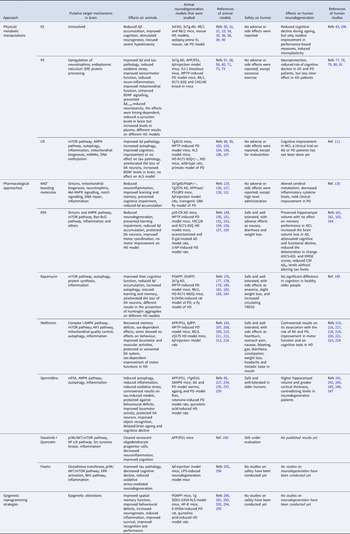
In this review, we discussed different geroscience interventions, especially those with life extension effects on animal models, and their potential positive effects on neurodegenerative diseases and cognitive healthspan. The effects of these interventions are summarised in Table 1.
Life extending interventions and their effect on neurodegenerative diseases

The lifestyle interventions we covered (EE, PE, CR) are overall considered very safe. However, some of these interventions have a dose–response profile that can, at sufficiently high doses, have harmful effects. For CR, these adverse effects may include (but are not limited to) poor thermotolerance, loss of libido, chronic fatigue and susceptibility to infection (Ref. Reference Lee297). Although all of these interventions have largely beneficial effects on animal models and a neuroprotective effect on people is plausible, several aspects need to be researched further for translating the intervention to the human population.
For EE, it needs to be determined what would constitute enrichment in humans, and if various types of enrichment may be better suited to certain subsets of the population. Although the potential of translating EE paradigms to humans has been discussed elsewhere (Ref. Reference Kempermann298), many questions about such a complex interaction need to be addressed, likely with ‘Big Data’ and systems biology. Similarly, although PE has broad positive effects on animal models and humans alike, the optimal type and ‘dose’ of exercise need to be determined, especially given the reported U-shaped association between jogging and mortality. Finally, for CR, based on the research showing that severe CR disrupts the microbiome of overweight or obese post-menopausal women (Ref. Reference von Schwartzenberg299), some researchers have speculated that CR might prime the microbiome for pathogenic bacteria (Ref. Reference Greathouse and Johnson300). Further research needs to clearly establish (1) the risk associated with its long-term implementation, (2) the benefits in non-obese people with and without neurodegeneration and (3) the influence of genetic and environmental factors on the response to CR. These questions and the complex interplay need to be addressed to fully determine the translatability for different subpopulations. It is likely that there will not be a one-size-fits-all solution. Similar to how Lee et al. word it in regard to longevity – that there is a ‘very real likelihood that any given CR-like diet could enhance longevity in some people while shortening life span in others’ (Ref. Reference Lee297), we extend the same conclusion to cognitive healthspan and (protection from) neurodegeneration.
The pharmacological approaches we focused on, while regarded as generally safe, differ in the amount of data supporting their safety. This is especially true regarding their long-term use, their use in healthy individuals and the effects of ceasing the administration. For example, long-term effects of RSV administration have not yet been determined (Ref. Reference Shaito301), and a study exploring the ‘long-term administration’ of NR lasted for only 8 weeks (Ref. Reference Conze, Brenner and Kruger302). Recent work has shown that the beneficial effects of NR are not sustained in aged mice after its removal, suggesting that the supplementation may need to be sustained long term to maintain benefits (Ref. Reference Zong303). Furthermore, the same study showed that removal of NR may have undesirable consequences, such as more severe myeloid skewing compared with normal ageing (Ref. Reference Zong303). Hence, we suggest that further long-term studies with washout periods are both justified and necessary, and extend that suggestion to other discussed pharmacological approaches. Since living organisms keep a homoeostatic balance (albeit with age-dependent impairments, referred to as homoeostenosis), it is plausible to speculate that system-wide exogenous supplementation of central regulators/mediators of metabolism (by rapamycin or NR) may result in systemic adaptation and habituate the system towards the new altered physiology. As a result, cessation of supplementation and return to baseline levels of mTOR or NAD coenzymes after this alteration of homoeostasis mediators may result in deleterious effects and outcomes worse than normal ageing, especially for healthy individuals. Furthermore, some authors note that chronic high-level NAM administration can lead to depletion of methyl groups and may play a role in the development of T2D (Ref. Reference Pérez, Baden and Deleidi304). Similarly, high NAD+ levels could impact the efficiency of protein translation, while high doses of NR may induce glucose intolerance in mice as well as an increase in triglyceride levels in humans (Refs Reference Pérez, Baden and Deleidi304, Reference Dollerup305, Reference Shi306). Despite the potential safety concerns outlined, these approaches seem to hold potential for delaying cognitive decline and onset of neurodegenerative diseases, but there is still insufficient data to advocate their use. Fortunately, many clinical trials are underway and, with their completion, we will have a better understanding of their effects on cognitive health.
Spermidine acts by induction of autophagy, which is one of the most reliable mechanisms against ageing. It was safe and well-tolerated in a trial of daily supplementation for 3 months in older people (Ref. Reference Schwarz245). On the other hand, neurodegenerative cases of human data show higher levels of spermidine accumulation than healthy individuals of the same age. Even though it has been proposed as a protective molecule for brain health and general healthspan, its use against neurodegenerative diseases still needs to be investigated further.
The use of senolytics against neurodegenerative diseases is based on a different approach than the other pharmacological agents mentioned in this review. The fact that senescent cells have been found to be associated with pathological problems in different organs makes it very meaningful theoretically to get rid of the source of the problem by killing these cells. For example, senescent cancer cells cause resistance to chemotherapy, and their clearance by senolytics shows great promise (Refs Reference Wang307, Reference Le308). In animal studies, clearing the senescent cells in the age-related pathological conditions of kidney, lungs, joints or adipose tissue by means of senolytics resulted in an improvement in the general functions of these organs. However, only very few of them were able to provide data on the lifespan extension (Refs Reference Xu251, Reference Yousefzadeh252, Reference Suda253, Reference Xu254). These two senolytics, consisting of D + Q combination and fisetin, have proven their efficacy against various pathologies. Long-term use in neurodegenerative animal models has also been shown to have positive effects on cognition (Ref. Reference Zhang250). Moreover, when we combine the fact that microglia are the major source of ageing in the brain and the cell type that is the major contributor to Aβ spillover in neurodegenerative diseases (Ref. Reference d'Errico309), we can assume that the use of senolytics against these diseases is still valid. However, it is still a matter of debate whether its minimal toxicity on healthy cells can be tolerated in the brain. It is also possible that the hit-and-run approach and minimal repetitions to prevent possible toxic effects will render them ineffective in the clinical trials, as in the phase II study of UBX0101. The NCT04063124 trial, which starts with D + Q, will answer most of these discussions.
When it was revealed that the epigenetic clock of iPSCs measured ‘perfectly young’ (Ref. Reference Horvath310), the study of reprogramming as a rejuvenation approach also began. However, data on lifespan extension were limited to a few studies, possibly because this method is more difficult or toxic than any drug study. Additionally, the efficiency of in vitro reprogramming experiments to date has been very unsatisfactory (Ref. Reference de Magalhães and Ocampo311). Advances in transplantation methods of reprogrammed cells enabled the advancement of animal studies in neurodegenerative models (Ref. Reference Hébert and Vijg271). However, methods for performing this reprogramming directly in vivo are still under development. For example, teratoma cases because of continuous induction of epigenetic factors led researchers to make changes such as transient reprogramming and in the combination of OSKM factors. To make the human trials less risky, time-limited transient reprogramming in aged human cells has successfully resulted in the cells being brought into a younger epigenetic state without losing their identity (Ref. Reference Sarkar284). However, it seems that it will take some more time to reach reliability that would enable testing in vivo, and against neurodegenerative diseases.
We have already mentioned how the effects of CR depend on sex and genetic background, but strain-, dose- and sex-dependent effects have been observed with other interventions such as metformin (Ref. Reference Ma193), iPSC transplantation (Ref. Reference Kondo294), rapamycin (Ref. Reference Miller170) and others (reviewed in Ref. Reference Gonzalez-Freire312). As the responses to the geroscience interventions we reviewed are complex processes that involves multiple different mediators that are dependent on both genetic and environmental factors, future research exploring their effects should examine how they vary across sex/strain, age group and health status.
Finally, these interventions are not mutually exclusive, and some of them may synergise. For example, combining a dietary intervention with exercise, along with a compatible pharmacological supplement and a next-gen senolytic while maintaining a youthful stem cell niche may work better than any of those approaches alone. The potential of targeting neural stem cells in the context of neurodegeneration has recently been reviewed in Ref. Reference Culig, Chu and Bohr313. Of course, in combinatorial approaches like these, there is always the danger of overlap/redundancy (or even adverse effects). For instance, compounds that induce autophagy may not be necessary when utilising a dietary regiment which induces it by itself. Additional obstacles arise in the context of targeting the CNS because of the blood–brain barrier and an extremely limited regenerative potential. But with further interventional and basic research, particularly in regard to mechanisms, we envisage that we will be more adept at proposing such combinations and testing them, with the final goal of translating them to humans and improving the cognitive healthspan together with lifespan.
Acknowledgements
This work was supported by the NIH and the Intramural Research Program (IRP) of the NIA, grants Z01 AG000735, ZIA AG000790 and ZIA-AG000578.
Conflict of interest
Dr V.A. Bohr had a CRADA agreement with Chromadex Inc. All others declare no competing interests.