1. Introduction
This paper is not concerned with recent advances in game theory, but is, rather, concerned with the impact of game theory upon policy makers addressing a major resource management issue. The issue is that of the management of internationally shared fishery resources.
The UN Convention on the Law of the Sea of 1982Footnote 1 (1982 UN Convention, hereafter) has come to serve as the bedrock source of the ‘rules of the game’ for the management of world marine capture fisheries resources (UN, 1982). Under the 1982 UN Convention, coastal states (states with significant marine coast lines, e.g. UK) are given the right to establish 200 nautical mile Exclusive Economic Zones (EEZs) off their coasts. To all intents and purposes, coastal states have property rights to the fishery resources encompassed by the EEZs (McRae and Munro, Reference McRae, Munro, Neher, Arnason and Mollet1989). It was estimated, during the drafting of the Convention, that the EEZs, if spread throughout the world, would encompass fishery resources accounting for 90 per cent of the world's marine capture fishery harvests (Alexander and Hodgson, Reference Alexander and Hodgson1975).
Capture fishery resources are, with few exceptions, mobile. Consequently, it was recognized, during the drafting of the 1982 UN Convention, that the typical coastal state would find that it was sharing some of its EEZ fishery resources with neighbouring coastal states, or with so-called distant water fishing states (DWFSs), operating in the remaining high seas adjacent to the EEZ. The FAO of the UN categorizes these shared fish stocks as: (1) transboundary fish stocks – fishery resources that are to be found in two or more neighbouring EEZs; and (2) straddling fish stocks (broadly defined) – fish stocks that are to be found within both the EEZ and the adjacent high seas.Footnote 2
It has now come to be recognized that the management of internationally shared fishery resources is one of the most significant, if not the most significant, resource management issues to have arisen under the EEZ regime. The FAO estimates that as much as one-third of world marine capture fishery harvests are based upon such shared stocks (Munro et al., Reference Munro, Van Houtte and Willmann2004).
This author has had the opportunity to study, in detail, attempts to manage shared fish stocks in the North Atlantic, Southeast Atlantic, the North Pacific and the Western and Central Pacific. In so doing, he has been given the opportunity to assess the value of game theory concepts and insights to the solving of this real-world management issue. The author has come to the conclusion that there are, in fact, several game theory concepts, which every game theorist regards as elementary, if not obvious, that do have significant, if not profound, policy consequences in the world of fisheries management. Having said this, however, this author must also report that these elementary concepts are, at the time of writing, only poorly understood by most policy practitioners. The author has also discovered an emerging issue in the management of shared fishery resources of considerable policy relevance that has yet to be addressed adequately by game theorists.
We commence with two background sections designed to provide an outline of the relevant resource management issues, accompanied by a brief survey of the development of the economic analysis designed to address these issues.
2. A review of the management of internationally shared fishery resources: stage one – transboundary fish stocks
In our background survey, we begin with a discussion of the relatively straightforward case of transboundary fish stock management. This is followed by an examination of the more complex case of straddling fish stocks.
World capture fishery resources have been seen historically as the quintessential ‘common pool’ resources, in that, in the past at least, it was deemed to be too costly to put in place effective property rights to the resources. The ‘common pool’ aspects of the resource have been seen to lead to resource overexploitation and economic waste.
Economists have traditionally dealt with the capture fishery confined to the waters of a single state, by contrasting the management of the fishery by an all powerful social manager – the ideal, the target – with a pure open access ‘common pool’ fishery, in which the resource is exploited by a very large number of fishers, and in which there is a complete absence of resource property rights and/or government regulations. Consider the following commonly used dynamic model (Bjørndal et al., Reference Bjørndal, Kaitala, Lindroos and Munro2000; Clark, Reference Clark1990).
The resource dynamics, given harvesting, are described by the following deterministic modelFootnote 3


where x(t) is the non-negative state variable representing the fish biomass, F(·) is the growth function of the resource, h(t) is the harvest rate, E(t) is fishing effort, defined as the combined flow of labour and capital services devoted to harvesting, and q, a constant, is the catchability coefficient. It will be assumed from hereon in that q = 1. It is further assumed that F(x) is concave in x, such that F(0) = F(Z) = 0, for some Z > 0, and F(x) > 0 for 0 < x < Z. The biomass Z is the equilibrium level of the biomass, in the absence of harvesting. It is assumed further that 0 ≤ E(t) ≤ E max.
At any given point in time, the net revenue, or resource rent, is given by

where p, a constant, denotes the price of harvested fish, and b, a constant, denotes the average (unit) cost of fishing effort, E.
The objective of the social manager is to maximize the present value of the net revenue (resource rent) from the fishery through time, to t = ∞. The objective functional can be expressed as follows
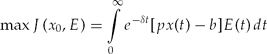
subject to equation (1), and where δ denotes the social rate of discount.
We are presented with a linear optimal control problem, where x(t) is the state variable, and E(t) is the control variable.
There exists an optimal steady state biomass, x*, which is given by the following equation

where 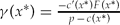 , and where c(x) denotes the unit cost of harvesting c(x) = b/x.
Given that the vessel (and human) capital employed in the fishery is perfectly malleable, the optimal approach path is given by
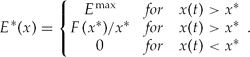
In the contrasting pure open access, ‘common pool’, case, the resource will be driven down to a level at which current resource rent is equal to zero

which H. Scott Gordon (Reference Gordon1954) characterized as bionomic equilibrium. Thus, x ∞ denotes the bionomic equilibrium biomass. It can be shown (Clark, Reference Clark1990) that we shall have x* = x ∞ if and only if δ = ∞, with the implications being obvious. Bionomic equilibrium can thus be taken as a benchmark of resource management undesirability.
In turning now to shared fishery resources, the attention of economists, legal experts, and others focussed first upon transboundary – EEZ to EEZ stocks – for straightforward reasons. In 1982, it appeared that fishery resources to be found in the remaining high seas – 10 per cent of the total – were of minor importance. Hence, straddling stocks were scarcely worthy of serious consideration.
The first fact that needs to be recognized, in dealing with such resources, is that, with very few exceptions, a strategic interaction exists between and among states sharing the resources. To take a simple example, consider two coastal states, A and B, sharing a transboundary stock. The harvesting activities of A will, except under unusual circumstances, have an impact upon the harvesting opportunities of B, and vice-versa – hence the strategic interaction.
The first attempts by fisheries economists to analyse the economics of shared fish stock management attempted to gloss over this awkward strategic interaction. The results of these analyses were, by and large, incomprehensible, and of negligible policy value. This then leads to our first conclusion, namely that economists studying the economics of management of shared fish stocks are compelled to do so through the lens of the theory of strategic interaction, better known as the theory of games. The lesson has been learned and economists’ models of shared stock management are now blends of their dynamic models applied to intra-EEZ fishery management and game theory (see, for example, Munro, Reference Munro1979).
Under the 1982 UN Convention, the coastal states sharing a transboundary stock, while being admonished to enter into negotiations, with a view to managing the resource cooperatively, are not required to reach an agreement. Hence, non-cooperative management of the transboundary fish stock is countenanced under the 1982 UN Convention (UN, 1982; Munro et al., Reference Munro, Van Houtte and Willmann2004). We can refer to this as the default option.
Two articles appeared almost simultaneously analysing the consequences of adopting the default option, namely those of Clark (Reference Clark and Liu1980) and Levhari and Mirman (Reference Levhari and Mirman1980). Both come to essentially the same conclusion, namely that we can, in other than unusual circumstances, look forward to a prisoner's dilemma (PD) type of outcome. This author finds it most convenient to turn to the Clark article.
In the real world of shared fish stock management, asymmetry of players in the fisheries game is the rule, not the exception. Appropriately, Clark sets up a two-player Nash non-cooperative fisheries game, in which the players are asymmetric. The asymmetry arises from his assumption that the players’ fishing effort costs are different. In all other respects, the players are identical.
As before, let b, a constant, denote unit fishing effort costs. Denote the players by α and β. By assumption, bα < bβ. It can be easily shown that the difference in fishing effort costs leads to the following: .
In the Clark model, the non-cooperative feedback strategies of the two players are defined as
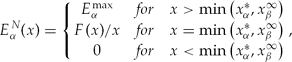

If x*α < x ∞β, the high cost player is driven out, and an optimal result is forthcoming. On the other hand, if x*α > x ∞β, then we get unambiguous overexploitation of the resource. Clark also demonstrates that, if bα = bβ, the two players are symmetrical and the resource will be driven down to the common bionomic equilibrium, x*α = x ∞β (Clark, Reference Clark and Liu1980). Thus, in the Clark model, while a prisoner's dilemma type of outcome is not guaranteed, such an outcome is decidedly likely. Thus, a failure, on the part of neighbouring coastal states, to cooperate can have severe consequences. To those versed in game theory, the conclusion is obvious. It will be argued, however, that, while all policy makers acknowledge that cooperation is desirable, there is not full recognition, among these policy makers, of the possible consequences of non-cooperation.
In turning to cooperative fisheries management, we find that the number of ‘players’ in a typical transboundary fish stock game is small. Substantial progress, in analysing the economics of the management of these resources, can thus be made with two-player cooperative game models, with that of Nash (Reference Nash1953) being particularly popular among economists (e.g. Munro, Reference Munro1979).
Economists were also quick to emphasize the importance of side payments (transfers), where a two-player (A and B) transboundary stock game without side payments is to be described as one in which A's (B's) net economic returns from the fishery are determined solely by the harvests of A's (B's) fleet within A's (B's) EEZ. Side payments serve both to widen the scope for bargaining, and to shift the focus away from the sharing of the harvest to the sharing of the net economic benefits from the fishery.
With side payments (and binding cooperative agreements), the solution to the two-player Nash cooperative game becomes particularly simple. Let the global net economic return from the cooperatively managed fishery (expressed in present value (PV) terms), commencing at x = x(0), be denoted as ω(x(0)). We have

where the two players are α and β, and where the right-hand side of equation (9) denotes their respective shares.
Now denote the returns to the two players from a Nash non-cooperative game as J α(x(0), E Nα, E Nβ) and J β(x(0), E Nα, E Nβ), and denote the cooperative surplus as e(x(0)), where

We then have

Thus, we have the well-known result in which the players divide the cooperative surplus equally and in which each player's cooperative solution payoff is the sum of its threat point payoff and its equal share of the cooperative surplus (Bjørndal et al., Reference Bjørndal, Kaitala, Lindroos and Munro2000).
The earliest cooperative fisheries games models assumed that, if a cooperative agreement could be achieved, it would be binding through time. This raises the obvious question of how stability through time can be realized, if the cooperative agreement is non-binding. In this author's view, the most successful attempt to answer this question has come from what he chooses to call the Helsinki School, the most prominent member of which is Veijo Kaitala (see, for example, Kaitala, Reference Kaitala1985).
The obvious threat to stability in a non-binding cooperative resource management agreement is that of cheating. Kaitala demonstrates that the problem can be addressed with credible mutual threat schemes (Kaitala, Reference Kaitala1985).
The Helsinki School did much more than address the problem of possible cheating, however. It brought to light a problem, which has a high degree of relevance in the real world of policy making. The problem arises from the fact that shifting underlying conditions through time can have an impact on the relative bargaining power of the players, by leading to shifts in threat point payoffs.
The consequences of shifting underlying conditions are set forth in a 1988 article by Veijo Kaitala and Matti Pohjola. The basic point is that the cooperative arrangement has to be forward looking. What appears to be a stable solution to the cooperative game at t = 0, could prove to be very unstable at a later point in time (Kaitala and Pohjola, Reference Kaitala and Pohjola1988).
The Kaitala–Pohjola model is deterministic. The future course of events is entirely predictable, with the result that judicious plans can be made at t = 0 without difficulty. As we shall point out, experience from the real world shows that shifts affecting relative bargaining power can often be no more than anticipated. They cannot be predicted with any accuracy, either in terms of timing, or direction of effect. Real-world experience also demonstrates that such shifts can readily de-stabilize cooperative resource management agreements, even if they are ostensibly binding in nature.
3. A review of the management of internationally shared fishery resources: stage two – straddling fish stocks
The expectation in 1982 that fishery resources in the remaining high seas beyond the EEZs would be of minor importance proved to be dramatically wrong. There was, in the years following 1982, extensive exploitation of the high seas segments of straddling stocks, which undermined coastal state attempts to manage the intra-EEZ segments of the stocks.Footnote 5
The articles of the 1982 UN Convention covering the high seas segments of straddling fish stock are weak. The rights, duties and obligations of coastal states on the one hand, and those of DWFSs on the other, with respect to the high seas segments of straddling fish stocks, are made very unclear by these articles (Munro, Reference Munro2000). This lack of clarity virtually ensured that the stocks would be managed non-cooperatively. The post-1982 history of these resources demonstrated that the economist's model of non-cooperative management of transboundary stocks applied, without modification, to straddling stocks. Case after case of overexploitation of such resources emerged.
The growing concern over the state of world straddling fish stocks led the UN to convene an international conference from 1993 to 1995, to address the issue. The conference, brought forth an Agreement, popularly referred to as the UN Fish Stocks Agreement,Footnote 6 which had as its purpose the buttressing of the 1982 UN Convention (Bjørndal and Munro, Reference Bjørndal, Munro, Folmer and Tietenberg2003).Footnote 7
Under the terms of the 1995 UN Fish Stocks Agreement (1995 UN Agreement, from hereon in), straddling stocks (broadly defined) are to be managed on a region-by-region basis through Regional Fisheries Management Organizations (RFMOs). The RFMOs are to have as members both coastal states and DWFSs. Examples are provided by the Northeast Atlantic Fisheries Commission (NEAFC) and the Western Central Pacific Fisheries Convention (WCPFC).
The question then becomes to what extent do the economic game theory models developed for transboundary fish stocks have to be modified, when dealing with straddling fish stocks. One part of this question has already been answered. The model of non-cooperative management of transboundary stocks applied without modification to straddling stocks (see, as well, Sumaila, Reference Sumaila1999).
When we turn to the cooperative management of the resources, the answer is quite different. Substantial modification is required. To begin, we can anticipate that the number of players in the typical straddling stock game will be large. Straddling stock games with ten or more players are not unusual. Two-player models are simply not adequate. Rather we are compelled to employ n > 2 models, which in turn means that a coalitional bargaining approach becomes mandatory.
Secondly, in contrast to transboundary stock management, the number and nature of the players cannot be expected to be constant through time. Some members of the RFMO are DWFSs, the fleets of which are nothing, if not mobile. An original, or ‘charter’, member of a RFMO may withdraw. More importantly, a DWFS, hitherto not a member of the RFMO, may apply for membership. The 1995 UN Agreement makes it clear that the ‘charter’ members of a RFMO cannot bar prospective new entrants, new members, outright (UN, 1995, Articles 8, 10 and 11; Munro et al., Reference Munro, Van Houtte and Willmann2004). This gives rise to the so-called ‘New Member Problem’ (Kaitala and Munro, Reference Kaitala and Munro1993).
The third difference falls under the heading of ‘free riding’. A ‘free rider’ can be defined as a state which enjoys some of the benefits from the cooperative management of the fishery resource, or resources, while refusing to become a party to the cooperative management arrangement. Munro et al. (Reference Munro, Van Houtte and Willmann2004) maintain that, while free riding is theoretically possible in the management of transboundary fish stocks, they are hard pressed to come up with any real-world examples. Free riding, by way of contrast, is an ongoing, and very serious, problem in the management of straddling stocks.
The difference arises largely because of the distinction between illegal and unregulated fishing. According to the FAO, illegal fishing involves fishing by one state, or entity, in the EEZ of another state without the latter's permission, or willful non-compliance with the management provisions of a RFMO by a member of the RFMO (FAO, 2001). Vigorous action can be taken to deal with such fishing. On the other hand, if vessels, flying the flag of non-members of a RFMO, fish in the high seas portion of the area governed by the RFMO in a manner inconsistent with the management provisions of the RFMO, such vessels are deemed to be engaging in unregulated fishing (FAO, 2001). While unregulated fishing is deemed to be morally reprehensible, it has, in the past, been unclear what RFMO members can to do curb such activities, because there remains a lack of clarity regarding the property rights to the fishery resources within the high seas subject to RFMO governance. As we shall relate, the UN, through the FAO, and the OECD are actively attempting to address the problem (see, for example, FAO, 2001). In any event, the uncertainty surrounding unregulated fishing acts as an open invitation to free riding.
With respect to a coalition bargaining approach to the issue at hand, this has essentially proceeded in two stages (Bjørndal and Munro, Reference Bjørndal, Munro, Bjørndal, Romero and Epstein2007). The first stage consists of taking a characteristic function game approach, which focusses on the fairness of the cooperative outcome, with emphasis being given to the Shapley value (Kaitala and Lindroos, Reference Kaitala and Lindroos1998). In such a game, the individual players have no bargaining power on their own. Rather, their bargaining power is determined by the coalitions that they can form with one another. Thus, for example, if there is a dominant sub-coalition, players belonging to that coalition will receive larger shares of the cooperative surplus, than will the others.
The limitation of the characteristic function game (c-game) approach is that it does not allow one to address the issue of free riding directly. An alternative approach, the partition function game approach, does just this. It is concerned with the stability of the grand coalition, in the face of free riding, rather than with optimal sharing rules (Pintassilgo, Reference Pintassilgo2003; Pintassilgo and Lindroos, Reference Pintassilgo and Lindroos2006). The key concept of stand-alone stability is introduced. The grand coalition is stand-alone stable if ‘. . . no player is interested in leaving the cooperative agreement to adopt a free-rider behaviour’ (Pintassilgo, Reference Pintassilgo2003: 183).
A sufficient condition for the grand coalition not to be stand-alone stable is that the sum of the values of the singleton coalitions, resulting from unilateral deviations from the grand coalition, exceed the value of the grand coalition, where the value of the grand coalition is deemed to be equal to the grand coalition's cooperative surplus, expressed in PV terms (Pintassilgo, Reference Pintassilgo2003; Pintassilgo and Lindroos, Reference Pintassilgo and Lindroos2006). If this condition does not hold, then there is no way in which all potential defectors can be persuaded to remain within the grand coalition, regardless of how ingenious the sharing rule may be (Bjørndal and Munro, Reference Bjørndal, Munro, Bjørndal, Romero and Epstein2007).Footnote 8
We next consider the so-called new member problem. Kaitala and Munro (Reference Kaitala and Munro1997) argue that the new member problem can lead to a subtle form of free riding, which has nothing whatsoever to do with unregulated fishing. Consider the case of a group of ‘charter’ members of a RFMO undertaking to rebuild a hitherto overexploited straddling stock. They engage in a resource investment program over time. As they are about to enjoy the fruits of their investment, they are approached by a prospective new member, who agrees to abide by the management regime of the RFMO, but who demands a pro rata share of the TAC, and thus net economic returns from the fishery, free of charge. If the new member's demands are acceded to, the New Member will be effectively free riding, enjoying a share of the return on the resource investment while having borne none of the cost of the investment (Kaitala and Munro, Reference Kaitala and Munro1997; Munro et al., Reference Munro, Van Houtte and Willmann2004).
Kaitala and Munro demonstrate that anticipation of such New Member free riding could lead to ‘charter’ RFMO members calculating that their expected cooperative payoffs would fall below their threat point payoffs. The RFMO would be stillborn. They argue that a solution could lie in granting the ‘charter’ members collective property rights to resources encompassed by the RFMO, and then allowing new members to buy their way in, much like new entrants to a domestic individual transferable quotas (ITQ) fishery (Kaitala and Munro, Reference Kaitala and Munro1997).
While Kaitala and Munro (Reference Kaitala and Munro1997) do not say so explicitly, if the ‘charter’ members are granted effective collective property rights to the ‘high seas’ fishery resources encompassed by the RFMO, unregulated fishing will be transformed into illegal fishing, and the ‘high seas’ portion of the RFMO becomes ‘high seas’ in name only.
If the aforementioned effective property rights are not created, the ‘charter’ members can try to turn poachers into gamekeepers, by persuading free riders to join the club, that is to say become New Members. Then, however, a dilemma arises. If prospective New Members are granted too generous a share of the returns from the fishery, the RFMO could be undermined by the implicit free riding. If the prospective New Members believe that they are being offered too little, they will return to their explicit free riding ways. Pintassilgo and Lindroos (Reference Pintassilgo and Lindroos2006) demonstrate that there will be cases in which there is no way out, in which instability is certain to wreck the grand coalition that is the RFMO.
The review is now complete. We now turn to the question of the relevance of this game-theoretic analysis to the real world of policy making in internationally shared fishery resources. It has been implied in the introduction and the review that the game-theoretic analysis is indeed highly relevant. We now discuss the question more fully.
4. The relevance of game theory analysis to real-world policy making in internationally shared fishery resources
We commence by discussing three interrelated concepts from elementary game theory, which have a high degree of relevance to real-world fisheries management, but which are imperfectly understood by policy makers. These are (a) the individual/sub-coalition rationality condition, (b) the prisoner's dilemma, and (c) side payments. We then go on to discuss two non-elementary issues, namely (d) the relevance of the partition function game approach to the emerging RFMO regime, and (e) the question of the dynamic ‘resilience’ of cooperative fisheries management arrangements. It will be argued that the dynamic resilience question has yet to be fully explored by game theorists.
Individual (sub-coalition) rationality condition
In its report, the 2002 Norway–FAO Expert Consultation on the Management of Shared Fish Stocks states the basic requirement for stable long-term cooperation is as follows:
it has to be recognized that each and every participant in a cooperative arrangement must anticipate receiving long term benefits from the cooperative arrangement that are at least equal to the long term benefits, which it would receive, if it refused to cooperate. This fact [satisfying the individual rationality condition], which should be obvious, is often ignored in practice. (FAO, 2002: 8)
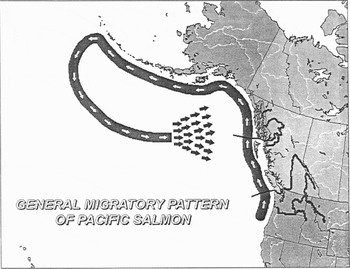
An example of this obvious fact being ignored is provided by the Canada–United States Pacific Salmon Treaty, 1985, governing the management of Pacific salmon from northern California to the Gulf of Alaska (Treaty, 1985). The Canada–US Pacific salmon fisheries game is reasonably complex. While Canada can be regarded as a single player, the United States is really a coalition consisting of Alaska, the combined states of Washington and Oregon, the so-called Treaty Indian tribes of Washington/Oregon and the US federal government. Bargaining, historically, has proceeded in two stages. There is a sub-game played among the players in the US coalition, followed by a game between the American coalition and Canada.
General migration pattern of Pacific Salmon off Canada and the United States
Source: Miller and Munro (Reference Miller and Munro2004).

Having said this, both the United States and Canada are wealthy, developed, states. Both take pride in the quality of their fisheries research and management. Finally, at the time that the Treaty was being negotiated, Pacific salmon was the most important resource for the fishing industries of the states of Oregon, Washington, and Alaska, and the province of British Columbia.
After many years of painful negotiations, a treaty was concluded between the governments of Canada and the US in 1983. The Treaty was blocked in the US Senate by the senior Senator from Alaska. The action of the Senator was neither irrational, nor malicious. A review of the history reveals that Alaska was quite literally worse off under the 1983 version of the Treaty than it would have been in the absence of a treaty (Munro and Stokes, Reference Munro, Stokes, McRae and Munro1989).
The issue was ultimately resolved, with Alaska being ‘bought off’. The Treaty was ratified in 1985. The solution to the cooperative game was only temporary, however. By the early 1990s, environmental shifts had brought about a situation in which Alaska once again found itself having nothing to gain from the Treaty (Huppert, Reference Huppert1995).
In the early 1990s, the sub-coalitions reconfigured, with Canada entering into a de facto sub-coalition with Washington/Oregon and the Treaty Tribes. Alaska played competitively against this sub-coalition. The cooperative game crumbled. While the Treaty, in a strictly legal sense, remained in place, it entered into a state of paralysis, which lasted for six years. The prisoner's dilemma played itself out, with damaging consequences for the resources (Miller et al., Reference Miller, Munro, McDorman, McKelvey and Tydemers2001).
With the consequences of non-cooperation becoming increasingly evident, a series of negotiations took place that resulted in a Canada–US Agreement being signed in 1999 to ‘patch up’ the Treaty, which hopefully satisfied the Alaskan individual rationality condition. How stable the solution to the new cooperative game will prove to be over time remains to be seen (US Department of State, 1999; Miller et al., Reference Miller, Munro, McDorman, McKelvey and Tydemers2001).
The prisoner's dilemma
The 1982 UN Convention does, as we have pointed out, allow for the possibility that states/entities sharing a fishery resource will not be able to achieve an agreement and will, as a result, manage their segments of the resource independently, without the benefit of cooperation. While this author can point to instances in which states sharing a resource have at least some degree of awareness of the consequences of non-cooperation, he has encountered other cases, in which the relevant states appear to be only dimly aware of the potentially damaging consequences of non-cooperation. We gain the impression that there is comforting belief that honourable states will at least engage in tacit cooperation, if no formal cooperative mechanism is established.
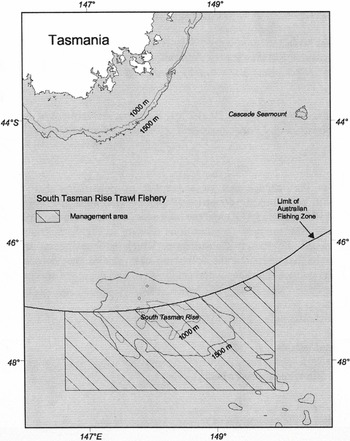
An example of states being caught by surprise by the consequences of ineffective cooperation is provided by the case of the South Tasman Rise Trawl Fishery (the details are to be found in Munro et al., Reference Munro, Van Houtte and Willmann2004). The resource is an orange roughy stock, which straddles the boundary of the Australian Fishing Zone (i.e. EEZ), and the adjacent high seas. Orange roughy is usually exploited during its spawning phase, when it is concentrated. Orange roughy is high valued, and is extremely slow growing. It is thus highly vulnerable to over fishing.
The Australians became aware of the resource in 1997, and saw New Zealand as the only other state likely to attempt to harvest the resource. The Australians approached their New Zealand counterparts with the objective of establishing a cooperative management arrangement. Australia and New Zealand are both developed, and have a common cultural background. Each country has an exemplary record of domestic fisheries management. Establishing an effective cooperative management arrangement should have been straightforward.
An agreement was put into place in late December, 1997. The implementation was, however, faulty. A perfect prisoner's dilemma emerged, which was exacerbated by unexpected free riding by a third party, in the form of South African vessels (for full details, see Munro et al., Reference Munro, Van Houtte and Willmann2004).
The South Tasman Rise trawl fishery
Source: Munro et al. (Reference Munro, Van Houtte and Willmann2004).
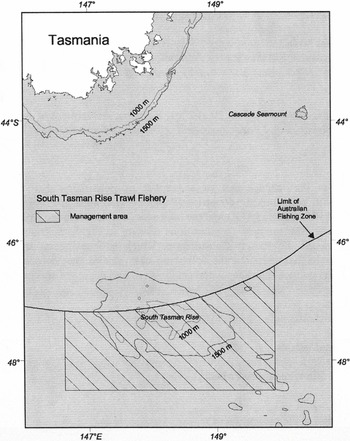
In 2000, Australia and New Zealand signed a well-thought-out, airtight, cooperative management agreement, which, inter alia, dealt with third party free riding. Effectively, there had been a set of repeated PD games leading ultimately to cooperation. The cooperation had, however, come too late. The resource had been heavily overfished between 1998 and 2000. Given the extremely slow-growing nature of the resource, it will be a very long time before the resource recovers, if in fact it ever does (Munro et al., Reference Munro, Van Houtte and Willmann2004).We can only remark that, if Australia and New Zealand could fall into the PD hole, then no set of countries sharing a fishery resource is safe.
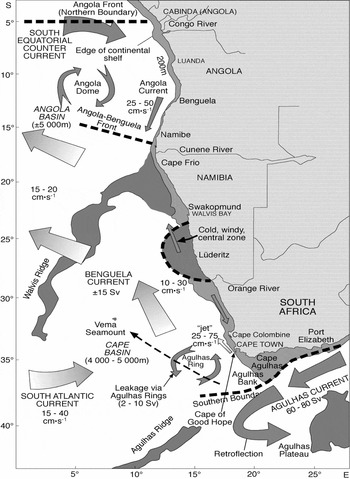
The Benguela Current large marine ecosystem
Source: Sumaila et al. (Reference Sumaila, Munro and Keith2005).

This author has been involved in a UN-sponsored project concerning the Benguela Current region – South Africa, Namibia, and Angola. These coastal states share fishery resources, hake in particular (Sumaila et al., Reference Sumaila, Munro and Keith2005). We were asked to offer advice for these states on the advisability of entering into a full-scale cooperative management arrangement. At this stage, they cooperate only at the scientific level.
There is no evidence of the PD at work; there is no obvious overexploitation of the resource. Thus, tacit cooperation appears to prevail. We did, nonetheless, recommend that the coastal states proceed to full cooperation for several reasons, an important one being that we regarded tacit cooperation as a weak reed. Since there has, until recently, been uncertainty and confusion about the extent of the sharing of the fishery resources among the three coastal states, we were fearful that the apparent tacit cooperation was based upon the fishing industries’ temporary ignorance of the impact of their fishing activities upon one another (Sumaila et al., Reference Sumaila, Munro and Keith2005).
Side payments
The case for side payments is clear. If we think of sharing the economic benefits of a fishery through time, then it should be obvious that it makes no sense to restrict the sharing to state fleet shares of the total allowable catch. Nonetheless, this fact, hitherto, has been only vaguely understood by policy makers. There is, however, some encouraging evidence that the message is getting through. Consider the following example provided by the Pacific Island States of the Western and Central Pacific. This region has the largest stock of tropical tuna resources in the world. The resources are both transboundary and straddling in nature.
The Pacific Island States undertook to manage their resources cooperatively in 1979, using the emerging UN Law of the Sea Convention as a framework. The tuna resources are not spread evenly throughout the region, tending to concentrate around the Equator. Two sub-coalitions emerged: the ‘haves’, i.e. states close to the Equator such as Papua New Guinea, and the ‘have nots’, i.e. states more distant from the Equator such as Fiji. There is clear evidence that there have been side payments from the ‘haves’ to the ‘have nots’, with the objective of enhancing cooperation, although the term transfers, let alone side payments, has never been used (Munro, Reference Munro1990; Munro et al., Reference Munro, Van Houtte and Willmann2004).Footnote 9
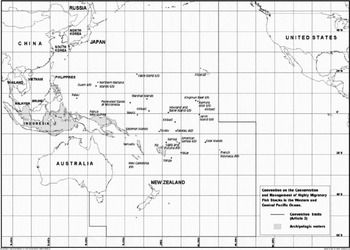
The Pacific Island States, along with neighbouring Indonesia and the Philippines and DWFSs operating in the region, e.g. United States and Japan, have recently established the largest RFMO in the world: the Western and Central Pacific Fisheries Commission (WCPFC) (see figure 4). The WCPFC will govern the management of four tuna species: skipjack, albacore, bigeye, and yellowfin. Concern has been expressed about the current state of two of these species, yellowfin and bigeye (Reid, Reference Reid2006).
The Western Central Pacific Fisheries Commission Area
Source: Munro et al. (Reference Munro, Van Houtte and Willmann2004).

The Scientific Committee of the WCPFC has recommended, as one possible solution, a 15 per cent reduction in fishing effort across the board for all tuna species. The extensive intermingling of the tuna species (FAO, 2005), almost certainly underlies this across-the-board recommendation.
The Pacific Island States coordinate their fisheries planning through the Pacific Islands Forum Fishing Agency (FFA). A senior economist employed by the FFA (Christopher Reid) has undertaken an assessment of the economic consequences of the Scientific Committee's proposal (Reid, Reference Reid2006).
The targeting of the four species is not uniform throughout the region. Reid concludes in his assessment that those vessels operating on the high seas portion of the WCPFC, DWFSs, would benefit substantially from the proposed resource investment. The Pacific Island States, as a group, would actually suffer an economic loss. Needless to say, the Pacific Island States, if rational, would block the proposal (sub-coalition rationality). What then, asks Reid, is to be done? He responds by turning to the report of the aforementioned Norway– FAO Expert Consultation on the Management of Shared Fish Stocks and quotes the report verbatim on the importance of side payments.Footnote 10 Reid concludes:
To overcome the difficulties inherent in obtaining agreement on management measures, members of the WCPFC will need to give serious consideration to the possibility of the use of . . . ‘side payments’, in order to ensure that the costs and benefits of any such management measures are borne equitably between members. (Reid, Reference Reid2006: 7)Footnote 11
This particular case is relatively easy, in that it is one of obvious winners compensating obvious losers. Nonetheless, if the advice were to be followed, an important precedent would have been set.
Unregulated fishing
The New International Law of the Sea, as it pertains to fisheries, is not rigid and static. Rather it is in a process of evolution through state practice. Game theory analysis can contribute by helping to direct the evolution along appropriate lines.
The problem of unregulated fishing provides an example. The FAO has put forward a Plan of Action to curb what it refers to as illegal, unregulated, and unreported (IUU) fishing (FAO, 2001). The efforts of the FAO are being supplemented by the OECD (2006). It is of utmost importance that resource economists using game theory support the efforts of the FAO and the OECD by transmitting to policy makers the results of our analysis showing the consequences of unchecked unregulated fishing.
The preceding discussion makes clear that the game-theoretic analysis points towards the importance of establishing clear property rights for the fishery resources within the high seas under RFMO governance. This author, when participating in a panel on internationally shared fishery resources at the Sharing the Fish Conference 2006, in Fremantle, was gratified to find that one of his fellow panelists, Professor Rosemary Rayfuse, an expert in international law, raised the ‘controversial’ question of whether ‘RFMO [should be] vested with ‘property rights’ in high seas fisheries’ (Rayfuse, Reference Rayfuse2006: slide 8). What is important is that this question is now up for open discussion in the international legal community.
Resilience
The final issue pertains to the dynamic resilience of cooperative fisheries management regimes through time. As we have discussed, the importance of shifting threat points over time was raised by Kaitala and Pohjola (Reference Kaitala and Pohjola1988) almost two decades ago. We also pointed out that their model is limited by the fact that it is deterministic.
For an example we turn to the case of the Norwegian Spring Spawning Herring stock in the North Atlantic. This stock, which historically has been one of the largest fish stocks in the North Atlantic, does, when it is healthy, migrate between Norway and Iceland. The resource crashed in the early 1970s. The remnants of the resource were confined to Norwegian waters, and were subject to a harvest moratorium. By the mid-1990s, the resource had recovered and recommenced its migratory pattern.
The resource, which is both transboundary and straddling, is now subject to exploitation by Russia, the Faroe Islands, and the EU, as well as Norway and Iceland. In time, a cooperative management arrangement was established under the framework of the 1995 UN Fish Stocks Agreement. The arrangement came complete with what were close to side payments, and was put forward as a model of cooperative management of a straddling stock (Munro, Reference Munro2000).
The harvest allocations are based, more or less, on zonal attachments of the resource, determined by the amount, and time spent, in each player's zone, during the resource's migration. Norway and Russia can be seen as constituting a sub-coalition (Bjørndal, personal communication). The Norway/Russia sub-coalition, due either to unexpected shifts in resource migratory patterns, or faulty earlier biological research, began claiming in 2003 that its share fell far short of what its zonal attachment dictated. It acted, as if its sub-coalition rationality condition was not being satisfied (Bjørndal and Munro, Reference Bjørndal, Munro, Bjørndal, Romero and Epstein2007), and began playing competitively against the rest.
The dispute was finally resolved at the end of 2006. Cooperation has been restored. During the years of paralysis, there was not a complete breakdown in the cooperative resource management arrangement, which could have led to the resource crashing once again. Nonetheless, the PD began to raise its ugly head. The players unilaterally raised their quotas. Furthermore, the players had prior to 2003 entered into side deals, to allow one another to take part of their quotas in each other's zones. This was done to increase the size of the global economic pie (Bjørndal and Munro, Reference Bjørndal, Munro, Johnston and Shriver2001). After 2003, Norway decreed that all players, save Russia, were to be barred from its zone, thereby diminishing the global economic pie (Bjørndal and Munro, Reference Bjørndal, Munro, Bjørndal, Romero and Epstein2007). While cooperation was ultimately restored, the cooperative resource management regime did demonstrate a distinct lack of resilience in the face of perceived changes in resource migratory patterns.
Miller and Munro (Reference Miller and Munro2004), writing about another case of inadequate resilience – the Canada–US Pacific Salmon Treaty – argue that shocks, particularly environmental ones, can be anticipated, but cannot be predicted. While the need for ensuring flexibility is obvious, they claim that they can obtain no clear guidance on this question from the existing literature on the application of game theory to resource management issues (Miller and Munro, Reference Miller and Munro2004). Nothing has changed since 2004. Further work by applied game theorists is urgently required.
5. Conclusions
This paper has been concerned with the relevance, if any, of game theory analysis to a specific resource management issue, namely the management of internationally shared fishery resources. The immediate response to the question is that it is all but impossible to analyse the economics of the management of these resources, other than through the lens of game theory. Strategic interaction among those states sharing the resources lies at the heart of the resource management problem.
It was argued that here are several basic, indeed elementary, game theory concepts, which are of direct and immediate relevance to policy makers. It was also argued that these concepts are, as yet, poorly understood by the policy makers. What this requires of resource economists, such as this author, is that they become effective expositors, by taking the results of their game theory analysis and expressing them in a form that can be readily understood and appreciated by the practitioners.
This is an urgent matter. The implementation of the RFMO regime, described in this paper, is an ambitious undertaking. Game theory has a great deal to say about the necessary conditions for stability of the new regime. If the regime proves, in the end, to be unstable and collapses, the consequences for world capture fishery resources, many of which are already threatened, will be severe.