Introduction
The development of therapies for Alzheimer's disease (AD) presents numerous interdisciplinary challenges for physicians, academic researchers, the pharmaceutical industry, and regulatory bodies. Many compounds that show promise in early animal studies fail to deliver in human trials, and efficacy of a drug in phase 2a trials fails to translate to efficacy in phase 2b and pivotal phase 3 trials (Bezprozvanny, Reference Bezprozvanny2010; Cummings, Reference Cummings2010). Companies have tried to accommodate this dilemma within the existing research framework, paying more attention to selection of patients (e.g. using biomarkers to enrich groups with true AD pathophysiology), to the duration of trials (in order for disease-modifying compounds to come to full effect), and to the worsening in the placebo group, the last of which is problematic from an ethical viewpoint. The current net result of key neuroscience drug development in AD seems to provide frustrating and dismal prospects for the future, which may disincentivize industry from investing in and undertaking research in this important and promising, but particular complex high-risk sector.
As a result, business cases are becoming increasingly important when companies decide whether to invest in research and whether to advance drugs to phase 2b trials. Three issues are particularly important. First, treating patients with more severe disease seems to be more cost effective for industry. Second, as phase 3 trials cost around $400–500 million over four to five years, companies must decide whether to run phase 3 trials at all, especially given the fact that phase 2 trials are not yet reliably informative. Finally, companies must decide whether to restrict research to phase 2 trials, which produce data and results relatively cheaply, quickly, and provide much more return on investment than phase 3 trials, regardless of science and due diligence, which is a potential danger for this developing field. As a result, providing biochemical evidence of effects of drugs on central pathophysiological mechanisms would be of great benefit when making go/no-go decisions before embarking on phase 2b and/or phase 3 clinical trials. In addition, there seems to be a growing pipeline problem in many companies regarding promising and successful CNS candidates.
Current development of therapies for Alzheimer's disease
The causes of AD are still unknown, although some disease mechanisms are well described. A number of key questions thus need to be addressed when considering development of drugs for AD:
• Are any drug targets currently validated to be of clinical relevance?
• As the condition is a complex, chronic, progressive, non-linear, dynamic brain disease, at which point in the disease process should a drug work? For example, should drugs be active early or late in the amyloid (neurodegenerative or functionally adaptive) cascade or early or late in the clinical course?
• Do targets change over the disease course or a patient's lifespan? For example, are there specific time-points or phases in the disease process when anti-inflammatory drugs, estrogens, drugs targeted towards lipid signaling, anti-oxidative drugs or drugs targeting neuroplastic changes are more appropriate than any of the others?
• Early intervention may not be effective for many years and any effects may vary in different patients depending on their basic underlying disease process.
• What outcomes should be expected for specific drugs?
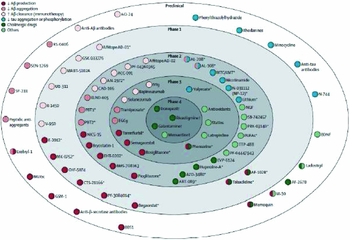
For clinicians working with AD patients, this is an interesting time. International large-scale memory clinics are running trials, more than 200 compounds are currently in phase 2 and phase 3 drug development, and a plethora of new compounds are entering phase 2 and 3 trials. Among these trials, drugs with a variety of targets and clusters of mechanisms are under investigation (Figure 1), including anti-amyloid compounds intended to decrease Aβ production, decrease Aβ aggregation or increase Aβ clearance through immunotherapy; agents that decrease tau aggregation or phosphorylation; cholinergic drugs; and numerous agents targeted at other mechanisms, such as modulation of secretases, chelation, receptor for advanced glycation end-products (RAGE) inhibitors, active and passive immunotherapy, neurotrophic factors and inhibitors, stem-cell therapy, and gene therapies.
Alzheimer's disease: clinical trials and drug development. Reproduced with permission from Mangialasche et al., Reference Mangialasche, Solomon, Winblad, Mecocci and Kivipelto2010.

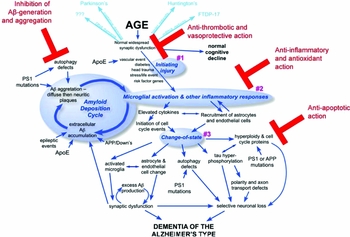
Figure 2 shows a recently proposed hypothesis for the pathophysiology of AD that differs from the traditional model (Herrup, Reference Herrup2010). In the past, the underlying disease process was portrayed as a linear amyloidogenic cascade, yet the condition is not linear but a chronic, non-linear, complex disease triggered by the aging process, which introduces many problems, including neuroplasticity changes and, particularly, reduced repair mechanisms. As people age, they encounter risk factors including vascular events, metabolic disdorders (e.g. diabetes), comorbidity, head trauma and stressful life events. People also have an inherent pattern of risk or protective genes; indeed, genome wide association studies (GWAS) recently discovered about ten risk genes for AD in humans (for a summary of GWAS in AD see the AlzGene database at http://www.alzgene.org), and the next generation of high-throughput sequencing technologies will probably reveal more high risk genes to complicate the underlying background of AD pathophysiology. According to Herrup's model, these risk factor genes and life events have an impact on microglial activation and other immunological and inflammatory responses, which leads to a cascade of interrelating events that produce a change in the state within brain cells, followed by interrelated molecular cascades, including tau hyperphosphorylation, changes in lipid signaling, apoptosis, activation of microglia, and expression of cytokines. This change in state alone may independently foster neurodegeneration and detrimental effects on the brain. In addition, the initiated and then self-propagating amyloid deposition cycle is activated, which again independently may lead to neurodegeneration and cell loss. In this model, AD is analogous to cancer in that the complex disease has characteristic individual risk patterns affecting different biological pathways and systems with varying magnitude and time to progression and therefore never manifests in exactly the same manner in any two patients. Unfortunately, to date no intervention has successfully demonstrated disease-modifying or preventive activity in large trial groups of sporadic non-mendelian AD dementia patients, which seems discouraging for healthcare professionals and the public alike.
New pathophysiological model of Alzheimer's disease and potential points of interaction for Gingko biloba extract EGb 761® (adapted from Herrup, Reference Herrup2010).

Ginkgo biloba extract EGb 761® is an interesting product from a basic research viewpoint. EGb 761® is a dry extract from Ginkgo biloba leaves (35–67:1), extraction solvent aceton 60% (w/w). The extract is adjusted to 22.0–27.0% ginkgo flavonoids and 5.0–7.0% terpene lactones, consisting of 2.8–3.4% ginkgolides A, B, and C and 2.6–3.2% bilobalid and contains less than 5 ppm ginkgolic acids. It has been shown potentially to interact with various biological aspects of the proposed integrated pathophysiologic cascade, as illustrated in Figure 2, and thus has a range of mechanisms with potential disease-modifying and/or preventive relevance in AD. Direct antioxidative effects could be achieved through scavenging of hydroxyl, peroxyl, superoxide anion or nitric oxide radicals; hydrogen peroxide; or ferryl ion species. Indirect antioxidant effects could be achieved through increases in superoxide dismutase, glutathione peroxidase, catalase and/or heme-oxygenase-1-activities. Effects on cellular energy metabolism and protection of mitochondria might be achieved through increases in expression of nicotinamide adenine dinucleotide (NADH) dehydrogenases, which influence generation of reactive oxygen species in the mitochondria and optimize levels of adenosine triphosphate. Anti-inflammatory effects could be achieved through inhibition of cyclooxygenase-2. Microcirculation can be improved by reduction of blood viscosity and stimulation of endothelium-derived relaxing factor. In addition, inhibition of beta amyloid (Aβ) peptide generation and aggregation and antiapoptotic mechanisms could prove useful.
EGb 761® has already been investigated in two large intervention trials for prevention of AD: the Gingko Evaluation of Memory (GEM) and the GuidAge study. The design and construction of these two studies are not without issues that reflect broader problems with trials in this field. In the GEM study, unusual fluctuations in the incidence of dementia were observed, with an incidence of below 1% in the first year (DeKosky et al., Reference DeKosky2008). In the GuidAge study, the five-year rate of conversion to AD in the placebo group was only 5.2% (Vellas et al., Reference Vellas2010), which is low compared with expected conversion rates based on the literature (Farias et al., Reference Farias, Mungas, Reed, Harvey and DeCarli2009).This could be explained by the patient population in this study, which included a mixture of patients with subjective cognitive impairment (SCI) and mild cognitive impairment (MCI). The selection criterion for the at-risk-patient-population in the GuidAge study excluded subjects with MCI who scored below the tenth centile (about 1.2 standard deviations (SD)) in some tests (Ipsen, 2010). This criterion thus only allowed inclusion of patients with very mild MCI and likely rejected too many with MCI and probable underlying pathology of AD. Furthermore, the cumulative rate of adherence of participants in the active arm of the GEM study was probably only 60% (DeKosky et al., Reference DeKosky2008), and it is unclear how long EGb 761® was taken by study participants included in the statistical analysis of outcomes.
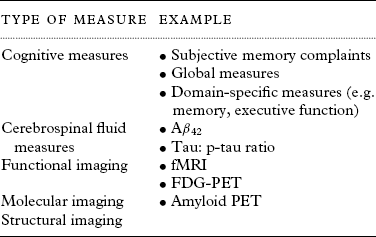
Moving forward, therefore, many aspects of study design and methods need to be revised to optimize outcomes of trials with all agents targeted at prevention of AD. This would include improvements to outcomes measures; improved recruitment and training of sites, principal investigators, coordinators and raters (this is particularly important given the widespread shift in trials from Europe and the USA to India, South America and China); optimization of trial design, including patient selection, duration, stratification and covariates; improved recruitment and retention of participants; and optimal use of the wide range of biomarkers, including cognitive measures, now available (Table 1).
Range of candidate biomarkers available for use in pre-dementia trials
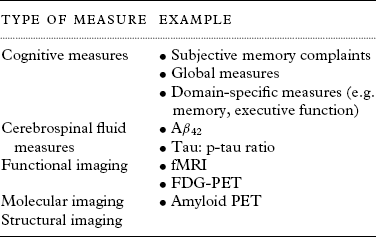
FDG = fluorodeoxyglucose; fMRI = functional magnetic resonance imaging; PET = positron emission tomography.
Shifting the focus of drug research to prevention rather than cure
From a clinical perspective, patients have traditionally been diagnosed once dementia has already developed, but the diagnosis of AD needs to be made earlier in the disease process if preventive medicines are to have any impact (Aisen, Reference Aisen2009). Unfortunately, current drug research and development tends to mirror the clinical scenario, with work generally investigating products in a late-stage neurodegenerative environment, when it is probably too late for intervention to be useful. However, some research is attempting to provide information that would facilitate and support research into preventive products that act before the disease becomes symptomatic and irreversible.
Criteria for diagnosis earlier in the disease process have been developed (Aisen, Reference Aisen2009). Diagnosis according to the research criteria by the International Working Group (IWG) for “prodromal AD” identifies patients with episodic memory impairment and the presence of any AD-typical biomarker (Dubois et al., Reference Dubois2007), while diagnosis according to the modified Dubois criteria for “presymptomatic at risk AD'” identifies patients without any symptoms at all but with positive amyloid biomarkers (Dubois et al., Reference Dubois2010). Data from the Australian Imaging, Biomarkers and Lifestyle (AIBL) study of aging show that amyloid deposition, as determined by carbon 11-Pittsburgh compound B PET Imaging (PiB-PET) and autopsy, precedes the onset of clinical symptoms and AD-related dementia by 15–20 years (Rowe et al., Reference Rowe2010). Multicenter data from the European Alzheimer's Disease Consortium (EADC) Development of Screening guidelines and Criteria for Predementia Alzheimer's Disease (DESCRIPA) study shows that cerebrospinal fluid (CSF) profile markers seem to identify patients with preclinical disease and describe cohorts at risk (Visser et al., Reference Visser2009). In this study, a pathological CSF biomarker signature (decreased Aβ1–42, increased t-tau, and increased p-tau) was associated with cognitive decline and conversion to AD in patients with MCI being detected in 32% of healthy controls, 52% of patients with SCI, 68% of patients with non-amnestic MCI, and 78% of those with amnestic MCI. Both PiB and the CSF biomarker could thus be used to identify earlier stages of disease.
Because biomarkers such as these change as a patient progresses from the decade-long preclinical phase through the MCI phase to the AD dementia phase, they can be used to create a model of disease that could prove useful during the construction of clinical trials (Trojanowski and Hampel, Reference Trojanowski and Hampel2011). Current consensus is that the earliest markers derive from the amyloid cascade, but debate is ongoing about the relevance of functional neuroimaging markers that show changes in neuronal network coordination and plasticity and about the extent to which neurophysiological methods might provide not only indicators of the typical molecular AD pathophysiological changes (e.g. amyloid deposition) but even earlier stages. The key question is whether these early stage markers can be used to track treatment effects at a stage in the process when the disease is potentially fully modifiable and reversible.
A recent paper published by the National Institute of Aging/Alzheimer's Association working group proposed a three-stage stratification of patients that could be used to define distinct study populations for secondary prevention trials (Sperling et al., Reference Sperling2011). Stage 1 represents asymptomatic amyloidosis based on high retention of amyloid tracer positron emission tomography (PET) or low levels of Aβ1–42 in the CSF. Stage 2 involves not just amyloidosis but also neurodegeneration with microstructural and macrostructural changes. Additional biomarkers to identify patients in this initial stage of neurodegeneration would include neuronal dysfunction on fluorodeoxyglucose-PET (FDG-PET)/functional magnetic resonance imaging (fMRI), high levels of tau/p-tau in the CSF and cortical thinning/hippocampal atrophy on structural MRI (sMRI). Stage 3 – the pre-MCI stage – is closest to the clinical scenario and includes patients with subtle cognitive decline in addition to amyloidosis and neurodegeneration but who do not yet meet the criteria for MCI. Evidence of this subtle decline in cognitive function is more challenging to identify and requires more-sensitive cognitive testing, but the patients in stage 3 have the highest likelihood of converting to MCI and ultimately AD, which makes them attractive targets.
It is important not to rely too heavily on consensus-based hypotheses, however, as meaningful decisions can be made only on the basis of data from real-life-multicenter validation studies, of which the widely known North American Alzheimer's Disease Neuroimaging Initiative (ADNI) study is the best example. Phase 1 of the ADNI study was a naturalistic study of progression of AD using a multicenter collection of clinical and biological marker data and a technology platform. The criteria for MCI in this study (age 55–90 years, memory complaints, no dementia, Mini-Mental State Examination (MMSE) score 24–30, Clinical Dementia Rating (CDR) score 0.5; memory 0.5 or 1, and logical memory II 1.5 SD below age-/education- adjusted norms) is well described and representative. The ADNI study is now in phase 2, which involves studying 400 controls and patients with MCI from phase 1 for an additional five years, with a further 100 new patients with early MCI (eMCI), 200 patients with eMCI from the ADNI-GO study and 150 new controls and patients with late MCI and AD. In phase 2, MRI is performed every three, six and 12 months; 18-fluorine labeled amyloid tracer PET (AV-45) and FDG-PET at baseline and year two; and lumbar puncture (for AD CSF biomarkers) and genetic analysis at enrolment.
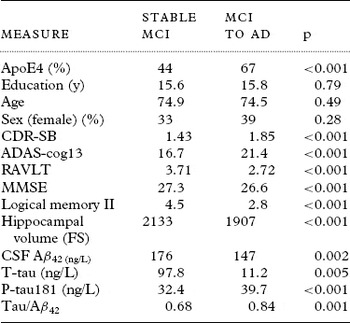
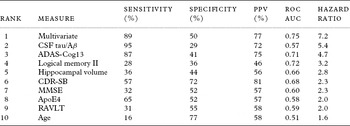
In a comparison of patients with stable disease and those who progressed from MCI to AD in the ADNI study, most measures showed significant differences at baseline (Table 2). Furthermore, results of a univariate analysis of data from a two-year observation period showed statistically higher probabilities of progression to AD for patients with certain features: patients with one allele for apolipoprotein E4 (ApoE4) rather than no such allele (hazard ratio (HR) 2.03 (95% confidence interval (95% CI) 1.46 to 2.82); P < 0.001), hippocampal volume ≤4052 mm3 (HR 2.78 (95% CI 1.98 to 3.89); P < 0.001), tau:Aβ ratio > 0.28 (HR 5.39 (95% CI 2.18 to 13.34); P < 0.001), 13-item Alzheimer's Disease Assessment Scale cognitive subscale (ADAS-Cog13) score>15.67 (HR 4.7 (95% CI 2.97 to 7.45); P < 0.001), Rey Auditory Verbal Learning Test (RAVLT) score ≤3 (HR 2.01 (95% CI 1.43 to 2.82); P < 0.001), MMSE score ≤27 (HR 2.25 (95% CI 1.6 to 3.16); P < 0.001), CDR Sum of Boxes (CDR-SB) score>1.5 (HR 2.34 (95% CI 1.72 to 3.19); P < 0.001) and age ≤81.1 years (HR 1.58 (95% CI 1.02 to 2.44); P = 0.037). It would be useful to incorporate these measures into trial designs to provide cross-stratification of patients. In addition, a multivariate Cox proportional hazards model found that a combination of age, MMSE score, CDR-SB score, hippocampal volume and CSF Aβ42:tau ratio maximizes the likelihood of progression to AD or cognitive decline, with an increase of about 50% (HR 4.95 (95% CI 2.92 to 8.39); p < 0.001). Table 3 summarizes and ranks the predictors of MCI progression identified in the ADNI study, showing that the best predictor was the multivariate model, followed by CSF Aβ42:tau ratio and ADAS-Cog13; these are similar in sensitivity, which is important for selection of patients, as well as in specificity, positive predictive value and hazard ratio.
Comparison of baseline measures between patients with stable mild cognitive impairment (MCI) and those progressing to Alzheimer's disease (AD) in the Alzheimer's Disease Neuroimaging Initiative (ADNI) study

ADAS-Cog13 = 13-item Alzheimer's Disease Assessment Scale cognitive subscale; ApoE4 = apolipoprotein E4; CDR-SB = Clinical Dementia Rating Scale Sum of Boxes; CSF = cerebrospinal fluid; FS = freesurfer; MMSE = Mini-Mental State Examination; RAVLT = Rey Auditory Verbal Learning Test.
Summary comparison and ranking of predictors of MCI progression in the Alzheimer's Disease Neuroimaging Initiative (ADNI) study

ADAS-Cog13 = 13-item Alzheimer's Disease Assessment Scale cognitive subscale; ApoE4 = apolipoprotein E4; CDR-SB = Clinical Dementia Rating Scale Sum of Boxes; CSF = cerebrospinal fluid; MMSE = Mini-Mental State Examination; RAVLT = Rey Auditory Verbal Learning Test; ROC AUC = area under the receiver operating characteristic curve; PPV = positive predictive value
In terms of implications for trial design, the consensus seems to be that CSF Aβ42:tau ratio and ADAS-Cog13 are excellent biomarkers for selecting patients with MCI likely to progress to AD. The presence of an allele for ApoE4, hippocampal volume and cognitive/clinical measures should be considered as potential covariates.The ADNI data, in general, indicate that the use of meaningful covariates such as hippocampal volume on MRI, posterior cingulate hypometabolism on FDG-PET and clinical data such as CDR-SB could result in a 5–15% reduction in sample size needed for pre-dementia trials and a reduction in unexplained variance. The best single MRI and CSF biomarkers for predicting the future change from MCI to AD are the STructural Abnormality iNDex (STAND) score, which is a composite MRI score of middle temporal lobe change, and log(t-tau/Aβ1–42) (Vermuri et al., Reference Vemuri2009).
Summary
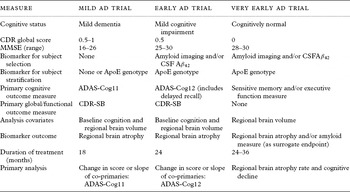
Current research into drug development for AD tends to focus on treatment rather than prevention, with many drugs that show promise at one stage of research falling at the next hurdle. New models of disease, biomarkers, outcomes, and endpoints may allow targeting of specific mechanism-derived therapies at different points in the disease process. Indeed, a core set of clinical biomarkers is already available, but continued research is likely to reveal a variety of new markers. In the future, trials of drugs to prevent AD could be stratified by patient population – those with mild AD (mild dementia), those with early AD (MCI) and those with very early AD (normal cognition) – so that research into drugs with targets at different points in the disease process can focus on the most relevant patient population. A variety of measures are already available to stratify patients in this way (Table 4). For a further comprehensive review and future perspectives, please see Hampel et al. (Reference Hampel2010).
Recommended pivotal (phase 3) Alzheimer's disease trial designs depending on time of therapeutic intervention and selected target population

AD = Alzheimer's disease; ADAS-Cog = Alzheimer's Disease Assessment Scale cognitive subscale; ApoE4 = apolipoprotein E4; CDR = Clinical Dementia Rating Scale; CDR-SB = Clinical Dementia Rating Scale Sum of Boxes; CSF = cerebrospinal fluid; MMSE = Mini-Mental State Examination.
Conflict of interest
The author has received scientific consulting fees from B.R.A.H.M.S. Biotech, Pfizer/Eisai, Glaxo-Smith-Kline, Novartis, Astra Zeneca, Boehringer-Ingelheim, Avid/Eli Lilly & Co., and Bristol-Myers-Squibb. He has also acted as a scientific advisor for Dr. Willmar Schwabe GmbH & Co. KG and received travel support and lecture fees. He has received scientific lecture fees from Pfizer/Eisai, Glaxo-Smith-Kline, Merz, Janssen-Cilag, Lundbeck and Sanofi-Aventis. His institution has received grants and/or grants pending from Hoffmann-La Roche, GE, Genetech, Novartis and Sanofi-Aventis.