INTRODUCTION
The silky shark Carcharhinus falciformis is a highly migratory apex predator distributed worldwide in the tropical waters warmer than 23°C between latitudes 42°N to 43°S. It is an abundant pelagic shark species, usually found near the edge of continental and insular shelves as well as in the open sea (Compagno, Reference Compagno1984). This shark is mainly recorded as by-catch in longline and purse seine fishery (Bonfil et al., Reference Bonfil, Amorim, Anderson, Arauz, Baum, Clarke, Graham, Gonzalez, Jolón, Kyne, Mancini, Márquez, Ruíz and Smith2009). Silky shark is the main by-catch species in purse seine sets made on drifting fish aggregating devices (FADs), resulting in substantial mortality of this species (Filmalter et al., Reference Filmalter, Capello, Deneubourg, Cowley and Dagorn2013). The flesh of silky shark is used for human consumption and its fins in shark fin soup. The population of silky shark has been decreasing globally, mainly due to increasing fishing mortality and the species is now categorized as ‘Near Threatened’ by the IUCN (International Union for Conservation of Nature and Natural Resources) (Bonfil et al., Reference Bonfil, Amorim, Anderson, Arauz, Baum, Clarke, Graham, Gonzalez, Jolón, Kyne, Mancini, Márquez, Ruíz and Smith2009).
In the Indian Ocean, silky shark is caught as by-catch by both artisanal and industrial fisheries deploying fishing gears including purse seine, pelagic longline and driftnet and the reported catch of this species in 2013 was 3573 tonnes (IOTC, 2014). Based on recent results of an ecological risk analysis on elasmobranchs impacted by longline fisheries in the Indian Ocean, the silky shark was classified as ‘high risk species’ (Murua et al., Reference Murua, Cohelo, Neves, Arrizabalaga, Yokawa, Romanov, Zhu, Kim, Bach, Chavance, Delgado de Molina and Ruiz2012). In the Indian seas, this species is mainly harvested by drift gillnet and longline fisheries targeting large pelagics. India is yet to develop a National Plan of Action for the conservation of sharks (NPOA-Sharks), although national consultation is in progress. However, shark finning is prohibited in the Indian Exclusive Economic Zone (EEZ) and the export of fins of all species of shark is prohibited from India. Further, India adopts a precautionary approach and observes an annual uniform ban on fishing in the Indian EEZ by all fishing vessels beyond territorial waters (12 nm from the coastline) for 47 days for the conservation and sustainable management of its marine resources (the duration of the seasonal fishing ban was extended to 61 days in 2015).
Despite its commercial and ecological importance, little is known about the growth, biology and ecology of silky sharks (Bonfil, Reference Bonfil, Camhi, Pikitch and Babcock2008). Carcharhinus falciformis is a large requiem shark, attaining maximum total length of 350 cm (Compagno & Niem, Reference Compagno, Niem, Carpenter and Niem1998), at a slow growth rate and the estimated longevity is 28.6 years for males and 35.8 years for females (Joung et al., Reference Joung, Chen, Lee and Liu2008). Reproductive strategy of silky sharks is placental viviparity and two to 16 fully functional pups are born after the gestation period of about 12 months. Seasonality in reproduction is less evident in the Indian (Bass et al., Reference Bass, D'Aubrey and Kistnasamy1973; Hall et al., Reference Hall, Bartron, White and Potter2012) and Pacific Oceans (Strasburg, Reference Strasburg1958; Stevens, Reference Stevens1984a; Joung et al., Reference Joung, Chen, Lee and Liu2008; Hoyos-Padilla et al., Reference Hoyos-Padilla, Ceballos-Vezquez and Galván-Magaña2012), whereas a few studies reported seasonal reproductive activity in this species (Branstetter, Reference Branstetter1987; Anderson & Ahmed, Reference Anderson and Ahmed1993; Bonfil et al., Reference Bonfil, Mena and de Anda1993; Galván-Tirado et al., Reference Galván-Tirado, Galván-Magaña and Ochoa-Báez2015). Lengths at maturity of females reported are in the range of 180–260 cm total length (L T), whereas the males attain maturity at the L T of 180–240 cm (Bonfil, Reference Bonfil, Camhi, Pikitch and Babcock2008). Silky sharks are generalist predators, feeding mainly on teleost fishes, but also squids, paper nautiluses and pelagic crabs (Compagno, Reference Compagno1984; Galván-Magaña et al., Reference Galván-Magaña, Nienhuis and Klimley1989; Cabrera-Chavez-Costa et al., Reference Cabrera-Chavez-Costa, Galván-Magaña and Escobar-Sanchez2010; Varghese et al., Reference Varghese, Somvanshi and Dalvi2014; Duffy et al., Reference Duffy, Olson, Lennert-Cody, Galván-Magaña, Bocanegra-Castillo and Kuhnert2015).
Comprehensive scientific research on the life history of exploited stocks, which is of prime importance for their management, is lacking for silky sharks in the Indian seas. The present study was undertaken to contribute basic information on the growth, reproductive biology and diet of this species caught by commercial gillnet and longline fishery in the eastern Arabian Sea.
MATERIALS AND METHODS
Silky sharks landed by mechanized drift gillnet-cum-longline fleet at the Cochin fisheries harbour (south-west India, 9°56′N 76°15′E) were sampled monthly between May 2012 and December 2014. This fishery deploys about 210 mechanized boats of 10–20 m overall length (L OA), operating drift gillnets of maximum 2000 m length and 11 m hung depth with mesh size 100–350 mm. Shooting of the net is done in the evening hours and after allowing immersion time of about 10 h the hauling is done in morning. Shooting and hauling are done manually. Monofilament longlines with steel wire leaders and circle, ‘J’ or tuna hooks, usually with live baits are used in longline operations, deploying 500–1000 hooks in a day's operation. Total length of mainline is 20–25 km, branchline length 20–50 m, whereas the length of floatline and number of hooks between floats varies according to the species targeted. Longlines are operated during both day and night and the soaking time allowed is usually 10–12 h. Catch is stored with crushed ice in the fish hold. The fishing area spans the entire western Indian EEZ (Figure 1). There are no distinct seasons for the operation of these two gears, since the fishermen use the gears according to resource availability and market demand. However, the gillnet fishing is done intensely during May–October, whereas longlines are operated intensely during November–April. Mean annual catch of each boat is estimated to be 32.83 t (Boopendranath & Hameed, Reference Boopendranath and Hameed2007) of which about 20% are pelagic sharks.
Map of the study area, the western Indian Exclusive Economic Zone (eastern Arabian Sea).

Sharks sampled at the harbour were identified following Compagno (Reference Compagno1984), the stretch total length (L T) of each individual sharks was measured using a measuring tape to the nearest 1.0 cm and sex was determined by observing the presence or absence of claspers. The weight was estimated by applying the length-weight relationship W = 0.0040L T 3.043 (length in cm, weight in g) established by Varghese et al. (Reference Varghese, Vijayakumaran and Gulati2013). For estimating the growth parameters, monthly length frequency data grouped to 5 cm class intervals were analysed using the ELEFAN I (Electronic Length Frequency Analysis) (Pauly & David, Reference Pauly and David1981) routine of FiSAT (Fish Stock Assessment Tools, Ver. 1.2.2) (FAO, 2006–2015). Since no significant differences in the growth of males and females were reported in earlier studies (Branstetter, Reference Branstetter1987; Bonfil et al., Reference Bonfil, Mena and de Anda1993; Hall et al., Reference Hall, Bartron, White and Potter2012), both sexes were pooled for length frequency analysis. Powell–Wetherall plots were used to estimate asymptotic length (L ∞) and the asymptotic length estimated was then used as fixed value in subsequent ELEFAN scans for growth coefficient (K). The response surface analysis was performed, and the combination of values having highest goodness of fit index (Rn) were selected as the final L ∞ and K. Growth performance index value (φ′) was calculated following Pauly & Munro (Reference Pauly and Munro1984). Following Joung et al. (Reference Joung, Chen, Lee and Liu2008), the length at birth (L b) was estimated from the maximum size of embryo recovered from the uterus and the minimum size of free swimming specimen captured. Considering the L b as the length at zero age, the age at zero length (t 0) was estimated by fitting the growth parameters derived from the von Bertalanffy growth equation.
Clasper outer length (C LO) and degree of calcification of claspers of males were noted before the fish was gutted. After gutting, the internal reproductive organs and digestive tract were collected and transported to the laboratory for detailed investigation. Maturity stages for males and females were assigned adopting the maturity stages scale of Stehmann (Reference Stehmann2002) for viviparous sharks. Accordingly, maturity stages (1–4) were assigned to males by examining the claspers and internal reproductive organs. Specimens assigned with maturity stages 1 and 2 were considered as immature, whereas those with maturity stages 3 and 4 were categorized as mature. Similarly, female specimens were assigned with seven maturity stages, three ovarian and four uterine stages. Females assigned with maturity stages higher than three were considered as mature. Testes from males and ovary (only the right ovary is functional in silky shark (Pratt, Reference Pratt1988), eggs, oviducal glands and uteri from females were measured and weighed. In pregnant females, the embryos were extracted from the uteri, counted, sexed, measured and weighed. Size at maturity (L T50) was estimated by fitting the Richards (Reference Richards1959) function (P ∞ = 1) to the dataset of proportions of mature silky sharks in 10 cm intervals, using a weighted non-linear regression procedure P L = [1−(1−m)e −k(L T −L T50 )]1/(1−m). P L is the proportion mature at length L T, m, k and L T50 were the parameters to be estimated (Zhu et al., Reference Zhu, Dai, Song and Xu2011). The freeware statistical package ‘R’ (R Core Team, 2013) was used in fitting the model.
The silky shark stomachs brought to the laboratory were processed on the same day. Since the catch was preserved onboard using crushed ice, thawing was not required. However, the stomachs were processed only after keeping in room temperature for minimum 1 h. The stomachs were cut open for visual examination or under a dissecting microscope. Extents of digestion of stomach contents were judged by eye observation and accumulated hard parts of the prey such as bones, eyeballs, squid beaks, etc., and slurry were discarded. Prey were identified to the lowest possible taxa, counted and weighed. Taxonomic identification of the prey was carried out using keys of Goode & Bean (Reference Goode and Bean1895), Fischer & Bianchi (Reference Fischer and Bianchi1984), Silas et al. (Reference Silas, Sarvesan, Rao, Nair and Meiyappan1985), Smith & Heemstra (Reference Smith and Heemstra1986) and Nesis (Reference Nesis1987) for undigested prey, whereas the otoliths of teleosts and beaks of cephalopods were used to identify the prey in advanced state of digestion using keys of Clarke (Reference Clarke1986), Smale et al. (Reference Smale, Watson and Hecht1995) and Kubodera (Reference Kubodera2005). Fullness index or repletion index (R I) was calculated for studying intensity of feeding and expressed as stomach contents wet weight in grams per kilogram body weight of predator. The diet was assessed using percentage occurrence by number (%N), percentage frequency of occurrence (%O), and percentage occurrence by weight (%W) of prey items. To avoid the possible bias as a result of the different digestion and accumulation rates of hard parts, actual wet weight, not the reconstituted weight at ingestion of prey were used. Quantitative importance of each prey was determined by calculating the Index of Relative Importance (I RI) (Pinkas et al., Reference Pinkas, Oliphant and Iverson1971). Weight was used for calculating I RI, and the I RI values were standardized to %I RI enabling dietary comparison (Cortés, Reference Cortés1997). Trophic diversity and relative level of dietary specialization were investigated by calculating evenness [E = H′ (Hmax −1)] using the weight of individual prey. To describe the variations in the prey consumed by juveniles and adults, a Kruskal–Wallis test was performed on the %I RI of individual prey. Specimens greater than 200 cm (L T) were considered as adults. Cumulative prey curves, constructed by plotting the cumulative number of unique prey species (y-axis) against the number of non-empty stomachs (x-axis), were used to determine whether the sample size of stomachs was sufficient to describe the diet diversity and breadth. The Morisita–Horn index (C mh) was used to assess the dietary overlap between the juveniles and adults (Horn, Reference Horn1966; Krebs, Reference Krebs1999).
RESULTS
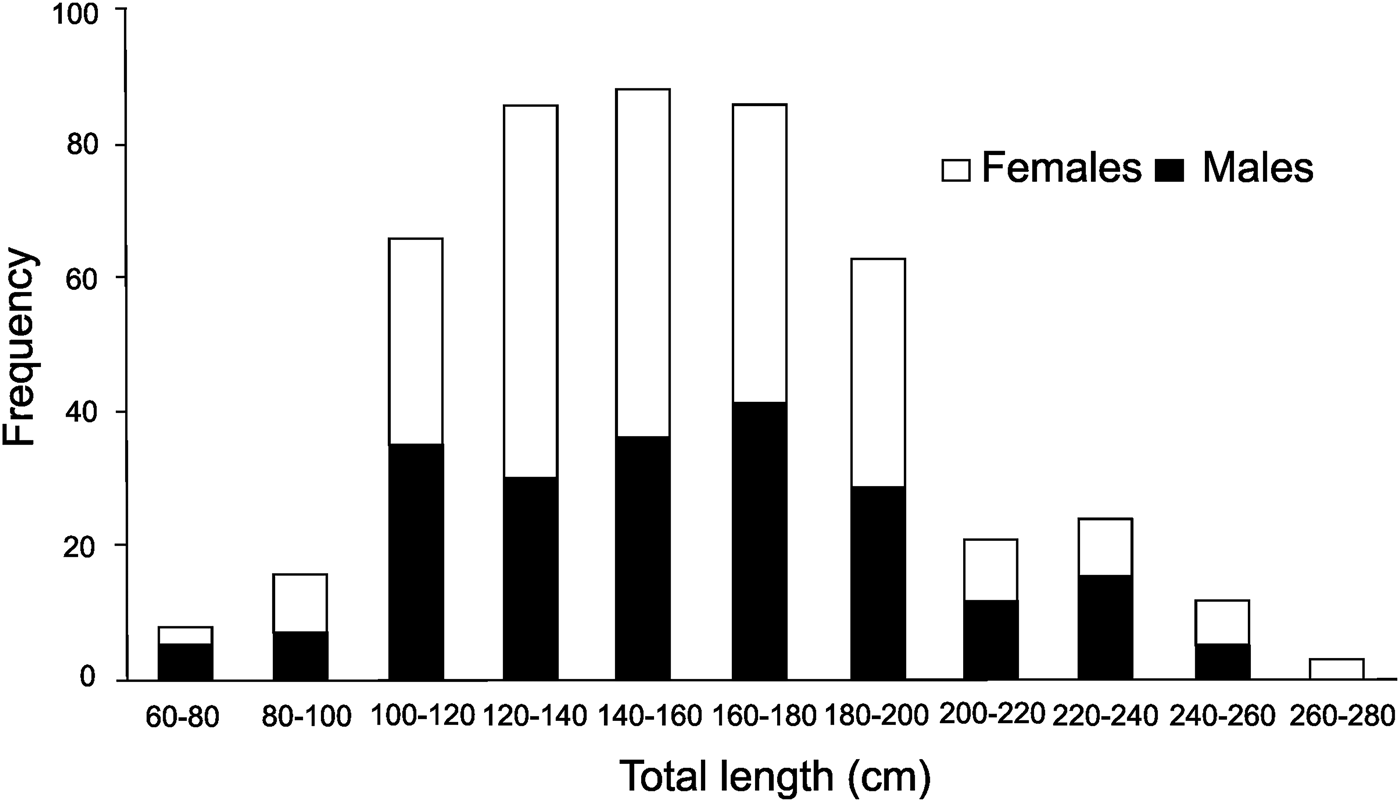
Commercial gillnet-cum-longliners landed pelagic sharks at the Cochin fisheries harbour throughout the year, except the seasonal fishing ban observed during 15 June to 31 July every year. Number of specimens sampled ranged from six in May 2012 to 73 in February 2014. Since the objective of the present investigation was limited to the biological studies, quantitative assessment of resources was not undertaken. However, it was observed that silky sharks constituted about 49% of the total number of pelagic shark landings by this fishery at Cochin fisheries harbour. In total 473 specimens, in the L T range of 67–275 (155.8 ± 39.4; mean ± standard deviation) cm were studied. The overall sex ratio (F:M) was 1:0.83 (Figure 2), which significantly deviated from the expected ratio of 1:1 (χ 2 = 3.91, P < 0.05). Male specimens collected were in the L T range of 67–255 (157.4 ± 41.0) cm, whereas the L T of females ranged between 68 and 275 (154.4 ± 38.0) cm. However, the total lengths of males and females did not show significant differences (Kolmogorov–Smirnov test: D = 0.27; P > 0.05).
Total length frequency of silky sharks sampled from the eastern Arabian Sea.

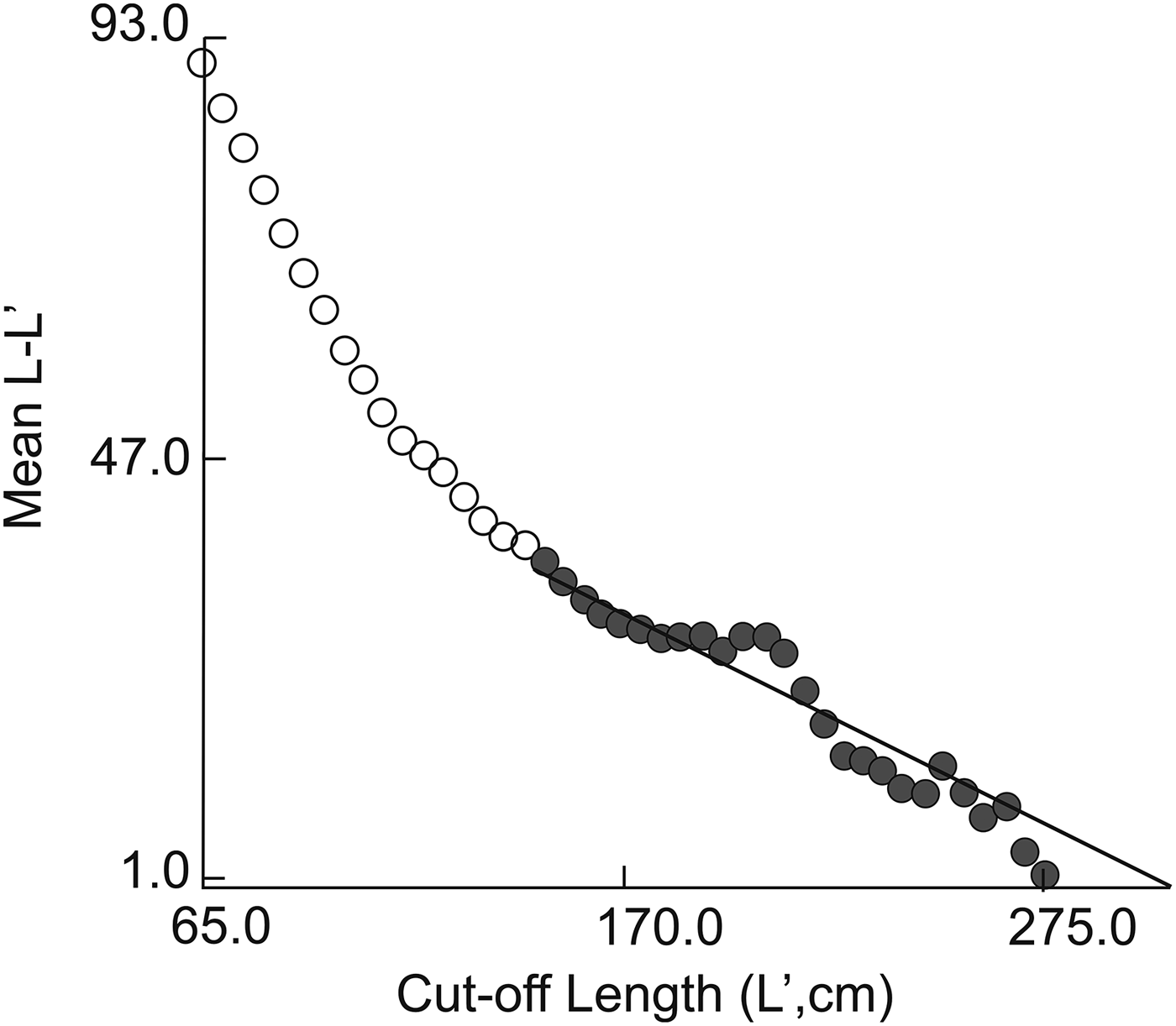
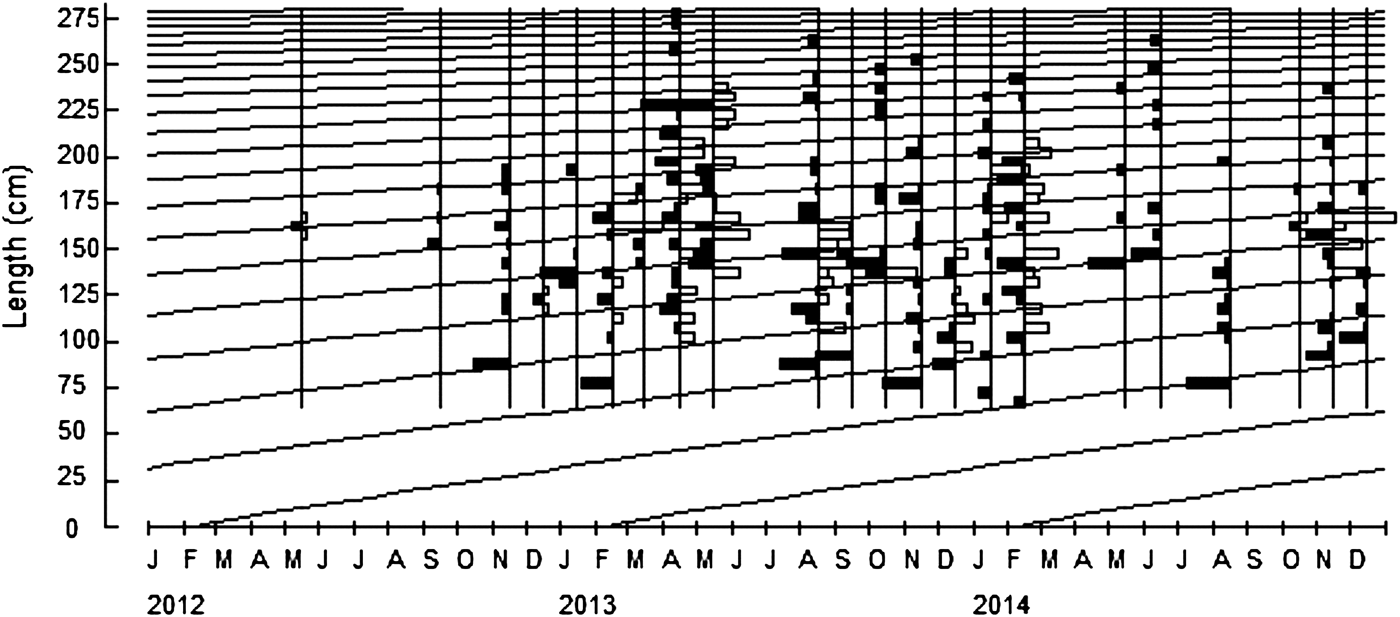
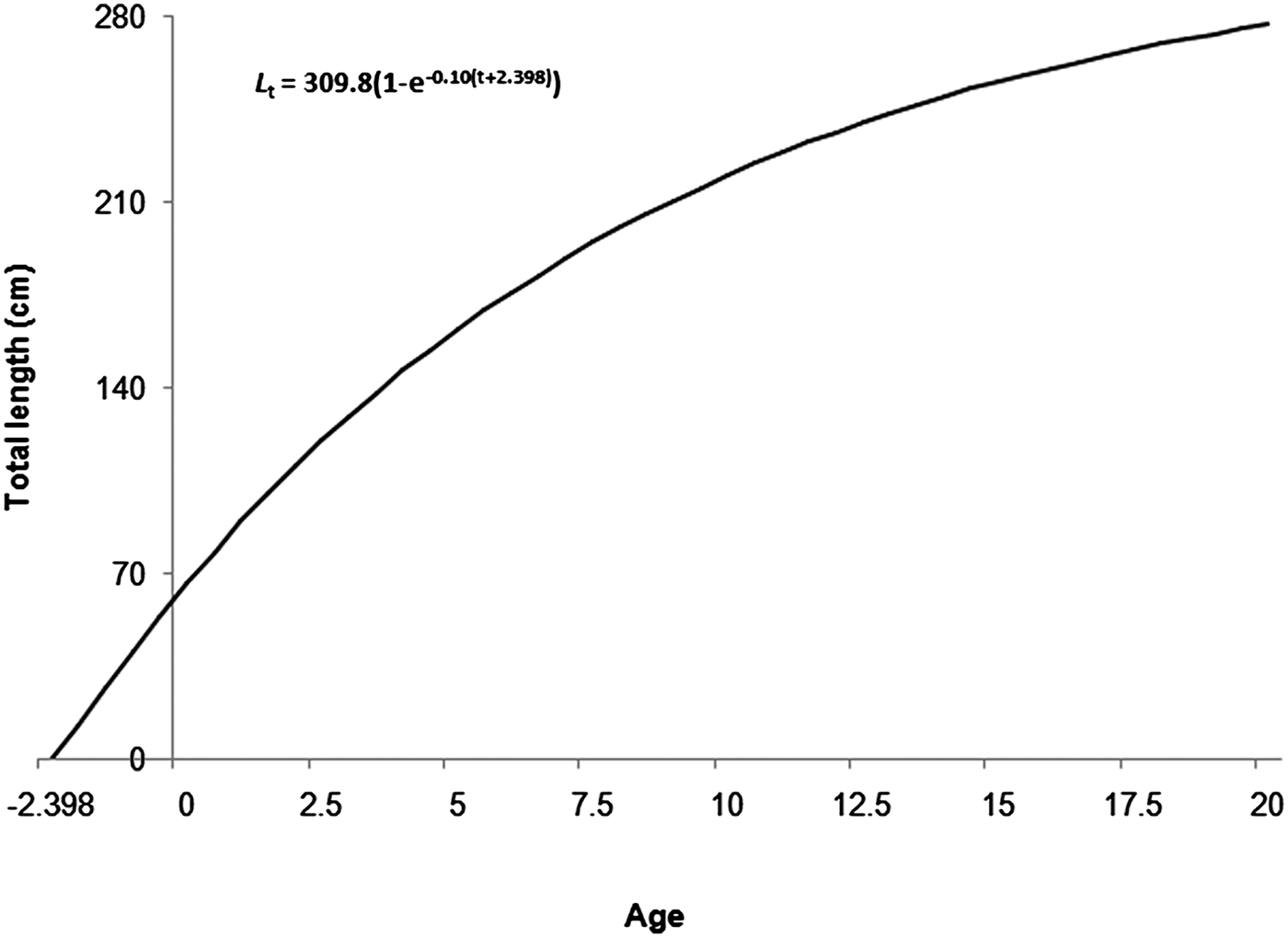
Preliminary estimation of von-Bertalanffy growth parameters using the Powell–Wetherall plot (Figure 3) resulted in the estimation of L ∞ as 305.96, whereas the subsequent run of ELEFAN I (Figure 4) resulted in the value K = 0.09 year−1. In the response surface analysis for the best combination of growth parameters, highest Rn value (0.239) was recorded for L ∞ = 309.80 cm, K = 0.10 year−1. Based on these final values, the t 0 was estimated as −2.398 year and φ’ = 3.982. The growth curve constructed revealed higher growth rates in the early years of life (Figure 5). The annual growth increment was more than 20 cm in the first 2 years, more than 15 cm in the first 5 years, more than 9 cm in the first 10 years, more than 3.5 cm in the next 10 years, whereas the annual growth increment come down to 1.3 cm by the end of the 30th year. Longevity, the age at which 95% of the L ∞ is reached was estimated at 27.56 years.
Preliminary estimation of von Bertalanffy growth parameters of silky sharks using the Powell–Wetherall plot.

Monthly von Bertalanffy growth curves of silky sharks constructed using the ELEFAN-I model in FiSAT II based on non-seasonalized restructured length frequency data.

Growth curve of silky sharks of the eastern Arabian Sea.

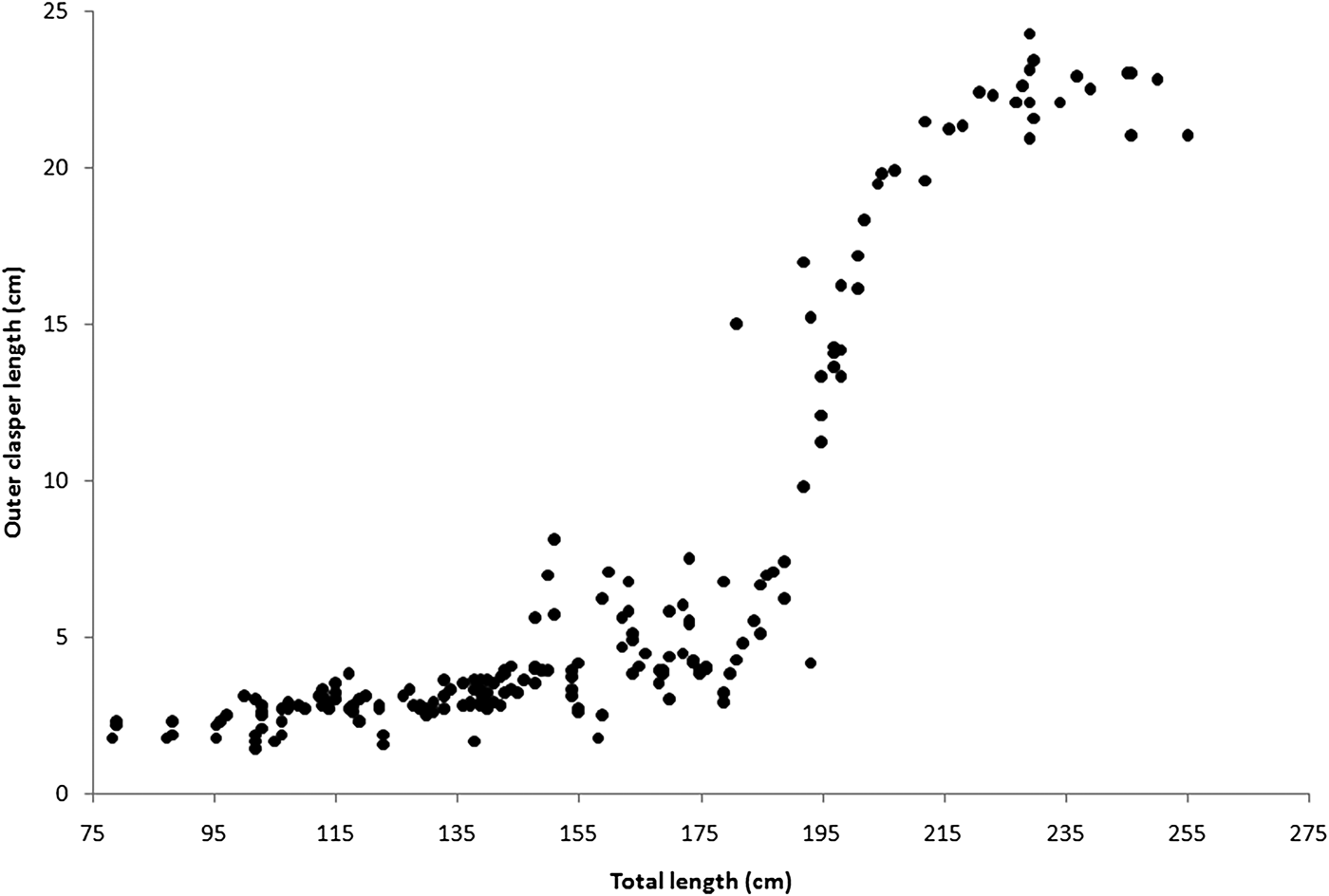
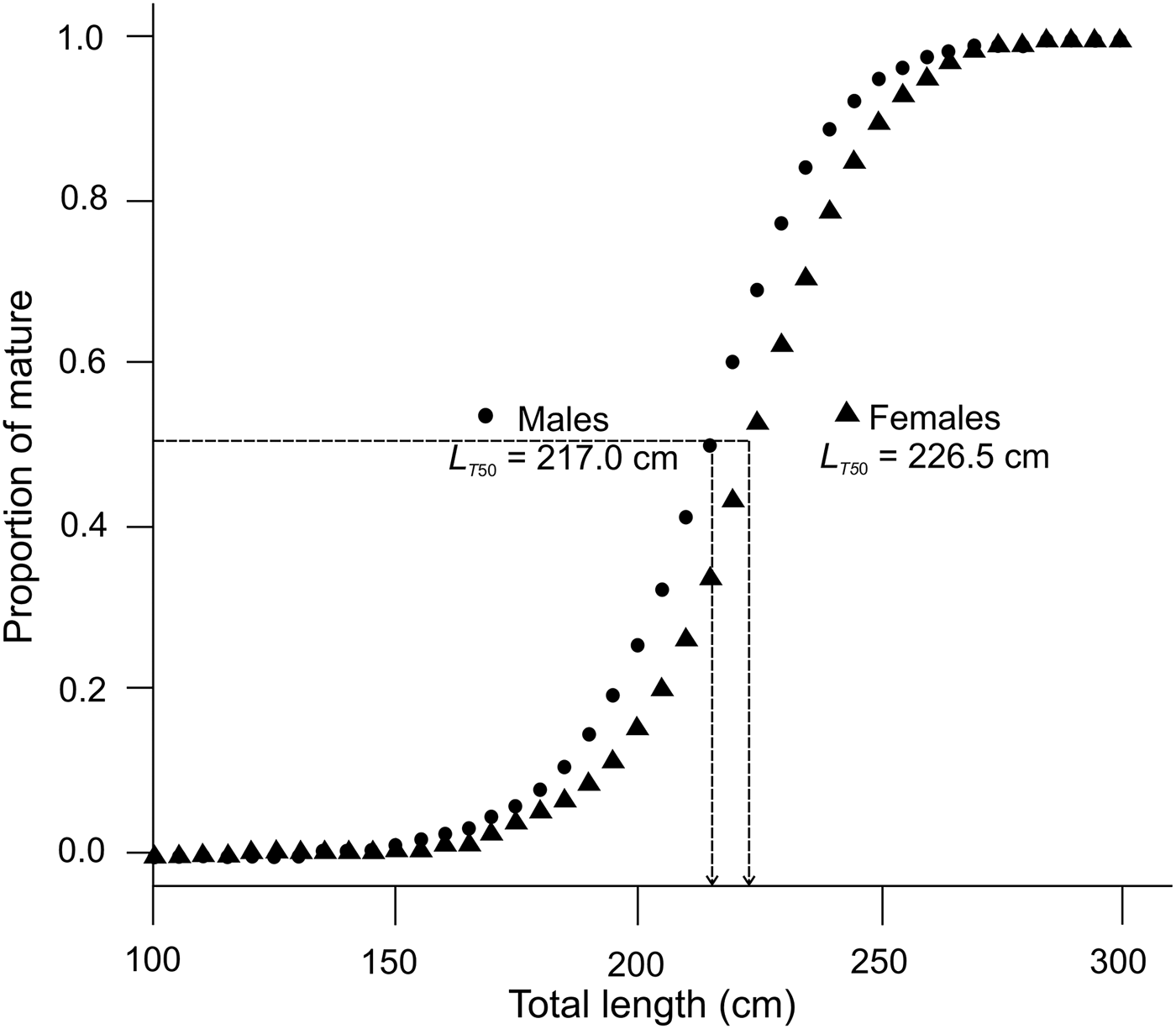
The C LO of smallest male was 1.3 cm while that of the largest specimen was 23.2 cm and a noticeable increase in the C LO starts with the size class 200–205 cm (Figure 6). The smallest mature male specimen was 201 cm while the largest immature male was L T 223 cm and the L T50 estimated using Richards’ model was 217.0 cm (Figure 7). By fitting the growth parameters estimated from the von Bertalanffy equation, the age at maturity (A 50) was estimated at 9.66 years. The females start maturing at L T 224 cm and all the females >231 cm were mature and the L T50 estimated was 226.5 cm while the A 50 was estimated at 10.73 years.
Total length and outer clasper length of male silky sharks collected from eastern Arabian Sea.

Richards function fitted to the proportion of mature males and females in relation to total lengths of silky sharks of eastern Arabian Sea to estimate the size at maturity (L T50).

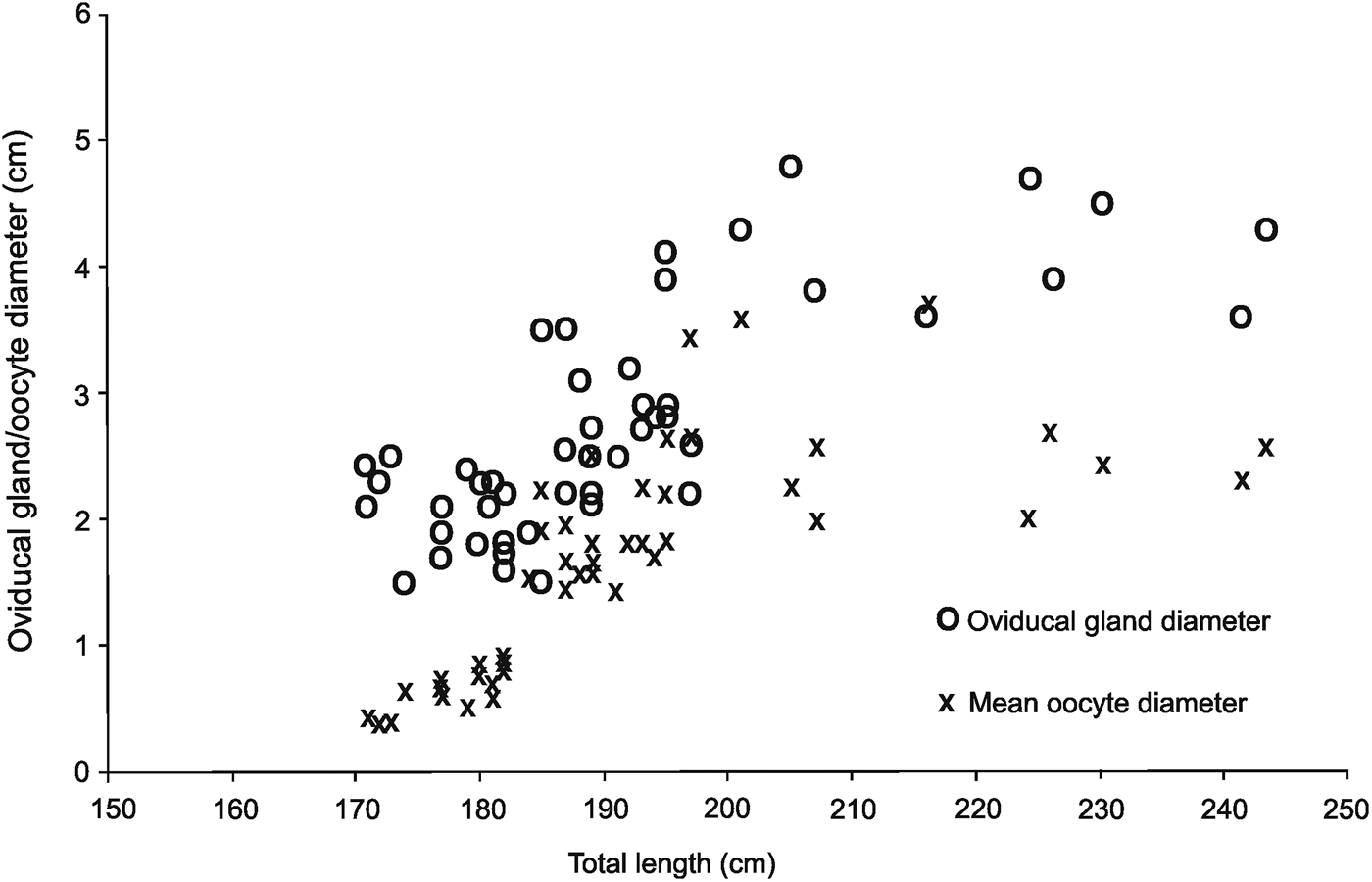
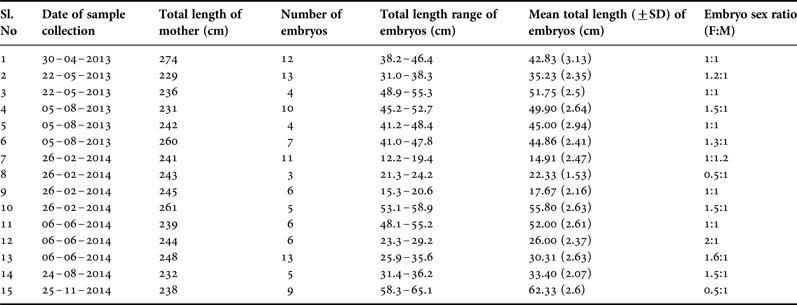
Average number of yolked eggs in mature females was 6.3. Ovarian eggs measured 1.14–4.52 cm diameter and the diameter of oviducal glands was in the range of 1.5–4.7 cm (Figure 8). In pregnant females, the ovary contained numerous small eggs, ranging from 0.32–0.5 cm in diameter. During the study, 15 pregnant females were sampled, almost throughout the year. Smallest pregnant female was 229 cm (L T) and the mean L T of all pregnant females sampled was 244.59 ( ± 12.63) cm. The oviducal glands of pregnant females were in the range of 4.2–4.8 (4.54 ± 0.21) cm. In total, 114 embryos, in the L T range of 12.2–65.1 (39.63 ± 16.27) cm were recovered from the uteri. Brood size was in the range of 3–13 (7.6 ± 3.44). No significant differences in the number of embryos in left and right uteri (Student's t-test, P > 0.05) were observed. The embryos were placed longitudinally, individually covered with a transparent membrane inside the uteri with their heads pointing forward. In pregnant females, the total lengths of uteri were in the range of 29–52 cm in length and 12–23.5 cm in width. Temporal analysis of mean lengths of embryos showed no conspicuous seasonal change in mean embryo size (Table 1), since in several months, pregnant females carried embryos of varying lengths and developmental stages. A near term embryo of L T 65.1 cm was recovered from a pregnant female caught during February 2014. Considering the smallest free-swimming specimen measured in this study was 67 cm, it is concluded that the length at birth (L b) will be in the range of 65.1–67 cm. The sex ratio of embryos (1F:0.97M) did not significantly vary from the expected ratio of 1:1.
Total length, mean oocyte diameter and mean oviducal gland diameter of female silky sharks collected from the eastern Arabian Sea.

Details of pregnant mothers and embryos of silky sharks collected from the eastern Arabian Sea.

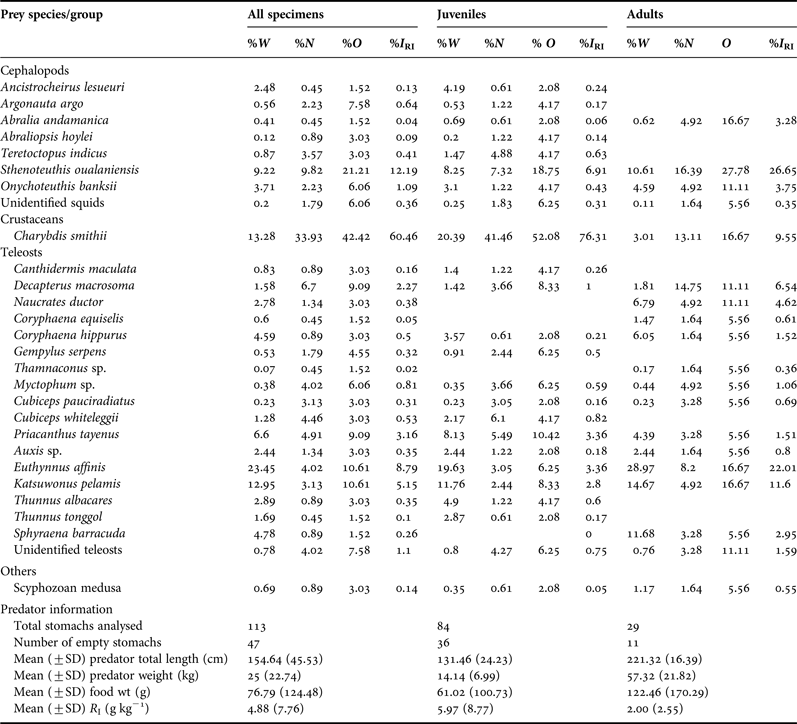
Stomach contents of 113 specimens (48 males and 65 females), in the L T range of 84–249 (154.64 ± 45.53) cm were analysed, of which 47 stomachs (41.59%) were empty. The mean estimated R I was 4.88 ± 7.76 g kg−1. The diet spectrum of silky shark is diverse, including at least 17 teleost species, seven species of cephalopods, one crab and one scyphozoan species. Teleosts dominated the diet by number, weight and frequency of occurrence. Ranked by the %I RI, the swimming crab (Charybdis smithii) was the most important prey of silky sharks in the eastern Arabian Sea (Table 2). Purpleback flying squid (Sthenoteuthis oualaniensis), kawakawa (Euthynnus affinis) and purple-spotted bigeye (Priacanthus tayenus) were the other dominant prey identified. Most of the prey was in an advanced stage of digestion. Trophic diversity quantified by evenness index (E = 0.5) indicated a generally euryphagous diet of silky sharks in the eastern Arabian Sea.
Prey species of juveniles and adults of C. falciformis in the eastern Arabian Sea expressed as per cent by number (%N), weight (%W), frequency of occurrence (%O) and index of relative importance (%I RI). Values in bold indicate four most important prey.
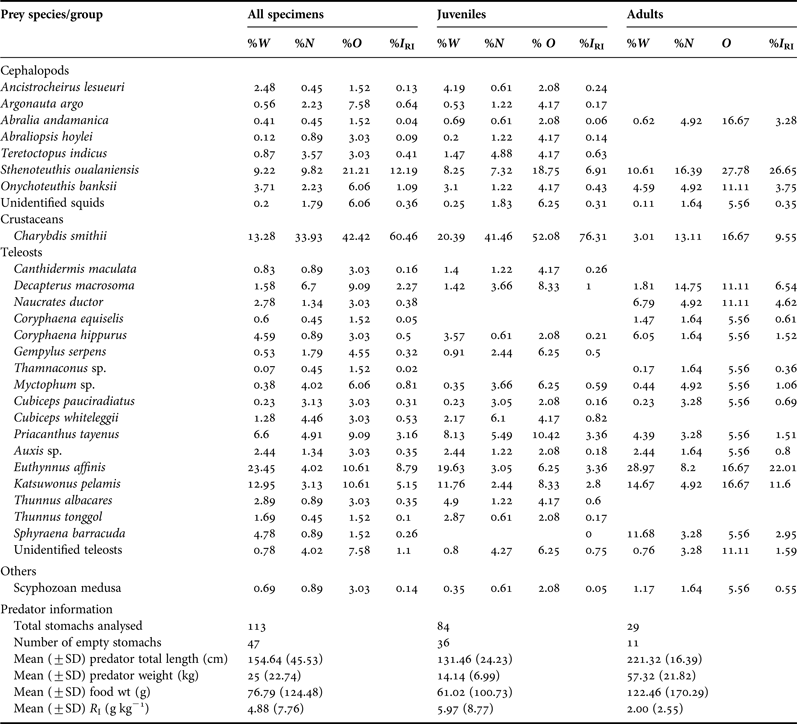
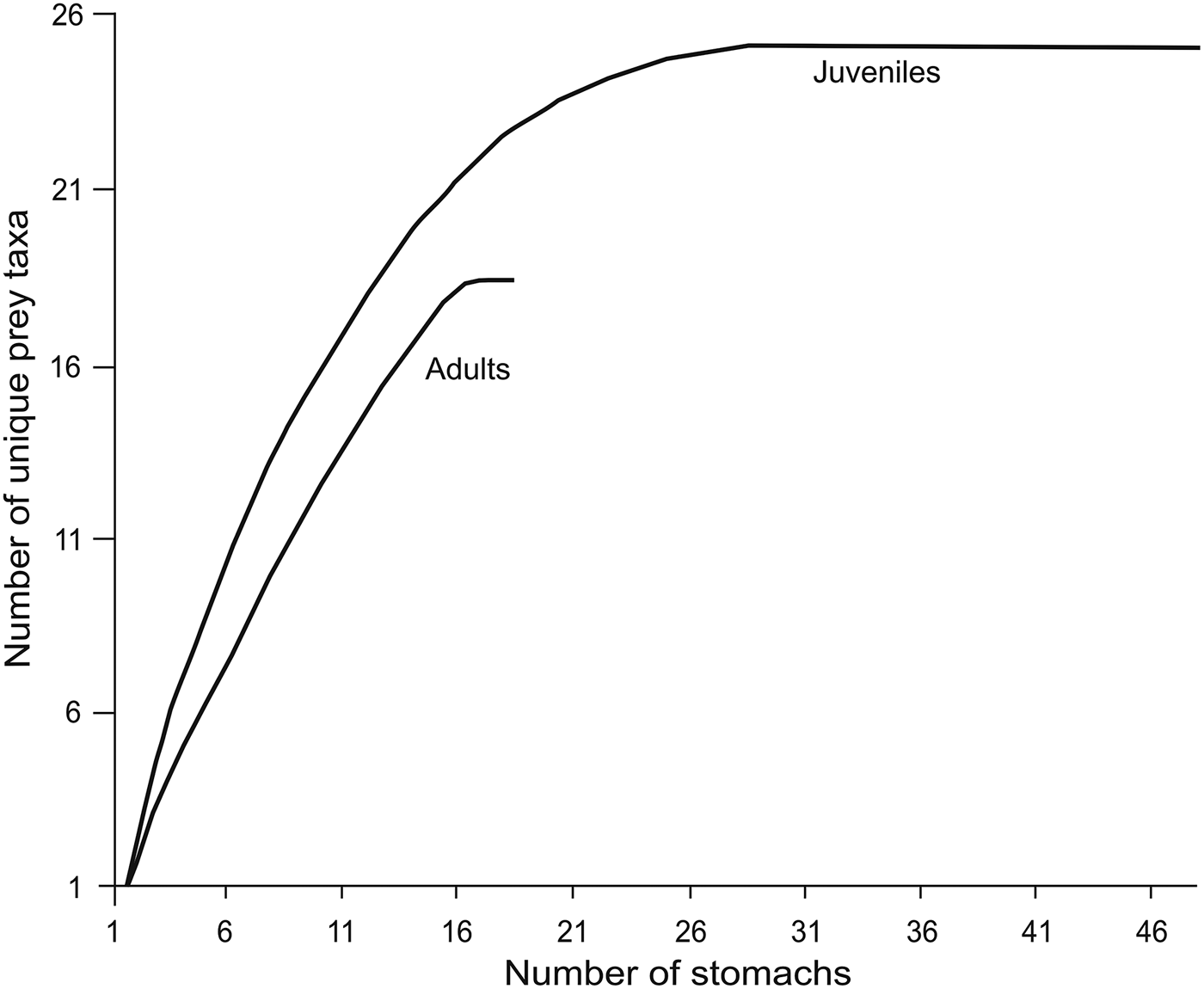
In the cumulative prey curves constructed (Figure 9), the curve of juveniles shows a trend towards an asymptote, indicating that the number of stomachs analysed is sufficient to describe their diets, whereas the cumulative prey curve of adults did not reach the asymptote, indicating inadequate sample sizes for effectively describing the diet. The proportion of specimens with empty stomachs was higher in juveniles (42.86%) than in adults (37.93%), whereas the R I was higher in juveniles (5.99 g kg−1) than adults (2.01 g kg−1). There was an absolute dominance of C. smithii (%I RI = 76.31) in the diet of juveniles, whereas the contribution of this prey to the diet of adults was not important (%I RI = 9.55). Diets of adult specimens were dominated by S. oualaniensis (%I RI = 26.65). However, evenness indices of the diets indicated a euryphagous diet of juveniles and adults (E = 0.51 each). A Kruskal–Wallis test did not reveal significant variations in the diets of juveniles and adults (P > 0.05) and the high value for C mh (0.795) revealed overlap of diets in juveniles and adults.
Cumulative prey curves of juvenile and adult silky sharks collected from the eastern Arabian Sea.

DISCUSSION
Silky sharks caught by gillnet-cum-longline fishery based at Cochin were mostly sub-adults in the total length range of 100–200 cm. The asymptotic length and growth rate of silky sharks in the eastern Arabian Sea estimated in this study were 309.80 cm and 0.10 year−1 respectively. A comparison of these estimations with the growth parameters in previous reports indicated that the silky sharks of Arabian Sea grow and attain asymptotic length faster than the stocks in the north-west Pacific and in Indonesian waters and slower than the silky sharks of the tropical Pacific Ocean and northern Gulf of Mexico (Table 3). Detailed study by Hall et al. (Reference Hall, Bartron, White and Potter2012) on the age and growth of silky sharks by reading growth bands in vertebral centra sections revealed that the growth of this species in the eastern Indian Ocean is slower than those reported for the stocks of tropical Pacific Ocean and Gulf of Mexico. These differences in growth rates and maximum size of same species in different geographic areas are generally attributed to the differences in the latitudes (the latitudinal effect) and the differences in the physical parameters, especially the water temperatures of the regions they inhabit (Blackburn et al., Reference Blackburn, Gaston and Loder1999; Hall et al., Reference Hall, Bartron, White and Potter2012). Growth parameters in the present study were estimated using length-based models, which were not verified with more reliable method like counting of growth bands in thin sections of vertebral centra employed in other studies. However, the growth performance index (φ′) in our study is closely similar to the values reported for this species in earlier studies (Branstetter, Reference Branstetter1987; Bonfil et al., Reference Bonfil, Mena and de Anda1993; Oshitani et al., Reference Oshitani, Nakano and Tanaka2003; Joung et al., Reference Joung, Chen, Lee and Liu2008; Hall et al., Reference Hall, Bartron, White and Potter2012). The growth performance index is generally used as an index of accuracy and reliability of the growth parameters estimated for a species using different methods since the φ′ will be constant for a given species (Pauly & Munro, Reference Pauly and Munro1984). Gerritsen & McGrath (Reference Gerritsen and McGrath2007) demonstrated that precision estimates of applications based on length frequency analysis closely correlates with the ratio of the sample size to the number of size classes. They considered as a rule of thumb a minimum sample size of 10 times the number of length intervals. Due to a limited sample size in some months, this application condition could not be respected in the present study. Further, the length-based models are generally used to estimate the growth parameters of species with seasonal reproductive cycles. Despite these limitations, the results of this study can form basic information on the age and growth of silky sharks in this data-poor area.
Comparison of growth parameters of the von Bertalanffy growth equation of silky sharks reported by various studies.

VCS, readings on vertebral centra sections; LFA, length frequency analysis.
Hall et al. (Reference Hall, Bartron, White and Potter2012) reported the catch of silky sharks as small as 57.0 cm in the gillnet fishery off Indonesia, whereas the smallest free-swimming silky shark reported in the Maldivian shark fishery was 56.0 cm (Anderson & Waheed, Reference Anderson and Waheed1990). The length at birth reported for this species is in the range of 57.1–99.2 cm (Bonfil et al., Reference Bonfil, Mena and de Anda1993; Oshitani et al., Reference Oshitani, Nakano and Tanaka2003; Joung et al., Reference Joung, Chen, Lee and Liu2008; Hall et al., Reference Hall, Bartron, White and Potter2012) and the length at birth estimated in the present study (65.1–67 cm) falls within the range reported earlier. The sex ratio of silky sharks in the present study was significantly skewed to females, whereas most of the earlier studies reported a sex ratio near to parity (Branstetter, Reference Branstetter1987; Bonfil et al., Reference Bonfil, Mena and de Anda1993; Fahmi & Sumadhiharga, Reference Fahmi and Sumadhiharga2007; Hall et al., Reference Hall, Bartron, White and Potter2012). However, Hoyos-Padilla et al. (Reference Hoyos-Padilla, Ceballos-Vezquez and Galván-Magaña2012) reported a sex ratio of 1F:0.6M for the silky sharks caught off the west coast of Mexico.
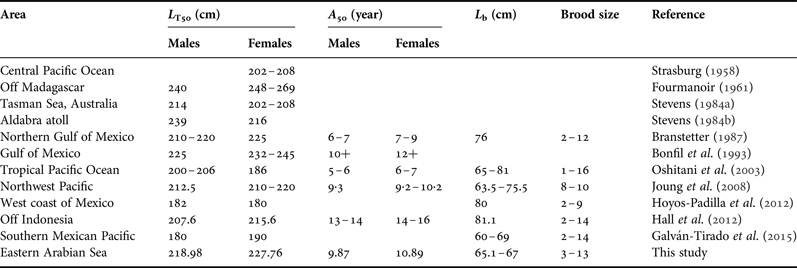
Sizes at maturity of silky sharks in the eastern Arabian Sea estimated in this study was 217 cm (males) and 226.5 cm (females), whereas the sizes at maturity reported previously are in the range of 180–240 cm for males and 180–269 cm for females (Table 4). Studies conducted in other areas of Indian Ocean revealed that silky sharks off Indonesia mature at 207.6 cm (males) and 215.6 cm (females) (Hall et al., Reference Hall, Bartron, White and Potter2012), whereas in the south-west Indian Ocean off South Africa, males of about 240 cm and females of 260 cm were fully mature (Bass et al., Reference Bass, D'Aubrey and Kistnasamy1973). Fourmanoir (Reference Fourmanoir1961) reported L T50 of 240 cm (males) and 248–269 (females) for the silky sharks off Madagascar, while Stevens (Reference Stevens1984b) reported 239 (males) and 216 (females) as the length at maturity for silky sharks of Aldabra Atoll. Male silky sharks of the eastern Arabian Sea attain maturity at the age of 9.66 years, while females mature at 10.74 years, which is similar to the age at maturity of the silky sharks of Taiwanese waters (9.3 years for males and 9.2–10.2 years for females) (Joung et al., Reference Joung, Chen, Lee and Liu2008). Silky sharks of Indonesian waters mature at older ages, males at 13–14 years and females at 14–16 years (Hall et al., Reference Hall, Bartron, White and Potter2012). These geographic variations in the length and age at maturity of fishes may be due to the spatial variations in growth, biophysical environments and density-dependent responses to fishing-induced changes in spawning biomass (Roff, Reference Roff2002; Colonello et al., Reference Colonello, Lucifora and Massa2007; Jackson et al., Reference Jackson, Norriss, Mackie and Hall2010).
Comparison of length at maturity (L T50), age at maturity (A 50), length at birth (L b) and brood size of silky sharks reported by various studies.

Seasonal reproductive activity of silky sharks in the eastern Arabian Sea could not be established in this study. Similarly, seasonality in silky shark reproduction was less evident in most of the earlier studies (Strasburg, Reference Strasburg1958; Bass et al., Reference Bass, D'Aubrey and Kistnasamy1973; Stevens, Reference Stevens1984a; Hall et al., Reference Hall, Bartron, White and Potter2012). However, Anderson & Ahmed (Reference Anderson and Ahmed1993) reported seasonal parturition in silky sharks in the Maldivian waters taking place during November and December, while in the Gulf of Mexico, parturition and mating take place from late spring to summer (Branstetter, Reference Branstetter1987; Bonfil et al., Reference Bonfil, Mena and de Anda1993). Brood size of silky sharks in this study was 3–13, averaging 7.6 embryos, which is in agreement with 1–16 litters reported by Oshitani et al. (Reference Oshitani, Nakano and Tanaka2003). Fourmanoir (Reference Fourmanoir1961) reported that in Madagascar waters, the brood size was 9–14, averaging 11 embryos. The sex ratio of the embryos in this study was near to parity, whereas in the free swimming samples, the sex ratio was significantly biased to females, indicating sexual segregation in adults.
Silky sharks are opportunistic predators, feeding mainly on teleost fishes, while cephalopods and pelagic crabs are occasionally eaten (Compagno, Reference Compagno1984; Galván-Magaña et al., Reference Galván-Magaña, Nienhuis and Klimley1989). However, our study revealed that silky sharks of the eastern Arabian Sea feed primarily on swimming crab, C. smithii. Significance of C. smithii in the trophic chain of the Indian Ocean both as prey and as predator has been highlighted in various earlier studies (John, Reference John1995; Potier et al., Reference Potier, Marsac and Cherel2007a, Reference Potier, Ménard and Cherelb; Romanov & Zamorov, Reference Romanov and Zamorov2007; Romanov et al., Reference Romanov, Potier, Zamorov and Ménard2009). Romanov et al. (Reference Romanov, Potier, Zamorov and Ménard2009) observed that the swimming crabs are important prey for more than 30 top predators including silky sharks in the western Indian Ocean. Varghese et al. (Reference Varghese, Somvanshi and Dalvi2014), while analysing the stomach contents of large pelagics caught during exploratory longline operations, identified the swimming crabs as the most important prey of silky sharks, long snouted lancetfish, and pelagic stingray, whereas this prey contributed substantially to the diet of tunas, marlins and great barracuda. Pelagic crabs (red crab, Pleuroncodes planipes) were also the most important prey of silky sharks in the eastern Pacific Ocean off Mexico (Cabrera-Chavez-Costa et al., Reference Cabrera-Chavez-Costa, Galván-Magaña and Escobar-Sanchez2010), whereas other portunid crabs including Portunus xantusii and Euphylax robustus were important prey species for silky sharks in the eastern tropical Pacific (Duffy et al., Reference Duffy, Olson, Lennert-Cody, Galván-Magaña, Bocanegra-Castillo and Kuhnert2015). These results show that pelagic crabs are one of the most important preys of silky sharks in the Indian and Pacific Oceans. In the Indian Ocean, a single species, C. smithii is the dominant pelagic crab species in the silky shark diet, whereas in the Pacific Ocean, the importance of red crab P. planipes for the silky shark diet is high in some areas and much lower in others where it is replaced by other crab species. Charybdis smithii and P. planipes form large swarms in the oceanic waters of the Indian and Pacific Oceans respectively (Longhurst & Seibert, Reference Longhurst and Seibert1971; Balasubramanian & Suseelan, Reference Balasubramanian and Suseelan2001), and the silky sharks, taking advantage of the abundance of the portunid crabs in the environment consume them in large quantities, further establishing their opportunistic feeding behaviour. Silky sharks are generalist predators, consuming prey species having different trophic levels (Compagno, Reference Compagno1984; Castro, Reference Castro1996; Duffy et al., Reference Duffy, Olson, Lennert-Cody, Galván-Magaña, Bocanegra-Castillo and Kuhnert2015). Oceanic top predators including silky sharks are generally non-selective, since the waters in which they reside are mostly oligotrophic and therefore, the increased presence of a particular prey in the diet may be due to high density of that prey in the environment.
Statistically significant ontogenetic shift in the diet of silky sharks was not evident in this study. Similarly, Rabehagasoa et al. (Reference Rabehagasoa, Lorrain, Bach, Potier, Jaquemet, Richard and Ménard2012), while studying the trophic ecology of silky sharks in the south-west Indian Ocean by stable isotope analysis, also could not establish significant dietary change with increasing silky shark length. However, the juveniles in the samples of the present study fed principally on swimming crabs, whereas adults feed on actively swimming prey like squids and teleosts. This variation in the diet may be due to differences in the habitats where the juveniles and adults reside, since the juveniles are mostly found in the outer continental shelf, whereas the adults lead a more oceanic mode of life (Bonfil, Reference Bonfil, Camhi, Pikitch and Babcock2008). Duffy et al. (Reference Duffy, Olson, Lennert-Cody, Galván-Magaña, Bocanegra-Castillo and Kuhnert2015) has identified different foraging patterns of silky sharks in the inshore and offshore regions of eastern Pacific Ocean. Further, this difference in feeding may be adapted for including more energetically valuable prey such as cephalopods and teleosts than crabs in the diet. However, we acknowledge that the limited number of non-empty stomachs, especially in adults, was truly a major limitation in our analysis. Rabehagasoa et al. (Reference Rabehagasoa, Lorrain, Bach, Potier, Jaquemet, Richard and Ménard2012) established the season as one of the significant factors influencing the diets of silky sharks in the south-west Indian Ocean. In the present study, the effect of season on the diet could not be analysed due to inadequate number of non-empty stomachs in the four seasons prevailed in the Arabian Sea i.e. south-west monsoon, north-east monsoon, spring inter monsoon and autumn inter monsoon.
Elasmobranchs, including silky sharks, have low resilience to over-exploitation by fisheries because of their peculiar life-history traits including slow growth, late attainment of sexual maturity, long lifespans, low fecundity and natural mortality, and the close relationship between the number of young produced and the size of the breeding biomass (Stevens et al., Reference Stevens, Bonfil, Dulvy and Walker2000). In the context of the increasing fishing pressure on the sharks in the high seas, management measures are urgently required for ensuring the long-term sustainability of shark fishery of the Indian Ocean. Seasonal fishery closures have proved to be more effective than TAC in restoring the depleted stocks in fishery impacted waters (Castrejón & Charles, Reference Castrejón and Charles2013). However, the annual seasonal fishing ban implemented in the Indian EEZ may not be effective for ensuring the sustainability of highly migratory stocks like sharks, tunas and billfishes unless similar management measures are adopted in the neighbouring EEZs and high seas. An ocean-wide seasonal fishing ban for the entire Indian Ocean and fleet reduction in the high seas could be useful for reducing the fishing mortality of sharks in the Indian Ocean.
In conclusion, this study provides preliminary information on the growth, reproduction and diet of silky sharks in the eastern Arabian Sea essential for the management of this ecologically and economically important shark species. Further studies with more samples are necessary to thoroughly understand the biology of this apex predator in the eastern Arabian Sea.
ACKNOWLEDGEMENTS
The authors are indebted to the shark fishermen, auctioneers and fish merchants at the Cochin fisheries harbour for allowing biological sampling of sharks at the harbour. We are grateful to Shri Premchand, Director General, Fishery Survey of India for all facilities received from the Institute to undertake this study. We are also thankful to the anonymous referees for their valuable comments and suggestions to help us improve this manuscript.