INTRODUCTION
The cockle, Cerastoderma glaucum (Poiret, 1789), a bivalve mollusc which is very common in the Mediterranean, preferentially dwells on muddy bottoms of lagoons and estuaries. Cockles also occur in areas where the environmental conditions fluctuate at the extremes. They may play an important ecological role in reducing the particulate organic load with a wide range type of salinity and thermal characteristics. This makes C. glaucum an interesting subject for cultivation and/or reducing the environmental impact of organic loading in estuaries' systems (Trotta & Cordisco, Reference Trotta and Cordisco1998).
From the published literature available, several studies have been conducted on C. glaucum. These have dealt mainly with species distribution (e.g. Brock, Reference Brock1980, Reference Brock1991; Wolowicz, Reference Wolowicz1984, Reference Wolowicz1987; Gontikaki et al., Reference Gontikaki, Antoniadou and Chintiroglou2003), biology (e.g. Boyden, Reference Boyden1971; Labourg & Lasserre, Reference Labourg and Lasserre1980; Brock, Reference Brock1979, Reference Brock1982; Kobina, Reference Kobina1986; Matozzo & Marin, Reference Matozzo and Marin2007) and ecological conditions (e.g. Boyden, Reference Boyden1969; Rygg, Reference Rygg1970; Kingston, 1974; Zaouali, Reference Zaouali1975; McArthur, Reference McArthur1996, Reference McArthur1998). Nevertheless, available information on C. glaucum is scarce in Tunisia. What is known about this species is limited to studies on ecotoxicology (Machreki-Ajim & Hamza-Chaffai, Reference Machreki-Ajmi and Hamza-Chaffai2006; Machreki-Ajim et al., Reference Machreki-Ajmi, Ketata, Ladhar-Chaabouni and Hamza-Chaffai2008) and reproductive and ecological aspects (Zaouali, Reference Zaouali1974, Reference Zaouali1978, Reference Zaouali1980). The principal drawback in the study of C. glaucum is the poor knowledge both of its relative abundance and the population distribution, where the species is one of the most important components of benthic fauna of lagoons.
Knowledge of the population distribution and relative abundance of C. glaucum is crucial in cultivation as source food for fish and/or an indicator of the environmental conditions. Thus, the present study reports basic information on the population structure by investigating the size structure, geographical distribution and preliminary assessment of its stock in detail in relation to the role of certain abiotic factors (sedimentary, organic matter content, salinity and temperature) in the spatial distribution of the cockle C. glaucum.
MATERIALS AND METHODS
Study area
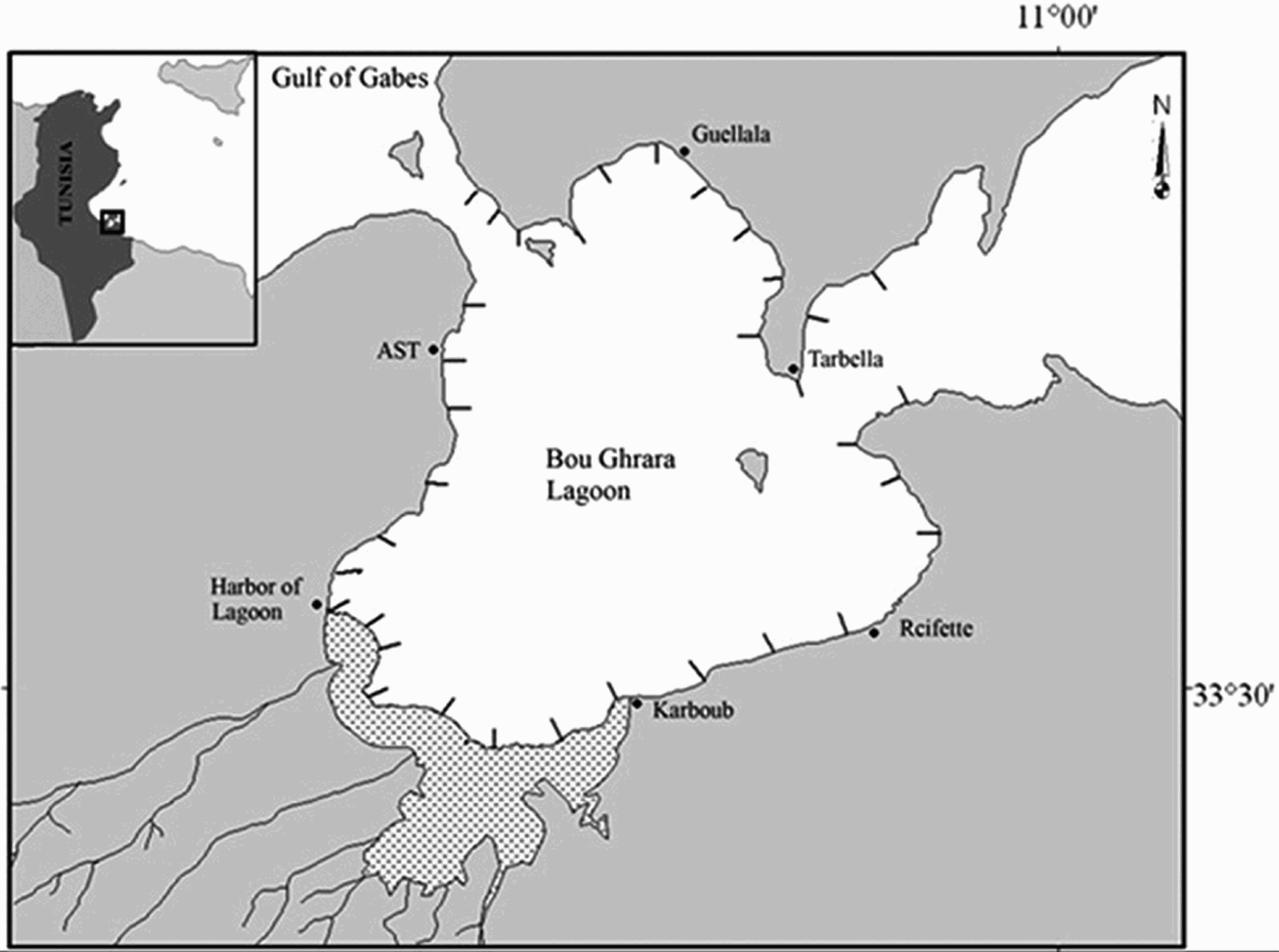
The Bou Ghrara Lagoon, situated in the southern part of the Gulf of Gabes (between 33°28′N and 33°45′N latitude and 10°40′E and 10°57′E longitude) covers an area of 500 km2, with a maximum depth of 16 m and is connected to the Mediterranean Sea by two channels: the first is called ‘Bac channel’ in the north-western area and the second, called ‘Bordj-kastil’, is situated in the east (Figure 1). The salinity remains fairly stable throughout the year: Hamza (Reference Hamza2003) recorded a constant salinity of between 41 and 50‰. Temperature of the lagoon water was in the range 14–27°C and the pH ranged between 8 and 8.5. The sediment is muddy-sand in the outer part, mud and detritus in the inner part, being covered in some areas with the seagrass Cymodocea nodosa. In small parts of the lagoon mud is mixed with dead shells of the bivalve Cerastoderma glaucum.
Map of the study area. The location of sampling transects is indicated.

Field sampling and processing
Cerastoderma glaucum was studied from September 2003 to March 2004 within the coastal zone of Bou Ghrara Lagoon located in southern Tunisian waters (Figure 1). Five transects were performed monthly during low tides. Cockles were collected every 50 m along the transect line from extreme high water tide to the extreme low water tide. At each site, two replicates necessary for a good estimation of abundance were taken from quadrats (50 × 50 × 30 cm) using a shovel (until no ‘U-shaped’ were found), which translates to a total of 247 samples. Large specimens were taken by hand and small ones were taken using a 2-mm mesh size sieve. A total of 34 transects were studied. This technique has the advantage of not shaping individuals and so avoids the underestimation of the stock.
The materials were put in labelled plastic bags, subsequently preserved in a 7% formaldehyde solution and then transported to the laboratory. In the laboratory, the samples were sorted and washed to remove all adhering organisms and other debris. Living individuals were separated from dead ones, identified and counted. Cerastoderma glaucum specimens were measured for shell length ((L, in mm); shell height (H, in mm) and shell thickness (R, in mm)) with a digital caliper to the nearest 0.01 mm and weighed for total weight (TW, g) on a top-loading digital balance (precision of 0.001 g). The obtained data set was registered and maps of population distribution were drawn.
To complete the study of the distribution of C. glaucum, an ecological survey was carried out at sites containing nearly the entire abundance of this species (Site 1 (Guellala), Site 2 (Tarbella), Site 3 (Rcifette), Site 4 (Karboub) and Site 5 (AST)) (Figure 1). The specific interactions between abiotic and biotic factors influencing the spatial distribution of the C. glaucum population were investigated based on the analysis of granular characteristics, organic matter content and the structure of the shellfish communities recorded during the sampling period. Samples of sediment were taken from each site to a depth of 5 cm. Samples were pooled for each site and used for granulometry analysis (Buchanan, Reference Buchanan, Holme and McIntyre1984). Results were expressed as % gravel (>2 mm), % coarse sand (2 mm–710 µm), % medium sand (710 µm–250 µm) and % fine sand (<250 µm).
Data analysis
After identification to species level, the number and weight of cockles were converted to 1 m2; the obtained data were exploited for the cartography based on the method of krigging using Arc View v. 3.2 software and to evaluate the population densities and biomass by the method of Gulland (Reference Gulland1969):

where Bi represents the total biomass of cockles, Ni, the mean abundance in the sample, Ai, the whole study area, ai, the swept area and Xe is the proportion retained.
Both shell length (SL) and mean abundance of C. glaucum recorded in all five sites were compared using one-way analysis of variance (ANOVA). The results were expressed as means ± standard error and the significance level used for the tests was P < 0.05. The relationship between L and W was described using the exponential regression (W = aLb) after logarithmic transformation (LogW = Loga + bLogL).
Molluscan community structure in the five sites was calculated: Shannon–Wiener index (H′), total individuals of shellfish (N) and species richness (S). Diversity between sites was tested by Shannon–Wiener index of equitability (E). Similarities between sites in terms of cockles' abundance and biomass were investigated using cluster analysis (group average). In addition, the harmonic Spearman correlation coefficient was also applied to identify any significant correlation between density and biomass of cockles in each site. Statistical packages used were SPSS v. 11 and STATISTICA v. 6.0.
RESULTS
Size structure
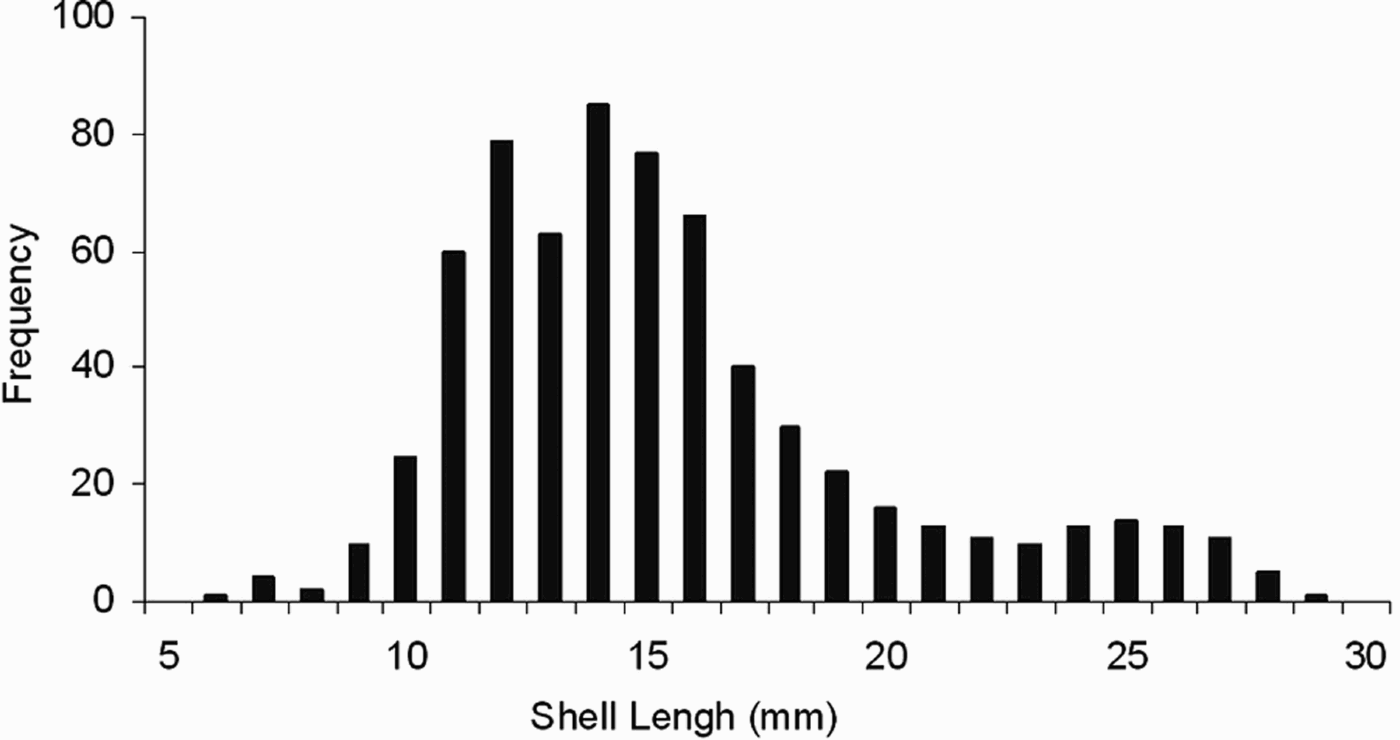
The broad size-range in terms of shell length of Cerastoderma glaucum sampled during this study period varied between 6 and 29 mm SL. One peak was apparent, corresponding to individuals of 14 mm SL (Figure 2). The majority of the cockle population were attributed to size-classes 2 (10–15 mm) and 3 (15–20 mm) which together represented 81.4% of the total samples collected in the present study. Large size individuals (>25 (5.8%)) were collected in the northern part of the lagoon. This could be attributed mainly to natural mortality caused by the pollution and increased temperature in summer, a fact that caused the cockles to die. Unfortunately, mortality rate was not estimated.
Length–frequency distribution of Cerastoderma glaucum from the coastal zone of Bou Ghrara Lagoon.

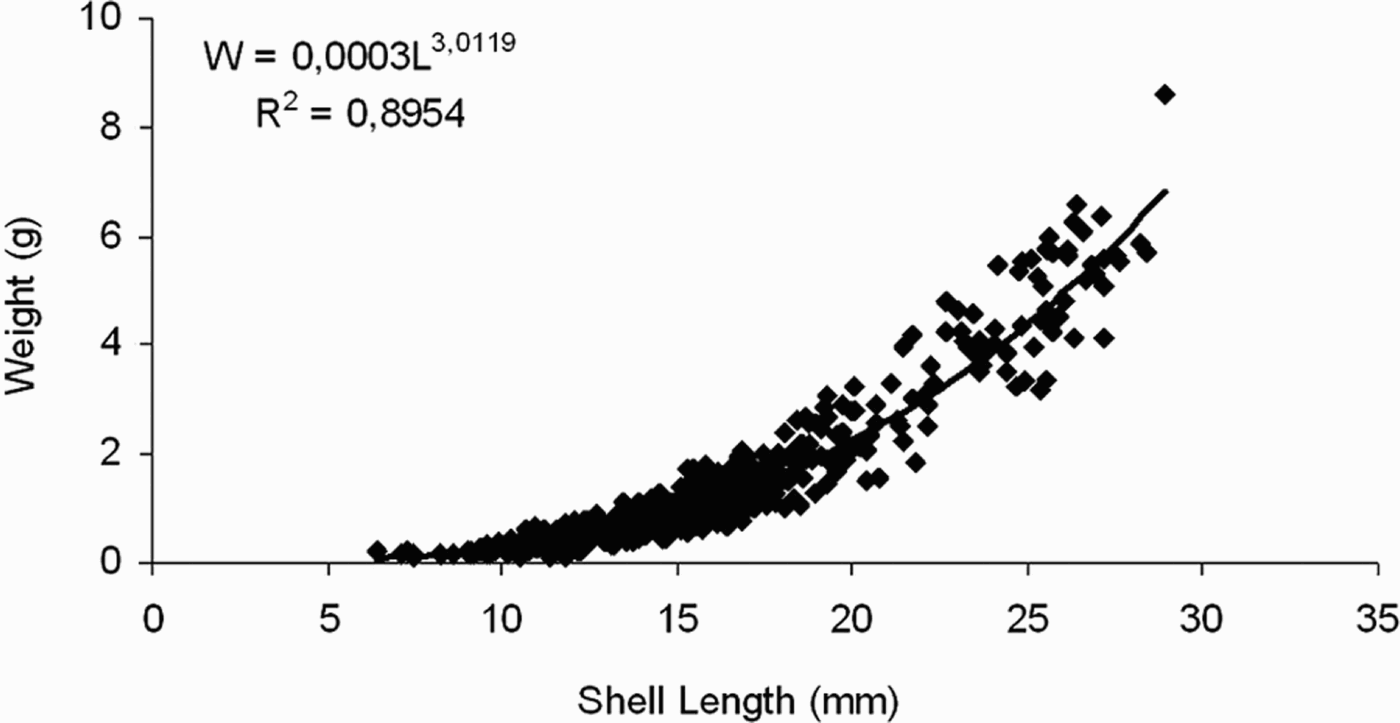
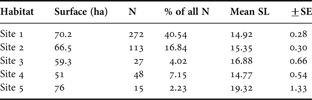
The mean size of the length distribution was 15.49 (±0.17 mm SL). There was a significant difference (P < 0.001) between mean shell length of individuals (70.8% — 475 cockles) coming from the five sites (Guellala, Tarbella, Rcifette, Karboub and AST). Statistical analysis revealed that shell lengths were significantly larger (P < 0.001) in Site 5 (19.32±1.33 mm SL) than those recorded in other sites. However, there were no significant variations (P > 0.05) between mean shell lengths recorded in specimens from Site 1 (14.92±0.28 mm SL), Site 2 (15.35±0.3 mm SL), Site 3 (16.88±0.66 mm SL) and Site 4 (14.77±0.54 mm SL), except those observed between Site 3 and Site 4 (P < 0.05). This was due to the absence of large individuals at Sites 3 and 4 (Table 1). Shell length was positively correlated to total weight (R2 = 0.8954). The relationship was:

Relationship between shell length (mm) and total weight of Cerastoderma glaucum from the coastal zone of Bou Ghrara Lagoon.

Number of specimens and mean shell length (SL) of Cerastoderma glaucum in five sites from the coastal zone of Bou Ghrara.

N, number; SE, standard error.
Geographical distribution
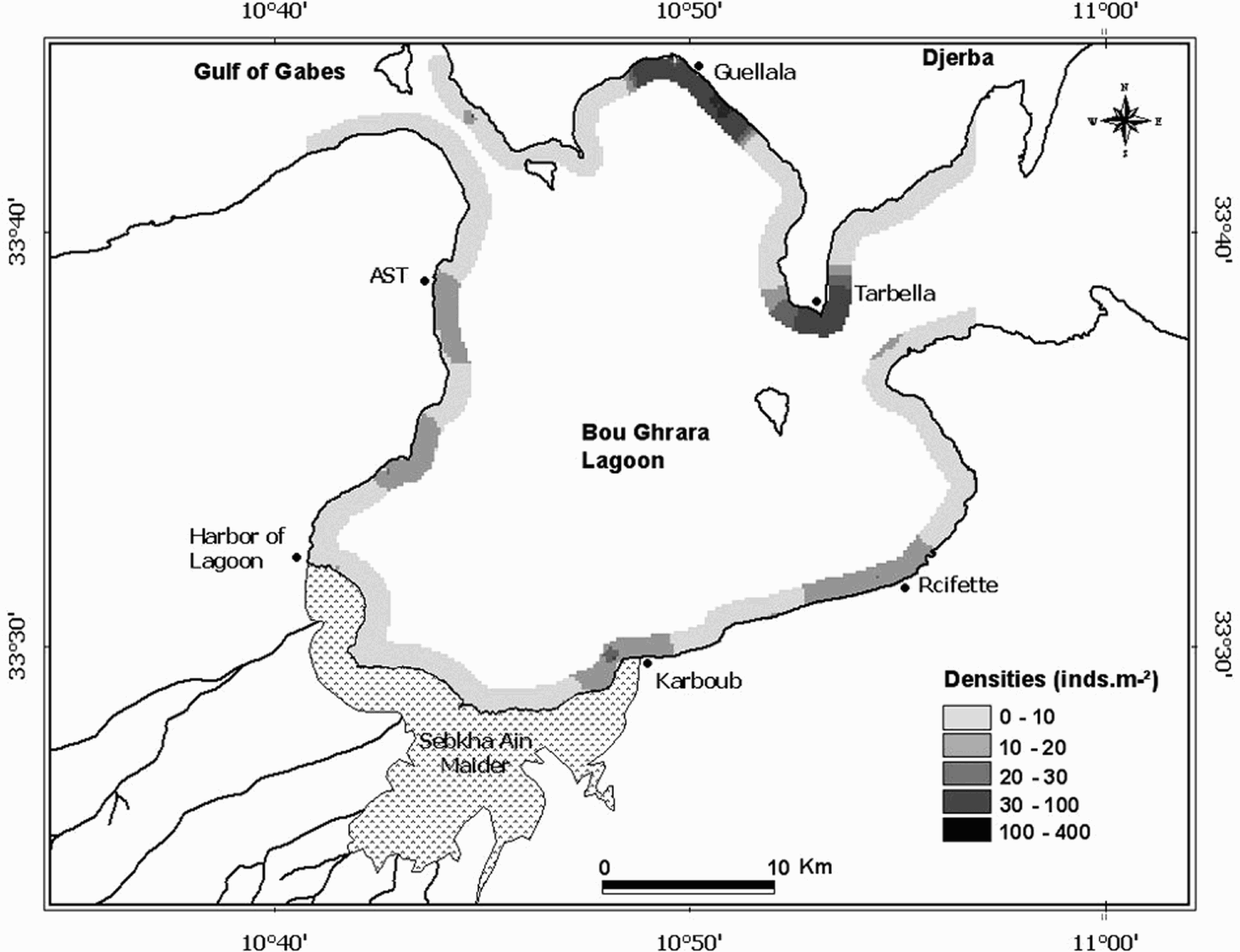
The abundance of C. glaucum was highly variable according to location (Figure 4). The two most interesting zones (136.7 hectares), in the northern and eastern areas, showed high abundance with a maximum of 400 ind m−2. In these parts, all size-classes showed the highest levels of abundance. The smallest ones (6–10 mm) reached a maximum of 102 ind m−2 and the large class (25–29 mm) was limited to mean densities of 56 ind m−2. The intermediate class (10–25 mm) displayed the highest levels of about 300 ind m−2. On the southern and western sides, three locations (Sites 3, 4 & 5) of nearly 186 hectares (13% of the total colonized surface) were occupied by more than 20 ind m−2. The population densities in these parts were dominated by the intermediate class (10–25 mm) with a maximum over 20 ind m−2. By contrast the large size-class (> 25 mm) appears to be more geographically restricted to the western side (more than 56 ind m−2). The obtained amounts of abundance in the remaining study area were small—the abundance in this area does not exceed 20 ind m−2.
Spatial cartography of Cerastoderma glaucum densities in the coastal zone of Bou Ghrara Lagoon.

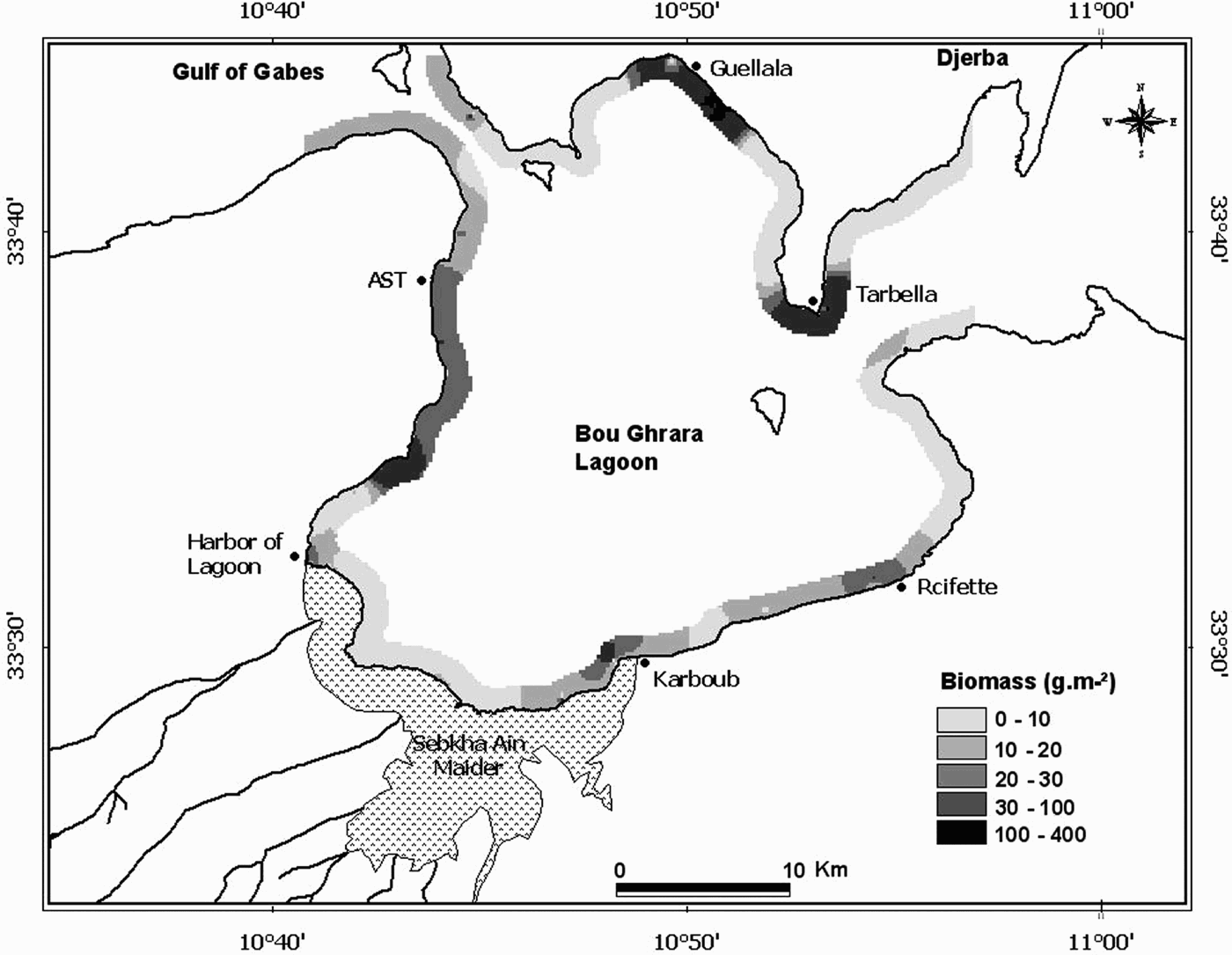
Also the biomass of C. glaucum was highly variable (average from 0.00 to 400 g m−2). On the basis of the multivariate pattern of the cockle biomass reported in Figure 5, Sites 1 and 2 preserved high biomass levels (maximum reached 400 g m−2). As for abundance, these parts were colonized by all size-classes. The large size-class (>25 mm) and the intermediate class maintained the highest biomass (over 274 g m−2 and 208 g m−2 respectively). However, the population (<10 mm) was limited to a maximum biomass of 32 g m−2. On the other hand, the southern and western sides (Sites 3, 4 & 5) were dominated exclusively by the intermediate size-class (exceeding 30 g m−2). For individuals (>25 mm), a single small zone (Site 5) showed high biomass with a maximum over 270 g m−2.
Spatial cartography of Cerastoderma glaucum biomass in the coastal zone of Bou Ghrara Lagoon.

Relative abundance
An extrapolation from observed densities and biomass of the colonized area provided for the whole population about 220 tons (fresh tissue weight), with a mean biomass around 15.53 (±2.74 g m−2) and a total abundance reaching over 49 million. The population was limited to mean densities of 11.03 (±2.26 ind m−2).
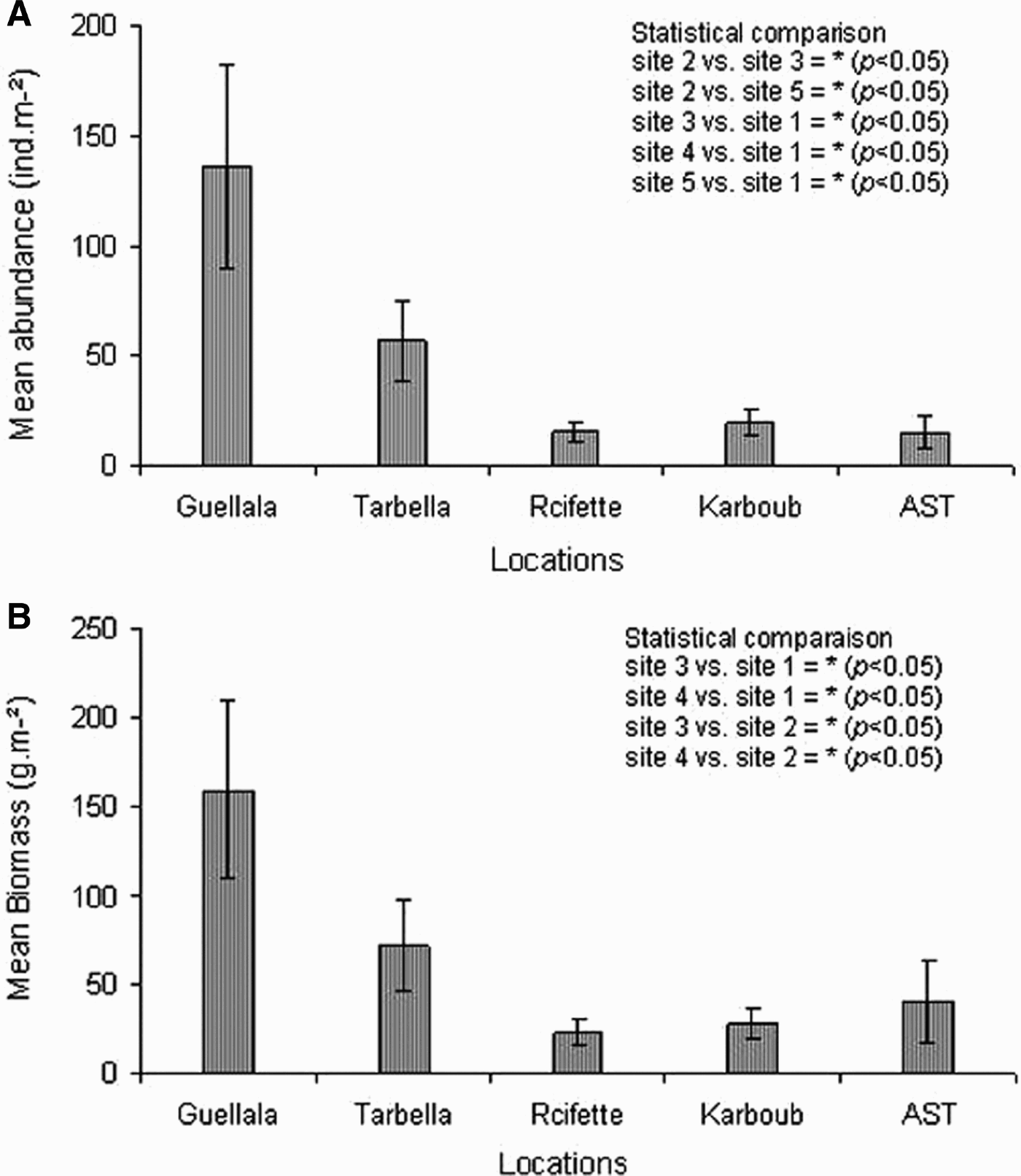
Interestingly, the majority of the samples (72.5%—479 cockles) came from the five sites, each one covering a few hectares. Significant variations between mean abundance values were recorded at all sites. At Site 1, the mean abundance was significantly higher than those at the other sites, excluding Site 2. The same differences were also recorded between Site 2 and those from Site 3 and Site 5. On the other hand, no significant variations occurred between mean values from Sites 3, 4 and 5 (Figure 6A). This was due to fewer cockles being collected over the period of sampling.
(A) Densities and (B) biomass levels, expressed as ind m−2 and g m−2, of cockles at the five locations. Values are means±SE. Asterisks, significant results: * P < 0.05.

As for abundance, mean biomass showed significant variations (P < 0.05) among cockle sampling sites. The mean value recorded at Site 1 was higher (P < 0.05) than those from Site 3 and Site 4 with respect to those from Site 2 and Site 5 (P > 0.05). The same differences were also recorded between Site 2 and those from Site 3 and Site 4 (Figure 6B).
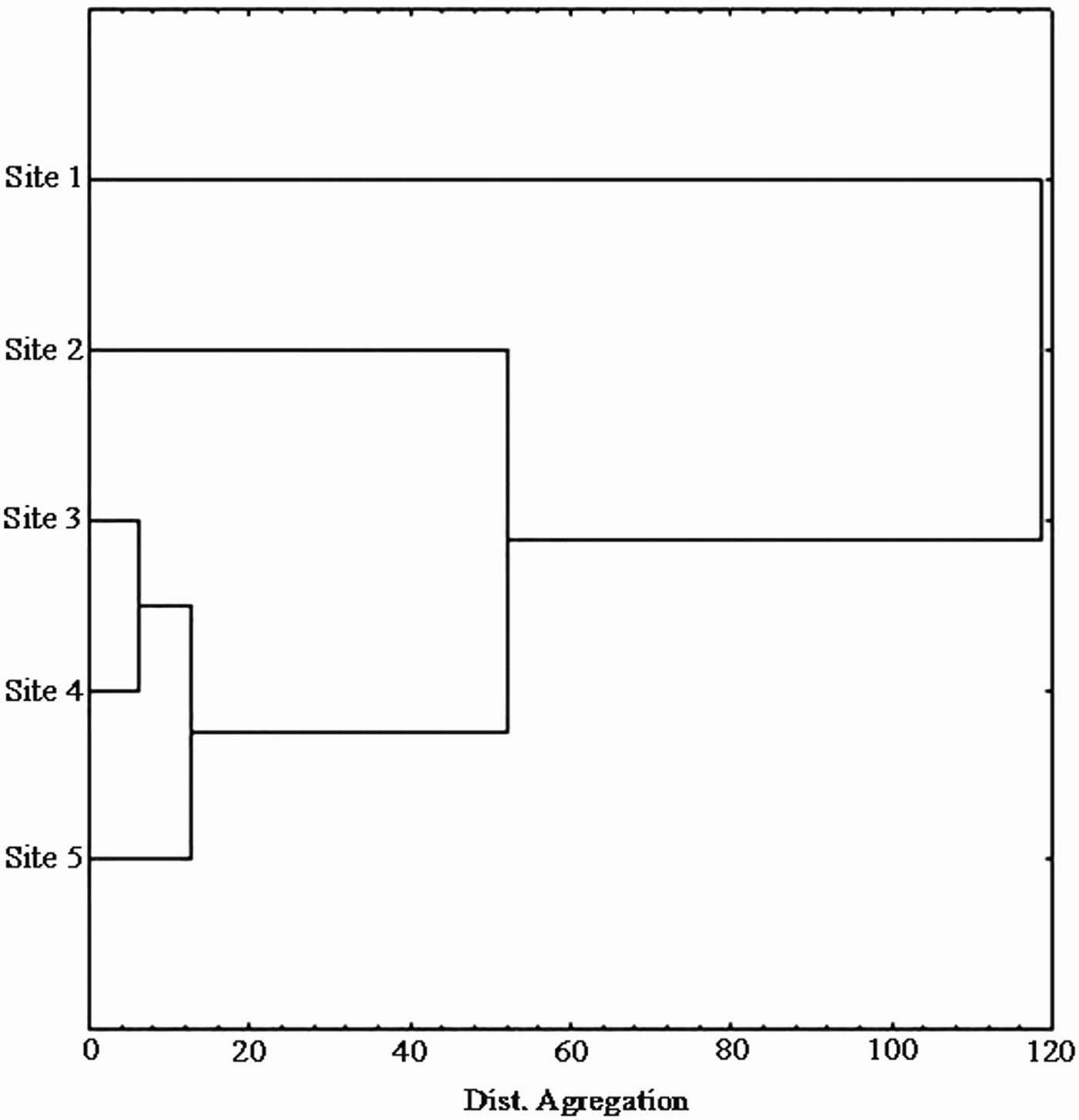
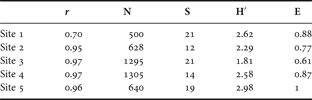
Outcomes of Spearman correlation coefficient between density and biomass of C. glaucum in the five sites are summarized in Table 2. Obtained values exceed 0.95 (except in Site 1—0.70) thus indicating the strong positive correlation between the population density and biomass. Moreover, by means of cluster analysis of sites (group average) applied to the sampling period (Figure 7) a principal group was defined which comprised Sites 3, 4 and 5. The analysis of similarities tests showed that the aforementioned group and Sites 1 and 2 are significantly different (global R superior to 0.8 — at a significance level less than 5%). This was due mainly to C. glaucum being most abundant in both Site 1 and Site 2.
Similarity dendrograms of sites (average group) for Cerastoderma glaucum in the coastal zone of Bou Ghrara Lagoon.

Community measures for five sampling sites in the coastal zone of Bou Ghrara.

r, Spearman correlation coefficient; N, total shellfish number; S, species richness; H′, Shannon–Wiener index; E, Shannon–Wiener equitability index.
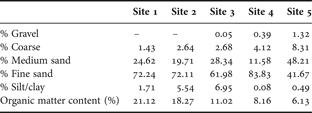
In addition to these C. glaucum samples, other benthic fauna were present, in which molluscs (gastropods and bivalves) constituted the dominant groups. The most frequently observed species at the five sites were bivalves: (Ruditapes decussatus, Mytilus galloprovincialis, Tapes rhomboides, Venerupis aurea, Gastrana fragilis, Dosinia lupinus and Loripes lacteus) and gastropoda: (Neverita josephina, Bittium reticulatum, Cerithium vulgatum, Cerithium scabridium, Nassa costulata, Conus mediterranus, Nassa metabilus, Cyclope nerita, Columbila rustica, Murex trunculus, Amyclina corniculum, Tricolia brindisfax and Bulla striata). Isopods were recorded but in smaller numbers. Shellfish species were recorded at more than 80% of the stations. Between 12 and 21 species per site were observed, indicating that species richness was higher at all sites. The highest number of species was recorded in Sites 1 and 3 (21 species) followed by Site 5 (19 species). For diversity the Shannon–Wiener diversity indices showed similar assemblages between sites (from 1.81 to 2.98; Table 2). Data for the sediment parameters of all five sites consisted predominantly of very fine sand and to a lesser degree, medium sand (Table 3). Most of the mud sandy bottoms of the five sites were covered by the seagrass Cymodocea nodosa (>70%).
Sedimentary type and organic matter contents recorded in five sampling sites in the coastal zone of Bou Ghrara.

DISCUSSION
The size of Cerastoderma glaucum occurring in the study area varied between 6 and 29 mm SL. The maximum length observed was 29 mm, which is very similar to that recorded in the Vouliagmeni Lagoon population (30.78 mm; Gontikaki et al., Reference Gontikaki, Antoniadou and Chintiroglou2003). This size is much smaller than that reported from the northern areas of its distribution in Irish waters (50 mm) (Boyden, 1972). The majority of the cockle population consisted of smaller individuals from 10 to 19 mm SL. Cockle populations were not exploited in the study area, so one can assume that the small number of the adult individuals can be attributed to natural mortality recorded in summer. Besides, the distribution of the length–frequencies was approximately normal, implying a small number of young individuals or recruits. This is to be expected for a species with a continuous reproduction strategy, recruiting few individuals continuously throughout the year. Moreover, a normal distribution also implies a small number of large individuals and thus, a high mortality rate among all age-classes.
According to Zaouali (Reference Zaouali1974), results of population survey (abundance and distribution) change among classes (small number of larger individuals). The author has suggested that effects of the seasonal temperature crises were significantly correlated with increased temperature in summer (27°C). Therefore there is an unfavourable condition which causes mortality of adult individuals to be the dominant factor structuring the community. These assumptions suggest that the increase in the size of adult individuals is still affected by mortality. Probably, cockles cannot easily bury themselves in substrates as they increase in size, hence increasing the chance of mortality. As such, Urban (Reference Urban1996) argued that infaunal clams, owing to a thick shell and a deep burrowing depth, can minimize natural predation caused by epibenthic predators Palaemonetes varians and the shore crab Carcinus maenas after attaining a certain size.
On the other hand, Hamza (Reference Hamza2003) examined, at the same period of sampling, the effect of phytoplankton in the water column in the Mediterranean Sea and found that Bou Ghrara Lagoon is subject to phytoplankton blooms (diatoms, dinoflagellates, etc.). For years, dinoflagellate blooms have appeared during summer, causing mass mortalities of bivalve species. Among these, Cerastoderma glaucum is negatively influenced by the blooms. It disappears from a large central area due probably to anoxia and then re-colonizes the area in autumn after the temperature has cooled. Zaouali (Reference Zaouali1974) suggested that larger individuals of C. glaucum almost disappeared in summer. In the same way, in Vouliagmeni Lagoon, Gontikaki et al. (Reference Gontikaki, Antoniadou and Chintiroglou2003) attribute the absence of individuals with shell length larger than 8 mm to natural mortality. Conversely, human interventions in Bou Ghrara seem to affect the population structure of C. glaucum especially during summer. Significant amounts of seaweed are continuously removed; such a removal might affect the population structure of this species seriously, as seaweeds form the main area for larval settlement.
Despite the small size and the mortality of adult individuals, the littoral zone supports an extraordinary cockle community population, in terms of abundance and biomass, when compared with other Mediterranean lagoons. From this study, we notice that the colonized area presented more than 6.9% of the total biomass of cockle C. glaucum in the Gulf of Gabès. A gradient similar to this could be seen for another clam species (Ruditapes decussatus) with about 275 tons which presented 6% of its total biomass in the Gulf of Gabès (unpublished data). Maps of spatial distribution densities and biomass revealed the fluctuation of habitats of cockles on the Bou Ghrara coast and it is concluded that the five sites among the whole study area colonized comprised almost the entire population biomass. It seems, therefore, that a sampling effort was estimated as a function of local conditions (heterogeneity of abundance and presence of many parameters influencing the distribution). It appears that development of this population has been accompanied by major impacts at numerous levels (e.g. physicochemical, edaphic and hydrological factors of the lagoon). Stergiou et al. (Reference Stergiou, Christou, Georgopoulos, Zenetos and Souvermezoglou1997) clarified that temperature and food potentials are the most important factors affecting phenotypic differences in growth patterns and maximum sizes in a variety of marine organisms. Both the increase in water temperatures and the phytoplankton levels occurring on the Bou Ghrara coast combine to promote rapid growth rates in many local bivalve species. Due to the highest levels recorded in water temperature (14–27°C) and the shallow depth in the coastline part, salinity was recorded with high concentrations in summer (45–50‰) and often in winter (41–43‰) (Hamza, Reference Hamza2003). This result indicates that salinities remain high throughout the year and shows that C. glaucum tolerated the highest range of salinities. The maximum value recorded from the Bou Ghrara Lagoon (50‰) is much larger than that recorded in Vouliagmeni Lagoon where the salinity ranged between 17 and 18 psu (Chintiroglou et al., Reference Chintiroglou, Antoniadou and Damianidis2000). Bamber (Reference Bamber2003) demonstrated that this species tolerated a hypo- to hyperhaline salinity range. Its preferred salinities ranged between 10 and 40‰ and it can tolerate a salinity value over 60‰.
Other mechanisms structuring the cockle population include soft bottoms and organic matter content. The high diversity of shellfish species is particularly interesting when the relative organic matter content (6–21.12%), depth (<1 m) and the muddy sand bottom are considered. In fact, these factors can provide ecological conditions that are able to maintain highly diverse reef communities in a coastal lagoon. The overall diversity in five sites is high if compared to the remaining study area where only a few species, such as Gibbula ardens, Cerithium vulgatum, Cerithium scabridium and Bittium reticulatum were more abundant on stations characterized by rock and hard ground substrates. It seems that this low diversity recorded in the remaining study area is primarily attributed to bottom characteristics. This hypothesis can be supported by the relationship between the sedentary nature of some shellfish species such as Cerastoderma glaucum and substrates.
As regards faunal diversity and substrate types, this species was more frequent and abundant in areas sheltered by the seagrass Cymodocea nodosa, covering more than 70% (about 226 hectares) of the muddy–sandy bottoms. Indeed, the heterogeneity of geographical distribution of Cerastoderma glaucum was found to be significantly correlated to the distribution of Cymodocea nodosa. This could have been due to the fact that this positive correlation was related to the main organic source offered by C. nodosa. This detritus was the most enriched in organic carbon and was the predominant source of primary organic matter in both density and biomass. As such, Sarà (Reference Sarà2007) indicate that among the dominant organic sources in the diet of cockles, potentially available for suspension feeders via particulate organic matter and sedimentary organic matter was the seagrass C. nodosa. The other benthic organic sources considered in the study area were the macroalgae Ulva lactuca and the sand microflora (mostly diatoms; Hamza, Reference Hamza2003). Although the most dominant seagrass was C. nodosa in the lagoon, the least two species dealt mainly with optimal labile organic sources for cockle diet.
In conclusion, different assemblages corresponding to the major environmental conditions were clearly distinguished. The spatial distribution of Cerastoderma glaucum appeared strongly influenced, as in most lagoon systems surveyed around the world, by many abiotic factors such as water temperatures and salinity ranges, food potential (organic matter content of the sediment, phytoplankton rates and seagrass organic matter from Cymodocea nodosa) and bottom characteristics. Furthermore, this study gives more information about its stock in the colonization area, but it is not possible to reveal the influence of physical processes (wind and tide), intraspecific interactions and spatio-temporal change of the cockle population. Future studies could be done in two ways: firstly, stock assessments per year should be carried out in order to show the variations of Cerastoderma glaucum stock and to set changes in population size structure. Secondly, the relationship between the spatial distribution of population and hydrodynamic survey, combined with topography could allow the assessment and quantification of the magnitude of transport processes in the regulation of the cockle population.
ACKNOWLEDGEMENTS
This work was undertaken with the aid of funds provided by INSTM (Centre de Sfax). Special thanks to the technical and supporting staff of INSTM for their practical assistance in sampling and laboratory analysis. We thank Nabil Kallel, an English teacher at the Faculty of Sciences (Sfax) for proof reading our manuscript. The authors are also grateful to the anonymous referees whose suggestions and comments improved the submitted manuscript.