





Impact statement
This work addresses urgent climate challenges and the cradle-to-cradle movement presented by architect William McDonough and chemist Michael Braungart by proposing a circular system that transforms household refuse, specifically cat litter, into 3D-printed mycelium composite materials. The final prototype demonstrates an integrated biofabrication methodology that supports waste-to-resource material pathways, in which cat litter is converted into nutrient- and mineral-rich scaffolds that enable mycelium growth.
Introduction
Mycelium, the filamentous root network of fungi, has emerged in recent years as a promising bio-based material for construction and product design. Mycelium-based composites are produced through the growth of fungal hyphae that bind organic substrates into cohesive forms. This process enables material fabrication through collaboration with biological processes rather than conventional extractive and exploitative manufacturing. This growth-driven approach has increasingly attracted attention within architecture and materials science as part of broader efforts to reduce the environmental impacts of the built environment and transition toward circular material economies.
The construction industry is widely recognized as one of the most resource-intensive sectors globally. It accounts for approximately 40% of annual global carbon dioxide emissions when both operational and embodied carbon are considered, and construction and demolition activities generate an estimated 30% of total global waste (Architecture 2030 n.d). Recent projections indicate that global construction waste has exceeded 2 billion tons annually, with the majority consisting of concrete, masonry and other high-embodied-energy materials (Sakthibala et al. Reference Sakthibala, Vasanthi, Hariharasudhan and Parthee-ban2025). These impacts are largely driven by linear material economies characterized by a “take–make–dispose” lifecycle, in which resources are extracted, processed and ultimately discarded with limited opportunities for reuse or regeneration.
One significant contributor to material waste within construction is temporary formwork, especially in concrete fabrication. Formwork can account for up to half of total material consumption in conventional concrete construction, and this proportion may increase substantially in projects involving complex geometries such as Zaha Hadid’s MAXXI Museum (Cheng et al. Reference Cheng, Huang, Lu, Li, Gao, Wang and Chen2022). Much of this material is designed for single use and is subsequently directed to landfills, where it releases carbon dioxide and methane into the atmosphere, contributing to climate change (Scharff et al. Reference Scharff, Soon, Taremwa, Zegers, Dick, Zanon and Shamrock2024).
These challenges have intensified interest in alternative material systems that support circularity and carbon emission reduction. In particular, bio-based materials have gained attention because they can be cultivated using renewable feedstocks, such as agricultural waste, which require low-energy processing and are capable of biodegradation at end-of-life (Wattanavichean et al. Reference Wattanavichean, Phanthuwongpakdee, Koedrith, Laoratanakul, Thaithatgoon, Somrithipol, Kwantong, Nuankaew, Pinruan, Chuaseeharonnachai and Boonyuen2025). Among these materials, mycelium-based composites are especially promising due to their ability to transform organic waste streams into usable products. Through fungal metabolism, waste substrates including but not limited to plant fibers, such as hemp, food refuse, such as eggshells and industrial byproducts, such as cigarette butts, can be upcycled into homogenized materials (Morales-Vera et al. Reference Morales-Vera, Cantillana, Félix Arto-Paz, Echeverría-Vega and Valdés2024).
In addition to their circular material potential, fungal systems play a significant role in global carbon sequestering (Hawkins et al. Reference Hawkins, Cargill, Van Nuland, Hagen, Field, Sheldrake, Soudzilovskaia and Toby Kiers2023). Mycorrhizal networks contribute to soil carbon sequestration by transferring atmospheric carbon into stable underground storage through symbiotic relationships with plant root systems and the decomposition of organic matter (Hawkins et al. Reference Hawkins, Cargill, Van Nuland, Hagen, Field, Sheldrake, Soudzilovskaia and Toby Kiers2023). Recent ecological studies estimate that fungal networks collectively sequester 11.8 billion metric tons of carbon annually, highlighting their importance within global climate regulation processes (Hawkins et al. Reference Hawkins, Cargill, Van Nuland, Hagen, Field, Sheldrake, Soudzilovskaia and Toby Kiers2023). These characteristics suggest that fungal-derived materials may offer pathways toward lower-carbon or potentially carbon-negative construction strategies.
Mycelium composites also exhibit material properties that support architectural applications. Once dried, mycelium is inherently lightweight, possesses high strength-to-weight ratios in compression and demonstrates resistance to fire, mold and moisture (Camilleri et al. Reference Camilleri, Narayan, Lingam and Blundell2025). Various species and their growth and post-production processes create natural visual characteristics including density, porosity, surface texture and translucency, enabling customization for specific design preferences and purposes (Sharma et al. Reference Sharma, Lim and Kaur2026). For example, Blue Oyster mycelium is known for its softer, “fluffy” appearance (Aditya et al. Reference Aditya, Jarial, Jarial and Bhatia2024), whereas Reishi is known for a leather-like quality (Williams et al. Reference Williams, Cenian, Golsteijn, Morris and Scullin2022).
Despite this aesthetic potential, most existing real-world applications of mycelium composite materials have focused on packaging and insulation (Ho, Reference Ho2025). This positions our work to showcase mycelium’s versatility: materially, structurally and aesthetically.
This study develops a fabrication protocol for 3D-printed mycelium composite materials derived from household waste streams, specifically cat litter and spent coffee grounds. By combining biofabrication techniques with computational design, the research explores how waste-derived substrates can be transformed into attractive biodegradable screening panels. In doing so, the study contributes to ongoing efforts to advance circular, low-carbon, material systems within the built environment.
Background & related work
Circular materials & household waste: 3D-printed vases and columns
No current precedent utilizes cat litter as a substrate for colonizing mycelium. However, existing works that investigated the 3D printing and mycelium colonization of household waste-based composites include Fiona Bell’s 3D-printed eggshells (Reference Bell, Friedman-Gerlicz, Urenda and Buechley2025), Michael L. Rivera’s research on 3D printing spent coffee grounds (2023), Eugene Soh’s 3D-printed spent coffee-based ink (2023), Julian Jauk’s Mycera (2022), Danli Luo’s 3D-printed mycelium biocomposites (2025), bioMATTERS’ Myco-Clay vases (2018–2025) and Ana Goidea’s Pulp Faction column (2017–2020). This selection of research and prototypes demonstrates the feasibility of combining waste-derived substrates with additive manufacturing. Furthermore, Mycera, Luo, bioMATTERS and Goidea demonstrate through their artifacts that waste-based composites can support mycelial colonization within small- to large-scale extruded forms. A key success of these works lies in their aesthetic expression: the incorporation of materials such as eggshells and spent coffee grounds produces rich coloration and tactile variation, visibly reframing waste as a valuable resource. From a computational perspective, the control afforded by 3D-printing enables layered organic geometries. However, these prototypes primarily rely on simple and dense extrusion strategies that limit porosity and airflow, resulting in growth conditions that favor surface and penetrative colonization while constraining aerial or bridging behaviors. This research builds upon this foundational work by exploring the novelty of more complex fractal toolpath-informed geometries that intentionally cultivate surface, aerial and penetrative mycelium growth and leverage patterning as both a biological and design driver.
Mycelium composites: pavilions
At a larger architectural scale, El Monolito Micelio (2018) by Jonathan Dessi-Olive, The Growing Pavilion (2019) by Biobased Creations and Hy-Fi (2014) by The Living helped shift this investigation toward spatial applications. These pavilions demonstrate the potential of bio-based materials as immersive architectural enclosures and foreground the experiential potential of living materials through unique textures, organic surfaces and atmospheric interior conditions. Their greatest contributions lie in communicating circular material narratives at a building scale, making processes of growth, decay and regeneration legible to occupants. However, these projects rely on cast mycelium panels or bricks grown within rigid formwork, a production method that introduces inefficiencies and waste from a resource perspective. Casting requires additional material inputs for molds, generating secondary waste through formwork production and post-processing. This workflow also tends to favor dense, monolithic forms, limiting opportunities to reduce material usage through variable porosity, while also increasing the time needed to achieve full fungal growth. In contrast, this research investigates additive manufacturing approaches that minimize material requirements while also enabling more complex geometries.
Biofabrication & 3D-printing: panel-like installations
CITA’s Radicant (2022), Rhizaerial (2024) and Predicting Response (ongoing) and Richard Beckett’s Probiotic Design Prototypes (2021) reinforce the feasibility of large-scale additive manufacturing with bio-based materials. These works successfully integrate computational modeling, robotic fabrication and biological experimentation to produce visually complex geometries. However, these investigations rely on homogeneous material compositions. In contrast, this research introduces variable household waste streams as a core design parameter, examining how inconsistency in substrate composition can be incorporated into and mitigated through, computational and fabrication workflows. CITA and Beckett’s projects demonstrate how biogenic materials can generate intricate, lightweight assemblies. Their strength lies in synthesizing biological growth with an aesthetic of material “lightness”, permeability and texture. Beckett’s work is focused on the biological component as the design driver. This research builds upon Beckett’s conceptual foundations by pairing mycelium-driven designs with additive manufacturing strategies and modular aggregation.
Biofabrication & 3D-printing: increasing geometric complexity
Existing studies in 3D-printed mycelium composites have largely focused on geometries that are computationally controllable, straightforward to parameterize and are compatible with biofabrication at a small scale. Common systems include lattices, arches, minimal surfaces and gyroids, which offer predictable toolpaths, repeatable fabrication and controlled conditions for mycelium growth. Within this body of research, geometry is typically treated as a means of optimizing fabrication efficiency, structural performance and biological colonization, rather than as a driver for more complex spatial exploration. Hussamaldeen Gomaa (2024) demonstrated how geometric configuration affects both growth behavior and mechanical performance, while Alale Mohseni (2023) focused on extrusion-compatible forms that prioritize print fidelity, surface area and contamination control. Extending this line of inquiry, Behzad Modanloo (2021) explored tilted arch geometries to introduce greater directional variation while maintaining fabrication stability, and Sharma et al. (Reference Sharma, Lim and Kaur2026) investigated gyroid minimal surfaces as continuous scaffold systems supporting both structural and thermal performance. Together, these precedents show a gradual shift from purely functional geometric optimization toward more spatially expressive systems. However, they are generally limited to the scale of small test blocks. Building on this trajectory, our research moves further by investigating continuous fractal toolpaths, higher geometric complexity and scale. We explore how space-filling, parametrically controlled systems can simultaneously support continuous printing, regulate conditions for mycelium growth and expand the spatial potential of biofabricated composites beyond existing precedents (Figures 1–17).
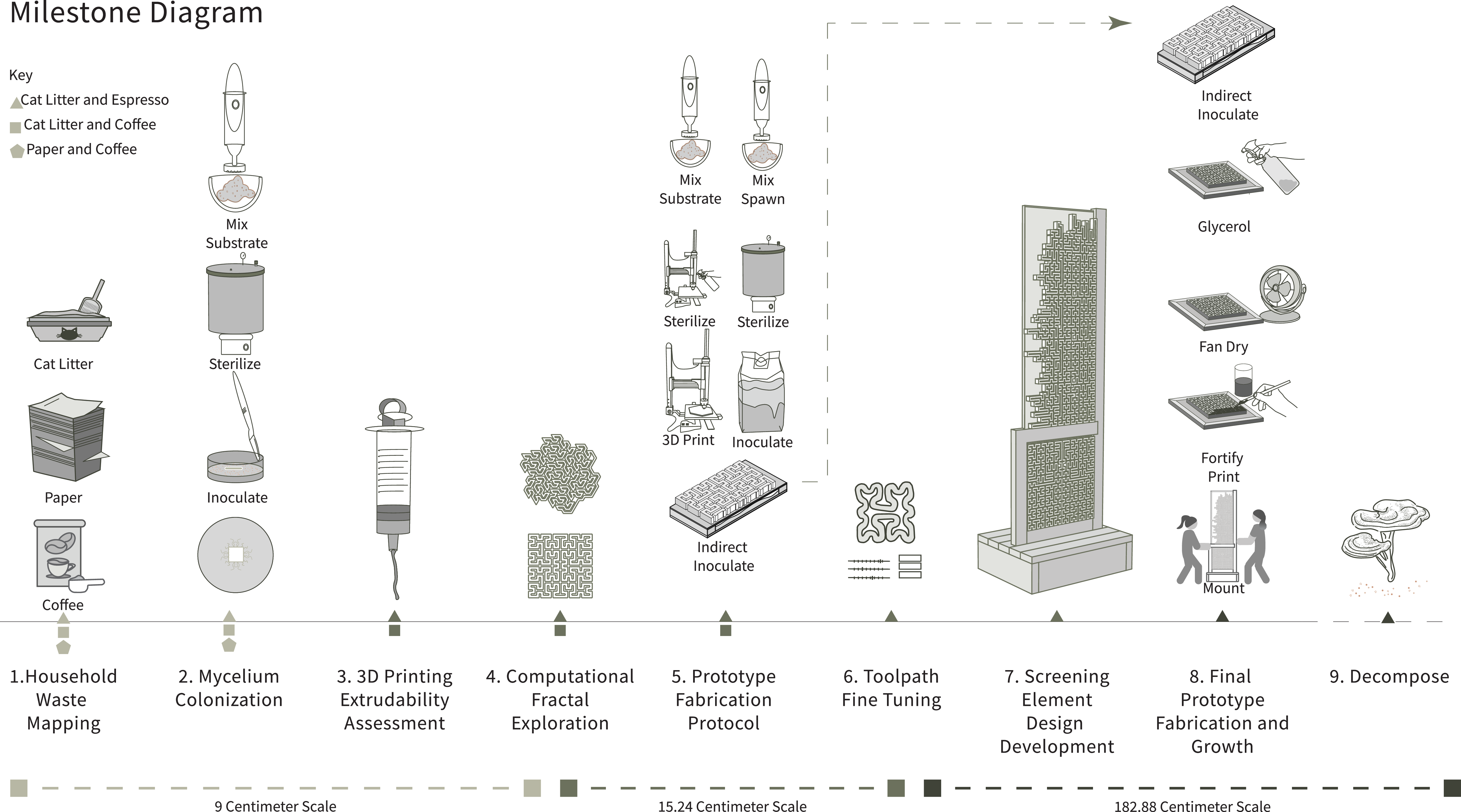
Overview of the research methodology for mycelium colonization, computational design, additive manufacturing and fabrication.

Figure 1. Long description
An overview of the project’s 9 key milestones depicted using a timeline and 2D icons. The milestones show both scale (9 cm, 15.24 cm, 182.88cm) and substrates tested. The milestones are as follows: 1. Household Waste Mapping: Cat Litter, Paper, Coffee, 2. Mycelium Colonization: Mix Substrate, Sterilize, Inoculate, 3. 3D Printing Extrudability Assessment, 4. Computational Fractal Exploration, 5.Prototype Fabrication Protocol: Mix Substrate/Spawn, Sterilize, 3D Print, Indirect Inoculate, 6. Toolpath Fine Tuning, 7. Screening Element Design Development, 8. Final Prototype Fabrication and Growth: Indirect Inoculate, Glycerol, Fan Dry, Fortify Print, Mount, and 9. Decompose.
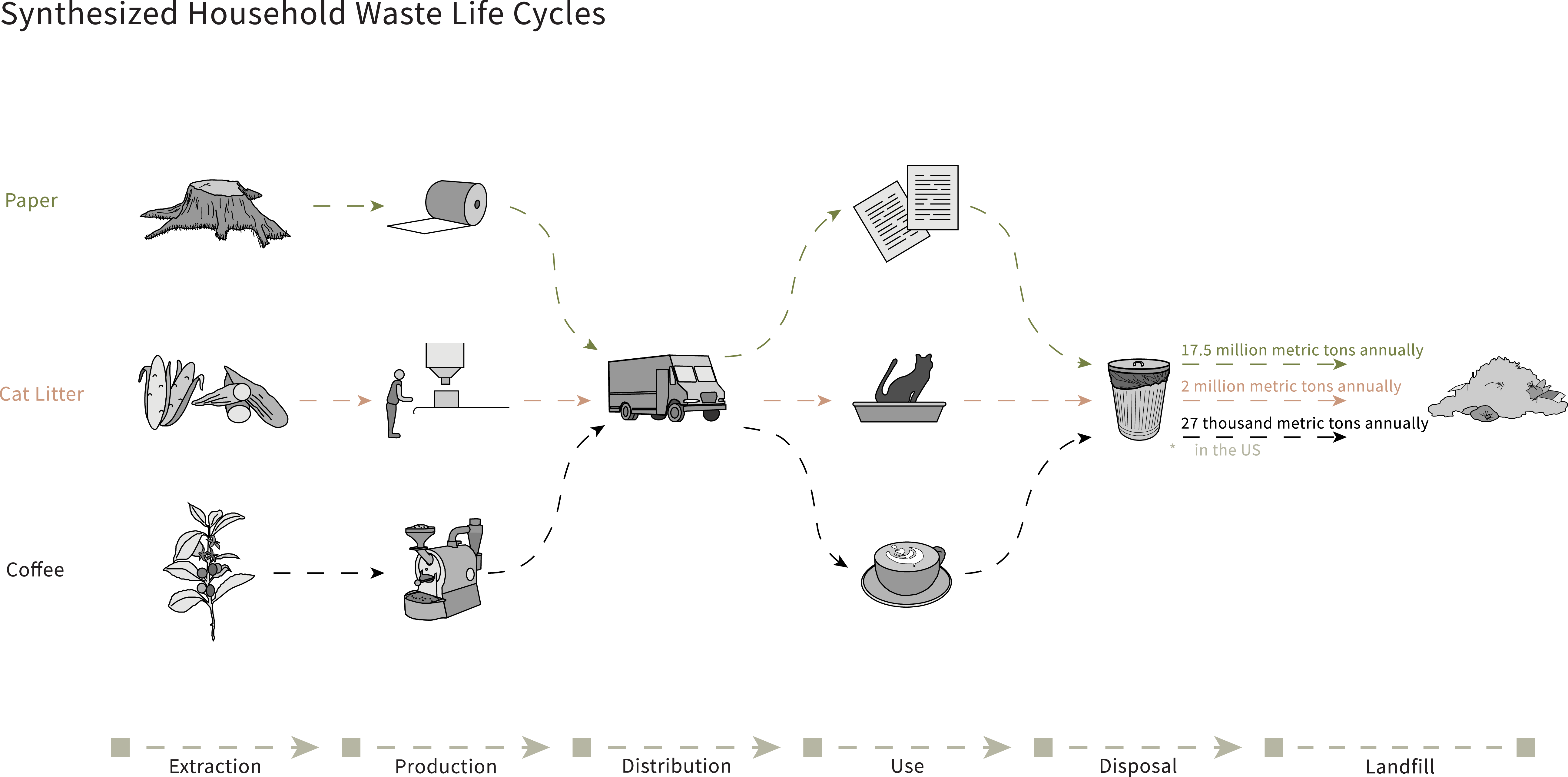
The traditional, linear, extraction-to-landfill household material lifecycles of paper, cat litter and coffee.

Figure 2. Long description
An overview of the typical linear, extraction-to-landfill household material lifecycles of Paper, Cat Litter, and Coffee, depicted using a timeline and 2D icons. The steps are as follows: 1. Extraction: Icons are a tree stump, corn, and a coffee plant for Paper, Cat Litter, and Coffee, respectively, 2. Production: Icons are a roll of paper, a factory conveyor belt, and a coffee grinder for Paper, Cat Litter, and Coffee, respectively, 3.Distribution: Icon of a truck, 4. Use : Icons are paper, a cat using a litter box, and a cup of coffee, for Paper, Cat Litter, and Coffee, respectively, 5. Disposal: Icon of a trashcan, 6. Landfill: Icon of a landfill with a subtitle of 17.5 million metric tons annually, 2 million metric tons annually, and 27 thousand metric tons annually for Paper, Cat Litter, and Coffee, respectively.
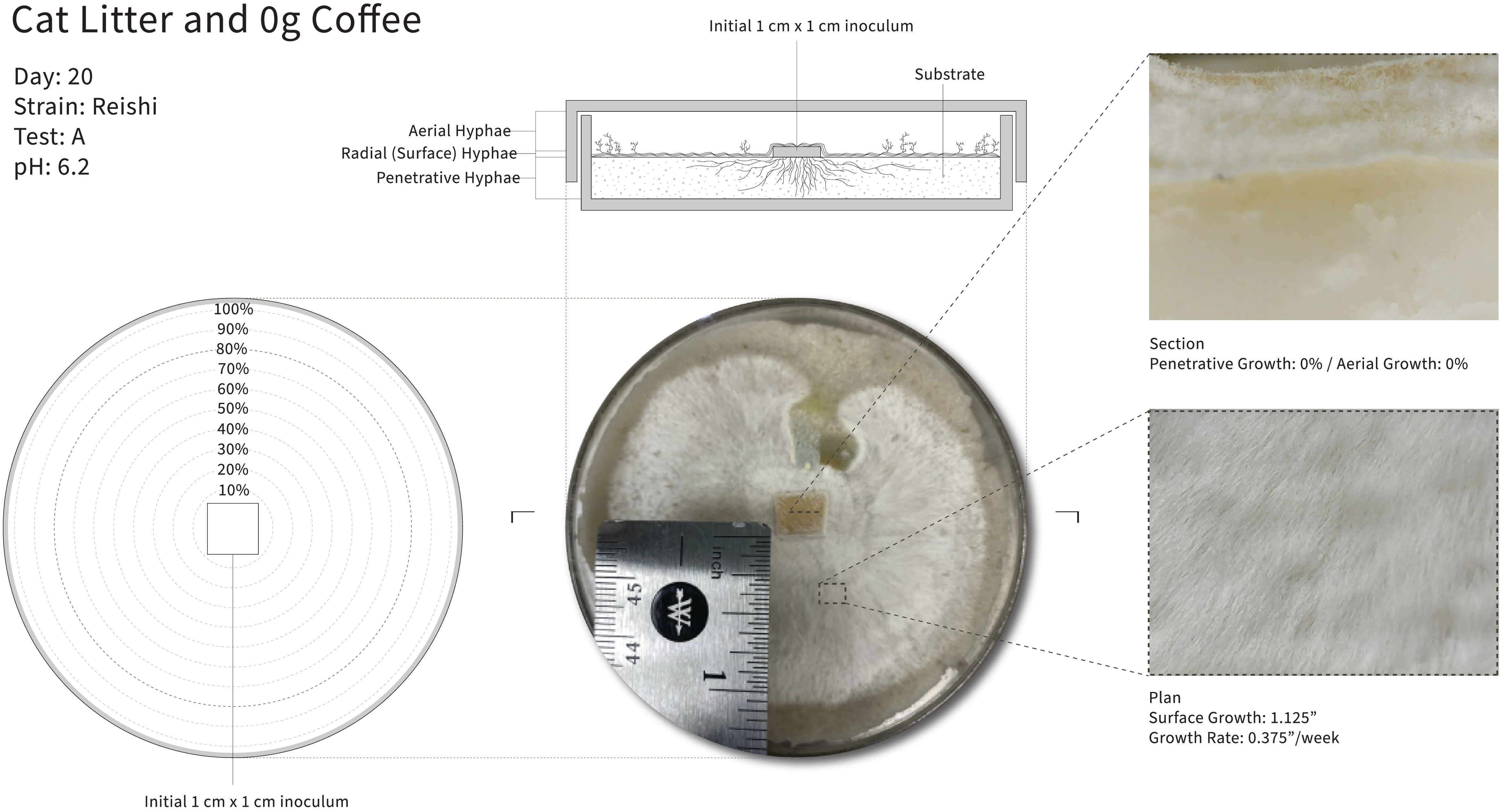
Visual demonstration of mycelium growth on cat litter and 0 g coffee sample.

Figure 3. Long description
A composite infographic showing 2D icons on how types of growth were measured both in plan and section view, along with photographs of a Petri Dish, a zoomed in section cut, and a zoomed in plan view of the sample. The substrate is off-white and grainy, and the mycelium has a small section of contamination that is green. The following information is included in captions of the composite image: Day: 20, Strain: Reishi, Test: C, pH 6.2.
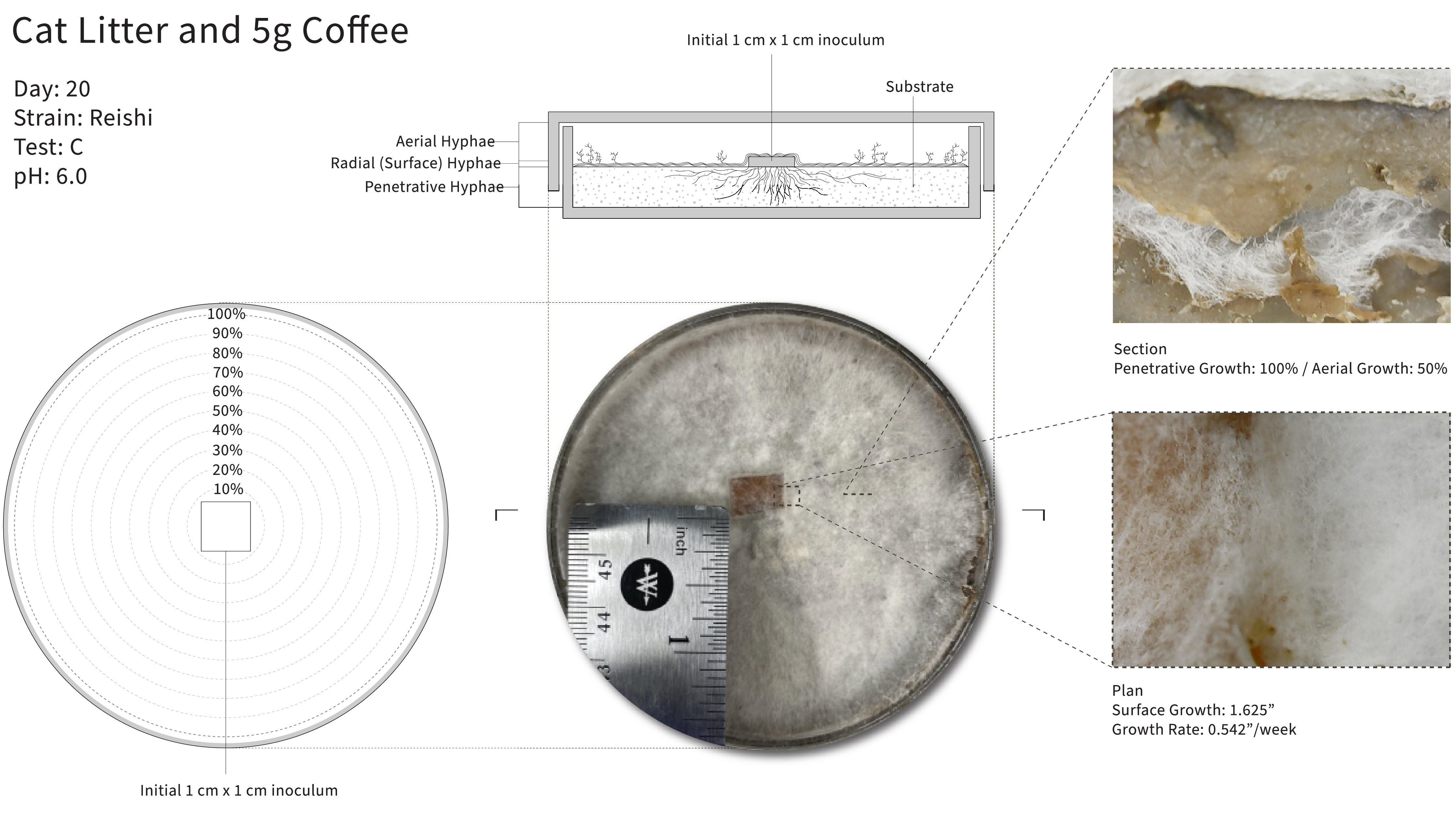
Visual demonstration of mycelium growth on cat litter and 5 g coffee sample.

Figure 4. Long description
A composite infographic showing 2D icons on how types of growth were measured both in plan and section view, along with photographs a Petri Dish, a zoomed in section cut, and a zoomed in plan view of the sample. The substrate is slightly yellow-brown in color and the mycelium is white and extends to all edges of the petri dish. The section cut shows mycelium bisecting the substrate. The following information is included in captions of the composite image: Day: 20, Strain: Reishi, Test: C, pH 6.0.
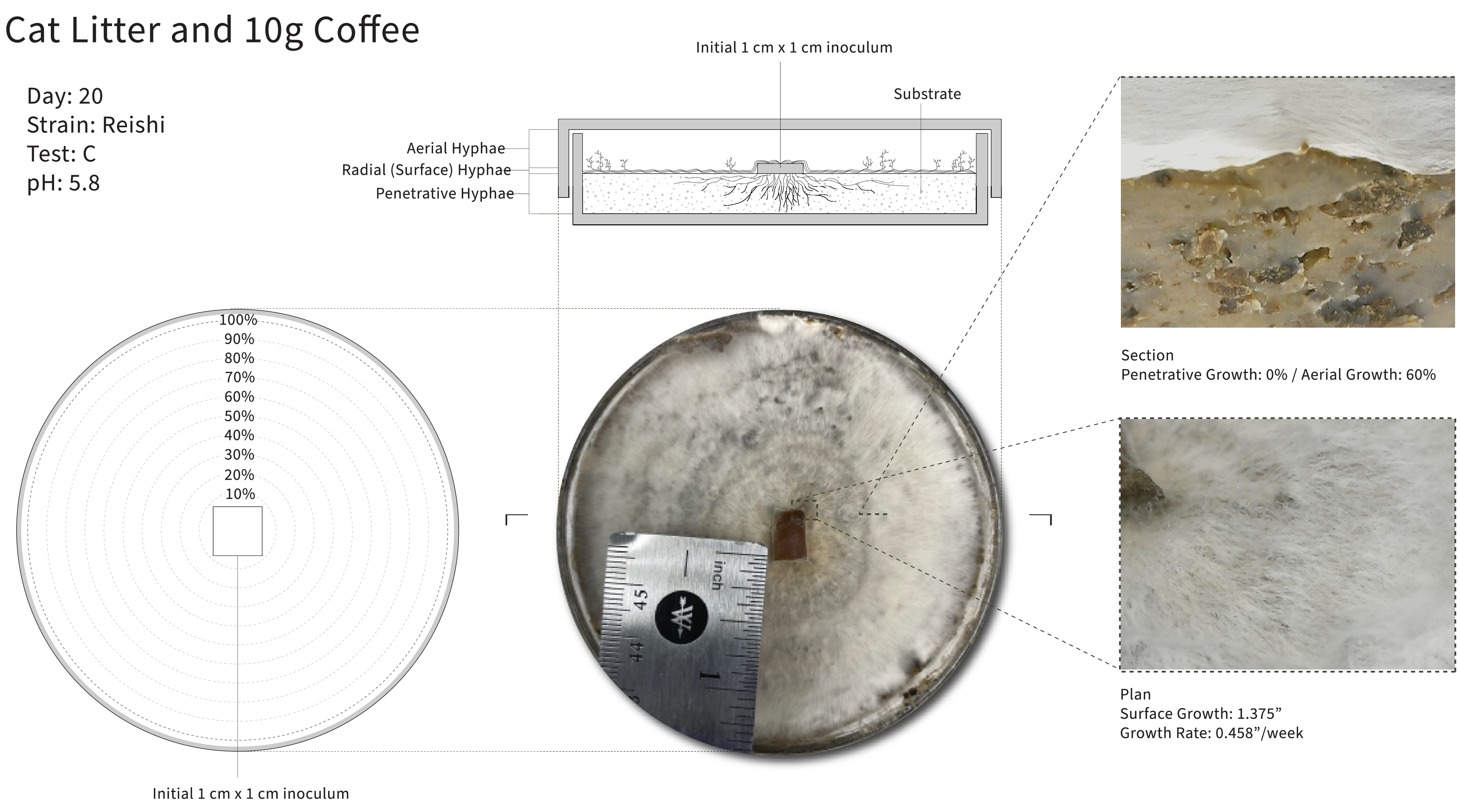
Visual demonstration of mycelium growth on cat litter and 10 g coffee sample.

Figure 5. Long description
A composite infographic showing 2D icons on how types of growth were measured both in plan and section view, along with photographs of a Petri Dish, a zoomed in section cut, and a zoomed in plan view of the sample. The substrate is dark yellow-brown in color and the mycelium is white and extends to all edges of the petri dish. The following information is included in captions of the composite image: Day: 20, Strain: Reishi, Test: C, pH 5.8.
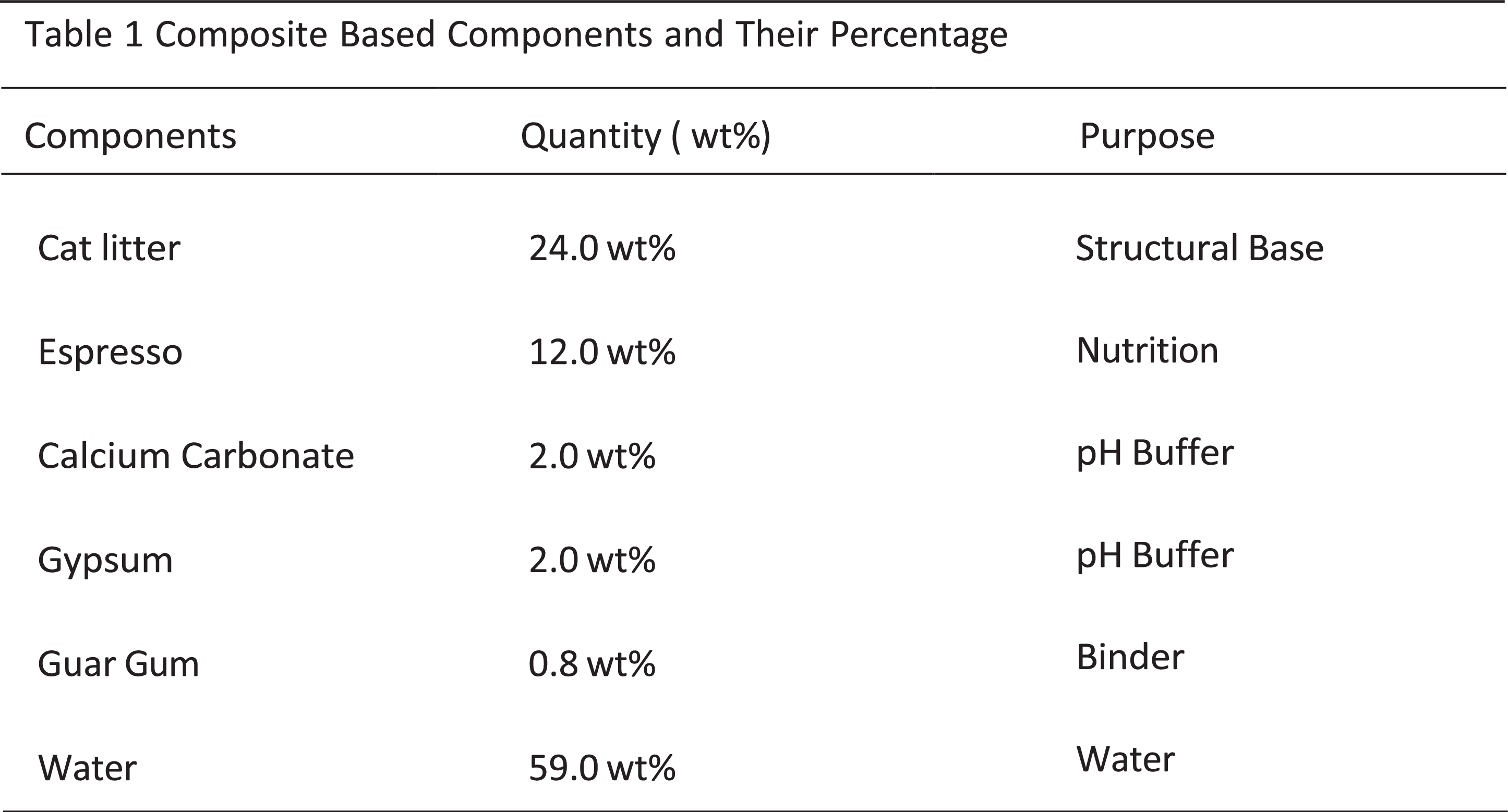
Table of composite-based components and their percentage.

Figure 6. Long description
The Table Shows 3 columns: Components, Quantity( wt%) and Purpose. The following information is depicted: Cat litter, 24.0 wt%, Structural Base, Espresso, 12.0 wt %, Nutrition, Calcium Carbonate, 2.0 wt %, pH Buffer, Gypsum, 2.0 wt %, pH Buffer, Guar Gum, 0.8 wt %, Binder, Water, 59.0 wt %, Water.
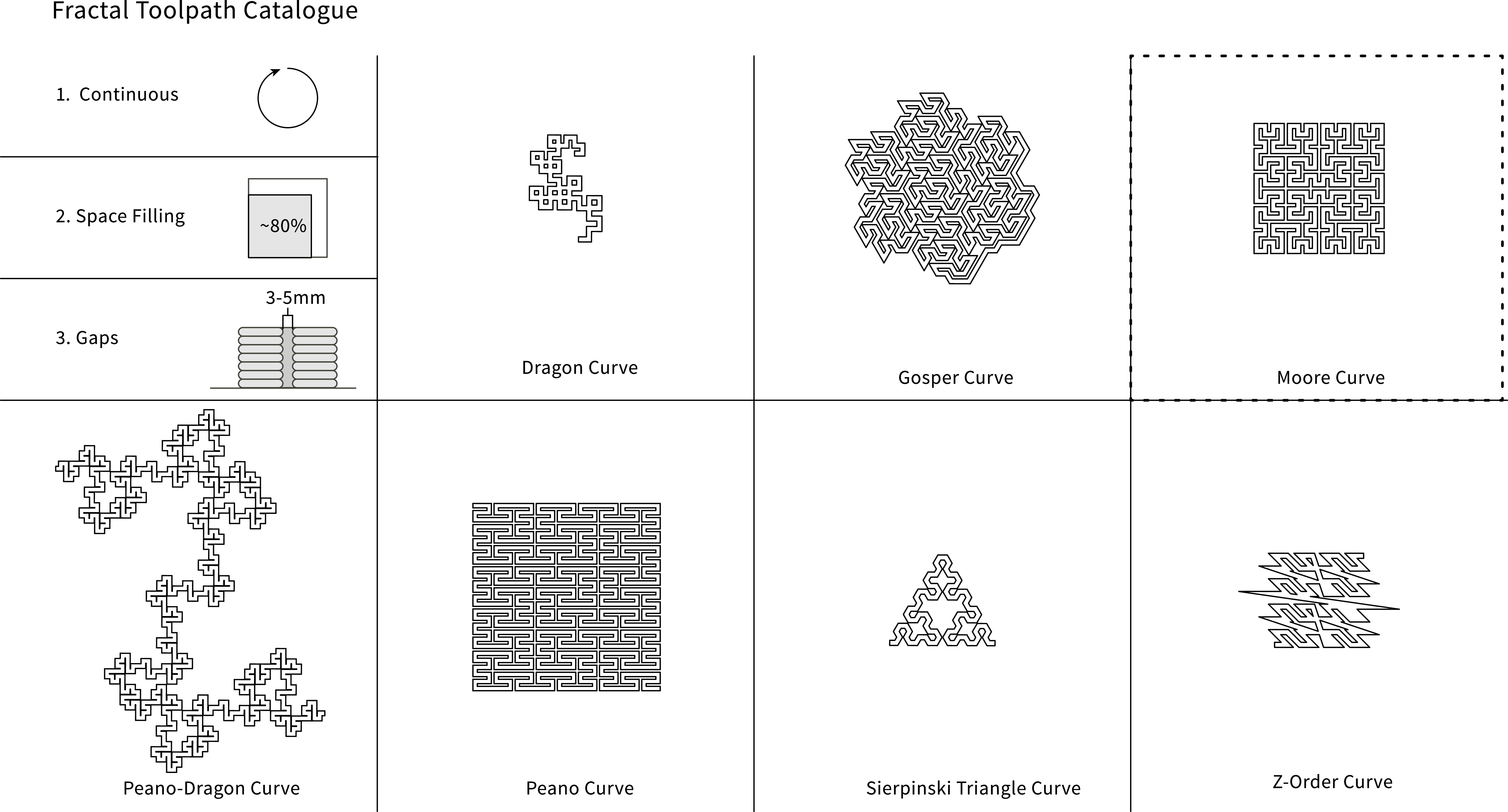
Catalogue of computational fractal toolpaths explored.

Figure 7. Long description
A diagram with 8 equally spaced sections, including the 3 fractal toolpath criteria that were needed for further exploration positioned in the top left section: 1. Continuous: depicted with a circular arrow, 2. Space Filling: depicted with a square filled 80%, and 3. Gaps: depicted with the section view of a print with 3-5mm gaps for mycelium bridging. The following fractal curves are also shown: Dragon curve, Gosper curve, Moore curve, Peano-Dragon curve, Peano curve, Sierpinski Triangle curve, and Z-order curve. There is a box around the Moore curve.
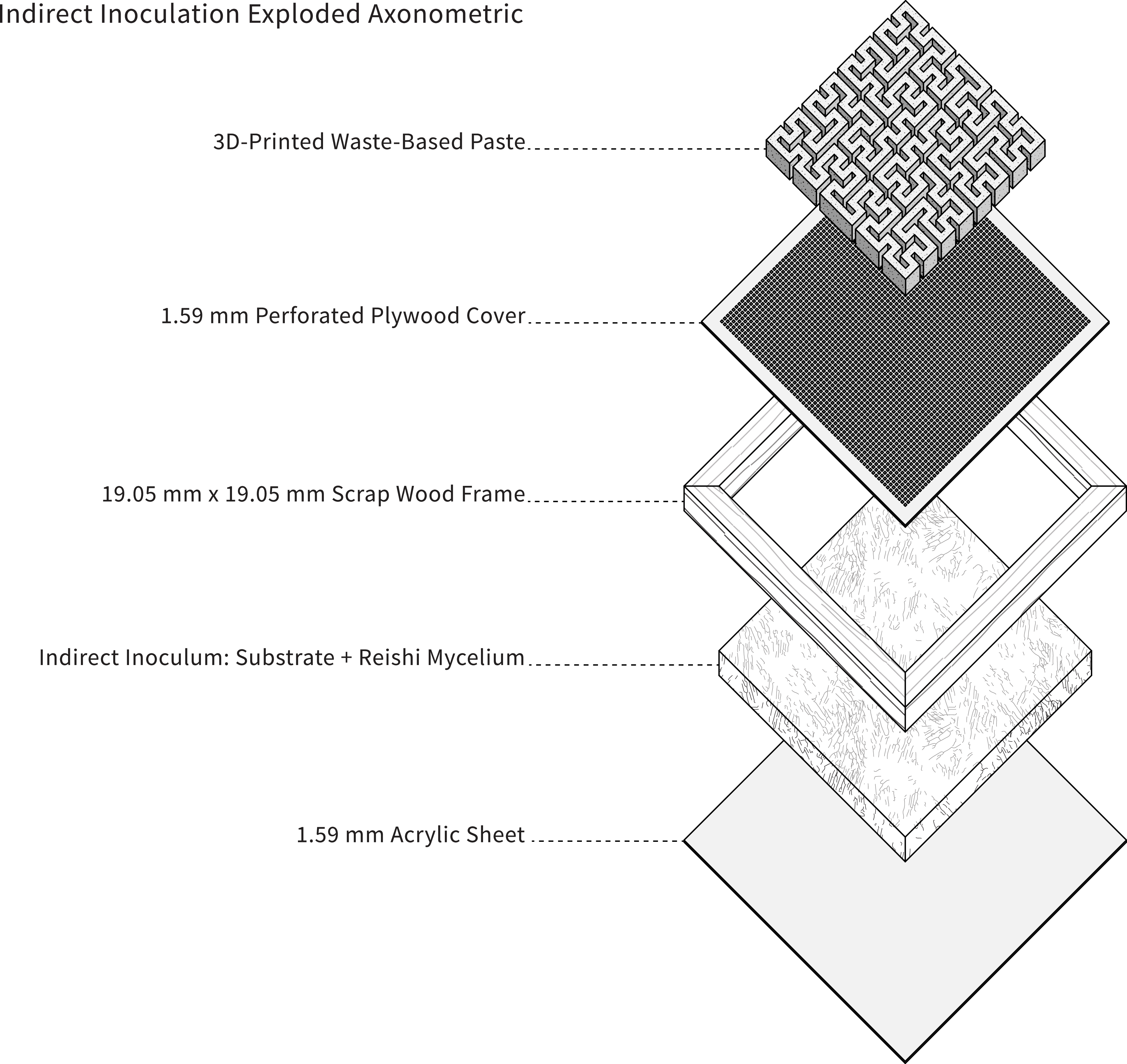
Indirect inoculation exploded axonometric.

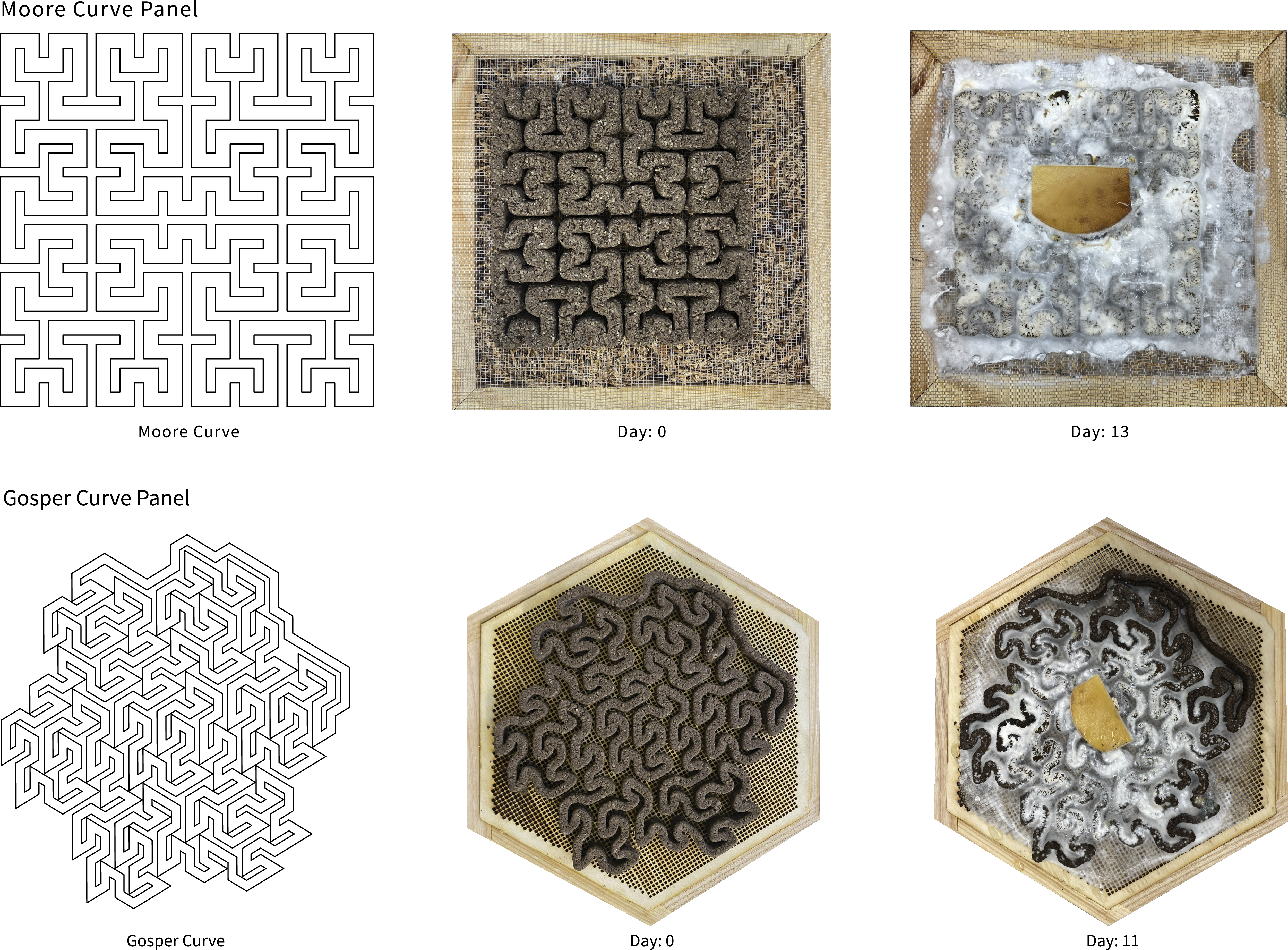
Moore and Gosper curve panel prototypes.

Figure 9. Long description
By day 13, the mycelium has reached all edges of the square scrap wood frame, with greater density towards the center. By day 11, the mycelium has not equally covered the hexagonal frame and has a denser concentration towards the bottom left region. The mycelium is bridging and the sample looks fluffy, but is not completely grown over, yet.
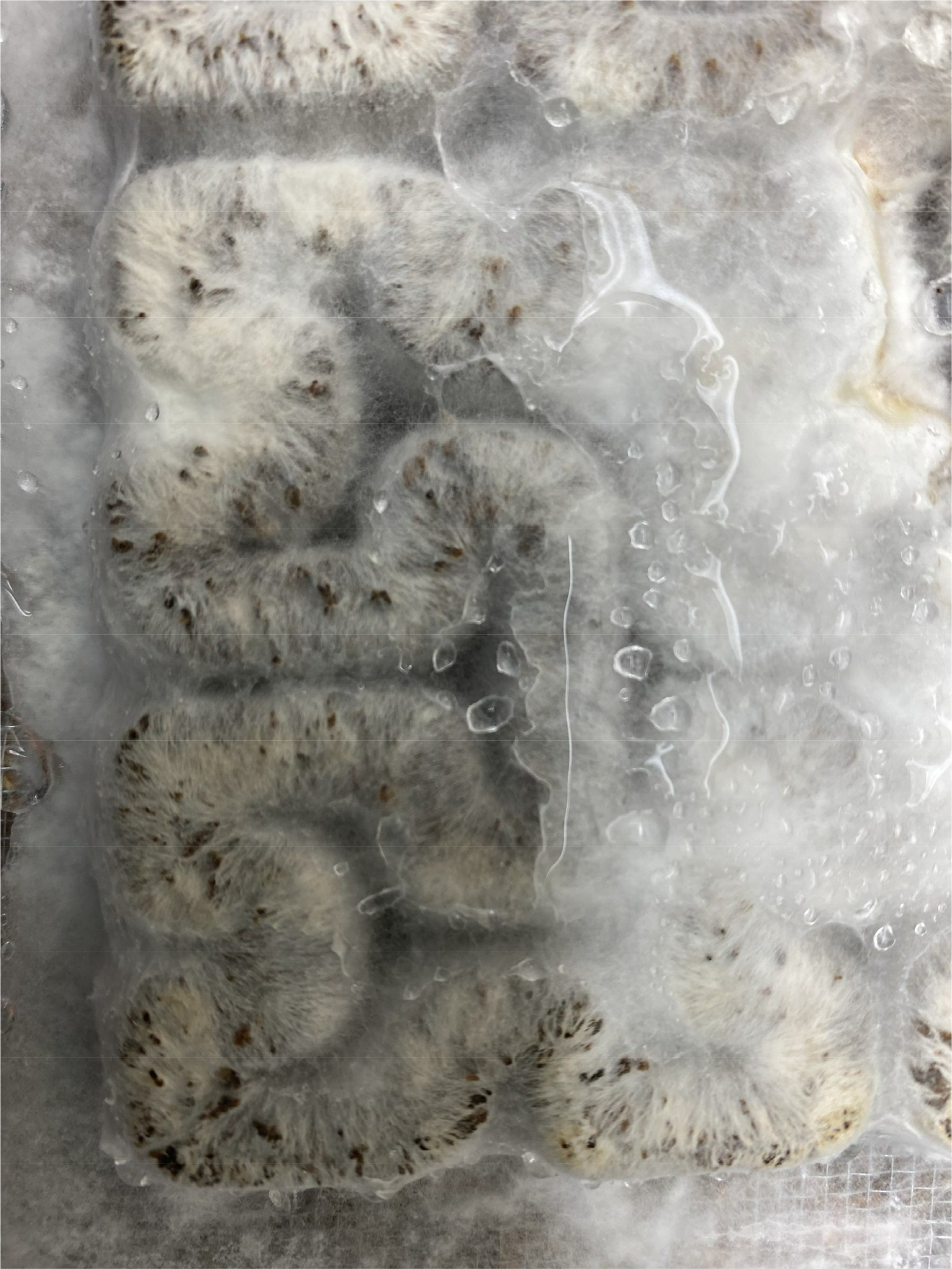
Zoomed in demonstration of various mycelium growing behaviors (aerial, surface and bridging) on Moore Panel prior to drying.

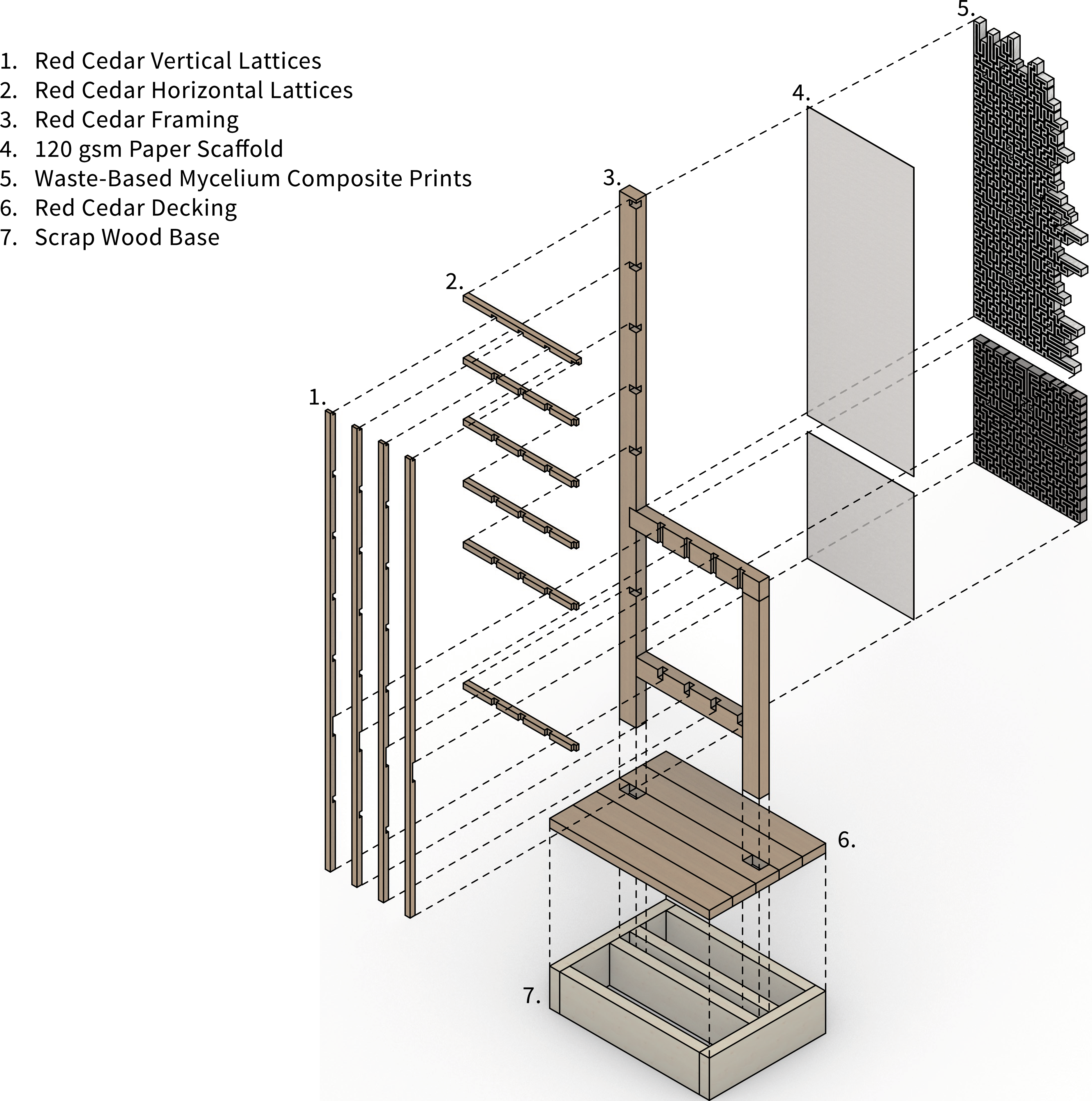
Assembly strategy of the final screening panels.

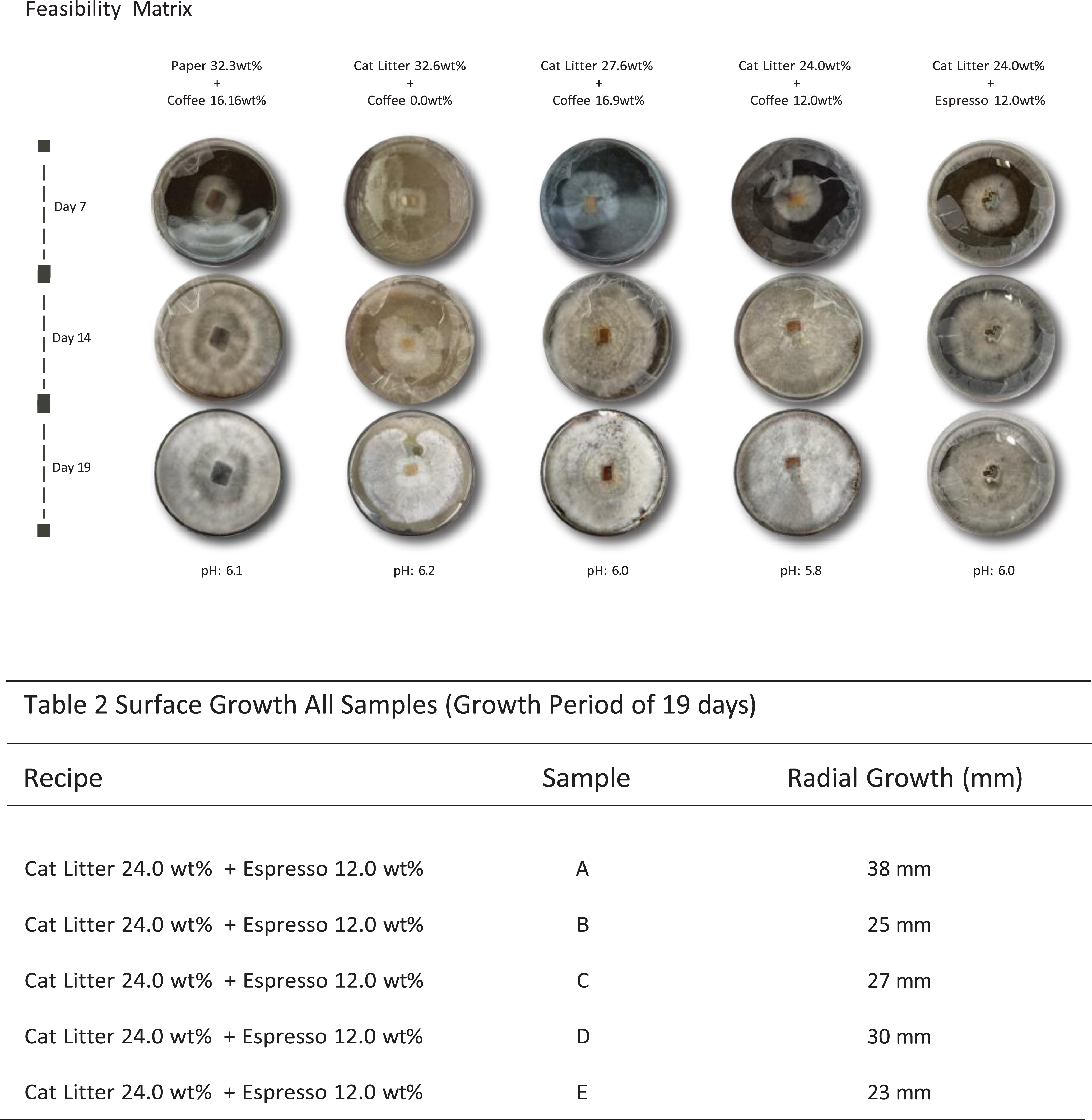
Feasibility matrix and table of surface growth.

Figure 12. Long description
The table has 3 columns: Recipe, Sample, and Radial Growth (mm). The Recipe for all 5 samples is Cat Litter 24.0 wt% and Espresso 12.0 wt %. The Radial Growth is 38mm, 25mm, 27mm, 30mm, and 23mm for Samples A-E, respectively.
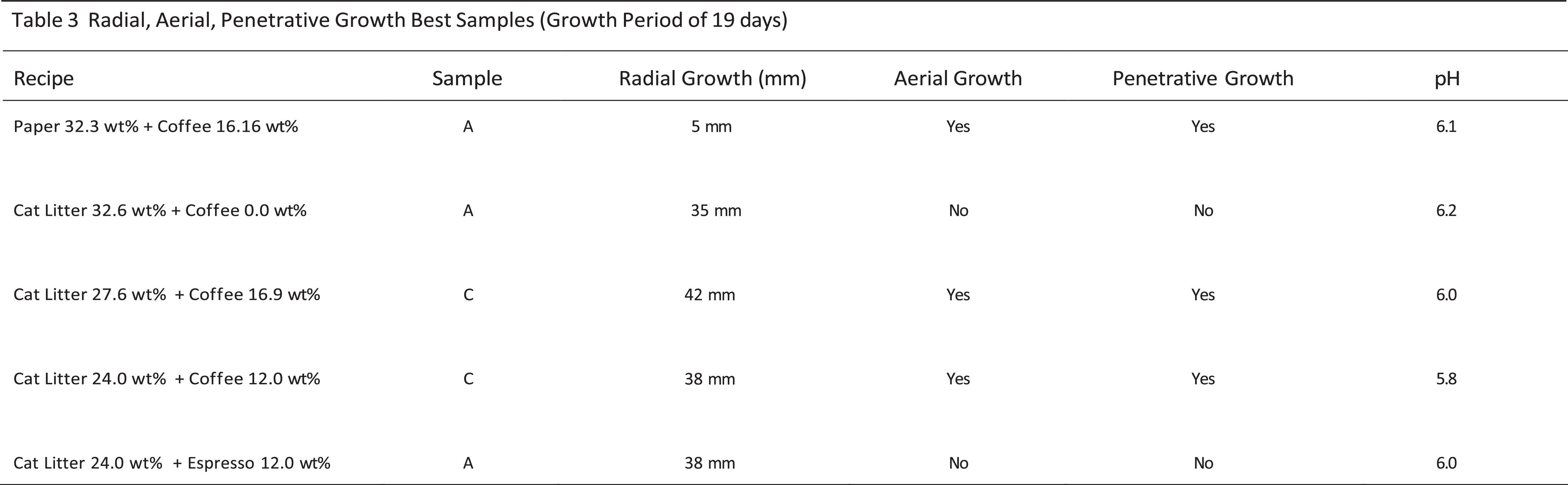
Table depicting radial, aerial and penetrative growth.

Figure 13. Long description
The table has 6 columns: Recipe, Sample, Radial Growth (mm), Aerial Growth (yes/no), Penetrative Growth (yes/no), and pH. The information is as follows: Paper 32.3 wt% and Coffee 16.16 wt%, Sample A, Radial Growth: 5mm, Aerial Growth: yes, Penetrative Growth: yes, pH: 6.1, Cat Litter 32.6 wt% and Coffee 0.0 wt %, Sample A, Radial Growth: 35mm, Aerial Growth: no, Penetrative Growth: no, pH: 6.2, Cat Litter 27.6 wt% and Coffee 16.9wt %, Sample C, Radial Growth: 42mm, Aerial Growth: yes, Penetrative Growth: yes, pH: 6.0, Cat Litter 24.0 wt% and Coffee 12.0 wt %, Sample C, Radial Growth: 38mm, Aerial Growth: yes, Penetrative Growth: yes, pH: 5.8, and Cat Litter 24.0 wt% and Espresso 12.0 wt %, Sample A, Radial Growth: 38mm, Aerial Growth: no, Penetrative Growth: no, pH: 6.0.
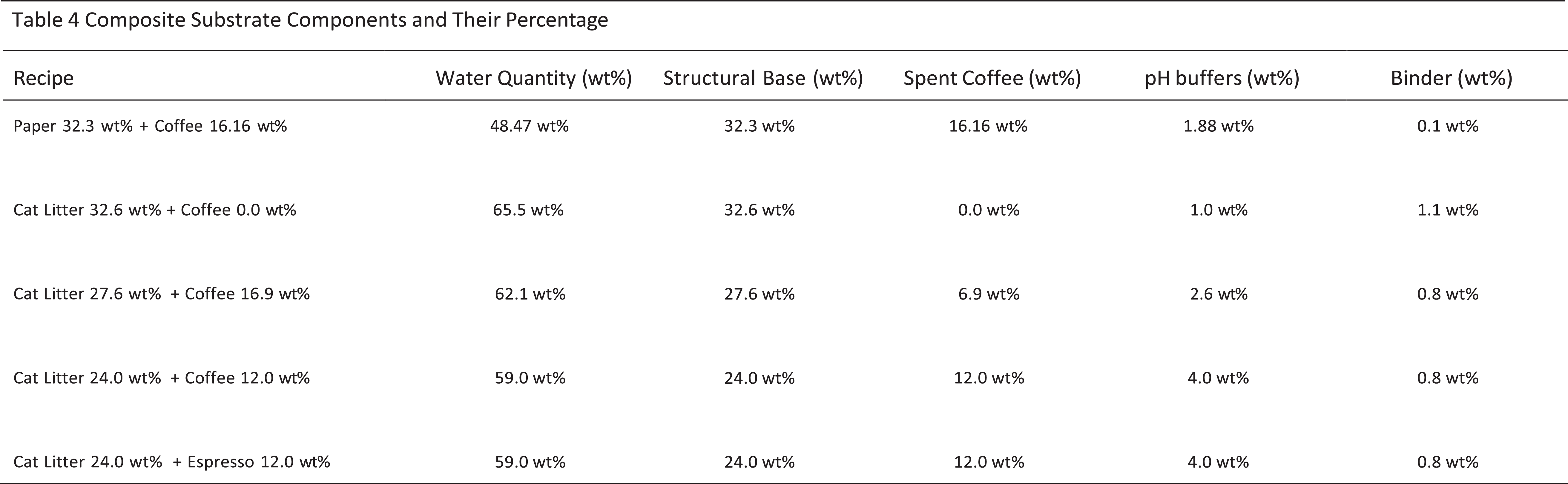
Composite substrate components and their percentage.

Figure 14. Long description
The table has 6 columns: Recipe, Water Quantity (wt %), Structural Base (wt%), Spent Coffee (wt%), pH Buffers (wt%), and Binder (wt%). The following recipes weight percentages are shown: Paper 32.3 wt% and Coffee 16.16 wt%, Cat Litter 32.6 wt% and Coffee 0.0 wt%, Cat Litter 27.6 wt% and Coffee 16.9 wt%, Cat Litter 24.0 wt% and Coffee 12.0 wt%, Cat Litter 24.0 wt% and Espresso 12.0 wt%.
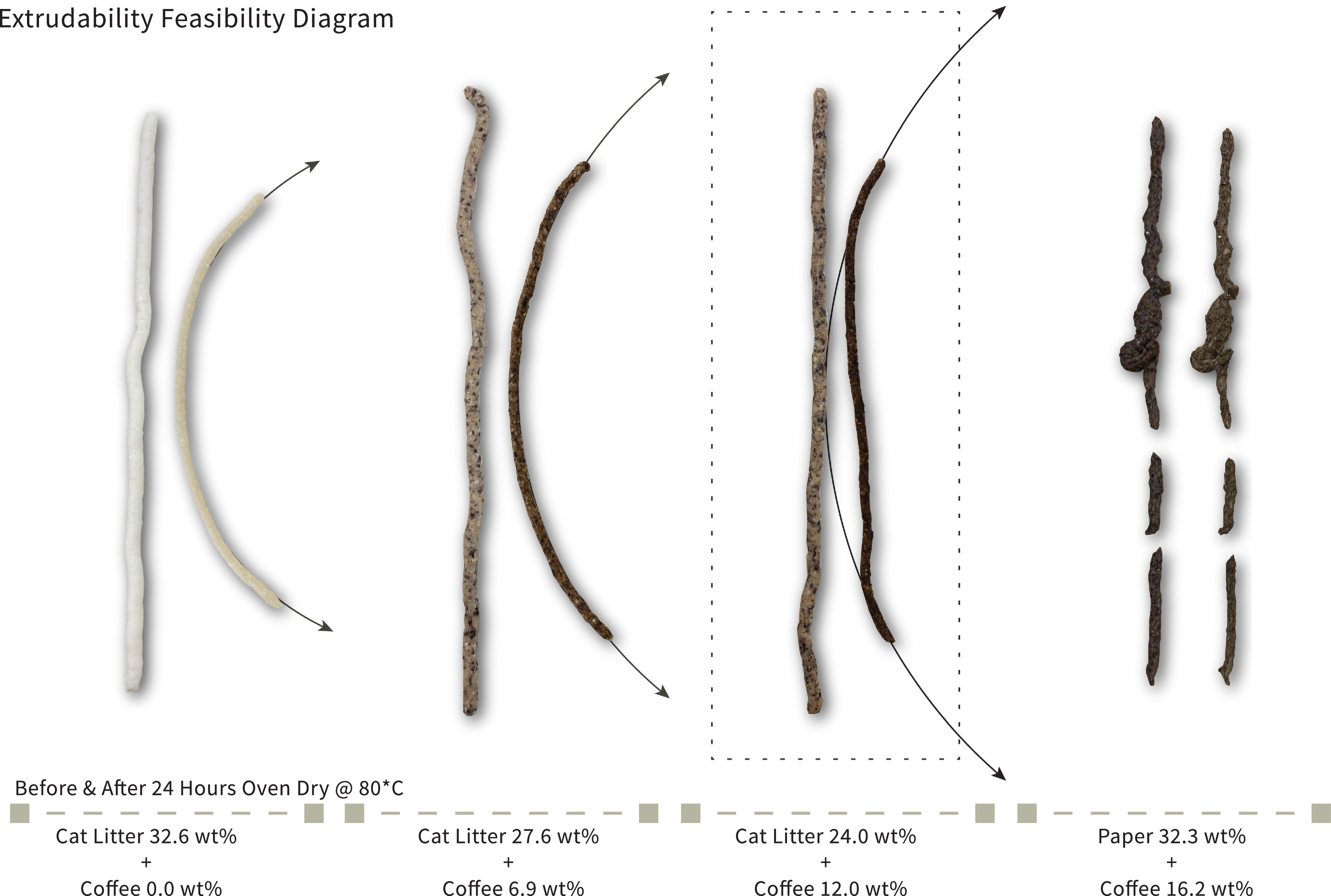
Extrudability feasibility diagram.

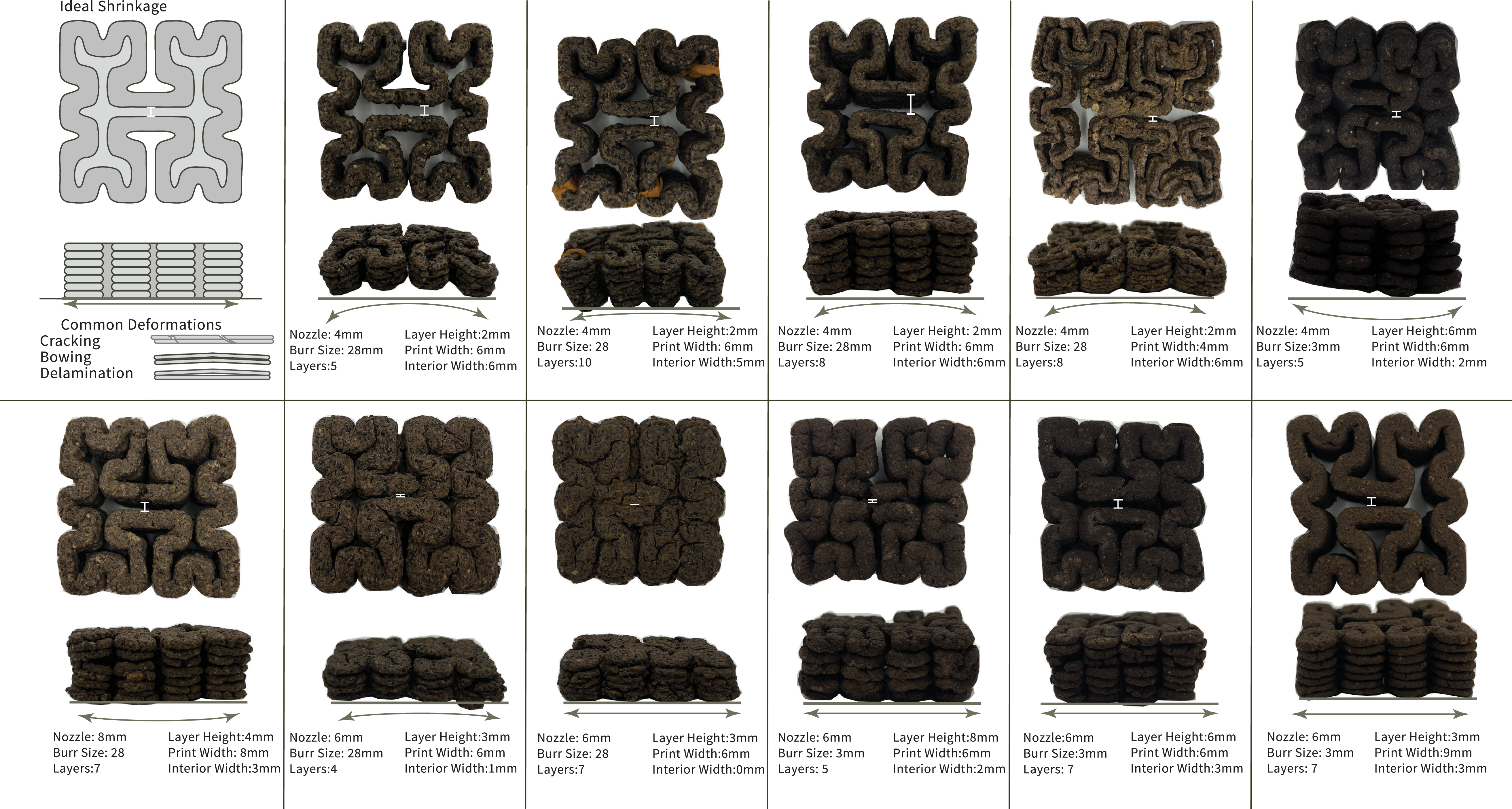
Potterbot print parameter optimization.

Figure 16. Long description
The Ideal Shrinkage is shown in both the top and side profile of the prints, as well as the common deformations that the tests were trying to eliminate, including cracking, bowing, and delamination. All prints are sub captioned with their print settings below. The last print setting shows limited cracking, bowing, and delamination.
Biofabricated panels installed into an architectural assembly.

Methods & materials
Waste stream identification & material selection
Household waste stream mapping revealed opportunities for upcycling waste to support mycelium colonization. The initial material landscape included a broad spectrum of domestic waste categories: lignocellulosic materials, such as paper waste, food waste, such as spent coffee grounds and citrus peels, pet-associated waste, including animal hair and plant-based cat litter, carbonaceous materials, such as charcoal and organic textile waste, such as cotton.
Refinement of the material selection was guided by three primary goals. First, substrates were required to demonstrate capacity for fungal growth, supporting sustained mycelium colonization and metabolic activity. Second, materials were chosen for their ability to be manipulated into a homogeneous, extrudable paste, suitable for additive manufacturing processes. This property was preliminarily assessed through manual extrusion, in which candidate substrates were hand-extruded through a 9-mm syringe to gauge flow behavior and cohesion. Third, material selection prioritized availability within domestic waste systems, ensuring consistent sourcing through the duration of this project. Together, these goals ensured that selected materials were not only biologically viable, but also operationally feasible, and compatible with circular material economies.
After initial manual extrusions, the candidate material palette was refined to three primary waste streams: paper, spent coffee grounds and a corn-and-potato-based cat litter. All three of these materials were sourced from our homes. For the paper, we used brown, paper, grocery bags made from recycled paper fibers. For the spent coffee grounds, we used Lone Light, a local coffee roaster’s Ethiopia light roast blend. For cat litter, we used Sustainably Yours 100% corn- and potato-based small grain cat litter. These materials demonstrated mycelium growth, potential for the composites to be 3D-printed and consistent availability for long-term experimentation.
Material preparation
The paper substrate was prepared by machine shredding the brown paper bags. Then, the shreds were submerged in a bucket of water and hydrogen peroxide (13:1) for 24 hours to pasteurize. Afterwards, the soaked paper was drained of excess moisture by getting pressed onto a fine mesh sieve. In a bowl, the paper pulp was then mixed with an emulsion blender while water was gradually added back in. After reaching a homogenized consistency, the paper paste was ready to be combined with the other ingredients in the substrate recipe.
The coffee grounds were spent: ground to a burr size of 28 mm. Afterwards, they were spread onto a baking tray and dehydrated in the oven for 30 minutes at 200°C for pasteurization. Then, the dehydrated grounds were ready to be mixed with the other dry ingredients in the substrate recipe. Dry ingredients were mixed together prior to adding water, after which there was another round of emulsion blending.
Substrate formulation and mycelium species selection
Initial mycelium colonization experiments were conducted using 9-cm diameter petri dishes to confirm that fungal growth could be supported by the developed waste-based composite substrates. These controlled environments enabled observation of colonization behavior, contamination susceptibility and growth morphology under standardized conditions. Two fungal species were selected for comparison: Pleurotus ostreatus (Blue Oyster) and Ganoderma lucidum (Reishi). These species were chosen for their aggressive colonization behaviors, commercial availability of spawn and relative resistance to contamination in semi-controlled laboratory environments. Both species are extensively documented within mycelium composite research and have demonstrated an appetite for lignocellulosic and cellulose-based substrates, making them well-suited candidates for waste-derived composite systems (Aditya et al. Reference Aditya, Jarial, Jarial and Bhatia2024), (Akcay et al. Reference Akcay, Arslan and Ceylan2025).
Substrate formulation consisted of five components: (1) a structural base (paper or cat litter), which provided the physical scaffold for growth; (2) a nutritional source (spent coffee grounds), supplying carbon and nitrogen for fungal metabolism; (3) water; (4) pH buffering agents (gypsum and calcium carbonate), incorporated to neutralize the inherent acidity of spent coffee and stabilize the chemical environment for fungal growth; and (5) binding agents (guar gum), which facilitated the formation of a homogeneous, cohesive paste suitable for extrusion-based additive manufacturing. Ratios for these formulations were informed by precedent studies involving 3D-printed paper substrates and Reishi mycelium composites, ensuring continuity with established biofabrication methodologies while enabling experimental adaptation. For each recipe, 3 samples were produced and tested to ensure results were valid.
Petri dish: substrate sterilization & inoculation
At the scale of the petri dish, the substrate was sterilized from within the closed dishes, stacked inside of an autoclave. The pressure was brought up to 15 psi for 90 minutes to sterilize and then cooled overnight. Afterwards, each of the dishes was brought into a well-ventilated, sterilized (with isopropyl alcohol) clean room for inoculation with a 1-cm by 1-cm sample of a previously grown mycelium culture cultivated on agar.
Mycelium colonization
The quality of colonization was monitored by measuring radial growth every seven days. After approximately three weeks, the samples with the most radial growth were bisected to observe penetrative growth behaviors. This comparison enabled differentiation between superficial surface growth and substantive penetrative growth within the substrate composite. This supported the identification of substrates that facilitated not only biological survival, but integration between fungal networks and the material.
After comparing fungal growth, printability and drying stability, the following substrate formulation was selected for continued experimentation:
Computational fractal exploration
The research transitioned into a computational design phase centered around the exploration of fractal geometries as generative spatial systems for aesthetic appeal and biological integration. Using parametric modeling workflows developed through Grasshopper and Python scripts, a series of fractal geometries were computationally generated. These included the Dragon curve, Gosper curve, Moore curve, Peano curve, Sierpinski Triangle curve and Z-order curve. The 3D PotterBot system used operates as a result of continuous applied pressure, generating difficulties with stopping and restarting extrusion mid-print. Therefore, viable geometries were required to maintain continuous, non-intersecting paths to support uninterrupted extrusion-based fabrication processes. The patterns under consideration also had to achieve a minimum space-filling density of 80 percent to maintain interstitial spacing between 3–5 mm (Datta et al. Reference Datta, Ma and Baharlou2025) to enable mycelium bridging. This parametric approach also allowed the geometries to be evaluated not only as abstract mathematical constructs, but as capable of supporting biological growth.
Panel prototypes
The Moore curve and Gosper curve emerged as the most viable candidates for physical prototyping. Both geometries demonstrate non-self-intersecting continuous paths, enabling uninterrupted extrusion while preserving high space-filling density. Scaling the experimental system beyond laboratory-scale petri dishes (9-cm diameter), the Moore curve was fabricated with an overall extruded geometry spanning a diameter of 15.24 cm, while the Gosper curve was fabricated at a larger scale with an overall extruded geometry spanning a diameter of 22.86 cm.
Potterbot toolpath fine-tuning
The print parameters utilized for the final prototype, modified in the Cura slicing software, were a 6-mm nozzle diameter, 7-layer print height, 3-mm layer height, 9-mm extrusion width and 3-mm interior spacing. These settings were selected on a trial-and-error approach, based on visual evidence of minimized interlayer delamination, cracking and bowing after a fan-drying period of 24 hours, compared to other toolpath settings.
Fabrication protocol development
Using the selected geometries, a fabrication protocol was developed that integrated mycelium growth, toolpath-informed fractal design and additive manufacturing into a unified production workflow. Substrate mixtures were prepared under sterile conditions, but were themselves not sterilized. All fabrication equipment was sanitized with isopropyl alcohol to minimize contamination risk.
Panels were fabricated and indirectly inoculated by 3D printing onto scrap-wood frames pre-packed with Reishi mycelium inoculum, which had been cultivated in spawn bags over a two-week incubation period. Spawn substrates consisted of hemp waste, wheat bran, soy hulls, all-purpose flour and water. The prepared substrate was sterilized in an autoclave at 15 psi for 90 minutes to eliminate contaminants and then inoculated using established Reishi spawn.
Indirect inoculation was tested through top-layer integration, using a 5.8-cm by 5.8-cm agar-grown Reishi sample placed onto the printed geometry to promote colonization from the top and bottom (Datta et al. Reference Datta, Ma and Baharlou2025).
Printed panels were sealed within plastic enclosures to maintain humidity and prevent contamination during incubation (Datta et al. Reference Datta, Ma and Baharlou2025). Panels were incubated for three weeks, during which mycelium colonized the printed composite and biowelded the extruded layers to the frames. During the transition between the Moore and Gosper curve prototypes, the inoculum frame system was modified, replacing wire mesh with a perforated plywood cover to reduce sagging.
Drying protocol
A post-treatment separation protocol was developed, informed by the plasticiser treatment system by Wijayarathna, which created a bath that soaked mycelium sheets in a 5:1 water to glycerol ratio (Wijayarathna et al. Reference Wijayarathna, Kanishka, Mohammadkhani, Soufi-ani, Adolfsson, Ferreira, Hakkarainen, Berglund, Heinmaa, Root and Zamani2022). This post-treatment protocol was explored using the Gosper curve prototype. The fully colonized panel was submerged in an 80:20 water to glycerol solution for 24 hours to halt biological growth and facilitate the removal of the biocomposite printed panel from the frame. Following submersion, printed panels were mechanically separated from the perforated plywood cover using noninvasive tools, including putty knives, allowing careful detachment without compromising the aesthetic of the material.
Afterward, a staged drying protocol was implemented to mitigate cracking, bowing and delamination. This protocol consisted of an initial 48-hour fan-drying phase to allow gradual moisture release, followed by low-temperature oven drying at 77°C for 24 hours. Adapted from ceramic and clay-processing methodologies, the revised protocol significantly reduced material deformation and cracking, establishing a reproducible and scalable drying methodology (Nait-Ali et al. Reference Nait-Ali, Alzina, Lauro and Smith2024).
Architectural integration and system design
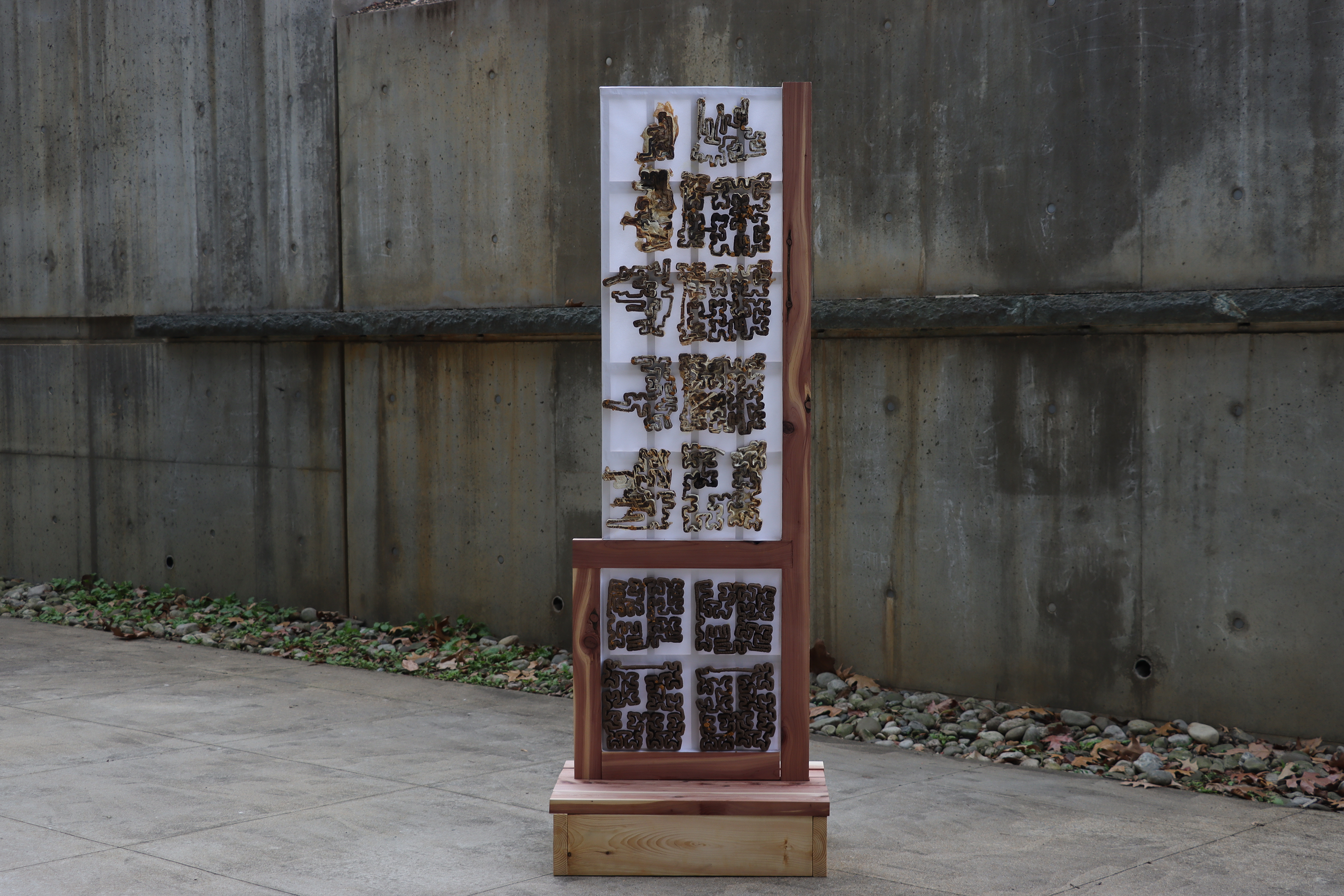
At the full prototype scale, ten biofabricated panels were integrated into a modular screening system inspired by traditional Japanese shoji doors. Historical kumiko joinery and dado frame typologies were reinterpreted as structural scaffolds for biologically grown panels, establishing a hybrid biotic–abiotic construction system. The screening system employed a modular fractal logic, enabling spatial adaptability and scalable deployment across varied interiors.
The final Moore fractal manipulation began with an order-three Moore curve, which was subdivided into ten panels to accommodate the dimensional constraints of the Potterbot printing platform. A corner module representing a complete fractal unit was developed as a generative base condition. Above this, three identical interlocking modules were designed, each maintaining complete fractal continuity while enabling nesting and modular assembly. The fractal geometry was then strategically dissolved upward and laterally through controlled spatial mapping using parametric control points. The remaining six panels were designed as independent continuous paths, enabling the gradual dissolution of the fractal field into spatial porosity. This logic establishes a scalable system in which dissolved fractal components can be adapted to site-specific screening, lighting and privacy requirements.
Implementation: fabrication and assembly protocol
Each final screening panel was fabricated with an overall geometry spanning a diameter of 22.86 cm using the established fabrication protocol, including substrate preparation, equipment sterilization and 3D printing onto pre-packed mycelium frames. Indirect inoculation was performed exclusively from underneath the printed waste-based composite substrate, encouraging the mycelium to grow upwards, while the panels were incubated for a three-week growth period. Following colonization, the printed panels were separated from the biowelded perforated plywood covers using a glycerol-based separation process and mechanically released using noninvasive tools, after which they were fan-dried. In this iteration, reduced mycelium colonization resulted in lower biowelding intensity, eliminating the need for 24-hour glycerol saturation and oven drying.
Initial assembly strategies considered the use of a bio-based “neanderthal” adhesive composed of pine rosin, beeswax and yellow ochre. Although ineffective as a bonding agent, this bioglue functioned as a material consolidant, fortifying the brittle composite panels. Following consolidation, nontoxic wood adhesive was used for bonding, attaching the panels to paper, which was then integrated into wooden shoji-style frame. The frame was mechanically secured using a base slot system, 5-cm screws and 2.54-cm L-brackets to ensure stability
This methodology establishes an integrated framework for biological fabrication that unites waste upcycling, mycelium growth, computational design and additive manufacturing into a single architectural material system. By treating waste as nutrient and fabrication as biological collaboration, the project reframes architectural material production as a regenerative process rather than an extractive one.
Results & discussion
Mycelium growth
After a three-week incubation period, substrate formulations and mycelium growth outcomes were compared in a feasibility matrix. The matrix tracks radial growth across five selected samples over 19 days. All photos were taken on iPhone 11 and iPhone 13Pro. The paper-based composites were inoculated with Blue Oyster, while the corn- and cat-litter-based composites were inoculated with Reishi. Both of these species have a preference for lignocellulosic waste (Aditya et al. Reference Aditya, Jarial, Jarial and Bhatia2024), (Akcay et al. Reference Akcay, Arslan and Ceylan2025). However, Reishi’s commercial availability made this species more feasible for the duration of the project. The sample with no coffee demonstrated the slowest growth and most contamination. Although the corn- and potato-based cat litter offers some nutrition to the mycelium, these samples demonstrate the necessary nutritional addition of the spent coffee grounds. This matrix established an empirical framework for identifying substrate formulations that promoted mycelium growth.
Initial extrusion testing, drying, & shrinking
The extruded mixtures were hydrated with the following weight percentages: paper test substrates were hydrated with 48.47 wt%, cat litter test substrates were hydrated with 65.5 wt%, 62.1 wt%, 59.0 wt% and 59.0 wt%, respectively.
During manual extrusion, paper-based formulations exhibited significant fiber aggregation, frequent clogging and inconsistent extrusion flow, which limited control and precision. In contrast, cat-litter-based formulations demonstrated uniform particle distribution and stable flow characteristics, enabling precise material deposition and controlled geometry formation.
Manual extrusion tests were followed by controlled drying experiments in which extruded samples were oven-dried for 24 hours at 80°C. The controlled drying tests revealed critical relationships between nutritional content, moisture retention and form deformation. Increased spent coffee content, in particular, demonstrated dual functionality: serving as a nutritional substrate for fungal metabolism while simultaneously reducing deformation during drying.
Print parameter optimization
During the development of the fabrication protocol, several critical material behaviors were observed. The substrate mixture exhibited inherent brittleness and a high propensity for shrinkage, deformation and occasional cracking during drying, limiting the consistency of fabrication outcomes. Rather than altering the substrate composition, which would have compromised biological viability and mycelium growth, the research strategy prioritized refinement of the additive manufacturing process itself. The primary objective was to mitigate cracking, bowing and interlayer delamination through controlled modification of print parameters, thereby preserving both material integrity and biological performance. The most effective print parameters were determined to be a 6-mm nozzle diameter, 3-mm burr size, 7 layers, 3-mm layer height, 9-mm extrusion width and 3-mm interior spacing. These settings were selected after visual observations of the top and side profiles of the print samples, after a period of 24 hours of fan-drying.
Refinement of print parameters proved critical in stabilizing material behaviors. Notably, the nozzle diameter and extrusion width were increased by approximately 150% compared to earlier trials, while the substrate particle size was reduced from coarse spent coffee grounds (∼28 mm) to finely milled spent espresso grounds (∼3 mm). Together, these adjustments produced a more continuous and densely bonded extrudate, reducing internal voids that had previously led to cracking, differential shrinkage and interlayer separation. By prioritizing particle uniformity, the revised parameters allowed the printed geometry to dry more evenly and maintain an attractive form, demonstrating how process calibration, rather than compositional change, could help mediate the inherent volatility of the bio-based material system.
Drying protocol development
Initial drying protocols revealed significant material challenges associated with bio-welding intensity and differential shrinkage between biotic and abiotic components. The Moore curve prototype was dried using the same protocol applied to manually extruded samples, consisting of continuous oven drying for 24 hours at 80°C. However, this approach resulted in material cracking and failure, as the mycelium formed strong biowelded bonds with the supporting wire mesh frame, producing incompatible shrinkage behaviors between the organic composite and metallic support system.
A revised staged drying protocol was therefore implemented, consisting of controlled fan drying for a minimum of 48 hours prior to low-temperature oven drying. This approach allowed moisture to dissipate more gradually. Borrowing from established pottery drying techniques, we observed that the slower initial drying phase reduced cracking, warping and deformation (Nait-Ali et al. Reference Nait-Ali, Alzina, Lauro and Smith2024).
Fabrication & assembly
A fabrication protocol for 3D-printed, waste-based mycelium composite panels was developed within a four-month research period. Using a paste composed primarily of corn- and potato-based cat litter and spent espresso grounds, remarkably, ten full-scale printed panels were produced without contamination during the 3-week growth phase. Partial mycelium colonization was achieved across all samples, with several regions exhibiting complete surface coverage and displaying all four growth behaviors: aerial, bridging, surface and penetrative. The fully colonized zones demonstrated noticeably higher material integrity and cohesion compared to uncolonized areas, suggesting that mycelium growth contributes significantly to the mechanical performance of the composite system.
Despite some successes, the material formulation presented several challenges related to shrinkage and predictability. Observations from the fabrication process suggest three potential directions for improving material consistency. The first involves augmenting the existing recipe with additives that could reduce brittleness without inhibiting biological growth. The second involves extending the colonization period to allow for more complete penetrative growth, enabling the mycelium’s hyphal networks to more fully bind and fortify the composite substrate. The third involves further increasing the diameter of the Potterbot nozzle from 6 mm to 8 mm. The increase from 4 mm to 6 mm yielded encouraging results, suggesting that a thicker print diameter lends itself to a more consistent outcome. These findings indicate that paste composition, mycelium growth and print parameters play a critical role in determining fabrication reliability and material performance. But, further research is needed on this topic.
Conclusions & future work
This research explores the feasibility of transforming household waste, such as cat litter and spent coffee grounds, into biodegradable screening elements through a biofabrication workflow that combines mycelium colonization, computational design and additive manufacturing. By developing a repeatable system that diverts domestic refuse from landfills, converts waste into nutrient- and mineral-rich scaffolds for fungal growth and reduces the use of traditional molds, the study establishes a more resource-efficient, circular material pathway. As a result, the work advances the biodesign field by showing how waste-to-resource strategies can support environmentally conscious, geometrically precise and aesthetically pleasing mycelium composite construction.
Within a relatively short research timeline, the work explored the feasibility of scaling from small laboratory specimens to a 183-cm-tall installation that integrates ten 22.86-cm grown panels into an architectural screening assembly. Our key findings can be categorized into two sections: findings on biotic processes and fabrication processes.
The key findings on the biotic process can be summarized as follows.
-
• Upcycled corn- and potato-based small grain cat litter, in combination with spent coffee and espresso grounds, functions as a viable substrate for mycelium colonization and growth. It is worth noting that, while the cat litter offered some nutrients, growth was improved with the addition of other nutrients, such as spent coffee and espresso grounds.
-
• 3 weeks was insufficient time to achieve full colonization of each 22.86-cm panel printed at a total height of 2.1 cm.
-
• 3 weeks was sufficient time for the mycelium to bioweld the waste-based composite printed form to the perforated plywood cover it was printed onto.
-
• The fully colonized zones on the panels demonstrated higher material integrity and cohesion compared to uncolonized areas, suggesting that mycelium growth contributes to the mechanical performance of the composite system. Further research is needed on this topic.
-
• The addition of spent coffee and espresso grounds visibly reduced the deformation of the composite substrate once dried. The key findings on the fabrication process are as follows.
-
• Calibrating the Potterbot settings, especially nozzle diameter, number of layers, layer height, print width and interstitial width, helped reduce material delamination, bowing and cracking during drying.
-
• Once fully colonized, submerging the mycelium composite material in a water and glycerol solution for 24 hours stopped biological growth and helped produce a leather-like finish.
-
• Taking a staged approach to the drying process (48-hours fan-drying, followed by a low temperature oven-dry) helped reduce material delamination, bowing and cracking.
-
• The bioglue (pine rosin, beeswax, yellow ochre) was insufficient as an adhesive but helped to fortify and stabilize the waste-based mycelium composite material.
The work revealed how challenges regarding material predictability, such as shrinkage, cracking and scalability, still remains a significant barrier to broader architectural adoption. Addressing these limitations requires improving paste formulations, extending colonization periods and refining print parameters to achieve more consistent and controlled growth outcomes. With greater material stability, additive manufacturing workflows could support more efficient assembly strategies, enabling more predictable composite elements to be directly integrated into screening systems without reliance on secondary backing structures or adhesives. This would reduce material use, simplify construction and strengthen the viability of waste-based mycelium composites as scalable architectural components. Collectively, these findings establish a foundation for continued investigation into bio-based additive manufacturing and demonstrate the potential of combining cat litter waste upcycling, mycelium growth, fractal geometries, computational fabrication and 3D-printing to produce resource-efficient building materials.
Data availability statement
Data will be made available upon request.
Acknowledgements
The authors would like to acknowledge the support from The Jefferson Trust for this work. The authors would like to thank Andrew Spears, Dr. Trevor Kemp, Ipsita Datta, Ye Ma and Professor Katie MacDonald, for their assistance. AI was used for the debugging of python code in this project.
Author contributions
Céline Oberhozer and Jennifer Yabut contributed equally to the conceptualization, experimental work and writing of the manuscript. Ehsan Baharlou, Dr.-Ing supervised the research, secured funding and provided critical review of the manuscript.
Financial support
This work was supported in part by The Jefferson Trust, which provided funding for material costs.
Competing interests
The authors declare no competing interests.
Ethical standards
This study did not involve human participants, animals or sensitive personal data, and therefore did not require ethical approval.

 Open access

