Introduction
Borderline personality disorder (BPD) is a significant public health problem. BPD is associated with impaired functioning (Morgan, Mitchell, & Jablensky, Reference Morgan, Mitchell and Jablensky2005; Skodol et al., Reference Skodol, Gunderson, McGlashan, Dyck, Stout, Bender and Oldham2002; Zanarini, Jacoby, Frankenburg, Reich, & Fitzmaurice, Reference Zanarini, Jacoby, Frankenburg, Reich and Fitzmaurice2009), high use of health care services (Bender et al., Reference Bender, Dolan, Skodol, Sanislow, Dyck, McGlashan and Gunderson2001; Bryant-Comstock, Stender, & Devercelli, Reference Bryant-Comstock, Stender and Devercelli2002; Zanarini, Frankenburg, Hennen, & Silk, Reference Zanarini, Frankenburg, Hennen and Silk2004), increased rates of substance use disorders (Di Florio, Craddock, & van den Bree, Reference Di Florio, Craddock and van den Bree2014; Trull, Sher, Minks-Brown, Durbin, & Burr, Reference Trull, Sher, Minks-Brown, Durbin and Burr2000), and self-harm and suicidality (Joyce, Light, Rowe, Cloninger, & Kennedy, Reference Joyce, Light, Rowe, Cloninger and Kennedy2010; Oldham, Reference Oldham2006; Pompili, Girardi, Ruberto, & Tatarelli, Reference Pompili, Girardi, Ruberto and Tatarelli2005). Despite the significant psychosocial morbidity associated with BPD, its underrecognition is a significant clinical problem (Comtois & Carmel, Reference Comtois and Carmel2016; Gregory, Sperry, Williamson, Kuch-Cecconi, & Spink, Reference Gregory, Sperry, Williamson, Kuch-Cecconi and Spink2021; Zimmerman & Mattia, Reference Zimmerman and Mattia1999).
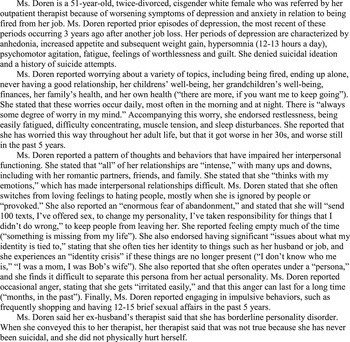
BPD is likely underdiagnosed, in part, because patients with BPD usually present with chief complaints associated with the mood, anxiety, and substance use disorders that are typically the primary reason for seeking treatment (Zimmerman, Chelminski, Dalrymple, & Rosenstein, Reference Zimmerman, Chelminski, Dalrymple and Rosenstein2017). Patients with BPD do not usually report as their chief complaint features of BPD such as fears of abandonment, chronic feelings of emptiness, or an identity disturbance. On the other hand, patients with BPD do sometimes present with chief complaints of repeated self-injurious behavior or suicidality. We suspect that in such cases BPD is more likely to be recognized. Conversely, as illustrated by the case described in Fig. 1, when patients with BPD do not exhibit self-harm behavior, we suspect that BPD is less likely to be diagnosed.
Case study.

We previously examined the operating characteristics of the BPD diagnostic criteria in a large sample of psychiatric outpatients (Zimmerman, Multach, Dalrymple, & Chelminski, Reference Zimmerman, Multach, Dalrymple and Chelminski2017). The purpose of that analysis was to determine if any of the BPD criteria had high enough sensitivity to be considered as a screen for the disorder. Affective instability had a sensitivity greater than 90%, consistent with other studies that also found affective instability to be the most prevalent of the BPD criteria in patients with BPD (Farmer & Chapman, Reference Farmer and Chapman2002; Grilo, Becker, Anez, & McGlashan, Reference Grilo, Becker, Anez and McGlashan2004; Leppanen, Lindeman, Arntz, & Hakko, Reference Leppanen, Lindeman, Arntz and Hakko2013; Nurnberg et al., Reference Nurnberg, Raskin, Levine, Pollack, Siegel and Prince1991; Pfohl, Coryell, Zimmerman, & Stangl, Reference Pfohl, Coryell, Zimmerman and Stangl1986). In contrast, the self-harm/suicidality criterion had amongst the lowest sensitivities with a sensitivity of 54% (Zimmerman, Balling, Dalrymple, & Chelminski, Reference Zimmerman, Balling, Dalrymple and Chelminski2019). That is, approximately half of patients with BPD reported repeated self-harm/suicidal behaviors, and half did not. Other studies examining the operating characteristics of the BPD criteria have similarly found that approximately half of the patients with BPD meet this criterion (Fossati et al., Reference Fossati, Maffei, Bagnato, Donati, Namia and Novella1999; Grilo et al., Reference Grilo, McGlashan, Morey, Gunderson, Skodol, Shea and Stout2001), though the research is not consistent, with some studies having found a lower sensitivity (Farmer & Chapman, Reference Farmer and Chapman2002; Nurnberg et al., Reference Nurnberg, Raskin, Levine, Pollack, Siegel and Prince1991; Reich, Reference Reich1990) and other studies having found a higher sensitivity (Becker, Grilo, Anez, Paris, & McGlashan, Reference Becker, Grilo, Anez, Paris and McGlashan2005; Pfohl et al., Reference Pfohl, Coryell, Zimmerman and Stangl1986).
Given the clinical and public health significance of suicidal and self-harm behavior in patients with BPD, an important question is whether the absence of this criterion, which might attenuate the likelihood of recognizing and diagnosing the disorder, identifies a subgroup of patients with BPD who are ‘less borderline’ than patients with BPD who do not manifest this criterion. Accordingly, in the present report from the Rhode Island Methods to Improve Diagnostic Assessment and Services (MIDAS) project we compare the demographic and clinical characteristics of patients with BPD who do and do not engage in repeated suicidal and self-harm behavior.
Method
The Rhode Island MIDAS project represents an integration of research methodology into a community-based outpatient practice affiliated with an academic medical center and has been described previously (Zimmerman, Reference Zimmerman2016). A comprehensive diagnostic evaluation is conducted upon presentation for treatment. This private practice group predominantly treats individuals with medical insurance (including Medicare but not Medicaid) on a fee-for-service basis, and it is distinct from the hospital's outpatient residency training clinic that predominantly serves lower income, uninsured, and medical assistance patients. The Rhode Island Hospital institutional review committee approved the research protocol, and all patients provided informed, written consent.
The sample examined in the present report was derived from the 3800 psychiatric outpatients evaluated with semi-structured diagnostic interviews. The evaluation of BPD did not begin until after the project began and the first 90 patients had been evaluated. Also, due to time constraints, the complete evaluation was sometimes not conducted, and 36 patients were not fully assessed for BPD. This left a final sample of 3674 patients.
Patients were interviewed by a diagnostic rater who administered a modified version of the Structured Clinical Interview for DSM-IV (SCID) (First, Spitzer, Gibbon, & Williams, Reference First, Spitzer, Gibbon and Williams1995) supplemented with questions from the Schedule for Affective Disorders and Schizophrenia (SADS) (Endicott & Spitzer, Reference Endicott and Spitzer1978) and the BPD section of the Structured Interview for DSM-IV Personality (SIDP-IV) (Pfohl, Blum, & Zimmerman, Reference Pfohl, Blum and Zimmerman1997). During the course of the MIDAS project the assessment battery has been modified at times. The assessment of all DSM-IV personality disorders was not introduced until the study was well underway and the procedural details of incorporating research interviews into our clinical practice had been well established, though we had introduced the assessment of borderline and antisocial personality disorder near the beginning of the study. In the middle of the study, we stopped administering the full SIDP-IV and continued to only administer the BPD module. The assessment of personality disorders always followed the assessment of Axis I disorders.
The interview included items from the SADS (Endicott & Spitzer, Reference Endicott and Spitzer1978) assessing the duration of depressive episodes, symptom severity, psychosocial functioning and lifetime history of psychiatric hospitalizations. One item assessed the amount of time missed from work due to psychiatric reasons during the past 5 years. Consistent with a prior report, we defined persistent unemployment as not working due to psychiatric illness for at least 2 years in the past 5 years, and chronic unemployment as working none, or practically none, of the time because of reasons related to psychopathology during the past 5 years (Zimmerman et al., Reference Zimmerman, Galione, Chelminski, Young, Dalrymple and Ruggero2010). Patients who did not work at all because they were not expected to work (e.g. retired, student, housewife, physically ill, or some other reason not related to psychopathology) were excluded from this analysis. Approximately midway through the project we began to inquire whether patients had received disability payments due to psychiatric illness during the five years prior to the evaluation. The questions about time missed from work and disability were included at the beginning of the interview, preceding the inquiry about the presence of specific disorders. The Clinical Global Index (CGI) of depression severity (Guy, Reference Guy1976) was rated by the interviewers on all patients.
The diagnostic raters were highly trained and monitored throughout the project to minimize rater drift. The diagnostic raters included Ph.D. level psychologists and research assistants with college degrees in the social or biological sciences. Research assistants received three to four months of training during which they observed at least 20 interviews, and they were observed and supervised in their administration of more than 20 evaluations. Psychologists only observed five interviews, and they were observed and supervised in their administration of 15 to 20 evaluations. During training the senior author met with each rater to review the interpretation of every item on the SCID. Also, during training every interview was reviewed on an item-by-item basis by the senior rater who observed the evaluation. At the end of the training period the raters were required to demonstrate exact, or near exact, agreement with a senior diagnostician on five consecutive evaluations. Throughout the MIDAS project, ongoing supervision of the raters consisted of weekly diagnostic case conferences involving all members of the team. In addition, every case was reviewed by the senior author (M.Z.).
Joint-interview diagnostic reliability information was collected on 65 participants. For disorders diagnosed in at least two patients by at least one of the two raters the Kappa coefficients were: MDD (k = 0.90), dysthymic disorder (k = 0.88), bipolar disorder (k = 0.75), panic disorder (k = 0.95), social phobia (k = 0.84), obsessive-compulsive disorder (OCD) (k = 1.0), specific phobia (k = 0.93), generalized anxiety disorder (k = 0.85), PTSD (k = 0.87), alcohol abuse/dependence (k = 0.64), drug abuse/dependence (k = 0.64), any somatoform disorder (k = 1.0) and BPD (k = 1.0).
Following the SCID interview patients completed a booklet of questionnaires that included the Childhood Trauma Questionnaire (Bernstein et al., Reference Bernstein, Fink, Handelsman, Foote, Lovejoy, Wenzel and Ruggiero1994). We compared the groups on the five subscales of the Childhood Trauma Questionnaire – emotional abuse, physical abuse, sexual abuse, physical neglect, and emotional neglect.
Data analysis
We compared the demographic, diagnostic, and clinical characteristics of the patients who did and did not meet the suicidality/self-harm BPD criterion. t tests were used to compare the groups on continuously distributed variables. Categorical variables were compared by the chi-square statistic, or by Fisher's Exact Test if the expected value in any cell of a 2 × 2 table was less than 5. For variables that were significantly different between the groups, an analysis of covariance (ANCOVA) was conducted controlling for age (which distinguished the patients who did and did not meet the suicidality/self-harm BPD criterion).
Results
Slightly more than 10% of the sample was diagnosed with BPD (n = 390, 10.6%). The suicidality/self-harm item was not rated for 1 patient. The 389 patients included 110 (28.3%) men and 279 (71.7%) women who ranged in age from 18 to 68 years (mean = 32.6, s.d. = 10.3). About two-fifths of the subjects were single (46.5%, n = 181); the remainder were married (22.1%, n = 86), divorced (14.7%, n = 57), living with someone as if in a marital relationship (10.5%, n = 41), separated (5.4%, n = 21), or widowed (0.8%, n = 3). Most patients graduated high school (90.2%, n = 351), though only a minority graduated a 4-year college (25.4%, n = 99). The racial composition of the sample was 86.3% (n = 336) white, 6.4% (n = 25) black, 3.6% (n = 14) Hispanic, 1.3% (n = 5) Asian, and 2.3% (n = 9) from another or a combination of the above racial backgrounds.
Slightly more than half the sample met the BPD suicidality/self-harm criterion (54.0%, n = 210). For 80 (20.5%) patients with BPD the chief complaint was related to a feature of BPD, therefore BPD was the principal diagnosis. The patients who met the suicidality/self-injury criterion more frequently had BPD as the principal diagnosis (24.8% v. 14.5%, χ2 = 6.3, p < 0.01). However, there was no difference in the mean number of BPD criteria met (other than the suicidality/self-harm criterion) (5.5 ± 1.2 v. 5.7 ± 0.8, t = 1.44, n.s.)
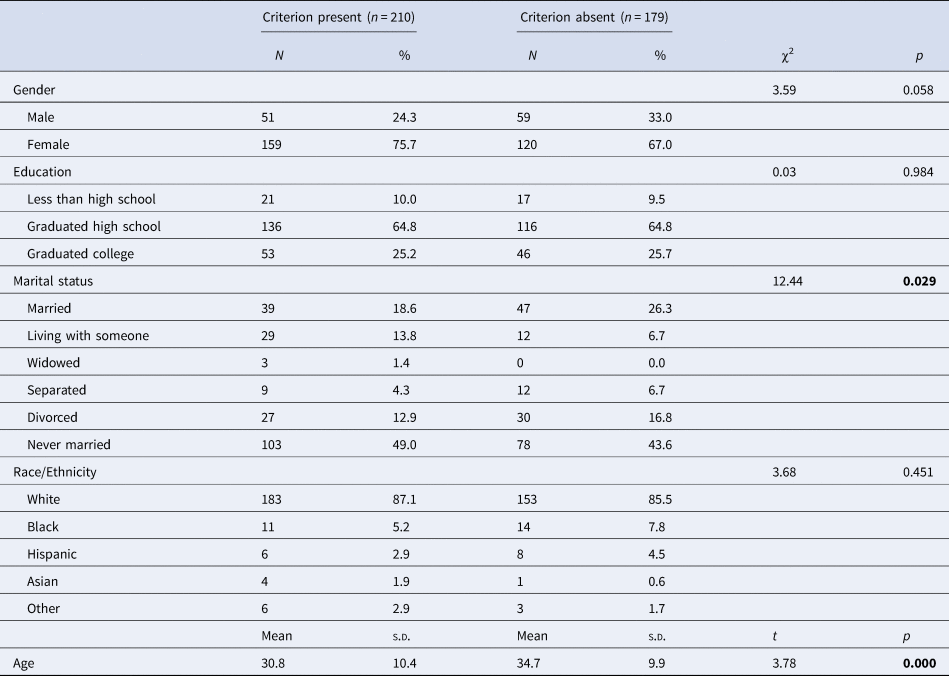
The data in Table 1 shows that the patients meeting the suicidality/self-harm criterion were significantly younger than the patients not meeting the criterion. The patients meeting the criterion were significantly more likely to be living in a marital relationship without being married, and non-significantly less likely to be married.
Demographic characteristics of psychiatric outpatients with borderline personality disorder (BPD) with and without the suicidality/self-harm criterion

The significance levels are in the column headed with “p”.
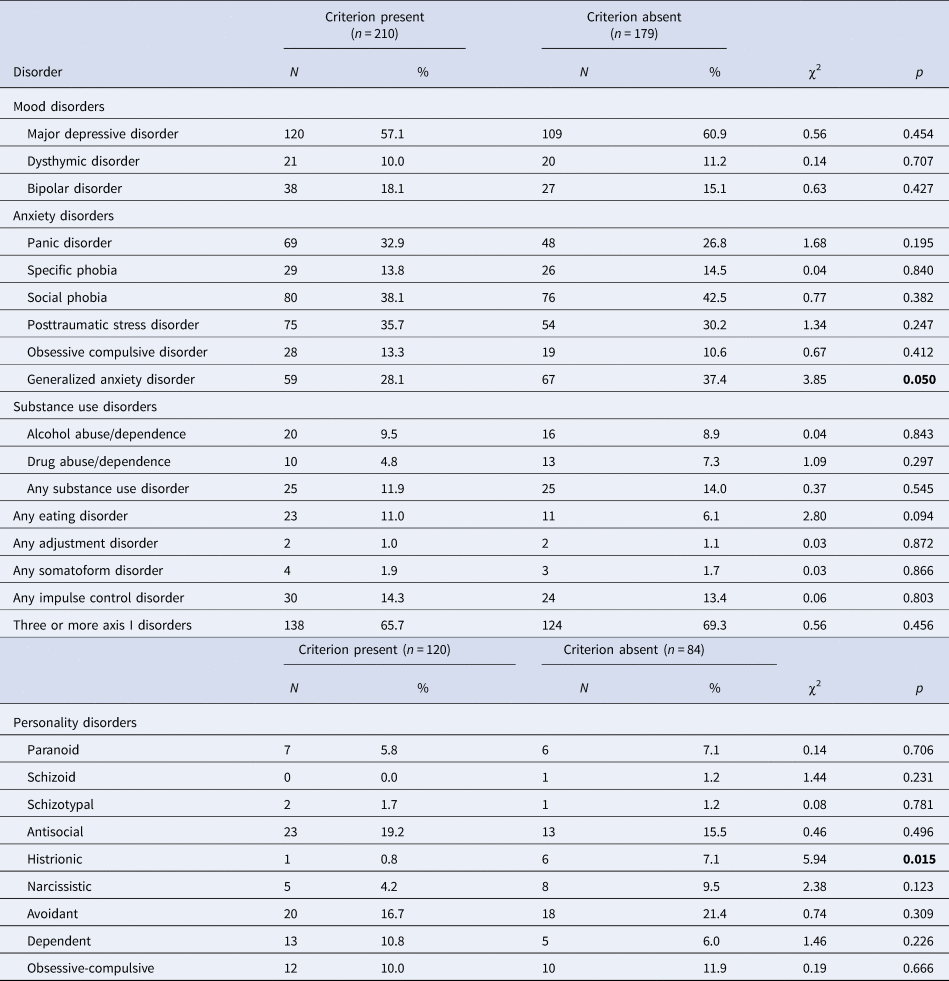
There was no difference between the patients who did and did not meet the criterion in the number of psychiatric diagnoses at the time of the evaluation (3.4 ± 1.9 v. 3.5 ± 1.8, t = 0.56, n.s), and there was no significant difference in the frequency of any specific Axis I or personality disorder except for generalized anxiety disorder (GAD) and histrionic personality disorder which were more frequent in the patients who did not meet the suicidality/self-injury criterion (Table 2). After controlling for age, the group difference observed for GAD was no longer significant (F = 3.45, p = 0.064). On the other hand, histrionic personality disorder remained significant with age as the covariate (F = 6.03, p = 0.015).
Frequency of current DSM-IV axis I and II disorders in psychiatric outpatients with borderline personality disorder (BPD) with and without suicidality/self-harm criterion

Note. DSM-IV, Diagnostic and Statistical Manual of Mental Disorders, Fifth Edition. The significance levels are in the column headed with “p”.
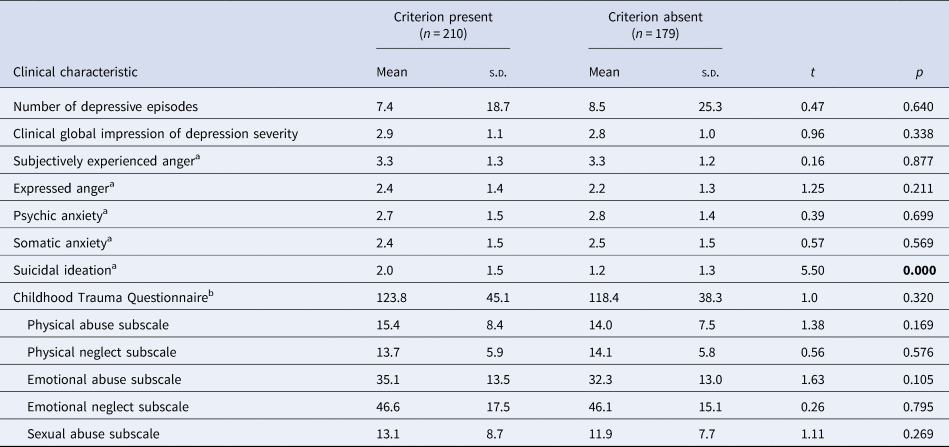
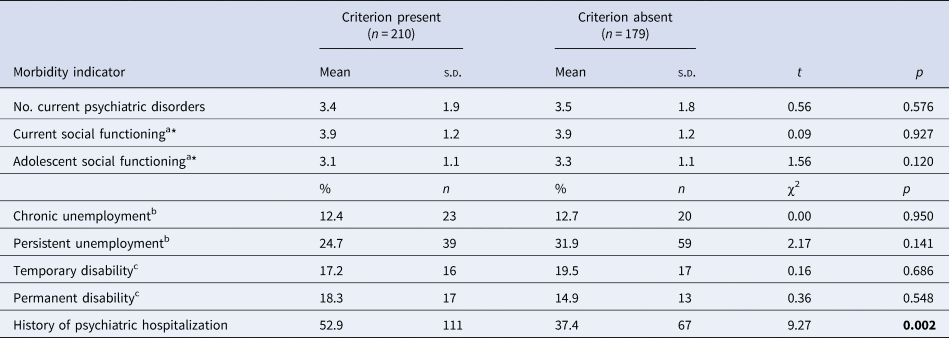
The patients who met the suicidality/self-injury criterion were significantly more likely to have been hospitalized and reported more suicidal ideation at the time of the evaluation. Both variables remained significant after including age as a covariate (F = 11.20, p = 0.001) and (F = 31.6, p = 0.000). There was no difference between the groups on the severity of depression, anxiety or anger at the initial evaluation, and there was no difference in social functioning, adolescent social functioning, and the likelihood of persistent unemployment or receiving disability payments. There was also no difference in childhood trauma or neglect (Tables 3 and 4).
Clinical characteristics of psychiatric outpatients with borderline personality disorder (BPD) with and without suicidality/self-harm criterion

a Ratings based on the Schedule for Affective Disorders and Schizophrenia (SADS).
b Criterion present (n = 128); Criterion absent (n = 111). The significance levels are in the column headed with “p”.
Psychosocial morbidity in psychiatric outpatients with borderline personality disorder (BPD) with and without suicidality/self-harm criterion

a Ratings from schedule of affective disorders and schizophrenia.
b Criterion present (n = 185); Criterion absent (n = 158).
c Criterion present (n = 93); Criterion absent (n = 87).
* Higher value indicates poorer social functioning. The significance levels are in the column headed with “p”.
Discussion
Repeated self-injurious and suicidal behavior is not synonymous with BPD. In the present study approximately half of the patients with BPD did not meet this diagnostic criterion for the disorder. In other studies, between one-third and two-thirds of patients did not meet the criterion (Becker et al., Reference Becker, Grilo, Anez, Paris and McGlashan2005; Farmer & Chapman, Reference Farmer and Chapman2002; Fossati et al., Reference Fossati, Maffei, Bagnato, Donati, Namia and Novella1999; Grilo et al., Reference Grilo, McGlashan, Morey, Gunderson, Skodol, Shea and Stout2001; Nurnberg et al., Reference Nurnberg, Raskin, Levine, Pollack, Siegel and Prince1991; Pfohl et al., Reference Pfohl, Coryell, Zimmerman and Stangl1986). It is critical for clinicians to be aware that the absence of repeated self-injury and suicide threats/gestures or attempts does not rule out the diagnosis of BPD.
The underrecognition of BPD is common (Comtois & Carmel, Reference Comtois and Carmel2016; Gregory et al., Reference Gregory, Sperry, Williamson, Kuch-Cecconi and Spink2021; Zimmerman & Mattia, Reference Zimmerman and Mattia1999). The features of BPD are rarely the chief complaint for which patients seek treatment. Rather mood and anxiety disorders are the most common principal diagnoses in patients with BPD (Zimmerman et al., Reference Zimmerman, Chelminski, Dalrymple and Rosenstein2017). The lag between initial treatment seeking and the correct diagnosis of BPD is often more than 10 years (Magnavita, Critchfield, Levy, & Lebow, Reference Magnavita, Critchfield, Levy and Lebow2010). The treatment and clinical implications of the failure to recognize BPD include the overprescription of medication and the underutilization of empirically effective psychotherapies (Paris & Black, Reference Paris and Black2015).
Many studies have examined correlates and risk factors for suicide attempts and self-injury in patients with BPD with little consistency in the literature. A lifetime history of suicide attempts in patients with BPD has been associated with greater severity of depressive symptoms (Alberdi-Paramo, Saiz-Gonzalez, Diaz-Marsa, & Carrasco-Perera, Reference Alberdi-Paramo, Saiz-Gonzalez, Diaz-Marsa and Carrasco-Perera2019; Soloff, Lis, Kelly, Cornelius, & Ulrich, Reference Soloff, Lis, Kelly, Cornelius and Ulrich1994), anxiety (Alberdi-Paramo et al., Reference Alberdi-Paramo, Saiz-Gonzalez, Diaz-Marsa and Carrasco-Perera2019), hopelessness (Pérez, Marco, & García-Alandete, Reference Pérez, Marco and García-Alandete2014), older age (Soloff et al., Reference Soloff, Lis, Kelly, Cornelius and Ulrich1994), antisocial personality traits and disorder (Soloff et al., Reference Soloff, Lis, Kelly, Cornelius and Ulrich1994; Soloff, Lynch, & Kelly, Reference Soloff, Lynch and Kelly2002), the BPD impulsivity criterion (Brodsky, Malone, Ellis, Dulit, & Mann, Reference Brodsky, Malone, Ellis, Dulit and Mann1997), a measure of impulsivity (Sher et al., Reference Sher, Fisher, Kelliher, Penner, Goodman, Koenigsberg and Hazlett2016), poorer social adjustment (Kelly, Soloff, Lynch, Haas, & Mann, Reference Kelly, Soloff, Lynch, Haas and Mann2000; Soloff & Chiappetta, Reference Soloff and Chiappetta2012), lower education and socioeconomic status (Soloff & Chiappetta, Reference Soloff and Chiappetta2012), childhood sexual abuse (Ferraz et al., Reference Ferraz, Portella, Vállez, Gutiérrez, Martín-Blanco, Martín-Santos and Subirà2013; Soloff et al., Reference Soloff, Lynch and Kelly2002), childhood abuse (Alberdi-Paramo et al., Reference Alberdi-Paramo, Saiz-Gonzalez, Diaz-Marsa and Carrasco-Perera2019; Kaplan et al., Reference Kaplan, Tarlow, Stewart, Aguirre, Galen and Auerbach2016), bullying (Alberdi-Paramo et al., Reference Alberdi-Paramo, Saiz-Gonzalez, Diaz-Marsa and Carrasco-Perera2019), affective instability (Sher et al., Reference Sher, Fisher, Kelliher, Penner, Goodman, Koenigsberg and Hazlett2016), and lifetime aggression (Sher et al., Reference Sher, Fisher, Kelliher, Penner, Goodman, Koenigsberg and Hazlett2016). Other studies have not found suicide attempts to be associated with a diagnosis of major depressive disorder (Kelly et al., Reference Kelly, Soloff, Lynch, Haas and Mann2000; Soloff et al., Reference Soloff, Lis, Kelly, Cornelius and Ulrich1994), history of eating disorders (Pérez et al., Reference Pérez, Marco and García-Alandete2014), a history of substance use disorders (Pérez et al., Reference Pérez, Marco and García-Alandete2014; Sher et al., Reference Sher, Fisher, Kelliher, Penner, Goodman, Koenigsberg and Hazlett2016; Soloff et al., Reference Soloff, Lis, Kelly, Cornelius and Ulrich1994), measures of impulsivity (Ferraz et al., Reference Ferraz, Portella, Vállez, Gutiérrez, Martín-Blanco, Martín-Santos and Subirà2013; Soloff et al., Reference Soloff, Lis, Kelly, Cornelius and Ulrich1994), overall severity of BPD (Brodsky et al., Reference Brodsky, Malone, Ellis, Dulit and Mann1997; Soloff et al., Reference Soloff, Lis, Kelly, Cornelius and Ulrich1994), recent life events (Kelly et al., Reference Kelly, Soloff, Lynch, Haas and Mann2000), childhood physical abuse (Soloff et al., Reference Soloff, Lynch and Kelly2002), temperament (Ferraz et al., Reference Ferraz, Portella, Vállez, Gutiérrez, Martín-Blanco, Martín-Santos and Subirà2013), gender (Ferraz et al., Reference Ferraz, Portella, Vállez, Gutiérrez, Martín-Blanco, Martín-Santos and Subirà2013; Pérez et al., Reference Pérez, Marco and García-Alandete2014; Sher et al., Reference Sher, Fisher, Kelliher, Penner, Goodman, Koenigsberg and Hazlett2016), age (Ferraz et al., Reference Ferraz, Portella, Vállez, Gutiérrez, Martín-Blanco, Martín-Santos and Subirà2013; Pérez et al., Reference Pérez, Marco and García-Alandete2014; Sher et al., Reference Sher, Fisher, Kelliher, Penner, Goodman, Koenigsberg and Hazlett2016), or education (Ferraz et al., Reference Ferraz, Portella, Vállez, Gutiérrez, Martín-Blanco, Martín-Santos and Subirà2013; Pérez et al., Reference Pérez, Marco and García-Alandete2014; Sher et al., Reference Sher, Fisher, Kelliher, Penner, Goodman, Koenigsberg and Hazlett2016).
We are not aware of prior studies that have examined whether the BPD criterion of repeated suicidality or self-injury identifies a subgroup of BPD patients who are more or less severely ill than patients without this criterion. The data from the present study suggests that the psychosocial morbidity associated with BPD is just as great in patients without this criterion as in patients with this criterion. To be sure, the lifetime rate of psychiatric hospitalization was higher in the patients who met the repeated suicidality/self-injury criterion. However, there were no differences in occupational impairment, likelihood of receiving disability payments, impairment in social functioning, level of educational achievement, comorbid psychiatric disorders, history of childhood trauma, or severity of depression, anxiety, or anger upon presentation for treatment. There was also no difference between the patients who did and did not meet the suicidality/self-injury criterion in the number of other features of BPD.
In our prior report examining the psychometric properties of the 9 BPD criteria in an outpatient sample we found that the suicidality/self-injury criterion had the third-lowest sensitivity (Zimmerman et al., Reference Zimmerman, Balling, Dalrymple and Chelminski2019). Other studies of the psychometric properties of the BPD criteria conducted in outpatient settings have likewise found that the suicidality/self-harm criterion had the lowest or amongst the lowest sensitivity (Becker et al., Reference Becker, Grilo, Anez, Paris and McGlashan2005; Farmer & Chapman, Reference Farmer and Chapman2002; Fossati et al., Reference Fossati, Maffei, Bagnato, Donati, Namia and Novella1999; Frances, Clarkin, Gilmore, Hurt, & Brown, Reference Frances, Clarkin, Gilmore, Hurt and Brown1984; Grilo et al., Reference Grilo, McGlashan, Morey, Gunderson, Skodol, Shea and Stout2001, Reference Grilo, Becker, Anez and McGlashan2004; Nurnberg et al., Reference Nurnberg, Raskin, Levine, Pollack, Siegel and Prince1991; Reich, Reference Reich1990) though studies of psychiatric inpatients found that the rank order sensitivity of the criterion was in the middle (Pfohl et al., Reference Pfohl, Coryell, Zimmerman and Stangl1986; Plakun, Reference Plakun1987; Zanarini, Gunderson, Frankenburg, Chauncey, & Glutting, Reference Zanarini, Gunderson, Frankenburg, Chauncey and Glutting1991) or at the upper end (Blais, Hilsenroth, & Fowler, Reference Blais, Hilsenroth and Fowler1999; Widiger, Frances, Warner, & Bluhm, Reference Widiger, Frances, Warner and Bluhm1986). The lack of differences between patients who do and do not meet the suicidality/self-injury criterion highlights the importance of not relying on the presence of these behaviors to screen for the diagnosis of BPD.
A limitation of the study was that it was based on a sample of patients presenting for outpatient treatment at a single clinical practice in which the majority of the patients were white, female, and had health insurance. While the generalizability of any single site study is limited, a strength of the study was that the patients were unselected with regards to meeting any inclusion or exclusion criteria. The MIDAS project includes patients with a variety of diagnoses and does not select cases that are prototypic, and thus more severe variants, of the diagnostic construct. Moreover, some confidence in the validity of our study of BPD comes from the similarity of our results with other studies of the diagnostic efficiency statistics of the BPD criteria.
Another strength of the study was the use of highly trained diagnostic interviewers to reliably administer a semi-structured diagnostic interview. The findings were based on retrospective reports of patients at the time they were seeking treatment. State effects could have biased the assessment; however, there is research support of the validity of personality disorder assessment in currently depressed patients (Morey et al., Reference Morey, Shea, Markowitz, Stout, Hopwood, Gunderson and Skodol2010).
In conclusion, the case described at the beginning of this article highlights how clinicians might discount the possible diagnosis of BPD if a patient has not engaged in repeated suicidal or self-injurious behavior. Thus, the presence of suicidal or self-injurious behavior should not be used to screen for BPD. To be sure, no researchers or expert guidelines have suggested that the suicidality/self-injury criterion be used as a screen. The results of the present study suggest that the level of psychosocial morbidity associated with BPD is just as great in patients who do and do not engage in suicidal/self-injurious behavior. While suicidal and self-injurious behaviors might be the most salient features of BPD, their absence should not rule out the disorder.
Conflict of interest
The authors declare no conflict of interest.