


So read some of the subheadings in a 14 June 1920 article in the Wiener Montags-Presse, analyzing prostitution in post-imperial Vienna.Footnote 1 Many journalists—sometimes, even the same journalists—continued to employ the very vocabulary, “contagion,” “contamination,” and “filth,” in their postwar exposés that they had used in their prewar and wartime reports on prostitution in the Habsburg monarchy. Viennese officials in the newly founded German-Austria (Deutschösterreich) continued to consider tolerated prostitutes a “necessary evil,” arrest women they found engaging in clandestine prostitution, subject them to pelvic examinations for venereal disease (VD), and treat these women as operating outside the bounds of society. In fact, women who practiced prostitution were a long-entrenched part of the female working class. In matters of commercial sex, Austria-Hungary's defeat in the First World War did not constitute a decisive break with the past, but rather a juncture in long-term historical processes, as this analysis of post-imperial Vienna through 1923, when postwar inflation had been tamed, reveals.
The regulation of prostitution came later to the imperial capital than to other cities on the continent, or even elsewhere in the monarchy, and it lasted longer.Footnote 2 It developed through a series of ad hoc measures, beginning with a police decree from 1873 that mandated issuing a Gesundheitsbuch. This health book contained a tolerated prostitute's personal information, and, in it, police physicians recorded the dates and results of her regular examinations for VD—twice weekly in Vienna.Footnote 3 After twelve years of provisional measures, a 24 May 1885 appendix to the so-called Vagabundengesetz, or vagabond law, formalized the existing regulations in Vienna and elsewhere in Cisleithanian Austria. Paragraph 5 of the law placed the punishment of women who used their body for “lewd trade” in the hands of the security authorities.Footnote 4 Viennese regulations were revised in 1911, after several years’ debate over the efficacy of police supervision of prostitution following the explosive 1906 trial of brothel keeper Regine Riehl. She had been found guilty of a variety of crimes related to running her establishment, including maltreating the prostitutes employed there.Footnote 5 The 1911 regulations remained in effect until the end of the monarchy, throughout the interwar era, and after the Second World War. The Austrian Constitutional Court finally ruled Paragraph 5.1 of this law, which left punishment of prostitutes in the hands of the vice police, unconstitutional only in 1973. When the penal code was revised in 1974, prostitution was no longer prohibited.Footnote 6
Prostitution was only one of three important pre-1914 “moral panics” that continued into the postwar era. The other two were VD and Mädchenhandel (or trade in girls), “white-slave” trafficking in English, today called sex trafficking. Contemporaries had believed all three were endemic in the decades before 1914. Clandestine prostitution and VD were two social problems that wartime conditions, including inflation, widespread hunger, and population displacement, had exacerbated, and preoccupation with them escalated during wartime.Footnote 7 Indeed, as historian Britta McEwen explains, the discourse on sexual danger in Vienna, which was well developed by the fin de siècle, only intensified following the First World War.Footnote 8 Imperial officials had begun watching Austria's borders evermore closely even before 1914 and civilian transoceanic travel virtually ceased among the belligerents during wartime. Concern about trafficking, which had received little attention during wartime, quickly reemerged after 1918.
Although diplomatic, economic, and political historians have long considered wars and revolutions to constitute key historical breaks, the Central Powers’ loss in 1918 meant the end of the Habsburg monarchy as a geopolitical unit, but not of its administrative and juridical apparatus, some of which continued to function well into the interwar era and even beyond, incorporated into the various successor states’ legal systems.Footnote 9 This was exemplified by the general continuity in the attitudes toward, and the treatment of, women who engaged in commercial sex in early interwar Vienna, despite the political changes reflected in the proclamation of the Republic of German-Austria on 12 November 1918, and the city council (Gemeinderat) elections of 4 May 1919 based on universal franchise. Indeed, despite ostensibly universal franchise, registered prostitutes would not be permitted to vote until after the adoption of the Federal Constitution in 1920.Footnote 10 The 1919 elections gave the Austrian Social Democratic Party an absolute majority in the city government, and Vienna would have a Social Democratic mayor until the 1934 civil war. Social Democratic predominance in city hall until 1934 meant a sea change in the way most residents received health treatment, as caregivers who were civil servants replaced the volunteer medical students and physicians who had staffed the poor-relief clinics during the last years of the monarchy.Footnote 11 In contrast to other countries of interwar Europe, Vienna's innovative approaches to civic hygiene, including reproductive health and VD, did not result in new approaches to the issue of prostitution.Footnote 12
Because bureaucratic transformation did not necessarily parallel political transition, there was no dramatic change in the regulation of prostitution—nor the treatment of prostitutes and women assumed to be prostitutes—in the so-called nation-states created from the defunct multinational monarchy beginning in late autumn 1918. Most prostitution legislation changed regulation only piecemeal in the first chaotic months and years after the war, sometimes as part of new laws aimed at combatting VD, which remained a source of military and public concern. The new laws that these postwar governments passed to limit the spread of VD incorporated various forms of control that reflected continuity in society's attitudes about sexuality, particularly, female. This was the case in Vienna, the former imperial capital, now the capital of rump German-Austria, where longtime police official Johann Schober was appointed the head of the Federal Police Directorate Vienna in June 1918, a position he held with breaks for other government service, including serving as chancellor in 1921–22 and 1929–30, until his death in 1932.
Physicians, including larger numbers of women, which reflected the slowly growing presence of women in the public sphere, increasingly claimed exclusive right to speak authoritatively on VD. One of them, Dr. Hedwig Hofmann, who had worked in the Franz-Josef Hospital's VD department for women, asserted that so long as there remained no way to immunize people against the various kinds of VD, popular discussion of staunching its spread remained “nonsensical.”Footnote 13 Other authoritative women, among them journalists and social critics, contributed to the analysis of prostitution and VD after 1918. In addition, the growing number of journals and newspapers aimed at a female audience addressed issues of prostitution, trafficking, and VD.Footnote 14 Despite the transition from multinational monarchy to republic, the expansion of views represented in print, and the increasing number of women participating in the discussion of prostitution, the existing practice of regulation was maintained because many of those involved—city officials, health bureaucrats, physicians, police—continued to believe that the alternatives—a total ban or complete deregulation—were even less effective, just as they had before 1914.
Changing Sexual Behavior
The war had a significant impact on sexual practices across Europe. It reshaped the landscape of urban life in the monarchy, disrupting traditional constraints as well as communal and familial monitoring mechanisms, accelerating longer-term trends, including greater sexual equality.Footnote 15 Moral standards in Austria had been evolving even before the war's outbreak, with many bourgeois men and some one-half of bourgeois women having sexual experiences before marriage, a development that the war exacerbated as archival and other evidence shows. Changes in sexual behavior and morality that had in any case begun before 1914 persisted and deepened.Footnote 16
The sexual behavior of Vienna's good daughters—and sons—a topic of parental and public concern before 1914, had become increasingly pressing during wartime. Historian Maureen Healy describes a “wartime delinquency scare” in Vienna, which in addition to fears of youthful theft and vandalizing property, also included worry about sexual promiscuity and reading smutty literature.Footnote 17 A letter from the Austrian Society for School Hygiene (Österreichische Gesellschaft für Schulhygiene) to the Ministry of Public Health in August 1918 revealed similar concerns. The letter's author asserted that many of the city's adolescent and teenaged residents had long been exposed to immorality. Indeed, medical specialists had treated male secondary-school students infected with VD, and many gynecologists and general practitioners had treated the pregnancies of very young, school-aged girls. Therefore, the Society for School Hygiene called upon the ministry to encourage the relevant authorities to take measures to prevent sexual violence and the spread of VD among students.Footnote 18 Postwar politicians across the political spectrum expressed their concern about continued widespread VD and what they considered the worsening of morals in the war's wake. They thus proposed a variety of “purity” prescriptions to redeem the moral health of Viennese society in general.Footnote 19
Sex education (Sexualaufklärung, literally, sexual “enlightenment”) had been a topic of expanding interest in imperial Austria after the turn of the century, and postwar officials called for it to be carefully targeted at various adult and youth audiences to help improve their morals and to limit the spread of VD. As McEwen explains, sex education had been overwhelmingly directed at males before the First World War. This changed after 1918 when more literature intended for a female audience was made available as part of the development of sex education programs that were part of postwar Vienna's expanded national welfare system.Footnote 20 Some interwar sexual education and advice explicitly addressed women in an effort to stave off the threat of VD. In November 1920, anatomy professor and social reformer Julius Tandler was appointed head of the city's public health and welfare office. His eugenic vision for improving Vienna's collective health stressed public sexual hygiene and public responsibility but did not, however, translate into reform of prostitution regulations.Footnote 21
Women Selling Sex
Rather than residing in brothels, most tolerated prostitutes in imperial Vienna had long lived independently in apartments and rooms on particular streets of certain districts, their addresses known to the vice police. Vice police had obliged both brothel-based and independent registered prostitutes to follow regulations that varied by city and province, but in general these women were not to make themselves a public nuisance by soliciting in public, that is, leaning out of windows to proposition men or walking designated streets outside of specific hours in the evening. Rules for streetwalking in Vienna were laid out in the revised prostitution regulations of 5 April 1911. They limited the practice to the period from dusk to an hour after coffeehouses closed, and forbade it altogether in the First District, as well as near police stations and other locations detailed in the document.Footnote 22 As had been the case before and during the war, women who registered with the vice police after 1918 were estimated to constitute only 10 percent of the women who sold sex in the capital.
During wartime, Habsburg authorities maintained tight control over registered prostitutes and arrested ever-larger numbers of women from ever-broader social categories for engaging in clandestine prostitution. Civilian leaders continued to do the same in post-1918 Austria. The good residents of Vienna had increasingly participated in the Habsburg state's system of wartime surveillance, and denunciation, and enthusiastically aided vice police in their wartime surveillance of Vienna's female residents. As the fighting wound down in late 1918, civilians continued to scrutinize the behavior of prostitutes and alleged prostitutes, of single women, women whose husbands were at the front, or women widowed by the war who engaged in affairs with married men—and denounce them. Viennese police followed the same practices vis-à-vis registered prostitutes and women alleged to be prostitutes as they had before and during World War I.
As Robert Gellately has argued, citizens played a role in the “modern surveillance societies” that developed during the nineteenth and twentieth centuries.Footnote 23 The Viennese observed and informed police about a host of gendered morally deviant behavior they witnessed, including streetwalking and other aspects of clandestine prostitution. Vice police encouraged these denunciations by following up on complaints they received, especially those about women who lived without a husband or parent in the residence.Footnote 24 Just as they had before the war, residents of working-class neighborhoods rebuked women, often single, who lived among them for a variety of moral infractions. They denounced above all the young working-class and poor women who had long constituted the bulk of clandestine and registered prostitutes. Although the denouncers cooperated with police, they often had personal axes to grind, fueled by anger, jealousy, or malice. Some denunciations were simply complaints to police about the deleterious effects women walking the street had on the morals of their neighborhood or the reputation of their businesses. Others, however, targeted particular women or girls, providing their names and detailed descriptions of their alleged misbehavior, sometimes accusing them of spreading VD. As Gellately has also written, denouncing “wrongdoing” offered an excuse to call upon the “authorities” to intervene against an enemy or rival. Moreover, the punishments demanded were not necessarily designed to uphold the law, but rather to achieve the denouncer's particular personal aims.Footnote 25
Denunciations continued seamlessly in the wake of the war. Even as the monarchy broke apart, Austrian—and formerly Austrian—civilians continued to denounce one another for immoral behavior, especially women selling sex. The postwar denunciations also reflect concern about the social upheaval that had accompanied the hostilities. Continuing the “protracted and socially devastating war” that Viennese residents waged against one another between 1914 and 1918, they incorporated long-held class, gender, and ethnic prejudices against those women whose sexual behavior was governed by police decrees.
While the military was preoccupied with VD, some civilians were more concerned that increased prostitution and prostitute-soldier relations would endanger public morals. In some divorce cases, husbands even accused their wives of practicing prostitution before or during their marriage. There were also reports of sadism, orgies, and public indecency. Indeed, one Viennese resident wrote police in late February 1919 to apprise them of a “bar,” owned by a well-known “coquette” who encouraged men, even families, to visit her establishment, where equally common women held orgies that included dancing naked and koitus corem publicus or public intercourse.Footnote 26 Vice police also kept these letters in the postwar era, dutifully investigating and acting on the complaints, if there was sufficient evidence.
Wives might contact the vice police to complain about the often young, sometimes “foreign,” women with whom their husbands were having illicit relationships. In November 1918, Viennese resident Katherine Malleczek wrote to the vice police about the “elegantly dressed young woman” whom her husband had met at a restaurant the previous summer. The two had “met” several times, according to Malleczek, but when her husband sought to distance himself from the woman, who apparently was having great financial difficulties, the young woman attempted to blackmail him. Indeed, the angry wife charged, the young woman stood in front of her husband's shop daily, shouting that he owed her money. When Malleczek sought to stop the young woman's behavior, the latter responded with threatening letters. Finally, Malleczek complained, the woman left her husband with syphilis, which was making the entire family “unhappy.” Although Malleczek wanted to bring the situation to the attention of the police, she did not provide her address because, she claimed, she wanted to avoid having the issue become public.Footnote 27 There the matter seems to have ended, although the police could have certainly found her address and followed up. This example of denunciation incorporates elements of postwar panics and prejudices, while reflecting wartime and postwar reality: illicit, possibly, commercial sex; the danger posed by a woman alone; the spread of VD; and damaged family relationships.
Clandestine and regulated prostitution continued to be an important employment option among the female members of ever-larger swaths of the working class and, increasingly, middle class in the first postwar years. Although the number of prostitutes registered with the police had risen from 1,686 in 1913 to 1,879 the next year, it subsequently dropped during the rest of the war, but rose again in 1920 and 1921, remaining well above a 1918 low of 1,070 in 1922 and 1923. The registrations did not, however, reach prewar levels. The number of women arrested for clandestine prostitution skyrocketed during the same period, reaching a high of 7,627 in 1920.Footnote 28 These figures mirrored the poverty that resulted from wartime dislocation and postwar inflation as well as the loss of empire. Another reflection of the postwar poverty was the substantial number of older women who registered as prostitutes. Although women between the ages of 21 and 35 still represented the vast majority, some 7.5 percent of those registered were forty-six years old or older in 1920 and 1921. Indeed, a not insignificant number—thirty and forty-four—were older than fifty. Elsewhere in the former monarchy, in Karlsbad (Karlovy Vary), in far Western Bohemia, part of newly formed Czechoslovakia, most women listed as registering with police were in their twenties or early thirties, but at least one was in her mid-forties.Footnote 29 The number of registered prostitutes more than forty, even fifty, years old in Vienna was not only an interwar phenomenon, it survived into the post–World War II era.Footnote 30
A small number of tolerated prostitutes continued to live in the imperial capital's dwindling number of brothels at the war's end. The increasingly dire economic situation in Vienna, including lack of heating and other savings measures, had taken a toll on the wartime brothel economy. Operating conditions for brothels, like those of taverns and coffeehouses, remained onerous in the wake of the war because the economic situation—including the acute food and fuel shortages—did not soon improve after the Armistice.Footnote 31 Beginning in early December 1918, no visitors were permitted to enter brothels after half past ten in the evening, nor could clients already there remain in the brothels past eleven o'clock, when they were to be closed, rather than staying open until the early morning hours as they had before 1914 and in the early war years. The brothel salons, where clients had traditionally waited for the prostitutes, were to remain closed, and the rooms not lighted under any circumstances. Prostitutes who lived in the brothels were to remain in a common room, with the individual guest rooms to be lit only when a guest “retired” to the room.Footnote 32
Vice police shuttered Vienna's five remaining brothels, which housed fifty to sixty women, in March 1921, ending the sporadic discussion over their continued existence that dated from the turn of the century. Proponents understood brothel closing as a step in the direction of preventing the trafficking in women because it prevented pimps, traffickers, and others from supplying “fresh” female products to brothels. Their closing resulted in even more women walking the streets of Vienna selling sex. After a failed attempt in 1919, brothels in Graz, Austria's second largest city, were closed in 1924, achieving a goal long sought by local abolitionists.Footnote 33 The continuity of Habsburg practices of local regulation of prostitution meant, however, that there remained some twenty-eight brothels elsewhere in the Austrian Republic six years after the war.Footnote 34
The decision to close Viennese brothels came not without opposition, including—not surprisingly—from some of the brothel keepers themselves. Brothel keepers were often older women for whom the sale of sex on their property was their only source of income, and they sought to defend their livelihood. Other Viennese also protested. Richard Herzl, a businessman who lived in the First District, wrote the police superintendent a lengthy letter of complaint. Among the issues he raised was the possible damage to the men's health posed by the lack of brothel-based prostitutes, whom he considered safer than other independent prostitutes. Echoing long-held beliefs, Herzl asserted that regular sexual relations were a male “life necessity.” Indeed, he claimed, specialists, especially those for nervous diseases, immediately questioned their patients whether they had regular sexual intercourse.Footnote 35 Herzl's claims about the male “need” for sex, which had been among the foundational reasons for the regulation of prostitution in the nineteenth century, also reflected one strand of contemporaneous, ongoing medical discussion about the ill effects of sexual abstinence on men.Footnote 36
In contrast to the prewar period, when Vienna's registered prostitutes reflected the varied peoples of the monarchy, and the largest percentage of Viennese prostitutes hailed from the Bohemian Lands, the vast majority of the 1,387 women registered with police in May 1921 came from Vienna and Lower Austria. The second largest number, sixty-eight, came from Czechoslovakia, and twenty from the Kingdom of Hungary.Footnote 37 It was impossible, however, to verify how many women participated in the world of commercial sex in postwar Vienna, both owing to its fluctuating population and because so many women might engage in clandestine, commercial sex on a part-time, seasonal, casual basis. Moreover, they might not consider themselves prostitutes at all.
Vice police sometimes noted the earnings of the women they arrested. In autumn 1919, Vienna's clandestine prostitutes might earn one hundred crowns (about six dollars) per trick reflecting the hyperinflation that was beginning to grip much of Habsburg Central Europe, the desperate postwar economic situation complicated in Austria by a lack of housing, fuel, grain, and other foodstuffs. By December of that year, a loaf of “smelly, mouldy bread” cost fifty crowns, and a kilogram of butter, two hundred crowns.Footnote 38
Tension between independent, registered prostitutes and their neighbors, so common before 1914, continued in the wake of the war. Their very independence—living outside brothels and propositioning clients in public—made independent prostitutes more of a public nuisance than brothel-based prostitutes. Both the complaints and the vocabulary used to describe the women's behavior remained similar, as demonstrated in the correspondence among representatives of the Thirteenth District Council (Hietzing), the vice police, and the local school board from early March 1921 through late November 1922, and again in July 1923. The head of the District Council relayed complaints to the police beginning in spring 1921 about the behavior of prostitutes who worked out of digs on two parallel, well-trafficked streets in the neighborhood, Anschützgasse and Hollergasse. The vice police finally interviewed prostitutes who worked out of Anschützgasse 20 in late August 1922.
The police reports provide a window into the economy of independent prostitution in the early postwar period. Aloisia and Gisela Hirn rented quarters at that address for engaging in sex work. For the few hours the two women spent in the small one-bedroom apartment, they paid a total of 13,000 crowns daily. In addition, the prostitutes had to get 400 crowns from each client to pay the caretaker, who was the husband of the woman from whom they rented their room, to close the building door. Two more prostitutes who rented another apartment in the same building for purposes of commercial sex also paid between 6,000 and 7,000 crowns apiece daily. While the price the women paid per day in rent sounds high, it appears to reflect inflation. Another woman whom police had arrested for clandestine prostitution about the same time told police she did not ask for money for sex, but men often gave her 30,000 or 40,000 crowns, sometimes more, for engaging in sexual relations with them.Footnote 39 In an attempt to attract customers, the Hirns took turns sitting at their window, the former on daytime duty until six in the evening, when the latter took over until two o'clock in the morning. Aloisia Hirn told police with whom she spoke that she was embarrassed to sit by the window because, in mild weather, she could see numerous children, who stopped on the street to watch the goings-on.
The police thought they had resolved neighborhood complaints in September 1922 when they forbade one of the women, who was renting out rooms used for commercial sex on behalf of a flat owner, from housing prostitutes in the future. They also forbade the prostitutes to sit in the windows of their quarters to attract customers.Footnote 40 The complaints continued unabated, however. The prostitutes’ behavior occasioned further exchanges with the police. Following a litany of complaints from neighborhood parents, the deleterious effects of these women's behavior on students who attended a nearby school were discussed at an 11 November 1922 school board meeting in Hietzing. The students who passed by them daily experienced the carryings on of these women who stood before the windows—a monarchy-wide prewar behavior that local prostitution regulations sought to prevent by requiring windows be heavily curtained—and suffered the ill effects of this immoral behavior. According to the school principal, girl students even emulated the prostitutes’ behavior in their play. Citing a police decree from 1894, school board members called upon the police to put an end to this intolerable behavior, which they claimed endangered the morals of the growing children. In a meeting shortly thereafter, district council members, supporting the parents, demanded that the vice police relegate the prostitutes to remote, less-traveled alleys.Footnote 41 As the head of the district council informed the police, parents had vociferously complained about the great moral damage that the behavior of these prostitutes caused to local children. These women allegedly sat in “striking” ways in the windows behind the curtains that were meant to block the view of their rooms from outside. Moreover, the prostitutes allegedly knocked on the windowpanes and called out to male passers-by to attract clients. Although the complaints about the situation on Anschützgasse appear to have stopped, yet another letter to police in July 1923 reveals that residents of Hollergasse 7 continued to fear for their children's morals. Moreover, elsewhere in the Thirteenth District, residents still complained about the continuing offensive behavior of prostitutes, despite vice police promises to remedy the issue.Footnote 42
Certainly, independent prostitutes annoyed many of their neighbors, but what of the women and girls who allegedly constituted 90 percent of the prostitutes in the imperial capital? On average, 617 women had been arrested annually in Vienna for clandestine prostitution in the last five years before the war and 860 annually during the war, but 2,530 annually in the first five postwar years.Footnote 43 In addition to raiding hotels and nightclubs, police arrested some of the women who walked certain streets in particular neighborhoods of the capital in large numbers. Some street walkers were independent prostitutes already under vice police supervision, and thus only had to observe the permitted “working hours,” while others, upon being arrested, asked to be registered with the vice police, who would then tolerate their continued sale of sex under police supervision. The Second District (Leopoldstadt) had long been home to large numbers of registered and clandestine prostitutes, often immigrants from the Habsburg East. Just as before and during World War I, after World War II, and until today, women continued to walk the streets of the Second District's “Love Market,” the Prater, Vienna's oldest and largest public park, in search of clients.
The vice police detained numerous women caught up in their early evening, nighttime, and early morning raids on hotels and nightclubs throughout Vienna. Those arrested included women caught in flagrante with men they had not known previously; women who had allegedly just had sexual intercourse with men they did not know, who had already left the premises; and women who were with men whom they had just met and with whom they were apparently planning to have sex. Among those detained were unemployed young women, often unskilled laborers, many of whom had descended on the imperial capital in the last days of the war.Footnote 44 The men—among them, military officers and, after November 1918, some from the victorious Allies—with whom these women were discovered sometimes attempted to help them by claiming that the women were not recent acquaintances but rather the men's betrothed. The arresting police dismissed such efforts with the comment that they gave the impression of being “untruthful.” There were no legal repercussions for the soldiers during or after the war: their names do not appear in the police records. During wartime, only military police could search out soldiers.Footnote 45 For the most part, the police continued to let the arrested women's partners—both civilian and military—go free because there was still no requirement that men be examined for VD. This practice continued, even as the numbers of women arrested for clandestine prostitution skyrocketed after 1918.
Viennese newspapers reported on the appalling percentage of the arrested women who were infected with VD. But what about these women's sexual partners? Left untreated, the men could infect other women, including their wives. By 1922, when the VD rate had begun to fall, the Viennese police proposed an outline of a law like the one in Sweden dating from June 1918 that stipulated anyone infected with VD was entitled to free treatment, but nothing came of it. Although the Swedish law had proved effective in limiting the spread of VD, police complained that it provided no help in combatting “professional” prostitutes.Footnote 46 (This law served as an example for Czechoslovakia's and Weimar Germany's laws from the 1920s, which addressed treatment of VD, while also abolishing tolerated prostitution.Footnote 47)
In addition to the servants, shop girls, handworkers, and unemployed working-class women, whom the vice police had accused of clandestine prostitution before 1914, those arrested for clandestine prostitution during the war and in its wake included larger numbers of skilled workers and women with higher positions, who were not considered part of the working class. Among them were dental assistants, nurses, and bookkeepers, even an out-of-work female official. Demobilizing soldiers had pushed some women out of their wartime employment, while others had been left widowed or were on a fixed income, even as the rate of inflation skyrocketed, before it began to recede in late 1922 and early 1923. Still others were employed, some even had husbands who were employed. A late November 1922 report in the Austrian Social Democratic daily, Arbeiter-Zeitung, mentioned police arresting married women in Stundenhotels. Couples engaging in clandestine, often commercial, sexual relations rented rooms in these hotels by the hour, or Stunde. The police superintendent noted that a number of married women, working class and middle class, had been arrested for engaging in prostitution after the war. Some of them had sex for money with their husbands’ knowledge. He even cited the example of one married woman whose husband, a commercial agent, picked her up after her arrest. Continuing a practice that began during wartime, many women—married and unmarried—were gainfully employed but picked up extra money by participating in sexual commerce after work. Some women occasionally engaged in such behavior to purchase clothing and other personal items.Footnote 48
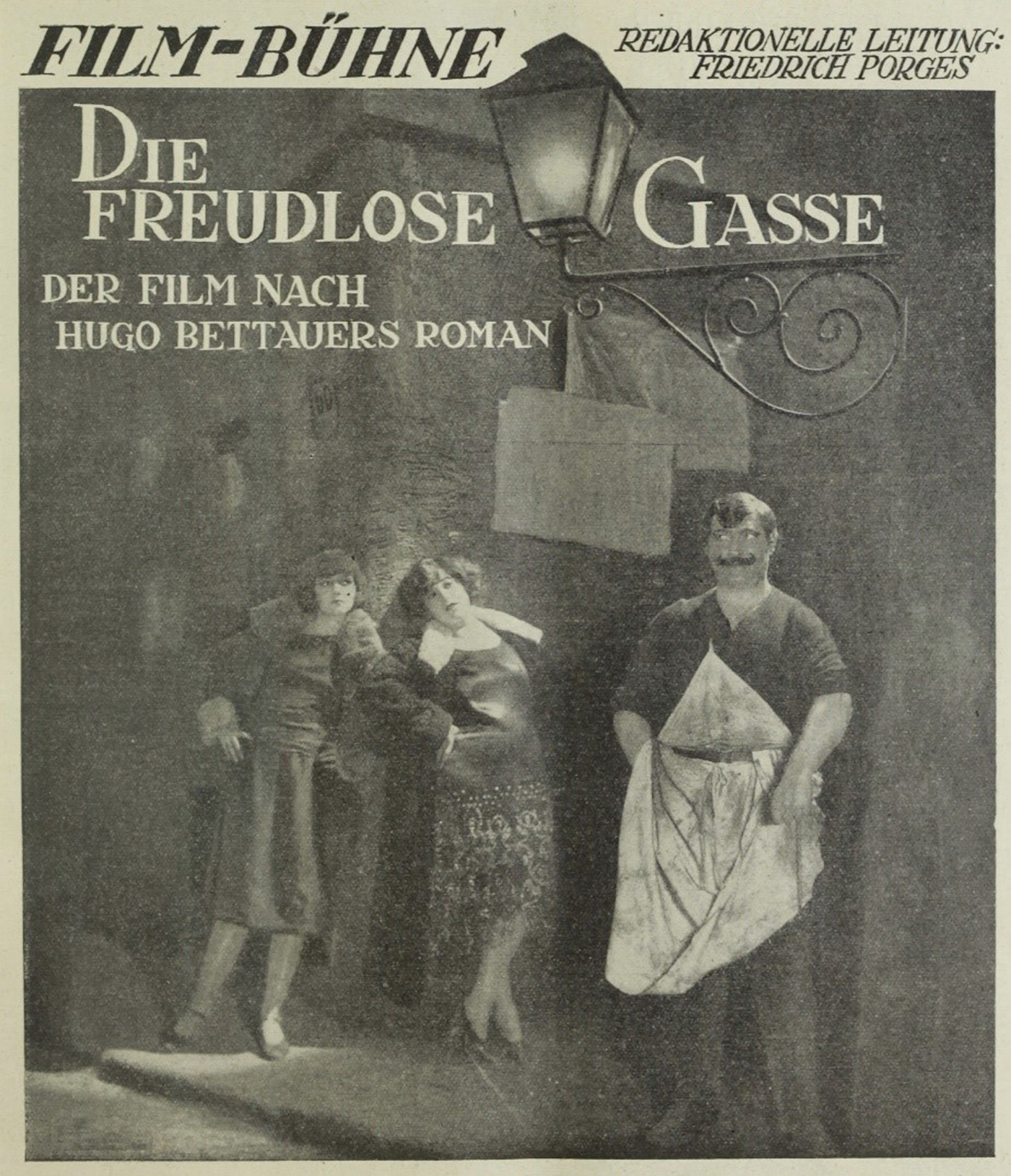
The narrative of wartime—and postwar—poverty driving bourgeois and other “good” women into prostitution continued in newspaper articles, novels, and films published and produced between the wars. By 1921, Montags-Zeitung estimated that 37 percent of the women police seized in vice police raids came from the middle class.Footnote 49 Indeed, the Arbeiter-Zeitung discussed women who were impeccable housewives by day but who sold sex by night, some of them married and with children.Footnote 50 The moral decline of middle-class women was also the subject of Austrian author Hugo Bettauer's controversial 1924 novel, Die freudlose Gasse (The Joyless Street), a morality tale set in hyperinflation-era Vienna of the early 1920s (see Figure 1). G. W. Pabst directed the popular silent film by the same name, starring Greta Garbo that appeared in 1925. The main characters are a poverty-stricken girl who becomes a prostitute, while the daughter of a ruined former Habsburg government official just escapes being forced into the trade. The story incorporated other elements that could be found in contemporaneous Viennese newspapers and the archives, among them a married woman who exchanged sexual favors for food and a Stundenhotel where female nightclub employees took their clients.
Women on the street wearing modern dress in “Die freudlose Gasse,” Die Bühne, vol. 24 (1925), 39 (ÖNB/Vienna).
The fate of women swept up in postwar raids, like those whom police had seized during wartime, continued to differ from that of men. Their treatment offers another example of concerns about working-class females as dangerous vectors of VD. Civilian and military authorities alike had recognized that women were more likely to be out alone at night during wartime than during peacetime, owing to their husbands, fathers, and male friends serving at the front, and to their increased wartime employment. The number of women alone on the street grew in the war's wake and, as historian Katya Motyl writes, women's postwar fashion included clothing meant to be worn in the office and on the street, for example, shorter skirts. Some publications, like Die Muskete, showed women who sold sex wearing modern dress immediately after the war, as did the boulevard press, like Die Wiener Nachtleben, which appeared beginning in 1925, and Wiener Caricaturen, a weekly magazine that also began appearing in 1925 (see Figure 2). While it is not entirely clear that money has been exchanged in this sexual encounter, the young woman, who is apparently not a “new woman,” but is rather rendered in the same style of clothing as worn before the war, is clad in the dark stockings and shoes that would have marked her as selling sex in other representations. Moreover, women from different classes and backgrounds were sometimes difficult to distinguish, especially because Vienna's “new women,” who pushed against limits placed on them by patriarchal society, hailed not only, as Motyl argues, from the bourgeoisie but also the working class. Indeed, as she explains, performance of new womanhood operated as “a visible erasure of class difference.” Although women's presence alone on the street, especially after dusk, was insufficient reason for police to stop them on suspicion of prostitution, police still accosted some women, above all those who appeared insufficiently bourgeois.Footnote 51 The increasing number of women from varying social backgrounds whom police arrested in their raids reflects the contingency of prostitution in a time of social upheaval and hyperinflation. Police continued to detain some women, above all young, often unemployed, servants, seamstresses, and waitresses, who lacked proper identification papers, and had them tested for VD, as they had before 1914 and during World War I.
Wiener Caricaturen 39, no. 23 (10 Aug. 1919), 5 (ÖNB/Vienna).
Title: “Sincerely.” Caption He: “Tell me, Annie, what was it about me that attracted your attention?” She: “The big tips you left at our establishment.”

Reflecting the vice police's continued class-based assumptions about who were “irredeemable” prostitutes—those arrested multiple times for prostitution or other antisocial behavior—and who might be reformed, the police continued to let off some first-time offenders—the majority young, often still living with one or both parents and from petit bourgeois families—with a warning about the dire consequences of leading an “immoral life.” They threatened them with registration as prostitutes if they failed to “reform,” that is, if they were again found to be engaging in commercial sex. Some of these young women discovered consequences of their behavior when, having been examined for VD upon their arrest, they were hospitalized because they were infected.Footnote 52
The vice police sometimes contacted these young women's guardians, to inform them of their daughters’ or wards’ behavior. The guardians were often their fathers, who, reflecting traditional Austrian patriarchal structure, were legally responsible for their daughters until they reached the age of majority, which after 1918 dropped from the age of twenty-four to twenty-one. The case of eighteen-year-old Margarethe Chowanetz is exemplary. Following her arrest during a morning raid in mid-December 1918 at the Orient, a Stundenhotel in the First District, Chowanetz told police that material need had driven her to prostitution. She had been illicitly selling sex for about two months. As police informed Chowanetz's father, an inspector for the Südbahn living in St. Peter, a small town in the Karst region of Carniola (today, Pivka, Slovenia), his daughter had previously been arrested for theft while engaging in sex work in October and had remained in custody for six weeks. The second time she had been arrested, she was held for four days, and then sent to Vienna's Asylhospital to be treated for VD. The police had requested that the Catholic Welfare Association take Margarethe, who allegedly wanted to return to her family, now living in another country, the Kingdom of Serbs, Croats, and Slovenes—Yugoslavia from 1929—into care. The vice police wanted to know what her father planned to do about the situation as well as if the details the young woman had provided about herself were correct.Footnote 53 Did this young woman return to her family? We do not know because here the correspondence appears to have ended.
At the same time police contacted the fathers, stepfathers, and other adult guardians of errant young women, distraught parents also sought aid from the vice police for dealing with their wayward daughters who were living “scandalous lives.” Some of them even requested police aid in having their offspring placed in reform institutions. Reform organizations like Verein Mädchenschutz und Fürsorge (Association for the Care and Protection of Girls) got involved in the lives of some of the young women whose behavior strayed beyond acceptable norms, even calling for them to be sent to reformatories. Some parents echoed the police and the press in employing terms like “dissolute” and “work-shy” to describe their daughters, accusing them of leading “morally reprehensible” lives. These were the same words the imperial police had employed and, later, the Nazis would often employ to describe women who engaged in clandestine and regulated prostitution.Footnote 54
These letters also revealed the extreme poverty in which their families lived that might have driven young women to sex work. One sickly mother, who shared a bedroom, with a single bed, and a kitchen with her three children—two of them on unemployment and one a baker's assistant—wrote that her daughter regularly disappeared for two or three days at a time. No one knew where the girl went or what she did.Footnote 55 Not only police correspondence but also newspaper reports tell us about the desperate poverty that drove many of these young women to clandestine prostitution. Klara Mautner, journalist and social critic, noted the circumstances of most younger women (“jugendliche,” meaning those under eighteen), arrested for clandestine prostitution: only one-third of them lived with parents or relatives, while the rest resided with their employers, were subtenants, Bettgeherinnen (“bed-tenants,” who rented time in a bed, but had no other claim to the housing), spent the night in Massenquartiere (mass accommodations), or were simply homeless.Footnote 56
Based on a 26 November 1917 communication from the Viennese Police Directorate, all women the police detained who were found to have VD were to report to the hospital no later than six o'clock that same evening. Neither women registered as prostitutes nor women arrested for clandestine prostitution, however, proved more likely to appear at the hospital VD wards for timely treatment than they had before or during the war, as letters of complaint from the hospital administrators to the Viennese Police Directorate reveal.Footnote 57
In postwar Vienna, both independent, registered prostitutes and women engaging in clandestine sex regularly used Stundenhotels, reflecting the acute housing shortage that predated 1914, but that wartime in-migration had exacerbated and that was among the worst in postwar Europe. The hotel owners did not complain about the sexual commerce because they stood to benefit monetarily: they were able to rent out rooms several times each night. Such a situation was satirized in contemporary publications, like Die Muskete (see Figure 3). Critics of these hotels pointed out the danger they posed: the bedding was not changed and, thus, skin diseases as well as syphilis could easily be spread, although syphilis is among the VDs that were seldom spread by sheets and other bedding.Footnote 58 Indeed, police reports noted that the women they arrested sometimes suffered from other contagious diseases, including scabies. Hotel managers vexed the police, who were trying to stymie illicit sex, owing to their shoddy record keeping.
Die Muskete 29, no. 742 (18 Dec. 1919), 96 (ÖNB/Vienna).
Caption: “The commission's housing requirements continue to be successfully met in Vienna: In recent weeks, fifty new cabarets have been opened.”

Their coworkers accused some of the women employed in cafés, hotels, and pensions of being clandestine prostitutes, and, in at least one case, vice police arrested the wife of the hotel porter for engaging in commercial sex. Vice police also believed that the male coworkers of the women they arrested sometimes functioned as pimps for them. Thus, vice police sometimes detained the porters and other staff alleged to have pandered women in the hotels they raided. Such was the case of Alois Bieringer, a porter at Hotel Tirolerhof in the First District, whose pimping operation was uncovered when police seized a young woman he had provided to a hotel guest for commercial sex. Twenty-six-year-old Paranka Tronka told them that when she had come into the Tirolerhof to escape the cold, Bieringer had asked her if she was interested in a sexual transaction. Tronka, an unemployed, unskilled worker from Galicia, had undertaken sex, she asserted, owing to penury. She was paid twenty crowns. Vice police subsequently spoke to female employees at the hotel who confirmed Tronka's assertions about Bieringer.Footnote 59 Police held Tronka for four days before expelling her from Vienna. Women whose sexual behavior offended propriety might still be expelled from the imperial capital, but now they—like other unwanted residents—might be expelled across national as well as district and provincial borders.Footnote 60
The Postwar Panic over Venereal Disease
The postwar Austrian government promulgated new public-administrative, preventative measures regarding VD in a 21 November 1918 decree. The gender-neutral document required mandatory syphilis treatment: all individuals suffering from VD were meant to take responsibility for their own treatment and sexual behavior. They were to seek medical treatment for the duration of their infection. Those the authorities suspected of being infected could be forcibly examined. In practice, this meant women whom the vice police had stopped on suspicion of engaging in clandestine prostitution. At the same time, local bourgeois reform organizations made suggestions about combatting the scourge of VD, which were often class based and which attempted to regulate working-class women's sexuality and, to a lesser degree, men's. A proposal from the Deutsche Volksrat für Wien und Niederösterreich (German People's Council for Vienna and Lower Austria) in late November 1918 sought to mandate that (working-class) men and women who changed employment be obliged to produce certificates of good health. The Staatsamt für Gesundheitswesen (State Office for Public Health) politely rejected this suggestion on the grounds that, “while doubtless effective,” it would face legal, social, and other hurdles if put in place.Footnote 61
The government's ongoing focus on VD is reflected in a document the Volksgesundheitsamt (People's Health Office) published in August 1920 about the numbers of people—men and women—in Austria who were infected.Footnote 62 Why did physicians, the military, and the public remain so concerned about VD? In addition, why did they continue to connect it so closely to prostitution? Syphilis had been endemic in late nineteenth-century Europe. Although medical developments, such as Salvarsan and Neosalvarsan, hastened “recovery” time (the abatement of symptoms) in the second decade of the twentieth century, treatment remained prolonged and expensive and had significant side effects. Remedies developed before the First World War remained in use, however, until the widespread availability of antibiotics in the mid-1940s, and abstinence or prophylactics were the only alternatives.Footnote 63 Habsburg military and civilian officials worried that returning soldiers, especially those who had served on the Eastern Front, had been exposed to VD and would spread it among the civilian population. By late 1917, Austro-Hungarian POWs returning from Russia were to be interned in one of twenty-four border stations along the Habsburg-Russian border, where they would undergo medical check-ups to prevent epidemics and the spread of VD.Footnote 64 Despite growing attention to the venereal health of the military rank and file and, in some cases, working men, the Austrian state's focus remained overwhelmingly on certain women—prostitutes and women thought to be engaging in prostitution—as the source of VD. Ineffective in military terms, this joint surveillance, occupation even, of some female bodies had constituted an additional intrusion into the lives of a particular class of women—mostly poor and/or working class—during wartime. The intrusions continued after 1918.
What was the major consequence of clandestine prostitution? Vice police estimated that some 90 to 95 percent of the women they arrested for clandestine prostitution had VD, an issue that continued to concern the army, whose military police were having difficulties enforcing discipline among their men. Women were examined for VD, and those infected were to go straight to VD units of Vienna's hospitals where they were to remain until their symptoms abated, with the result that some women cycled in and out of hospital VD wards. At the same time, the Lower Austrian Provincial government had opened a series of outpatient clinics for impecunious citizens of both sexes who were infected in both Vienna and the provinces.Footnote 65
Although surviving records indicate that many, if not most, of the women under vice police control underwent regular biweekly VD examinations, registration did not guarantee their appearance for the required examinations. The records are full of police-physician reports of tolerated prostitutes who missed their appointments for many reasons, most commonly because they were menstruating, but also because they were ill or arrived late. In some cases, failure to appear for an examination indicated that the woman in question had not only skipped her appointment, but that she had also skipped town, a criminal offense—one that often occasioned correspondence among different police stations in an attempt to track her down. Sometimes, she had skipped the country.
Worry about the spread of disease is reflected in the military's and the housing authority's discussions in early June 1920 about apprehending one Antonie Seifert, who was registered with police and who resided in the north wing of the Rossauerkaserne, a garrison in Vienna's Ninth District. Seifert was living with Emil Nowotny, a guard at the garrison, whom a neighbor, Johann Winzig, had taken to the hospital to be treated, Winzig asserted, for VD. The neighbor—like Nowotny, a member of the Volkswehr, Austria's voluntary military—demanded that Seifert, whom he also believed had VD, be tested. He believed that Seifert posed a health risk to his family and to the neighbors because they shared a common toilet and running water. The garrison command requested that the housing placement office have the vice police intervene with Seifert as well as have her removed from her housing and not permit “such people” to live in the garrison in the future. Quartering civilians in the garrison reflected Vienna's severe housing shortage, while the unknowing placement of a prostitute there probably reveals a breakdown in communication between various branches of city government—and the military—because vice police were acutely aware of the army's concern about soldier-prostitute interaction. If Seifert did, in fact, have VD, as a registered prostitute, she appears to have skipped her mandatory appointments or the physician failed to notice her infection. The Housing Office forwarded the garrison request to the vice police, commenting that Seifert had been accused of having had commercial sexual relations with several civilians as well as Volkswehr members, including Nowotny, whom she allegedly infected with three VDs.Footnote 66 Police reports indicate that women selling sex near the Rossauerkaserne remained an unresolved problem in the early postwar era.
Postwar police discussion of regulation of prostitution remained intimately connected with the desire to control VD. Some vice police and physicians were slowly moving toward the opinion that the regulation of prostitution “had to die away” and that controlling prostitution should be subsumed under the battle against VD. One of the most important expressions of this attitude in the early 1920s was embodied in a lecture by Hugo Weinberger—physician, Government Councilor, and member of the Vice Police Board—gave on “Prostitution and Trafficking” at the International Police Conference held in Vienna in September 1923. Treatment of prostitution, he asserted, was an indication of the state and legal system's level of culture. Prostitution was a social issue rather than a moral one, and he, too, argued it should be addressed as part of controlling VD. According to Weinberger, controlling prostitution required struggling against those immoral elements that accompanied prostitution, including pimping and pandering.Footnote 67 Responding to Weinberger, a surgeon named Silbermark, admittedly not a specialist on the topic, rebuked Weinberger as an idealist. Employing the old, tired “necessary evil” argument, he asserted that as long as there were young men with sex drives, but without the means to marry, there was a need for prostitutes. He advocated brothels as the best way to regulate prostitutes, that is, by keeping the commercial sex in one place, rather than decentralizing it to individual and clandestine prostitutes.Footnote 68
Several Viennese dailies published excerpts of Weinberger's speech. In at least one case, Weinberger's views met with opposition. One self-proclaimed “specialist” published a long critique of Weinberger's lecture that contained elements of Silbermark's argument. Focusing on the regulation of prostitution, the specialist noted that Vienna, by closing its brothels, had put itself at the mercy of those who regarded the supervision of prostitution as immoral and unsuitable. Indeed, there had been advocates for the complete abolition of regulation at the police conference. Viennese police, complained the specialist, also wanted to stop supervision of the city's 1,500 registered prostitutes and limit their activities to raids. The specialist then warned of revolutionary Russia's deleterious experience, where immediately after the Tsar's fall, Alexander Kerensky, the provisional government's minister of justice, had removed most of the restrictions on brothels and tolerated prostitutes. Then the Bolsheviks abolished prostitution altogether. The result was a huge increase in VD. By 1920, three years after the removal of all restrictions, he alleged, without citing sources for his figures, that the number people with gonorrhea and syphilis had grown threefold.Footnote 69 More recently, continued the specialist, strict laws had again been promulgated to monitor prostitution in Moscow, even though they appeared milder than those of Romanov Russia. However, the nuisance the removal of regulation caused—the huge rise in VDs—was not so easily resolved.Footnote 70
Rather than abolition, the author recommended a fifty-year-old proposal, which he attributed to the well-known syphilologist Professor Karl Ludwig Sigmund of the University of Vienna.Footnote 71 Sigmund had opposed street walking because he believed it more difficult to control independent women selling sex than to quartering them in large, hygienically furnished houses. Prospective clients would be examined, and only healthy men admitted, thus, theoretically, guaranteeing that the prostitutes would remain free of disease. Other specialists and government officials had proposed variations on this plan during the Cisleithanian-wide discussion of revising prostitution regulations in 1906–7.
Debate over the vice police role in regulating prostitution continued into the late 1920s, and even later. Citing the experiences of other countries, advocates of abolishing regulation noted that expanded police and medical surveillance of (the small number of registered) prostitutes did not result in lower VD rates. Moreover, opponents of regulation argued, there was no proof that the abolition of regulation led to increased rates of VD. By late 1927, when there were discussions of decriminalizing prostitution in Austria based on the German law of October, journalists noted that the rate of prostitution had dropped since the era of hyperinflation and that police only raided those Stundenhotels in which they regularly found women engaging in clandestine sex. Moreover, a large number of the women police seized still had VD.Footnote 72
Sex Trafficking in Post-Imperial Vienna
The Viennese vice police approach to the two concerns so closely associated with prostitution in late imperial Austria—VD and white slavery—was remarkably different after 1918. In contrast to continuing panic over VD, the police soon claimed that sex trafficking, while it still existed, had been largely brought under control as a result of international treaties of the prewar era, and that very few Austrian women were being trafficked. The two issues maintained a bureaucratic-police connection, however, because the police department's vice division (Sittenabteilung) changed its name to the Department for Combating the Trafficking of Girls and of Venereal Disease (Büro zur Bekämpfung der Geschlechtskrankheiten und des Mädchenhandel) in the mid-1920s.Footnote 73
Overseas migration from the lands of the former Austria-Hungary to the Western Hemisphere continued to decline after 1918 from a peak in 1913, when concern about young women traveling across international borders on their own had played such an important role in fears of sex trafficking in an era of imperialism and transnationalism.Footnote 74 Sex trafficking, which had received little attention during wartime, when most international borders were in any case closed and international conventions broken, reemerged as an important international issue in late 1918. Under the League of Nations, which was founded in 1920, the subject was reexamined and renamed (“women and children”) in the changed socio-political conditions of the interwar period. The league held its first International Conference on White Slave Traffic in 1921 and adopted the 1921 International Convention for the Suppression of the Traffic in Women and Children on 30 September.Footnote 75 Soon after the war, Viennese police officials began asserting that there had been a decline in numbers of trafficking cases in Austria, owing in part, they believed, to closer attention being paid to the passports of women and girls seeking to leave Austria, and to South American countries’ attempts to prevent unwanted in-migration. Indeed, the United States, which had been a major destination for migrants from Austria-Hungary before 1914, also sought to limit immigration with the 1921 Emergency Quota Act.
Vice police board member Weinberger echoed the narrative of trafficking decreasing, if not disappearing, in Austria in his speech at the 1923 police congress. He conjured up the prewar bogey, the Argentinian trafficker. In reality, Habsburg police might stop former residents, often Jewish, then living in Argentina on suspicion of trafficking, but because they could seldom make concrete cases of trafficking against them, police simply expelled them from Cisleithanian Austria.Footnote 76 Neues Montagblatt quoted an allegedly well-known trafficker from before the war as having told Viennese police when they detained him in the early 1920s that he would rather deal in “platinum, gold, and jewels [than in girls].”Footnote 77 Before the war, young women from elsewhere in the Habsburg realm, above all Bukovina, Bohemia, Galicia, and Moravia, had sometimes been moved first to Vienna, then on to Western Europe or to European transatlantic ports and onward across the world.Footnote 78 The decline of Vienna, now the capital of a small, landlocked country, as a transit hub for traffickers after 1918, did not, however, change popular attitudes or assuage concerns overnight. Despite the high costs of travel, some women still emigrated, some attracted by proposals of marriage, while promises of employment in countries with a strong currency enticed other women, among them artists, dancers, and musicians. Both the police and members of the greater public continued to search out the same kinds of culprits and victims.Footnote 79 For example, the directors of traveling women's orchestras and other female musical ensembles were still distrusted as providing fronts for trafficking and many women and girls who went missing were assumed to be victims of sex traffickers.
Sex trafficking remained an issue of considerable popular interest and concern in Vienna as elsewhere in Central Europe, as the two-part Weimar-German film Der Weg, der zur Verdammnis führt (The Way to Damnation) demonstrated. It was one of the most successful of the moral-educational silent films to appear in the early postwar period; part two, titled Hyänen der Lust (Hyenas of Lust), in which two frivolous young women spending their first night away from home fall victim to dangerous traffickers, premiered in Vienna in autumn 1919.Footnote 80 The Österreichische Liga zur Bekämpfung des Mädchenhandels (Austrian League against the White Slave Trade, a voluntary bourgeois reform organization founded in 1902), which continued its attempts to save young girls from falling into prostitution between the wars, sponsored the film's Viennese run.Footnote 81 As publicity posters revealed, the possible victims who concerned the Europeans remained the same as before the war: they were allegedly “innocent” young, white women who might be abducted and taken overseas to non-European, often understood to be less civilized, sometimes colonial, locales against their wills to engage in commercial sex. South America remained a particular point of concern in this narrative. In another continuity with the prewar era, Vienna's antisemitic daily, Reichspost, commented that the film showed the danger that organized traffickers posed to inexperienced young girls, noting that most girls who were trafficked were “still Christian and the traffickers, still Jewish.”Footnote 82 This comment did not accurately reflect the makeup of traffickers and their victims before the war, nor after it.
There was still discussion of trafficking in Viennese dailies during the early 1920s. Throughout the interwar period League of Nations exposés could garner dramatic headlines like “The League of Nations’ Secret Document on Trafficking.”Footnote 83 The topic, however, received decidedly less attention than it had before 1914, when newspaper coverage had already begun declining from the peak of the panic in the first decades of the twentieth century. This change was due, in part, to the Austrian state playing a greater role in restraining migration after 1918, which was in any case limited to the United States and elsewhere in the Western Hemisphere between the wars.Footnote 84
Conclusion and Epilogue
What can we conclude about prostitution in early post-Imperial Vienna? In short, the “Sad Secrets of the Big City,” following war and revolution, in an era when the Social Democratic–dominated city government was refashioning how health and sex education were provided in Vienna, were remarkably similar to its sad secrets in the sexually saturated fin de siècle. There are several possible reasons for these continuities. Clandestine prostitution flourished in this postwar period of economic and political upheaval as ever-larger numbers of women, young and old alike, some of them wartime refugees, from wider social categories tried to secure their livelihood through sex work. VD rates also continued to rise after 1918, and, despite the provision of information on VD to wider segments of the public as well as improvements in recovery times, there would be no reliable cure until penicillin became commonly used after World War II. Many of the good Viennese continued to fear the trafficking of young, innocent white women, despite some evidence that this practice was nowhere as widespread in the postwar era as they thought.Footnote 85
Police treatment of women they suspected of engaging in commercial sex changed little in the wake of the war, despite the rise of the “new women” in Vienna, who, as elsewhere in Europe, were more likely than prewar women to be out on the street both later and alone. The continuity in police organization may be due in part to the reorganization of the political police already in 1914. While physicians, some of whom had witnessed the sharp rise in VD among the military during the First World War, increasingly claimed their specialized knowledge in the battle against VD, they did not replace the police as arbiters of regulation.
After the First World War as before, journalists, especially those who wrote for the boulevard press, helped drive many of the popular narratives on prostitution, including the way prostitutes and women suspected of prostitution, as well as trafficking, and VD were depicted. Many images of prostitutes in the early postwar period were another example of continuity. The posters advertising instructional and other films on prostitution and trafficking incorporated stereotypical representations of innocent white girls, sometimes wearing modern dress. Members of public continued to use the language the newspapers had employed before and during the war, and sometimes afterward. The growing number of illustrated newspapers initially employed the similar stereotyped images of women who sold and were imagined to be selling sex.
Despite ongoing discussion of revision of regulation of prostitution, Vienna maintained a system of police registration of individual prostitutes throughout the interwar period. The occupying Germans reintroduced bordellos between 1938 and 1945, but following the Second World War, Vienna's earlier system of registering individual prostitutes was reestablished and vice police recruits continued to familiarize themselves with regulations that dated from 1911. Officers of the Department for Combating the Trafficking of Girls and of Venereal Disease continued to register women who asked to be placed under a regime of regulation and issue them identification cards. They continued to arrest those women whom they caught engaging in clandestine prostitution during their regular raids and handing those (far fewer) women—and, in a post–World War II departure, also men—with VD over to hospitals for treatment. Austria was among the shrinking number of Western European countries, including Belgium, France, and Italy—most predominantly Roman Catholic—where regulation survived past 1945. The other three, however, operated under a system of so-called neoregulation, which gave physicians rather than vice police the primary jurisdiction over registered prostitutes. In contrast to Wilhelmine Germany and Tsarist Russia, the other two European imperial powers that failed to survive the First World War, the regulation of prostitution in Vienna and in Austria is an example of decades-long Habsburg bureaucratic continuity across war and peace, empire, occupation, and republics.
Acknowledgements
I would like to thank Maureen Healy, Lisa Kirschenbaum, and Mark Lewis for their helpful comments on earlier versions of this article, and Britta McEwen for answering my questions about Dr. Julius Tandler and public hygiene in Red Vienna.



